White Men Supporting MAGA is a “Rational” Decision in the American Historical Historical Context

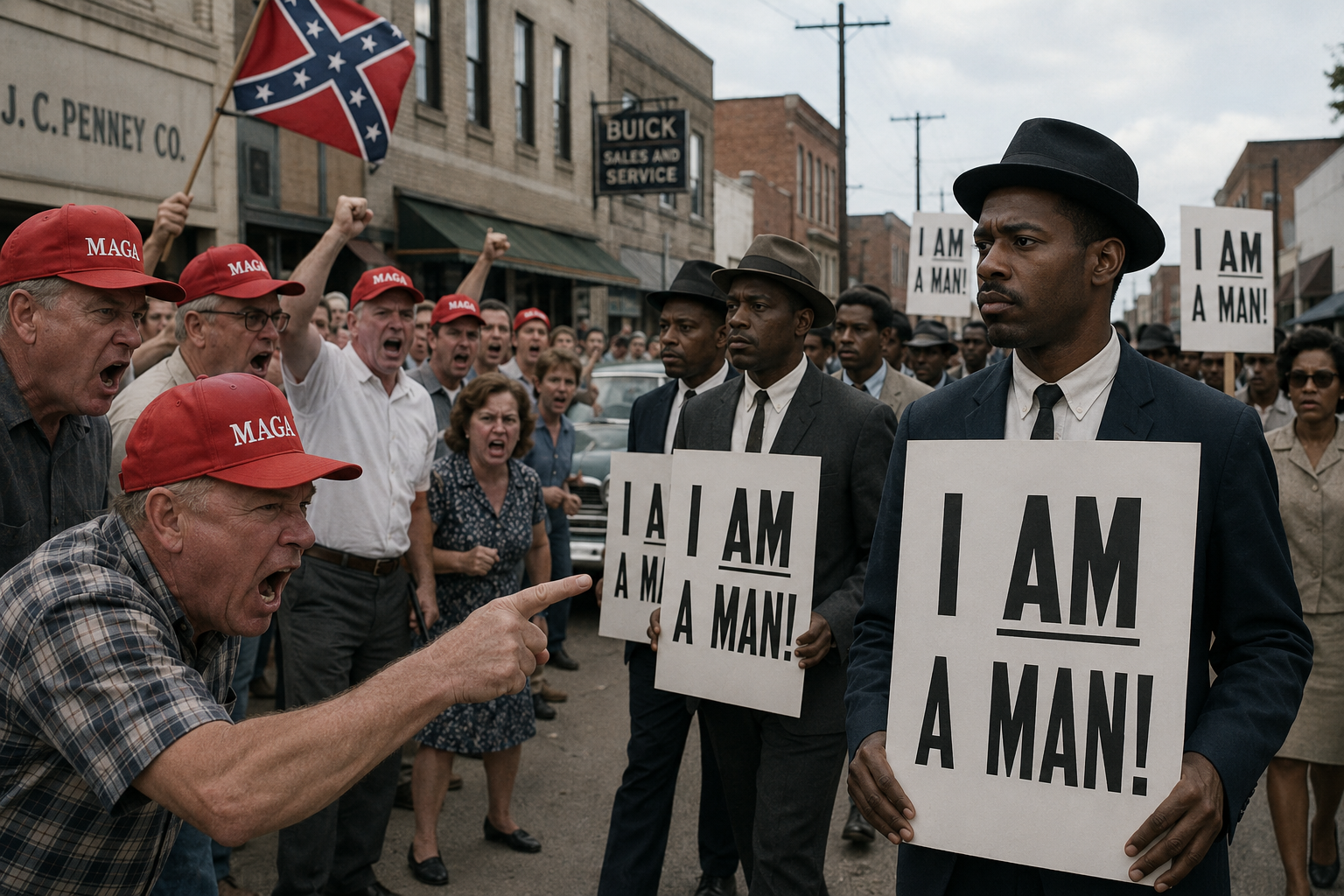
PHILADELPHIA, PA – We have spent the better part of a decade diagnosing the MAGA movement as a psychological affliction. We have called it a fever, a sickness, a carnival of grievance fueled by economic anxiety, racial resentment, or plain ignorance. We have assured ourselves that the white men who form its emotional and electoral core are voting against their own interests, seduced by a demagogue who exploits their fears while delivering nothing of material value. This diagnosis is comforting. It is also wrong. The most underappreciated feature of the MAGA movement is not its rage or its demagoguery. It is its strategic rationality. From a white male perspective, measured against the actual historical record of American political life, support for Donald Trump and the contemporary Republican Party is not a tantrum. It is a meticulously calculated portfolio allocation, a prudent defense of tangible assets in a marketplace that has always rewarded the ruthless pursuit of group interest.

To dismiss the MAGA coalition as a fever swamp of irrationality is to fundamentally misunderstand both its durability and its danger. The movement has, with considerable sophistication, built upon a long-standing, firmly entrenched American tradition and constructed a modern political decision-making framework that presents support for President Trump as a calculated allocation of political and social capital. This allocation is based not on fantasy but on a clear-eyed assessment of the anticipated actions, reactions, and preferences of non-white immigrants, Black and brown citizens, women, Muslims, and other constituencies whose ascendance threatens to reorder the hierarchy that has governed American life since its founding. We must confront an uncomfortable truth: within the logic of American history as it has actually been practiced, not as it has been mythologized, the MAGA investor is behaving with impeccable rationality.

The Democracy That Never Was

Before we can assess the MAGA portfolio, we must acknowledge the market in which it operates. American democracy has never been the egalitarian enterprise of our civic textbooks. It has, from its inception, allowed for the brutal suppression and oppression of non-white, non-male inhabitants while somehow retaining its status as a democratic society in the eyes of historians, political scientists, and legacy media outlets. This is not a radical critique; it is a plain reading of the historical record. The Constitution was a slaveholder’s compact. The three-fifths clause inscribed Black personhood as a fraction. Indigenous nations were subjected to ethnic cleansing dressed as federal policy. Women of all races were excluded from the franchise until the 20th century. Chinese immigrants were banned by name. Japanese Americans were interned. Jim Crow governed half the country for a century with the explicit blessing of the Supreme Court.

Throughout all of this, the United States was celebrated—and continues to be celebrated—as the world’s preeminent democracy. This is the essential context for understanding white male political behavior. The American political tradition has been defined more consistently by an inegalitarian tradition that justifies the unequal status and political exclusion of groups based on race, gender, ethnicity, and religion than it has been defined by the liberal tradition of individual rights and egalitarian ideals. The liberal tradition is real. It has inspired movements of extraordinary moral courage. But it has almost always been the challenger, not the incumbent. The incumbent, the default setting, the reliable yield across centuries, has been ascriptive hierarchy. The MAGA movement is not a departure from this tradition. It is its contemporary manifestation, its latest and most transparent expression.

The Asset Allocation of a Threatened Class

Within this historical marketplace, the white male MAGA investor is making choices that are legible, logical, and in many respects shrewd. The political decision is framed not as a single vote but as a diversified portfolio designed to hedge against multiple, cascading risks. The immediate returns are tangible and communicated with market-like clarity.

The elimination of Diversity, Equity, and Inclusion programs is presented as the removal of a structural tax on whiteness, an immediate correction to a labor and education market allegedly distorted by artificial preferences that disadvantage white men. Whether or not one accepts this characterization, the logic is internally coherent: if you believe the playing field has been tilted against you, eliminating the mechanism of tilting constitutes a direct material gain. The promise of mass deportation addresses a perceived depreciation of cultural and economic assets—neighborhood cohesion, wage floors in certain sectors, linguistic and cultural dominance—that unrestricted immigration allegedly erodes. The rollback of reproductive rights, while framed in the language of moral conviction, serves a dual function within the portfolio. It is perceived as a means to increase declining white birth rates, a demographic hedge against the “tanning” of America. And it represents a restoration of traditional gender dividends, re-securing the patriarchal returns that feminism had systematically devalued.

These are the blue-chip holdings, the steady and reliable yields.

Then there are the speculative assets, the high-risk, high-reward investments that reveal the portfolio’s ultimate ambition. The January 6 pardons, the attempted creation of a nearly $1.8 billion compensation fund for Trump allies who claim unjust prosecution, and the open discussion of retribution against political enemies represent a wager that the legal and normative constraints on executive power can be permanently rewritten. They are, in portfolio terms, a form of political catastrophe insurance. If the demographic clock is indeed ticking toward a majority-minority nation by 2045, these instruments are designed to lock in structural advantages—judicial appointments, administrative control, legal immunities—that can survive the loss of numerical dominance. The explicit hope is not subtle. It is that white male political dominance and cultural supremacy can be explicitly re-established, insulated from the vicissitudes of democratic competition. The “stop the steal” movement and the cascade of voting restrictions are not merely sour grapes about a lost election. They are a calculated effort to de-risk the electoral marketplace itself, limiting participation by constituencies that threaten the portfolio’s long-term viability.

The Rational Actor Frame

This framing of political choice as rational portfolio management serves a crucial ideological function: it launders the moral content of the decisions being made. The language of interests, returns, and risk management provides a technocratic gloss over what is, at its core, an allocation of power to a movement defined by its ascriptive hierarchy. It allows the white male voter to see himself not as a beneficiary of a resurgent white supremacy but as a prudent investor responding to market signals. He is not making a moral choice to subordinate others. He is making a rational choice to protect his own.

This is the modern iteration of the relentlessly applied and rigorously enforced inegalitarian tradition that has always justified the unequal status and political exclusion of groups based on race, gender, ethnicity, and religion. The MAGA framework is not merely prejudiced. It is a sophisticated, elite-driven political movement supported by a scaffolding of pseudo-scientific racial theory, religious nationalism, and revisionist history, all deployed to defend white male supremacy. The frame is powerful precisely because it leverages the core American mythology of the calculating, self-interested individual, the homo economicus of the free market, and applies it to the democratic sphere. It transforms civic participation into a personal investment strategy, with all the moral weight of a 401(k) allocation. You may despise how a man invests, but you cannot easily argue he is irrational for seeking the highest return.

The Moral Costs Excluded from the Balance Sheet

The portfolio also excludes the human costs borne by those outside the investment class. The demonization of immigrants as “poisoning the blood of our country” is not an externality. It is a deliberate strategy that inflicts real terror on real families, that separates children from parents, that turns communities into battlegrounds. The assault on women’s bodily autonomy is not a restoration of traditional values. It is a state-mandated appropriation of female biology with measurable consequences in maternal mortality, economic freedom, and human dignity. The “war on woke” is not a defense of intellectual freedom. It is a concerted campaign to suppress the very knowledge traditions that could name and critique the hierarchy being constructed. These are not side effects. These are the product being purchased. The investor simply declines to list them on his balance sheet.

The Asymmetry of Fear

What the portfolio frame most aggressively suppresses is the historical asymmetry of the risk it claims to be hedging. The fear that animates the MAGA coalition—the fear that a “tanning” America will subject white men to the same oppression and suppression they have historically imposed for more than 250 years—is a fear of losing a dominant position, not a fear of experiencing subjugation. It is a category error dressed as a symmetry, and it is essential to the portfolio’s emotional logic.
To have occupied the presidency, the Senate, the House, the governor’s mansions, and the Supreme Court for nearly the entirety of the nation’s history—and then to witness the ascension of a Black president, Barack Obama, and frame that single eight-year interruption as evidence of impending white subjugation—is a remarkable act of historical revisionism. It confuses the loss of unearned privilege with the imposition of tyranny. After the Obama presidency, white male voters have responded by installing an unabashed white supremacist in office, a president who encourages insurrection, pardons its perpetrators, and governs explicitly in the interest of his core demographic. This confusion of equality with oppression is not a bug in the portfolio logic. It is the foundational assumption that makes the entire investment thesis cohere. The MAGA investor is not protecting himself from tyranny. He is protecting himself from democracy.

The Architects and the Investors

It is crucial, and it is a matter of intellectual honesty, to distinguish between the architects of this portfolio and its investors. The strategists, the think-tank intellectuals, the Federalist Society alumni, and the media figures who construct and market the MAGA framework are operating with full informational awareness. They know, as Rogers Smith demonstrated, that they are wielding an ascriptive ideology with deep American roots. They are, in effect, asset managers of grievance, packaging and selling a diversified fund of resentments to a base that experiences those resentments as authentic and existential.

The investors—the voters—are operating under conditions of incomplete information and considerable time pressure. They are bombarded with an information ecosystem that systematically exaggerates threats, broadcasting immigrant crime waves and anti-white discrimination while suppressing contrary data: actual crime statistics, the persistent racial wealth gap that still advantages white families by orders of magnitude, the continued and dramatic overrepresentation of white men in virtually every lever of economic and political power. Their rationality is bounded by the information environment in which they operate. They are making what they believe to be prudent decisions based on the data they receive. That the data is manipulated, curated, and weaponized does not make the decision-making process irrational. It makes it manipulated. This distinction matters. To call the investor a fool is to misunderstand the sophistication of the fund managers. To call him evil is to foreclose the possibility of competition.

The Way Forward

This is the strategic genius and the moral horror of the MAGA portfolio: it exploits the legitimate cognitive architecture of rational choice to advance a political project that is destructive to the democratic experiment and profoundly damaging to millions of human beings. It cannot be defeated simply by insisting that its investors are bigots or fools. That approach has failed consistently for a decade. It has failed because it misunderstands the nature of the transaction. The MAGA investor is not making a moral error. He is making a rational bet on the continuity of American history. And American history, frankly, is on his s
The only viable response is a competing offer: a political portfolio that addresses the genuine economic and social anxieties of struggling Americans without requiring them to purchase, as a bundled and non-negotiable asset, the subordination of their fellow citizens. This is the hardest work of democratic politics, and there is no guarantee of success. The forces arrayed against it are deeply embedded, lavishly funded, and ruthlessly strategic. The architects of ascriptive rage have built a machine that runs on the most reliable fuel in American history: the fear of losing what you have, coupled with the promise that someone else will pay the price. Opposing that machine requires an offer as clear-eyed about power, interests, and material returns as the one it seeks to defeat. Sentiment will not suffice. Moral exhortation will not suffice. Only a better deal, honestly priced and broadly offered, has any hope of competing in a marketplace so thoroughly rigged by the long, dark genius of the American inegalitarian tradition.

###

Delgreco Wilson
Wilson formerly taught Comparative Politics and International Relations at Lincoln University. He is a leading political analyst, educator, and advocate whose work centers on empowering Black Americans through a deeper understanding of political strategy and its historical roots in the fight against systemic racism and white supremacy. A prominent voice in the Greater Philadelphia Region, Wilson brings a wealth of academic rigor and real-world insight to his analysis of Black political thought and action.
Wilson’s expertise extends beyond the classroom. His incisive columns and articles have been featured in prominent publications such as the Philadelphia Tribune and Delaware County Daily Times. A sought-after commentator, he regularly contributes to radio programs and podcasts across the Mid-Atlantic region, offering sharp analysis and actionable strategies for advancing racial justice and equity.

Stop Calling It a “Crisis of Democracy.” This Is Who We Are.

The Dangerous Incantation

We persist in a lie. Every new shock—the family separation policy, the overturning of Roe, the promise of mass deportation, the whitewashing of January 6th—is greeted with the same startled refrain: “This is not who we are.” It is the incantation of a nation in denial. It is also, as Rogers Smith argued three decades ago, historically illiterate. The MAGA movement is not a betrayal of the American project. It is the third great restoration of one of its founding traditions: ascriptive Americanism, an ideology of white male supremacy as deeply woven into the republic’s fabric as the Bill of Rights.

A Story Written by the Minority

We are taught a comforting, linear story of Tocquevillian equality. It is a story written by and for the white male minority it centers. For most of American history, the vast majority of people—Black Americans, women of all races, Indigenous nations, Asian immigrants—lived not in the sunlight of liberal freedom but in the long shadow of an elite-driven, legally codified hierarchy. What we are witnessing now is not an infection of a healthy body politic. It is an autoimmune flare-up of a chronic condition, triggered by the mortal threat of demographic and cultural change.

The First Republic: A Slavocracy

The first American republic was a slavocracy. This is not polemic; it is architecture. The Constitution was a slaveholder’s compact, embedding the three-fifths clause and the fugitive slave clause into the nation’s operating system. This was not the prejudice of the rabble. It was the sophisticated project of the most educated men of the age, who wielded racial science and biblical sanction to define the full personhood of a white man as dependent on the negation of others. The Civil War and Reconstruction broke the legal apparatus, but not the ideological spine.

The Second Restoration: Jim Crow’s Elite Design

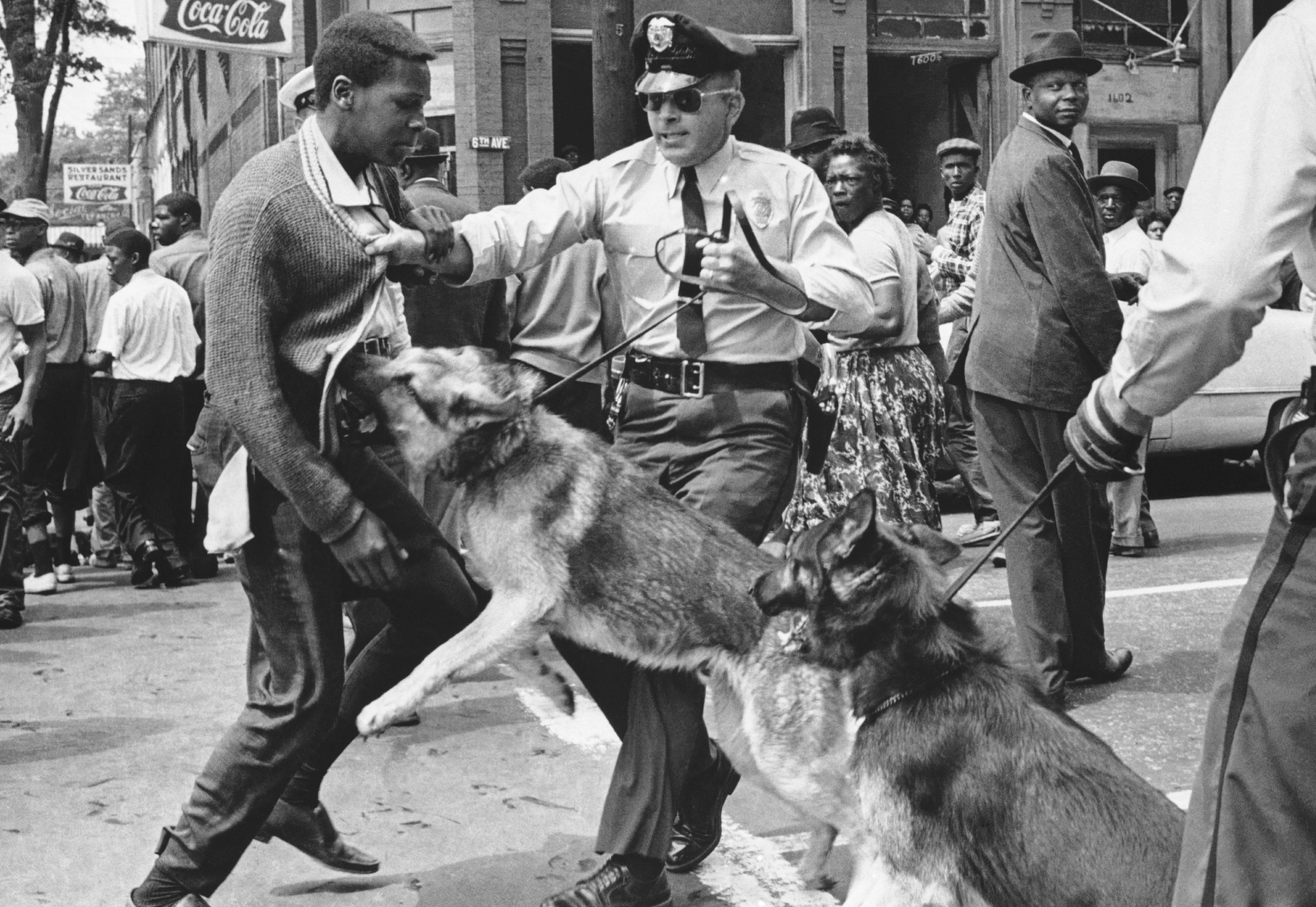
The second restoration, Jim Crow, was not merely the violence of the mob. It was a breathtakingly modern, elite-led counter-revolution. The Supreme Court’s Plessy v. Ferguson provided the constitutional veneer. The nation’s top historians rewrote Reconstruction as a tragic mistake of “Negro rule.” The blockbuster film “The Birth of a Nation” romanticized the Klan. The lynch rope and the literacy test were merely the enforcement arms of a system designed in statehouses, universities, and editorial boards. It took a century of blood and organizing to break its formal grip.

The Third Restoration: MAGA as Ascriptive Panic

We are now deep into the third restoration. The MAGA movement, achieving its apotheosis under Donald Trump, is not a populist spasm of economic anxiety. It is a restorationist project whose unifying thread is the reassertion of a threatened racial, gender, and religious hierarchy. “Make America Great Again” is a chronological claim, a nostalgic bookmark placed squarely before the civil rights, women’s liberation, and immigration reforms that democratized American life. The demonization of immigrants as “poisoning the blood of our country” is ascriptive rhetoric in its purest form, defining citizenship in blood-and-soil terms. The “stop the steal” movement and the cascade of voter suppression laws are the 21st-century poll tax. The overturning of Roe is the state reasserting brute control over female bodies. The “war on woke” is a direct attack on the very historical disciplines that name this hierarchy.

The Wounded Beast’s Fury

This is not happening in spite of progress. It is happening because of it. The “tanning” of America—the Census projection of a majority-minority nation by 2045—is the existential threat that has triggered this panic. The ascriptive tradition, wounded and losing cultural hegemony, has abandoned the quiet, elite consensus of old and now rules by spectacle, cruelty, and the blunt, desperate instruments of a faction that senses the clock ticking. The cruelty, as many have observed, is the point. It is how a weakening hierarchy reasserts its dominance through ritual public degradation

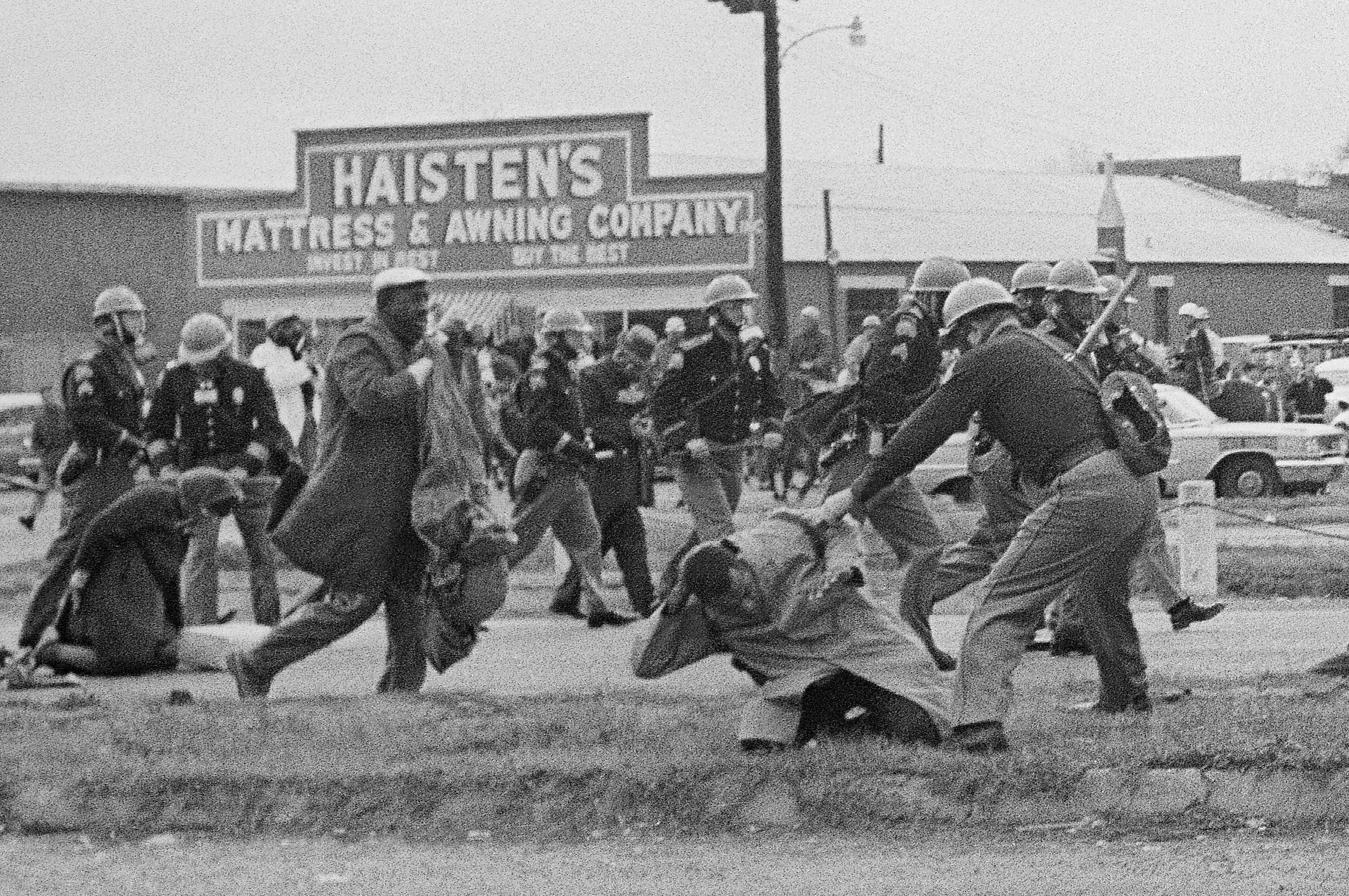
FILE – In this March 7, 1965, file photo, a state trooper swings a billy club at John Lewis, right foreground, chairman of the Student Nonviolent Coordinating Committee, to break up a civil rights voting march in Selma, Ala. Lewis sustained a fractured skull. Lewis, who carried the struggle against racial discrimination from Southern battlegrounds of the 1960s to the halls of Congress, died July 17, 2020. (AP Photo/File)

The Luxury of Innocence

The fantasy that this is “not who we are” is the ultimate luxury of those whom the system was built to protect. White men experience America as a land of individual liberty because, for four centuries, their liberty has been the state’s defining project. They see a colorblind meritocracy because the ladders of the Homestead Acts and the GI Bill were built for their hands. The MAGA movement represents the conscious, furious decision to re-center that particular experience as the only legitimate one and to define any deviation from it—any acknowledgment of the political reality of the majority—as tyranny.

A Battlefield, Not a Betrayal

We must discard the comforting myth. We are not a liberal nation interrupted by illiberal episodes. We are a battleground where a liberal and republican tradition has been locked in a four-hundred-year war with an equally native ascriptive one. The arc of history does not bend itself. It bends only when we apply enough force to overcome the countervailing weight of a tradition that, in every moment of change and anxiety, will seek to restore its brutal, hierarchical vision. The first step to winning a war is admitting you are in one. The liberal lullaby of innocence is a prescription for defeat. Put it aside, and fight.

Black Athletes, the Agony and the Duty of the NAACP’s SEC Boycott

The NAACP Has Issued a Call for Black Athletes to Boycott the SEC. Asking a Young Prospect to Turn Down Dawn Staley Feels Insane. That Is the Measure of the Crisis.

PHILADELPHIA, PA – The NAACP, the nation’s oldest and most venerated civil rights organization, has now made it official. On Tuesday, it launched the “Out of Bounds” campaign, a direct and unambiguous call for Black athletes, their families, alumni, and fans to “withhold athletic and financial support” from major public universities in states that “have moved to limit, weaken or erase Black voting representation.” The target is clear: the powerhouse athletic programs of the Southeastern Conference (SEC) and their counterparts across the former Confederacy. The logic is searing. If the white political structures of these states have declared war on the franchise that Black Americans bled and died to secure, then the Black labor and Black fandom that sustain those states’ most cherished cultural and economic institutions must be redeployed as a weapon of collective self-defense. This is not a request for a symbolic gesture. It is a call to economic warfare, and it demands a sacrifice so profound that to state it plainly is to feel its weight in the pit of your stomach.

That sacrifice is measured most acutely not in dollars forfeited or championships deferred, but in a single, almost unthinkable question that will now confront Black families around dinner tables from Philadelphia to Houston: Should a gifted young Black woman pass on the opportunity to play for Dawn Staley?

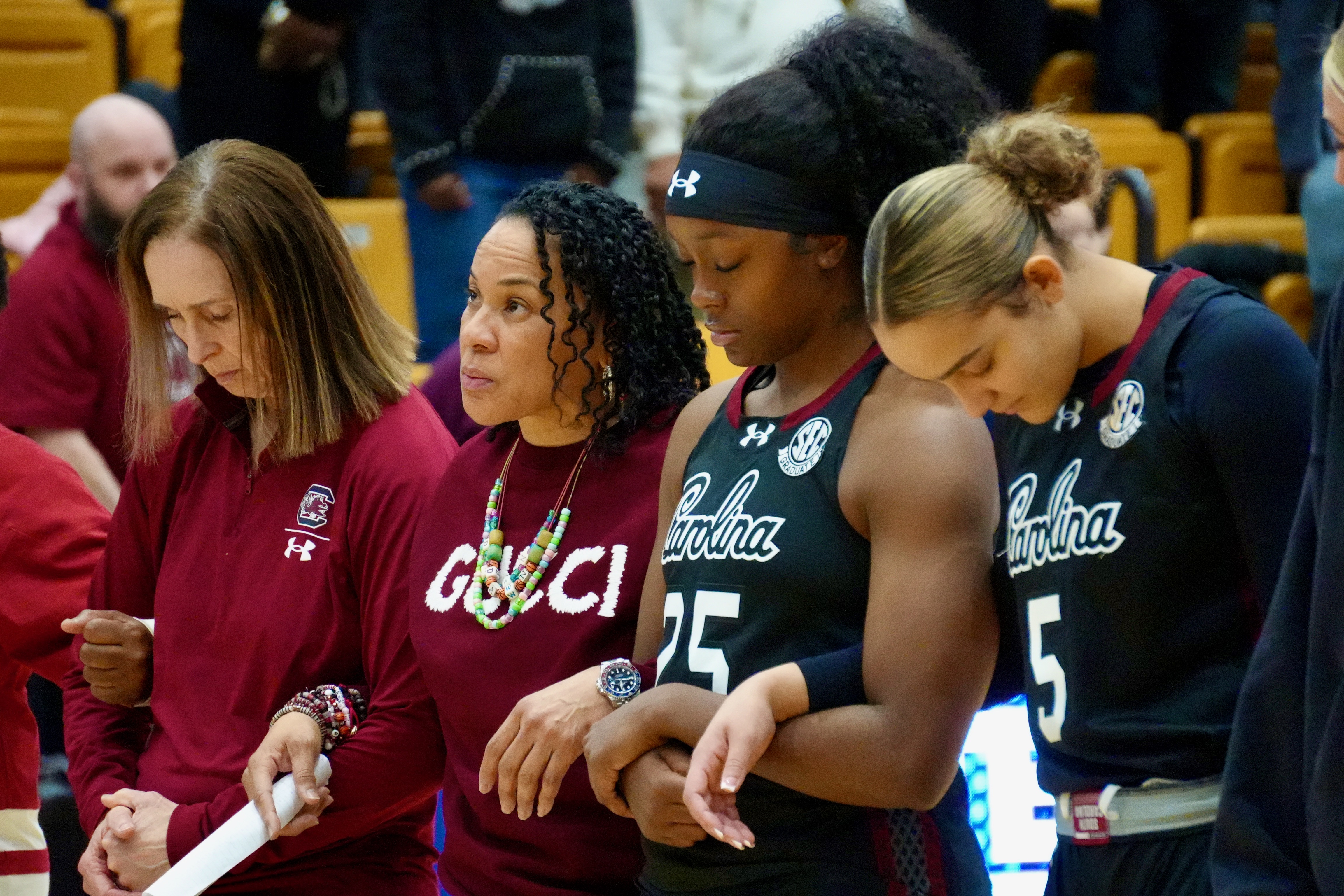
To ask the question is to stand at the edge of a moral chasm. Dawn Staley is not merely a basketball coach. She is the living embodiment of a lineage that has produced the most towering figures in Black athletic leadership. She emerged from the Raymond Rosen Housing Projects in North Philadelphia, navigated every obstacle a society could place in her path, and ascended to the absolute pinnacle of her sport. At the University of South Carolina, she has built a dynasty with a dignity, grace, and unapologetic Black pride that was previously unimaginable. She has filled the enormous shoes of John Thompson, the Georgetown patriarch who showed that a Black coach could win with an all-Black starting five while demanding his players graduate. She carries the torch of John Chaney, the Temple legend who spoke truth to power in a gravelly baritone that made white administrators tremble. She extends the legacy of Nolan Richardson, who brought his “40 Minutes of Hell” to Arkansas and dared to say publicly that the SEC operated on a plantation model. In the 2025-26 season, Staley was one of five Black women head coaches in the SEC, a sisterhood that includes Yolett McPhee-McCuin at Ole Miss, Nikki Jones at Kentucky, Joni Taylor at Texas A&M, and the newly appointed Pauline Love at Alabama. These women are not tokens. They are the very best the Black community has produced—shining stars, guiding lights, proof that excellence and integrity can penetrate even the most historically hostile institutions.

To ask a young Black woman to forgo the chance to be molded by Dawn Staley is, on its face, an insane request. It is tantamount to asking a young Patrick Ewing to pass on John Thompson. It is asking Marc Macon to turn his back on John Chaney. It is asking a family to reject not just a coach but a cultural mother, a role model whose very existence is a rebuke to the white supremacy that still suffocates so many corners of American life. The NAACP, prominent Black activists, and the architects of “Out of Bounds” are standing before the Black community and saying, in effect: Target the best we have ever produced. Boycott Staley’s Gamecocks. Withdraw from the institutions where our own heroes have finally fought their way into positions of influence. This is the moral complexity that must not be sanitized or evaded. It is agonizing. It is dizzying. And it is the precise measure of the emergency we now face.

The Severity of the Threat: Why Callais Changes Everything

We must understand why the calculus has shifted so dramatically that such a request is no longer unthinkable but necessary. The Supreme Court’s decision in Louisiana v. Callais is not a legal disagreement among reasonable minds. It is a deliberate, result-oriented act of judicial nullification, a 6-3 power play that disembowels Section 2 of the Voting Rights Act with a precision that must be called what it is: a betrayal of the Constitution, of Congress, and of the multiracial democracy this nation has always promised but never fully delivered. For sixty years, the VRA stood as the federal government’s most consequential acknowledgment that the franchise is not a gift from white power structures but a right that must be actively protected from them.

The Callais ruling declares, with the calm violence of legalese, that this era is over. In Louisiana, a map that finally gave Black voters a fair shot to elect a candidate of their choice has been discarded. Across the former Confederacy, legislative chambers are reading the signal clearly: the judiciary will no longer impede your efforts to make Black votes count less. The guardrail has been removed. The road to minority rule is paved and open.

This is the context that transforms a seemingly irrational ask into a rational, painful, and necessary strategy. When the courts have abdicated, when the legislature is gerrymandered into unaccountability, and when the ballot box itself is the very mechanism being rigged, the only remaining leverage lies in the economic and cultural spheres. The SEC is not merely a sports conference; it is the central nervous system of the white conservative political project in the South. Saturday afternoons in the fall and winter are not just games; they are rituals of regional identity, unmatched engines of fundraising, and the most powerful branding apparatus the states of the old Confederacy possess. A sustained boycott by a critical mass of Black athletes would hit this machinery precisely where it hurts: the balance sheet and the collective psyche. It would force university presidents, athletic directors, and corporate sponsors to make a choice between their profits and the political regimes that enable them. The goal is not to punish Dawn Staley; it is to make the state of South Carolina feel the cost of disenfranchising its Black citizens so acutely that the political calculus is forced to change.

The Impossible Choice: Weighing the Individual Against the Collective

Let us sit with the discomfort, for it is the heart of the matter. A Black mother in Atlanta has a daughter who is a generational point guard. She has been offered a full scholarship to play for Dawn Staley at South Carolina. To accept is to place her child under the wing of a woman who will not only develop her into a WNBA prospect but will teach her how to navigate a hostile world with her head held high. Staley’s program graduates players, builds character, and serves as a model of Black feminine power in a society that routinely denigrates both Blackness and womanhood. To turn down that offer is to potentially alter the trajectory of a young life in ways that cannot be calculated.

Yet that same mother must also reckon with the fact that her daughter’s presence in a Gamecocks uniform will be used by the state of South Carolina to project an image of racial harmony and opportunity that is a lie. Her daughter’s image, her excellence, her joy on the court will be monetized and deployed as propaganda for a regime that is actively working to ensure that Black grandmothers in Charleston and Columbia cannot elect representatives who care about their hospitals, their schools, or their air. The scholarship her daughter receives is funded, in part, by a state budget crafted by legislators elected from districts drawn to dilute Black voting strength. The arena she plays in was built with bonds backed by a taxpayer base that includes Black citizens who have been systematically robbed of their political voice. The NIL money that may come her way flows from booster collectives populated by white businessmen who write checks to voter suppression politicians on Monday and pose for pictures with her daughter on Saturday.

This is the impossible math that “Out of Bounds” forces Black families to calculate. It is the same brutal arithmetic that faced the parents who pulled their children out of segregated schools to march in Birmingham, who watched their livelihoods destroyed so that a generation might know freedom. The individual cost is real, intimate, and potentially devastating. The collective benefit is abstract, distant, and uncertain. And yet, every major advance in Black freedom in this country has been purchased by people who chose the abstract over the intimate, the collective over the individual, the long game over the short fix. The question is whether this generation, at this juncture, is prepared to make a similar accounting.

The Necessity: Why a Boycott Is the Only Language Power Understands

We must dispense with the fantasy that this legal assault can be countered through the ordinary channels it has just demolished. The Court has foreclosed legislative remedy by ignoring Congress’s intent. It has rendered future litigation a costly funeral procession for dead claims. The political leaders who gerrymander, disenfranchise, and suppress do not fear editorials or trending hashtags. They fear one thing: a disruption to the flows of money, prestige, and emotional allegiance that sustain their power.
When a four-star recruit from Atlanta chooses the University of Georgia, she is not just selecting a coach; she is injecting her talent, her likeness, and her family’s story into a narrative that bolsters the state’s economy and its political legitimacy. A sustained boycott, even by a disciplined minority of elite prospects, would force a reckoning. It would make the crisis their crisis. That is the definition of leverage, and it is the only currency that buys real change when voting booths have become facades.

The Possibility: Restructuring the Incentives of the Modern Athlete

The objection is immediate: the athletes will never do it. The modern economics of college sports, with Name, Image and Likeness deals and the frictionless transfer portal, has created a generation of rational individualists. This critique correctly identifies the collective action problem—the prisoner’s dilemma where the individual’s best short-term move is to defect from any group sacrifice—but it misunderstands that this dilemma is an engineering problem, and it can be solved.

First, the financial terror that blocks action must be neutralized through a Freedom Fund, capitalized by wealthy Black entertainers, progressive philanthropists, and the broad coalition that fuels movements like the Equal Justice Initiative. This fund guarantees the NIL income of any participating athlete. If a booster collective yanks a sponsorship in retaliation, the fund covers the loss, dollar for dollar. The prisoner’s dilemma collapses when the cost of cooperation is zero. This is not a fantasy; it is the logic of every strike fund in American labor history.

Second, the movement must manufacture selective incentives. A campaign celebrating “Freedom Riders 2.0” can make participation a career-defining marker of legacy and historical greatness. The free-rider who stays on the field becomes an object of quiet contempt. The blue-chip recruit who turns down an SEC offer for a program in a democracy-respecting state must be publicly honored and financially celebrated. For young adults attuned to public perception, these social costs and rewards can be as powerful as money.

Third, the strategy must exploit the power of small, high-trust groups. A call for every Black athlete in the SEC to walk out is a logistical mirage. A surgical intervention is far more plausible. The 2015 Missouri football strike that toppled a university president involved roughly 30 players. It required a cohesive, committed minority willing to occupy a facility and refuse to play. A similar action at a single flagship program, coordinated in the tight, accountable space of a locker room, would be an earthquake no media rights deal could insure against.

The Likelihood of Success: Why This Moment Is Ripe

Skeptics will mutter that this is improbable. But history instructs us. Successful boycotts—from Montgomery to the United Farm Workers’ grape strike—are forged by a catalytic moment, a sense of existential threat, and a disciplined core. Callais provides the existential shock. This generation of athletes is not apathetic; it is institutionally anxious, perfectly aware of its commodification, and digitally equipped to control its own narrative.

Moreover, the target is uniquely brittle. The SEC’s business model is a Jenga tower of media contracts, gambling partnerships, corporate sponsorships, and donor ego. It would take remarkably few strategic defections to introduce a crisis of confidence among the corporate partners who underwrite the spectacle. An insurance company does not want its logo on a screen where a star athlete explains why she is sitting out in defense of democracy. A soft drink conglomerate does not want its halftime show transformed into a teach-in on voter suppression. The leverage is structural, and it has never been priced into the asset because the asset has never flexed its full strength.

The Crossroads

Even with all of this, the moral agony of the choice remains. To ask a young Black woman to turn down Dawn Staley is to ask her to sacrifice a dream that is good and beautiful and earned. It is to ask her to walk away from a Black woman who fought through every barrier to stand where she stands, who represents the very excellence and self-determination the Voting Rights Act was meant to protect. It feels like a betrayal of Staley herself, a punishment of the very leader we should be celebrating.

And yet, Staley’s own journey—from the projects of North Philadelphia to the pinnacle of her profession—was made possible by a generation that made sacrifices precisely like the one now being asked. John Thompson did not get to build his Georgetown program in a vacuum of individual ambition. He built it on the shoulders of a movement that boycotted, that marched, that risked. The Voting Rights Act that Callais has now gutted was not handed down by benevolent white lawmakers. It was extracted by collective action so costly that it left blood on the Edmund Pettus Bridge.

The athletes of the SEC stand at a generational crossroads. On one path, they accept the deal on offer: individual wealth and achievement that makes them comfortable exceptions to a rule of communal political subjugation. It is a gilded silence, purchasing a fleeting scholarship and a first-round draft pick with the currency of a people’s disenfranchised future. On the other path lies something far more audacious and far more durable. It is the recognition that the power they hold is not a gift from the system but a muscle the system cannot function without.

The NAACP’s call is not an act of disrespect toward Dawn Staley, nor toward the four other Black women leading SEC programs with distinction. It is, in its most profound sense, an acknowledgment that their very presence has not been enough to change the political calculus of the states that employ them. Their excellence has been absorbed, celebrated, and ultimately neutralized by a machinery that is happy to crown Black queens on the court while stripping Black citizens of their crowns at the ballot box. The boycott is a demand that the contradiction be faced, that the celebration and the subjugation cannot coexist indefinitely.

A targeted, funded, and courageously executed boycott is not a withdrawal from the game. It is the ultimate assertion of ownership over the game—and over the democracy it has been used to undermine. The blueprint is there. The need is absolute. All that remains is the will to recognize that the true cost of a championship is now measured in the integrity of a vote, and the time to call that debt is now. The choice is heartbreaking. But the greatest heartbreak of all would be to discover, a generation from now, that the moral authority to act was squandered in exchange for a trophy that has long since gathered dust.

THE BLACK CAGER INVITATIONAL CARVES A NEW PATHWAY TO COLLEGE BASKETBALL

FOR IMMEDIATE RELEASE

Contact:
Black Cager Invitational Tournament
Jason Boggs, Tournament Director Senior
jboggs501@yahoo.com | (484) 522-2750

Premier Live Period Event Exclusively Connects Mid-Atlantic Scholastic Standouts with Division II and III Programs as the NIL Era Reshapes Recruiting

ALLENTOWN, PA — May 8, 2026 — In an era where the economics of college basketball recruiting have been fundamentally rewritten, a new showcase is stepping onto center court to bridge a widening gap. On June 20, the inaugural Black Cager Invitational Basketball Tournament will tip off at the state-of-the-art Executive Fieldhouse in Allentown, Pennsylvania, with a singular, unapologetic mission: connecting the Mid-Atlantic’s most promising unsigned scholastic talent directly with coaches from every Division II and Division III program across Pennsylvania, New Jersey, and Delaware.

The seismic shifts caused by the Transfer Portal and NIL collectives have led prominent Division I figures, including Hall of Famer Rick Pitino of St. John’s, to publicly declare a pivot away from traditional high school recruiting. This new calculus has left a deep pool of high-academic, high-character senior and post-graduate prospects searching for a new home. The Black Cager Invitational answers that call.

“The market inefficiency in men’s college basketball right now isn’t a lack of talent—it’s a lack of exposure for the right talent to the right programs,” said Delgreco Wilson, Founder of the Black Cager Invitational. “While the high-major world chases transfers, D2 and D3 programs remain the bedrock of developmental college basketball. This event isn’t a consolation prize; it is a curated marketplace for winners, scholars, and late bloomers who want to impact a program immediately. We are the anti-portal.”

Unlike traditional Live Period events that pack the sidelines with mid-major and high-major staffers focused on elite-ranked prospects, the Black Cager Invitational curates its environment exclusively for small college programs. The event guarantees that every coach in attendance—from the PSAC to the NJAC, the CACC to the Centennial Conference—has an unobstructed view of rosters full of pre-vetted student-athletes eager to compete for roster spots and academic scholarships.

THE NEW BLUEPRINT: BEYOND THE D1 GLARE


The modern college coach at the Division II and III levels isn’t looking for a mercenary; they are looking for a four-year pillar. The Black Cager Invitational showcases athletes who are physically prepared to contribute as freshmen and academically positioned to thrive at rigorous institutions. This is high-level basketball stripped of the transactional NIL frenzy, focusing purely on fit, system, and education.

“Rick Pitino was simply bold enough to say what many are thinking,” the tournament’s executive committee noted. “But for every five-star jumping to a blue blood, there are five under-recruited guards in Philly, Jersey, and Delaware that can shoot the lights out and carry a 3.4 GPA. Those kids need a stage. We built that stage at the Executive Fieldhouse.”

EVENT DETAILS:

Event: The Black Cager Invitational Basketball Tournament

Date: Saturday, June 20, 2026

Venue: Executive Fieldhouse – A premier, state-of-the-art multi-court facility designed for elite-level competition, located in the heart of the Mid-Atlantic recruiting corridor.

Attendance: Exclusively open to accredited men’s basketball coaching staffs from Division II and Division III institutions in PA, NJ, and DE.

Player Eligibility: Unsigned seniors and qualified post-graduates from the Mid-Atlantic region.

For a landscape in flux, the Black Cager Invitational offers certainty: a direct pipeline from the scholastic hardwood to the scholarshipped small-college athlete.

For media credentials, event registration, and interview requests, please contact Jason Boggs at jboggs501@yahoo.com, (484) 522-2750.

About the Black Cager Invitational:


The Black Cager Invitational is the nation’s premier competitive platform dedicated exclusively to bridging the gap between high school basketball talent and small college recruiting. Founded on the principle that opportunity should not be stratified by the economics of Division I, the Invitational champions the student-athlete seeking competitive excellence and academic achievement at the Division II and III levels.

###

The Last Pure Night: Inside Philadelphia’s Catholic League, Where High School Basketball Still Matters

PHILADELPHIA, PA — The times, they are a-changin’. Bob Dylan’s weary lament has become the unofficial anthem of American amateur athletics, a mournful soundtrack to an era in which innocence has been traded for N.I.L. valuations and recruitment has devolved into a bidding war. In the ecosystem of high school basketball, this transformation has been particularly stark. The sport that once thrived on parochial pride and local legend has been disrupted by well-funded national basketball academies that operate like minor-league franchises, poaching top talent with promises of exposure, training facilities and, increasingly, financial compensation that would have been unthinkable a generation ago.

The New Economics of Youth Basketball

Consider the trajectories of a few local products. Munir Greig, who was picking up opponents 94 feet from the basket for Archbishop Carroll in the Philadelphia Catholic League just last year, was just named Nevada State Player of the Year after transplanting himself across the country. Another former Carroll standout, the Gonzaga commit Luka Foster, spent this season in Branson, Mo., for Link Academy — a program with no alumni, no history and no hometown, just a roster. In recent years, star Catholic League prospects like A.J. Hoggard, Jalen Duren and Robert Wright III have bolted the City of Brotherly Love for the greener pastures of these national programs, lured by the siren song of shoe-company circuits and the promise of N.I.L. compensation down the line.

The commercialization that has colonized college sports has now metastasized into the scholastic ranks. Programs with the pedigree of Roselle Catholic in New Jersey, or the Beltway giants St. Frances and DeMatha in Maryland, now fight to keep their freshmen and sophomores from being poached. In Philadelphia, it is not uncommon to hear whispers of top prospects receiving $20,000, $30,000 or even $40,000 to play a handful of grassroots events on the shoe-company-sponsored circuits. NBA stars earning a third of a billion dollars in guaranteed money wage bidding wars over high school players, treating their AAU programs as a feudal extension of their own brands. The purity of the game, if it ever truly existed, feels like a sepia-toned myth.

A Sanctuary at the Palestra

But for one week every year, 10,000 members of the Philadelphia basketball community engage in a collective act of beautiful, willful suspension of disbelief. They file into the Cathedral of basketball — the historic Palestra on the campus of the University of Pennsylvania — and they watch the Catholic League championship. For a few hours, the noise of the national recruiting industrial complex fades to a distant hum. The only sounds that matter are the squeak of sneakers on the sacred floor, the roar of the student sections and the finality of the buzzer.

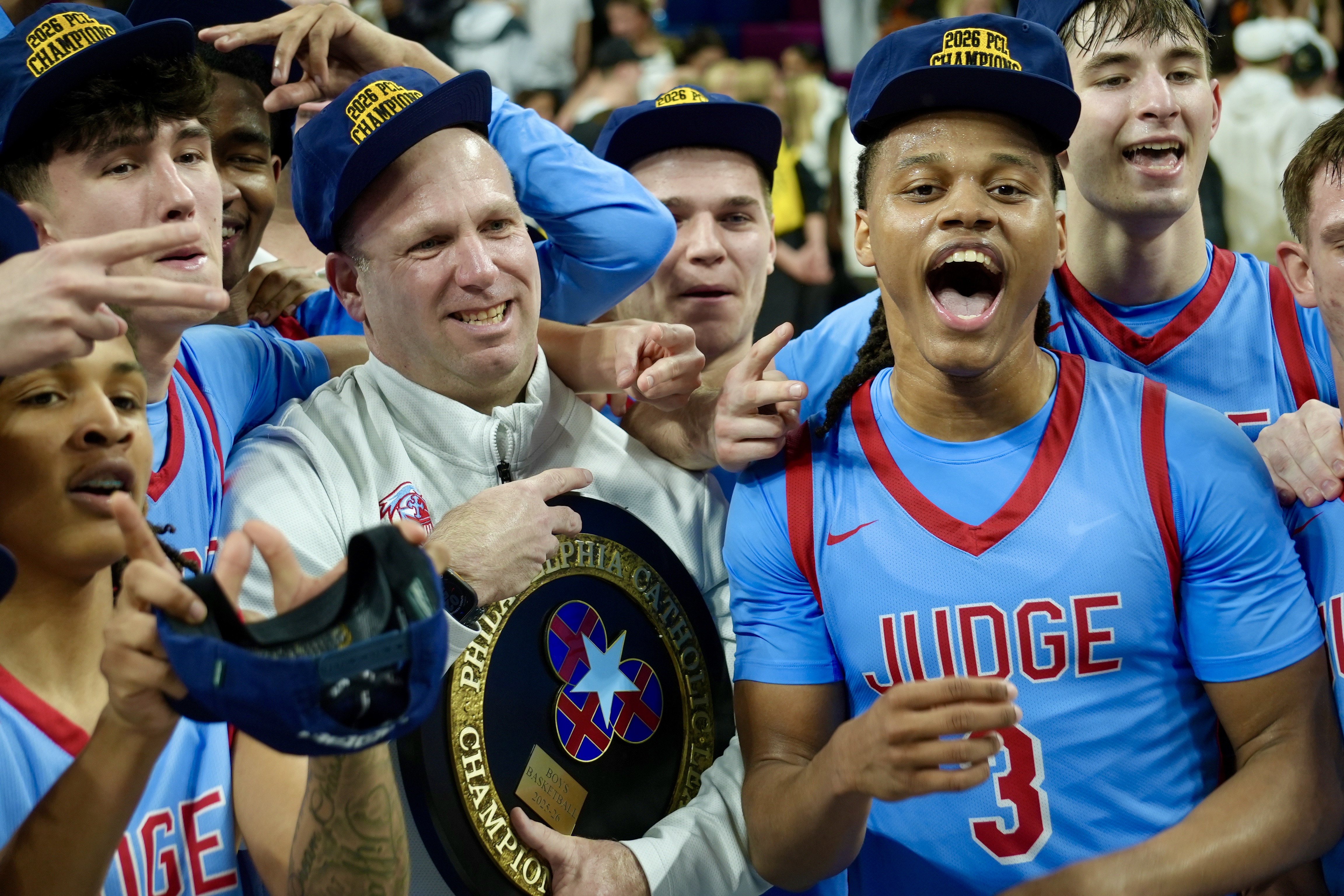
This year’s edition of the championship was not merely a game; it was a reaffirmation. For the past quarter-century, the PCL title game has largely been a coronation, a tug-of-war between two titans: the Neumann-Goretti Saints and the Roman Catholic Cahillites. These are the blue bloods, the programs whose names are etched into the city’s basketball D.N.A. Occasionally, a Hall of Fame coach like the legendary Speedy Morris could sneak a championship or two for St. Joe’s Prep, but the hierarchy felt immutable. Then, the coaching tree began to branch. John Mosco, a longtime Carl Arrigale and Neumann-Goretti assistant, took the reins at Archbishop Wood and led the Vikings to two championships. And from that branch, a new dynasty has flowered.

The New Dynasty on Solly Avenue

Chris Roantree, Mosco’s protégé, has battened down the hatches at Father Judge High School and refuses to surrender the throne. If the biblical cadence of the city’s coaching lineage reads “Arrigale begat Mosco and Mosco begat Roantree,” then Sunday’s 55-52 victory over Neumann-Goretti was the gospel confirmation that the student has not only become the teacher but has built his own cathedral.

The game itself was an instant classic, the kind that justifies the pilgrimage to 33rd and Walnut Streets. When the Crusaders’ seniors, Rocco Westfield and Derrick Morton-Rivera, took a seat on the bench early in the second quarter, each burdened with two personal fouls, the stage was set for a collapse. Neumann-Goretti, the very definition of a blue blood, smelled blood. But Coach Roantree looked to his anchor: the senior Max Moshinski.

What followed was a master class in composure. Moshinski, who did not sit for a second, became the calming eye in the storm of a sold-out Palestra. He finished with a double-double — 10 points and 10 rebounds — but his impact was measured in intangibles: three assists, two steals and three blocks, the last of which deflected a potential game-tying 3-pointer with 43 seconds left. Yet his most significant contribution came in that precarious second quarter. Flanked by a rotation of underclassmen — freshmen Ahmir Brown and Khory Copeland, the sophomore Rezon Harris, and the juniors Naz Tyler and Jeremiah Adedeji — Moshinski didn’t just keep Judge afloat; he kept them calm.

It was a scene that encapsulates everything the P.C.L. purists cherish. Here was a senior, who waited his turn as an underclassman and battled through injury, shepherding a group of wide-eyed freshmen through their first Palestra experience on the sport’s biggest local stage. It was mentorship, not marketing. It was development, not deployment.

This is the world Roantree sold to Moshinski when the player was in eighth grade — a vision that didn’t promise immediate gratification but a legacy. Moshinski, who will play at Iona next year, embodied that promise on Sunday. And Roantree, who in 2021 sat at a dining room table and promised Father Judge’s president a title within five years, has now delivered two in a row. The Crusaders, who won just one league game the season before his arrival, who last won a championship in 1998 — a fact memorialized by a faded T-shirt hanging behind the register at a local deli — are now the kings of the mountain.

Building a Family, Not a Roster

To understand why this matters, one must understand the geography of that mountain. Father Judge is a school on Solly Avenue in the Far Northeast, long known for its soccer players. Roantree didn’t just win games; he changed the postal code of Philadelphia basketball. He convinced Derrick Morton-Rivera, a Mayfair native whose father played at Neumann-Goretti, to stay home and build something new. He spotted Moshinski at a C.Y.O. game and sold him on a dream. He persuaded Rocco Westfield, who can walk to Archbishop Ryan from his home in Morrell Park, to cross the invisible lines of parochial allegiance.

The result was not just a team but a family. It is an image of small-town innocence in a big-city setting, a stark contrast to the transactional nature of the national academies where players are boarders, not sons. The Catholic League has managed to preserve this feeling of purity precisely because it refuses to cede its soul to the forces that seek to commodify its players. It understands that the value of a championship is not determined by the number of Division I signees but by the weight of the moment.

The Radical Act of Tradition

As Roantree climbed the ladder to cut down the nets for the second straight year, and the student section — a few hundred crazies dressed in Columbia blue — began chanting “Three-peat,” it was impossible not to feel that, here, the game remains in its proper perspective. The commercialized circus will return. The poachers will be back on the phone with next year’s freshmen. The six-figure shoe-contract whispers will resume. The national academies will continue to poach.

But for one week every year, in the hallowed halls of the Palestra, none of that matters. The Philadelphia Catholic League championship remains a testament to the radical idea that high school basketball should be about the school, the coach, the community and the kids who dream of cutting down a net in front of 10,000 people who call them their own. It is a tradition that, against all odds, remains unspoiled. And in this era of rampant commercialization, that feels like the most radical rebellion of all.

The American Strain: Trump and the Enduring Creed of White Supremacy

CAMDEN, NJ – To understand Donald Trump, to truly grasp the fervor of the “Make America Great Again” movement, requires a confrontation with a deeply unsettling but irrefutable historical truth: Trump is not an aberration, but an archetype. He is the contemporary embodiment of a classic American figure, whose political power flows directly from the nation’s oldest and most potent strain—a white supremacist ideology that has been intertwined with concepts of democracy and liberty since the nation’s founding. On one hand, the anguish felt by many white Americans today as they witness the MAGA movement’s explicit racism is the anguish of a myth being shattered, the painful awakening from a national narrative that has systematically obscured this foundational reality. Black people, on the other hand, have lived through this movie since 1619.

The Indelible Thread: From Frontier to Empire

The doctrines that birthed the American nation-state were, from their inception, racial in character. Manifest Destiny, the Monroe Doctrine, and the White Man’s Burden are not separate chapters but sequential verses in the same epic poem of Anglo-Saxon supremacy.

Manifest Destiny, framed as a divine mandate to “overspread the continent,” was a theological and racial justification for genocide and land theft, casting Native Americans as “merciless Indian Savages” and Mexicans as obstacles to a providentially-ordained white nation. This was not mere expansion; it was ethnic cleansing codified as national mission. Historical records reveal a staggering decline from an estimated 5-15 million Native Americans prior to 1492 to fewer than 238,000 by the close of the 19th century. This represents a population collapse exceeding 96% over four centuries, driven by a combination of warfare, displacement, and disease, all facilitated by racist/white supremacist government policies.

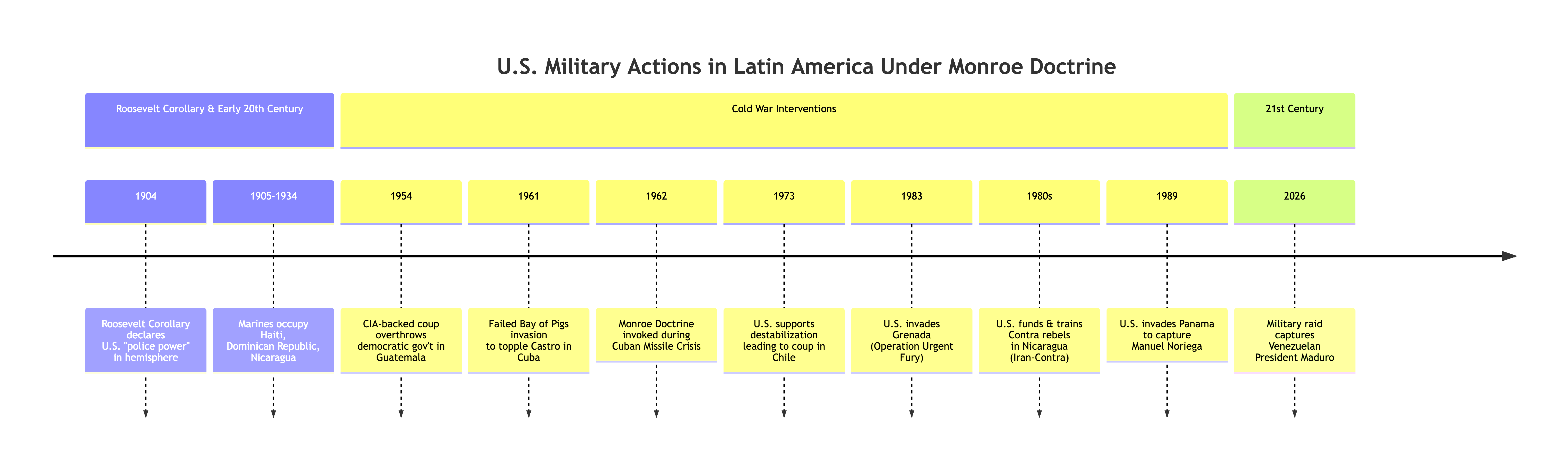
The Monroe Doctrine established the Western Hemisphere as a U.S. sphere of influence, a policy enforced not through diplomatic parity but through a paternalistic belief in the racial and political superiority of the United States over its non-white neighbors. It transformed Latin America into a backyard where military and economic intervention was naturalized, a logical extension of continental conquest onto a hemispheric stage.

The White Man’s Burden provided the humanitarian gloss for overseas empire, framing the brutal colonization of the Philippines and Puerto Rico as a noble, sacrificial duty to civilize “sullen peoples, half-devil and half-child.” It was the export of a domestic ideology, declaring entire populations unfit for self-rule—the same belief that undergirded slavery at home.

These were not fringe ideas but the central engines of national policy, creating a powerful national identity where whiteness was synonymous with sovereignty, virtue, and the right to dominate.

The Great Mis-Education: A Mythology of Innocence

How, then, does a nation built on such explicit racial hierarchy produce citizens who recoil at the explicit racism of a Trump rally? The answer lies in a profound and intentional mis-education.

The American creed presented in textbooks and national myth is a carefully curated edit. It is a story of democracy and liberty, of Pilgrims and pioneers, that systematically decouples these ideals from the racial tyranny that financed and facilitated them. The genocide of Indigenous peoples is minimized to “conflict” or “westward expansion.” The enslavement of millions is segregated into a single tragic chapter, rather than understood as the engine of early American capital. Imperial conquests are framed as benevolent “foreign policy.”

This creates a duplicitous national consciousness. Americans are taught to venerate the Declaration of Independence’s promise of equality while being insulated from the fact that its principal author and most early beneficiaries envisioned that equality exclusively for white men. We celebrate a “melting pot” culture—shaped by Indigenous, African, Latin American, and Asian influences—while the political power to define the nation has been fiercely guarded as a white prerogative. This selective history is a powerful anesthetic. It allows generations to inherit the privileges of a racial caste system while believing fervently in their own nation’s inherent innocence and moral exceptionalism. It makes racism seem like a deviation, a “sin” we are overcoming, rather than the core organizing principle we have continuously refined.

Trump: The Unvarnished Tradition

Donald Trump’s political genius—and his profound traditionalism—lies in his rejection of the anesthetic. He does not traffic in the coded “dog whistles” of late-20th-century politics; he uses a bullhorn, reactivating the unfiltered language and logic of America’s racial id.

His rhetoric is a direct echo of past doctrines. Labeling Mexican immigrants “rapists” and “animals” and African nations “shithole countries” is the dehumanizing language of Manifest Destiny and the White Man’s Burden, applied to modern migration 

. His central promise of a “big, beautiful wall” is a 21st-century racial frontier, a physical monument to the belief that the national body must be purified of non-white “infestation.”

Table: The Ideological Lineage from Doctrine to Trump

Historical DoctrineCore Racial LogicModern Trump-Era Manifestation
Manifest DestinyDivine right to displace “savage” non-white peoples from desired land.The border wall as a new frontier; rhetoric of immigrant “invasion” and “infestation.”
Monroe DoctrineHemispheric dominance and paternalistic intervention over non-white nations.“America First” isolationism that rejects multilateralism while asserting unilateral military/economic power.
White Man’s BurdenThe “civilizing” mission justifies domination over supposedly inferior peoples.Framing immigration bans and harsh policies as protecting American civilization from “shithole countries.”

His policies operationalize this ideology. The Muslim Ban, the crushing of asylum protocols, and the threat to end birthright citizenship are not simply strict immigration measures; they are efforts to legally redefine who belongs to the American nation along racial and religious lines. His administration’s systematic rollback of civil rights protections, from voting rights to LGBTQ+ safeguards, and its dismantling of diversity, equity, and inclusion programs are a direct assault on the fragile infrastructure of multiracial democracy built since the 1960s.

Most tellingly, his adventurous and aggressive militarism—from threatening “fire and fury” against North Korea to deploying federal troops against predominantly Black cities like Washington D.C. and Chicago under the pretext of crime emergencies—reveals the intrinsic link between white supremacy at home and imperial aggression abroad. As academic research confirms, support for militarized foreign policy among white Americans is strongly correlated with racial resentment, viewing non-white nations and peoples as inherent threats or legitimate targets for domination. Trump’s “America First” bellicosity is not an isolationist retreat but a reassertion of a racialized nationalism that sees the world as a hostile arena of competition against lesser peoples.

The Second Backlash and the Crisis of White Identity

Trumpism is the vehicle for a second great white backlash, a historical bookend to the first backlash that destroyed the multiracial democracy of Reconstruction after the Civil War. That first backlash, powered by the Klan, “Lost Cause” mythology, and Northern complicity, re-established white rule through terror and Jim Crow.

The current backlash, ignited by the Civil Rights Movement and supercharged by the election of Barack Obama, seeks to roll back the democratic gains of the past sixty years. Its fuel is white grievance—a pervasive fear among some white Americans that demographic change and racial equity represent a loss of status, a zero-sum dispossession . Slogans like “Take Our Country Back” and the defensive cry of “All Lives Matter” are the modern lexicon of this backlash, inverting reality to frame the pursuit of equality as an unfair attack on a threatened majority

.This is the source of the anguish for well-intentioned white Americans. They were raised on the edited, duplicitous creed. They believed in a forward-moving arc of progress. To see the naked brutality of racism not only re-emerge but be cheered from the highest podium shatters that narrative. The difficulty is in reconciling their own identity with the realization that the “greatness” many are nostalgic for was, for others, a regime of explicit subjugation. It is the pain of realizing that the comforting national myth is a lie, and that a more honest, more brutal history is demanding reconciliation.

Conclusion: Facing the Unbroken Line

Donald Trump is a classic American figure because he channels the nation’s most enduring political tradition: the mobilization of white racial anxiety to consolidate power and resist the expansion of a truly pluralistic democracy. He has ripped away the veneer of the mis-educating myth, revealing the unbroken line from the Puritan city on a hill to the MAGA rally.

To argue that this is not “real” America is to indulge in the very fantasy that enabled it. Racism and white supremacy are not un-American; they are as American as apple pie, woven into the fabric of our institutions, our geography, and our national story. The democratic ideals we rightly cherish have always coexisted in tension—and often in outright conflict—with this hierarchy. The struggle of the 21st century is not to defeat a foreign intrusion, but to finally sever this entrenched lineage. It begins by abandoning the comforting lie of national innocence and confronting, at last, the difficult truth of who we have been, and therefore, who we risk remaining.

A Black Grandfather’s Open Letter to a Grandson Facing a New Jim Crow

January 12, 2026

Dear Kameron,

Three days ago, you turned 9 years old, full of the vibrant energy and intellectual curiosity I so adore. Today, I am 61, a number that grants me the perspective of a witness. I was born on this date in 1965, five weeks before Malcolm X was killed, three years before Martin Luther King Jr. was assassinated, a child when Fred Hampton was murdered. You are now the age I was when the 1970s dawned, a decade that promised much and retreated from even more.

I write this to you not just as your grandfather, but as a Black man who has had the profound privilege you may never know: I sat with my grandfathers, and even my great-grandfathers. These men lived under American apartheid—Jim Crow. I heard their stories, but only the ones they chose to tell. I never knew, truly knew, how their hearts broke when they saw the photograph of Emmett Till’s brutalized body, or what silent fury coiled inside them when news came of four little girls blown apart in a Birmingham church. Their inner worlds, their perceptions of the abhorrent conditions they endured, are lost to me. I cannot ask them. That loss is a specific kind of grief.

So I write to you now, for the day you turn 61 and I am long gone. I write so you will know, without question, how your grandfather saw this moment of drastic and unnerving upheaval in the age of Trump, and so you will understand the single most important task before your generation: the curation and dissemination of our counter-narratives.

The American Creed: A Doctrine of Contradiction

First, you must understand the bedrock truth: racism and white supremacy are not an aberration in America; they are part of the American Creed. This nation was conceived in a fatal contradiction—liberty alongside bondage, freedom alongside a race-based caste system. That contradiction was not an accident; it was a design feature. The “MAGA”movement you hear about is not a novel phenomenon. It is the latest, most overt embrace of this original tradition. It seeks not to make America great again, but to make America’s racial hierarchy explicit again. They understand a fundamental principle: he who controls the past controls the future. This is why their most relentless campaign is against memory itself.

The War on Memory and Why It Targets You

Kameron, the fierce movement to ban so-called “critical race theory” from classrooms is not about a complex academic framework. It is an attempt to erase the brutal and inhumane history that is your inheritance. It is a drive to sanitize the past, to turn the genocide of Indigenous peoples, the savagery of the Middle Passage, the terrorism of lynching, and the systemic cruelty of Jim Crow into vague “mistakes” or, worse, omit them entirely.

The simultaneous attack on Diversity, Equity, and Inclusion (DEI) is the policy arm of this erasure. It is an effort to firmly re-entrench that caste system, to dismantle the meager tools created to ensure people like you might have a fighting chance in institutions built to exclude us. They are selling a revisionist history of a pure, virtuous nation, and any fact that complicates that fiction must be destroyed.

You are living through what historians will recognize as the Second Great White Backlash. The first came after Reconstruction (1865-1877), when the fleeting promise of multiracial democracy was drowned in a wave of lynching, Black codes, and the establishment of Jim Crow. We are now witnessing the furious response to the cultural and political progress symbolized by the Civil Rights Movement and, more potently, by the presidency of Barack Obama.

A Legacy of Strategizing Against the Scourge

Do not believe for a moment that our people have been passive in the face of this centuries-old scourge. Your bloodline is one of strategists. We have debated the path in cotton fields, barbershops, churches, dorm rooms, song lyrics and kitchens for generations.

Denmark Vesey and Nat Turner saw rebellion as the only solution.

Martin Delany and Marcus Garvey determined emigration was the only route to dignity.

Booker T. Washington argued for accommodation and economic advancement, setting politics aside.

Elijah Muhammad and Malcolm X preached separation from the “white devil.”

Martin Luther King Jr.Bayard Rustin, and a legion of others staked their lives on nonviolent, moral protest.

These were all responses to the same core antagonism: a nation that vowed liberty yet practiced bondage. The MAGA movement seeks to eliminate the very possibility that you, Kameron, will understand this long, strategic conversation. They want you ignorant of your own intellectual and resistant heritage.

The Battle for the Narrative: Why Civil Society Must Be Our Fortress

This brings me to my urgent plea. The mainstream avenues of information are failing or have been co-opted. Legacy media is consolidated and often sympathetic to the forces of revisionism. Billionaire tech overlords control the algorithms of Twitter, Facebook, and TikTok—opaque systems that can amplify lies and bury truth with a tweak of code. You cannot rely on them to tell your story.

Therefore, enlightened Blacks and people of color must become relentless curators and disseminators of counter-narratives. This letter is a small act of that curation. We must build and fortify our own institutions of memory and truth-telling.

The Black church must be more than a place of Sunday worship; it must be a sanctuary for our historical truth.
Our fraternities and sororities must pass down not just rituals, but the unvarnished chronicle of our struggle.
Our barbershops and beauty salons must remain seminaries of street-level scholarship.
Our historians, artists, filmmakers, and writers must be supported, celebrated, and protected.
Our family dinners must become spaces where we explicitly connect the past to the present.


We must create our own archives, our own film series, our own book clubs, our own social media networks. We must document, document, document. We must tell our stories to our children with the complexity and courage they deserve.

My Charge to You

Kameron, when you read this at 61, you will have lived through the flowering of this second backlash. I do not know what America you will see. But I need you to know what I saw, and what I feared.
I feared a nation that chooses amnesia over atonement. I feared a system that would try to make you a stranger to your own history. But I also have hope, because I see you. I see your brilliance.
My deepest wish is that this letter finds you as a man who has taken up this sacred work. That you have been a curator of truth for your children and your community. That you understood your grandfather’s perception not as a burden, but as a blueprint. The American experiment’s fatal contradiction remains unresolved. Your generation will not complete the work, but you must advance it.
The only way forward is to hold, protect, and loudly proclaim our counter-narrative. It is the story of our survival, our analysis, our sorrow, our joy, and our unwavering demand for a humanity this country has too often denied. It is the story I pass to you.

Keep it. Add to it. And pass it on.
With all my love and faith in you,


Pop Pop

Neumann-Goretti Launches ‘Patron Saints’ to Preserve the Soul of Scholastic Basketball

PHILADELPHIA — In an era where the soul of traditional high school basketball is increasingly traded for national spotlight and transactional deals, one Philadelphia powerhouse is drawing a line on the hardwood of its home court. The Neumann-Goretti Saints boys’ basketball program today announced the launch of the “Patron Saint Donor Campaign,” a clarion call to preserve the last vestiges of Philly’s traditional scholastic basketball.

The campaign is not merely a fundraiser; it is an innovative and ncessary mobilization. It is a bid for reinforcements in a quiet but intensifying war for the very identity of the sport. For decades, elite basketball was forged in the crucible of local rivalry—in the packed, echoing gyms of neighborhood Catholic and public schools where the dreams were city titles, district crowns, and state championships. The heroes wore the names of their communities on their chests.

That era is fading. Today, the gravitational pull of national basketball academies, with their focus on individual rankings and nascent NIL empires, is siphoning talent from the historic bastions of the game. Iconic programs like Neumann-Goretti, Roman Catholic, DeMatha, Camden, Imhotep, and Chester—institutions that are pillars of their cities—find themselves battling not just for wins, but for their existential relevance.

Yet, Neumann-Goretti refuses to cede the court. The Saints continue to compete at the highest national level, consistently facing off against well-funded, coast-to-coast academies. Their strategy is not to emulate these new models, but to defeat them through the very traditions that built the program: deep local talent, ferocious team identity, and the unbreakable bond between a team and its community.

“This campaign is an innovative response to a national problem,” said Delgreco Wilson, Black Cager Sports. “Neumann-Goretti is not a franchise. It is a Philadelphia institution. To win this fight, they need the army that has always been their foundation: their community.”

The Patron Saint Donor Campaign offers basketball purists and Philadelphia loyalists a direct stake in this struggle.

For the 2025-26 season, a limited cadre of just 20 supporters will be enlisted as “Patron Saints.” A donation of $100 secures this enlistment, granting:

  • Free entry to all Neumann-Goretti HOME games, guaranteeing a seat at every battle, even sellouts against national opponents.
  • A distinctive Patron Saints t-shirt, a uniform of solidarity.\
  • A $10 coupon for the official team store.

“We are calling on anyone who loves what high school basketball was, and what it still should be,” said Assistant Coach Pat Sorrentino. “When you become a Patron Saint, you are not just buying a ticket. You are enlisting in the cause. You are helping to ensure that the future of this game isn’t shaped solely in impersonal academies, but continues to thrive on the home floors where passion is born and legends are made.”

The offer is intentionally exclusive, mirroring the prized, hard-fought nature of a spot on the Saints’ roster itself.

The mission is clear: to provide the resources for Neumann-Goretti to continue its dual quest—to hunt national titles while fiercely guarding the local, communal soul of the sport.

To learn more and to enlist as a Patron Saint for the 2025-26 season, visit the Neumann-Goretti Athletics website. All 20 spots are expected to be claimed swiftly by those who believe the fight is worth the price of admission.

###

About Neumann-Goretti High School: Neumann-Goretti High School, a Catholic secondary school in the Franciscan tradition located in the heart of South Philadelphia, has long been a national epicenter for basketball excellence. Its program is defined by a profound commitment to community, discipline, and the development of young men as both athletes and citizens, producing countless collegiate standouts and professional players.

Carrying the Weight of History: Why Black America Sees Itself in Shedeur Sanders

PHILADELPHIA, PA – To watch Shedeur Sanders play quarterback—with his pre-snap poise, his audacious no-look passes, his celebrated, unflappable “Shedeur Face”—is to witness more than a talented athlete. It is to observe a cultural reclamation project. His overwhelming support within the Black community, often chalked up simplistically to his confidence and swagger, is rooted in something far deeper than style. It is a profound, collective recognition. It is the applause of a community that sees in his assured success not just one man’s triumph, but a symbolic redress of a brutal, systemic history—a history whose scars are woven into the very DNA of Black American experience.

The Foundation: American Apartheid on the Playing Field
That history is an American Apartheid, a regime of exclusion not confined to the Deep South but sanctioned at the highest levels of national life, including the playing fields. From its inception in 1906 through the early 1970s, the NCAA operated as a gentlemen’s agreement for segregation, formally barring Black athletes from member institutions, particularly in the powerhouse conferences of the South. For seven decades, the Paul Robesons, Jackie Robinsons, and Jesse Owenses were brilliant, solitary exceptions proving a cruel rule. The Civil Rights Movement forced the gates open, leading to the rapid “tanning” of revenue sports by the 1980s. But the institutional response was not embrace, but a strategic recalibration of exclusion.

The Bureaucratic Barrier: When “Eligibility” Became the New Gate
When blatant segregation became illegal and immoral, the mechanisms of denial became bureaucratic. The NCAA’s evolving “initial eligibility” rules—Proposition 48, the Core Course requirements, sliding GPA scales tied to standardized tests—were weaponized as a more nuanced gate.
Legends like Georgetown’s John Thompson II and Temple’s John Chaney, towering figures who used their platforms without apology, called this what it was: racism. “The NCAA is a racist organization of the highest order,” Chaney declared in 1989, framing the rules as a new punishment for Black kids already punished by poverty. Thompson saw the cynical cycle: athletes were used as integration’s pawns under the guise of benevolence, then discarded with the same paternalistic logic when their numbers grew too great.

The Instinctual Knowledge: A Community Remembers What Was Lost
This is the buried trauma in the collective memory of Black sports fandom. It is the instinctual knowledge that for every Shedeur Sanders lighting up a Power 5 stadium today, there were countless Willie “Satchel” Pages, “Bullet” Bob Hayeses, and Doug Williamses of yesteryear who were denied the stage, their stats relegated to the glory of HBCU lore, their professional careers delayed or diminished. It is the understanding that the path was not cleared, but grudgingly conceded, inch by contested inch.

This brings us back to Shedeur. His journey is a direct rebuke to that entire historical project of exclusion.

Shedeur as Historical Agency, Not Just Athletic Talent
He began not at a traditional blue-blood program, but at Jackson State University, an HBCU, under his father’s tutelage. There, he didn’t just play; he dominated, showcasing a talent so undeniable it forced the mainstream to look to the HBCU, reversing the decades-long drain of talent from them. His subsequent transfer to Colorado and his record-shattering performance—37 touchdowns, 4,134 yards, Big 12 Offensive Player of the Year—wasn’t an assimilation. It was an annexation. He carried the HBCU-developed swagger into Boulder and made it the epicenter of college football.

His confidence, therefore, is read by the Black community as more than personal bravado. It is historical agency. It is the embodiment of a truth: “You could not keep us out forever, and now that we are in, we will not perform with grateful humility. We will excel with the unmistakable flair of those who know the cost of the seat we now occupy.” His much-discussed “swagger” is the posture of liberation from the historical narrative of being the excluded, the regulated, the “problem” to be managed by NCAA legislation.

The Echo in the Draft: A Familiar Story Reinforces the Bond
The fact that his prolific college career culminated in a fifth-round NFL draft pick—seen by many as a slight given his production—only reinforces the narrative. The community, schooled by history, sees the echoes: the subtle devaluation, the search for flaws in the Black quarterback, the institutional reluctance to anoint him the franchise cornerstone his college play warranted. Yet, even in that perceived slight, the support does not waver; it intensifies. Because the story is no longer about what the gatekeepers decide. It’s about what Shedeur, and by extension the community that sees itself in him, has already proven.

An Unfinished Battle, and a Symbol of Its Progress
The contemporary NCAA debate continues, now often couched in the softer language of “unintended consequences” for minority students, as noted by groups like the National Association for Coaching Equity and Development. But the shift from Chaney’s and Thompson’s explicit charges of racism to today’s milder objections itself tells a story of a battle partly won, yet ongoing.

Shedeur Sanders walks onto the field bearing the weight and the defiance of that unfinished battle. The Black community’s embrace is a celebration of his individual talent, yes, but it is also a collective, cathartic affirmation. It is the joy of witnessing a grandson of American Apartheid not just cross the forbidden line, but do so with a dismissive wave, a nod to the crowd, and a perfect spiral into the end zone. His confidence is their vindication. His swagger is their memory, weaponized, and set free.

“Coonish” Behavior: Stephen A. Smith, Jason Whitlock, and the Price of Modern Manumission

By Delgreco K. Wilson, Contributing Opinion Writer

For centuries in America, a grim and paradoxical transaction has shadowed the Black quest for advancement: the exchange of communal fidelity for individual freedom. It is a bargain as old as the nation itself, rooted not in the brutality of the whip, but in the insidious mechanics of psychological and economic leverage. Today, we witness a modern, media-saturated iteration of this dynamic. In the sprawling arena of sports commentary, figures like Stephen A. Smith and Jason Whitlock have built lucrative empires. Their success, however, is shadowed by a persistent and bitter accusation from within the Black community: that they are “coons,” a devastating label of racial betrayal. Their critics are identifying a pattern that feels like a 21st-century performance of meritorious manumission—a striving for personal elevation and favor by servicing narratives that comfort a powerful, predominantly white conservative audience, often at the expense of Black solidarity.

The Historical Bargain: Labor for a Glimmer of Freedom

The foundation of this American transaction is centuries deep. The economic architecture of the early republic was built on Black labor without Black liberty. From the cotton fields that fueled the national economy to the domestic servitude that sustained its households, Black work was the indispensable engine. Yet, the profit from that labor was perpetually alienated. The promise, always dangling, was that exceptional service, superhuman diligence, or unwavering loyalty might be rewarded with a sliver of relief—a less cruel master, a chance to buy one’s family, a mythical pathway to acceptance. This established a corrosive template: advancement could be contingent on reinforcing the system’s logic and calming its conscience. The doctrine of “racial uplift” that followed Emancipation demanded impeccable, respectable conduct to assuage white America’s fears and guilt, proving worthiness for basic citizenship. Diligence became a currency, not just for wages, but for attempting to purchase dignity from a system that withheld it by design.

The Modern Marketplace: From Plantations to Podcasts

The post-Civil Rights era did not erase this template; it digitized and broadcast it. The terrain shifted from physical plantations to cultural and ideological ones. As structural and institutional racism persisted, a new marketplace emerged for Black voices willing to translate Black struggle for white audiences, particularly those eager to believe the work of racial justice is complete. This is where the spectacle of figures like Smith and Whitlock becomes a case study. Their playbook is not one of outright bigotry, but of strategic division and absolution, performed for mass consumption. They operate within a media ecosystem that generously rewards controversy that confirms existing biases, creating a powerful incentive to mine intra-community conflict for content that resonates with a broader, whiter audience.

The Playbook of Modern Manumission

Their performance manifests in several consistent, damaging patterns:

The Dilution of Collective Grievance. When vandals scrawled a racial slur on LeBron James’s home, Jason Whitlock dismissed it as a “disrespectful inconvenience,” arguing racism is “primarily an issue for the poor” and that wealthy Black people should not “embrace victimhood.” This is a classic maneuver. By creating a class hierarchy of pain, he fractures communal empathy and offers a narrative of exception. It tells white audiences that systemic racism is either overstated or a crutch for the unsuccessful, while offering successful Black individuals a ticket out of collective identity—if they renounce it.

The Policing of Black Expression. Stephen A. Smith faced backlash for instructing Black Congresswoman Jasmine Crockett on how she “should talk to the President,” a moment critics saw as enforcing respectability politics. This echoes the historical demand that Black anger be polished into palatable, non-threatening discourse. The transaction here is clear: temper your tone, conform to my comfort, and your voice will be amplified on my platform. It is a modern-day echo of being rewarded for “knowing one’s place” in the conversation.

The Strategic Alliance. Perhaps most revealing is the alignment with architects of racial backlash. Smith’s frequent appearances on Sean Hannity’s show are not incidental. Hannity, who trafficked in the racist “birther” conspiracy against President Barack Obama, represents a media ecosystem invested in denying the very structural racism that defines so much of Black American life. To be a welcomed guest in that house is to perform a powerful act of reassurance. It signals that the analysis will not be too sharp, the history not too inconvenient, the demands not too disruptive. This alliance is the clearest evidence of the transaction: access and platform in exchange for a veneer of ideological diversity that demands little substantive change.

A Spectacle Within the Spectacle: The Smith-Whitlock Feud

The bitter, very public feud between Smith and Whitlock themselves underscores the performative nature of this space. They trade nuclear insults, with Smith calling Whitlock “the devil in the flesh” and “worse than a white supremacist,” while Whitlock labels Smith a “fraud” and a “pathological liar” installed by corporate powers. This is more than personal animus; it is a brutal competition within a narrow lane. They are jousting for the crown of the most compelling Black voice in the conservative-coded spectacle, each accusing the other of the very inauthenticity and opportunism their critics see in them both. It is a meta-commentary on the transaction itself, exposing the ruthless jockeying for position and favor that underlies it. Their conflict dramatizes the ultimate isolation of this path: a solitary pursuit of status that necessitates tearing down the nearest competitor, leaving solidarity in ruins.

The Justification for Disavowal: Preserving Collective Struggle

And so, the community’s fierce condemnation—the label of “coon,” the disavowal—is not a denial of their right to individual opinion. It is a historical and political judgment. It is the recognition that their chosen path to “merit” mirrors the old, soul-crushing bargain. They are seen as seeking manumission from the burdens of racial solidarity by performing a service: managing Black anger, explaining away Black pain, and validating the view that the primary remaining barriers are personal, not systemic.

The justified fury they provoke is born of a deep understanding that true liberation has never been won through these solitary transactions. The March on Washington, the Civil Rights Act, the political power of the Black electorate—these were won through collective struggle, un-bought and un-bossed. To see Black media elites today build personal wealth and brand power by seemingly undermining that collective project feels like a profound betrayal. It is the spectacle of the historically shackled selling a blueprint for lighter chains, and calling it freedom.

Conclusion: The Unfinished Story and the Refusal

In the end, the saga of Smith and Whitlock is a painful reflection of an unfinished American story. It reveals that the marketplace for racial commentary still rewards those who make the complex simple, the systemic personal, and the uncomfortable soothing. Their success is a testament not to their individual genius, but to the enduring demand for a certain kind of Black voice—one that, for a price, helps assuage a nation’s guilt without demanding the fundamental change that true absolution requires. The Black community’s disowning of this model is not an act of censorship, but an act of preservation. It is a refusal to let the transaction of the past define the value of their future. It is a declaration that some forms of meritorious manumission are, in fact, a more sophisticated bondage.

###

Delgreco Wilson 

Wilson formerly taught Comparative Politics and International Relations at Lincoln University. He is a leading political analyst, educator, and advocate whose work centers on empowering Black Americans through a deeper understanding of political strategy and its historical roots in the fight against systemic racism and white supremacy. A prominent voice in the Greater Philadelphia Region, Wilson brings a wealth of academic rigor and real-world insight to his analysis of Black political thought and action.

Wilson’s expertise extends beyond the classroom. His incisive columns and articles have been featured in prominent publications such as the Philadelphia Inquirer,  Philadelphia Tribune, Baltimore Afro-American  and Delaware County Daily Times. A sought-after commentator, he regularly contributes to radio programs and podcasts across the Mid-Atlantic region, offering sharp analysis and actionable strategies for advancing racial justice and equity.