White Men Supporting MAGA is a “Rational” Decision in the American Historical Historical Context

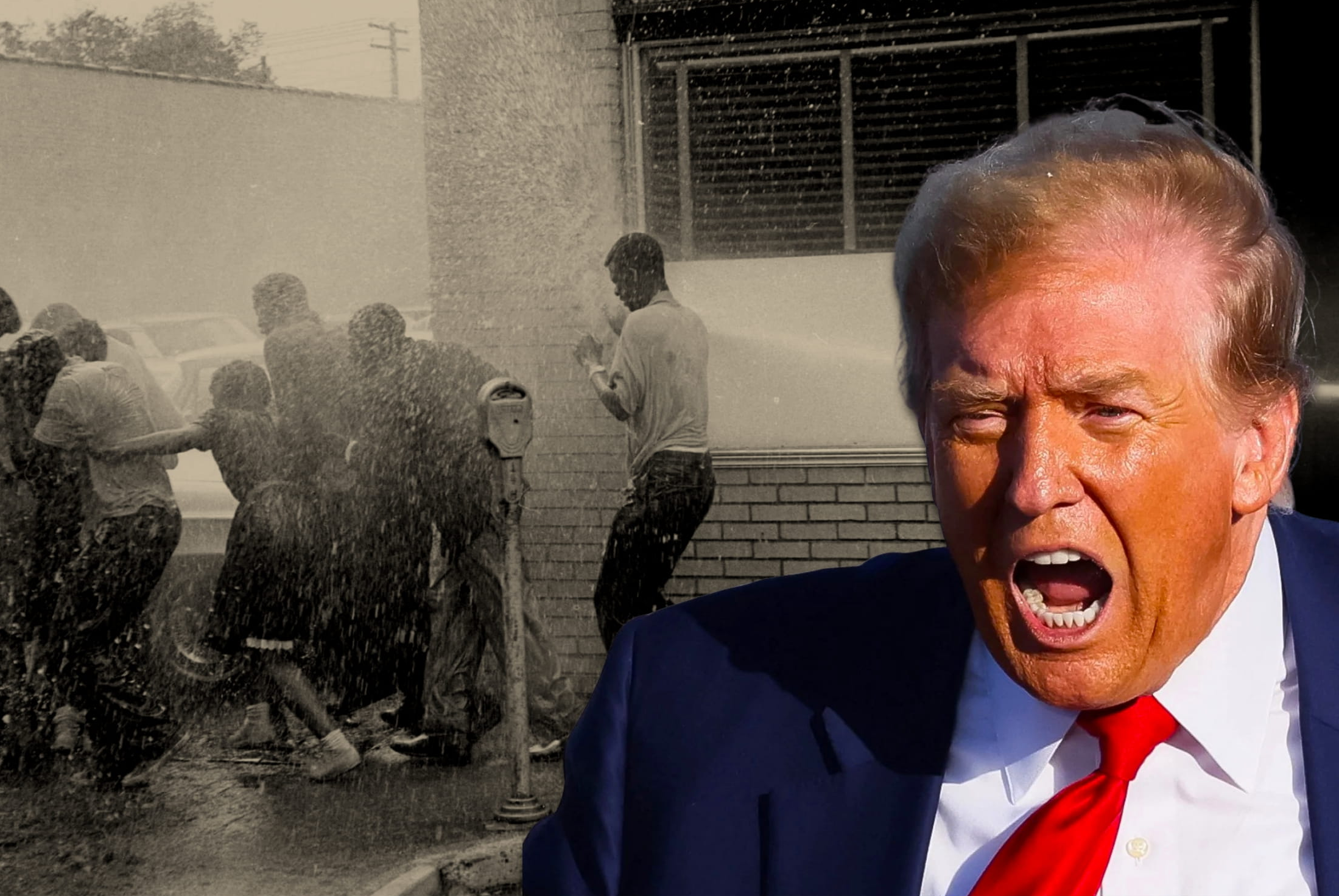
PHILADELPHIA, PA – We have spent the better part of a decade diagnosing the MAGA movement as a psychological affliction. We have called it a fever, a sickness, a carnival of grievance fueled by economic anxiety, racial resentment, or plain ignorance. We have assured ourselves that the white men who form its emotional and electoral core are voting against their own interests, seduced by a demagogue who exploits their fears while delivering nothing of material value. This diagnosis is comforting. It is also wrong. The most underappreciated feature of the MAGA movement is not its rage or its demagoguery. It is its strategic rationality. From a white male perspective, measured against the actual historical record of American political life, support for Donald Trump and the contemporary Republican Party is not a tantrum. It is a meticulously calculated portfolio allocation, a prudent defense of tangible assets in a marketplace that has always rewarded the ruthless pursuit of group interest.

To dismiss the MAGA coalition as a fever swamp of irrationality is to fundamentally misunderstand both its durability and its danger. The movement has, with considerable sophistication, built upon a long-standing, firmly entrenched American tradition and constructed a modern political decision-making framework that presents support for President Trump as a calculated allocation of political and social capital. This allocation is based not on fantasy but on a clear-eyed assessment of the anticipated actions, reactions, and preferences of non-white immigrants, Black and brown citizens, women, Muslims, and other constituencies whose ascendance threatens to reorder the hierarchy that has governed American life since its founding. We must confront an uncomfortable truth: within the logic of American history as it has actually been practiced, not as it has been mythologized, the MAGA investor is behaving with impeccable rationality.
The Democracy That Never Was

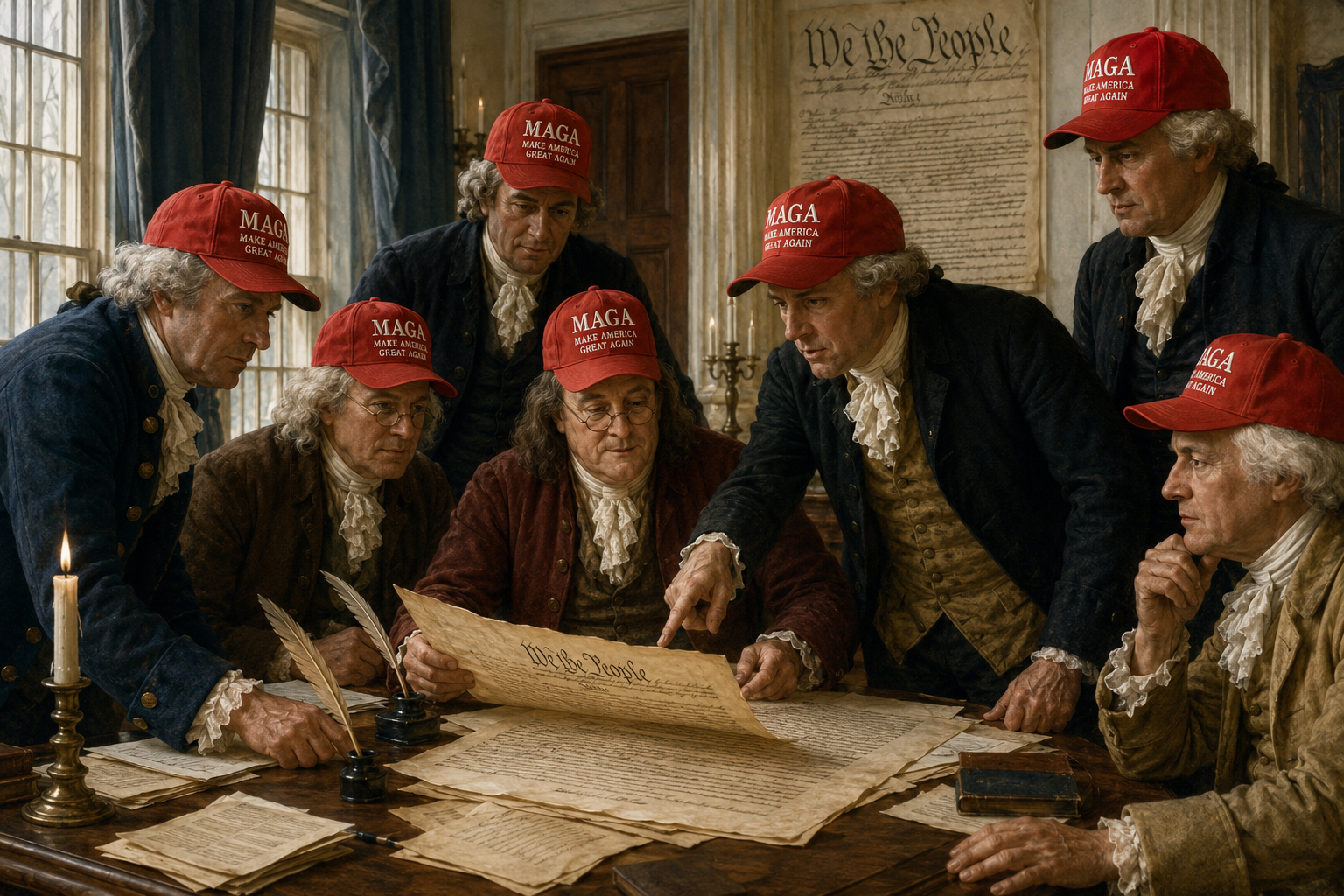
Before we can assess the MAGA portfolio, we must acknowledge the market in which it operates. American democracy has never been the egalitarian enterprise of our civic textbooks. It has, from its inception, allowed for the brutal suppression and oppression of non-white, non-male inhabitants while somehow retaining its status as a democratic society in the eyes of historians, political scientists, and legacy media outlets. This is not a radical critique; it is a plain reading of the historical record. The Constitution was a slaveholder’s compact. The three-fifths clause inscribed Black personhood as a fraction. Indigenous nations were subjected to ethnic cleansing dressed as federal policy. Women of all races were excluded from the franchise until the 20th century. Chinese immigrants were banned by name. Japanese Americans were interned. Jim Crow governed half the country for a century with the explicit blessing of the Supreme Court.

Throughout all of this, the United States was celebrated—and continues to be celebrated—as the world’s preeminent democracy. This is the essential context for understanding white male political behavior. The American political tradition has been defined more consistently by an inegalitarian tradition that justifies the unequal status and political exclusion of groups based on race, gender, ethnicity, and religion than it has been defined by the liberal tradition of individual rights and egalitarian ideals. The liberal tradition is real. It has inspired movements of extraordinary moral courage. But it has almost always been the challenger, not the incumbent. The incumbent, the default setting, the reliable yield across centuries, has been ascriptive hierarchy. The MAGA movement is not a departure from this tradition. It is its contemporary manifestation, its latest and most transparent expression.

The Asset Allocation of a Threatened Class

Within this historical marketplace, the white male MAGA investor is making choices that are legible, logical, and in many respects shrewd. The political decision is framed not as a single vote but as a diversified portfolio designed to hedge against multiple, cascading risks. The immediate returns are tangible and communicated with market-like clarity.

The elimination of Diversity, Equity, and Inclusion programs is presented as the removal of a structural tax on whiteness, an immediate correction to a labor and education market allegedly distorted by artificial preferences that disadvantage white men. Whether or not one accepts this characterization, the logic is internally coherent: if you believe the playing field has been tilted against you, eliminating the mechanism of tilting constitutes a direct material gain. The promise of mass deportation addresses a perceived depreciation of cultural and economic assets—neighborhood cohesion, wage floors in certain sectors, linguistic and cultural dominance—that unrestricted immigration allegedly erodes. The rollback of reproductive rights, while framed in the language of moral conviction, serves a dual function within the portfolio. It is perceived as a means to increase declining white birth rates, a demographic hedge against the “tanning” of America. And it represents a restoration of traditional gender dividends, re-securing the patriarchal returns that feminism had systematically devalued.

These are the blue-chip holdings, the steady and reliable yields.

Then there are the speculative assets, the high-risk, high-reward investments that reveal the portfolio’s ultimate ambition. The January 6 pardons, the attempted creation of a nearly $1.8 billion compensation fund for Trump allies who claim unjust prosecution, and the open discussion of retribution against political enemies represent a wager that the legal and normative constraints on executive power can be permanently rewritten. They are, in portfolio terms, a form of political catastrophe insurance. If the demographic clock is indeed ticking toward a majority-minority nation by 2045, these instruments are designed to lock in structural advantages—judicial appointments, administrative control, legal immunities—that can survive the loss of numerical dominance. The explicit hope is not subtle. It is that white male political dominance and cultural supremacy can be explicitly re-established, insulated from the vicissitudes of democratic competition. The “stop the steal” movement and the cascade of voting restrictions are not merely sour grapes about a lost election. They are a calculated effort to de-risk the electoral marketplace itself, limiting participation by constituencies that threaten the portfolio’s long-term viability.
The Rational Actor Frame

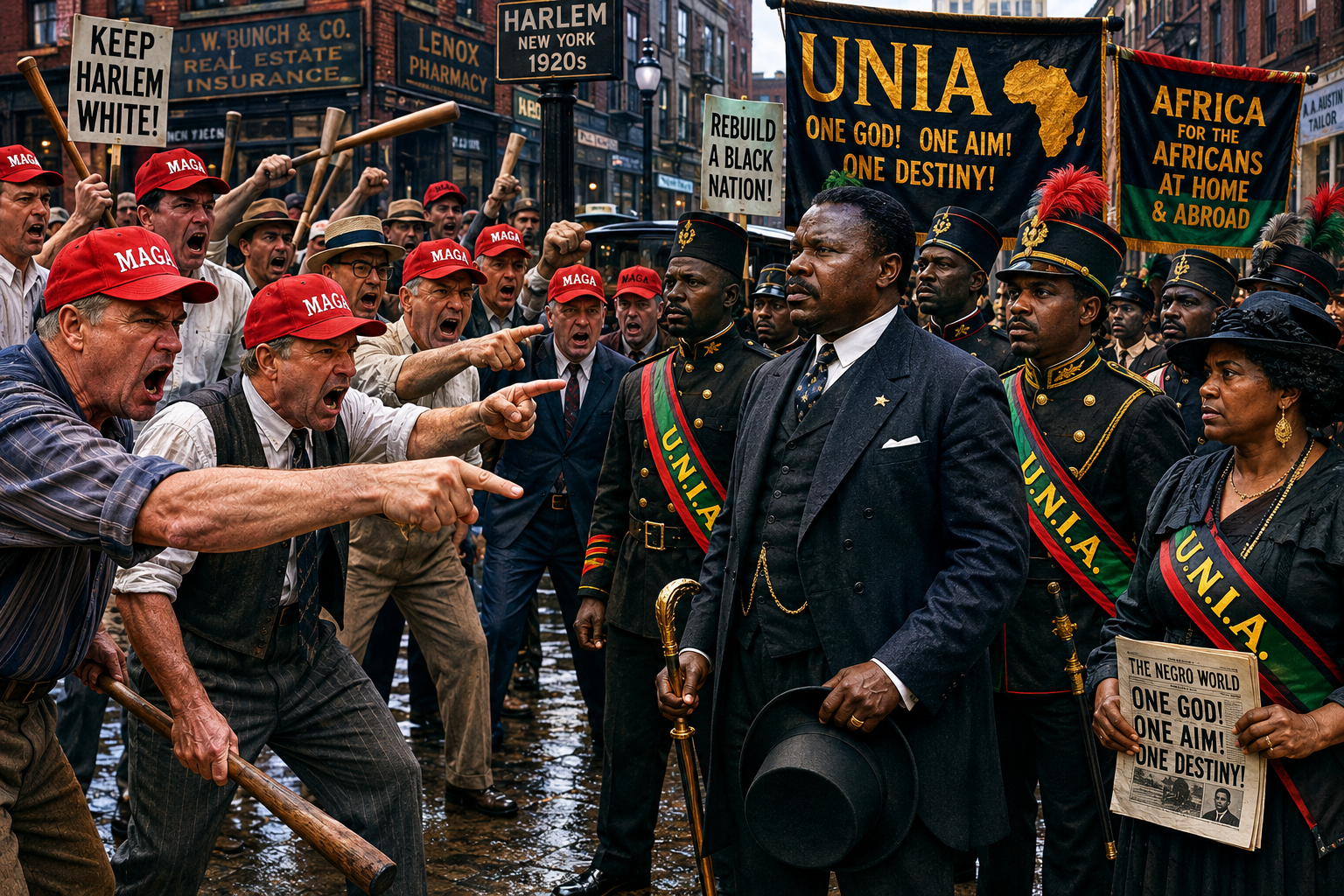
This framing of political choice as rational portfolio management serves a crucial ideological function: it launders the moral content of the decisions being made. The language of interests, returns, and risk management provides a technocratic gloss over what is, at its core, an allocation of power to a movement defined by its ascriptive hierarchy. It allows the white male voter to see himself not as a beneficiary of a resurgent white supremacy but as a prudent investor responding to market signals. He is not making a moral choice to subordinate others. He is making a rational choice to protect his own.

This is the modern iteration of the relentlessly applied and rigorously enforced inegalitarian tradition that has always justified the unequal status and political exclusion of groups based on race, gender, ethnicity, and religion. The MAGA framework is not merely prejudiced. It is a sophisticated, elite-driven political movement supported by a scaffolding of pseudo-scientific racial theory, religious nationalism, and revisionist history, all deployed to defend white male supremacy. The frame is powerful precisely because it leverages the core American mythology of the calculating, self-interested individual, the homo economicus of the free market, and applies it to the democratic sphere. It transforms civic participation into a personal investment strategy, with all the moral weight of a 401(k) allocation. You may despise how a man invests, but you cannot easily argue he is irrational for seeking the highest return.

The Moral Costs Excluded from the Balance Sheet

The portfolio also excludes the human costs borne by those outside the investment class. The demonization of immigrants as “poisoning the blood of our country” is not an externality. It is a deliberate strategy that inflicts real terror on real families, that separates children from parents, that turns communities into battlegrounds. The assault on women’s bodily autonomy is not a restoration of traditional values. It is a state-mandated appropriation of female biology with measurable consequences in maternal mortality, economic freedom, and human dignity. The “war on woke” is not a defense of intellectual freedom. It is a concerted campaign to suppress the very knowledge traditions that could name and critique the hierarchy being constructed. These are not side effects. These are the product being purchased. The investor simply declines to list them on his balance sheet.

The Asymmetry of Fear

What the portfolio frame most aggressively suppresses is the historical asymmetry of the risk it claims to be hedging. The fear that animates the MAGA coalition—the fear that a “tanning” America will subject white men to the same oppression and suppression they have historically imposed for more than 250 years—is a fear of losing a dominant position, not a fear of experiencing subjugation. It is a category error dressed as a symmetry, and it is essential to the portfolio’s emotional logic.
To have occupied the presidency, the Senate, the House, the governor’s mansions, and the Supreme Court for nearly the entirety of the nation’s history—and then to witness the ascension of a Black president, Barack Obama, and frame that single eight-year interruption as evidence of impending white subjugation—is a remarkable act of historical revisionism. It confuses the loss of unearned privilege with the imposition of tyranny. After the Obama presidency, white male voters have responded by installing an unabashed white supremacist in office, a president who encourages insurrection, pardons its perpetrators, and governs explicitly in the interest of his core demographic. This confusion of equality with oppression is not a bug in the portfolio logic. It is the foundational assumption that makes the entire investment thesis cohere. The MAGA investor is not protecting himself from tyranny. He is protecting himself from democracy.
The Architects and the Investors

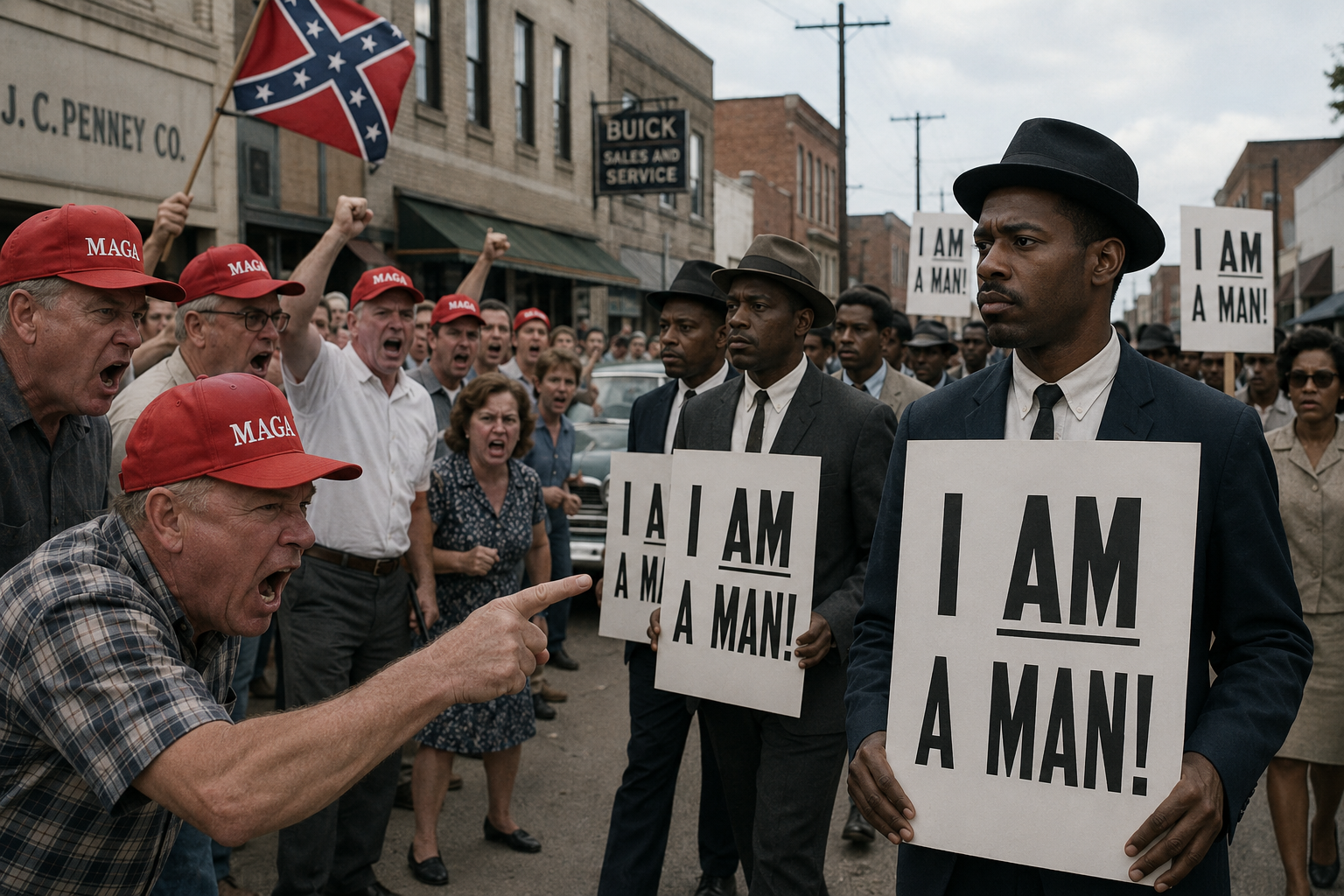
It is crucial, and it is a matter of intellectual honesty, to distinguish between the architects of this portfolio and its investors. The strategists, the think-tank intellectuals, the Federalist Society alumni, and the media figures who construct and market the MAGA framework are operating with full informational awareness. They know, as Rogers Smith demonstrated, that they are wielding an ascriptive ideology with deep American roots. They are, in effect, asset managers of grievance, packaging and selling a diversified fund of resentments to a base that experiences those resentments as authentic and existential.

The investors—the voters—are operating under conditions of incomplete information and considerable time pressure. They are bombarded with an information ecosystem that systematically exaggerates threats, broadcasting immigrant crime waves and anti-white discrimination while suppressing contrary data: actual crime statistics, the persistent racial wealth gap that still advantages white families by orders of magnitude, the continued and dramatic overrepresentation of white men in virtually every lever of economic and political power. Their rationality is bounded by the information environment in which they operate. They are making what they believe to be prudent decisions based on the data they receive. That the data is manipulated, curated, and weaponized does not make the decision-making process irrational. It makes it manipulated. This distinction matters. To call the investor a fool is to misunderstand the sophistication of the fund managers. To call him evil is to foreclose the possibility of competition.

The Way Forward

This is the strategic genius and the moral horror of the MAGA portfolio: it exploits the legitimate cognitive architecture of rational choice to advance a political project that is destructive to the democratic experiment and profoundly damaging to millions of human beings. It cannot be defeated simply by insisting that its investors are bigots or fools. That approach has failed consistently for a decade. It has failed because it misunderstands the nature of the transaction. The MAGA investor is not making a moral error. He is making a rational bet on the continuity of American history. And American history, frankly, is on his s
The only viable response is a competing offer: a political portfolio that addresses the genuine economic and social anxieties of struggling Americans without requiring them to purchase, as a bundled and non-negotiable asset, the subordination of their fellow citizens. This is the hardest work of democratic politics, and there is no guarantee of success. The forces arrayed against it are deeply embedded, lavishly funded, and ruthlessly strategic. The architects of ascriptive rage have built a machine that runs on the most reliable fuel in American history: the fear of losing what you have, coupled with the promise that someone else will pay the price. Opposing that machine requires an offer as clear-eyed about power, interests, and material returns as the one it seeks to defeat. Sentiment will not suffice. Moral exhortation will not suffice. Only a better deal, honestly priced and broadly offered, has any hope of competing in a marketplace so thoroughly rigged by the long, dark genius of the American inegalitarian tradition.

###

Delgreco Wilson
Wilson formerly taught Comparative Politics and International Relations at Lincoln University. He is a leading political analyst, educator, and advocate whose work centers on empowering Black Americans through a deeper understanding of political strategy and its historical roots in the fight against systemic racism and white supremacy. A prominent voice in the Greater Philadelphia Region, Wilson brings a wealth of academic rigor and real-world insight to his analysis of Black political thought and action.
Wilson’s expertise extends beyond the classroom. His incisive columns and articles have been featured in prominent publications such as the Philadelphia Tribune and Delaware County Daily Times. A sought-after commentator, he regularly contributes to radio programs and podcasts across the Mid-Atlantic region, offering sharp analysis and actionable strategies for advancing racial justice and equity.
The American Strain: Trump and the Enduring Creed of White Supremacy

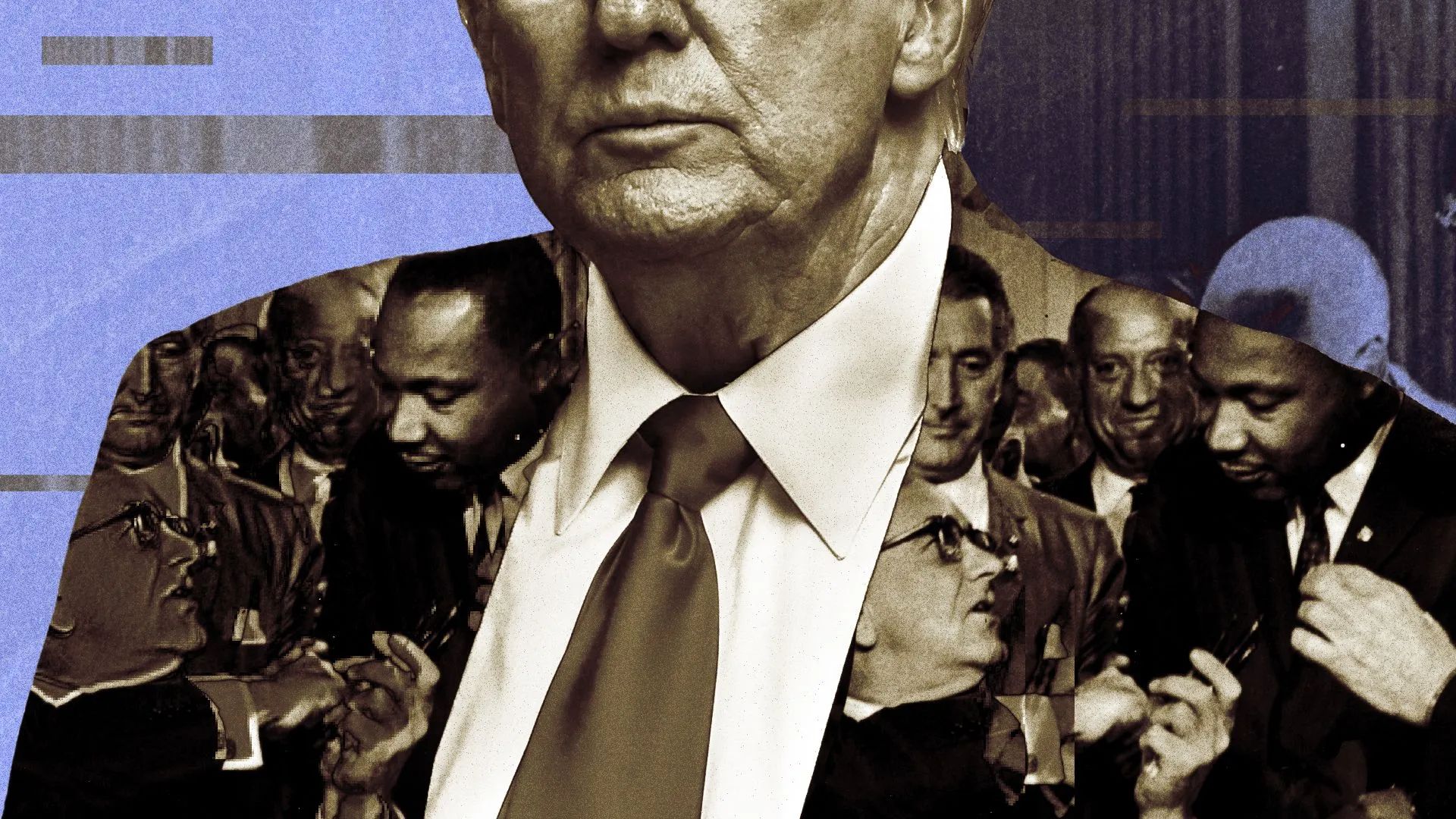
CAMDEN, NJ – To understand Donald Trump, to truly grasp the fervor of the “Make America Great Again” movement, requires a confrontation with a deeply unsettling but irrefutable historical truth: Trump is not an aberration, but an archetype. He is the contemporary embodiment of a classic American figure, whose political power flows directly from the nation’s oldest and most potent strain—a white supremacist ideology that has been intertwined with concepts of democracy and liberty since the nation’s founding. On one hand, the anguish felt by many white Americans today as they witness the MAGA movement’s explicit racism is the anguish of a myth being shattered, the painful awakening from a national narrative that has systematically obscured this foundational reality. Black people, on the other hand, have lived through this movie since 1619.

The Indelible Thread: From Frontier to Empire

The doctrines that birthed the American nation-state were, from their inception, racial in character. Manifest Destiny, the Monroe Doctrine, and the White Man’s Burden are not separate chapters but sequential verses in the same epic poem of Anglo-Saxon supremacy.

Manifest Destiny, framed as a divine mandate to “overspread the continent,” was a theological and racial justification for genocide and land theft, casting Native Americans as “merciless Indian Savages” and Mexicans as obstacles to a providentially-ordained white nation. This was not mere expansion; it was ethnic cleansing codified as national mission. Historical records reveal a staggering decline from an estimated 5-15 million Native Americans prior to 1492 to fewer than 238,000 by the close of the 19th century. This represents a population collapse exceeding 96% over four centuries, driven by a combination of warfare, displacement, and disease, all facilitated by racist/white supremacist government policies.

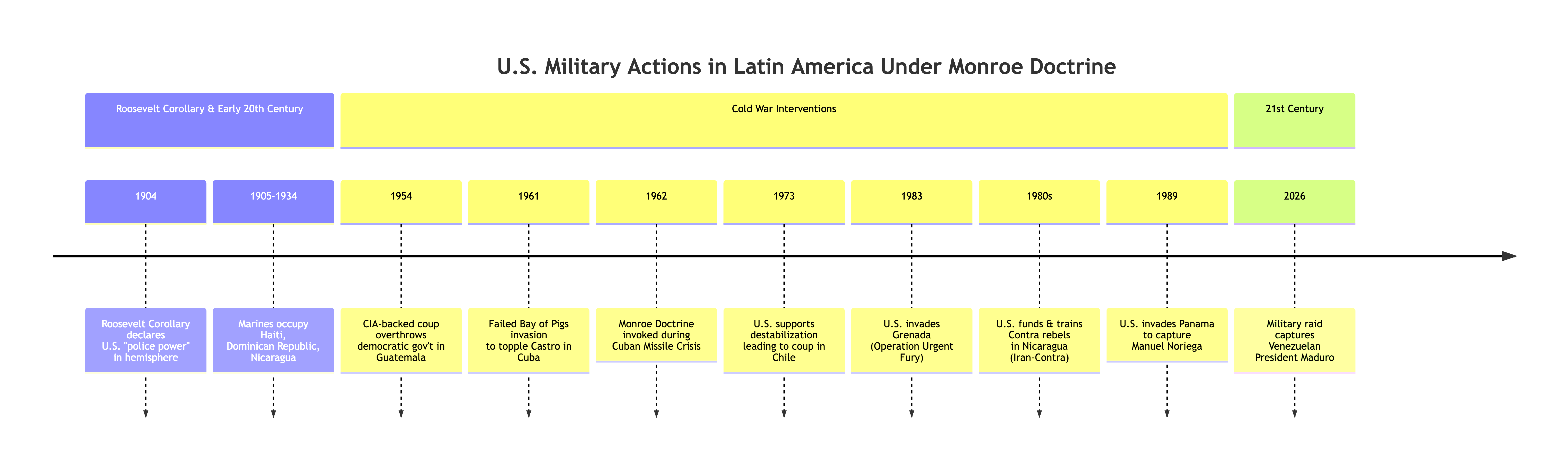
The Monroe Doctrine established the Western Hemisphere as a U.S. sphere of influence, a policy enforced not through diplomatic parity but through a paternalistic belief in the racial and political superiority of the United States over its non-white neighbors. It transformed Latin America into a backyard where military and economic intervention was naturalized, a logical extension of continental conquest onto a hemispheric stage.

The White Man’s Burden provided the humanitarian gloss for overseas empire, framing the brutal colonization of the Philippines and Puerto Rico as a noble, sacrificial duty to civilize “sullen peoples, half-devil and half-child.” It was the export of a domestic ideology, declaring entire populations unfit for self-rule—the same belief that undergirded slavery at home.

These were not fringe ideas but the central engines of national policy, creating a powerful national identity where whiteness was synonymous with sovereignty, virtue, and the right to dominate.

The Great Mis-Education: A Mythology of Innocence

How, then, does a nation built on such explicit racial hierarchy produce citizens who recoil at the explicit racism of a Trump rally? The answer lies in a profound and intentional mis-education.

The American creed presented in textbooks and national myth is a carefully curated edit. It is a story of democracy and liberty, of Pilgrims and pioneers, that systematically decouples these ideals from the racial tyranny that financed and facilitated them. The genocide of Indigenous peoples is minimized to “conflict” or “westward expansion.” The enslavement of millions is segregated into a single tragic chapter, rather than understood as the engine of early American capital. Imperial conquests are framed as benevolent “foreign policy.”

This creates a duplicitous national consciousness. Americans are taught to venerate the Declaration of Independence’s promise of equality while being insulated from the fact that its principal author and most early beneficiaries envisioned that equality exclusively for white men. We celebrate a “melting pot” culture—shaped by Indigenous, African, Latin American, and Asian influences—while the political power to define the nation has been fiercely guarded as a white prerogative. This selective history is a powerful anesthetic. It allows generations to inherit the privileges of a racial caste system while believing fervently in their own nation’s inherent innocence and moral exceptionalism. It makes racism seem like a deviation, a “sin” we are overcoming, rather than the core organizing principle we have continuously refined.

Trump: The Unvarnished Tradition

Donald Trump’s political genius—and his profound traditionalism—lies in his rejection of the anesthetic. He does not traffic in the coded “dog whistles” of late-20th-century politics; he uses a bullhorn, reactivating the unfiltered language and logic of America’s racial id.

His rhetoric is a direct echo of past doctrines. Labeling Mexican immigrants “rapists” and “animals” and African nations “shithole countries” is the dehumanizing language of Manifest Destiny and the White Man’s Burden, applied to modern migration 

. His central promise of a “big, beautiful wall” is a 21st-century racial frontier, a physical monument to the belief that the national body must be purified of non-white “infestation.”

Table: The Ideological Lineage from Doctrine to Trump

Historical DoctrineCore Racial LogicModern Trump-Era Manifestation
Manifest DestinyDivine right to displace “savage” non-white peoples from desired land.The border wall as a new frontier; rhetoric of immigrant “invasion” and “infestation.”
Monroe DoctrineHemispheric dominance and paternalistic intervention over non-white nations.“America First” isolationism that rejects multilateralism while asserting unilateral military/economic power.
White Man’s BurdenThe “civilizing” mission justifies domination over supposedly inferior peoples.Framing immigration bans and harsh policies as protecting American civilization from “shithole countries.”

His policies operationalize this ideology. The Muslim Ban, the crushing of asylum protocols, and the threat to end birthright citizenship are not simply strict immigration measures; they are efforts to legally redefine who belongs to the American nation along racial and religious lines. His administration’s systematic rollback of civil rights protections, from voting rights to LGBTQ+ safeguards, and its dismantling of diversity, equity, and inclusion programs are a direct assault on the fragile infrastructure of multiracial democracy built since the 1960s.

Most tellingly, his adventurous and aggressive militarism—from threatening “fire and fury” against North Korea to deploying federal troops against predominantly Black cities like Washington D.C. and Chicago under the pretext of crime emergencies—reveals the intrinsic link between white supremacy at home and imperial aggression abroad. As academic research confirms, support for militarized foreign policy among white Americans is strongly correlated with racial resentment, viewing non-white nations and peoples as inherent threats or legitimate targets for domination. Trump’s “America First” bellicosity is not an isolationist retreat but a reassertion of a racialized nationalism that sees the world as a hostile arena of competition against lesser peoples.

The Second Backlash and the Crisis of White Identity

Trumpism is the vehicle for a second great white backlash, a historical bookend to the first backlash that destroyed the multiracial democracy of Reconstruction after the Civil War. That first backlash, powered by the Klan, “Lost Cause” mythology, and Northern complicity, re-established white rule through terror and Jim Crow.

The current backlash, ignited by the Civil Rights Movement and supercharged by the election of Barack Obama, seeks to roll back the democratic gains of the past sixty years. Its fuel is white grievance—a pervasive fear among some white Americans that demographic change and racial equity represent a loss of status, a zero-sum dispossession . Slogans like “Take Our Country Back” and the defensive cry of “All Lives Matter” are the modern lexicon of this backlash, inverting reality to frame the pursuit of equality as an unfair attack on a threatened majority

.This is the source of the anguish for well-intentioned white Americans. They were raised on the edited, duplicitous creed. They believed in a forward-moving arc of progress. To see the naked brutality of racism not only re-emerge but be cheered from the highest podium shatters that narrative. The difficulty is in reconciling their own identity with the realization that the “greatness” many are nostalgic for was, for others, a regime of explicit subjugation. It is the pain of realizing that the comforting national myth is a lie, and that a more honest, more brutal history is demanding reconciliation.

Conclusion: Facing the Unbroken Line

Donald Trump is a classic American figure because he channels the nation’s most enduring political tradition: the mobilization of white racial anxiety to consolidate power and resist the expansion of a truly pluralistic democracy. He has ripped away the veneer of the mis-educating myth, revealing the unbroken line from the Puritan city on a hill to the MAGA rally.

To argue that this is not “real” America is to indulge in the very fantasy that enabled it. Racism and white supremacy are not un-American; they are as American as apple pie, woven into the fabric of our institutions, our geography, and our national story. The democratic ideals we rightly cherish have always coexisted in tension—and often in outright conflict—with this hierarchy. The struggle of the 21st century is not to defeat a foreign intrusion, but to finally sever this entrenched lineage. It begins by abandoning the comforting lie of national innocence and confronting, at last, the difficult truth of who we have been, and therefore, who we risk remaining.

Get Down or Lay Down: Trump’s Foreign Policy and the JBM Playbook

By Delgreco K. Wilson

January 8, 2026

CAMDEN, NJ – In the annals of international diplomacy, the notion of a U.S. president seriously threatening to purchase or seize a vast, self-governing territory from a NATO ally would have been relegated to the realm of dark satire. Yet, as the Trump administration openly discusses offering Greenlanders individual cash payments or contemplating military force to “acquire” the island, we are witnessing a foreign policy doctrine stripped of diplomatic veneer. This crude transactional approach—where sovereignty is a commodity and alliances are obstacles—finds a disturbing parallel not in the halls of traditional statecraft, but in the violent, coercive tactics of Philadelphia organized crime. To understand the logic now emanating from Washington, one need look no further than the ruthless playbook of Philadelphia’s infamous Junior Black Mafia (JBM) and its mythologized street boss, Aaron Jones.

Both paradigms operate on a foundational principle: power is asserted not through legitimate authority or mutual benefit, but through the demonstration of overwhelming force and the calculated application of fear. For the JBM, whose motto was chillingly reported as “Get down or lay down,” control of the cocaine trade was enforced through intimidation and brutal violence. The Trump administration’s Greenland scheme, which Danish officials have labeled a threat requiring a defense of “the fundamental principles of the UN Charter and international law,” operates on a similarly crude binary. The offer of payments—reported to be between $10,000 and $100,000 per individual—is the “get down” option, a lavish but coercive inducement. The explicit refusal to rule out military action, chillingly underscored by the recent abduction of Venezuela’s president, is the “lay down” ultimatum made to an entire nation and its allies. The message is clear: acquiesce to the transaction or face the consequences.

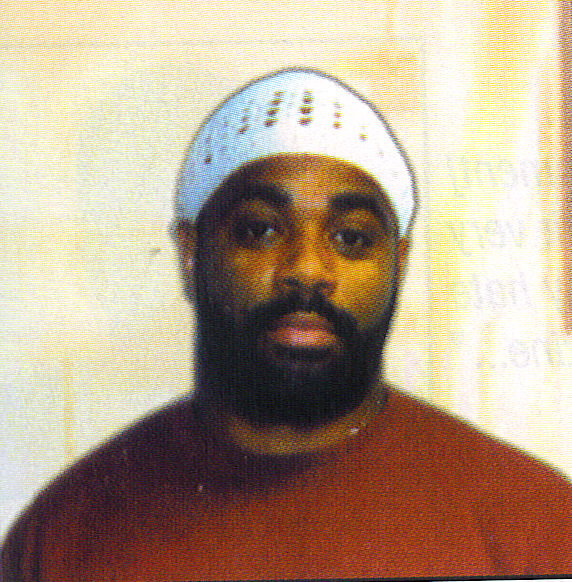
Aaron Jones, JBM

The Godfather Fantasy: Cultivating Power Through Persona

The parallel extends into the realm of cultivated image. Aaron Jones was said to be obsessed with “The Godfather,” consciously molding his persona after Don Vito Corleone to command a mix of fear, respect, and loyalty on the streets of Philadelphia. He became a legendary figure, a “death before dishonor icon” whose name carried immense weight. This careful construction of an untouchable, dominant persona is a core tactic of gangsterism.

Similarly, the Trump administration’s foreign policy is deeply performative, centered on projecting an image of uncompromising strength and deal-making prowess. The public fixation on Greenland—a large, mineral-rich asset—is not subtle geopolitics; it is a power flex, a demonstration of America’s ability to rearrange the map to its liking. As analysts note, this aligns with a 19th-century “great power politics” mindset, where spheres of influence are dictated by strength alone. By floating the military option against a NATO ally, the administration cultivates an aura of unpredictability and ruthlessness designed to make other nations capitulate to lesser demands, much like a neighborhood bully establishes dominance.

The Illusion of Voluntary Association and the Reality of Coercion

A key tactic in both playbooks is dressing coercion in the garb of voluntary choice. The JBM, at its height, was adept at creating legitimate business fronts—from video stores to security firms—to launder money and project a façade of normal enterprise. The Trump administration’s preferred narrative frames the Greenland proposal as a potential “Compact of Free Association,” akin to agreements with Pacific nations. This suggests a partnership between consenting parties.

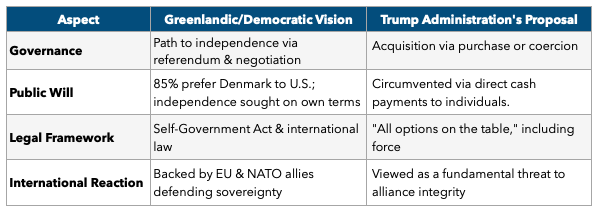
However, this illusion shatters against the reality of Greenlandic self-determination. Polls consistently show that while a majority of Greenlanders favor eventual independence from Denmark, an overwhelming 85% prefer remaining with Denmark over joining the United States. The island’s political future is a careful, democratically managed process defined by its 2009 Self-Government Act, which outlines a path to independence that must be approved by its people and the Danish parliament. The U.S. offer of cash payments is a blatant attempt to bypass and corrupt this sovereign process, treating citizenship and national allegiance as an individual financial transaction rather than a collective democratic will. It is a hostile takeover bid, not a friendly merger.

Table: Contrasting Visions for Greenland’s Future

The Cost of “Respect” and the End of Alliances

Ultimately, the gangster’s quest for “respect” is a zero-sum game that destroys the community it purports to lead. The JBM’s reign contributed to the devastation of Philadelphia’s crack era. The Trump doctrine, as applied to Greenland, threatens to incinerate the very foundations of the post-war international order. Danish Prime Minister Mette Frederiksen has stated unequivocally that a U.S. attack on Greenland would mean the end of “everything,” including NATO. European leaders have issued a unified rebuke, stating security rests on the “inviolability of borders”.

The administration’s justification—that Greenland is “covered with Russian and Chinese ships” and is a national security necessity—has been widely questioned by security experts. The U.S. already maintains the strategic Pituffik Space Base on the island under a defense agreement with Denmark. The real driver appears to be a desire for absolute control over territory, resources, and shipping routes, framed within a new “Donroe Doctrine” of regional dominance. Like a gangster who confuses fear for respect, this approach fails to see that true strength and security are built on reliable partnerships, not shattered alliances.

Conclusion: From the Streets to the World Stage

The comparison between a Philadelphia drug crew and the foreign policy of a global superpower is jarring because it should be unthinkable. Yet, the Trump administration’s maneuvers on Greenland reveal a logic that has abandoned diplomacy for intimidation, mutual security for unilateral gain, and international law for the law of the jungle. Aaron Jones’s JBM is a chapter in the history of Philadelphia’s organized crime. The method of governance it represents—coercion, transactional loyalty, and performative violence—must not become the blueprint for American statecraft.

The people of Greenland have a clear message for those who would try to purchase their homeland or seize it by force: “Greenland is not for sale, and Greenland never will be for sale”. It is a statement of dignified sovereignty that deserves more than a gangster’s reply. The world must hope that in the meeting between U.S. Secretary of State Marco Rubio and Danish officials next week, the language of diplomacy, law, and alliance can still prevail over the ultimatum to “get down or lay down”. The future of the transatlantic world may depend on it.

New Age Isaiah Montgomery: Black MAGA Supporters

CAMDEN, NJ – In today’s America, as a divided nation navigates the aftermath of Donald Trump’s presidency, Black support for Trump’s MAGA movement has drawn both curiosity and condemnation. Approximately 22 percent of Black men supported Trump in recent elections, a statistic that shocks and confounds many. The reasons are complex, but this phenomenon carries disturbing echoes of a past dilemma once personified by Isaiah Thornton Montgomery, a Black Mississippi leader who, over a century ago, publicly endorsed Black disenfranchisement. While 99.99 percent of Black Americans may have no awareness of Montgomery’s place in history, the eerie parallel to present-day Black MAGA supporters raises troubling questions about compromise, survival, and political self-identity amidst a resurgent wave of White backlash.

The roots of Black conservatism today are as varied as they were in Montgomery’s time. The question, though, is not simply why some Black men align with the MAGA agenda, but whether today’s political landscape is producing contemporary Isaiahs: figures within the Black community who, consciously or unconsciously, may view alignment with right-wing movements as a pragmatic strategy for survival and advancement in an era of unprecedented polarization. With inadequate education around Black history in America’s schools, many Black citizens lack the knowledge to contextualize our current political landscape within the longer arc of racial struggle. Few are aware that today’s MAGA movement fits into a history of White backlash against perceived gains by Black Americans and other marginalized groups.

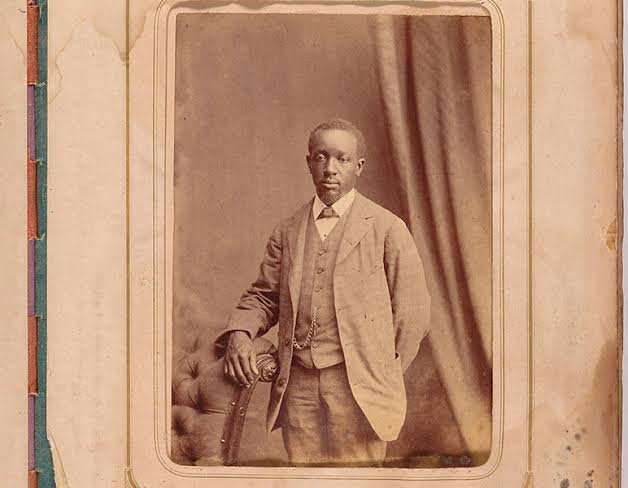
The similarity with Isaiah T. Montgomery is stark, yet his motivations were distinctly rooted in the brutal world of post-Reconstruction America. Montgomery, founder of the Black community of Mound Bayou and son of an enslaved man-turned-businessman, held an unshakeable belief in Black self-sufficiency. But at the 1890 Mississippi Constitutional Convention, Montgomery shocked the Black community by endorsing provisions like literacy tests and poll taxes, which would bar Black voters from the polls. His reasoning was couched in pragmatism: he argued that appeasing White lawmakers and ceding political ground might allow Black Americans the breathing room to pursue social and economic self-sufficiency without inciting more violent backlash from the White South.

This strategy of appeasement, however, came at a profound cost. By endorsing Black disenfranchisement, Montgomery struck a bargain that some historians argue ultimately weakened the broader fight for Black rights. In his eyes, he may have been choosing a “lesser evil,” hoping to secure a modicum of safety and stability for Black communities. But his compromise helped cement a cycle of disenfranchisement that would haunt Black communities for decades.

Today, MAGA-supporting Black men may claim a similar kind of pragmatism, citing dissatisfaction with Democrats’ failures to deliver economic and social progress and pointing to Trump’s “America First” policies as offering greater personal and economic security. This approach may seem attractive for Black men seeking relief from the relentless churn of systemic racial inequity. Yet we must question whether endorsing a movement openly allied with far-right, White supremacist sentiments—and which has fueled harmful policies on everything from immigration to voting rights—is a sustainable or honorable path forward.

Unlike Montgomery, who likely felt he had no choice but to make a Faustian bargain in a violent, oppressive environment, Black MAGA supporters today choose to align with a movement that has often diminished the Black struggle for justice and equality. That choice, whether motivated by frustration with establishment politics, belief in economic “bootstraps” rhetoric, or disillusionment with the left, serves to reinforce a coalition that has actively suppressed minority voting rights and eroded protections against racial discrimination.

Montgomery’s legacy, for all its flaws, at least left behind a vision of Black self-sufficiency through the community of Mound Bayou. His compromise, though painful, was aimed at preserving a sanctuary for Black Americans to thrive away from hostile White dominance. Black MAGA supporters, on the other hand, stake their political future on a movement that has often used their voices to validate policies that threaten the very social progress on which Black Americans rely.

The alignment of any segment of Black America with the MAGA agenda suggests a critical need for education around this country’s cyclical racial history. The disconnection from history—the “woeful inadequacy” of Black history as it is taught in American schools—prevents a clear understanding of today’s political dynamics as part of a long, repeated arc of White backlash. Without awareness of figures like Montgomery or the political choices forced on Black Americans throughout history, many fail to see how Black support of MAGA could lead to similar long-term disenfranchisement.

To be clear, the issue is not the political party of one’s allegiance, but the agenda one chooses to endorse. Black support for MAGA is not simply a divergence in political opinion; it is a move that could ultimately lend support to a movement in direct opposition to Black political and social progress. In this moment, we need more awareness, more connection to history, and, most crucially, a unified sense of purpose. Rather than aligning with those who would turn back the clock on civil rights and equality, today’s Black Americans should look toward alliances that strengthen—not weaken—the collective foundation of our community.

Isaiah Montgomery’s choices were not ideal, but they are instructive. Let us hope that modern Black MAGA supporters will learn from his compromises and understand that the consequences of such alignment often echo far beyond individual gain, shaping the freedoms—or restrictions—of future generations.