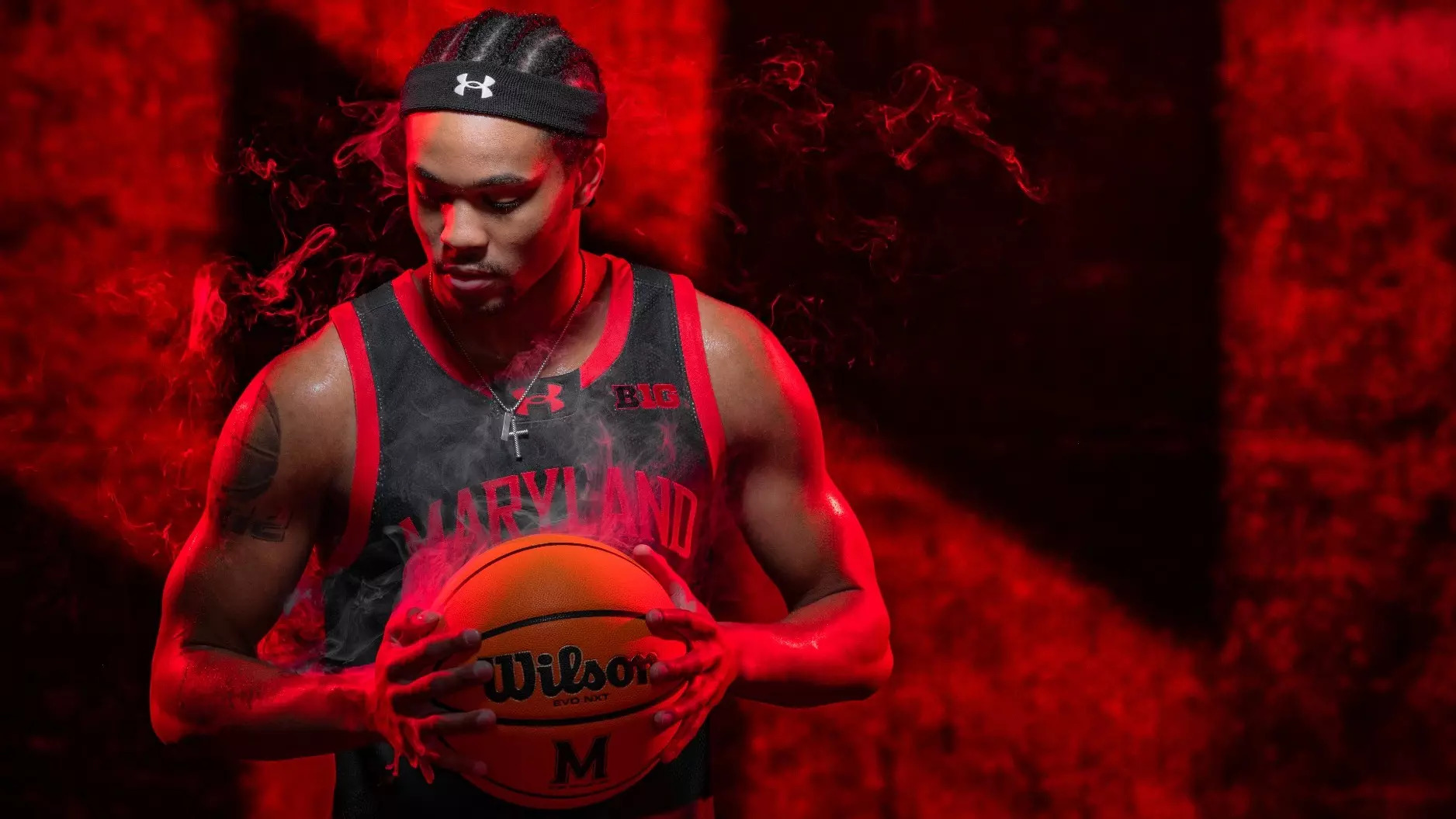
CAMDEN, N.J. — The basketball court at Camden High School sits maybe a mile from the Ben Franklin Bridge, close enough that the Philadelphia skyline is always in view. For four years, D.J. Wagner filled that court with a kind of inevitability. He was the consensus No. 1 player in his class, a third-generation McDonald’s All-American, the heir to a family name that had already produced two schoolboy legends and an NBA lottery pick. He won three consecutive Gatorade New Jersey Player of the Year awards. He led Camden to a 94-5 record and the program’s first state championship in 22 years. By the time he left, he carried not just the hopes of a hardscrabble city but the weight of a prewritten script: dominate college for a year, get drafted, and take the family business to the next level.
That script did not hold. And because it did not hold, a second, lazier script took its place: D.J. Wagner, the disappointment.
This is the judgment that deserves scrutiny. Not because Wagner is secretly a superstar, and not because the disappointment thesis is entirely without evidence. It is not. The evidence is real: career averages of 9.5 points, 3.1 assists and 2.1 rebounds across 100 games at Kentucky and Arkansas; a 40.9 percent career field-goal percentage and 31.4 percent from three; a junior season at Arkansas in which his minutes fell to a career-low 23 per game and he lost his starting job to a freshman, Darius Acuff, who became a consensus first-team All-American. Those are not the numbers of a one-and-done lottery pick.
But “not a one-and-done lottery pick” is a far cry from “disappointment.” And the gap between those two verdicts is where the fairest story about Wagner’s college career lives. He has been judged against a yardstick that was never calibrated to the conditions he actually played under — conditions that would have complicated the trajectory of almost any guard in the country.
The Tyranny of the Preordained Script
The first problem is that Wagner’s high-school résumé was so complete, so historically rare, that it functioned less as an expectation than as a verdict. A third-generation McDonald’s All-American had never existed before. His father, Dajuan Wagner, averaged 42.5 points per game at Camden and was the No. 6 pick in the 2002 NBA draft after playing for John Calipari at Memphis. His grandfather, Milt Wagner, won a national championship at Louisville and was drafted by the Dallas Mavericks in 1986. D.J. was not merely a basketball player. He was the continuation of a lineage, the answer to a question Camden had been asking since his father left for the league.
When a player arrives with that kind of narrative, the culture does not evaluate him; it audits him. Every box score becomes a referendum on whether the myth was true. Every quiet game becomes evidence of decline. The possibility that a 19-year-old might simply be a very good college player — not a transcendent one — is treated as a failure of will rather than a fact of development. As one close observer of his career put it, Wagner is “too often framed as a tale of unmet potential” by critics who “point to the fact that he did not explode onto the scene as a one-and-done superstar”. That framing is not analysis. It is the enforcement of a script.
Continue reading by following (for FREE) the Black Cager Substack…
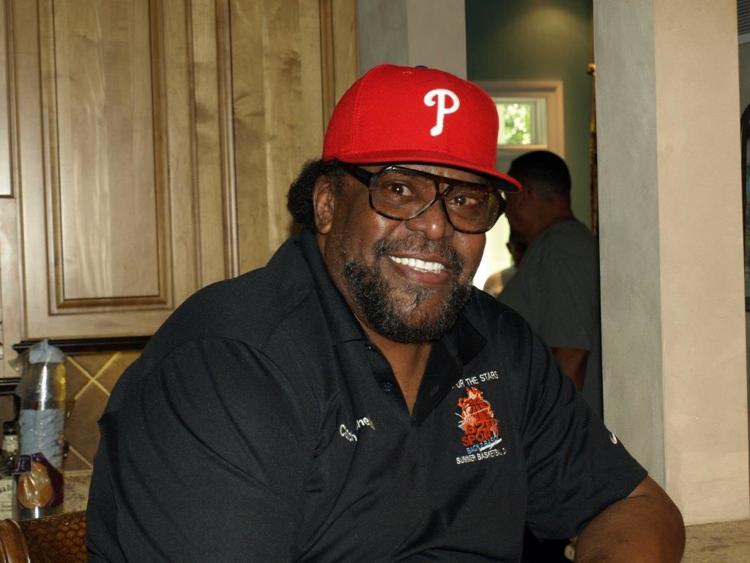
PHILADELPHIA, PA – The city of Philadelphia has long measured its summers not by the solstice, but by the squeak of sneakers on the hardwood gym floors and hot asphalt of its rec centers/playgrounds. It is a city where basketball is not merely a sport but a dialect, a shared language spoken in the narrow rowhouse streets of West Philly and the sprawling Uptown parks. When the news came that Tee Shields had passed, the city lost not just a man, but one of the last fluent translators of that language. He was an interpreter who carried the grammar of the game from an era of rigid segregation to the threshold of the modern age, and in his passing, we are forced to confront a bitter truth: the ecosystem that produced him, and the community he spent sixty years nurturing, is dying.
Mr. Shields was a product of a world that no longer exists. He was forged in the crucible of the Philadelphia Public League during the late 1950s, an era when the color line was not a metaphor but a law of the land, and Black excellence was forced to bloom in the shadows. He was a standout at West Philadelphia High School, a time when the city’s hardwood was a sovereign nation of its own, rich with rivalries that felt like civil wars. To hear him tell it, the battles with Overbrook—against future legends like Wali Jones and Walt Hazzard—were not just games; they were declarations of identity.
Like so many of his brilliant peers, Shields’ path to collegiate greatness was not charted by television deals or shoe contracts, but by the harsh realities of America’s racial caste system. Denied the opportunity to play for predominantly white universities in the North or South, he took his talents to South Carolina State University. There, alongside a caravan of Philadelphia talent—Frank Card, Deforia Coleman, and others—he found a home at an HBCU. It was a “Chitlin Circuit” of basketball, a parallel universe of elite athleticism that was invisible to the mainstream press but revered within the Black community. This experience did not embitter Tee Shields; it equipped him. It taught him that the scoreboard mattered less than the survival and elevation of the men standing next to you.
The Conscience of the Sonny Hill League
In 1968, while the nation was convulsing with riots and revolution, Sonny Hill founded a basketball league that sought to channel the chaos of the streets into the discipline of the court. The Sonny Hill Community Involvement Basketball League was never really about basketball. It was a life-skills seminar disguised as a fast break. And Tee Shields became one of its chief professors.
For more than half a century, Shields served as a coach and mentor, a role he fell into reluctantly at the behest of his own mentor, Claude Gross, but one he executed with the precision of a surgeon. His impact is measured not in championships, but in the careers of the men he guided. He coached Clarence Tillman and Lionel Simmons. He was present during the league’s golden age, a thirty-year stretch from the 1970s through the 1990s when the Hill League reigned as the undisputed heavyweight champion of summer basketball in America.
It is almost impossible to explain to a modern audience, weaned on the sterile, corporate environments of the Under Armour UAA,Nike EYBL and the Adidas 3SSB circuit, what it meant to walk into McGonigle Hall on a Tuesday night in July. It was a cultural séance. You could watch the raw power of Rico Washington battling Brian Shorter in the post, or the surgical wizardry of Michael Anderson trading crossovers with the blindingly quick Bruiser Flint. The concentration of talent was suffocating. From Gene Banks to Lionel Simmons, from Rasheed Wallace to a young Kobe Bryant, the lineage of the Hill League is the lineage of modern basketball itself. But the talent was never the point. The point was the instruction.
The Privatization of the Playground
The legacy of Tee Shields is a study in tragic irony. The very community he spent his life building is currently being demolished by the forces of capital. In the decades since Shields first laced up his sneakers, youth sports have undergone a radical, and largely destructive, metamorphosis. What was once a civic utility has become a luxury good.
The commercialization of youth athletics over the past twenty years has been relentless. As noted in recent Congressional hearings on the matter, the landscape is no longer defined by the volunteer coach or the recreation center, but by the balance sheet. Private equity has discovered that the hopes and anxieties of parents are a lucrative asset class. We have witnessed the rise of vast, consolidated tournament operators who have turned childhood play into a vertically integrated industry, complete with “stay-to-play” mandates that force families into specific hotels and streaming services that monetize the movements of pre-teens.
The result has been the systematic squeezing out of the pure, community-based organizations that defined the Tee Shields era. The Sonny Hill League, like the Holcombe Rucker League in Harlem, was organic. It grew from the soil of the neighborhood. It was staffed by men who knew your mother, who knew your struggles, and who understood that a missed jump shot was less important than a missed curfew. The new model is not organic; it is extracted. It is a subscription service where access is determined by disposable income.
The Widening Gap
The consequences of this shift are not aesthetic; they are societal. When the “Field of Fees” overtakes the public park, we lose the democratic nature of sport. We are creating a widening participation gap. Data shows that the disparity in sports participation between wealthy families and low-income families has grown sharply over the last decade. The child from North Philadelphia, the spiritual descendant of the players Tee Shields coached, is being priced out of the game.
This is not merely a loss of recreation; it is a loss of citizenship. The Sonny Hill League was a mechanism for socialization. It was a place where boys learned how to be men from elders who looked like them and had survived the same streets. It was a safe harbor from the violence of the city and the indifference of the system. When we replace that harbor with a pay-to-play tournament circuit run by distant investment firms, we sever the connective tissue of the community. The private equity model cares only about the liquidity of the asset. It does not care if a child graduates, if they learn resilience, or if they become a good father. Tee Shields cared.
The Irreplaceable Void
We are told that progress is inevitable, that the efficiency of the market is the only path forward. But the market cannot manufacture a Tee Shields. It cannot reverse-engineer the moral authority of a man who played on the Chitlin Circuit, who endured the indignities of segregation, and who then returned to the gym every summer not to get rich, but to give back.
The commercialization of youth sports has created a generation of consumers, but it has failed to create a generation of mentors. The volunteer coach—the Claude Gross who recruited Tee Shields, the Tee Shields who coached a future NBA superstar—is becoming an endangered species. As the private capital floods in, the sense of communal ownership drains out. Why would a father volunteer to run a league when a corporation can do it for a fee? Why would a neighborhood rally around a team when the roster is determined by who can afford the travel expenses?
Tee Shields represented a covenant between generations. It was a promise that no matter how high you climbed, you owed a debt to the pavement that launched you. That covenant is being broken. The games still go on, of course. The sneakers still squeak, and the balls still bounce, but they do so in sterile, branded facilities where the scoreboard is digital and the lessons are few.
We mourn Tee Shields not just for the man he was, but for the world he represented. He was a giant in the Philadelphia basketball community, a living link between the era of the segregated Public League and the modern NBA. His death leaves a void that cannot be filled by an algorithm or an investment portfolio. It can only be filled by a return to the principles he embodied: that the game belongs to the people who live on the block, that the coach is a guardian of the soul, and that the measure of a league is not its revenue, but the character of the men it produces.
Philadelphia has lost a coach, but more than that, it has lost a keeper of the flame. In the coming summers, when the heat rises off the concrete and the young men gather to play, they will be doing so in a world that is radically different, and infinitely poorer, for his absence. The era of giants like Tee Shields is over, and the lights of McGonigle Hall are dimming.
PHILADELPHIA, PA – The cacophony of sneakers squeaking on hardwood, the reverberating thud of a perfectly placed outlet pass, the primal roar of a crowd witnessing a rising star—these are the sounds of autumn in the Mid-Atlantic. But this year, as the 11th Annual Black Cager Fall Classic prepares to take over the state-of-the-art Executive Fieldhouse on Saturday, October 17, 2026, the atmosphere carries a new weight. It is not merely the return of a premier preseason high school basketball showcase. It is the return of a vital compass for families navigating the most turbulent seas in the history of college athletics.
For over a decade, the Black Cager name has been synonymous with authentic, high-octane scholastic competition, curating a field that is the envy of regional event promoters. It has long been a high-stakes proving ground where legacies begin, scholarships are earned, and championship foundations are forged. Yet, in the annus horribilis of 2026, the tournament has ascended from a premier battleground to an indispensable lifeline. As the NCAA’s regulatory framework undergoes its most radical transformation since the advent of the forward pass, the Black Cager Fall Classic stands as a bulwark of clarity and opportunity for the student-athlete.
A Regulatory Perfect Storm
The college sports landscape has been upended. The traditional model of four seasons of competition over five years is officially a relic of a bygone era. In June 2026, the NCAA adopted a new “five-for-five” eligibility rule, granting Division I athletes five seasons of competition over a five-year period. This age-based model begins the eligibility clock the academic year following a student’s 19th birthday or upon high school graduation, whichever comes first. While intended to provide clarity, the implementation has been anything but.
The new rule has largely eliminated the redshirt year and almost all waivers for extended eligibility, except for narrow exceptions like religious missions or active-duty military service. More consequentially, the NCAA’s decision to exclude the high school Class of 2022 from this new model has triggered a cascade of litigation. Federal courts have issued nationwide injunctions, creating a chaotic patchwork of eligibility where some athletes are granted a fifth year while others are not. Lawsuits argue that these eligibility restrictions “unjustifiably restrain” an athlete’s ability to earn money through their name, image, and likeness (NIL).
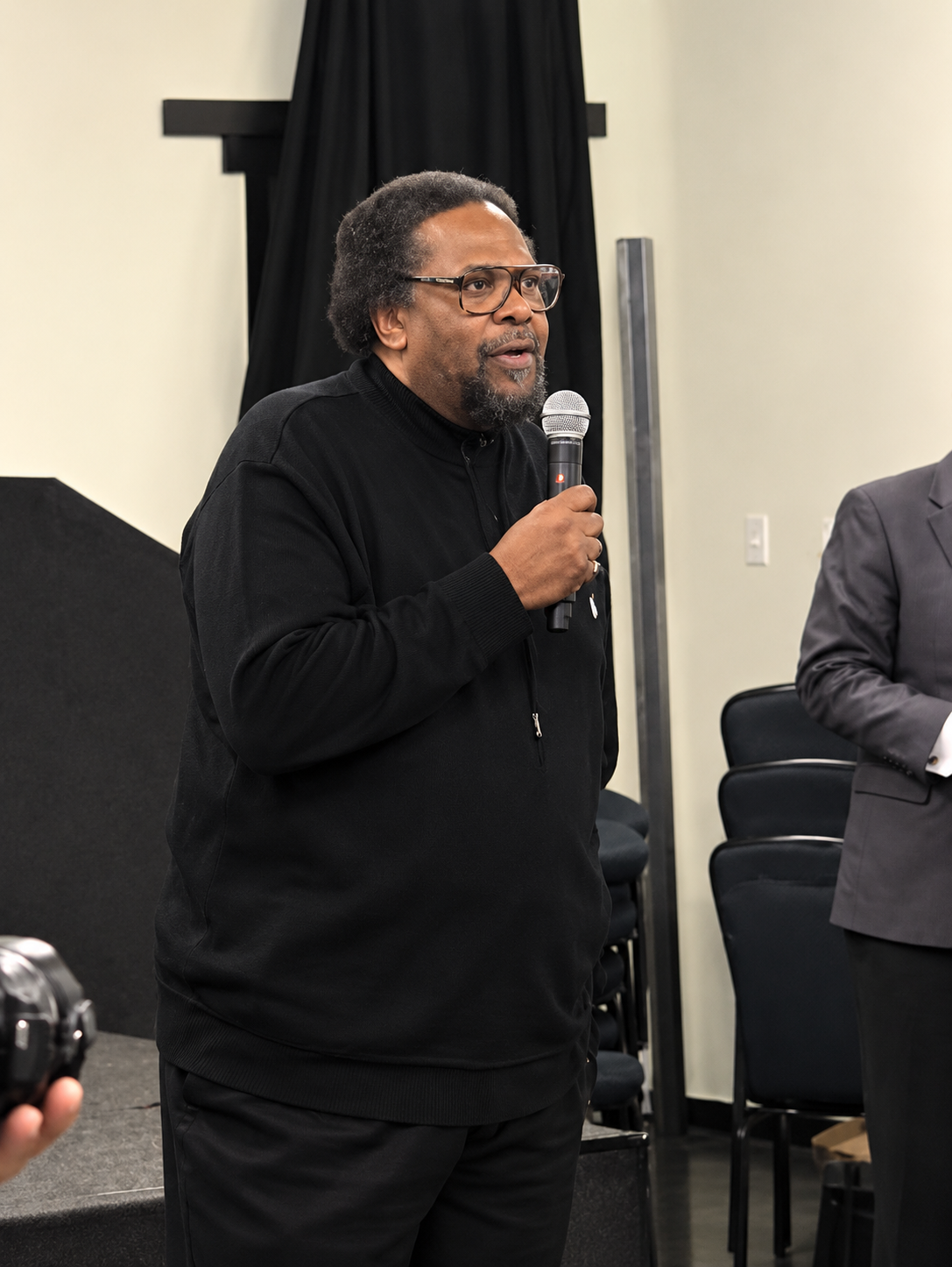
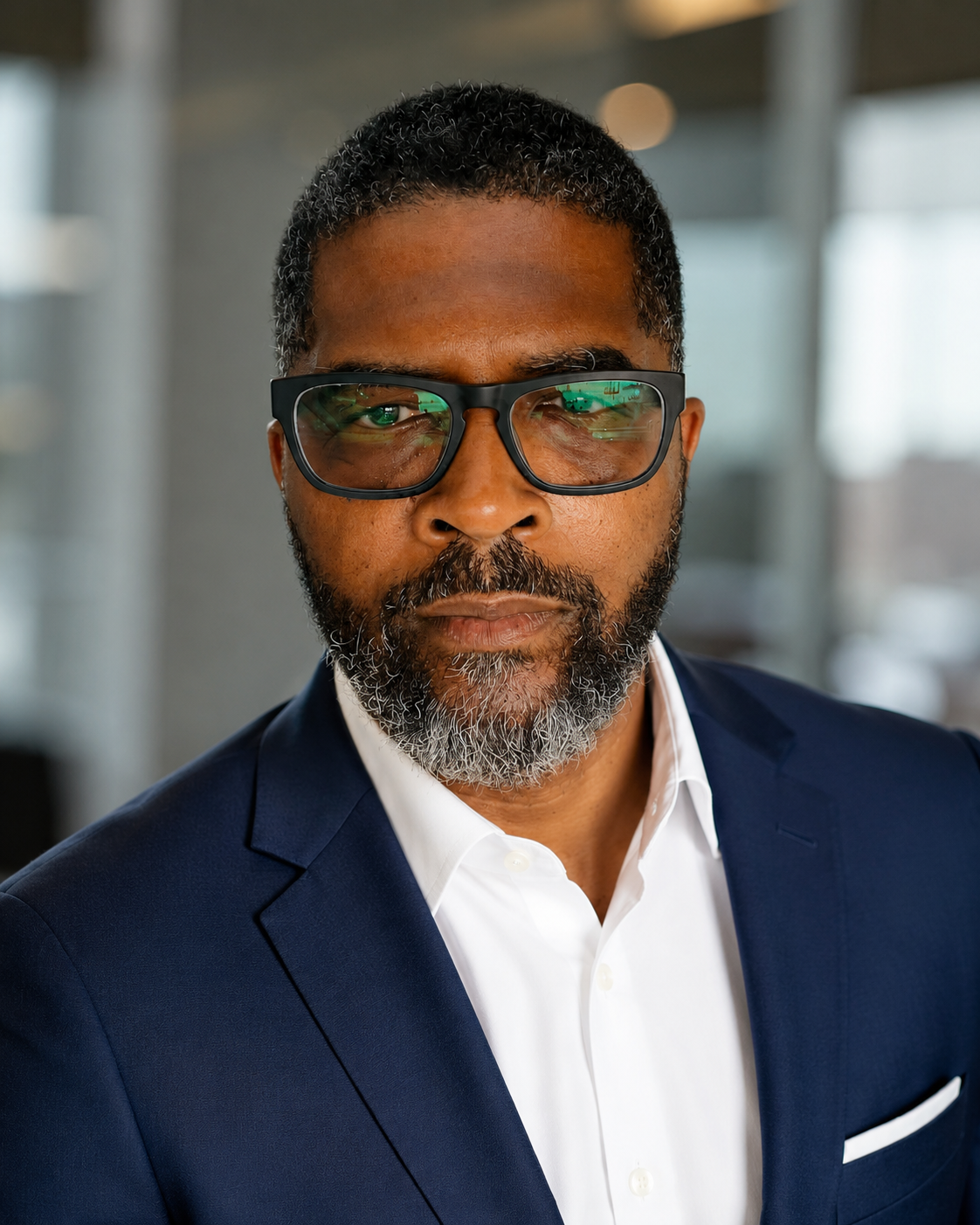
Delgreco Wilson, Founder of Black Cager Sports
This legal tumult is compounded by the shifting focus of college coaches. As Delgreco Wilson, the founder of Black Cager Sports, astutely observes, “the recruitment process has changed so much in recent years, that many athletes and families find it very confusing. College coaches have shifted their focus to the transfer portal and there are far fewer opportunities for high school kids to go directly to the D1 level.” The premium on immediate contributors has risen sharply, while the traditional model of recruiting and developing high school players over multiple years has lost significant ground.
A Crucible of Competition and Clarity
It is against this backdrop of regulatory uncertainty that the Black Cager Fall Classic asserts its relevance. The event remains the ultimate live-action laboratory, providing answers that no summer workout or open gym ever could. For the attending coaching staffs, it offers a rare, pressure-filled environment to evaluate personnel. For the players, it is the unrivaled launchpad for uncommitted prospects. With a staggering lineage of over 200 alumni who have matriculated to NCAA Division I and II programs—including names like Collin Gillespie, Jalen Duren, and Derik Queen—the tournament’s pedigree as a pipeline to the highest levels of the sport is beyond dispute.
But this year, the stakes are higher than the box score. The event has evolved into a strategic symposium for families confronting the NIL era. As cash has flooded college and high school athletic recruiting, the potential for exploitation has grown exponentially. Coaches have warned of “street agents” exploiting athletes in NIL deals—former players, trainers, or parents who claim connections to collectives or sponsors. The Black Cager Fall Classic is directly countering this threat by bringing in some of the best NIL representatives in the business to engage parents and answer questions regarding athletic recruiting, the NCAA eligibility process, and NIL representation.
The Black Cager Guide: A Roadmap Through the Labyrinth
Perhaps the most profound contribution the tournament makes this year is its commitment to education. Every player on a participating team will receive a FREE copy of the Black Cager Guide for College-Bound Student-Athletes. This is not a pamphlet; it is a roadmap forged from three decades of experience. Over the past 30 years, Delgreco Wilson has helped well over 200 student-athletes successfully transition from high school to college—a list that reads like a who’s who of basketball talent, including Jameer Nelson, Dion Waiters, and the Morris twins.
In an era where the NCAA’s eligibility center is grappling with a new age-based model and proposed legislation like the Protect College Sports Act of 2026 is suggesting a five-year eligibility window, the guide serves as an essential tool. It provides families with the agency to develop and implement a strategy rather than simply reacting to a system in flux.
The Return of the Proving Ground
On October 17, the Executive Fieldhouse will once again become the epicenter of the basketball universe. It will be a day of fierce, live-game warfare where elite scholastic programs from the Mid-Atlantic and beyond engage in competition. But it will also be a day of learning, of strategy, and of empowerment.
The Black Cager Fall Classic is more than a tournament. It is a declaration that in an era of chaos, there is still a place where the future of the sport is not just showcased, but safeguarded. It is a reminder that while the rules of the game may change, the principles of hard work, education, and authentic competition remain the true foundations of a legacy. For the student-athletes of 2026, there is no better place to be.
Event Details:
The 11th Annual Black Cager Fall Classic Saturday, October 17, 2026 Executive Fieldhouse 555 Union Boulevard, Allentown, PA 18109
A full slate of elite matchups will be accessible to college coaches and fans globally via a live broadcast on iUNGOworld.com
Media Credentials & Inquiries: Jason Boggs, Tournament Director Black Cager Fall Classic jboggs501@yahoo.com – Email 484-522-2750 – Phone
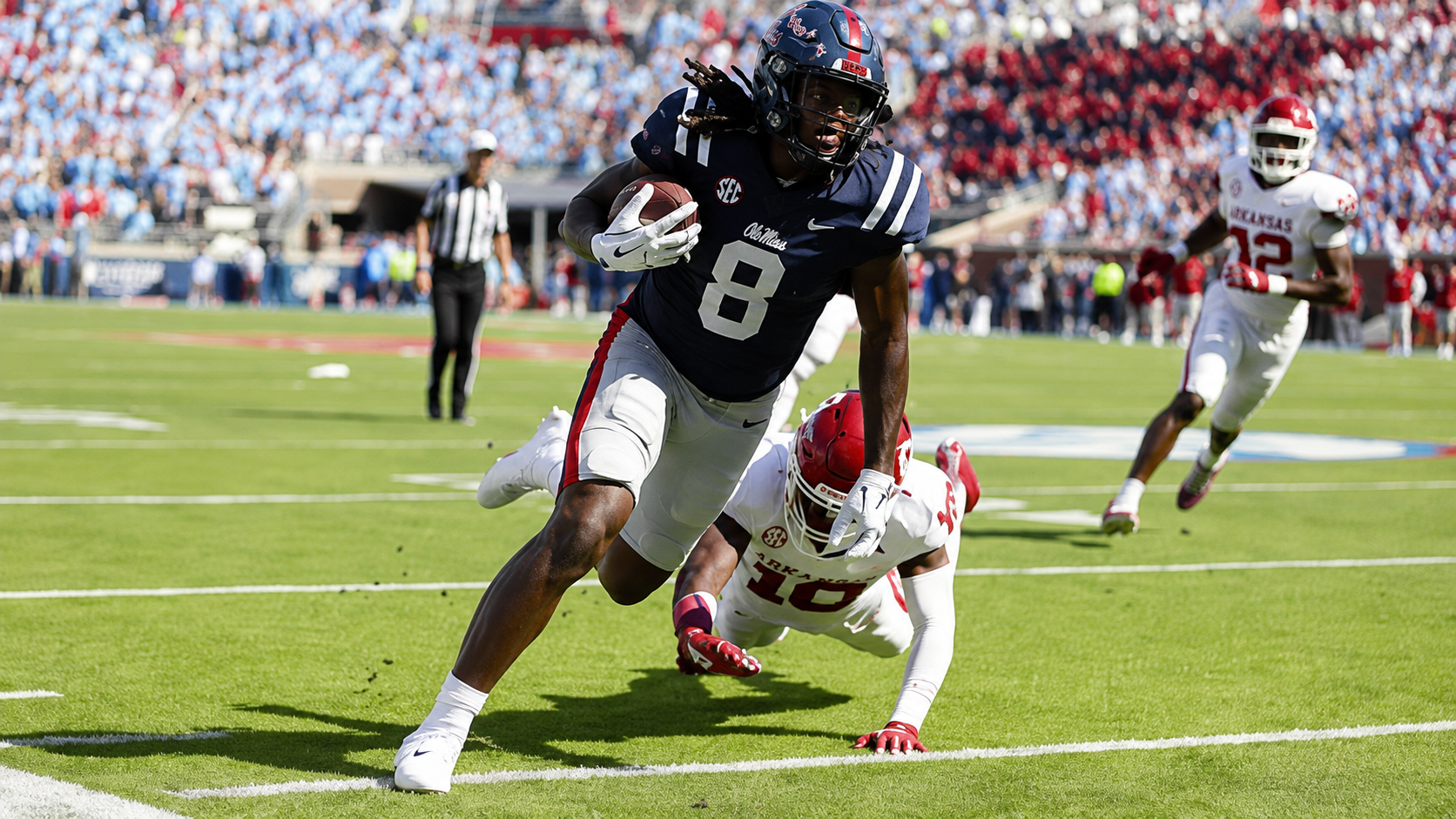
PHILADELPHIA, PA – There is a particular kind of interrogation reserved for moments of racial progress in America. It asks the beneficiaries of change to justify themselves, while never requiring the architects of exclusion to account for their sins. This week, the Cleveland Browns waived tight end Dae’Quan Wright. The young man from Georgia, represented by agents Drew Rosenhaus and Kyle Lincoln, reportedly has an agreement in place to return to the collegiate ranks at Louisiana State University for the 2026 season, provided he clears waivers and the courts permit such a move. The news, which touches upon the rapidly shifting legal landscape of NCAA eligibility and name, image, and likeness compensation, prompted a question from an alumnus of St. Joseph’s University on a message board.
Dae’Quan Wright
“You cool with this?”
It is a question that demands a simple answer, a thumbs up or a thumbs down. But to answer it as posed is to accept a false premise: that the morality of a Black athlete maximizing his earning potential in a multibillion-dollar industry carries the same moral weight as the historical denial of that very opportunity.
If forced to answer narrowly, the answer is yes. If the courts determine that Dae’Quan Wright has the legal right to return to Baton Rouge and play football for the Tigers, then I am cool with it. I am cool with a young Black man from Georgia leveraging his labor to secure his future, whether that future lies in the National Football League or the Southeastern Conference.
But the question is profoundly unfair, because it ignores the inconvenient history of the institution in question. Louisiana State University has been playing football since 1902. For the vast majority of that history, young men like Dae’Quan Wright were not permitted on the field—not because they lacked talent, but because they possessed melanin. It is deeply unfair to ask whether I am comfortable with a procedural rule change regarding eligibility without acknowledging that for seven decades, Apartheid/Jim Crow rules were rigidly enforced to exclude Black athletes altogether.
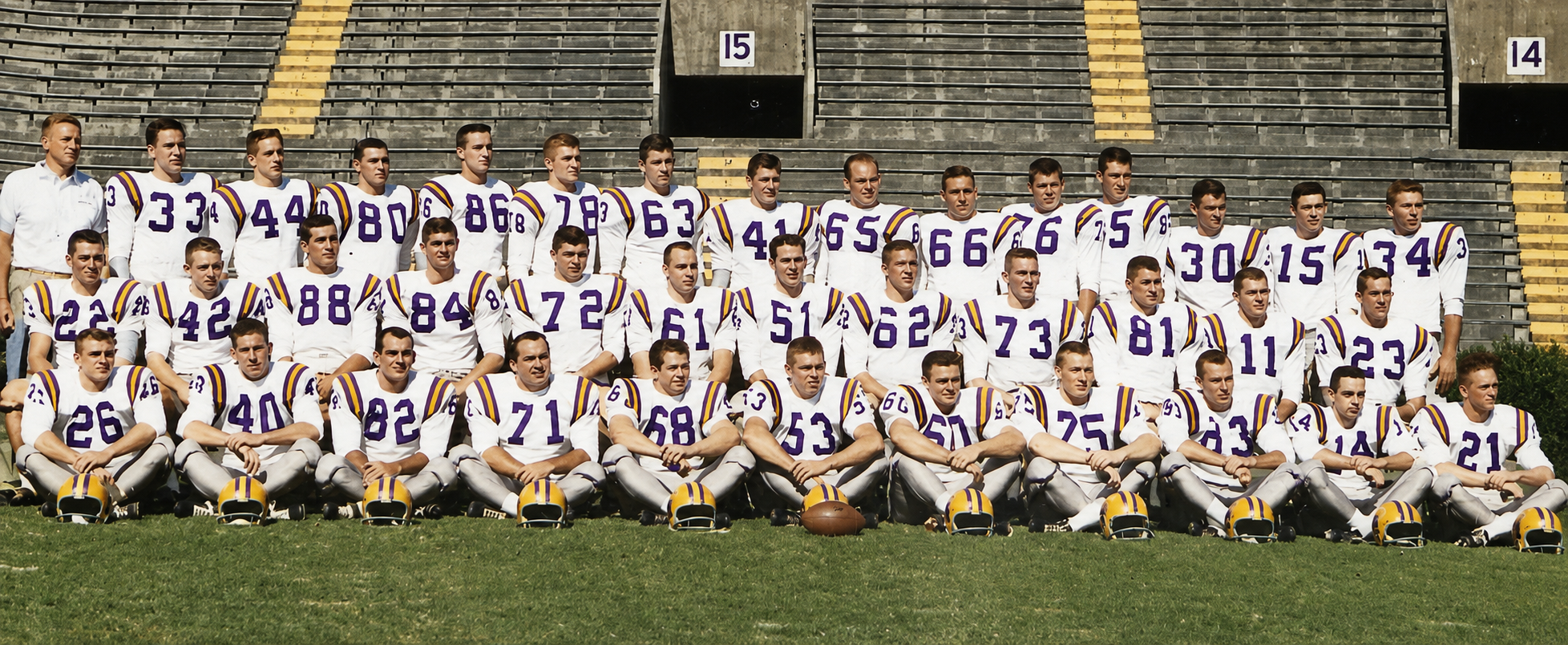
LSU Football team in the 1960s
The Echo of Jim Crow
To understand the weight of this question, one must travel back to New Orleans on January 1, 1956. In the Sugar Bowl, Georgia Tech defeated the University of Pittsburgh by a score of 7-0. The game is a footnote in football history, but it was a flashpoint in the American social fabric. Pittsburgh’s fullback was a young African-American named Bobby Grier. His presence on the field, in the heart of the Old Confederacy, coming on the heels of the Supreme Court’s landmark 1954 decision in Brown v. Board of Education, sent shockwaves through the segregationist South
The reaction was swift and legislative. Over the following months, while Southern politicians were busy constructing the edifice of what became known as Massive Resistance, lawmakers in Georgia and Louisiana debated bills to outlaw integrated sporting events entirely. The agitation in Georgia eventually fizzled. But Louisiana succeeded. In July 1956, the Louisiana State Assembly passed a social segregation law banning all integrated sporting events in the state. Governor Earl Long, brother of the legendary Huey Long, signed the bill into law.
Consider the implications of that moment. The same state that now houses the LSU Tigers—a team that relies heavily on the athleticism of Black players for its national championships and its share of billion-dollar conference revenues—once passed a law making it illegal for Black and white athletes to merely play a game together. This is the context that is missing when the question of “coolness” is raised. Where was the outrage from those who now vociferously object to a young man gaining an extra year of NCAA eligibility? Where were the op-eds and opinion pieces asking if alumni were “cool” with a law that legalized apartheid on the playing field?
They were silent. The system was working as intended.
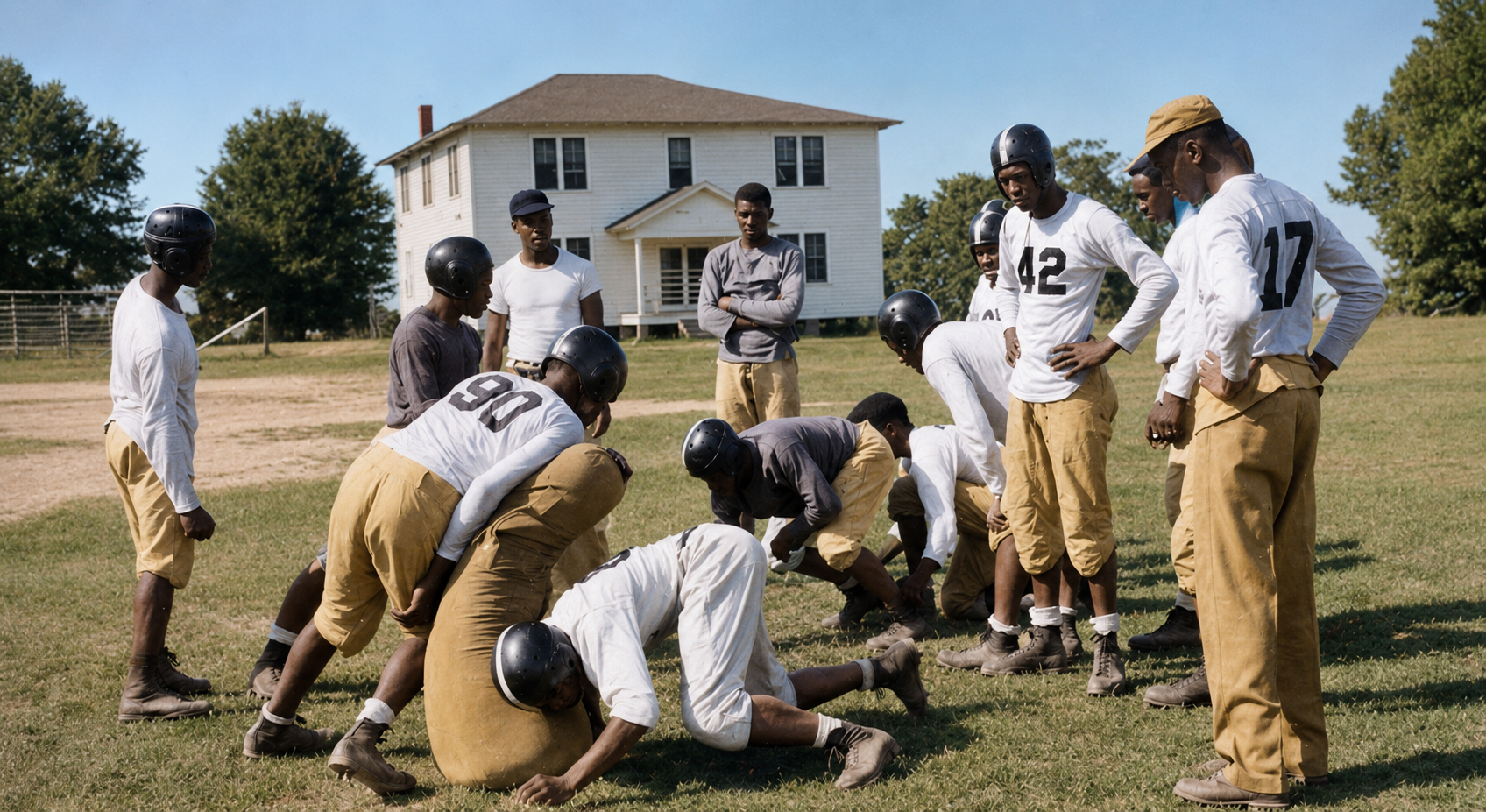
Grambling football practice in the 1940s
Talent Beyond the Color Line
One cannot make a convincing argument that Black players during that era simply were not good enough to play at LSU. Such an argument collapses under the weight of statistical evidence located a short distance from Tiger Stadium.
Southern University, a historically Black university situated a short walk from the LSU campus, has produced 78 professional football players and 83 NFL draft picks in its history. The overwhelming majority of those players toiled in obscurity during the Apartheid era, their brilliance hidden from the white gaze of the Southeastern Conference because of the color barrier. Just up the road, Grambling State University, under the legendary coach Eddie Robinson, produced more than 100 NFL players and over 130 draft picks. These were not marginal athletes. These were Hall of Famers, men who changed the way the game was played. Every single one of those players was talented enough to play for LSU. Every single one of them was denied—not because of a slow 40-yard dash or a poor bench press, but because of a social system of white supremacy designed to keep them in a subordinate caste. LSU did not field a Black player on its varsity football roster until 1973, when I was eight years old. That is not ancient history. That is living memory. There are men alive today who were denied the chance to wear the purple and gold simply because of the color of their skin.
The Proper Context
So when asked if I am “cool” with Dae’Quan Wright returning to college to earn whatever the NIL market will bear, the answer must be placed in its proper historical context.
Yes, I am cool with a young Black man exercising the full extent of his legal rights to capitalize on his God-given talent. I am cool with him having an opportunity that his great-grandfather, his grandfather, and his great-uncles were violently and systematically denied. I am cool with him seeking an education and a financial windfall in a system that for decades exploited Black labor without compensation.
What I am not cool with is the selective amnesia that frames these questions. I am not cool with the racism and white supremacy that denied thousands of Black athletes—from Bobby Grier to the legends of the Southwestern Athletic Conference (SWAC) — the opportunity to compete in the SEC until the early 1970s. I am not cool with a society that jealously guards the sanctity of “amateurism” when it applies to a Black athlete trying to get paid, while ignoring the fact that for generations, the sanctity of the game was used as a weapon to enforce segregation.
It is exhausting to be asked for a moral judgment on a technical eligibility rule while being expected to ignore a century of systemic exclusion. The ledger of American sports is deeply unbalanced. We have witnessed a massive transfer of wealth from Black bodies to predominantly white institutions. Dae’Quan Wright’s potential return to LSU is not a scandal; it is a minor correction in a long history of injustice.
The real scandal is that we continue to ask the descendants of the excluded to validate the comfort of the excluders. The real scandal is that for seven decades, LSU played football without young men like Dae’Quan Wright, and almost no one thought to ask whether that was acceptable.
So no, the question is not fair. But if an answer is required, here it is: Yes. I am cool with it. I am cool with progress, however incremental. I am cool with a young Black man finally getting what he is owed.
I am not cool with the history that made this question necessary in the first place.
When Success and Solidarity Collide, a Black Voice Finds Himself on the Outside Looking In
by Delgreco K. Wilson, M.A.
PHILADELPHIA, PA – In the pantheon of American sports media, few figures loom as large—or speak as loudly—as Stephen A. Smith. He is, by any measurable standard, a titan of the industry. His face is ubiquitous across ESPN platforms, his podcast commands millions of listeners, and his reported annual compensation places him among the highest-paid personalities in the history of sports journalism. He has transcended the world of box scores and trade deadlines to become a cultural force, a political commentator, and even, by his own admission, a man who has “toyed with the idea” of running for the presidency of the United States.
Yet for all his professional triumph, Smith now finds himself in the crosshairs of a sustained and deeply personal backlash from the very community that once celebrated his ascendancy. The criticism is not coming from the predictable corners of white conservative media, where he has increasingly found a sympathetic audience. It is coming from Black journalists, Black activists, Black athletes, and, most notably, Black women, who have accused him of everything from tone-deafness to outright betrayal. The animosity directed toward Smith is not merely a disagreement over political strategy or sports analysis; it is a referendum on his very identity, his authenticity, and his relationship to the Black American experience.
To understand the nature of this backlash, one must look beyond the surface-level controversies and examine the deeper psychological and sociological forces at play. More than a century ago, W.E.B. Du Bois—arguably the most important Black intellectual in American history—articulated a concept that remains startlingly relevant to the Stephen A. Smith saga. That concept, known as double consciousness, describes the internal psychological conflict experienced by subordinated groups in an oppressive society. It is the sensation of always looking at oneself through the eyes of others, of measuring one’s soul by the tape of a world that looks on in amused contempt and pity. It is the feeling of “two-ness”—an American, a Negro; two souls, two thoughts, two unreconciled strivings; two warring ideals in one dark body.
At its core, double consciousness is the sensation of having one’s identity divided into several parts, making it difficult to have a unified sense of self. Though Du Bois developed this framework to describe the condition of African Americans at the dawn of the twentieth century, it remains a devastatingly precise tool for analyzing the twenty-first-century phenomenon of Stephen A. Smith—a man who has ascended to the highest peaks of American capitalism while, many argue, losing his grip on the very soul that made such an ascent possible.
The American Dream, Achieved
Stephen A. Smith is, in many ways, the embodiment of the American Dream. Born in the Bronx and raised in the Hollis neighborhood of Queens, he was the son of Caribbean immigrants who worked tirelessly to provide their children with opportunities they themselves never had. Smith attended the Fashion Institute of Technology for a year before transferring to Winston-Salem State University, a historically Black university in North Carolina, where he honed his craft as a journalist for the student newspaper. From those humble beginnings, he clawed his way through the ranks of local newspapers—the Winston-Salem Journal, the Greensboro News & Record, the New York Daily News—before landing at the Philadelphia Inquirer, where he became one of the most respected NBA beat writers in the country.
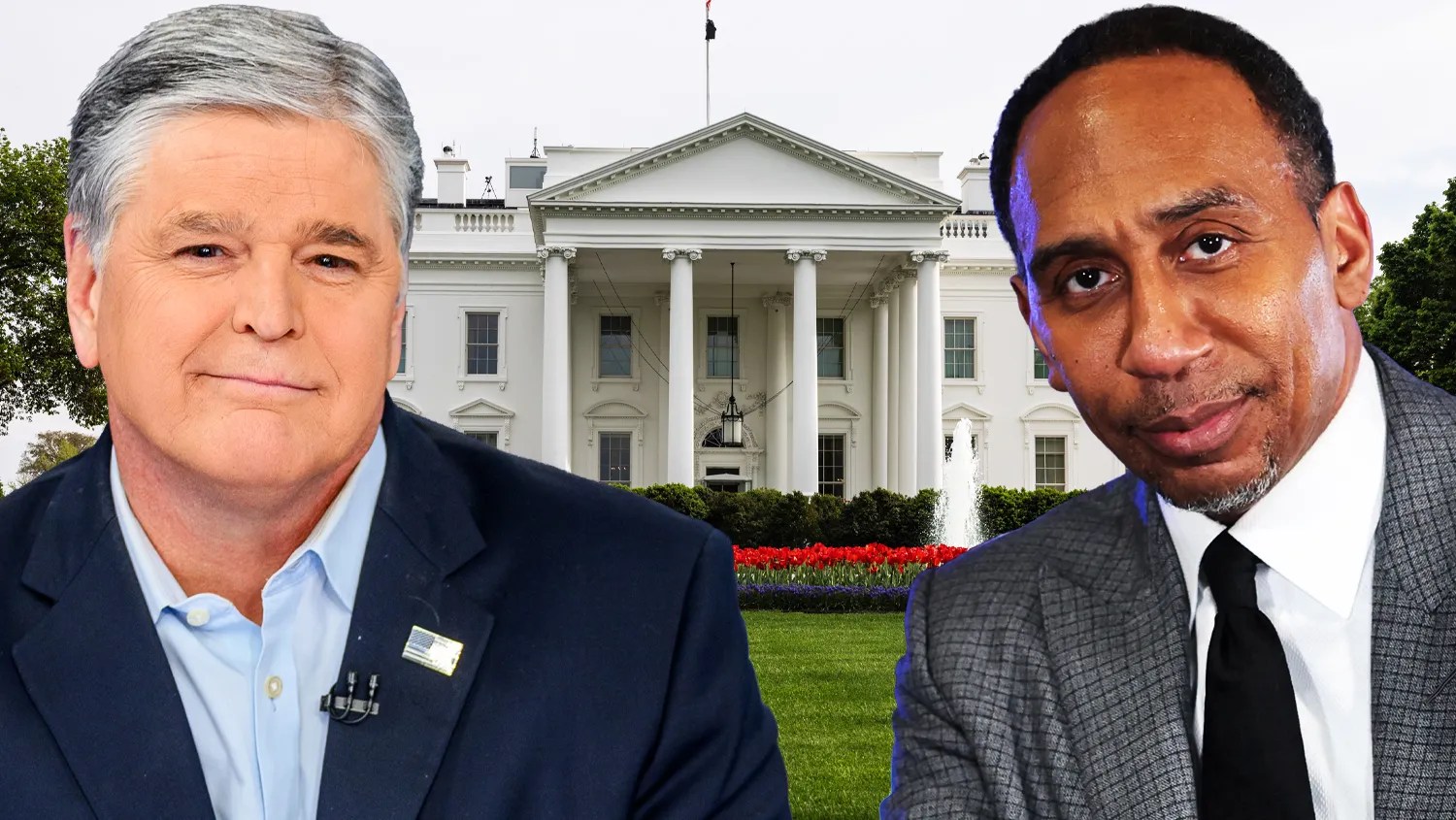
Sean Hannity and Stephen A. Smith
His transition to television was not immediate, but it was inevitable. Smith possessed a rare combination of encyclopedic sports knowledge, unapologetic self-confidence, and a willingness to say things others would not. When he joined ESPN’s First Take in 2012, the show was transformed from a niche debate program into a cultural phenomenon. His catchphrases (“However,” “Blasphemous,” “We’re going to talk about it”) became part of the American sports lexicon. His debates with co-hosts Max Kellerman and Shannon Sharpe became appointment viewing for millions of fans. By the early 2020s, Smith had become the face of sports commentary in America, earning a contract reportedly worth more than $12 million per year.
This is, by any measure, the realization of the American identity that Du Bois described. Smith is a citizen by birth and law, and he has embraced the promises of the U.S. Constitution, democracy, liberty, and the Protestant work ethic with a fervor that would make Horatio Alger blush. He is a proud capitalist, an unabashed patriot, and a firm believer in the idea that hard work and perseverance can overcome any obstacle. When he speaks of his journey from poverty to prosperity, he does so with the conviction of a man who believes that the system works—that America, for all its flaws, is still a land of opportunity for those willing to seize it.
And yet, it is precisely this embrace of the American identity, unmediated by the countervailing pull of the Black identity, that has placed him at odds with so many in his own community.
The Neglected Soul
Du Bois argued that double consciousness is not a harmonious duality but a state of perpetual tension. The two identities—the American and the Black—are not complementary; they are at war. For most African Americans, this tension is inescapable. They are constantly reminded that their American identity is conditional, that their citizenship is provisional, that the full rights and privileges promised by the Constitution are, in the words of Langston Hughes, “a dream deferred.” The Black individual, Du Bois wrote, is forced to view themselves not just as they are, but as white society perceives them—as a problem, as inferior, as “other.”
This is the burden of what Du Bois called the Veil. The Veil is the metaphorical barrier that separates Black and White America. White Americans cannot accurately see Black Americans as true Americans or even as fully human; they see them through the distorting lens of racial prejudice. Conversely, Black Americans are born behind the Veil, meaning they are excluded from full participation in American society. They are forced to develop a “second-sight,” a heightened awareness of how they are perceived by the dominant culture, in order to survive.
Stephen A. Smith, however, has been given access to what he perceives as full participation. He has been welcomed into the corridors of power, invited to sit at tables that were historically off-limits to Black journalists. He has been given the keys to the kingdom—or so he believes. And it is this belief, this conviction that he has transcended the Veil, that has rendered him incapable of understanding and empathizing with the “twoness” that Black Americans struggle with every day.
When Smith sits across from Sean Hannity on Fox News, when he appears on Meagyn Kelly’s podcast, when he floats the idea that he might vote for Donald Trump, he is not simply expressing a political preference. He is signaling to his white audience—and, just as importantly, to himself—that he is not like other Black people. He is not angry. He is not radical. He is not going to make them uncomfortable by demanding too much, too soon. He is a reasonable Black man, a safe Black man, a Black man who can be trusted to see things from their perspective.
This is the tragedy of Stephen A. Smith’s double consciousness. He has internalized the gaze of white America so completely that he no longer recognizes the damage it does to his own community—or to himself.
The Corporate Mouthpiece
Nowhere is this tension more apparent than in Smith’s coverage of Black athletes who challenge the status quo. In the summer of 2020, when NBA players led a historic strike in the wake of the police shooting of Jacob Blake in Kenosha, Wisconsin, Smith was among the loudest voices criticizing the players. He argued that the strike was “impractical,” that the players were “hurt” more than they were helping, and that they needed to “think about the consequences” of their actions. He framed the players’ collective action not as a courageous stand for justice but as a reckless disruption of the entertainment product that he and his colleagues were paid to analyze.
This was not an isolated incident. Smith has a long history of siding against Black athletes in labor disputes, criticizing players for demanding trades, sitting out games, or using their platforms to speak on social issues. He has framed his critiques through the lens of “old-school” respectability, suggesting that players who wear flashy clothes, use social media, or express themselves freely are “distractions” who are not taking their careers seriously. To Smith, the ideal Black athlete is one who shuts up, plays hard, and lets his performance speak for itself—in other words, an athlete who assimilates to white corporate norms without making any demands that might upset the people signing his checks.
This is not analysis; it is propaganda. And the Black community knows it. When Smith amplifies the voices of NBA front-office executives and anonymous “sources,” he is not being a journalist; he is being a tool of the establishment. The power structures of professional sports have historically been used to suppress Black labor, to silence Black voices, and to extract maximum value from Black bodies while giving minimum power in return. When Stephen A. Smith sides with those structures against the athletes, he is siding against his own people—and he is doing it from behind the Veil, where he has convinced himself that he is no longer subject to the same constraints.
The War on Black Women
If Smith’s relationship with Black athletes is complicated, his relationship with Black women is outright hostile. This is not a new development. In 2014, Smith was suspended from ESPN for comments he made in the context of the Ray Rice domestic violence scandal. Rice, a star running back for the Baltimore Ravens, had been videotaped punching his fiancée in an elevator, knocking her unconscious. Smith’s response was to suggest that women should not “provoke” men into violence—a statement so egregious that even his own employer felt compelled to take action.
More recently, Smith has directed his ire toward Black women in positions of political and cultural power. In March 2025, following a widely publicized interview in which Rep. Jasmine Crockett referred to Texas Governor Greg Abbott as “Governor Hot Wheels”—a reference to his use of a wheelchair—Smith launched a scathing critique of the Congresswoman. He called Crockett’s remarks “despicable,” “unnecessary,” and “low down.” He argued that by attacking Abbott’s disability, Crockett had lowered herself to the level of her political opponents and was embarrassing the Democratic Party. He demanded that she stop “playing the game” of gutter politics and show more class.
The irony, of course, was lost on Smith. This is a man who has built his entire career on vicious, personal, and often below-the-belt insults directed at Black athletes and public figures. He has called players “bums,” questioned their manhood, mocked their intelligence, and dismissed their legitimate grievances with a wave of his hand. Yet when a Black woman in Congress uses sharp language to criticize a white governor who has spent years dismantling diversity and inclusion programs that benefit Black communities, Smith suddenly discovers the virtues of civility and decorum.
Similarly, during the lead-up to the 2024 presidential election, Smith repeatedly criticized Vice President Kamala Harris. He questioned her “Blackness” in a political context, claimed that she was avoiding difficult interviews because she lacked the substance to defend her policies, and floated the idea that he was open to voting for Donald Trump. The criticisms were indistinguishable from conservative talking points, and they were delivered with the same smug condescension that Smith reserves for those he deems unworthy of respect.
When MSNBC canceled Joy Reid’s show in February 2025, Smith defended the network’s decision, arguing that “ratings are the currency of television” and that Reid’s show had simply not performed well enough to justify its existence. The comment was technically true, in the narrow sense that all television shows are ultimately judged by their ability to attract viewers. But it ignored the broader context: the systemic barriers that Black hosts face, the lack of institutional support that Black journalists often receive, and the fact that Smith himself benefits from a massive promotional machine at ESPN while Black women are expected to succeed or fail on their own.
To many Black women, the pattern is undeniable. Smith demands perfection from Black women in power while extending grace to white men who have demonstrated nothing but contempt for the Black community. He polices Black women’s tone while profiting from a broadcasting style that is deliberately inflammatory. He claims to be a voice for the voiceless while using his platform to amplify the voices of those who already have more power than they deserve.
This is not double consciousness; it is a failure of consciousness. It is a refusal to engage with the Black identity side of the equation, to recognize that the same systems that empower him are the systems that oppress the very people he claims to represent.
The Right-Wing Embrace
Perhaps the most troubling aspect of Smith’s recent trajectory is his growing alignment with far-right media figures. His appearances on Sean Hannity’s Fox News show and Megyn Kelly’s podcast are not incidental; they are strategic. Smith understands that there is a market for Black voices that validate conservative talking points, that tell white audiences what they want to hear about Black culture, Black politics, and Black athletes. He has positioned himself as that voice—a Black man who is willing to criticize his own community in the language of personal responsibility and respectability politics.
This is not to say that Smith is a conservative in the traditional sense. He has expressed support for Democratic candidates in the past, and he has spoken passionately about the need for economic opportunity in Black communities. But his willingness to share a platform with figures like Hannity and Kelly—both of whom have built their careers on stoking racial resentment—raises serious questions about his judgment and his loyalties.
When Smith sits across from Hannity and nods along as the host rails against “critical race theory” or “woke culture,” he is not engaging in a good-faith debate. He is providing cover for a political movement that is actively working to roll back the gains of the civil rights era. He is lending his credibility to a network that has spent decades demonizing Black people, from its coverage of Barack Obama to its relentless attacks on Black Lives Matter. He is, in effect, helping to build the very Veil that Du Bois warned about more than a century ago.
Many Black observers have concluded that Smith is no longer in touch with the Black plight. They see a man who has been seduced by the trappings of white success, who has mistaken access for acceptance, and who has forgotten that the Veil does not disappear simply because one has been invited to the other side of it. They see a man who is struggling with the Black identity side of the double consciousness equation—and losing.
The Unreconciled Soul
W.E.B. Du Bois wrote that the history of the American Negro is the history of this strife—the longing to attain self-conscious manhood, to merge the double self into a better and truer self. He hoped that the Black American would one day be “both a Negro and an American, without being cursed and spit upon by his fellows, without having the doors of Opportunity closed roughly in his face.”
Stephen A. Smith has achieved the American side of that equation. He has walked through the doors of opportunity, and he has done so with remarkable skill and determination. But he has not yet achieved the reconciliation that Du Bois envisioned. He has not found a way to be both a Negro and an American without sacrificing the former to the latter. He has, in the eyes of many, become a cautionary tale—a warning of what happens when success comes at the cost of solidarity, when access is mistaken for liberation, and when the loudest voice in the room drowns out the whispers of one’s own conscience.
The backlash against Stephen A. Smith is not about sports. It is not about politics. It is about identity. It is about the question of what it means to be Black in America, and whether it is possible to achieve the American Dream without losing one’s soul in the process. It is about the enduring power of Du Bois’s double consciousness, and the painful recognition that even the most successful among us are not immune to its pull.
Smith is not a villain. He is, in many ways, a product of a system that rewards assimilation and punishes dissent. But he is also a man with choices, and the choices he has made—to side with power against the powerless, to demand respectability from others while flouting it himself, to seek validation from those who would rather he not exist at all—have consequences. The Black community is holding him accountable for those choices, and it is doing so in the only way it knows how: by speaking truth to power, even when that power wears a familiar face.
In the end, Stephen A. Smith’s greatest challenge is not his critics, his ratings, or his political ambitions. It is the two warring souls within him—the American and the Negro—and the question of whether he will ever find a way to make them one. Until he does, he will remain what Du Bois warned against: a man divided against himself, whose dogged strength alone keeps him from being torn asunder.
PHILADELPHIA, PA – The most underappreciated feature of the MAGA movement is not its rage, its demagoguery, or its carnival of grievance. It is its strategic rationality. To dismiss the coalition as a fever swamp of irrationality is to fundamentally misunderstand its durability and its danger. The movement has, with considerable sophistication, constructed what can be understood as a portfolio logic: a framework that presents support for Donald Trump and the Republican Party as a calculated, even prudent, allocation of political and social capital by a specific demographic group—angry, disaffected white men—under conditions of perceived scarcity and existential risk. This strategic autopsy seeks to dissect that logic, examining how it works, what it suppresses, and why it has proven so resilient.
The Asset Allocation of a Threatened Class
For the white men who form the emotional and electoral core of the MAGA coalition, the political decision is framed not as a single vote but as a diversified portfolio designed to hedge against multiple, cascading risks. The immediate returns are tangible and communicated with market-like clarity. The elimination of Diversity, Equity, and Inclusion (DEI) programs is presented as the removal of a structural tax on whiteness, an immediate correction to a market distorted by artificial preferences. The promise of mass deportation addresses a perceived depreciation of cultural and economic assets—neighborhood cohesion, wage floors, linguistic dominance—that unrestricted immigration allegedly erodes. The rollback of reproductive rights, while framed in moral language, functions within the portfolio as a restoration of traditional gender dividends, re-securing the patriarchal returns that feminism had devalued.
These are the blue-chip holdings, the steady, reliable yields. Then there are the speculative assets. The January 6 pardons, the creation of a $1.8 billion compensation fund for Trump allies who claim unjust prosecution, and the open discussion of retribution against political enemies are high-risk, high-reward investments. They represent a wager that the legal and normative constraints on executive power can be permanently rewritten to insure against future loss. They are, in portfolio terms, a form of political catastrophe insurance: if the demographic clock is indeed ticking toward a majority-minority nation in 2045, these instruments are designed to lock in structural advantages that can survive the loss of numerical dominance. The “stop the steal” movement and the cascade of voting restrictions are not merely sour grapes about a lost election; they are a calculated effort to de-risk the electoral marketplace itself, limiting participation by constituencies that threaten the portfolio’s long-term viability.
The Rational Actor Frame
This framing of political choice as rational portfolio management serves a crucial ideological function: it launders the moral content of the decisions being made. The language of “interests,” “returns,” and “risk management” provides a technocratic gloss over what is, at its core, an allocation of power to a movement defined by its ascriptive hierarchy. It allows the white male voter to see himself not as a beneficiary of a resurgent white supremacy but as a prudent investor responding to market signals. He is not making a moral choice to subordinate others; he is making a rational choice to protect his own. This frame is powerful because it leverages the core American mythology of the calculating, self-interested individual, the homo economicus of the free market, and applies it to the democratic sphere. It transforms civic participation into a personal investment strategy, with all the moral weight of a 401(k) allocation.
The Moral Costs Excluded from the Balance Sheet
A portfolio, by definition, contains what its creator chooses to include. The MAGA portfolio logic functions by systematically excluding certain costs from its calculus—costs that a full accounting would reveal as catastrophic. First and foremost is the cost to democratic legitimacy itself. The pardoning of violent insurrectionists who sought to overturn a certified election is an expense that cannot be denominated in mere political capital; it represents the liquidation of the constitutional order as a going concern. The $1.8 billion compensation fund for Trump allies is not insurance; it is a slush fund that redefines legal accountability as partisan persecution and rewards loyalty to a person over loyalty to the law. These are not defensive hedges; they are offensive weapons designed to dismantle the referee, rendering future elections un-losable not through persuasion but through structural capture.
The portfolio also excludes the human costs borne by those outside the investment class. The demonization of immigrants as “poisoning the blood of our country” is not an externality; it is a deliberate strategy that inflicts real terror on real families, that separates children from parents, that turns communities into battlegrounds. The assault on women’s bodily autonomy is not a “restoration of traditional values”; it is a state-mandated appropriation of female biology with measurable consequences in maternal mortality, economic freedom, and human dignity. The “war on woke” is not a defense of intellectual freedom; it is a concerted campaign to suppress the very knowledge traditions that could name and critique the hierarchy being constructed. These are not side effects. They are the product being purchased.
What the portfolio frame most aggressively suppresses is the historical asymmetry of the risk it claims to be hedging. The fear that animates the MAGA coalition—the fear that a “tanning” America will subject white men to the same oppression they have historically imposed—is a fear of losing a dominant position, not a fear of experiencing subjugation. It is a category error dressed as a symmetry. To have occupied the presidency, the Senate, the House, the Governor’s mansions, and the Supreme Court for nearly the entirety of the nation’s history, and to then frame a loss of that monopoly as the threat of “oppression,” is a remarkable act of historical revisionism. It confuses the loss of unearned privilege with the imposition of tyranny. This confusion is not a bug in the portfolio logic; it is the foundational assumption that makes the entire investment thesis cohere.
The Architects and the Investors
It is crucial to distinguish between the architects of this portfolio and its investors. The strategists, the think-tank intellectuals, and the media figures who construct and market the MAGA framework are operating with full informational awareness. They know, as Rogers Smith demonstrated, that they are wielding an ascriptive ideology with deep American roots. They are, in effect, asset managers of grievance, packaging and selling a diversified fund of resentments to a base that experiences those resentments as authentic and existential. The investors—the voters—are operating under conditions of incomplete information and time pressure, as the strategic framework you’ve described correctly notes. They are bombarded with an information ecosystem that systematically exaggerates threats (immigrant crime waves, anti-white discrimination) and suppresses contrary data (actual crime statistics, the persistent racial wealth gap, the continued overrepresentation of white men in virtually every lever of power). Their rationality is bounded by the information environment in which they operate. They are making what they believe to be prudent decisions based on the data they receive. That the data is manipulated does not make the decision-making process irrational; it makes it manipulated.
This is the strategic genius and the moral horror of the MAGA portfolio: it exploits the legitimate cognitive architecture of rational choice to advance an illegitimate and ultimately destructive political project. It cannot be defeated simply by insisting that its investors are bigots or fools. That approach has failed for a decade. It can only be countered by a competing offer—a portfolio that addresses the genuine economic and social anxieties of struggling Americans without requiring them to purchase, as a bundled asset, the subordination of their fellow citizens. The question for those who oppose the Third Restoration is whether they can construct an investment vehicle compelling enough to compete in a marketplace so thoroughly rigged by the architects of ascriptive rage. The autopsy reveals a movement that is strategically rational and democratically fatal. The only viable response is a strategy as clear-eyed about power, interests, and returns as the one it seeks to defeat.
Delgreco Wilson Wilson formerly taught Comparative Politics and International Relations at Lincoln University. He is a leading political analyst, educator, and advocate whose work centers on empowering Black Americans through a deeper understanding of political strategy and its historical roots in the fight against systemic racism and white supremacy. A prominent voice in the Greater Philadelphia Region, Wilson brings a wealth of academic rigor and real-world insight to his analysis of Black political thought and action. Wilson’s expertise extends beyond the classroom. His incisive columns and articles have been featured in prominent publications such as the Philadelphia Tribune and Delaware County Daily Times. A sought-after commentator, he regularly contributes to radio programs and podcasts across the Mid-Atlantic region, offering sharp analysis and actionable strategies for advancing racial justice and equity.
PHILADELPHIA, PA – There are stories we tell ourselves to make sense of the world—narratives so ancient they are etched into the human psyche. The myth of the hero struck down, abandoned, and left for dead, only to rise again with greater power, is among the most enduring. It is the story of Osiris, dismembered and reassembled. It is the story of Christ, crucified and resurrected. It is the story of every underdog who has been told, with bureaucratic finality, that their dream is over.
It is also the story of Yazid Powell.
The basketball career of Yazid Powell was crucified and metaphorically left for dead, only to rise again. The arc of Powell’s journey is one of the most powerful narratives in the recent history of scholastic and collegiate sports in Philadelphia. He was subjected to a relentless and concerted effort to humiliate and ruin his athletic career, only to see those schemes followed by a monumental comeback that culminated in winning the MVP of the Championship game in the inaugural JAB Classic. That he did so on the hallowed floor of the Palestra, nine years after certain adults tried to bury him, is not merely a sports story. It is a moral reckoning.
The Crucifixion in Early October 2017
The scene inside that hearing room was one of raw, unvarnished anguish. Tears were cascading down her cheeks. The pain was evident on her face. Veins were throbbing in her neck. She was screaming at the top of her lungs, “Y’all trying to wipe Black Boys off the face of the earth!”
You could sense the vulnerability. You could tell she felt powerless. You could tell she felt betrayed. Romaine Sims had just sat through an eligibility hearing for her son Yazid Powell, a senior shooting guard at Overbrook High School.
She was not wrong. The athletic director and boys basketball coaches at West Philadelphia High School were absolutely intent on ending her son’s basketball career.
Before the hearing, Ms. Sims passionately explained that she was using basketball to keep her son engaged with the educational system. “He’s all right when he’s on a team and playing,” she said. “When he’s not involved with basketball, he’s easily influenced to do stupid things.” Those words were not hyperbole. Powell’s father had been murdered years ago. His older brother was incarcerated in the state penitentiary system. For a Black teenager in Philadelphia, the margins between a future and oblivion are razor-thin.
Basketball was not a luxury; it was a lifeline.
Yazid Powell awaiting his eligibility decision in October 2017
At stake was Powell’s senior season. Would he be eligible to play for Overbrook?
Earlier that spring, Powell had transferred from Boy’s Latin to West Philadelphia High School at the end of February. During the eligibility hearing, Ms. Sims stated that West Philadelphia’s coach, Jermaine Snell, “begged me to send Yazid to West Philadelphia High School. He even sent a car to my house to drive me to a meeting with him.” Snell quibbled with the word “begged” but acknowledged the car.
What is critical to understand is that Yazid Powell never suited up for West Philadelphia. He never played one game for the Speedboys. Yet West Philadelphia’s athletic director, Barry Strube, and Snell actively contested his eligibility at Overbrook. The logic was never made clear, because there was none. What was clear was that these men did not wish to see Powell play for Overbrook. They went on the record pushing for denial of his eligibility.
Mr. Strube claimed he launched an investigation after “Rob Moore (Constitution Head Coach) called me and indicated that Antwann Postell had recruited Powell to Overbrook to play basketball.” When reached by telephone, Moore told Black Cager Sports Media that he has “never called Strube.”
The proceedings had the distinct whiff of a kangaroo court. Mr. Strube produced a copy of Postell’s criminal record, pictures of Powell playing for Postell in the Chosen League, and noted that Powell played in an alumni game at Overbrook after transferring in May. These were presented as evidence of malfeasance. In reality, they were evidence of a community that plays basketball, a community that knows its coaches. The attempt to criminalize Postell’s past and weaponize it against a teenager was a grotesque display of power.
The committee of fifteen was made up of ten white males, two Black males, and three Black females. They voted 13 to 2 to deny Yazid Powell eligibility. West Philadelphia High School, Mr. Strube, and Mr. Snell won that round. Powell was ruled ineligible. They killed his scholastic basketball career. For Powell and his mother, all seemed lost.
These were not adversaries in a fair contest. They were functionaries wielding administrative power against a child. They were determined to strip him of his senior year, of his visibility to college recruiters, of the very structure his mother knew he needed to survive. It was a crucifixion of opportunity, carried out with the cold detachment of process.
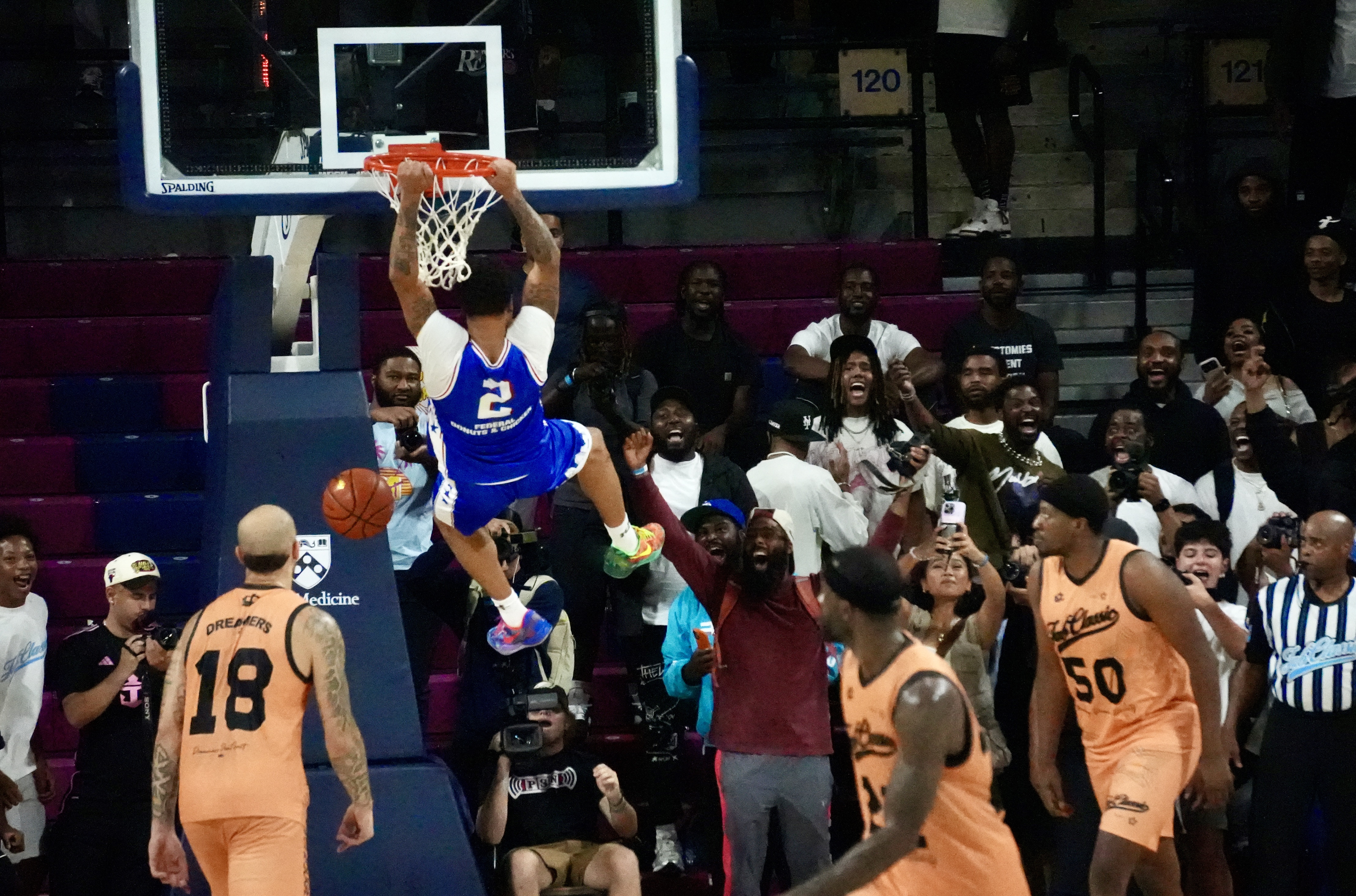
Powell dunking and exciting the JAB Classic fans
A Lifeline Extended
But the oldest stories do not end at the tomb.
Black Cager Sports Media, mortified by the efforts of Mr. Strube and Mr. Snell, reached out to one of the deans of Philadelphia’s basketball community. Sam Rines, the director of Rocktop Academy, indicated that he would allow Powell to play with him at a significantly reduced cost. Rines’s program has helped hundreds of young men earn college basketball scholarships. His response was immediate and humane: “I’m in the business of helping young men better themselves so they can become contributing members of society. Basketball is just a tool I use to accomplish this goal. I hope he’s able to play high school basketball. I know how important that is for kids. But I want him and his mom to know I will do everything I can to help him realize his dream of playing college basketball.”
Like a heaven-sent angel, Rines allowed Powell to keep his dream alive after the attempt to snuff it out. It was not charity; it was an investment in the exact opposite of what the system had attempted. It was an investment in resurrection.
Powell would have to take the hard route. He played one year at the Community College of Beaver County under head coach Bryen Spriggs. Spriggs, too, saw the talent and the drive that West Philadelphia’s administrators tried to erase. Powell then starred at Harcum Junior College, accumulating 661 points, 273 rebounds, 212 assists, and 131 steals in 43 starts. He finally realized his dream of playing NCAA Division I basketball at Buffalo, where he led the team in steals per game, free throws made, and free-throw percentage while rating second in scoring. He played his final collegiate season at UTEP, reunited with Bryen Spriggs, then an assistant coach for the Miners. At UTEP, Powell started all 34 games in which he played, averaging 11.2 points, 5.0 rebounds, and 3.1 assists. He was named to the All-Conference USA tournament team.
This past year, playing professionally, Powell averaged 18.6 points per game in Hungary’s top division and 26.9 points per game in Cyprus.
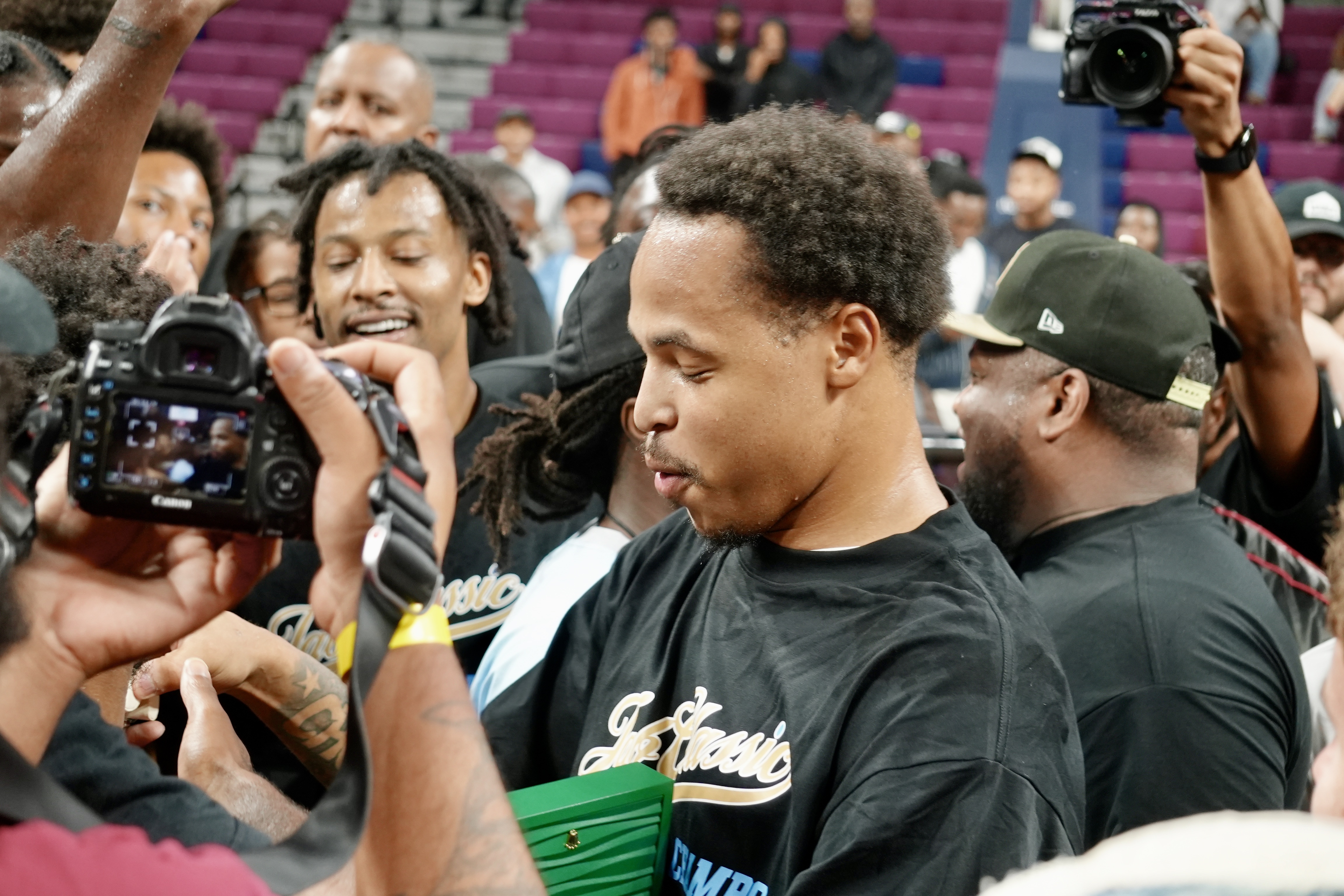
Powell holding his Rolex box and examining his watch
The Resurrection
Nine years after his basketball career was left for dead, Yazid Powell stood on the floor of the fabled Palestra. He led his team to victory in the championship game of the inaugural JAB Classic. His team won one million dollars. Powell was given a Rolex watch as the MVP of the game.
Think about that image. The boy they tried to erase now wore a Swiss luxury timepiece on his wrist, a symbol of precision, of value, of arrival. The boy whose eligibility was denied by a committee of mostly white men in a closed room now stood as the most valuable player on a stage that honored his excellence about a 6 minute drive from where Stube and Snell work everyday.
The resurrection is complete. Not because Powell now has money or trophies, but because the attempt to destroy him failed spectacularly. The administrative machinery of a public institution, wielded by adults who should have been mentors, was exposed as petty and vindictive. Powell’s success is a rebuke to every coach, every athletic director, every official who believes they can decide a child’s fate based on their own small grudges.
The myth of death and resurrection endures because it speaks to a fundamental truth: power can wound, but it cannot ultimately defeat the spirit. Yazid Powell was crucified by the pettiness of West Philadelphia High School. But like all great heroes, he rose. And on that night at the Palestra, with a million dollars on the line and a Rolex on his wrist, he made sure the world knew that the grave was empty.
CAMDEN, NJ – Listen to me, young fella. Yeah, you—the one in the Purple and Gold, dragging up and down Park Boulevard before the sun cracks the sky, dreaming about playing at the next level. Put the ball down for a second. Pick up your phone. Read this slow. Read it twice. This ain’t internet noise. This is your life about to change.
DJ Wagner, Maryland Guard
THE TABLE JUST GOT FLIPPED
The NCAA suits—the same ones who’ve been tying kids up in red tape and waiver-wire purgatory for decades—just did something unprecedented. They flipped the whole damn table over.
The Division I Cabinet just approved a clean sweep. We’re talking about a single, universal standard that’s about to erase the confusing mess of sport-specific rules and the soul-crushing waiver process you’ve heard horror stories about. They’re putting the entire country on an age-based clock. The full implementation hits for the fall 2027 incoming class, but the winds are shifting right now.
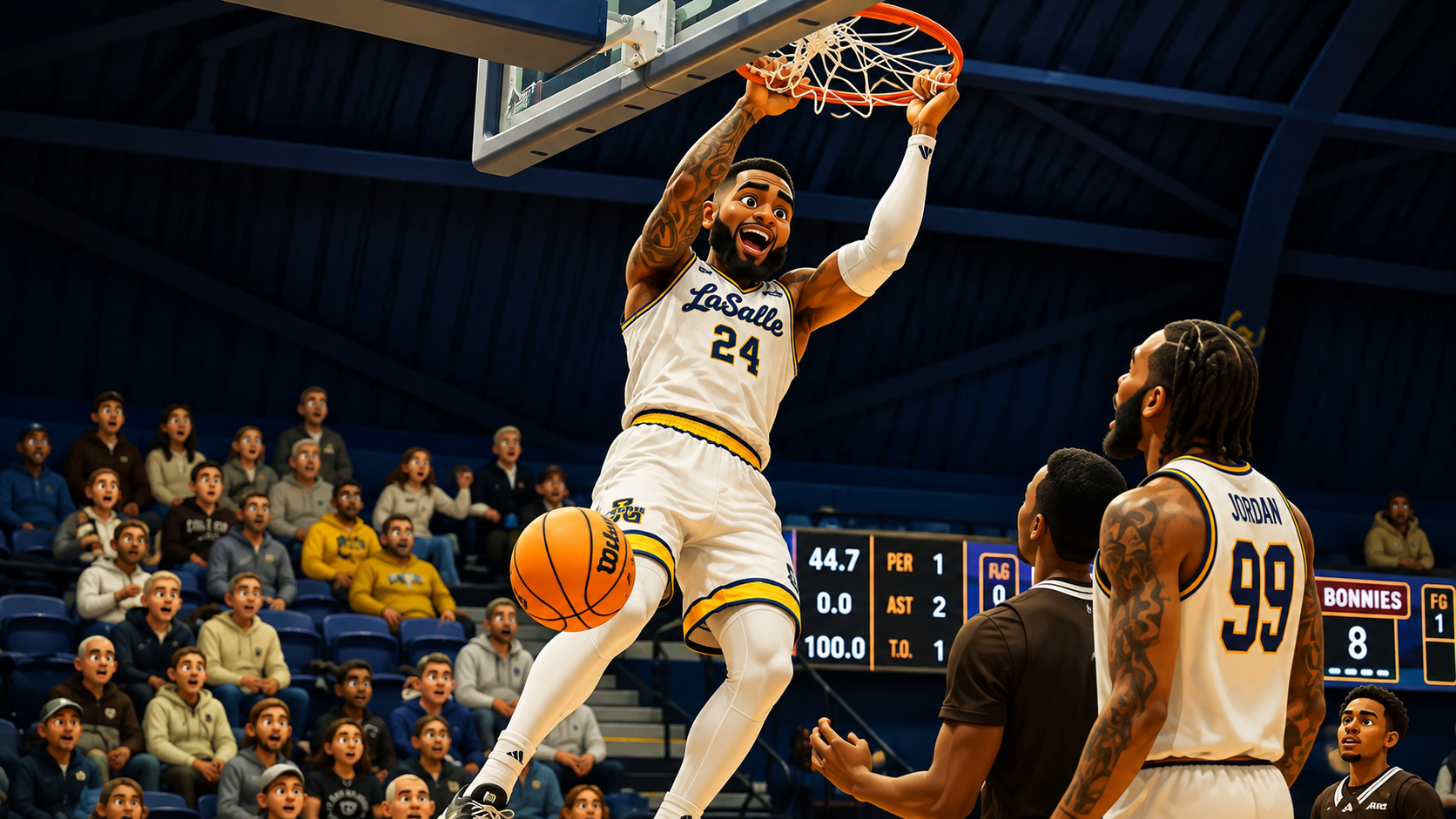
Jerome Brewer, La Salle Forward
THE OLD RULEBOOK IS DEAD
Let me translate the suit-speak into Camden County realness for you.
For years, you had to worry about “seasons of competition,” “redshirts,” “medical hardships,” and begging some bureaucrat in Indianapolis for a clock extension just because you transferred or life got messy. That noise is dead. They took it out back.
ONE STANDARD. NO ASTERISKS.
The new law of the land is simple: You get five years of collegiate eligibility, period. The clock starts ticking as long as you enroll in college by the academic year after your 19th birthday. You heard me. It doesn’t matter if you’re a point guard, a pole vaulter, or a pass rusher. One rule. No asterisks. No waivers. Just a clean five-year runway to get your degree and put your film in the vault while your body matures.
Cian Medley, East Carolina Point Guard
WHAT THIS MEANS FOR YOU, RIGHT NOW
You’re wondering, “I’m a Camden High kid trying to lock in my spot right now. What about me?”
I see you. I hear you. And the NCAA actually saw you coming, for once. If you’re suiting up in college before that 2027 cut-off—say you’re heading to a JUCO or a four-year school in the next year or two—they aren’t leaving you in the dust. They’re giving you the best of both worlds. Your school will apply the old rules and this new age-based model, and you get whichever path is most favorable. They’re essentially giving you a golden ticket to maximize your window.
THE WAIVER WINDOW IS SLAMMING
But understand the urgency: If you’re currently grinding through the mud of a waiver situation right now—trying to get a year back, trying to prove a hardship—you’ve got a hard deadline. Get your school’s compliance office on the horn today. They have until July 31, 2026, to submit that paperwork for anything that happened during or before this academic year. After that, the waiver door is bolted shut forever.
Rasheer Fleming, Phoenix Suns Forward
WHY THE SUITS MADE THIS MOVE
Why are they doing this? Because 98% of you are going pro in something other than sports, and Charlie Baker finally admitted the old system was too complicated and too “litigious.” They’re aligning your athletic clock with the reality of how normal students take classes and graduate. They carved out exceptions for pregnancy, military service, and religious missions—things that actually matter—but they killed the gamesmanship.
THE BOTTOM LINE, CAMDEN
For the young king from Camden clutching a transcript and a jump shot or some cleats, this is liberation. This simplifies the map. It removes the excuses. The question is no longer “Will the NCAA grant me a sixth year?” The ONLY question is, “What are you going to do with the guaranteed five years you’ve got?”
The standard has been replaced. The waivers are dying. The clock is clean.
PHILADELPHIA, PA – It is one of the quiet peculiarities of civic life that a city’s most consequential traditions rarely announce themselves with fanfare at their founding. They emerge, instead, from some private grief or improbable hope, gather adherents year by year, and eventually harden into something indispensable—a fixed point on the calendar around which a community’s identity constellates. Philadelphia, a city unusually rich in such rituals, has a new one to acknowledge. The Danny Rumph Classic, a basketball tournament born of heartbreak in a Germantown recreation center, has over 21 summers become not merely a cause or a competition, but a full-fledged cultural tradition. Its claim on that status deserves formal recognition.
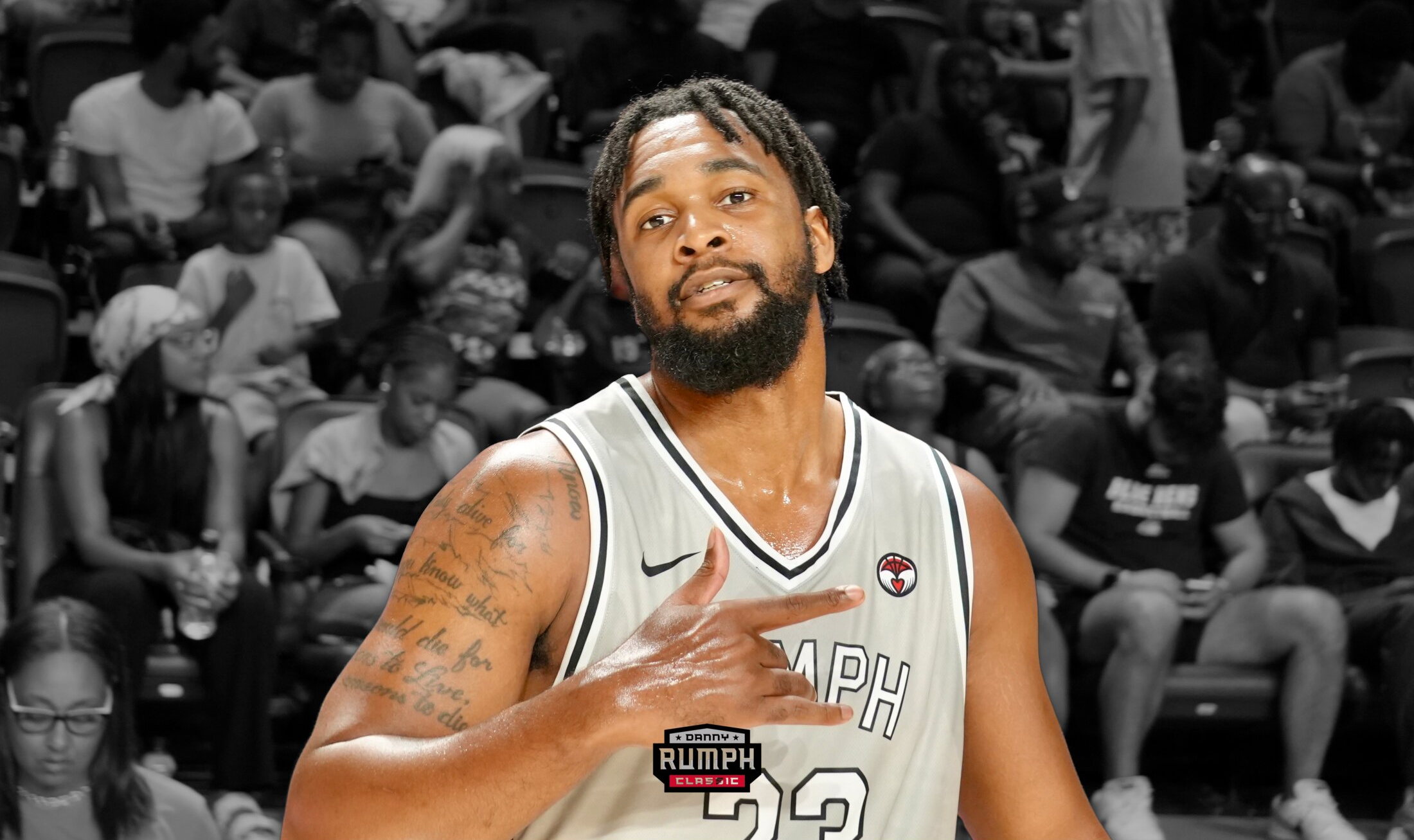
Donta Scott
For the uninitiated, the Rumph Classic is the signature event of the Daniel E. Rumph II Foundation, a charity established after its namesake—a gifted scholar-athlete—died of Hypertrophic Cardiomyopathy in 2005 while playing the game he loved. The foundation’s initial mission was urgently concrete: to educate coaches and gym administrators about sudden cardiac arrest and to seed Philadelphia’s recreation centers with automated external defibrillators. That mission has been admirably fulfilled. But the tournament that grew up alongside it has long since exceeded its instrumental purpose, evolving into something richer and more difficult to name. It has become, in a sense, a civic liturgy—an annual gathering where the extended family of Philadelphia basketball renews its covenants, transmits its values to the next generation, and demonstrates, through the ferocious eloquence of elite competition, what it means to belong to this place.
The Social Architecture of a Basketball Tournament
The temptation when describing the Rumph Classic is to reach first for the roster, which this year reads like a who’s-who of the city’s modern hardwood diaspora: Deandre Hunter and Tyrese Martin, fresh from NBA playoff rotations; Eric Dixon, the Villanova stalwart now testing the professional waters; Hysier Miller, Donta Scott, Mike Watkins, and a dozen other players whose careers span the globe’s top leagues. The basketball, as we shall come to, is extraordinary. But to start there is to miss the point. The Rumph Classic’s deepest significance is not aesthetic but anthropological. It is an institution that performs, year after year, the essential work of cultural transmission—the quiet labor by which a community’s accumulated wisdom, its norms of conduct and hierarchies of respect, pass from one generation to the next.
Mike Watkins
This is not a new role for basketball in Philadelphia. For decades, the Baker League and its successor, the Sonny Hill League, functioned as a kind of shadow civic institution, a place where Wilt Chamberlain and Earl Monroe shared the court with local legends and where young men absorbed lessons about comportment, discipline, and mutual obligation that no formal curriculum could deliver. The Baker League understood something that too many social programs forget: that young people are not argued into virtue but apprenticed into it, drawn forward by the magnetism of admired elders who model a way of being. The Rumph Classic has taken up that mantle with a quiet intentionality that its organizers might not even fully articulate. Watch the tournament for an evening, and you will see it everywhere—the reverence accorded to the “Philly basketball ol’ heads” who hold court in the stands, the easy camaraderie between current stars and the neighborhood fixtures who coached them as children, the young fans who absorb, almost through osmosis, the knowledge that success in this world comes with an obligation to remain present, to return, to give the gift of one’s example.
This is the social function that elevates the Rumph Classic above mere entertainment. In a liberal society that properly valorizes individual freedom and self-invention, there is always a countervailing risk of atomization—the unmoored self, cut loose from the stabilizing currents of tradition and mutual accountability. The institutions that thrive in such a society are those that manage to reconcile freedom with belonging, that create spaces where individual excellence flourishes within a framework of shared obligation. The Rumph Classic is precisely such an institution. It does not preach. It does not issue directives. It simply creates a setting in which the values that sustain Philadelphia basketball—hard work rewarded with respect, talent leavened by humility, success measured partly by what one gives back—are made visible and attractive. The young men and women who pass through its orbit do not need to be told how to behave. They can see it.
Justin Scott
A Tournament of Consequence
None of this would work, of course, if the basketball were not serious. A purely ceremonial event, however worthy, cannot command the attention of the young or earn the respect of the accomplished. The Rumph Classic, by contrast, has become one of the premier summer basketball gatherings on the Eastern Seaboard precisely because the competition is unforgiving. The talent level at this year’s edition, held at Drexel University’s Daskalakis Athletic Center, would not have been out of place in a high-level professional preseason camp. The play is unstructured—no coaches diagramming sets, no systems imposing order—and yet it is anything but anarchic. There is a fierce, improvisational intelligence to the action, a particular Philadelphia idiom of the game that prizes defensive intensity, physical toughness, and a kind of creative bravado on the offensive end. No one wants to be embarrassed. Everyone understands that pride is on the line, and in this city, pride counts.
The crowd at the DAC on Thursday night—the arena was filled to roughly 95 percent of capacity—understood exactly what they were watching. The stands held a cross-section of Philadelphia basketball life: current college stars from the Big 5 programs, high school prospects studying the men they hope to become, and families who have attended for years, for whom the tournament has become as much a fixture of August as the shore or the first hint of preseason football. The energy was not that of a casual summer league but of a community convened around something it holds dear.
Samme and Shannon Givens
The Case for Canonization
Philadelphia is justly proud of its calendar of cultural mainstays. The Mummers Parade, the Flower Show, the Penn Relays, the Odunde Festival, the Dad Vail Regatta, the Roots Picnic—these are not merely events. They are the vessels in which the city’s identity is carried forward, the rituals that bind neighbor to neighbor and generation to generation. They provide, as all genuine traditions do, a sense of continuity in a world of accelerating change, a reassurance that certain things endure, that the past has not been severed from the present. They are, in the deepest sense, conservative institutions—not in any partisan sense, but in their commitment to conserving what is precious and passing it on intact.
The Danny Rumph Classic now belongs in this company. It meets every criterion that makes a cultural tradition worthy of the name. It has persisted for more than two decades, long enough to become part of the rhythm of the year for thousands of Philadelphians. It connects the city to its history, both the specific tragedy of Daniel Rumph’s death and the longer lineage of Philadelphia basketball as a force for community cohesion. It transmits values—respect for elders, loyalty to place, the dignity of hard work—through the most effective pedagogical method available: immersion in a living practice. And it does all of this while putting on a basketball tournament of genuinely elite quality, one that draws professionals from the NBA and the world’s top leagues back to the city that shaped them.
Josh Sharkey
A tradition does not need a proclamation to exist. It needs only the steady, voluntary allegiance of the people who sustain it. By that measure, the Rumph Classic has already arrived. But there is value in saying so aloud, in recognizing that what began as a grief-stricken response to an unthinkable loss has flowered into something durable and beautiful. Daniel Rumph’s name now names not only a recreation center and a foundation, but a ritual of renewal—a summer temple where Philadelphia, year after year, remembers who it is and shows the young who they might become. The city’s cultural canon is stronger for its inclusion.
ALLENTOWN, PA – In the hyper-competitive landscape of grassroots and scholastic basketball, every program is searching for an edge. They’re not just looking for practice reps; they’re looking for a crucible. On Saturday, October 17, 2026, the undisputed epicenter of elite preseason high school basketball returns, as the 11th Annual Black Cager Fall Classic takes over the state-of-the-art Executive Fieldhouse. This is not merely a tournament—it is a high-stakes proving ground where legacies begin, scholarships are earned, and championship foundations are forged.
For over a decade, the Black Cager name has been synonymous with authentic, high-octane competition, curating a field that is the envy of the regional event promoters. It ranks among the premier pre-season battlegrounds, a unique intersection where elite scholastic programs from the Mid-Atlantic and beyond engage in fierce, live-game warfare, and where the nation’s top evaluators gather to witness the future of the sport.
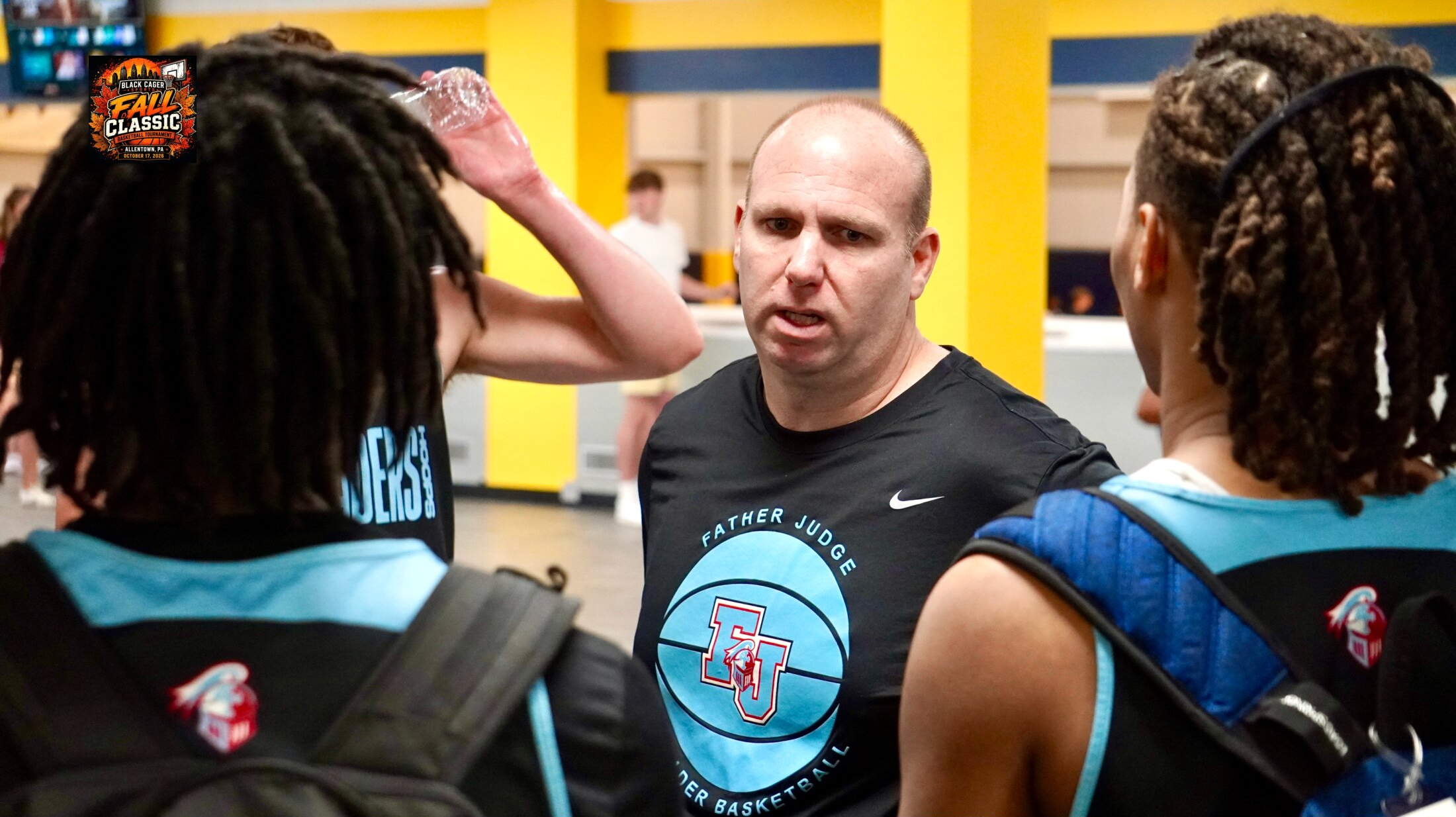
“The Fall Classic provides a stage where the top players in the Mid-Atlantic Region come to play and show who they are,” said Nick Myles, Head Coach of national powerhouse St. Frances Academy. “For us, it’s an opportunity to see how my underclassmen and transfers respond under a real whistle against top competition. If you put on a show, your name’s going to be big.”
A Strategic Battleground for Elite Programs
For the attending coaching staffs, the Black Cager Fall Classic is an irreplaceable strategic asset. In an era of increased player movement and young roster construction, the event offers a rare, pressure-filled environment to truly evaluate personnel long before the winter season’s opening tip. Where else can a coach test the mettle of promising underclassmen or seamlessly integrate key transfers against championship-caliber opposition, under the bright lights and with official referees? It’s the ultimate live-action laboratory, providing answers that no summer workout or open gym ever could. The matchups are deliberately crafted to be brutal, beautiful, and revealing, giving programs the critical intelligence they need to build a title contender.
La Salle commit, Shakur Starling and PIAA 6A State Champion Central Dauphin will play in the Fall Classic
The Unrivaled Launchpad for Uncommitted Prospects
Beyond the team accolades, the Black Cager Fall Classic has cultivated an unmatched reputation as on of the nation’s most potent platform for player exposure. For the uncommitted senior or the emerging underclassman, there is simply no better preseason opportunity to change the trajectory of a career. The tournament’s storied history serves as a neon sign for college coaches and NBA scouts: a staggering 200+ alumni have matriculated to NCAA Division I and II programs, with a burgeoning pipeline to the NBA. The lineage is undeniable—from Collin Gillespie and Eric Dixon (Villanova) to Jalen Duren (Memphis), Derik Queen, Donta Scott, Fatts Russell and Hakim Hart (Maryland), Bub Carrington (Pittsburgh), and Thomas Sorber (Georgetown). These are not just names; they are proof of concept.
Tournament Founder Delgreco Wilson frames it as a mission. “It’s a great platform for our uncommitted guys and underclassmen. By providing super competitive matchups, we give uncommitted guys a chance during the preseason to really prove that they are scholarship-level prospects.”
The sentiment is echoed by alumni who’ve walked the path. For VCU/Penn State star point guard Ace Baldwin, the Fall Classic was a rite of passage. “We came up every year,” Baldwin said. “We tried our best to represent Baltimore. They always gave us tough matchups with top Philly schools. I never lost a Fall Classic game in 4 years, 8-0.”
Korey Francis, 2025-26 MaxPreps Pennsylvania High School Basketball Player of the Year and PIAA 5A State Champion Monsignor Bonner/Archbishop Pendergrast will play in the Fall Classic
A Culture of Legacy and Pure Competition
What truly separates the Black Cager from the crowded calendar of basketball events is its atmosphere—an electric, authentic celebration of hoops culture that is as accessible as it is awe-inspiring. It’s a family reunion for the sport, where former NBA players like Pervis Ellison, DeJuan Wagner, and Jason Thompson can be found courtside, not in VIP isolation, but immersed in the action, watching the next generation. “There are no velvet ropes and VIP sections,” Wilson notes. “Everyone in attendance at the Fall Classic is accessible.”
This blend of elite competition and community creates a legacy that fuels the ambitions of the youngest attendees. “Seeing the little kids, younger brothers and cousins watching the top players compete and interacting with them between games brings me much joy,” Wilson adds.
It is a closed loop of inspiration that reinforces the Black Cager Fall Classic as the finest preseason scholastic basketball event in the nation. It’s where reputations are pressure-tested, where the future of college basketball is on full display, and where the game’s purest competitive spirit roars loudest.
Toussaint Malukila, ’28, 7’2″ Center at Paul VI, NJ, ranked #132 by 247sports will play in the Fall Classic
Event Details:
The 11th Annual Black Cager Fall Classic
Saturday, October 17, 2026
Executive Fieldhouse
555 Union Boulevard, Allentown, PA 18109
A full slate of elite matchups will be accessible to college coaches and fans globally via a live broadcast on iUNGOworld.com.