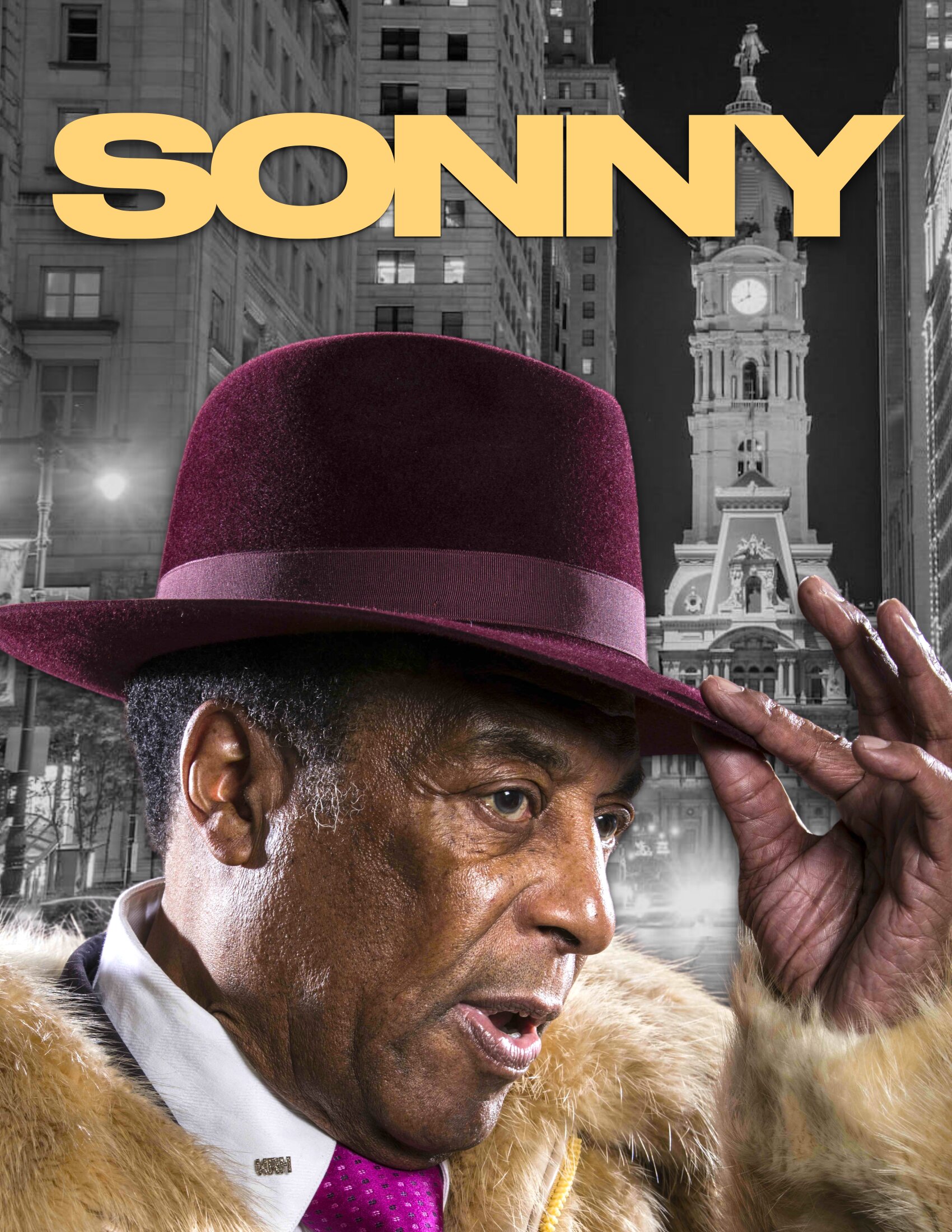
PHILADELPHIA, PA – When William Randolph “Sonny” Hill was born on July 22, 1936, the idea that a Black kid from North Philadelphia could become the conscience of a major American city’s basketball soul was, in the polite language of the era, a “reach.” The NBA was still a decade away from integrating. The opportunities for young Black athletes, no matter how gifted, were hemmed in by the same Jim Crow strictures that governed every other facet of American life.
Ninety years later, that kid is not merely a survivor of that brutal era. He is its conqueror. He is the connective tissue between the game’s pastoral origins and its global, billion-dollar present. He is a man known, affectionately and without hyperbole, as the “Mayor of Basketball”. And on this, his 90th birthday, we submit that Sonny Hill is not just a beloved local figure or a nostalgic footnote. He is one of the most consequential figures in the history of Philadelphia basketball—a title for which the competition is, to put it mildly, fierce.
The Player Who Could Have Been
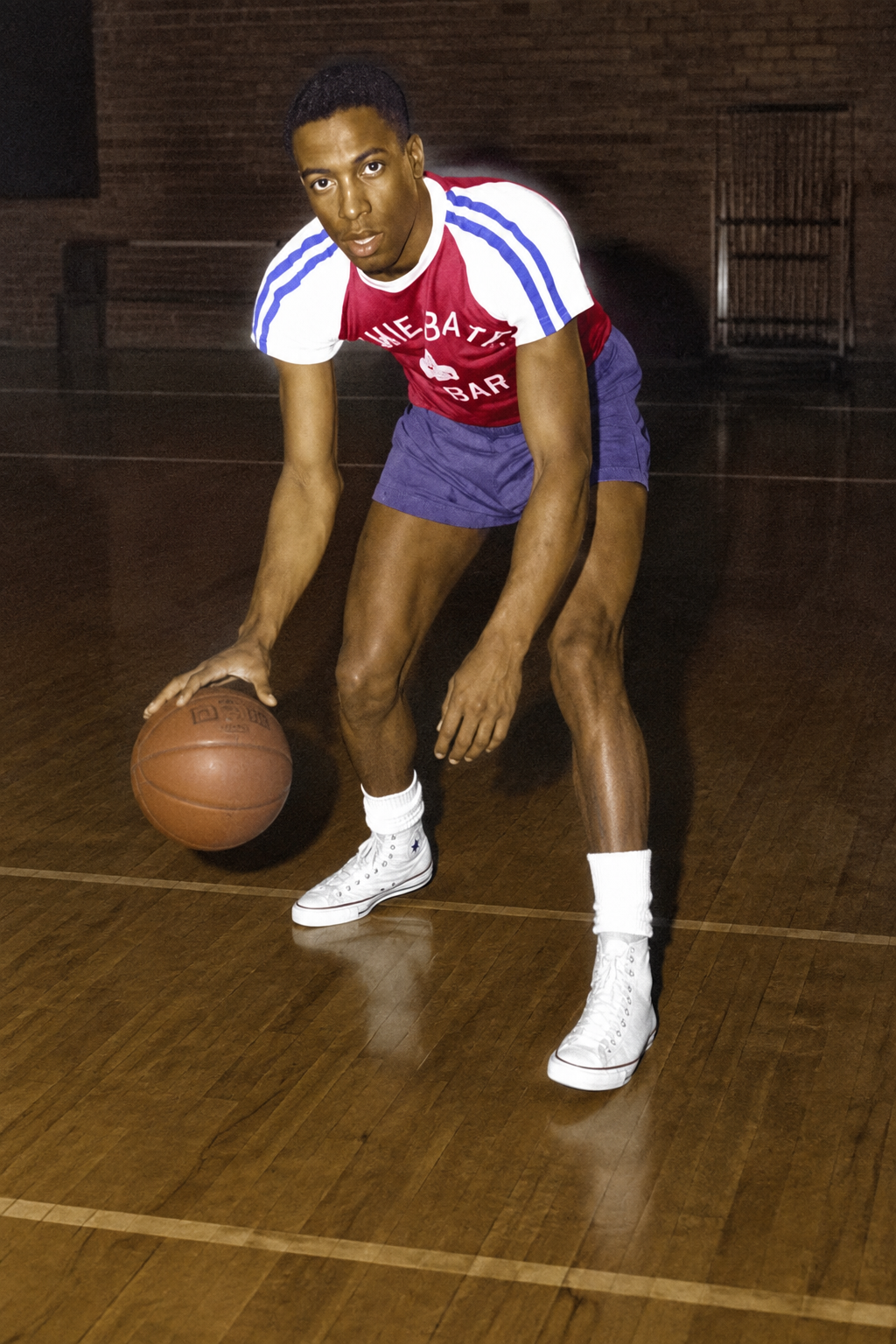
In an era when the Eastern Professional Basketball League was the de facto destination for the most gifted Black basketball players—a purgatory of talent where greatness went to be underpaid and underappreciated—Hill thrived. Standing just 5-foot-10, he was not a physical marvel in the mold of his contemporary and lifelong friend, Wilt Chamberlain. He was something else entirely: a floor general of immense skill, a prolific scorer whose craft was forged on the concrete courts of Philadelphia.
Hill spent a decade in the EPBL, from 1958 to 1968, suiting up for the Allentown Jets, Wilkes-Barre Barons, Sunbury Mercuries, and Camden Bullets. Over his career, he averaged 20.6 points, 3.1 rebounds, and 2.5 assists per game. These are not the numbers of a role player. These are the numbers of a star.
Many who saw him play insist he had the skills to have graced the NBA. But the league, in its myopia, was not ready for all the talent that existed. So Hill did what so many greats of his generation did: he played where he could, he played brilliantly, and he never let the slight define him. Instead, he used the bitterness of that closed door as fuel to build a bigger, wider house for those who would come after him.
The Baker League and the Sonny Hill League: Laboratories of Greatness
It is impossible to overstate the importance of the Charles Baker Memorial League, which Hill founded in 1960. It was the first professional summer basketball league in the country, a four-team experiment that began outdoors on a concrete court in North Philadelphia. It was a place where the game’s titans—Chamberlain, Guy Rodgers, Hal Greer, Billy Cunningham, and a young Earl Monroe—could sharpen their skills against one another in the off-season.
It was, in essence, a laboratory for the modern game. Bill Bradley, the former U.S. Senator and Hall of Famer, credited Hill for helping him develop into the player he became. Twice a week, Bradley commuted from New York to Philadelphia, not for money, but for the competition. “I was, to put it bluntly, a failure,” Bradley wrote before he found his footing in Hill’s league. That is the power of the environment Hill created
Then came 1968. Amidst the urban unrest and gang warfare that was tearing communities apart, Hill founded the Sonny Hill Community Involvement League. He did not just create a summer basketball program; he created a sanctuary. Starting with just five teams, it has since grown to more than 60 teams serving more than 800 student athletes. The talent that flowed through those games at McGonigle Hall on Temple University’s campus is the stuff of legend.
A Roster of Legends
It is not hyperbole to say the Hill League was the gold standard of summer basketball. Gene Banks, Lewis Lloyd, Mo Howard, Pooh Richardson, Lionel Simmons—these were the kings of the city. You could walk into the gym and watch the powerful Rico Washington battle Brian Shorter on the blocks, or witness the wizardry of Michael Anderson going against Howie Evans. And then there were the future professionals: Kobe Bryant, Rasheed Wallace, Richard “Rip” Hamilton, and Aaron McKie all honed their craft in the Hill League.
“Everybody that’s in the league right now from Philadelphia has played in his league. Everybody,” said Seattle’s Ronald “Flip” Murray. That is not an exaggeration. It is a testament to the gravitational pull of Sonny Hill’s vision.
The Voice of Philadelphia
In 1969, Hill transitioned from the court to the booth, beginning a broadcast career that would make him a household name. As a color commentator for the Philadelphia 76ers alongside Andy Musser, and later as a commentator for the NBA on CBS from 1973 to 1977, Hill brought a player’s insight and a poet’s cadence to the microphone.
Since 1987, he has hosted “In the Living Room with Sonny Hill” on SportsRadio 94WIP. For nearly four decades, Sunday mornings in Philadelphia have been punctuated by his voice—a voice that doesn’t just talk about basketball, but about life, community, and responsibility. It is the voice of a man who has seen it all and is willing to share it with anyone who will listen.
A Life of Service, Not Just Sport
The Sonny Hill Legacy Award, established by the 76ers in 2017, is a fitting honor. But the true legacy is written in the lives of the hundreds of thousands of young people who passed through his programs. Hill has always been clear about his mission. “My philosophy wasn’t to try and find the next great basketball player through my league,” he said. “It was about finding young people and trying to help mold them into better human beings.”
In 2008, he received the Mannie Jackson Human Spirit Award from the Naismith Memorial Basketball Hall of Fame. He is a member of the Philadelphia Sports Hall of Fame. He serves as an executive advisor for the 76ers, a role in which he has mentored everyone from Allen Iverson to Joel Embiid.
“He ranks among Julius Erving, John Chaney, Earl ‘The Pearl’ Monroe, Wali Jones, Ray ‘Chink’ Scott, Hal Lear and Walt Hazzard as the city’s greatest basketball dignitaries,” wrote one observer. We would go further. He stands above them. Not because he was a better player—that is a debate for another day—but because he built the infrastructure upon which their greatness, and the greatness of so many others, was constructed.
A Lasting Friendship
Hill’s personal relationships with the game’s greats are the stuff of Philadelphia lore. His friendship with Wilt Chamberlain was deep and abiding. He called Chamberlain the greatest player to ever play the game. He was a confidant to Earl Monroe, who dropped out of an NBA tour of Japan just to play in the Baker League. He was a mentor to Ray Scott and a peer to Tom Gola.
These were not transactional relationships. They were friendships forged in the crucible of competition and cemented by mutual respect. They are also a reminder that Hill’s influence was not confined to the city limits. He was a gravitational force that attracted the game’s brightest stars to Philadelphia’s summer courts.
Happy Birthday, Mr. Hill!
Ninety years is a long time. It is a span that encompasses the entire modern history of basketball. Sonny Hill has been there for almost all of it—as a player, a coach, a broadcaster, a mentor, and a friend.
He has seen the game evolve from a regional curiosity to a global phenomenon. He has seen the doors that were closed to him swing wide open for the generations that followed. And he has been the one holding those doors open, ushering in the next wave of talent with a firm handshake and a few minutes of stories.
So on this day, we raise a glass to Mr Hill. We thank him for the leagues, the broadcasts, the mentorship, and the countless hours he has given to a city that loves him back. We thank him for proving that a man’s legacy is not measured by the points he scored, but by the lives he touched.
Happy 90th Birthday, Sonny Hill. Philadelphia is a better city because of you. Basketball is a better game because of you. And we are all better for having witnessed your journey

