Stop Calling It a “Crisis of Democracy.” This Is Who We Are.

The Dangerous Incantation

We persist in a lie. Every new shock—the family separation policy, the overturning of Roe, the promise of mass deportation, the whitewashing of January 6th—is greeted with the same startled refrain: “This is not who we are.” It is the incantation of a nation in denial. It is also, as Rogers Smith argued three decades ago, historically illiterate. The MAGA movement is not a betrayal of the American project. It is the third great restoration of one of its founding traditions: ascriptive Americanism, an ideology of white male supremacy as deeply woven into the republic’s fabric as the Bill of Rights.
A Story Written by the Minority

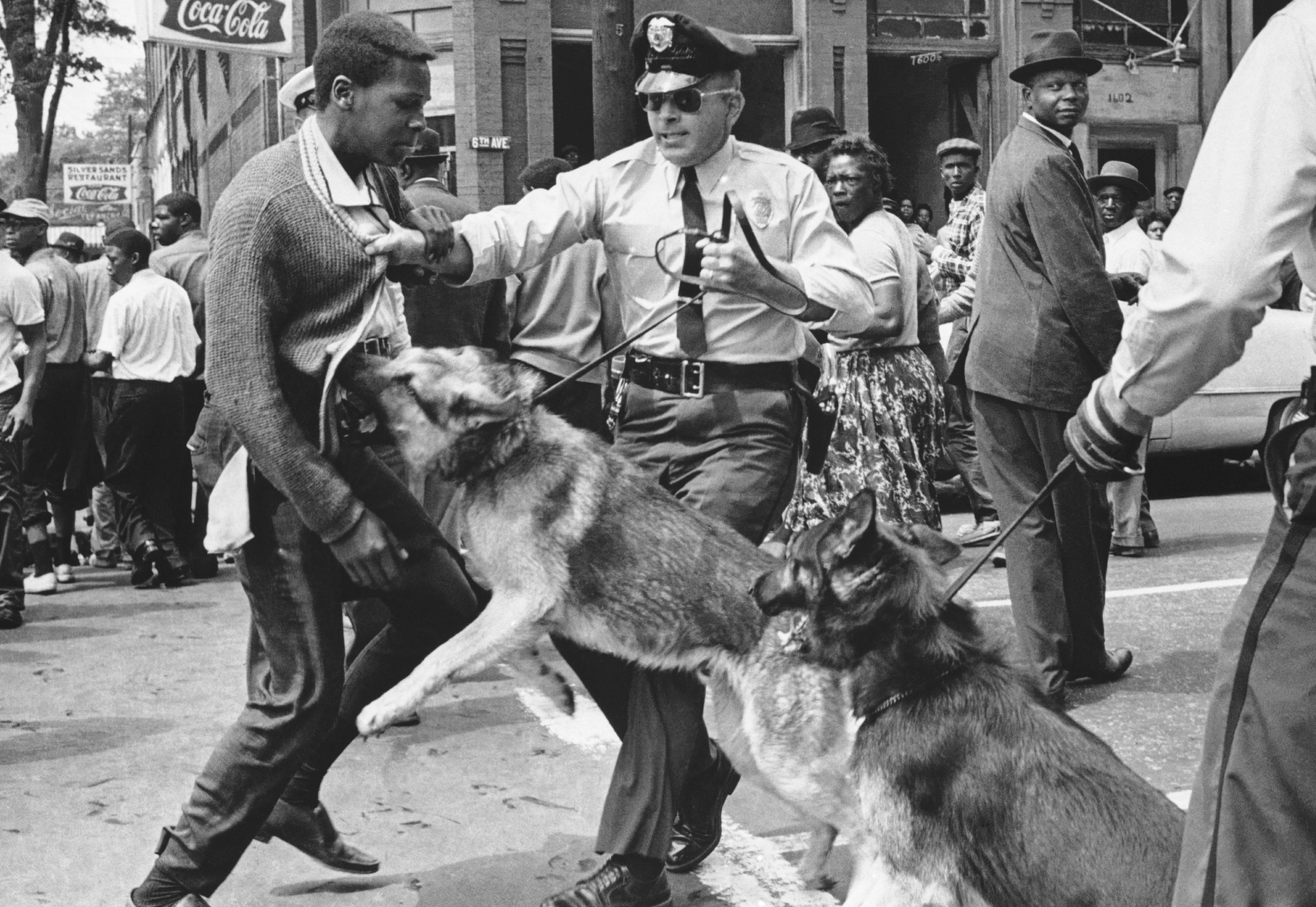
We are taught a comforting, linear story of Tocquevillian equality. It is a story written by and for the white male minority it centers. For most of American history, the vast majority of people—Black Americans, women of all races, Indigenous nations, Asian immigrants—lived not in the sunlight of liberal freedom but in the long shadow of an elite-driven, legally codified hierarchy. What we are witnessing now is not an infection of a healthy body politic. It is an autoimmune flare-up of a chronic condition, triggered by the mortal threat of demographic and cultural change.

The First Republic: A Slavocracy

The first American republic was a slavocracy. This is not polemic; it is architecture. The Constitution was a slaveholder’s compact, embedding the three-fifths clause and the fugitive slave clause into the nation’s operating system. This was not the prejudice of the rabble. It was the sophisticated project of the most educated men of the age, who wielded racial science and biblical sanction to define the full personhood of a white man as dependent on the negation of others. The Civil War and Reconstruction broke the legal apparatus, but not the ideological spine.
The Second Restoration: Jim Crow’s Elite Design

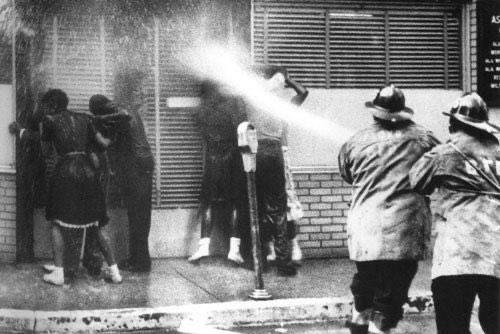
The second restoration, Jim Crow, was not merely the violence of the mob. It was a breathtakingly modern, elite-led counter-revolution. The Supreme Court’s Plessy v. Ferguson provided the constitutional veneer. The nation’s top historians rewrote Reconstruction as a tragic mistake of “Negro rule.” The blockbuster film “The Birth of a Nation” romanticized the Klan. The lynch rope and the literacy test were merely the enforcement arms of a system designed in statehouses, universities, and editorial boards. It took a century of blood and organizing to break its formal grip.

The Third Restoration: MAGA as Ascriptive Panic

We are now deep into the third restoration. The MAGA movement, achieving its apotheosis under Donald Trump, is not a populist spasm of economic anxiety. It is a restorationist project whose unifying thread is the reassertion of a threatened racial, gender, and religious hierarchy. “Make America Great Again” is a chronological claim, a nostalgic bookmark placed squarely before the civil rights, women’s liberation, and immigration reforms that democratized American life. The demonization of immigrants as “poisoning the blood of our country” is ascriptive rhetoric in its purest form, defining citizenship in blood-and-soil terms. The “stop the steal” movement and the cascade of voter suppression laws are the 21st-century poll tax. The overturning of Roe is the state reasserting brute control over female bodies. The “war on woke” is a direct attack on the very historical disciplines that name this hierarchy.

The Wounded Beast’s Fury

This is not happening in spite of progress. It is happening because of it. The “tanning” of America—the Census projection of a majority-minority nation by 2045—is the existential threat that has triggered this panic. The ascriptive tradition, wounded and losing cultural hegemony, has abandoned the quiet, elite consensus of old and now rules by spectacle, cruelty, and the blunt, desperate instruments of a faction that senses the clock ticking. The cruelty, as many have observed, is the point. It is how a weakening hierarchy reasserts its dominance through ritual public degradation
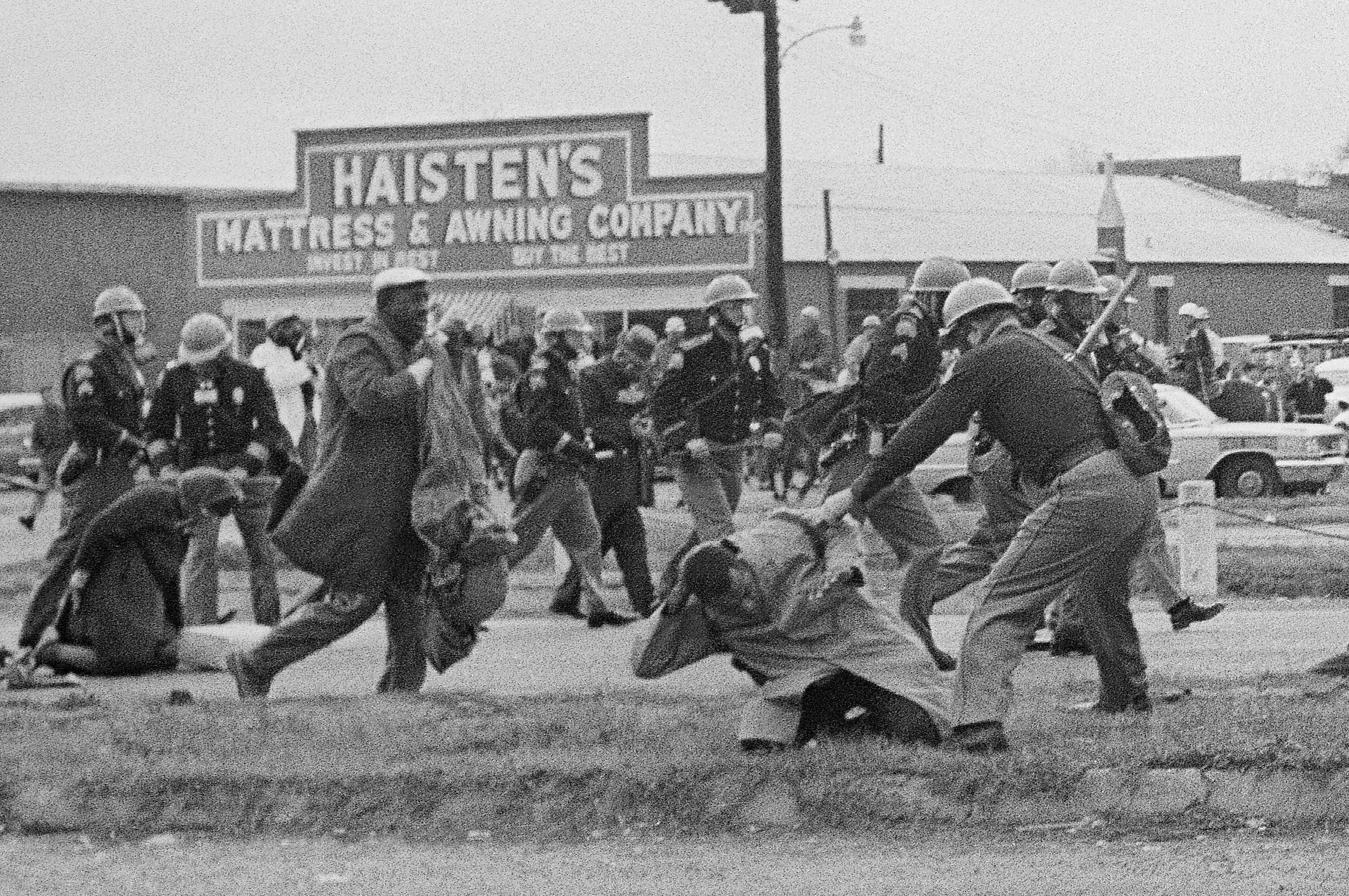
FILE – In this March 7, 1965, file photo, a state trooper swings a billy club at John Lewis, right foreground, chairman of the Student Nonviolent Coordinating Committee, to break up a civil rights voting march in Selma, Ala. Lewis sustained a fractured skull. Lewis, who carried the struggle against racial discrimination from Southern battlegrounds of the 1960s to the halls of Congress, died July 17, 2020. (AP Photo/File)

The Luxury of Innocence

The fantasy that this is “not who we are” is the ultimate luxury of those whom the system was built to protect. White men experience America as a land of individual liberty because, for four centuries, their liberty has been the state’s defining project. They see a colorblind meritocracy because the ladders of the Homestead Acts and the GI Bill were built for their hands. The MAGA movement represents the conscious, furious decision to re-center that particular experience as the only legitimate one and to define any deviation from it—any acknowledgment of the political reality of the majority—as tyranny.

A Battlefield, Not a Betrayal

We must discard the comforting myth. We are not a liberal nation interrupted by illiberal episodes. We are a battleground where a liberal and republican tradition has been locked in a four-hundred-year war with an equally native ascriptive one. The arc of history does not bend itself. It bends only when we apply enough force to overcome the countervailing weight of a tradition that, in every moment of change and anxiety, will seek to restore its brutal, hierarchical vision. The first step to winning a war is admitting you are in one. The liberal lullaby of innocence is a prescription for defeat. Put it aside, and fight.
The Unbearable Witness: “Good White Folk” Can No Longer Look Away

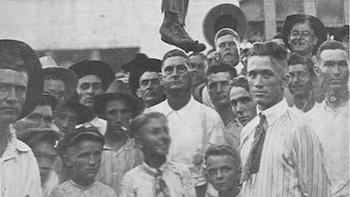
CAMDEN, NJ – I was born in the hold of a slave ship soaked in urine and feces whose name history did not bother to record. I am a Foundational Black American. For more than three hundred years, I have walked this land, a reluctant witness to a relentless paradox: the nation of lofty ideals built upon a foundation of profound, sustained cruelty. The question that haunts my long memory is not for the brutal racist/white supremacist monsters, but for the others—the “good white people” in every era.

How the fuck did you stand by and watch?

This is the essential inquiry of our present. For in understanding the mechanics of that historical complicity, we find a stark blueprint for today’s crisis. Yet something fundamental has shifted. The distance that enabled your ancestors’ silence has been obliterated. Today, the plea is not just for action, but for sight—to finally, fully see our humanity.

The Machinery of Acquiescence, Then and Now

The “good White folk” of any era rarely believes themselves complicit. They operated within a system of convenient distances.

How did you watch us be enslaved? You told yourselves it was an economic necessity. You saw the auction block from afar, heard the wails as a faint echo, and were comforted by sermons claiming we were not fully human. That distance was your insulation.

How did you witness the systematic rape on plantations? You chose not to see the high yellow children running through the fields. The violence was rendered invisible by a conspiracy of silence, the resulting children used as proof of our “depravity” rather than your community’s crime.

Today, the distance is gone. You cannot claim you did not see George Floyd’s life pressed from him for nine minutes and twenty-nine seconds. You cannot say you did not hear the fear in a child’s voice separated from her parents at a border you politicize. The camera phone is the unblinking eye my people never had. It has made the abstract, concrete. The historical buffer is broken.

The Fear Beneath the Silence

I have lived long enough to sense the tremor beneath the surface of this nation’s psyche. I must acknowledge what I believe fuels much of the backlash, the frantic rewriting of history, the cries of “replacement”: a deep-seated, often unspoken fear that Black and brown people, given the levers of power, will treat you as you have treated us.

For three centuries, you have shown us the blueprint of vengeance. The whip, the law, the noose, the gerrymander—all tools of subjugation. It is a terrifying legacy to contemplate. So you must hear this, clearly: We do not seek your destruction. We seek a transformation of the system built for it. We seek a democracy where no group holds permanent dominion, because such dominion inevitably corrupts and always, always visits violence upon the powerless. The multiracial democracy we strive for is not your nightmare of reversed oppression; it is the only possible escape from the nightmare you yourselves created.

The New Witness and the End of Gaslighting

When the Supreme Court ruled we had “no rights,” your ancestors could dismiss it as distant legal theory. When Rosewood and Tulsa burned, they could be framed as “riots.” When Emmett Till’s murderers were acquitted, the lie could be upheld as the law.

Today, the gaslighting fails against the evidence in our hands. We witness, we record, we share, we archive—instantaneously. We can juxtapose the “law and order” rhetoric with the violent repression of a peaceful protest. We can contrast the paeans to “heritage” with the footage of a neo-Nazi march. The dissonance is laid bare. To be a passive spectator now is not a failure of information, but a conscious choice of morality.

A Way Forward: From Spectators to Co-Creators

The path forward is not found in a return to a civility that never included us. It is forged in the active, courageous construction of a true multiracial democracy. This requires more than your guilt; it demands your partnership.

First, you must believe your own eyes and ears. Trust the testimony streaming from our phones, our communities, our lived experience over the sanitized myths of comfort.

Second, you must relinquish the fear that equity is your loss. A democracy where a Latina’s vote counts the same as a white farmer’s, where a Black child’s history is taught as thoroughly as a president’s, where a Native nation’s sovereignty is respected, is a stronger, more just, and ultimately safer country for everyone.

Finally, you must move from sentiment to structure. It is not enough to decry racism; you must defend voting rights, support truthful education, and challenge inequity in your neighborhoods, councils, and boardrooms. The MAGA movement gambles on your eventual acquiescence, your retreat into comfort.

My three centuries whisper that this is the decisive hour. The tools of witness we now possess have shattered the old alibis. You can no longer claim you did not see, did not know. You can only choose what you will do now that you have seen.

See our humanity, not as an abstract concept, but in the terrified face of a man under a knee, in the determined eyes of a child walking into a newly integrated school, in the grief of a mother at a grave. Then, act from that sight. Build with us a democracy worthy of its name, not as spectators, but as co-creators. The silence of your ancestors was permission. Your voice, your vote, your unwavering alliance must now become the foundation of something new.

The Most Credible Messenger: Antwann Postell’s Legacy and a City’s Loss

PHILADELPHIA, PA – The death of Antwann Postell, announced this morning in Philadelphia, will not make national headlines. It will not trend on national social media, nor will it prompt statements from elected officials. Yet in the neighborhoods of West Philadelphia, where the constant hum of sirens and the echo of bouncing basketballs create a dissonant soundtrack to daily life, his absence rings with a profound and devastating silence. Postell, a mentor, coach, and a quiet force of redemption, was 35. His sudden passing leaves a void not easily measured in column inches, but in the lives of young men for whom he was a lifeline, a mirror, and a map.

Postell’s story was not one of unblemished virtue, but of hard-won transformation. He emerged over the past decade not as a saint, but as a stalwart—a quintessential “credible messenger” in a city that desperately needs them. He never hid nor minimized his past, including time served in a state penitentiary. In a world where at-risk youth have learned to expertly detect condescension and false promises from outsiders, this history was not a liability; it was the foundation of his authority. He was not a visitor from a safer, more privileged world coming to preach. He was a guide who knew the treacherous terrain because he had walked it, stumbled in it, and found a way out.

The Currency of Credibility

In the ecology of urban mentorship, theoretical advice is cheap. The currency that matters is credibility, earned through shared experience. For the young men on the cracked asphalt courts of West Philly, Postell possessed an enormous amount of this “street credibility.” His warnings about the swift, dead-end finality of violence or the soul-crushing grind of incarceration carried weight because they were not abstract lessons. They were etched in memory, written in the language of personal consequence. When he spoke of lost time and missed opportunities, he spoke from a place of profound, lived loss. This bypassed the reflexive skepticism of a teenager who has heard too many hollow sermons. It built a bridge of trust where other well-intentioned programs often find only a moat of distrust.

Postell understood, at a deep and intellectual level, that he was part of a critical socialization process. He knew the basketball court was more than a place to play a game; it was a powerful classroom. Under the rusting rims and fading lines, he taught the norms and values that sports can instill—teamwork over selfishness, discipline over impulse, resilience over surrender. He used the game to foster communication, leadership, and a sense of identity that wasn’t tied to a corner or a crew, but to a team. For young men often stripped of dignity by systemic neglect, he used the sport to rebuild self-esteem and forge a sense of belonging. It was a two-way process: he taught the game, and through their shared interpretation of its struggles and triumphs, they learned about life.

Heir to a Sacred Legacy

In this sacred work, Postell was one of the most prominent modern heirs to a legendary Philadelphia lineage. He walked in the footsteps of giants like Sonny Hill, Claude Gross, Tee Shields, Sam Rines, Sr., and James Flint—men who understood that coaching in this city was never just about developing players, but about building character and saving lives. They were the architects of an alternative infrastructure of care in neighborhoods where such structures are scarce. Postell took up that mantle, not in a lavish gym, but on the same streets where those legends started, tending to the same deep-seated needs with the same fierce, paternal love. He was a living link in a chain of mentorship that has held entire communities together for generations.

His death, therefore, is not merely the loss of one man. It is a rupture in that vital chain. It leaves a monumental void in the intricate and fragile support network that exists just beneath the official surface of the city. Who now will be there for the 3 a.m. phone call from a kid in crisis? Who will have the earned right to look a young man in the eye and say, “I’ve been where you are, and this path leads nowhere”? The institutional memory of how to navigate from despair to hope—memory held in one man’s heart and stories—is now suddenly, tragically, gone.

The Flicker of Hope He Leaves Behind

There is, perhaps, a fragile hope to be found in the nature of Postell’s work. His teachings were not kept in a manual but embedded in the hearts of those he coached. The real testament to his life will be if the young men he mentored—those who felt the grip of his hand on their shoulder, heard his blunt wisdom in a timeout huddle—can now step forward to keep his teachings alive. The true success of a credible messenger is not in creating dependents, but in creating a new generation of messengers. The legacy of Sonny Hill lives on in every coach who teaches more than a pick-and-roll. So too must Postell’s spirit live on in the next young man who chooses to put down a weapon and pick up a clipboard, who uses his own hard past to forge a safer future for the kid behind him.

Antwann Postell’s life was a testament to the radical power of second chances and the transformative potential of authentic, earned connection. His death is a stark reminder of how precious and precarious such forces are in our cities. We mourn not just a coach, but a cornerstone. And we are left with a pressing question for Philadelphia and every community wrestling with violence and lost youth: How do we identify, support, and protect the next Antwann Postell before his voice, too, is silenced? The game on the West Philly courts will go on. But the guiding voice from the sidelines, the one that spoke with the hard-earned authority of a life redeemed, is now heartbreakingly still.