The NAACP Has Issued a Call for Black Athletes to Boycott the SEC. Asking a Young Prospect to Turn Down Dawn Staley Feels Insane. That Is the Measure of the Crisis.
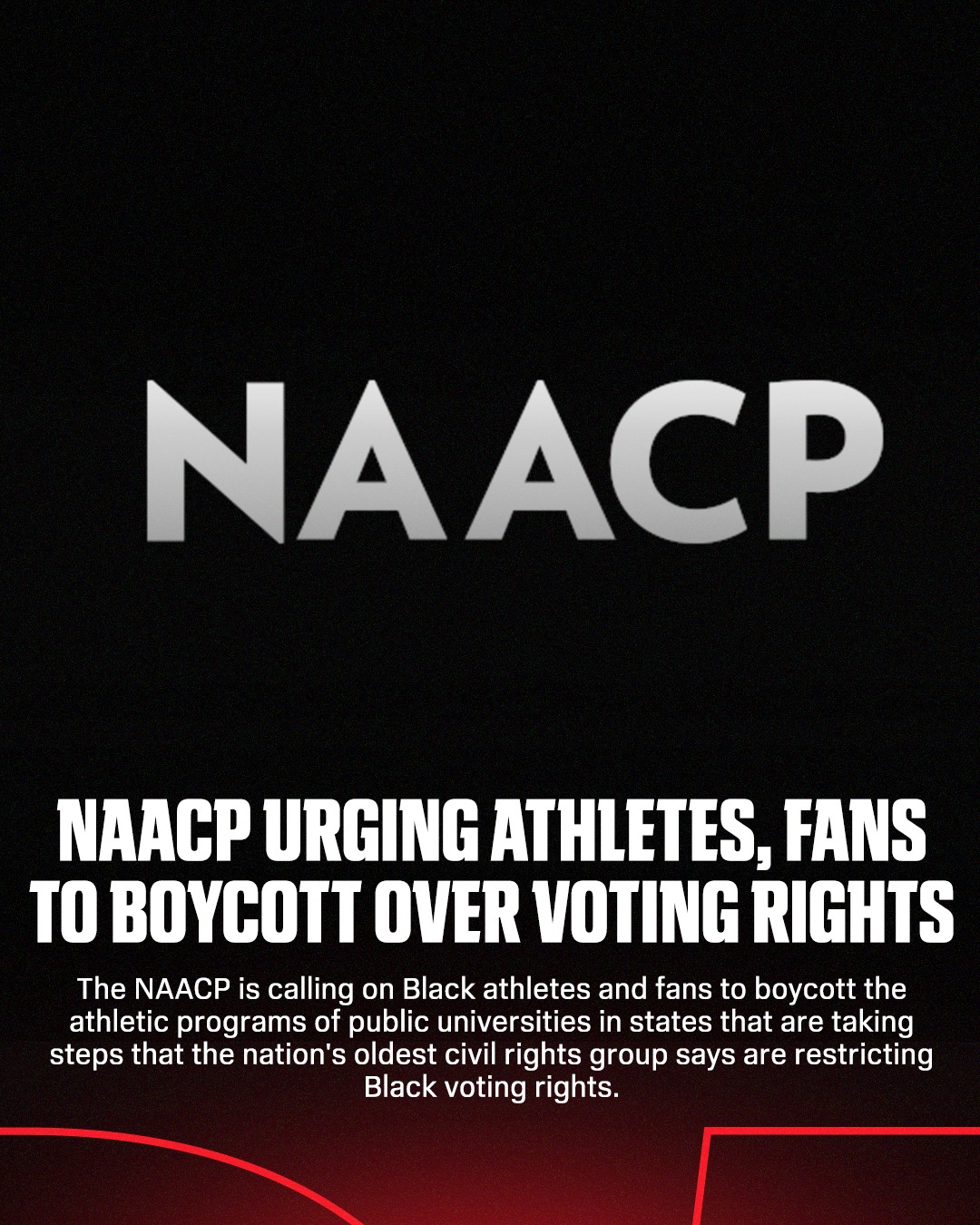
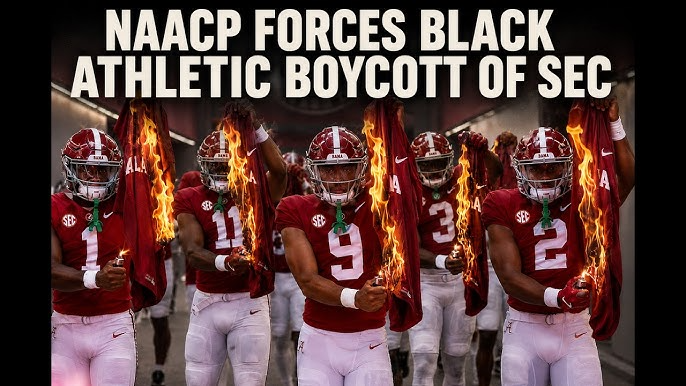
PHILADELPHIA, PA – The NAACP, the nation’s oldest and most venerated civil rights organization, has now made it official. On Tuesday, it launched the “Out of Bounds” campaign, a direct and unambiguous call for Black athletes, their families, alumni, and fans to “withhold athletic and financial support” from major public universities in states that “have moved to limit, weaken or erase Black voting representation.” The target is clear: the powerhouse athletic programs of the Southeastern Conference (SEC) and their counterparts across the former Confederacy. The logic is searing. If the white political structures of these states have declared war on the franchise that Black Americans bled and died to secure, then the Black labor and Black fandom that sustain those states’ most cherished cultural and economic institutions must be redeployed as a weapon of collective self-defense. This is not a request for a symbolic gesture. It is a call to economic warfare, and it demands a sacrifice so profound that to state it plainly is to feel its weight in the pit of your stomach.
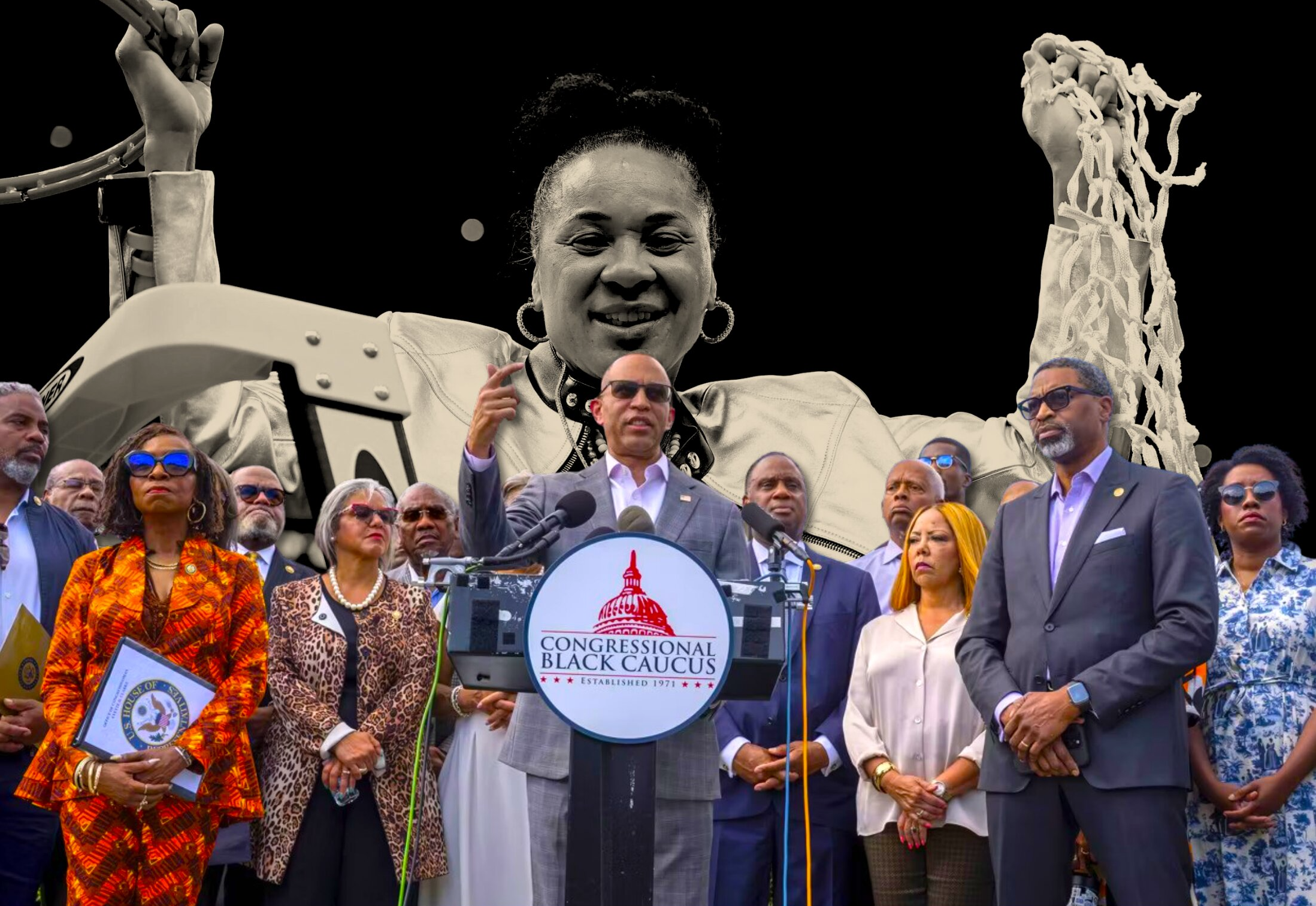
That sacrifice is measured most acutely not in dollars forfeited or championships deferred, but in a single, almost unthinkable question that will now confront Black families around dinner tables from Philadelphia to Houston: Should a gifted young Black woman pass on the opportunity to play for Dawn Staley?
To ask the question is to stand at the edge of a moral chasm. Dawn Staley is not merely a basketball coach. She is the living embodiment of a lineage that has produced the most towering figures in Black athletic leadership. She emerged from the Raymond Rosen Housing Projects in North Philadelphia, navigated every obstacle a society could place in her path, and ascended to the absolute pinnacle of her sport. At the University of South Carolina, she has built a dynasty with a dignity, grace, and unapologetic Black pride that was previously unimaginable. She has filled the enormous shoes of John Thompson, the Georgetown patriarch who showed that a Black coach could win with an all-Black starting five while demanding his players graduate. She carries the torch of John Chaney, the Temple legend who spoke truth to power in a gravelly baritone that made white administrators tremble. She extends the legacy of Nolan Richardson, who brought his “40 Minutes of Hell” to Arkansas and dared to say publicly that the SEC operated on a plantation model. In the 2025-26 season, Staley was one of five Black women head coaches in the SEC, a sisterhood that includes Yolett McPhee-McCuin at Ole Miss, Nikki Jones at Kentucky, Joni Taylor at Texas A&M, and the newly appointed Pauline Love at Alabama. These women are not tokens. They are the very best the Black community has produced—shining stars, guiding lights, proof that excellence and integrity can penetrate even the most historically hostile institutions.
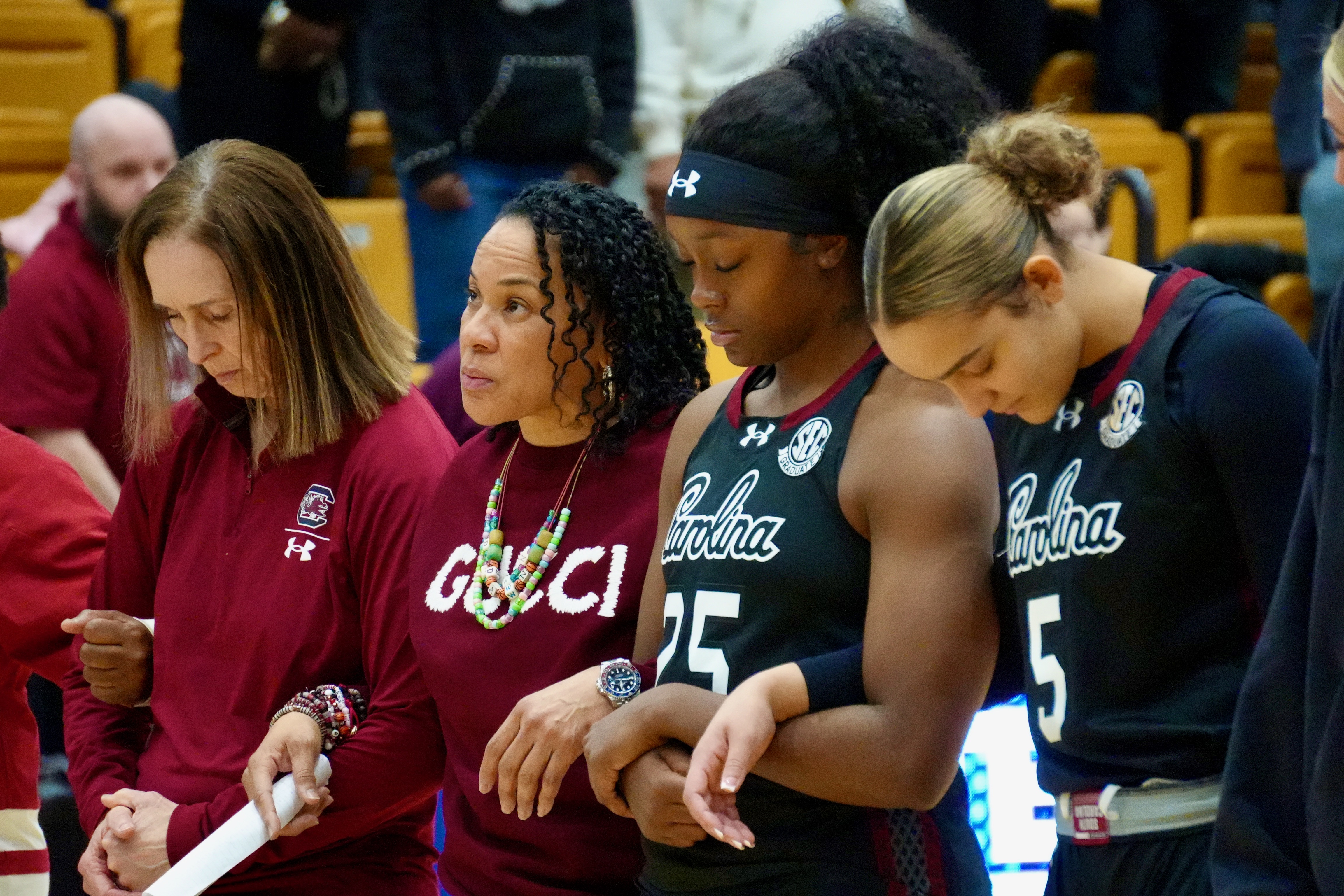
To ask a young Black woman to forgo the chance to be molded by Dawn Staley is, on its face, an insane request. It is tantamount to asking a young Patrick Ewing to pass on John Thompson. It is asking Marc Macon to turn his back on John Chaney. It is asking a family to reject not just a coach but a cultural mother, a role model whose very existence is a rebuke to the white supremacy that still suffocates so many corners of American life. The NAACP, prominent Black activists, and the architects of “Out of Bounds” are standing before the Black community and saying, in effect: Target the best we have ever produced. Boycott Staley’s Gamecocks. Withdraw from the institutions where our own heroes have finally fought their way into positions of influence. This is the moral complexity that must not be sanitized or evaded. It is agonizing. It is dizzying. And it is the precise measure of the emergency we now face.
The Severity of the Threat: Why Callais Changes Everything
We must understand why the calculus has shifted so dramatically that such a request is no longer unthinkable but necessary. The Supreme Court’s decision in Louisiana v. Callais is not a legal disagreement among reasonable minds. It is a deliberate, result-oriented act of judicial nullification, a 6-3 power play that disembowels Section 2 of the Voting Rights Act with a precision that must be called what it is: a betrayal of the Constitution, of Congress, and of the multiracial democracy this nation has always promised but never fully delivered. For sixty years, the VRA stood as the federal government’s most consequential acknowledgment that the franchise is not a gift from white power structures but a right that must be actively protected from them.
The Callais ruling declares, with the calm violence of legalese, that this era is over. In Louisiana, a map that finally gave Black voters a fair shot to elect a candidate of their choice has been discarded. Across the former Confederacy, legislative chambers are reading the signal clearly: the judiciary will no longer impede your efforts to make Black votes count less. The guardrail has been removed. The road to minority rule is paved and open.
This is the context that transforms a seemingly irrational ask into a rational, painful, and necessary strategy. When the courts have abdicated, when the legislature is gerrymandered into unaccountability, and when the ballot box itself is the very mechanism being rigged, the only remaining leverage lies in the economic and cultural spheres. The SEC is not merely a sports conference; it is the central nervous system of the white conservative political project in the South. Saturday afternoons in the fall and winter are not just games; they are rituals of regional identity, unmatched engines of fundraising, and the most powerful branding apparatus the states of the old Confederacy possess. A sustained boycott by a critical mass of Black athletes would hit this machinery precisely where it hurts: the balance sheet and the collective psyche. It would force university presidents, athletic directors, and corporate sponsors to make a choice between their profits and the political regimes that enable them. The goal is not to punish Dawn Staley; it is to make the state of South Carolina feel the cost of disenfranchising its Black citizens so acutely that the political calculus is forced to change.
The Impossible Choice: Weighing the Individual Against the Collective
Let us sit with the discomfort, for it is the heart of the matter. A Black mother in Atlanta has a daughter who is a generational point guard. She has been offered a full scholarship to play for Dawn Staley at South Carolina. To accept is to place her child under the wing of a woman who will not only develop her into a WNBA prospect but will teach her how to navigate a hostile world with her head held high. Staley’s program graduates players, builds character, and serves as a model of Black feminine power in a society that routinely denigrates both Blackness and womanhood. To turn down that offer is to potentially alter the trajectory of a young life in ways that cannot be calculated.
Yet that same mother must also reckon with the fact that her daughter’s presence in a Gamecocks uniform will be used by the state of South Carolina to project an image of racial harmony and opportunity that is a lie. Her daughter’s image, her excellence, her joy on the court will be monetized and deployed as propaganda for a regime that is actively working to ensure that Black grandmothers in Charleston and Columbia cannot elect representatives who care about their hospitals, their schools, or their air. The scholarship her daughter receives is funded, in part, by a state budget crafted by legislators elected from districts drawn to dilute Black voting strength. The arena she plays in was built with bonds backed by a taxpayer base that includes Black citizens who have been systematically robbed of their political voice. The NIL money that may come her way flows from booster collectives populated by white businessmen who write checks to voter suppression politicians on Monday and pose for pictures with her daughter on Saturday.
This is the impossible math that “Out of Bounds” forces Black families to calculate. It is the same brutal arithmetic that faced the parents who pulled their children out of segregated schools to march in Birmingham, who watched their livelihoods destroyed so that a generation might know freedom. The individual cost is real, intimate, and potentially devastating. The collective benefit is abstract, distant, and uncertain. And yet, every major advance in Black freedom in this country has been purchased by people who chose the abstract over the intimate, the collective over the individual, the long game over the short fix. The question is whether this generation, at this juncture, is prepared to make a similar accounting.
The Necessity: Why a Boycott Is the Only Language Power Understands
We must dispense with the fantasy that this legal assault can be countered through the ordinary channels it has just demolished. The Court has foreclosed legislative remedy by ignoring Congress’s intent. It has rendered future litigation a costly funeral procession for dead claims. The political leaders who gerrymander, disenfranchise, and suppress do not fear editorials or trending hashtags. They fear one thing: a disruption to the flows of money, prestige, and emotional allegiance that sustain their power.
When a four-star recruit from Atlanta chooses the University of Georgia, she is not just selecting a coach; she is injecting her talent, her likeness, and her family’s story into a narrative that bolsters the state’s economy and its political legitimacy. A sustained boycott, even by a disciplined minority of elite prospects, would force a reckoning. It would make the crisis their crisis. That is the definition of leverage, and it is the only currency that buys real change when voting booths have become facades.
The Possibility: Restructuring the Incentives of the Modern Athlete
The objection is immediate: the athletes will never do it. The modern economics of college sports, with Name, Image and Likeness deals and the frictionless transfer portal, has created a generation of rational individualists. This critique correctly identifies the collective action problem—the prisoner’s dilemma where the individual’s best short-term move is to defect from any group sacrifice—but it misunderstands that this dilemma is an engineering problem, and it can be solved.
First, the financial terror that blocks action must be neutralized through a Freedom Fund, capitalized by wealthy Black entertainers, progressive philanthropists, and the broad coalition that fuels movements like the Equal Justice Initiative. This fund guarantees the NIL income of any participating athlete. If a booster collective yanks a sponsorship in retaliation, the fund covers the loss, dollar for dollar. The prisoner’s dilemma collapses when the cost of cooperation is zero. This is not a fantasy; it is the logic of every strike fund in American labor history.
Second, the movement must manufacture selective incentives. A campaign celebrating “Freedom Riders 2.0” can make participation a career-defining marker of legacy and historical greatness. The free-rider who stays on the field becomes an object of quiet contempt. The blue-chip recruit who turns down an SEC offer for a program in a democracy-respecting state must be publicly honored and financially celebrated. For young adults attuned to public perception, these social costs and rewards can be as powerful as money.
Third, the strategy must exploit the power of small, high-trust groups. A call for every Black athlete in the SEC to walk out is a logistical mirage. A surgical intervention is far more plausible. The 2015 Missouri football strike that toppled a university president involved roughly 30 players. It required a cohesive, committed minority willing to occupy a facility and refuse to play. A similar action at a single flagship program, coordinated in the tight, accountable space of a locker room, would be an earthquake no media rights deal could insure against.
The Likelihood of Success: Why This Moment Is Ripe
Skeptics will mutter that this is improbable. But history instructs us. Successful boycotts—from Montgomery to the United Farm Workers’ grape strike—are forged by a catalytic moment, a sense of existential threat, and a disciplined core. Callais provides the existential shock. This generation of athletes is not apathetic; it is institutionally anxious, perfectly aware of its commodification, and digitally equipped to control its own narrative.
Moreover, the target is uniquely brittle. The SEC’s business model is a Jenga tower of media contracts, gambling partnerships, corporate sponsorships, and donor ego. It would take remarkably few strategic defections to introduce a crisis of confidence among the corporate partners who underwrite the spectacle. An insurance company does not want its logo on a screen where a star athlete explains why she is sitting out in defense of democracy. A soft drink conglomerate does not want its halftime show transformed into a teach-in on voter suppression. The leverage is structural, and it has never been priced into the asset because the asset has never flexed its full strength.
The Crossroads
Even with all of this, the moral agony of the choice remains. To ask a young Black woman to turn down Dawn Staley is to ask her to sacrifice a dream that is good and beautiful and earned. It is to ask her to walk away from a Black woman who fought through every barrier to stand where she stands, who represents the very excellence and self-determination the Voting Rights Act was meant to protect. It feels like a betrayal of Staley herself, a punishment of the very leader we should be celebrating.
And yet, Staley’s own journey—from the projects of North Philadelphia to the pinnacle of her profession—was made possible by a generation that made sacrifices precisely like the one now being asked. John Thompson did not get to build his Georgetown program in a vacuum of individual ambition. He built it on the shoulders of a movement that boycotted, that marched, that risked. The Voting Rights Act that Callais has now gutted was not handed down by benevolent white lawmakers. It was extracted by collective action so costly that it left blood on the Edmund Pettus Bridge.
The athletes of the SEC stand at a generational crossroads. On one path, they accept the deal on offer: individual wealth and achievement that makes them comfortable exceptions to a rule of communal political subjugation. It is a gilded silence, purchasing a fleeting scholarship and a first-round draft pick with the currency of a people’s disenfranchised future. On the other path lies something far more audacious and far more durable. It is the recognition that the power they hold is not a gift from the system but a muscle the system cannot function without.
The NAACP’s call is not an act of disrespect toward Dawn Staley, nor toward the four other Black women leading SEC programs with distinction. It is, in its most profound sense, an acknowledgment that their very presence has not been enough to change the political calculus of the states that employ them. Their excellence has been absorbed, celebrated, and ultimately neutralized by a machinery that is happy to crown Black queens on the court while stripping Black citizens of their crowns at the ballot box. The boycott is a demand that the contradiction be faced, that the celebration and the subjugation cannot coexist indefinitely.
A targeted, funded, and courageously executed boycott is not a withdrawal from the game. It is the ultimate assertion of ownership over the game—and over the democracy it has been used to undermine. The blueprint is there. The need is absolute. All that remains is the will to recognize that the true cost of a championship is now measured in the integrity of a vote, and the time to call that debt is now. The choice is heartbreaking. But the greatest heartbreak of all would be to discover, a generation from now, that the moral authority to act was squandered in exchange for a trophy that has long since gathered dust.


just a simple thought: athletes need to take care of themselves and nobody else. Asking them to do otherwise implies weakness by others and their positions. Just my 2 cents.
This isn’t an SEC boycott. It’s a boycott of 13 public universities across 8 states, many of which happen to be in the SEC (but not all).
Important to note: this is not simply an SEC boycott. That accidental oversimplification results in incorrect assumptions. The NAACP boycott only affects 13 public universities across 8 states.
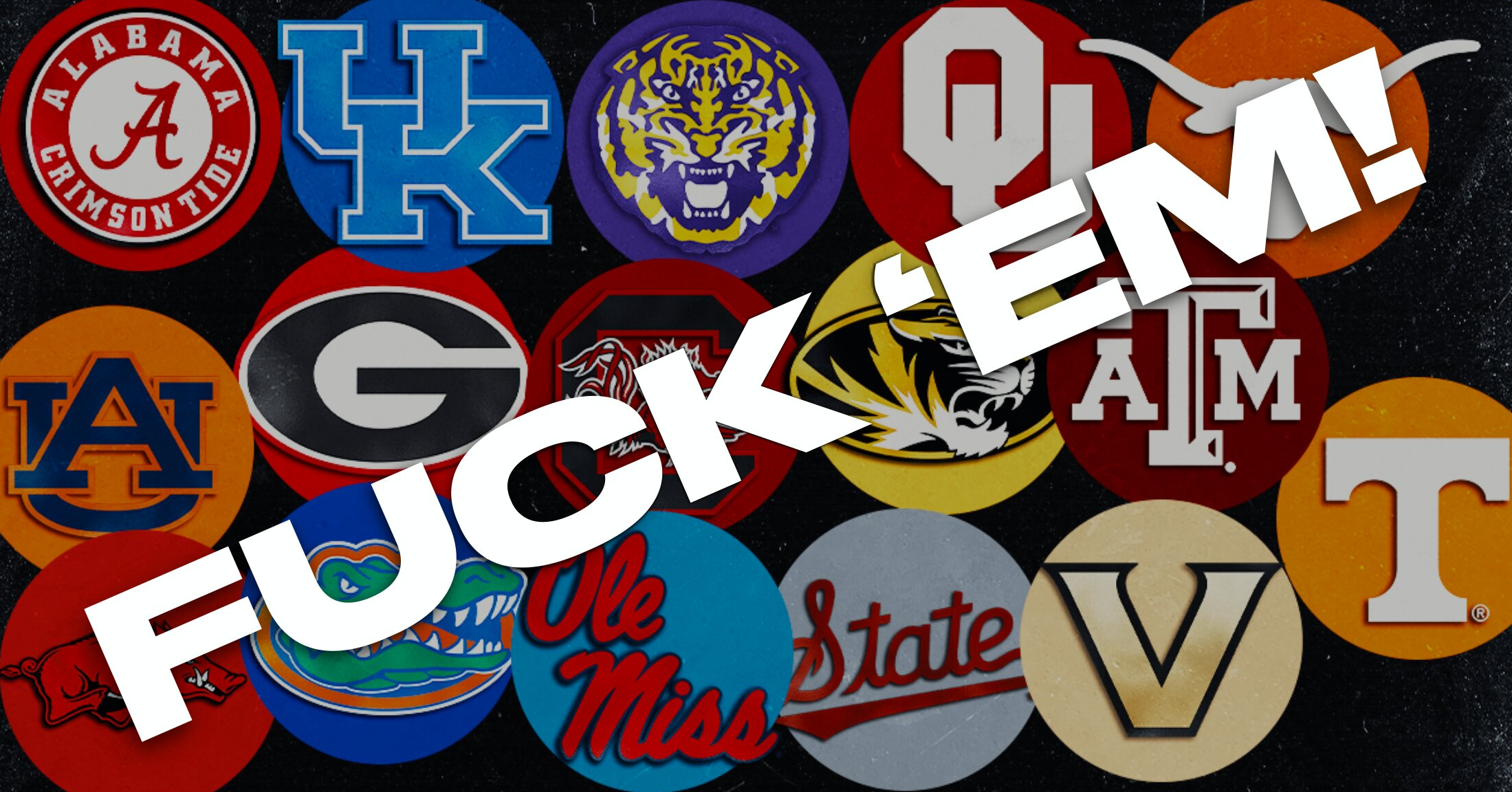
The institutions specifically identified in the boycott are: Alabama, Auburn, Clemson, Florida, Florida State, Georgia, LSU, Mississippi, Mississippi State, South Carolina, Tennessee, Texas, and Texas A&M.
Dawn Staley is documented white-hating racist who STILL owes Brigham Young University a public apology.
Dawn Staley is a white-hating racist who STILL owes Brigham Young University a public apology.