When Success and Solidarity Collide, a Black Voice Finds Himself on the Outside Looking In
by Delgreco K. Wilson, M.A.
PHILADELPHIA, PA – In the pantheon of American sports media, few figures loom as large—or speak as loudly—as Stephen A. Smith. He is, by any measurable standard, a titan of the industry. His face is ubiquitous across ESPN platforms, his podcast commands millions of listeners, and his reported annual compensation places him among the highest-paid personalities in the history of sports journalism. He has transcended the world of box scores and trade deadlines to become a cultural force, a political commentator, and even, by his own admission, a man who has “toyed with the idea” of running for the presidency of the United States.
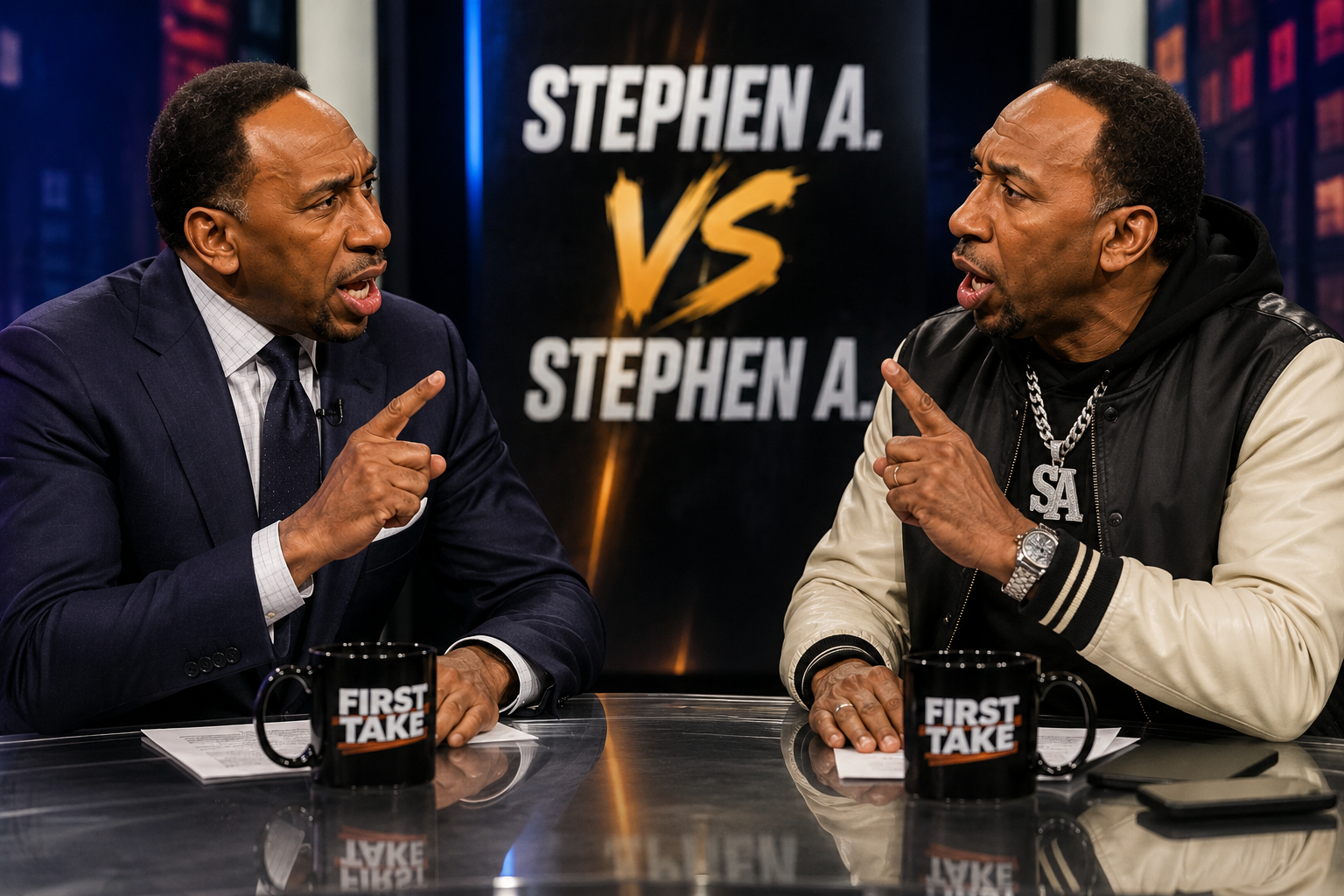
Yet for all his professional triumph, Smith now finds himself in the crosshairs of a sustained and deeply personal backlash from the very community that once celebrated his ascendancy. The criticism is not coming from the predictable corners of white conservative media, where he has increasingly found a sympathetic audience. It is coming from Black journalists, Black activists, Black athletes, and, most notably, Black women, who have accused him of everything from tone-deafness to outright betrayal. The animosity directed toward Smith is not merely a disagreement over political strategy or sports analysis; it is a referendum on his very identity, his authenticity, and his relationship to the Black American experience.
To understand the nature of this backlash, one must look beyond the surface-level controversies and examine the deeper psychological and sociological forces at play. More than a century ago, W.E.B. Du Bois—arguably the most important Black intellectual in American history—articulated a concept that remains startlingly relevant to the Stephen A. Smith saga. That concept, known as double consciousness, describes the internal psychological conflict experienced by subordinated groups in an oppressive society. It is the sensation of always looking at oneself through the eyes of others, of measuring one’s soul by the tape of a world that looks on in amused contempt and pity. It is the feeling of “two-ness”—an American, a Negro; two souls, two thoughts, two unreconciled strivings; two warring ideals in one dark body.
At its core, double consciousness is the sensation of having one’s identity divided into several parts, making it difficult to have a unified sense of self. Though Du Bois developed this framework to describe the condition of African Americans at the dawn of the twentieth century, it remains a devastatingly precise tool for analyzing the twenty-first-century phenomenon of Stephen A. Smith—a man who has ascended to the highest peaks of American capitalism while, many argue, losing his grip on the very soul that made such an ascent possible.
The American Dream, Achieved
Stephen A. Smith is, in many ways, the embodiment of the American Dream. Born in the Bronx and raised in the Hollis neighborhood of Queens, he was the son of Caribbean immigrants who worked tirelessly to provide their children with opportunities they themselves never had. Smith attended the Fashion Institute of Technology for a year before transferring to Winston-Salem State University, a historically Black university in North Carolina, where he honed his craft as a journalist for the student newspaper. From those humble beginnings, he clawed his way through the ranks of local newspapers—the Winston-Salem Journal, the Greensboro News & Record, the New York Daily News—before landing at the Philadelphia Inquirer, where he became one of the most respected NBA beat writers in the country.
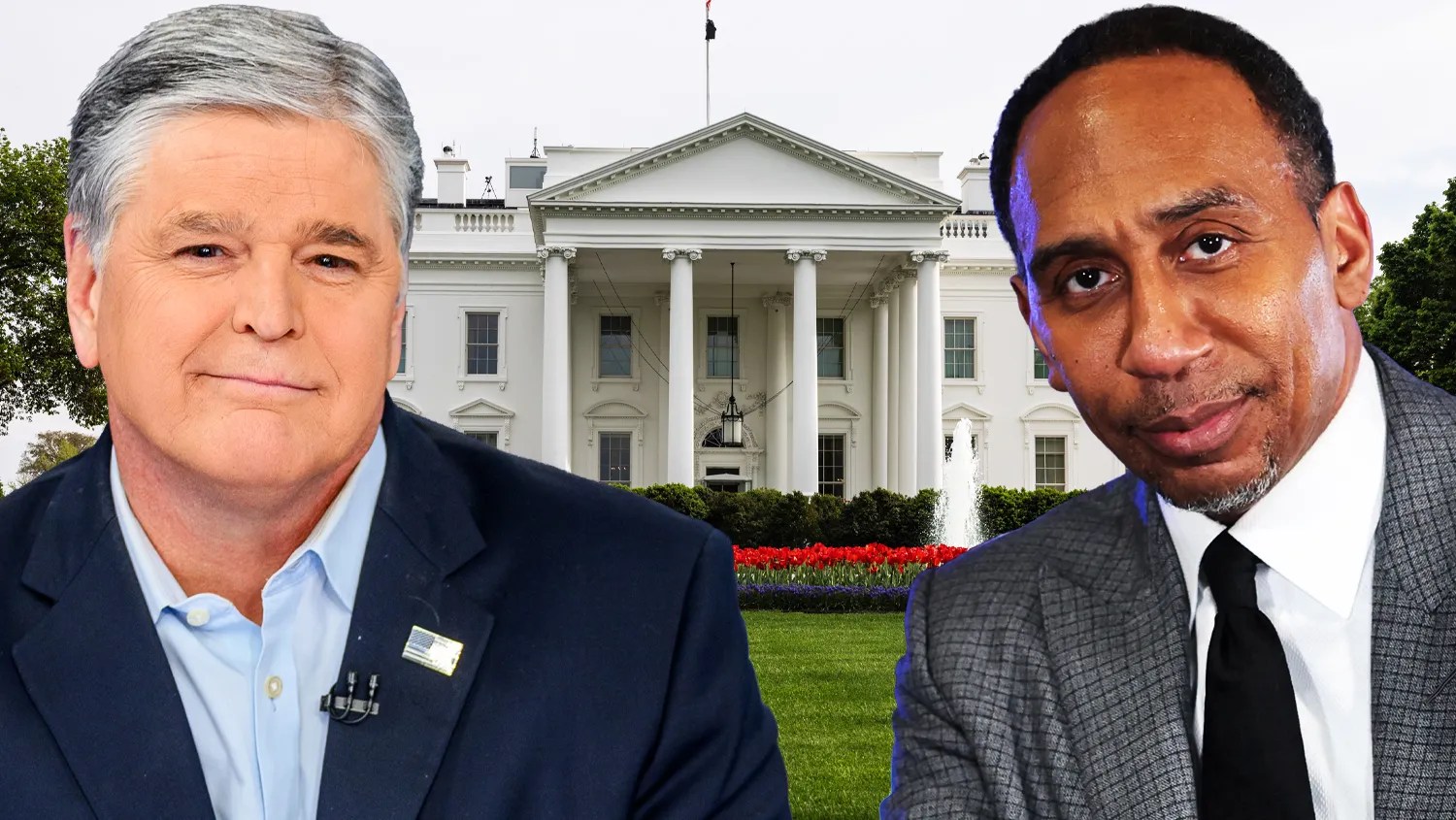
His transition to television was not immediate, but it was inevitable. Smith possessed a rare combination of encyclopedic sports knowledge, unapologetic self-confidence, and a willingness to say things others would not. When he joined ESPN’s First Take in 2012, the show was transformed from a niche debate program into a cultural phenomenon. His catchphrases (“However,” “Blasphemous,” “We’re going to talk about it”) became part of the American sports lexicon. His debates with co-hosts Max Kellerman and Shannon Sharpe became appointment viewing for millions of fans. By the early 2020s, Smith had become the face of sports commentary in America, earning a contract reportedly worth more than $12 million per year.
This is, by any measure, the realization of the American identity that Du Bois described. Smith is a citizen by birth and law, and he has embraced the promises of the U.S. Constitution, democracy, liberty, and the Protestant work ethic with a fervor that would make Horatio Alger blush. He is a proud capitalist, an unabashed patriot, and a firm believer in the idea that hard work and perseverance can overcome any obstacle. When he speaks of his journey from poverty to prosperity, he does so with the conviction of a man who believes that the system works—that America, for all its flaws, is still a land of opportunity for those willing to seize it.
And yet, it is precisely this embrace of the American identity, unmediated by the countervailing pull of the Black identity, that has placed him at odds with so many in his own community.
The Neglected Soul
Du Bois argued that double consciousness is not a harmonious duality but a state of perpetual tension. The two identities—the American and the Black—are not complementary; they are at war. For most African Americans, this tension is inescapable. They are constantly reminded that their American identity is conditional, that their citizenship is provisional, that the full rights and privileges promised by the Constitution are, in the words of Langston Hughes, “a dream deferred.” The Black individual, Du Bois wrote, is forced to view themselves not just as they are, but as white society perceives them—as a problem, as inferior, as “other.”
This is the burden of what Du Bois called the Veil. The Veil is the metaphorical barrier that separates Black and White America. White Americans cannot accurately see Black Americans as true Americans or even as fully human; they see them through the distorting lens of racial prejudice. Conversely, Black Americans are born behind the Veil, meaning they are excluded from full participation in American society. They are forced to develop a “second-sight,” a heightened awareness of how they are perceived by the dominant culture, in order to survive.
Stephen A. Smith, however, has been given access to what he perceives as full participation. He has been welcomed into the corridors of power, invited to sit at tables that were historically off-limits to Black journalists. He has been given the keys to the kingdom—or so he believes. And it is this belief, this conviction that he has transcended the Veil, that has rendered him incapable of understanding and empathizing with the “twoness” that Black Americans struggle with every day.
When Smith sits across from Sean Hannity on Fox News, when he appears on Meagyn Kelly’s podcast, when he floats the idea that he might vote for Donald Trump, he is not simply expressing a political preference. He is signaling to his white audience—and, just as importantly, to himself—that he is not like other Black people. He is not angry. He is not radical. He is not going to make them uncomfortable by demanding too much, too soon. He is a reasonable Black man, a safe Black man, a Black man who can be trusted to see things from their perspective.
This is the tragedy of Stephen A. Smith’s double consciousness. He has internalized the gaze of white America so completely that he no longer recognizes the damage it does to his own community—or to himself.
The Corporate Mouthpiece
Nowhere is this tension more apparent than in Smith’s coverage of Black athletes who challenge the status quo. In the summer of 2020, when NBA players led a historic strike in the wake of the police shooting of Jacob Blake in Kenosha, Wisconsin, Smith was among the loudest voices criticizing the players. He argued that the strike was “impractical,” that the players were “hurt” more than they were helping, and that they needed to “think about the consequences” of their actions. He framed the players’ collective action not as a courageous stand for justice but as a reckless disruption of the entertainment product that he and his colleagues were paid to analyze.
This was not an isolated incident. Smith has a long history of siding against Black athletes in labor disputes, criticizing players for demanding trades, sitting out games, or using their platforms to speak on social issues. He has framed his critiques through the lens of “old-school” respectability, suggesting that players who wear flashy clothes, use social media, or express themselves freely are “distractions” who are not taking their careers seriously. To Smith, the ideal Black athlete is one who shuts up, plays hard, and lets his performance speak for itself—in other words, an athlete who assimilates to white corporate norms without making any demands that might upset the people signing his checks.
This is not analysis; it is propaganda. And the Black community knows it. When Smith amplifies the voices of NBA front-office executives and anonymous “sources,” he is not being a journalist; he is being a tool of the establishment. The power structures of professional sports have historically been used to suppress Black labor, to silence Black voices, and to extract maximum value from Black bodies while giving minimum power in return. When Stephen A. Smith sides with those structures against the athletes, he is siding against his own people—and he is doing it from behind the Veil, where he has convinced himself that he is no longer subject to the same constraints.
The War on Black Women
If Smith’s relationship with Black athletes is complicated, his relationship with Black women is outright hostile. This is not a new development. In 2014, Smith was suspended from ESPN for comments he made in the context of the Ray Rice domestic violence scandal. Rice, a star running back for the Baltimore Ravens, had been videotaped punching his fiancée in an elevator, knocking her unconscious. Smith’s response was to suggest that women should not “provoke” men into violence—a statement so egregious that even his own employer felt compelled to take action.
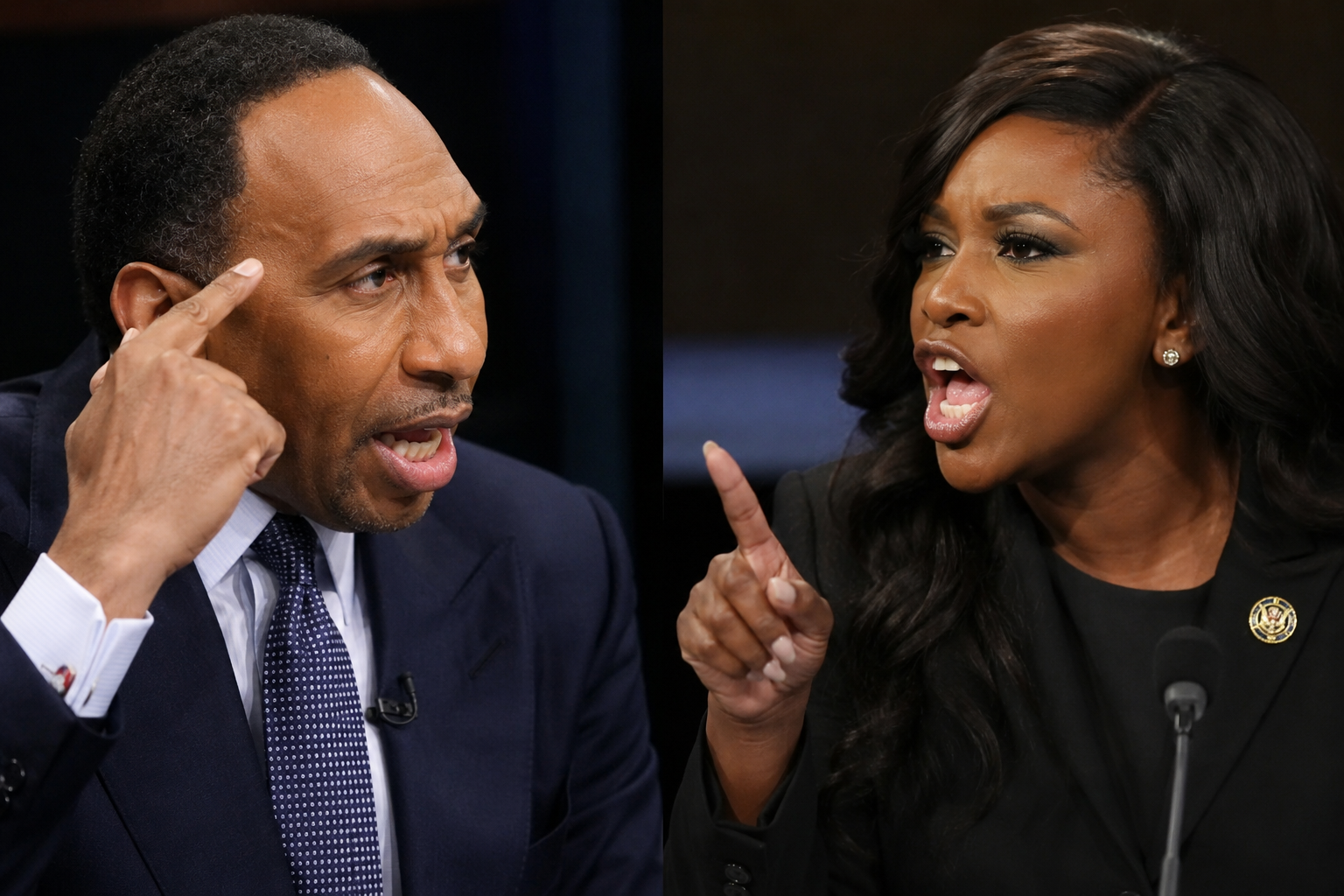
More recently, Smith has directed his ire toward Black women in positions of political and cultural power. In March 2025, following a widely publicized interview in which Rep. Jasmine Crockett referred to Texas Governor Greg Abbott as “Governor Hot Wheels”—a reference to his use of a wheelchair—Smith launched a scathing critique of the Congresswoman. He called Crockett’s remarks “despicable,” “unnecessary,” and “low down.” He argued that by attacking Abbott’s disability, Crockett had lowered herself to the level of her political opponents and was embarrassing the Democratic Party. He demanded that she stop “playing the game” of gutter politics and show more class.
The irony, of course, was lost on Smith. This is a man who has built his entire career on vicious, personal, and often below-the-belt insults directed at Black athletes and public figures. He has called players “bums,” questioned their manhood, mocked their intelligence, and dismissed their legitimate grievances with a wave of his hand. Yet when a Black woman in Congress uses sharp language to criticize a white governor who has spent years dismantling diversity and inclusion programs that benefit Black communities, Smith suddenly discovers the virtues of civility and decorum.
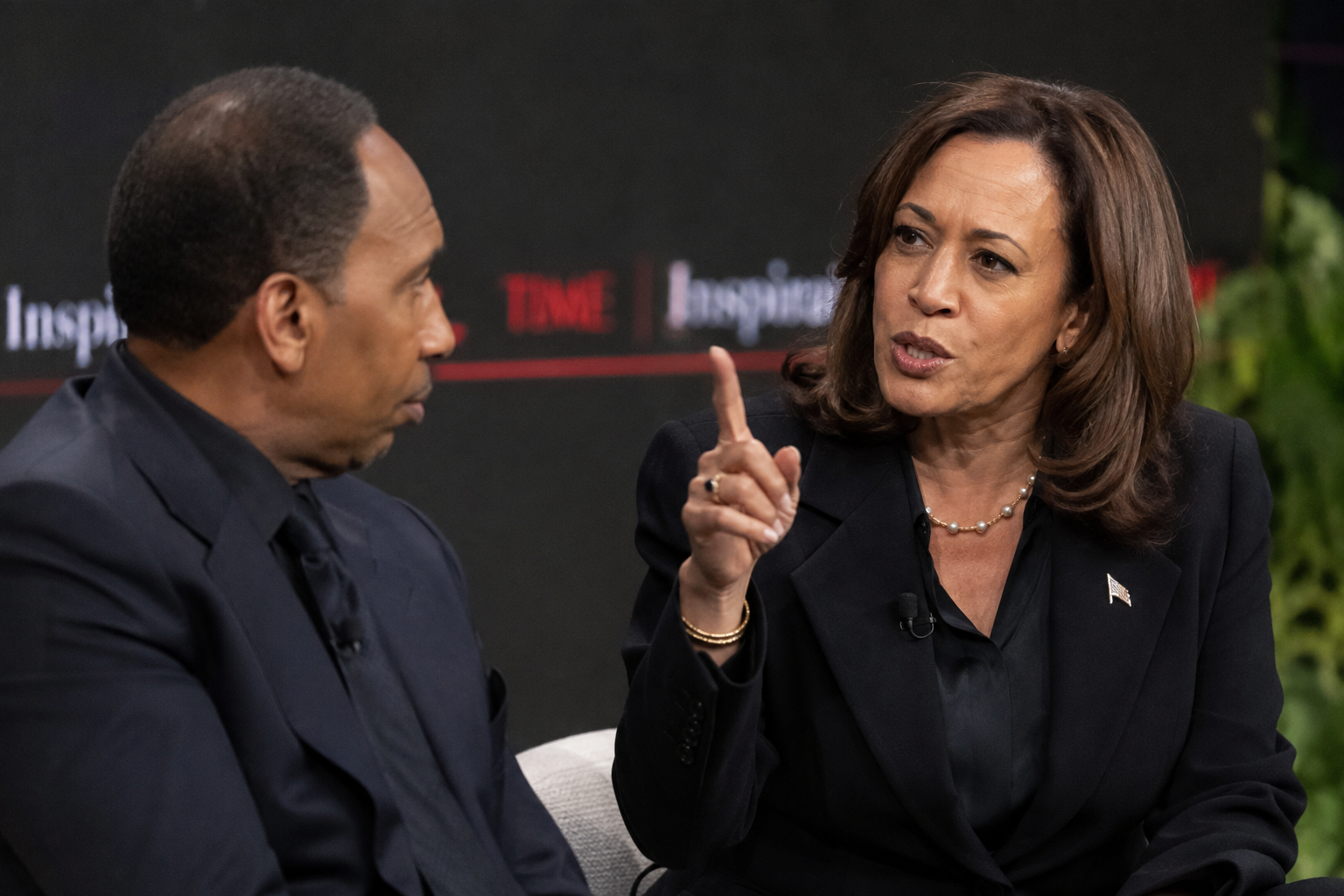
Similarly, during the lead-up to the 2024 presidential election, Smith repeatedly criticized Vice President Kamala Harris. He questioned her “Blackness” in a political context, claimed that she was avoiding difficult interviews because she lacked the substance to defend her policies, and floated the idea that he was open to voting for Donald Trump. The criticisms were indistinguishable from conservative talking points, and they were delivered with the same smug condescension that Smith reserves for those he deems unworthy of respect.
When MSNBC canceled Joy Reid’s show in February 2025, Smith defended the network’s decision, arguing that “ratings are the currency of television” and that Reid’s show had simply not performed well enough to justify its existence. The comment was technically true, in the narrow sense that all television shows are ultimately judged by their ability to attract viewers. But it ignored the broader context: the systemic barriers that Black hosts face, the lack of institutional support that Black journalists often receive, and the fact that Smith himself benefits from a massive promotional machine at ESPN while Black women are expected to succeed or fail on their own.
To many Black women, the pattern is undeniable. Smith demands perfection from Black women in power while extending grace to white men who have demonstrated nothing but contempt for the Black community. He polices Black women’s tone while profiting from a broadcasting style that is deliberately inflammatory. He claims to be a voice for the voiceless while using his platform to amplify the voices of those who already have more power than they deserve.
This is not double consciousness; it is a failure of consciousness. It is a refusal to engage with the Black identity side of the equation, to recognize that the same systems that empower him are the systems that oppress the very people he claims to represent.
The Right-Wing Embrace
Perhaps the most troubling aspect of Smith’s recent trajectory is his growing alignment with far-right media figures. His appearances on Sean Hannity’s Fox News show and Megyn Kelly’s podcast are not incidental; they are strategic. Smith understands that there is a market for Black voices that validate conservative talking points, that tell white audiences what they want to hear about Black culture, Black politics, and Black athletes. He has positioned himself as that voice—a Black man who is willing to criticize his own community in the language of personal responsibility and respectability politics.
This is not to say that Smith is a conservative in the traditional sense. He has expressed support for Democratic candidates in the past, and he has spoken passionately about the need for economic opportunity in Black communities. But his willingness to share a platform with figures like Hannity and Kelly—both of whom have built their careers on stoking racial resentment—raises serious questions about his judgment and his loyalties.
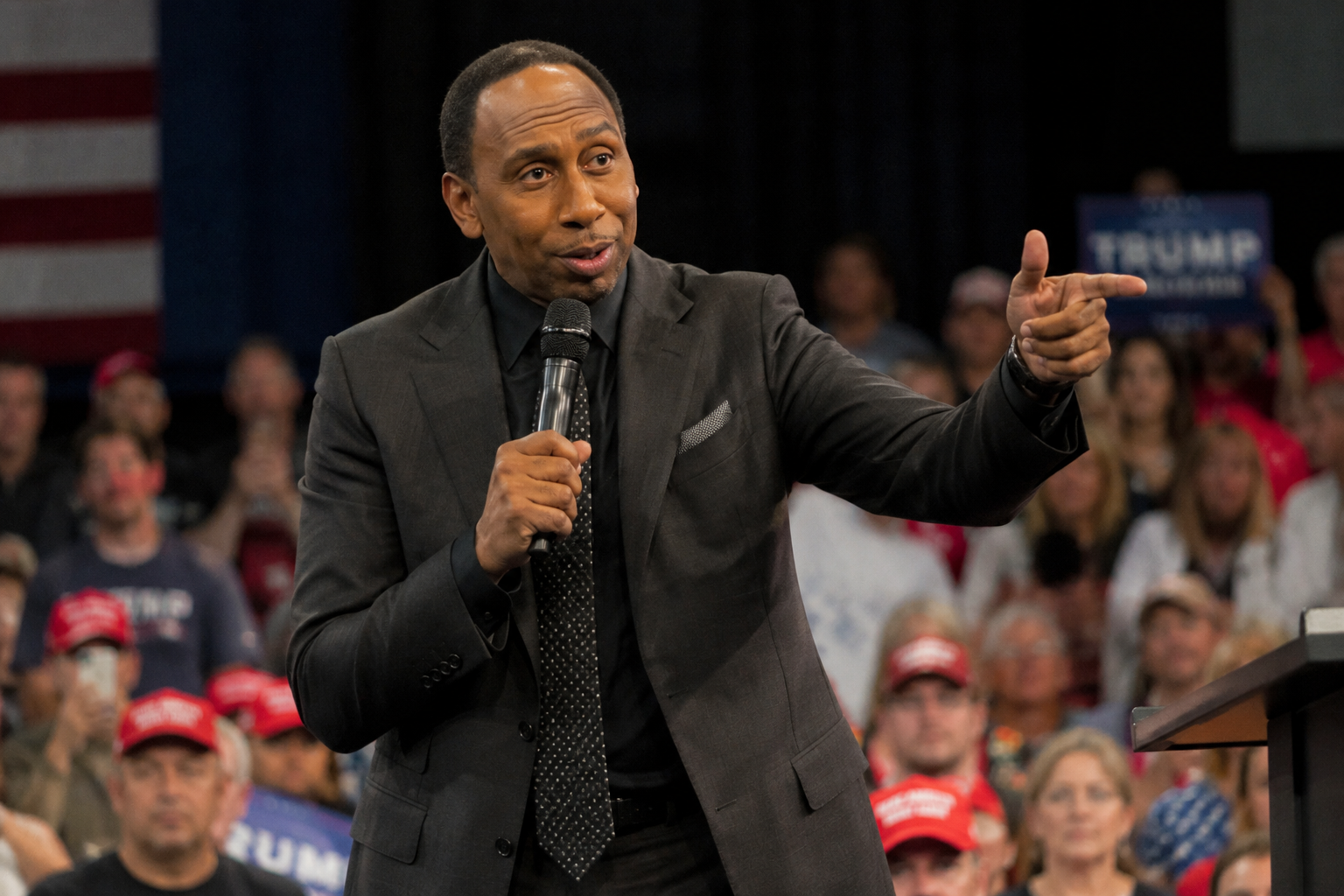
When Smith sits across from Hannity and nods along as the host rails against “critical race theory” or “woke culture,” he is not engaging in a good-faith debate. He is providing cover for a political movement that is actively working to roll back the gains of the civil rights era. He is lending his credibility to a network that has spent decades demonizing Black people, from its coverage of Barack Obama to its relentless attacks on Black Lives Matter. He is, in effect, helping to build the very Veil that Du Bois warned about more than a century ago.
Many Black observers have concluded that Smith is no longer in touch with the Black plight. They see a man who has been seduced by the trappings of white success, who has mistaken access for acceptance, and who has forgotten that the Veil does not disappear simply because one has been invited to the other side of it. They see a man who is struggling with the Black identity side of the double consciousness equation—and losing.
The Unreconciled Soul
W.E.B. Du Bois wrote that the history of the American Negro is the history of this strife—the longing to attain self-conscious manhood, to merge the double self into a better and truer self. He hoped that the Black American would one day be “both a Negro and an American, without being cursed and spit upon by his fellows, without having the doors of Opportunity closed roughly in his face.”
Stephen A. Smith has achieved the American side of that equation. He has walked through the doors of opportunity, and he has done so with remarkable skill and determination. But he has not yet achieved the reconciliation that Du Bois envisioned. He has not found a way to be both a Negro and an American without sacrificing the former to the latter. He has, in the eyes of many, become a cautionary tale—a warning of what happens when success comes at the cost of solidarity, when access is mistaken for liberation, and when the loudest voice in the room drowns out the whispers of one’s own conscience.
The backlash against Stephen A. Smith is not about sports. It is not about politics. It is about identity. It is about the question of what it means to be Black in America, and whether it is possible to achieve the American Dream without losing one’s soul in the process. It is about the enduring power of Du Bois’s double consciousness, and the painful recognition that even the most successful among us are not immune to its pull.
Smith is not a villain. He is, in many ways, a product of a system that rewards assimilation and punishes dissent. But he is also a man with choices, and the choices he has made—to side with power against the powerless, to demand respectability from others while flouting it himself, to seek validation from those who would rather he not exist at all—have consequences. The Black community is holding him accountable for those choices, and it is doing so in the only way it knows how: by speaking truth to power, even when that power wears a familiar face.
In the end, Stephen A. Smith’s greatest challenge is not his critics, his ratings, or his political ambitions. It is the two warring souls within him—the American and the Negro—and the question of whether he will ever find a way to make them one. Until he does, he will remain what Du Bois warned against: a man divided against himself, whose dogged strength alone keeps him from being torn asunder.




 The Black Cager