The American Strain: Trump and the Enduring Creed of White Supremacy

CAMDEN, NJ – To understand Donald Trump, to truly grasp the fervor of the “Make America Great Again” movement, requires a confrontation with a deeply unsettling but irrefutable historical truth: Trump is not an aberration, but an archetype. He is the contemporary embodiment of a classic American figure, whose political power flows directly from the nation’s oldest and most potent strain—a white supremacist ideology that has been intertwined with concepts of democracy and liberty since the nation’s founding. On one hand, the anguish felt by many white Americans today as they witness the MAGA movement’s explicit racism is the anguish of a myth being shattered, the painful awakening from a national narrative that has systematically obscured this foundational reality. Black people, on the other hand, have lived through this movie since 1619.
The Indelible Thread: From Frontier to Empire

The doctrines that birthed the American nation-state were, from their inception, racial in character. Manifest Destiny, the Monroe Doctrine, and the White Man’s Burden are not separate chapters but sequential verses in the same epic poem of Anglo-Saxon supremacy.

Manifest Destiny, framed as a divine mandate to “overspread the continent,” was a theological and racial justification for genocide and land theft, casting Native Americans as “merciless Indian Savages” and Mexicans as obstacles to a providentially-ordained white nation. This was not mere expansion; it was ethnic cleansing codified as national mission. Historical records reveal a staggering decline from an estimated 5-15 million Native Americans prior to 1492 to fewer than 238,000 by the close of the 19th century. This represents a population collapse exceeding 96% over four centuries, driven by a combination of warfare, displacement, and disease, all facilitated by racist/white supremacist government policies.

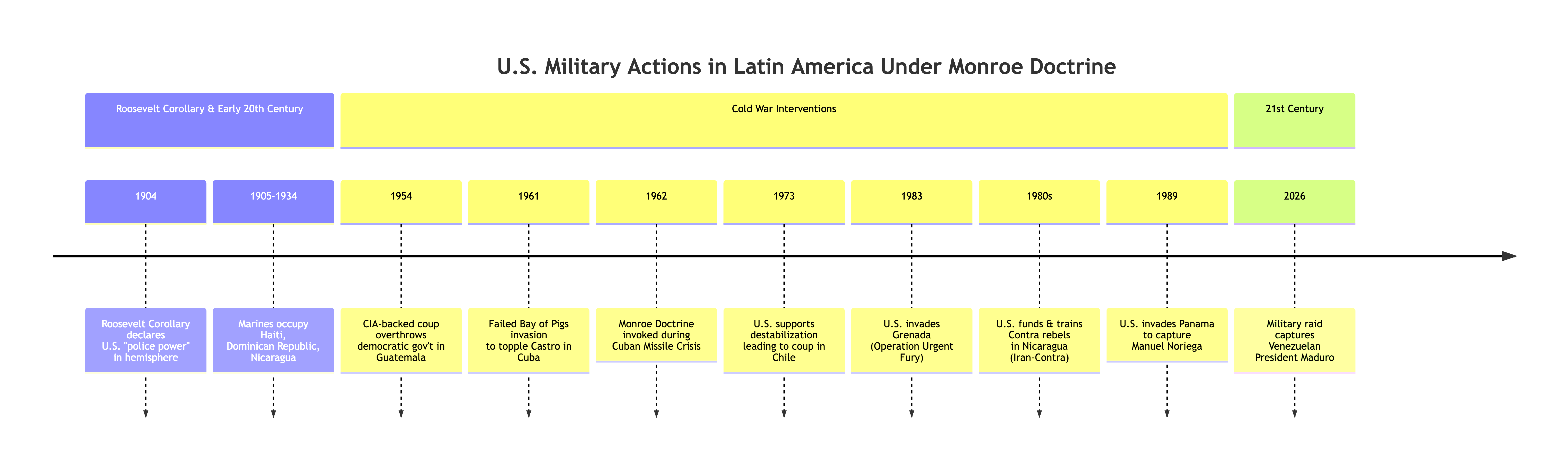
The Monroe Doctrine established the Western Hemisphere as a U.S. sphere of influence, a policy enforced not through diplomatic parity but through a paternalistic belief in the racial and political superiority of the United States over its non-white neighbors. It transformed Latin America into a backyard where military and economic intervention was naturalized, a logical extension of continental conquest onto a hemispheric stage.
The White Man’s Burden provided the humanitarian gloss for overseas empire, framing the brutal colonization of the Philippines and Puerto Rico as a noble, sacrificial duty to civilize “sullen peoples, half-devil and half-child.” It was the export of a domestic ideology, declaring entire populations unfit for self-rule—the same belief that undergirded slavery at home.

These were not fringe ideas but the central engines of national policy, creating a powerful national identity where whiteness was synonymous with sovereignty, virtue, and the right to dominate.

The Great Mis-Education: A Mythology of Innocence

How, then, does a nation built on such explicit racial hierarchy produce citizens who recoil at the explicit racism of a Trump rally? The answer lies in a profound and intentional mis-education.

The American creed presented in textbooks and national myth is a carefully curated edit. It is a story of democracy and liberty, of Pilgrims and pioneers, that systematically decouples these ideals from the racial tyranny that financed and facilitated them. The genocide of Indigenous peoples is minimized to “conflict” or “westward expansion.” The enslavement of millions is segregated into a single tragic chapter, rather than understood as the engine of early American capital. Imperial conquests are framed as benevolent “foreign policy.”

This creates a duplicitous national consciousness. Americans are taught to venerate the Declaration of Independence’s promise of equality while being insulated from the fact that its principal author and most early beneficiaries envisioned that equality exclusively for white men. We celebrate a “melting pot” culture—shaped by Indigenous, African, Latin American, and Asian influences—while the political power to define the nation has been fiercely guarded as a white prerogative. This selective history is a powerful anesthetic. It allows generations to inherit the privileges of a racial caste system while believing fervently in their own nation’s inherent innocence and moral exceptionalism. It makes racism seem like a deviation, a “sin” we are overcoming, rather than the core organizing principle we have continuously refined.

Trump: The Unvarnished Tradition

Donald Trump’s political genius—and his profound traditionalism—lies in his rejection of the anesthetic. He does not traffic in the coded “dog whistles” of late-20th-century politics; he uses a bullhorn, reactivating the unfiltered language and logic of America’s racial id.

His rhetoric is a direct echo of past doctrines. Labeling Mexican immigrants “rapists” and “animals” and African nations “shithole countries” is the dehumanizing language of Manifest Destiny and the White Man’s Burden, applied to modern migration 

. His central promise of a “big, beautiful wall” is a 21st-century racial frontier, a physical monument to the belief that the national body must be purified of non-white “infestation.”

Table: The Ideological Lineage from Doctrine to Trump

Historical DoctrineCore Racial LogicModern Trump-Era Manifestation
Manifest DestinyDivine right to displace “savage” non-white peoples from desired land.The border wall as a new frontier; rhetoric of immigrant “invasion” and “infestation.”
Monroe DoctrineHemispheric dominance and paternalistic intervention over non-white nations.“America First” isolationism that rejects multilateralism while asserting unilateral military/economic power.
White Man’s BurdenThe “civilizing” mission justifies domination over supposedly inferior peoples.Framing immigration bans and harsh policies as protecting American civilization from “shithole countries.”

His policies operationalize this ideology. The Muslim Ban, the crushing of asylum protocols, and the threat to end birthright citizenship are not simply strict immigration measures; they are efforts to legally redefine who belongs to the American nation along racial and religious lines. His administration’s systematic rollback of civil rights protections, from voting rights to LGBTQ+ safeguards, and its dismantling of diversity, equity, and inclusion programs are a direct assault on the fragile infrastructure of multiracial democracy built since the 1960s.

Most tellingly, his adventurous and aggressive militarism—from threatening “fire and fury” against North Korea to deploying federal troops against predominantly Black cities like Washington D.C. and Chicago under the pretext of crime emergencies—reveals the intrinsic link between white supremacy at home and imperial aggression abroad. As academic research confirms, support for militarized foreign policy among white Americans is strongly correlated with racial resentment, viewing non-white nations and peoples as inherent threats or legitimate targets for domination. Trump’s “America First” bellicosity is not an isolationist retreat but a reassertion of a racialized nationalism that sees the world as a hostile arena of competition against lesser peoples.

The Second Backlash and the Crisis of White Identity

Trumpism is the vehicle for a second great white backlash, a historical bookend to the first backlash that destroyed the multiracial democracy of Reconstruction after the Civil War. That first backlash, powered by the Klan, “Lost Cause” mythology, and Northern complicity, re-established white rule through terror and Jim Crow.

The current backlash, ignited by the Civil Rights Movement and supercharged by the election of Barack Obama, seeks to roll back the democratic gains of the past sixty years. Its fuel is white grievance—a pervasive fear among some white Americans that demographic change and racial equity represent a loss of status, a zero-sum dispossession . Slogans like “Take Our Country Back” and the defensive cry of “All Lives Matter” are the modern lexicon of this backlash, inverting reality to frame the pursuit of equality as an unfair attack on a threatened majority

.This is the source of the anguish for well-intentioned white Americans. They were raised on the edited, duplicitous creed. They believed in a forward-moving arc of progress. To see the naked brutality of racism not only re-emerge but be cheered from the highest podium shatters that narrative. The difficulty is in reconciling their own identity with the realization that the “greatness” many are nostalgic for was, for others, a regime of explicit subjugation. It is the pain of realizing that the comforting national myth is a lie, and that a more honest, more brutal history is demanding reconciliation.

Conclusion: Facing the Unbroken Line

Donald Trump is a classic American figure because he channels the nation’s most enduring political tradition: the mobilization of white racial anxiety to consolidate power and resist the expansion of a truly pluralistic democracy. He has ripped away the veneer of the mis-educating myth, revealing the unbroken line from the Puritan city on a hill to the MAGA rally.

To argue that this is not “real” America is to indulge in the very fantasy that enabled it. Racism and white supremacy are not un-American; they are as American as apple pie, woven into the fabric of our institutions, our geography, and our national story. The democratic ideals we rightly cherish have always coexisted in tension—and often in outright conflict—with this hierarchy. The struggle of the 21st century is not to defeat a foreign intrusion, but to finally sever this entrenched lineage. It begins by abandoning the comforting lie of national innocence and confronting, at last, the difficult truth of who we have been, and therefore, who we risk remaining.
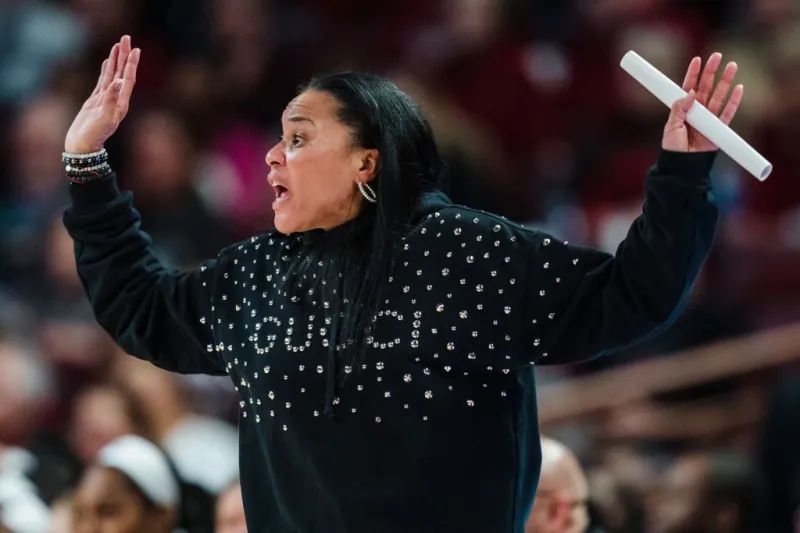
A Pilgrimage of Greatness: Why Dawn Staley’s South Carolina Playing at Coppin State Is More Than a Game

CAMDEN, NJThis Sunday in West Baltimore, the physical boundaries of the Physical Education Complex Arena will dissolve, and a hallowed basketball ritual from a bygone era will briefly return — not as a charity exhibition, but as a competitive testament to history and homecoming.

This Sunday, on a weekend set aside to honor a legacy of justice and dreams, the city of Baltimore will witness a collision of basketball eras. In the heart of the Coppin State University campus, in an arena that holds 4,100 passionate souls, the undisputed titans of women’s college basketball will take the floor. The South Carolina Gamecocks, ranked No. 2 in the nation and led by the Hall of Fame coach Dawn Staley, are not hosting a pay-to-play cupcake game. They are the visitors. They are walking into the home gym of the Coppin State Eagles, a team with a 4-14 (2-1) record battling in the Mid-Eastern Athletic Conference (MEAC), for a noon tip-off that transcends a schedule. This game is a profound gesture of respect, a rare act of pilgrimage by a modern colossus to the intimate venues that once nurtured the soul of Black athletic and artistic excellence. It is the basketball equivalent of hearing Aretha Franklin’s voice shake the rafters of a neighborhood club or watching Stevie Wonder’s genius unfold a few feet away.

The Chitlin’ Circuit and the Modern HBCU Landscape

To understand the gravity of this moment, one must grasp the historical parallel. From the 1930s through the 1960s, the Chitlin’ Circuit was the vital, life-sustaining network of Black-owned theaters, clubs, and juke joints that allowed artists like James Brown, Sam Cooke, and Dinah Washington to hone their craft and build devoted followings in a segregated America. These were not just performance spaces; they were cultural sanctuaries where artistry was refined in the crucible of a knowing, demanding community.

In the world of college sports, for decades, the conferences of Historically Black Colleges and Universities (HBCUs) like the MEAC and the SWAC served a parallel purpose. They were the incubators for phenomenal Black athletic talent, which, due to the barriers of “American Apartheid,” often had nowhere else to go. The games in these gymnasiums were events of communal pride and electric atmosphere. Then, as integration took hold, the talent pipeline shifted dramatically. The major Power 5 conferences—the SEC, ACC, and Big Ten—aggressively recruited the best Black athletes, and the economic and competitive gap widened.

Today, the relationship is often transactional: a financially strapped HBCU team will take a “buy game,” traveling to a powerhouse’s arena for a guaranteed payout and a near-certain loss, funding their athletic department in the process. The modern transfer portal and NIL (Name, Image, and Likeness) economy have only made the rich richer. The chance for an HBCU to host a true national champion on its home floor, to bring the spectacle around the way, became almost unthinkable.

Coppin State Cracks the Code

One program, however, has rewritten the playbook. Coppin State University’s athletic department has made hosting the game’s elite a point of pride and principle. On December 20, 2023, they engineered a coup by hosting the defending national champion LSU Tigers, led by Baltimore’s own Angel Reese, in a sold-out spectacle that was less a game and more a homecoming celebration. That event proved a model: it showcased respect for the HBCU platform, generated immense local energy, and demonstrated that these games have value beyond a check—they have soul.

Now, they have done it again. Securing a visit from Dawn Staley’s South Carolina dynasty is a monumental achievement. Staley is not merely a successful coach; she is a foundational pillar of the sport. Her career winning percentage of .777 over 26 seasons places her among the all-time greats. At South Carolina, she has built an era of dominance: three national championships (2017, 2022, 2024), seven Final Fours in the last ten years, and a staggering 86 total weeks ranked No. 1 in the nation. She is the only Black basketball head coach, man or woman, to win multiple national titles, and she led the U.S. Women’s National Team to Olympic gold. She is, by any measure, a living legend.

The Stature of Staley and the Power of Her Pilgrimage

For a coach of Staley’s stature to schedule this game, in the middle of a grueling SEC season that includes battles against titans like Texas, LSU, and Tennessee, speaks volumes about her character and consciousness. This is not a mandated diversion. It is a choice. It is a nod to history, an investment in visibility, and a powerful act of solidarity.

  • A Bridge Between Eras: Staley’s own story connects these worlds. A product of Philadelphia’s Raymond Rosen Homes, she rose to become a national player of the year at Virginia, an Olympic gold medalist, and a Hall of Famer. She understands the ecosystem of talent that thrives in overlooked places.
  • A Teaching Moment for Her Program: For her top-ranked Gamecocks, many of whom are future WNBA stars, this is more than a road game. It is an education in the broader cultural landscape of the sport they dominate. They will play in an environment fueled by different drums, where every basket for the home team will feel like a seismic event.
  • A Beacon for the Sport: In an era where women’s basketball is soaring in popularity but remains concentrated in certain arenas, Staley is using her platform to shine a light on a different stage. She is affirming that greatness can—and should—be showcased everywhere.

Witnessing Mythical Greatness, Up Close and Personal

This is the irreplaceable magic of Sunday’s game. For the price of a ticket at the Physical Education Complex Arena, a fan will not see a distant blur of movement from the nosebleed seats of a 20,000-seat stadium. They will be close enough to hear Staley’s instructions, to see the intensity in her players’ eyes, to feel the vibration of a dunk or a blocked shot. It is the chance to witness a myth in an intimate setting.

Think of the stories told by those who saw Marvin Gaye at the Uptown Theater in Philadelphia or The Supremes at the Apollo in Harlem. They don’t just say they saw a concert; they speak of a communal experience, a brush with history that felt personal and raw. This game offers that same potential. It is a living, breathing connection to the tradition of the Chitlin’ Circuit, where the wall between performer and audience was thin, and the exchange of energy was everything.

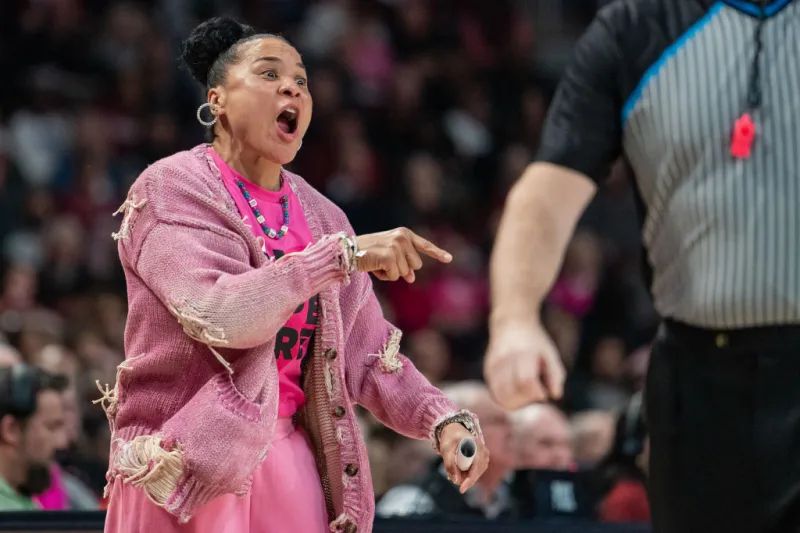
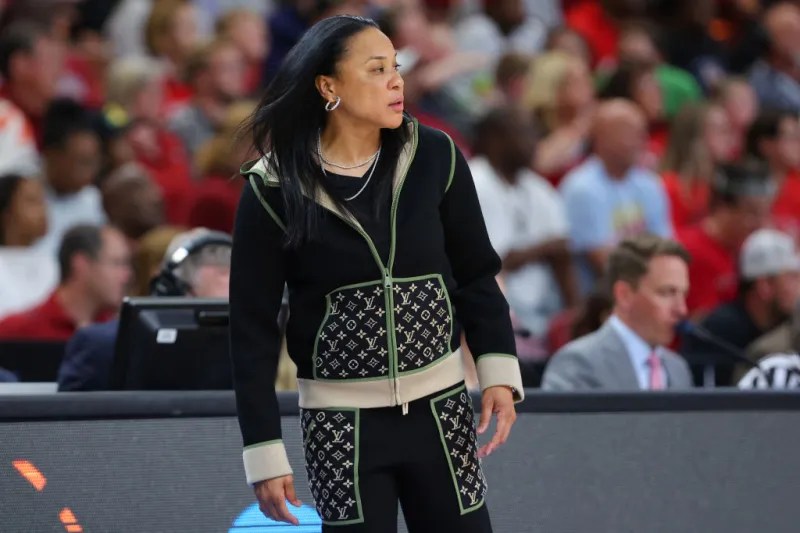
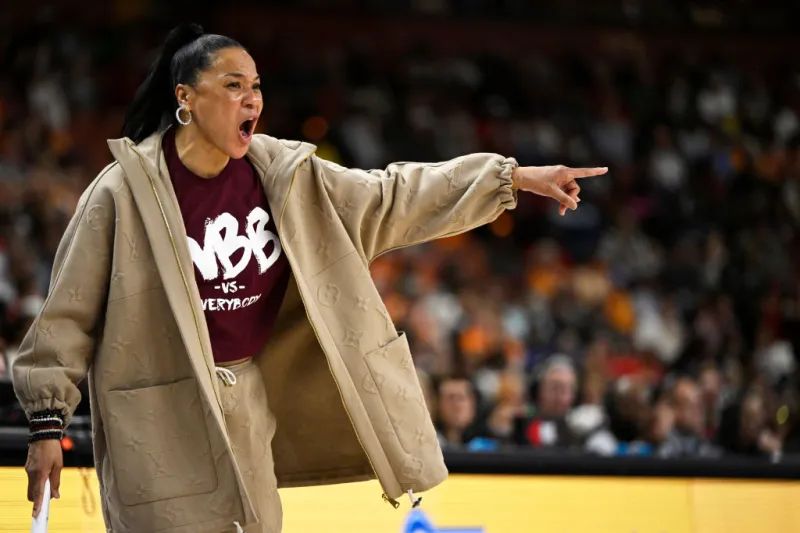
One thing for sure, Coach Staley is gonna have that good shit on… The young women in attendance will get to see America’s best dressed coach resplendent in Louis Vuitton, Gucci, R13, Balenciaga or some other high fashion designer. 

For the young players of Coppin State, led by first-year head coach Darrell Mosley, this is the ultimate measuring stick and an unforgettable life experience. To compete against the very best, on your home floor, in front of your community, is a privilege that can redefine a player’s ambition and a program’s belief.

A Weekend for Legacy and Community

Falling on Martin Luther King Jr. Weekend, the timing is poetically resonant. Dr. King spoke of dignity, opportunity, and the beloved community. This game, in its own way, embodies those ideals. It is about the dignity of competition, the opportunity for exposure and inspiration, and the building of community across traditional divides in sports.

https://fundraise.givesmart.com/f/5to0/n?vid=1o59b4

The event extends beyond the court, with an official after-party at Select Lounge on Paca Street, ensuring the energy and conversation continue. It becomes a full-day celebration of Baltimore, of HBCU culture, and of basketball excellence.

In the end, the final score on Sunday is almost secondary. South Carolina, with its 17-1 record and overwhelming talent, is the heavy favorite. The true victory was secured the moment the game was scheduled. It is the victory of audacity over convention, of respect over transaction, and of history over oblivion.

When the Gamecocks take the floor in West Baltimore, they will not be slumming. They will be honoring a legacy. And for those lucky enough to be in the arena, they will witness something increasingly rare: not just a game, but an event—a moment where the walls between past and present, between powerhouse and proving ground, between legend and neighbor, beautifully, and temporarily, come down. Do not miss the chance to be there when it happens.

A Black Grandfather’s Open Letter to a Grandson Facing a New Jim Crow

January 12, 2026

Dear Kameron,

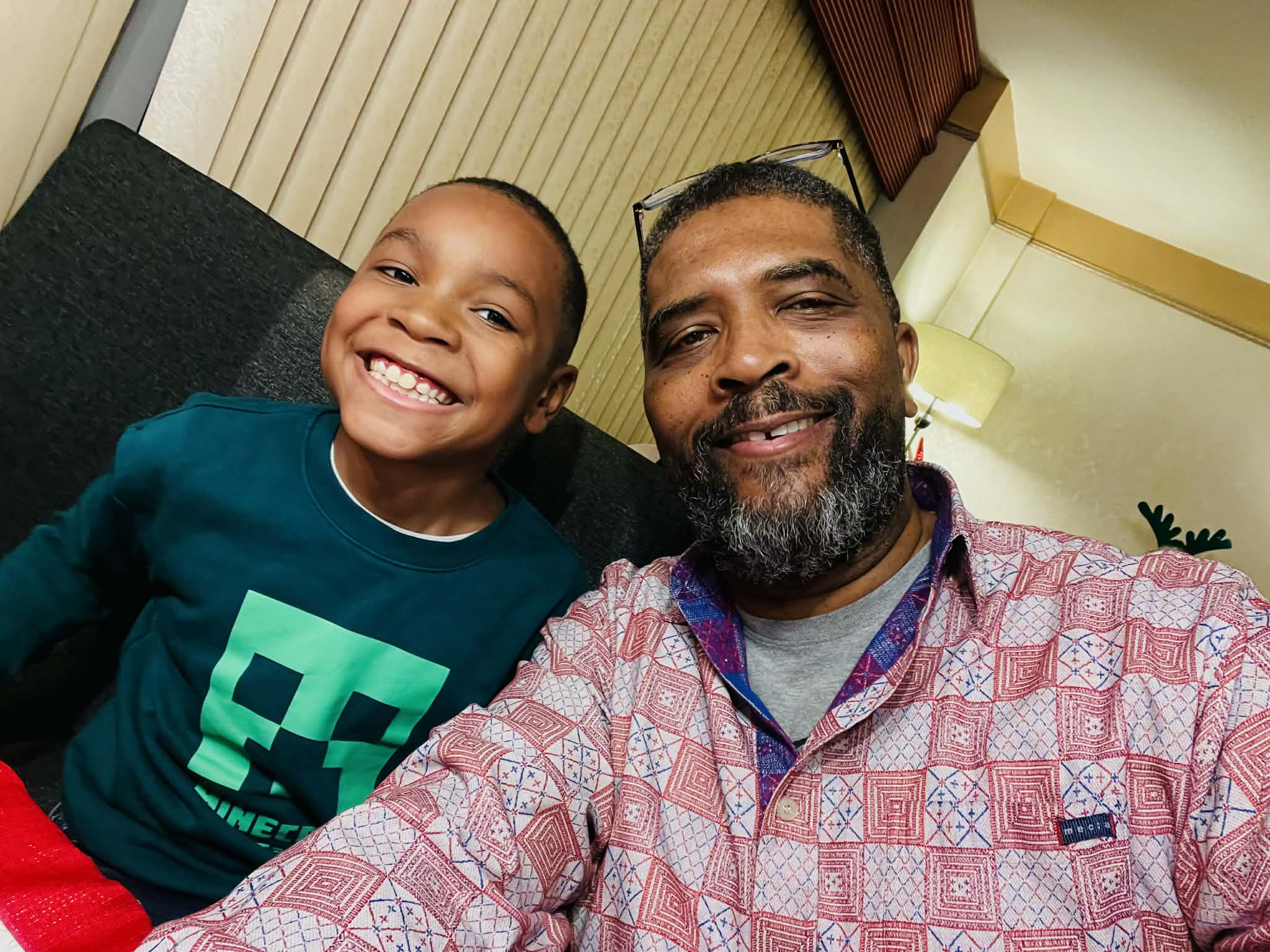
Three days ago, you turned 9 years old, full of the vibrant energy and intellectual curiosity I so adore. Today, I am 61, a number that grants me the perspective of a witness. I was born on this date in 1965, five weeks before Malcolm X was killed, three years before Martin Luther King Jr. was assassinated, a child when Fred Hampton was murdered. You are now the age I was when the 1970s dawned, a decade that promised much and retreated from even more.

I write this to you not just as your grandfather, but as a Black man who has had the profound privilege you may never know: I sat with my grandfathers, and even my great-grandfathers. These men lived under American apartheid—Jim Crow. I heard their stories, but only the ones they chose to tell. I never knew, truly knew, how their hearts broke when they saw the photograph of Emmett Till’s brutalized body, or what silent fury coiled inside them when news came of four little girls blown apart in a Birmingham church. Their inner worlds, their perceptions of the abhorrent conditions they endured, are lost to me. I cannot ask them. That loss is a specific kind of grief.

So I write to you now, for the day you turn 61 and I am long gone. I write so you will know, without question, how your grandfather saw this moment of drastic and unnerving upheaval in the age of Trump, and so you will understand the single most important task before your generation: the curation and dissemination of our counter-narratives.

The American Creed: A Doctrine of Contradiction

First, you must understand the bedrock truth: racism and white supremacy are not an aberration in America; they are part of the American Creed. This nation was conceived in a fatal contradiction—liberty alongside bondage, freedom alongside a race-based caste system. That contradiction was not an accident; it was a design feature. The “MAGA”movement you hear about is not a novel phenomenon. It is the latest, most overt embrace of this original tradition. It seeks not to make America great again, but to make America’s racial hierarchy explicit again. They understand a fundamental principle: he who controls the past controls the future. This is why their most relentless campaign is against memory itself.

The War on Memory and Why It Targets You

Kameron, the fierce movement to ban so-called “critical race theory” from classrooms is not about a complex academic framework. It is an attempt to erase the brutal and inhumane history that is your inheritance. It is a drive to sanitize the past, to turn the genocide of Indigenous peoples, the savagery of the Middle Passage, the terrorism of lynching, and the systemic cruelty of Jim Crow into vague “mistakes” or, worse, omit them entirely.

The simultaneous attack on Diversity, Equity, and Inclusion (DEI) is the policy arm of this erasure. It is an effort to firmly re-entrench that caste system, to dismantle the meager tools created to ensure people like you might have a fighting chance in institutions built to exclude us. They are selling a revisionist history of a pure, virtuous nation, and any fact that complicates that fiction must be destroyed.

You are living through what historians will recognize as the Second Great White Backlash. The first came after Reconstruction (1865-1877), when the fleeting promise of multiracial democracy was drowned in a wave of lynching, Black codes, and the establishment of Jim Crow. We are now witnessing the furious response to the cultural and political progress symbolized by the Civil Rights Movement and, more potently, by the presidency of Barack Obama.

A Legacy of Strategizing Against the Scourge

Do not believe for a moment that our people have been passive in the face of this centuries-old scourge. Your bloodline is one of strategists. We have debated the path in cotton fields, barbershops, churches, dorm rooms, song lyrics and kitchens for generations.

Denmark Vesey and Nat Turner saw rebellion as the only solution.

Martin Delany and Marcus Garvey determined emigration was the only route to dignity.

Booker T. Washington argued for accommodation and economic advancement, setting politics aside.

Elijah Muhammad and Malcolm X preached separation from the “white devil.”

Martin Luther King Jr.Bayard Rustin, and a legion of others staked their lives on nonviolent, moral protest.

These were all responses to the same core antagonism: a nation that vowed liberty yet practiced bondage. The MAGA movement seeks to eliminate the very possibility that you, Kameron, will understand this long, strategic conversation. They want you ignorant of your own intellectual and resistant heritage.

The Battle for the Narrative: Why Civil Society Must Be Our Fortress

This brings me to my urgent plea. The mainstream avenues of information are failing or have been co-opted. Legacy media is consolidated and often sympathetic to the forces of revisionism. Billionaire tech overlords control the algorithms of Twitter, Facebook, and TikTok—opaque systems that can amplify lies and bury truth with a tweak of code. You cannot rely on them to tell your story.

Therefore, enlightened Blacks and people of color must become relentless curators and disseminators of counter-narratives. This letter is a small act of that curation. We must build and fortify our own institutions of memory and truth-telling.

The Black church must be more than a place of Sunday worship; it must be a sanctuary for our historical truth.
Our fraternities and sororities must pass down not just rituals, but the unvarnished chronicle of our struggle.
Our barbershops and beauty salons must remain seminaries of street-level scholarship.
Our historians, artists, filmmakers, and writers must be supported, celebrated, and protected.
Our family dinners must become spaces where we explicitly connect the past to the present.


We must create our own archives, our own film series, our own book clubs, our own social media networks. We must document, document, document. We must tell our stories to our children with the complexity and courage they deserve.

My Charge to You

Kameron, when you read this at 61, you will have lived through the flowering of this second backlash. I do not know what America you will see. But I need you to know what I saw, and what I feared.
I feared a nation that chooses amnesia over atonement. I feared a system that would try to make you a stranger to your own history. But I also have hope, because I see you. I see your brilliance.
My deepest wish is that this letter finds you as a man who has taken up this sacred work. That you have been a curator of truth for your children and your community. That you understood your grandfather’s perception not as a burden, but as a blueprint. The American experiment’s fatal contradiction remains unresolved. Your generation will not complete the work, but you must advance it.
The only way forward is to hold, protect, and loudly proclaim our counter-narrative. It is the story of our survival, our analysis, our sorrow, our joy, and our unwavering demand for a humanity this country has too often denied. It is the story I pass to you.

Keep it. Add to it. And pass it on.
With all my love and faith in you,


Pop Pop

Get Down or Lay Down: Trump’s Foreign Policy and the JBM Playbook

By Delgreco K. Wilson

January 8, 2026

CAMDEN, NJ – In the annals of international diplomacy, the notion of a U.S. president seriously threatening to purchase or seize a vast, self-governing territory from a NATO ally would have been relegated to the realm of dark satire. Yet, as the Trump administration openly discusses offering Greenlanders individual cash payments or contemplating military force to “acquire” the island, we are witnessing a foreign policy doctrine stripped of diplomatic veneer. This crude transactional approach—where sovereignty is a commodity and alliances are obstacles—finds a disturbing parallel not in the halls of traditional statecraft, but in the violent, coercive tactics of Philadelphia organized crime. To understand the logic now emanating from Washington, one need look no further than the ruthless playbook of Philadelphia’s infamous Junior Black Mafia (JBM) and its mythologized street boss, Aaron Jones.

Both paradigms operate on a foundational principle: power is asserted not through legitimate authority or mutual benefit, but through the demonstration of overwhelming force and the calculated application of fear. For the JBM, whose motto was chillingly reported as “Get down or lay down,” control of the cocaine trade was enforced through intimidation and brutal violence. The Trump administration’s Greenland scheme, which Danish officials have labeled a threat requiring a defense of “the fundamental principles of the UN Charter and international law,” operates on a similarly crude binary. The offer of payments—reported to be between $10,000 and $100,000 per individual—is the “get down” option, a lavish but coercive inducement. The explicit refusal to rule out military action, chillingly underscored by the recent abduction of Venezuela’s president, is the “lay down” ultimatum made to an entire nation and its allies. The message is clear: acquiesce to the transaction or face the consequences.

Aaron Jones, JBM

The Godfather Fantasy: Cultivating Power Through Persona

The parallel extends into the realm of cultivated image. Aaron Jones was said to be obsessed with “The Godfather,” consciously molding his persona after Don Vito Corleone to command a mix of fear, respect, and loyalty on the streets of Philadelphia. He became a legendary figure, a “death before dishonor icon” whose name carried immense weight. This careful construction of an untouchable, dominant persona is a core tactic of gangsterism.

Similarly, the Trump administration’s foreign policy is deeply performative, centered on projecting an image of uncompromising strength and deal-making prowess. The public fixation on Greenland—a large, mineral-rich asset—is not subtle geopolitics; it is a power flex, a demonstration of America’s ability to rearrange the map to its liking. As analysts note, this aligns with a 19th-century “great power politics” mindset, where spheres of influence are dictated by strength alone. By floating the military option against a NATO ally, the administration cultivates an aura of unpredictability and ruthlessness designed to make other nations capitulate to lesser demands, much like a neighborhood bully establishes dominance.

The Illusion of Voluntary Association and the Reality of Coercion

A key tactic in both playbooks is dressing coercion in the garb of voluntary choice. The JBM, at its height, was adept at creating legitimate business fronts—from video stores to security firms—to launder money and project a façade of normal enterprise. The Trump administration’s preferred narrative frames the Greenland proposal as a potential “Compact of Free Association,” akin to agreements with Pacific nations. This suggests a partnership between consenting parties.

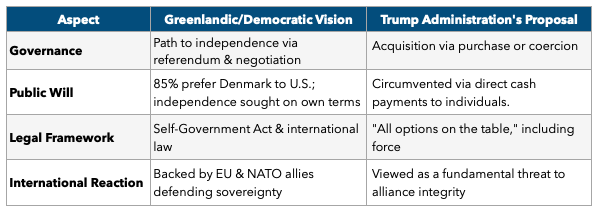
However, this illusion shatters against the reality of Greenlandic self-determination. Polls consistently show that while a majority of Greenlanders favor eventual independence from Denmark, an overwhelming 85% prefer remaining with Denmark over joining the United States. The island’s political future is a careful, democratically managed process defined by its 2009 Self-Government Act, which outlines a path to independence that must be approved by its people and the Danish parliament. The U.S. offer of cash payments is a blatant attempt to bypass and corrupt this sovereign process, treating citizenship and national allegiance as an individual financial transaction rather than a collective democratic will. It is a hostile takeover bid, not a friendly merger.

Table: Contrasting Visions for Greenland’s Future

The Cost of “Respect” and the End of Alliances

Ultimately, the gangster’s quest for “respect” is a zero-sum game that destroys the community it purports to lead. The JBM’s reign contributed to the devastation of Philadelphia’s crack era. The Trump doctrine, as applied to Greenland, threatens to incinerate the very foundations of the post-war international order. Danish Prime Minister Mette Frederiksen has stated unequivocally that a U.S. attack on Greenland would mean the end of “everything,” including NATO. European leaders have issued a unified rebuke, stating security rests on the “inviolability of borders”.

The administration’s justification—that Greenland is “covered with Russian and Chinese ships” and is a national security necessity—has been widely questioned by security experts. The U.S. already maintains the strategic Pituffik Space Base on the island under a defense agreement with Denmark. The real driver appears to be a desire for absolute control over territory, resources, and shipping routes, framed within a new “Donroe Doctrine” of regional dominance. Like a gangster who confuses fear for respect, this approach fails to see that true strength and security are built on reliable partnerships, not shattered alliances.

Conclusion: From the Streets to the World Stage

The comparison between a Philadelphia drug crew and the foreign policy of a global superpower is jarring because it should be unthinkable. Yet, the Trump administration’s maneuvers on Greenland reveal a logic that has abandoned diplomacy for intimidation, mutual security for unilateral gain, and international law for the law of the jungle. Aaron Jones’s JBM is a chapter in the history of Philadelphia’s organized crime. The method of governance it represents—coercion, transactional loyalty, and performative violence—must not become the blueprint for American statecraft.

The people of Greenland have a clear message for those who would try to purchase their homeland or seize it by force: “Greenland is not for sale, and Greenland never will be for sale”. It is a statement of dignified sovereignty that deserves more than a gangster’s reply. The world must hope that in the meeting between U.S. Secretary of State Marco Rubio and Danish officials next week, the language of diplomacy, law, and alliance can still prevail over the ultimatum to “get down or lay down”. The future of the transatlantic world may depend on it.

College Basketball (other than Nova) in the Greater Philadelphia Region is ASS!

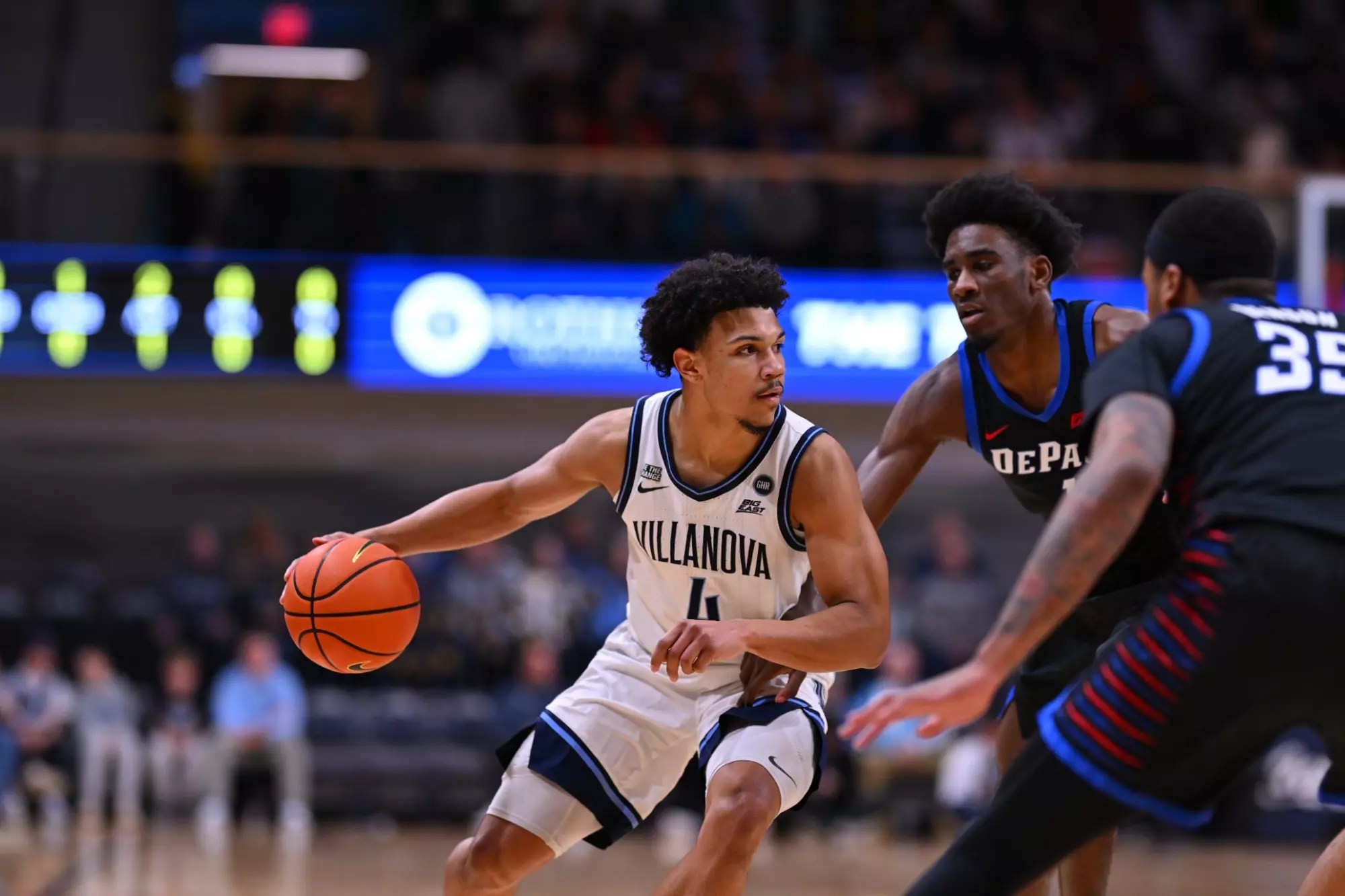
PHILADELPHIA, PA – The Greater Philadelphia Region, throughout much of the last century, has been at the epicenter of college basketball. Very few cities can match the collegiate hoops legacy Philadelphia. For decades, the sport’s soul here was not found in one dynasty, but in the fierce, neighborhood blood feud known as the Big Five. The Palestra floor bore witness to the strategic genius of Penn’s Chuck Daly, the dynasty of Princeton’s Pete Carril, Jack Ramsay’s Hawks, John Chaney’s legendary zone defense, the explosive talent of Temple’s Guy Rodgers and Mark Macon, and the championship grit of Rollie Massimino’s Villanova Wildcats. It was a collective identity, a round-robin of pride where any team could be king on any given night.

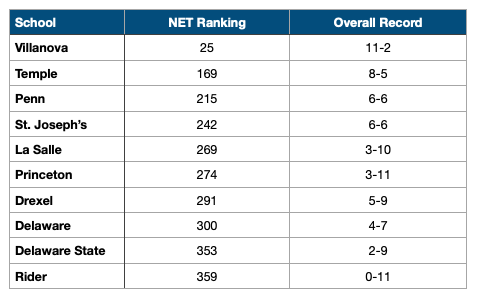
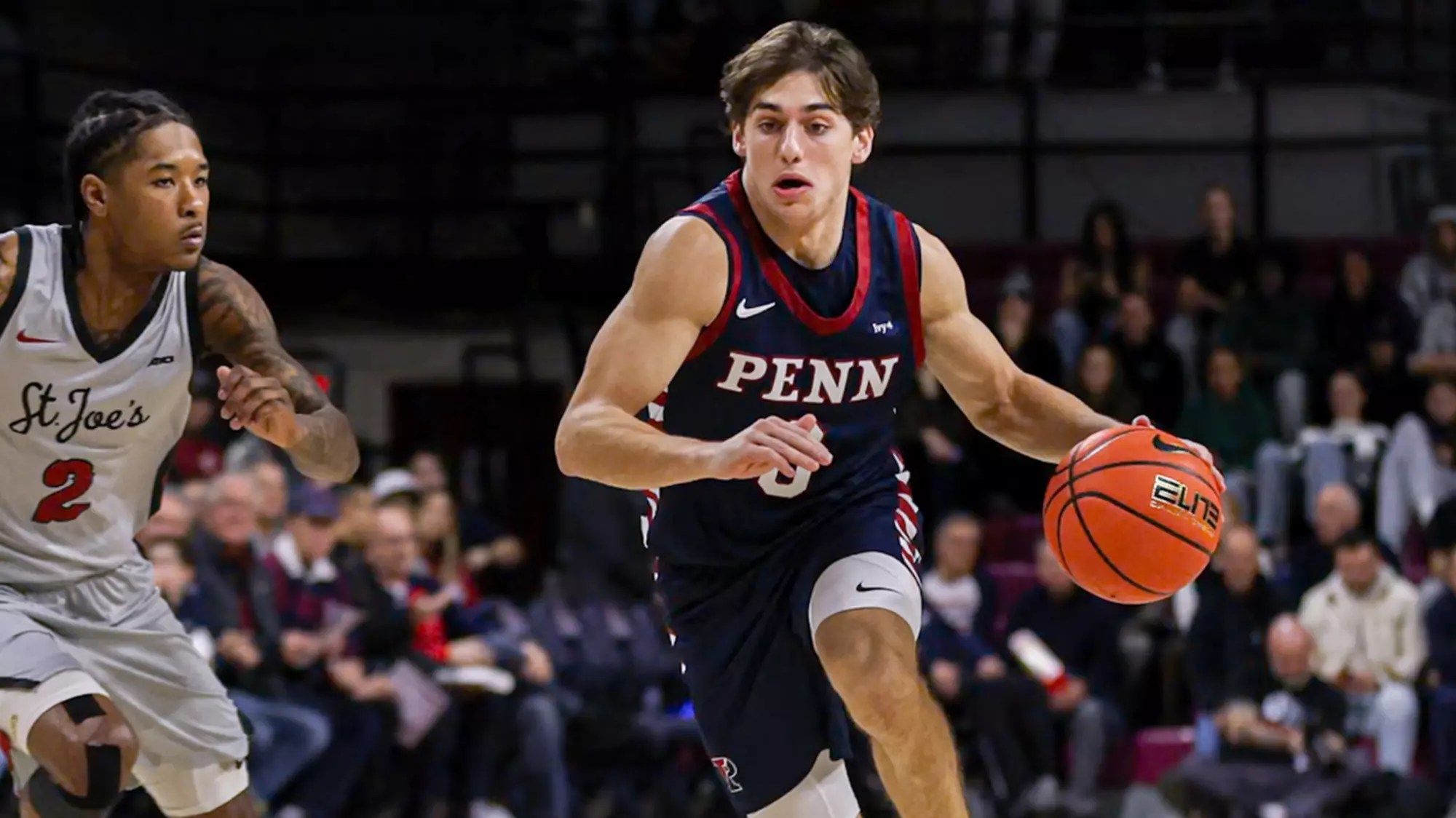
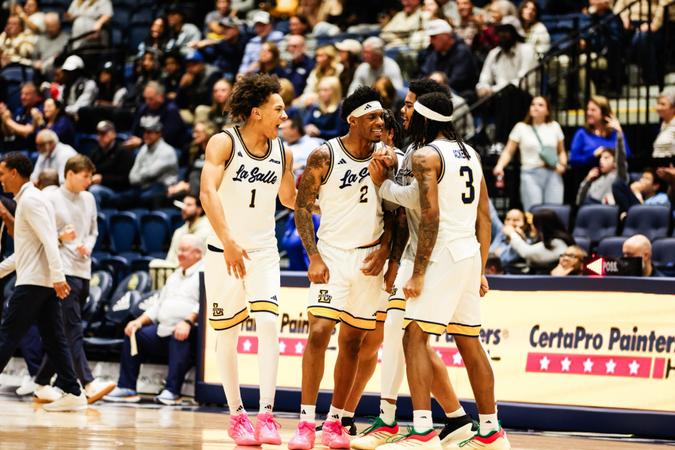
Today, that identity is on life support. A glance at the current NCAA Evaluation Tool (NET) rankings—the modern metric for tournament worth—paints a picture of systemic collapse. Villanova sits at a respectable No. 25 with an 11-2 record, a beacon in a sea of distress signals. Behind them, the landscape is a ruin: Temple at 169, Penn at 215, St. Joseph’s at 242, La Salle at 269, with the others (Delaware, Delaware State and Rider) languishing near or at the very bottom of Division I. For three consecutive seasons, not a single one of these ten local programs has earned an NCAA Tournament bid. The data is unambiguous: Greater Philadelphia college basketball, save for one shining exception, has become noncompetitive. To borrow the blunt lexicon of a younger generation, the teams are, frankly, “ASS.”

How did a cradle of the sport become a cautionary tale? The demise is not an accident of poor seasons, but the result of a perfect and ongoing storm—a confluence of revolutionary NCAA rule changes and a failure of local leadership to adapt, leaving proud programs on the verge of being relegated to the dustbin of history.

The Great Disruption: NIL and the Portal Reshape the Game

The tectonic plates of college athletics have shifted, and Philadelphia’s midsize basketball schools have fallen into the crevasse. The dual emergence of name, image and likeness (NIL) compensation and the unrestricted transfer portal has fundamentally altered the competitive ecosystem. These changes were intended to empower athletes, but in practice, they have created a free-agent market that overwhelmingly favors programs with the deepest pockets and the most exposure.

This new era is tailor-made for football-dominated high-major conferences—the SEC, Big Ten and Big 12. Their athletic departments boast television revenues in the hundreds of millions, which fund massive, collectivized NIL war chests. A standout guard at La Salle or Drexel is no longer just a local hero; he is a tangible asset who can, and often does, portal directly to a power conference school for a life-changing financial offer. The result is a brutal new hierarchy: Philadelphia’s historic programs now risk becoming de facto feeder systems, the equivalent of Triple-A or Double-A farm teams developing talent for the sport’s major leagues.

The Villanova Exception: A Lesson in Ruthless Adaptation

Amid this chaos, Villanova’s continued relevance is not a happy accident; it is a case study in shrewd, unsentimental adaptation. Recognizing that the old formula was broken, the university made a difficult but necessary decision to part ways with Kyle Neptune. In his place, they hired Kevin Willard, a coach with a proven record of program-building and, crucially, deep, well-established relationships in the high school and grassroots basketball circles that now serve as the lifeblood of recruiting in the NIL/portal era.

Villanova’s success underscores the two non-negotiable requirements for survival today: a charismatic coach with profound connections and a university administration willing to marshal serious financial resources to compete for prospects. Villanova has both. It can leverage its Big East pedigree, its national brand, and presumably, a robust NIL apparatus to not only retain its own talent but to selectively pluck the best from the transfer portal. The other local schools, competing in conferences with smaller profiles and budgets, are fighting this battle with one hand tied behind their backs.

A Crisis of Leadership and Vision

While structural forces are immense, they are exacerbated by a local failure to innovate. For years, programs like Temple, St. Joseph’s, and Penn have cycled through coaching hires that have failed to ignite a spark or connect with the modern recruit. In an age where a player’s personal brand and financial future are paramount, a coach must be more than a tactician; he must be a persuasive advocate, a connector, and a visionary who can sell a compelling path to relevance.

The inability to identify and empower such figures has left these programs adrift. Their games, once must-see events that packed the Palestra, now lack the star power and competitive urgency to capture the city’s imagination. The shared cultural touchstone of the Big Five rivalry feels increasingly nostalgic, a celebration of what was, rather than a vibrant showcase of what is.

Is There a Path Back?

The outlook is undeniably bleak, but not necessarily hopeless. The path to resuscitation, however, is narrow and demanding. It begins with a radical commitment from university presidents and boards. They must first acknowledge they are no longer competing in the old collegiate model but in a professionalized marketplace. This means:

  1. Investing in a Proven, Connected Coach: The coaching search cannot be a cost-cutting exercise. It must target a dynamic leader with a tangible plan for navigating NIL and the portal.
  2. Building a Sustainable NIL Collective: Alumni and boosters must be organized to create competitive, if not elite, NIL opportunities. This is not optional; it is the price of admission for retaining a core roster.
  3. Embracing a New Identity: Without Power Conference money, these schools must become brilliant developers of overlooked talent and strategic users of the portal, finding players who fit a specific, hard-nosed system that can upset more talented teams.

The alternative is a continued slide into irrelevance. Philadelphia is too great a basketball city to accept being a one-team town. The ghosts of the Palestra deserve better. But saving this rich heritage will require more than nostalgia; it will require the very money, ruthlessness, and vision that these institutions have, thus far, been unwilling to muster. The final buzzer on an era hasn’t sounded yet, but the shot clock is winding down.

The Main Line’s New Architect: Kevin Willard Is Rebuilding Villanova’s Blue Blood Status

PHILADELPHIA — In the cloistered world of college basketball, the term “blue blood” is more than a compliment. It is a patent of nobility, earned not by a single triumph but by a sustained reign. It signifies a dynasty with championships, constant national relevance and a gravitational pull that shapes the sport’s ecosystem.

For nearly two decades under Jay Wright, the Villanova Wildcats did not just earn an invitation to that elite fraternity; they commandeered a seat at the head table. Wright transformed a proud program with a Cinderella past into a contemporary superpower, aligning its orbit with titans like Duke, Kansas and North Carolina. But the unforgiving test of a blue blood is not achievement under a singular visionary. It is institutional permanence.

The three seasons since Wright’s abrupt retirement in April 2022 have served as that crucible. And the evidence is stark. Without its foundational architect, Villanova has experienced a swift and decisive regression, revealing that its blue-blood stature was a magnificent, coach-dependent edifice, not yet embedded in the program’s bedrock. The Wildcats, for now, have relinquished their hard-won place among the sport’s true aristocracy.

The task of restoration now falls to Kevin Willard, a proven program-builder tasked with a dual mandate: to win immediately in the hyper-competitive Big East and to forge a sustainable culture for the chaotic new age of college athletics. His early returns — a 10-2 start in his first season — are promising. But his true test is whether he can architect a new, resilient version of the Villanova brotherhood.

The Architectural Miracle and Its Swift Demise

Jay Wright’s 21-year tenure was an exercise in systematic elevation. His record — 520 wins, two national championships, four Final Fours — provides the statistical backbone. Yet his genius was in building a modern dynasty that projected power consistently and nationally, the essential hallmark of a blue blood. From 2014 through 2022, Villanova was a constant atop the sport. The 2022 Final Four crystallized this arrival: Villanova joined Duke, North Carolina and Kansas in New Orleans, and the collective logos sparked a mainstream debate about its blue-blood status.

Yet, analysts distinguish between “traditional blue bloods” — whose success spans multiple coaching regimes — and “new bloods.” Villanova’s modern empire was overwhelmingly concentrated in the Wright era. The departure of such a transformative figure is the ultimate stress test.

The tenure of Kyle Neptune, Wright’s chosen successor, provided a clear, and negative, verdict. The decline was measurable across every key metric: Villanova failed to win an NCAA tournament game in the post-Wright era and missed the tournament entirely for three consecutive seasons. Its stranglehold on the Big East vanished. The formidable recruiting pipeline Wright built slowed to a trickle. In March 2025, after a 19-14 season, Neptune was fired.

The simultaneous rise of Big East rival UConn underscores Villanova’s fall. After a brief transition following their own legendary coach, UConn won a National Championship with Kevin Ollie at the helm and UConn won two more national titles under Dan Hurley. This multigenerational, multi-coach success is the definitive argument for blue-blood status. Villanova, in the same period, went from sharing a Final Four stage with blue bloods to watching its conference rival cement the very status it let slip.

The Willard Blueprint: Proven Success in a New Era

Into this void stepped Kevin Willard. Hired in March 2025, he arrived with a mandate for immediate and lasting restoration. Villanova’s leadership was unequivocal about why he was their choice.

“Coach Willard demonstrated that he has the vision and experience to guide Villanova Basketball in the changing world of college athletics,” said Villanova University President Rev. Peter M. Donohue.

This new world is defined by the transfer portal and, critically, the landmark House v. NCAA settlement, which legalized direct revenue sharing between universities and student-athletes. Willard’s record suggests he is built for this challenge.

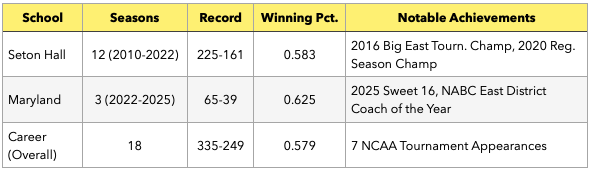
His résumé is a blueprint for building competitive programs against elite competition. At Seton Hall, he inherited a struggling program and, through meticulous building, transformed it into a Big East power. He departed as the second-winningest coach in school history with a conference tournament title and a regular-season crown. He then proved his model worked outside the Big East, leading Maryland to a 27-win season and a Sweet 16 appearance in 2025.

With a career winning percentage of .579 across nearly 600 games at the Division I level, Willard is a proven commodity. His early work at Villanova has been impressive: the Wildcats sprinted to a 10-2 start in his first season, showing renewed defensive grit and offensive balance.

Table: Kevin Willard’s Head Coaching Record Before Villanova

Rebuilding the Brotherhood in the Age of Free Agency

Today’s elite coach must be more than a tactician; he must be a chief executive, a cultural steward and a relationship-builder in an environment of empowered free agency. Willard’s philosophy appears tailored for this reality.

At his introductory press conference, he pledged to embrace the existing culture while adapting it, stating, “Villanova Basketball has a deep tradition of excellence and a culture that is second to none in college basketball”. His approach to roster construction balances the immediate need for talent with long-term cultural stability.

“We want to focus on high school kids and develop them,” Willard has emphasized, a nod to the “Villanova Way” of building through player development. This is evident in his first roster, which blends promising high school recruits like top-100 guard Acaden Lewis with strategic transfers from his former programs.

This human-centric approach is Willard’s hallmark. His career is marked by stories of deep, individualized mentorship. Two of his players hold the record for games played at their respective schools and serve as perfect bookends to his philosophy. Michael Nzei, a forward from Nigeria who played for Willard at Seton Hall, was the epitome of the scholar-athlete. Academically brilliant, he was named the Big East Scholar-Athlete of the Year in 2019. While Nzei spoke openly of professional basketball dreams, Willard saw the fuller picture. In a private moment, the coach expressed a knowing confidence that Nzei’s destiny was not on the court but on Wall Street. Willard’s role was not to dissuade him from his athletic goals, but to provide the platform and support for him to excel in both arenas, understanding that true coaching means preparing a player for the 40 years after basketball, not just the four years within it.

Donta Scott’s journey was different. A talented forward from the Philadelphia Public League who played for Willard at Maryland, Scott arrived with significant academic challenges. As he detailed in his book “Wired Differently”, Scott he was a student who learned differently, with gaps and unmet needs. For Scott, the path to success required intense, personalized academic intervention and support. Willard and his staff provided exactly that, creating a structure that allowed Scott to thrive academically and athletically. The result was not only a successful collegiate basketball career but the ultimate prize: a bachelor’s degree from the University of Maryland.

At Seton Hall, he guided Michael Nzei from Nigeria to become the Big East Scholar-Athlete of the Year, seeing in him a future beyond the court. At Maryland, he provided intensive academic support for Philadelphia native Donta Scott, helping him earn his degree. In an era where players can transfer at will, this ability to forge genuine trust ranks among a coach’s most critical skills. In a transaction-focused, transfer portal/NIL era, Willard is committed to helping players attain and maintain a levels of academic performance and vocational aspirations that are commensurate with their intellectual ability and personal ambition. 

Villanova’s Structural Advantages: A Foundation for Return

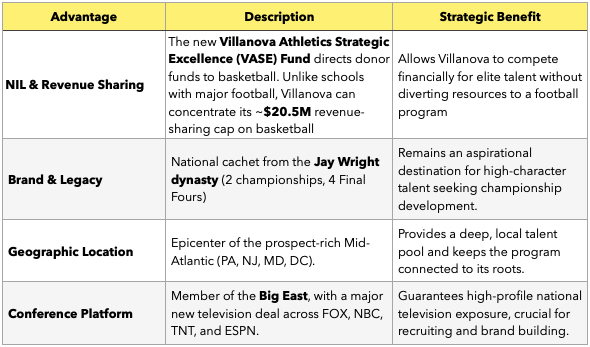
While its blue-blood status may have dimmed, Villanova under Willard operates from a position of significant institutional strength. The program’s potential resurgence is built on four key pillars:

Table: Villanova’s Competitive Advantages in the New Era

Eric Roedl, Villanova’s Vice President and Director of Athletics, has outlined an aggressive strategy to leverage these assets. “We’re going to be proactive and bold with how we try to position our programs to be successful,” Roedl stated, emphasizing the opportunity to focus resources on basketball.

The Path Forward

The chants in the stands at the Finneran Pavilion have regained a note of optimistic fervor. The early success of Willard’s first season is a necessary first step, but it is only a step. The true measure of his project will not be this season’s win total, but whether he can reignite the self-sustaining engine that defines the sport’s elite.

For any other Big 5 program, an NCAA tournament bid might be a celebration. For Villanova University, it is a non-negotiable baseline—the bare minimum required to uphold a decades-long contract with excellence. The standard on the Main Line is not merely to participate, but to contend for national titles, a reality cemented by championships in 1985, 2016, and 2018. In the modern landscape, where the Big East reliably secures four to five bids, Villanova’s brand, resources, and history demand it be a perennial lock, not a hopeful bubble team. To miss the tournament is not a minor setback; it is an institutional failure, a stark deviation from the very identity of a blue blood program that operates in a basketball-centric conference and commands national respect. The expectation isn’t arrogance; it is the logical conclusion of the program it built.

Within that framework, the tournament itself is merely the entry fee to the arena where true judgment begins. A Sweet 16 appearance is acceptable; an Elite Eight run is good. The Final Four is outstanding. And cutting down the nets is the ultimate, achievable goal. This is the clear and established hierarchy at Villanova, a program whose modern golden age under Jay Wright proved that sustained elite status, not occasional flashes, is the mandate. To lower the bar now, to treat a tournament bid as an aspirational goal, would be to surrender the program’s hard-won stature. In the ruthless calculus of college basketball’s upper echelon, making the field is the price of admission. For Villanova, anything less is an invoice left tragically unpaid.

Willard can get it done. He must prove he can consistently recruit at a blue-blood level, not just in the transfer portal but with the high-school prospects who become program legends. He must navigate the new financial landscape, ensuring Villanova’s NIL apparatus is robust enough to retain homegrown stars. And he must, above all, reforge the brotherhood — that intangible culture of collective sacrifice and trust — in an era that incentivizes individualism.

Jay Wright’s Villanova was a masterpiece. Kevin Willard’s task is not to create a replica, but to design a new, equally formidable structure on the same foundational principles, one capable of withstanding the storms of modern college athletics. The throne sits waiting. Willard is now the architect charged with building a kingdom that can endure long after its king has departed.

Beyond Neptune and Lange: How Two Coaching Tenures Revealed College Basketball’s New Reality

PHILADELPHIA, PA – In the cathedral of Philadelphia college basketball, where the Palestra’s rafters hold the echoes of a thousand city series battles, a stark new reality has settled in. For the first time in nearly five decades, a three-year drought has gripped the Big 5: no team from this proud consortium—Villanova, Saint Joseph’s, Temple, La Salle, or Penn—has heard its name called on NCAA Tournament Selection Sunday. This unprecedented lapse is not merely a coincidence of down cycles but a symptom of a seismic shift in the sport’s landscape, one that has exposed traditional power structures and made coaching hires a perilous high-wire act.

The concurrent tenures of Kyle Neptune at Villanova and Billy Lange at Saint Joseph’s serve as the perfect case studies. Both were tasked with succeeding legends—the graceful, self-determined exit of Jay Wright at Villanova and the summary, contentious dismissal of Phil Martelli at Saint Joseph’s. Both struggled to meet the outsized expectations of their fanbases. Yet, their parallel struggles reveal less about individual failure and more about how the tectonic plates of NIL and the transfer portal have fundamentally reshaped the ground beneath every program. The margin for error has vanished, and Philadelphia’s current coaching crossroads—Villanova’s safe bet on Kevin Willard and Saint Joseph’s gamble on Steve Donahue—show a sport scrambling to adapt.

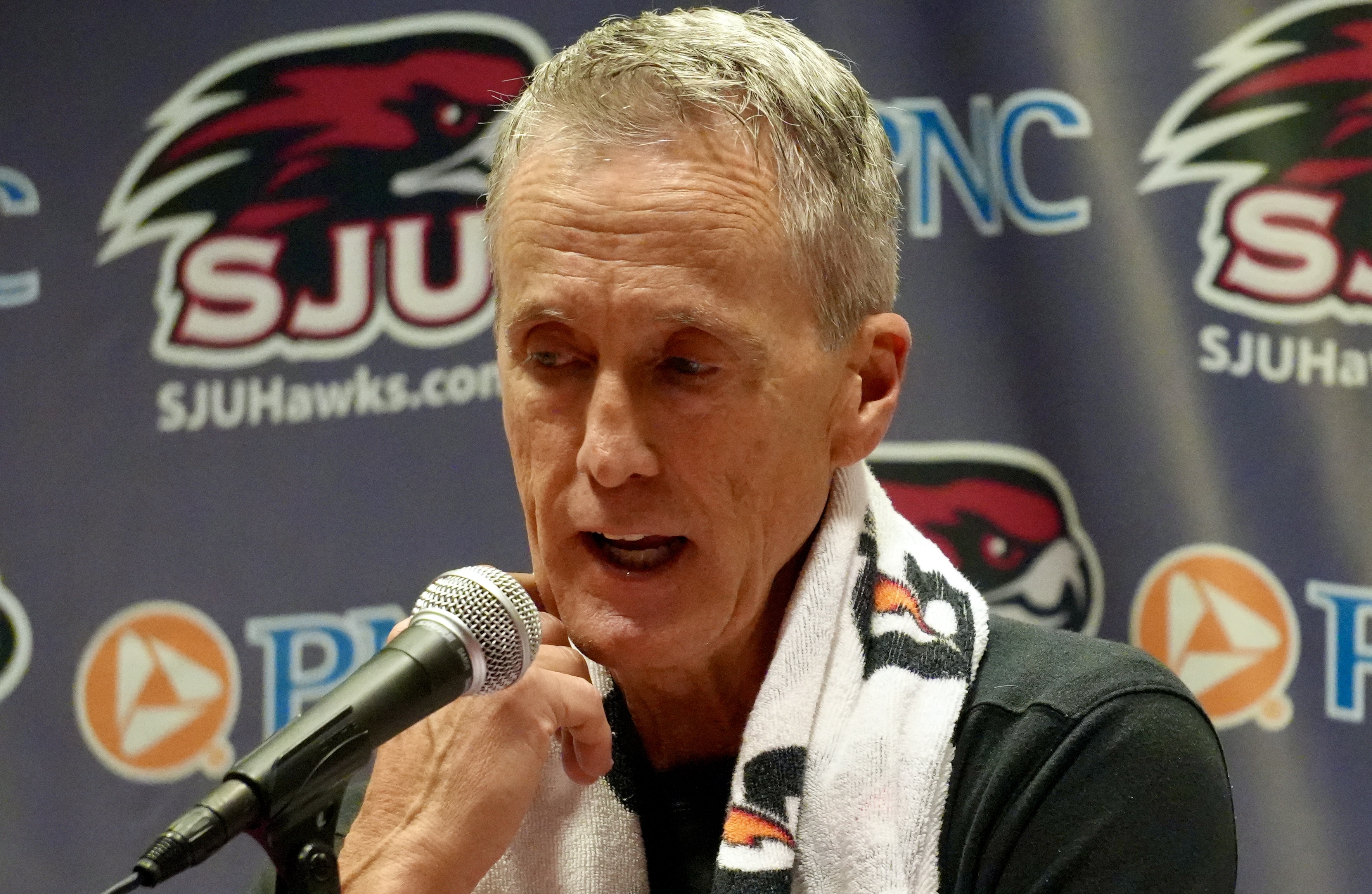
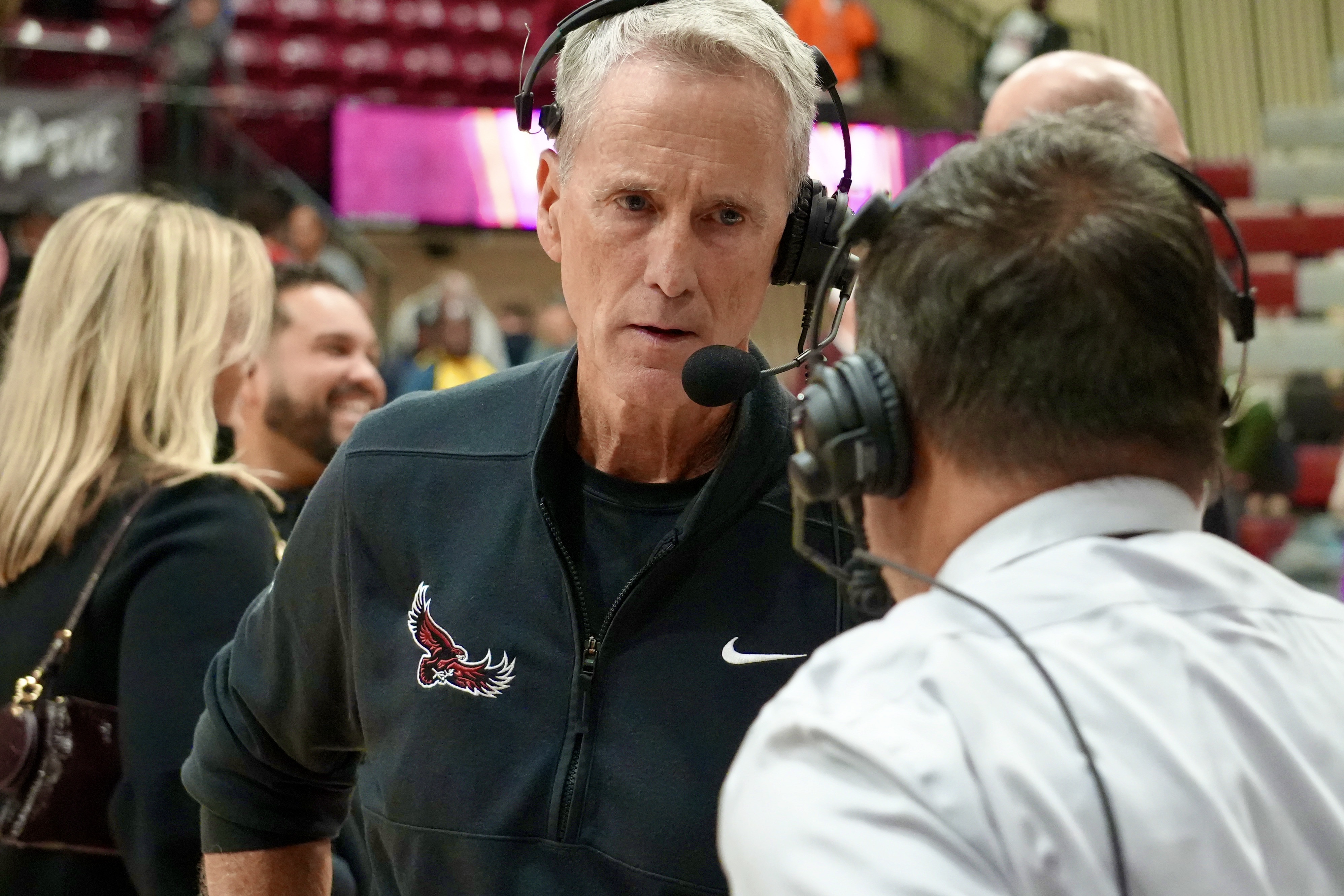
Steve Donahue, St. Joseph’s Head Coach

A Stark New Reality for the Big 5

The Philadelphia Big 5 is not just a basketball competition; it is the soul of the city’s sports culture. Founded in 1955, it forged rivalries so intense that, as former Saint Joseph’s athletic director Don Di Julia noted, the games were “part of the fabric of life in Philadelphia”. For generations, its round-robin battles at the Palestra guaranteed that at least one Philly school would be nationally relevant. From 1977 until 2022, that streak held firm.

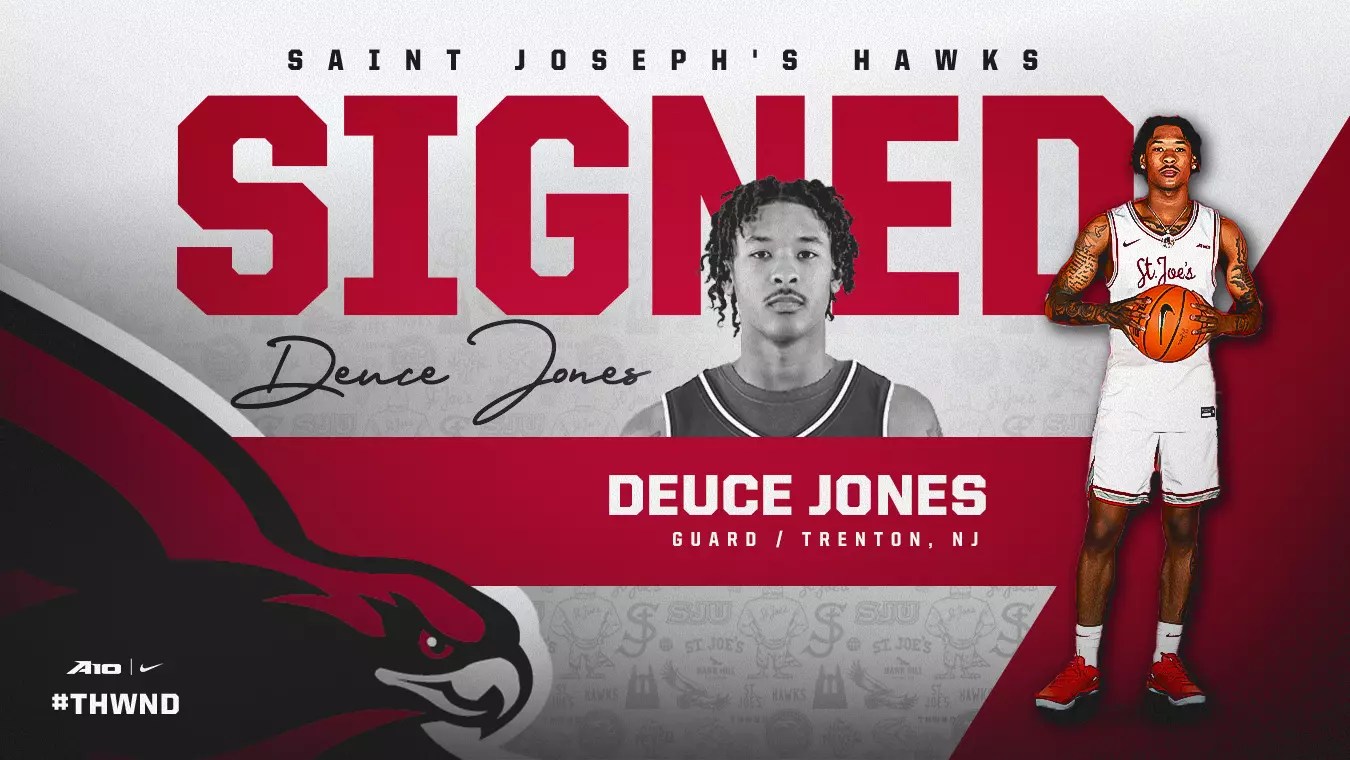
The recent three-year tournament drought is therefore historic and alarming. It signals a disruption of the natural order. The causes are multifaceted—conference realignment, cyclical talent dips—but they are compounded exponentially by the new ecosystem of player movement. In the “old Big 5,” as former player Steve Bilsky recalled, “players would never think of transferring from one Big 5 school to another”. Today, that unwritten code is obsolete. La Salle’s 2024-25 A10 Rookie of the Year, Deuce Jones was just scrubbed from the St. Joseph’s roster, after playing just 10 games, a few days ago. Villanova’s 2024-25 roster, for instance, featured graduate guard Jhamir Brickus from La Salle and sophomore guard Tyler Perkins from Penn, direct intracity transfers that would have been unthinkable a generation ago. The local talent pool, once fiercely guarded, is now a free-agent market.

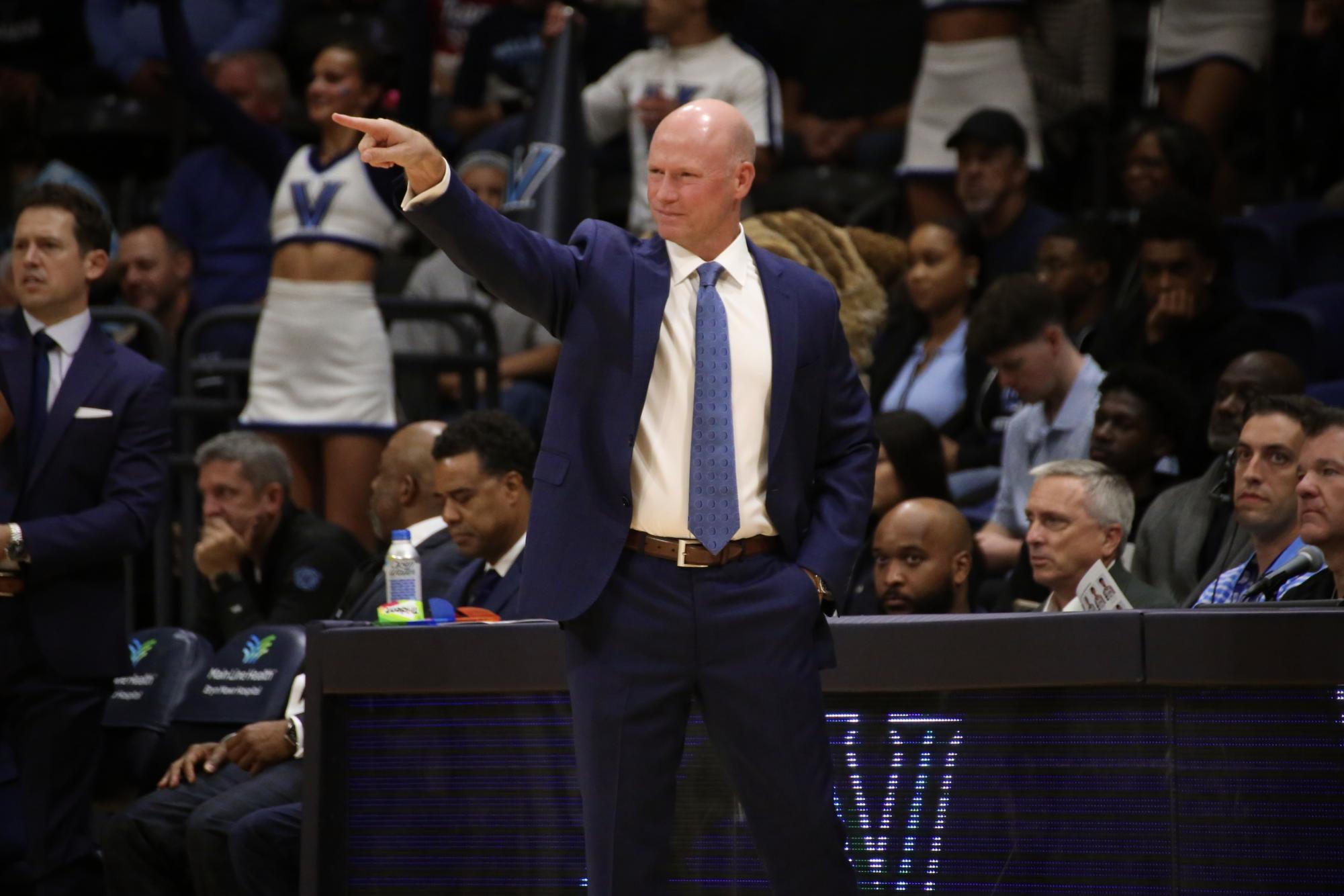
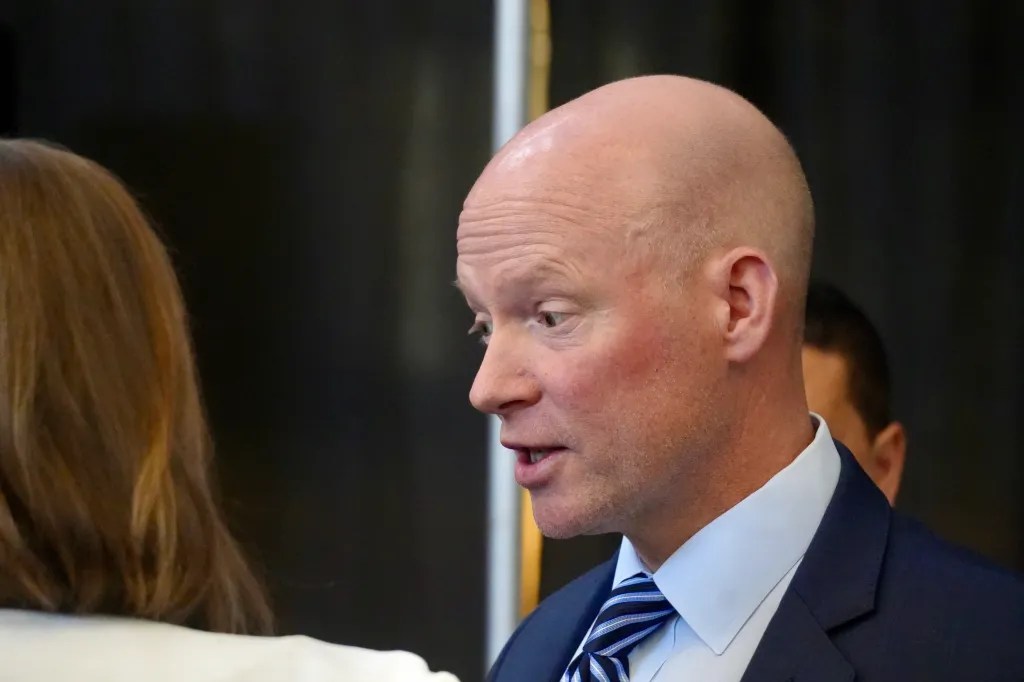
Kevin Willard, Villanova Head Coach

The Lange Era at Saint Joseph’s: A Process Interrupted

Billy Lange arrived at Hawk Hill in March 2019 with a fascinating resume: a Patriot League Coach of the Year at Navy, a key assistant under Jay Wright during Villanova’s rise, and six years in player development with the NBA’s Philadelphia 76ers. He was an analytics focused and process-oriented coach hired to rebuild a program that had struggled in the final years of Phil Martelli’s legendary 24-year run. 

Lange, unfortunately, was never able to approach the heights Martelli’s Hawks reached. Lange’s six-season record—81-104 overall and 38-64 in the Atlantic 10—was undeniably disappointing. However, his tenure coincided precisely with the explosion of the transfer portal and NIL. His developmental philosophy, honed in the NBA, was suddenly at odds with a college game that had grown impatient. As one industry expert notes, the portal has caused coaches to shift from projecting a high school recruit’s potential to seeking “players who are ready now”. For a program like Saint Joseph’s, without the deep NIL war chests of football-powered schools, this meant competing for proven transfers was a brutal, often losing battle.

Lange’s best season, 2023-24, ended with a 21-14 record and an NIT berth—clear progress. But in the new calculus, incremental building is a luxury few coaches are afforded. The pressure to win immediately, fueled by the ease with which players can depart, created a vortex from which he couldn’t escape. His return to the NBA as a New York Knicks assistant in 2025 felt like a natural conclusion for a coach whose skillset may be better suited to a professional landscape free of recruiting’s chaos.

The Neptune Era at Villanova: Inheriting a Colossus

Kyle Neptune’s challenge was of a different magnitude. He was not rebuilding; he was tasked with maintaining a dynasty. Handpicked by Jay Wright following a single 16-16 season at Fordham, Neptune was the anointed keeper of the culture. His first two seasons were a study in stability but also stagnation: a combined 35-33 record and two NIT appearances, a stark fall from the Final Four standard.

The narrative around Neptune solidified quickly: a promising assistant unable to translate the master’s lessons. But this narrative ignores the hurricane into which he stepped. As The Athletic reported, Neptune’s roster underwent near-total annual overhaul due to the portal. In one offseason alone, nine players departed via graduation, the NBA draft, or transfer. He was forced to reconstruct a cohesive team from scratch each year, attempting to instill Villanova’s famed system in a revolving door of newcomers.

A mid-season turnaround in his third year, highlighted by a win over UConn, offered a glimpse of what was possible when portal acquisitions like Brickus and Wooga Poplar meshed with veterans like Eric Dixon. Yet, the very fact that Villanova’s success was now dependent on integrating multiple key transfers from other programs—including city rivals—underscores how profoundly the sport has changed. The “Villanova Way,” built on four-year player development, is an artifact in need of a radical update.

The Choking Grip of the New Ecosystem

The struggles of Lange and Neptune are not isolated failures but evidence of systemic pressures.

  • The Portal’s Preference for Proven Commodities: The transfer portal has fundamentally altered roster construction. Coaches now operate with a professional sports general manager’s mindset, where a known college commodity is almost always valued over a high school prospect’s potential. This “plug-and-play” mentality, as described by experts, shrinks opportunities for developmental high school players and forces coaches to constantly re-recruit their own rosters.
  • The NIL and Revenue-Share Squeeze: The financial landscape is in chaotic flux. With the House v. NCAA settlement introducing direct revenue sharing, programs are now building rosters against a de facto salary cap. As one Big Ten coach starkly put it, the money available now is “about 40-50 percent less than what it has been”. For programs without massive booster collectives, the competition for top-tier portal talent is increasingly unwinnable. This uncertainty has brought the recruitment of the high school class of 2026 to a near-standstill.
  • The Vanishing Margin for Error: In this environment, a single missed evaluation or a bad season can trigger a death spiral. Players leave, creating more holes to fill with an ever-more expensive and competitive portal pool. Coaching tenures are shortened, and patience is extinct. The pressure, as one analysis notes, is so intense that “a recruiting miss isn’t harmless. It’s a mark against you… Stack too many misses, and you don’t just lose games. You lose your job”.

Divergent Paths Forward: The Safe Bet and the Gamble

In response, the two programs have chosen starkly different paths, illuminating their assessment of the new risks.

Villanova’s selection of Kevin Willard is a masterclass in risk mitigation. Willard possesses the exact profile needed for this moment: a proven program-builder at Seton Hall who consistently navigated the Big East and, more recently, the football-dominated Big Ten at Maryland. He is a known quantity with a track record of winning in high-major conferences. For a Villanova program that can still attract talent based on brand and resources, Willard represents stability and a high floor—a safe and smart selection to stop the bleeding and return to the NCAA Tournament.

Saint Joseph’s promotion of Steve Donahue, by contrast, is a fascinating and perilous gamble. Donahue is considered a superb tactician with a history of success at Cornell. However, his recent tenure at Penn saw the Quakers finish 7th in the 8-team Ivy League in his last two seasons. The leap from the Ivy League to the Atlantic 10 is vast, not just in athletic competition but in the cultural and academic recruitment landscape. Can a coach who struggled in a low-major, high-academic environment adapt to the mercenary, NIL-driven world of the A-10? Saint Joseph’s is betting that his coaching acumen and familiarity with Philadelphia can overcome these hurdles, but the margin for error is zero.

The Deuce Jones Effect: A Cautionary Tale for the Transfer Portal Era

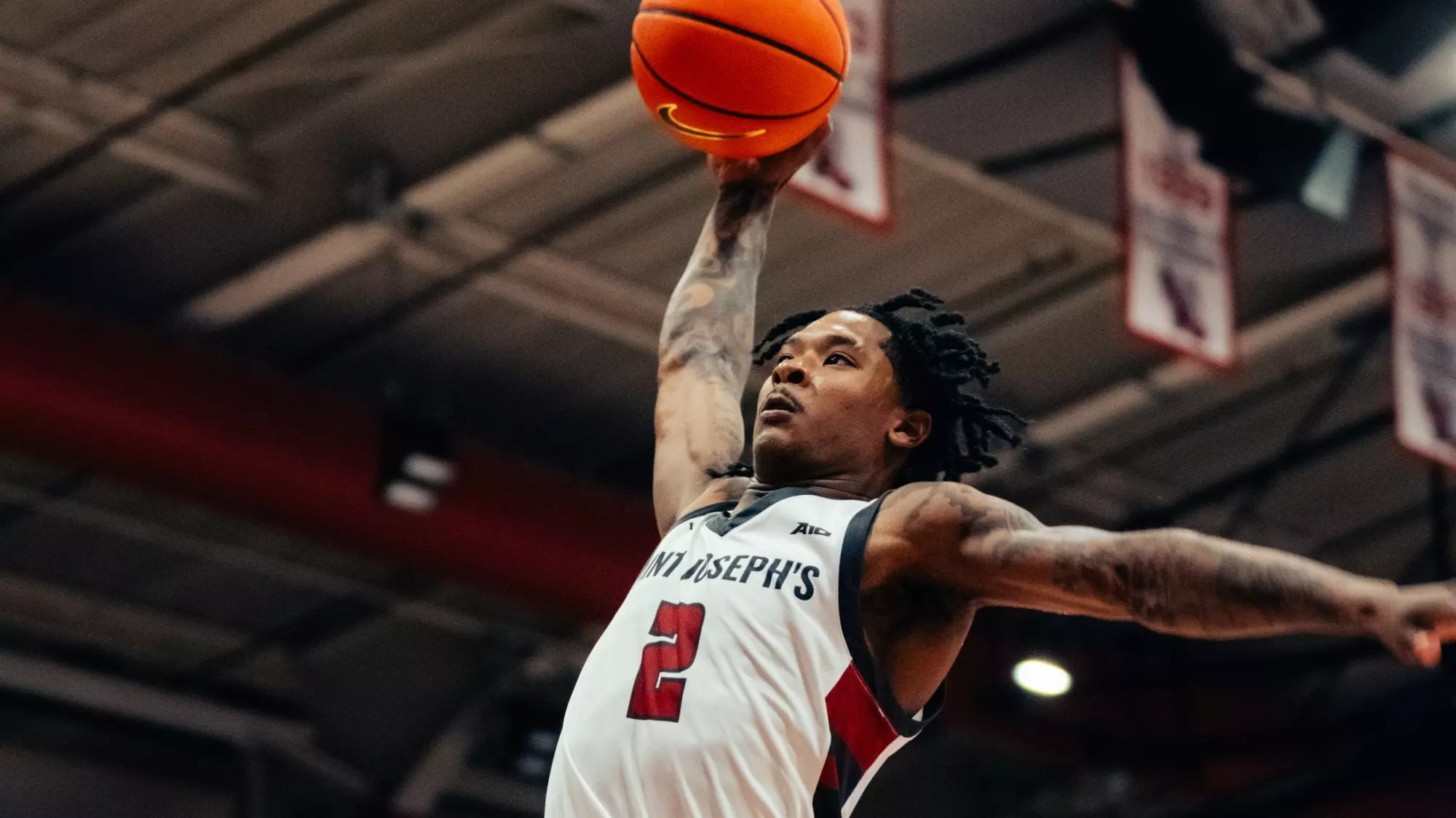
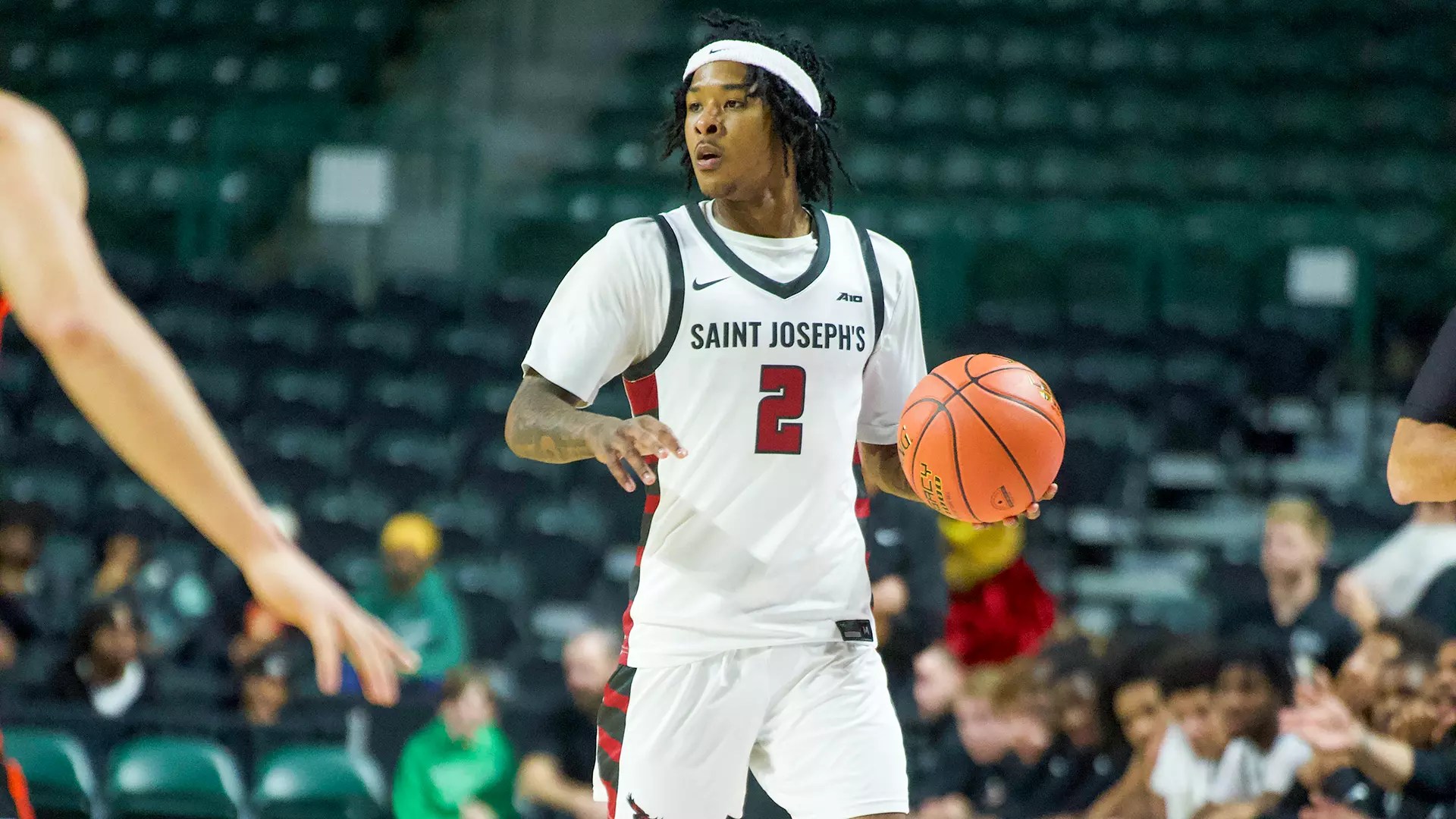
PHILADELPHIA, PA – The transaction is instantaneous. An athlete enters a name into a database, a program wires funds from a collective, and a scholarship offer is extended. On spreadsheets in athletic departments across America, this constitutes a successful roster rebuild. Yet in gymnasiums and locker rooms, where the alchemy of teamwork transforms individuals into contenders, the equation is proving far more complex. The abrupt departure of Deuce Jones from the Saint Joseph’s University basketball team after just ten games is not merely a local sports story in Philadelphia; it is a stark, human-sized case study in the collision between a new, transactional model of college athletics and the timeless, relational art of coaching.

Long gone are the days when a coach’s authority was rooted in a simple, autocratic decree. Today’s coach is part strategist, part psychologist, part contract negotiator, and part cultural architect, navigating a landscape where loyalty is provisional and rosters are perpetually in flux. The transfer portal and name, image, and likeness (NIL) deals have created a booming marketplace for talent, but as the Jones saga reveals, a failure to account for the human element—the delicate fit between a player’s spirit and a coach’s philosophy—can render the most promising on-paper union a costly and swift failure.

The New Calculus of Roster Building

The modern college coach operates in an environment of relentless pressure and perpetual motion. The transfer portal is no longer a niche tool but the “fundamental part of college basketball’s ecosystem,” a bustling marketplace where over 4,000 athletes sought new homes in 2025 alone—a 418% increase from 2020. Coaches, their own job security often tenuous, are forced into a high-stakes, reactive game. When a star player departs, the response must be immediate and decisive, often leading to hasty decisions focused on plugging statistical holes rather than cultivating cohesive units

This environment encourages a perilous oversight: the subordination of cultural and emotional fit to the allure of proven production. Programs now strategically allocate NIL budgets, with some high-major schools dedicating 75% of their resources to just five starting players, treating the rest of the roster like “minimum contracts”. In this calculus, a player’s worth is distilled to points, rebounds, and efficiency ratings. The deeper questions—How does this young man respond to criticism? What coaching voice unlocks his best self? Does his competitive fire align with or threaten the existing team culture?—are too often relegated to afterthoughts, if they are considered at all.

The Deuce Jones Conundrum: A Misfit Foretold

The trajectory of Deuce Jones illustrates both the potential of masterful coaching and the consequences of its absence. As a mercurial 15 year old high school talent, he thrived under Coach Mark Bass at Trenton Catholic, who mastered the “delicate balance of discipline and understanding.” Bass redirected Jones’s boundless confidence and energy without breaking his spirit, nearly willing the team to a state championship. The pattern repeated at La Salle under the disciplined, principled guidance of Fran Dunphy, where Jones’s fierce competitiveness earned him Atlantic 10 Rookie of the Year honors. These coaches commanded his respect not with unchecked authority, but with a demanding, invested mentorship he could trust.

His transfer to Saint Joseph’s in April 2025 was a classic portal-era move. The Hawks, reeling from the departure of their entire starting backcourt, needed a savior. Jones, seeking a larger platform, seemed the perfect statistical remedy. Yet, from the outset, the interpersonal foundations were shaky. The coach who recruited him, Billy Lange—a player-friendly coach known for granting offensive freedom—abruptly left for a New York Knicks front office job just weeks before the season. In a rushed decision, the university promoted Steve Donahue, a coach fresh from a nine-year tenure at Penn where his Ivy League teams had a notably different demographic and cultural composition.

The mismatch was profound. Donahue, an analytical tactician, was now tasked with harnessing the same volatile, emotive talent that required such careful handling in high school. While initial returns were strong—Jones was the team’s leading scorer and hit a dramatic game-winner against Temple—the underlying disconnect proved fatal. Reports point to a behind-the-scenes “financial dispute” as the catalyst for the split, but the financial friction was likely a symptom, not the cause. The true failure was a systemic one: a rushed hire, a transactional recruitment, and a profound disconnect in coaching style and relational approach left no reservoir of trust to draw from when conflict arose. The partnership, built on sand, washed away in a matter of weeks.

The Vanishing Art of Developmental Coaching

The Jones episode underscores a broader erosion: the devaluation of the developmental coach in a win-now economy. The portal incentivizes programs to shop for ready-made products, bypassing the arduous, rewarding work of molding raw talent over years. As one athlete poignantly observed in a first-person account, locker rooms now feel transient, with the “idea of having a future… no longer discussed because no one knows who will be staying”.

This shift carries a deep irony. Billy Lange left Saint Joseph’s for the NBA precisely because of his proven skill in player development, having transformed Rasheer Fleming from a role player into an NBA draft pick. Yet, in the college game he exited, that very skill set is becoming obsolete. Why invest years in development when you can purchase a veteran’s production annually? The tragedy is that the greatest coaching artistry—exemplified by legends like John Chaney or John Thompson—was never just about X’s and O’s; it was about the transformative, life-altering mentorship that occurred in the space between a player’s arrival and his departure four years later. The portal, in its current form, systematically shrinks that space.

A Path Forward: Recalibrating for the Human Element

For the health of athletes, coaches, and the games themselves, a recalibration is urgently needed. The solutions are not about dismantling the portal or NIL, which provide necessary freedom and compensation, but about introducing wisdom into a system currently governed by haste and financial leverage.

  • For Programs and Collectives: Recruitment must undergo a paradigm shift. The evaluation process should mandate deep diligence into a player’s motivational drivers and coaching needs, with the same rigor applied to psychological fit as to athletic analytics. NIL agreements, where possible, could include structured incentives tied to tenure and academic progress, subtly rewarding commitment.
  • For Coaches: The role must expand. Today’s coach must be an expert communicator and cultural engineer, capable of building trust at hyperspeed with a roster of strangers. As research confirms, the coach’s reputation and relational ability are now “playing a larger role” than ever in attracting and retaining talent
  • For Families and Advisors: The cautionary tale of Deuce Jones is a vital lesson. The largest NIL offer or the highest-profile program is a hollow victory if the environment cannot nurture the whole athlete. Prospective players must ask not just “What can you pay me?” but “How will you coach me? Who will I become here?”

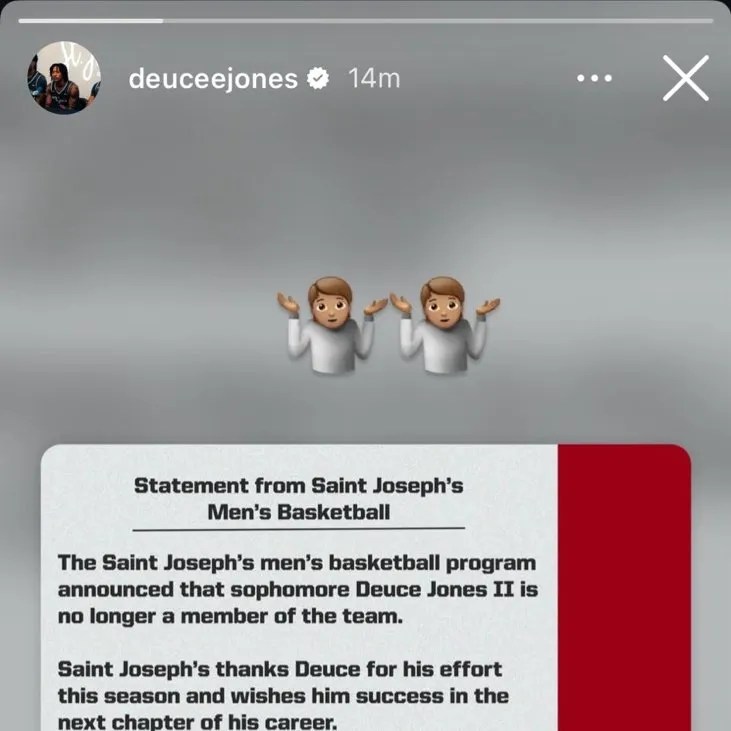
The final, silent image of Deuce Jones’s Saint Joseph’s career—a social media post of two cryptic emojis following his departure—speaks volumes. It is the digital-age signature of a broken relationship, a connection that never truly formed. In the end, the most advanced analytics, the most generous NIL packages, and the most impressive highlight reels are powerless without the ancient, indispensable ingredient of sport: a meaningful, trusting bond between player and coach. The portal era has changed everything about college athletics except that fundamental truth. The programs that remember it, and build accordingly, will be the ones that truly thrive.

A Coaching Hire That Understands the Game Beyond the Field

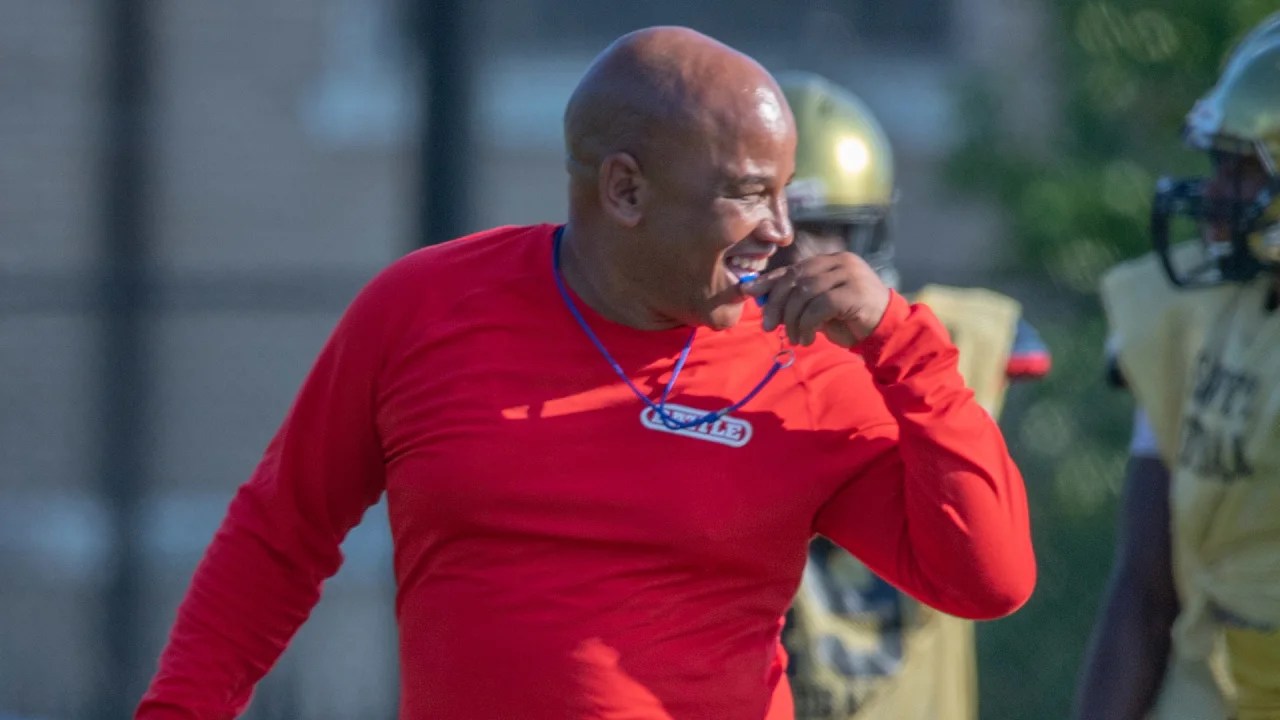
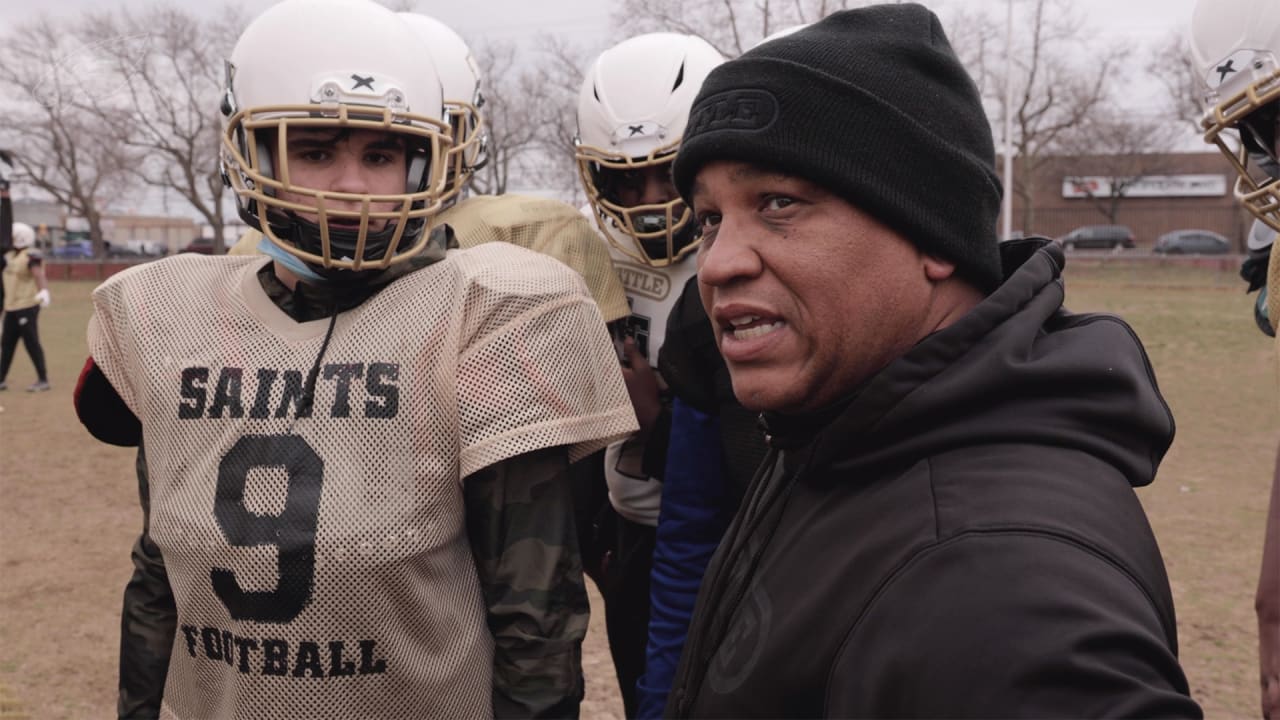
PHILADELPHIA, PA – In the complex ecosystem of urban education, where challenges are met head-on and triumphs are hard-won, a school’s most consequential decisions often occur not in the boardroom, but on the hiring lines for positions that shape character. Such a decision has just been made in North Philadelphia. The appointment of Al “Albie” Crosby as the Head Varsity Football coach at Simon Gratz High School Mastery Charter is more than a sports story; it is a profound investment in the social fabric of the community. It is a declaration that the leaders at Mastery Schools and Gratz understand, with keen clarity, that for many young people—especially young African-American men in this city—the gridiron is a classroom, the coach is a life mentor, and the lessons learned there are foundational to survival and success.

This hire is not a gamble on potential; it is the acquisition of a quarter-century of proven, championship-grade mentorship. By securing a figure of Crosby’s caliber, Gratz has signaled an ambition that transcends winning seasons. It has committed to providing its scholars with a guide who has repeatedly navigated the path from Friday night lights to futures of purpose and possibility.

The Resume Speaks, But the Legacy Echoes

A cursory glance at Albie Crosby’s record is enough to stun any Pennsylvania football enthusiast: 26 years of coaching experience, 2 PIAA State Championships, 5 State Championship appearances, 10 PIAA District 12 titles, 12 Philadelphia Catholic League Championships, and 4 Public League Championships. These are the hard metrics of a winner. They are the reason Gratz can, with reasonable expectation, immediately envision competing for Public League and State titles.

But the numbers that truly resonate in the halls of a school like Gratz are these: 126 NCAA Division I athletes and 14 NFL players coached and developed. These figures represent doors opened, college tuition secured, and professional dreams realized. They translate to young men who saw a future beyond their neighborhood’s horizon because a coach showed them the map and walked the road with them. In a city where sports are a vital artery of hope and socialization, this track record is a curriculum vitae for changing lives.

The Coach as Cornerstone: Filling a Crucial Social Role

For generations, in Philadelphia and cities like it, the coach has been a foundational figure in the socialization of young men. He is often a hybrid of teacher, father, disciplinarian, and advocate. He teaches young men how to handle adversity, the necessity of teamwork, the discipline of preparation, and the grace of both victory and defeat. These lessons are critical for all youth, but they carry a particular weight for young African-American men, who navigate a world that often misreads them. A strong coach becomes a shield and a beacon—someone who demands excellence while providing the unwavering support necessary to achieve it.

Principal Erik Zipay’s announcement grasped this totality. He did not just hail Crosby’s championships; he emphasized “the development/coaching of countless players for the next level and life.” He connected the hire directly to the school’s mission of “creating Champions in the Classroom, Community and Athletics.” This holistic vision is what separates a transactional sports hire from a transformative community one. Crosby is not being brought in merely to call plays; he is being entrusted to help build men.

A Statement of Ambition From “Bulldog Nation”

Principal Zipay’s statement is itself a fascinating document of institutional ambition. It is addressed to “Bulldog Nation”—a conscious evocation of shared identity and pride. It seamlessly pivots from the excitement about football to an open invitation for 8th-grade families: “Come get a quality of education and coaching for the future.” This is no accident. It demonstrates an astute awareness that a high-profile, credible hire like Crosby serves as a powerful magnet, attracting families who see in it a symbol of a school’s serious commitment to excellence in all arenas. It says that Gratz is a place where aspiration is taken seriously.

The Road Ahead: More Than Championships

The immediate forecast for the Gratz Bulldogs is clear: the team will be better prepared, more strategically sound, and fiercely competitive. The pedigree Crosby brings assures that. The pipeline of talent that has always existed in Philadelphia will now be honed by one of the most accomplished architects in the state’s history.

But the true victory will be measured years from now, in the lives of the young men who wear the Gratz jersey. It will be seen in the college graduations, the careers launched, the mentors made, and the fathers formed. By hiring Al Crosby, Simon Gratz High School has done more than fill a coaching vacancy. It has secured a master builder for its young men. It has acknowledged that in the gritty, glorious game of shaping futures, the right coach is the most valuable player a school can have. For Bulldog Nation, the future just got a lot brighter, and it promises to teach toughness, resilience, and triumph—both on the field and far beyond it.

The Forgotten Prospect: How NCAA’s New Era Is Closing Doors on Talented High School Players Like Bryce Hillman

CAMDEN, N.J. — In a different era, Bryce Hillman would be a sure fire NCAA Division 1 recruit. The Camden Eastside senior guard is everything low to mid-major college basketball programs traditionally sought: a 6-foot-2, 185-pound leader with deep shooting range, a powerful build, and a floor-general mentality that keeps his team in the game until the final buzzer. Yesterday, at Camden Catholic and Down 7, he hit 2 deep 3-pointers with less than 22 seconds left in the game. Off the court, his profile is equally impressive—a straight-A student, a member of the National Honor Society, and academically eligible for the Ivy and Patriot League programs.

Yet, as the 2026 recruiting cycle inches forward, Hillman’s phone isn’t ringing with Division I offers. Instead, he represents a growing, silent casualty of a revolution in college sports. His stalled recruitment is not a reflection of his talent but a direct consequence of the seismic paradigm shift driven by the transfer portal and Name, Image, and Likeness (NIL) compensation. These changes have professionalized college athletics at a breathtaking pace, creating a system where proven commodities are valued over potential, and where high school prospects like Hillman are increasingly an afterthought.

The New Calculus of Roster Building

College basketball has entered its “Wild West” era, characterized by unprecedented roster turnover and a relentless focus on immediate results. The transfer portal, which saw Division I entries nearly double from 2019 to 2024, has become the primary talent marketplace. For coaches under pressure to win now, the calculus is simple: Why invest a precious scholarship and years of development in an 18-year-old when you can recruit a 22-year-old from the portal who has already proven he can score against college competition?

The data supports this cold logic. A 2024 study found that 65% of Division I men’s basketball players who enter the transfer portal move down a competitive level or out of the sport entirely, suggesting it is often a tool for finding playing time at a lower level rather than a guaranteed path up. Yet, for coaches, the portal offers a known quantity. As one high-major coach bluntly stated about the new financial reality, “No one’s going to pay a freshman $1.5 million anymore. You can’t have a third of your [revenue-share] cap going to a guy who’s never played in college”.

This professionalized approach has led to what one analyst calls “one-year partnerships”. Programs provide NIL money and a platform; in return, players must fill a specific, immediate role. Long-term development plans, once the bedrock of college coaching, are becoming “a thing of the past”. This environment inherently disadvantages high school seniors, like Bryce Hillman, no matter how gifted.

The Squeeze on the 2026 Class

Hillman’s class is caught in a perfect storm. The convergence of the transfer portal’s dominance and the new financial uncertainties of the “rev-share era” has brought high-major recruiting for 2026 prospects to a near standstill. Following the landmark House v. NCAA settlement, schools are navigating how to directly share revenue with athletes while also regulating booster-backed NIL collectives. This has created massive uncertainty about what financial packages can even be offered.

“Coaches are telling us, ‘We’re not going to the portal if you commit to us.’” — Deron Rippey Sr., father of a five-star 2026 recruit. 

As a result, conversations between coaches and top 2026 recruits have barely addressed specific numbers. “Most coaches say the rules are changing in the next two weeks, the next month, we’re trying to figure out what we can do,” said the father of one elite prospect. Another recruit noted, “Some coaches have no clue, really. A lot of their answers… is, ‘I don’t know.’ It’s funny hearing that”.

This financial fog exacerbates the existing bias toward the portal. Coaches, unsure of their future budgets, are hesitant to commit resources to high school players. They know that next spring, they will need to save a significant portion of their funds to compete in the transfer market, where bidding for proven players has reached astonishing levels—with some individual transfers commanding multi-million dollar packages. For a player like Hillman, who isn’t a consensus five-star recruit, the path to a high-major or even a mid-major offer has become exceedingly narrow.

The Cascading Effect and the Lost Art of Development

The impact of this shift creates a cascading effect throughout the ecosystem:

  • High-Major Programs seek players from other high-major programs or stars who have dominated at the mid-major level.
  • Mid-Major Programs, in turn, chase former top-100 high school recruits who are seeking more playing time after sitting on a power-conference bench.
  • Low-Major Programs target frustrated transfers from the higher levels.

This leaves talented, unproven high school prospects in a state of limbo. They are now frequently advised that their route to a Division I opportunity may require a detour—a post-graduate prep school year or proving themselves at the Division II or NAIA level first. This mirrors the transient “Migration Generation” of players who hopscotch between schools in high school and college, a trend that risks academic progress and stable development.

The professionalization of the sport is also changing how programs are run. Forward-thinking schools like the University of North Carolina are building mini-NBA front offices, hiring professionals to handle scouting, NIL negotiations, and roster management—tasks that were once the domain of coaches. In this new structure, the focus of coaching staffs can return to X’s and O’s and player development. The tragic irony is that in this more “professional” system, there are fewer and fewer raw, young players deemed worthy of that development investment.

A Path Forward in a Changed Game

So, what is a player like Bryce Hillman to do? The old blueprint is obsolete. Success now requires a new playbook that acknowledges the reality of the business:

  1. Embrace Alternative Pathways: A post-graduate year at a national prep school or a starring role at a top Division II program can provide the tape and proof of concept that the portal-driven market demands.
  2. Seek Programs Committed to Development: Some coaches, particularly at mid-majors with less portal buying power, still prioritize building through high school recruits. Identifying these programs is crucial.
  3. Leverage Academic Excellence: For a student like Hillman, targeting high-academic schools in the Ivy, Patriot, or similar leagues can be a strategic advantage, as these programs often have different roster-building philosophies and cannot use large NIL offers as their primary tool.
  4. Exercise Patience: The portal creates late-summer roster chaos. Scholarships can materialize in August as teams finalize their rosters, rewarding those who remain ready and visible.

Bryce Hillman’s story is not unique. It is the new normal for thousands of talented high school basketball players. The NCAA’s transformation, born from a long-overdue move toward athlete compensation and freedom, has had profound unintended consequences. It has created a quasi-professional free agency that values immediate production over nurtured potential. In the rush to embrace this new era, we must not forget the Bryce Hillmans of the world—the talented, well-rounded students and athletes who just a few years ago would have been the foundation of a college program, but who now stand on the outside, waiting for a coach still willing to believe in, and invest in, the promise of an 18-year-old.

The system has gained financial freedom for players at the top, but it has quietly closed a door of NCAA Division 1 opportunity for many at the bottom. Whether that door can be nudged back open may define the soul of college basketball in the decades to come.