PHILADELPHIA, PA — In a city where basketball is less a pastime than a birthright—where legends like Wilt Chamberlain, Earl Monroe, Gene Banks and Rasheed Wallace honed their games on cracked asphalt and in dimly lit rec centers—the Danny Rumph Classic has carved out its own special legacy. What began 20 years ago as a somber tribute to a fallen local star has grown into something far greater: a summer institution that embodies Philadelphia’s grit, camaraderie, and unwavering love for the game.
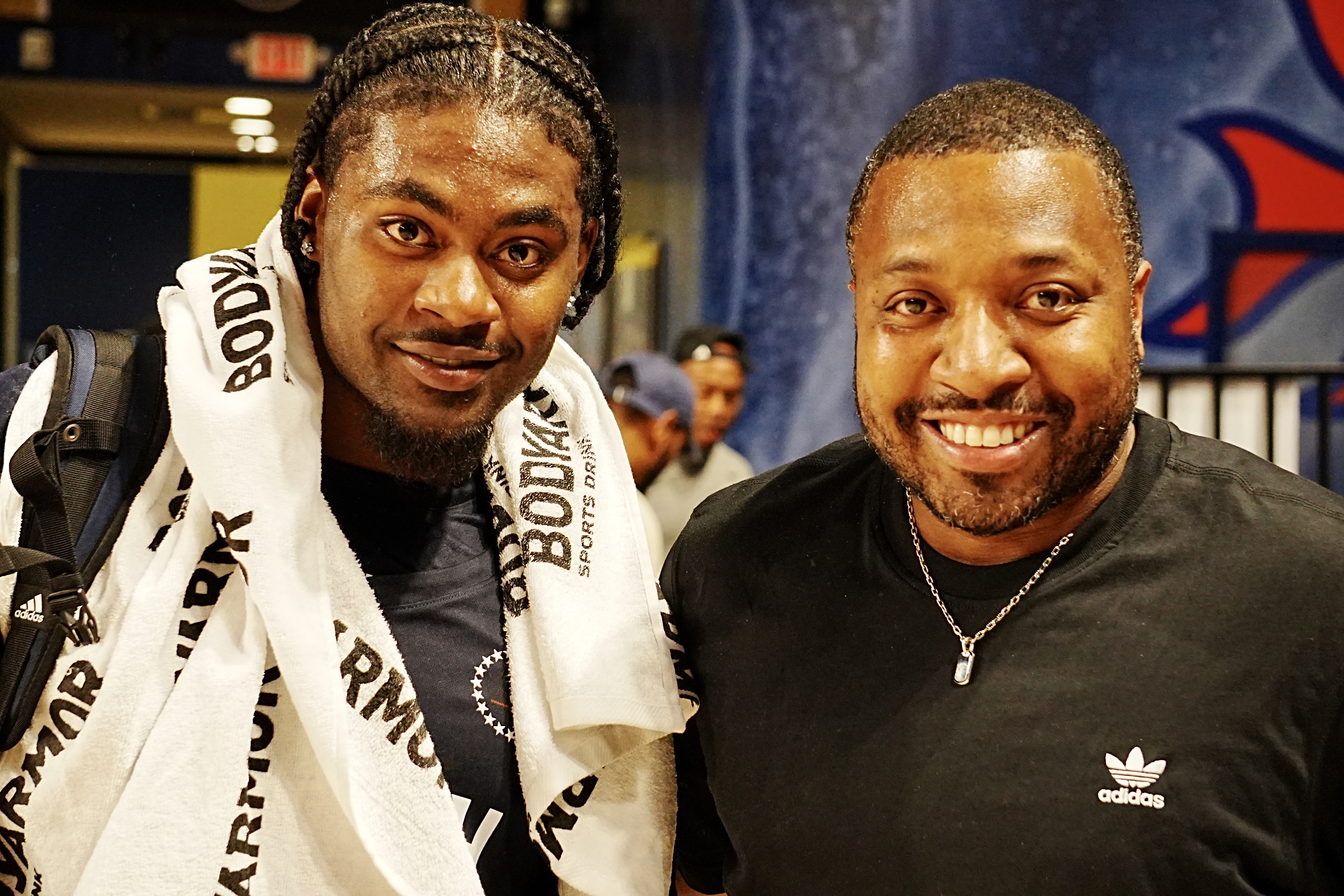
Marcus Randolph (St. Peter’s and Archbishop Wood alum) and Darris Nichols, La Salle University Head Coach
A City Forged on the Hardwood
Philadelphia’s basketball history runs deep. From the Big Five’s collegiate rivalries to the playground kings of Sonny Hill and Baker League fame, the City of Brotherly Love has long been a crucible for hoops talent. The Danny Rumph Classic, now in its 20th year, sits squarely in this tradition—a bridge between the past and present, where NBA stars share courts with neighborhood heroes and wide-eyed kids clutch free tickets at the door.
But unlike the storied Sonny Hill League or the fabled Donofrio Classic, the Rumph is more than just a showcase. It’s a lifeline. The tournament honors Danny Rumph, a 21-year-old Western Kentucky guard who collapsed and died in 2005 after a pickup game at Germantown’s Mallery Recreation Center, a victim of hypertrophic cardiomyopathy. His death galvanized friends and family to turn grief into action, launching a tournament to fund heart screenings and place defibrillators in gyms across the city.
This mission has been accomplished.
The Classic’s evolution mirrors Philadelphia itself. It’s scrappy (moving venues from rec centers to college arenas), inclusive (adding women’s pro games and youth clinics), and relentlessly purposeful.
Hysier Miller (Temple and Neumann-Goretti alum)
From Germantown to the National Stage
The early years were intimate. The first Classic, held at the rec center later renamed for Rumph, drew 500 fans crammed so tightly they couldn’t see the out-of-bounds lines. Former NBA forward Hakim Warrick, a Rumph family friend, became the tournament’s first marquee participant, playing in all 12 of its early editions.
Then came the tipping point. In 2016, NBA superstar James Harden—then a Houston Rocket—showed up unannounced. The line outside La Salle’s Tom Gola Arena snaked down Wister Street, and social media lit up. “That’s when it went to the stratosphere,” said Marcus Owens, Danny’s uncle. Soon, Philly-connected NBA stars like Tyrese Maxey, Jalen Brunson, Bones Hyland and the Morris twins made the Rumph a summer pilgrimage. The tournament’s “Philly basketball festival” vibe—a mix of elite talent, trash talk, and communal pride—became its trademark.
Mike Watkins (Penn State and MCS alum)
More Than a Game
The Classic’s evolution mirrors Philadelphia itself. It’s scrappy (moving venues from rec centers to college arenas), inclusive (adding women’s pro games and youth clinics), and relentlessly purposeful. Viola “Candy” Owens, Danny’s mother, estimates the event has funded thousands of heart screenings and placed over 100 defibrillators in rec centers. One undiagnosed teen, flagged at a Rumph screening, underwent life-saving surgery—proof, as co-founder Mike Morak says, that “the basketball’s cool, but the mission’s the thing.”
The tournament also stitches together generations. Middle schoolers now scrimmage before the championship game, just as a young Jessie Moses once sat on the Morris twins’ bench, wide-eyed. Former players return as coaches; kids who once mopped floors now run the shot clock. “It’s all the people you grew up with,” Morak said. “This is the time you come back.”
A Tradition Built to Last
In a sports landscape where summer leagues often prioritize hype over heart, the Rumph Classic stands apart. It’s a living memorial—one that thrives not just on NBA star power but on Philly’s unshakable sense of community. As Marcus Owens put it: “We miss Danny every day. But we believe he’s looking down with a big smile.”
Two decades in, the Classic is no longer just a tournament. It’s a Philadelphia tradition—one that dribbles, defends, and saves lives with equal ferocity. And if the city’s basketball history is any guide, it’s only just getting started.
LAS VEGAS — The NBA Summer League, an annual showcase held in the sweltering heat of July, is often dismissed as a series of glorified scrimmages. But for the young Philly and Baltimore area players fighting for their professional futures, it is anything but an exhibition. This is where dreams are validated, where undrafted free agents claw for contracts, and where first-round picks face their first real test against NBA-level competition. The stakes could not be higher.
Thomas Sorber, Oklahoma City Thunder
At its core, the Summer League serves as a bridge between college basketball and the pros—a no-man’s-land where potential meets scrutiny. The rosters are filled with recent draft picks, second-year players looking to prove they belong, and unsigned free agents desperate for a breakthrough. For every future All-Star who shines (think Damian Lillard in 2012 or Donovan Mitchell in 2017), there are dozens whose careers stall before they ever truly begin.
The audience in the gyms of Las Vegas, Salt Lake City, or Sacramento is not just made up of casual fans. NBA executives, scouts, and agents line the courtside seats, evaluating every crossover, every defensive rotation, every missed assignment. Overseas scouts linger as well, ready to offer lifelines to those who fall short of NBA expectations. A strong performance can mean a guaranteed contract; a poor one might relegate a player to the G League—or worse, professional obscurity.
Wooga Poplar, Chicago Bulls
For franchises, the Summer League is an early litmus test. Did the front office make the right draft pick? Is that raw prospect further along than expected? Can that overlooked college star translate his game to the pros? The answers aren’t always definitive—after all, Summer League success doesn’t always translate to the regular season—but the games provide the first real glimpse of how these players handle pressure, coaching, and the speed of the pro game.
And then there are the narratives: The second-round pick outplaying a lottery selection. The undrafted guard from a mid-major school dropping 30 points. The big man from overseas adjusting to the physicality of American basketball. These stories captivate because they are unscripted, unfiltered, and often unpredictable.
Derik Queen, New Orleans Pelicans
In a league where roster spots are scarce and margins for error are slim, the Summer League remains one of the few meritocratic spaces in professional basketball. It doesn’t guarantee stardom, but for those who seize the moment, it can be the first step toward something greater. For everyone else, it’s a reminder of just how fleeting opportunity can be.
The games may not count in the standings, but for these players from the mid-Atlantic region, they count for everything.
CAMDEN, NJ – In an era when college basketball players often chase the brightest spotlight or the most lucrative NIL deals, Jerome Brewer’s decision to return home stands as a rare act of introspection and social responsibility. The 6’8” forward, who has navigated a winding collegiate journey from Texas A&M Commerce to McNeese State, could have followed his former coach to North Carolina State or sought a bigger stage elsewhere. Instead, he chose La Salle University—not just for basketball, but to fulfill a deeper mission.
Brewer’s choice reflects a maturity beyond his years. At a time when young athletes are frequently pressured to prioritize immediate success, he considered something more enduring: his ability to influence the next generation. His insistence that La Salle facilitate access for Camden City Public School students to games and practices isn’t a mere publicity gesture; it’s an intentional effort to reinforce the values that shaped him.
“Sports act as an agent of socialization,” Brewer said, articulating a perspective more common among seasoned coaches than 22-year-old players. “They teach values, behaviors, and skills—teamwork, communication, resilience.” His words underscore an awareness of basketball’s broader role, one that extends far beyond the box score.
This understanding didn’t emerge in a vacuum. Brewer’s formative years were spent in Camden’s gyms, where the game was both an escape and an education. After a brief stint in the Philadelphia Catholic League, he returned to Camden High, helping restore its basketball prominence alongside future Division I standouts. When college offers didn’t meet his expectations, he bet on himself—first at prep school, then in the Southland Conference, where he blossomed into an All-League performer before injury intervened.
His resilience was tested again last year when he redshirted at McNeese State, biding his time for the right opportunity. When it arrived, he weighed his options with the discernment of someone who recognizes that a career is more than stats or conference prestige. He thought of his younger brother, Domani, a budding seventh-grade phenom who now has a front-row seat to his brother’s final collegiate chapters. He thought of Camden’s kids, who will see in him a path forward.
Camden Mayor Vic Carstarphen, a former Temple standout under John Chaney, praised Brewer’s character, calling him “one of the finest student-athletes to come through Camden in recent years.” City Councilman Arthur Barclay, who played for John Calipari at Memphis, highlighted Brewer’s potential as a role model: “He was one of them not long ago. Now, he’s showing them what’s possible.”
La Salle, under new coach Darris Nichols, gains not just a versatile forward who can stretch defenses and guard multiple positions, but a leader who grasps the weight of his platform. In return, Brewer gets a chance to cement his legacy where it matters most—at home.
In an age of fleeting allegiances and transactional relationships, Brewer’s decision is a reminder that some choices are about more than basketball. They’re about purpose. And in that regard, his homecoming is already a victory.
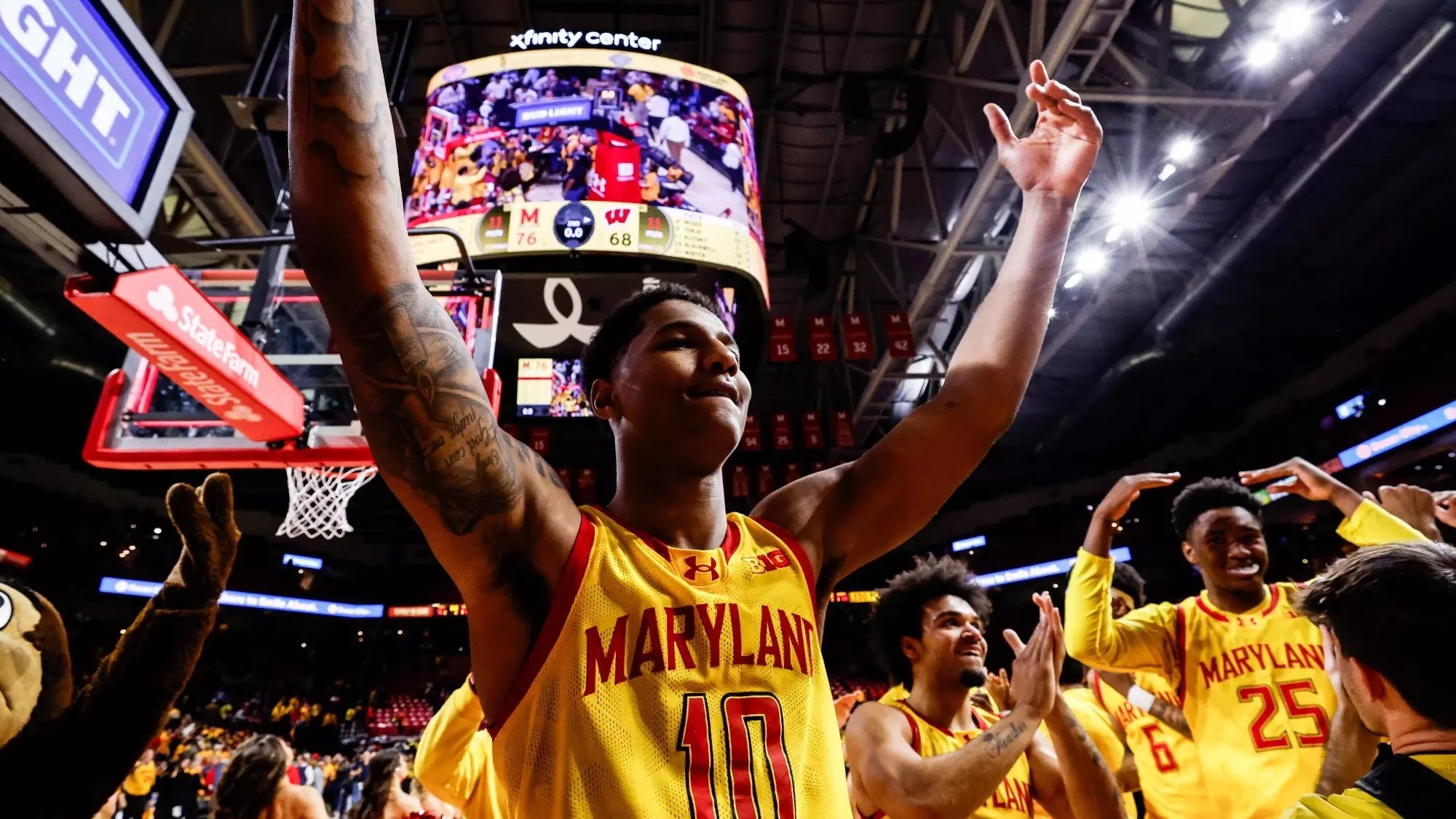
COLLEGE PARK, Md. — On a crisp Saturday afternoon in March, senior forward Julian “JuJu” Reese stepped onto the court at the Xfinity Center for the final time in his collegiate career. With 19 points, 11 rebounds, and a commanding presence in the paint, Reese led the No. 11 Maryland Terrapins to a 74-61 victory over Northwestern. It was a fitting farewell for the Baltimore native who has quietly become one of the most dependable and impactful figures in college basketball, even as his older sister, Angel Reese, has become a national icon and a lightning rod for conversation in the sports world.
The Reese family is basketball royalty. Julian’s mother, Angel Reese Sr. (née Webb), was a standout at UMBC in the late 1980s and early 1990s, amassing 1,390 points and 932 rebounds—numbers that Julian has nearly mirrored in his own career. His aunts also played Division I basketball, and the family’s love for the game runs deep. But while Julian’s older sister, Angel, has become a household name for her brash confidence, outspoken personality, and trailblazing impact on women’s basketball, Julian has carved out his own path—one defined by steady growth, quiet determination, and an unwavering commitment to his team.
A Legacy in the Making Julian Reese arrived at the University of Maryland in the fall of 2021 as a highly touted recruit from St. Frances Academy, a Baltimore-based basketball powerhouse. Standing at 6-foot-9 with a wingspan that seemed to stretch from baseline to baseline, Reese was a physical specimen with raw potential. He chose Maryland over offers from Seton Hall, LSU, and Temple, among others, and immediately made an impact as a freshman. Despite playing just 17.7 minutes per game, he averaged 5.7 points and 4.4 rebounds, showing flashes of the dominant force he would become.
His freshman year, however, was marred by turmoil. Eight games into the season, head coach Mark Turgeon resigned, and interim coach Danny Manning took over. The Terps finished a disappointing 15-17, but Reese’s potential was undeniable. When Kevin Willard was hired as head coach in the off-season, Reese made the decision to stay at Maryland rather than enter the transfer portal—a choice that would prove pivotal for both him and the program.
Under Willard’s guidance, Reese blossomed. As a sophomore, he became a full-time starter, nearly doubling his production to 11.4 points and 7.2 rebounds per game. Maryland improved to 22-13 and made a second-round appearance in the NCAA tournament. By his junior year, Reese had established himself as one of the top frontcourt players in the Big Ten, averaging 13.7 points, 9.5 rebounds, and 1.9 blocks per game.
This season, Reese has been the anchor of a resurgent Maryland team. Alongside his former S. Frances Academy teammate, Derik Queen, Reese has helped the Terps return to national prominence. Heading into the Big Ten tournament, Maryland is ranked 13th in the nation, with Reese leading the charge. He ranks second in the Big Ten in offensive rebound percentage and first in defensive rating, a testament to his relentless work ethic and basketball IQ.
The Reese Family Dynamic The Reese siblings are a study in contrasts. Angel, the older sister, is a force of nature—charismatic, outspoken, and unapologetically herself. She has become a cultural icon, using her platform to advocate for women’s sports and empower young girls. Her larger-than-life personality has made her one of the most recognizable athletes in the world, and her success at LSU, including a national championship in 2023, has cemented her legacy as one of the greatest players in women’s college basketball history.
Julian, by contrast, is the quiet sibling. Reserved and introspective, he prefers to let his game do the talking. While Angel thrives in the spotlight, Julian is more comfortable in the shadows, focusing on the nuances of his craft. Yet, despite their differences, the bond between the two is unshakable. Angel has been one of Julian’s biggest supporters, often cheering him on from the stands alongside their mother, grandparents, and extended family.
Their contrasting personalities reflect the duality of the Reese family’s basketball legacy. Angel is the trailblazer, the one who pushes boundaries and challenges norms. Julian is the steady hand, the one who embodies the fundamentals and traditions of the game. Together, they represent the past, present, and future of basketball—a sport that has been the lifeblood of their family for generations.
A Future in the NBA As Julian’s collegiate career winds down, the question on everyone’s mind is whether he has what it takes to succeed at the next level. The answer, according to scouts and analysts, is a resounding yes. Reese’s combination of size, athleticism, and defensive prowess makes him a legitimate NBA prospect. His ability to finish around the rim, coupled with his elite rebounding and shot-blocking skills, has drawn comparisons to players like Clint Capela and Jarrett Allen.
While Reese’s game is not without its limitations—he has attempted just one three-pointer in the past three seasons—his strengths far outweigh his weaknesses. His mobility and versatility on defense, in particular, make him an attractive option for NBA teams in need of a rim protector and rebounder.
A Legacy Secured Julian Reese’s journey at Maryland has been one of perseverance and growth. From a raw freshman navigating a coaching change to a senior leader poised to make a deep tournament run, Reese has left an indelible mark on the program. He will finish his career with over 1,400 points and 1,000 rebounds, joining an elite group of players who have achieved such milestones.
But more than the numbers, Reese’s legacy lies in his quiet determination and unwavering commitment to his team. In a sports landscape often dominated by flashy personalities and viral moments, Reese has been a reminder that greatness can come in many forms.
As the JuJu Reese era comes to a close, one thing is certain: the Reese family’s basketball legacy is in good hands. Whether on the court or off it, Julian Reese has proven that he is more than just Angel’s little brother. He is a star in his own right—a testament to the power of hard work, humility, and an unyielding love for the game.
PHILADELPHIA, PA – There’s a peculiar artistry in the way college basketball operates, and no one embodies this nuanced game better than Maryland’s magnificent freshman forward, Derik Queen. At first glance, Queen’s physique might not inspire the awe reserved for his contemporaries, Duke’s Cooper Flagg and Rutgers’ Ace Bailey. Both Flagg and Bailey are prototypical NBA superstars — 6-foot-9 athletic marvels with explosiveness and grace that defy physics. Watching them sprint down the court, leap skyward, and finish with electrifying dunks is a spectacle. They embody the kind of raw athleticism that defines highlight reels. But basketball isn’t determined by high jumps, long jumps, or sprints; it’s a nuanced game, requiring precision, strategy, and a mastery of subtle skills. Herein lies the genius of Baltimore’s Derik Queen.
Queen, alongside Georgetown’s Thomas Sorber, thrives in the overlooked aspects of basketball. Their games are steeped in nuance—a masterclass in reading the court, positioning, and elevating teammates through skill and intelligence. Casual fans might marvel at Flagg’s and Bailey’s dazzling athleticism, but for those who understand basketball’s intricacies, Queen’s brilliance shines through. He may not soar the highest or run the fastest, but Queen’s mastery of the mental and technical elements of the game sets him apart as the best freshman big in the nation.
Yup… I said it! The youngbul from Baltimore is the BEST freshman big in the nation…
Basketball IQ and Skill: The Queen Advantage
Queen is a basketball savant, blending size, intelligence, and skill in a way that redefines the modern forward’s role. His scoring efficiency (59.5 fg%) is extraordinary, but it’s how he scores that makes him special. Unlike many big men relegated to traditional post play, Queen is a versatile scorer. His face-up game is a dance of grace and power, an intersection of finesse and ferocity. Possessing the feet of a ballerina and the build of a defensive lineman, Queen’s combination of agility and strength is unparalleled.
His ability to create off the dribble is uncanny for his size. Queen’s fancy footwork, counters, pivots, and pump fakes leave defenders guessing. Whether he’s shaking a defender with a dribble move or drawing them off their feet with a well-timed fake, Queen generates clean looks with surgical precision. These aspects of Queen’s game have been on full display throughout the early part of this season.
This scoring prowess forces defenses to collapse on him, creating opportunities for his teammates. This leads us to Queen’s most exceptional skill: his passing.
Passing as a Superpower
Queen’s passing is not just impressive—it’s transformative. His vision and ability to deliver pinpoint passes make him the fulcrum of Kevin Willard’s offense at Maryland. Consider the evolution of the NBA’s expectations for big men: today’s centers and forwards are expected to orchestrate offenses and facilitate play. Queen is ahead of this curve. At Montverde Academy, he played alongside future NBA talents like Cooper Flagg and Liam McNeeley, yet the offense often frequently ran through him. Despite the talent-rich environment, Queen’s 58 assists in 27 games showcased his ability to create for others. He currently averaging 2.3 apg for the Terps.
His passing isn’t merely functional; it’s dynamic. Queen reads the floor with the precision of a chess grandmaster. He anticipates defensive rotations, exploits mismatches, and threads the needle to open teammates. His halfcourt passing is a revelation, featuring precise interior feeds, kick-outs to shooters, and sharp dishes to cutters.
Unlike many young players, Queen doesn’t merely react to the game—he dictates it.
Comparing the Contenders
To fully appreciate Queen’s game, we must acknowledge the brilliance of Cooper Flagg and Ace Bailey. Flagg, the projected number-one pick, is a two-way phenom with defensive versatility and an offensive arsenal that screams NBA superstar. Bailey’s explosiveness and scoring touch make him equally enticing. These players are the future of the NBA, and their raw potential is unmatched. However, basketball games are not won solely by physical attributes. While Flagg and Bailey soar in transition, Queen dominates in the halfcourt, where games are often decided. His superior court vision, basketball IQ, and ability to control tempo make him invaluable.
Georgetown’s Thomas Sorber deserves recognition as well. Like Queen, Sorber thrives in the nuanced aspects of basketball, using his physicality and intelligence to impact the game. Together, Sorber and Queen represent a shift toward valuing the cerebral side of basketball. They are masters of positioning, timing, and teamwork—skills that often go unnoticed but are critical to success.
Why Queen is the Best
Queen’s ability to combine scoring, passing, and leadership is what separates him. His game embodies the evolving role of big men in basketball. He’s not just a scorer or a passer; he’s a complete player who makes everyone around him better. His skill set is tailor-made for the modern game, where versatility and intelligence reign supreme. While Flagg and Bailey may headline the highlight reels, Queen is the player you build a team around.
Derik Queen is basketball distilled to its essence: a nuanced, strategic, and beautiful game. He may not win a track meet against Flagg or Bailey, but when the ball is tipped, and the game begins, there’s no freshman you’d rather have on your side. Basketball is more than athleticism; it’s artistry, and Derik Queen is the master artist of this freshman class.
PHILADELPHIA, PA – In sports, the 2023–2025 era will long be remembered as a time of extremes for Philadelphia. On one hand, the Phillies and the Eagles have been among the most dominant teams in Major League Baseball and the National Football League, respectively. They have provided their diehard fans with winning seasons, playoff runs and championship aspirations. On the other hand, the Sixers’ disturbingly rapid descent into irrelevance has been as baffling as it has been swift, and collegiate basketball in the City of Brotherly Love has entered an unthinkable drought: no NCAA Tournament appearances from its six Division I programs for two consecutive seasons.
Da fuck is going on? I don’t trust the process… AT ALL!
Philadelphia is paying Joel Embid and Paul George, combined, over $116,000,000.00 per year to appear on podcasts and play basketball once in a while… Quintessential Nut Shit!!
This is a city where basketball isn’t just a game—it’s a way of life. From the hallowed grounds of the Palestra to playgrounds in Cobbs Creek, Da Bottom, Da “P” and up Norf, Philly has long been a hoops haven. Yet, our professional and college teams haven’t been shit since we were all wearing masks, getting injected with various vaccines and sitting through 6 or 7 zooms per day.
College Hoops: A Forgotten Tradition
Real shit… We have one guy trying mightily to hold it down for Philly. Villanova’s Eric Dixon shines as the lone star in a Big 5 constellation dimmed beyond recognition, the city’s college basketball faithful are left to reminisce about March Madness as though it were a relic of a bygone era. Where’s this era’s Gola, Rodgers, Macon, Rose, Nelson, West and Garland?
The decline of collegiate basketball in Philadelphia is astonishing. Once-proud programs that defined the city’s identity—Villanova, Temple, La Salle, Saint Joseph’s, Penn, and Drexel—now play in the shadow of their storied pasts. Villanova, the jewel of the Big 5, has been unable to maintain the dominance it enjoyed under Hall of Fame Coach Jay Wright. As I have noted elsewhere, “that bitch ain’t bad no mo’…” Although she did put on some yoga pants for a couple hours last night and looked “ahhhhiiiight” against Cincinnati. We have to wait and see if she can keep it together.
The other programs have simply failed to rise to the occasion. Today, Dixon carries Villanova as a headliner like Gladys Knight while the rest of the Big 5 plays supporting roles—background singers, like the “Pips”, to his solo act.
The energy of March, once electric in Philly, now dissipates as local teams fail to punch their ticket to the NCAA Tournament. I guess we should all appreciate the fact that the local programs are still in the running for “at-large” bids in the College Insider Tournament (CIT) and the College Basketball Invitational (CBI). Be on the lookout for the “fish fry” in March at Lionel Simmons’ Bar to pay for the team charter buses. The absence of postseason relevance has left a void for Philly hoopheads longing for competitive, high-quality basketball.
The Scholastic Silver Lining
Yet, amid the gloom, the vibrancy of Philadelphia’s scholastic basketball scene offers a glimmer of hope. Tonight, I ventured to St. Joseph’s Prep to watch the Hawks host Imhotep Charter, a perennial powerhouse. The game was a revelation, a reminder that while professional and collegiate hoops in Philly languishes, the high school circuit remains as competitive and thrilling as ever.
St. Joe’s Prep fielded an impressive roster featuring Dayton commit Jaron McKie and Florida Gulf Coast-bound Jordan Ellerbee. Sophomore Mekhi Robertson, a top-50 national recruit, and senior point guard Olin Chamberlain, an Ivy/Patriot League prospect. Imhotep, as usual, was fuckin’ loaded: Zion Green, a 6’8” sophomore wing ranked 17th nationally; juniors Zaahir Muhammad-Gray and Latief Lorenzano-White; and senior wing Carnell Henderson, are all Division I-caliber players.
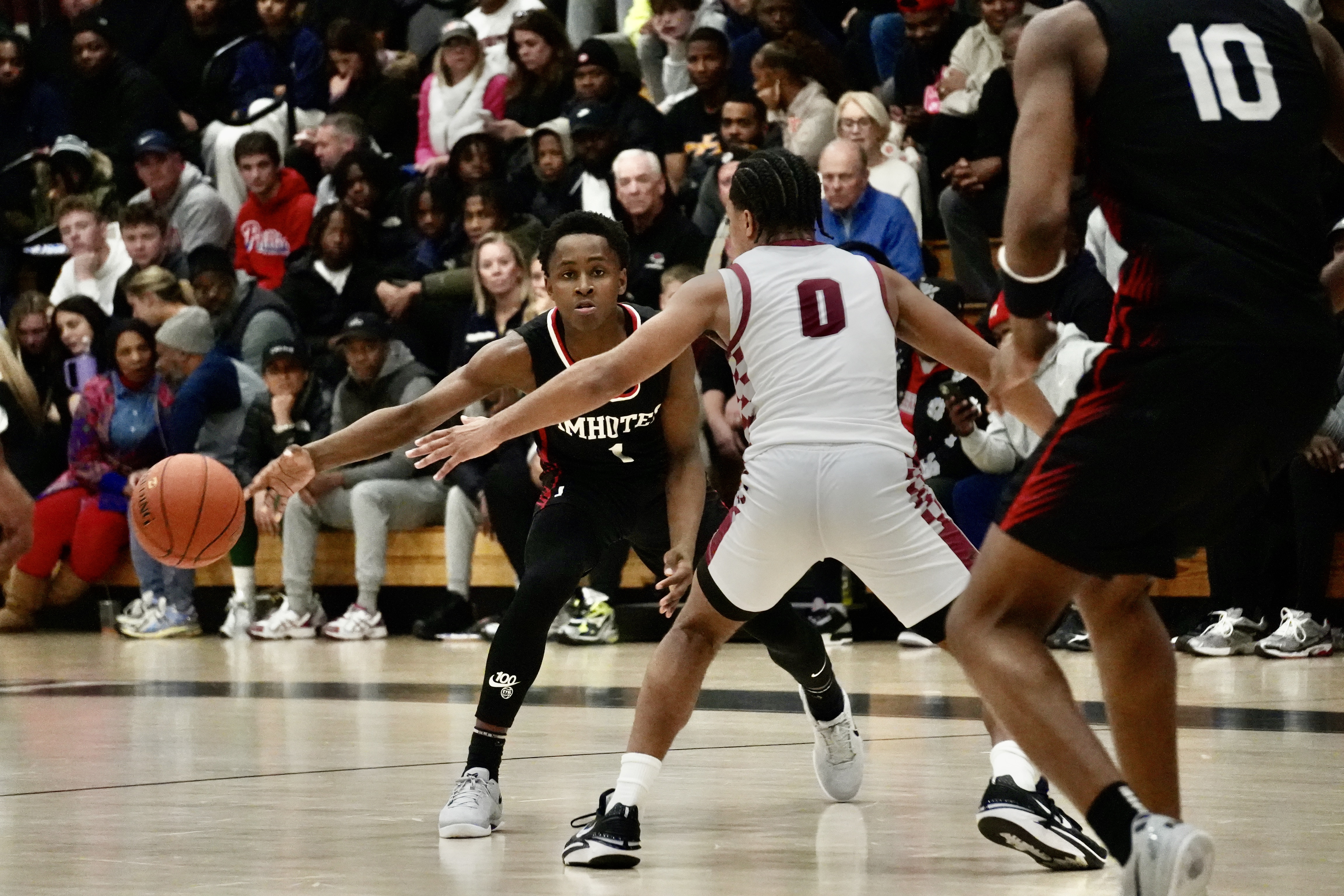
But the night belonged to the newly crowned “Big Dawg” among Philly Guards, Imhotep’s RJ Smith.
RJ Smith: Seated in the Philly Guard Throne
Smith, a 5’9” junior guard, embodies everything a “Philly guard” represents. Undeterred by his slight frame, Smith dominates games with his toughness, sharp basketball IQ, and unyielding determination. Time and again, he bullies bigger, stronger, and more athletic opponents, asserting control on both ends of the floor.
Defensively, Smith is a force in Imhotep’s relentless full-court press, where his tenacity and instincts for creating turnovers are nothing short of spectacular. Offensively, his ability to break down defenses is equally impressive. Whether pushing the pace in transition or orchestrating in a half-court set, Smith’s versatility shines.
Last season, Smith played Robin to UConn freshman Ahmad Nowell’s Batman. Nowell was the undisputed leader of Imhotep’s powerhouse program and clearly occupied the throne as the top Philly high school guard. But with Nowell’s departure, Smith has stepped seamlessly into the role of team leader. There is no doubt: this is now Smith’s team… and his throne…
Smith is not a traditional pass-first point guard of yesteryear. Instead, he mirrors the style of players like Isiah Thomas—capable of scoring at will while also being an adept distributor. His strengths are multifaceted: quickness, fearlessness, and a deep understanding of the game. As a defender, he excels at pressuring ball handlers and racking up steals, often setting the tone for Imhotep’s aggressive style of play. On offense, he thrives in transition, penetrates the lane with ease, and is a lethal shooter from well beyond the three-point arc.
While Smith’s skill set already places him among the elite at the high school level, his potential for growth is clear. In college, he could evolve into a more traditional point guard, balancing his knack for scoring with the demands of a floor general. For now, his dominance in high school basketball and his ability to overcome physical disadvantages with sheer grit and intelligence make him a quintessential Philly guard—and a joy to watch.
The “Philly Guard” Mystique
A “Philly guard” is more than just a basketball player. The term carries with it decades of tradition and a style that is unmistakably Philadelphia: gritty, crafty, and unapologetically confident. Philly guards are two-way players, as skilled on defense as they are on offense, and they play with an edge that reflects the city’s tough, blue-collar ethos.
Legends like John Chaney, Guy Rodgers, Andre McCarter, Pooh Richardson, Dawn Staley, Collin Gillespie and Kyle Lowry have defined the archetype. RJ Smith now stands in their shadow, a young player stepping into a rich lineage of excellence. His game is a nod to the past but also a bridge to the future of Philly basketball.
A Tale of Two Basketball Cities
The juxtaposition of Philadelphia’s scholastic and professional basketball worlds could not be starker. As the Sixers spiral into chaos, weighed down by an exorbitant payroll and a seemingly rudderless front office, and as college basketball flounders, the high school scene pulses with life. It’s a cruel irony that while the city’s professional and collegiate teams struggle, its high schools continue to produce some of the most exciting basketball talent in the nation.
RJ Smith’s emergence as the next great Philly guard underscores this dynamic. He represents hope for the future—a reminder of what Philly basketball can be when it is at its best.
Ten years from now, we’ll look back on this era with mixed emotions. The Phillies and Eagles gave us joy and pride. The Sixers and the city’s college programs brought frustration and bewilderment. And on high school courts across the city, the next generation of stars reminded us that, even in the worst of times, Philly basketball is never truly down for the count.
College coaches constantly call in search of a “Philly Guard.” Well, we have one that is pretty special. Ideally, Smith will land with a program that has familiarity and experience with smaller guards. He can compete in the MEAC, NEC, AmEast, MAAC and CAA for sure. Some A10 and American Conference programs will likely become intrigued when they actually lay eyes on him.
For now, though, Smith’s performances remind fans why the “Philly guard” is such a revered archetype in basketball—a gritty, intelligent, and unrelenting player who never shies away from the moment. He is, simply put, a joy to watch and a testament to Philadelphia’s rich basketball heritage. Looks like Smith will be sitting on the Philly Guard throne for next two years… Enjoying his reign… Unless, young Mr. Sutton from Broad and Vine has some other ideas.
PHILADELPHIA, PA – The transfer portal has redefined college basketball, bringing both challenges and opportunities for programs across the nation. For La Salle, the offseason loss of All-League guards Jhamir Brickus and Khalil Brantley to Villanova and Oklahoma State respectively seemed to leave a gaping hole in the backcourt. Yet, in a twist of fate, the portal also delivered a savior — Corey McKeithan.
Corey McKeithan, La Salle Explorers
After three seasons as a role player at Rider University, McKeithan has burst onto the scene with the La Salle Explorers, quickly establishing himself as one of the top players in the Atlantic 10 and Philadelphia Big 5. His latest performance on Saturday night against Temple underscored his meteoric rise.
McKeithan is a combo guard whose game is marked by a lethal capacity for scoring. He is averaging a team high 19 points per game this season. His off the dribble variety is elite—hesitation, rocker and crossover—excellent shiftiness and ability to burst through an open seam. He has demonstrated an ability to score from all three levels. As a result, he is a truly unpredictable defensive assignment in the half court. He is highly efficient in both isolation offense and the pick & roll for the Explorers.
Facing the Owls in a pivotal Big 5 matchup on Saturday afternoon, McKeithan delivered a career-best performance, scoring 28 points on 10-for-19 shooting. Beyond his scoring outburst, the junior guard added four assists without a single turnover, collected three rebounds, swatted a block, and picked up two steals. McKeithan’s all-around brilliance powered the Explorers to their sixth win in eight games this season and secured a spot in next Saturday’s Big 5 Classic championship game against St. Joseph’s.
Fran Dunphy, La Salle Head Coach
For La Salle head coach Fran Dunphy, McKeithan’s emergence couldn’t have come at a better time. “Corey has a confidence and swagger about him that’s infectious,” Dunphy said. “He’s elevated not just his game but the entire team’s energy. That’s what great players do.”
McKeithan’s transformation has been remarkable. At Rider, he spent much of his time playing off the ball, recording just 15 double-digit scoring games across three seasons. Now, as the primary playmaker for La Salle, McKeithan has embraced the responsibility, showcasing an assertiveness and flair that has turned him into a leader on and off the court.
McKeithan has a deep bag and he’s been digging deep into it…
Saturday’s win was another sign that Dunphy and his staff unearthed a gem in the transfer portal. McKeithan’s ability to step up in critical moments has given La Salle an edge, offsetting the departures of Brickus and Brantley while providing the Explorers with a centerpiece around whom the team can rally.
However, the road ahead is challenging. In the Big 5 Classic championship game, McKeithan will face one of the most formidable guard trios in college basketball: Erik Reynolds, Xzayvier Brown, and Derek Simpson of St. Joseph’s. The Hawks’ elite backcourt will undoubtedly test McKeithan’s mettle, providing a marquee showdown between rising stars and seasoned talent.
As La Salle continues its resurgence, McKeithan’s performance has not only revived the Explorers’ prospects but also solidified his place as one of the premier guards in the region. For La Salle fans, his emergence is a testament to the transformative power of belief, hard work, and the right opportunity.
Next Saturday, all eyes will be on Corey McKeithan, who has proven that sometimes, all it takes to shine is the right stage. The best Philly Guard, just might be the kid from Connecticut.
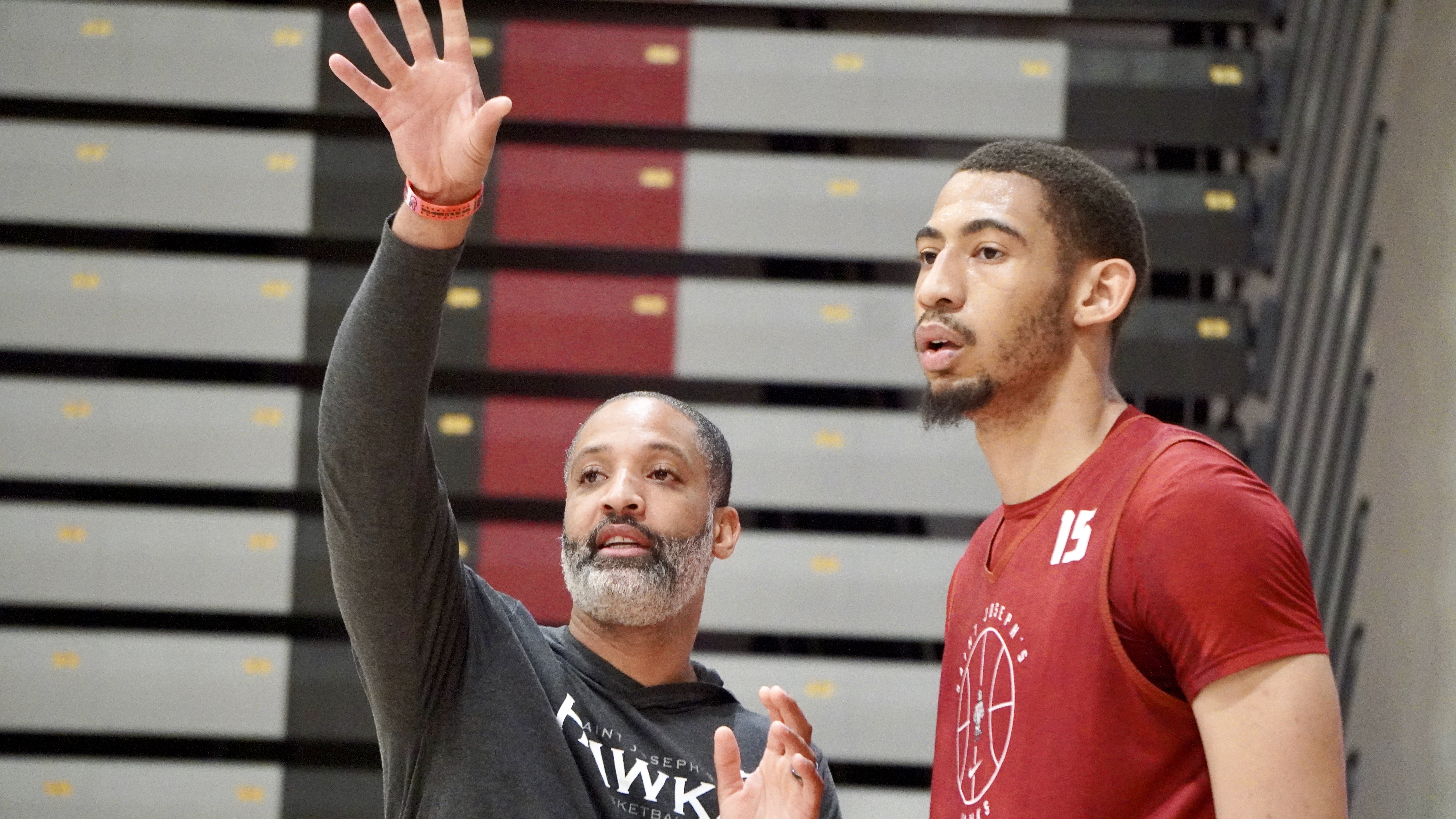
Philadelphia, PA – On Hawk Hill, where the legacy of Saint Joseph’s University basketball has endured for 116 years, hope springs eternal. Embracing the team’s motto, “The Hawk Will Never Die,” the Hawks enter the 2024-25 season with a roster that boasts both depth and talent, putting them in position to compete at the top of the Atlantic 10 Conference. With head coach Billy Lange improving his team’s winning percentage in each of his five seasons, optimism among fans and alumni is high.
Head Coach, Billy Lange
Under Lange’s guidance, St. Joseph’s has navigated a transformed collegiate landscape, one where NIL and the transfer portal have reshaped the stakes and players are freer than ever to shape their paths. Lange’s ability to build a cohesive, talented squad in this modern climate has kept the Hawks competitive, highlighted by their 21-14 record last season. This year’s lineup continues that trajectory, with a guard trio among the finest in the nation and an athletic, promising frontcourt.
The Backcourt: An Elite Trio
Leading the charge is senior guard Erik Reynolds, who sits just 478 points shy of Jameer Nelson’s all-time scoring record. Known for his fluid shot creation, Reynolds can score from all three levels, whether it’s scoops and floaters inside or deft pull-ups in the midrange. His balance of patience and quickness out of ball screens makes him a persistent offensive threat. With sophomore guard Xzayvier Brown handling point duties, Reynolds has grown more versatile, showing strong instincts as an off-ball scorer and becoming one of the most consistent offensive forces in the Atlantic 10.
Erik Reynolds, Senior Guard
Brown, a Philadelphia native and son of Associate Head Coach Justin Scott, has quickly established himself as one of the top point guards in the conference. He brings a steady hand, exceptional footwork, and a knack for breaking down defenses with smooth crossovers and hesitation moves. Tough and fearless, Brown’s body control enables him to score in traffic or kick the ball to open teammates on the perimeter. Perhaps, his most impressive attribute is the fact that he has big balls… Brown is not afraid of the big moment and will put the team on his shoulders when the offense stagnates. This season, he’ll look to cement his role as a leader capable of taking over when the game is on the line.
Xzayvier Brown, Sophomore Guard
Rounding out this talented backcourt is junior transfer Derek Simpson from Rutgers. A a prototypical mid-high major combo guard in that he does a bit of everything despite having the size of a point guard. He is a supremely confident bucket-getter with three-level scoring capabilities. Although he is most effective getting all the way to the basket and pulling up for mid-range jumpers. He can make an occasional three, but is much more efficient attacking he basket and in transition. Simpson is agile and crafty with the ball in his hands and brings two years of experience playing in the highly physical Big 10 Conference. Simpson thrives in both isolation and pick-and-roll situations. He is highly intelligent, and selfless high-energy player on offense and defense. He makes winning plays. This was a tremendous free agent acquisition for Lange and his staff.
Derek Simpson, Junior Guard
The Frontcourt: Emerging Talent and Physicality
While the guards may steal the spotlight, the front court play will largely determine how deep this version of Hawks can go in March. The time has come for Rasheer Fleming to become a household name. The junior power forward from Camden High, is solidly built and strong. He just has to put it all together in game situations. Fleming is long and has excellent instincts on the offensive end. He is very young (just turned 20) for a college junior playing D1 college basketball. Fleming has natural strength and the type of body that could withstand the physicality of NBA level play. He has already attracted the attention NBA scouts. He has broad shoulders and a wide base yet still has good agility and is fluid on his feet. On the offensive end, Fleming can do a bit of everything. He can score in the post, using his strength to bully opponents. He is particularly adept at getting to his jump hook over his left shoulder, which he makes at a very high rate. He is also an excellent leaper, allowing him to make plays above the rim. He has steadily improved his mid-range game. He shot a decent 32.4% from 3-point range in his sophomore season.
Justice Ajogbor, Graduate Student Center and Rasheer Fleming, Junior Forward
Sophomore Anthony Finkley, another key forward, is set to play the ultimate “glue guy” role this season. Finkley’s versatility and strong basketball IQ make him a valuable presence on the court, especially in passing and rebounding. Known for his unselfish play, Finkley is a key piece in making those around him better, and his intensity adds a gritty edge to the frontcourt.
Sophomore Shawn Simmons brings outstanding athleticism and size to the wing. Known for his quickness and explosiveness, Simmons’ speed makes him a reliable transition player and a potential defensive stalwart. With time and experience, Simmons could become a premier perimeter defender, contesting shots and creating havoc in passing lanes.
Justin Scott, Associate Head Coach and Steven Solano, Freshman Center
Redshirt freshman Dasear Haskins is a promising shot-maker with prototypical size and a smooth three-point shot. At 6’8”, Haskins has the physical tools to stretch defenses and create mismatches. The addition of Harvard graduate Justice Ajogbor in the center role adds experience and defense to the lineup, complemented by seven-footer Steve Solano, a former four-star recruit known for his low-post game and international experience.
Dasear Haskins, Redshirt Freshman Wing
Newcomers and Outlook
New faces like guard Khaafiq Myers and forwards Kevin Kearney and Mekai Johnson round out the roster. Myers is, yet another, quintessential Philly guard, to arrive on Hawk Hill. Prior to a leg injury that cut his senior season short, Myers was dominating the Philadelphia Catholic League and appeared to be a strong contender for MVP. An exceedingly quick player, he regularly forces opposing guards to pick up their dribble in the middle of the court. Myers takes tremendous pride in guarding the best opposing guard.
Khaafiq Myers, Freshman Guard
This roster is built to compete with any team in the A10 and the mid-Atlantic region. On paper, the Hawks may be better than regional high majors like Villanova (Big East), Seton Hall (Big East), Georgetown (Big East), Rutgers (Big 10), Penn State (Big 10) and Temple (American).
Coach Lange and his assistants Justin Scott, Dwayne Jones, Thomas Boyle and the rest of the staff have proven they can build a highly competitive roster.
The question becomes: Can the staff coach these guys to wins on the road in the A10, in the A10 tournament and in the NCAA tournament?
We still do not know the answer… But we ’bout to find out!
Allentown, PA – During the first annual Pre-Live Period Summer Classic,Delgreco Wilson, Executive Director of Black Cager Sports was thrilled to announce a significant partnership with Education Academy Charter School, bringing a series of high-profile basketball events to the newly unveiled Executive Fieldhouse. This state-of-the-art facility, built in collaboration with Lehigh Valley Health Network (LVHN), spans an impressive 28,000 square feet and is designed to host four basketball games simultaneously.
“We are very excited to host Black Cager Sport Events in our fieldhouse. They have demonstrated an ability to attract highly competitive high school programs to Allentown,” said Executive Education Academy Charter School CEO Robert Lysek. “Not only do Executive student-athletes benefit, but our facility is also used by many local and regional programs. We look forward to hosting several Black Cager events every year.”
Bob Lysek, Executive Education Charter School, CEO (l) and Executive supporter Pamela Tillett (r)
The Executive Fieldhouse is a premier multi-court facility featuring four brand-new regulation-size courts, each equipped with large, dedicated electronic scoreboards. The venue boasts a cutting-edge sound system, full wheelchair accessibility, and ample space for concessions. Additionally, the facility offers over 2,000 adjacent parking spaces, ensuring ease of access for spectators and participants alike.
Delgreco Wilson expressed his enthusiasm for the partnership. “We’ve hosted basketball events for more than a decade, and the Executive Fieldhouse is the finest multi-court facility in the mid-Atlantic region. The presence of two highly qualified athletic trainers provided by LVHN is a huge plus, as players and coaches can rest assured that sports-related injuries are appropriately treated right away.”
Jason Boggs, Director of Basketball Events, Black Cager Sports
The commitment from Black Cager Sports to host multiple events annually at the Executive Fieldhouse is set to elevate the local sports scene. “Bob Lysek and Ray Barbosa are very easy to work with. They want to provide young people with a clean, modern, and safe place to compete and gain exposure. Black Cager Sports shares the same goals. My partner, Jason Boggs, and I have decided to make this a long-term partnership,” Wilson added.
Gabe Hornberger ’25, Executive Academy wing receiving D1 interest from Patriot and Ivy Programs
This collaboration underscores Executive Education Academy Charter School’s dedication to enhancing athletic opportunities for its students and the broader community. The Executive Fieldhouse, with its cutting-edge amenities and strategic partnerships, is poised to become a central hub for competitive basketball in the region.
Join us on the Black Cager Sports Talk Show as we delve into the electrifying journey of Ahmad Nowell, the shining star of Philadelphia’s scholastic basketball scene. Fresh off his stellar career at Imhotep Charter and committed to UCONN, Nowell sits down for an exclusive interview alongside his mentor Tasheed Carr, only on Black Cager Sports.
Ahmad Nowell isn’t just another high school phenom; he’s a symbol of resilience and determination. With an impressive three consecutive Public League, District 12, and PIAA State Championships, Nowell’s name is etched in the history books of Philadelphia high school basketball. But his success isn’t merely a result of talent—it’s a testament to his relentless dedication and hunger for excellence. Under the mentorship of Tasheed Carr, Nowell has honed his skills to perfection. For over six years, they’ve embarked on a journey of relentless pursuit, setting Nowell apart from his competitors. Nowell’s rise to prominence isn’t just about the roar of the crowd or championship rings—it’s about unwavering determination and an unparalleled work ethic.
But what sets Nowell apart on the court? He’s not just an athletic point guard; he’s a strategic mastermind with impeccable scoring instincts. With the physique of an SEC safety and the craftiness of a seasoned ballhandler, Nowell dominates on both ends of the court. His ability to finish with finesse around the basket, coupled with his deadly midrange game, makes him a force to be reckoned with. But it’s not just about what Nowell does on the court; it’s about his character and leadership off it. He’s a team player with exceptional court vision, and his defensive prowess is second to none. Nowell isn’t just chasing greatness on the court; he’s embodying it in every aspect of his life.
Join us on the Black Cager Sports Talk Show as Nowell and Carr share their journey to success. Discover how hard work, dedication, and a commitment to excellence have propelled Nowell to the brink of greatness. Don’t miss out on this exclusive interview—tune in and witness the story behind the legend!
Sponsored by Philadelphia Youth Basketball and Next Step Vocational Services.










 The Black Cager