A Calculated Risk in the Portal Era: The Derek Simpson Blueprint 

PHILADELPHIA, PA – In the burgeoning industry of college basketball, where the transfer portal spins faster than a full-court press and name, image and likeness deals have rewritten the economics of amateurism, the career arc of a player like Derek Simpson offers something increasingly rare: a coherent narrative. It is a story not of dissatisfaction or chasing a bag, but of strategic foresight. It is a case study in how a young athlete, facing the cold calculus of roster construction, can reclaim his trajectory by understanding that sometimes, the smartest move is a lateral step designed to launch a vertical rise.

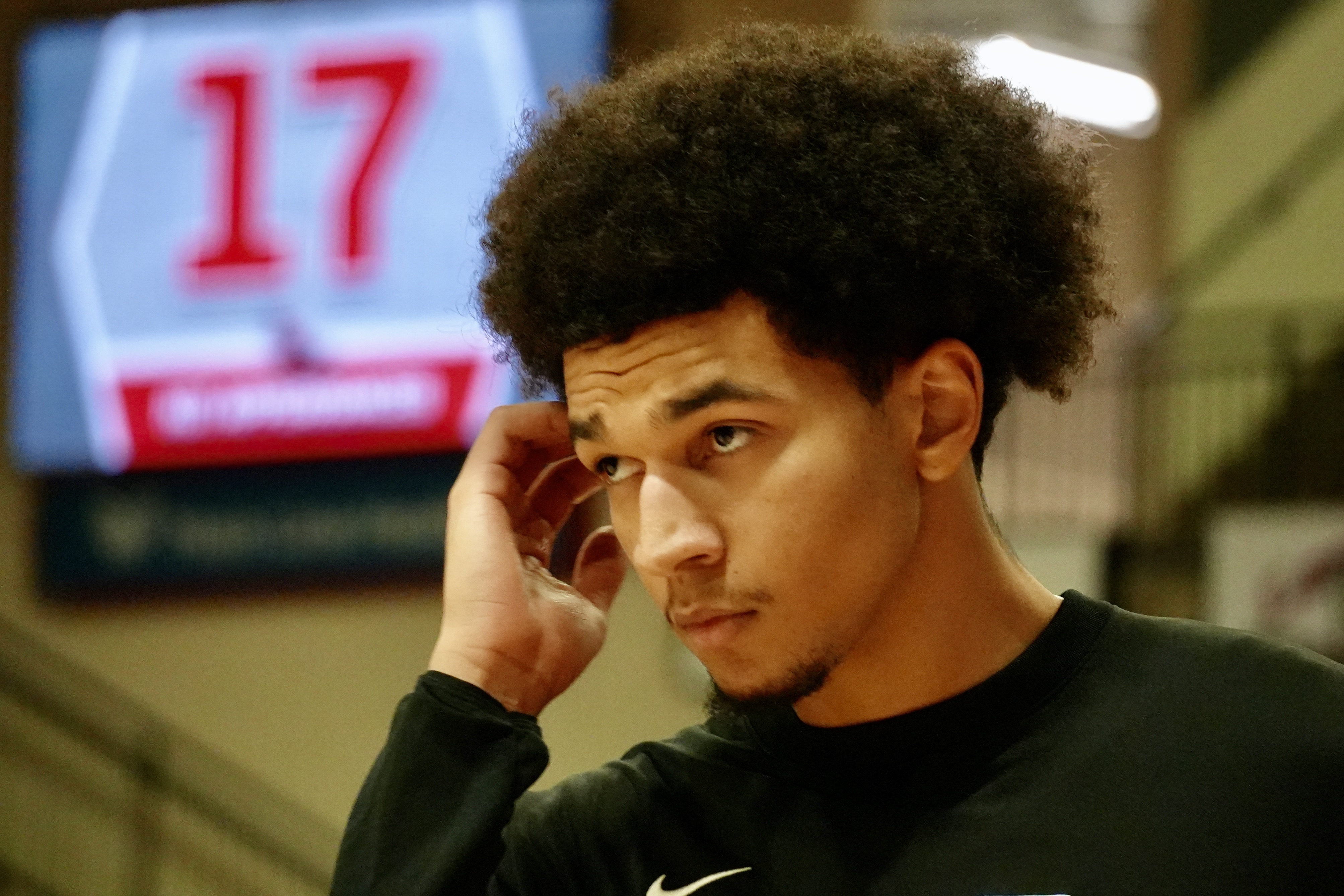
Simpson, a 6-foot-3 guard from Lenape High School in Burlington County, N.J., arrived at Rutgers as a three-star prospect, ranked as high as seventh in the state and 44th among point guards nationally by ESPN. He was known as a quick, decisive playmaker and a tenacious on-ball defender—traits forged, under the tutelage of Kyle Sample and Lonnie Lowry in the crucible of the Adidas 3SSB Circuit with the K-Low Elite Basketball Club, where he faced national-level competition. The son of a Division I player, Simpson understood the game’s demands. He was ready to contribute immediately, and he did, playing 20.1 minutes a night as a freshman and expanding his role to 26.0 minutes as a sophomore, averaging 8.3 points and 2.9 assists.

Then the tectonic plates of recruiting shifted under his feet.

The Calculus of a Crowded Backcourt

On December 6, 2023, Dylan Harper, a consensus five-star combo guard and the No. 2 overall prospect in the 2024 class, committed to Rutgers. It was a seismic win for the Scarlet Knights, a program-defining moment that brought a potential one-and-done lottery pick to Piscataway. But for Derek Simpson, it presented a stark reality. In the modern game, a player of his profile does not merely compete with a talent like Harper for minutes; he competes against the gravitational pull of a franchise player’s usage rate. The math was simple: there would be fewer touches, a diminished role, and a shrinking canvas on which to paint his professional aspirations.

Simpson’s subsequent decision to enter the transfer portal was not an act of flight, but of portfolio reallocation. In an environment where players must weigh short-term financial incentives against long-term career risk, he made a calculated bet on himself. He opted out of the volatility of a diminished role in the Big Ten and placed his assets in a high-growth opportunity: the Atlantic 10 and St. Joseph’s University. It was a move that prioritized developmental infrastructure and on-court equity over the simple prestige of a conference logo.

The Platform and the Coach

If the decision to transfer was the strategic investment, the choice of St. Joseph’s was the blue-chip stock. The Hawks, under the guidance of Billy Lange, had built a reputation for player development. But when Lange departed suddenly for an assistant coaching position with the New York Knicks, the program turned to Steve Donahue. In a season defined by coaching flux, Donahue steadied the ship with the steady hand of a veteran tactician. He was subsequently named Atlantic 10 Coach of the Year, a testament to his ability to maximize his roster.

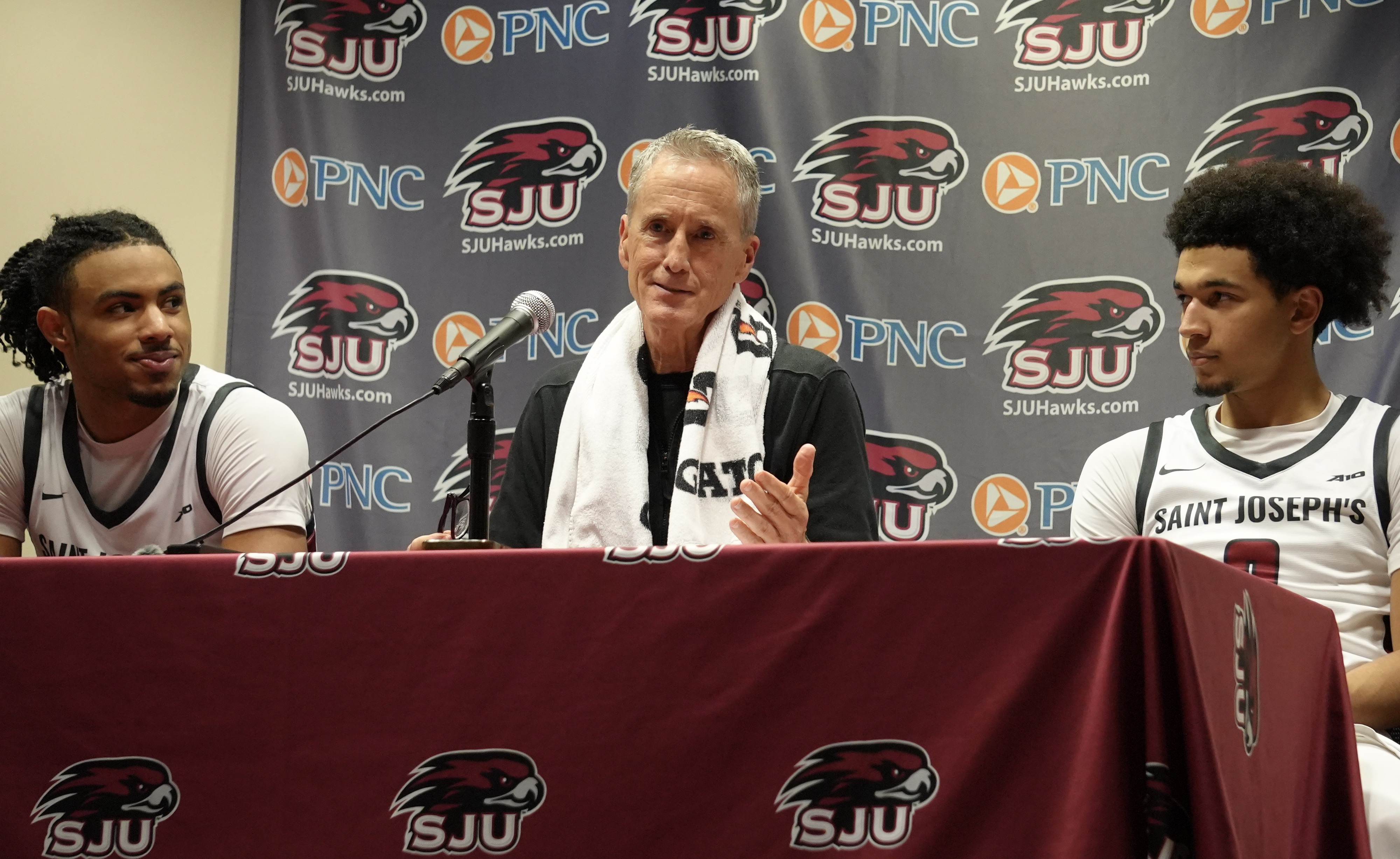
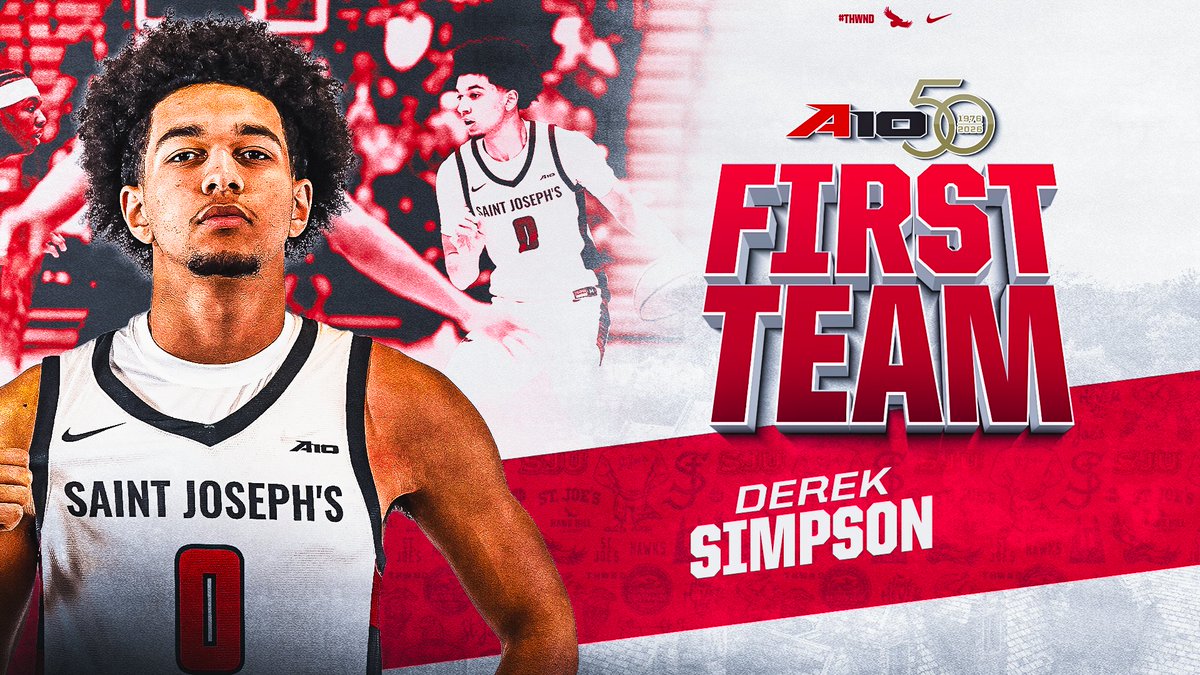
For Simpson, Donahue’s arrival was serendipitous. Donahue recognized that Simpson’s greatest asset—his decisive, attacking mentality—needed freedom, not restraint. Rather than forcing him into a rigid system, Donahue built actions around his penetration, allowing Simpson to play to his strengths. St. Joseph’s needed a leader; they got one who had been waiting for the opportunity to lead. The Hawks finished the regular season 21-10 overall and 13-5 in the A-10, good for third place. Simpson was named First Team All-Conference. The platform had delivered.

Rejuvenation and the Path Forward

The A-10 has long been a league that rewards guard play, a proving ground where skill meets opportunity. Simpson thrived in that environment. Freed from the shadow of a generational talent, he demonstrated the full spectrum of his abilities: the quick first step, the defensive pressure, the playmaking vision that had been honed since childhood. He did not merely accumulate statistics; he engineered victories. His professional aspirations, which risked stagnation in a diminished role at Rutgers, were not just rejuvenated—they were amplified.

A Blueprint for the New Era

Derek Simpson’s journey is a persuasive argument for agency in an era of uncertainty. He understood that remaining at Rutgers, while comfortable and familiar, carried the risk of becoming a schematic afterthought. He recognized that the value of a player is not solely determined by the conference in which he plays, but by the role he occupies within it. By transferring to St. Joseph’s, he found a coach in Steve Donahue who needed his talents and a league that showcased them.

In the end, Simpson’s story is not about what he left behind, but about what he correctly anticipated he could become. It is a reminder that in the complex economy of modern college basketball, the most valuable asset a player can possess is not a highlight reel, but a clear-eyed understanding of where his skills will be valued most.

The Pro Comparison — Finding the Stylistic Parallel

Identifying a professional comparison for Derek Simpson requires looking beyond simple physical measurements and instead focusing on archetype, skill set, and role projection. Simpson is not a primary creator in the Jalen Brunson mold, nor is he an undersized two-guard. He occupies a specific niche: the secondary playmaker who initiates offense, pressures the ball defensively, and operates with a decisive, attacking mentality.

The NBA Comparison: A Prime Cory Joseph / Jevon Carter Hybrid

The most apt NBA comparison for Simpson is a fusion of Cory Joseph (in his prime Indiana/ Sacramento years) and Jevon Carter. Here is why this parallel holds:

The Cory Joseph Elements:
Joseph built a decade-long NBA career as a steady, low-mistake point guard who could play on or off the ball. At 6’3″, he lacked elite burst but compensated with strength, timing, and a high basketball IQ. Simpson mirrors this in his decision-making—note the single turnover in that signature Richmond upset, a game where he also logged 37 minutes and grabbed 13 rebounds . Like Joseph, Simpson understands that his value lies in limiting negative plays while applying consistent defensive pressure.

The Jevon Carter Elements:
Carter built his NBA reputation on being an absolute nuisance defensively while providing spot three-point shooting. Simpson’s on-ball defensive tenacity—honored in the original scouting report—echoes Carter’s relentlessness. However, Simpson has shown a superior ability to rebound for his size (5.7 rebounds per game as a senior, including that 13-rebound outburst) . The three-point shooting remains the variable; like Carter, Simpson’s percentage can fluctuate (27% as a senior, but with hot streaks like the 5-7 performance) .

The International Comparison: A French League Star Archetype

If the NBA path proves narrow, Simpson projects as a standout in top European leagues, specifically the French LNB Pro A or German BBL. His game resembles a composite of veteran American guards who thrive overseas: the ability to control tempo, defend multiple positions, and score in bunches without needing isolation possessions. The 9-assist game against Dayton is particularly instructive—it reveals a playmaking vision that was often suppressed in his Rutgers years . In Europe, where team structure and defensive discipline are paramount, Simpson’s low-turnover, high-pressure style is a luxury commodity.

Mock Draft Profile — Derek Simpson

Position: Point Guard / Combo Guard
Class: Senior
School: St. Joseph’s University
Height: 6’3″
Weight: ~190 lbs (estimated)
Age: 22 

Prospect Overview

Derek Simpson enters the 2026 draft cycle as a classic “late bloomer” whose trajectory was temporarily suppressed by circumstance before exploding at the appropriate level. After two seasons at Rutgers where he showed flashes (8.3 PPG, 2.9 APG as a sophomore) but faced a diminishing role with the arrival of Dylan Harper, Simpson transferred to St. Joseph’s and revitalized his career. He leaves college as a First Team All-Atlantic 10 selection, having led the Hawks to a 21-10 record and a third-place conference finish.

Simpson’s appeal to professional teams lies in his clarity of role. He knows exactly what he is: a decisive, quick-twitch playmaker who defends with tenacity and makes winning plays. He is not a volume scorer who forces offense, but a pressure-release valve who can create for himself and others when the defense collapses. His experience on the Adidas 3SSB Circuit with K-Low Elite prepared him for this moment—he has been competing against high-level competition for years and carries none of the deer-in-headlights tendencies that plague many mid-major prospects.

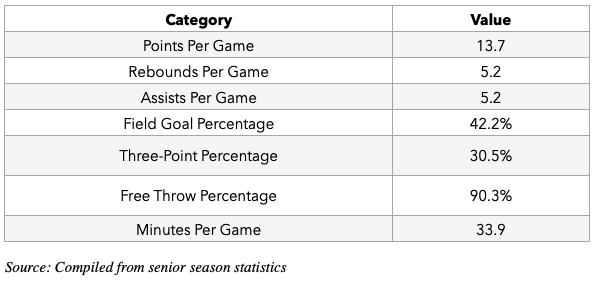
Statistical Snapshot (Senior Season)

Strengths

  1. Decision-Making Under Pressure: Simpson’s assist-to-turnover ratio tells only part of the story. Watch the film: he makes the right read consistently, whether attacking off a ball screen or kicking to a shooter. The 9-assist, low-turnover games are not anomalies; they are the product of a point guard raised by a Division I father and forged in competitive grassroots basketball.
  2. Defensive Versatility: Simpson’s lateral quickness allows him to stay in front of most point guards, while his strength enables him to switch onto larger wings in a pinch. He is the type of defender who disrupts timing simply by existing in the opponent’s space.
  3. Rebounding from the Guard Spot: At 6’3″, Simpson’s 5.7 rebounds per game—including a 13-rebound performance against Richmond—indicate a nose for the ball and a willingness to do dirty work. This translates directly to the next level, where guards who rebound are valued as “winning players.”
  4. Free Throw Shooting: A 90.3.% mark from the line suggests that the three-point shooting inconsistency is correctable. Players who shoot this well from the stripe typically have the mechanical foundation to improve their deep accuracy with NBA coaching.

Areas for Improvement

  1. Three-Point Consistency: The 30.5% mark as a senior is the glaring flaw. Simpson has shown the ability to get hot (5-7 against Richmond), but he also endures cold stretches where his mechanics waver . Professional teams will need to see a more reliable catch-and-shoot stroke to keep defenses honest.
  2. Shot Selection at the Next Level: Simpson’s mid-range game is effective in college, but the NBA and top European leagues increasingly demand rim pressure or three-point attempts. He must refine his shot diet to eliminate inefficient looks.
  3. Creating Separation Against Elite Athletes: At the high-major level, Simpson occasionally struggled to create space against longer, more explosive defenders. While he dominated the A-10, the gap between that league and the NBA is vast. He will need to develop counters—floaters, step-backs, pace changes—to compensate for any lack of elite burst.

Draft Projection

NBA: Late Second Round / Priority Undrafted Free Agent
International: Guaranteed Contract in Top-Tier European League (France, Germany, Spain)

Simpson is unlikely to hear his name called on draft night, but he is precisely the type of player who signs a two-way contract within hours of the draft’s conclusion. His combination of defensive readiness, decision-making, and positional size fits the archetype of the “three-and-d” guard, provided the three-point shooting stabilizes. Teams like the Miami Heat or San Antonio Spurs—franchises known for maximizing guards with his profile—should have him on their summer league radars.

The Verdict

Derek Simpson made a calculated bet on himself by leaving Rutgers, and that bet is about to pay dividends. He identified a platform—St. Joseph’s, the A-10, Steve Donahue’s system—that would showcase his complete skill set rather than bury him in a crowded backcourt. The result is a professional trajectory that now includes legitimate options: a two-way NBA contract, a lucrative European deal, or a training camp invite with a chance to stick.

In an era where prospects are often over-drafted based on high school rankings, Simpson represents the opposite: a player whose value is best measured not by where he started, but by where he finished and how he got there.

The Long Road Back: Chance Westry’s Patient Pursuit of a Promise Delayed

PHILADELPHIA, PA – In the contemporary arena of college athletics, the biography of a basketball player is too often compressed into a breathless highlight loop. The culture venerates the ascent that is both swift and steep: the five-star recruit who justifies his ranking in a single semester, the one-and-done phenomenon for whom college is merely a nine-month formality before the lottery draft. These are the straight lines that make for tidy narratives. They are also, in the grand arithmetic of sports, the exceptions.

The more common equation involves subtraction. It involves the long subtraction of lost seasons, of surgeries that etch scars across a young body, of the slow, quiet erosion of a reputation built in high school gymnasiums. For every player who glides unimpeded to the professional ranks, there are a dozen who find their path blocked by the cruel mathematics of injury. Chance Westry, a 6-foot-6 guard now starring for the University of Alabama at Birmingham, knows this equation intimately. He has spent the better part of four years solving for X, where X is the distance between the player he was supposed to be and the player he has fought to become. His emergence this season as one of the premier guards in the American Athletic Conference is not merely a comeback; it is a testament to a kind of perseverance that is increasingly rare in an era defined by instant gratification.

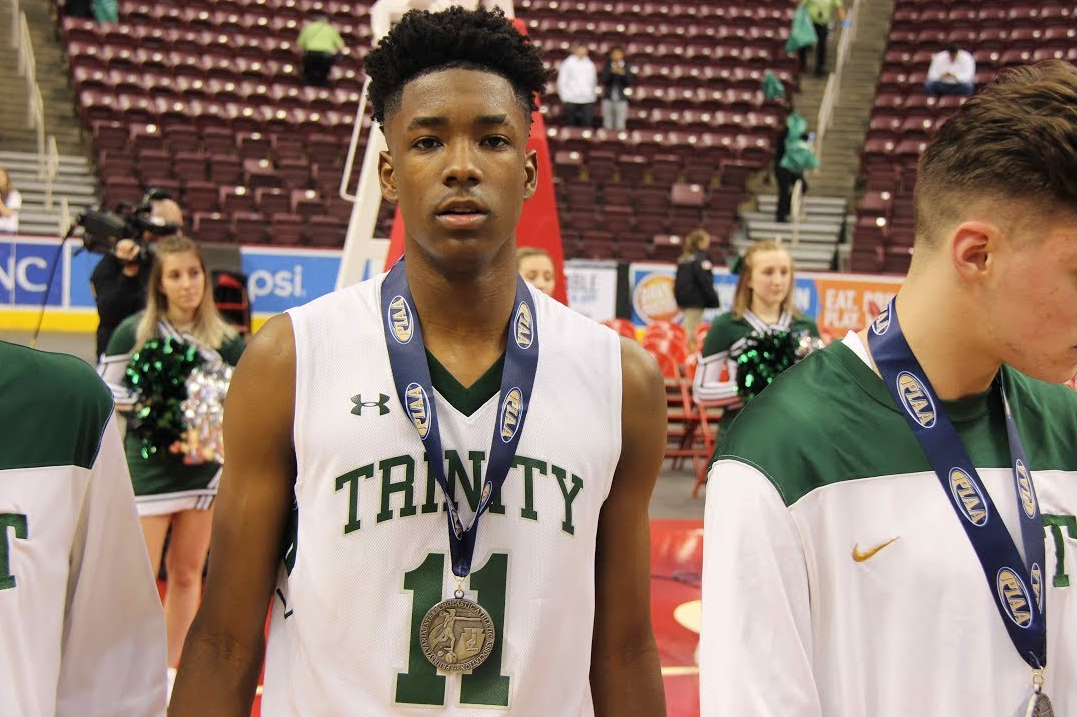
To grasp the magnitude of Westry’s current success, one must first revisit the heights he scaled as a teenager in Pennsylvania. Under the direction of Coach Larry Kostelac at Trinity High School, Westry was not just a prodigy; he was a force of historical proportion for the school. As a freshman, he helped guide the Shamrocks to a 22-3 record. By his sophomore year, he was a statistical marvel, averaging 24.1 points, 5.3 rebounds and 3.1 assists, earning him Class 3A Player of the Year honors. He surpassed 1,000 career points in just two seasons, a benchmark of sustained excellence.

The 2019 PIAA state championship game, a one-point loss to Lincoln Park, remains a haunting artifact of his potential: a 40-point performance on the sport’s biggest high school stage in the state. His playoff run that year was a tapestry of scoring virtuosity—28 points against Holy Redeemer, 22 in a semifinal win over Bishop McDevitt, 15 in a quarterfinal victory against New Hope-Solebury. Even in a 70-34 rout of Riverside in the 2020 playoffs, his 17 points were a quiet reminder of his consistency.

Seeking a broader canvas, Westry transferred to Sierra Canyon School in California, the national powerhouse known for its constellation of future stars. There, he held his own, averaging 14.2 points. He then moved to Arizona Compass Prep, a program ranked as high as third nationally, leading the Dragons to the GEICO High School Nationals quarterfinals. The recruiting services, those modern arbiters of potential, anointed him accordingly: Rivals ranked him 26th, ESPN 32nd and 247Sports 38th nationally. He was placed on the Jersey Mike’s Naismith High School Trophy Boys Watch List. He was, by every measure, a star on an inexorable rise. He committed to Auburn, choosing the crucible of the Southeastern Conference.

And then, without warning, the narrative went silent.

The rhythm of a basketball player’s life is built on the metronomic certainty of practice and game, repetition and competition. For Westry, that rhythm was shattered by a cruel, recurring dissonance. A preseason leg injury at Auburn required surgery, erasing the foundation of his freshman campaign before it could be laid. He would eventually make his debut, logging flashes of promise—five points, three rebounds and two assists against Texas Southern; a season-high 17 minutes against Bradley; a then-career-best eight points against Colgate. But these were fragments, glimpses of a player trying to find his footing on a limb that was not yet ready to support his talent. The dominance that defined his high school career was replaced by the uncertainty of rehabilitation.

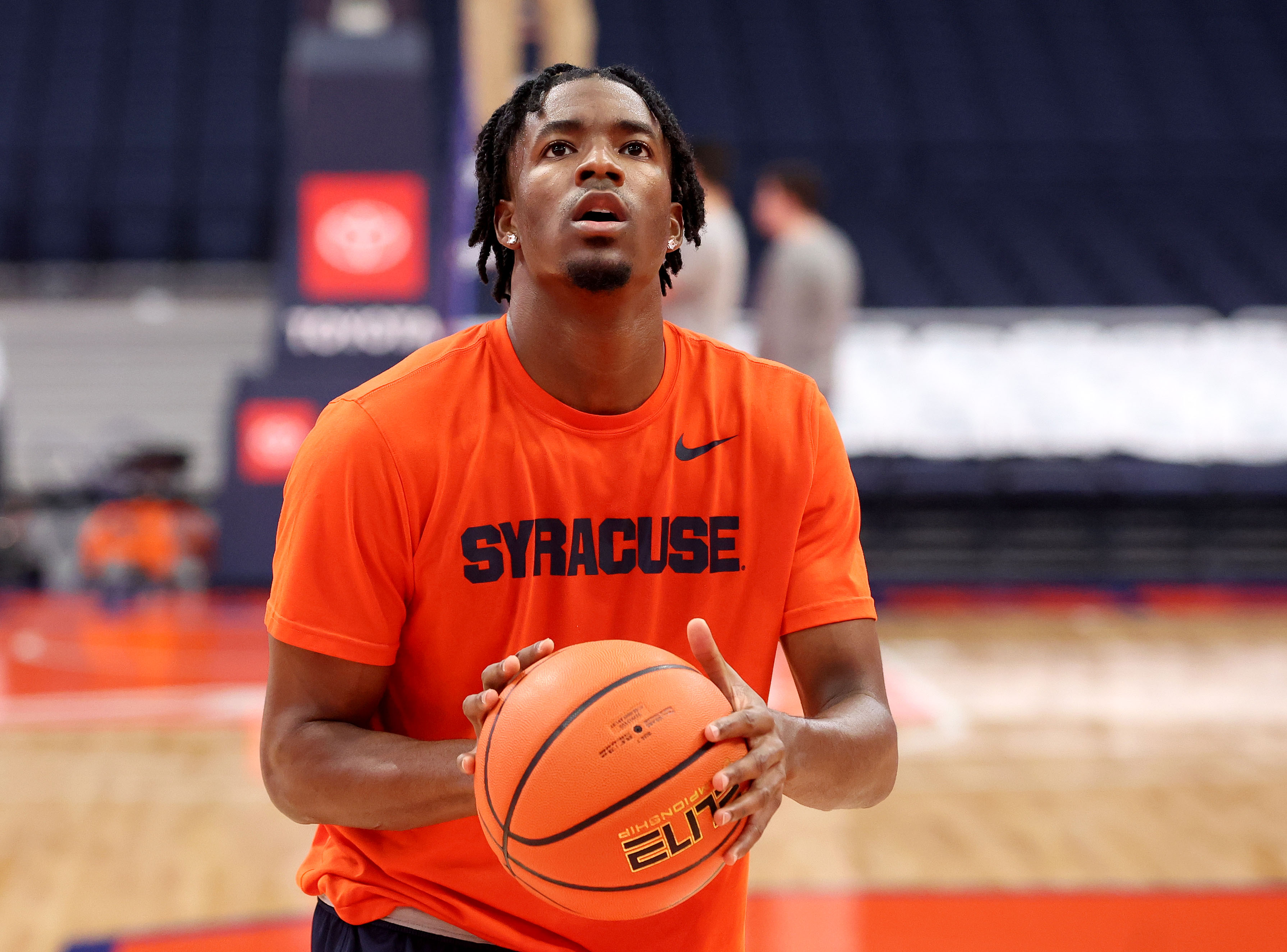
If Auburn was a detour, Syracuse became a roadblock. During training camp of his sophomore year, another leg injury. Again, surgery. Again, the promise of a season vanished before the autumn leaves could fall. He spent the entire 2023-24 campaign as a spectator, a silent presence on a bench he could not leave. While his teammates battled in the Atlantic Coast Conference, Westry fought a quieter war in the training room, against the atrophy of muscle and the corrosion of hope. It would have been understandable, perhaps even predictable, for a young man to succumb to despair. The body that had been his greatest asset had become his most formidable adversary. Yet, even in that long darkness, a flicker of discipline remained: he was named to the 2023-24 ACC Academic Honor Roll for maintaining a 3.0 grade-point average. It was a small victory, but a profound one—a testament to a mind that refused to let his identity be reduced to a series of medical reports.

His third year at Syracuse offered little reprieve. The minutes were, as before, vanishingly small—brief cameos against Tennessee, Notre Dame and Albany. He was a player in limbo, a top-30 recruit just three years prior, now fighting for scraps of playing time. The narrative around him had shifted from “future star” to “injury-prone what-if.” The basketball world, with its notoriously short memory, had largely forgotten the 40-point scorer, the Class 3A Player of the Year, the dynamic playmaker who could bend a game to his will.

This is where the story of Chance Westry pivots from tragedy to triumph. With his college career at a crossroads, he transferred to UAB for the 2024-2025 season. It was a move born of necessity, but animated by hope. And finally, after nearly four years of fighting against his own body, Chance Westry was allowed to simply play basketball.

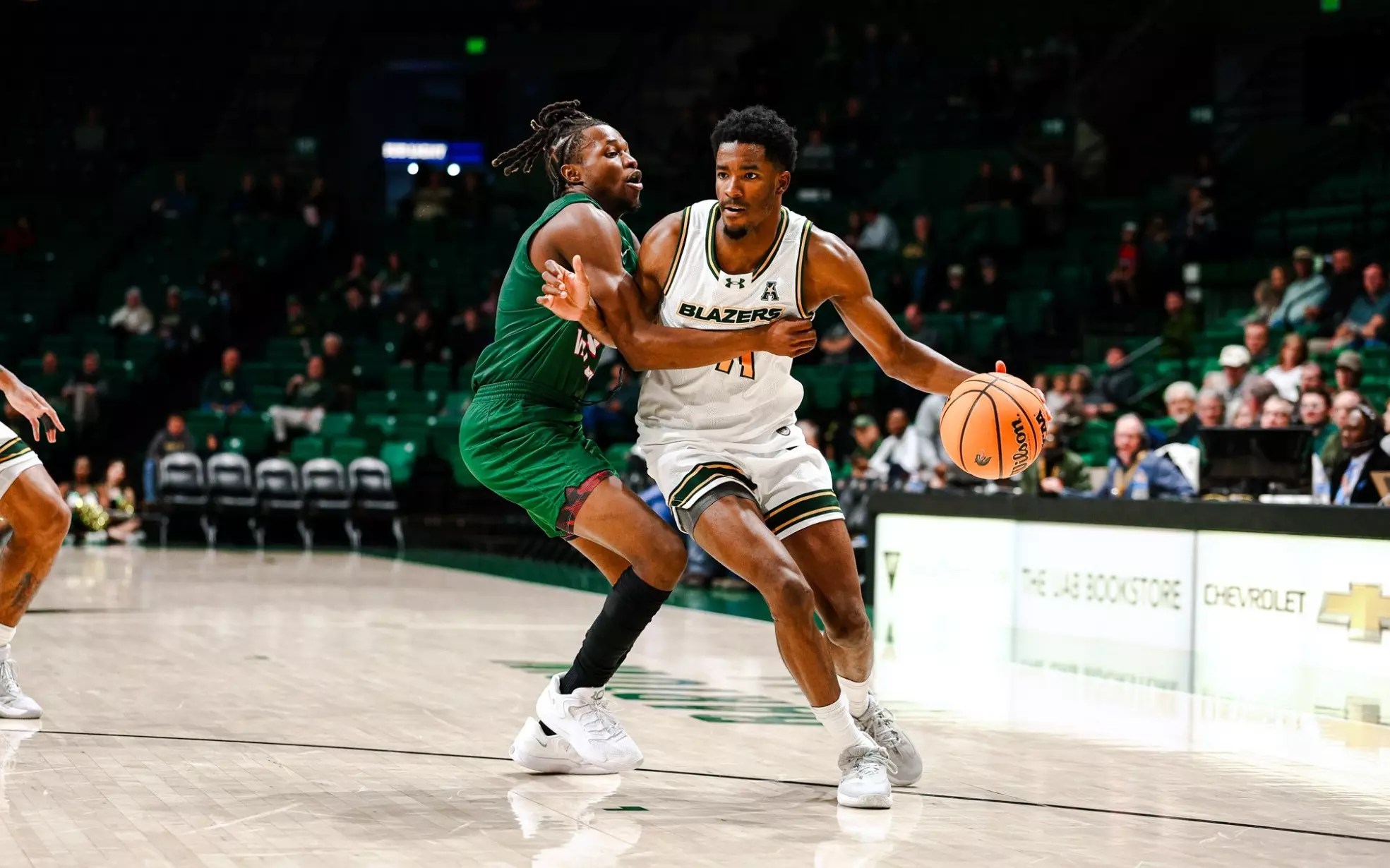
The results have been nothing short of revelatory. The player who was a ghost for three years has re-emerged as a star. Averaging 14.6 points, 3.8 rebounds and 4.7 assists while shooting 47 percent from the field, Westry has not just returned to form; he has evolved. The scoring punch is back, but it is now augmented by a refined playmaking vision. The 4.7 assists per game speak to a player who spent years watching the game from the bench, absorbing its nuances, its geometries, its silent rhythms. He has emerged as one of the premier guards in the American Conference, not by recapturing his high school glory, but by constructing a more mature version of his game on the foundation of his adversity.

Chance Westry’s journey is the epitome of perseverance because it traces a complete circuit of the athlete’s experience: from the apex of high school stardom, through the valley of collegiate obscurity and physical despair, and finally to the summit of meaningful contribution. Perseverance is often romanticized as a single, dramatic stand against the odds. But for Westry, it was the mundane, daily choice to keep working when there was no guarantee of a payoff. It was the decision to maintain a 3.0 GPA when his basketball future was most uncertain. It was the humility to accept limited minutes, and the wisdom to use that time to learn. It was the courage to transfer, not once, but twice, in search of a place where his body and his talent could finally align.

His story is a powerful rejoinder to the culture of immediacy that pervades modern sports. It is a reminder that a career is not defined by its interruptions, but by its conclusion. Chance Westry refused to let his be a story of what might have been. Through the pain of three surgeries and the frustration of hundreds of lost games, he held fast to the identity forged in those high school gyms in Pennsylvania: he is a basketball player. And now, at UAB, he is finally able to prove it to the world again. He is not merely a player who has persevered; he is a testament to the unyielding power of the human will to rise, again and again, until it finally stands exactly where it was always meant to be.

Comprehensive Scouting Report: Jalil Bethea – Strategic Analysis of On-Court Development and Portfolio-Based Transfer Decision

Player: Jalil Bethea | Position: Shooting Guard | Height/Weight: 6’5″, 190 lbs
Current Program: Alabama Crimson Tide (SEC) | Class: Sophomore
High School: Archbishop Wood Catholic, Philadelphia Catholic League (PCL)
Prior Program: Miami (FL) Hurricanes (ACC)
Draft Projection (2026): Potential Second-Round Pick

I. EXECUTIVE SUMMARY & STRATEGIC TRANSFER GRADE

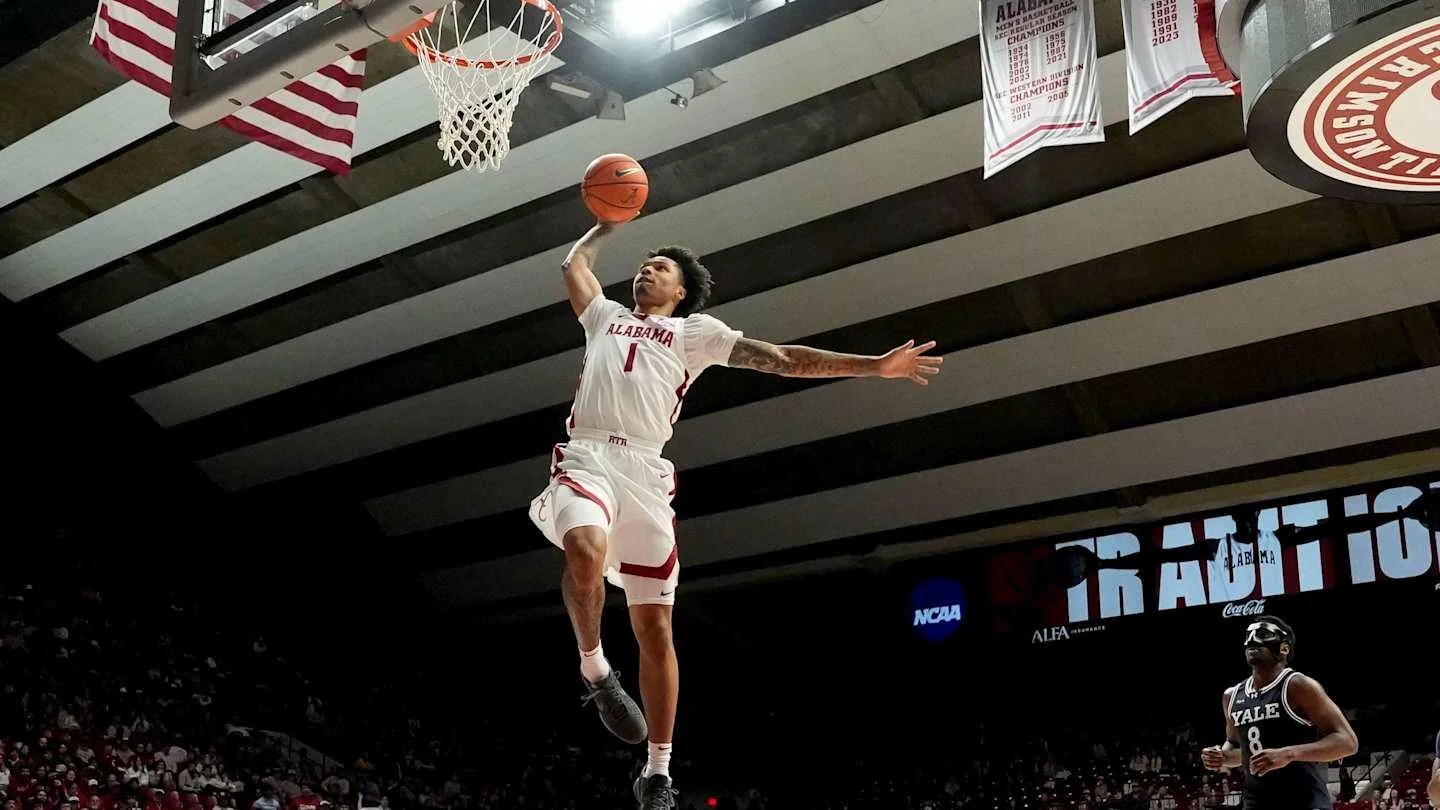
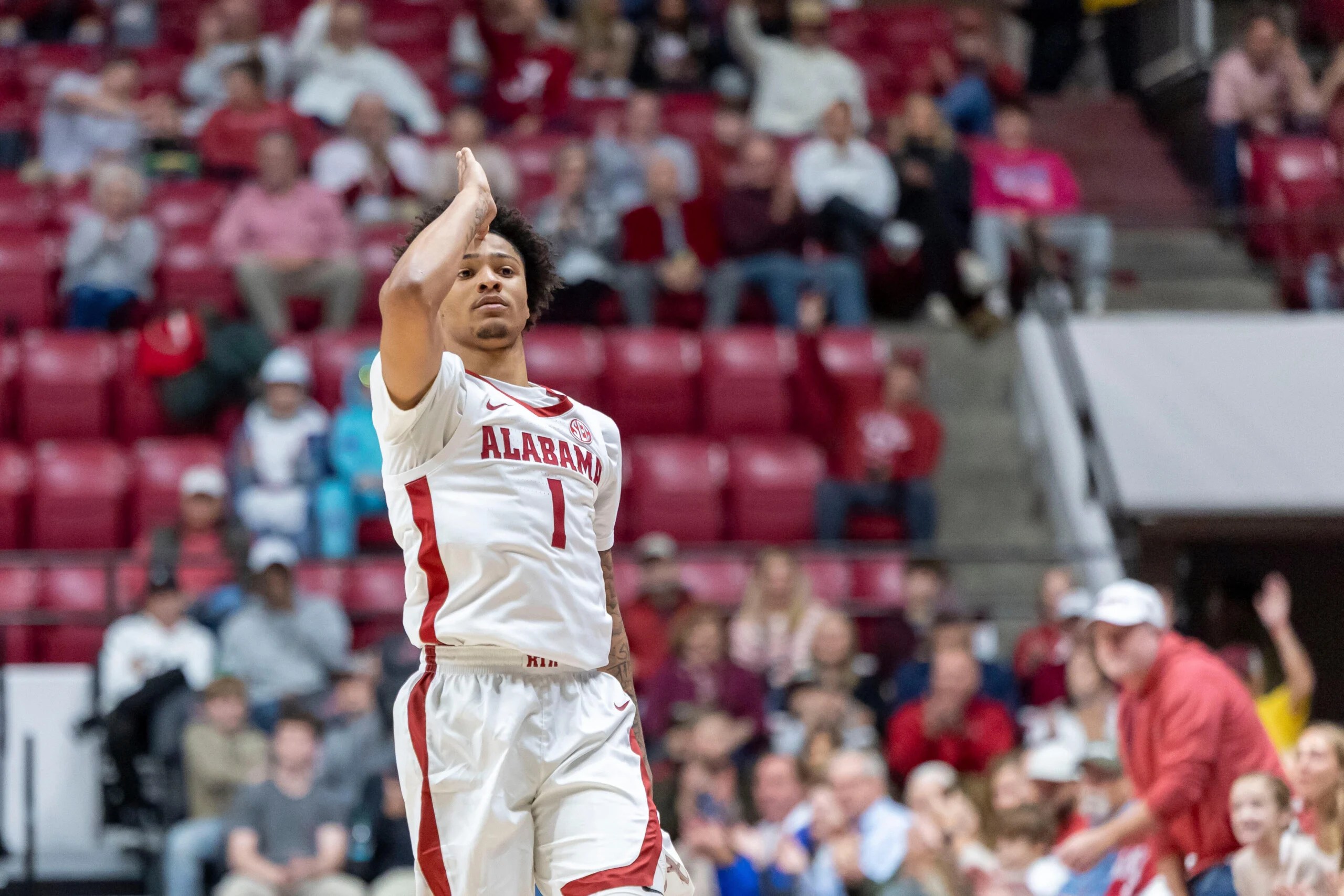
Jalil Bethea’s move from Miami to Alabama represents a high-stakes portfolio reallocation aimed at recovering value after a freshman season that failed to meet his five-star promise. The decision to join a high-octane, NBA-feeder program like Alabama under Coach Nate Oats was analytically sound, targeting the speculative assets of professional development, competitive visibility, and system fit. However, the 2025-26 season has revealed a significant miscalculation in the assessment of “immediate returns,” particularly regarding guaranteed on-court opportunity. Bethea has transitioned from a 16-game starter at Miami to a deep reserve at Alabama, seeing his role and production diminish dramatically. While the long-term developmental bet on Alabama’s infrastructure remains plausible, the short-term cost to his draft stock and rhythm is substantial. Therefore, his strategic transfer decision earns a C+ grade: a conceptually logical move undercut by flawed execution and unforeseen constraints, leaving his professional pathway more uncertain than anticipated.

II. PORTFOLIO ANALYSIS: THE ALABAMA TRANSFER DECISION

Bethea’s portal entry was a forced recalibration after a freshman year at Miami (7.1 PPG, 32.6% 3PT) that failed to solidify his status as a one-and-done prospect. His choice of Alabama was a bet on specific appreciating assets.

  • Targeted Speculative Assets:
    • Developmental Infrastructure & System Fit: This was the core bet. Alabama’s NBA-style, pace-and-space offense under Nate Oats, which prioritizes three-point volume and transition play, appeared tailor-made for Bethea’s reputation as a movement shooter and explosive athlete. The program’s recent success with guard development (e.g., Brandon Miller, Josh Primo) offered a credible professional pathway.
    • Competitive Success & Exposure: Moving to the SEC and a perennial NCAA Tournament contender offered a higher platform for March visibility, a critical factor for draft stock.
    • Brand Growth: Association with a top-10 national program enhances marketability, potentially offsetting any relative NIL disparity from leaving Miami.
  • Compromised Immediate Returns:
    • Projected On-Court Opportunity: This is where the portfolio has most underperformed. Bethea’s role has not materialized as likely projected. He is averaging only 10.1 minutes per game off the bench for Alabama, a stark decrease from his 19.0 minutes at Miami. In recent games, his playing time has often been in the single digits.
    • Statistical Contribution: His per-game averages at Alabama (5.4 PPG, 2.2 REB) are below his Miami output, and his shooting efficiency (40.0% FG, 34.3% 3PT) has not made the significant leap required.
  • Structural Constraints Encountered: Bethea entered a saturated market for touches at Alabama. The Crimson Tide’s offense runs through established, high-usage stars like Mark Sears (21.6 PPG), creating a hierarchy difficult for a new transfer to crack. The information asymmetry of the portal—where a player cannot fully gauge future roster composition and internal competition—has proven to be a decisive factor limiting his agency.

III. ON-COURT PERFORMANCE & SKILL ASSESSMENT

Bethea’s season is a tale of two data sets: encouraging per-minute efficiency obscured by a lack of consistent opportunity.

Statistical Profile & Context:

  • Per-Game (Alabama): 5.4 PPG, 2.2 RPG, 0.8 APG, 40.0% FG, 34.3% 3PT, 82.6% FT in 10.1 MPG.
  • Per-36 Minute Projection: 18.9 PPG, 7.8 RPG, 2.8 APG. This highlights his latent scoring potential but also underscores the central dilemma: he has been unable to earn the minutes to actualize it.
  • Efficiency Metrics: A solid 56.9% True Shooting percentage and 124.5 Offensive Rating indicate he produces effectively when on the floor, but a high 22.8% Usage Rate shows he needs the ball in his hands to be impactful.

Qualitative Skill Breakdown:

TraitGradeAnalysis & Evidence
Shooting & Scoring InstinctsB+Remains his premier skill. NBA-level range with a quick, fluid release. Capable of explosive scoring bursts (21 pts vs UTSA, 15 vs Yale). However, consistency from deep remains elusive (34.3% 3PT), partly due to erratic minutes.
Athleticism & FinishingA-An explosive leaper with “big time above the rim ability”. Can finish with power or finesse in traffic. This trait is underutilized in his limited role.
Ball-Handling & CreationB-Has a quick first step and can create separation for his shot. Can be a ball-dominant, score-first guard; playmaking for others (0.8 APG) is a clear weakness and limits his ability to impact games without scoring.
Defensive EngagementC-The most consistent critique from scouts. Possesses the physical tools (size, athleticism) but shows inconsistent focus and effort. Averaging only 0.2 steals per game, he does not use his athleticism to be a disruptive force.
Decision-Making & ResilienceC+Can force shots and struggle to impact the game when his shot isn’t falling. The emotional toll of a reduced role is visible in fluctuating performances, raising questions about adaptability and mental toughness in adversity.

IV. PROFESSIONAL PROJECTION & PATHWAY ANALYSIS

Bethea’s draft stock has cooled from its five-star, potential lottery-pick origins. He is now viewed as a potential second-round pick in the 2026 draft, a projection that hinges almost entirely on speculative upside rather than proven production.

  • Archetype: He profiles as a microwave scoring guard—a player who can enter a game and instantly provide offensive sparks. His ceiling at the next level is a dynamic bench scorer, but his floor is a player whose limited defensive focus and playmaking make him a situational specialist.
  • Critical Development Needs: To secure and improve his draft position, Bethea must demonstrate tangible growth in two areas scouts consistently flag:
    1. Consistent Defensive Effort: Translating athletic tools into tangible defensive stops and disruption.
    2. Playmaking & Game Feel: Developing a more nuanced understanding of how to create for teammates and impact winning beyond scoring.
  • The Alabama Paradox: The very program chosen for development has, thus far, been unable to provide him the consistent in-game reps required to showcase and refine these skills. His development is occurring largely in practice, which is insufficient for NBA evaluators who need to see game-speed application.

V. CONCLUSION & STRATEGIC RECOMMENDATIONS

Bethea stands at a career inflection point. The logic behind the Alabama transfer—betting on a superior developmental system—is not yet invalidated, but the timeline for return has lengthened dangerously.

Final Assessment:
Bethea retains the raw talent of a high-major contributor and future professional. His shooting touch, athletic pop, and scoring instincts are undeniable. However, his freshman stagnation at Miami has been followed by a sophomore season of disconcerting marginalization at Alabama. The “portfolio” is underperforming, with the asset of immediate opportunity having depreciated significantly.

Recommendations:

  1. For the Remainder of 2025-26: Bethea must maximize every minute, however sparse, by showcasing an unmatched competitive fire—particularly on defense. Earning coach’s trust through effort is the only path to increased role.
  2. Offseason Decision Point: Following this season, a clear-eyed assessment is required. If a pathway to a starting or major sixth-man role at Alabama in 2026-27 is not concrete, he must seriously consider re-entering the transfer portal. His next move would need to prioritize a guaranteed, featured role at a strong mid-major or lower-tier high-major program where he can be “the man,” rebuild his value, and prove he can lead a team to success.
  3. Long-Term Focus: Regardless of venue, the developmental checklist is non-negotiable: commit to being a defensive presence, add strength to finish through contact, and work diligently to become a more willing and capable passer.

Scout’s Bottom Line: Jalil Bethea’s story is a cautionary tale of the modern era’s complexities. A player’s agency in choosing a program is real, but it is powerfully mediated by structural factors like roster depth and coaching preference. Bethea bet on the right system but misjudged the situation. His undeniable talent is currently trapped in a role that does not serve his development or draft prospects. The coming months will determine if he can break free and reclaim the trajectory expected of a player with his pedigree.

The Next Crown Prince of Harrisburg Hardwood: Why Shakur Starling is Central Pennsylvania’s Must-See Prospect

PHILADELPHIA, PA – In the constellation of American basketball talent, certain places have become fixed stars, producing a rhythm and a archetype of player as reliable as the changing seasons. New York City guards carry a certain swagger, Philadelphia guards a specific mental and physical toughness. And in recent years, a new locus has emerged, a crucible for backcourt talent that demands the attention of college basketball’s power brokers: Harrisburg, Pennsylvania.

Shakur Starling, Central Dauphin junior guard

This is not a fluke, but a tradition being built in real time. It’s a lineage defined by Chance Westry and Malachi Palmer—elite guards who honed their games here before taking the well-trod path to national academies and, subsequently, the bright lights of the Big 10, ACC and Big East. Their departures created a vacuum, a question of who would next assume the throne. The answer is already here, and he is not following the same script. His name is Shakur Starling, a junior guard at Central Dauphin High School, and he is poised to become the most compelling recruitment story in the region, a prospect whose substance may ultimately outshine even his considerable flash.

The Harrisburg Guard: A New Archetype

To be a Harrisburg guard in 2025 means something. It carries a weight and an expectation. It means you are battle-tested in gyms where space is a luxury and physicality a given. It implies a defensive tenacity, a chip-on-the-shoulder grit forged in the crucible of Mid-Penn Conference play. Westry and Palmer established this brand—long, athletic, versatile perimeter players who could dictate the terms of a game on both ends.

Shakur Starling is the latest model, inheriting and evolving this prototype. He has assumed the mantle as “the guy” in Harrisburg, not through self-proclamation, but through a quantum leap in performance over the past year. His game is a testament to the area’s burgeoning reputation, but his story, rooted deeply in family and faith, suggests a different kind of journey—one that will unfold not at a distant basketball factory, but right here at home.

Shyheim Starling (l), freshman guard and Shakur Starling (r)

A Foundation of Character, A Profile of Excellence

Before the first crossover dribble is admired, one must understand the foundation. Starling is, by every account, poised and unfailingly respectful—a young man who looks adults in the eye and understands the weight of “please” and “thank you.” This is not incidental. It is the direct product of an exceptional upbringing by his parents, who are raising Shakur and his three brothers with a clear emphasis on faith, academics, and accountability.

This bedrock character is his first and most persuasive selling point. He is an outstanding student from a family deeply grounded in their faith. In an era of transfer portals and fleeting commitments, a prospect like Starling represents stability. It is why he already holds an offer from John Griffin at Bucknell University, a Patriot League institution that prizes scholars as much as scorers. One can confidently project that nearly every Ivy and Patriot League program will soon enter the fray, seeing in Starling the ideal marriage of academic readiness and athletic promise.

The Game Travels: From Central Dauphin to the EYBL

Do not, however, mistake this strong academic and moral profile for a limited game. Starling’s talent transcends zip codes. He has already proven his mettle on the Nike EYBL circuit, the most competitive grassroots basketball arena in the country, playing for Baltimore-based Team Melo. This is critical. It demonstrates his skills are not merely a product of local competition; they translate against national, elite-level peers.

Starling knocks down a 3 pointer in tough loss to Bonner

On this stage, his athleticism announces itself without subtlety. He possesses a quick-twitch explosiveness and open-floor speed that are innate—you cannot teach a player to get off the ground as he does. In transition, he is a runaway train, capable of finishing through contact and with the acrobatic body control to convert seemingly impossible circus shots at the rim. Defensively, his combination of that athleticism, a strong motor, and high effort makes him a nightmare. He has the tools to be a lockdown, multi-position defender, the kind of “two-way potential” that jumps off the screen to college coaches.

The Blueprint for a High-Major Future

From a purely basketball perspective, Starling is just beginning to scratch the surface. At Central Dauphin, he often operates as an off-guard in half-court sets, using his athleticism to slash and attack. His ability to go through high school bigs is already notable. Yet, the roadmap to becoming a high-major standout is clear.

First, the ceiling of his offensive game will be determined by the consistency and range of his three-point shot. He is solid now, but to transition from an athletic slasher to an elite “3-and-D” wing—the most coveted commodity in modern basketball—requires making that significant leap. Second, to become a primary ball-handling playmaker at the next level, his decision-making must continue to evolve, learning patience and picking his moments within a system.

The raw materials, however, are undeniable. As one evaluator noted, “The athletic prowess is there as far as just speed, explosiveness… When he gets to college, when you have more space, he is going to be a problem for four years.”

Starling matched up against Bonner-Prendie star guard Korey Francis

A Different Path, A Loyal Legacy

This is where Shakur Starling’s story diverges from his predecessors. His deep commitments to family, church, school, and teammates make a late transfer to a national academy highly unlikely. Unlike Westry and Palmer, we are likely to see this recruitment play out in real time, in the gym at Central Dauphin. This loyalty is rare, and it adds another layer of allure for college coaches seeking a program pillar, not just a transient talent.

The time for passive interest is over. Coaches from the CAA, Atlantic 10, and, yes, the Big East, should be making their pilgrimages to Harrisburg now. They will see a top-tier mid-Atlantic prospect whose best basketball is emphatically ahead of him. They will see a scholar-athlete whose character is as polished as his crossover. And they will see the next chapter in the story of the Harrisburg guard—a chapter defined not by departure, but by legacy; not just by athleticism, but by an unwavering foundation.

Shakur Starling is more than a prospect; he is a statement. He proves that in today’s nomadic basketball landscape, a crown prince can choose to build his kingdom at home, and in doing so, become an even more compelling figure for the programs wise enough to see the complete picture.

DJ Wagner: The Quiet Triumph of a Former Prodigy

CAMDEN, NJ – In the high-stakes theater of modern college basketball, where narratives are written in highlight reels and legacies are judged by draft night, it is easy to miss a story of quiet, consistent triumph. The case of DJ Wagner, the once-heralded prodigy from Camden, New Jersey, is too often framed as a tale of unmet potential. The chorus of critics points to the fact that he did not explode onto the scene as a one-and-done superstar, that other guards have seized the spotlight at Kentucky and now Arkansas. But to view his career through this narrow lens is to misunderstand the very definition of success. DJ Wagner is not a disappointment; he is the model of a modern, successful college athlete, building a formidable and valuable career on his own terms.

The Myth of the “One-and-Done” and the Reality of Role Players

The burden of expectation placed on DJ Wagner’s shoulders was immense. As the third-generation McDonald’s All-American, his destiny seemed preordained. The blueprint, crafted by his fervent supporters, was simple: dominate from day one, lead the nation in scoring, and head to the NBA in a blaze of glory. When that did not happen, the narrative quickly soured.

What this critique ignores is the fundamental nature of elite team sports. At programs like Kentucky and Arkansas, the arrival of other talented players like Reed Sheppard or Boogie Fland is not a failure on Wagner’s part; it is the reality of competing at the highest level. The mark of a truly valuable player is not always his ability to dominate the ball, but his capacity to adapt and contribute to winning. Wagner has done exactly that. He has consistently been the player his Hall of Fame coach, John Calipari, trusts to start and play substantial minutes—71 starts in 72 career games. This is not a consolation prize; it is the ultimate sign of respect. Coaches who are paid millions to win games do not entrust key roles to players who do not help them achieve that goal.

A Competitor, Not a Statistic

To watch DJ Wagner play is to see a young man who has mastered the unglamorous essentials of winning basketball. In an era where offensive fireworks often come at the expense of defensive effort, Wagner takes ferocious pride in his work on both ends of the floor. He is a tenacious on-ball defender, a trait that never shows up in a headline but is priceless in the grind of a Southeastern Conference schedule.

Furthermore, his conservative, turnover-averse style is a strategic asset. While flashier players may generate more buzz, Wagner’s steady hand in the backcourt ensures offensive stability. His improved efficiency this season—shooting a remarkable 52.4% from the field—demonstrates a player who is refining his game, making smarter decisions, and growing into a more complete athlete. This is not stagnation; it is maturation.

Redefining Value in the NIL Era

The financial landscape of college sports has fundamentally changed, and any evaluation of a player’s career must account for this new reality. The old model of “one-and-done or bust” is obsolete. DJ Wagner, through his consistency and marketability, is projected to earn between $3 and $4 million in NIL compensation over his college career. This is not a footnote; it is a central chapter in his story. He is achieving significant financial prosperity while simultaneously earning a degree and developing his game in a world-class environment.

This financial success, coupled with his on-court reliability, positions him perfectly for a long professional career, whether in the NBA, the G League, or overseas. He is building a sustainable athletic livelihood, insulated from the volatility that often shatters the dreams of players who peak too early or are built on a less complete foundation.

The Camden Legacy: More Than Just Points

Finally, the criticism from his hometown of Camden, while born of a deep and admirable pride, misses a crucial point. Representing a city is about more than just box scores and draft position; it is about character, resilience, and integrity. Through the noise and the shifting spotlight, DJ Wagner has carried himself with a quiet dignity. He has been a leader, a teammate, and an exemplary ambassador for his family and his city. He has shown the young people of Camden that success is not a single, fleeting moment of glory, but a sustained journey of hard work, adaptation, and professionalism.

(L-R) D.J. Wagner, Milt Wagner and Dejuan Wagner after the Simon Gratz vs. Camden H.S.boys basketball game at Woodrow Wilson H.S. in Camden, NJ on December 20, 2019. Camden won 72-52.

DJ Wagner’s career is a success story of the highest order. He has navigated the immense pressure of his pedigree, adapted to the fierce competition of top-tier college basketball, and carved out a role that makes his teams better. He is financially secure, fundamentally sound, and on the cusp of a professional career. In the end, the most persuasive argument for DJ Wagner is not found in defying expectations, but in transcending them. He has chosen substance over spectacle, and in doing so, he has built a career that is not only strong but truly admirable.

Wanamaker takes the Reins at Roman Catholic: The Crown Jewel of Philadelphia Scholastic Basketball

By Delgreco K. Wilson

A Century of Dominance in the City of Brotherly Love

PHILADELPHIA, PA – Philadelphia’s basketball heritage reads like a who’s who of hardwood legends—from Wilt Chamberlain’s earth-shaking dunks at Overbrook to Rasheed Wallace’s dominant reign at Simon Gratz. Yet when the final buzzer sounds on this century-long game of Philadelphia basketball supremacy, one program stands above all others: Roman Catholic High School and its record 34 Philadelphia Catholic League (PCL) championships. No other institution has so consistently combined competitive excellence with transformative life lessons for young men, creating a basketball dynasty that has flourished across generations.

The numbers alone tell a compelling story. Since the Catholic League’s formation, Roman Catholic has captured nearly twice as many titles as its nearest competitor (Neumann-Goretti with 22). This isn’t merely a statistic—it’s a testament to an enduring culture of excellence that has survived economic downturns, demographic shifts, and the ever-changing landscape of scholastic sports. From Billy Markward’s nine championships between 1922-1934 to Chris McNesby’s most recent titles in 2023-2024, Roman Catholic has set the gold standard for Philadelphia basketball.

The Coaches Who Built a Legacy

What separates Roman Catholic from other storied programs isn’t just the quantity of championships, but the quality of leadership that has sustained success across distinct basketball eras. The program’s foundation was laid by Billy Markward, whose teams dominated the 1920s and 1930s with an unprecedented nine PCL titles. His squads set a standard of excellence that would become the program’s hallmark—a blend of disciplined play and relentless competitiveness.

The torch was later carried by Speedy Morris, who ushered in a new golden age during the 1970s with six championships between 1969-1980. Morris’s teams embodied Philadelphia basketball—tough, fundamentally sound, and mentally resilient. His success proved Roman Catholic could adapt to the modern era while maintaining its core values.

Roman Catholic Coaches – Dennis Seddon, Brad Wanamaker and Chris McNesby

Then came Dennis Seddon, whose tenure from the late 1980s through 2000 represents perhaps the most dominant stretch in PCL history. Nine championships in twelve years (1989-2000) established Roman Catholic as the league’s preeminent power. Seddon’s influence extended beyond wins; he mentored future coaches like Chris McNesby, creating a coaching tree that would extend the program’s success into the 21st century.

McNesby himself—a Roman Catholic alum who played under Seddon—added four PCL titles and three PIAA state championships across two coaching stints (2008-2016 and 2021-2024). His 270-73 career record reflects both consistent excellence and the ability to develop players for life beyond basketball—a hallmark of the Roman Catholic philosophy. As McNesby noted, “It’s after they’re finished playing, seeing them get jobs and seeing them be successful fathers and husbands, and then see them passing it forward”.

Roman Catholic Freshman Shayne Jackson

More Than Championships: The Roman Catholic Difference

Roman Catholic’s supremacy isn’t measured solely in banners. The school has long served as a transformative institution for Philadelphia’s youth, particularly those from working-class backgrounds. Founded in 1890 as the nation’s first free Catholic high school for boys, Roman Catholic maintained its commitment to accessibility even after transitioning to tuition-based education in the 1960s. This mission—to provide “a comprehensive academic curriculum within a disciplined Catholic environment”—has shaped generations of student-athletes.

The school’s impact extends far beyond the court. As McNesby reflected on his own experience: “You really meet kids from all different areas, backgrounds, demographics, financial status. It helps you grow up pretty quickly, and you really learn how to get along with others”. This environment fosters the type of personal growth that produces not just great players, but great men—a fact borne out by the program’s alumni network of successful professionals across industries.

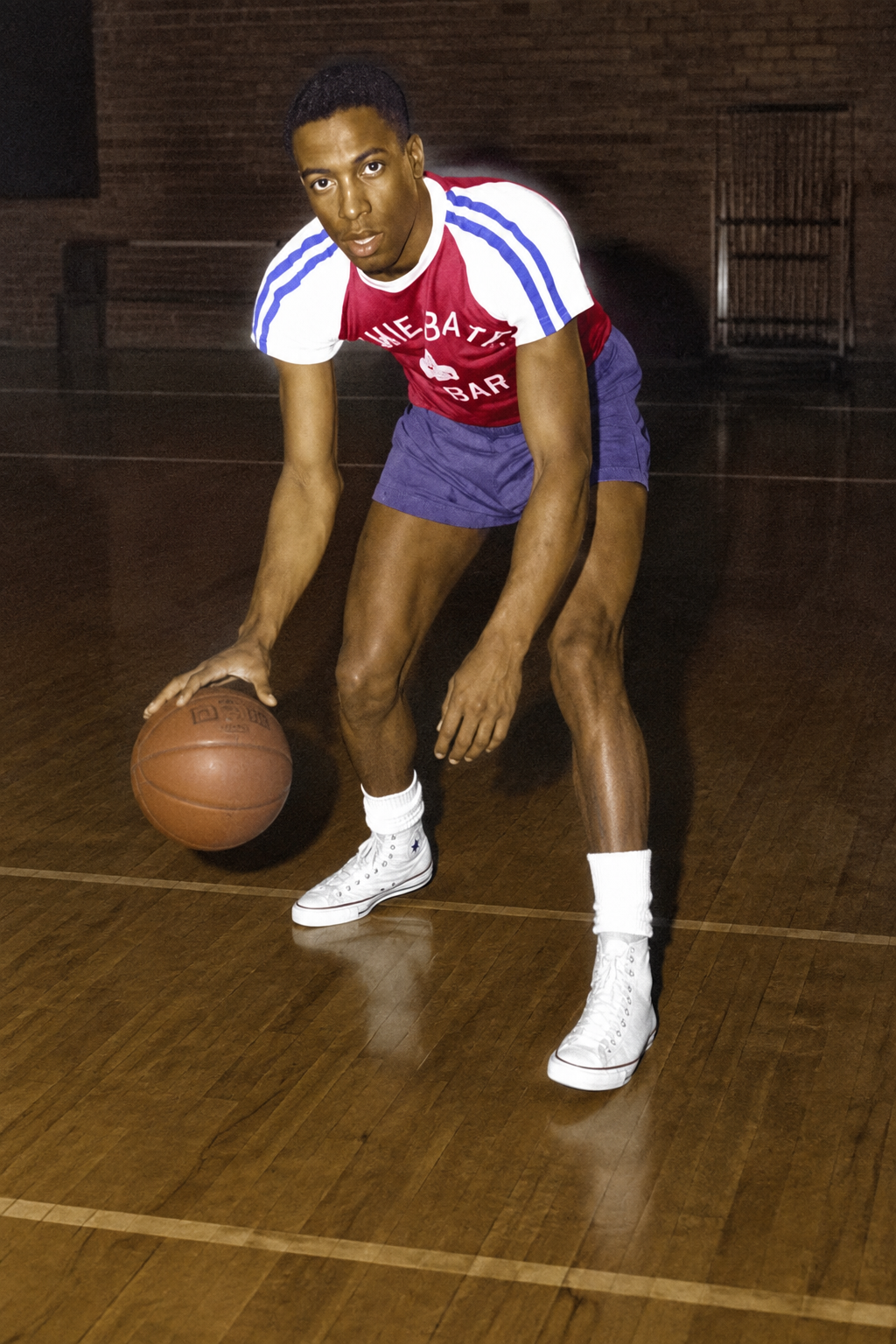
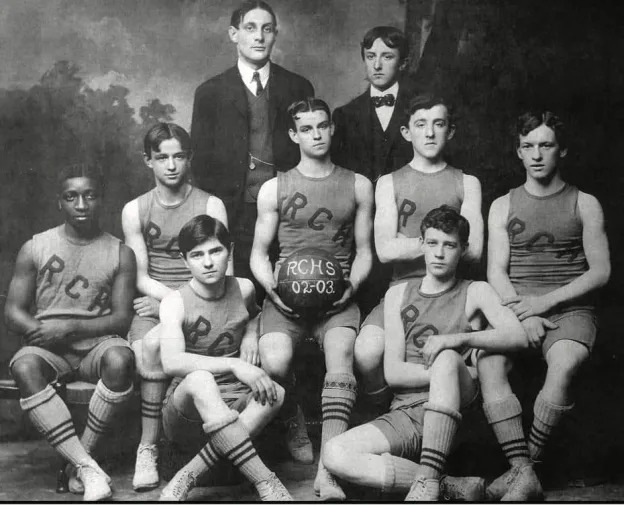
Roman Catholic’s 1902 Basketball Team featuring John Lee (far left)

Roman Catholic has also been a pioneer in racial progress. In 1902—just 12 years after its founding—the school fought for the inclusion of John Lee, the first Black player in the Catholic League. This legacy makes Brad Wanamaker’s recent appointment as head coach particularly significant. As the program’s first Black head coach and a distinguished alum (Class of 2007), Wanamaker represents both continuity and progress. His hiring—praised by alumni like Mike Ringgold as proof that “Roman is the best high school job in the city”—signals the program’s commitment to opportunity and meritocracy.

The Wanamaker Era: Tradition Meets the Future

Brad Wanamaker’s ascent to head coach represents a full-circle moment for Roman Catholic basketball. A 2007 graduate who led the Cahillites to a PCL championship that year, Wanamaker brings unique credentials: honorable mention All-American at Pittsburgh, 11-year professional career (including four NBA seasons), and firsthand experience of Roman Catholic’s transformative culture. As he noted upon his hiring: “Roman changed a lot in my life coming in, so I feel like I’m forever indebted to them, and what better way to give back than leading the team?”

Wanamaker’s coaching philosophy blends old-school toughness with modern player development. “Better men is the biggest key,” he emphasizes. “Going through adversity, perseverance and being from Philly, just that toughness”. This approach resonates with Philadelphia basketball purists while addressing contemporary challenges facing young athletes. His professional experience—including stints with the Boston Celtics and Golden State Warriors—provides invaluable perspective for players aspiring to collegiate and professional careers.

Notably, Wanamaker represents a new generation of Roman Catholic leadership while maintaining ties to the program’s storied past. He played under Dennis Seddon and served as an assistant to Chris McNesby, absorbing lessons from both mentors. As McNesby observed: “We were riding together to a game and Brad said ‘I’m ready’. After that I felt it was time for me to step aside…The program is in great hands”. This seamless transition exemplifies Roman Catholic’s unique ability to renew itself while honoring tradition.

Conclusion: The Standard Bearer

Philadelphia’s basketball landscape features numerous legendary programs—Overbrook’s Wilt Chamberlain, West Catholic’s Ernie Beck, Simon Gratz’s Rasheed Wallace, Neumann-Goretti’s Carl Arrigale dynasty. Each has compelling claims to greatness during specific eras. But when evaluating sustained excellence across generations, Roman Catholic stands alone.

The numbers—34 Catholic League championships, multiple coaching dynasties, countless college and professional players—only begin to tell the story . Roman Catholic’s true greatness lies in its ability to win at the highest level while fulfilling its mission to develop “men of personal integrity”. From Thomas E. Cahill’s original vision in 1890 to Brad Wanamaker’s groundbreaking appointment in 2025, the school has remained true to its values while adapting to basketball’s evolution.

As Philadelphia basketball enters its second century, Roman Catholic remains the gold standard—a program where championships and character development go hand-in-hand. The Cahillites’ purple and gold banners represent more than victories; they symbolize a tradition of excellence that continues to shape Philadelphia’s basketball identity. In a city that treasures its hoops history, Roman Catholic stands as the most accomplished and influential program of them all.

The Danny Rumph Classic: How a Memorial Tournament Became Philadelphia’s Basketball Heartbeat

By Delgreco K. Wilson
August 10, 2025

PHILADELPHIA, PA — In a city where basketball is less a pastime than a birthright—where legends like Wilt Chamberlain, Earl Monroe, Gene Banks and Rasheed Wallace honed their games on cracked asphalt and in dimly lit rec centers—the Danny Rumph Classic has carved out its own special legacy. What began 20 years ago as a somber tribute to a fallen local star has grown into something far greater: a summer institution that embodies Philadelphia’s grit, camaraderie, and unwavering love for the game.

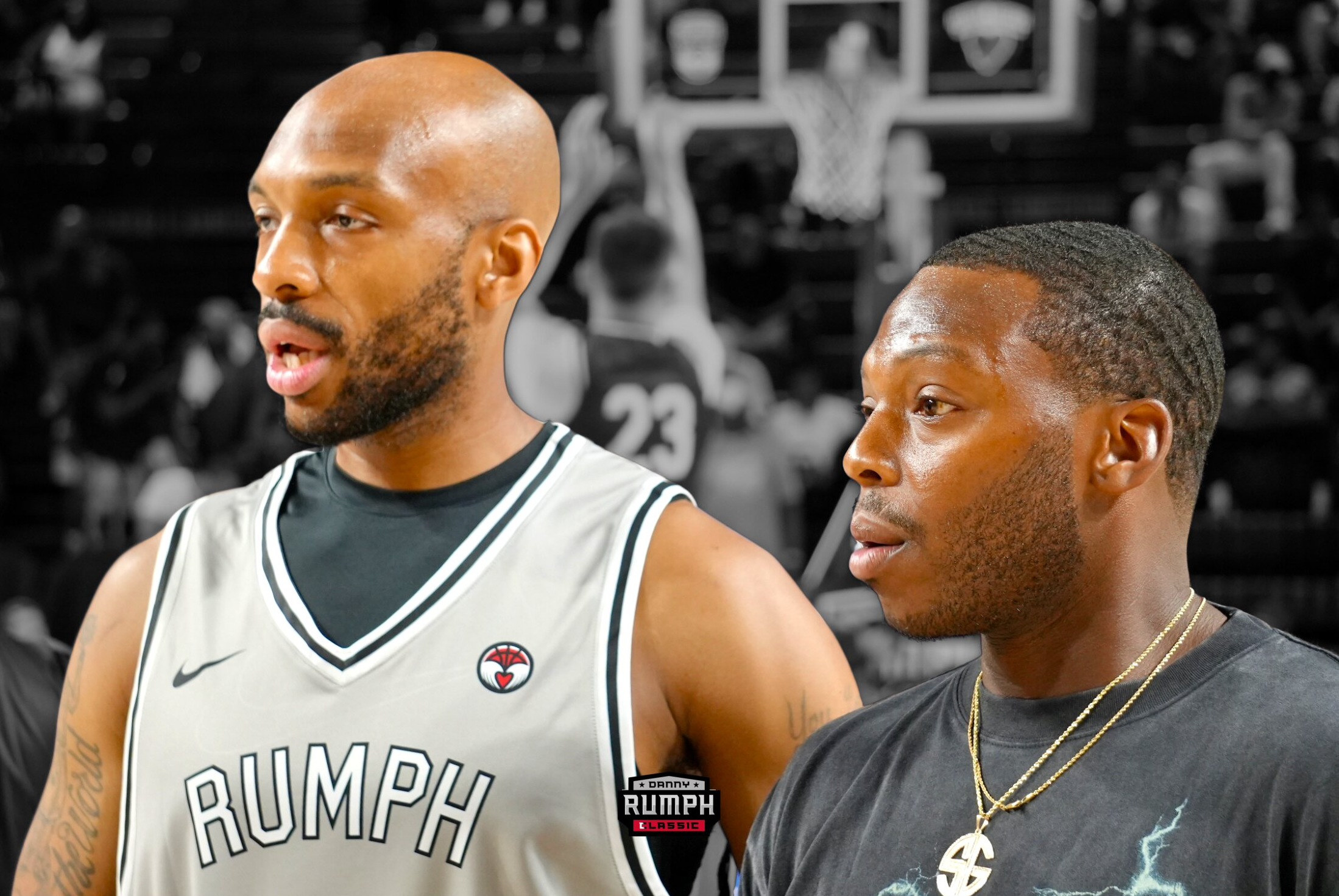
Marcus Randolph (St. Peter’s and Archbishop Wood alum) and Darris Nichols, La Salle University Head Coach

A City Forged on the Hardwood

Philadelphia’s basketball history runs deep. From the Big Five’s collegiate rivalries to the playground kings of Sonny Hill and Baker League fame, the City of Brotherly Love has long been a crucible for hoops talent. The Danny Rumph Classic, now in its 20th year, sits squarely in this tradition—a bridge between the past and present, where NBA stars share courts with neighborhood heroes and wide-eyed kids clutch free tickets at the door.

But unlike the storied Sonny Hill League or the fabled Donofrio Classic, the Rumph is more than just a showcase. It’s a lifeline. The tournament honors Danny Rumph, a 21-year-old Western Kentucky guard who collapsed and died in 2005 after a pickup game at Germantown’s Mallery Recreation Center, a victim of hypertrophic cardiomyopathy. His death galvanized friends and family to turn grief into action, launching a tournament to fund heart screenings and place defibrillators in gyms across the city.

This mission has been accomplished.

The Classic’s evolution mirrors Philadelphia itself. It’s scrappy (moving venues from rec centers to college arenas), inclusive (adding women’s pro games and youth clinics), and relentlessly purposeful.

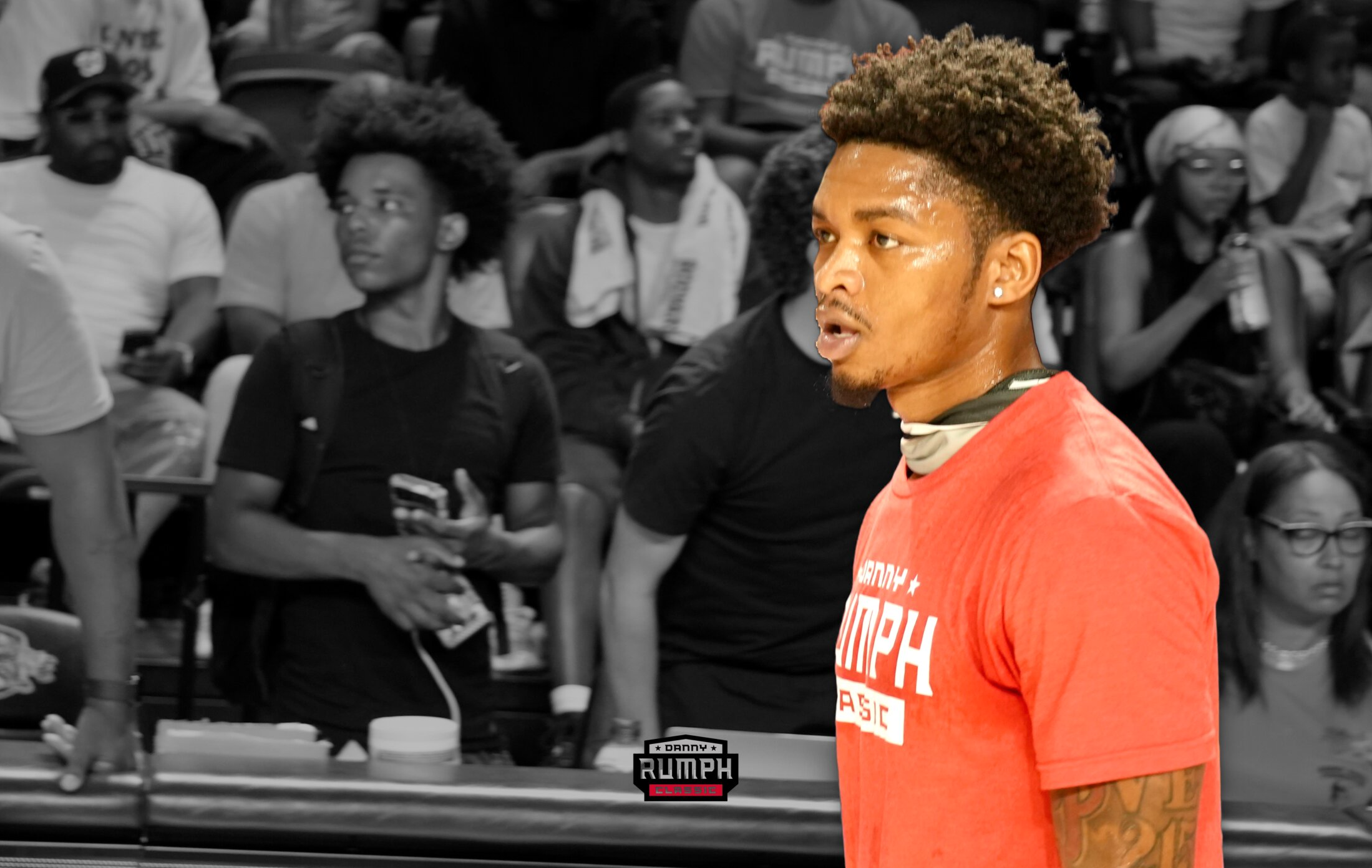
Hysier Miller (Temple and Neumann-Goretti alum)

From Germantown to the National Stage

The early years were intimate. The first Classic, held at the rec center later renamed for Rumph, drew 500 fans crammed so tightly they couldn’t see the out-of-bounds lines. Former NBA forward Hakim Warrick, a Rumph family friend, became the tournament’s first marquee participant, playing in all 12 of its early editions.

Then came the tipping point. In 2016, NBA superstar James Harden—then a Houston Rocket—showed up unannounced. The line outside La Salle’s Tom Gola Arena snaked down Wister Street, and social media lit up. “That’s when it went to the stratosphere,” said Marcus Owens, Danny’s uncle. Soon, Philly-connected NBA stars like Tyrese Maxey, Jalen Brunson, Bones Hyland and the Morris twins made the Rumph a summer pilgrimage. The tournament’s “Philly basketball festival” vibe—a mix of elite talent, trash talk, and communal pride—became its trademark.

Mike Watkins (Penn State and MCS alum)

More Than a Game

The Classic’s evolution mirrors Philadelphia itself. It’s scrappy (moving venues from rec centers to college arenas), inclusive (adding women’s pro games and youth clinics), and relentlessly purposeful. Viola “Candy” Owens, Danny’s mother, estimates the event has funded thousands of heart screenings and placed over 100 defibrillators in rec centers. One undiagnosed teen, flagged at a Rumph screening, underwent life-saving surgery—proof, as co-founder Mike Morak says, that “the basketball’s cool, but the mission’s the thing.”

The tournament also stitches together generations. Middle schoolers now scrimmage before the championship game, just as a young Jessie Moses once sat on the Morris twins’ bench, wide-eyed. Former players return as coaches; kids who once mopped floors now run the shot clock. “It’s all the people you grew up with,” Morak said. “This is the time you come back.”

A Tradition Built to Last

In a sports landscape where summer leagues often prioritize hype over heart, the Rumph Classic stands apart. It’s a living memorial—one that thrives not just on NBA star power but on Philly’s unshakable sense of community. As Marcus Owens put it: “We miss Danny every day. But we believe he’s looking down with a big smile.”

Two decades in, the Classic is no longer just a tournament. It’s a Philadelphia tradition—one that dribbles, defends, and saves lives with equal ferocity. And if the city’s basketball history is any guide, it’s only just getting started.

For schedules or to donate: rumphclassic.com 

The NBA Summer League: A High-Stakes Proving Ground for the Next Generation from Philly & Baltimore

LAS VEGAS — The NBA Summer League, an annual showcase held in the sweltering heat of July, is often dismissed as a series of glorified scrimmages. But for the young Philly and Baltimore area players fighting for their professional futures, it is anything but an exhibition. This is where dreams are validated, where undrafted free agents claw for contracts, and where first-round picks face their first real test against NBA-level competition. The stakes could not be higher.

Thomas Sorber, Oklahoma City Thunder

At its core, the Summer League serves as a bridge between college basketball and the pros—a no-man’s-land where potential meets scrutiny. The rosters are filled with recent draft picks, second-year players looking to prove they belong, and unsigned free agents desperate for a breakthrough. For every future All-Star who shines (think Damian Lillard in 2012 or Donovan Mitchell in 2017), there are dozens whose careers stall before they ever truly begin.

The audience in the gyms of Las Vegas, Salt Lake City, or Sacramento is not just made up of casual fans. NBA executives, scouts, and agents line the courtside seats, evaluating every crossover, every defensive rotation, every missed assignment. Overseas scouts linger as well, ready to offer lifelines to those who fall short of NBA expectations. A strong performance can mean a guaranteed contract; a poor one might relegate a player to the G League—or worse, professional obscurity.

Wooga Poplar, Chicago Bulls

For franchises, the Summer League is an early litmus test. Did the front office make the right draft pick? Is that raw prospect further along than expected? Can that overlooked college star translate his game to the pros? The answers aren’t always definitive—after all, Summer League success doesn’t always translate to the regular season—but the games provide the first real glimpse of how these players handle pressure, coaching, and the speed of the pro game.

And then there are the narratives: The second-round pick outplaying a lottery selection. The undrafted guard from a mid-major school dropping 30 points. The big man from overseas adjusting to the physicality of American basketball. These stories captivate because they are unscripted, unfiltered, and often unpredictable.

Derik Queen, New Orleans Pelicans

In a league where roster spots are scarce and margins for error are slim, the Summer League remains one of the few meritocratic spaces in professional basketball. It doesn’t guarantee stardom, but for those who seize the moment, it can be the first step toward something greater. For everyone else, it’s a reminder of just how fleeting opportunity can be.

The games may not count in the standings, but for these players from the mid-Atlantic region, they count for everything.

NBA Teams & Colleges Breakdown:

  • Atlanta Hawks
    • Dwight Murray Jr. – Rider
  • Boston Celtics
    • Zack Hicks – Temple/Penn State
    • Amari Williams – Drexel/Kentucky
  • Brooklyn Nets
    • TJ Bamba – Villanova/Oregon
    • Caleb Daniels – Tulane/Villanova
  • Chicago Bulls
    • Jahmir Young – Maryland
    • Wooga Poplar – Miami/Villanova
  • Dallas Mavericks
    • Jordan Hall – Saint Joseph’s (SJU)
  • Detroit Pistons
    • Zakai Zeigler – Tennessee
  • Golden State Warriors
    • Donta Scott – Maryland
  • Houston Rockets
    • Jermaine Samuels Jr. – Villanova
  • LA Clippers
    • Izaiah Brockington – Penn State/Iowa State
  • Los Angeles Lakers
    • Eric Dixon – Villanova
    • Julian Reese – Maryland
  • Memphis Grizzlies
    • Ace Baldwin Jr. – VCU/Penn State
    • Tyler Burton – Richmond/Villanova
    • Aaron Estrada – Alabama
  • Miami Heat
    • Steve Settle III – Temple
  • New Orleans Pelicans
    • Derik Queen – Maryland
    • AJ Hoggard – Michigan State/Vanderbilt
  • New York Knicks
    • Nick Jourdain – Temple/Memphis
    • Lance Ware – Kentucky/Villanova
  • Oklahoma City Thunder
    • Thomas Sorber – Georgetown
    • Cameron Brown – Saint Joseph’s (SJU)
    • Erik Reynolds II – Saint Joseph’s (SJU)
  • Philadelphia 76ers
    • Justin Edwards – Kentucky
    • Jack Clark – VCU
    • Andrew Funk – Bucknell/Penn State
  • Phoenix Suns
    • Rasheer Fleming – Saint Joseph’s (SJU)
    • Khalif Battle – Temple/Gonzaga
  • Portland Trail Blazers
    • Andrew Carr – Delaware/Wake Forest/Kentucky
  • Sacramento Kings
    • Daeqwon Plowden – Bowling Green
  • San Antonio Spurs
    • Jameer Nelson Jr. – Delaware/TCU
  • Toronto Raptors
    • Clifford Omoruyi – Rutgers/Alabama
  • Washington Wizards
    • Bub Carrington – Pittsburgh
    • Jamir Watkins – Florida State

Jerome Brewer’s La Salle University Homecoming: A Lesson in Maturity and Purpose

CAMDEN, NJ – In an era when college basketball players often chase the brightest spotlight or the most lucrative NIL deals, Jerome Brewer’s decision to return home stands as a rare act of introspection and social responsibility. The 6’8” forward, who has navigated a winding collegiate journey from Texas A&M Commerce to McNeese State, could have followed his former coach to North Carolina State or sought a bigger stage elsewhere. Instead, he chose La Salle University—not just for basketball, but to fulfill a deeper mission.

Brewer’s choice reflects a maturity beyond his years. At a time when young athletes are frequently pressured to prioritize immediate success, he considered something more enduring: his ability to influence the next generation. His insistence that La Salle facilitate access for Camden City Public School students to games and practices isn’t a mere publicity gesture; it’s an intentional effort to reinforce the values that shaped him.

“Sports act as an agent of socialization,” Brewer said, articulating a perspective more common among seasoned coaches than 22-year-old players. “They teach values, behaviors, and skills—teamwork, communication, resilience.” His words underscore an awareness of basketball’s broader role, one that extends far beyond the box score.

This understanding didn’t emerge in a vacuum. Brewer’s formative years were spent in Camden’s gyms, where the game was both an escape and an education. After a brief stint in the Philadelphia Catholic League, he returned to Camden High, helping restore its basketball prominence alongside future Division I standouts. When college offers didn’t meet his expectations, he bet on himself—first at prep school, then in the Southland Conference, where he blossomed into an All-League performer before injury intervened.

His resilience was tested again last year when he redshirted at McNeese State, biding his time for the right opportunity. When it arrived, he weighed his options with the discernment of someone who recognizes that a career is more than stats or conference prestige. He thought of his younger brother, Domani, a budding seventh-grade phenom who now has a front-row seat to his brother’s final collegiate chapters. He thought of Camden’s kids, who will see in him a path forward.

Camden Mayor Vic Carstarphen, a former Temple standout under John Chaney, praised Brewer’s character, calling him “one of the finest student-athletes to come through Camden in recent years.” City Councilman Arthur Barclay, who played for John Calipari at Memphis, highlighted Brewer’s potential as a role model: “He was one of them not long ago. Now, he’s showing them what’s possible.”

La Salle, under new coach Darris Nichols, gains not just a versatile forward who can stretch defenses and guard multiple positions, but a leader who grasps the weight of his platform. In return, Brewer gets a chance to cement his legacy where it matters most—at home.

In an age of fleeting allegiances and transactional relationships, Brewer’s decision is a reminder that some choices are about more than basketball. They’re about purpose. And in that regard, his homecoming is already a victory.

The Rise of Julian Reese: A Quiet Force in a Basketball Dynasty

COLLEGE PARK, Md. — On a crisp Saturday afternoon in March, senior forward Julian “JuJu” Reese stepped onto the court at the Xfinity Center for the final time in his collegiate career. With 19 points, 11 rebounds, and a commanding presence in the paint, Reese led the No. 11 Maryland Terrapins to a 74-61 victory over Northwestern. It was a fitting farewell for the Baltimore native who has quietly become one of the most dependable and impactful figures in college basketball, even as his older sister, Angel Reese, has become a national icon and a lightning rod for conversation in the sports world.

The Reese family is basketball royalty. Julian’s mother, Angel Reese Sr. (née Webb), was a standout at UMBC in the late 1980s and early 1990s, amassing 1,390 points and 932 rebounds—numbers that Julian has nearly mirrored in his own career. His aunts also played Division I basketball, and the family’s love for the game runs deep. But while Julian’s older sister, Angel, has become a household name for her brash confidence, outspoken personality, and trailblazing impact on women’s basketball, Julian has carved out his own path—one defined by steady growth, quiet determination, and an unwavering commitment to his team.

A Legacy in the Making
Julian Reese arrived at the University of Maryland in the fall of 2021 as a highly touted recruit from St. Frances Academy, a Baltimore-based basketball powerhouse. Standing at 6-foot-9 with a wingspan that seemed to stretch from baseline to baseline, Reese was a physical specimen with raw potential. He chose Maryland over offers from Seton Hall, LSU, and Temple, among others, and immediately made an impact as a freshman. Despite playing just 17.7 minutes per game, he averaged 5.7 points and 4.4 rebounds, showing flashes of the dominant force he would become.

His freshman year, however, was marred by turmoil. Eight games into the season, head coach Mark Turgeon resigned, and interim coach Danny Manning took over. The Terps finished a disappointing 15-17, but Reese’s potential was undeniable. When Kevin Willard was hired as head coach in the off-season, Reese made the decision to stay at Maryland rather than enter the transfer portal—a choice that would prove pivotal for both him and the program.

Under Willard’s guidance, Reese blossomed. As a sophomore, he became a full-time starter, nearly doubling his production to 11.4 points and 7.2 rebounds per game. Maryland improved to 22-13 and made a second-round appearance in the NCAA tournament. By his junior year, Reese had established himself as one of the top frontcourt players in the Big Ten, averaging 13.7 points, 9.5 rebounds, and 1.9 blocks per game.

This season, Reese has been the anchor of a resurgent Maryland team. Alongside his former S. Frances Academy teammate, Derik Queen, Reese has helped the Terps return to national prominence. Heading into the Big Ten tournament, Maryland is ranked 13th in the nation, with Reese leading the charge. He ranks second in the Big Ten in offensive rebound percentage and first in defensive rating, a testament to his relentless work ethic and basketball IQ.

The Reese Family Dynamic
The Reese siblings are a study in contrasts. Angel, the older sister, is a force of nature—charismatic, outspoken, and unapologetically herself. She has become a cultural icon, using her platform to advocate for women’s sports and empower young girls. Her larger-than-life personality has made her one of the most recognizable athletes in the world, and her success at LSU, including a national championship in 2023, has cemented her legacy as one of the greatest players in women’s college basketball history.

Julian, by contrast, is the quiet sibling. Reserved and introspective, he prefers to let his game do the talking. While Angel thrives in the spotlight, Julian is more comfortable in the shadows, focusing on the nuances of his craft. Yet, despite their differences, the bond between the two is unshakable. Angel has been one of Julian’s biggest supporters, often cheering him on from the stands alongside their mother, grandparents, and extended family.

Their contrasting personalities reflect the duality of the Reese family’s basketball legacy. Angel is the trailblazer, the one who pushes boundaries and challenges norms. Julian is the steady hand, the one who embodies the fundamentals and traditions of the game. Together, they represent the past, present, and future of basketball—a sport that has been the lifeblood of their family for generations.

A Future in the NBA
As Julian’s collegiate career winds down, the question on everyone’s mind is whether he has what it takes to succeed at the next level. The answer, according to scouts and analysts, is a resounding yes. Reese’s combination of size, athleticism, and defensive prowess makes him a legitimate NBA prospect. His ability to finish around the rim, coupled with his elite rebounding and shot-blocking skills, has drawn comparisons to players like Clint Capela and Jarrett Allen.

While Reese’s game is not without its limitations—he has attempted just one three-pointer in the past three seasons—his strengths far outweigh his weaknesses. His mobility and versatility on defense, in particular, make him an attractive option for NBA teams in need of a rim protector and rebounder.

A Legacy Secured
Julian Reese’s journey at Maryland has been one of perseverance and growth. From a raw freshman navigating a coaching change to a senior leader poised to make a deep tournament run, Reese has left an indelible mark on the program. He will finish his career with over 1,400 points and 1,000 rebounds, joining an elite group of players who have achieved such milestones.

But more than the numbers, Reese’s legacy lies in his quiet determination and unwavering commitment to his team. In a sports landscape often dominated by flashy personalities and viral moments, Reese has been a reminder that greatness can come in many forms.

As the JuJu Reese era comes to a close, one thing is certain: the Reese family’s basketball legacy is in good hands. Whether on the court or off it, Julian Reese has proven that he is more than just Angel’s little brother. He is a star in his own right—a testament to the power of hard work, humility, and an unyielding love for the game.