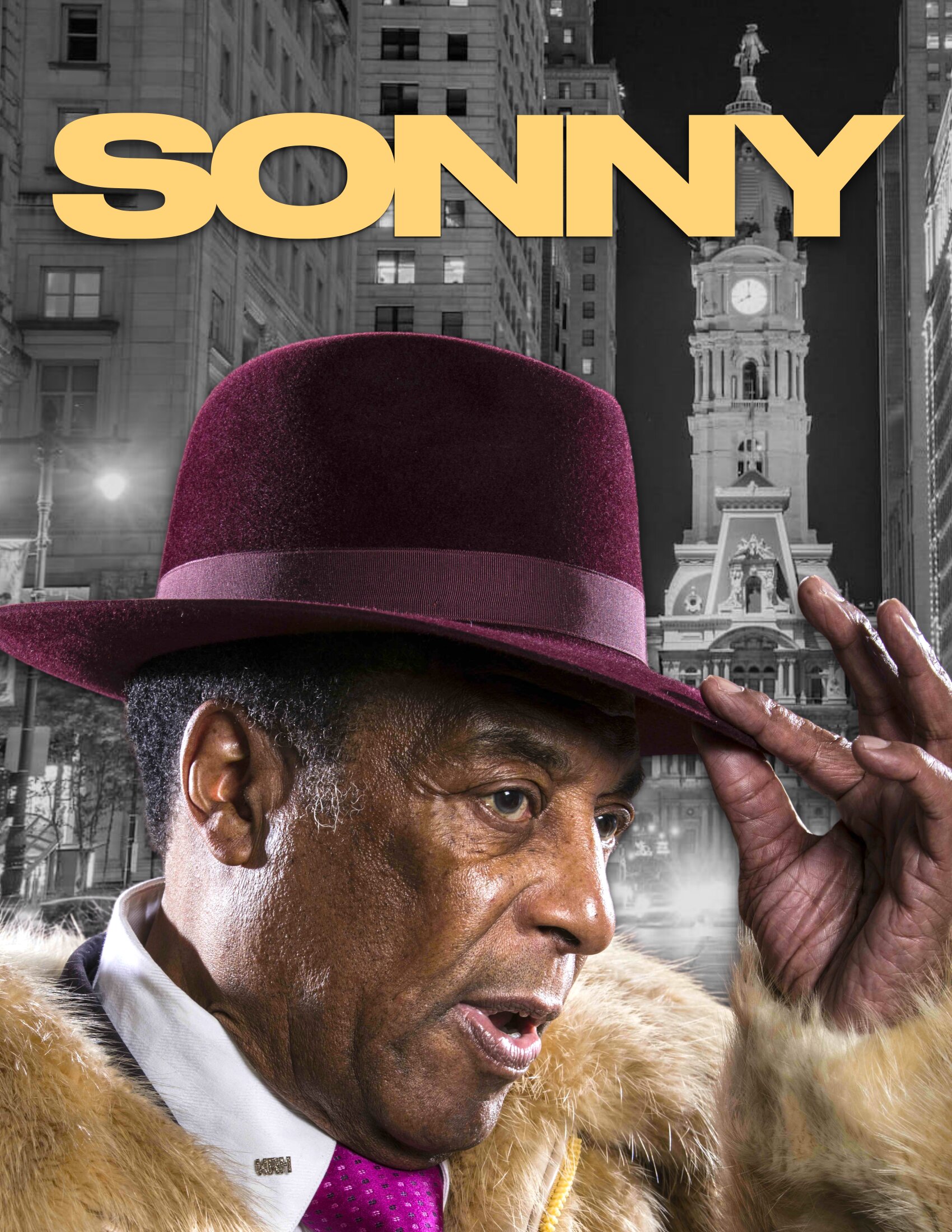
Ninety Candles, a Lifetime of Hoops: Honoring the Soul of Philadelphia Basketball

PHILADELPHIA, PA – When William Randolph “Sonny” Hill was born on July 22, 1936, the idea that a Black kid from North Philadelphia could become the conscience of a major American city’s basketball soul was, in the polite language of the era, a “reach.” The NBA was still a decade away from integrating. The opportunities for young Black athletes, no matter how gifted, were hemmed in by the same Jim Crow strictures that governed every other facet of American life.

Ninety years later, that kid is not merely a survivor of that brutal era. He is its conqueror. He is the connective tissue between the game’s pastoral origins and its global, billion-dollar present. He is a man known, affectionately and without hyperbole, as the “Mayor of Basketball”. And on this, his 90th birthday, we submit that Sonny Hill is not just a beloved local figure or a nostalgic footnote. He is one of the most consequential figures in the history of Philadelphia basketball—a title for which the competition is, to put it mildly, fierce.
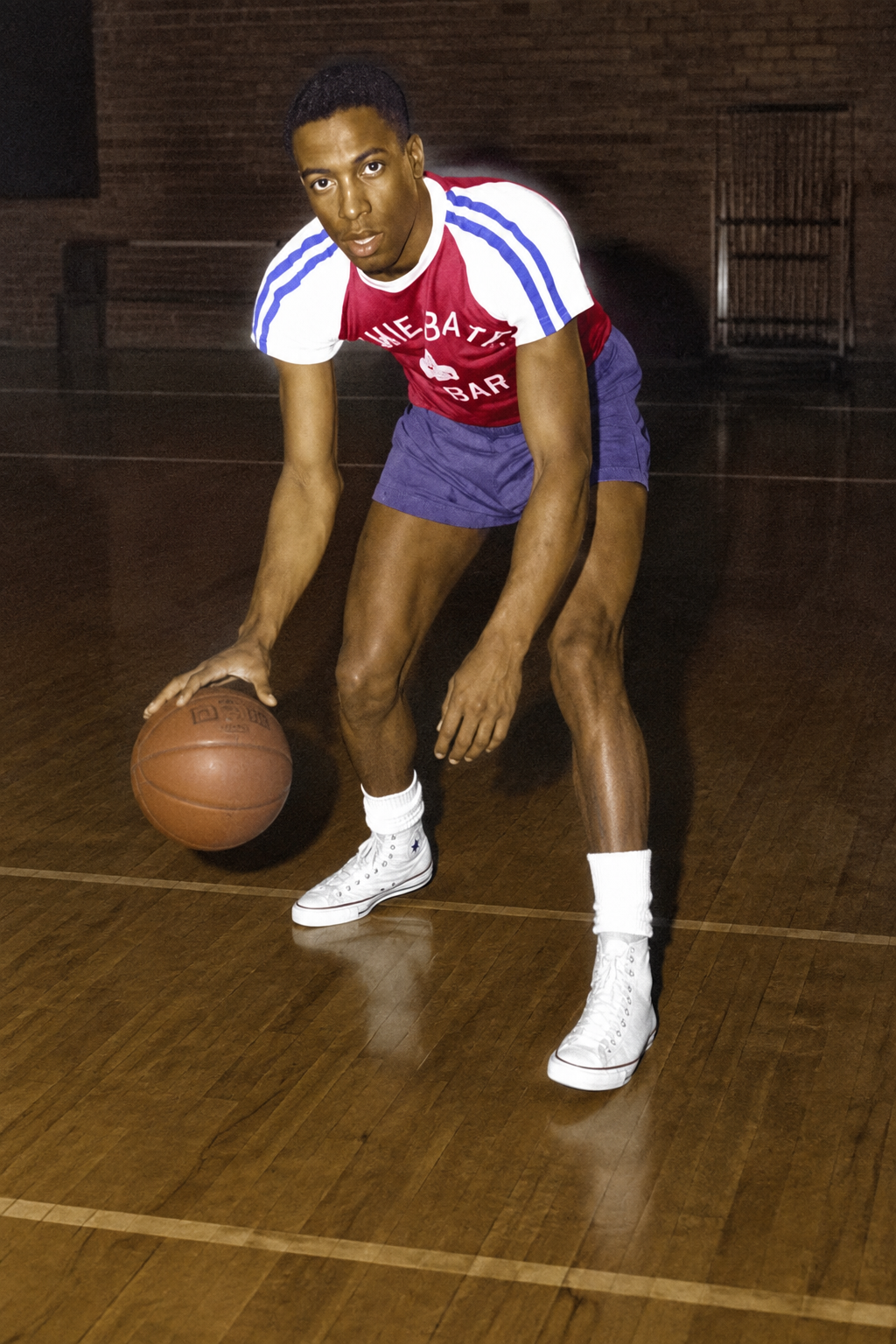
The Player Who Could Have Been

In an era when the Eastern Professional Basketball League was the de facto destination for the most gifted Black basketball players—a purgatory of talent where greatness went to be underpaid and underappreciated—Hill thrived. Standing just 5-foot-10, he was not a physical marvel in the mold of his contemporary and lifelong friend, Wilt Chamberlain. He was something else entirely: a floor general of immense skill, a prolific scorer whose craft was forged on the concrete courts of Philadelphia.
Hill spent a decade in the EPBL, from 1958 to 1968, suiting up for the Allentown Jets, Wilkes-Barre Barons, Sunbury Mercuries, and Camden Bullets. Over his career, he averaged 20.6 points, 3.1 rebounds, and 2.5 assists per game. These are not the numbers of a role player. These are the numbers of a star.

Many who saw him play insist he had the skills to have graced the NBA. But the league, in its myopia, was not ready for all the talent that existed. So Hill did what so many greats of his generation did: he played where he could, he played brilliantly, and he never let the slight define him. Instead, he used the bitterness of that closed door as fuel to build a bigger, wider house for those who would come after him.

The Baker League and the Sonny Hill League: Laboratories of Greatness

It is impossible to overstate the importance of the Charles Baker Memorial League, which Hill founded in 1960. It was the first professional summer basketball league in the country, a four-team experiment that began outdoors on a concrete court in North Philadelphia. It was a place where the game’s titans—Chamberlain, Guy Rodgers, Hal Greer, Billy Cunningham, and a young Earl Monroe—could sharpen their skills against one another in the off-season.

It was, in essence, a laboratory for the modern game. Bill Bradley, the former U.S. Senator and Hall of Famer, credited Hill for helping him develop into the player he became. Twice a week, Bradley commuted from New York to Philadelphia, not for money, but for the competition. “I was, to put it bluntly, a failure,” Bradley wrote before he found his footing in Hill’s league. That is the power of the environment Hill created

Then came 1968. Amidst the urban unrest and gang warfare that was tearing communities apart, Hill founded the Sonny Hill Community Involvement League. He did not just create a summer basketball program; he created a sanctuary. Starting with just five teams, it has since grown to more than 60 teams serving more than 800 student athletes. The talent that flowed through those games at McGonigle Hall on Temple University’s campus is the stuff of legend.
A Roster of Legends

It is not hyperbole to say the Hill League was the gold standard of summer basketball. Gene Banks, Lewis Lloyd, Mo Howard, Pooh Richardson, Lionel Simmons—these were the kings of the city. You could walk into the gym and watch the powerful Rico Washington battle Brian Shorter on the blocks, or witness the wizardry of Michael Anderson going against Howie Evans. And then there were the future professionals: Kobe Bryant, Rasheed Wallace, Richard “Rip” Hamilton, and Aaron McKie all honed their craft in the Hill League.

“Everybody that’s in the league right now from Philadelphia has played in his league. Everybody,” said Seattle’s Ronald “Flip” Murray. That is not an exaggeration. It is a testament to the gravitational pull of Sonny Hill’s vision.

The Voice of Philadelphia

In 1969, Hill transitioned from the court to the booth, beginning a broadcast career that would make him a household name. As a color commentator for the Philadelphia 76ers alongside Andy Musser, and later as a commentator for the NBA on CBS from 1973 to 1977, Hill brought a player’s insight and a poet’s cadence to the microphone.

Since 1987, he has hosted “In the Living Room with Sonny Hill” on SportsRadio 94WIP. For nearly four decades, Sunday mornings in Philadelphia have been punctuated by his voice—a voice that doesn’t just talk about basketball, but about life, community, and responsibility. It is the voice of a man who has seen it all and is willing to share it with anyone who will listen.

A Life of Service, Not Just Sport

The Sonny Hill Legacy Award, established by the 76ers in 2017, is a fitting honor. But the true legacy is written in the lives of the hundreds of thousands of young people who passed through his programs. Hill has always been clear about his mission. “My philosophy wasn’t to try and find the next great basketball player through my league,” he said. “It was about finding young people and trying to help mold them into better human beings.”

In 2008, he received the Mannie Jackson Human Spirit Award from the Naismith Memorial Basketball Hall of Fame. He is a member of the Philadelphia Sports Hall of Fame. He serves as an executive advisor for the 76ers, a role in which he has mentored everyone from Allen Iverson to Joel Embiid.

“He ranks among Julius Erving, John Chaney, Earl ‘The Pearl’ Monroe, Wali Jones, Ray ‘Chink’ Scott, Hal Lear and Walt Hazzard as the city’s greatest basketball dignitaries,” wrote one observer. We would go further. He stands above them. Not because he was a better player—that is a debate for another day—but because he built the infrastructure upon which their greatness, and the greatness of so many others, was constructed.

A Lasting Friendship

Hill’s personal relationships with the game’s greats are the stuff of Philadelphia lore. His friendship with Wilt Chamberlain was deep and abiding. He called Chamberlain the greatest player to ever play the game. He was a confidant to Earl Monroe, who dropped out of an NBA tour of Japan just to play in the Baker League. He was a mentor to Ray Scott and a peer to Tom Gola.
These were not transactional relationships. They were friendships forged in the crucible of competition and cemented by mutual respect. They are also a reminder that Hill’s influence was not confined to the city limits. He was a gravitational force that attracted the game’s brightest stars to Philadelphia’s summer courts.

Happy Birthday, Mr. Hill!

Ninety years is a long time. It is a span that encompasses the entire modern history of basketball. Sonny Hill has been there for almost all of it—as a player, a coach, a broadcaster, a mentor, and a friend.

He has seen the game evolve from a regional curiosity to a global phenomenon. He has seen the doors that were closed to him swing wide open for the generations that followed. And he has been the one holding those doors open, ushering in the next wave of talent with a firm handshake and a few minutes of stories.

So on this day, we raise a glass to Mr Hill. We thank him for the leagues, the broadcasts, the mentorship, and the countless hours he has given to a city that loves him back. We thank him for proving that a man’s legacy is not measured by the points he scored, but by the lives he touched.

Happy 90th Birthday, Sonny Hill. Philadelphia is a better city because of you. Basketball is a better game because of you. And we are all better for having witnessed your journey

The Best and Worst of Times: Imhotep’s RJ Smith and Philly’s Basketball Crossroads

PHILADELPHIA, PA – In sports, the 2023–2025 era will long be remembered as a time of extremes for Philadelphia. On one hand, the Phillies and the Eagles have been among the most dominant teams in Major League Baseball and the National Football League, respectively.  They have provided their diehard fans with winning seasons, playoff runs and championship aspirations. On the other hand, the Sixers’ disturbingly rapid descent into irrelevance has been as baffling as it has been swift, and collegiate basketball in the City of Brotherly Love has entered an unthinkable drought: no NCAA Tournament appearances from its six Division I programs for two consecutive seasons.

Da fuck is going on? I don’t trust the process… AT ALL!

Philadelphia is paying Joel Embid and Paul George, combined, over $116,000,000.00 per year to appear on podcasts and play basketball once in a while… Quintessential Nut Shit!!

This is a city where basketball isn’t just a game—it’s a way of life. From the hallowed grounds of the Palestra to playgrounds in Cobbs Creek, Da Bottom, Da “P” and up Norf, Philly has long been a hoops haven. Yet, our professional and college teams haven’t been shit since we were all wearing masks, getting injected with various vaccines and sitting through 6 or 7 zooms per day.

College Hoops: A Forgotten Tradition

Real shit… We have one guy trying mightily to hold it down for Philly. Villanova’s Eric Dixon shines as the lone star in a Big 5 constellation dimmed beyond recognition, the city’s college basketball faithful are left to reminisce about March Madness as though it were a relic of a bygone era. Where’s this era’s Gola, Rodgers, Macon, Rose, Nelson, West and Garland?

The decline of collegiate basketball in Philadelphia is astonishing. Once-proud programs that defined the city’s identity—Villanova, Temple, La Salle, Saint Joseph’s, Penn, and Drexel—now play in the shadow of their storied pasts. Villanova, the jewel of the Big 5, has been unable to maintain the dominance it enjoyed under Hall of Fame Coach Jay Wright. As I have noted elsewhere, “that bitch ain’t bad no mo’…” Although she did put on some yoga pants for a couple hours last night and looked “ahhhhiiiight” against Cincinnati. We have to wait and see if she can keep it together.

The other programs have simply failed to rise to the occasion. Today, Dixon carries Villanova as a headliner like Gladys Knight while the rest of the Big 5 plays supporting roles—background singers, like the “Pips”, to his solo act. 

The energy of March, once electric in Philly, now dissipates as local teams fail to punch their ticket to the NCAA Tournament. I guess we should all appreciate the fact that the local programs are still in the running for “at-large” bids in the College Insider Tournament (CIT) and the College Basketball Invitational (CBI). Be on the lookout for the “fish fry” in March at Lionel Simmons’ Bar to pay for the team charter buses. The absence of postseason relevance has left a void for Philly hoopheads  longing for competitive, high-quality basketball.

The Scholastic Silver Lining

Yet, amid the gloom, the vibrancy of Philadelphia’s scholastic basketball scene offers a glimmer of hope. Tonight, I ventured to St. Joseph’s Prep to watch the Hawks host Imhotep Charter, a perennial powerhouse. The game was a revelation, a reminder that while professional and collegiate hoops in Philly languishes, the high school circuit remains as competitive and thrilling as ever.

St. Joe’s Prep fielded an impressive roster featuring Dayton commit Jaron McKie and Florida Gulf Coast-bound Jordan Ellerbee. Sophomore Mekhi Robertson, a top-50 national recruit, and senior point guard Olin Chamberlain, an Ivy/Patriot League prospect. Imhotep, as usual, was fuckin’ loaded: Zion Green, a 6’8” sophomore wing ranked 17th nationally; juniors Zaahir Muhammad-Gray and Latief Lorenzano-White; and senior wing Carnell Henderson, are all Division I-caliber players.

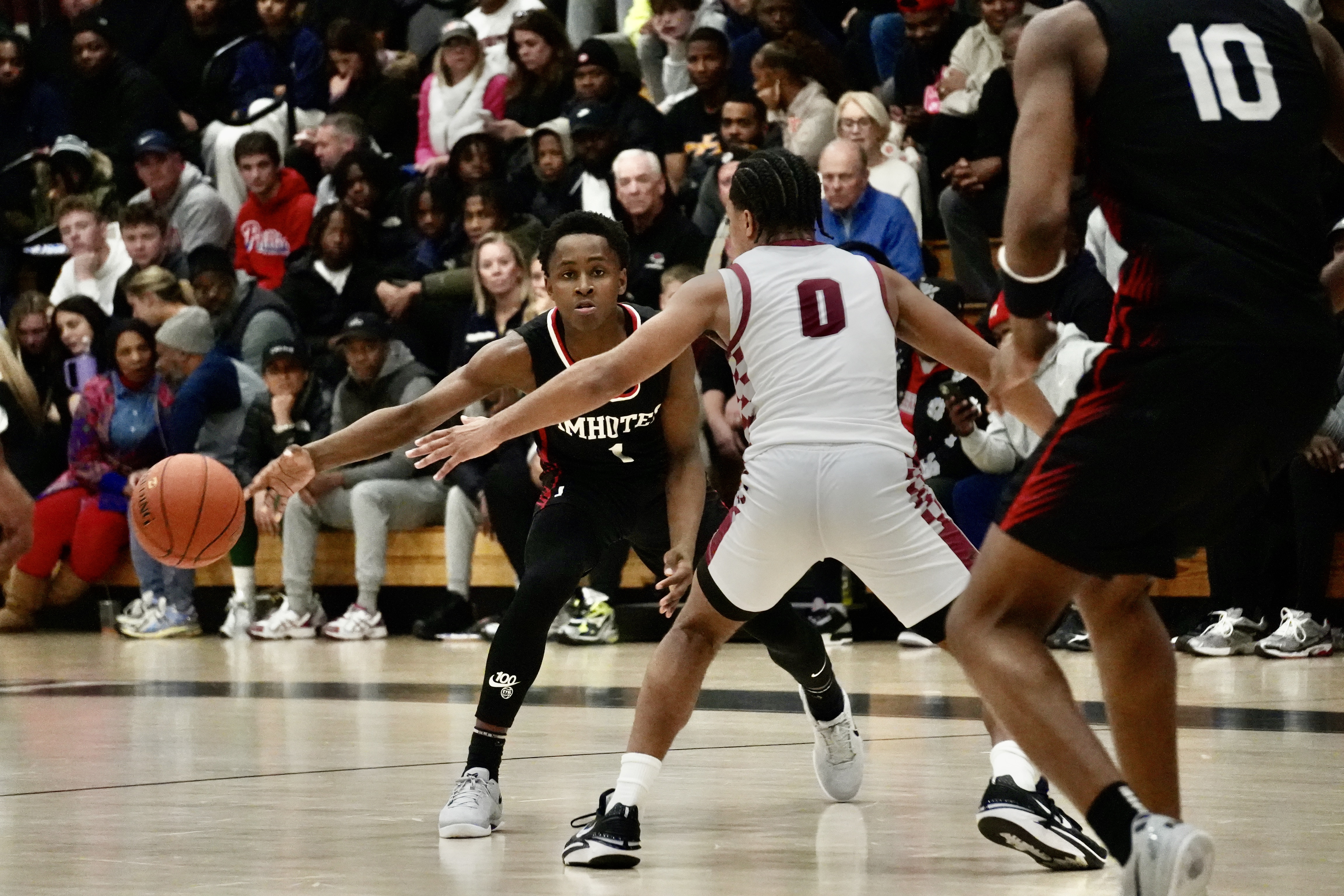
But the night belonged to the newly crowned “Big Dawg” among Philly Guards, Imhotep’s RJ Smith.

RJ Smith: Seated in the Philly Guard Throne

Smith, a 5’9” junior guard, embodies everything a “Philly guard” represents. Undeterred by his slight frame, Smith dominates games with his toughness, sharp basketball IQ, and unyielding determination. Time and again, he bullies bigger, stronger, and more athletic opponents, asserting control on both ends of the floor.

Defensively, Smith is a force in Imhotep’s relentless full-court press, where his tenacity and instincts for creating turnovers are nothing short of spectacular. Offensively, his ability to break down defenses is equally impressive. Whether pushing the pace in transition or orchestrating in a half-court set, Smith’s versatility shines.

Last season, Smith played Robin to UConn freshman Ahmad Nowell’s Batman. Nowell was the undisputed leader of Imhotep’s powerhouse program and clearly occupied the throne as the top Philly high school guard. But with Nowell’s departure, Smith has stepped seamlessly into the role of team leader. There is no doubt: this is now Smith’s team… and his throne…

Smith is not a traditional pass-first point guard of yesteryear. Instead, he mirrors the style of players like Isiah Thomas—capable of scoring at will while also being an adept distributor. His strengths are multifaceted: quickness, fearlessness, and a deep understanding of the game. As a defender, he excels at pressuring ball handlers and racking up steals, often setting the tone for Imhotep’s aggressive style of play. On offense, he thrives in transition, penetrates the lane with ease, and is a lethal shooter from well beyond the three-point arc.

While Smith’s skill set already places him among the elite at the high school level, his potential for growth is clear. In college, he could evolve into a more traditional point guard, balancing his knack for scoring with the demands of a floor general. For now, his dominance in high school basketball and his ability to overcome physical disadvantages with sheer grit and intelligence make him a quintessential Philly guard—and a joy to watch.

The “Philly Guard” Mystique

A “Philly guard” is more than just a basketball player. The term carries with it decades of tradition and a style that is unmistakably Philadelphia: gritty, crafty, and unapologetically confident. Philly guards are two-way players, as skilled on defense as they are on offense, and they play with an edge that reflects the city’s tough, blue-collar ethos.

Legends like John Chaney, Guy Rodgers, Andre McCarter, Pooh Richardson, Dawn Staley, Collin Gillespie and Kyle Lowry have defined the archetype. RJ Smith now stands in their shadow, a young player stepping into a rich lineage of excellence. His game is a nod to the past but also a bridge to the future of Philly basketball.

A Tale of Two Basketball Cities

The juxtaposition of Philadelphia’s scholastic and professional basketball worlds could not be starker. As the Sixers spiral into chaos, weighed down by an exorbitant payroll and a seemingly rudderless front office, and as college basketball flounders, the high school scene pulses with life. It’s a cruel irony that while the city’s professional and collegiate teams struggle, its high schools continue to produce some of the most exciting basketball talent in the nation.

RJ Smith’s emergence as the next great Philly guard underscores this dynamic. He represents hope for the future—a reminder of what Philly basketball can be when it is at its best.

Ten years from now, we’ll look back on this era with mixed emotions. The Phillies and Eagles gave us joy and pride. The Sixers and the city’s college programs brought frustration and bewilderment. And on high school courts across the city, the next generation of stars reminded us that, even in the worst of times, Philly basketball is never truly down for the count.

College coaches constantly call in search of a “Philly Guard.” Well, we have one that is pretty special. Ideally, Smith will land with a program that has familiarity and experience with smaller guards. He can compete in the MEAC, NEC, AmEast, MAAC and CAA for sure. Some A10 and American Conference programs will likely become intrigued when they actually lay eyes on him.

For now, though, Smith’s performances remind fans why the “Philly guard” is such a revered archetype in basketball—a gritty, intelligent, and unrelenting player who never shies away from the moment. He is, simply put, a joy to watch and a testament to Philadelphia’s rich basketball heritage. Looks like Smith will be sitting on the Philly Guard throne for next two years… Enjoying his reign… Unless, young Mr. Sutton from Broad and Vine has some other ideas.