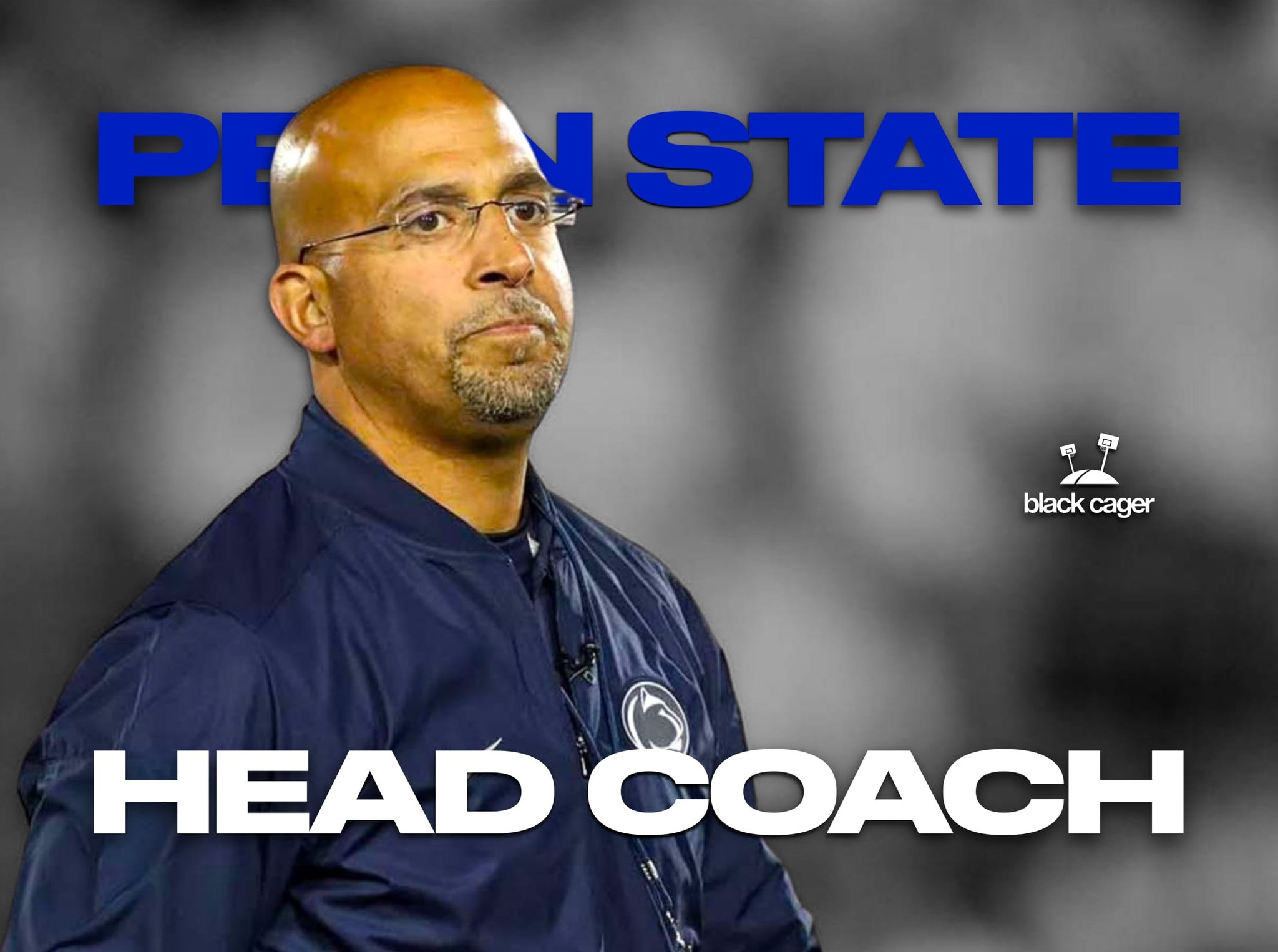
The Holy War: A Big Game for All the Wrong Reasons

PHILADELPHIA, PA – If ever there were a game of consequence for two struggling programs, Tuesday’s Holy War Pillowfight between St. Joseph’s and Villanova is it. Not for the lore, the drama, or the fierce rivalry—this time, it’s about the potential future of two head coaches who’ve found themselves under intensifying scrutiny. St. Joseph’s Billy Lange and Villanova’s Kyle Neptune are on alarmingly shaky ground, with the outcome of this clash potentially determining their fates. And yes, to the fans, it’s a big game—albeit for all the wrong reasons.

The alums, boosters and fans have had enough of this shit…

Kyle Neptune, Villanova Head Coach

Imagine a WWE-style steel cage match between Lange and Neptune with the defeated coach forced to turn in his company car, office keys and bid farewell to his team after the final buzzer. It’s the kind of spectacle that perhaps only wrestling fans could appreciate, yet one that feels uncomfortably close to the current reality for both Lange and Neptune. For the respective fan bases, frustration has given way to calls for change, and patience has long run out. Both fan bases have endured too much for too long.

Lange’s record at St. Joseph’s, a tepid 60-92 (.395) since his hiring in 2019, has turned a proud program into a perennial disappointment. The Hawk faithful yearn for a return to the NCAA tournament. Many express deep skepticism regarding the current coaching staff. The St. Joseph’s message board is rife with calls for Lange’s termination. Things are even worse at Villanova. Neptune, though in his third year, has marginally fared better than Lange with a 37-34 (.521) record. However, he was handed the keys to a Ferrari and it feels like it’s been in the shop since he took over. When introduced at home games, his name is met with full throated Philly boos usually reserved for visiting opponents. For two programs that once routinely inspired confidence, their leaders appear to be hanging by the thinnest of threads, and this season’s start—punctuated by jarring losses in “buy games”—hasn’t helped.

Billy Lange, St. Joseph’s Head Coach

The buy game, a time-honored tradition, serves as a revenue stream for small programs and a quick win for larger ones. Schools like St. Joseph’s and Villanova bring in lesser-known “low major” teams, offering a hefty check, sometimes upwards of $100,000, with the tacit understanding that the visiting team will go home defeated. It’s a system that usually allows for the high-major program to pad its win column while the small school collects its payday.

But that unspoken agreement has been unceremoniously disrupted in Philly. St. Joseph’s invited Central Connecticut State for what was expected to be a routine win at 54th and City Avenue. Instead, the visitor walked away with a victory—and a paycheck. Earlier in the week, Columbia arrived at Finneran Pavillion on the Main Line, handed the Wildcats a stinging defeat, took their check, and headed back up I-95 to Manhattan. What should have been easy victories have turned into humiliating losses, pushing the fan bases to the brink.

And they are fed up. Alumni, supporters, and local fans aren’t willing to watch their schools play the role of gracious hosts handing out both checks and victories to supposedly inferior opponents. This shift from reverence to restlessness is palpable across both programs’ communities. For Lange and Neptune, these losses are not just isolated setbacks but the latest entries in a long list of grievances.

For both coaches, Tuesday’s game is likely to carry more weight than most mid-November matchups. It’s a crossroads: Lose, and they will find themselves with a diminishing number of believers. Crawl out of the steel cage with a win, and perhaps they’ll buy some time. But make no mistake, the scales have tipped. Fans are no longer willing to accept mediocrity from programs that once consistently delivered excellence.

Tuesday’s Holy War Pillowfight will be a spectacle—a big game, indeed, but not for the thrill of victory. For the fans of St. Joseph’s and Villanova, it’s about accountability, about honor, and, perhaps, about the possibility of starting anew.

New Age Isaiah Montgomery: Black MAGA Supporters

CAMDEN, NJ – In today’s America, as a divided nation navigates the aftermath of Donald Trump’s presidency, Black support for Trump’s MAGA movement has drawn both curiosity and condemnation. Approximately 22 percent of Black men supported Trump in recent elections, a statistic that shocks and confounds many. The reasons are complex, but this phenomenon carries disturbing echoes of a past dilemma once personified by Isaiah Thornton Montgomery, a Black Mississippi leader who, over a century ago, publicly endorsed Black disenfranchisement. While 99.99 percent of Black Americans may have no awareness of Montgomery’s place in history, the eerie parallel to present-day Black MAGA supporters raises troubling questions about compromise, survival, and political self-identity amidst a resurgent wave of White backlash.

The roots of Black conservatism today are as varied as they were in Montgomery’s time. The question, though, is not simply why some Black men align with the MAGA agenda, but whether today’s political landscape is producing contemporary Isaiahs: figures within the Black community who, consciously or unconsciously, may view alignment with right-wing movements as a pragmatic strategy for survival and advancement in an era of unprecedented polarization. With inadequate education around Black history in America’s schools, many Black citizens lack the knowledge to contextualize our current political landscape within the longer arc of racial struggle. Few are aware that today’s MAGA movement fits into a history of White backlash against perceived gains by Black Americans and other marginalized groups.

The similarity with Isaiah T. Montgomery is stark, yet his motivations were distinctly rooted in the brutal world of post-Reconstruction America. Montgomery, founder of the Black community of Mound Bayou and son of an enslaved man-turned-businessman, held an unshakeable belief in Black self-sufficiency. But at the 1890 Mississippi Constitutional Convention, Montgomery shocked the Black community by endorsing provisions like literacy tests and poll taxes, which would bar Black voters from the polls. His reasoning was couched in pragmatism: he argued that appeasing White lawmakers and ceding political ground might allow Black Americans the breathing room to pursue social and economic self-sufficiency without inciting more violent backlash from the White South.

This strategy of appeasement, however, came at a profound cost. By endorsing Black disenfranchisement, Montgomery struck a bargain that some historians argue ultimately weakened the broader fight for Black rights. In his eyes, he may have been choosing a “lesser evil,” hoping to secure a modicum of safety and stability for Black communities. But his compromise helped cement a cycle of disenfranchisement that would haunt Black communities for decades.

Today, MAGA-supporting Black men may claim a similar kind of pragmatism, citing dissatisfaction with Democrats’ failures to deliver economic and social progress and pointing to Trump’s “America First” policies as offering greater personal and economic security. This approach may seem attractive for Black men seeking relief from the relentless churn of systemic racial inequity. Yet we must question whether endorsing a movement openly allied with far-right, White supremacist sentiments—and which has fueled harmful policies on everything from immigration to voting rights—is a sustainable or honorable path forward.

Unlike Montgomery, who likely felt he had no choice but to make a Faustian bargain in a violent, oppressive environment, Black MAGA supporters today choose to align with a movement that has often diminished the Black struggle for justice and equality. That choice, whether motivated by frustration with establishment politics, belief in economic “bootstraps” rhetoric, or disillusionment with the left, serves to reinforce a coalition that has actively suppressed minority voting rights and eroded protections against racial discrimination.

Montgomery’s legacy, for all its flaws, at least left behind a vision of Black self-sufficiency through the community of Mound Bayou. His compromise, though painful, was aimed at preserving a sanctuary for Black Americans to thrive away from hostile White dominance. Black MAGA supporters, on the other hand, stake their political future on a movement that has often used their voices to validate policies that threaten the very social progress on which Black Americans rely.

The alignment of any segment of Black America with the MAGA agenda suggests a critical need for education around this country’s cyclical racial history. The disconnection from history—the “woeful inadequacy” of Black history as it is taught in American schools—prevents a clear understanding of today’s political dynamics as part of a long, repeated arc of White backlash. Without awareness of figures like Montgomery or the political choices forced on Black Americans throughout history, many fail to see how Black support of MAGA could lead to similar long-term disenfranchisement.

To be clear, the issue is not the political party of one’s allegiance, but the agenda one chooses to endorse. Black support for MAGA is not simply a divergence in political opinion; it is a move that could ultimately lend support to a movement in direct opposition to Black political and social progress. In this moment, we need more awareness, more connection to history, and, most crucially, a unified sense of purpose. Rather than aligning with those who would turn back the clock on civil rights and equality, today’s Black Americans should look toward alliances that strengthen—not weaken—the collective foundation of our community.

Isaiah Montgomery’s choices were not ideal, but they are instructive. Let us hope that modern Black MAGA supporters will learn from his compromises and understand that the consequences of such alignment often echo far beyond individual gain, shaping the freedoms—or restrictions—of future generations.

The Miseducation of Black (Democratic) Political Leadership and America’s Enduring Animosity Toward Immigrants

CAMDEN, NJ – As the United States grapples with immigration reform, Democrats—and Black American political leaders in particular—seem fundamentally ill-equipped to recognize a force driving much of the nation’s debate: a deeply embedded and historical animosity toward immigrants. This sentiment, often neglected in our education system, remains a potent force in American politics, one that Republicans have expertly wielded to achieve significant political victories.

America has never fucked with non-Protestant European immigrants.

The 2024 election serves as a recent and stark example. While many on the left advocated for inclusive immigration policies, Republicans, led by President-elect Trump, tapped into the powerful strain of anti-immigrant sentiment woven into the fabric of American society. By adopting a strict posture against “illegal” immigration, Trump’s campaign skillfully activated an underlying hostility that has persisted for centuries. This approach resonated deeply with many Americans, proving politically advantageous despite, or perhaps because of, its divisive nature.

For generations, various immigrant groups have faced prejudice, discrimination, and violence in America. Irish, Italian, and Polish immigrants were among the earliest to endure this treatment in the 19th and early 20th centuries. Irish Catholics, for example, were often viewed as a religious and political threat, accused of being loyal to the Pope rather than the U.S. government. Many Irish immigrants were relegated to low-wage labor, while signs like “No Irish Need Apply” blatantly excluded them from workplaces. Italian immigrants faced racial discrimination, as Southern Italians were frequently seen as “non-white” and associated with criminality. The lynching of eleven Italian men in New Orleans in 1891 exemplified the violence they encountered. Polish immigrants, similarly, faced harsh economic exploitation and religious discrimination, navigating poor working conditions and pervasive anti-Catholic sentiment.

Asian immigrants experienced even harsher exclusionary policies. The Chinese Exclusion Act of 1882 specifically targeted Chinese laborers, barring them from entering the country and making it nearly impossible for Chinese immigrants to achieve citizenship. Japanese immigrants, in turn, faced racist land laws and forced segregation. Anti-Asian prejudice ultimately culminated in the internment of Japanese Americans during World War II, when tens of thousands of U.S. citizens of Japanese descent were stripped of their rights and forced into internment camps.

Despite these enduring struggles, many Americans are educated under the myth of the “melting pot”—the notion that diverse ethnicities can seamlessly blend into a unified, harmonious American society. This idealistic image is built on the assumption that immigrants will eventually assimilate, adopting mainstream American values while contributing their unique perspectives. This myth is repeated in schools as the ultimate American story, obscuring the realities of exclusion, racial discrimination, and social conflict that have long shaped the immigrant experience.

For Black Americans, the miseducation surrounding immigration is compounded by an educational system that frames American history through a Eurocentric lens, omitting or downplaying the discriminatory treatment of immigrants and the struggles of people of color. Many Black leaders, influenced by this same flawed education, may struggle to recognize that the “melting pot” has always had limits. The melting pot framework encourages leaders to advocate for diversity and inclusivity, often at the cost of acknowledging the longstanding antipathy toward immigrants that has pervaded American history.

By contrast, Republicans have astutely identified this antipathy, leveraging it with precision. President-elect Trump and his advisors astutely recognized that a portion of the American public harbors an underlying hostility toward new immigrants, particularly those perceived as “illegal.” This animosity has nothing to do with any single ethnicity or cultural group; rather, it is directed toward the very idea of immigration itself. Trump’s campaign capitalized on this sentiment by framing immigrants as economic competitors or cultural threats, a narrative that resonated in regions where concerns about jobs and cultural change run high.

If the “melting pot” were truly representative of American society, then one might expect Latino and Asian immigrants to show similar sentiments, internalizing an “American” identity that mirrors long-standing anti-immigration attitudes. But the reality is far more complex, with second- and third-generation immigrants often challenging these divisive narratives. This resistance itself demonstrates that the American melting pot has long been an imperfect metaphor—a convenient story rather than an honest representation of a fractured reality.

The time has come for Black political leaders, and Democrats more broadly, to confront this entrenched hostility toward immigrants. American history reveals a pattern of discrimination and exclusion, one that often reemerges when politically expedient. For too long, Black leaders have been shaped by an educational system that fails to equip them with the tools to recognize this reality. Miseducation has, ironically, become an effective means of controlling narratives around immigration and identity.

Recognizing the deeply rooted bias against immigrants is not an endorsement of anti-immigrant sentiment, but a necessary step in addressing it. Until Democrats and Black political leaders can move past the ideals of the melting pot and address the full spectrum of America’s complex and often troubled relationship with immigration, they will remain vulnerable to the political forces that skillfully exploit these divisions. If Democrats hope to counteract the appeal of anti-immigrant policies, they must confront the miseducation that has hindered their ability to see what Republicans have long understood: that in the United States, immigrant acceptance has always been more aspiration than reality.

American Democracy: Trump’s Victory and the Complex Legacy of Equality and Exclusion

CAMDEN, NJ – In the early hours of Wednesday morning, Americans awoke to news that Donald Trump had been re-elected as president in a hard-fought campaign. Once again, the peaceful transfer of power through a free and fair election reinforced a hallmark of the American experiment: a democracy, as James Madison wrote, that preserves the “spirit and form” of governance by the people. To many, particularly Black Americans and communities historically marginalized, Trump’s victory reads as an existential threat to American democracy as they know it. But the prevailing narrative that American political culture has been a pristine example of democracy in world history—one that safeguards freedom for all—is, and always has been, incomplete.

America’s democracy has endured in form, but the substance of that democracy has always been as much shaped by exclusionary ideologies—racism, sexism, xenophobia—as by the ideal of equality. These dual forces have existed side by side since the nation’s founding, influencing not only who participates in politics but the very values that American governance upholds. With that reality in mind, perhaps it’s worth reframing what some see as the potential “end” of American democracy. While the Civil Rights Era may have come to a symbolic close last night, democracy in its original, sometimes mercilessly exclusive form, will likely persist, even flourish.

American democracy, founded in ideals of freedom and representative government, was also founded as a racial and gendered hierarchy. For nearly two centuries, the racist/white supremacist system with procedurally democratic features held firm, enshrining the values of White male property owners while excluding millions based on race, nationality, and gender. Women, enslaved Black Americans, Indigenous peoples, and other minorities were systematically denied full participation in what was nonetheless celebrated as a bastion of democratic governance. From its birth, America’s so-called democracy was a profoundly unequal system, designed for the enfranchisement and empowerment of a narrow group of wealthy, White men.

When the Founders issued their declaration of freedom to the British crown, declaring “all men are created equal,” they carved out that declaration to serve a select few. This sentiment laid the groundwork for a nation that would go on to build institutions catering to the privilege of a specific demographic. A revolution against monarchy and aristocracy—yes. But a democracy for all? Hardly. While revolutionary in comparison to European monarchies, America’s democratic spirit came bound with the chains of slavery, the forced dispossession of Native lands and rigid exclusion of women.

This enduring myth—that America has always stood as a beacon of equality—feeds a dangerous misperception. Many Black Americans fearing democracy’s end in light of Trump’s return are responding to a version of history that never fully included them. The American education system has long centered its lessons on the actions of wealthy, White Protestant men, pushing the contributions and sacrifices of Black Americans, Indigenous peoples, women, and other marginalized groups to the periphery. This has cultivated an understanding of democracy as a singular narrative of freedom and progress when, in reality, it is a deeply divided one.

To critique America’s selective version of democracy is not to minimize the contributions of Founders like Jefferson, Adams, Washington, and Franklin. Nor is it an appeal to disparage the “MAGA” movement’s resurgence. Rather, it is a call to recognize that America’s political culture is far more complex than the sanitized version we’ve long been taught. The stark reality is that racism, sexism, and xenophobia are as American as baseball, apple pie and hip-hop. These inegalitarian ideologies are as deeply ingrained in our political fabric as any notion of liberty. For nearly two centuries, America was considered a democracy while enslaving millions on armed labor camps, slaughtering and forcibly removing surviving Native Americans, and rigidly upholding an Apartheid/Jim Crow segregation system. Rest assured that American democracy, at least in “spirit and form,” will endure through the next four years and beyond.

True, the election of Donald Trump may well signal the end of the Civil Rights Era’s vision of democracy, but that vision is only a recent addition to American life. The structures that enabled the original version of democracy to exist—and indeed, thrive—in the face of brutality and exclusion still stand. To reclassify our current system as anything but democracy would require rethinking the foundational structures laid by the Founding Fathers themselves. We would have to classify Washington, Jefferson, Adams and Madison as antidemocratic.  That is a project that, for now, remains highly unlikely. 

Instead, it is up to Black educators, leaders, and all Americans who see through the myth to challenge the dominant historical narratives. An education system grounded in truth, not legend, will better serve our future generations. It will equip them to recognize the contradictions and complexities that define American political culture—a democracy that has always held equality and exclusion in uneasy balance.

Is Villanova Still Villanova? A Pivotal Season for Coach Kyle Neptune

PHILADELPHIA, PA – Villanova University’s men’s basketball program, long the gold standard of success and integrity, now stands at a critical juncture. Once the envy of collegiate hoops, the Wildcats under Jay Wright evolved from an admired East Coast program to a permanent resident among the sport’s “blue bloods.” In his two decades as head coach, Wright led Villanova to six Big East titles, four Final Fours, and a pair of national championships, solidifying the Wildcats’ place alongside the likes of Duke, Kentucky, North Carolina and Kansas.

But Jay Wright’s abrupt departure in 2022 created a seismic shift on the Main Line. Wright had led an undermanned Villanova squad to the Final Four in his final season, only to vanish stage left, much to the surprise and disappointment of the Wildcat faithful. In a swift succession plan, Villanova’s leadership tapped former assistant Kyle Neptune to inherit the program — a coach respected for his Villanova pedigree but still untested at the program’s elite level. There was no search firm involvement, no long drawn out series of interviews with high profile national candidates. The president, the athletic director and, of course, Wright quickly anointed Kyle Neptune as heir to the Villanova throne.

North Philly’s Wooga Poplar

In a matter of days, the Villanova brass handed Neptune the keys to the Lexus.

The move, while somewhat surprising, made sense on many levels. Neptune was no stranger to the Main Line. He spent eight years as an assistant on Wright’s staff with the Wildcats — he was on the sideline when Kris Jenkins knocked in his NCAA championship-winning 3-pointer in 2016. He left Philadelphia for the Bronx in March 2021 after being hired to coach Fordham. 

Neptune, took over as Fordham’s coach after the Rams finished an abysmal 2-12 in the pandemic-shortened 2020-21 season. In his lone season at Rose Hill Gymnasium, Neptune impressed, leading Fordham to a 16-16 record. This represented a 14-win improvement between the 2020-21 and 2021-22 seasons and the biggest single-season jump in program history.

After just one season in the Bronx, leading a perennially mediocre Fordham program, Wright tossed the keys to his protege. While he hasn’t “crashed the car,” alums and fans are definitely tired of Neptune driving over the rumble strips. This noise is both unfamiliar and undesirable to Main Line hoopheads. One can only assume that the sound inside the vehicle is just as intolerable. Nonetheless, it serves as a warning to a Neptune and his staff that they have been veering off the roadway.

This stakes could not higher for Neptune. He succeeded Wright on the heels of a Final Four appearance and is just 35-33 over the past two seasons. The Villanova program has dropped from perennial national championship contender to one that has been knocked out of the NIT in the first round the last two seasons. Villanova Athletic director Mark Jackson gave Neptune a strong vote of confidence at the end of last season and subsequently left for Northwestern and the Big 10. At some point during the basketball season, Neptune will get a new boss who will surely notice the fully loaded S-Class Mercedes Benz parked outside Harry A. Gampel Pavilion in Storrs, Connecticut.

A Proving Ground for Neptune

For Neptune, this season is more than just a chance to return to the NCAA tournament after a two-year absence. It’s an opportunity to affirm that Villanova’s reputation as a national powerhouse isn’t just a Jay Wright-era artifact. This is no simple task: He inherits both the pressure of a devoted fan base and the expectation to maintain a “Villanova brand” known for discipline, ball movement, and defensive intensity. Yet, for a program accustomed to national title contention, Neptune’s middling 35-33 record over two seasons is hardly a confidence booster. So… Exactly how will the staff return the Wildcats to prominence?

Graduate Student, Eric Dixon

Philly Area Ballers on the Main Line

Neptune has leaned heavily on players from the Philadelphia region to bring Villanova back to prominence. Leading the charge is graduate student Eric Dixon. This Wildcat squad is Dixon’s team. Hailing from Abington, Dixon is extremely strong for a player at the college level and has often just powered to the basket during his illustrious college career. While he is undersized for the center position, Dixon uses his body very well, has great hands and good post footwork. He able to hold position on the blocks and back down his defender. On most nights, Dixon will be a serious mismatch for defenses in the low post. He posses a soft shooting touch around the basket uses a number of spins and drop steps to score However, it should be noted that he has expanded his offensive repertoire. Despite playing center, he was also tied for second on the team in three-point range attempts, knocking down just under 35% of his nearly five tries per game.  He runs the floor well for someone his size. Dixons plays good positional defense due to his above average lateral quickness and wide body. The Wildcats need Dixon to play at an All-American level if they are going to make the NCAA tournament after a two year hiatus.

Alongside Dixon is Jordan Longino, a Germantown Academy product who has shown glimpses of promise, albeit interrupted by injury. Averaging nearly 22 minutes per game last season, Longino’s shot and intensity on both ends of the floor could make him a consistent contributor — if he can stay healthy. The third key local returnee is Nnanna Njoku, whose power forward play and physical presence offer crucial support, though he, too, will need to avoid injuries to fully contribute.

New Faces, High Hopes

Coatesville’s Jhamir Brickus

Surrounding the local returnees will be some key additions from the transfer portal. Manning the point guard position for Neptune will be Jhamir Brickus. A Coatesville High School legend Brickus is using his COVID bonus season of eligibility, after transferring from La Salle. Brickus played four seasons with the Explorers, and he had an outstanding campaign as a senior. He averaged 13.9 points, 3.5 rebounds, 4.8 assists, and just over a steal per game while hitting 40% of his threes. Brickus is a rock-solid choice to run the Villanova offense. He displays great court vision and makes his teammates better. He is an experienced, savvy, clutch vet who has seen it all. Brickus drives the lane like an NFL fullback, and either finishes strongly or finds the open man. Although relatively short in stature, he plays much bigger than his size on offense. He has been known to effectively post up bigger guards and forwards. Neptune has given him a chance to put his skills on full display before a national audience in Big East competition. 

A Philadelphia Public League legend will play on the wing for Neptune. Wooga Poplar, hailing from North Philly, is blessed with truly elite level explosiveness. Poplar was was one of the most intriguing prospects in college basketball last season and considered making the leap to the NBA this past off season. When he is healthy, Poplar displays electric speed and quickness, and is certainly one of the best leapers in college basketball. At MCS High School and subsequently the University of Miami, Poplar played an exciting and fairly flashy style. He is a highlight reel dunker in the transition game.  He has a sweet looking jump shot, and his range extends past the NBA 3-point line.  Poplar is able to hit shots off of screens or off the dribble, making him a guy who must be accounted for no matter what on the perimeter. He has more than adequate ball-handling ability  and will be a tough cover due to his athleticism and shooting skills. He has proven that he can slash when crowded or stop and pop if the defender gives him space. Poplar gets great elevation and has a high release giving him a great ability to get shots off. He has the ability to put up points in bunches.  A late blooming prospect, who wasn’t a highly touted recruit until late in his high school career, Poplar could really just be scratching the surface of his true ability.

Fresno State transfer Enoch Boakye

They have added Enoch Boakye to play the center position while Dixon moves to power forward full-time. Boakye is an athletic forward with superior shot blocking and rebounding tools. He brings an evolving offensive game that includes the ability to finish lobs near the rim. last season with Fresno State. He gave the Bulldogs just short of 8 points and 8 rebounds a game. He brings much needed length and explosiveness to the Wildcat front court. 

Neptune did not go far for his final portal acquisition. He successfully recruited Tyler Perkins (6’4”, 205 lb, Lorton, Virginia), who was one of the best player in the Ivy League as a freshman at Penn last season. For the season, he averaged 13.7 points and 5.3 rebounds per game and hit nearly 35% of his three-pointers.  But, maybe… Just maybe, he’s at Villanova because he for dropped 22 points, six rebounds, and a block on the Wildcats in a 76-72 Quakers victory at The Palestra last season.

Penn transfer Tyler Perkins

The Wildcats have also brought in in four freshmen, including two top 100 prospects. Matthew Hodge (6’8”, 200 lb, Belmar, New Jersey) is #70 in the 247 Sports Composite, while Josiah Moseley (6’6”, 185 lb, Round Rock, Texas) ranked #82. They also add redshirt freshman Kris Parker (6’9”, 195 lb, Tallahassee, Florida) on a transfer from Alabama where he did not play after ranking #99 in the 2023 247 Composite and Jordann Dumont, a versatile and athletic 6’8″ forward.

Neptune’s recruitment has been solid, but the question remains whether he and his staff can coach this talented roster to the program’s accustomed heights. Simply stated, can this staff coach these players to a level that results in deep runs in the NCAA tournament?

A Season on the Brink

The Wildcats’ early season schedule — including tests against St. Joseph’s, Virginia, and Maryland — offers Neptune a chance to prove that his Wildcats can hang with the best. But for the alumni and fans accustomed to the stability and success of Wright’s reign, patience may be wearing thin. The next few months will reveal if Neptune is indeed steering Villanova back on course or if, in the eyes of the Villanova faithful, the Wildcats’ time as a college basketball “blue blood” is starting to fade. 

We are about to find out Neptune can avoid the rumble strips early this year. 

Black Cager Student Athlete of the Month: John “JD” DiFalco

John “JD” DiFalco, Runnemede, New Jersey

We are thrilled to announce John “JD” DiFalco as the Black Cager Student Athlete of the Month! JD, a fourth-grade standout from Runnemede, New Jersey, has already established himself as an exceptional baseball player with incredible versatility. Playing as a pitcher, catcher, first baseman, and outfielder, JD hits with both average and power—evident in his impressive victory in a home run derby this summer. As a pitcher, JD combines serious velocity with remarkable control on his fastball, making him a force on the mound.

Beyond his athletic achievements, JD shines in the classroom, maintaining straight A’s at Mary E. Volz School, where he is also known for his outstanding character. With his talent, work ethic, and sportsmanship, JD is one to watch, as he is well on his way to becoming one of South Jersey’s top baseball prospects in the years ahead. Congratulations, JD!

Previewing the 2024-25 St. Joseph’s University Hawks: Beasts of the East?

Philadelphia, PA – On Hawk Hill, where the legacy of Saint Joseph’s University basketball has endured for 116 years, hope springs eternal. Embracing the team’s motto, “The Hawk Will Never Die,” the Hawks enter the 2024-25 season with a roster that boasts both depth and talent, putting them in position to compete at the top of the Atlantic 10 Conference. With head coach Billy Lange improving his team’s winning percentage in each of his five seasons, optimism among fans and alumni is high.

Head Coach, Billy Lange

Under Lange’s guidance, St. Joseph’s has navigated a transformed collegiate landscape, one where NIL and the transfer portal have reshaped the stakes and players are freer than ever to shape their paths. Lange’s ability to build a cohesive, talented squad in this modern climate has kept the Hawks competitive, highlighted by their 21-14 record last season. This year’s lineup continues that trajectory, with a guard trio among the finest in the nation and an athletic, promising frontcourt.

The Backcourt: An Elite Trio

Leading the charge is senior guard Erik Reynolds, who sits just 478 points shy of Jameer Nelson’s all-time scoring record. Known for his fluid shot creation, Reynolds can score from all three levels, whether it’s scoops and floaters inside or deft pull-ups in the midrange. His balance of patience and quickness out of ball screens makes him a persistent offensive threat. With sophomore guard Xzayvier Brown handling point duties, Reynolds has grown more versatile, showing strong instincts as an off-ball scorer and becoming one of the most consistent offensive forces in the Atlantic 10.

Erik Reynolds, Senior Guard

Brown, a Philadelphia native and son of Associate Head Coach Justin Scott, has quickly established himself as one of the top point guards in the conference. He brings a steady hand, exceptional footwork, and a knack for breaking down defenses with smooth crossovers and hesitation moves. Tough and fearless, Brown’s body control enables him to score in traffic or kick the ball to open teammates on the perimeter.  Perhaps, his most impressive attribute is the fact that he has big balls… Brown is not afraid of the big moment and will put the team on his shoulders when the offense stagnates. This season, he’ll look to cement his role as a leader capable of taking over when the game is on the line.

Xzayvier Brown, Sophomore Guard

Rounding out this talented backcourt is junior transfer Derek Simpson from Rutgers. A a prototypical mid-high major combo guard in that he does a bit of everything despite having the size of a point guard. He is a supremely confident bucket-getter with three-level scoring capabilities. Although he is most effective getting all the way to the basket and pulling up for mid-range jumpers. He can make an occasional three, but is much more efficient attacking he basket and in transition.  Simpson is agile and crafty with the ball in his hands and brings two years of experience playing in the highly physical Big 10 Conference. Simpson thrives in both isolation and pick-and-roll situations. He is highly intelligent, and selfless high-energy player on offense and defense. He makes winning plays. This was a tremendous free agent acquisition for Lange and his staff.

Derek Simpson, Junior Guard

The Frontcourt: Emerging Talent and Physicality

While the guards may steal the spotlight, the front court play will largely determine how deep this version of Hawks can go in March. The time has come for Rasheer Fleming to become a household name. The junior power forward from Camden High, is solidly built and strong. He just has to put it all together in game situations. Fleming is long and has excellent instincts on the offensive end.  He is very young (just turned 20) for a college junior playing D1 college basketball. Fleming has natural strength and the type of body that could withstand the physicality of NBA level play. He has already attracted the attention NBA scouts.  He has broad shoulders and a wide base yet still has good agility and is fluid on his feet.  On the offensive end, Fleming can do a bit of everything.  He can score in the post, using his strength to bully opponents. He is particularly adept at getting to his jump hook over his left shoulder, which he makes at a very high rate. He is also an excellent leaper, allowing him to make plays above the rim. He has steadily improved his mid-range game.  He shot a decent 32.4% from 3-point range in his sophomore season.

Justice Ajogbor, Graduate Student Center and Rasheer Fleming, Junior Forward

Sophomore Anthony Finkley, another key forward, is set to play the ultimate “glue guy” role this season. Finkley’s versatility and strong basketball IQ make him a valuable presence on the court, especially in passing and rebounding. Known for his unselfish play, Finkley is a key piece in making those around him better, and his intensity adds a gritty edge to the frontcourt.

Sophomore Shawn Simmons brings outstanding athleticism and size to the wing. Known for his quickness and explosiveness, Simmons’ speed makes him a reliable transition player and a potential defensive stalwart. With time and experience, Simmons could become a premier perimeter defender, contesting shots and creating havoc in passing lanes.

Justin Scott, Associate Head Coach and Steven Solano, Freshman Center

Redshirt freshman Dasear Haskins is a promising shot-maker with prototypical size and a smooth three-point shot. At 6’8”, Haskins has the physical tools to stretch defenses and create mismatches. The addition of Harvard graduate Justice Ajogbor in the center role adds experience and defense to the lineup, complemented by seven-footer Steve Solano, a former four-star recruit known for his low-post game and international experience.

Dasear Haskins, Redshirt Freshman Wing

Newcomers and Outlook

New faces like guard Khaafiq Myers and forwards Kevin Kearney and Mekai Johnson round out the roster. Myers is, yet another, quintessential Philly guard, to arrive on Hawk Hill. Prior to a leg injury that cut his senior season short, Myers was dominating the Philadelphia Catholic League and appeared to be a strong contender for MVP. An exceedingly quick player, he regularly forces opposing guards to pick up their dribble in the middle of the court. Myers takes tremendous pride in guarding the best opposing guard.

Khaafiq Myers, Freshman Guard

This roster is built to compete with any team in the A10 and the mid-Atlantic region. On paper, the Hawks may be better than regional high majors like Villanova (Big East), Seton Hall (Big East), Georgetown (Big East), Rutgers (Big 10), Penn State (Big 10) and Temple (American).

Coach Lange and his assistants Justin Scott, Dwayne Jones, Thomas Boyle and the rest of the staff have proven they can build a highly competitive roster.

The question becomes: Can the staff coach these guys to wins on the road in the A10, in the A10 tournament and in the NCAA tournament?

We still do not know the answer… But we ’bout to find out!

Powerhouse Emerging at Penn Charter Under Coach Brandon Williams

PHILADELPHIA, PA – In just his second season as head coach, Brandon Williams has transformed the basketball program at Penn Charter into a national destination for high major college coaches. The once overlooked campus in East Falls is now at the center of the basketball map, luring recruiters and scouts to witness a remarkable assembly of talent. Williams’s efforts have vaulted the Quakers into the ranks of the elite in Philadelphia high school basketball, making it impossible to ignore their rise.

Earlier tonight, Penn Charter’s senior point guard Jake West made headlines with his commitment to Northwestern University, securing a spot in the Big Ten under coach Chris Collins. West’s decision marks a significant moment for the program, but it’s just one in a series of high-profile commitments. His backcourt partner, Kai Shinholster, is also Big Ten-bound, set to play for the University of Minnesota. Meanwhile, the team’s versatile big man, Matt Gilhool, will head south to join the LSU Tigers in the powerhouse SEC, turning down a slew of high major offers.

These achievements on the recruiting front are not isolated incidents but rather part of a growing trend that began with Williams’s arrival. The new coach has reinvigorated a program that was long overshadowed by traditional Philadelphia juggernauts like Roman Catholic, Imhotep Charter, Neumann-Goretti, and Westtown. Now, the roads leading from private airports to the scenic Penn Charter campus are being traveled by top scouts from every corner of the nation, all in pursuit of the school’s newfound talent.

At the heart of Penn Charter’s surge is Williams’s ability to attract and develop top-tier players, a skill that has already paid dividends. The team’s future is exceptionally bright, with freshman guard Carter Smith being widely considered one of the top 25 prospects in the country. The buzz surrounding Smith alone is enough to keep college coaches flocking to the East Falls campus for years to come. His talent, combined with the recent commitments of West, Shinholster, and Gilhool, has cemented the Quakers’ status as a must-see program for high major recruiters.

Williams has instilled a new culture at Penn Charter—one marked by intense preparation, disciplined play, and a sense of ambition that extends beyond the boundaries of the school gym. The players have embraced this culture, with top prospects now seeking out Penn Charter rather than being sought after. The shift is indicative of a broader transformation: the Quakers are no longer content with being competitive; they aim to dominate. The talent level and coaching acumen now in place suggest that the team’s ambitions are more than realistic.

It’s time to include Penn Charter in conversations about the premier programs in the Greater Philadelphia area. For too long, the narrative has been dominated by names like Roman Catholic, Imhotep Charter, Neumann-Goretti, Camden, and Academy of the New Church. With Williams at the helm, the Quakers have earned their place in that elite group. In fact, the arrival of high-profile recruits and the presence of top college coaches at open gyms and games indicates that Penn Charter is no longer just striving to compete against these programs—it may be poised to surpass them.

The school’s transformation is a testament to Williams’s vision and the remarkable pace at which he has executed it. In less than two years, he has established Penn Charter not only as a contender for league and state titles but as a burgeoning national powerhouse. For a program that has long been in the shadow of local rivals, the view from the top is exhilarating, and it’s a view that Penn Charter’s players and fans can get used to.

Brandon Williams’s appointment as head coach has not only changed the trajectory of Penn Charter basketball but may have also rewritten the landscape of high school basketball in Philadelphia. As the season unfolds, and as more top-tier talents commit to the Quakers, the roads to East Falls will become even more well-worn. In Williams’s hands, Penn Charter has become a place where high school players can achieve their loftiest dreams, and college coaches can find the game-changing recruits they covet. The future is bright, and for the Quakers, the journey to the top has only just begun.

Next Step Pre-ETS Announced as Official Sponsor of the Black Cager Fall Classic

IMMEDIATE RELEASE

Camden, NJ — The Black Cager Fall Classic, one of the premier Fall basketball events on the East Coast, is proud to announce Next Step Pre-ETS as an official sponsor for this year’s event. Next Step Coaching and Counseling Services (NSCC), an approved provider of Pre-Employment Transition Services (Pre-ETS) in New Jersey, delivers critical programming across Southern New Jersey, with a special focus on justice-involved youth and those at risk of dropping out.

This partnership highlights Next Step’s commitment to empowering youth and aligns perfectly with the Black Cager Fall Classic’s mission to foster talent and provide opportunities for young athletes. Next Step’s extensive work with at-risk youth, especially in Camden and Salem Counties, makes them an invaluable partner in the community.

“We are thrilled to partner with Next Step Pre-ETS for this year’s Black Cager Fall Classic,” said Lola Wilson, Event Organizer. “Their dedication to supporting at-risk youth and helping them prepare for their futures is truly commendable. This collaboration will not only enhance the event but will also provide participants with access to resources that can positively impact their lives.”

Next Step Pre-ETS offers a range of services designed to help students with disabilities learn about themselves, understand work requirements, practice essential skills, choose a career path, and explore further training options. By working extensively with youth who are at risk of dropping out or becoming involved in the justice system, Next Step is making a significant impact on the community.

The Black Cager Fall Classic will take place October 5th and 6th at Executive Fieldhouse, 555 Union Boulevard, Allentown, PA 18109, featuring top talent from across the region. With Next Step Pre-ETS as an official sponsor, the event promises to be more than just a showcase of basketball talent—it will be an opportunity for youth to engage with programs that can help them build brighter futures.

For more information about the Black Cager Fall Classic, visit https://delgrecowilson.com/2024/07/15/black-cager-fall-classic-moves-to-state-of-the-art-venue-at-executive-education-academy-charter-school/. To learn more about Next Step Pre-ETS and their programs, visit https://next-stepcoach.com/.

Sponsorship Contact:
Lola Wilson, Event Organizer – lolacorynwilson@gmail.com

Media Contact:
Tenisha Monteiro, Event Organizer – tennymont@gmail.co
Lola Wilson, Event Organizer – lolacorynwilson@gmail.com

About Next Step Coaching and Counseling Services (NSCC):
 Next Step Coaching and Counseling Services is an approved provider of Pre-Employment Transition Services (Pre-ETS) in New Jersey. They provide essential services to youth across Southern New Jersey, focusing on those with disabilities, those at risk of dropping out, and justice-involved youth. Their programs are designed to prepare students for the workforce and ensure they have the skills and support needed to succeed in life.

About the Black Cager Fall Classic:
The Black Cager Fall Classic is one of the most anticipated Fall basketball events on the East Coast, featuring top high school basketball talent from across the region. The event is dedicated to providing young athletes with the platform to showcase their skills and engage with opportunities that can help shape their future.

From Court to Classroom: Villanova’s Eric Dixon Inspires Camden Students at H.B. Wilson Family School

CAMDEN, N.J. — On a bright Saturday morning, the gymnasium at H.B. Wilson Family School buzzed with excitement as Eric Dixon, star basketball player from Villanova University, made a special visit. The scene was a testament to the school’s commitment to student engagement and holistic development, a mission spearheaded by Principal Nicole Harrigan. Dixon, known for his resilience and remarkable journey from a top high school prospect to a standout college athlete, came to share his story with a group of 4th through 8th grade students.

Dixon’s visit was more than a meet-and-greet; it was an interactive session where he not only spoke about perseverance but also took to the court to play basketball with the eager young students. As he moved among them, the palpable excitement in the room mirrored the inspiration they drew from his presence.

In his address, Dixon detailed his transition from a top 100 high school player to the challenges he faced at Villanova University. “When I first arrived on campus, I was told I wasn’t good enough,” he recounted. His journey took a pivotal turn when he chose to redshirt his freshman year, dedicating himself to strength and conditioning. This decision laid the foundation for his emergence as a repeat All-Big East performer.

H.B. Wilson Family School is part of a growing movement across the nation, integrating mindfulness into the classroom. The Saturday morning program, developed and implemented by Principal Harrigan, aims to foster an environment where students can thrive both academically and personally. Mindfulness, defined by Jon Kabat-Zinn as “the awareness that emerges through paying attention on purpose, in the present moment, non-judgmentally,” is becoming a cornerstone of the school’s approach, yielding benefits such as reduced stress, increased focus, and improved academic performance.

“Eric is a wonderful role model for our students,” Harrigan stated. “He shared stories about overcoming adversity and the process of becoming a leader. The kids were really engaged and asked great questions. I look forward to having Eric present to our full student body in the fall.”
Dixon, reflecting on his visit, said, “I am grateful for this opportunity to talk to kids that are making an effort to improve themselves and do better in school. My core message to the youth is to find your ‘thing,’ whatever it may be, and focus your energies on becoming the very best in that area. Good things will happen if you do that.”

The impact of Dixon’s visit extended beyond the gymnasium walls, resonating deeply with the students. As H.B. Wilson Family School continues to champion mindfulness and holistic education, moments like these underscore the importance of community and the enduring power of personal stories to inspire the next generation.