CAMDEN, NJ – For three years, D.J. Wagner’s career has been defined by loyalty. Loyalty to John Calipari, the coach who recruited him to Kentucky, who coached his father at Memphis, who became a second father to the Wagner family. Loyalty that led him to follow Calipari from Kentucky to Arkansas after his freshman season, sacrificing the comfort of a program where he had already earned a starting role for the uncertainty of a rebuild.
That loyalty earned him nothing. Not a featured role. Not a clear path to the NBA. Not even consistent playing time.
As a freshman at Kentucky, Wagner shared the backcourt with Reed Sheppard and Rob Dillingham—both eventual one and done NBA first-round picks. As a sophomore at Arkansas, he watched Boogie Fland emerge as the team’s leader and go-to guy before Fland transferred to Florida. As a junior, he was pushed aside by Darius Acuff, the SEC Rookie of the Year and Player of the Year, a lottery pick in waiting.
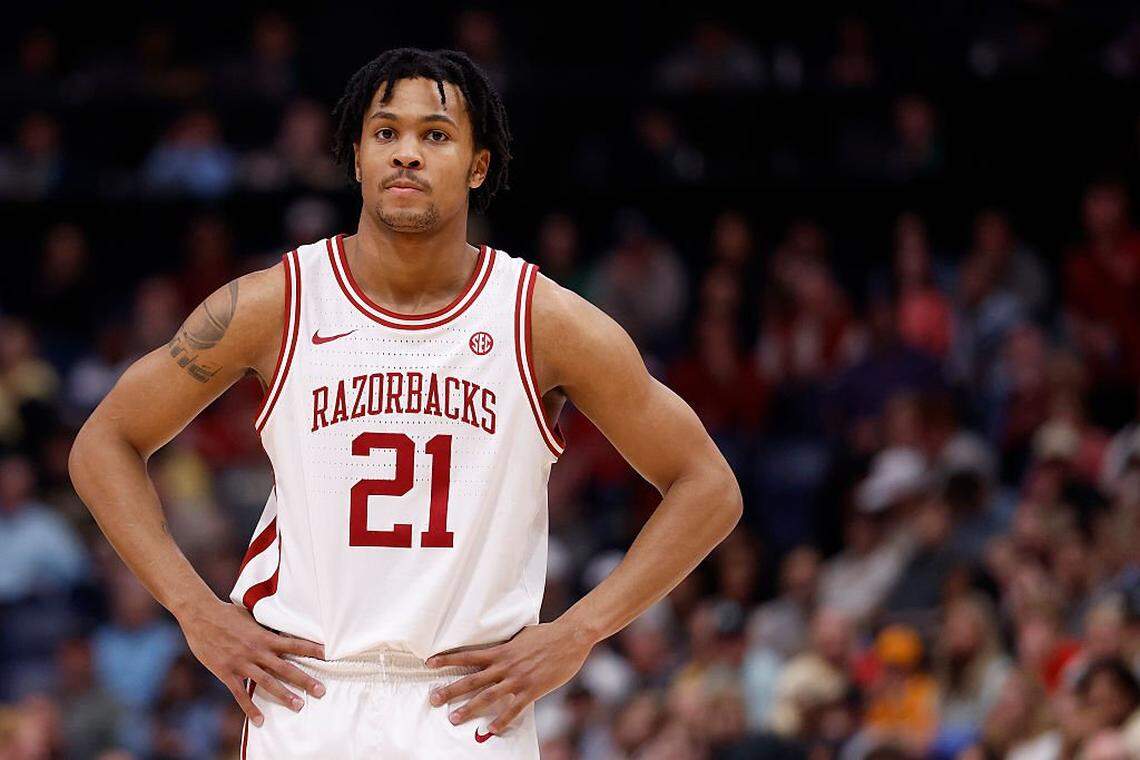
In college, Wagner has never been the man. He has never had the opportunity to play 35 minutes per game as the featured option.
He has never been the player his team looked to in every critical moment.
That changes now.
Wagner’s decision to transfer from Arkansas to Maryland is not a story of disloyalty. It is a story of a player finally putting himself first. After three years of sacrificing for others, after three years of competing for minutes against NBA talent, after three years of deferring, Wagner has chosen to become the main character in his own story.
At Maryland, under Buzz Williams, Wagner will be the starting point guard and primary playmaker. He will have the opportunity to demonstrate that he remains one of the finest players in the nation and a viable NBA draft prospect. And he will finally answer the question that has followed him since high school: What can D.J. Wagner do when he is the man?

The Portfolio Problem: Two Decisions, Two Different Motivations
To understand Wagner’s journey, you have to understand his two transfer decisions as fundamentally different kinds of portfolio allocations.
Decision #1: Kentucky to Arkansas (2024) – The Loyalty Move
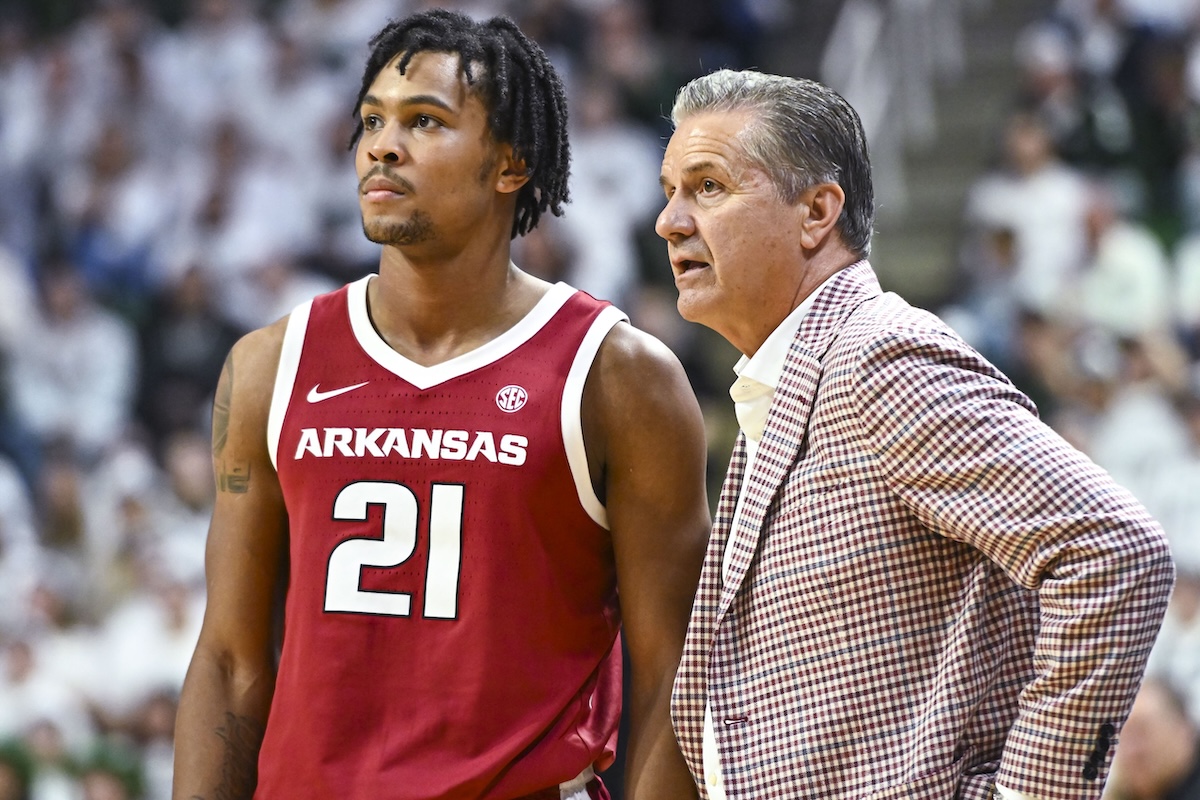
After a solid freshman season at Kentucky—SEC All-Freshman Team, three-time SEC Freshman of the Week, 28 starts in 29 appearances—Wagner faced a choice. Calipari was leaving for Arkansas. Wagner could stay at Kentucky, compete for minutes against a new crop of five-star recruits, or follow his coach to Fayetteville.
He chose loyalty. He followed Calipari.
The Calculus: Wagner traded the stability of a program where he had already earned a role for the uncertainty of a rebuild. He traded Kentucky’s brand for Arkansas’s promise. But he gained something invaluable: the trust of a coach who knew his family, who had coached his father, who would prioritize his development.
Or so he thought.
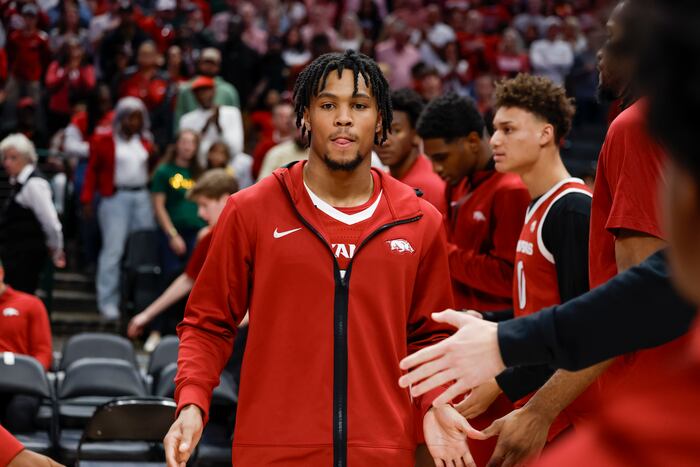
Decision #2: Arkansas to Maryland (2026) – The Self-Interest Move
After two seasons at Arkansas, Wagner’s production had plateaued. As a sophomore, he was an ironman—the only Razorback to start all 36 games, ranking second in the SEC in minutes (34:32 per game), leading the team with 131 assists. After Boogie Fland’s injury, he took over full-time at point guard and averaged 12.2 points and 4.6 assists over the final 18 games.
But as a junior, his role diminished. Darius Acuff arrived and immediately became the focal point of the offense. Wagner’s starts dropped from 36 to 19. His minutes, his shots, his assists—all down.
He had been loyal. He had waited his turn. And his turn never came.
This time, Wagner made a different choice. He chose self-interest. He entered the portal not to follow a coach, but to find a program where the wins and losses depend on his play.
The Calculus: Wagner traded SEC prestige for Big Ten opportunity. He traded a bench role for a starting job. He traded uncertainty for clarity. And he gained something invaluable: a chance to finally be the featured player.
The Maryland Opportunity: Buzz Williams and a Clean Slate
Buzz Williams is one of the most respected coaches in college basketball. He has won at least 100 games at Marquette, Virginia Tech, and Texas A&M—and he is seeking to become just the third Division I head coach to win 100 games at four different institutions, joining Maryland Hall of Fame coach Lefty Driesell and Steve Alford.
Williams’ track record speaks for itself:
18 seasons as a head coach: 373-228 (.621)
2x SEC Coach of the Year (2019-20, 2022-23)
Led Texas A&M to the NCAA Tournament in each of his last three seasons
Has won 100+ games at three different programs
But Wagner has already played a 100 games, logging major minutes, for a Hall of Fame coach.
Playing for Williams is opportunity to display his full game. Williams has a reputation for developing guards, for building defensive-minded teams, for maximizing the talent on his roster. He will give Wagner the keys to the offense and trust him to make plays.
The Numbers: A Player Who Keeps Improving
Wagner’s three-year college career shows steady improvement in the areas that matter most:
The positive trends:
His three-point percentage has improved every season (29.2% → 30.4% → 34.6%)
His assist-to-turnover ratio as a junior (85 assists, 23 turnovers) was elite (3.70)
He is 52 points from 1,000 for his career and has 312 career assists
The concerning trends:
His scoring and assists dropped significantly as a junior
He started only 19 of 35 games
He has never been the featured option
At Maryland, Wagner will have the opportunity to reverse those trends. He will be the main playmaker. He will play 30+ minutes per night. He will have the ball in his hands.
What Wagner Has Endured
It is impossible to assess Wagner’s journey without acknowledging what he has been through. He has competed against NBA-level guards every single year of his college career:
Freshman (Kentucky): Reed Sheppard (NBA first round) and Rob Dillingham (NBA first round)
Sophomore (Arkansas): Boogie Fland (team leader, later transferred to Florida)
Junior (Arkansas): Darius Acuff (SEC ROY, SEC POY, lottery pick)
He has never been the priority. He has always been the second or third option. And yet, he has never complained. He has never quit. He has played through injury—including an ankle injury that limited him as a junior. He has defended. He has facilitated. He has done whatever his team needed.
That maturity—that dedication to winning—made him an attractive prospect in the portal. High major programs like Villanova and St. John’s pursued him heavily. But Maryland offered something they could not: a clear path to being the man.
The Final Verdict: A Player Reclaiming His Narrative
D.J. Wagner was the No. 1 player in his high school class. He was the McDonald’s All-American Game MVP. He was supposed to be a one-and-done lottery pick.
That is not how his story has unfolded. But it is not too late to rewrite the ending.
At Maryland, under Buzz Williams, Wagner will have the opportunity to demonstrate that he is one of the best players in the nation and a viable NBA draft prospect. He will finally be the main playmaker.
He will finally have the chance to answer the question that has followed him since high school.
His first transfer was driven by loyalty. His second transfer is driven by self-interest. And that is exactly as it should be
Wagner has sacrificed enough. He has waited enough. He has been loyal enough.
Now, it is his turn.

