PHILADELPHIA, PA – The great unraveling of the N.C.A.A. was never really about money. It was about control. For a century, the association operated as a cartel, dictating precisely who gets what, when and how. University presidents, athletic directors and coaches acted as self-interested rational actors maximizing institutional benefit while student-athletes accepted scholarships in exchange for their labor and silence.
Then came 2021. Name, image and likeness rights arrived. The transfer portal opened. And the entire edifice cracked.
But here is the paradox that no one saw coming: In granting athletes the freedom to profit from their fame, we assumed we were giving them agency. We were wrong. What we actually did was transfer control from a centralized, predictable, if deeply flawed, governing body to a chaotic and largely unaccountable network of adults — handlers, parents, agents, and self-appointed advisors — who now exercise real power in college sports. Understandably, this transfer of power has been extremely disruptive to long established college sports business practices.
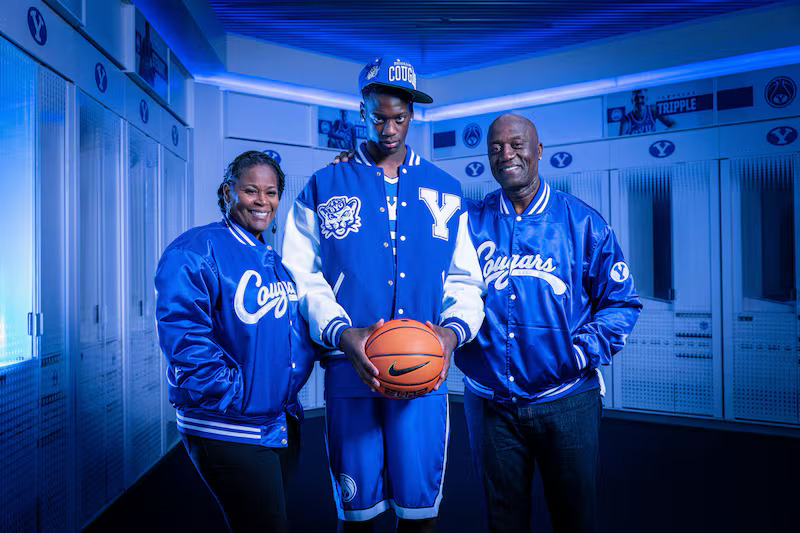
The Empty Chair at the Table
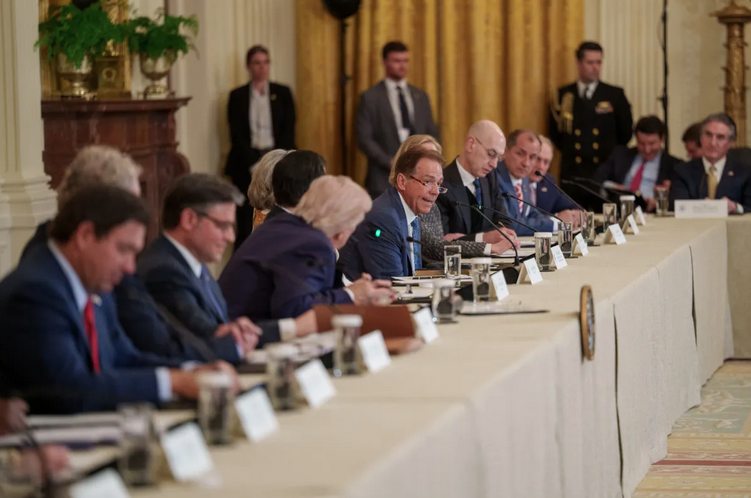
After a plea for help from conference commissioners and Power 4 athletic directors, President Donald Trump convened a “College Sports Roundtable” at the White House. During this gathering, President Trump said he will write an executive order within a week that will “solve all of the problems” brought forth in the unprecedented meeting. President Trump boldly declared that he will provide a plan to address the future of college sports. Trump hosted the first “Saving College Sports” roundtable with vice chairs Secretary of State Marco Rubio, New York Yankees president Randy Levine and Florida Gov. Ron DeSantis. They were joined in the East Room by about 50 people from varied backgrounds,
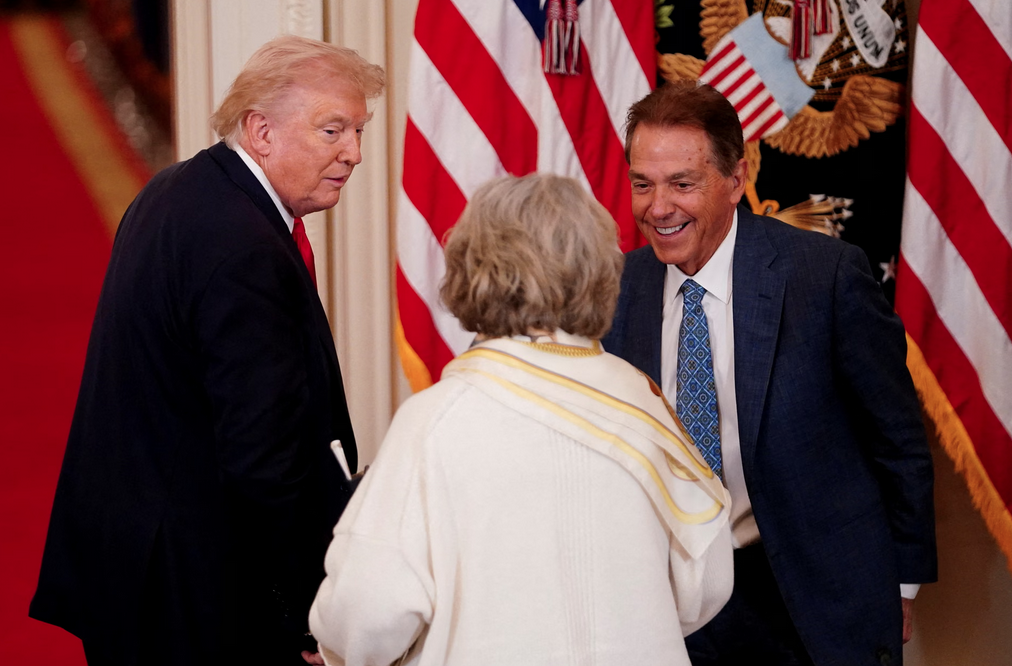
The group included other politicians, sports celebrities, media executives, conference commissioners, and university presidents, chancellors and athletic directors. Those who spoke delivered a similar message: College sports needs federal legislation to restore order in the N.I.L. space and its overall economics. The glaring omission from the group was the student-athlete. There were no scholastic or collegiate student-athletes participating. Zero. Yet the President of the United States concluded that he heard from everyone he needed to hear from and he will solve all of the problems.
“I will have an executive order within one week, and it will be very all-encompassing,” Trump said. “And we’re going to put it forward, and we’re going to get sued, and we’re going to see how it plays, OK, but I’ll have an executive order, which will solve every problem in this room, every conceivable problem, within one week, and we’ll put it forward. We will get sued. That’s the only thing I know for sure.”
Yes, they will get sued. If recent history is an accurate guide, they will be successfully sued. The N.C.A.A. has lost an overwhelming majority of legal battles in recent years.
One thing is painfully obvious: the student-athlete, particularly the elite youth navigating high-major basketball and football, is not the empowered decision-maker of N.I.L. mythology. They are, more often than not, a passenger in a vehicle driven by people with interests that may not align with their own.
The Media’s Preferred Sources
This absence of athlete voice is not merely a White House oversight. It reflects a systemic pattern in how the N.I.L. era is discussed and debated. A 2021 analysis of media coverage surrounding amateurism and N.I.L. rights found that sources such as the N.C.A.A. and politicians were most frequently cited — a combined 191 times — while collegiate student-athletes were quoted a total of seven times. Seven.
The message could not be clearer: Those who govern college sports, those who profit from it, and those who cover it have decided that the actual participants are not necessary to the conversation. Their voices are not required. Their perspectives are not sought. Their presence is optional.
The Illusion of Choice
Consider the decision environment facing a 19-year-old basketball prospect weighing offers from multiple high-major programs. On its face, this is a moment of remarkable opportunity. The same athlete who a decade ago would have signed a financial aid agreement now confronts seven-figure N.I.L. proposals and revenue-sharing projections.
The assumption in economics is straightforward: individuals have clear preferences, evaluate all available options, and choose the most effective path to maximize personal benefit. This assumes the actor possesses complete information and the capacity to process it.
Elite youth athletes possess neither.
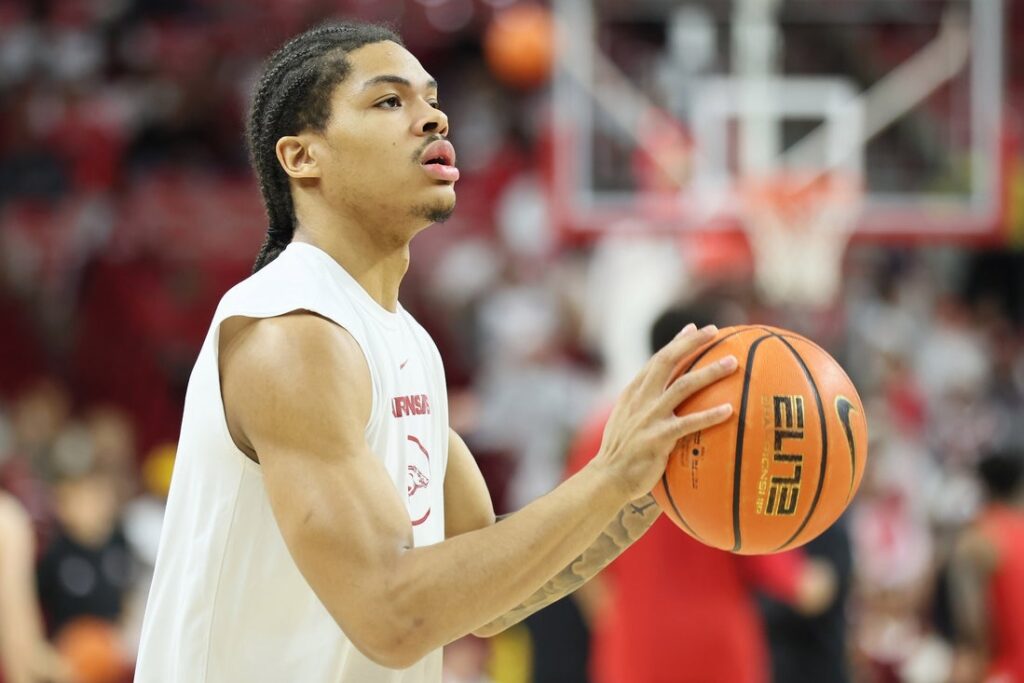
The N.C.A.A.’s regulatory environment has become so labyrinthine that even coaches confess bewilderment. Purdue’s Matt Painter captured the moment with devastating candor: “We just want to know the rules so we can abide by them. We don’t know what’s going on.” If coaches inside the system cannot decipher the regulations, what hope does a teenager have?
The rules themselves are no longer static. They are litigated in real time. Since November, more than 50 N.C.A.A. eligibility cases have been filed in state and federal courts, with judges increasingly willing to scrutinize restrictions under antitrust and contract theories. One quarterback obtains an injunction allowing a sixth year; another, in a different state court, is denied. Outcomes are “fact-specific and jurisdiction-dependent” — meaning whether an athlete can play often depends not on merit but on which judge hears the case.
This is not a system. It is a lottery.
Who Really Decides?
The N.C.A.A., to its credit, created a formal mechanism for athlete input. Student-Athlete Advisory Committees operate at the campus, conference and national level, charged with generating a student-athlete voice. At Division III institutions like Tuskegee University, members engage in admirable community service.
But let us be honest about what these committees do not do. They do not negotiate N.I.L. contracts. They do not advise on whether a $2 million offer complies with N.C.A.A. rules. They do not explain the tax implications of the House settlement’s revenue-sharing cap. They are advisory bodies, not fiduciary advisors.
The real decision-making occurs elsewhere. In the living rooms of handlers. In the offices of A.A.U. coaches whose reputations — and sometimes financial interests — tie to where their players land. In conversations between parents and uncles who may lack sophisticated understanding but possess outsized influence. In negotiations between agents and collectives, conducted well before the athlete formally enters the portal .
One high-major general manager described the dynamic bluntly: “You have conversations going on and you have to know damn well that the presentation you’re getting for your own player is going to 10 other schools.” Another noted that by the time a player enters the portal, “most guys will have a shortlist of three to five schools and a good market range of what those schools will offer.”
The deals are effectively done before the athlete’s name appears. The portal is merely theater.
The New Advisors, The Old Problems
At the 2025 Sports Lawyers Association Annual Conference, a panel titled “The New Advisors — Representing the Future Athlete” offered an unsettling glimpse into this shadow market. Panelists described how agents now serve as both business managers and quasi-life coaches, creating inevitable tensions between maximizing an athlete’s market value and respecting their personal autonomy .
One particularly candid admission came when a Wasserman executive acknowledged that his firm builds relationships with athletic departments, administrators, and high school coaches not just to sign clients, but to influence where athletes enroll. He referred to this as “guiding” athletes toward schools that align with their N.I.L. ambitions. But at what point does guidance become steering? If representation is now essentially recruitment, the potential for undue influence becomes much harder to ignore.
The panel also highlighted a concerning trend where high school athletes are being courted earlier than ever, often by underqualified or unscrupulous agents, with commissions reaching as high as 20 percent — far above traditional industry standards.
The Adult Economy
Assume, as we must, that these adults are themselves rational actors. Handlers seek to maximize influence. Agents pursue commissions. Parents want security for their children and, in some cases, for themselves. All weigh costs and benefits, preferring outcomes that maximize gains.
The problem is that these gains do not always align with the athlete’s long-term welfare. A handler who pushes a player to transfer annually generates repeated recruiting buzz. An agent who encourages chasing the highest N.I.L. bid secures a larger commission, even if the athlete lands in a poor developmental environment.
The numbers involved have become staggering. High-major basketball programs now spend between $7 million and $10 million on rosters. Power conference football programs face revenue-sharing caps of $21.3 million, with some pushing total investment toward $40 million . Star players command $2 million to $3 million, with a handful approaching $4 million.
This is real money. It attracts real predators.
The High School Hunting Ground
The exploitation begins earlier than many realize. In Louisiana, a state with one of the nation’s largest shares of high school football players recruited by Division I colleges, a legislative task force heard testimony of “rampant” problems among the state’s premier football schools. Adults with no professional certifications or backgrounds in the law swoop in to secure representation from Louisiana’s top recruits — some as young as 12 or 13 years old .
J.T. Curtis, the legendary football coach at John Curtis Christian School in River Ridge, told the panel: “Until we find a way to get outside influences out of the lives of our high school athletes, we’re going to continue struggling with this.”
The task force’s response? Recommendations that anyone other than a parent who helps high schoolers negotiate endorsement contracts must register as an agent with the state — subject to background checks and required to complete training. For athletes under 17, the task force proposed requiring that a portion of their compensation be deposited into a trust account .
These are sensible protections. But they are also admissions: the system is broken, and teenagers cannot navigate it alone.
The Information Asymmetry
The fundamental injustice of the current system is not that athletes are paid — they should be — but that they negotiate from a position of profound ignorance while the adults across the table possess sophisticated understanding of the rules, the market and the leverage points.
A panelist at the Sports Lawyers Conference raised the question of a university’s “duty of care” when presenting complex 25-page N.I.L. agreements to 18-year-old students. These young athletes are exposed to potential exploitation, especially when they lack the resources to secure knowledgeable counsel before signing. As one expert urged, athletic departments cannot expect student-athletes entering college to be “fully-fledged business representatives” capable of negotiating on their own behalf .
A player considering a transfer may not know whether years of junior hockey now count against their eligibility clock. They may not understand that the N.C.A.A.’s waiver process has become even more unpredictable as courts intervene. They may sign an N.I.L. contract without realizing that a collective’s promises are not always enforceable, or that tax implications could consume a third of the value.
The S.C.O.R.E. Act, should it pass, would create uniform federal standards. But even that legislation, stalled in the House, would not solve the information problem. It would merely standardize the rules that athletes still cannot decipher.
Meanwhile, the White House roundtable proceeded without them. The people making the rules do not include the people bound by them.
The 95 Percenters
The conversation around N.I.L. is dominated by the experiences of star athletes in football and men’s basketball — the “top 5 percent” who command seven-figure deals. But this focus obscures the reality for the vast majority of college athletes.
As one industry expert noted at the Sports Lawyers Conference, 83 percent of college athletes are not participating in N.I.L. deals at all. The so-called “95 percenters” — athletes in non-revenue sports and smaller markets — receive little institutional support, minimal media coverage, and virtually no guidance in navigating the commercial landscape .
Yet even these athletes face the same complex decisions, the same legal documents, the same tax implications. They simply lack the leverage to demand competent counsel.
The Independent Counsel Athletes Deserve
The young man sitting across from me had just been offered $600,000 to transfer. He was 19. His family had never dealt with contracts beyond a car loan. The school was 1,200 miles from home, with a coach he had met twice. He had 15 days to decide.
I told him what any competent advisor would have: slow down. Model the tax implications. Compare the depth chart. Call players already on the roster. Read the fine print — was it guaranteed, or renewed annually at the collective’s discretion?
He did none of these things. He took the money. Eight months later, he was back in the portal, having played 87 total minutes, his brand value cratered, his eligibility clock ticking.
This story is not unusual. It is the defining feature of the N.I.L. era: young people making life-altering decisions in informational vacuums, surrounded by adults with competing interests, operating under artificial time pressure designed to benefit institutions.
A Strategy for Empowerment
The N.C.A.A. was not designed for this moment. It evolved over a century to control eligibility, movement and compensation. Its rules were written to limit, not empower. Its enforcement mechanisms were built to punish, not protect. Asking the N.C.A.A. to provide independent counsel is like asking the I.R.S. to provide free financial planning — structurally incompatible with its institutional purpose.
Yet for now, the N.C.A.A. must play a central role in any system-wide intervention. It controls the eligibility clearinghouse. It maintains the transfer portal. It certifies agents and collectives in some jurisdictions. It remains, however imperfectly, the only entity with national reach.
Knowing full well how difficult it will be, the N.C.A.A. and its member institutions should establish a national network of certified athlete advisors — analogous to the financial planners and legal aid professionals who serve other vulnerable populations. These advisors would be independent of universities, conferences and collectives, paid from a central fund supported by N.C.A.A. revenues and television contracts, with a fiduciary duty to the athlete alone .
Their role would be straightforward: to explain, in plain language, the implications of eligibility rules, transfer requirements and N.I.L. contracts. To model tax consequences. To assess whether a program’s developmental infrastructure serves the athlete’s long-term goals. To identify honest brokers and flag potential conflicts.
This is not a radical proposal. Some institutions are already moving in this direction. Monmouth University, for example, has instituted financial literacy requirements for any student-athlete participating in revenue sharing or receiving additional benefits, providing education on personal brand management, accounting, finance, and tax consequences . These efforts are commendable. But they remain isolated and inconsistent.
What is needed is structural, not advisory. It is the difference between a suggestion box and a lawyer.
Completing the Revolution
Harold Lasswell’s classic definition of politics remains the most useful lens: “who gets what, when, how.” In college athletics today, the athletes get money — substantial sums, in some cases — but they do not get control. They get compensation without agency, payment without power.
The adults get everything else. They get the satisfaction of influence, the currency of relevance, the commissions and the credit. They get to determine, behind closed doors, which athlete goes to which school for how much money. They get to navigate the regulatory maze while the athletes stumble through it.
The irony could not be more stark. A movement that began as a fight for athlete rights — for the freedom to profit from one’s own labor — has produced a system in which athletes have less genuine choice than ever before. They can go anywhere, theoretically, but they go where they are told. They can make any deal, theoretically, but they sign what they are given.
The solution is not to return to the old model of paternalistic control by universities. That model was exploitative in its own way. The solution is to complete the revolution that N.I.L. began but has not finished — to give athletes not just the right to profit, but the right to understand, the right to choose, and the right to independent counsel.
A national network of certified athlete advisors would not solve every problem. But it would create something that does not currently exist: a source of disinterested, professional advice, available to every athlete regardless of sport, conference or N.I.L. valuation.
It would, in short, give athletes someone in their corner whose only interest is their interest.
Until we do, the chaos will continue. The adults will keep winning. And the voices of those who actually play the games will remain unheard — absent from White House roundtables, missing from media coverage, and drowned out by the handlers, agents and advisors who have made themselves the true powers in college sports.


 The Black Cager