Black Cager Sports Announces Sponsorship Opportunities for the Landmark 10th Annual Black Cager Fall Classic

FOR IMMEDIATE RELEASE

ALLENTOWN, PA – August 22, 2025Black Cager Sports is thrilled to announce the highly anticipated return of the Black Cager Fall Classic, set to tip off on Saturday, October 11, 2025, at the prestigious Executive Education Fieldhouse in Allentown, Pennsylvania. This year marks a significant milestone as the event celebrates a decade of delivering elite basketball competition and unparalleled exposure for the region’s top high school talent.

To commemorate this landmark occasion, Black Cager Sports is officially launching its 2025 sponsorship program, inviting local and national businesses to align their brands with the East Coast’s premier pre-season basketball showcase.

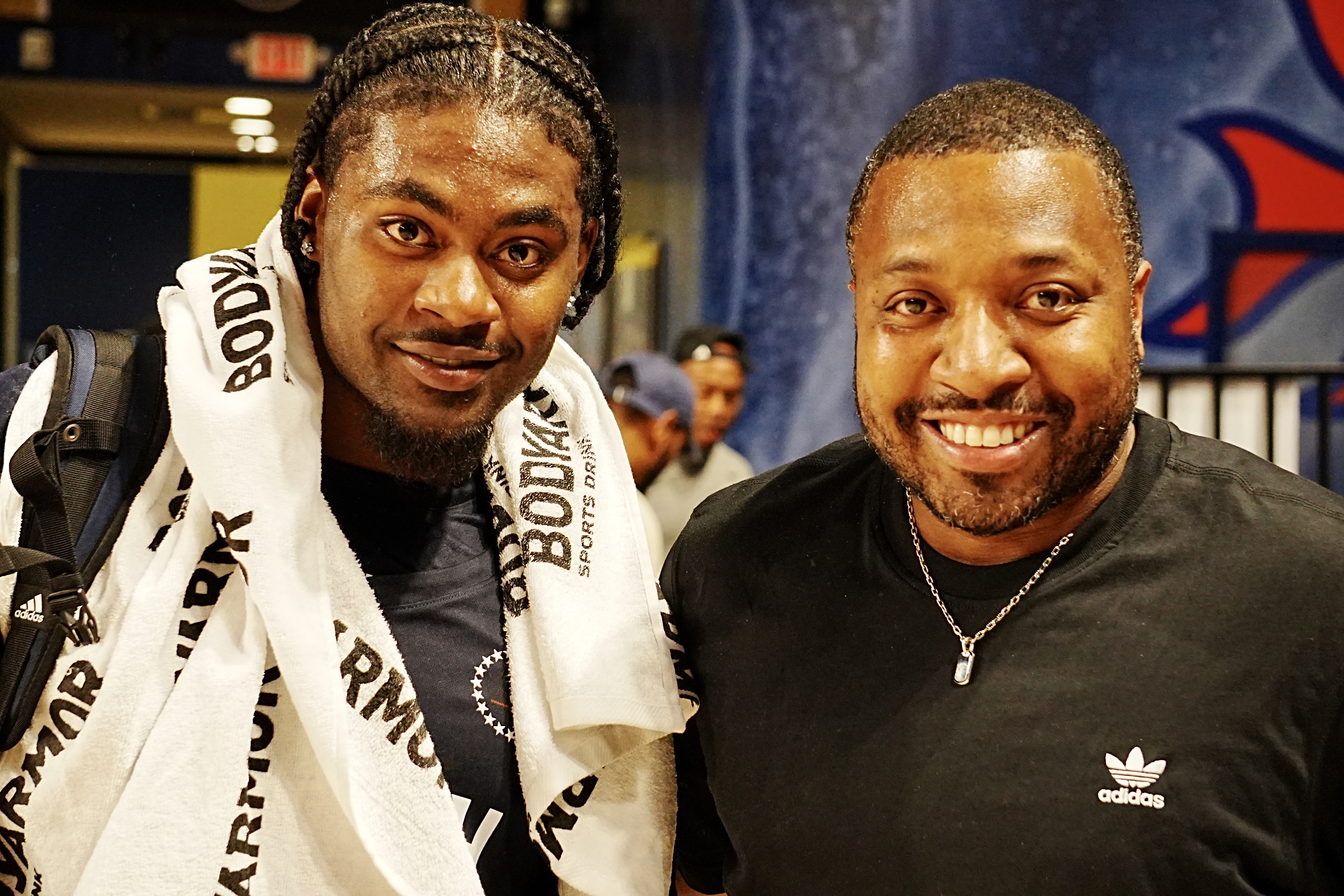
Fall Classic Alum, Jalen Duren, Detroit Pistons

Since its inception in 2015, the Black Cager Fall Classic has cemented its reputation as a must-attend event for NCAA scouts, top-tier high school programs, passionate basketball enthusiasts, and media. The tournament has been instrumental in elevating the profile of mid-Atlantic scholastic basketball, creating a direct pipeline for player recruitment and development. The event consistently delivers a substantial economic impact to the city of Allentown, attracting thousands of visitors who fill local hotels, restaurants, and businesses.

Fall Classic Alum, Collin Gillespie, Phoenix Suns

“The 10th Annual Fall Classic is more than just a tournament; it’s a celebration of a decade of community, competition, and the incredible growth of these young athletes,” said a spokesperson for Black Cager Sports. “Our sponsors are vital partners in this mission. Their support not only makes the event possible but also connects their brands with a deeply engaged, community-oriented audience of families, coaches, and dedicated sports fans. We offer tailored packages designed to deliver maximum visibility and value.”

Fall Classic Alum, Bub Carrington, Washington Wizards

The 2025 Black Cager Fall Classic offers a powerful platform for sponsors to reach a captive audience through extensive multi-channel promotion, including live event exposure, digital marketing, and print media.

Detailed sponsorship opportunities are as follows:

Presenting Sponsor: $2,000 (Extremely Limited Availability)

  • Premier full-page ad in the official Event Program & Schedule.
  • Prime-location display table proximate to the main facility entrance for maximum foot traffic.
  • Exclusive access to the contact information for all Head Coaches of participating programs.
  • Prominent featuring in all direct mail, social media campaigns, and billboard advertising.
  • Logo featured on the Black Cager Sports website for one full year and on all event invitations and materials.
  • Ten (10) complimentary tickets to the event.

Black Cager Fall Classic Excellence Award Sponsor: $1,000

  • Exclusive naming rights for one of the event’s prestigious Fall Classic Excellence Awards, presented live during the event.
  • Prominent half-page ad in the event program and display advertising at the venue.
  • Featured recognition in newspaper and billboard advertising.
  • Name listed on all event invitations and logo featured on the Black Cager Sports website for six months.
  • Six (6) complimentary tickets to the event.

Silver Sponsor: $500

  • Half-page ad in the event program and display advertising at the venue.
  • Featured recognition in newspaper advertising for the event.
  • Name listed on event invitations and logo featured on the Black Cager Sports website for six months.
  • Four (4) complimentary tickets to the event.

Bronze Sponsor: $250

  • Quarter-page ad in the event program.
  • Logo featured on the Black Cager Sports website for six months.
  • Two (2) complimentary tickets to the event.

Partner Sponsor: $100

  • Business listing in the event program (ad calendar).
  • Listing on the Black Cager Sports website for three months.
  • Two (2) complimentary tickets to the event.
Fall Classic Alum, Thomas Sorber, Oklahoma City Thunder

About Black Cager Sports:
Black Cager Sports is a leading media and event organization dedicated to the coverage and promotion of scholastic and amateur basketball across the mid-Atlantic region. Through its high-profile tournaments, in-depth reporting, and dynamic digital content, Black Cager Sports provides a crucial platform for student-athletes to gain exposure and for the community to celebrate the game.

For more information on sponsorship opportunities and to secure a package, please visit http://www.delgrecowilson.com, http://www.blackcagertv.com or contact Delgreco Wilson at blackcager@gmail.com or 856-366-0992.

Media Contact:
Delgreco Wilson
Managing Editor
Black Cager Sports
856-366-0992
email: blackcager@gmail.com
Instagram: blackcagerpress

Facebook: Delgreco Wilson

X: DelgrecoWilson

Threads: blackcagerpress

###

The Danny Rumph Classic: How a Memorial Tournament Became Philadelphia’s Basketball Heartbeat

By Delgreco K. Wilson
August 10, 2025

PHILADELPHIA, PA — In a city where basketball is less a pastime than a birthright—where legends like Wilt Chamberlain, Earl Monroe, Gene Banks and Rasheed Wallace honed their games on cracked asphalt and in dimly lit rec centers—the Danny Rumph Classic has carved out its own special legacy. What began 20 years ago as a somber tribute to a fallen local star has grown into something far greater: a summer institution that embodies Philadelphia’s grit, camaraderie, and unwavering love for the game.

Marcus Randolph (St. Peter’s and Archbishop Wood alum) and Darris Nichols, La Salle University Head Coach

A City Forged on the Hardwood

Philadelphia’s basketball history runs deep. From the Big Five’s collegiate rivalries to the playground kings of Sonny Hill and Baker League fame, the City of Brotherly Love has long been a crucible for hoops talent. The Danny Rumph Classic, now in its 20th year, sits squarely in this tradition—a bridge between the past and present, where NBA stars share courts with neighborhood heroes and wide-eyed kids clutch free tickets at the door.

But unlike the storied Sonny Hill League or the fabled Donofrio Classic, the Rumph is more than just a showcase. It’s a lifeline. The tournament honors Danny Rumph, a 21-year-old Western Kentucky guard who collapsed and died in 2005 after a pickup game at Germantown’s Mallery Recreation Center, a victim of hypertrophic cardiomyopathy. His death galvanized friends and family to turn grief into action, launching a tournament to fund heart screenings and place defibrillators in gyms across the city.

This mission has been accomplished.

The Classic’s evolution mirrors Philadelphia itself. It’s scrappy (moving venues from rec centers to college arenas), inclusive (adding women’s pro games and youth clinics), and relentlessly purposeful.

Hysier Miller (Temple and Neumann-Goretti alum)

From Germantown to the National Stage

The early years were intimate. The first Classic, held at the rec center later renamed for Rumph, drew 500 fans crammed so tightly they couldn’t see the out-of-bounds lines. Former NBA forward Hakim Warrick, a Rumph family friend, became the tournament’s first marquee participant, playing in all 12 of its early editions.

Then came the tipping point. In 2016, NBA superstar James Harden—then a Houston Rocket—showed up unannounced. The line outside La Salle’s Tom Gola Arena snaked down Wister Street, and social media lit up. “That’s when it went to the stratosphere,” said Marcus Owens, Danny’s uncle. Soon, Philly-connected NBA stars like Tyrese Maxey, Jalen Brunson, Bones Hyland and the Morris twins made the Rumph a summer pilgrimage. The tournament’s “Philly basketball festival” vibe—a mix of elite talent, trash talk, and communal pride—became its trademark.

Mike Watkins (Penn State and MCS alum)

More Than a Game

The Classic’s evolution mirrors Philadelphia itself. It’s scrappy (moving venues from rec centers to college arenas), inclusive (adding women’s pro games and youth clinics), and relentlessly purposeful. Viola “Candy” Owens, Danny’s mother, estimates the event has funded thousands of heart screenings and placed over 100 defibrillators in rec centers. One undiagnosed teen, flagged at a Rumph screening, underwent life-saving surgery—proof, as co-founder Mike Morak says, that “the basketball’s cool, but the mission’s the thing.”

The tournament also stitches together generations. Middle schoolers now scrimmage before the championship game, just as a young Jessie Moses once sat on the Morris twins’ bench, wide-eyed. Former players return as coaches; kids who once mopped floors now run the shot clock. “It’s all the people you grew up with,” Morak said. “This is the time you come back.”

A Tradition Built to Last

In a sports landscape where summer leagues often prioritize hype over heart, the Rumph Classic stands apart. It’s a living memorial—one that thrives not just on NBA star power but on Philly’s unshakable sense of community. As Marcus Owens put it: “We miss Danny every day. But we believe he’s looking down with a big smile.”

Two decades in, the Classic is no longer just a tournament. It’s a Philadelphia tradition—one that dribbles, defends, and saves lives with equal ferocity. And if the city’s basketball history is any guide, it’s only just getting started.

For schedules or to donate: rumphclassic.com 

The New Jim Crow: Why BLACK ATHLETES Must Respond

By Delgreco K. Wilson
Aug. 9, 2025

PHILADELPHIA, PA – The contemporary push by MAGA Republicans to redraw congressional maps in states like South Carolina, Texas, Florida, and Ohio represents nothing less than a 21st century iteration of the Jim Crow-era voter suppression tactics that systematically disenfranchised Black Americans following Reconstruction. This modern assault on Black political power—exemplified by South Carolina gubernatorial candidate Ralph Norman’s bid to eliminate the state’s sole majority-Black congressional district—follows the same playbook white supremacists used after the Civil War: using ostensibly race-neutral mechanisms to achieve racially discriminatory outcomes while maintaining a thin veneer of legal justification. As these efforts intensify, Black student-athletes who power the billion-dollar high major college sports industrial complex face a moral imperative: withhold their talents from institutions in states actively suppressing Black votes, just as civil rights activists used economic boycotts to combat segregation.

The Blueprint of Suppression: From Reconstruction to Redistricting

The post-Reconstruction dismantling of Black political participation provides the historical template for today’s Republican redistricting schemes. Following the 15th Amendment’s ratification in 1870, southern states implemented an arsenal of discriminatory measures—literacy tests, poll taxes, grandfather clauses, and all-white primaries—that reduced Black voter registration to single digits within decades. Mississippi’s 1890 constitutional convention openly admitted its purpose was to “reduce the colored vote to insignificance” without explicitly violating the 15th Amendment. The results were catastrophic: by 1920, Louisiana’s 130,000 registered Black voters dwindled to just 1,342.

Today’s MAGA Republican mapmakers employ nearly identical tactics with updated jargon. The Supreme Court’s 2024 Alexander v. South Carolina NAACP decision—which upheld South Carolina’s congressional map despite evidence it “bleached” 30,000 Black voters from Charleston County—established a troubling precedent. Writing for the 6-3 conservative majority, Justice Samuel Alito created nearly insurmountable barriers for proving racial gerrymanders, requiring plaintiffs to “disentangle race and politics” in regions where race and party affiliation correlate at 90%. This legal framework enables what Justice Elena Kagan condemned as “sorting citizens by race” under the guise of partisan gerrymandering.

The South Carolina Case Study: MAGA’s Modern-Day Vardaman

Ralph Norman’s push to dismantle Rep. Jim Clyburn’s 6th District mirrors the rhetoric of Mississippi Governor James Vardaman (1904-1908), who vowed to use “any device” necessary to maintain white supremacy. Norman’s public rationale—that a 7-0 Republican delegation would help “President Trump pass his agenda”—masks the racial impact: eliminating South Carolina’s only Black-majority district in a state where 30% of residents are Black. The 6th District was originally created in the 1990s to comply with the Voting Rights Act after centuries of Black political exclusion.

Legal experts note this violates Section 2 of the Voting Rights Act, which requires minority communities to have “an opportunity to elect representatives of their choice.” The ACLU’s Allen Chaney calls Section 2 an “impenetrable bulwark” against such plans, but the Supreme Court’s recent rulings have weakened these protections. Norman’s proposal follows South Carolina Republicans’ successful 2021 redistricting that made the neighboring 1st District safely Republican by excising Black Charleston neighborhoods—a move the Supreme Court sanctioned in Alexander.

The National MAGA Playbook: Texas, Florida, and the New Voter Suppression Complex

South Carolina’s efforts are part of a coordinated national MAGA strategy:

  • Texas Republicans seek to gain five new GOP House seats through redistricting, with Trump declaring they’re “entitled” to them
  • Florida Governor Ron DeSantis signed a 2022 map dismantling two Black-performing districts, which courts initially blocked before conservative appellate rulings allowed it
  • Ohio Republicans repeatedly defied state Supreme Court orders to stop using unconstitutionally gerrymandered maps

These states share Reconstruction’s sinister innovation: using technical legality to mask racial disenfranchisement. Just as Mississippi’s 1890 poll tax avoided mentioning race while devastating Black turnout, today’s GOP cites “partisan fairness” while surgically removing Black voters from competitive districts. The Princeton Gerrymandering Project gives South Carolina’s map an “F” for fairness and competitiveness, creating districts where general elections are irrelevant and representatives cater only to far-right primaries.

“If 5-star recruits en masse chose Michigan over Alabama, or UCLA over Texas, the message would resonate louder than any court ruling.

The Athletes’ Dilemma: Billion-Dollar Bodies, Second-Class Citizenship

Black athletes—particularly in revenue-generating football and basketball programs—face a moral contradiction: their labor funds universities in states actively suppressing their communities’ votes. Consider:

  • Southeastern Conference (SEC) schools generated $852 million in 2022 athletics revenue, predominantly from Black football players
  • Clemson (SC) and Texas A&M football programs each exceed $150 million annual value
  • NCAA Tournament basketball broadcasts net $1 billion yearly, powered, primarily, by Black athletes

Yet these same states:

  • Host 63% of all restrictive voting laws passed since 2021 (Brennan Center)
  • Contain 9 of 10 worst Black voter suppression states (Northern Illinois University)
  • Are dismantling majority-minority districts like Clyburn’s

The Boycott Imperative: Leveraging Athletic Capital for Civil Rights

A coordinated boycott by elite Black recruits could achieve what lawsuits cannot: imposing economic consequences for voter suppression. Potential strategies:

  1. Targeted Recruitment Strikes
  • Top 300 football and Top 100 boys and girls basketball recruits pledge to avoid SEC/ACC schools in suppression states
  • Current suppression state players transfer to HBCUs or northern schools (Michigan, Ohio State)

2. Game-Day Protests

  • Kneeling during alma maters in state capitols (e.g., South Carolina State House visible from USC stadium)
  • Wearing “Votes Over Victories” jerseys during warmups

3. NIL Collective Bargaining

  • Athlete-led protests demand universities lobby against suppression laws
  • Redirect a portion of endorsement money to voting rights groups

History shows economic pressure works. The Montgomery Bus Boycott (1955-56) crippled transit revenues, forcing desegregation. Today, a 20% decline in SEC football ratings could cost ESPN $285 million annually—enough to spur change.

Counterarguments and Complexities

Critics will claim:

  • “Sports and politics shouldn’t mix”: But stadiums fly state flags; coaches earn millions from public funds
  • “It hurts Black athletes’ futures”: Yet NFL/NBA scouts will find talent anywhere (see: Antonio Brown from Central Michigan)
  • “It’s unfair to students”: More unfair than losing voting rights?

The NCAA’s own history shows activism works. After 1969, when Black Texas Western players boycotted segregated facilities, the Southwest Conference integrated.

Conclusion: From Reconstruction to Redistribution of Power

The MAGA redistricting push proves that voter suppression remains the GOP’s most potent tool—updated with GIS precision rather than burning crosses. As in 1896, when Plessy v. Ferguson sanctioned “separate but equal,” today’s Supreme Court has greenlit racialized gerrymandering through Alexander.

Black athletes now stand where sharecroppers once did: exploited for economic value while denied full citizenship. Their predecessors fought poll taxes with protest; today’s stars must weaponize their billion-dollar leverage. If 5-star recruits en masse chose Michigan over Alabama, or UCLA over Texas, the message would resonate louder than any court ruling.

As Rep. Clyburn—whose district faces elimination—told the Post and Courier, this is about “absolutism.” The response must be equally absolute: no Black knees on fields in states that kneel on Black necks at ballot boxes. The playbook exists—from Reconstruction’s martyrs to Colin Kaepernick. Time to run the damn play.

Black Cager Fall Classic Returns to Executive Education Fieldhouse for 2025 Showcase

FOR IMMEDIATE RELEASE

*Premier Pre-Season Basketball Tournament Set to Light Up Allentown on October 11*

Allentown, PA – July 28, 2025 – Black Cager Sports is thrilled to announce the return of the Black Cager Fall Classic to the Executive Education Fieldhouse in Allentown, Pennsylvania, on Saturday, October 11, 2025. Celebrating a decade of elite competition, the Fall Classic has solidified its reputation as one of the East Coast’s premier pre-season basketball showcases, drawing top high school talent, college scouts, and passionate fans from across the region.

Since its inception in 2015, the Black Cager Fall Classic has become a must-attend event for players, coaches, and basketball enthusiasts alike. The tournament has played a pivotal role in elevating mid-Atlantic scholastic basketball, providing unmatched exposure through live streaming, social media coverage, and high-level competition. Each year, the event delivers a significant economic boost to Allentown as teams and fans travel in to witness the action.

“The Executive Education Fieldhouse is the perfect home for the Fall Classic,” said Delgreco Wilson, founder of Black Cager Sports. “When we moved the event here, we knew we had found something special—a world-class facility with four courts, ample parking, and an incredible fan experience. This is where the Fall Classic belongs, and we’re proud to make it our permanent home.”

With over 2,300 college players entering the transfer portal in 2025, roster management has never been more critical. The Fall Classic offers high school coaches a unique opportunity to evaluate their teams in competitive game settings before the official season tips off. For college coaches, the event serves as a key scouting platform, allowing them to identify rising stars early in the year.

Robert Lysek, Chief Executive Officer of Executive Education Academy Charter School, echoed the excitement: “The Black Cager Fall Classic has become a beloved tradition in Allentown, bringing elite basketball talent to our city and introducing new visitors to the Executive Education Fieldhouse each year. We’re honored to partner with Black Cager Sports to host such a prestigious event.”

The tournament’s legacy speaks for itself. NBA standouts like Derik Queen (New Orleans Pelicans), Jalen Duren (Detroit Pistons), Bub Carrington (Washington Wizards), Jamir Watkins (Washington Wizards), and Collin Gillespie (Phoenix Suns) all showcased their skills at past Fall Classics. The event has also been a launching pad for college stars such as Derek Simpson (Saint Joseph’s), DJ Wagner (Arkansas), and Zion Stanford (Villanova). Even Hall of Fame coaches like Bill Self (Kansas), John Calipari (Arkansas), and Danny Hurley (UConn) follow the action closely, using livestreams and game footage to evaluate talent.

Don’t miss the 2025 Black Cager Fall Classic—where the next generation of basketball stars takes center stage!

For media inquiries, contact:
Delgreco Wilson
Founder, Black Cager Sports
Email: blackcager@gmail.com
Instagram: @BlackCagerPress
X: @DelgrecoWilson
Facebook: Delgreco Wilson

#BlackCagerFallClassic #ExecutiveFieldhouse #AllentownBasketball #NextUp

About Black Cager Sports

Black Cager Sports is dedicated to promoting and elevating basketball talent through premier showcases, scouting reports, and media coverage. The Fall Classic remains one of its flagship events, providing unparalleled exposure for high school athletes and a must-see experience for basketball fans.

END

The Shadow Market: How “Handlers” Distort the Truth in College Basketball Recruiting

PHILADELPHIA, PA – In the high-stakes world of elite basketball recruiting, the path from high school phenom to college star is rarely straightforward. Parents and young athletes are told they are making rational, informed choices—weighing scholarship offers, development opportunities, and long-term career prospects. But beneath the glossy promises of scouts and recruiters operates a shadow economy of middlemen—known in the industry as “handlers”—whose influence distorts the decision-making process in ways that often leave families at a disadvantage.

These handlers—AAU coaches, trainers, family advisors, and other self-appointed power brokers—position themselves as indispensable guides, offering access to top programs and insider knowledge. Yet their role frequently undermines the very premise of rational choice: that decisions are made with full information and in the best interest of the athlete. Instead, many operate with hidden agendas, steering players toward schools and agents who compensate them, regardless of whether those choices serve the athlete’s long-term future.

The Myth of Perfect Information

Rational choice theory assumes that individuals make decisions by objectively assessing costs and benefits. In an ideal world, a blue-chip recruit and their family would evaluate colleges based on coaching style, academic fit, playing time, and professional development potential. But the reality is messier. Handlers often control the flow of information, selectively presenting options that benefit them—sometimes at the expense of the athlete.

Consider the case of a five-star recruit deciding between two programs:

  • School A offers strong academics, a proven developmental track record, and a clear path to NBA exposure.
  • School B has a flashier reputation but a history of mismanaging talent—yet its boosters have a financial arrangement with the player’s AAU coach.

If the handler only emphasizes School B’s perks—perhaps exaggerating its NBA pipeline or downplaying past player dissatisfaction—the family may make a choice based on manipulated data. This is not rational decision-making; it is a rigged game.

The Handler’s Playbook: Side Deals and Hidden Incentives

The most insidious aspect of this system is the financial undercurrent. While NCAA rules prohibit direct payments to players (at least before NIL reforms), there are no such restrictions on backroom deals between handlers and programs. Common arrangements include:

  • Kickbacks for commitments: Some AAU coaches receive “donations” from college staff or boosters for delivering top recruits.
  • Agent partnerships: Handlers may have informal ties to sports agencies, steering players toward certain representatives in exchange for future cuts of professional earnings.
  • Shoe company influence: Since Nike, Adidas, and Under Armour sponsor both AAU circuits and college teams, handlers aligned with a brand may push athletes toward affiliated schools, regardless of fit.

These conflicts of interest are rarely disclosed to families. A parent might believe their child is choosing a school for its coaching staff, only to later discover the decision was swayed by a handler’s financial stake.

The Consequences of Distorted Choices

When recruits land in suboptimal situations—riding the bench at a program that doesn’t develop them, or worse, flunking out due to inadequate academic support—the handlers face no repercussions. They’ve already collected their fees. The athlete, meanwhile, bears the cost: wasted eligibility, damaged draft stock, or even a derailed career.

Even when players do succeed, the system’s opacity raises ethical concerns. If a top recruit thrives at a school that paid his handler, was it truly the best choice—or just the most lucrative one for the middleman?

Toward a More Transparent System

Reform is possible, but it requires dismantling the handler economy’s secrecy. Potential solutions include:

  • Mandating disclosure: Requiring handlers to register as “recruiting advisors” and disclose financial ties to schools or agents.
  • Strengthening NCAA enforcement: Investigating suspicious recruitment patterns, such as AAU coaches with unusual influence over multiple high-profile commitments.
  • Educating families: Providing independent resources to help parents and athletes navigate recruitment without relying on potentially biased intermediaries.

For now, the burden falls on families to ask hard questions: Who benefits from this decision? What information am I not seeing? Because in the murky world of elite basketball recruiting, the people whispering in their ears don’t always have their best interests at heart.

The tragedy is not just that some athletes make poor choices—it’s that the system is designed to obscure the truth, leaving them to pay the price for decisions they never fully controlled. Until that changes, the myth of rational choice in recruiting will remain just that: a myth.

Jerome Brewer’s La Salle University Homecoming: A Lesson in Maturity and Purpose

CAMDEN, NJ – In an era when college basketball players often chase the brightest spotlight or the most lucrative NIL deals, Jerome Brewer’s decision to return home stands as a rare act of introspection and social responsibility. The 6’8” forward, who has navigated a winding collegiate journey from Texas A&M Commerce to McNeese State, could have followed his former coach to North Carolina State or sought a bigger stage elsewhere. Instead, he chose La Salle University—not just for basketball, but to fulfill a deeper mission.

Brewer’s choice reflects a maturity beyond his years. At a time when young athletes are frequently pressured to prioritize immediate success, he considered something more enduring: his ability to influence the next generation. His insistence that La Salle facilitate access for Camden City Public School students to games and practices isn’t a mere publicity gesture; it’s an intentional effort to reinforce the values that shaped him.

“Sports act as an agent of socialization,” Brewer said, articulating a perspective more common among seasoned coaches than 22-year-old players. “They teach values, behaviors, and skills—teamwork, communication, resilience.” His words underscore an awareness of basketball’s broader role, one that extends far beyond the box score.

This understanding didn’t emerge in a vacuum. Brewer’s formative years were spent in Camden’s gyms, where the game was both an escape and an education. After a brief stint in the Philadelphia Catholic League, he returned to Camden High, helping restore its basketball prominence alongside future Division I standouts. When college offers didn’t meet his expectations, he bet on himself—first at prep school, then in the Southland Conference, where he blossomed into an All-League performer before injury intervened.

His resilience was tested again last year when he redshirted at McNeese State, biding his time for the right opportunity. When it arrived, he weighed his options with the discernment of someone who recognizes that a career is more than stats or conference prestige. He thought of his younger brother, Domani, a budding seventh-grade phenom who now has a front-row seat to his brother’s final collegiate chapters. He thought of Camden’s kids, who will see in him a path forward.

Camden Mayor Vic Carstarphen, a former Temple standout under John Chaney, praised Brewer’s character, calling him “one of the finest student-athletes to come through Camden in recent years.” City Councilman Arthur Barclay, who played for John Calipari at Memphis, highlighted Brewer’s potential as a role model: “He was one of them not long ago. Now, he’s showing them what’s possible.”

La Salle, under new coach Darris Nichols, gains not just a versatile forward who can stretch defenses and guard multiple positions, but a leader who grasps the weight of his platform. In return, Brewer gets a chance to cement his legacy where it matters most—at home.

In an age of fleeting allegiances and transactional relationships, Brewer’s decision is a reminder that some choices are about more than basketball. They’re about purpose. And in that regard, his homecoming is already a victory.

The Vital Role of Civil Society in Preserving Democracy: Lessons from Blanche Nixon’s Legacy

By Delgreco K. Wilson

PHILADELPHIA, PA — On a bright afternoon this week, my family gathered at the Blanche A. Nixon/Cobbs Creek Branch of the Free Library of Philadelphia for a rededication ceremony honoring my great-aunt’s legacy. Blanche Nixon was a petite but formidable woman, a relentless advocate for the children of Southwest Philadelphia, who believed fiercely in their potential. “There’s no such thing as a bad child,” she often said, and her life’s work reflected that conviction. She understood that civil society—the network of libraries, schools, churches, and community organizations operating outside direct government control—was the lever by which marginalized youth could be uplifted, their talents nurtured, and their futures secured.

The Free Library of Philadelphia, Blanche A. Nixon Branch, Cobbs Creek

The timing of this celebration could not be more significant. As America’s 250th anniversary approaches, the nation finds itself at a precarious juncture, one in which the very foundations of an inclusive, truthful historical narrative are under siege. Public institutions—particularly libraries—will be called upon as never before to sustain democracy by preserving access to knowledge, fostering civic engagement, and resisting the erosion of fact in favor of political expediency.

The Assault on Truth and the Role of Civil Society

Recent years have seen a deliberate campaign to narrow the scope of American history, stripping it of its complexities and contradictions. President Donald Trump’s executive order targeting so-called “critical race theory” in schools was just one salvo in a broader effort to enforce a sanitized version of the past—one that ignores the competing traditions of liberalism, civic republicanism, and the ascriptive hierarchies of racism, nativism, and sexism that have shaped the nation.

Delgreco K. Wilson (author), Kim Wilson (sister) and Lea Wilson (mother)

Republican-led states have accelerated this trend, passing laws that restrict how race, gender, and systemic inequality are taught. The result is a distorted narrative, one that suggests America’s political culture has been defined solely by individualism and egalitarianism, rather than a continuous struggle between these ideals and the forces of exclusion.

In this environment, civil society must become the keeper of inconvenient truths. Libraries, universities, advocacy groups, and cultural institutions—organizations that operate independently of government and corporate control—are now essential counterweights to state-sponsored historical revisionism. They provide the spaces where marginalized stories can be told, where banned books remain accessible, and where citizens can engage in the kind of informed discourse that democracy requires.

Kelly Richards, President and Director, Free Library of Philadelphia

Why Libraries Are Democracy’s Lifeline

Public libraries, in particular, stand as one of the last truly democratic institutions in America. They are not just repositories of books but civic hubs—what sociologists call “third spaces”—where people of all backgrounds can gather, learn, and debate without the pressures of commerce or partisan influence.

  1. Guardians of Truth in an Age of Misinformation
    In an era of algorithmic echo chambers and politicized media, libraries provide free access to vetted information. They are among the few remaining places where individuals can engage with diverse perspectives, fact-check dubious claims, and develop the media literacy necessary to navigate a fractured information landscape.
  2. Sanctuaries for Banned Knowledge
    As school boards and state legislatures remove books on race, gender, and sexuality from curricula, public libraries often become the only places where such works remain available. In doing so, they fulfill their historic role as defenders of intellectual freedom.
  3. Community Anchors in Neglected Neighborhoods
    Blanche Nixon understood that libraries are more than just buildings—they are lifelines for underserved communities. They offer job training, after-school programs, and safe spaces for children who might otherwise lack them. In neighborhoods like Cobbs Creek, they are often the only institutions providing free internet access, literacy programs, and legal resources to residents shut out of traditional power structures.
  4. Archives of Local History
    Beyond their role in education, libraries serve as living archives, preserving the stories of ordinary people whose struggles and triumphs are too often excluded from official narratives. In doing so, they ensure that history is not merely the domain of the powerful but a collective inheritance.
Daneen Nixon (Blanche Nixon’s Granddaughter), Delgreco K. Wilson (Blanche Nixon’s nephew)

The Fight Ahead

The challenges facing American democracy are not abstract. They manifest in the closure of rural libraries due to funding cuts, in the intimidation of educators who teach about systemic racism, and in the growing partisan divide over what constitutes “acceptable” knowledge.

But the rededication of the Blanche A. Nixon Library is a reminder that resistance is possible. It is a testament to the power of civil society—of individuals and institutions that refuse to let communities be defined by neglect or historical amnesia.

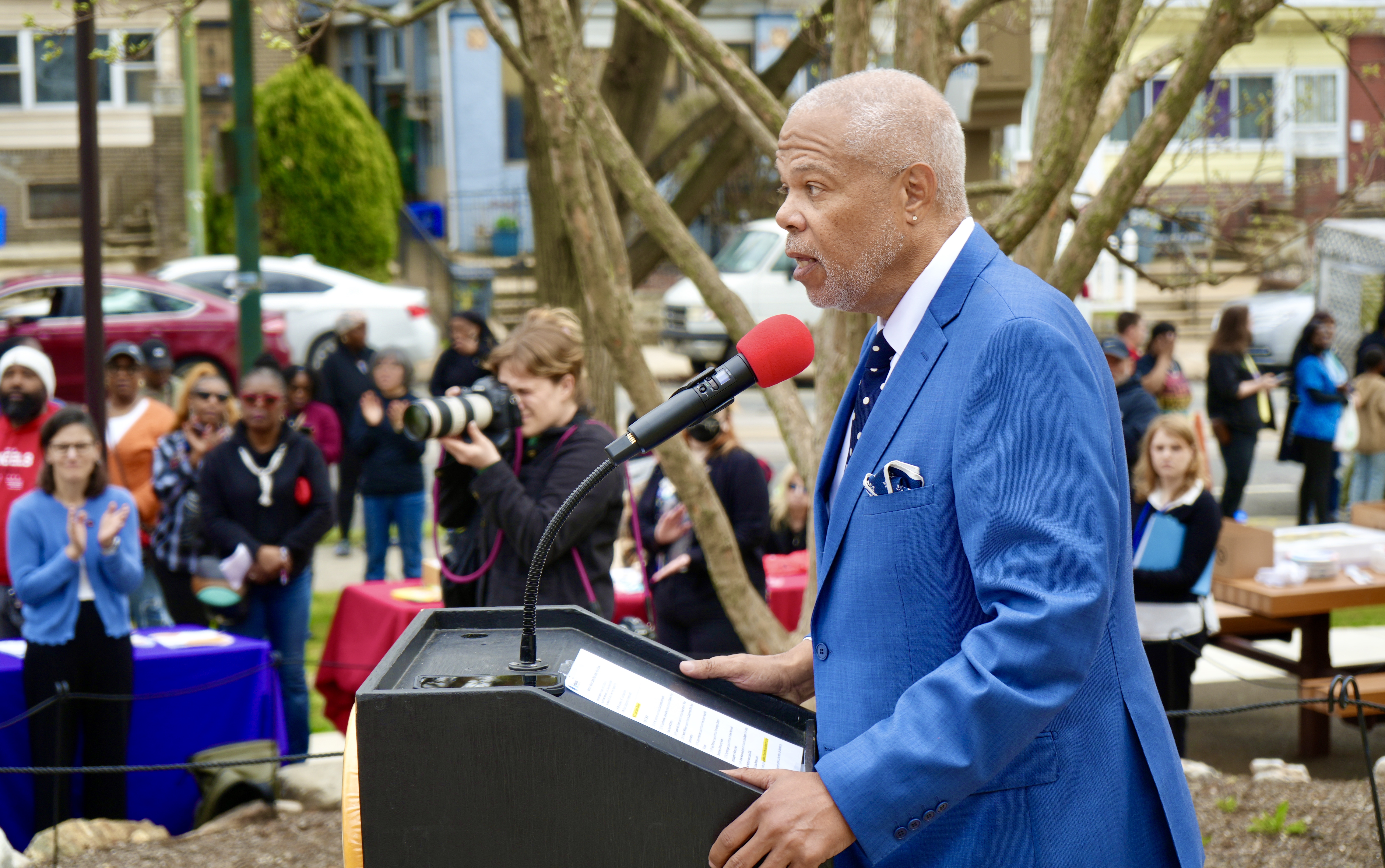
State Senator, Anthony Hardy Williams

Blanche Nixon’s legacy teaches us that the work of democracy is not just about elections or laws but about the daily, unglamorous labor of sustaining spaces where people can learn, question, and grow. As the nation moves toward its semiquincentennial, the survival of its democratic experiment may well depend on whether institutions like public libraries can continue to fulfill that role.

The alternative—a nation stripped of its full history, where access to knowledge is dictated by ideology—is one that figures like Blanche Nixon spent their lives fighting against. The best way to honor her memory is to ensure that fight continues.

The Rise of Julian Reese: A Quiet Force in a Basketball Dynasty

COLLEGE PARK, Md. — On a crisp Saturday afternoon in March, senior forward Julian “JuJu” Reese stepped onto the court at the Xfinity Center for the final time in his collegiate career. With 19 points, 11 rebounds, and a commanding presence in the paint, Reese led the No. 11 Maryland Terrapins to a 74-61 victory over Northwestern. It was a fitting farewell for the Baltimore native who has quietly become one of the most dependable and impactful figures in college basketball, even as his older sister, Angel Reese, has become a national icon and a lightning rod for conversation in the sports world.

The Reese family is basketball royalty. Julian’s mother, Angel Reese Sr. (née Webb), was a standout at UMBC in the late 1980s and early 1990s, amassing 1,390 points and 932 rebounds—numbers that Julian has nearly mirrored in his own career. His aunts also played Division I basketball, and the family’s love for the game runs deep. But while Julian’s older sister, Angel, has become a household name for her brash confidence, outspoken personality, and trailblazing impact on women’s basketball, Julian has carved out his own path—one defined by steady growth, quiet determination, and an unwavering commitment to his team.

A Legacy in the Making
Julian Reese arrived at the University of Maryland in the fall of 2021 as a highly touted recruit from St. Frances Academy, a Baltimore-based basketball powerhouse. Standing at 6-foot-9 with a wingspan that seemed to stretch from baseline to baseline, Reese was a physical specimen with raw potential. He chose Maryland over offers from Seton Hall, LSU, and Temple, among others, and immediately made an impact as a freshman. Despite playing just 17.7 minutes per game, he averaged 5.7 points and 4.4 rebounds, showing flashes of the dominant force he would become.

His freshman year, however, was marred by turmoil. Eight games into the season, head coach Mark Turgeon resigned, and interim coach Danny Manning took over. The Terps finished a disappointing 15-17, but Reese’s potential was undeniable. When Kevin Willard was hired as head coach in the off-season, Reese made the decision to stay at Maryland rather than enter the transfer portal—a choice that would prove pivotal for both him and the program.

Under Willard’s guidance, Reese blossomed. As a sophomore, he became a full-time starter, nearly doubling his production to 11.4 points and 7.2 rebounds per game. Maryland improved to 22-13 and made a second-round appearance in the NCAA tournament. By his junior year, Reese had established himself as one of the top frontcourt players in the Big Ten, averaging 13.7 points, 9.5 rebounds, and 1.9 blocks per game.

This season, Reese has been the anchor of a resurgent Maryland team. Alongside his former S. Frances Academy teammate, Derik Queen, Reese has helped the Terps return to national prominence. Heading into the Big Ten tournament, Maryland is ranked 13th in the nation, with Reese leading the charge. He ranks second in the Big Ten in offensive rebound percentage and first in defensive rating, a testament to his relentless work ethic and basketball IQ.

The Reese Family Dynamic
The Reese siblings are a study in contrasts. Angel, the older sister, is a force of nature—charismatic, outspoken, and unapologetically herself. She has become a cultural icon, using her platform to advocate for women’s sports and empower young girls. Her larger-than-life personality has made her one of the most recognizable athletes in the world, and her success at LSU, including a national championship in 2023, has cemented her legacy as one of the greatest players in women’s college basketball history.

Julian, by contrast, is the quiet sibling. Reserved and introspective, he prefers to let his game do the talking. While Angel thrives in the spotlight, Julian is more comfortable in the shadows, focusing on the nuances of his craft. Yet, despite their differences, the bond between the two is unshakable. Angel has been one of Julian’s biggest supporters, often cheering him on from the stands alongside their mother, grandparents, and extended family.

Their contrasting personalities reflect the duality of the Reese family’s basketball legacy. Angel is the trailblazer, the one who pushes boundaries and challenges norms. Julian is the steady hand, the one who embodies the fundamentals and traditions of the game. Together, they represent the past, present, and future of basketball—a sport that has been the lifeblood of their family for generations.

A Future in the NBA
As Julian’s collegiate career winds down, the question on everyone’s mind is whether he has what it takes to succeed at the next level. The answer, according to scouts and analysts, is a resounding yes. Reese’s combination of size, athleticism, and defensive prowess makes him a legitimate NBA prospect. His ability to finish around the rim, coupled with his elite rebounding and shot-blocking skills, has drawn comparisons to players like Clint Capela and Jarrett Allen.

While Reese’s game is not without its limitations—he has attempted just one three-pointer in the past three seasons—his strengths far outweigh his weaknesses. His mobility and versatility on defense, in particular, make him an attractive option for NBA teams in need of a rim protector and rebounder.

A Legacy Secured
Julian Reese’s journey at Maryland has been one of perseverance and growth. From a raw freshman navigating a coaching change to a senior leader poised to make a deep tournament run, Reese has left an indelible mark on the program. He will finish his career with over 1,400 points and 1,000 rebounds, joining an elite group of players who have achieved such milestones.

But more than the numbers, Reese’s legacy lies in his quiet determination and unwavering commitment to his team. In a sports landscape often dominated by flashy personalities and viral moments, Reese has been a reminder that greatness can come in many forms.

As the JuJu Reese era comes to a close, one thing is certain: the Reese family’s basketball legacy is in good hands. Whether on the court or off it, Julian Reese has proven that he is more than just Angel’s little brother. He is a star in his own right—a testament to the power of hard work, humility, and an unyielding love for the game.

A Triumph for Tradition: Father Judge’s Victory at The Palestra Rekindles the Spirit of Philadelphia Basketball

PHILADELPHIA, PA – In the heart of Philadelphia, where the echoes of basketball history reverberate through the halls of The Palestra, a new chapter was written on Sunday afternoon. Father Judge High School, a proud institution from Northeast Philly, defeated defending champion Roman Catholic, 41-34, to claim the Philadelphia Catholic League Boys’ Basketball Championship. The victory, their first in 27 years, was not just a triumph for the Crusaders but a celebration of the enduring legacy of one of the most storied venues in sports.

The Palestra, the cathedral of college basketball, turned 98 this year. Since its opening in 1927, it has hosted more games, more visiting teams, and more NCAA tournaments than any other arena in the country. Its hallowed floor has been graced by legends, from Wilt Chamberlain to Kobe Bryant, and its intimate, raucous atmosphere has made it a shrine for basketball purists. Yet, in recent years, The Palestra’s relevance as a contemporary venue for college basketball has waned. The Philadelphia Big 5, once the lifeblood of the arena, no longer calls it home. Temple, Villanova, La Salle, and St. Joseph’s have opted to play their city series games on their own campuses, leaving Penn, the Palestra’s home team, as a fading force in the Ivy League.


But if the Big 5 has moved on, the Catholic League has stepped in to fill the void. The Catholic League Final Four has become the premier basketball event at The Palestra, a showcase of the city’s rich high school basketball tradition. On Saturday, approximately 10,000 fans—exceeding the arena’s official capacity of 8,700—packed into the venerable building to witness Father Judge and Roman Catholic battle for the most coveted high school championship in Pennsylvania. The atmosphere was electric, a reminder of what makes The Palestra special: the passion of the fans, the intensity of the competition, and the sense that, for a few hours, time stands still.

The game itself was a gritty, hard-fought affair, emblematic of Philadelphia basketball. Father Judge, led by head coach Chris Roantree, overcame a sluggish start to outlast Roman Catholic in a defensive slugfest. The Crusaders went the entire first quarter without a field goal, managing only two free throws, as Roman Catholic’s suffocating defense disrupted their rhythm. Sophomore point guard Tyler Sutton was a revelation for Roman, scoring 20 of his team’s 34 points and showcasing a blend of poise and skill that belied his age. But Father Judge’s senior point guard, Kevair Kennedy, weathered the storm, delivering clutch free throws down the stretch to seal the victory. His 10 points, four rebounds, and three assists may not have been eye-popping, but his leadership and resilience were instrumental in securing the title.

The game also featured a standout performance from Father Judge’s Everett Barnes, whose defensive dominance evoked memories of Bill Russell. Barnes, a towering presence in the paint, blocked shot after shot, keeping his team within striking distance during their offensive struggles. Alongside Roman Catholic’s Shareef Jackson, another formidable big man, Barnes is headed to the Patriot League next year, leaving one to wonder why Penn’s Steve Donahue didn’t make a stronger push to keep these local talents in the city. Their absence will be felt, but their performances on Saturday were a testament to the depth of talent in Philadelphia high school basketball.

For Father Judge, the victory was the culmination of a remarkable turnaround. Four years ago, Roantree took over a program that had gone 2-12 in the Catholic League. Under his guidance, the Crusaders have risen to the top, their journey a testament to the power of perseverance and belief. The postgame celebration was a scene of unbridled joy, as players, coaches, and fans reveled in a moment that had been decades in the making. For the Judge community, this championship was more than just a trophy; it was a reaffirmation of their identity and a source of immense pride.

As the final buzzer sounded and the Crusaders celebrated on the court, it was impossible not to feel the weight of history. The Palestra, with its wooden bleachers and arched rafters, has witnessed countless moments of triumph and heartbreak. On Sunday, it added another to its collection. Father Judge’s victory was a reminder of what makes this arena so special: its ability to bring people together, to create memories that last a lifetime, and to serve as a bridge between the past and the present.
In a city that loves its basketball, The Palestra remains a sacred space. While the Big 5 may have moved on, the Catholic League has ensured that the arena’s legacy endures. For one night, at least, The Palestra was once again the center of the basketball universe, and Father Judge’s Crusaders were its brightest stars.

The Afro-Sheen Light Skin Brother Bowl: A Game Worth Watching, A Moment Worth Celebrating

Next Thursday, American history’s getting made, plain and simple. Two Black coaches—Notre Dame’s Marcus Freeman and Penn State’s James Franklin—about to go head-to-head for a shot at the big prize: the National Championship. For Black folks, this ain’t just about football; it’s about kicking down doors that’ve been bolted shut for far too long. But, like clockwork, social media’s lit with white fans scratching their heads, asking why we’re even talking about race. To them, it’s just a game. To us? It’s a revolution.

Black folks know that for most of the 20th century, NCAA D1 colleges and universities wasn’t fuckin’ with us… At all…

The Long Shadow of Jim Crow

See, college ball didn’t always have space for Black excellence. For far too long, American Apartheid shaped collegiate sports. Back in the Jim Crow days, Black athletes were locked out of big-name programs, forced to shine in HBCUs while white players soaked up all the national mainstream media attention and glory. When integration finally hit in the 1970’s, Black players broke through, but the coaching ranks? That’s where the gate stayed locked.

And don’t get it twisted—the system wasn’t just about who could run the fastest or throw the farthest. In ‘87, Al Campanis, a Dodgers exec, told the world Black folks didn’t have the “necessities” to lead. Translation? “We don’t trust y’all to steer the ship.” Those words stuck, seeping into locker rooms, boardrooms, and beyond. Today, that bias may not wear the same ugly face, but it’s still lurking.

Breaking Through the Ceiling

Now here come Freeman and Franklin, rewriting the script. Many of the same cameras and microphones that have been prominently positioned in front of Coach Prime since August, will be pointed at these brothers. With everything on the line, Freeman and Franklin ain’t just holding clipboards; they’re running powerhouse programs, proving that leadership ain’t tied to skin color. For Black fans, it’s more than bragging rights; it’s decades of sweat, tears, and unshakable determination finally paying off.

But the pushback always comes. Some folks argue that sports should be colorblind, that the game’s about skill, not skin. Sounds nice on paper, but let’s be real: race has always been a lead actor in the American story. Black folks have felt the sting of fewer opportunities, lower pay, and higher scrutiny. That’s the backdrop to Thursday’s game, whether well-meaning white folks want to admit it or not.

A Call for Grace

To the white fans who don’t get the hype: this ain’t about excluding you; it’s about uplifting us. When we cheer for Freeman and Franklin, we’re cheering for progress—for the young Black kid watching the game, dreaming of calling plays someday.

Grace ain’t hard to give. It’s about understanding a joy that might not be yours to feel but is yours to witness. It’s about letting us celebrate without questioning the why. Because in moments like this, the why is woven into our history… American history.

Eyes on the Prize

This game’s bigger than football. It’s a chance to honor how far we’ve come and to fuel the journey ahead. For Black America, it’s a rare and beautiful milestone. For everyone else, it’s a reminder that progress, no matter how slow, is always worth the cheer.

So let’s savor this moment, not as a wedge but as a bridge. Let’s lift our voices for what’s right and what’s righteous. Because when the dust settles, it’s not just about who won the game—it’s about who changed the game.

The Light Skin Brother Bowl is ’bout to be lit like a Muthafucka…