Pitino’s Prophecy and the “PHILLY LIVE” Experiment

For years, college basketball recruiting was dominated by those affiliated with shoe company circuits. Then the NCAA and some prominent college coaches fought back, and nowhere is that victory more evident than in a couple Philadelphia gyms in June.

PHILADELPHIA, PA – The cathedral of modern basketball is not a gleaming NBA arena. It is often a cavernous, sweltering convention center or a suburban high school gym in July, filled with the cacophony of squeaking sneakers, blaring horns, and the unmistakable hum of a transactional culture. For decades, the primary sacred text in this cathedral was not a playbook, but a ledger. The high priests were not exclusively the college coaches sitting in the bleachers, but the “grassroots” middlemen whose summer teams were underwritten by a trinity of multinational corporations: Nike, Adidas, and Under Armour. To recruit an elite American teenager, a college coach had to make a pilgrimage through the shoe company circuits—the EYBL, the 3SSB, and the UAA—a journey that often had less to do with a prospect’s fit in a university’s academic environment than with the logo on his travel uniform.

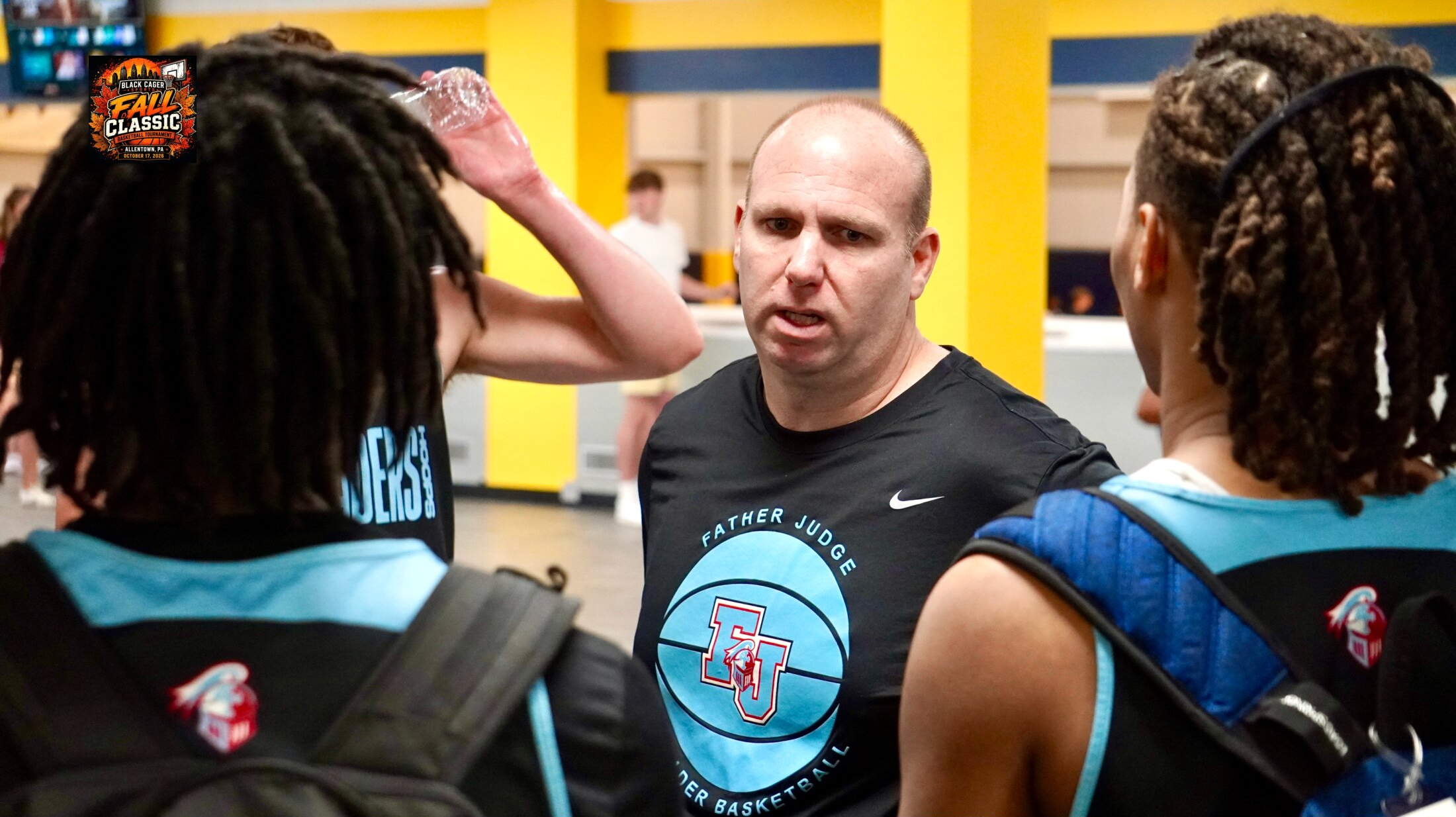
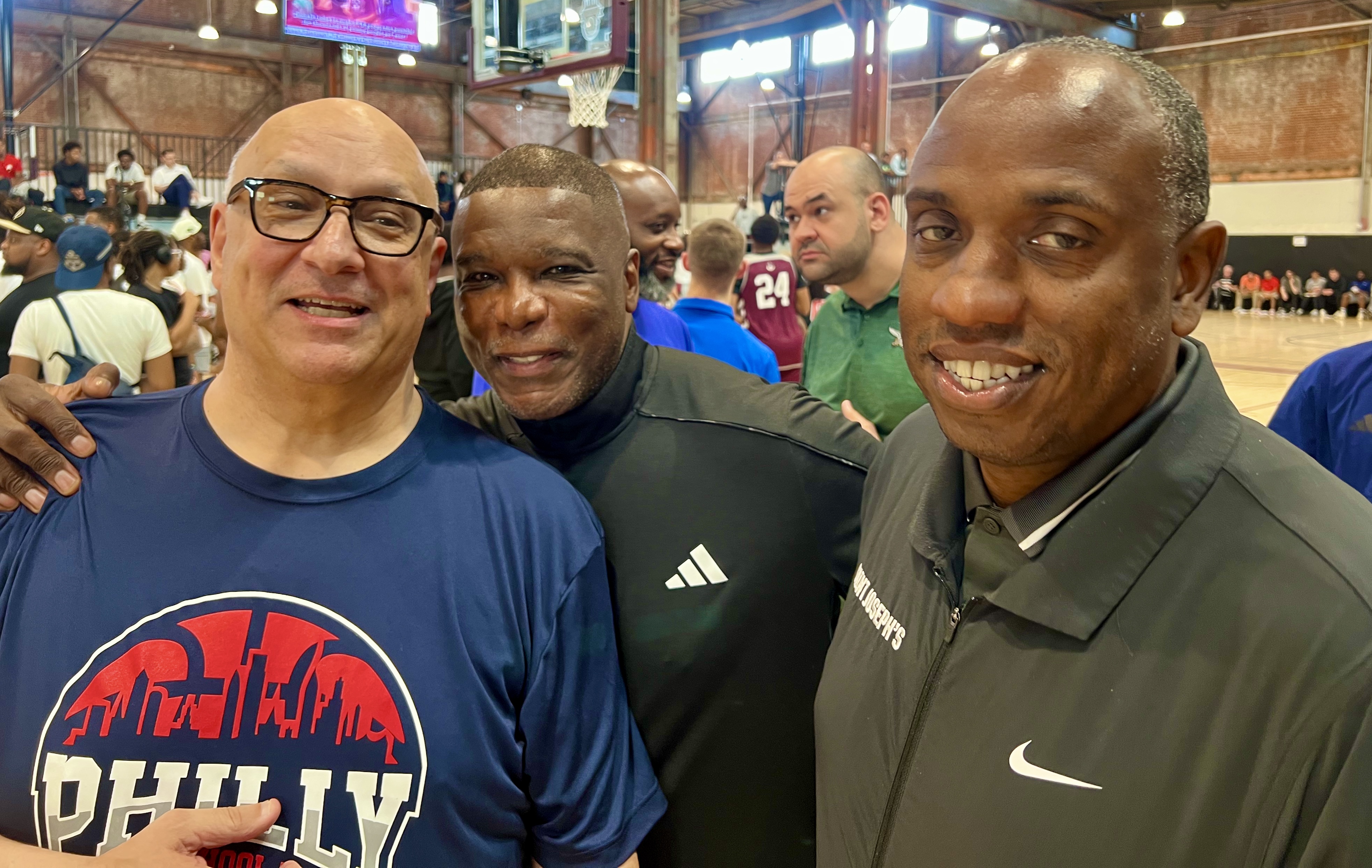
John Mosco, Philly Live Co-Fouder, Dino Presley, Rider Assistant and Bino Ranson, St. Joseph’s Assistant

This was the reality that Rick Pitino, then the head coach at the University of Louisville, railed against in a moment of startling candor twelve years ago. It was October 2014, and Pitino, whose own program was handsomely funded by a $39 million Adidas extension, stood before the media and diagnosed a sickness in his sport. He lamented a world where a recruit’s destiny was pre-arranged by his apparel sponsor. “What I personally don’t like is I can’t recruit a kid because he wears Nike on the AAU circuit,” Pitino said, his voice cutting through the typical coach-speak of preseason press conferences. “I had never heard of such a thing and it’s happening in our world. Or, he’s on the Adidas circuit, so the Nike schools don’t want him.”

His complaint was not the naivete of a newcomer, but the confession of an insider who had grown weary of the game’s architecture. He spoke of shoe companies recruiting prospects with the same ferocity as universities, battling to stock their summer stables. His proposed solution was radical in its simplicity: the NCAA should run its own summer camps, a neutral ground where coaches could evaluate talent outside the shadow of the sneaker wars, and where the rules of amateurism could be clearly explained. Pitino’s cri de coeur was a powerful admission that the collegiate establishment had ceded its authority over the very lifeblood of the sport—the identification and cultivation of young talent—to a network of unaccountable corporate interests.

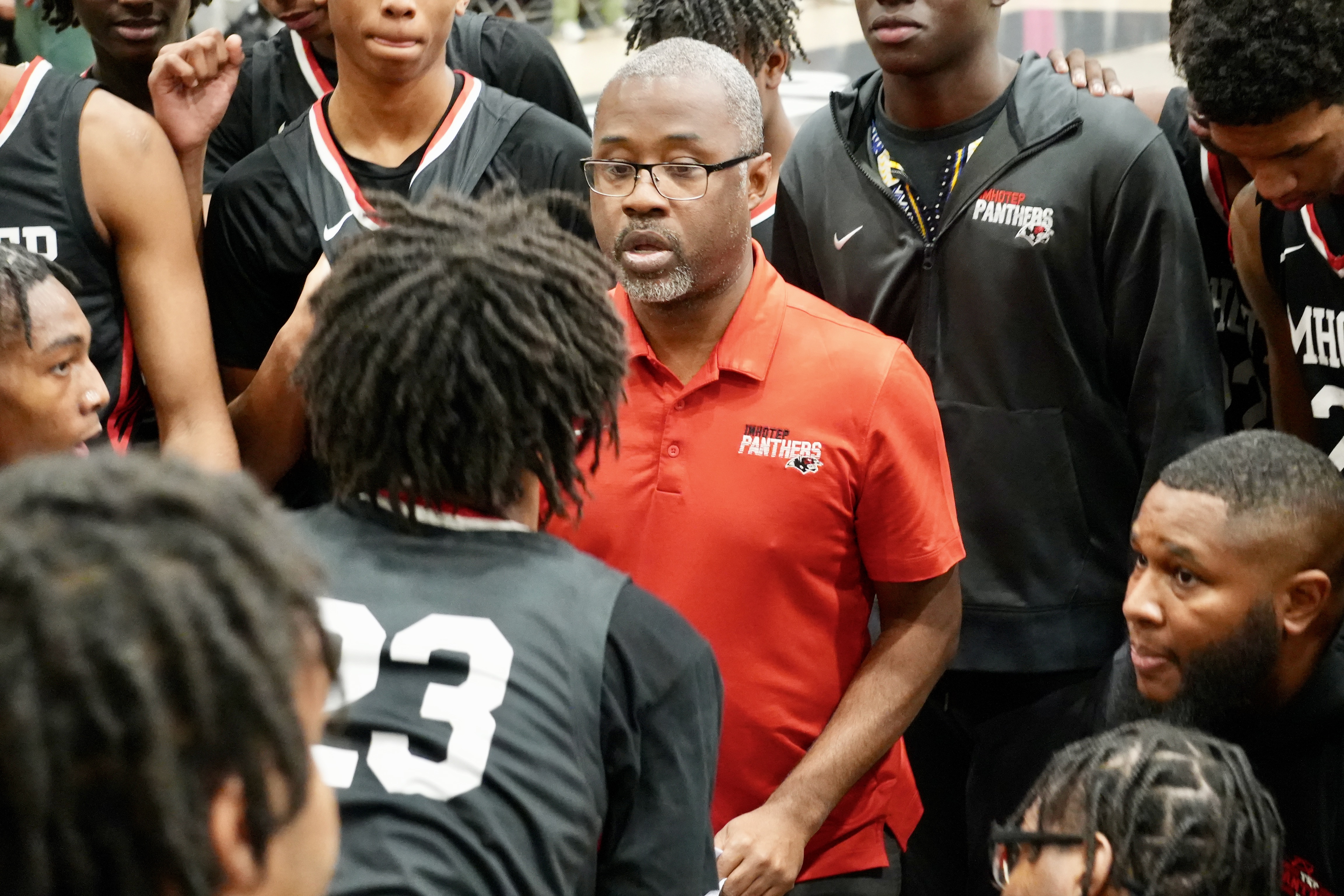
Philly Live Co-Founder, Andre Noble (center)

Seven years ago, the NCAA took a significant, if imperfect, step to reclaim that authority. It created the June Scholastic period, a designated window where Division I coaches can evaluate prospects exclusively in a high school environment. The premise is a profound course correction. For too long, the high school coach, the educator most intimately involved in a student-athlete’s daily development, was a spectator in his own player’s recruitment. The summer belonged to the shoe circuits, where a coach’s access to a player was often mediated by an agent-runner or a sponsor-driven team director. The June Scholastic period was architected to dismantle this dynamic, explicitly designed to occur without competition from nonscholastic events, thereby “increasing the scholastic coach’s influence in the recruiting process,” as the NCAA guidelines state. It was a legislative attempt to re-center the educational mission in a process that had drifted dangerously into a commercial free-for-all.

A Philadelphia Renaissance: Where High School Pride Trumps Grassroots Agendas

Nowhere has the promise of this reform been realized more vividly than in Philadelphia, where the “Philly Live” scholastic events have become the gold standard of this new order. Entering its seventh year, Philly Live is not merely a showcase; it is a statement. Organized with meticulous care by Archbishop Wood coach John Mosco and Imhotep Charter coach Andre Noble, the event has transformed the city into the summer capital of college basketball’s integrity movement.

The sheer gravitational pull of Philly Live is a testament to its quality and a rebuke to the old model. Over the course of two June weekends, the event regularly draws between 200 and 250 college coaches and well over 200 high school teams from across the country. The spectacle is a return to a purer form of the game. The bench decorum, the school pride, the tactical adjustments made by high school coaches like Mosco and Noble—these are the centerpiece, not a footnote to a corporate branding exercise. When a coach from a major Division I program sits in a Philly gym, he or she is not watching a hastily assembled all-star team running through a disjointed offense for a shoe company boss; they are watching a player execute a system, respond to a familiar coaching voice, and compete for the name on the front of the jersey alongside classmates he has known for years.

The Power of the Scholastic Lens

This context provides a depth of evaluation that the grassroots circuit often obscures. As Coach Mosco explains, the benefits are developmental and multifaceted, creating a proving ground that serves the entire program. “I get to see if my young rising freshmen and sophomores are ready to truly compete at the varsity level,” he said. “I also get to test the leadership ability of my rising juniors and seniors in a really competitive setting.”

These are precisely the intangible qualities—leadership, resilience, coachability—that are often invisible in the mixtape culture of summer ball but are essential to collegiate success. The setting also democratizes opportunity. At Philly Live, a player from a smaller program who shines against elite competition is not dependent on a shoe company’s sponsorship for visibility. His performance is his résumé, and it is on display for a universe of college coaches, from high-major assistants to Division III head coaches, creating a genuine meritocracy. “Most importantly,” Mosco concluded, “my guys get to play in front of coaches representing all levels of college basketball. It’s a real opportunity for high school players to earn scholarships and opportunities commensurate with their abilities.”

This is the ultimate vindication of the scholastic movement. It does not naively pretend the shoe companies do not exist or that their financial power isn’t still a factor. Rather, it provides an alternative, a structural counterweight that places the agency back where it belongs: with the student, the family, and the high school coach. Philly Live, and events like it, demonstrate that the college basketball establishment no longer has to passively accept a system where, as Pitino lamented, “our pockets are lined with their money.” By building a vibrant, fiercely competitive, and education-centric stage in June, coaches like Mosco and Noble have not just organized a tournament; they have helped excavate the scholastic roots of a game that was in danger of being paved over by the sneaker empire. The squeak of shoes in Philadelphia gyms in June is now a sound of liberation.

The Eligibility Clock Ticks Later: How the NCAA Rescued the Post-Grad Basketball Industry

PHILADELPHIA, PA – In the chaotic theater of college athletics governance, the NCAA Division I Cabinet rarely deserves a standing ovation. Its recent history is a highlight reel of botched reforms, antitrust losses, and a grudging retreat from amateurism’s ruins. But last Friday, in a move that has gone almost entirely unnoticed outside the niche world of postgraduate basketball factories, the men and women in Indianapolis may have thrown a lifeline to an entire endangered business model.

They saved prep school basketball.

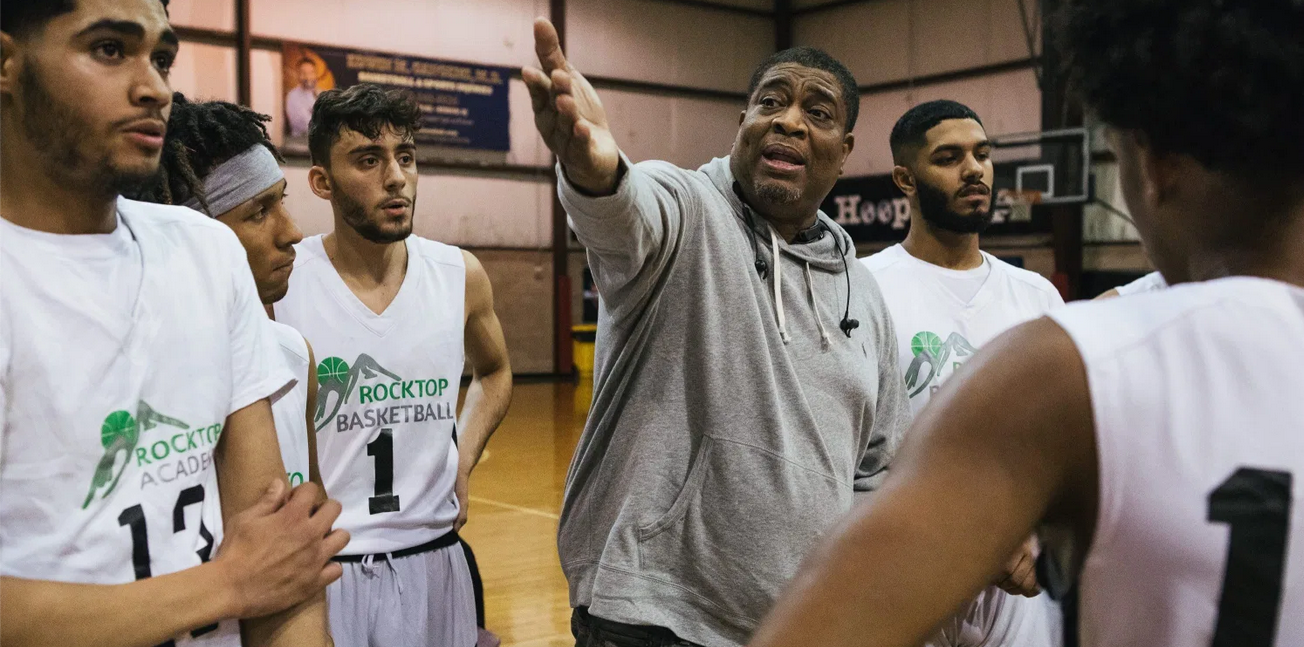
Rocktop Academy

Let that sink in. The same organization that spent decades clinging to an archaic one-and-done loophole, that watched its transfer portal become a Wild West, and that seems constitutionally incapable of keeping pace with reality, just made a decision so shrewd, so quietly counterintuitive, that it deserves a second look.

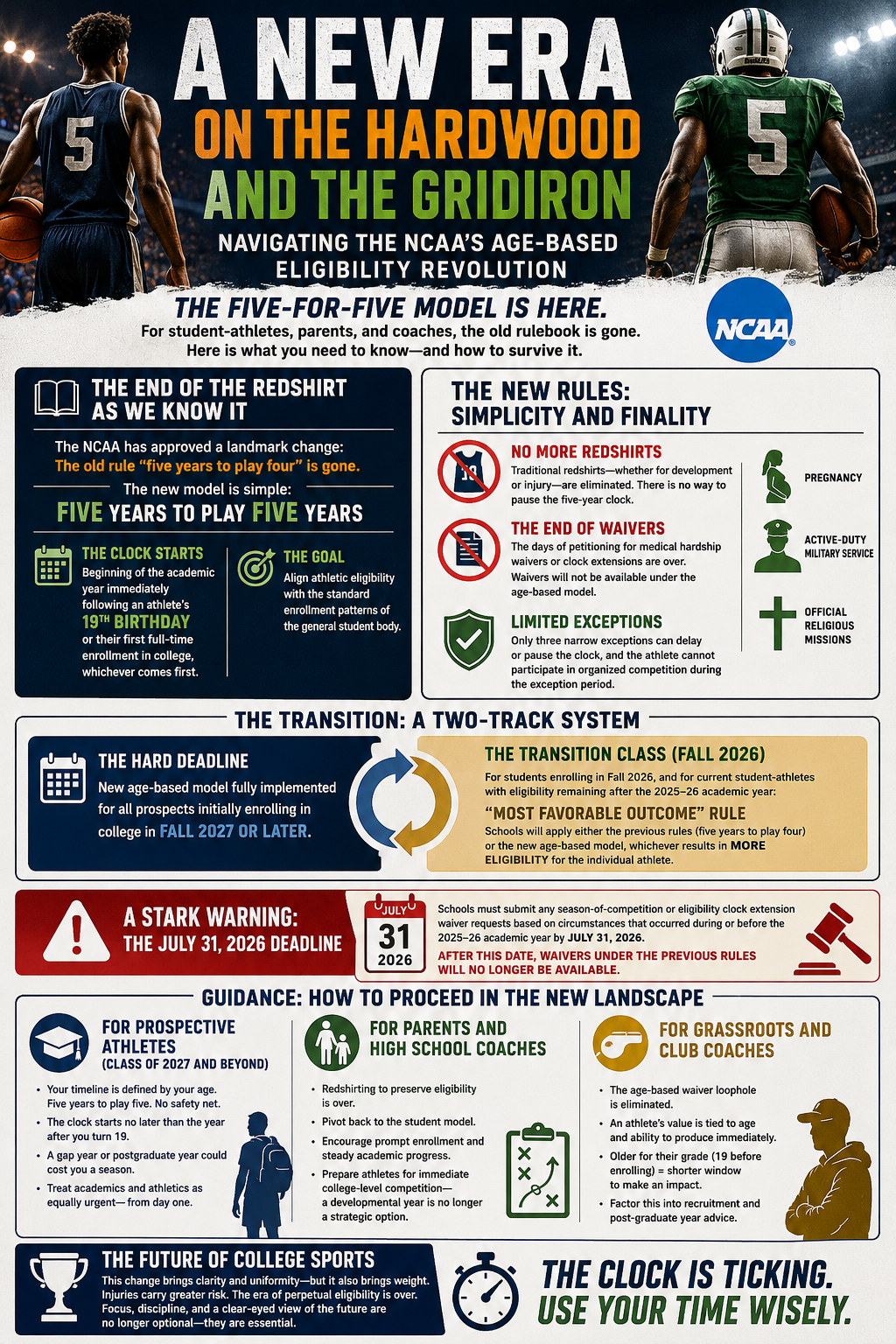
Here is the backstory that matters. For months, the NCAA has been wrestling with a new age-based eligibility model, colloquially known as the “five years to play five seasons” proposal. Under the original draft, the eligibility clock was set to start at high school graduation. On its face, that seemed reasonable. But for the prep school ecosystem—those expensive, yearlong finishing schools in New England, Florida, and the Midwest that churn out Division I prospects—it was an extinction-level event.

Under that old rule, a promising but academically raw 18-year-old who chose a fifth year of prep school would have been committing a kind of athletic seppuku. He would lose a full year of his precious five-year NCAA eligibility clock before ever stepping foot on a college campus. He would earn zero college credits. And he would pay $10,000 to $20,000 for the privilege. The rational economic choice was obvious: go to junior college, Division II, or Division III. Play immediately. Earn credits. Preserve your clock.

But then, the Cabinet pivoted. And in that pivot, an industry was spared.

The Clock Starts Later, Not Sooner

On Friday, the Cabinet announced a critical modification. The eligibility clock for student-athletes will now start upon “initial full-time enrollment in college or at the beginning of the academic year following their 19th birthday, whichever occurs earlier.”
Read that again. Whichever occurs earlier.

What this means in plain English: If you are a prep school prospect who reclassifies or takes a postgraduate year, your clock does not start ticking the moment your high school principal hands you a diploma. It starts when you actually show up for college, or the fall after you turn 19. In practical terms, that gap—the year between turning 18 as a high school graduate and turning 19 as a prep school alum—has become a free square on the bingo card.

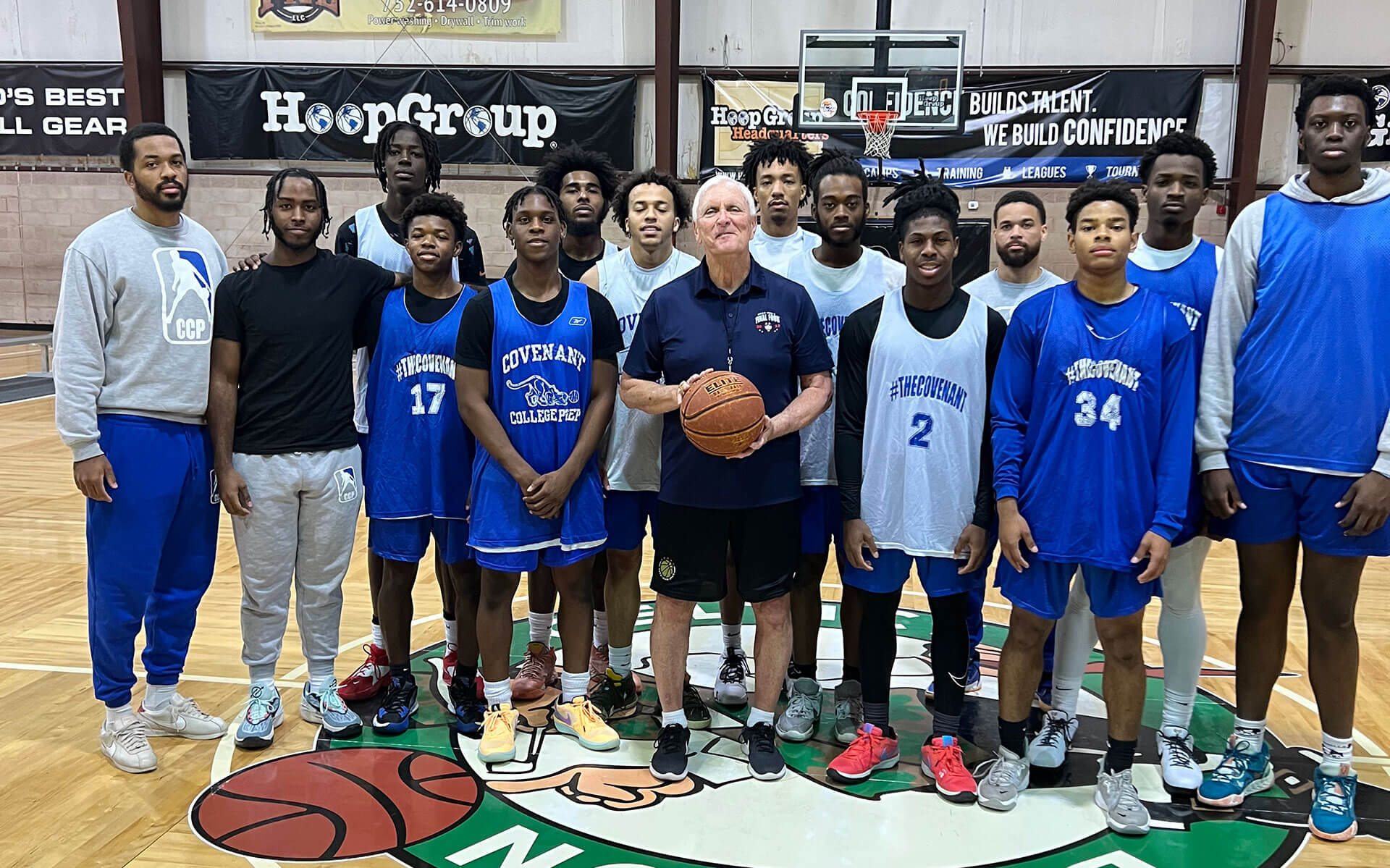
Covenant College Prep

Consider a typical prospect: born in July 2008. He graduates high school in June 2026, turns 18 that summer. Under the original proposal, his five-year eligibility clock would have started that June 2026. If he went to prep school for the 2026-27 academic year, he would arrive on a college campus in 2027 having already burned one of his five years. He would be a 19-year-old freshman with four years left. That is a terrible deal.

Under the new rule, his clock does not start until the fall after his 19th birthday—which would be the fall of 2026, exactly when he enrolls in college. He loses nothing. His five years to play four seasons begin the day he moves into the dorm.

The prep school year, in other words, has been transformed from a liability into a tax-free option. It is no longer a hole into which you throw a year of eligibility. It is now a holding pattern that costs you nothing but time—and given the maturation and recruitment advantages of being 19 versus 18, time is exactly what you are buying.

Why Junior College Just Lost Its Edge

When the original graduation-based clock was circulating among athletic directors and compliance officers, the smart money was on a mass migration to the junior college ranks. And for good reason. A JUCO offers what a prep school cannot: transferable credits, immediate playing time, and, crucially, an eligibility clock that remains mercifully paused until you sign a National Letter of Intent at a four-year school.

But the new rule narrows that advantage. The JUCO route still offers credits, which is not nothing. But consider the lifestyle. At a JUCO, you are one of dozens of mercenaries grinding through a two-year proving ground. The coaching turnover is high. The facilities are often spartan. And the academic rigor, while improving, is rarely mistaken for Choate Rosemary Hall.

Prep schools, by contrast, offer something that JUCOs cannot: relationships. They offer a handcrafted year of strength training, film study, and—let us be honest—transcript management. They offer a network of coaches who have direct lines to high-major programs. And now, they offer this without sacrificing a single year of NCAA eligibility.

For a family with $15,000 to $40,000 to invest in their son’s basketball future, the calculus has flipped. The prep school is no longer the sentimental choice. It is the rational one.

The Irony of the Service Academies

Perhaps the most delicious irony in all of this comes from the unlikely coalition that pushed for the change. According to the NCAA’s announcement, the adjustment “follows recommendations from stakeholders in men’s ice hockey, men’s basketball and the U.S. national service academies.”

Think about that. The service academies—West Point, Navy, Air Force—which typically recruit older, more mature prospects who have done postgraduate years at prep schools or military junior colleges, were instrumental in saving the very prep schools that feed them players. The same academies that produce future officers also produce the political cover for a rule that benefits elite basketball factories.

It is a strange bedfellows story worthy of a John le Carré novel. But it works. The service academies argued, correctly, that a graduation-based clock would penalize students who take a gap year for military prep. The NCAA, desperate for allies in its ongoing war against federal antitrust scrutiny, listened. And in listening, they extended that same grace to every fifth-year senior at Brewster Academy and IMG Academy.

Mt. Zion Prep

The Financial Reality: No One Is Paying to Lose

We must speak plainly about money. The prep school business model rests on a simple proposition: families will pay tuition in exchange for an improved athletic scholarship opportunity. That proposition collapses instantly if the cost includes a year of lost eligibility. No parent with a calculator is going to write a $20,000 check to reduce their child’s window for a free education.
Under the old graduation-clock model, the expected value of a prep school year went negative. You would have been better off red-shirting as a true freshman, at least then you get a meal plan. But under the new age-based clock, the expected value is positive again. You get the physical development, the recruiting exposure, the academic reclassification, and you still arrive on campus with a full five-year clock. The only cost is the tuition itself—and for families betting on a high-major scholarship, that is a risk they are willing to take.

The NCAA did not just tweak a bylaw. It recalibrated an entire market.

What Happens Next

The Cabinet plans to consider the age-based eligibility model for a formal vote at its June 23-24 meeting. The implementation details for prospects who turned 19 before 2026 are still being ironed out. And the July 31 deadline for waiver submissions is looming for current student-athletes impacted by existing rules.

But make no mistake: the substantive work has been done. The NCAA has signaled, in its lumbering, bureaucratic way, that the eligibility clock is no longer a weapon against postgraduate development. It is a neutral arbiter. And for the prep school basketball industry—which has survived the one-and-done era, the G League Ignite, and the rise of Overtime Elite—that is the only victory that matters.

The prep schools will not be sending the NCAA a thank-you bouquet. They are too savvy for that. But they should. Because in a world where every other institution seems determined to tear down the traditional pathways to college basketball, the NCAA just built a fence around one of the last remaining ones.

Say what you will about the Association’s competence. On this one Friday in May, it got the math right. And an entire cottage industry breathed a sigh of relief.

kwalifī Smartphone App: Take Control of NCAA Eligibility Process

‘kwalifī EligibilityTracker’ available on the Apple App Store and the Android Market

An app that allows high school student-athletes to track progress toward meeting NCAA and NAIA eligibility requirements, now available for IOS and Android devices

PHILADELPHIA – November 16, 2015 – Available today, the app kwalifī allows college-bound high school student-athletes to instantly understand where they stand regarding NCAA and NAIA scholarship eligibility requirements. Increasingly stringent NCAA academic requirements have resulted in hundreds of elite student-athletes being deemed ‘ineligible’ across the country. Low-income minority student-athletes and African student-athletes have been disproportionately impacted by changes in eligibility standards. Our goal is to help parents and student-athletes take control of the scholarship eligibility process.

kwalifi - screen shots -page-0

Utilizing a simple and intuitive interface, parents, coaches and/or student-athletes enter identifyng information, core course grades and SAT/ACT scores. kwalifī instantly computes the student-athletes progress toward meeting NCAA and NAIA eligibility requirements. Interpretation of the NCAA sliding scale and accurate core course GPA calculations are crucial for ensuring eligibility. No more depending on overwhelmed guidance counselors. Simple, easy to understand and very useful! Specific steps are outlined to help student-athletes meet NCAA and NAIA requirements.

kwalifī Eligibility Tracker is now available for $9.99 in the US and is priced accordingly in other regions. The app is available world-wide, in several languages on the Apple AppStore and the Android Market. Perfect timing for the app, as the NCAA applies a new set of eligibility requirements for 2016 high school graduating class.

Please visit http://www.kwalifi.com for more information including a demo and screenshots of the app.

The kwalifī EligibilityTracker was developed by Black Cager Web Development, LLC a Black-owned web and mobile development company based in Camden, New Jersey.

###

If you would like further information on kwalifī EligibilityTracker, or you would like to schedule an interview, please contact:

Delgreco Wilson, Managing Partner, Black Cager Web Development, LLC
Phone: (267) 251-1355
EMail: delgrecowilson@kwalifi.com
Twitter: @DelgrecoWilson