Pitino’s Prophecy and the “PHILLY LIVE” Experiment

For years, college basketball recruiting was dominated by those affiliated with shoe company circuits. Then the NCAA and some prominent college coaches fought back, and nowhere is that victory more evident than in a couple Philadelphia gyms in June.

PHILADELPHIA, PA – The cathedral of modern basketball is not a gleaming NBA arena. It is often a cavernous, sweltering convention center or a suburban high school gym in July, filled with the cacophony of squeaking sneakers, blaring horns, and the unmistakable hum of a transactional culture. For decades, the primary sacred text in this cathedral was not a playbook, but a ledger. The high priests were not exclusively the college coaches sitting in the bleachers, but the “grassroots” middlemen whose summer teams were underwritten by a trinity of multinational corporations: Nike, Adidas, and Under Armour. To recruit an elite American teenager, a college coach had to make a pilgrimage through the shoe company circuits—the EYBL, the 3SSB, and the UAA—a journey that often had less to do with a prospect’s fit in a university’s academic environment than with the logo on his travel uniform.
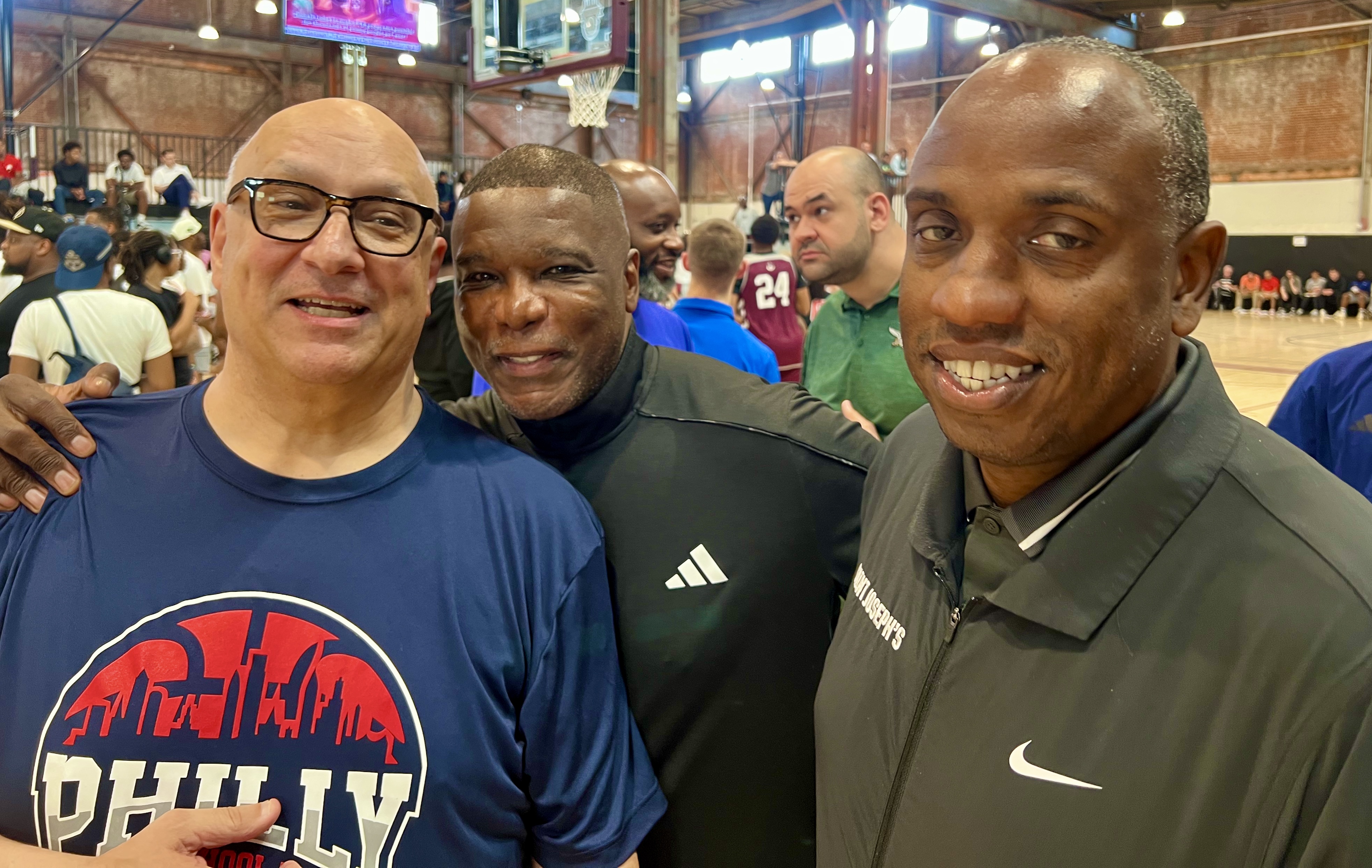
John Mosco, Philly Live Co-Fouder, Dino Presley, Rider Assistant and Bino Ranson, St. Joseph’s Assistant

This was the reality that Rick Pitino, then the head coach at the University of Louisville, railed against in a moment of startling candor twelve years ago. It was October 2014, and Pitino, whose own program was handsomely funded by a $39 million Adidas extension, stood before the media and diagnosed a sickness in his sport. He lamented a world where a recruit’s destiny was pre-arranged by his apparel sponsor. “What I personally don’t like is I can’t recruit a kid because he wears Nike on the AAU circuit,” Pitino said, his voice cutting through the typical coach-speak of preseason press conferences. “I had never heard of such a thing and it’s happening in our world. Or, he’s on the Adidas circuit, so the Nike schools don’t want him.”

His complaint was not the naivete of a newcomer, but the confession of an insider who had grown weary of the game’s architecture. He spoke of shoe companies recruiting prospects with the same ferocity as universities, battling to stock their summer stables. His proposed solution was radical in its simplicity: the NCAA should run its own summer camps, a neutral ground where coaches could evaluate talent outside the shadow of the sneaker wars, and where the rules of amateurism could be clearly explained. Pitino’s cri de coeur was a powerful admission that the collegiate establishment had ceded its authority over the very lifeblood of the sport—the identification and cultivation of young talent—to a network of unaccountable corporate interests.
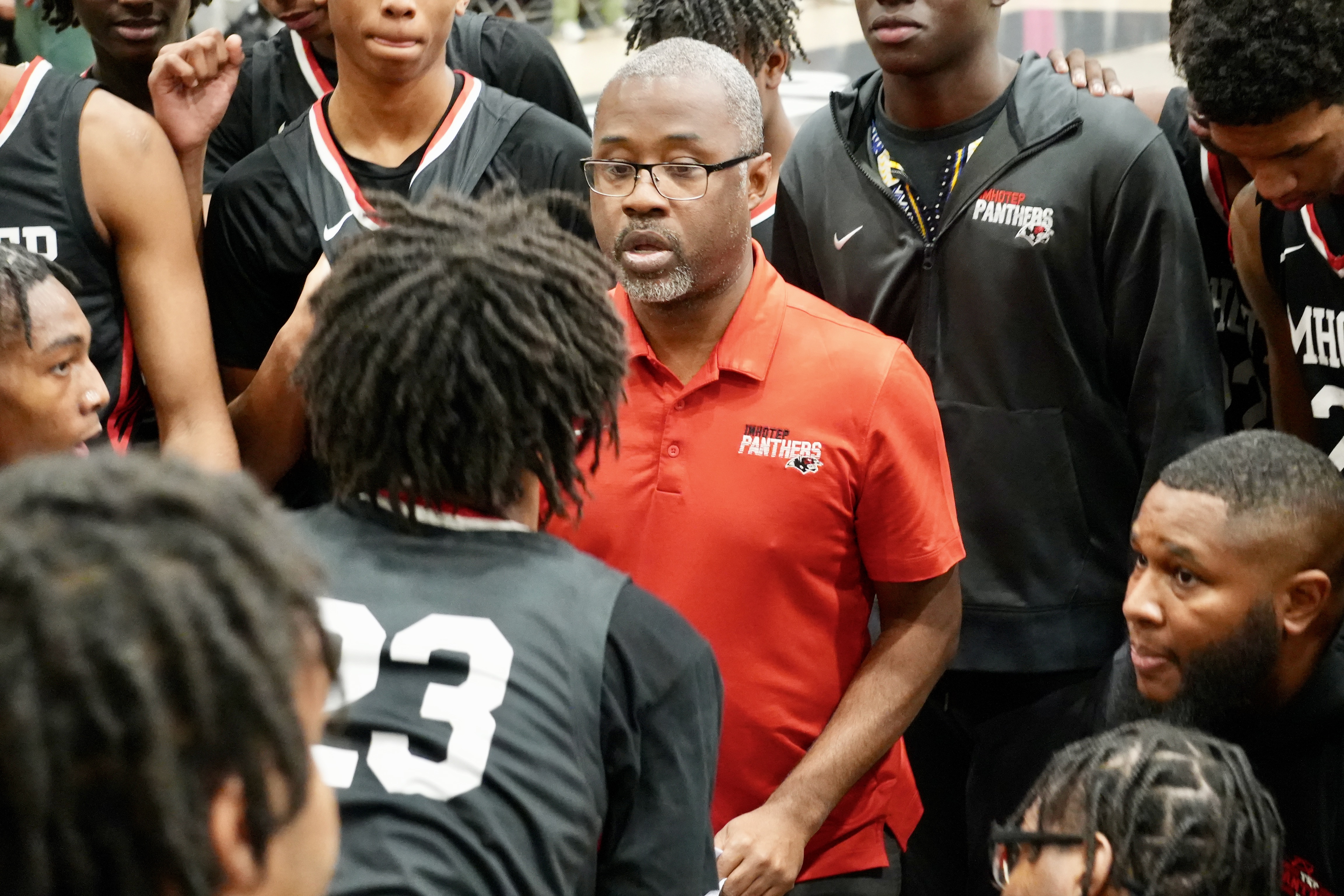
Philly Live Co-Founder, Andre Noble (center)

Seven years ago, the NCAA took a significant, if imperfect, step to reclaim that authority. It created the June Scholastic period, a designated window where Division I coaches can evaluate prospects exclusively in a high school environment. The premise is a profound course correction. For too long, the high school coach, the educator most intimately involved in a student-athlete’s daily development, was a spectator in his own player’s recruitment. The summer belonged to the shoe circuits, where a coach’s access to a player was often mediated by an agent-runner or a sponsor-driven team director. The June Scholastic period was architected to dismantle this dynamic, explicitly designed to occur without competition from nonscholastic events, thereby “increasing the scholastic coach’s influence in the recruiting process,” as the NCAA guidelines state. It was a legislative attempt to re-center the educational mission in a process that had drifted dangerously into a commercial free-for-all.

A Philadelphia Renaissance: Where High School Pride Trumps Grassroots Agendas

Nowhere has the promise of this reform been realized more vividly than in Philadelphia, where the “Philly Live” scholastic events have become the gold standard of this new order. Entering its seventh year, Philly Live is not merely a showcase; it is a statement. Organized with meticulous care by Archbishop Wood coach John Mosco and Imhotep Charter coach Andre Noble, the event has transformed the city into the summer capital of college basketball’s integrity movement.

The sheer gravitational pull of Philly Live is a testament to its quality and a rebuke to the old model. Over the course of two June weekends, the event regularly draws between 200 and 250 college coaches and well over 200 high school teams from across the country. The spectacle is a return to a purer form of the game. The bench decorum, the school pride, the tactical adjustments made by high school coaches like Mosco and Noble—these are the centerpiece, not a footnote to a corporate branding exercise. When a coach from a major Division I program sits in a Philly gym, he or she is not watching a hastily assembled all-star team running through a disjointed offense for a shoe company boss; they are watching a player execute a system, respond to a familiar coaching voice, and compete for the name on the front of the jersey alongside classmates he has known for years.
The Power of the Scholastic Lens

This context provides a depth of evaluation that the grassroots circuit often obscures. As Coach Mosco explains, the benefits are developmental and multifaceted, creating a proving ground that serves the entire program. “I get to see if my young rising freshmen and sophomores are ready to truly compete at the varsity level,” he said. “I also get to test the leadership ability of my rising juniors and seniors in a really competitive setting.”

These are precisely the intangible qualities—leadership, resilience, coachability—that are often invisible in the mixtape culture of summer ball but are essential to collegiate success. The setting also democratizes opportunity. At Philly Live, a player from a smaller program who shines against elite competition is not dependent on a shoe company’s sponsorship for visibility. His performance is his résumé, and it is on display for a universe of college coaches, from high-major assistants to Division III head coaches, creating a genuine meritocracy. “Most importantly,” Mosco concluded, “my guys get to play in front of coaches representing all levels of college basketball. It’s a real opportunity for high school players to earn scholarships and opportunities commensurate with their abilities.”

This is the ultimate vindication of the scholastic movement. It does not naively pretend the shoe companies do not exist or that their financial power isn’t still a factor. Rather, it provides an alternative, a structural counterweight that places the agency back where it belongs: with the student, the family, and the high school coach. Philly Live, and events like it, demonstrate that the college basketball establishment no longer has to passively accept a system where, as Pitino lamented, “our pockets are lined with their money.” By building a vibrant, fiercely competitive, and education-centric stage in June, coaches like Mosco and Noble have not just organized a tournament; they have helped excavate the scholastic roots of a game that was in danger of being paved over by the sneaker empire. The squeak of shoes in Philadelphia gyms in June is now a sound of liberation.
BLACK CAGER INVITATIONAL PARTNERS WITH iUNGO WORLD TO DELIVER GLOBAL LIVESTREAM COVERAGE

Eight Marquee Matchups from the Small-College Showcase to Be Broadcast Worldwide on Groundbreaking Sports Social Media Platform Founded by Lancaster Basketball Legend Jerry Johnson

ALLENTOWN, PA — June 2, 2026 — The Black Cager Live Period Invitational, the East Coast’s premier scholastic showcase dedicated exclusively to Division II, Division III, NAIA, and JUCO recruitment, today announced a landmark broadcast partnership with iUNGO World, the revolutionary sports social media and technology platform. Eight games from the June 20 event at the Executive Fieldhouse in Allentown, Pennsylvania, will be livestreamed globally, ensuring that unsigned Mid-Atlantic prospects and the small-college coaches who recruit them receive an international stage.

The partnership marries two organizations built on the principle of connection — the Black Cager Invitational’s mission to bridge overlooked talent with opportunity, and iUNGO World’s foundational vision of uniting the global sports community on a single, dynamic platform.

A PLATFORM BORN TO CONNECT
Founded in 2020 in Lancaster, Pennsylvania, by revered basketball figure Jerry Johnson, iUNGO World derives its name from the Latin word iungo — meaning “to connect.” Johnson, a Lancaster basketball legend whose career and relationships span the grassroots, collegiate, and professional ranks, conceived the platform to transform how the sports world interacts.

“iUNGO World was built to solve the fragmentation that has plagued sports for decades,” said Johnson. “Athletes, coaches, fans, and brands all inhabit the same ecosystem, yet no single platform truly served them all — until now. The Black Cager Invitational embodies exactly the kind of connective tissue this sport needs. These are high-level prospects and dedicated coaches who deserve a global window. We are proud to provide it.”

iUNGO World redefines the landscape of global sports social media by amalgamating community, opportunity, and a worldwide network on a first-of-its-kind platform. The technology accommodates every stakeholder in the sports realm, offering a comprehensive suite of features including:

  • Traditional social posts and community engagement tools
  • High-definition livestream event broadcasting capabilities
  • Exclusive job and opportunity boards spanning the global sports industry
  • Promotion and marketing channels for teams, athletes, and products

Positioned as the evolution of sports social media, iUNGO World serves as a game-changer by providing a singular hub for community building, unlocking cross-border opportunities, and fostering connections that extend far beyond the final buzzer.

A GLOBAL STAGE FOR SMALL COLLEGE BASKETBALL
The eight-game livestream package will feature the Black Cager Invitational’s most compelling matchups, showcasing unsigned seniors and post-graduates from the talent-rich Philadelphia, New Jersey, and Delaware corridors. For the Division II, Division III, NAIA, and JUCO coaches in attendance — who remain the exclusive recruiting audience at the event — the iUNGO World broadcast adds a powerful dimension: the ability to clip, share, and revisit player performances within the platform’s integrated ecosystem.

“The Black Cager Invitational was created to give small college coaches the respect and access they deserve,” said Delgreco Wilson, Founder of the Black Cager Invitational. “Partnering with Jerry Johnson and iUNGO World elevates that mission exponentially. Our prospects are no longer hidden gems — they are global content. The coach at a Division III program in Pennsylvania can evaluate a player live, and an international scout or professional team can simultaneously discover that same prospect on iUNGO World. That is connection in action.”

LIVESTREAM DETAILS:

  • Event: Black Cager Live Period Invitational
  • Date: Saturday, June 20, 2026
  • Venue: Executive Fieldhouse, Allentown, PA
  • Coverage: Eight full games, livestreamed in high definition
  • Platform: iUNGO World — available via web and mobile application
  • Access: Viewers can tune in globally by creating a free iUNGO World account at [iUNGO World URL] or via the iUNGO World mobile app

About iUNGO World:
Established in 2020 and headquartered in Lancaster, Pennsylvania, USA, iUNGO World is a groundbreaking sports social media platform, aptly named after the Latin word iungo, meaning “to connect.” The platform redefines the landscape of global sports social media, amalgamating community, opportunity, and a global network on a first-of-its-kind platform. Accommodating everyone in the sports realm, iUNGO World offers features including posts, livestream events, exclusive job opportunities, and promotion possibilities for teams and products. Positioned as the evolution of sports social media, iUNGO World serves as a game-changer by providing a comprehensive hub for community building, unlocking opportunities globally, and fostering connections. For more information, visit [iUNGO World URL].

About the Black Cager Invitational:
The Black Cager Invitational is the nation’s premier competitive platform dedicated exclusively to bridging the gap between high school basketball talent and small college recruiting. Founded on the principle that opportunity should not be stratified by the economics of Division I, the Invitational champions the student-athlete seeking competitive excellence and academic achievement at the Division II, Division III, NAIA, and JUCO levels.

For media credentials, livestream access, and interview requests, please contact:

Delgreco Wilson

BlackCager@gmail.com

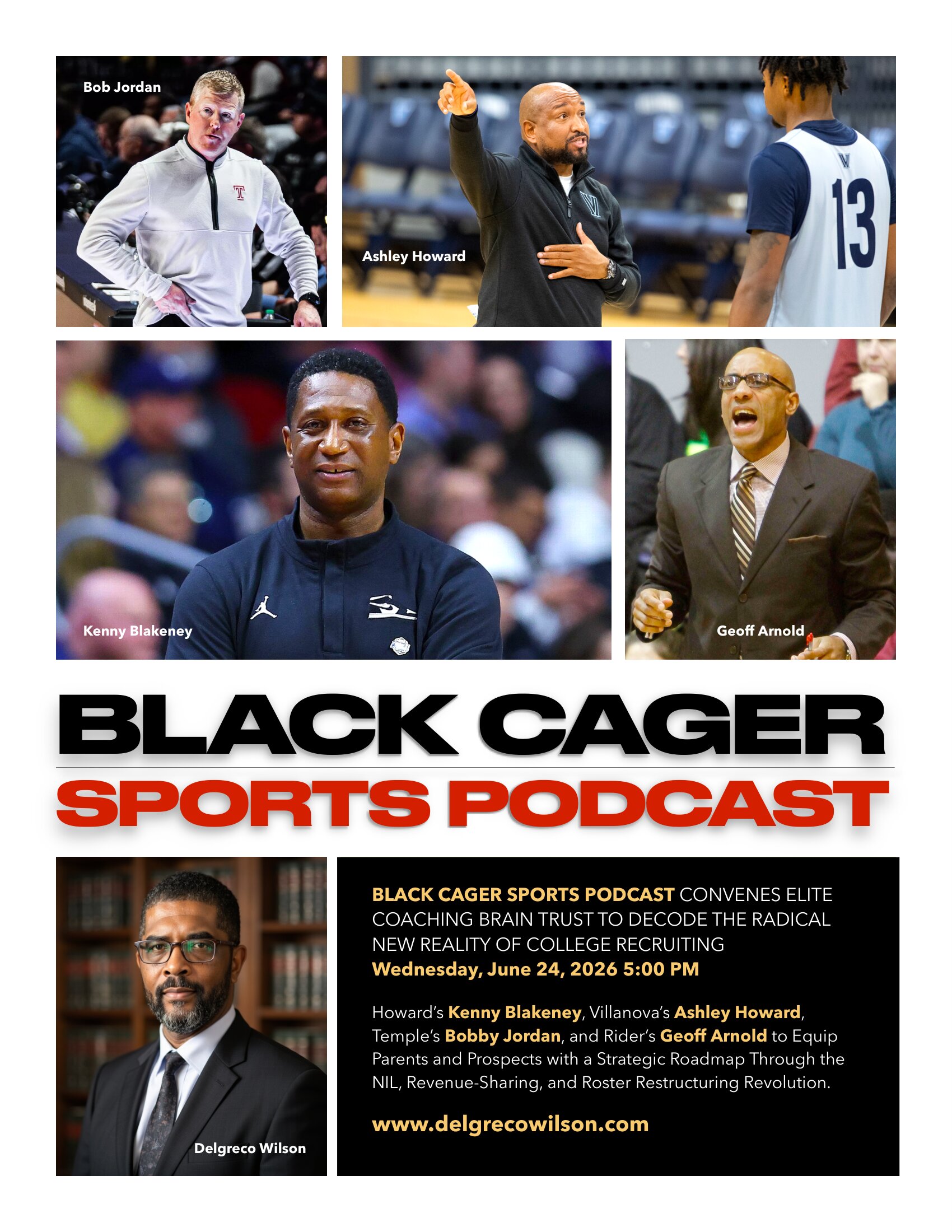
BLACK CAGER SPORTS PODCAST CONVENES ELITE COACHING BRAIN TRUST TO DECODE THE RADICAL NEW REALITY OF COLLEGE RECRUITING

FOR IMMEDIATE RELEASE

Howard’s Kenny Blakeney, Villanova’s Ashley Howard, Temple’s Bobby Jordan, and Rider’s Geoff Arnold to Equip Parents and Prospects with a Strategic Roadmap Through the NIL, Revenue-Sharing, and Roster Restructuring Revolution

PHILADELPHIA, PA – May 27, 2026 – The collegiate sports landscape has undergone a seismic, structural metamorphosis over the past decade, leaving even the most diligent parents and high school prospects disoriented. In a critical new episode, the Black Cager Sports Podcast is cutting through the noise to deliver an unflinching, insider’s guide to the new rules of engagement. The episode features a distinguished panel of Division I coaching royalty: Howard University Head Coach Kenny Blakeney, Villanova University Assistant Coach Ashley Howard, Temple University Assistant Coach Bobby Jordan, and Rider University Assistant Coach Geoff Arnold.

This is not a conversation about X’s and O’s. It is a masterclass in the political economy of modern college athletics, specifically designed to inform and empower high school athletes, parents, mentors, and advisors navigating a terrain defined by direct revenue-sharing, professional free agency tactics, and the extinction of the traditional walk-on.

“We are witnessing the death of amateurism in real-time, but with that comes a level of financial empowerment for our communities that we’ve never seen,” said Black Cager Sports Podcast host and founder Delgreco Wilson. “However, empowerment without information is chaos. We brought together four of the sharpest minds in the game—coaches who live in the living rooms, who sit at the negotiation tables, and who build rosters under these new mandates—to give our listeners a competitive advantage.”

The podcast unpacks the five structural pillars rewriting the recruiting rulebook, demanding a new level of sophistication from families:

The NIL Economy & Direct Revenue-Sharing: With landmark court rulings allowing schools to bypass collectives and make direct payments to athletes, recruitment has transformed into a pre-enrollment negotiation. The coaches detail how agents are securing complex, front-loaded financial packages months before a letter of intent is signed, treating high school commitment windows like professional free-agency periods. They will also decode the new 2026 NCAA rules allowing prospects to retain professional agents and accept prize money while still in high school without sacrificing eligibility.


Roster Architecture & The Death of Walk-Ons: The NCAA’s elimination of scholarship caps in favor of strict “hard roster caps” has turned roster construction on its head. While programs can now theoretically pay every athlete, the squeeze on spots has become brutal. The panel will discuss how bubble players and traditional walk-ons are being pushed out, making every roster decision a high-stakes financial calculation.


The Transfer Portal’s Infinite Loop: With unlimited immediate eligibility for transfers, the coaching relationship has fundamentally changed. The coaches will explain the brutal truth about how the portal now competes directly with high school recruiting, offering a pool of immediately eligible, proven collegiate talent that drastically shortens the timeline and narrows the window for prep prospects.


The 2026 “5-for-5” Eligibility Clock: The new age-based model—granting athletes a continuous five-year window to play five seasons beginning the academic year after they turn 19 or graduate high school—has eliminated strategic redshirting and delayed enrollment. The panel emphasizes why this “automatic clock” compels college staffs to bet heavily on prospects ready to contribute immediately.


Modernized Rules of Engagement: With the National Letter of Intent (NLI) abolished and commitment streamlined into financial aid agreements, and new rules delaying contact windows to junior year, the map for how to be seen and when to commit has changed entirely. The coaches will break down the new etiquette regarding unlimited official visits and the ban on early verbal offers during camps.


In an era where misinformation can cost a family a life-changing scholarship or a six-figure revenue-sharing agreement, this episode of the Black Cager Sports Podcast serves as the essential playbook. The four coaches provide not only a diagnosis of the chaos but a clear-eyed strategy for survival and success in the high-stakes world of modern college basketball.
The episode drops June 24, 2026 on major podcast platforms, including Spotify, YouTube and Black Cager TV.

About Black Cager Sports Podcast:
The Black Cager Sports Podcast is the premier destination for unfiltered, intelligent dialogue on the intersection of grassroots basketball, college athletics, and the culture that drives them. Hosted by Delgreco Wilson, the platform provides a vital voice for families striving to navigate the business of amateur sports.

###

MEDIA INQUIRIES:


Delgreco K. Wilson, M.A.
, Managing Director, Black Cager Sports Media


blackcager@gmail.com
http://www.delgrecowilson.com