The Forgotten Prospect: How NCAA’s New Era Is Closing Doors on Talented High School Players Like Bryce Hillman

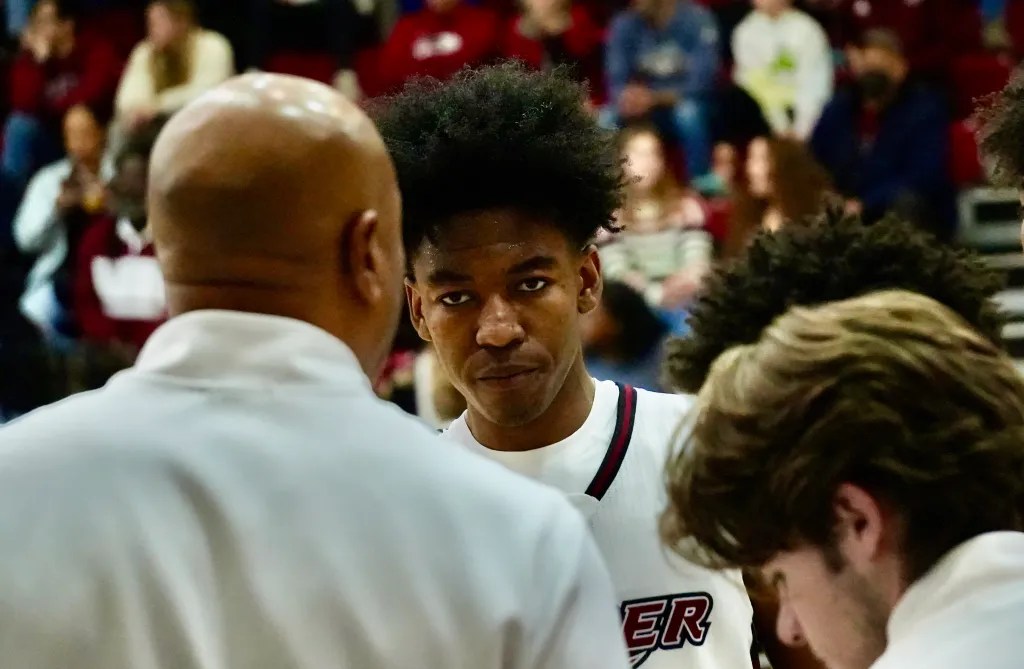
CAMDEN, N.J. — In a different era, Bryce Hillman would be a sure fire NCAA Division 1 recruit. The Camden Eastside senior guard is everything low to mid-major college basketball programs traditionally sought: a 6-foot-2, 185-pound leader with deep shooting range, a powerful build, and a floor-general mentality that keeps his team in the game until the final buzzer. Yesterday, at Camden Catholic and Down 7, he hit 2 deep 3-pointers with less than 22 seconds left in the game. Off the court, his profile is equally impressive—a straight-A student, a member of the National Honor Society, and academically eligible for the Ivy and Patriot League programs.

Yet, as the 2026 recruiting cycle inches forward, Hillman’s phone isn’t ringing with Division I offers. Instead, he represents a growing, silent casualty of a revolution in college sports. His stalled recruitment is not a reflection of his talent but a direct consequence of the seismic paradigm shift driven by the transfer portal and Name, Image, and Likeness (NIL) compensation. These changes have professionalized college athletics at a breathtaking pace, creating a system where proven commodities are valued over potential, and where high school prospects like Hillman are increasingly an afterthought.

The New Calculus of Roster Building

College basketball has entered its “Wild West” era, characterized by unprecedented roster turnover and a relentless focus on immediate results. The transfer portal, which saw Division I entries nearly double from 2019 to 2024, has become the primary talent marketplace. For coaches under pressure to win now, the calculus is simple: Why invest a precious scholarship and years of development in an 18-year-old when you can recruit a 22-year-old from the portal who has already proven he can score against college competition?

The data supports this cold logic. A 2024 study found that 65% of Division I men’s basketball players who enter the transfer portal move down a competitive level or out of the sport entirely, suggesting it is often a tool for finding playing time at a lower level rather than a guaranteed path up. Yet, for coaches, the portal offers a known quantity. As one high-major coach bluntly stated about the new financial reality, “No one’s going to pay a freshman $1.5 million anymore. You can’t have a third of your [revenue-share] cap going to a guy who’s never played in college”.

This professionalized approach has led to what one analyst calls “one-year partnerships”. Programs provide NIL money and a platform; in return, players must fill a specific, immediate role. Long-term development plans, once the bedrock of college coaching, are becoming “a thing of the past”. This environment inherently disadvantages high school seniors, like Bryce Hillman, no matter how gifted.

The Squeeze on the 2026 Class

Hillman’s class is caught in a perfect storm. The convergence of the transfer portal’s dominance and the new financial uncertainties of the “rev-share era” has brought high-major recruiting for 2026 prospects to a near standstill. Following the landmark House v. NCAA settlement, schools are navigating how to directly share revenue with athletes while also regulating booster-backed NIL collectives. This has created massive uncertainty about what financial packages can even be offered.

“Coaches are telling us, ‘We’re not going to the portal if you commit to us.’” — Deron Rippey Sr., father of a five-star 2026 recruit. 

As a result, conversations between coaches and top 2026 recruits have barely addressed specific numbers. “Most coaches say the rules are changing in the next two weeks, the next month, we’re trying to figure out what we can do,” said the father of one elite prospect. Another recruit noted, “Some coaches have no clue, really. A lot of their answers… is, ‘I don’t know.’ It’s funny hearing that”.

This financial fog exacerbates the existing bias toward the portal. Coaches, unsure of their future budgets, are hesitant to commit resources to high school players. They know that next spring, they will need to save a significant portion of their funds to compete in the transfer market, where bidding for proven players has reached astonishing levels—with some individual transfers commanding multi-million dollar packages. For a player like Hillman, who isn’t a consensus five-star recruit, the path to a high-major or even a mid-major offer has become exceedingly narrow.

The Cascading Effect and the Lost Art of Development

The impact of this shift creates a cascading effect throughout the ecosystem:

  • High-Major Programs seek players from other high-major programs or stars who have dominated at the mid-major level.
  • Mid-Major Programs, in turn, chase former top-100 high school recruits who are seeking more playing time after sitting on a power-conference bench.
  • Low-Major Programs target frustrated transfers from the higher levels.

This leaves talented, unproven high school prospects in a state of limbo. They are now frequently advised that their route to a Division I opportunity may require a detour—a post-graduate prep school year or proving themselves at the Division II or NAIA level first. This mirrors the transient “Migration Generation” of players who hopscotch between schools in high school and college, a trend that risks academic progress and stable development.

The professionalization of the sport is also changing how programs are run. Forward-thinking schools like the University of North Carolina are building mini-NBA front offices, hiring professionals to handle scouting, NIL negotiations, and roster management—tasks that were once the domain of coaches. In this new structure, the focus of coaching staffs can return to X’s and O’s and player development. The tragic irony is that in this more “professional” system, there are fewer and fewer raw, young players deemed worthy of that development investment.

A Path Forward in a Changed Game

So, what is a player like Bryce Hillman to do? The old blueprint is obsolete. Success now requires a new playbook that acknowledges the reality of the business:

  1. Embrace Alternative Pathways: A post-graduate year at a national prep school or a starring role at a top Division II program can provide the tape and proof of concept that the portal-driven market demands.
  2. Seek Programs Committed to Development: Some coaches, particularly at mid-majors with less portal buying power, still prioritize building through high school recruits. Identifying these programs is crucial.
  3. Leverage Academic Excellence: For a student like Hillman, targeting high-academic schools in the Ivy, Patriot, or similar leagues can be a strategic advantage, as these programs often have different roster-building philosophies and cannot use large NIL offers as their primary tool.
  4. Exercise Patience: The portal creates late-summer roster chaos. Scholarships can materialize in August as teams finalize their rosters, rewarding those who remain ready and visible.

Bryce Hillman’s story is not unique. It is the new normal for thousands of talented high school basketball players. The NCAA’s transformation, born from a long-overdue move toward athlete compensation and freedom, has had profound unintended consequences. It has created a quasi-professional free agency that values immediate production over nurtured potential. In the rush to embrace this new era, we must not forget the Bryce Hillmans of the world—the talented, well-rounded students and athletes who just a few years ago would have been the foundation of a college program, but who now stand on the outside, waiting for a coach still willing to believe in, and invest in, the promise of an 18-year-old.

The system has gained financial freedom for players at the top, but it has quietly closed a door of NCAA Division 1 opportunity for many at the bottom. Whether that door can be nudged back open may define the soul of college basketball in the decades to come.

Neumann-Goretti Launches ‘Patron Saints’ to Preserve the Soul of Scholastic Basketball

PHILADELPHIA — In an era where the soul of traditional high school basketball is increasingly traded for national spotlight and transactional deals, one Philadelphia powerhouse is drawing a line on the hardwood of its home court. The Neumann-Goretti Saints boys’ basketball program today announced the launch of the “Patron Saint Donor Campaign,” a clarion call to preserve the last vestiges of Philly’s traditional scholastic basketball.

The campaign is not merely a fundraiser; it is an innovative and ncessary mobilization. It is a bid for reinforcements in a quiet but intensifying war for the very identity of the sport. For decades, elite basketball was forged in the crucible of local rivalry—in the packed, echoing gyms of neighborhood Catholic and public schools where the dreams were city titles, district crowns, and state championships. The heroes wore the names of their communities on their chests.

That era is fading. Today, the gravitational pull of national basketball academies, with their focus on individual rankings and nascent NIL empires, is siphoning talent from the historic bastions of the game. Iconic programs like Neumann-Goretti, Roman Catholic, DeMatha, Camden, Imhotep, and Chester—institutions that are pillars of their cities—find themselves battling not just for wins, but for their existential relevance.

Yet, Neumann-Goretti refuses to cede the court. The Saints continue to compete at the highest national level, consistently facing off against well-funded, coast-to-coast academies. Their strategy is not to emulate these new models, but to defeat them through the very traditions that built the program: deep local talent, ferocious team identity, and the unbreakable bond between a team and its community.

“This campaign is an innovative response to a national problem,” said Delgreco Wilson, Black Cager Sports. “Neumann-Goretti is not a franchise. It is a Philadelphia institution. To win this fight, they need the army that has always been their foundation: their community.”

The Patron Saint Donor Campaign offers basketball purists and Philadelphia loyalists a direct stake in this struggle.

For the 2025-26 season, a limited cadre of just 20 supporters will be enlisted as “Patron Saints.” A donation of $100 secures this enlistment, granting:

  • Free entry to all Neumann-Goretti HOME games, guaranteeing a seat at every battle, even sellouts against national opponents.
  • A distinctive Patron Saints t-shirt, a uniform of solidarity.\
  • A $10 coupon for the official team store.

“We are calling on anyone who loves what high school basketball was, and what it still should be,” said Assistant Coach Pat Sorrentino. “When you become a Patron Saint, you are not just buying a ticket. You are enlisting in the cause. You are helping to ensure that the future of this game isn’t shaped solely in impersonal academies, but continues to thrive on the home floors where passion is born and legends are made.”

The offer is intentionally exclusive, mirroring the prized, hard-fought nature of a spot on the Saints’ roster itself.

The mission is clear: to provide the resources for Neumann-Goretti to continue its dual quest—to hunt national titles while fiercely guarding the local, communal soul of the sport.

To learn more and to enlist as a Patron Saint for the 2025-26 season, visit the Neumann-Goretti Athletics website. All 20 spots are expected to be claimed swiftly by those who believe the fight is worth the price of admission.

###

About Neumann-Goretti High School: Neumann-Goretti High School, a Catholic secondary school in the Franciscan tradition located in the heart of South Philadelphia, has long been a national epicenter for basketball excellence. Its program is defined by a profound commitment to community, discipline, and the development of young men as both athletes and citizens, producing countless collegiate standouts and professional players.

A New National Home for Elite Development: Why Mt. Zion Prep is the Ideal Choice for the Next-Generation College Prospect

LANHAM, MD – For over eight decades, the New England Preparatory School Athletic Council (NEPSAC) has stood as the undisputed gold standard for elite high school basketball development. Born in 1942 from a need to coordinate athletics during the wartime disruptions of World War II, it has evolved into a highly competitive institution, sanctioning championships and attracting top talent from across the country. Its rigorous, postgraduate-friendly environment has become a non-negotiable proving ground for athletes with Division I aspirations.

Yet, the very landscape that created the NEPSAC’s prominence is shifting. As college programs, now more than ever, focus on the transfer portal for immediate help, the pressure on high school athletes to present as polished, college-ready products is immense. For a student-athlete from the Mid-Atlantic or the South, relocating to a New England boarding school has been the traditional price of entry for this level of competition. But what if you could access a program of identical intensity, exposure, and proven results without leaving your region? This is the proposition of Mt. Zion Preparatory School in Prince George’s County, Maryland.

Mt. Zion Prep offers the elite-level, postgraduate-centric basketball programming synonymous with the NEPSAC’s top tiers but delivers it from a strategically superior location and through a uniquely culturally fluent model. For the ambitious student-athlete from New York to North Carolina, it is not merely an alternative to a New England prep school; it is the next evolution of it.

Favour Ibe, ’26 – Offers from Alabama, Maryland, South Carolina, Villanova, Florida State and Georgia

The NEPSAC Blueprint: A Legacy of Competitive Excellence

To understand Mt. Zion’s value proposition, one must first appreciate the model it emulates and elevates. The NEPSAC is not a single league but a governing association for over 180 independent schools, organized into highly competitive classes like AAA, AA, and A. This structure creates a clear hierarchy of competition. As one college recruiting advisor notes, while class isn’t everything, playing in the top NEPSAC divisions signals to college coaches that a player is “battle-tested” against future college stars and under top-tier coaching.

The environment is deliberately structured for exposure. Events like the New England Prep Schools Showcase at Babson College and Avon Old Farms draw over 600 prospects and are mandatory stops for college recruiters. The association’s history of producing professional players and its allowance for postgraduate athletes—who use a “fifth year” to mature physically and academically—have cemented its reputation. Schools like Northfield Mount Hermon, Brewster Academy, and Worcester Academy are not just schools; they are national brands in player development.

Mt. Zion Prep

The Mt. Zion Advantage: Location, Access, and Modern Fluency

Mt. Zion Prep adopts this successful blueprint but recontextualizes it for today’s recruit. Its location in the Washington, D.C. metropolitan area is a foundational advantage, as shown in the table below comparing key regional benefits.

For a family in Philadelphia, Richmond, or Charlotte, Mt. Zion is a direct flight or a manageable drive away, not a journey to a remote New England campus. This proximity eases the transition for students and allows families to be more involved. More critically, it places the program at the crossroads of several of the nation’s most fertile recruiting grounds. Mt. Zion’s schedule is built not just for local competition but for national visibility, with easy access to elite events and tournaments across the Eastern Seaboard.

Beyond geography, Mt. Zion’s most profound innovation is its commitment to cultural fluency. In an era where teams are global melting pots, understanding how to navigate diverse backgrounds is no longer a soft skill; it is a core component of elite athletic development. The coaches and administrators at Mt. Zion are not just tacticians; they are mentors trained to help young men from all walks of life understand, navigate, and interact effectively with people from different cultural backgrounds.

This goes beyond basic awareness. It is the applied knowledge of how communication styles—verbal and non-verbal—vary across cultures. It is the empathy to appreciate diverse perspectives and the adaptability to adjust behavior in real time to foster genuine inclusion. For a young athlete from Brooklyn adjusting to life alongside a teammate from rural North Carolina or an international recruit, this supportive, intentionally cultivated environment is invaluable. It accelerates personal growth, builds unshakeable team chemistry, and prepares students for the diverse locker rooms and global societies they will encounter in college and beyond.

Rodrick Harrison, Mt. Zion Prep Head Coach

The Verdict for the Modern Prospect

The data is clear: to compete for Division I scholarships in the transfer portal era, a high school prospect must demonstrate proven ability against elite competition. The NEPSAC model has brilliantly provided this for generations. Mt. Zion Prep now offers that same crucible of competition—the demanding schedule, the postgraduate focus, the college-style environment—but from a more accessible geographic and cultural center.

For the talented player in New York, New Jersey, Pennsylvania, Delaware, Maryland, Virginia, or North Carolina who is ready to lead with purpose and rise to their fullest potential, the choice is increasingly evident. You can travel far from home to seek a proven model, or you can find its most advanced iteration, refined for today’s world, at your region’s doorstep. Mt. Zion Prep is not just another option; it is the strategic choice for the next-generation student-athlete determined to build a meaningful future on and off the court.

The Next Crown Prince of Harrisburg Hardwood: Why Shakur Starling is Central Pennsylvania’s Must-See Prospect

PHILADELPHIA, PA – In the constellation of American basketball talent, certain places have become fixed stars, producing a rhythm and a archetype of player as reliable as the changing seasons. New York City guards carry a certain swagger, Philadelphia guards a specific mental and physical toughness. And in recent years, a new locus has emerged, a crucible for backcourt talent that demands the attention of college basketball’s power brokers: Harrisburg, Pennsylvania.

Shakur Starling, Central Dauphin junior guard

This is not a fluke, but a tradition being built in real time. It’s a lineage defined by Chance Westry and Malachi Palmer—elite guards who honed their games here before taking the well-trod path to national academies and, subsequently, the bright lights of the Big 10, ACC and Big East. Their departures created a vacuum, a question of who would next assume the throne. The answer is already here, and he is not following the same script. His name is Shakur Starling, a junior guard at Central Dauphin High School, and he is poised to become the most compelling recruitment story in the region, a prospect whose substance may ultimately outshine even his considerable flash.

The Harrisburg Guard: A New Archetype

To be a Harrisburg guard in 2025 means something. It carries a weight and an expectation. It means you are battle-tested in gyms where space is a luxury and physicality a given. It implies a defensive tenacity, a chip-on-the-shoulder grit forged in the crucible of Mid-Penn Conference play. Westry and Palmer established this brand—long, athletic, versatile perimeter players who could dictate the terms of a game on both ends.

Shakur Starling is the latest model, inheriting and evolving this prototype. He has assumed the mantle as “the guy” in Harrisburg, not through self-proclamation, but through a quantum leap in performance over the past year. His game is a testament to the area’s burgeoning reputation, but his story, rooted deeply in family and faith, suggests a different kind of journey—one that will unfold not at a distant basketball factory, but right here at home.

Shyheim Starling (l), freshman guard and Shakur Starling (r)

A Foundation of Character, A Profile of Excellence

Before the first crossover dribble is admired, one must understand the foundation. Starling is, by every account, poised and unfailingly respectful—a young man who looks adults in the eye and understands the weight of “please” and “thank you.” This is not incidental. It is the direct product of an exceptional upbringing by his parents, who are raising Shakur and his three brothers with a clear emphasis on faith, academics, and accountability.

This bedrock character is his first and most persuasive selling point. He is an outstanding student from a family deeply grounded in their faith. In an era of transfer portals and fleeting commitments, a prospect like Starling represents stability. It is why he already holds an offer from John Griffin at Bucknell University, a Patriot League institution that prizes scholars as much as scorers. One can confidently project that nearly every Ivy and Patriot League program will soon enter the fray, seeing in Starling the ideal marriage of academic readiness and athletic promise.

The Game Travels: From Central Dauphin to the EYBL

Do not, however, mistake this strong academic and moral profile for a limited game. Starling’s talent transcends zip codes. He has already proven his mettle on the Nike EYBL circuit, the most competitive grassroots basketball arena in the country, playing for Baltimore-based Team Melo. This is critical. It demonstrates his skills are not merely a product of local competition; they translate against national, elite-level peers.

Starling knocks down a 3 pointer in tough loss to Bonner

On this stage, his athleticism announces itself without subtlety. He possesses a quick-twitch explosiveness and open-floor speed that are innate—you cannot teach a player to get off the ground as he does. In transition, he is a runaway train, capable of finishing through contact and with the acrobatic body control to convert seemingly impossible circus shots at the rim. Defensively, his combination of that athleticism, a strong motor, and high effort makes him a nightmare. He has the tools to be a lockdown, multi-position defender, the kind of “two-way potential” that jumps off the screen to college coaches.

The Blueprint for a High-Major Future

From a purely basketball perspective, Starling is just beginning to scratch the surface. At Central Dauphin, he often operates as an off-guard in half-court sets, using his athleticism to slash and attack. His ability to go through high school bigs is already notable. Yet, the roadmap to becoming a high-major standout is clear.

First, the ceiling of his offensive game will be determined by the consistency and range of his three-point shot. He is solid now, but to transition from an athletic slasher to an elite “3-and-D” wing—the most coveted commodity in modern basketball—requires making that significant leap. Second, to become a primary ball-handling playmaker at the next level, his decision-making must continue to evolve, learning patience and picking his moments within a system.

The raw materials, however, are undeniable. As one evaluator noted, “The athletic prowess is there as far as just speed, explosiveness… When he gets to college, when you have more space, he is going to be a problem for four years.”

Starling matched up against Bonner-Prendie star guard Korey Francis

A Different Path, A Loyal Legacy

This is where Shakur Starling’s story diverges from his predecessors. His deep commitments to family, church, school, and teammates make a late transfer to a national academy highly unlikely. Unlike Westry and Palmer, we are likely to see this recruitment play out in real time, in the gym at Central Dauphin. This loyalty is rare, and it adds another layer of allure for college coaches seeking a program pillar, not just a transient talent.

The time for passive interest is over. Coaches from the CAA, Atlantic 10, and, yes, the Big East, should be making their pilgrimages to Harrisburg now. They will see a top-tier mid-Atlantic prospect whose best basketball is emphatically ahead of him. They will see a scholar-athlete whose character is as polished as his crossover. And they will see the next chapter in the story of the Harrisburg guard—a chapter defined not by departure, but by legacy; not just by athleticism, but by an unwavering foundation.

Shakur Starling is more than a prospect; he is a statement. He proves that in today’s nomadic basketball landscape, a crown prince can choose to build his kingdom at home, and in doing so, become an even more compelling figure for the programs wise enough to see the complete picture.

The Case for Korey Francis: The Mid-Atlantic Region’s Most Underrated Court General

PHILADELPHIA, PA – In the era of basketball as personal branding, where elite high school prospects migrate to national academies and highlight reels are currency, a counter-narrative is quietly building in the Philadelphia suburbs. His name is Korey Francis, a junior guard at Monsignor Bonner & Archbishop Prendergast Catholic High School. To the casual observer scanning national rankings, he may not yet register. But to watch him play—to truly understand the fabric of his game—is to witness one of the finest, most complete guard prospects in the nation. He is not a product of the assembly line; he is a testament to the enduring value of loyalty, intelligence, and old-school grit.

Korey Francis, Bonner-Prendie junior guard

A Player Without a Position, A Team Without a Ceiling

At Bonner-Prendie, Francis is a basketball paradox listed at guard. Under the shrewd guidance of Coach Billy Cassidy, Francis morphs from game to game, even possession to possession, into whatever his Friars need to win. With a roster featuring smaller, quicker perimeter players, Cassidy deploys Francis as a point guard, shooting guard, small forward, and even a burly power forward. He initiates the offense, posts up smaller defenders, switches onto bigs defensively, and crashes the glass with the tenacity of a forward. This positional fluidity isn’t a gimmick; it’s a master class in basketball utility. Yet, when the clock winds down and the outcome hangs in the balance, the ball inevitably finds its way to Francis’s hands. He is the calm in the chaos, the team’s true north.

The Anatomy of a Floor General

Projecting Francis to the next level clarifies his ultimate destiny: he is a cerebral, classic point guard. His strengths read like a manifesto for purists who believe the game is won between the ears.

His court vision and playmaking are elite. He pushes the ball with purpose, not panic, and sees passing lanes before they materialize. He is a quarterback in high-tops, running the offense with a veteran’s poise, his primary objective being to make his teammates more effective. His physicality is his signature. At a sturdy 6’3″, he leverages his strength like an NFL fullback, using a deft handle and a decisive first step to get a shoulder into defenders, creating space to barrel into the lane. Once there, he is a maestro of the “penetrate-and-pitch” game, finishing through contact or dishing with perfect timing.

Furthermore, he is an exceptional rebounder for a guard, a skill that instantly triggers transition opportunities. Defensively, his strength and intelligence allow him to guard multiple positions, effectively switching onto both bigger and smaller opponents. This is not a flashy scorer hunting shots; this is a conductor orchestrating a victory.

The Measurable Questions and the Intangible Answers

The scouting report will rightly note areas for growth: his three-point shot is inconsistent, and he lacks the blinding, elite athleticism commonly associated with top prospects in leagues like the SEC or Big Ten. He is a worker, not a wow-er.

But to focus solely on these metrics is to miss the forest for the trees. Francis is only a junior, with ample time to refine his jumper—a project far more achievable than instilling the innate feel for the game he already possesses. More importantly, his perceived “lack of elite quickness” is mitigated by a high basketball IQ that allows him to anticipate and dictate, rather than simply react. He wins with positioning, strength, and savvy, assets that translate to any level of competition. He is, in essence, D1-ready in the categories that are hardest to teach: leadership, physicality, and clutch decision-making. His “Iron Man” durability and unflappable demeanor under pressure are the bedrock of his value.

The Loyalty and Leadership of a Throwback

In an age of transactional basketball, Korey Francis’s story is profoundly refreshing. While peers of his stature have left Philadelphia for the national academy circuit, Francis has remained fiercely loyal to Coach Cassidy and Bonner-Prendie. This commitment speaks to a character often absent from the recruiting discourse. He is not just building a team; he is building a community.

Off the court, Francis embodies the ideal of the scholar-athlete. A straight-A student and the elected president of his class, he demonstrates that elite competitiveness and academic excellence are not mutually exclusive but mutually reinforcing. This discipline and intelligence are palpably evident in his play. He processes the game like an honor student, solving defensive schemes in real time.

The Verdict: A Prospect Worth Betting On

The modern basketball landscape is littered with athletic marvels whose games lack soul and structure. Korey Francis is the antithesis. He is a throwback to a time when the point guard was an extension of the coach, tasked with elevating everyone around him.

Yes, he must continue to extend his shooting range. Yes, he will face athletes at the next level who can match his strength. But to bet against Korey Francis is to bet against intelligence, against leadership, against an unwavering will to win. He is not just a mid-to-high major Division I point guard prospect; he is the prototype of a player who wins championships because he makes the complex simple and his teammates better.

In the noisy, hype-driven world of high school basketball, the steady, commanding drumbeat of Korey Francis’s game is a sound more and more college coaches are beginning to hear. They are listening to the future of a program—a leader who doesn’t just play the game, but truly understands it.

The Lost Art of the Philly Guard: Why Micah Waters Embodies What College Basketball is Forgetting

PHILADELPHIA, PA – In the cramped, sweat-stained gyms of Philadelphia, where the echoes of a hundred years of basketball history still reverberate, a certain archetype has been forged. It is not always the flashiest, nor the one chasing the highest point totals. It is the guard who understands that defense is a language, unselfishness is a creed, and winning is the only statistic that truly endures. From the legendary playgrounds to the hallowed Big 5 floors, this player has been a constant: gritty, intelligent, and indispensable to any winning effort.

Micah Waters, Friends Select senior guard

Today, that mold is perfectly embodied by Friends Select School senior Micah Waters. And in a just basketball world—the one that existed even a decade ago—his phone would be ringing with Division 1 scholarship offers. But we are not in that world. We are in the era of the transfer portal and NIL, a paradigm shift that has left exemplary high school prospects like Waters in a dangerous limbo. In the rush to recruit experienced college veterans or chase viral highlights, college coaches are overlooking the foundational players who build programs. For any low- to mid-major program seeking not just a transient talent, but a culture-defining pillar, a trip to Center City Philadelphia to evaluate Micah Waters is not just advisable—it is urgent.

More Than a Prospect: A Philadelphia Story

To understand Waters’ game is to understand his roots. He is the son of the late Micah Waters, Sr., a long-time Philadelphia Police officer who himself played for the famed West Philadelphia Speedboys before suiting up for Cabrini University. This is not incidental biography; it is the bedrock of his identity on the court. He plays with the discipline, responsibility, and communal pride of a public servant’s son. He plays, as those classic Philly guards do, not for stat sheets, but for the final score. His intelligence and high character are repeatedly noted by coaches and teachers, the marks of a young man who would represent a university with integrity.

Ten years ago, a player with this pedigree, this makeup, and his tangible skills would have been a coveted get for a slew of programs. Today, he waits. He is a casualty of a new calculus that undervalues the steady, winning player in favor of the transfer with immediate, if sometimes fleeting, experience. It is a system that risks discarding diamonds before they are ever polished.

A Tenacious Blueprint: Defense as a Destructive Force

The foremost argument for Waters’ scholarship-worthiness begins on the defensive end. In an offensive-centric age, he is a throwback lockdown artist. Scouts label him an elite, tenacious man-to-man defender, routinely tasked with shadowing an opponent’s top perimeter scorer. With long arms and anticipatory instincts, he is a disruptor in passing lanes. But his defense is more than steals; it’s a form of mental attrition. He is adaptable, capable of guarding multiple positions, and plays with a physical grit that sets a tone for his entire team. In the playoff crucible or on the Under Armour Circuit with Philly Pride, Waters has proven his defense travels and intensifies against high-level competition. This skill alone—the ability to neutralize another team’s best guard—is a standalone, roster-worthy talent.

Purcell Coles, Friends Select Head Coach

The Modern Complementary Offensive Skill Set

Offensively, Waters is not a heliocentric, ball-dominant creator. That is not his role, nor is it the role of the classic Philly guard he emulates. His value lies in high-efficiency, high-IQ play that perfectly complements primary scorers. He is a streaky but potent three-point shooter, particularly deadly as a spot-up weapon in the offensive system of coach Purcell Coles, where his understanding of spacing and timing shines. He is a strong finisher in transition, leveraging his defensive efforts into easy baskets. His high basketball IQ allows him to move within complex offensive schemes—he is noted to have a strong grasp of systems—ensuring he is always a productive, rather than a disruptive, offensive piece.

The Grit and The Growth: A Leader’s Profile

Perhaps the most intangible, yet critical, asset Waters possesses is his demeanor. He is described as a vocal leader, playing with a palpable toughness and a winner’s mentality. This is the glue that holds teams together through conference play and tournament pressure. Yes, that intensity can occasionally boil over, leading to unnecessary fouls—a noted area for growth. But coaches consistently prefer to temper a fiery competitor than to ignite a passive one. His occasional struggle to create his own shot off the dribble is a fair critique, defining his ceiling as a primary option. But that misses the point. His ceiling as a program-changing role player—a defensive stopper, a clutch shooter, a culture-setter—is immensely high.

A Perfect Fit for the Right Program

Micah Waters’ ideal role is clear: a gritty, defensive-minded wing who spaces the floor, excels in transition, and provides veteran-like leadership from day one. He is the ultimate “winner” archetype who makes players around him better through effort, intelligence, and selflessness. He would thrive in fast-paced, perimeter-oriented offenses that value defensive accountability. For a coach looking to build a sustainable program, not just rent a one-year scorer, Waters represents the kind of foundational player around which successful teams are constructed.

Micah Waters after hearing he has fouled out against Penn Charter

The current model of college athletics, with its frenetic portal churn, is a reality. But it shouldn’t be an excuse for myopia. There is immense value in identifying, recruiting, and developing a young man of character, toughness, and specific, winning skills. Micah Waters isn’t just a collection of strengths and weaknesses on a scout’s sheet. He is the continuation of a Philadelphia basketball legacy, a coach’s son in spirit, and precisely the kind of dependable talent that becomes the heart and soul of a successful college program.

The gym doors at Friends Select are open. The proof of a hundred years of basketball wisdom is on the court, waiting to be seen. It would be a profound shame—and a missed opportunity—if the new era of college basketball meant overlooking a young man who so perfectly embodies the timeless virtues of the old one.

Rare Footage, Rarer Vision: A Basketball Showcase for a New Recruiting Age

by Delgreco Wilson

PHILADELPHIA, PA – In the relentless, transactional churn of modern college athletics—where rosters are reshuffled annually via the transfer portal and the pursuit of a “finished product” often overshadows the art of cultivation—a quiet but significant rebellion is being staged not in an arena, but in a high school gym.

On December 6th, the Rare Footage Tip Off Showcase at Archbishop Ryan High School will offer a curated, compelling argument for a different path. In an era where recruiting high school players can seem a fading art, this event, meticulously crafted by the scouts and curators at Rare Footage, reminds us of the enduring value of foundational talent. It is a slate of games designed not just to appeal to fans, but to present college coaches with a rare, concentrated dose of projectable skill, competitive fire, and impeccable character.

The Curator’s Craft: Building a Must-See Schedule

What makes this showcase exceptional is its intentional architecture. Rare Footage has moved beyond simply booking teams. They have constructed narrative arcs and competitive contrasts, understanding that the most revealing evaluations happen under the pressure of a compelling storyline. The schedule is a four-act play designed to test every facet of a prospect’s game.

Carter Smith, Sophomore Guard, Penn Charter

Act I: The Veteran vs. The Prodigy
The curtain rises with a Philadelphia private school chess match. Friends Select, led by the poised and savvy senior guard Micah Waters, will try to contain the mercurial brilliance of Penn Charter’s Carter Smith, a sophomore with game-breaking talent. It’s a masterclass in contrasting tempos: experience and defensive discipline versus youthful, explosive ambition.

Act II: The Clash of City Identities
Next, the showcase pivots to pure, unadulterated grit. South Shore (NYC) versus West Catholic (PHL) is more than a game; it’s a battle of urban basketball ethos. Rare Footage has pitted two programs renowned for toughness, defensive intensity, and relentless pride. This is where intangibles like heart and resilience are scouted as closely as jump shots.

Korey Francis, Bonner Prendie, junior guard

Act III: The Marquee Argument
Here lies the centerpiece, the matchup that validates the entire premise of the event. In the transfer-portal era, why should a mid-to-high-major coach invest a scholarship in a high school guard? The duel between Central Dauphin’s Shakur Starling and Bonner Prendie’s Korey Francis is the answer. Rare Footage has engineered the perfect stylistic contrast: Starling’s explosive, north-south athleticism against Francis’s cerebral, physically imposing control. It is a scout’s dream and a definitive test for two of the Mid-Atlantic’s premier 2027 prospects.

Shakur Starling, Central Dauphin, junior guard

Act IV: The Grudge Match
The finale ensures the intensity never wanes. A simmering local rivalry between the host Archbishop Ryan and Academy of the New Church (ANC)—fueled by a disputed preseason result—promises a visceral, emotionally charged contest. It’s a test of poise under the pressure of pure rivalry, another layer of evaluation expertly woven into the fabric of the day.

Beyond the Bracket: A Night of Resonance

Thomas Sorber (r) and NBA Commissioner, Adam Silver (l)

Rare Footage’s effort extends beyond the court. The event will pause to retire the jersey of, Thomas Sorber, a Ryan legend, a poignant reminder of the lasting legacy a dedicated student-athlete can forge. This ceremony connects the past to the present, framing the evening’s competition as part of a continuum—not just a transaction, but a tradition.

The Headliners: A Case Study in Foundational Value

The Starling-Francis matchup is the thesis statement of the showcase.

Shakur Starling represents high-ceiling potential. An explosive athlete with a Division I frame, his ability to attack the rim and create in the open court is undeniable. The blueprint for his ascent is clear: refine his perimeter shot and harness his defensive aggression. Off the court, his strong academic record and interest from Patriot and Ivy League schools paint the picture of a complete scholar-athlete, the kind of player who becomes a pillar of a university community.

Korey Francis offers proven, polished production. A veteran of the prestigious Team Final program, he is a “smart, cerebral point guard and a natural leader.” He dominates with strength, savvy, and exceptional court vision, and his well-rounded stat lines are a testament to his consistent impact. He embodies the term “program pillar” off the court as well, serving as his school’s class president and carrying the academic credentials (Ivy/Patriot League interest) that make him a transformative recruit.

A Call for Visionary Investment

For coaching staffs from the Patriot, Ivy, A-10, CAA, and MEAC conferences, the Rare Footage Tip Off Showcase is not merely a convenient scouting trip; it is an essential one. In a sporting landscape cluttered with mercenary roster moves, this event presents the alternative: identifiable, investable talent.

The players here, particularly Starling and Francis, represent the sustainable model—the cornerstone you build with, not the temporary patch you apply. They are players who will grow in skill, leadership, and institutional knowledge over four years, fostering the kind of program culture and fan loyalty that cannot be portaled in.

The showcase on December 6th is a declaration. It is a testament to the curatorial eye of Rare Footage and a powerful argument that the future of the sport still runs through the passionate, competitive crucible of the high school game. In an age obsessed with the immediate, this is where one can secure a foundation.

DJ Wagner: The Quiet Triumph of a Former Prodigy

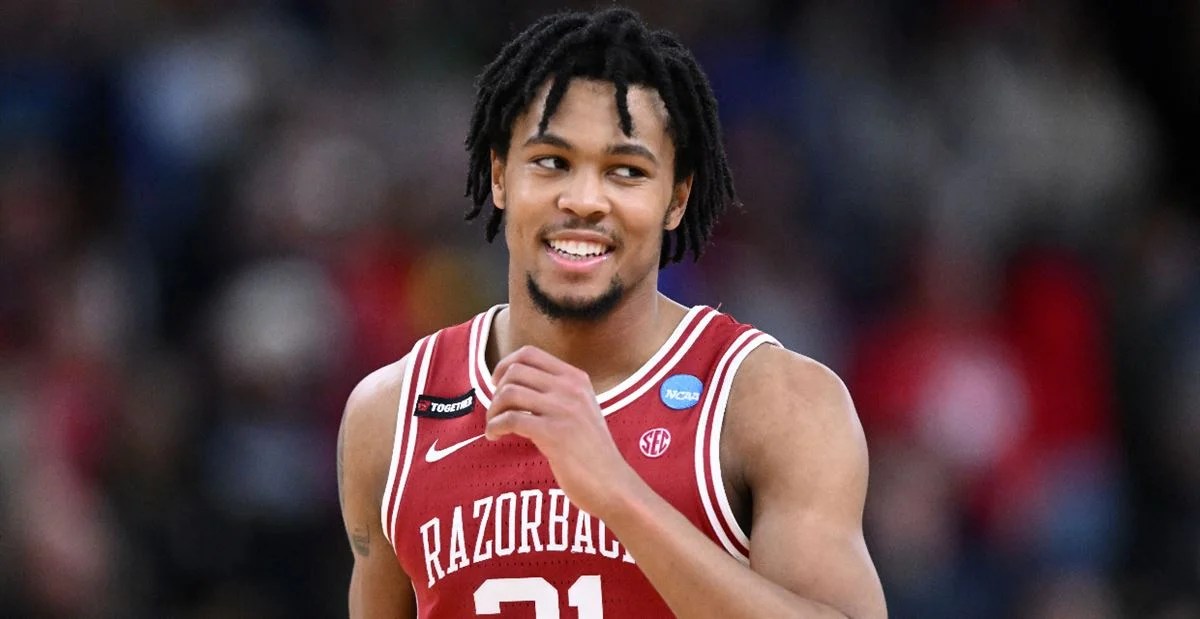
CAMDEN, NJ – In the high-stakes theater of modern college basketball, where narratives are written in highlight reels and legacies are judged by draft night, it is easy to miss a story of quiet, consistent triumph. The case of DJ Wagner, the once-heralded prodigy from Camden, New Jersey, is too often framed as a tale of unmet potential. The chorus of critics points to the fact that he did not explode onto the scene as a one-and-done superstar, that other guards have seized the spotlight at Kentucky and now Arkansas. But to view his career through this narrow lens is to misunderstand the very definition of success. DJ Wagner is not a disappointment; he is the model of a modern, successful college athlete, building a formidable and valuable career on his own terms.

The Myth of the “One-and-Done” and the Reality of Role Players

The burden of expectation placed on DJ Wagner’s shoulders was immense. As the third-generation McDonald’s All-American, his destiny seemed preordained. The blueprint, crafted by his fervent supporters, was simple: dominate from day one, lead the nation in scoring, and head to the NBA in a blaze of glory. When that did not happen, the narrative quickly soured.

What this critique ignores is the fundamental nature of elite team sports. At programs like Kentucky and Arkansas, the arrival of other talented players like Reed Sheppard or Boogie Fland is not a failure on Wagner’s part; it is the reality of competing at the highest level. The mark of a truly valuable player is not always his ability to dominate the ball, but his capacity to adapt and contribute to winning. Wagner has done exactly that. He has consistently been the player his Hall of Fame coach, John Calipari, trusts to start and play substantial minutes—71 starts in 72 career games. This is not a consolation prize; it is the ultimate sign of respect. Coaches who are paid millions to win games do not entrust key roles to players who do not help them achieve that goal.
A Competitor, Not a Statistic

To watch DJ Wagner play is to see a young man who has mastered the unglamorous essentials of winning basketball. In an era where offensive fireworks often come at the expense of defensive effort, Wagner takes ferocious pride in his work on both ends of the floor. He is a tenacious on-ball defender, a trait that never shows up in a headline but is priceless in the grind of a Southeastern Conference schedule.

Furthermore, his conservative, turnover-averse style is a strategic asset. While flashier players may generate more buzz, Wagner’s steady hand in the backcourt ensures offensive stability. His improved efficiency this season—shooting a remarkable 52.4% from the field—demonstrates a player who is refining his game, making smarter decisions, and growing into a more complete athlete. This is not stagnation; it is maturation.

Redefining Value in the NIL Era

The financial landscape of college sports has fundamentally changed, and any evaluation of a player’s career must account for this new reality. The old model of “one-and-done or bust” is obsolete. DJ Wagner, through his consistency and marketability, is projected to earn between $3 and $4 million in NIL compensation over his college career. This is not a footnote; it is a central chapter in his story. He is achieving significant financial prosperity while simultaneously earning a degree and developing his game in a world-class environment.

This financial success, coupled with his on-court reliability, positions him perfectly for a long professional career, whether in the NBA, the G League, or overseas. He is building a sustainable athletic livelihood, insulated from the volatility that often shatters the dreams of players who peak too early or are built on a less complete foundation.

The Camden Legacy: More Than Just Points

Finally, the criticism from his hometown of Camden, while born of a deep and admirable pride, misses a crucial point. Representing a city is about more than just box scores and draft position; it is about character, resilience, and integrity. Through the noise and the shifting spotlight, DJ Wagner has carried himself with a quiet dignity. He has been a leader, a teammate, and an exemplary ambassador for his family and his city. He has shown the young people of Camden that success is not a single, fleeting moment of glory, but a sustained journey of hard work, adaptation, and professionalism.

(L-R) D.J. Wagner, Milt Wagner and Dejuan Wagner after the Simon Gratz vs. Camden H.S.boys basketball game at Woodrow Wilson H.S. in Camden, NJ on December 20, 2019. Camden won 72-52.

DJ Wagner’s career is a success story of the highest order. He has navigated the immense pressure of his pedigree, adapted to the fierce competition of top-tier college basketball, and carved out a role that makes his teams better. He is financially secure, fundamentally sound, and on the cusp of a professional career. In the end, the most persuasive argument for DJ Wagner is not found in defying expectations, but in transcending them. He has chosen substance over spectacle, and in doing so, he has built a career that is not only strong but truly admirable.

“Buy” Games: The Unspoken Bargain That Shapes College Basketball

PHILADELPHIA, PA – In the carefully orchestrated ecosystem of college basketball, the early season schedule presents a curious paradox. While powerhouse programs from the Big 10, Big 12, Atlantic Coast and Southeastern Conferences rack up victories in their gleaming arenas, small schools from conferences like the MEAC, MAAC, and NEC often start their seasons with win-loss records of 0-7 or 1-8. These are not accidents of fate, but the result of a calculated, financial arrangement known as the “buy game”—a practice that is both a lifeline for the struggling and a cornerstone for the elite, revealing the stark economic realities of modern college athletics.

Larry Stewart, Coppin State Head Coach

In this unspoken bargain, high-major programs pay low-major counterparts anywhere from $70,000 to $120,000 to visit their home courts. The terms are clear: the visiting team gets a check; the host gets an almost guaranteed victory. For elite programs, these games are a strategic necessity, allowing them to pile up six, seven, or even eight Division I wins before entering the crucible of league play, padding their records and building momentum. For the low-majors, the calculus is different. As one financial officer at a mid-major program put it, “We run thin. There is not a lot of fat” . The revenue from these games—which can total as much as $600,000 for a school’s athletic department over a season—is not a luxury; it is a essential subsidy that keeps entire sports programs afloat
This financial lifeline, however, comes with a profound competitive toll, warping seasons, stymying coaching careers, and creating a distorted landscape where teams often have no true sense of their own identity.

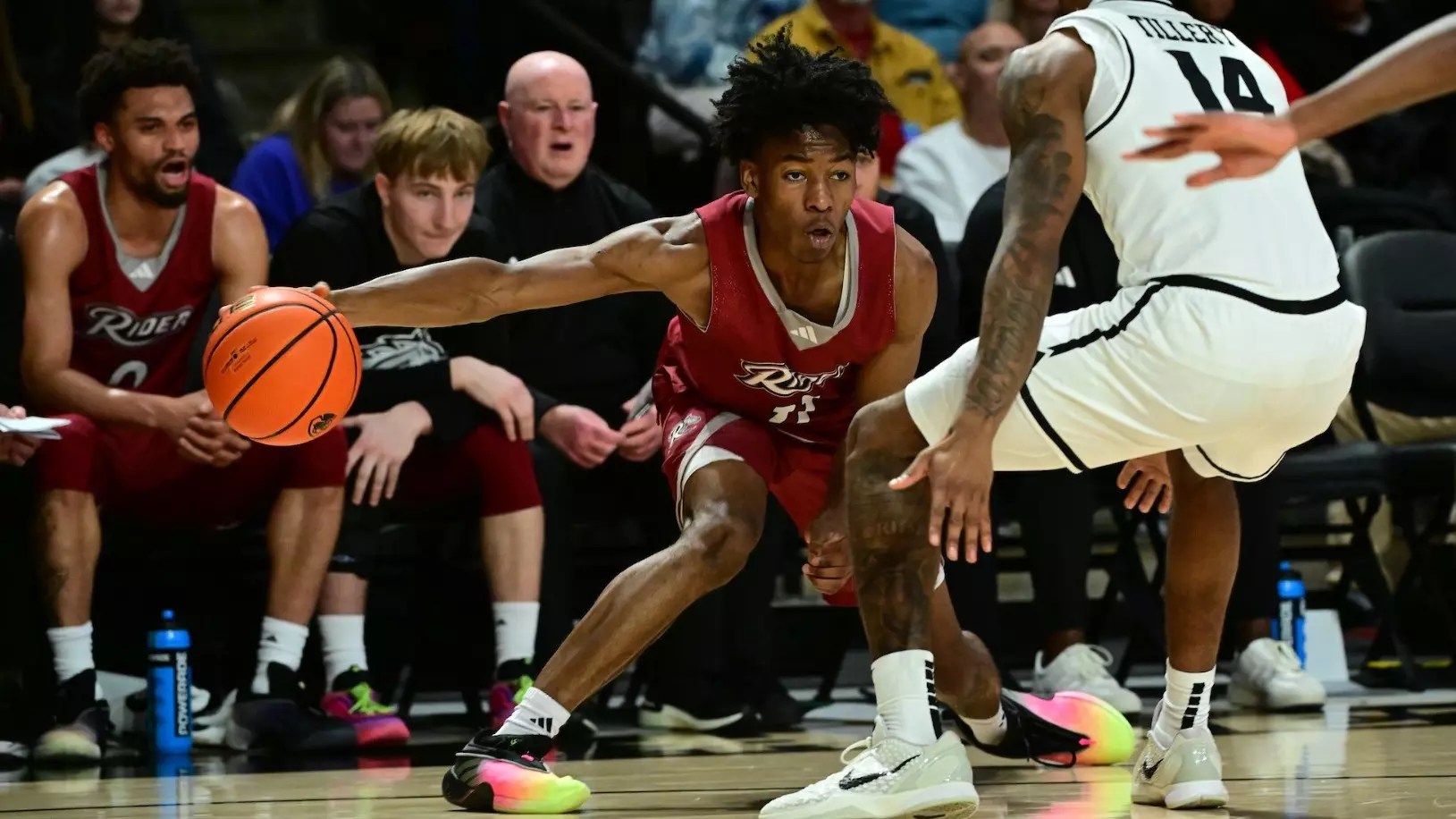
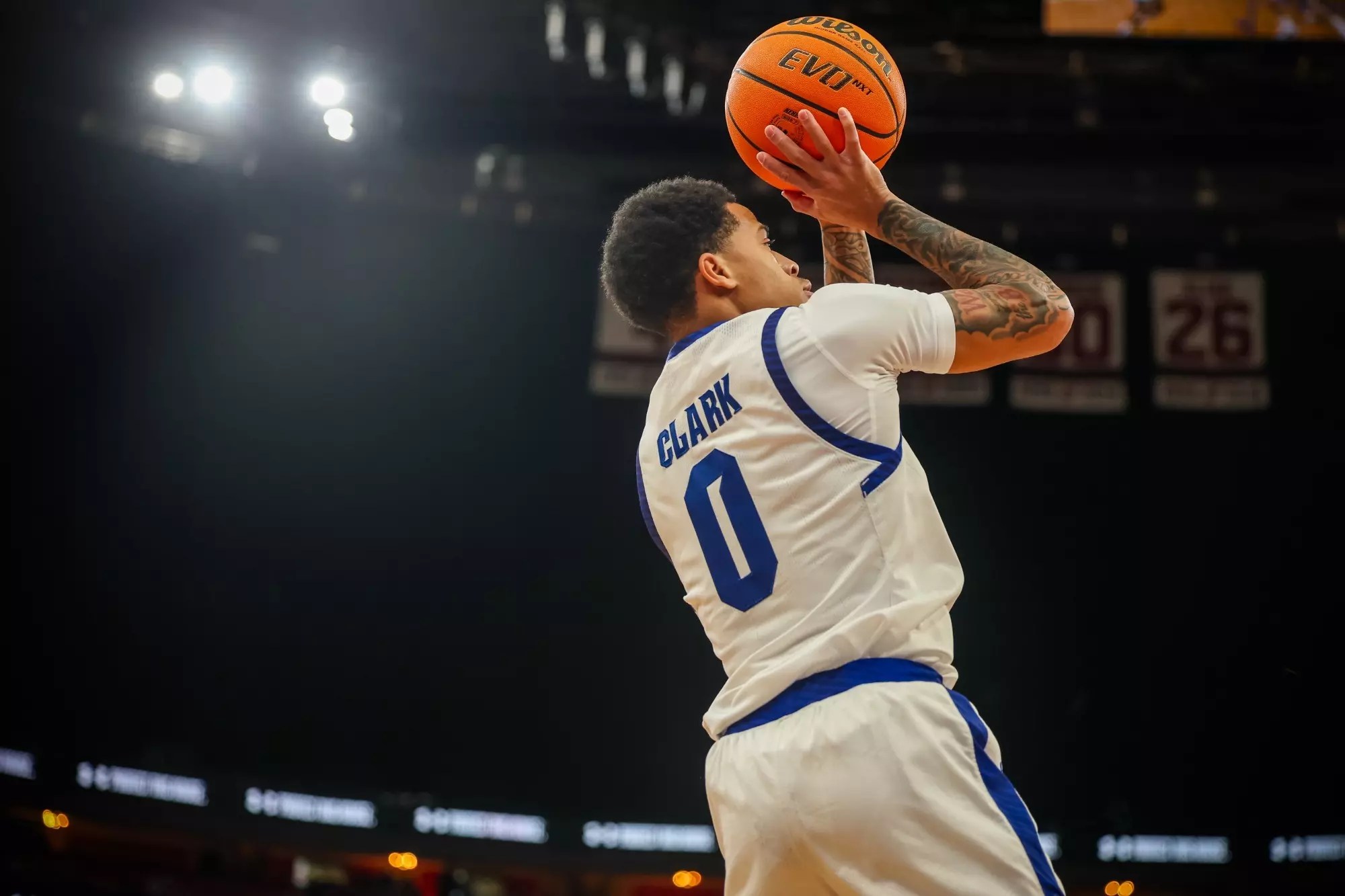
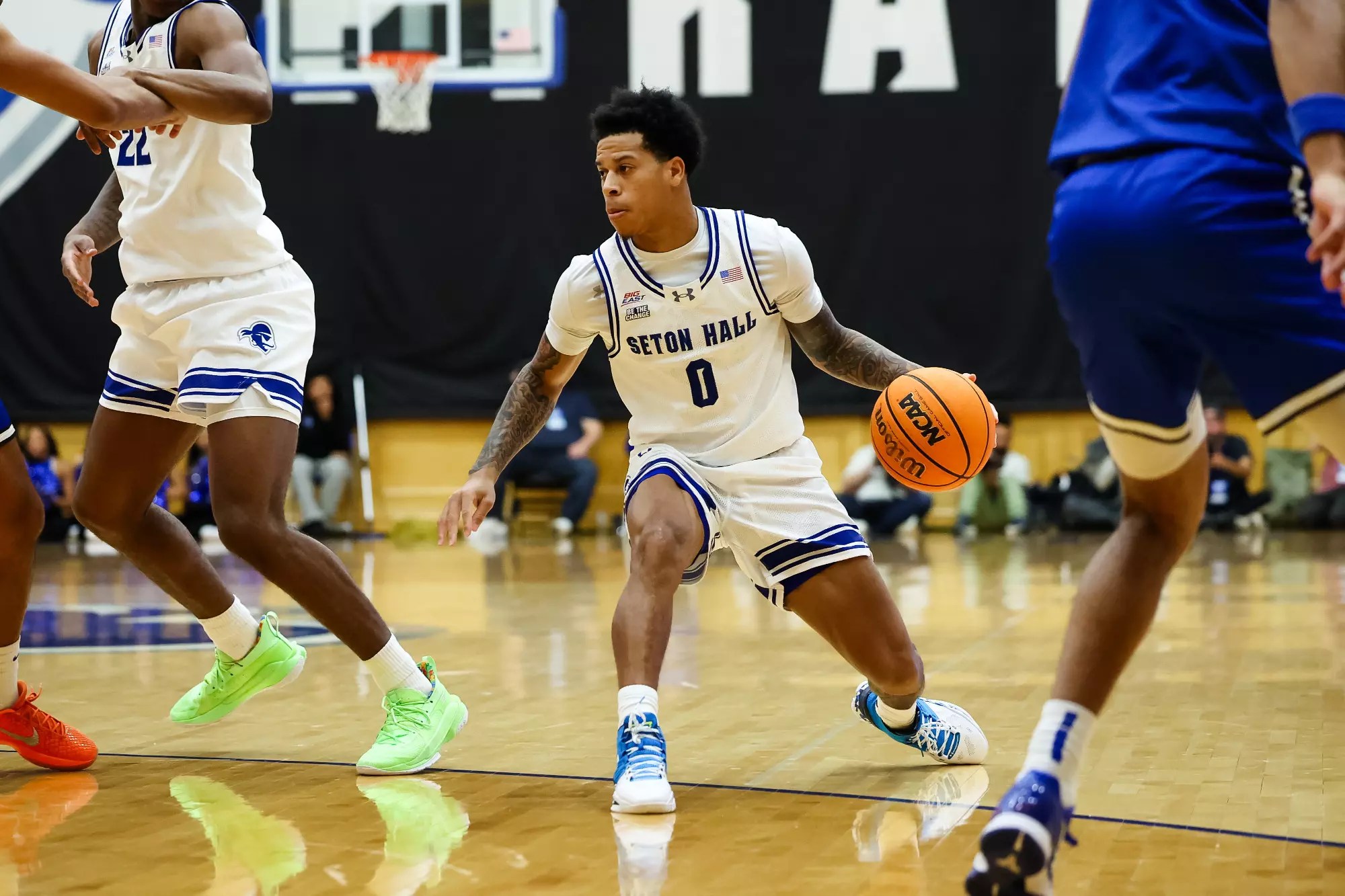
Flash Burton, Rider sophomore guard

The High-Major Calculus: Buying Wins and Building Brands

From the perspective of the nation’s basketball blue bloods, buy games are a rational and efficient investment. They represent a controlled environment to integrate new players, experiment with lineups, and build team chemistry without the immediate threat of a season-damaging loss. In an era where a missed NCAA tournament can mean a significant financial and reputational setback, these guaranteed wins help ensure that a team’s resume is robust enough to catch the eye of the selection committee come March. 

Here’s a breakdown of how many teams from each of those conferences (ACC, Big Ten, Big 12, SEC) made the 2025 men’s NCAA basketball tournament. 

ConferenceNumber of teams in 2025 NCAA Tournament
ACC4
Big Ten8 
Big 127 
SEC14 

The financial outlay, while substantial, is a manageable line item for Power 4 conference schools, which boast operating revenues averaging $97 million in the ACC, for example. For them, the cost of a buy game is easily offset by the revenue from a single home game, which includes ticket sales, concessions, and sponsorships. Furthermore, in the new world of revenue sharing and Name, Image, and Likeness (NIL), where schools are directing $20.5 million annually directly to athletes, the pressure to maintain a winning program—and the financial windfall that comes with deep tournament runs—has never been greater. A successful season built on a foundation of early wins helps drive the brand engagement that underpins these massive financial operations.

Khali Horton, Coppin State junior forward

The Low-Major Struggle: Survival and Sacrifice

For low- and mid-major programs, the decision to be a “buy team” is a Faustian bargain, balancing financial survival against competitive integrity. The revenue from these games is often the difference between solvency and severe cutbacks. As detailed in a 2020 report, the University of Montana projected a $5 million shortfall in its athletic budget, making the $75,000 to $95,000 earned from a single buy game against a Power 4 school a critical part of its financial planning. This money is used not for luxuries, but for fundamental needs—subsidizing coaching salaries, funding travel for conference play, and paying for equipment

However, this financial lifeline comes at a steep cost.

  • The Psychological Toll: Teams are conditioned to accept losing as a prelude to their “real” season—conference play. This can be demoralizing for players and coaches who, despite their talent and preparation, are thrust into mismatches night after night.
  • The Physical Toll: The travel is often grueling. Montana’s team, for instance, sometimes endures trips through two or three airports to reach a game, or marathon 13-hour bus rides to save costs, all while facing the prospect of a lopsided defeat.
  • A System of Dependence: This model creates a dependency, making it difficult for these programs to escape their subordinate status. The financial incentive to schedule these games can outweigh the competitive incentive to build a balanced schedule that could lead to more wins and long-term growth.
Kevin Baggett, Rider Head Coach

The Sacrifice: A Schedule Built on Blowouts

The brutal reality of this bargain is etched in the season records of teams like Coppin State and Rider University. Consider Coppin State’s schedule heading into its recent game against Rider:

  • vs Maryland: L 83-61
  • @ La Salle: L 87-59
  • @ James Madison: L 84-70
  • @ South Florida: L 100-50
  • vs Central Michigan: L 82-59
  • vs South Alabama: L 72-62
  • vs Central Penn: W 103-62 (a non-Division I opponent)
  • @ VCU: L 101-58

Rider’s path was similarly grim before the two teams met:

  • @ Virginia: L 87-53
  • @ Rutgers: L 81-53
  • vs Eastern: W 86-54 (a non-Division I opponent)
  • @ Texas: L 99-65
  • @ Houston: L 91-45

These are not just losses; they are systematic dismantlings. The differences in athleticism, strength, and size are so vast that the games become less a contest and more an economic exercise. For the players on the losing end, it is a grueling and demoralizing rite of passage, a season that begins with accepting defeat as a precursor to their “real” season in conference play.

The Coaching Conundrum: A Career Stuck in Quicksand

This system creates a particularly vexing problem for ambitious low-major coaches. Their career advancement depends on winning percentages and postseason success. Yet, they are forced to begin every season with a gauntlet of near-certain losses, cratering their overall record before they ever play a peer opponent.

How can a coach prove their program-building mettle when their team is structurally scheduled to start 0-7? The buy game phenomenon acts as a ceiling, trapping talented coaches in a cycle where achieving a strong winning percentage is a mathematical improbability. Their resumes are hamstrung from the outset, making the leap to a higher-profile job significantly more difficult, regardless of their actual coaching acumen.

An Ecosystem at a Crossroads

The buy game system is a microcosm of the broader inequities in college athletics, a landscape where the financial disparity is staggering. A single Power 5 conference, the SEC, generated $1.89 billion in revenue in 2018, a figure that eclipsed the $1.38 billion generated by the entire Football Championship Subdivision, a group of over 100 schools that includes many low-major basketball programs. This chasm is now being codified in new ways, as the advent of revenue sharing and large-scale NIL deals creates what some have called a “pay for play” tier, potentially relegating mid- and low-majors to a permanently lower competitive status.

The pros and cons from each perspective can be summarized as follows:

PerspectiveProsCons
High-Major Program– Nearly guaranteed victories for record-building – Low-risk environment for team development- Protects lucrative postseason prospects– Financial cost of guarantee payments – Risk of player injury in a mismatch- Can be criticized for lack of competitive scheduling
Low-Major Program– Essential revenue for athletic department survival ($600k+/season) – Funds travel, salaries, and operational costs – Opportunity for players to compete in a high-profile environment– Demoralizing starts to the season (0-7, 1-8 records) – Grueling travel and physical toll on players – Perpetuates a cycle of financial and competitive dependency

Yet, even as this system entrenches inequality, it is also being challenged by the same market forces that sustain it. Low-major programs are being forced to find creative revenue streams, from hosting concerts in their facilities to pursuing novel licensing deals for branded merchandise. Some analysts argue that the coming restructuring of college sports might, ironically, offer these schools a way out—freeing them from an unwinnable financial arms race and allowing them to refocus on their educational mission.

Zion Cruz, Rider senior guard

The Distortion: Who Are We, Really?

Perhaps the most subtle yet damaging effect of the buy game system is the competitive distortion it creates. When Coppin State and Rider finally faced each other, they did so with a combined 2-12 record. Their lone wins came against non-Division I schools.

They had no true idea how good or bad their teams were. How do you gauge your defensive schemes after being overwhelmed by Virginia’s size or Houston’s speed? How do you assess your offense after facing defenses with a level of length and athleticism you will never see in your own conference? The games against high-majors are so different in kind, not just degree, that they offer little actionable data for the games that ultimately matter—the conference matchups that determine a chance at the NCAA tournament.

An Uneasy, Enduring Symbiosis

Despite its clear downsides, this ecosystem is remarkably stable. The high-majors have no incentive to change a system that provides them with wins, revenue, and a soft launch to their season. The low-majors, trapped by financial necessity, cannot afford to walk away from the checks.

The buy game is the purest expression of college basketball’s economic hierarchy. It is a transaction that funds dreams at one school by monetizing the competitive hopes of another. For every check that clears, a season is warped, a coach’s record is tarnished, and a team is left to wonder about its own identity until it finally steps onto a court against an opponent its own size. The games will go on, the standings will tell two different stories, and the unspoken bargain will continue to define the sport, for better and for worse.

A Philly Basketball Reunion in the Heart of the Former Confederacy

RICHMOND, VA – In the echoing concourses of the Stuart Siegel Center in Richmond, Va., a near-capacity crowd roared for the home team, Virginia Commonwealth University. The spectacle was modern college basketball: a hyped-up student section, a relentless pace, and a Rams program that has become a national brand. Yet, for those with a discerning eye for the game’s deeper currents, the most compelling story was not on the court, but on the sidelines. It was, improbably, a story of Philadelphia. As Coppin State battled VCU, six men with the City of Brotherly Love etched into their sporting DNA patrolled the hardwood—a poignant testament to both the enduring export of Philly hoops intellect and a glaring institutional failure back home.

Phil Martelli, Jr., VCU Head Coach

A City’s Storied Legacy, A Modern Exodus

Philadelphia has long considered itself, and rightfully so, a center of the basketball universe. From the pioneering Tarzan Cooper to the sharp shooting Paul Arizin, the monumental Wilt Chamberlain, the poetic Earl “The Pearl” Monroe, the relentless Lionel Simmons, the prolific Kobe Bryant and the current phenom Jalen Duren, the city’s pipeline of talent is the stuff of legend. Yet, this rich history has rarely translated to a southern collegiate migration, with a few notable exceptions like Gene Banks (Duke) and Rasheed Wallace (North Carolina). Philadelphians, it seems, often make their mark elsewhere. Tragically, this now includes their coaches, while the college game in their own city languishes.

Larry Stewart, Coppin State Head Coach

The Palestra’s Fading Echo

The streamers that once rained down after the first basket at the Palestra feel like a relic from a different century. The Big 5, that once-sacred round-robin, is a shadow of its former self, with programs struggling to fill arenas and recapture the city’s imagination. The intense passion that once defined the college game here has largely decamped to the overheated gyms of the Catholic and Public Leagues, where high school basketball now serves as the true keeper of the flame. Yet, despite this local decline, Philadelphia continues to produce a long line of coaches who understand the game’s grit and nuance.

Ryan Daly, VCU Assistant Coach

The Sidelines of Richmond: A Who’s Who of Philly Hoops

And so, we found them in Richmond. Coppin State was led by Head Coach Larry Stewart, a product of the Philadelphia Public League’s Dobbins High, who carried that Philly swagger to become an NBA player and a Coppin legend. His bench included his brother, Stephen Stewart, another Public League alum, and Terquin Mott, who began his collegiate career in the Big 5 at La Salle. Across the floor, VCU’s staff was equally Philadelphian. Head Coach Phil Martelli, Jr., and his brother, Jimmy, literally grew up in a locker room at St. Joseph’s, weaned on the parochial intensity their father, Phil Sr., embodied for decades. Completing this brotherhood was Ryan Daly, whose grandfather and father built their own legacies within the city’s Catholic League and on Hawk Hill. The connection even extended to the court, where three Philly kids—Coppin’s Baasil Saunders and Nelson Lamizana, and VCU’s Ahmad Nowell—saw action, proving the city-to-Richmond pipeline remains open for players, too.

Stephen Stewart, Coppin State Assistant Coach

A Lopsided Score, A Resonant Symbol

The final score—a 101-58 VCU rout—was not competitive. But the result was almost irrelevant to the night’s deeper narrative. For one night, the Yankees had taken full control of the basketball world in the former capital of the Confederacy. Here was a collective basketball IQ, forged on Philly’s blacktop and in its legendary leagues, being deployed over 250 miles from City Hall. The irony is as thick as a winter coat in February: these men, steeped in the very culture that could revitalize the city’s moribund Division I programs, are plying their trade anywhere but there.

Jimmy Martelli, VCU Assistant

The Case for a Homecoming: Tradition as a Strategic Asset

The case for their return is not one of mere nostalgia; it is a strategic imperative. Philadelphia is a unique town for collegiate athletics. The six programs, with the possible exception of Villanova, are not in a position financially to compete with Power 4 schools in the bidding wars of the NIL and transfer portal era. They cannot simply buy talent. They have to sell something else to prospects and their families: an identity, a legacy, a home. That something else must be the tradition of Philadelphia basketball and the lifelong love and support of its fiercely passionate community—a love that was on full display, of all places, in Richmond, Virginia.

Terquin Mott, VCU Assistant

The six Division I programs in Philadelphia have lost their connection to the lifeblood of the city’s basketball ecosystem. Who better to rebuild the walls than those who know the foundation? Who better to recruit the next Jalen Duren or Lionel Simmons than a Larry Stewart, who walked the same path from the Public League to professional glory? Who better to instill a forgotten identity than a Martelli, whose name is synonymous with Philadelphia basketball resilience? Or a Ryan Daly, whose family tree is rooted in its very soil? These coaches wouldn’t just be drawing up plays; they would be selling a birthright, something no other program can offer a young recruit from Philadelphia.

Baasil Saunders, Coppin State guard

An Indictment and a Path Forward

The exodus of this coaching talent is a quiet indictment of the city’s athletic departments. It reveals a failure to recognize that the solution to reclaiming Philadelphia’s college basketball soul may not be in a flashy, out-of-town hire, but in embracing the proven, passionate individuals it has already produced. The passion was in Richmond last night. The knowledge was on those sidelines. The players who could be the cornerstones of a local revival are already here, playing in those packed high school gyms. It’s time for Philadelphia’s programs to look south, to look within, and finally bring that Philly fight back home where it belongs.