by Delgreco Wilson, M.A.
First in a series on youth falling through the cracks.
CAMDEN, NJ – For more than three decades, I have worked on the front lines of America’s urban communities, walking alongside hundreds of young people as they navigated the treacherous passage from adolescence to adulthood. It has been the privilege of my life. I have watched young men and women from the toughest blocks of Philadelphia, Chester, Baltimore, and Camden ascend to heights that the statistics said they never would. They have become lawyers arguing before federal judges, police officers patrolling the very streets they grew up on, and teachers returning to classrooms they once felt invisible in. They have become doctors, nurses, plumbers, auto mechanics, postal workers, and sanitation workers. They have launched businesses as entrepreneurs, negotiated multi-million-dollar deals as sports agents, and taught the next generation as college professors. I have cheered from the sidelines as they stepped onto NBA courts, into WNBA arenas, and onto NFL fields, and I have watched them rise into NBA front offices with the power to reshape an industry. Their stories are testaments to resilience, to the transformative power of intervention, and to the undeniable potential that lies within every child, regardless of zip code.
But this essay is not about them.

This essay is about the others. The young boys and girls who are falling through the cracks, becoming entangled in the criminal justice system while still in middle and high school. These are the youth I could not reach, the ones who haunt my quiet moments. They are the 14-year-old facing an armed robbery charge in Camden, the 16-year-old in West Baltimore awaiting trial for a shooting he committed out of fear, the 15-year-old girl in North Philadelphia whose childhood was stolen long before she picked up her first weapon. For too long, our public policy discussions have oscillated between two poles: celebrating the exceptional success stories or condemning the failures as irredeemable. What we have lacked is analytical attention—rigorous, unflinching, and compassionate—focused on the complex machinery that produces these tragic outcomes. This essay, the first in a series, aims to spark that renewed public policy discussion. It is an attempt to map the unforgiving architecture that shapes the lives of these young people, so that we might finally muster the collective will to tear it down.
In the hollowed-out blocks of North Philadelphia, along the tense corridors of West Baltimore, and amid the post-industrial stillness of Camden, a grim arithmetic governs the futures of too many Black and Brown teenagers. We have grown accustomed to framing their encounters with the justice system as moral failings—a deficit of character or a collapse of cultural values. But this framing is not merely incomplete; it is a form of societal evasion. To truly understand why a 15-year-old picks up a gun or robs a corner store, we must look not at the mythology of the “super-predator,” a toxic phrase rightly relegated to the dustbin, but at a convergence of distinct, crushing forces that operate with the precision of a vice. Research confirms what these neighborhoods scream in silence: risk factors for delinquency rarely act in isolation. They compound, layer upon layer, until a young person’s likelihood of engaging in antisocial or criminal behavior becomes not an aberration but a statistical probability.
The Internal Storm
The first pressure point resides within the adolescent’s own neurological and psychological landscape, often before they are old enough to articulate their pain. In under-resourced urban clinics, impulsive behavior is rarely just a phase; it is frequently an undiagnosed and untreated condition like ADHD burning through a child’s capacity for self-regulation. When a boy in Camden acts on a thrill-seeking impulse without calculating the consequence—a retaliatory shooting, a sudden theft—we are often witnessing the collision of biology and environment. This cognitive short-circuit is compounded by academic alienation. A teenager reading three grade levels behind in a Baltimore City Public School does not simply have a “learning gap”; he experiences a daily, soul-crushing humiliation. The classroom, which should be a sanctuary, becomes a theater of failure. In response, the psyche constructs a hard shell of antisocial logic and emotional numbness. Empathy becomes a luxury that a drowning boy cannot afford; it is a muscle that atrophies when survival mode is perpetually activated. These individual deficits do not exist in a vacuum—they are the kindling that family chaos, peer pressure, and neighborhood violence are all too ready to ignite.

The Fractured Sanctuary
The individual psyche is shaped first in the crucible of the home. For many of these children, the door to their apartment or row house does not close on a refuge but on a secondary site of chaos. The domain of family dynamics is frequently the most significant predictor of future delinquency, and it is here that the cycle of trauma turns most ruthlessly. The issue is rarely a lack of love, but a corrosion of consistency. A mother stretched to breaking point by poverty may oscillate between harsh, explosive discipline and neglectful absence, leaving a child with no internal map of stable boundaries. Worse still is the terror of witnessing domestic violence or suffering direct abuse—experiences that drench the developing brain in stress hormones, forging a hyper-vigilant, aggressive response pattern that neurologically mirrors combat trauma. When criminality or substance abuse is the ambient background noise of a household, the unspeakable happens: the abnormal becomes normal. The fence separates from the family business, and the moral barrier between the living room and the street evaporates. A child emerging from such a home does not enter the world neutral; they enter it primed for the gravitational pull of the street.
The Gravity of Belonging
Once the foundation of family is fractured, the search for identity and protection becomes an urgent, life-or-death project. Adolescence is a desperate hunt for belonging, a hunt that does not pause for poverty. In environments where the legitimate markers of success—a diploma, a career, stability—feel like mirages, the street hierarchy fills the void with immediate, visceral rewards. Deviant peer association is not just negative influence; it is a survival strategy. For a young man in Philadelphia watching his peers gain money, respect, and safety through crew affiliation, the statistical risk of joining them seems an abstract problem compared to the immediate danger of standing alone. Gangs serve as the most ruthless and efficient merchants of identity, offering the unconditional protection of a brotherhood in exchange for the soul. They provide a devastatingly complete psychological package: a name, a uniform, an economic function, and an enemy to define oneself against. It is within this crucible of peer loyalty and violent rivalry that a particular art form has emerged, one that both documents this world and, critics argue, deepens its hold.

The Soundtrack of the Streets
This brings us to one of the most contentious dimensions of the conversation: the role of drill rap. Born in the tough neighborhoods of Chicago and echoing powerfully through the streets of New York, London, and beyond, drill music is a subgenre characterized by aggressive, trap-style beats and unflinching lyrics that chronicle street life with documentary precision. To its defenders, drill is a raw, creative outlet—a modern-day reporting from the front lines of America’s abandoned zip codes. The artists are not inventing the violence; they are holding up a bloodied mirror to the socio-economic realities and systemic neglect that already consume their communities. Yet, to its critics and to law enforcement agencies across the country, drill is not merely a chronicle. It is a provocation. The genre has become a legal and cultural battleground, and understanding its role demands that we hold two contradictory truths in tension: drill rap does not cause the conditions of juvenile delinquency, but it has become deeply entangled with the proliferation of delinquent behavior in ways that demand honest scrutiny.
The entanglement begins with what researchers call the “causal claim” debate. Police departments and prosecutors, from Chicago to Baltimore, argue that drill music actively glorifies, promotes, and even incites retaliatory gang violence. They point to the phenomenon of “diss tracks,” where artists taunt deceased rivals with gruesome specificity, sparking cycles of real-world retribution. This has led to the deeply controversial tactic of “putting lyrics on trial,” where a defendant’s drill lyrics, music videos, and social media presence are presented to juries as confessional evidence of gang membership or involvement in violent crimes. A teenager’s artistic persona, crafted for clout and algorithmic virality, suddenly becomes Exhibit A in a criminal proceeding, blurring the line between performance and reality in ways that many legal scholars find deeply prejudicial. The result is an intensified policing apparatus that monitors drill artists, removes YouTube videos en masse, and issues court orders banning young men from making certain music or associating with specific individuals. The art is treated as the crime itself.

But does the music cause the violence, or does the violence cause the music? The evidence leans heavily toward the latter. The socio-economic variables we have already laid out—neighborhood disadvantage, family trauma, academic failure, gang involvement—are the fuel. Drill rap is the engine that converts that fuel into a highly visible, often monetized cultural product. It chronicles the reality; it does not invent it. However, to dismiss the music as merely a neutral mirror is to ignore a more uncomfortable dynamic. Drill rap glorifies an anti-establishment, “glorious outlaw” identity, one that actively challenges traditional penal systems and rewards posturing. In a world where a young man feels invisible, the viral success of a drill video offers a potent, intoxicating currency: fame, fear, and respect. The algorithm does not reward nuance; it rewards the most incendiary, nihilistic content. This creates a feedback loop. A teenager who might have only lived on the periphery of gang life finds that adopting its most lethal postures online brings him the validation he has been starved of everywhere else. The art form, then, does not initiate the delinquency, but it can accelerate and entrench it, turning neighborhood conflicts into performative spectacles that demand real-world escalation to maintain credibility. The music becomes both a lifeline of expression and a tether to a violent identity from which it becomes increasingly difficult to escape.
The Suffocating Environment
Encasing all these layers—the psychological deficits, the family fractures, the peer gravity, and the cultural soundtrack—is the suffocating weight of environmental and economic despair. The zip codes of Camden, West Baltimore or Kensington in Philadelphia are not just backdrops; they are active, aggressive participants in the production of crime. Concentrated neighborhood disadvantage creates what criminologists call a “criminogenic environment”—a landscape where abandoned factories and boarded-up homes broadcast a message of societal abandonment louder than any sermon or textbook. When legitimate opportunity structures collapse, illicit economies don’t just emerge; they become the only rational industry. The concept of “routine activity” explains the terrifying randomness of this trap: when you concentrate thousands of unsupervised, disconnected youth into spaces with no youth centers, no functioning pools, no library hours, and no guardianship, criminal opportunities do not need to be sought out. They occur on the corner, at the bus stop, in the stairwell. The crime is not always born of malice, but of sheer proximity to a vacuum. It is from this vacuum that the most unflinching drill lyrics emerge, because the artists are simply describing what surrounds them every single day.
The Compound Effect
Here, then, is the essential truth: none of these variables acts alone. An impulsive, traumatized child does not inevitably become delinquent. An impulsive, traumatized child who is failing in school, whose parent is incarcerated, whose only source of protection is a neighborhood gang, and who finds his only voice in a drill rap scene that rewards hyper-violent posturing—that child is not a statistical anomaly. He is the predictable product of a compounding equation. The Department of Justice’s research on the causes and correlates of delinquency confirms that risk factors multiply rather than simply add up. Each layer of disadvantage magnifies the impact of the others, creating a downward spiral that individual willpower alone cannot reverse. This understanding exposes the folly of our current punitive responses. We cannot incarcerate our way out of ADHD, nor can a police officer solve the crisis of a child who has never known a stable adult. We cannot silence our way out of a cultural movement born of systemic pain. The young Black and Latino men navigating these unforgiving streets—and soundtracking their lives with the unflinching verses of drill—are not alien life forms; they are mirrors reflecting an architecture of neglect we have all agreed to sustain. The music is a symptom, an amplifier, and a cry for help all at once. Until we tear down that architecture, brick by hardened brick, the cycle will not break, because the math of cause and correlation will remain ruthlessly intact.


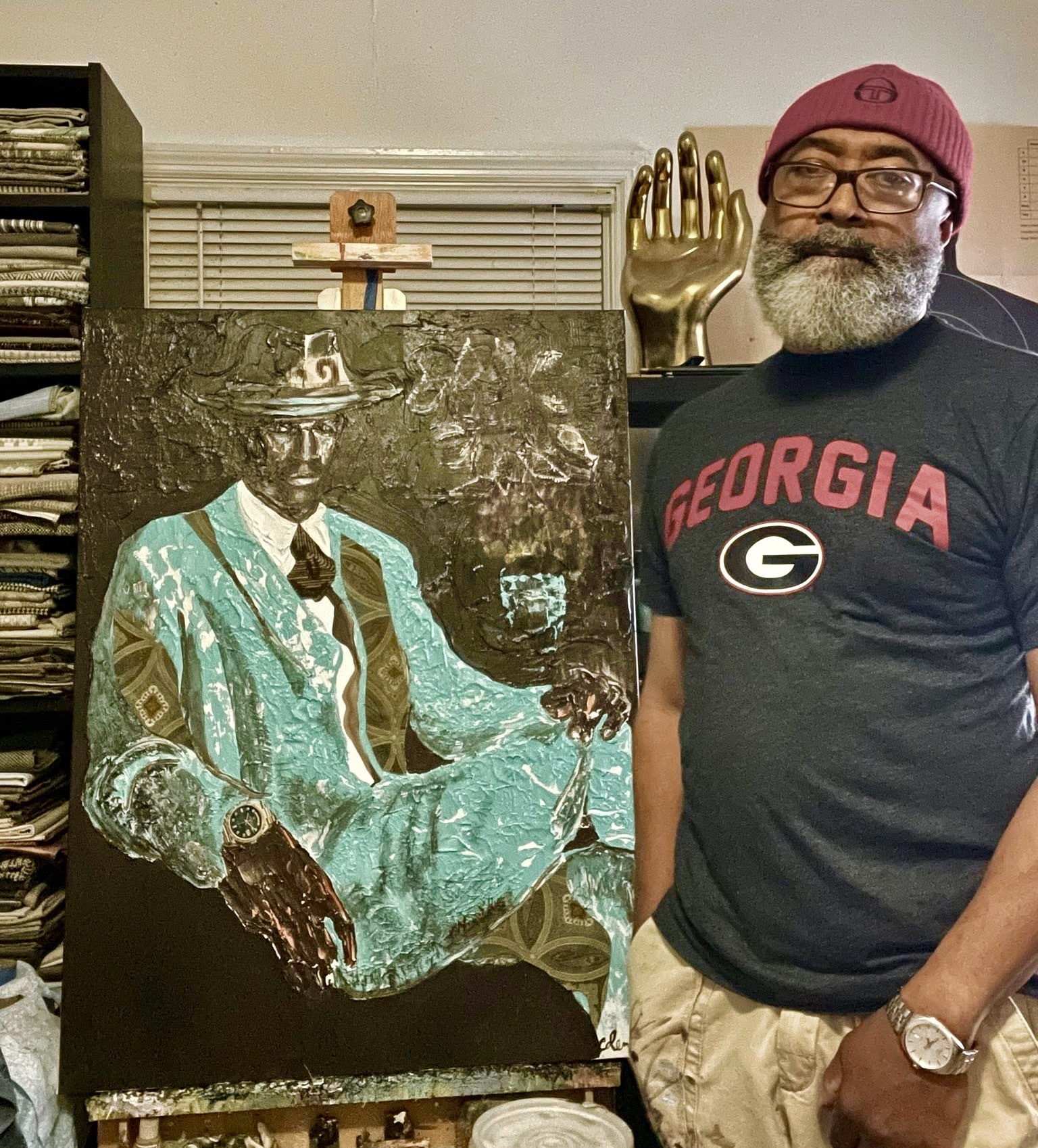



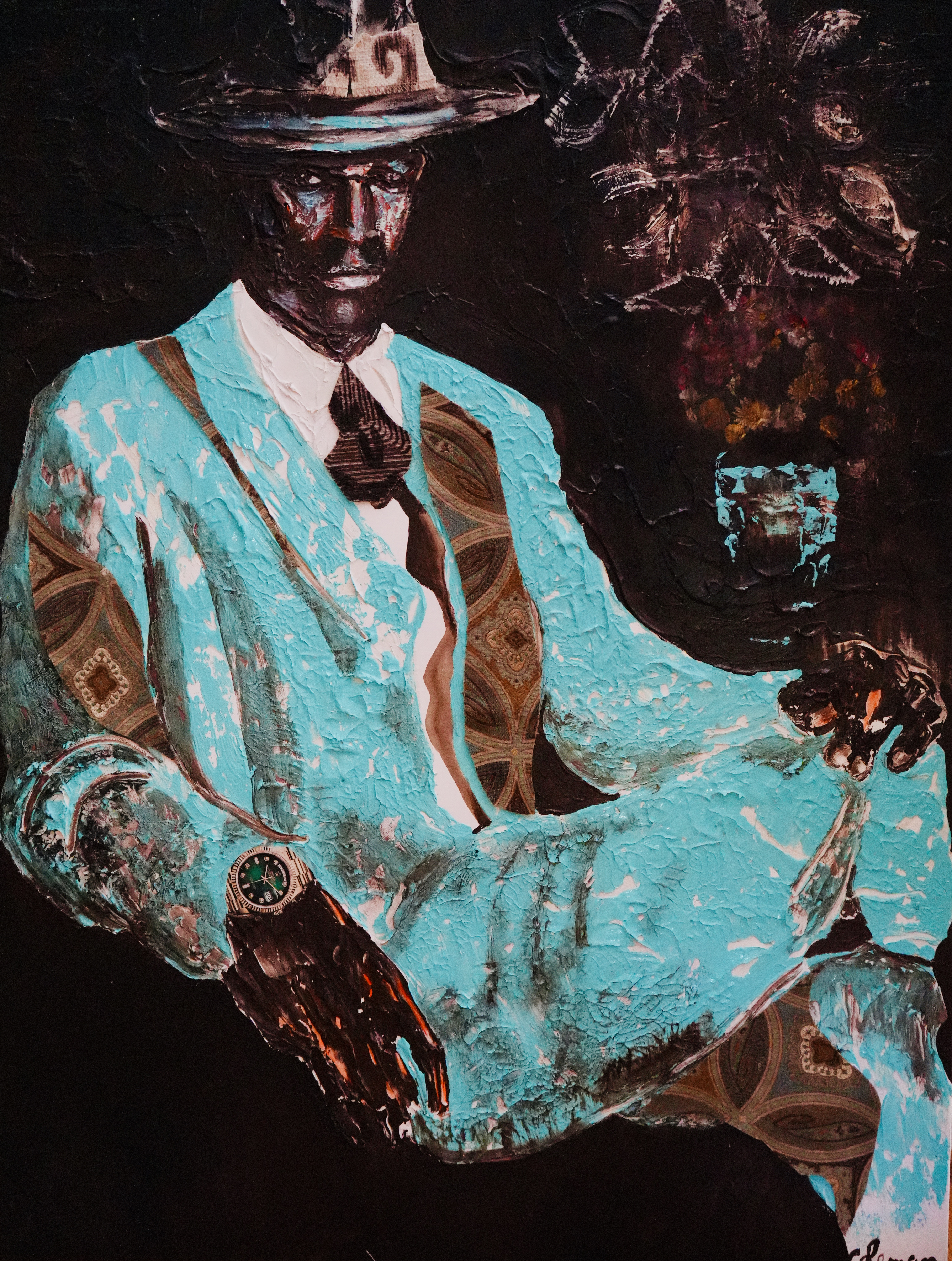
 The Black Cager