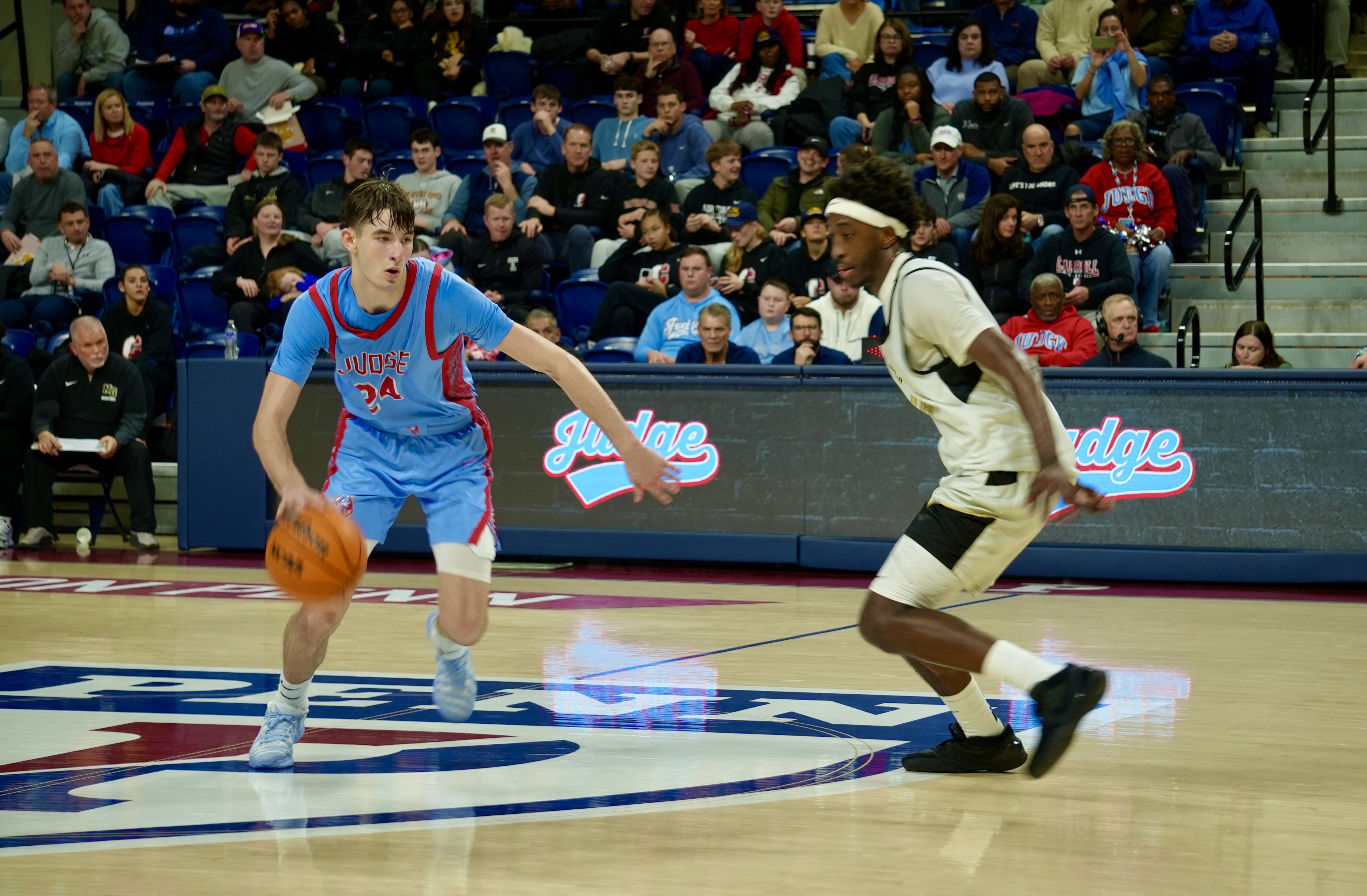
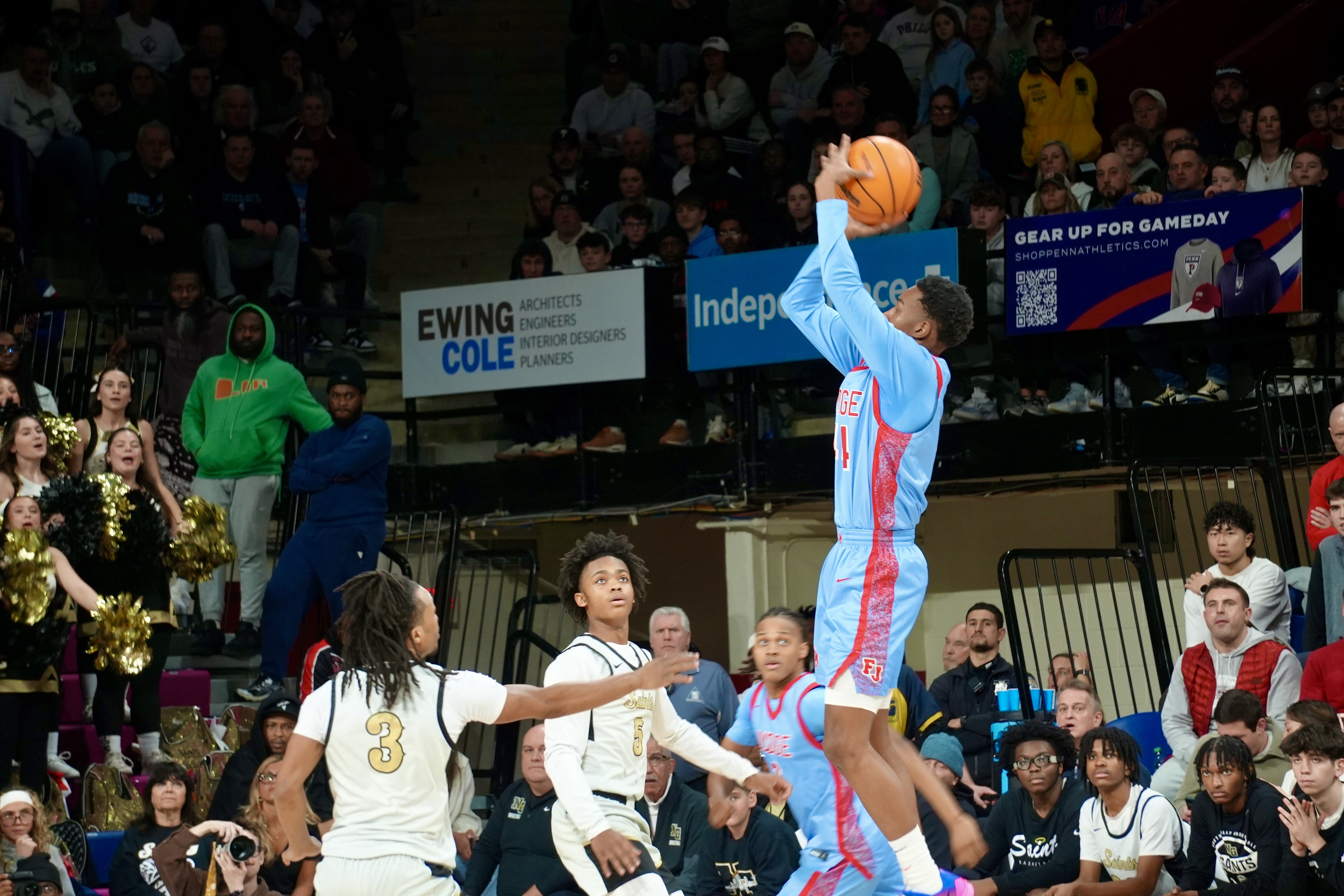
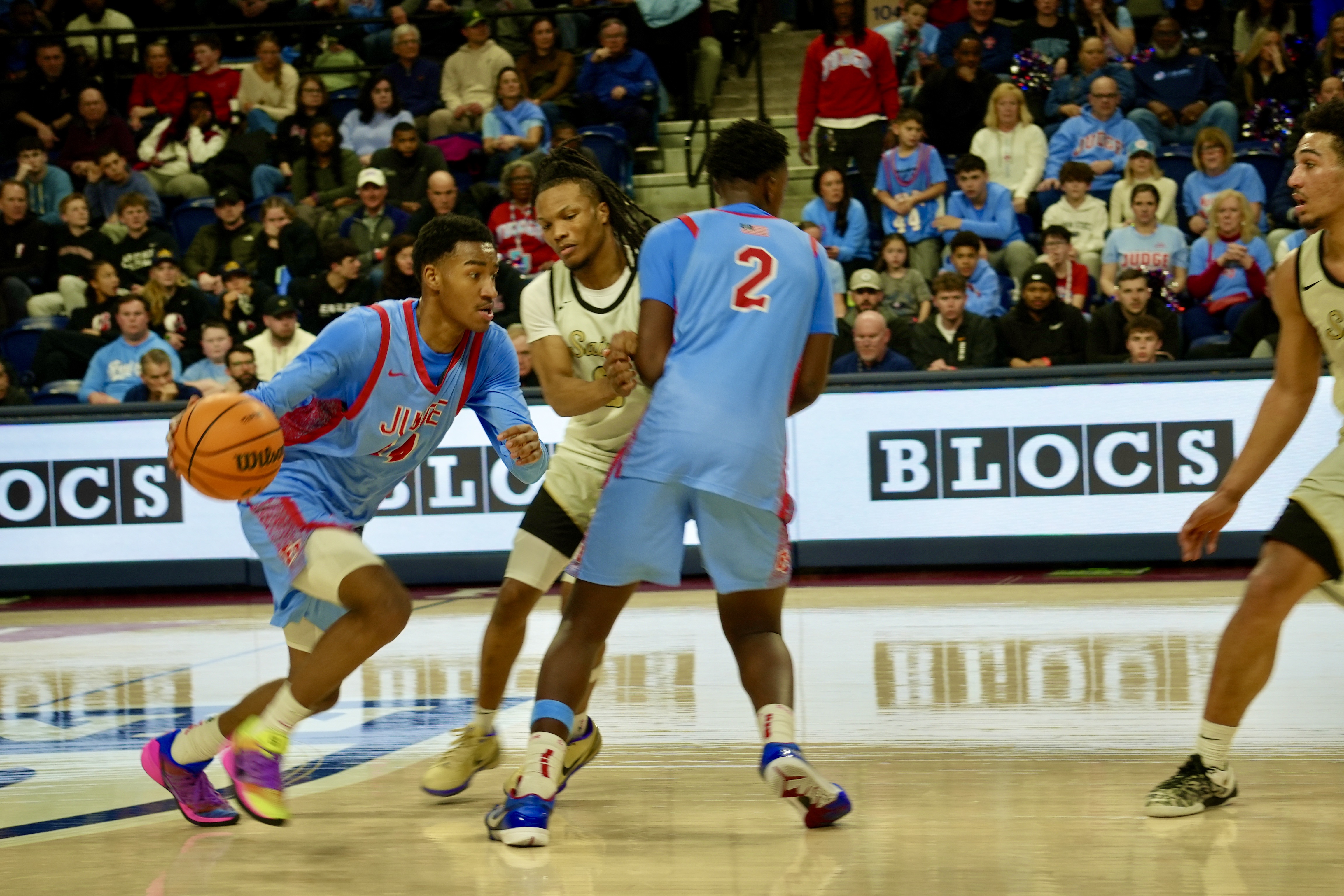
Neumann-Goretti Launches ‘Patron Saints’ to Preserve the Soul of Scholastic Basketball

PHILADELPHIA — In an era where the soul of traditional high school basketball is increasingly traded for national spotlight and transactional deals, one Philadelphia powerhouse is drawing a line on the hardwood of its home court. The Neumann-Goretti Saints boys’ basketball program today announced the launch of the “Patron Saint Donor Campaign,” a clarion call to preserve the last vestiges of Philly’s traditional scholastic basketball.

The campaign is not merely a fundraiser; it is an innovative and ncessary mobilization. It is a bid for reinforcements in a quiet but intensifying war for the very identity of the sport. For decades, elite basketball was forged in the crucible of local rivalry—in the packed, echoing gyms of neighborhood Catholic and public schools where the dreams were city titles, district crowns, and state championships. The heroes wore the names of their communities on their chests.

That era is fading. Today, the gravitational pull of national basketball academies, with their focus on individual rankings and nascent NIL empires, is siphoning talent from the historic bastions of the game. Iconic programs like Neumann-Goretti, Roman Catholic, DeMatha, Camden, Imhotep, and Chester—institutions that are pillars of their cities—find themselves battling not just for wins, but for their existential relevance.

Yet, Neumann-Goretti refuses to cede the court. The Saints continue to compete at the highest national level, consistently facing off against well-funded, coast-to-coast academies. Their strategy is not to emulate these new models, but to defeat them through the very traditions that built the program: deep local talent, ferocious team identity, and the unbreakable bond between a team and its community.

“This campaign is an innovative response to a national problem,” said Delgreco Wilson, Black Cager Sports. “Neumann-Goretti is not a franchise. It is a Philadelphia institution. To win this fight, they need the army that has always been their foundation: their community.”

The Patron Saint Donor Campaign offers basketball purists and Philadelphia loyalists a direct stake in this struggle.

For the 2025-26 season, a limited cadre of just 20 supporters will be enlisted as “Patron Saints.” A donation of $100 secures this enlistment, granting:

  • Free entry to all Neumann-Goretti HOME games, guaranteeing a seat at every battle, even sellouts against national opponents.
  • A distinctive Patron Saints t-shirt, a uniform of solidarity.\
  • A $10 coupon for the official team store.

“We are calling on anyone who loves what high school basketball was, and what it still should be,” said Assistant Coach Pat Sorrentino. “When you become a Patron Saint, you are not just buying a ticket. You are enlisting in the cause. You are helping to ensure that the future of this game isn’t shaped solely in impersonal academies, but continues to thrive on the home floors where passion is born and legends are made.”

The offer is intentionally exclusive, mirroring the prized, hard-fought nature of a spot on the Saints’ roster itself.

The mission is clear: to provide the resources for Neumann-Goretti to continue its dual quest—to hunt national titles while fiercely guarding the local, communal soul of the sport.

To learn more and to enlist as a Patron Saint for the 2025-26 season, visit the Neumann-Goretti Athletics website. All 20 spots are expected to be claimed swiftly by those who believe the fight is worth the price of admission.

###

About Neumann-Goretti High School: Neumann-Goretti High School, a Catholic secondary school in the Franciscan tradition located in the heart of South Philadelphia, has long been a national epicenter for basketball excellence. Its program is defined by a profound commitment to community, discipline, and the development of young men as both athletes and citizens, producing countless collegiate standouts and professional players.

A New National Home for Elite Development: Why Mt. Zion Prep is the Ideal Choice for the Next-Generation College Prospect

LANHAM, MD – For over eight decades, the New England Preparatory School Athletic Council (NEPSAC) has stood as the undisputed gold standard for elite high school basketball development. Born in 1942 from a need to coordinate athletics during the wartime disruptions of World War II, it has evolved into a highly competitive institution, sanctioning championships and attracting top talent from across the country. Its rigorous, postgraduate-friendly environment has become a non-negotiable proving ground for athletes with Division I aspirations.

Yet, the very landscape that created the NEPSAC’s prominence is shifting. As college programs, now more than ever, focus on the transfer portal for immediate help, the pressure on high school athletes to present as polished, college-ready products is immense. For a student-athlete from the Mid-Atlantic or the South, relocating to a New England boarding school has been the traditional price of entry for this level of competition. But what if you could access a program of identical intensity, exposure, and proven results without leaving your region? This is the proposition of Mt. Zion Preparatory School in Prince George’s County, Maryland.

Mt. Zion Prep offers the elite-level, postgraduate-centric basketball programming synonymous with the NEPSAC’s top tiers but delivers it from a strategically superior location and through a uniquely culturally fluent model. For the ambitious student-athlete from New York to North Carolina, it is not merely an alternative to a New England prep school; it is the next evolution of it.

Favour Ibe, ’26 – Offers from Alabama, Maryland, South Carolina, Villanova, Florida State and Georgia

The NEPSAC Blueprint: A Legacy of Competitive Excellence

To understand Mt. Zion’s value proposition, one must first appreciate the model it emulates and elevates. The NEPSAC is not a single league but a governing association for over 180 independent schools, organized into highly competitive classes like AAA, AA, and A. This structure creates a clear hierarchy of competition. As one college recruiting advisor notes, while class isn’t everything, playing in the top NEPSAC divisions signals to college coaches that a player is “battle-tested” against future college stars and under top-tier coaching.

The environment is deliberately structured for exposure. Events like the New England Prep Schools Showcase at Babson College and Avon Old Farms draw over 600 prospects and are mandatory stops for college recruiters. The association’s history of producing professional players and its allowance for postgraduate athletes—who use a “fifth year” to mature physically and academically—have cemented its reputation. Schools like Northfield Mount Hermon, Brewster Academy, and Worcester Academy are not just schools; they are national brands in player development.

Mt. Zion Prep

The Mt. Zion Advantage: Location, Access, and Modern Fluency

Mt. Zion Prep adopts this successful blueprint but recontextualizes it for today’s recruit. Its location in the Washington, D.C. metropolitan area is a foundational advantage, as shown in the table below comparing key regional benefits.

For a family in Philadelphia, Richmond, or Charlotte, Mt. Zion is a direct flight or a manageable drive away, not a journey to a remote New England campus. This proximity eases the transition for students and allows families to be more involved. More critically, it places the program at the crossroads of several of the nation’s most fertile recruiting grounds. Mt. Zion’s schedule is built not just for local competition but for national visibility, with easy access to elite events and tournaments across the Eastern Seaboard.

Beyond geography, Mt. Zion’s most profound innovation is its commitment to cultural fluency. In an era where teams are global melting pots, understanding how to navigate diverse backgrounds is no longer a soft skill; it is a core component of elite athletic development. The coaches and administrators at Mt. Zion are not just tacticians; they are mentors trained to help young men from all walks of life understand, navigate, and interact effectively with people from different cultural backgrounds.

This goes beyond basic awareness. It is the applied knowledge of how communication styles—verbal and non-verbal—vary across cultures. It is the empathy to appreciate diverse perspectives and the adaptability to adjust behavior in real time to foster genuine inclusion. For a young athlete from Brooklyn adjusting to life alongside a teammate from rural North Carolina or an international recruit, this supportive, intentionally cultivated environment is invaluable. It accelerates personal growth, builds unshakeable team chemistry, and prepares students for the diverse locker rooms and global societies they will encounter in college and beyond.

Rodrick Harrison, Mt. Zion Prep Head Coach

The Verdict for the Modern Prospect

The data is clear: to compete for Division I scholarships in the transfer portal era, a high school prospect must demonstrate proven ability against elite competition. The NEPSAC model has brilliantly provided this for generations. Mt. Zion Prep now offers that same crucible of competition—the demanding schedule, the postgraduate focus, the college-style environment—but from a more accessible geographic and cultural center.

For the talented player in New York, New Jersey, Pennsylvania, Delaware, Maryland, Virginia, or North Carolina who is ready to lead with purpose and rise to their fullest potential, the choice is increasingly evident. You can travel far from home to seek a proven model, or you can find its most advanced iteration, refined for today’s world, at your region’s doorstep. Mt. Zion Prep is not just another option; it is the strategic choice for the next-generation student-athlete determined to build a meaningful future on and off the court.

The Most Credible Messenger: Antwann Postell’s Legacy and a City’s Loss

PHILADELPHIA, PA – The death of Antwann Postell, announced this morning in Philadelphia, will not make national headlines. It will not trend on national social media, nor will it prompt statements from elected officials. Yet in the neighborhoods of West Philadelphia, where the constant hum of sirens and the echo of bouncing basketballs create a dissonant soundtrack to daily life, his absence rings with a profound and devastating silence. Postell, a mentor, coach, and a quiet force of redemption, was 35. His sudden passing leaves a void not easily measured in column inches, but in the lives of young men for whom he was a lifeline, a mirror, and a map.

Postell’s story was not one of unblemished virtue, but of hard-won transformation. He emerged over the past decade not as a saint, but as a stalwart—a quintessential “credible messenger” in a city that desperately needs them. He never hid nor minimized his past, including time served in a state penitentiary. In a world where at-risk youth have learned to expertly detect condescension and false promises from outsiders, this history was not a liability; it was the foundation of his authority. He was not a visitor from a safer, more privileged world coming to preach. He was a guide who knew the treacherous terrain because he had walked it, stumbled in it, and found a way out.

The Currency of Credibility

In the ecology of urban mentorship, theoretical advice is cheap. The currency that matters is credibility, earned through shared experience. For the young men on the cracked asphalt courts of West Philly, Postell possessed an enormous amount of this “street credibility.” His warnings about the swift, dead-end finality of violence or the soul-crushing grind of incarceration carried weight because they were not abstract lessons. They were etched in memory, written in the language of personal consequence. When he spoke of lost time and missed opportunities, he spoke from a place of profound, lived loss. This bypassed the reflexive skepticism of a teenager who has heard too many hollow sermons. It built a bridge of trust where other well-intentioned programs often find only a moat of distrust.

Postell understood, at a deep and intellectual level, that he was part of a critical socialization process. He knew the basketball court was more than a place to play a game; it was a powerful classroom. Under the rusting rims and fading lines, he taught the norms and values that sports can instill—teamwork over selfishness, discipline over impulse, resilience over surrender. He used the game to foster communication, leadership, and a sense of identity that wasn’t tied to a corner or a crew, but to a team. For young men often stripped of dignity by systemic neglect, he used the sport to rebuild self-esteem and forge a sense of belonging. It was a two-way process: he taught the game, and through their shared interpretation of its struggles and triumphs, they learned about life.

Heir to a Sacred Legacy

In this sacred work, Postell was one of the most prominent modern heirs to a legendary Philadelphia lineage. He walked in the footsteps of giants like Sonny Hill, Claude Gross, Tee Shields, Sam Rines, Sr., and James Flint—men who understood that coaching in this city was never just about developing players, but about building character and saving lives. They were the architects of an alternative infrastructure of care in neighborhoods where such structures are scarce. Postell took up that mantle, not in a lavish gym, but on the same streets where those legends started, tending to the same deep-seated needs with the same fierce, paternal love. He was a living link in a chain of mentorship that has held entire communities together for generations.

His death, therefore, is not merely the loss of one man. It is a rupture in that vital chain. It leaves a monumental void in the intricate and fragile support network that exists just beneath the official surface of the city. Who now will be there for the 3 a.m. phone call from a kid in crisis? Who will have the earned right to look a young man in the eye and say, “I’ve been where you are, and this path leads nowhere”? The institutional memory of how to navigate from despair to hope—memory held in one man’s heart and stories—is now suddenly, tragically, gone.

The Flicker of Hope He Leaves Behind

There is, perhaps, a fragile hope to be found in the nature of Postell’s work. His teachings were not kept in a manual but embedded in the hearts of those he coached. The real testament to his life will be if the young men he mentored—those who felt the grip of his hand on their shoulder, heard his blunt wisdom in a timeout huddle—can now step forward to keep his teachings alive. The true success of a credible messenger is not in creating dependents, but in creating a new generation of messengers. The legacy of Sonny Hill lives on in every coach who teaches more than a pick-and-roll. So too must Postell’s spirit live on in the next young man who chooses to put down a weapon and pick up a clipboard, who uses his own hard past to forge a safer future for the kid behind him.

Antwann Postell’s life was a testament to the radical power of second chances and the transformative potential of authentic, earned connection. His death is a stark reminder of how precious and precarious such forces are in our cities. We mourn not just a coach, but a cornerstone. And we are left with a pressing question for Philadelphia and every community wrestling with violence and lost youth: How do we identify, support, and protect the next Antwann Postell before his voice, too, is silenced? The game on the West Philly courts will go on. But the guiding voice from the sidelines, the one that spoke with the hard-earned authority of a life redeemed, is now heartbreakingly still.

Carrying the Weight of History: Why Black America Sees Itself in Shedeur Sanders

PHILADELPHIA, PA – To watch Shedeur Sanders play quarterback—with his pre-snap poise, his audacious no-look passes, his celebrated, unflappable “Shedeur Face”—is to witness more than a talented athlete. It is to observe a cultural reclamation project. His overwhelming support within the Black community, often chalked up simplistically to his confidence and swagger, is rooted in something far deeper than style. It is a profound, collective recognition. It is the applause of a community that sees in his assured success not just one man’s triumph, but a symbolic redress of a brutal, systemic history—a history whose scars are woven into the very DNA of Black American experience.

The Foundation: American Apartheid on the Playing Field
That history is an American Apartheid, a regime of exclusion not confined to the Deep South but sanctioned at the highest levels of national life, including the playing fields. From its inception in 1906 through the early 1970s, the NCAA operated as a gentlemen’s agreement for segregation, formally barring Black athletes from member institutions, particularly in the powerhouse conferences of the South. For seven decades, the Paul Robesons, Jackie Robinsons, and Jesse Owenses were brilliant, solitary exceptions proving a cruel rule. The Civil Rights Movement forced the gates open, leading to the rapid “tanning” of revenue sports by the 1980s. But the institutional response was not embrace, but a strategic recalibration of exclusion.

The Bureaucratic Barrier: When “Eligibility” Became the New Gate
When blatant segregation became illegal and immoral, the mechanisms of denial became bureaucratic. The NCAA’s evolving “initial eligibility” rules—Proposition 48, the Core Course requirements, sliding GPA scales tied to standardized tests—were weaponized as a more nuanced gate.
Legends like Georgetown’s John Thompson II and Temple’s John Chaney, towering figures who used their platforms without apology, called this what it was: racism. “The NCAA is a racist organization of the highest order,” Chaney declared in 1989, framing the rules as a new punishment for Black kids already punished by poverty. Thompson saw the cynical cycle: athletes were used as integration’s pawns under the guise of benevolence, then discarded with the same paternalistic logic when their numbers grew too great.

The Instinctual Knowledge: A Community Remembers What Was Lost
This is the buried trauma in the collective memory of Black sports fandom. It is the instinctual knowledge that for every Shedeur Sanders lighting up a Power 5 stadium today, there were countless Willie “Satchel” Pages, “Bullet” Bob Hayeses, and Doug Williamses of yesteryear who were denied the stage, their stats relegated to the glory of HBCU lore, their professional careers delayed or diminished. It is the understanding that the path was not cleared, but grudgingly conceded, inch by contested inch.

This brings us back to Shedeur. His journey is a direct rebuke to that entire historical project of exclusion.

Shedeur as Historical Agency, Not Just Athletic Talent
He began not at a traditional blue-blood program, but at Jackson State University, an HBCU, under his father’s tutelage. There, he didn’t just play; he dominated, showcasing a talent so undeniable it forced the mainstream to look to the HBCU, reversing the decades-long drain of talent from them. His subsequent transfer to Colorado and his record-shattering performance—37 touchdowns, 4,134 yards, Big 12 Offensive Player of the Year—wasn’t an assimilation. It was an annexation. He carried the HBCU-developed swagger into Boulder and made it the epicenter of college football.

His confidence, therefore, is read by the Black community as more than personal bravado. It is historical agency. It is the embodiment of a truth: “You could not keep us out forever, and now that we are in, we will not perform with grateful humility. We will excel with the unmistakable flair of those who know the cost of the seat we now occupy.” His much-discussed “swagger” is the posture of liberation from the historical narrative of being the excluded, the regulated, the “problem” to be managed by NCAA legislation.

The Echo in the Draft: A Familiar Story Reinforces the Bond
The fact that his prolific college career culminated in a fifth-round NFL draft pick—seen by many as a slight given his production—only reinforces the narrative. The community, schooled by history, sees the echoes: the subtle devaluation, the search for flaws in the Black quarterback, the institutional reluctance to anoint him the franchise cornerstone his college play warranted. Yet, even in that perceived slight, the support does not waver; it intensifies. Because the story is no longer about what the gatekeepers decide. It’s about what Shedeur, and by extension the community that sees itself in him, has already proven.

An Unfinished Battle, and a Symbol of Its Progress
The contemporary NCAA debate continues, now often couched in the softer language of “unintended consequences” for minority students, as noted by groups like the National Association for Coaching Equity and Development. But the shift from Chaney’s and Thompson’s explicit charges of racism to today’s milder objections itself tells a story of a battle partly won, yet ongoing.

Shedeur Sanders walks onto the field bearing the weight and the defiance of that unfinished battle. The Black community’s embrace is a celebration of his individual talent, yes, but it is also a collective, cathartic affirmation. It is the joy of witnessing a grandson of American Apartheid not just cross the forbidden line, but do so with a dismissive wave, a nod to the crowd, and a perfect spiral into the end zone. His confidence is their vindication. His swagger is their memory, weaponized, and set free.

“Coonish” Behavior: Stephen A. Smith, Jason Whitlock, and the Price of Modern Manumission

By Delgreco K. Wilson, Contributing Opinion Writer

For centuries in America, a grim and paradoxical transaction has shadowed the Black quest for advancement: the exchange of communal fidelity for individual freedom. It is a bargain as old as the nation itself, rooted not in the brutality of the whip, but in the insidious mechanics of psychological and economic leverage. Today, we witness a modern, media-saturated iteration of this dynamic. In the sprawling arena of sports commentary, figures like Stephen A. Smith and Jason Whitlock have built lucrative empires. Their success, however, is shadowed by a persistent and bitter accusation from within the Black community: that they are “coons,” a devastating label of racial betrayal. Their critics are identifying a pattern that feels like a 21st-century performance of meritorious manumission—a striving for personal elevation and favor by servicing narratives that comfort a powerful, predominantly white conservative audience, often at the expense of Black solidarity.

The Historical Bargain: Labor for a Glimmer of Freedom

The foundation of this American transaction is centuries deep. The economic architecture of the early republic was built on Black labor without Black liberty. From the cotton fields that fueled the national economy to the domestic servitude that sustained its households, Black work was the indispensable engine. Yet, the profit from that labor was perpetually alienated. The promise, always dangling, was that exceptional service, superhuman diligence, or unwavering loyalty might be rewarded with a sliver of relief—a less cruel master, a chance to buy one’s family, a mythical pathway to acceptance. This established a corrosive template: advancement could be contingent on reinforcing the system’s logic and calming its conscience. The doctrine of “racial uplift” that followed Emancipation demanded impeccable, respectable conduct to assuage white America’s fears and guilt, proving worthiness for basic citizenship. Diligence became a currency, not just for wages, but for attempting to purchase dignity from a system that withheld it by design.

The Modern Marketplace: From Plantations to Podcasts

The post-Civil Rights era did not erase this template; it digitized and broadcast it. The terrain shifted from physical plantations to cultural and ideological ones. As structural and institutional racism persisted, a new marketplace emerged for Black voices willing to translate Black struggle for white audiences, particularly those eager to believe the work of racial justice is complete. This is where the spectacle of figures like Smith and Whitlock becomes a case study. Their playbook is not one of outright bigotry, but of strategic division and absolution, performed for mass consumption. They operate within a media ecosystem that generously rewards controversy that confirms existing biases, creating a powerful incentive to mine intra-community conflict for content that resonates with a broader, whiter audience.

The Playbook of Modern Manumission

Their performance manifests in several consistent, damaging patterns:

The Dilution of Collective Grievance. When vandals scrawled a racial slur on LeBron James’s home, Jason Whitlock dismissed it as a “disrespectful inconvenience,” arguing racism is “primarily an issue for the poor” and that wealthy Black people should not “embrace victimhood.” This is a classic maneuver. By creating a class hierarchy of pain, he fractures communal empathy and offers a narrative of exception. It tells white audiences that systemic racism is either overstated or a crutch for the unsuccessful, while offering successful Black individuals a ticket out of collective identity—if they renounce it.

The Policing of Black Expression. Stephen A. Smith faced backlash for instructing Black Congresswoman Jasmine Crockett on how she “should talk to the President,” a moment critics saw as enforcing respectability politics. This echoes the historical demand that Black anger be polished into palatable, non-threatening discourse. The transaction here is clear: temper your tone, conform to my comfort, and your voice will be amplified on my platform. It is a modern-day echo of being rewarded for “knowing one’s place” in the conversation.

The Strategic Alliance. Perhaps most revealing is the alignment with architects of racial backlash. Smith’s frequent appearances on Sean Hannity’s show are not incidental. Hannity, who trafficked in the racist “birther” conspiracy against President Barack Obama, represents a media ecosystem invested in denying the very structural racism that defines so much of Black American life. To be a welcomed guest in that house is to perform a powerful act of reassurance. It signals that the analysis will not be too sharp, the history not too inconvenient, the demands not too disruptive. This alliance is the clearest evidence of the transaction: access and platform in exchange for a veneer of ideological diversity that demands little substantive change.

A Spectacle Within the Spectacle: The Smith-Whitlock Feud

The bitter, very public feud between Smith and Whitlock themselves underscores the performative nature of this space. They trade nuclear insults, with Smith calling Whitlock “the devil in the flesh” and “worse than a white supremacist,” while Whitlock labels Smith a “fraud” and a “pathological liar” installed by corporate powers. This is more than personal animus; it is a brutal competition within a narrow lane. They are jousting for the crown of the most compelling Black voice in the conservative-coded spectacle, each accusing the other of the very inauthenticity and opportunism their critics see in them both. It is a meta-commentary on the transaction itself, exposing the ruthless jockeying for position and favor that underlies it. Their conflict dramatizes the ultimate isolation of this path: a solitary pursuit of status that necessitates tearing down the nearest competitor, leaving solidarity in ruins.

The Justification for Disavowal: Preserving Collective Struggle

And so, the community’s fierce condemnation—the label of “coon,” the disavowal—is not a denial of their right to individual opinion. It is a historical and political judgment. It is the recognition that their chosen path to “merit” mirrors the old, soul-crushing bargain. They are seen as seeking manumission from the burdens of racial solidarity by performing a service: managing Black anger, explaining away Black pain, and validating the view that the primary remaining barriers are personal, not systemic.

The justified fury they provoke is born of a deep understanding that true liberation has never been won through these solitary transactions. The March on Washington, the Civil Rights Act, the political power of the Black electorate—these were won through collective struggle, un-bought and un-bossed. To see Black media elites today build personal wealth and brand power by seemingly undermining that collective project feels like a profound betrayal. It is the spectacle of the historically shackled selling a blueprint for lighter chains, and calling it freedom.

Conclusion: The Unfinished Story and the Refusal

In the end, the saga of Smith and Whitlock is a painful reflection of an unfinished American story. It reveals that the marketplace for racial commentary still rewards those who make the complex simple, the systemic personal, and the uncomfortable soothing. Their success is a testament not to their individual genius, but to the enduring demand for a certain kind of Black voice—one that, for a price, helps assuage a nation’s guilt without demanding the fundamental change that true absolution requires. The Black community’s disowning of this model is not an act of censorship, but an act of preservation. It is a refusal to let the transaction of the past define the value of their future. It is a declaration that some forms of meritorious manumission are, in fact, a more sophisticated bondage.

###

Delgreco Wilson 

Wilson formerly taught Comparative Politics and International Relations at Lincoln University. He is a leading political analyst, educator, and advocate whose work centers on empowering Black Americans through a deeper understanding of political strategy and its historical roots in the fight against systemic racism and white supremacy. A prominent voice in the Greater Philadelphia Region, Wilson brings a wealth of academic rigor and real-world insight to his analysis of Black political thought and action.

Wilson’s expertise extends beyond the classroom. His incisive columns and articles have been featured in prominent publications such as the Philadelphia Inquirer,  Philadelphia Tribune, Baltimore Afro-American  and Delaware County Daily Times. A sought-after commentator, he regularly contributes to radio programs and podcasts across the Mid-Atlantic region, offering sharp analysis and actionable strategies for advancing racial justice and equity.

The Next Crown Prince of Harrisburg Hardwood: Why Shakur Starling is Central Pennsylvania’s Must-See Prospect

PHILADELPHIA, PA – In the constellation of American basketball talent, certain places have become fixed stars, producing a rhythm and a archetype of player as reliable as the changing seasons. New York City guards carry a certain swagger, Philadelphia guards a specific mental and physical toughness. And in recent years, a new locus has emerged, a crucible for backcourt talent that demands the attention of college basketball’s power brokers: Harrisburg, Pennsylvania.

Shakur Starling, Central Dauphin junior guard

This is not a fluke, but a tradition being built in real time. It’s a lineage defined by Chance Westry and Malachi Palmer—elite guards who honed their games here before taking the well-trod path to national academies and, subsequently, the bright lights of the Big 10, ACC and Big East. Their departures created a vacuum, a question of who would next assume the throne. The answer is already here, and he is not following the same script. His name is Shakur Starling, a junior guard at Central Dauphin High School, and he is poised to become the most compelling recruitment story in the region, a prospect whose substance may ultimately outshine even his considerable flash.

The Harrisburg Guard: A New Archetype

To be a Harrisburg guard in 2025 means something. It carries a weight and an expectation. It means you are battle-tested in gyms where space is a luxury and physicality a given. It implies a defensive tenacity, a chip-on-the-shoulder grit forged in the crucible of Mid-Penn Conference play. Westry and Palmer established this brand—long, athletic, versatile perimeter players who could dictate the terms of a game on both ends.

Shakur Starling is the latest model, inheriting and evolving this prototype. He has assumed the mantle as “the guy” in Harrisburg, not through self-proclamation, but through a quantum leap in performance over the past year. His game is a testament to the area’s burgeoning reputation, but his story, rooted deeply in family and faith, suggests a different kind of journey—one that will unfold not at a distant basketball factory, but right here at home.

Shyheim Starling (l), freshman guard and Shakur Starling (r)

A Foundation of Character, A Profile of Excellence

Before the first crossover dribble is admired, one must understand the foundation. Starling is, by every account, poised and unfailingly respectful—a young man who looks adults in the eye and understands the weight of “please” and “thank you.” This is not incidental. It is the direct product of an exceptional upbringing by his parents, who are raising Shakur and his three brothers with a clear emphasis on faith, academics, and accountability.

This bedrock character is his first and most persuasive selling point. He is an outstanding student from a family deeply grounded in their faith. In an era of transfer portals and fleeting commitments, a prospect like Starling represents stability. It is why he already holds an offer from John Griffin at Bucknell University, a Patriot League institution that prizes scholars as much as scorers. One can confidently project that nearly every Ivy and Patriot League program will soon enter the fray, seeing in Starling the ideal marriage of academic readiness and athletic promise.

The Game Travels: From Central Dauphin to the EYBL

Do not, however, mistake this strong academic and moral profile for a limited game. Starling’s talent transcends zip codes. He has already proven his mettle on the Nike EYBL circuit, the most competitive grassroots basketball arena in the country, playing for Baltimore-based Team Melo. This is critical. It demonstrates his skills are not merely a product of local competition; they translate against national, elite-level peers.

Starling knocks down a 3 pointer in tough loss to Bonner

On this stage, his athleticism announces itself without subtlety. He possesses a quick-twitch explosiveness and open-floor speed that are innate—you cannot teach a player to get off the ground as he does. In transition, he is a runaway train, capable of finishing through contact and with the acrobatic body control to convert seemingly impossible circus shots at the rim. Defensively, his combination of that athleticism, a strong motor, and high effort makes him a nightmare. He has the tools to be a lockdown, multi-position defender, the kind of “two-way potential” that jumps off the screen to college coaches.

The Blueprint for a High-Major Future

From a purely basketball perspective, Starling is just beginning to scratch the surface. At Central Dauphin, he often operates as an off-guard in half-court sets, using his athleticism to slash and attack. His ability to go through high school bigs is already notable. Yet, the roadmap to becoming a high-major standout is clear.

First, the ceiling of his offensive game will be determined by the consistency and range of his three-point shot. He is solid now, but to transition from an athletic slasher to an elite “3-and-D” wing—the most coveted commodity in modern basketball—requires making that significant leap. Second, to become a primary ball-handling playmaker at the next level, his decision-making must continue to evolve, learning patience and picking his moments within a system.

The raw materials, however, are undeniable. As one evaluator noted, “The athletic prowess is there as far as just speed, explosiveness… When he gets to college, when you have more space, he is going to be a problem for four years.”

Starling matched up against Bonner-Prendie star guard Korey Francis

A Different Path, A Loyal Legacy

This is where Shakur Starling’s story diverges from his predecessors. His deep commitments to family, church, school, and teammates make a late transfer to a national academy highly unlikely. Unlike Westry and Palmer, we are likely to see this recruitment play out in real time, in the gym at Central Dauphin. This loyalty is rare, and it adds another layer of allure for college coaches seeking a program pillar, not just a transient talent.

The time for passive interest is over. Coaches from the CAA, Atlantic 10, and, yes, the Big East, should be making their pilgrimages to Harrisburg now. They will see a top-tier mid-Atlantic prospect whose best basketball is emphatically ahead of him. They will see a scholar-athlete whose character is as polished as his crossover. And they will see the next chapter in the story of the Harrisburg guard—a chapter defined not by departure, but by legacy; not just by athleticism, but by an unwavering foundation.

Shakur Starling is more than a prospect; he is a statement. He proves that in today’s nomadic basketball landscape, a crown prince can choose to build his kingdom at home, and in doing so, become an even more compelling figure for the programs wise enough to see the complete picture.

The Case for Korey Francis: The Mid-Atlantic Region’s Most Underrated Court General

PHILADELPHIA, PA – In the era of basketball as personal branding, where elite high school prospects migrate to national academies and highlight reels are currency, a counter-narrative is quietly building in the Philadelphia suburbs. His name is Korey Francis, a junior guard at Monsignor Bonner & Archbishop Prendergast Catholic High School. To the casual observer scanning national rankings, he may not yet register. But to watch him play—to truly understand the fabric of his game—is to witness one of the finest, most complete guard prospects in the nation. He is not a product of the assembly line; he is a testament to the enduring value of loyalty, intelligence, and old-school grit.

Korey Francis, Bonner-Prendie junior guard

A Player Without a Position, A Team Without a Ceiling

At Bonner-Prendie, Francis is a basketball paradox listed at guard. Under the shrewd guidance of Coach Billy Cassidy, Francis morphs from game to game, even possession to possession, into whatever his Friars need to win. With a roster featuring smaller, quicker perimeter players, Cassidy deploys Francis as a point guard, shooting guard, small forward, and even a burly power forward. He initiates the offense, posts up smaller defenders, switches onto bigs defensively, and crashes the glass with the tenacity of a forward. This positional fluidity isn’t a gimmick; it’s a master class in basketball utility. Yet, when the clock winds down and the outcome hangs in the balance, the ball inevitably finds its way to Francis’s hands. He is the calm in the chaos, the team’s true north.

The Anatomy of a Floor General

Projecting Francis to the next level clarifies his ultimate destiny: he is a cerebral, classic point guard. His strengths read like a manifesto for purists who believe the game is won between the ears.

His court vision and playmaking are elite. He pushes the ball with purpose, not panic, and sees passing lanes before they materialize. He is a quarterback in high-tops, running the offense with a veteran’s poise, his primary objective being to make his teammates more effective. His physicality is his signature. At a sturdy 6’3″, he leverages his strength like an NFL fullback, using a deft handle and a decisive first step to get a shoulder into defenders, creating space to barrel into the lane. Once there, he is a maestro of the “penetrate-and-pitch” game, finishing through contact or dishing with perfect timing.

Furthermore, he is an exceptional rebounder for a guard, a skill that instantly triggers transition opportunities. Defensively, his strength and intelligence allow him to guard multiple positions, effectively switching onto both bigger and smaller opponents. This is not a flashy scorer hunting shots; this is a conductor orchestrating a victory.

The Measurable Questions and the Intangible Answers

The scouting report will rightly note areas for growth: his three-point shot is inconsistent, and he lacks the blinding, elite athleticism commonly associated with top prospects in leagues like the SEC or Big Ten. He is a worker, not a wow-er.

But to focus solely on these metrics is to miss the forest for the trees. Francis is only a junior, with ample time to refine his jumper—a project far more achievable than instilling the innate feel for the game he already possesses. More importantly, his perceived “lack of elite quickness” is mitigated by a high basketball IQ that allows him to anticipate and dictate, rather than simply react. He wins with positioning, strength, and savvy, assets that translate to any level of competition. He is, in essence, D1-ready in the categories that are hardest to teach: leadership, physicality, and clutch decision-making. His “Iron Man” durability and unflappable demeanor under pressure are the bedrock of his value.

The Loyalty and Leadership of a Throwback

In an age of transactional basketball, Korey Francis’s story is profoundly refreshing. While peers of his stature have left Philadelphia for the national academy circuit, Francis has remained fiercely loyal to Coach Cassidy and Bonner-Prendie. This commitment speaks to a character often absent from the recruiting discourse. He is not just building a team; he is building a community.

Off the court, Francis embodies the ideal of the scholar-athlete. A straight-A student and the elected president of his class, he demonstrates that elite competitiveness and academic excellence are not mutually exclusive but mutually reinforcing. This discipline and intelligence are palpably evident in his play. He processes the game like an honor student, solving defensive schemes in real time.

The Verdict: A Prospect Worth Betting On

The modern basketball landscape is littered with athletic marvels whose games lack soul and structure. Korey Francis is the antithesis. He is a throwback to a time when the point guard was an extension of the coach, tasked with elevating everyone around him.

Yes, he must continue to extend his shooting range. Yes, he will face athletes at the next level who can match his strength. But to bet against Korey Francis is to bet against intelligence, against leadership, against an unwavering will to win. He is not just a mid-to-high major Division I point guard prospect; he is the prototype of a player who wins championships because he makes the complex simple and his teammates better.

In the noisy, hype-driven world of high school basketball, the steady, commanding drumbeat of Korey Francis’s game is a sound more and more college coaches are beginning to hear. They are listening to the future of a program—a leader who doesn’t just play the game, but truly understands it.

The Lost Art of the Philly Guard: Why Micah Waters Embodies What College Basketball is Forgetting

PHILADELPHIA, PA – In the cramped, sweat-stained gyms of Philadelphia, where the echoes of a hundred years of basketball history still reverberate, a certain archetype has been forged. It is not always the flashiest, nor the one chasing the highest point totals. It is the guard who understands that defense is a language, unselfishness is a creed, and winning is the only statistic that truly endures. From the legendary playgrounds to the hallowed Big 5 floors, this player has been a constant: gritty, intelligent, and indispensable to any winning effort.

Micah Waters, Friends Select senior guard

Today, that mold is perfectly embodied by Friends Select School senior Micah Waters. And in a just basketball world—the one that existed even a decade ago—his phone would be ringing with Division 1 scholarship offers. But we are not in that world. We are in the era of the transfer portal and NIL, a paradigm shift that has left exemplary high school prospects like Waters in a dangerous limbo. In the rush to recruit experienced college veterans or chase viral highlights, college coaches are overlooking the foundational players who build programs. For any low- to mid-major program seeking not just a transient talent, but a culture-defining pillar, a trip to Center City Philadelphia to evaluate Micah Waters is not just advisable—it is urgent.

More Than a Prospect: A Philadelphia Story

To understand Waters’ game is to understand his roots. He is the son of the late Micah Waters, Sr., a long-time Philadelphia Police officer who himself played for the famed West Philadelphia Speedboys before suiting up for Cabrini University. This is not incidental biography; it is the bedrock of his identity on the court. He plays with the discipline, responsibility, and communal pride of a public servant’s son. He plays, as those classic Philly guards do, not for stat sheets, but for the final score. His intelligence and high character are repeatedly noted by coaches and teachers, the marks of a young man who would represent a university with integrity.

Ten years ago, a player with this pedigree, this makeup, and his tangible skills would have been a coveted get for a slew of programs. Today, he waits. He is a casualty of a new calculus that undervalues the steady, winning player in favor of the transfer with immediate, if sometimes fleeting, experience. It is a system that risks discarding diamonds before they are ever polished.

A Tenacious Blueprint: Defense as a Destructive Force

The foremost argument for Waters’ scholarship-worthiness begins on the defensive end. In an offensive-centric age, he is a throwback lockdown artist. Scouts label him an elite, tenacious man-to-man defender, routinely tasked with shadowing an opponent’s top perimeter scorer. With long arms and anticipatory instincts, he is a disruptor in passing lanes. But his defense is more than steals; it’s a form of mental attrition. He is adaptable, capable of guarding multiple positions, and plays with a physical grit that sets a tone for his entire team. In the playoff crucible or on the Under Armour Circuit with Philly Pride, Waters has proven his defense travels and intensifies against high-level competition. This skill alone—the ability to neutralize another team’s best guard—is a standalone, roster-worthy talent.

Purcell Coles, Friends Select Head Coach

The Modern Complementary Offensive Skill Set

Offensively, Waters is not a heliocentric, ball-dominant creator. That is not his role, nor is it the role of the classic Philly guard he emulates. His value lies in high-efficiency, high-IQ play that perfectly complements primary scorers. He is a streaky but potent three-point shooter, particularly deadly as a spot-up weapon in the offensive system of coach Purcell Coles, where his understanding of spacing and timing shines. He is a strong finisher in transition, leveraging his defensive efforts into easy baskets. His high basketball IQ allows him to move within complex offensive schemes—he is noted to have a strong grasp of systems—ensuring he is always a productive, rather than a disruptive, offensive piece.

The Grit and The Growth: A Leader’s Profile

Perhaps the most intangible, yet critical, asset Waters possesses is his demeanor. He is described as a vocal leader, playing with a palpable toughness and a winner’s mentality. This is the glue that holds teams together through conference play and tournament pressure. Yes, that intensity can occasionally boil over, leading to unnecessary fouls—a noted area for growth. But coaches consistently prefer to temper a fiery competitor than to ignite a passive one. His occasional struggle to create his own shot off the dribble is a fair critique, defining his ceiling as a primary option. But that misses the point. His ceiling as a program-changing role player—a defensive stopper, a clutch shooter, a culture-setter—is immensely high.

A Perfect Fit for the Right Program

Micah Waters’ ideal role is clear: a gritty, defensive-minded wing who spaces the floor, excels in transition, and provides veteran-like leadership from day one. He is the ultimate “winner” archetype who makes players around him better through effort, intelligence, and selflessness. He would thrive in fast-paced, perimeter-oriented offenses that value defensive accountability. For a coach looking to build a sustainable program, not just rent a one-year scorer, Waters represents the kind of foundational player around which successful teams are constructed.

Micah Waters after hearing he has fouled out against Penn Charter

The current model of college athletics, with its frenetic portal churn, is a reality. But it shouldn’t be an excuse for myopia. There is immense value in identifying, recruiting, and developing a young man of character, toughness, and specific, winning skills. Micah Waters isn’t just a collection of strengths and weaknesses on a scout’s sheet. He is the continuation of a Philadelphia basketball legacy, a coach’s son in spirit, and precisely the kind of dependable talent that becomes the heart and soul of a successful college program.

The gym doors at Friends Select are open. The proof of a hundred years of basketball wisdom is on the court, waiting to be seen. It would be a profound shame—and a missed opportunity—if the new era of college basketball meant overlooking a young man who so perfectly embodies the timeless virtues of the old one.

Rare Footage, Rarer Vision: A Basketball Showcase for a New Recruiting Age

by Delgreco Wilson

PHILADELPHIA, PA – In the relentless, transactional churn of modern college athletics—where rosters are reshuffled annually via the transfer portal and the pursuit of a “finished product” often overshadows the art of cultivation—a quiet but significant rebellion is being staged not in an arena, but in a high school gym.

On December 6th, the Rare Footage Tip Off Showcase at Archbishop Ryan High School will offer a curated, compelling argument for a different path. In an era where recruiting high school players can seem a fading art, this event, meticulously crafted by the scouts and curators at Rare Footage, reminds us of the enduring value of foundational talent. It is a slate of games designed not just to appeal to fans, but to present college coaches with a rare, concentrated dose of projectable skill, competitive fire, and impeccable character.

The Curator’s Craft: Building a Must-See Schedule

What makes this showcase exceptional is its intentional architecture. Rare Footage has moved beyond simply booking teams. They have constructed narrative arcs and competitive contrasts, understanding that the most revealing evaluations happen under the pressure of a compelling storyline. The schedule is a four-act play designed to test every facet of a prospect’s game.

Carter Smith, Sophomore Guard, Penn Charter

Act I: The Veteran vs. The Prodigy
The curtain rises with a Philadelphia private school chess match. Friends Select, led by the poised and savvy senior guard Micah Waters, will try to contain the mercurial brilliance of Penn Charter’s Carter Smith, a sophomore with game-breaking talent. It’s a masterclass in contrasting tempos: experience and defensive discipline versus youthful, explosive ambition.

Act II: The Clash of City Identities
Next, the showcase pivots to pure, unadulterated grit. South Shore (NYC) versus West Catholic (PHL) is more than a game; it’s a battle of urban basketball ethos. Rare Footage has pitted two programs renowned for toughness, defensive intensity, and relentless pride. This is where intangibles like heart and resilience are scouted as closely as jump shots.

Korey Francis, Bonner Prendie, junior guard

Act III: The Marquee Argument
Here lies the centerpiece, the matchup that validates the entire premise of the event. In the transfer-portal era, why should a mid-to-high-major coach invest a scholarship in a high school guard? The duel between Central Dauphin’s Shakur Starling and Bonner Prendie’s Korey Francis is the answer. Rare Footage has engineered the perfect stylistic contrast: Starling’s explosive, north-south athleticism against Francis’s cerebral, physically imposing control. It is a scout’s dream and a definitive test for two of the Mid-Atlantic’s premier 2027 prospects.

Shakur Starling, Central Dauphin, junior guard

Act IV: The Grudge Match
The finale ensures the intensity never wanes. A simmering local rivalry between the host Archbishop Ryan and Academy of the New Church (ANC)—fueled by a disputed preseason result—promises a visceral, emotionally charged contest. It’s a test of poise under the pressure of pure rivalry, another layer of evaluation expertly woven into the fabric of the day.

Beyond the Bracket: A Night of Resonance

Thomas Sorber (r) and NBA Commissioner, Adam Silver (l)

Rare Footage’s effort extends beyond the court. The event will pause to retire the jersey of, Thomas Sorber, a Ryan legend, a poignant reminder of the lasting legacy a dedicated student-athlete can forge. This ceremony connects the past to the present, framing the evening’s competition as part of a continuum—not just a transaction, but a tradition.

The Headliners: A Case Study in Foundational Value

The Starling-Francis matchup is the thesis statement of the showcase.

Shakur Starling represents high-ceiling potential. An explosive athlete with a Division I frame, his ability to attack the rim and create in the open court is undeniable. The blueprint for his ascent is clear: refine his perimeter shot and harness his defensive aggression. Off the court, his strong academic record and interest from Patriot and Ivy League schools paint the picture of a complete scholar-athlete, the kind of player who becomes a pillar of a university community.

Korey Francis offers proven, polished production. A veteran of the prestigious Team Final program, he is a “smart, cerebral point guard and a natural leader.” He dominates with strength, savvy, and exceptional court vision, and his well-rounded stat lines are a testament to his consistent impact. He embodies the term “program pillar” off the court as well, serving as his school’s class president and carrying the academic credentials (Ivy/Patriot League interest) that make him a transformative recruit.

A Call for Visionary Investment

For coaching staffs from the Patriot, Ivy, A-10, CAA, and MEAC conferences, the Rare Footage Tip Off Showcase is not merely a convenient scouting trip; it is an essential one. In a sporting landscape cluttered with mercenary roster moves, this event presents the alternative: identifiable, investable talent.

The players here, particularly Starling and Francis, represent the sustainable model—the cornerstone you build with, not the temporary patch you apply. They are players who will grow in skill, leadership, and institutional knowledge over four years, fostering the kind of program culture and fan loyalty that cannot be portaled in.

The showcase on December 6th is a declaration. It is a testament to the curatorial eye of Rare Footage and a powerful argument that the future of the sport still runs through the passionate, competitive crucible of the high school game. In an age obsessed with the immediate, this is where one can secure a foundation.

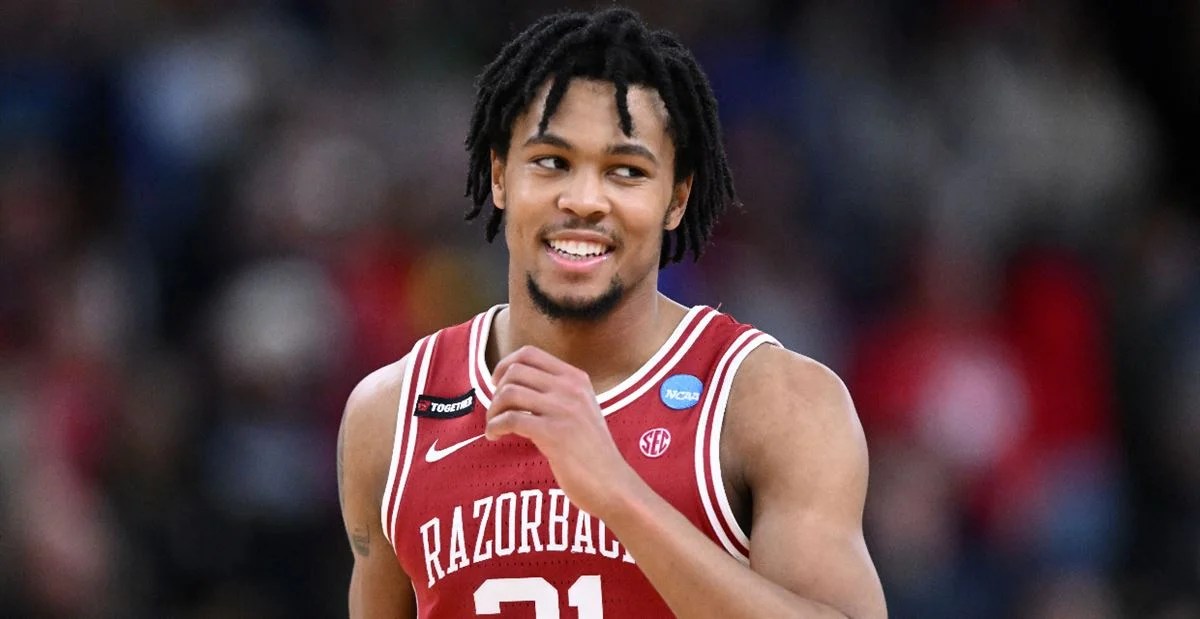
DJ Wagner: The Quiet Triumph of a Former Prodigy

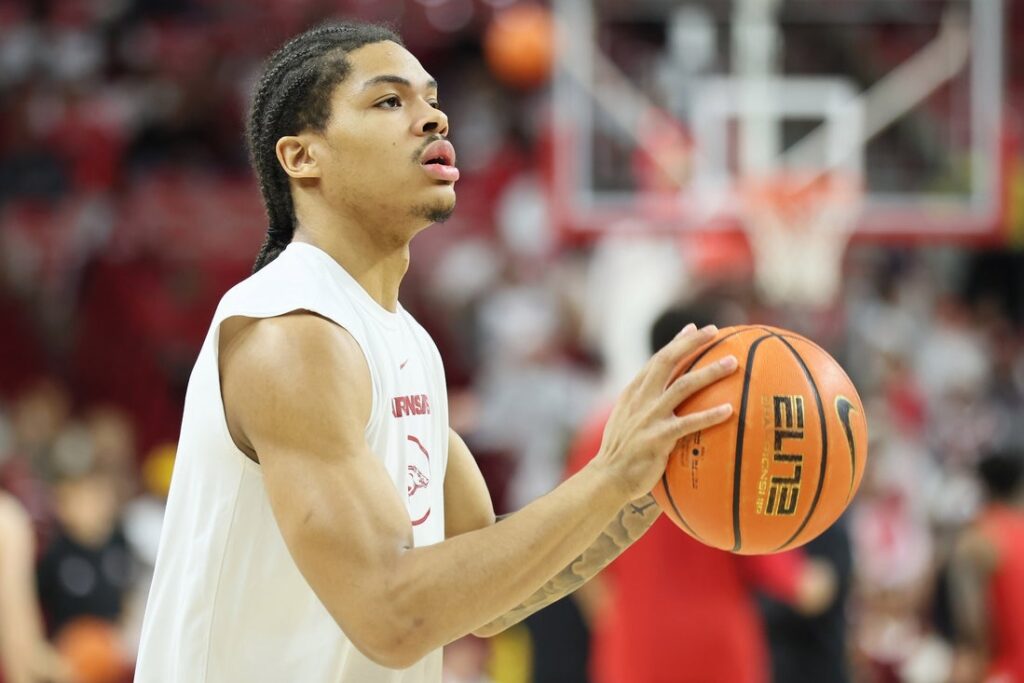
CAMDEN, NJ – In the high-stakes theater of modern college basketball, where narratives are written in highlight reels and legacies are judged by draft night, it is easy to miss a story of quiet, consistent triumph. The case of DJ Wagner, the once-heralded prodigy from Camden, New Jersey, is too often framed as a tale of unmet potential. The chorus of critics points to the fact that he did not explode onto the scene as a one-and-done superstar, that other guards have seized the spotlight at Kentucky and now Arkansas. But to view his career through this narrow lens is to misunderstand the very definition of success. DJ Wagner is not a disappointment; he is the model of a modern, successful college athlete, building a formidable and valuable career on his own terms.

The Myth of the “One-and-Done” and the Reality of Role Players

The burden of expectation placed on DJ Wagner’s shoulders was immense. As the third-generation McDonald’s All-American, his destiny seemed preordained. The blueprint, crafted by his fervent supporters, was simple: dominate from day one, lead the nation in scoring, and head to the NBA in a blaze of glory. When that did not happen, the narrative quickly soured.

What this critique ignores is the fundamental nature of elite team sports. At programs like Kentucky and Arkansas, the arrival of other talented players like Reed Sheppard or Boogie Fland is not a failure on Wagner’s part; it is the reality of competing at the highest level. The mark of a truly valuable player is not always his ability to dominate the ball, but his capacity to adapt and contribute to winning. Wagner has done exactly that. He has consistently been the player his Hall of Fame coach, John Calipari, trusts to start and play substantial minutes—71 starts in 72 career games. This is not a consolation prize; it is the ultimate sign of respect. Coaches who are paid millions to win games do not entrust key roles to players who do not help them achieve that goal.
A Competitor, Not a Statistic

To watch DJ Wagner play is to see a young man who has mastered the unglamorous essentials of winning basketball. In an era where offensive fireworks often come at the expense of defensive effort, Wagner takes ferocious pride in his work on both ends of the floor. He is a tenacious on-ball defender, a trait that never shows up in a headline but is priceless in the grind of a Southeastern Conference schedule.

Furthermore, his conservative, turnover-averse style is a strategic asset. While flashier players may generate more buzz, Wagner’s steady hand in the backcourt ensures offensive stability. His improved efficiency this season—shooting a remarkable 52.4% from the field—demonstrates a player who is refining his game, making smarter decisions, and growing into a more complete athlete. This is not stagnation; it is maturation.

Redefining Value in the NIL Era

The financial landscape of college sports has fundamentally changed, and any evaluation of a player’s career must account for this new reality. The old model of “one-and-done or bust” is obsolete. DJ Wagner, through his consistency and marketability, is projected to earn between $3 and $4 million in NIL compensation over his college career. This is not a footnote; it is a central chapter in his story. He is achieving significant financial prosperity while simultaneously earning a degree and developing his game in a world-class environment.

This financial success, coupled with his on-court reliability, positions him perfectly for a long professional career, whether in the NBA, the G League, or overseas. He is building a sustainable athletic livelihood, insulated from the volatility that often shatters the dreams of players who peak too early or are built on a less complete foundation.

The Camden Legacy: More Than Just Points

Finally, the criticism from his hometown of Camden, while born of a deep and admirable pride, misses a crucial point. Representing a city is about more than just box scores and draft position; it is about character, resilience, and integrity. Through the noise and the shifting spotlight, DJ Wagner has carried himself with a quiet dignity. He has been a leader, a teammate, and an exemplary ambassador for his family and his city. He has shown the young people of Camden that success is not a single, fleeting moment of glory, but a sustained journey of hard work, adaptation, and professionalism.

(L-R) D.J. Wagner, Milt Wagner and Dejuan Wagner after the Simon Gratz vs. Camden H.S.boys basketball game at Woodrow Wilson H.S. in Camden, NJ on December 20, 2019. Camden won 72-52.

DJ Wagner’s career is a success story of the highest order. He has navigated the immense pressure of his pedigree, adapted to the fierce competition of top-tier college basketball, and carved out a role that makes his teams better. He is financially secure, fundamentally sound, and on the cusp of a professional career. In the end, the most persuasive argument for DJ Wagner is not found in defying expectations, but in transcending them. He has chosen substance over spectacle, and in doing so, he has built a career that is not only strong but truly admirable.