A Tale of Two Catholic High Schools: Basketball and Brotherhood Across Baltimore and Philadelphia

Head Coaches Jason Fisher, Devon Prep (l) and Nick Myles, St. Frances (r)

BALTIMORE, MD – Baltimore has become my second home. Whenever I take the familiar drive down I-95, my excitement builds as I anticipate the sights, sounds, and unique flavors of Charm City. Today was no different. My pilgrimage started, as it often does, at Chap’s Pit Beef. Remember back in season 2 of The Wire when Wee-Bey, Stink, and Savino take Dee to the Chaps and Bey ordered his sandwich with extra horseradish.  They all asked him how he can eat it with all that heat. Wee-Bey said the trick is to “not to give a fuck boy!”

Channeling my inner Wee-Bey, I said `FUCK IT` and went all-in on the pit beef sandwich with extra horseradish. It was the kind of meal that leaves your sinuses clear and your soul satisfied. As I finished, I couldn’t help but think think of Wee-Bey’s infamous interrogation room quip: “Fuck it… For another pit beef sandwich and tater salad, I’ll go a few more (admit to more murders).”

Can’t say I can relate to those circumstances, but I’ll take a couple parking tickets for sure.

My destination was St. Frances Academy, a hallowed institution in Baltimore and a National basketball powerhouse that has come to feel like family. Today, they were hosting Devon Prep from the Philadelphia Catholic League, the defending Pennsylvania PIAA AAA state champions. The matchup was a collision of worlds—Baltimore’s grittiest versus one of Philly’s toniest.

St. Frances guard Kamauri Lawson scored 11 points

A Study in Contrasts

St. Frances Academy sits in the heart of Baltimore, a stone’s throw from the Baltimore City Detention Center, its iron gates standing sentinel in a neighborhood where resilience is a way of life. Founded in 1828 by Mother Mary Lange and the Oblate Sisters of Providence, St. Frances has always been a sanctuary for the underserved. Nearly 80% of its students live at or below the poverty line. Tuition, though modest at $9,000 annually, is waived or reduced for most families.

By contrast, Devon Prep’s picturesque campus sprawls over 20 pristine acres on the Main Line in Chester County. The facilities are immaculate: a mansion-turned-classroom building, STEAM labs, and a recently completed $5.7 million renovation that would make any university envious. Their multi-sport field house gleams under the lights, a testament to a $31,000-a-year education and a steady stream of donor generosity.

As I pulled into the St. Frances parking lot, I was struck by the presence of the Main Line supporters of the Devon Prep squad. Devon Prep had the parking lot resembling a UGK video set. Range Rovers, S-Class Mercedes Benzes, 7-series BMWs, Telsas, etc. Maybe… Just maybe… Pimp C and Bun B were gonna spit a few bars at halftime.

Devon Prep’s Zane Conlon finished with 8 points

This dichotomy extends to the basketball court. St. Frances, under Coach Nick Myles, thrives on grit, aggression, and relentless defense. “The gym is the workplace,” Myles often says, and his players take it to heart. The Panthers are greedy… They want the ball… They relentlessly pursue it on the defensive end. Myles teaches his guys to always want the ball and the only way to always have the ball is to constantly take it back through defense.  

For more than a decade, I’ve watched as Myles has ingrained this into his players. Relentless effort comes from relentless work in practice, this tenacious approach to the game can be jarring for those new to the St. Frances Academy approach.

Devon Prep, led by Coach Jason Fisher, employs a measured and cerebral style. Fisher implements a version of the offense pioneered by Pete Carrill at Princeton some years ago. Many contend that this offense benefits a team whose players are less athletic than their opponents. But I tend to disagree, the offense requires all players to be good passers, ball-handlers, and good outside shooters, as well as possess a high basketball IQ. If you have players like that, you can probably win with any offense, As deployed by Fisher and Devon Prep, the Princeton offense is a more deliberate offense, oftentimes with many passes each possession. This tends to slow the game down, controlling the tempo, usually resulting in lower game scores. When effective, with its calculated passes and deliberate pace, the Princeton offense reflects the academic rigor of Devon Prep—a thinking man’s game designed to neutralize athletic disparity.

Nick Myles “shoe game” was on point

The Game

When these two programs first met, a couple years ago, at the Black Cager Fall Classic, Devon Prep emerged victorious, their methodical precision frustrating the Panthers under Pennsylvania’s no-shot-clock rules. But today was different. Playing under Maryland rules with a 35-second shot clock, St. Frances was in its element.

The Panthers gave the Tide 32 minute of Hell!

From the opening tip, the Panthers imposed their will. Myles’s squad pressed relentlessly, disrupting Devon Prep’s rhythm and forcing turnovers. The gym buzzed with energy as St. Frances raced out to an early 20-7 1st quarter lead, fueled by their signature defensive intensity. Fisher’s carefully orchestrated offense never found its footing. The shot clock eliminated any chance of slowing the game to Devon Prep’s preferred pace, and the Panthers seized the moment.

It was an ol’ fashioned ass whuppin…

Despite the lopsided score, the game was a masterclass in mutual respect. Both teams played with honor, and the sportsmanship on display was a testament to the shared values of these two fine Catholic institutions.

Brotherhood Through Basketball

For all their differences, St. Frances and Devon Prep share a commitment to excellence—on the court, in the classroom, and in their communities. St. Frances’s legacy of service and perseverance echoes in the hearts of its students, while Devon Prep’s commitment to innovation and opportunity prepares its graduates to lead.

On my way home, I kept getting a hankering for one of those authentic Baltimore crab cakes Omar was eating in the car. So, I stopped at a spot Angel Reese introduced me to… Mo’s Seafood. Two crab cakes, one broiled and one fried, to go. As I drove back to Philadelphia with a bag of crab cakes riding shotgun, I reflected on the beauty of this emerging rivalry. Basketball is more than a game—it’s a bridge between worlds. St. Frances and Devon Prep showed us that the game’s true power lies in its ability to unite, to teach, and to inspire.

Back in Philly, it’ll be cheesesteaks, roast pork sandwiches and familiar faces, but Baltimore will call again soon. And when it does, I’ll be ready—with pit beef and crab cakes sandwiches in hand and my heart set on the hardwood.

Aasim “Flash” Burton and Shon Minnis: The Road Less Traveled

PHILADELPHIA, PA – Philly youth and high school is dominated by conventional wisdom, high-profile high school transfers and shoe-sponsored travel teams often dictate the trajectory of a young player’s career. However, two guys from South Philly, Aasim “Flash” Burton and his mentor, Shon Minnis, have crafted a path that seems to echo Robert Frost’s timeless reflection in his 1916 poem The Road Not Taken. Every decision made by Burton and guided by Minnis over the past five years could be characterized as a deliberate divergence from the norms of Philly basketball’s unforgiving system. Each choice was calculated, often scrutinized, and yet, in the end, remarkably effective.

The First Fork in the Road

Burton’s journey, one marked by thoughtful strategy rather than flashy optics, began when he was a very talented eighth grader with undeniable talent and a world of options. His decision to attend Math, Civics, and Sciences (MCS) Charter High School—a school with a respectable basketball pedigree but outside the traditional powerhouse orbit of Imhotep Charter or the Catholic League giants Roman Catholic and Neumann-Goretti—was met with skepticism.

Why you sending him there?

Why not join a program guaranteed to compete for championships in the fabled Palestra? Why not be part of one of the machines that churn out Division I prospects year after year? The answer, as Minnis would later explain, was rooted in a long-term vision. At MCS, Burton would play meaningful minutes early in his career, honing his skills against strong competition without being buried on a deep bench. The short-term objective was to actually PLAY meaningful games and develop a nuanced feel for the intricacies of the game and not become another workout warrior. Minnis understands that chairs and cones don’t play defense. For two years, Burton thrived at MCS, developing into a multi-dimensional player who could not just contribute but lead.

Another Road Less Traveled

As he entered his junior year, Burton and Minnis decided to pivot. This time, they sought the rigor of the Philadelphia Catholic League, but once again, their choice raised eyebrows. Instead of transferring to Roman Catholic, Neumann-Goretti, or another storied program like Archbishop Wood, Burton enrolled at Cardinal O’Hara—a program more often seen as an underdog than a contender.

This move seemed, to some, like a misstep. Minnis was told by prominent members of the local basketball aristocracy that he was “fucking up” Burton’s opportunity to land a division 1 scholarship. The naysayers LOUDLY noted that O’Hara lacked the glitz and glamour of Imhotep or the Catholic League’s traditional powers, but Minnis saw opportunity where others saw mediocrity. At O’Hara, Burton would have the chance to shoulder the load, to truly grow into his role as a point guard and leader. It was a choice emblematic of Minnis’s philosophy: prioritize substance over style, development over hype.

A Different Kind of Summer

Then came the summers, where the stakes in grassroots basketball are, arguably, higher than during the high school season. Kids play in front of hundreds of college coaches and scouts at a time instead of the 2 or 3 that might attend a good scholastic game. In Philly and other basketball hotbeds like Baltimore, Washington, D.C. and New York/North Jersey, most elite prospects gravitate toward Nike’s EYBL, Adidas’s 3SSB, or Under Armour’s UAA Circuit. Burton had already scratched his shoe company itch the previous year by dabbling with Team Final, a Nike EYBL powerhouse, enjoying the spoils of elite competition and coveted swag. He had a closet full of flip flops, headbands, shorts and, of course, the shoes. But when faced with the choice of returning to Team Final or joining another shoe-sponsored team, Burton, with Minnis’s counsel, opted for East Coast Power, an independent club based in King of Prussia.

They took the road less traveled…

This decision, like the others, was rooted in pragmatism. Playing for East Coast Power meant guaranteed playing time, a chance to truly command the floor as a point guard, and focused, personalized attention from coaches who prioritized his development for the next level. It also meant stepping away from the spotlight that many young players covet. But as Minnis often reminded Burton, the goal wasn’t to chase fleeting validation but to build an impactful and sustainable college career.

By the end of summer and just before the onset of his senior year, Burton’s unconventional choices were beginning to pay off. He had developed into a polished floor general, capable of running an offense and playing with poise under pressure. The work done by East Coast Power’s staff, coupled with Burton’s own maturity and growth, attracted interest from a host of mid-major programs. And when Rider University came calling, Burton and Minnis knew it was the right fit.

The Commitment

Burton’s decision to commit to Rider before his senior season was yet another departure from the norm. Many players in his position, with multiple mid-major offers, might have held out, hoping for offers from schools in higher-profile conferences like the Atlantic 10, the American Athletic or even the Big East. But Burton trusted his instincts and leaned into a philosophy that Minnis instilled in him and served him well: choose the place that truly wants—and needs—you.

These South Philly Muthafuckas truly blocked out all the noise…

Rider offered Burton not just a scholarship but a clear vision for his role within the program. Head Coach Kevin Baggett made it clear that Burton wasn’t just a recruit; he was a cornerstone for the team’s future. Burton appreciated the brutal honesty of Rider Assistant Coaches Geoff Arnold and Dino Presley. These guys are incapable of sugarcoating anything related to basketball. Minnis, ever the realist, tempered expectations but remained confident. Before the start of Burton’s freshman campaign, Minnis predicted, “He’s not gonna be ready to start the first game,” Minnis said, “but he’ll be starting by the time they begin playing league games.”

Tonight… True to Minnis’s prediction, Burton made his first collegiate start in just his 10th college, and 2nd MAAC league, game. The man knows his protege… His performance thus far suggests he will be a fixture in Rider’s lineup for years to come—a testament to the power of patient, deliberate choices in a world often obsessed with instant gratification.

The relationship between Burton and Minnis has been central to this journey. Minnis, a self-described “basketball lifer” with a quiet wisdom honed through decades in the game, has been the steady hand guiding Burton through a labyrinth of pressures and expectations. Minnis’s experiences navigating the high school and college recruiting processes for his own son, Biggie Minnis (Texas Tech, Rhode Island and Wright State), and stepson, Jamir Hanner (Marshall and Buffalo), gave him the perspective needed to help Burton avoid common pitfalls.

At every juncture, the two have chosen what Frost might call “the road less traveled.” And as Frost so poignantly concluded, “that has made all the difference.” For Burton, the difference isn’t just about where he is today but the foundation he has built for the future—a foundation rooted in authenticity, hard work, and a refusal to conform for conformity’s sake.

In an era where basketball decisions are often dictated by trends and peer pressure, Flash Burton and Shon Minnis have shown that there is another way. Their story is not just a basketball story; it’s a story of trust, vision, and the courage to forge one’s own path. And in doing so, they remind us that the road less traveled, though fraught with challenges, often leads to the most rewarding destinations.

Some real South Philly Shit… #Respeck

The Best and Worst of Times: Imhotep’s RJ Smith and Philly’s Basketball Crossroads

PHILADELPHIA, PA – In sports, the 2023–2025 era will long be remembered as a time of extremes for Philadelphia. On one hand, the Phillies and the Eagles have been among the most dominant teams in Major League Baseball and the National Football League, respectively.  They have provided their diehard fans with winning seasons, playoff runs and championship aspirations. On the other hand, the Sixers’ disturbingly rapid descent into irrelevance has been as baffling as it has been swift, and collegiate basketball in the City of Brotherly Love has entered an unthinkable drought: no NCAA Tournament appearances from its six Division I programs for two consecutive seasons.

Da fuck is going on? I don’t trust the process… AT ALL!

Philadelphia is paying Joel Embid and Paul George, combined, over $116,000,000.00 per year to appear on podcasts and play basketball once in a while… Quintessential Nut Shit!!

This is a city where basketball isn’t just a game—it’s a way of life. From the hallowed grounds of the Palestra to playgrounds in Cobbs Creek, Da Bottom, Da “P” and up Norf, Philly has long been a hoops haven. Yet, our professional and college teams haven’t been shit since we were all wearing masks, getting injected with various vaccines and sitting through 6 or 7 zooms per day.

College Hoops: A Forgotten Tradition

Real shit… We have one guy trying mightily to hold it down for Philly. Villanova’s Eric Dixon shines as the lone star in a Big 5 constellation dimmed beyond recognition, the city’s college basketball faithful are left to reminisce about March Madness as though it were a relic of a bygone era. Where’s this era’s Gola, Rodgers, Macon, Rose, Nelson, West and Garland?

The decline of collegiate basketball in Philadelphia is astonishing. Once-proud programs that defined the city’s identity—Villanova, Temple, La Salle, Saint Joseph’s, Penn, and Drexel—now play in the shadow of their storied pasts. Villanova, the jewel of the Big 5, has been unable to maintain the dominance it enjoyed under Hall of Fame Coach Jay Wright. As I have noted elsewhere, “that bitch ain’t bad no mo’…” Although she did put on some yoga pants for a couple hours last night and looked “ahhhhiiiight” against Cincinnati. We have to wait and see if she can keep it together.

The other programs have simply failed to rise to the occasion. Today, Dixon carries Villanova as a headliner like Gladys Knight while the rest of the Big 5 plays supporting roles—background singers, like the “Pips”, to his solo act. 

The energy of March, once electric in Philly, now dissipates as local teams fail to punch their ticket to the NCAA Tournament. I guess we should all appreciate the fact that the local programs are still in the running for “at-large” bids in the College Insider Tournament (CIT) and the College Basketball Invitational (CBI). Be on the lookout for the “fish fry” in March at Lionel Simmons’ Bar to pay for the team charter buses. The absence of postseason relevance has left a void for Philly hoopheads  longing for competitive, high-quality basketball.

The Scholastic Silver Lining

Yet, amid the gloom, the vibrancy of Philadelphia’s scholastic basketball scene offers a glimmer of hope. Tonight, I ventured to St. Joseph’s Prep to watch the Hawks host Imhotep Charter, a perennial powerhouse. The game was a revelation, a reminder that while professional and collegiate hoops in Philly languishes, the high school circuit remains as competitive and thrilling as ever.

St. Joe’s Prep fielded an impressive roster featuring Dayton commit Jaron McKie and Florida Gulf Coast-bound Jordan Ellerbee. Sophomore Mekhi Robertson, a top-50 national recruit, and senior point guard Olin Chamberlain, an Ivy/Patriot League prospect. Imhotep, as usual, was fuckin’ loaded: Zion Green, a 6’8” sophomore wing ranked 17th nationally; juniors Zaahir Muhammad-Gray and Latief Lorenzano-White; and senior wing Carnell Henderson, are all Division I-caliber players.

But the night belonged to the newly crowned “Big Dawg” among Philly Guards, Imhotep’s RJ Smith.

RJ Smith: Seated in the Philly Guard Throne

Smith, a 5’9” junior guard, embodies everything a “Philly guard” represents. Undeterred by his slight frame, Smith dominates games with his toughness, sharp basketball IQ, and unyielding determination. Time and again, he bullies bigger, stronger, and more athletic opponents, asserting control on both ends of the floor.

Defensively, Smith is a force in Imhotep’s relentless full-court press, where his tenacity and instincts for creating turnovers are nothing short of spectacular. Offensively, his ability to break down defenses is equally impressive. Whether pushing the pace in transition or orchestrating in a half-court set, Smith’s versatility shines.

Last season, Smith played Robin to UConn freshman Ahmad Nowell’s Batman. Nowell was the undisputed leader of Imhotep’s powerhouse program and clearly occupied the throne as the top Philly high school guard. But with Nowell’s departure, Smith has stepped seamlessly into the role of team leader. There is no doubt: this is now Smith’s team… and his throne…

Smith is not a traditional pass-first point guard of yesteryear. Instead, he mirrors the style of players like Isiah Thomas—capable of scoring at will while also being an adept distributor. His strengths are multifaceted: quickness, fearlessness, and a deep understanding of the game. As a defender, he excels at pressuring ball handlers and racking up steals, often setting the tone for Imhotep’s aggressive style of play. On offense, he thrives in transition, penetrates the lane with ease, and is a lethal shooter from well beyond the three-point arc.

While Smith’s skill set already places him among the elite at the high school level, his potential for growth is clear. In college, he could evolve into a more traditional point guard, balancing his knack for scoring with the demands of a floor general. For now, his dominance in high school basketball and his ability to overcome physical disadvantages with sheer grit and intelligence make him a quintessential Philly guard—and a joy to watch.

The “Philly Guard” Mystique

A “Philly guard” is more than just a basketball player. The term carries with it decades of tradition and a style that is unmistakably Philadelphia: gritty, crafty, and unapologetically confident. Philly guards are two-way players, as skilled on defense as they are on offense, and they play with an edge that reflects the city’s tough, blue-collar ethos.

Legends like John Chaney, Guy Rodgers, Andre McCarter, Pooh Richardson, Dawn Staley, Collin Gillespie and Kyle Lowry have defined the archetype. RJ Smith now stands in their shadow, a young player stepping into a rich lineage of excellence. His game is a nod to the past but also a bridge to the future of Philly basketball.

A Tale of Two Basketball Cities

The juxtaposition of Philadelphia’s scholastic and professional basketball worlds could not be starker. As the Sixers spiral into chaos, weighed down by an exorbitant payroll and a seemingly rudderless front office, and as college basketball flounders, the high school scene pulses with life. It’s a cruel irony that while the city’s professional and collegiate teams struggle, its high schools continue to produce some of the most exciting basketball talent in the nation.

RJ Smith’s emergence as the next great Philly guard underscores this dynamic. He represents hope for the future—a reminder of what Philly basketball can be when it is at its best.

Ten years from now, we’ll look back on this era with mixed emotions. The Phillies and Eagles gave us joy and pride. The Sixers and the city’s college programs brought frustration and bewilderment. And on high school courts across the city, the next generation of stars reminded us that, even in the worst of times, Philly basketball is never truly down for the count.

College coaches constantly call in search of a “Philly Guard.” Well, we have one that is pretty special. Ideally, Smith will land with a program that has familiarity and experience with smaller guards. He can compete in the MEAC, NEC, AmEast, MAAC and CAA for sure. Some A10 and American Conference programs will likely become intrigued when they actually lay eyes on him.

For now, though, Smith’s performances remind fans why the “Philly guard” is such a revered archetype in basketball—a gritty, intelligent, and unrelenting player who never shies away from the moment. He is, simply put, a joy to watch and a testament to Philadelphia’s rich basketball heritage. Looks like Smith will be sitting on the Philly Guard throne for next two years… Enjoying his reign… Unless, young Mr. Sutton from Broad and Vine has some other ideas.

Drexel Star Kobe Magee’s Old-School Rise in a New-Age Era

PHILADELPHIA, PA – In the ever-evolving ecosystem of college basketball, where the transfer portal and NIL opportunities have reshaped the traditional landscape, players like Drexel University’s Kobe Magee are a rarity. Magee’s emergence as an elite college basketball player this season is a testament to a journey almost unrecognizable in today’s game: one marked by patience, commitment, and steady growth.

Kobe Magee, Drexel University

Magee, a junior guard, is averaging 16.5 points per game on an impressive 54.7% shooting from the field and 48.1% from beyond the arc. His production, coupled with 31.4 minutes of relentless effort per game, has propelled Drexel to an unexpectedly competitive season. The Dragons record stands at 5-3 after the first 8 games. This is no small feat for a team that lost its entire starting lineup from last year, including its top five scorers, to either the transfer portal or exhausted eligibility.

Head Coach Zach Spiker was left with a daunting task: rebuild a program gutted by the loss of Amari Williams (now at Kentucky), Justin Moore (Loyola Chicago), and other key contributors. But Magee, who came to Drexel as a true freshman and spent his first two years playing limited minutes (7.8 as a freshman, 18.2 as a sophomore), has answered the call to lead in spectacular fashion.

His path stands in stark contrast to those of his peers, including former high school teammates at Allentown’s Executive Education Charter School. Jevin Muniz, Jeremiah Bembry, and Moustapha Sanoh—all Division 1 talents—have navigated the revolving doors of the transfer portal, seeking better opportunities and larger stages. Magee, meanwhile, stayed put.

When asked why he resisted the siren call of the portal, Magee’s answer was as refreshing as it was rare: “Honestly, it’s the love that they are giving me. The coaching staff, the preparation, and the time they consistently take out of their day to help me and my teammates get better. I really appreciate the level of competitiveness that we’ve achieved in this program. I also believe Drexel is a place where I can grind and make it from the bottom. I see all the people transferring for more money. But I don’t play for money; I truly play for the love of the game.”

Magee’s commitment is about more than basketball. A business entrepreneurship major with excellent grades, he embodies the ideals of the student-athlete in an era where those ideals are often overshadowed by financial incentives and career pragmatism.

For Spiker, Magee’s development is a point of pride. “Kobe came to Drexel as a very young true freshman,” Spiker reflects. “He had to compete against older, stronger, and more mature players from day one. He worked on his body, worked on his craft, and has always been ready when called upon.”

This season, Magee has done far more than simply step up. With Drexel facing the grueling competition of a Coastal Athletic Association (CAA) and Big 5 schedule, Magee has shouldered the scoring load while serving as the team’s emotional anchor.

Magee’s path is increasingly rare in a sport where the transfer portal and NIL have become dominant forces. College basketball today often rewards immediate impact over gradual improvement, and programs are built on an annual shuffle of talent. In this context, Magee’s steady climb at Drexel—a mid-major program often overshadowed in the Philadelphia basketball hierarchy—is both a throwback and a revelation.

In many ways, Magee represents the antithesis of what college basketball has become. He is not chasing greener pastures or larger paydays. He is chasing excellence on his terms, embracing the grind, and trusting the process.

His former high school teammates’ journeys highlight the contrast. Jevin Muniz has moved from Delaware State to Florida Gulf Coast. Jeremiah Bembry has traveled from Florida State to West Virginia to Oakland University. Moustapha Sanoh, initially at Rider, now plays for Jefferson University. Each has sought to navigate the sport’s new realities, but none have stayed the course like Magee.

Kobe Magee is the kind of player coaches dream of building programs around. He represents something endangered: a college athlete who sees value in growth, loyalty, and team culture. In an era defined by the quick fix, Magee’s journey is proof that the long road can still lead to greatness.

For Spiker and Drexel, Magee is not just a player. He is the heart of a team and a beacon of hope for a program finding its way in a turbulent landscape. And for college basketball as a whole, Magee is a reminder that while the game may change, the virtues of hard work and perseverance will always have a place in it.

Magee’s rise is a story worth celebrating—not because it is flashy or immediate, but because it is rare and enduring. For Drexel and for college basketball, players like Magee might just be the bridge between what the game was and what it could still aspire to be.

The Rise of Corey McKeithan: La Salle’s Star Guard

PHILADELPHIA, PA – The transfer portal has redefined college basketball, bringing both challenges and opportunities for programs across the nation. For La Salle, the offseason loss of All-League guards Jhamir Brickus and Khalil Brantley to Villanova and Oklahoma State respectively seemed to leave a gaping hole in the backcourt. Yet, in a twist of fate, the portal also delivered a savior — Corey McKeithan.

Corey McKeithan, La Salle Explorers

After three seasons as a role player at Rider University, McKeithan has burst onto the scene with the La Salle Explorers, quickly establishing himself as one of the top players in the Atlantic 10 and Philadelphia Big 5. His latest performance on Saturday night against Temple underscored his meteoric rise.

McKeithan is a combo guard whose game is marked by a lethal capacity for scoring. He is averaging a team high 19 points per game this season. His off the dribble variety is elite—hesitation, rocker and crossover—excellent shiftiness and ability to burst through an open seam. He has demonstrated an ability to score from all three levels. As a result, he is a truly unpredictable defensive assignment in the half court. He is highly efficient in both isolation offense and the pick & roll for the Explorers. 

Facing the Owls in a pivotal Big 5 matchup on Saturday afternoon, McKeithan delivered a career-best performance, scoring 28 points on 10-for-19 shooting. Beyond his scoring outburst, the junior guard added four assists without a single turnover, collected three rebounds, swatted a block, and picked up two steals. McKeithan’s all-around brilliance powered the Explorers to their sixth win in eight games this season and secured a spot in next Saturday’s Big 5 Classic championship game against St. Joseph’s.

Fran Dunphy, La Salle Head Coach

For La Salle head coach Fran Dunphy, McKeithan’s emergence couldn’t have come at a better time. “Corey has a confidence and swagger about him that’s infectious,” Dunphy said. “He’s elevated not just his game but the entire team’s energy. That’s what great players do.”

McKeithan’s transformation has been remarkable. At Rider, he spent much of his time playing off the ball, recording just 15 double-digit scoring games across three seasons. Now, as the primary playmaker for La Salle, McKeithan has embraced the responsibility, showcasing an assertiveness and flair that has turned him into a leader on and off the court.

McKeithan has a deep bag and he’s been digging deep into it…

Saturday’s win was another sign that Dunphy and his staff unearthed a gem in the transfer portal. McKeithan’s ability to step up in critical moments has given La Salle an edge, offsetting the departures of Brickus and Brantley while providing the Explorers with a centerpiece around whom the team can rally.

However, the road ahead is challenging. In the Big 5 Classic championship game, McKeithan will face one of the most formidable guard trios in college basketball: Erik Reynolds, Xzayvier Brown, and Derek Simpson of St. Joseph’s. The Hawks’ elite backcourt will undoubtedly test McKeithan’s mettle, providing a marquee showdown between rising stars and seasoned talent.

As La Salle continues its resurgence, McKeithan’s performance has not only revived the Explorers’ prospects but also solidified his place as one of the premier guards in the region. For La Salle fans, his emergence is a testament to the transformative power of belief, hard work, and the right opportunity.

Next Saturday, all eyes will be on Corey McKeithan, who has proven that sometimes, all it takes to shine is the right stage. The best Philly Guard, just might be the kid from Connecticut.

Why You Should Tune Into Phil Martelli’s “Make A Difference” Podcast: Councilman Isaiah Thomas

As the Founder and Content Manager for Black Cager Sports, I am fortunate—blessed, really—to have access to some of the most interesting, thoughtful, and impactful minds in sports and public service. Among those who continually shape my understanding of the interplay between high school and collegiate athletics, education, and the unique challenges of urban centers like Philadelphia, Baltimore, and Camden is Phil Martelli.

Phil Martelli, Host of “Make a Difference”

For over three decades, Martelli has been more than a basketball coach; he’s been a moral compass for many of us trying to navigate the tricky terrain of sports and society. His podcast, Make A Difference, is a fitting extension of his life’s work: shedding light on the bigger picture, the human connections, and the societal change that can come from sports.

This week’s episode, which aired on Wednesday, November 27, features a guest as equally invested in the soul of Philadelphia as Martelli: City Councilman Isaiah Thomas. A rising star in the Democratic Party, Councilman Thomas is not just a policymaker but also a devoted coach who has guided the Sankofa basketball program in the Philadelphia Public League for 15 years. His dual roles as a civic leader and “hoophead” make him the perfect complement to Martelli’s deeply rooted perspective on youth, community, and the power of sport.

Councilman Isaiah Thomas

It’s almost hard to believe that these two hadn’t sat down for a conversation until now. But when they finally connected, the result was something special. Their discussion weaves through basketball—the love of the game that binds so many of us in this city—but it doesn’t stop there. They tackle the urgent issues impacting young people in Philadelphia, from the hurdles in education to the systemic barriers that hold back progress for underserved communities.

This isn’t just a sports podcast; it’s a deep dive into the heart of what makes Philadelphia tick. Martelli’s seasoned insight and Thomas’s fresh, passionate advocacy make for a conversation that will resonate far beyond the court.

If you care about this city, its youth, or the way sports can transform lives, this is a can’t-miss episode. Tune in to Make A Difference—because that’s exactly what Phil Martelli and Isaiah Thomas are doing.

Battle of the Ol’ Head and the Youngbul: Eric Dixon vs. Derik Queen

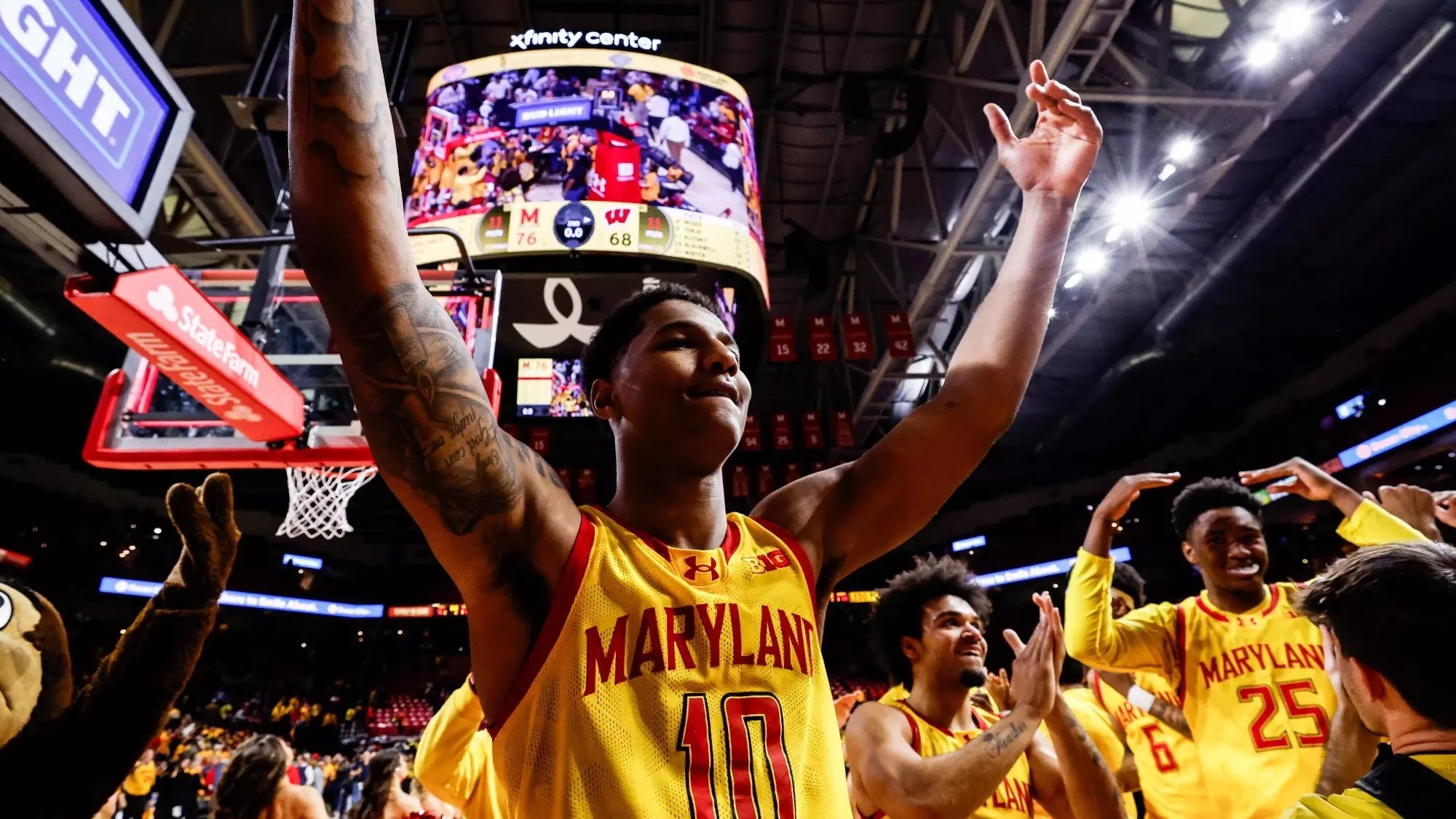
NEWARK, NJ – At the Prudential Center, in the “Brick City” of Newark, New Jersey, two basketball players at opposite ends of their collegiate journeys clashed in a contest that felt less like an ordinary November game and more like a referendum on talent, experience, and promise. Villanova’s Eric Dixon, a high skilled seasoned veteran in his sixth year, delivered a performance for the ages, scoring a career-high 38 points. Maryland’s Derik Queen, a freshman sensation, countered with an all-around masterpiece—22 points, 11 rebounds, and 5 assists. In the end, Queen’s Terrapins outlasted Dixon’s Wildcats, securing a hard-fought victory that underscored the growing importance of versatility and team cohesion in modern basketball.

Derik Queen

This game was not just a matchup of two supremely skilled big men but a clash of basketball philosophies. Dixon, a classic Villanova player, is the epitome of what college basketball excellence looks like: disciplined, fundamentally sound, and relentless. His offensive exhibition was a showcase of everything a great college player can be. Whether it was sinking deep NBA-range threes, executing textbook post moves, or blowing by defenders with cunning hesitation dribbles, Dixon seemed unstoppable. He played like a man on a mission, determined to will his team to victory by sheer force of will and skill.

But basketball is rarely a solo endeavor. As Dixon poured in points, Maryland, guided by the precocious Derik Queen, slowly dismantled Villanova’s lead through the synergy of youth, athleticism, and strategic adaptability. Queen’s game was the antithesis of Dixon’s solo heroics. It was symphonic, blending scoring, rebounding, and playmaking into a performance that elevated his entire team. Every time Villanova tried to stretch their advantage, Queen would respond—whether with a slick assist to a cutting teammate, a put-back on the offensive glass, or a soft floater in the lane.

Queen represents the modern big man, a player as comfortable orchestrating an offense from the high post as he is battling in the trenches. His court vision and basketball IQ belied his youth, as he repeatedly found open teammates and exposed Villanova’s defensive lapses. Unlike Dixon, whose scoring was electric but often solitary, Queen’s contributions were woven into Maryland’s collective effort.

Eric Dixon

What makes this matchup fascinating is how it juxtaposes the present and the future of basketball. Dixon is a testament to the value of experience. His five years at Villanova have honed his game to a fine edge, and he plays with a poise and maturity that can only come from time. His mastery of three-level scoring is a reminder that college basketball still has a place for specialists, players who excel in specific roles and who, on their day, can single-handedly carry a team.

Queen, on the other hand, embodies the promise of what basketball can be. At just 18 years old, he is already a complete player. His versatility, unselfishness, and ability to impact the game in multiple ways make him a tantalizing prospect. Queen doesn’t just play basketball; he orchestrates it. He sees the game in layers, understanding not just his role but the roles of everyone around him.

And yet, for all their differences, there is a common thread between Dixon and Queen—a commitment to excellence and an understanding of what it means to lead. Dixon led by example, with his jaw-dropping scoring display reminding everyone why he is one of the best players in college basketball. Queen led through inclusion, making his teammates better and showing why he will one day be one of the best players in the game, period.

Maryland’s victory was a statement win, but it was also a reminder that basketball is a game of moments. On this night, Queen’s all-around brilliance and Maryland’s balanced attack prevailed. But Dixon’s performance will linger in memory, a dazzling exhibition of what a great college basketball player looks like at the peak of their powers.

The season is young, and both players have much to prove. For Dixon, the challenge will be carrying Villanova through the rigors of the Big East and beyond, where his experience and scoring will be indispensable. For Queen, the journey is just beginning, and his growth will be as much about navigating the spotlight as it is about refining his game.

In Newark, the veteran and the rookie gave us a glimpse of basketball’s past, present, and future. Dixon was magnificent, Queen was transformative, and the game was unforgettable. This was more than a matchup—it was a passing of the torch. And while Dixon may be the better player today, Queen’s time is coming. The beauty of basketball is that it allows us to marvel at both.

The Reigning Monarch of Philadelphia Hoops: Hannah Hidalgo’s Rapid Ascent to the Throne

CAMDEN, NJ – Basketball royalty has long reigned in the Greater Philadelphia Region. Legends like Tom Gola, Wilt Chamberlain, Kobe Bryant, Earl Monroe, Lionel Simmons, DaJuan Wagner, Jameer Nelson and Dawn Staley have defined the sport across eras, blending artistry, power, and grace on the hardwood. Each generation claims its king or queen—a player so gifted that their dominance transcends debates. Today, Philadelphia basketball hoops has a new, unquestioned ruler: Hannah Hidalgo.

Notre Dame after defeating #3 USC in Los Angeles

A native of Haddonfield, New Jersey, Hidalgo has staked her claim not only as the finest amateur player from the Greater Philadelphia area but as one of the best collegiate basketball players—male or female—in the country. The All-American Notre Dame star has redefined what it means to be an elite two-way player, combining offensive brilliance with defensive ferocity in a way few can match. Her recent 24-point, 8-assist, 6-rebound, 5-steal masterpiece against No. 10 USC is merely the latest testament to her all-around greatness.

Relentless Offensive Brilliance

What separates Hidalgo offensively is her rare combination of skill, intelligence, and relentless competitiveness. Just a sophomore, she commands the floor with a poise that belies her youth, dissecting defenses with surgical precision. Her scoring repertoire is comprehensive: a lethal first step allows her to blow by defenders, a feathery touch finishes plays at the rim, and a reliable jump shot keeps opponents honest. Her stat line against USC—24 points on 9-of-21 shooting—is emblematic of her relentless drive to lead her team, finding ways to score against one of the nation’s best defenses.

Hidalgo’s passing is equally transcendent. Against USC, she orchestrated Notre Dame’s offense with eight assists, threading passes through tight windows and consistently setting up teammates like Olivia Miles for high-percentage looks. It is no wonder Notre Dame led wire to wire and silenced a hostile crowd of nearly 8,000 at Galen Center. USC’s JuJu Watkins is one of the transcendent stars in college basketball. Hidalgo went into Watkin’s crib and dominated the contest. Hidalgo’s ability to elevate her teammates makes her not just a scorer but a truly elite offensive engine.

She’s a DAWG! Defensive Dominance

Hidalgo’s impact on the defensive end is, perhaps, even more remarkable than her offensive prowess. At 5’6″, she defies expectations, leveraging her quickness, instincts, and sheer willpower to straight up terrorize opponents. One the game begins, the angelic Hidalgo becomes a gangsta! Her five steals against USC underscored her knack for disrupting passing lanes and applying relentless ball pressure. She routinely forces the very best ball handlers in the nation to “pick that shit up” before she takes it.

Defense is often an afterthought for star players, but for Hidalgo, it is a source of pride. She does not merely guard; she disrupts, dismantles, and demoralizes. She’s a beautiful basketball bully of the highest order. Her ability to turn defense into offense—whether by igniting fast breaks or snatching rebounds against taller opponents—makes her one of the most complete players in college basketball.

The Relentless Competitor

Beyond the numbers, Hidalgo’s competitive fire sets her apart. She does not merely play the game; she attacks it with an intensity that inspires teammates and overwhelms opponents. When Notre Dame needed a spark in the fourth quarter against USC, it was Hidalgo who delivered, leading a decisive 16-2 run that sealed the game. Watkins and the Trojans, undefeated until that moment, had no answer for Hidalgo’s relentless energy and leadership.

A Legacy in the Making

Philadelphia basketball has long celebrated its legends, but few players have fused offense and defense with the level of mastery displayed by Hannah Hidalgo. Her achievements at Notre Dame are a continuation of her brilliance at Paul VI High School, where she was a McDonald’s All-American and one of the nation’s top recruits. Now, she is taking her place on college basketball’s biggest stage and dominating with the same flair and tenacity that made her a household name in high school.

Hidalgo’s ascent represents more than individual greatness; it is a reminder of the region’s proud basketball tradition. She follows in the footsteps of icons like Dawn Staley and Kobe Bryant while carving her own unique legacy. With every steal, every assist, every clutch basket, she affirms her place as not just Philadelphia’s finest but one of the best players in the history of collegiate basketball.

Hannah Hidalgo is not just a star; she is a phenomenon, a player whose brilliance reminds us why basketball matters so deeply in Philadelphia. She has earned her crown, and her reign has only just begun.

The Perils of Transition: From Philly High School Stardom to High Major College Basketball

PHILADELPHIA, PA: The journey from high school basketball to high major college hoops is a steep climb fraught with challenges that fans, particularly those entrenched in the local Philadelphia and Camden basketball communities, often fail to understand. The expectations placed on young players—mere teenagers stepping onto the brightest of stages—are not only unreasonable but often cruelly uninformed.

Quade Green

Plainly stated, niggas have no fuckin idea what they are talkin’ bout…

Freshmen entering high major programs are thrust into hypercompetitive environments where success is measured against near-impossible standards. They compete with older, stronger, and more experienced upperclassmen who have little incentive to step aside for an 18-year-old prodigy. The results, while often admirable in context, are ruthlessly critiqued.

Quade Green’s freshman season at Kentucky in 2017-2018 is a case study in this phenomenon. A five-star recruit and McDonald’s All-American, Green arrived in Lexington with immense fanfare. Kentucky, coached by the legendary John Calipari, was a perennial powerhouse, and Green joined a roster featuring seven future NBA players. As a freshman, Green averaged 9.3 points, 2.7 assists, and shot a respectable 37.6% from beyond the arc—all while competing in the cutthroat SEC conference. By any reasonable measure, this was highly successful freshman campaign in the mighty SEC conference. Kentucky went 26-11 that year and finished the year ranked 18th in the nation in the final Associated Press poll. Yet, in his hometown of Philadelphia, his performance was derided by armchair critics who declared his choice to attend Kentucky a mistake.

These critiques, fueled by local pride and a lack of understanding about the difficulty of transitioning to college basketball, are misguided. A player like Green, who carved out a significant role on one of the nation’s top teams as a freshman, was achieving success against the odds. But those odds are rarely considered by fans who see only carefully curated highlight reels and box scores.

Plainly stated, niggas have no fuckin idea what they are talkin’ bout…

The story is repeating itself with Jalil Bethea, a heralded Philadelphia recruit now at Miami. Through four games, Bethea has shown flashes of brilliance, averaging 7.8 points in just 12.3 minutes per game. Yet the grumblings have already started. Some question why a player of his talent isn’t starting or dominating. What they fail to grasp is the reality of high major basketball: Bethea is competing with veterans like Nijel Pack (14.7 points, 6.7 assists), a fifth-year senior, and Jalen Blackmon (14.0 points, 1.7 steals), another seasoned guard. These are players with years of college experience who know the system and the physical and mental demands of the game.

Jalil Bethea

In this context, the transition from high school to college basketball is more than a step up—it is a leap. Freshmen, even the most talented, are adjusting to faster-paced games, more complex schemes, and physically mature opponents. High school dominance against inferior competition like “Collingdale Catholic” or “Roast Pork Charter,” simply does not translate directly to the high major college level.

Additionally, high major basketball rosters are stocked with talent. Freshmen are not handed minutes; they earn them. Coaches at programs like Kentucky, Miami, and Duke are tasked not with developing individual players in isolation but with building cohesive units that can contend for national championships. This often means limiting the roles of freshmen while leaning on upperclassmen who can deliver consistent results.

The problem lies partly in how young players are marketed. Highlight tapes, social media buzz, and grassroots hype build unrealistic expectations. A player dropping 40 points in a high school game might dazzle fans, but the competition level is rarely considered. This leads to a false narrative that high school stars can seamlessly dominate at the collegiate level. When they don’t, fans often blame the player, the coach, or even the program, without acknowledging the broader context.

The consequences of these unreasonable expectations can be damaging. The pressure to live up to hype can erode a player’s confidence. The constant scrutiny can impact mental health, and the pervasive narrative that a player “chose the wrong school” can sow doubt and create tension within a team.

Muthafuckas need to shut the fuck up and let it play out…

High major basketball is not a fairytale; it’s a crucible. Upperclassmen who have spent years developing their skills and bodies do not defer to 18-year-olds, no matter how talented. Coaches prioritize winning over everything else, which often means favoring experience over potential.

For players like Green and Bethea, the freshman year is rarely about stardom—it’s about survival and growth. By the time these players become sophomores or juniors, they often evolve into key contributors, but that progression is ignored by fans who judge them prematurely.

If we are to fairly evaluate young players, we must adjust our expectations. Freshmen should not be seen as saviors but as students of the game, learning and adapting to an environment more challenging than most fans can imagine. Instead of demanding instant results, we should celebrate their resilience, their flashes of potential, and their determination to succeed in the face of daunting odds.

Quade Green’s journey shows that even a “successful” freshman season is not immune to misplaced criticism. Jalil Bethea’s story is still unfolding, but one hopes that he, like Green, has the fortitude to rise above the noise. Fans and critics alike must recognize the difficulty of the transition and the strength it takes to endure. Only then can we truly appreciate the young athletes who dare to take on the challenge of high major college basketball.

The Luxury of Louis and the Hunt for Hidden Gems at Marshalls and TJ Maxx: High Major and Mid Major Recruiting Realities

CAMDEN, NJ: Watching the Bryant Bulldogs edge out the home court Delaware Blue Hens, 85-84, in a fiercely competitive basketball game last night, I couldn’t help but reflect on the ever-widening chasm in college athletics, particularly in the era of NIL (Name, Image, and Likeness) deals, transfer portals, and immediate eligibility. As I admired the work of coaches like Phil Martelli Jr. and Martin Ingelsby, their relentless hustle, and their ability to construct cohesive rosters from unlikely sources, my mind drifted to Colorado’s Football Coach Deion Sanders and his now-infamous declaration when he met his inherited football team: “I’m bringing my luggage with me, and it’s Louis.”

Coach Prime

That statement, dripping with urban swagger and intent, encapsulated the reality of the high-major recruiting ecosystem in today’s college sports. Coach Prime wasn’t merely warning his players that change was coming—he was announcing that he, with his cultural cachet, financial resources, and unmatched name recognition, could shop at the most exclusive recruiting boutiques. For Sanders, recruiting isn’t about finding diamonds in the rough; it’s about walking into Louis Vuitton or Gucci and selecting the finest clothing and accessories crafted from the most exclusive materials with zero regard for the price. Plainly stated, Coach Prime was “talking’ dat shit”…

Coach Prime’s Cultural and Financial Advantage

Deion Sanders embodies a unique blend of celebrity, charisma, and cultural influence. As a Hall of Fame athlete who transcends football, Sanders commands attention in a way few coaches can. His name alone draws recruits, and his bold personality ensures that Colorado is always in the conversation. Add to that the deep NIL coffers available at high-major programs like Colorado—backed by boosters, local businesses, and national sponsorships—and you have a recruiting juggernaut.

At Colorado, Sanders can promise recruits not just the opportunity to play but to profit. The NIL deals available to his players mean that they don’t just join a team—they join a brand. This access to financial opportunity is a game-changer in recruiting, especially for families who see NIL as a way to escape economic hardship. Combined with Sanders’ ability to curate a team narrative that feels larger than life, it’s little wonder he attracts top talent.

When Coach Prime references “Louis,” he’s not just talking about talent—he’s talking about perception. High-major recruits are not only better athletes but often come with the polish of elite training programs, social media followings, and marketable personas. At Colorado, these players become the centerpiece of a well-funded, highly visible machine. Sanders doesn’t just coach players—he amplifies their brands.

Martin Ingelsby

The Mid-Major Reality: The Hunt for Prospects at Marshalls and TJ Maxx

Contrast this with the world of mid-major coaches like Martelli and Ingelsby, whose programs don’t have the luxury of shopping for recruits at Louis Vuitton. Instead, they scour the aisles of Marshalls, TJ Maxx, and even scratch-and-dent outlets, searching for overlooked talent and undervalued gems.

The players on mid-major rosters are often transfers, walk-ons, or athletes who have endured significant challenges—whether injuries, academic struggles, or simply being overlooked by high-majors. These coaches spend countless hours scouring the “racks” identifying potential in players who, for various reasons, slipped through the cracks. They’re not offering $300,000 NIL deals; they’re selling opportunity, development, and the chance to shine on a smaller stage.

This makes mid-major recruiting a different kind of art. Coaches at programs like Delaware and Bryant must be relentless scouts, combing through tape, traveling to obscure high school gyms, and building relationships with junior college programs. They have to spot talent that others miss and then cultivate it, often transforming “scratch-and-dent” players into stars.

The Transfer Portal: A Shared Marketplace

The transfer portal has complicated this dynamic further. For high-majors, it’s another Louis Vuitton boutique—a place to restock quickly and efficiently. For mid-majors, it’s a double-edged sword. While they can snag players who didn’t thrive in high-major environments, they also risk losing their own developed talent to the bigger programs.

This constant churn forces mid-major coaches to be even more resourceful. They must balance the need to recruit high-potential transfers with the understanding that a breakout season might mean losing their best player to a higher bidder. This reality is perhaps the most glaring difference between the two levels: high-majors can afford to poach, while mid-majors must perpetually rebuild.

Phil Martelli, Jr.

The Luxury of Louis vs. the Grind of Marshalls

In this era of NIL and transfer portal frenzy, programs like Colorado operate in an entirely different ecosystem than Delaware or Bryant. For Coach Prime, the combination of recognition, cultural influence, and financial resources means he can approach recruiting like a luxury shopping spree. For mid-major coaches, it’s a relentless grind, searching for hidden gems and hoping to polish them before they’re poached.

And yet, there’s beauty in the hunt. Watching Martelli and Ingelsby’s teams battle last night, I saw a different kind of success—one born of resourcefulness, resilience, and the ability to make the most of what’s available. Their players, whether transfers or “scratch-and-dent” pickups, play with a chip on their shoulder and a drive to prove their worth.

Coach Prime’s Louis Vuitton luggage may draw the headlines, but there’s something to be said for the mid-major hustle. In the world of college sports, not every success story starts in luxury boutiques. Some begin in the clearance aisles, and those stories, too, are worth celebrating.