Carrying the Weight of History: Why Black America Sees Itself in Shedeur Sanders

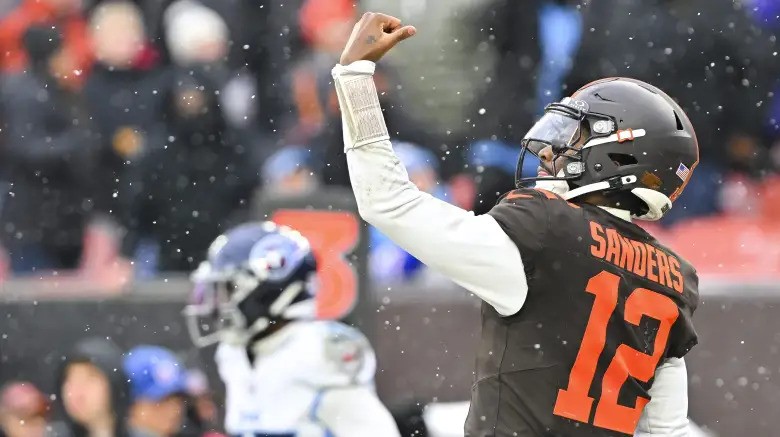
PHILADELPHIA, PA – To watch Shedeur Sanders play quarterback—with his pre-snap poise, his audacious no-look passes, his celebrated, unflappable “Shedeur Face”—is to witness more than a talented athlete. It is to observe a cultural reclamation project. His overwhelming support within the Black community, often chalked up simplistically to his confidence and swagger, is rooted in something far deeper than style. It is a profound, collective recognition. It is the applause of a community that sees in his assured success not just one man’s triumph, but a symbolic redress of a brutal, systemic history—a history whose scars are woven into the very DNA of Black American experience.

The Foundation: American Apartheid on the Playing Field
That history is an American Apartheid, a regime of exclusion not confined to the Deep South but sanctioned at the highest levels of national life, including the playing fields. From its inception in 1906 through the early 1970s, the NCAA operated as a gentlemen’s agreement for segregation, formally barring Black athletes from member institutions, particularly in the powerhouse conferences of the South. For seven decades, the Paul Robesons, Jackie Robinsons, and Jesse Owenses were brilliant, solitary exceptions proving a cruel rule. The Civil Rights Movement forced the gates open, leading to the rapid “tanning” of revenue sports by the 1980s. But the institutional response was not embrace, but a strategic recalibration of exclusion.

The Bureaucratic Barrier: When “Eligibility” Became the New Gate
When blatant segregation became illegal and immoral, the mechanisms of denial became bureaucratic. The NCAA’s evolving “initial eligibility” rules—Proposition 48, the Core Course requirements, sliding GPA scales tied to standardized tests—were weaponized as a more nuanced gate.
Legends like Georgetown’s John Thompson II and Temple’s John Chaney, towering figures who used their platforms without apology, called this what it was: racism. “The NCAA is a racist organization of the highest order,” Chaney declared in 1989, framing the rules as a new punishment for Black kids already punished by poverty. Thompson saw the cynical cycle: athletes were used as integration’s pawns under the guise of benevolence, then discarded with the same paternalistic logic when their numbers grew too great.

The Instinctual Knowledge: A Community Remembers What Was Lost
This is the buried trauma in the collective memory of Black sports fandom. It is the instinctual knowledge that for every Shedeur Sanders lighting up a Power 5 stadium today, there were countless Willie “Satchel” Pages, “Bullet” Bob Hayeses, and Doug Williamses of yesteryear who were denied the stage, their stats relegated to the glory of HBCU lore, their professional careers delayed or diminished. It is the understanding that the path was not cleared, but grudgingly conceded, inch by contested inch.

This brings us back to Shedeur. His journey is a direct rebuke to that entire historical project of exclusion.

Shedeur as Historical Agency, Not Just Athletic Talent
He began not at a traditional blue-blood program, but at Jackson State University, an HBCU, under his father’s tutelage. There, he didn’t just play; he dominated, showcasing a talent so undeniable it forced the mainstream to look to the HBCU, reversing the decades-long drain of talent from them. His subsequent transfer to Colorado and his record-shattering performance—37 touchdowns, 4,134 yards, Big 12 Offensive Player of the Year—wasn’t an assimilation. It was an annexation. He carried the HBCU-developed swagger into Boulder and made it the epicenter of college football.

His confidence, therefore, is read by the Black community as more than personal bravado. It is historical agency. It is the embodiment of a truth: “You could not keep us out forever, and now that we are in, we will not perform with grateful humility. We will excel with the unmistakable flair of those who know the cost of the seat we now occupy.” His much-discussed “swagger” is the posture of liberation from the historical narrative of being the excluded, the regulated, the “problem” to be managed by NCAA legislation.

The Echo in the Draft: A Familiar Story Reinforces the Bond
The fact that his prolific college career culminated in a fifth-round NFL draft pick—seen by many as a slight given his production—only reinforces the narrative. The community, schooled by history, sees the echoes: the subtle devaluation, the search for flaws in the Black quarterback, the institutional reluctance to anoint him the franchise cornerstone his college play warranted. Yet, even in that perceived slight, the support does not waver; it intensifies. Because the story is no longer about what the gatekeepers decide. It’s about what Shedeur, and by extension the community that sees itself in him, has already proven.

An Unfinished Battle, and a Symbol of Its Progress
The contemporary NCAA debate continues, now often couched in the softer language of “unintended consequences” for minority students, as noted by groups like the National Association for Coaching Equity and Development. But the shift from Chaney’s and Thompson’s explicit charges of racism to today’s milder objections itself tells a story of a battle partly won, yet ongoing.

Shedeur Sanders walks onto the field bearing the weight and the defiance of that unfinished battle. The Black community’s embrace is a celebration of his individual talent, yes, but it is also a collective, cathartic affirmation. It is the joy of witnessing a grandson of American Apartheid not just cross the forbidden line, but do so with a dismissive wave, a nod to the crowd, and a perfect spiral into the end zone. His confidence is their vindication. His swagger is their memory, weaponized, and set free.

“Coonish” Behavior: Stephen A. Smith, Jason Whitlock, and the Price of Modern Manumission

By Delgreco K. Wilson, Contributing Opinion Writer

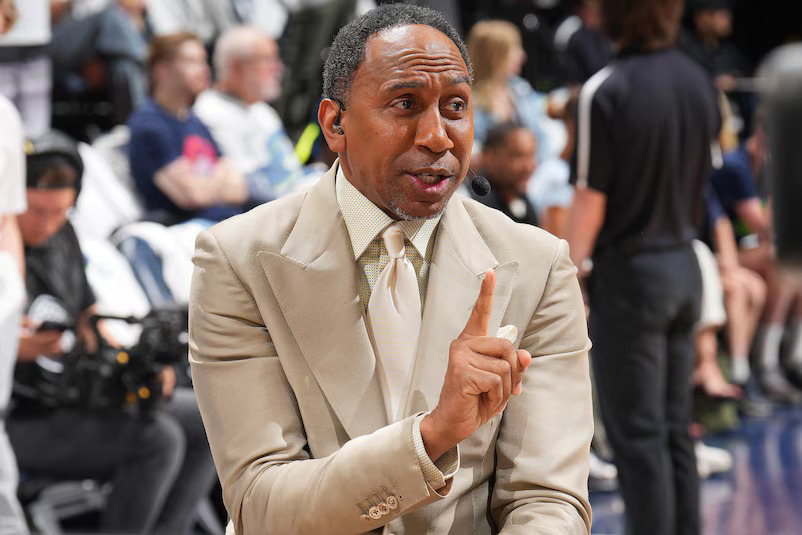
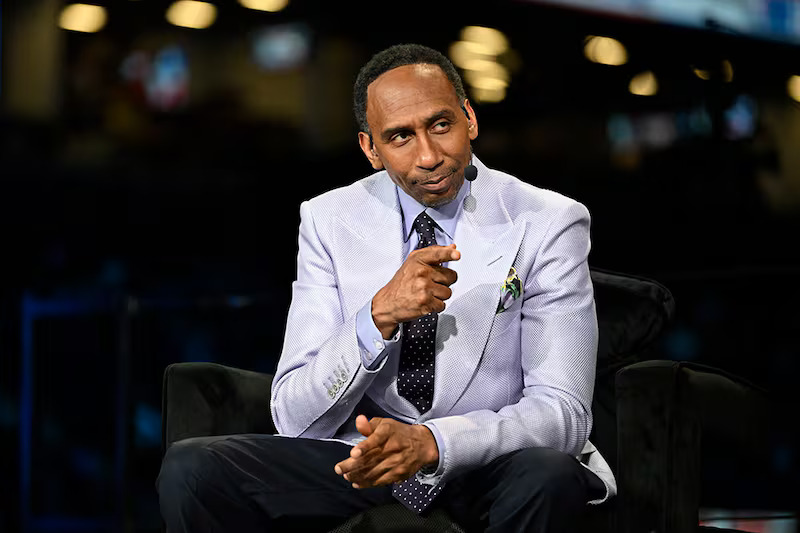
For centuries in America, a grim and paradoxical transaction has shadowed the Black quest for advancement: the exchange of communal fidelity for individual freedom. It is a bargain as old as the nation itself, rooted not in the brutality of the whip, but in the insidious mechanics of psychological and economic leverage. Today, we witness a modern, media-saturated iteration of this dynamic. In the sprawling arena of sports commentary, figures like Stephen A. Smith and Jason Whitlock have built lucrative empires. Their success, however, is shadowed by a persistent and bitter accusation from within the Black community: that they are “coons,” a devastating label of racial betrayal. Their critics are identifying a pattern that feels like a 21st-century performance of meritorious manumission—a striving for personal elevation and favor by servicing narratives that comfort a powerful, predominantly white conservative audience, often at the expense of Black solidarity.

The Historical Bargain: Labor for a Glimmer of Freedom

The foundation of this American transaction is centuries deep. The economic architecture of the early republic was built on Black labor without Black liberty. From the cotton fields that fueled the national economy to the domestic servitude that sustained its households, Black work was the indispensable engine. Yet, the profit from that labor was perpetually alienated. The promise, always dangling, was that exceptional service, superhuman diligence, or unwavering loyalty might be rewarded with a sliver of relief—a less cruel master, a chance to buy one’s family, a mythical pathway to acceptance. This established a corrosive template: advancement could be contingent on reinforcing the system’s logic and calming its conscience. The doctrine of “racial uplift” that followed Emancipation demanded impeccable, respectable conduct to assuage white America’s fears and guilt, proving worthiness for basic citizenship. Diligence became a currency, not just for wages, but for attempting to purchase dignity from a system that withheld it by design.

The Modern Marketplace: From Plantations to Podcasts

The post-Civil Rights era did not erase this template; it digitized and broadcast it. The terrain shifted from physical plantations to cultural and ideological ones. As structural and institutional racism persisted, a new marketplace emerged for Black voices willing to translate Black struggle for white audiences, particularly those eager to believe the work of racial justice is complete. This is where the spectacle of figures like Smith and Whitlock becomes a case study. Their playbook is not one of outright bigotry, but of strategic division and absolution, performed for mass consumption. They operate within a media ecosystem that generously rewards controversy that confirms existing biases, creating a powerful incentive to mine intra-community conflict for content that resonates with a broader, whiter audience.

The Playbook of Modern Manumission

Their performance manifests in several consistent, damaging patterns:

The Dilution of Collective Grievance. When vandals scrawled a racial slur on LeBron James’s home, Jason Whitlock dismissed it as a “disrespectful inconvenience,” arguing racism is “primarily an issue for the poor” and that wealthy Black people should not “embrace victimhood.” This is a classic maneuver. By creating a class hierarchy of pain, he fractures communal empathy and offers a narrative of exception. It tells white audiences that systemic racism is either overstated or a crutch for the unsuccessful, while offering successful Black individuals a ticket out of collective identity—if they renounce it.

The Policing of Black Expression. Stephen A. Smith faced backlash for instructing Black Congresswoman Jasmine Crockett on how she “should talk to the President,” a moment critics saw as enforcing respectability politics. This echoes the historical demand that Black anger be polished into palatable, non-threatening discourse. The transaction here is clear: temper your tone, conform to my comfort, and your voice will be amplified on my platform. It is a modern-day echo of being rewarded for “knowing one’s place” in the conversation.

The Strategic Alliance. Perhaps most revealing is the alignment with architects of racial backlash. Smith’s frequent appearances on Sean Hannity’s show are not incidental. Hannity, who trafficked in the racist “birther” conspiracy against President Barack Obama, represents a media ecosystem invested in denying the very structural racism that defines so much of Black American life. To be a welcomed guest in that house is to perform a powerful act of reassurance. It signals that the analysis will not be too sharp, the history not too inconvenient, the demands not too disruptive. This alliance is the clearest evidence of the transaction: access and platform in exchange for a veneer of ideological diversity that demands little substantive change.

A Spectacle Within the Spectacle: The Smith-Whitlock Feud

The bitter, very public feud between Smith and Whitlock themselves underscores the performative nature of this space. They trade nuclear insults, with Smith calling Whitlock “the devil in the flesh” and “worse than a white supremacist,” while Whitlock labels Smith a “fraud” and a “pathological liar” installed by corporate powers. This is more than personal animus; it is a brutal competition within a narrow lane. They are jousting for the crown of the most compelling Black voice in the conservative-coded spectacle, each accusing the other of the very inauthenticity and opportunism their critics see in them both. It is a meta-commentary on the transaction itself, exposing the ruthless jockeying for position and favor that underlies it. Their conflict dramatizes the ultimate isolation of this path: a solitary pursuit of status that necessitates tearing down the nearest competitor, leaving solidarity in ruins.

The Justification for Disavowal: Preserving Collective Struggle

And so, the community’s fierce condemnation—the label of “coon,” the disavowal—is not a denial of their right to individual opinion. It is a historical and political judgment. It is the recognition that their chosen path to “merit” mirrors the old, soul-crushing bargain. They are seen as seeking manumission from the burdens of racial solidarity by performing a service: managing Black anger, explaining away Black pain, and validating the view that the primary remaining barriers are personal, not systemic.

The justified fury they provoke is born of a deep understanding that true liberation has never been won through these solitary transactions. The March on Washington, the Civil Rights Act, the political power of the Black electorate—these were won through collective struggle, un-bought and un-bossed. To see Black media elites today build personal wealth and brand power by seemingly undermining that collective project feels like a profound betrayal. It is the spectacle of the historically shackled selling a blueprint for lighter chains, and calling it freedom.

Conclusion: The Unfinished Story and the Refusal

In the end, the saga of Smith and Whitlock is a painful reflection of an unfinished American story. It reveals that the marketplace for racial commentary still rewards those who make the complex simple, the systemic personal, and the uncomfortable soothing. Their success is a testament not to their individual genius, but to the enduring demand for a certain kind of Black voice—one that, for a price, helps assuage a nation’s guilt without demanding the fundamental change that true absolution requires. The Black community’s disowning of this model is not an act of censorship, but an act of preservation. It is a refusal to let the transaction of the past define the value of their future. It is a declaration that some forms of meritorious manumission are, in fact, a more sophisticated bondage.

###

Delgreco Wilson 

Wilson formerly taught Comparative Politics and International Relations at Lincoln University. He is a leading political analyst, educator, and advocate whose work centers on empowering Black Americans through a deeper understanding of political strategy and its historical roots in the fight against systemic racism and white supremacy. A prominent voice in the Greater Philadelphia Region, Wilson brings a wealth of academic rigor and real-world insight to his analysis of Black political thought and action.

Wilson’s expertise extends beyond the classroom. His incisive columns and articles have been featured in prominent publications such as the Philadelphia Inquirer,  Philadelphia Tribune, Baltimore Afro-American  and Delaware County Daily Times. A sought-after commentator, he regularly contributes to radio programs and podcasts across the Mid-Atlantic region, offering sharp analysis and actionable strategies for advancing racial justice and equity.

The Dangerous Conflation of Profit and Principle: Stephen A. Smith and the Crisis of Black Political Commentary

by Delgreco K. Wilson, M.A.

CAMDEN, NJ – When the logic of the market replaces the ethics of democracy in political discourse, we all lose.

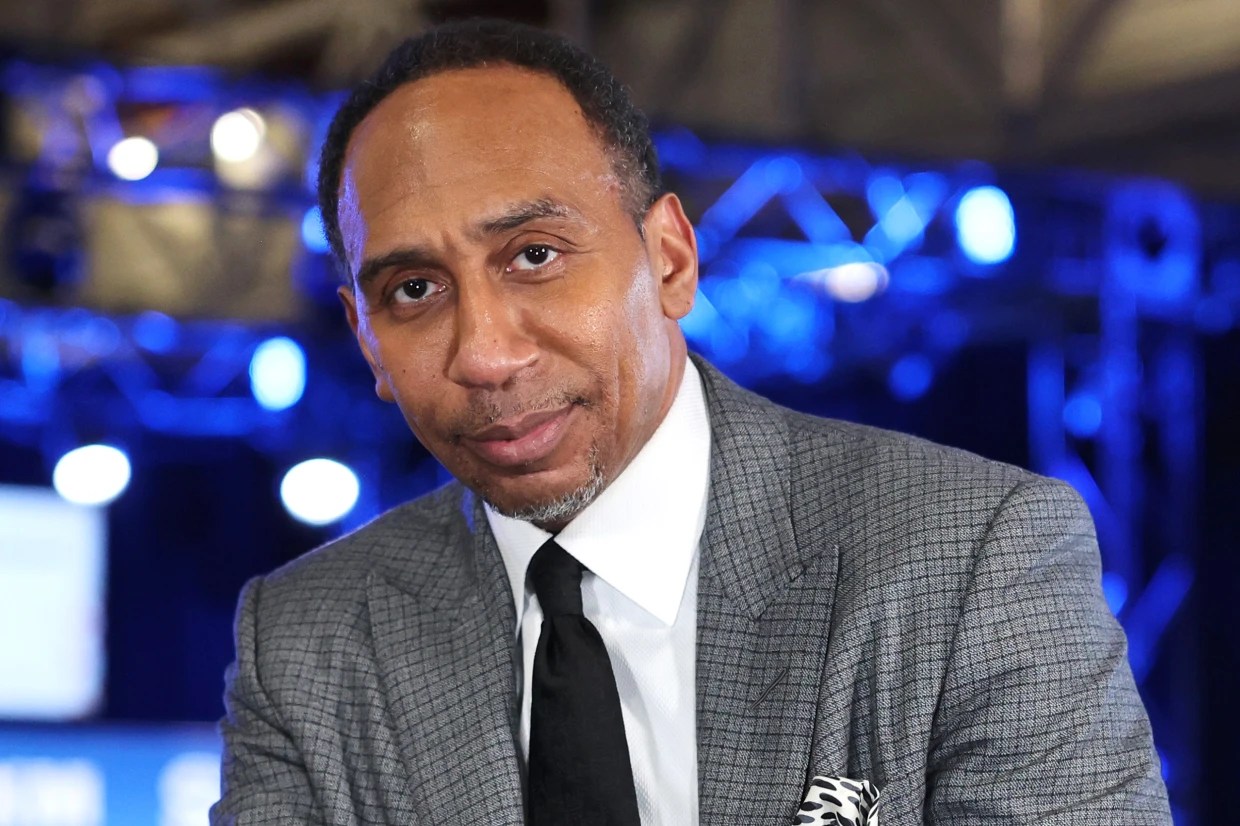
In the annals of American sports commentary, few declarations have been as revealing as Stephen A. Smith’s famous professional mantra: “I wake up every day asking, ‘how can I make my bosses more money?’ and then ‘how can I get some of it?'” This philosophy has propelled him to the pinnacle of sports entertainment, culminating in a recent ESPN contract worth over $100 million for five years. But when this same transactional worldview—where value is measured exclusively in revenue and influence is calibrated for profit—extends into the realm of political analysis, it threatens to degrade our democratic discourse and undermines the particular responsibilities of Black public figures in an era of political crisis.

Smith’s foray into political commentary and his openness to a 2028 presidential run have made him a lightning rod in Black intellectual circles, where his commentary is increasingly viewed as vacuous at best and dangerously aligned with MAGA interests at worst. The controversy surrounding him represents more than just another celebrity dabbling in politics; it exemplifies the dangerous convergence of entertainment and governance in modern America and resurrects painful historical questions about the pressure on Black figures to seek validation from white-dominated institutions.

The Profit Motive in Political Commentary: When Everything Becomes a Business

Stephen A. Smith’s business philosophy, however successful in sports entertainment, becomes profoundly problematic when applied to political analysis. The fundamental incompatibility lies in their core values: democratic discourse requires truth-seeking, principled argument, and concern for the common good, while market logic prioritizes profit, audience growth, and personal brand expansion. Smith has explicitly acknowledged his lack of political expertise, telling The Washington Post, “I’m certainly not an aficionado by any stretch of the imagination… Most Americans are not aficionados. They don’t know all the intimacies and intricacies of every single issue”. Yet rather than humbly acknowledging these limitations, he presents them as a credential of authenticity.

This approach has tangible consequences. Political analysis driven by entertainment values gravitates toward sensationalism over substance, conflict over consensus, and viral moments over nuanced truth. Smith’s commentary follows this pattern—loud, confident, and often lacking in policy depth. As journalist Carron J. Phillips noted in The Contrarian, “Politics, like elections, have real-world consequences. Thick skin is mandatory in the political landscape. And, given recent examples, Smith hasn’t proved he can take a punch in this arena”. The same performance that works for sports debate becomes irresponsible when discussing issues like tariffs, foreign policy, or civil rights.

Smith’s political rise reflects what happens when celebrity status masquerades as expertise. His appearance in presidential polls and his serious consideration of a 2028 run—despite having never held office or demonstrated deep policy knowledge—speaks to our degraded political landscape. As Bill Whalen, a former media consultant for Arnold Schwarzenegger, observed, “The question is, what does Stephen A Smith believe in at the end of the day?… Where is Stephen A Smith on abortion? Where is he on DEI? Where is he on quotas and affirmative action? Where is he on crime? Where is he on spending? The list goes on. You just don’t know”.

Historical Context: The Burden of Seeking White Validation

To understand the strong reaction to Smith’s political commentary within Black communities, one must appreciate the historical burden of what it has meant for Black Americans to navigate white-dominated institutions and seek acceptance within them. This dynamic is not rooted in any inherent trait of Black people but in powerful structures created by centuries of oppression:

  • The Legacy of Slavery and Jim Crow: For centuries, Black people were systematically dehumanized, with the slave master’s approval often meaning the difference between better treatment and brutal punishment. Under Jim Crow, access to resources, justice, and safety frequently depended on being deemed “respectable” by the white power structure.
  • Respectability Politics: This strategy emerged whereby marginalized groups attempted to police their own members to align with dominant culture’s values, hoping this would grant them social mobility and rights. The unspoken promise was that if Black people acted “properly,” they would be seen as more human and deserving by white society.
  • Gatekeepers of Opportunity: Throughout American history, the primary gatekeepers of economic, political, and cultural power—CEOs, university admissions officers, publishers, Hollywood executives—have been overwhelmingly white. Gaining validation from these gatekeepers often appeared the most direct path to economic mobility, educational access, and cultural representation.

Against this historical backdrop, Stephen A. Smith’s approach reads to many critics as a modern manifestation of these dynamics—a Black public figure gaining platform and reward through amplifying viewpoints that align with white conservative interests rather than community needs.

Stephen A. Smith’s Political Evolution and Black Opposition

Smith’s political positioning has evolved into what he describes as a “fiscal conservative and a social liberal” who is “utterly disgusted” with the Democratic Party. While he claims the mantle of an independent thinker, his commentary consistently aligns with MAGA talking points that have drawn criticism from Black intellectuals and community members.

Table: Stephen A. Smith’s Political Positioning and Community Response

Smith’s commentary on Black voting patterns has been particularly contentious. He has lamented what he calls Black voters’ “unconditional loyalty” to Democrats, arguing that this “disenfranchises” the community by reducing its political leverage. While this argument contains a strategic logic, many critics note that it ignores the historical reasons for Black alignment with Democrats—including the party’s support for civil rights legislation and the Republican Party’s embrace of voter suppression tactics and politicians with white nationalist ties.

The backlash against Smith reflects a broader rejection of what many see as his transactional approach to racial justice. His commentary often frames political choices in terms of market-style negotiation rather than principles of justice or historical solidarity. This approach strikes many Black critics as not just politically naive but historically ignorant of how racial hierarchy actually functions in America.

The perception of Smith as aligned with MAGA interests intensified when Donald Trump himself endorsed a potential Smith presidential run, saying he’d “love to see him run” and praising his “great entertainment skills”. For many Black observers, Trump’s endorsement confirmed Smith’s alignment with political forces that have shown consistent hostility to Black civil rights and democratic participation.

Conclusion: Beyond Transactional Politics

Stephen A. Smith’s extension of his profit-first philosophy into political commentary represents a dangerous narrowing of democratic possibility. It reduces citizenship to a transaction and political discourse to entertainment. The strong negative response from Black intellectual circles reflects not just disagreement with his specific positions but a profound understanding of what happens when community interests are subordinated to personal brand-building and revenue generation.

The challenge for Black communities—and for American democracy broadly—is to resist the siren song of transactional politics that measures value primarily in ratings and revenue. What makes Stephen A. Smith’s political commentary so concerning is not that he holds conservative views, but that his entire approach to politics appears to mirror his approach to business: everything is a negotiation, every principle has a price, and the highest value is expanding one’s own platform and profit.

As we navigate the complex political landscape of 2025 and look toward future elections, the need for authentic representation grounded in community accountability has never been more urgent. The alternative—a political discourse dominated by entertainment values and personal profit motives—threatens to complete the corrosion of our democratic institutions. Black communities’ rejection of Stephen A. Smith’s political brand represents not closed-mindedness but a hard-won understanding that some things—justice, representation, human dignity—should never be put on the auction block.

F*ck Him! Why Black Athletes Should Shun Auburn’s Bruce Pearl

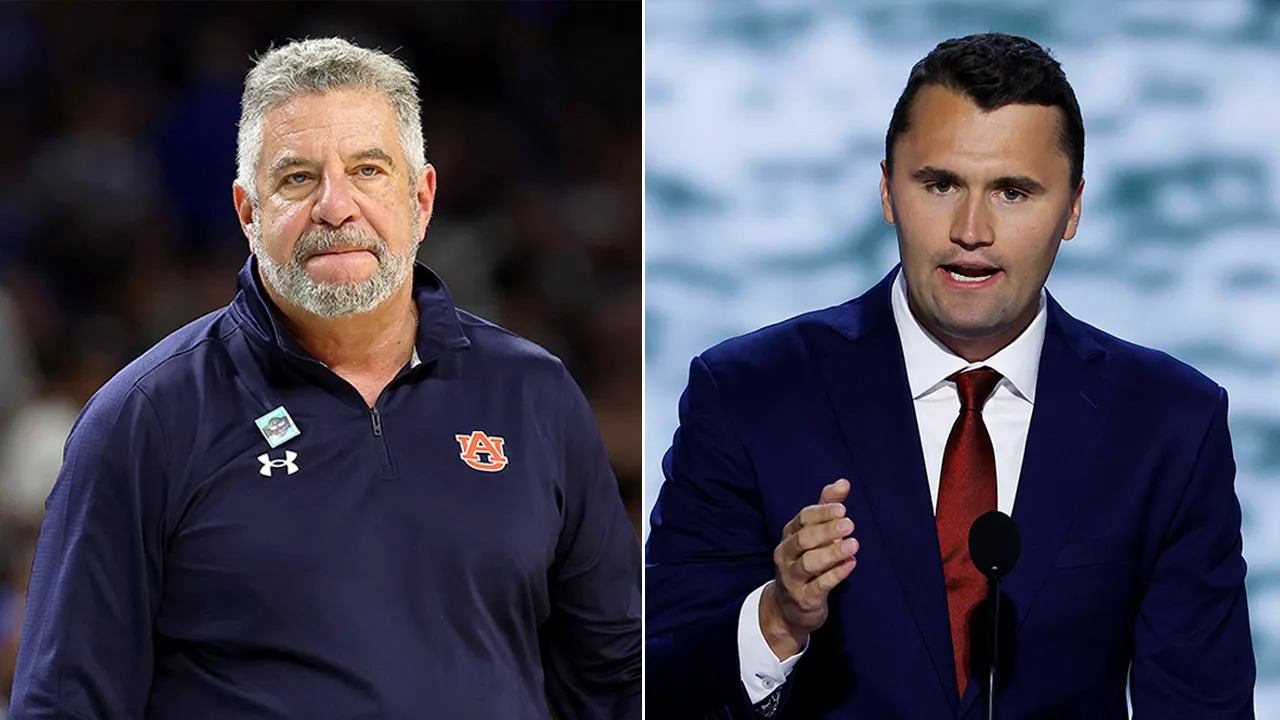
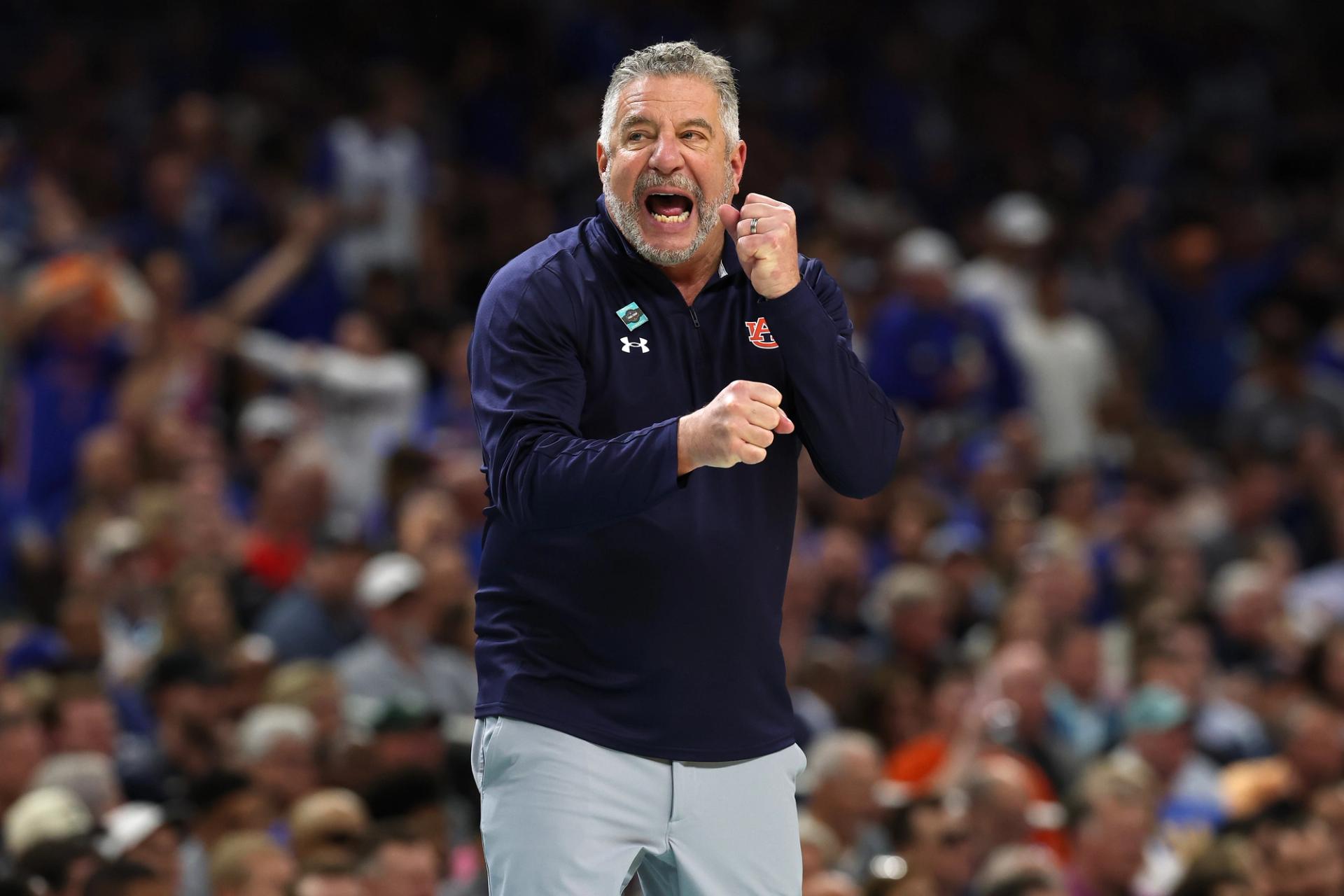
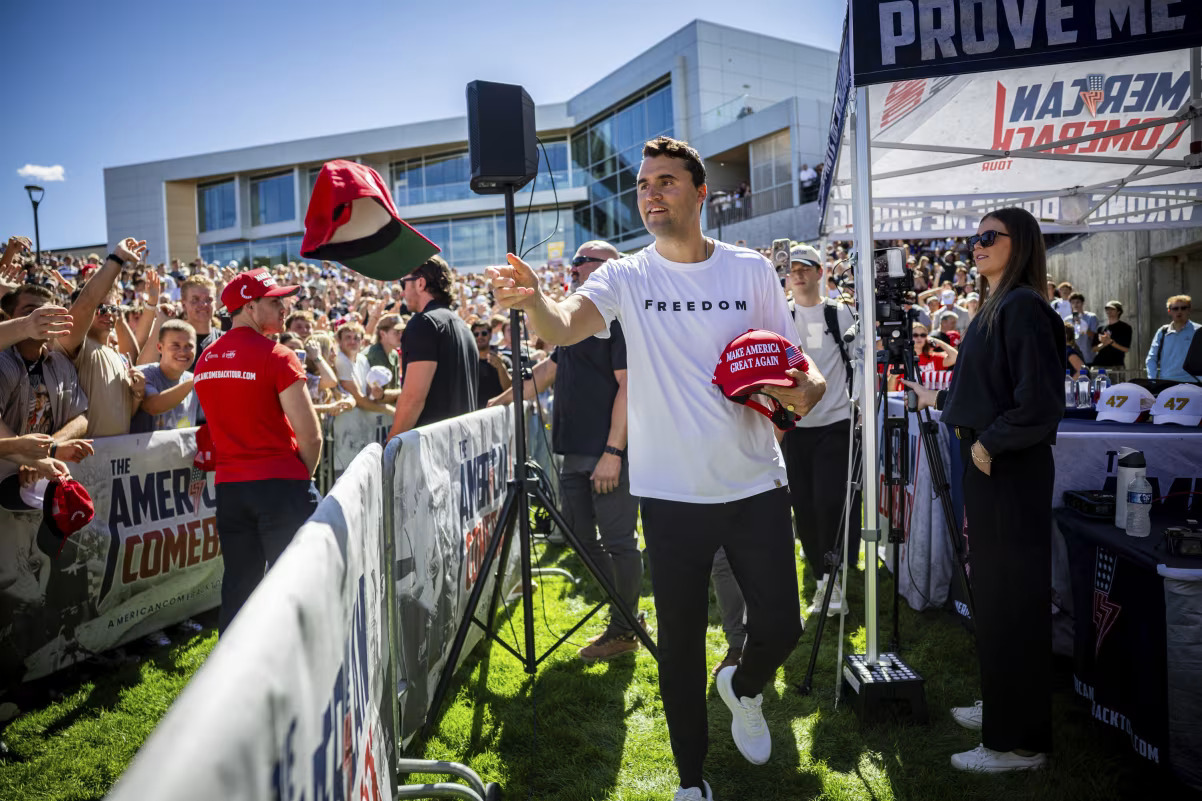
PHILADELPHIA, PA – In the aftermath of the assassination of far-right commentator Charlie Kirk, a predictable and distressing pattern has emerged. His death has been met with solemn tributes from powerful allies who have chosen to whitewash a legacy defined by racial animus. Among them is Bruce Pearl, the high-profile head coach of Auburn University’s men’s basketball team. In voicing his “unequivocal support” for Kirk and stating that Kirk “was right about everything he said,” Pearl has offered a profound insight into his own worldview.

For the elite Black basketball prospects being relentlessly recruited by Pearl, and for the parents who entrust their sons to him, this endorsement is not a minor political aside. It is a glaring red flag. It reveals an alignment with a ideology that fundamentally devalues their humanity. In the high-stakes world of college athletics, where coaches wield immense power over the young men in their program, aligning with a coach who champions a racist provocateur is not just a risk—it is an unacceptable compromise.

The Unvarnished Racism of Charlie Kirk

To understand the gravity of Pearl’s endorsement, one must first confront the uncontested record of Charlie Kirk’s rhetoric. This was not a man engaged in good-faith political debate; he was a propagandist who built a career on dehumanization and racial stereotyping. His comments, meticulously documented over years on his show, reveal a deeply ingrained pattern of racism and white supremacy.

Kirk’s philosophy was rooted in the “great replacement” conspiracy theory, a white supremacist trope that claims a deliberate plot is underway to diminish the influence of white people. He stated, “The great replacement strategy, which is well under way every single day in our southern border, is a strategy to replace white rural America with something different”. This theory, which has inspired mass shooters in Pittsburgh, El Paso, and Buffalo, was not a fringe element of his commentary but a central pillar.

His views on Black Americans were particularly venomous and relied on the oldest and most harmful stereotypes. He trafficked in the racist notion of Black criminality, asserting without evidence that “prowling Blacks go around for fun to go target white people, that’s a fact”. He repeatedly questioned the intelligence and competence of Black people, especially in positions of authority. Upon seeing a Black pilot, his first thought was, “boy, I hope he’s qualified” . He reduced accomplished Black women to affirmative action tokens, crudely speculating that a Black customer service worker might be a “moronic Black woman” who got her job not through excellence but through quota systems. He went further, claiming that prominent Black women like Michelle Obama and Supreme Court Justice Ketanji Brown Jackson lacked the “brain processing power” to be taken seriously and had to “steal a white person’s slot”.

His revisionist history on race was equally alarming. In a debate, he callously argued that “Black America is worse than it has been in the last 80 years,” downplaying the horrific era of Jim Crow lynching that saw thousands of Black Americans murdered by racist mobs. When confronted with this history, he dismissed it. He even labeled the landmark Civil Rights Act of 1964 a “mistake” that was turned into an “anti-white weapon.”

This body of work—a relentless campaign to question, demean, and belittle Black achievement and Black pain—is what Bruce Pearl has deemed “right about everything.”

The Power of a Coach and the Failure of Leadership

The role of a major collegiate basketball coach extends far beyond drawing up plays. For the young athletes who leave their homes to play for them, coaches become surrogate parents, mentors, and the most significant authority figures in their lives. They shape not only athletes but young men. Their influence touches on everything from discipline and work ethic to mental health, social awareness, and personal identity.

A coach’s worldview matters. It permeates the culture of the team. A coach who believes, as Kirk did, that systemic racism is a myth, will be ill-equipped to understand or support a player grappling with the realities of being a Black man on a predominantly white campus or dealing with racial abuse from fans. A coach who tacitly endorses the idea that Black people are prone to criminality will bring that bias to his interactions with his players. A coach who champions a movement that frames their very presence as a “replacement” of white America cannot be a true guardian of their well-being.

Bruce Pearl has voluntarily disqualified himself from this sacred trust. By fully embracing Kirk’s ideology, he has signaled that he operates in a reality where the legitimate fears, struggles, and historical oppression of Black people are either invisible or irrelevant to him. How can a young Black man expect empathy from a coach who applauds a man that called George Floyd a “scumbag”? How can a player trust a mentor who aligns with someone who believes the Civil Rights Act was an “anti-white” mistake?

This is not a partisan issue; it is a human one. It is about basic dignity. As an article in First and Pen argued, Pearl’s support for Kirk is part of a pattern of “racial politics” infused with “niceties” to aid recruitment, a strategy that allows him to benefit from the labor of the very people whose humanity his chosen ideology denigrates.

Auburn’s Troubling Environment and the Viable Alternatives

This is not an abstract concern. Auburn University has recently been grappling with its own serious allegations of racial inequity. A lawsuit filed by Travis Thomas, a former Black athletic academic advisor, alleges a hostile work environment and wrongful termination after he reported being berated by white supervisors and raised concerns about a grade being changed for a football player. While a court dismissed the hostile work environment claim due to the high legal bar for such cases, it allowed his claims of race discrimination and retaliation to proceed, noting a pattern of antagonism that followed his complaints. This case paints a picture of an athletic department where Black employees can feel marginalized and where speaking up carries risk.

Furthermore, the broader environment for Black college athletes is often psychologically taxing. They frequently compete at Predominantly White Institutions (PWIs) where they are a minority, face racial microaggressions, and often feel unsupported by their institutions. They are pushed to their physical and mental limits by a system that has been criticized for profiting from their labor. In this high-pressure context, the need for a coach who is not just a tactical genius but a compassionate leader who understands their experience is paramount.

Prospects have a choice. They are not obligated to subject themselves to a coach who has endorsed a racist worldview. There are countless programs across the country with coaches who not not only excel at winning games but also actively strive to create an inclusive, supportive, and empowering environment for their Black players. These coaches understand that nurturing a player’s mental health and personal growth is just as important as developing his jump shot. They see the whole person, not just the athlete.

A Choice About More Than Basketball

For a top recruit, the decision often seems to be about television exposure, tournament appearances, and pathway to the pros. These are important factors. But the choice of a coach is also a choice about what values will be reinforced during some of the most formative years of a young man’s life.

Playing for Bruce Pearl means playing for a man who has stated that the provocateur who trafficked in the “great replacement” theory and called Black pilots unqualified was “right about everything.” It means accepting that your coach is on record supporting a movement that sees your success as a threat and your presence as a problem.

Black athletic talent is not a commodity to be harvested by those who would deny its full humanity. It is a gift that should be nurtured by leaders who respect it, who understand the context from which it comes, and who are committed to defending the player as fiercely as they coach him. Bruce Pearl, by his own admission, is not that leader. Elite Black prospects and their families would be wise to believe him, and to take their talents to a program where they are valued not for what they can do on the court, but for who they are.

On the Death of a Racist: Mourning, Morality and the Machinery of Hate

PHILADELPHIA, PA – The brutal murder of Charlie Kirk, the polarizing right-wing activist and founder of Turning Point USA, presents a complex moral quandary, particularly for the Black Americans he so frequently targeted. How does a community mourn a man who dedicated his public life to questioning its humanity, intelligence, and rightful place in this nation? The answer lies not in the simplistic binaries of celebration or grief, but in a clear-eyed analysis of the system he served and a reaffirmation of the values he sought to undermine.

First, a necessary human gesture: to his family, friends, and loved ones, we extend sincere condolences. The loss of a son, a partner, a friend is a profound and private sorrow, a pain no one deserves. Our empathy for their personal grief is a measure of our own humanity, a quality that was often absent in the object of their mourning.

But public figures live a public life, and their legacy is rightly subject to public scrutiny. To assess Kirk’s impact, one must move beyond a laundry list of vile comments—though the list is long and telling. His mocking of Black pilots, his demeaning of Black women like Michelle Obama as lacking “the brain processing power” to be taken seriously, his characterization of George Floyd as a “scumbag,” his promotion of the antisemitic “Great Replacement” theory, and his relentless crusade against any effort to teach America’s racial history or promote diversity—these were not gaffes or slips. They were, as Neely Fuller Jr. would frame them in his seminal work, The United Independent Compensatory Code/System/Concept, consistent, functional components of a larger system.

Fuller’s conceptualization of racism/white supremacy is not about individual malice but about a comprehensive, global power structure. He posits that this system operates through established patterns across ten areas of human activity: economics, education, entertainment, labor, law, politics, religion, sex, and war/counter-war. Its goal is the continued domination of white people over non-white people. Through this lens, Charlie Kirk was not an outlier but a highly effective mechanic for this machine.

His activism was a case study in applying Fuller’s framework. In education, he fought to dismantle diversity initiatives and silence teachings on systemic racism, ensuring a curriculum that maintains a white-dominated historical narrative. In economics and labor, his rhetoric casting Black professionals as unqualified “diversity hires” was a direct action to undermine their economic standing and justify their exclusion from opportunity. In law, his dismissals of police brutality victims sought to legitimize state violence against Black bodies. In politics, his organization worked to mobilize a youth base around a platform that explicitly framed racial justice as a threat.

Kirk understood that in the entertainment arena of modern media, outrage is currency. He capitalized on racist activism, monetizing contempt and building a lucrative brand by feeding a hunger for a world where white grievance remains central and unchallenged. He was not a lone wolf howling into the void; he was a prolific supplier for the vast network of what Fuller would call the “system of white supremacy.”

So how do well-intentioned Black people—the primary targets of his project—respond to his death? With a steadfast refusal to be consumed by the very hatred he peddled.

The most powerful response is not to dance on his grave—that would be to engage in the same dehumanization he practiced. Nor is it to perform a forgiveness not yet earned. It is to continue the diligent, unglamorous work of building a world that renders his ideology obsolete. It is to:

1. Mourn the Harm, Not the Man. Grieve for the people his words wounded, for the college student who heard her existence debated as a “slot” stolen from a white peer, for the professional whose achievements were clouded by his toxic narrative. Channel the energy of outrage into shoring up these very communities, supporting Black mental health initiatives, and defending the DEI programs he attacked, which remain critical pathways to equity.

2. Expose the System, Not Just the Symptom. Kirk was a symptom of a enduring disease. His death does not mean the disease is cured. Use his legacy as a teachable moment to explain, using Fuller’s comprehensive model, how such figures are manufactured and rewarded. Analyze how they plug into the areas of economics (fundraising off hate), politics (voter mobilization through fear), and law (shaping judicial nominees). The goal is to dismantle the machinery, not just applaud the breaking of one cog.

3. Reclaim the Narrative with Unassailable Excellence. The ultimate rebuttal to a man who questioned Black capability is to live in defiant brilliance. To fly the planes, lead the corporations, teach the classes, create the art, and write the laws with unwavering excellence. It is to live in the full, complex, and triumphant humanity that his ideology denied.

Charlie Kirk’s death is a footnote. The struggle he exemplified is an ongoing volume. The appropriate response from the Black community is a collective, weary sigh for the unnecessary pain he caused, followed by a deep breath and a renewed commitment to the work. It is the work of affirming life in the face of his death-driven rhetoric. It is the work of building, in Fuller’s terms, a “justice system” to replace the “white supremacy system.” That work—dignified, determined, and unstoppable—is the most profound mourning and the most powerful rebuke imaginable.

The New Jim Crow: Why BLACK ATHLETES Must Respond

By Delgreco K. Wilson
Aug. 9, 2025

PHILADELPHIA, PA – The contemporary push by MAGA Republicans to redraw congressional maps in states like South Carolina, Texas, Florida, and Ohio represents nothing less than a 21st century iteration of the Jim Crow-era voter suppression tactics that systematically disenfranchised Black Americans following Reconstruction. This modern assault on Black political power—exemplified by South Carolina gubernatorial candidate Ralph Norman’s bid to eliminate the state’s sole majority-Black congressional district—follows the same playbook white supremacists used after the Civil War: using ostensibly race-neutral mechanisms to achieve racially discriminatory outcomes while maintaining a thin veneer of legal justification. As these efforts intensify, Black student-athletes who power the billion-dollar high major college sports industrial complex face a moral imperative: withhold their talents from institutions in states actively suppressing Black votes, just as civil rights activists used economic boycotts to combat segregation.

The Blueprint of Suppression: From Reconstruction to Redistricting

The post-Reconstruction dismantling of Black political participation provides the historical template for today’s Republican redistricting schemes. Following the 15th Amendment’s ratification in 1870, southern states implemented an arsenal of discriminatory measures—literacy tests, poll taxes, grandfather clauses, and all-white primaries—that reduced Black voter registration to single digits within decades. Mississippi’s 1890 constitutional convention openly admitted its purpose was to “reduce the colored vote to insignificance” without explicitly violating the 15th Amendment. The results were catastrophic: by 1920, Louisiana’s 130,000 registered Black voters dwindled to just 1,342.

Today’s MAGA Republican mapmakers employ nearly identical tactics with updated jargon. The Supreme Court’s 2024 Alexander v. South Carolina NAACP decision—which upheld South Carolina’s congressional map despite evidence it “bleached” 30,000 Black voters from Charleston County—established a troubling precedent. Writing for the 6-3 conservative majority, Justice Samuel Alito created nearly insurmountable barriers for proving racial gerrymanders, requiring plaintiffs to “disentangle race and politics” in regions where race and party affiliation correlate at 90%. This legal framework enables what Justice Elena Kagan condemned as “sorting citizens by race” under the guise of partisan gerrymandering.

The South Carolina Case Study: MAGA’s Modern-Day Vardaman

Ralph Norman’s push to dismantle Rep. Jim Clyburn’s 6th District mirrors the rhetoric of Mississippi Governor James Vardaman (1904-1908), who vowed to use “any device” necessary to maintain white supremacy. Norman’s public rationale—that a 7-0 Republican delegation would help “President Trump pass his agenda”—masks the racial impact: eliminating South Carolina’s only Black-majority district in a state where 30% of residents are Black. The 6th District was originally created in the 1990s to comply with the Voting Rights Act after centuries of Black political exclusion.

Legal experts note this violates Section 2 of the Voting Rights Act, which requires minority communities to have “an opportunity to elect representatives of their choice.” The ACLU’s Allen Chaney calls Section 2 an “impenetrable bulwark” against such plans, but the Supreme Court’s recent rulings have weakened these protections. Norman’s proposal follows South Carolina Republicans’ successful 2021 redistricting that made the neighboring 1st District safely Republican by excising Black Charleston neighborhoods—a move the Supreme Court sanctioned in Alexander.

The National MAGA Playbook: Texas, Florida, and the New Voter Suppression Complex

South Carolina’s efforts are part of a coordinated national MAGA strategy:

  • Texas Republicans seek to gain five new GOP House seats through redistricting, with Trump declaring they’re “entitled” to them
  • Florida Governor Ron DeSantis signed a 2022 map dismantling two Black-performing districts, which courts initially blocked before conservative appellate rulings allowed it
  • Ohio Republicans repeatedly defied state Supreme Court orders to stop using unconstitutionally gerrymandered maps

These states share Reconstruction’s sinister innovation: using technical legality to mask racial disenfranchisement. Just as Mississippi’s 1890 poll tax avoided mentioning race while devastating Black turnout, today’s GOP cites “partisan fairness” while surgically removing Black voters from competitive districts. The Princeton Gerrymandering Project gives South Carolina’s map an “F” for fairness and competitiveness, creating districts where general elections are irrelevant and representatives cater only to far-right primaries.

“If 5-star recruits en masse chose Michigan over Alabama, or UCLA over Texas, the message would resonate louder than any court ruling.

The Athletes’ Dilemma: Billion-Dollar Bodies, Second-Class Citizenship

Black athletes—particularly in revenue-generating football and basketball programs—face a moral contradiction: their labor funds universities in states actively suppressing their communities’ votes. Consider:

  • Southeastern Conference (SEC) schools generated $852 million in 2022 athletics revenue, predominantly from Black football players
  • Clemson (SC) and Texas A&M football programs each exceed $150 million annual value
  • NCAA Tournament basketball broadcasts net $1 billion yearly, powered, primarily, by Black athletes

Yet these same states:

  • Host 63% of all restrictive voting laws passed since 2021 (Brennan Center)
  • Contain 9 of 10 worst Black voter suppression states (Northern Illinois University)
  • Are dismantling majority-minority districts like Clyburn’s

The Boycott Imperative: Leveraging Athletic Capital for Civil Rights

A coordinated boycott by elite Black recruits could achieve what lawsuits cannot: imposing economic consequences for voter suppression. Potential strategies:

  1. Targeted Recruitment Strikes
  • Top 300 football and Top 100 boys and girls basketball recruits pledge to avoid SEC/ACC schools in suppression states
  • Current suppression state players transfer to HBCUs or northern schools (Michigan, Ohio State)

2. Game-Day Protests

  • Kneeling during alma maters in state capitols (e.g., South Carolina State House visible from USC stadium)
  • Wearing “Votes Over Victories” jerseys during warmups

3. NIL Collective Bargaining

  • Athlete-led protests demand universities lobby against suppression laws
  • Redirect a portion of endorsement money to voting rights groups

History shows economic pressure works. The Montgomery Bus Boycott (1955-56) crippled transit revenues, forcing desegregation. Today, a 20% decline in SEC football ratings could cost ESPN $285 million annually—enough to spur change.

Counterarguments and Complexities

Critics will claim:

  • “Sports and politics shouldn’t mix”: But stadiums fly state flags; coaches earn millions from public funds
  • “It hurts Black athletes’ futures”: Yet NFL/NBA scouts will find talent anywhere (see: Antonio Brown from Central Michigan)
  • “It’s unfair to students”: More unfair than losing voting rights?

The NCAA’s own history shows activism works. After 1969, when Black Texas Western players boycotted segregated facilities, the Southwest Conference integrated.

Conclusion: From Reconstruction to Redistribution of Power

The MAGA redistricting push proves that voter suppression remains the GOP’s most potent tool—updated with GIS precision rather than burning crosses. As in 1896, when Plessy v. Ferguson sanctioned “separate but equal,” today’s Supreme Court has greenlit racialized gerrymandering through Alexander.

Black athletes now stand where sharecroppers once did: exploited for economic value while denied full citizenship. Their predecessors fought poll taxes with protest; today’s stars must weaponize their billion-dollar leverage. If 5-star recruits en masse chose Michigan over Alabama, or UCLA over Texas, the message would resonate louder than any court ruling.

As Rep. Clyburn—whose district faces elimination—told the Post and Courier, this is about “absolutism.” The response must be equally absolute: no Black knees on fields in states that kneel on Black necks at ballot boxes. The playbook exists—from Reconstruction’s martyrs to Colin Kaepernick. Time to run the damn play.

The Vital Role of Civil Society in Preserving Democracy: Lessons from Blanche Nixon’s Legacy

By Delgreco K. Wilson

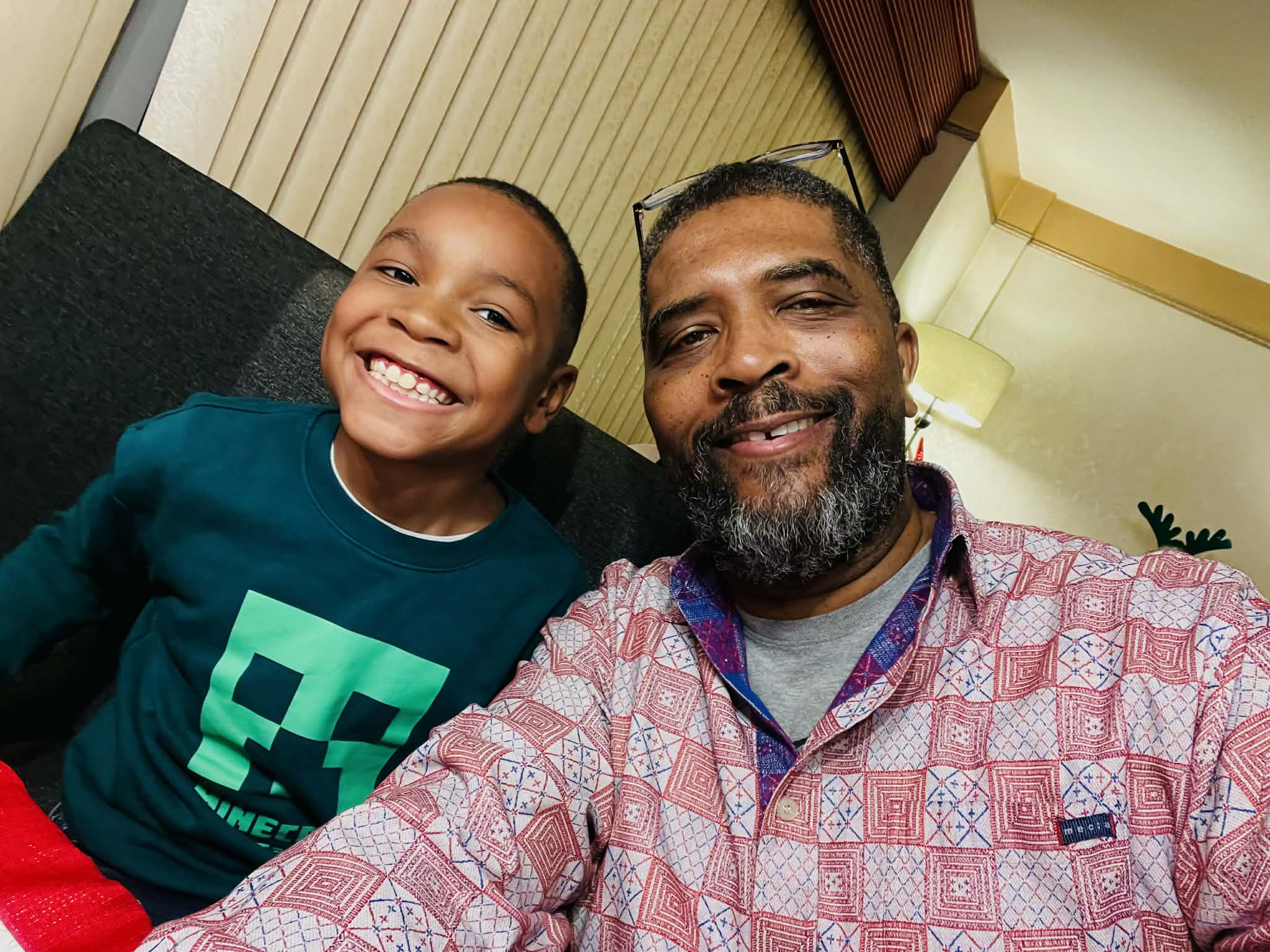
PHILADELPHIA, PA — On a bright afternoon this week, my family gathered at the Blanche A. Nixon/Cobbs Creek Branch of the Free Library of Philadelphia for a rededication ceremony honoring my great-aunt’s legacy. Blanche Nixon was a petite but formidable woman, a relentless advocate for the children of Southwest Philadelphia, who believed fiercely in their potential. “There’s no such thing as a bad child,” she often said, and her life’s work reflected that conviction. She understood that civil society—the network of libraries, schools, churches, and community organizations operating outside direct government control—was the lever by which marginalized youth could be uplifted, their talents nurtured, and their futures secured.

The Free Library of Philadelphia, Blanche A. Nixon Branch, Cobbs Creek

The timing of this celebration could not be more significant. As America’s 250th anniversary approaches, the nation finds itself at a precarious juncture, one in which the very foundations of an inclusive, truthful historical narrative are under siege. Public institutions—particularly libraries—will be called upon as never before to sustain democracy by preserving access to knowledge, fostering civic engagement, and resisting the erosion of fact in favor of political expediency.

The Assault on Truth and the Role of Civil Society

Recent years have seen a deliberate campaign to narrow the scope of American history, stripping it of its complexities and contradictions. President Donald Trump’s executive order targeting so-called “critical race theory” in schools was just one salvo in a broader effort to enforce a sanitized version of the past—one that ignores the competing traditions of liberalism, civic republicanism, and the ascriptive hierarchies of racism, nativism, and sexism that have shaped the nation.

Delgreco K. Wilson (author), Kim Wilson (sister) and Lea Wilson (mother)

Republican-led states have accelerated this trend, passing laws that restrict how race, gender, and systemic inequality are taught. The result is a distorted narrative, one that suggests America’s political culture has been defined solely by individualism and egalitarianism, rather than a continuous struggle between these ideals and the forces of exclusion.

In this environment, civil society must become the keeper of inconvenient truths. Libraries, universities, advocacy groups, and cultural institutions—organizations that operate independently of government and corporate control—are now essential counterweights to state-sponsored historical revisionism. They provide the spaces where marginalized stories can be told, where banned books remain accessible, and where citizens can engage in the kind of informed discourse that democracy requires.

Kelly Richards, President and Director, Free Library of Philadelphia

Why Libraries Are Democracy’s Lifeline

Public libraries, in particular, stand as one of the last truly democratic institutions in America. They are not just repositories of books but civic hubs—what sociologists call “third spaces”—where people of all backgrounds can gather, learn, and debate without the pressures of commerce or partisan influence.

  1. Guardians of Truth in an Age of Misinformation
    In an era of algorithmic echo chambers and politicized media, libraries provide free access to vetted information. They are among the few remaining places where individuals can engage with diverse perspectives, fact-check dubious claims, and develop the media literacy necessary to navigate a fractured information landscape.
  2. Sanctuaries for Banned Knowledge
    As school boards and state legislatures remove books on race, gender, and sexuality from curricula, public libraries often become the only places where such works remain available. In doing so, they fulfill their historic role as defenders of intellectual freedom.
  3. Community Anchors in Neglected Neighborhoods
    Blanche Nixon understood that libraries are more than just buildings—they are lifelines for underserved communities. They offer job training, after-school programs, and safe spaces for children who might otherwise lack them. In neighborhoods like Cobbs Creek, they are often the only institutions providing free internet access, literacy programs, and legal resources to residents shut out of traditional power structures.
  4. Archives of Local History
    Beyond their role in education, libraries serve as living archives, preserving the stories of ordinary people whose struggles and triumphs are too often excluded from official narratives. In doing so, they ensure that history is not merely the domain of the powerful but a collective inheritance.
Daneen Nixon (Blanche Nixon’s Granddaughter), Delgreco K. Wilson (Blanche Nixon’s nephew)

The Fight Ahead

The challenges facing American democracy are not abstract. They manifest in the closure of rural libraries due to funding cuts, in the intimidation of educators who teach about systemic racism, and in the growing partisan divide over what constitutes “acceptable” knowledge.

But the rededication of the Blanche A. Nixon Library is a reminder that resistance is possible. It is a testament to the power of civil society—of individuals and institutions that refuse to let communities be defined by neglect or historical amnesia.

State Senator, Anthony Hardy Williams

Blanche Nixon’s legacy teaches us that the work of democracy is not just about elections or laws but about the daily, unglamorous labor of sustaining spaces where people can learn, question, and grow. As the nation moves toward its semiquincentennial, the survival of its democratic experiment may well depend on whether institutions like public libraries can continue to fulfill that role.

The alternative—a nation stripped of its full history, where access to knowledge is dictated by ideology—is one that figures like Blanche Nixon spent their lives fighting against. The best way to honor her memory is to ensure that fight continues.

New Age Isaiah Montgomery: Black MAGA Supporters

CAMDEN, NJ – In today’s America, as a divided nation navigates the aftermath of Donald Trump’s presidency, Black support for Trump’s MAGA movement has drawn both curiosity and condemnation. Approximately 22 percent of Black men supported Trump in recent elections, a statistic that shocks and confounds many. The reasons are complex, but this phenomenon carries disturbing echoes of a past dilemma once personified by Isaiah Thornton Montgomery, a Black Mississippi leader who, over a century ago, publicly endorsed Black disenfranchisement. While 99.99 percent of Black Americans may have no awareness of Montgomery’s place in history, the eerie parallel to present-day Black MAGA supporters raises troubling questions about compromise, survival, and political self-identity amidst a resurgent wave of White backlash.

The roots of Black conservatism today are as varied as they were in Montgomery’s time. The question, though, is not simply why some Black men align with the MAGA agenda, but whether today’s political landscape is producing contemporary Isaiahs: figures within the Black community who, consciously or unconsciously, may view alignment with right-wing movements as a pragmatic strategy for survival and advancement in an era of unprecedented polarization. With inadequate education around Black history in America’s schools, many Black citizens lack the knowledge to contextualize our current political landscape within the longer arc of racial struggle. Few are aware that today’s MAGA movement fits into a history of White backlash against perceived gains by Black Americans and other marginalized groups.

The similarity with Isaiah T. Montgomery is stark, yet his motivations were distinctly rooted in the brutal world of post-Reconstruction America. Montgomery, founder of the Black community of Mound Bayou and son of an enslaved man-turned-businessman, held an unshakeable belief in Black self-sufficiency. But at the 1890 Mississippi Constitutional Convention, Montgomery shocked the Black community by endorsing provisions like literacy tests and poll taxes, which would bar Black voters from the polls. His reasoning was couched in pragmatism: he argued that appeasing White lawmakers and ceding political ground might allow Black Americans the breathing room to pursue social and economic self-sufficiency without inciting more violent backlash from the White South.

This strategy of appeasement, however, came at a profound cost. By endorsing Black disenfranchisement, Montgomery struck a bargain that some historians argue ultimately weakened the broader fight for Black rights. In his eyes, he may have been choosing a “lesser evil,” hoping to secure a modicum of safety and stability for Black communities. But his compromise helped cement a cycle of disenfranchisement that would haunt Black communities for decades.

Today, MAGA-supporting Black men may claim a similar kind of pragmatism, citing dissatisfaction with Democrats’ failures to deliver economic and social progress and pointing to Trump’s “America First” policies as offering greater personal and economic security. This approach may seem attractive for Black men seeking relief from the relentless churn of systemic racial inequity. Yet we must question whether endorsing a movement openly allied with far-right, White supremacist sentiments—and which has fueled harmful policies on everything from immigration to voting rights—is a sustainable or honorable path forward.

Unlike Montgomery, who likely felt he had no choice but to make a Faustian bargain in a violent, oppressive environment, Black MAGA supporters today choose to align with a movement that has often diminished the Black struggle for justice and equality. That choice, whether motivated by frustration with establishment politics, belief in economic “bootstraps” rhetoric, or disillusionment with the left, serves to reinforce a coalition that has actively suppressed minority voting rights and eroded protections against racial discrimination.

Montgomery’s legacy, for all its flaws, at least left behind a vision of Black self-sufficiency through the community of Mound Bayou. His compromise, though painful, was aimed at preserving a sanctuary for Black Americans to thrive away from hostile White dominance. Black MAGA supporters, on the other hand, stake their political future on a movement that has often used their voices to validate policies that threaten the very social progress on which Black Americans rely.

The alignment of any segment of Black America with the MAGA agenda suggests a critical need for education around this country’s cyclical racial history. The disconnection from history—the “woeful inadequacy” of Black history as it is taught in American schools—prevents a clear understanding of today’s political dynamics as part of a long, repeated arc of White backlash. Without awareness of figures like Montgomery or the political choices forced on Black Americans throughout history, many fail to see how Black support of MAGA could lead to similar long-term disenfranchisement.

To be clear, the issue is not the political party of one’s allegiance, but the agenda one chooses to endorse. Black support for MAGA is not simply a divergence in political opinion; it is a move that could ultimately lend support to a movement in direct opposition to Black political and social progress. In this moment, we need more awareness, more connection to history, and, most crucially, a unified sense of purpose. Rather than aligning with those who would turn back the clock on civil rights and equality, today’s Black Americans should look toward alliances that strengthen—not weaken—the collective foundation of our community.

Isaiah Montgomery’s choices were not ideal, but they are instructive. Let us hope that modern Black MAGA supporters will learn from his compromises and understand that the consequences of such alignment often echo far beyond individual gain, shaping the freedoms—or restrictions—of future generations.

The Miseducation of Black (Democratic) Political Leadership and America’s Enduring Animosity Toward Immigrants

CAMDEN, NJ – As the United States grapples with immigration reform, Democrats—and Black American political leaders in particular—seem fundamentally ill-equipped to recognize a force driving much of the nation’s debate: a deeply embedded and historical animosity toward immigrants. This sentiment, often neglected in our education system, remains a potent force in American politics, one that Republicans have expertly wielded to achieve significant political victories.

America has never fucked with non-Protestant European immigrants.

The 2024 election serves as a recent and stark example. While many on the left advocated for inclusive immigration policies, Republicans, led by President-elect Trump, tapped into the powerful strain of anti-immigrant sentiment woven into the fabric of American society. By adopting a strict posture against “illegal” immigration, Trump’s campaign skillfully activated an underlying hostility that has persisted for centuries. This approach resonated deeply with many Americans, proving politically advantageous despite, or perhaps because of, its divisive nature.

For generations, various immigrant groups have faced prejudice, discrimination, and violence in America. Irish, Italian, and Polish immigrants were among the earliest to endure this treatment in the 19th and early 20th centuries. Irish Catholics, for example, were often viewed as a religious and political threat, accused of being loyal to the Pope rather than the U.S. government. Many Irish immigrants were relegated to low-wage labor, while signs like “No Irish Need Apply” blatantly excluded them from workplaces. Italian immigrants faced racial discrimination, as Southern Italians were frequently seen as “non-white” and associated with criminality. The lynching of eleven Italian men in New Orleans in 1891 exemplified the violence they encountered. Polish immigrants, similarly, faced harsh economic exploitation and religious discrimination, navigating poor working conditions and pervasive anti-Catholic sentiment.

Asian immigrants experienced even harsher exclusionary policies. The Chinese Exclusion Act of 1882 specifically targeted Chinese laborers, barring them from entering the country and making it nearly impossible for Chinese immigrants to achieve citizenship. Japanese immigrants, in turn, faced racist land laws and forced segregation. Anti-Asian prejudice ultimately culminated in the internment of Japanese Americans during World War II, when tens of thousands of U.S. citizens of Japanese descent were stripped of their rights and forced into internment camps.

Despite these enduring struggles, many Americans are educated under the myth of the “melting pot”—the notion that diverse ethnicities can seamlessly blend into a unified, harmonious American society. This idealistic image is built on the assumption that immigrants will eventually assimilate, adopting mainstream American values while contributing their unique perspectives. This myth is repeated in schools as the ultimate American story, obscuring the realities of exclusion, racial discrimination, and social conflict that have long shaped the immigrant experience.

For Black Americans, the miseducation surrounding immigration is compounded by an educational system that frames American history through a Eurocentric lens, omitting or downplaying the discriminatory treatment of immigrants and the struggles of people of color. Many Black leaders, influenced by this same flawed education, may struggle to recognize that the “melting pot” has always had limits. The melting pot framework encourages leaders to advocate for diversity and inclusivity, often at the cost of acknowledging the longstanding antipathy toward immigrants that has pervaded American history.

By contrast, Republicans have astutely identified this antipathy, leveraging it with precision. President-elect Trump and his advisors astutely recognized that a portion of the American public harbors an underlying hostility toward new immigrants, particularly those perceived as “illegal.” This animosity has nothing to do with any single ethnicity or cultural group; rather, it is directed toward the very idea of immigration itself. Trump’s campaign capitalized on this sentiment by framing immigrants as economic competitors or cultural threats, a narrative that resonated in regions where concerns about jobs and cultural change run high.

If the “melting pot” were truly representative of American society, then one might expect Latino and Asian immigrants to show similar sentiments, internalizing an “American” identity that mirrors long-standing anti-immigration attitudes. But the reality is far more complex, with second- and third-generation immigrants often challenging these divisive narratives. This resistance itself demonstrates that the American melting pot has long been an imperfect metaphor—a convenient story rather than an honest representation of a fractured reality.

The time has come for Black political leaders, and Democrats more broadly, to confront this entrenched hostility toward immigrants. American history reveals a pattern of discrimination and exclusion, one that often reemerges when politically expedient. For too long, Black leaders have been shaped by an educational system that fails to equip them with the tools to recognize this reality. Miseducation has, ironically, become an effective means of controlling narratives around immigration and identity.

Recognizing the deeply rooted bias against immigrants is not an endorsement of anti-immigrant sentiment, but a necessary step in addressing it. Until Democrats and Black political leaders can move past the ideals of the melting pot and address the full spectrum of America’s complex and often troubled relationship with immigration, they will remain vulnerable to the political forces that skillfully exploit these divisions. If Democrats hope to counteract the appeal of anti-immigrant policies, they must confront the miseducation that has hindered their ability to see what Republicans have long understood: that in the United States, immigrant acceptance has always been more aspiration than reality.

American Democracy: Trump’s Victory and the Complex Legacy of Equality and Exclusion

CAMDEN, NJ – In the early hours of Wednesday morning, Americans awoke to news that Donald Trump had been re-elected as president in a hard-fought campaign. Once again, the peaceful transfer of power through a free and fair election reinforced a hallmark of the American experiment: a democracy, as James Madison wrote, that preserves the “spirit and form” of governance by the people. To many, particularly Black Americans and communities historically marginalized, Trump’s victory reads as an existential threat to American democracy as they know it. But the prevailing narrative that American political culture has been a pristine example of democracy in world history—one that safeguards freedom for all—is, and always has been, incomplete.

America’s democracy has endured in form, but the substance of that democracy has always been as much shaped by exclusionary ideologies—racism, sexism, xenophobia—as by the ideal of equality. These dual forces have existed side by side since the nation’s founding, influencing not only who participates in politics but the very values that American governance upholds. With that reality in mind, perhaps it’s worth reframing what some see as the potential “end” of American democracy. While the Civil Rights Era may have come to a symbolic close last night, democracy in its original, sometimes mercilessly exclusive form, will likely persist, even flourish.

American democracy, founded in ideals of freedom and representative government, was also founded as a racial and gendered hierarchy. For nearly two centuries, the racist/white supremacist system with procedurally democratic features held firm, enshrining the values of White male property owners while excluding millions based on race, nationality, and gender. Women, enslaved Black Americans, Indigenous peoples, and other minorities were systematically denied full participation in what was nonetheless celebrated as a bastion of democratic governance. From its birth, America’s so-called democracy was a profoundly unequal system, designed for the enfranchisement and empowerment of a narrow group of wealthy, White men.

When the Founders issued their declaration of freedom to the British crown, declaring “all men are created equal,” they carved out that declaration to serve a select few. This sentiment laid the groundwork for a nation that would go on to build institutions catering to the privilege of a specific demographic. A revolution against monarchy and aristocracy—yes. But a democracy for all? Hardly. While revolutionary in comparison to European monarchies, America’s democratic spirit came bound with the chains of slavery, the forced dispossession of Native lands and rigid exclusion of women.

This enduring myth—that America has always stood as a beacon of equality—feeds a dangerous misperception. Many Black Americans fearing democracy’s end in light of Trump’s return are responding to a version of history that never fully included them. The American education system has long centered its lessons on the actions of wealthy, White Protestant men, pushing the contributions and sacrifices of Black Americans, Indigenous peoples, women, and other marginalized groups to the periphery. This has cultivated an understanding of democracy as a singular narrative of freedom and progress when, in reality, it is a deeply divided one.

To critique America’s selective version of democracy is not to minimize the contributions of Founders like Jefferson, Adams, Washington, and Franklin. Nor is it an appeal to disparage the “MAGA” movement’s resurgence. Rather, it is a call to recognize that America’s political culture is far more complex than the sanitized version we’ve long been taught. The stark reality is that racism, sexism, and xenophobia are as American as baseball, apple pie and hip-hop. These inegalitarian ideologies are as deeply ingrained in our political fabric as any notion of liberty. For nearly two centuries, America was considered a democracy while enslaving millions on armed labor camps, slaughtering and forcibly removing surviving Native Americans, and rigidly upholding an Apartheid/Jim Crow segregation system. Rest assured that American democracy, at least in “spirit and form,” will endure through the next four years and beyond.

True, the election of Donald Trump may well signal the end of the Civil Rights Era’s vision of democracy, but that vision is only a recent addition to American life. The structures that enabled the original version of democracy to exist—and indeed, thrive—in the face of brutality and exclusion still stand. To reclassify our current system as anything but democracy would require rethinking the foundational structures laid by the Founding Fathers themselves. We would have to classify Washington, Jefferson, Adams and Madison as antidemocratic.  That is a project that, for now, remains highly unlikely. 

Instead, it is up to Black educators, leaders, and all Americans who see through the myth to challenge the dominant historical narratives. An education system grounded in truth, not legend, will better serve our future generations. It will equip them to recognize the contradictions and complexities that define American political culture—a democracy that has always held equality and exclusion in uneasy balance.