Empty Chair at the Table: The Student-Athlete is an Afterthought in His Own Revolution

PHILADELPHIA, PA – The great unraveling of the N.C.A.A. was never really about money. It was about control. For a century, the association operated as a cartel, dictating precisely who gets what, when and how. University presidents, athletic directors and coaches acted as self-interested rational actors maximizing institutional benefit while student-athletes accepted scholarships in exchange for their labor and silence.

Then came 2021. Name, image and likeness rights arrived. The transfer portal opened. And the entire edifice cracked.

But here is the paradox that no one saw coming: In granting athletes the freedom to profit from their fame, we assumed we were giving them agency. We were wrong. What we actually did was transfer control from a centralized, predictable, if deeply flawed, governing body to a chaotic and largely unaccountable network of adults — handlers, parents, agents, and self-appointed advisors — who now exercise real power in college sports. Understandably, this transfer of power has been extremely disruptive to long established college sports business practices.

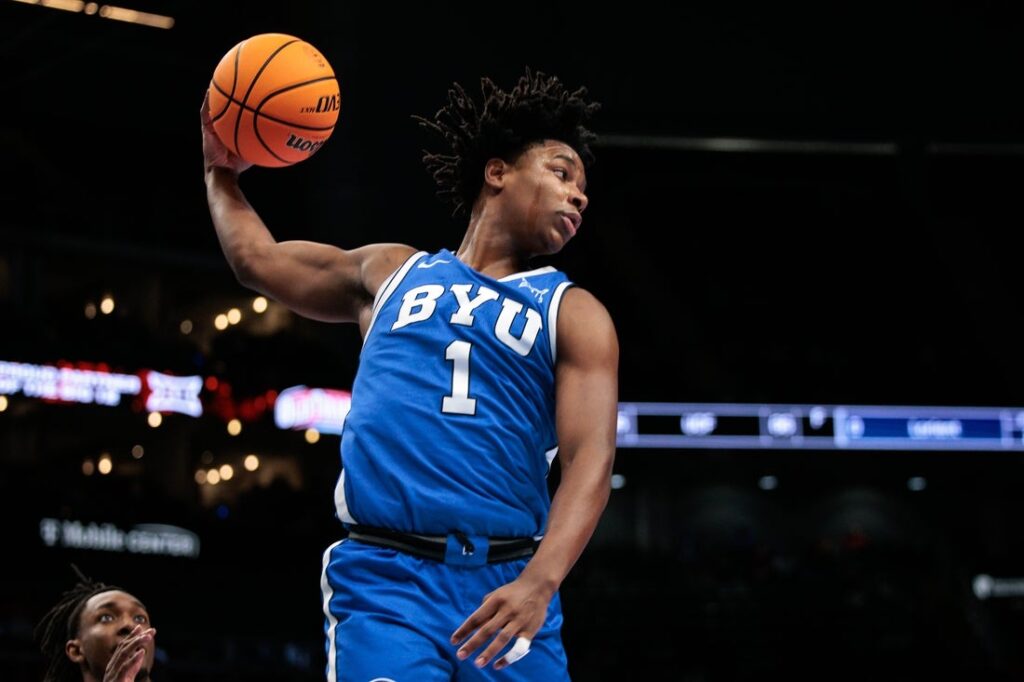
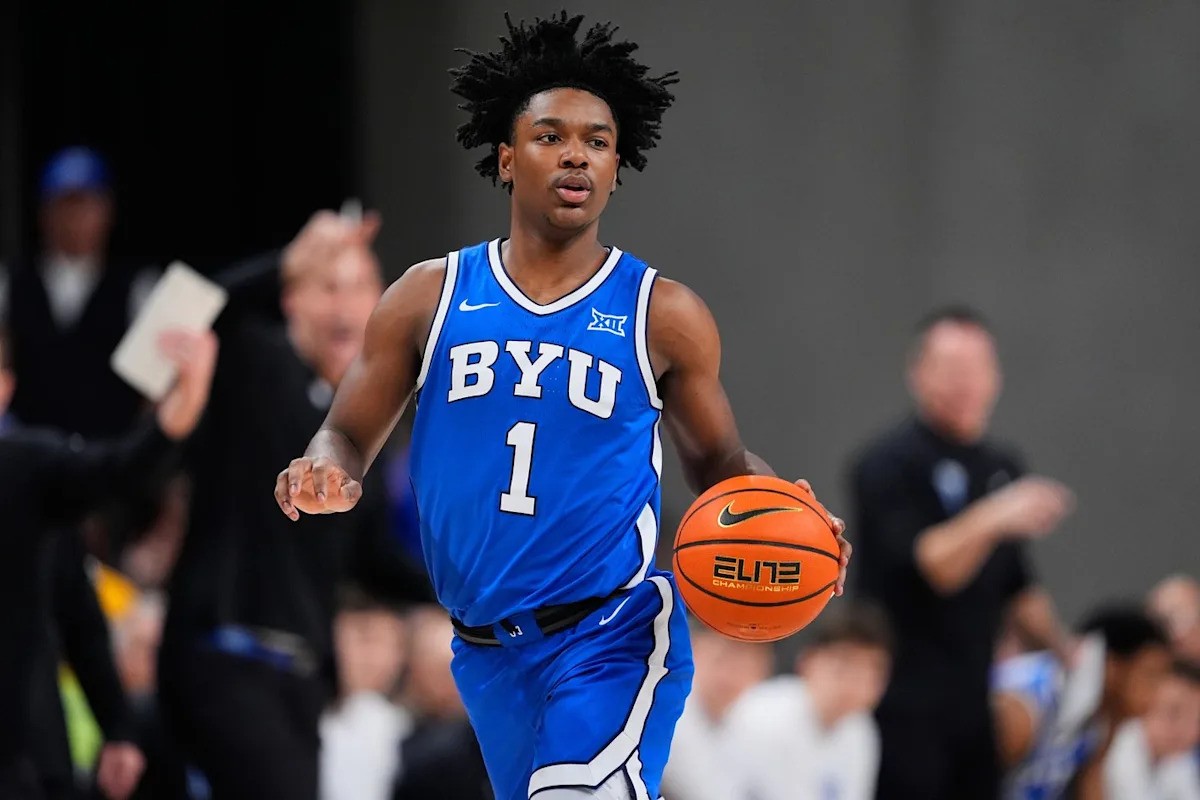
AJ Dybantsa, Brigham Young

The Empty Chair at the Table

After a plea for help from conference commissioners and Power 4 athletic directors, President Donald Trump convened a “College Sports Roundtable” at the White House. During this gathering, President Trump said he will write an executive order within a week that will “solve all of the problems” brought forth in the unprecedented meeting. President Trump boldly declared that he will provide a plan  to address the future of college sports. Trump hosted the first “Saving College Sports” roundtable with vice chairs Secretary of State Marco Rubio, New York Yankees president Randy Levine and Florida Gov. Ron DeSantis. They were joined in the East Room by about 50 people from varied backgrounds,

President Donald Trump and Nick Saban, former Alabama football coach

The group included other politicians, sports celebrities, media executives, conference commissioners, and university presidents, chancellors and athletic directors. Those who spoke delivered a similar message: College sports needs federal legislation to restore order in the N.I.L. space and its overall economics. The glaring omission from the group was the student-athlete. There were no scholastic or collegiate student-athletes participating. Zero. Yet the President of the United States concluded that he heard from everyone he needed to hear from and he will solve all of the problems.

“I will have an executive order within one week, and it will be very all-encompassing,” Trump said. “And we’re going to put it forward, and we’re going to get sued, and we’re going to see how it plays, OK, but I’ll have an executive order, which will solve every problem in this room, every conceivable problem, within one week, and we’ll put it forward. We will get sued. That’s the only thing I know for sure.”

Yes, they will get sued. If recent history is an accurate guide, they will be successfully sued. The N.C.A.A. has lost an overwhelming majority of legal battles in recent years.

One thing is painfully obvious: the student-athlete, particularly the elite youth navigating high-major basketball and football, is not the empowered decision-maker of N.I.L. mythology. They are, more often than not, a passenger in a vehicle driven by people with interests that may not align with their own.

The Media’s Preferred Sources

This absence of athlete voice is not merely a White House oversight. It reflects a systemic pattern in how the N.I.L. era is discussed and debated. A 2021 analysis of media coverage surrounding amateurism and N.I.L. rights found that sources such as the N.C.A.A. and politicians were most frequently cited — a combined 191 times — while collegiate student-athletes were quoted a total of seven times. Seven.

The message could not be clearer: Those who govern college sports, those who profit from it, and those who cover it have decided that the actual participants are not necessary to the conversation. Their voices are not required. Their perspectives are not sought. Their presence is optional.

The Illusion of Choice

Consider the decision environment facing a 19-year-old basketball prospect weighing offers from multiple high-major programs. On its face, this is a moment of remarkable opportunity. The same athlete who a decade ago would have signed a financial aid agreement now confronts seven-figure N.I.L. proposals and revenue-sharing projections.

The assumption in economics is straightforward: individuals have clear preferences, evaluate all available options, and choose the most effective path to maximize personal benefit. This assumes the actor possesses complete information and the capacity to process it.

Elite youth athletes possess neither.

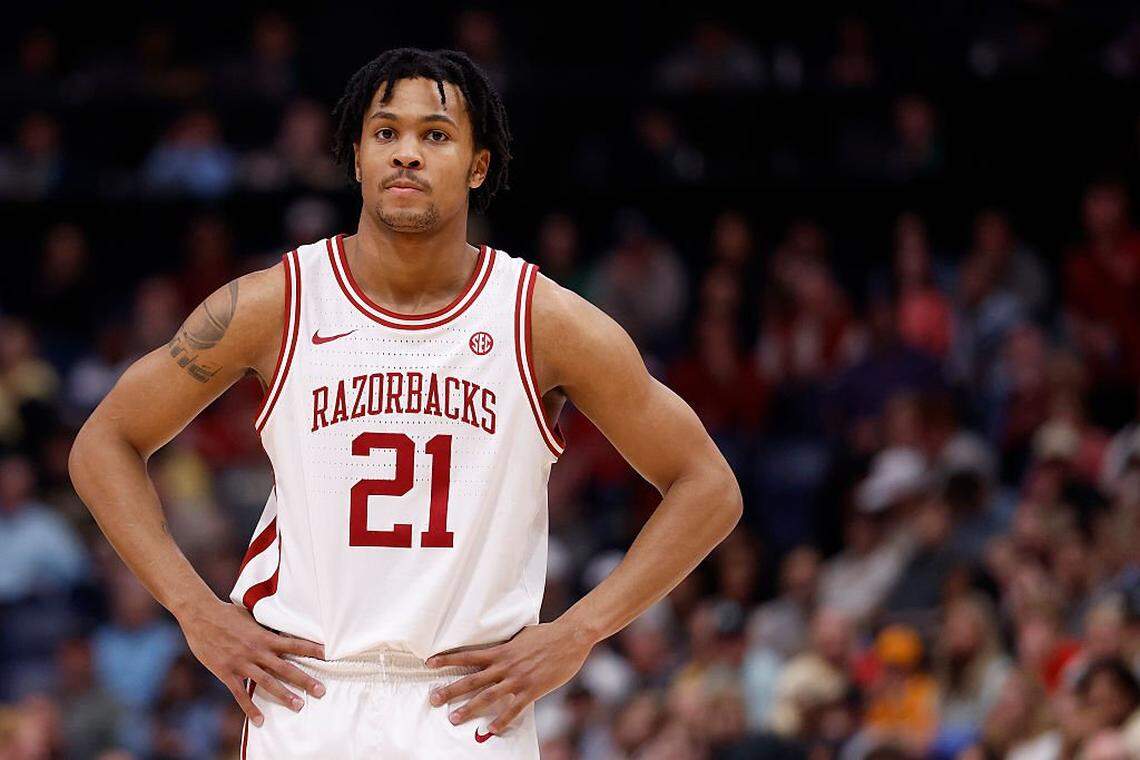
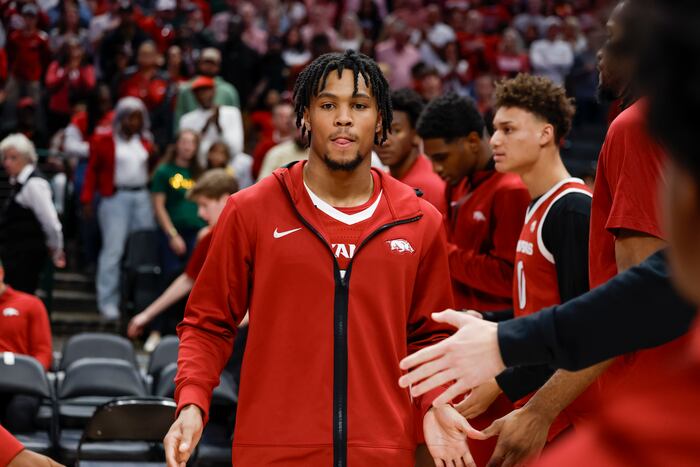
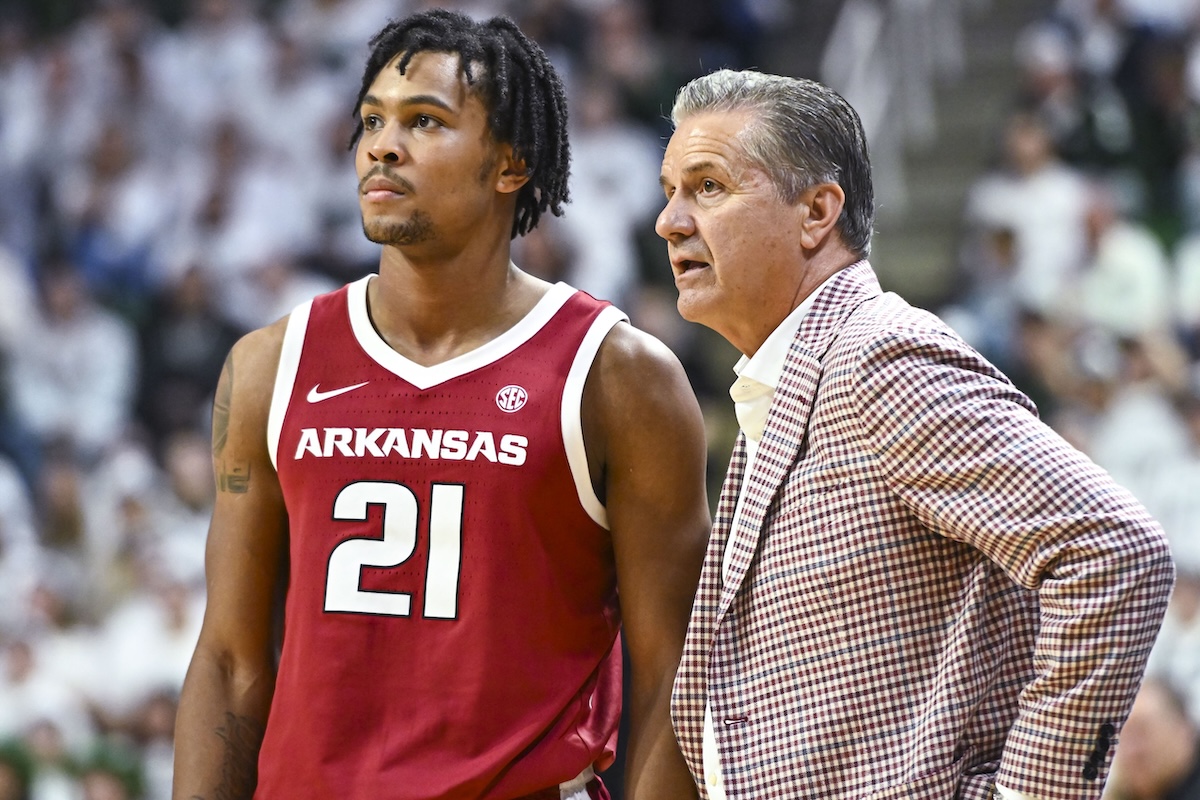
Darius Acuff, Arkansas, SEC Player of the Year

The N.C.A.A.’s regulatory environment has become so labyrinthine that even coaches confess bewilderment. Purdue’s Matt Painter captured the moment with devastating candor: “We just want to know the rules so we can abide by them. We don’t know what’s going on.” If coaches inside the system cannot decipher the regulations, what hope does a teenager have?

The rules themselves are no longer static. They are litigated in real time. Since November, more than 50 N.C.A.A. eligibility cases have been filed in state and federal courts, with judges increasingly willing to scrutinize restrictions under antitrust and contract theories. One quarterback obtains an injunction allowing a sixth year; another, in a different state court, is denied. Outcomes are “fact-specific and jurisdiction-dependent” — meaning whether an athlete can play often depends not on merit but on which judge hears the case.

This is not a system. It is a lottery.

Cam Boozer, Duke

Who Really Decides?

The N.C.A.A., to its credit, created a formal mechanism for athlete input. Student-Athlete Advisory Committees operate at the campus, conference and national level, charged with generating a student-athlete voice. At Division III institutions like Tuskegee University, members engage in admirable community service.

But let us be honest about what these committees do not do. They do not negotiate N.I.L. contracts. They do not advise on whether a $2 million offer complies with N.C.A.A. rules. They do not explain the tax implications of the House settlement’s revenue-sharing cap. They are advisory bodies, not fiduciary advisors.

The real decision-making occurs elsewhere. In the living rooms of handlers. In the offices of A.A.U. coaches whose reputations — and sometimes financial interests — tie to where their players land. In conversations between parents and uncles who may lack sophisticated understanding but possess outsized influence. In negotiations between agents and collectives, conducted well before the athlete formally enters the portal .

One high-major general manager described the dynamic bluntly: “You have conversations going on and you have to know damn well that the presentation you’re getting for your own player is going to 10 other schools.” Another noted that by the time a player enters the portal, “most guys will have a shortlist of three to five schools and a good market range of what those schools will offer.”

The deals are effectively done before the athlete’s name appears. The portal is merely theater.

Hannah Hidalgo, Notre Dame

The New Advisors, The Old Problems

At the 2025 Sports Lawyers Association Annual Conference, a panel titled “The New Advisors — Representing the Future Athlete” offered an unsettling glimpse into this shadow market. Panelists described how agents now serve as both business managers and quasi-life coaches, creating inevitable tensions between maximizing an athlete’s market value and respecting their personal autonomy .

One particularly candid admission came when a Wasserman executive acknowledged that his firm builds relationships with athletic departments, administrators, and high school coaches not just to sign clients, but to influence where athletes enroll. He referred to this as “guiding” athletes toward schools that align with their N.I.L. ambitions. But at what point does guidance become steering? If representation is now essentially recruitment, the potential for undue influence becomes much harder to ignore.

The panel also highlighted a concerning trend where high school athletes are being courted earlier than ever, often by underqualified or unscrupulous agents, with commissions reaching as high as 20 percent — far above traditional industry standards.

The Adult Economy

Assume, as we must, that these adults are themselves rational actors. Handlers seek to maximize influence. Agents pursue commissions. Parents want security for their children and, in some cases, for themselves. All weigh costs and benefits, preferring outcomes that maximize gains.

The problem is that these gains do not always align with the athlete’s long-term welfare. A handler who pushes a player to transfer annually generates repeated recruiting buzz. An agent who encourages chasing the highest N.I.L. bid secures a larger commission, even if the athlete lands in a poor developmental environment.

The numbers involved have become staggering. High-major basketball programs now spend between $7 million and $10 million on rosters. Power conference football programs face revenue-sharing caps of $21.3 million, with some pushing total investment toward $40 million . Star players command $2 million to $3 million, with a handful approaching $4 million.

This is real money. It attracts real predators.

The High School Hunting Ground

The exploitation begins earlier than many realize. In Louisiana, a state with one of the nation’s largest shares of high school football players recruited by Division I colleges, a legislative task force heard testimony of “rampant” problems among the state’s premier football schools. Adults with no professional certifications or backgrounds in the law swoop in to secure representation from Louisiana’s top recruits — some as young as 12 or 13 years old .

J.T. Curtis, the legendary football coach at John Curtis Christian School in River Ridge, told the panel: “Until we find a way to get outside influences out of the lives of our high school athletes, we’re going to continue struggling with this.”

The task force’s response? Recommendations that anyone other than a parent who helps high schoolers negotiate endorsement contracts must register as an agent with the state — subject to background checks and required to complete training. For athletes under 17, the task force proposed requiring that a portion of their compensation be deposited into a trust account .

These are sensible protections. But they are also admissions: the system is broken, and teenagers cannot navigate it alone.

The Information Asymmetry

The fundamental injustice of the current system is not that athletes are paid — they should be — but that they negotiate from a position of profound ignorance while the adults across the table possess sophisticated understanding of the rules, the market and the leverage points.

A panelist at the Sports Lawyers Conference raised the question of a university’s “duty of care” when presenting complex 25-page N.I.L. agreements to 18-year-old students. These young athletes are exposed to potential exploitation, especially when they lack the resources to secure knowledgeable counsel before signing. As one expert urged, athletic departments cannot expect student-athletes entering college to be “fully-fledged business representatives” capable of negotiating on their own behalf .

A player considering a transfer may not know whether years of junior hockey now count against their eligibility clock. They may not understand that the N.C.A.A.’s waiver process has become even more unpredictable as courts intervene. They may sign an N.I.L. contract without realizing that a collective’s promises are not always enforceable, or that tax implications could consume a third of the value.

The S.C.O.R.E. Act, should it pass, would create uniform federal standards. But even that legislation, stalled in the House, would not solve the information problem. It would merely standardize the rules that athletes still cannot decipher.

Meanwhile, the White House roundtable proceeded without them. The people making the rules do not include the people bound by them.

The 95 Percenters

The conversation around N.I.L. is dominated by the experiences of star athletes in football and men’s basketball — the “top 5 percent” who command seven-figure deals. But this focus obscures the reality for the vast majority of college athletes.

As one industry expert noted at the Sports Lawyers Conference, 83 percent of college athletes are not participating in N.I.L. deals at all. The so-called “95 percenters” — athletes in non-revenue sports and smaller markets — receive little institutional support, minimal media coverage, and virtually no guidance in navigating the commercial landscape .

Yet even these athletes face the same complex decisions, the same legal documents, the same tax implications. They simply lack the leverage to demand competent counsel.

The Independent Counsel Athletes Deserve

The young man sitting across from me had just been offered $600,000 to transfer. He was 19. His family had never dealt with contracts beyond a car loan. The school was 1,200 miles from home, with a coach he had met twice. He had 15 days to decide.

I told him what any competent advisor would have: slow down. Model the tax implications. Compare the depth chart. Call players already on the roster. Read the fine print — was it guaranteed, or renewed annually at the collective’s discretion?

He did none of these things. He took the money. Eight months later, he was back in the portal, having played 87 total minutes, his brand value cratered, his eligibility clock ticking.

This story is not unusual. It is the defining feature of the N.I.L. era: young people making life-altering decisions in informational vacuums, surrounded by adults with competing interests, operating under artificial time pressure designed to benefit institutions.

Tessa Johnson, South Carolina

A Strategy for Empowerment

The N.C.A.A. was not designed for this moment. It evolved over a century to control eligibility, movement and compensation. Its rules were written to limit, not empower. Its enforcement mechanisms were built to punish, not protect. Asking the N.C.A.A. to provide independent counsel is like asking the I.R.S. to provide free financial planning — structurally incompatible with its institutional purpose.

Yet for now, the N.C.A.A. must play a central role in any system-wide intervention. It controls the eligibility clearinghouse. It maintains the transfer portal. It certifies agents and collectives in some jurisdictions. It remains, however imperfectly, the only entity with national reach.

Knowing full well how difficult it will be, the N.C.A.A. and its member institutions should establish a national network of certified athlete advisors — analogous to the financial planners and legal aid professionals who serve other vulnerable populations. These advisors would be independent of universities, conferences and collectives, paid from a central fund supported by N.C.A.A. revenues and television contracts, with a fiduciary duty to the athlete alone .

Their role would be straightforward: to explain, in plain language, the implications of eligibility rules, transfer requirements and N.I.L. contracts. To model tax consequences. To assess whether a program’s developmental infrastructure serves the athlete’s long-term goals. To identify honest brokers and flag potential conflicts.

This is not a radical proposal. Some institutions are already moving in this direction. Monmouth University, for example, has instituted financial literacy requirements for any student-athlete participating in revenue sharing or receiving additional benefits, providing education on personal brand management, accounting, finance, and tax consequences . These efforts are commendable. But they remain isolated and inconsistent.

What is needed is structural, not advisory. It is the difference between a suggestion box and a lawyer.

Completing the Revolution

Harold Lasswell’s classic definition of politics remains the most useful lens: “who gets what, when, how.” In college athletics today, the athletes get money — substantial sums, in some cases — but they do not get control. They get compensation without agency, payment without power.

The adults get everything else. They get the satisfaction of influence, the currency of relevance, the commissions and the credit. They get to determine, behind closed doors, which athlete goes to which school for how much money. They get to navigate the regulatory maze while the athletes stumble through it.

The irony could not be more stark. A movement that began as a fight for athlete rights — for the freedom to profit from one’s own labor — has produced a system in which athletes have less genuine choice than ever before. They can go anywhere, theoretically, but they go where they are told. They can make any deal, theoretically, but they sign what they are given.

The solution is not to return to the old model of paternalistic control by universities. That model was exploitative in its own way. The solution is to complete the revolution that N.I.L. began but has not finished — to give athletes not just the right to profit, but the right to understand, the right to choose, and the right to independent counsel.

A national network of certified athlete advisors would not solve every problem. But it would create something that does not currently exist: a source of disinterested, professional advice, available to every athlete regardless of sport, conference or N.I.L. valuation.

It would, in short, give athletes someone in their corner whose only interest is their interest.

Until we do, the chaos will continue. The adults will keep winning. And the voices of those who actually play the games will remain unheard — absent from White House roundtables, missing from media coverage, and drowned out by the handlers, agents and advisors who have made themselves the true powers in college sports.

Return of the Big Five to March Madness!

PHILADELPHIA, PA – For three long winters, a familiar silence hung over the basketball cathedrals of Philadelphia. No streamers raining from the Palestra rafters. No jubilant students rushing the court at the Finn. No knowing smiles on Hawk Hill. For the first time in the modern era, the City of Brotherly Love was exiled from of March Madness for more than 1,000 days. The Big Five, that storied confederation of basketball identity, had become an afterthought on the national stage.

Kevin Willard, Villanova

That drought ended on Selection Sunday. And as the names “Villanova” and “Penn” flashed onto the bracket, it signaled not merely a return to the fold, but a validation of a new philosophy in college athletics. Faced with the existential disruption of the transfer portal and NIL (Name, Image, and Likeness), the Presidents and athletic directors at Villanova and Penn did not simply hire basketball coaches; they hired CEOs of basketball programs. In Kevin Willard and Fran McCaffery, they found leaders whose immediate success provides a masterclass in navigating the chaotic waters of modern college sports.

The Calculus of Change

To understand the euphoria of this March, one must revisit the difficult decisions of last spring. Villanova’s decision to move on from Kyle Neptune and Penn’s separation from Steve Donahue were not indictments of their character or effort. Rather, they were strategic choices made under conditions of incomplete information, asymmetric power, and immense time pressure. In the current paradigm, a coach is no longer judged solely on x’s and o’s, but on their ability to manage a high-turnover roster, fundraise for NIL collectives, and leverage support staff with the precision of a general manager.

Both programs were not simply choosing a coach; they were seeking a return to pride for programs with strong historical traditions. They needed leaders capable of translating history into a pitch that resonates in a present where players are also employees. By any measurable standard, both hires have paid immediate, resounding dividends.

Tyler Perkins, Villanova

The Measurable Success of Kevin Willard at Villanova

In the cutthroat environment of the Big East, Villanova needed to reclaim its birthright. Kevin Willard’s first season on the Main Line is a textbook example of modern roster management fused with winning basketball.

  • Traditional On-Court Performance: The Wildcats are dancing. After a 3 year absence, Villanova is back in the NCAA Tournament. While the regular season had its growing pains, the team peaked at the right time, demonstrating the coaching acumen necessary to win in March.
  • Recruiting & Roster Management: Willard inherited a program in flux. His immediate success in the transfer portal was staggering. He didn’t just fill gaps; he retooled the engine, securing high-impact players who bought into his system immediately. This ability to “re-recruit” his own roster while acquiring proven talent is the hallmark of a modern coach who understands the portal is not a threat, but a resource.
  • Adaptability to Modern Landscape: Willard arrived with a clear understanding that fundraising is coaching. He engaged the Villanova donor base, ensuring the NIL infrastructure could compete with the blue bloods of the sport.
Fran McCaffery, Penn

The Renaissance of Fran McCaffery at Penn

While Villanova fights in the gladiator arena of high-major basketball, Penn’s success is arguably a more delicate engineering feat. Coaching in the Ivy League requires adhering to strict academic standards and operating without the scholarship flexibility of the power conferences. Fran McCaffery has navigated these constraints with the savvy of a veteran diplomat.

  • Traditional On-Court Performance: The Quakers are Ivy League Champions. They cut down the nets. This is the ultimate metric. McCaffery took a program that had stagnated and immediately instilled a winning DNA, capturing the conference’s automatic bid.
  • Program Leadership & Culture: In the Ivy League, you cannot simply “portal” your way to a title. You must develop players over four years. McCaffery has a legendary reputation for player development. He inherited a roster and immediately improved its synergy, blending the returning talent with his system to create a cohesive unit that played with a chemistry absent in recent years. He restored the standard of Penn Basketball: excellence.
  • Budget Management & Adaptability: The Ivy League presents a unique challenge in the NIL era—namely, that it doesn’t exist in the same way. McCaffery’s success lies in selling a different kind of value: the value of an Ivy League degree combined with high-major coaching. He is winning the recruiting battles not with cash, but with culture and a vision, proving that adaptability sometimes means knowing how to win with the tools unique to your workshop.
TJ Power, Pennsylvania

A City’s Pride Restored

The return of Villanova and Penn to the NCAA Tournament is more than a statistical correction; it is a cultural revival. The “Holy City of Hoops” has its altars lit once more.

By moving on from the past, both programs embraced a future that demands versatility. Kevin Willard proved he could handle the mercenary nature of the Big East, while Fran McCaffery proved he could galvanize the scholar-athletes of the Ivy League. They represent two sides of the same coin: success in the 21st-century college game requires a coach who is part X’s and O’s savant, part general manager, and part fundraiser.

As the brackets are filled out in corner bars from Manayunk to Media, the names “Nova” and “Penn” are written in ink with hope. The drought is over. The strategic gambles paid off. And in Philadelphia, that is worth celebrating—because in this town, basketball isn’t just a game. It’s a birthright.

Bloodlines Matter: At Saint Joseph’s, the Next Athletic Director Must Be One of Their Own

PHILADELPHIA, PA — The red brick walls of Hagan Arena have borne witness to a century of basketball, but they have never seen a moment quite like this. The Saint Joseph’s University athletic department sits at a crossroads that feels less like a fork in the road and more like a continental divide. The college basketball landscape has been fundamentally rearranged by the twin tectonic shifts of Name, Image, and Likeness (NIL) compensation and the transfer portal. As the university, in conjunction with a search firm, conducts a “national search” for a new athletic director to steer the Hawks through these turbulent times, the administration faces a decision that will define the program for a generation. The temptation to cast a wide net, to seek a savior from a powerhouse athletic department in the Big Ten, Big 12, ACC or the SEC, is understandable. But to do so would be a catastrophic misreading of the institution’s soul and the unique ecosystem in which it thrives.

John Griffin, Jim Boyle, Jack Ramsay, Phil Martelli, Jack McKinney and Jim Lynam

The only viable path forward is not to abandon the past but to embrace it with a full-throated, modernized fervor. Saint Joseph’s must identify an alum, a Hawk, who has spent their career navigating the new NCAA terrain. The primary prerequisite for the next athletic director must be an intimate familiarity with the Hawk program—a visceral, cellular understanding of the culture and tradition that, just two decades ago, placed this small Jesuit school at 54th and City Avenue among the pantheon of college basketball royalty.

The Legacy Forged in Crimson and Gray

To understand what is at stake, one must first appreciate the magnitude of what has been built. When Street & Smith’s magazine ranked the greatest college basketball programs of all time in 2005, Saint Joseph’s University was slotted at No. 43. Let that sink in. Out of more than 330 Division I programs at the time, a university with an undergraduate enrollment smaller than many high schools in the Philadelphia suburbs was ranked among the top 13% in the nation. This was no fluke. It was the result of a half-century of sustained excellence, a legacy etched by players who wore the uniform and then dedicated their lives to the program.

The résumé is undeniable: 21 NCAA Tournament appearances, 16 NIT berths, 77 appearances in the national rankings—51 of them in the top 10. The Hawks have sent 29 players to the NBA draft. This is the bedrock upon which the program’s reputation is built.

Jack Ramsay and the Hawks

The Coaching Tree with Hawk Roots

Crucially, the overwhelming majority of this success was orchestrated not by hired guns from afar, but by Hawk alums. These were men who had gone to battle on the court wearing crimson and gray, for whom the sting of a Big 5 loss and the euphoria of a hard fought Palestra victory were imprinted on their DNA.

The lineage begins with the legendary Hall of Famer, Dr. Jack Ramsay. From 1955 to 1966, “Dr. Jack” compiled a staggering 234–72 record, leading the Hawks to 11 NCAA Tournaments and the 1961 Final Four. When he departed for the NBA, the torch was passed not to an outsider, but to another Hawk, Jack McKinney. McKinney sustained the program’s altitude, guiding the Hawks to four more NCAA Tournaments between 1969 and 1974. The tradition continued through Harry Booth, Jim Lynam, Jim Boyle and John Griffin. Lynam, in particular, authored one of the most indelible chapters in program history during the 1980-81 season, leading the Hawks as a No. 9 seed on a magical run that saw them upset No. 1-ranked DePaul to reach the Elite Eight.

Hawk coaches and senior administrators carried the same pedigree. This is a program that has historically been self-sustaining, a closed loop of passion and knowledge passed from one generation of Hawks to the next.

And then there is Phil Martelli. While Martelli did not play at St. Joe’s, he served a decade-long apprenticeship on Hawk Hill as an assistant coach, immersing himself so deeply into the culture that he became its avatar. When he took the helm, he didn’t need to learn the words to “The Hawk Will Never Die”; he had been singing it for years. He understood that the program’s success was built on identifying overlooked, tough, intelligent players who fit a system and a culture, and then developing them over four years. That philosophy culminated in the program’s crowning achievement of the modern era: the 2003-04 team that went 27-0 in the regular season and ascended to No. 1 in the national polls.

The Uniqueness of the Philadelphia Basketball Ecosystem

This history is not just a point of pride; it is a practical map of the territory. Saint Joseph’s is situated in a geographic cauldron with eight other Division I programs within an hour of campus. Philadelphia is a quirky, guarded, and fiercely opinionated basketball town. It is a city of neighborhood legends, playground hieroglyphics, and a deep-seated skepticism of outsiders. The Big 5 rivalries with Villanova, Temple, La Salle, and Penn are not just games; they are civic institutions, fought on the historic floor of the Palestra, a cathedral of the sport.

This is not a place where you want to do a lot of on-the-job learning. An administrator coming from a massive state university in the South, Midwest, or West Coast would look at a map and see a crowded market. They would see the bright lights of the Big 5 and the proximity to powerhouses like Villanova and see only obstacles. They would not see the opportunity. They would not understand that a gritty win at Temple’s Liacouras Center resonates more deeply with the Hawk alumni base than a neutral-site victory in a tournament in Florida. They would not grasp the delicate diplomacy required to navigate the politics of the Big 5 while fiercely competing in the Atlantic 10. To parachute someone into this environment without a deep well of local knowledge would be to send them into a game without a playbook.

Navigating the New Reality While Preserving the Soul

This is not an argument for nostalgia or a retreat from the realities of modern college athletics. The emergence of NIL and the transfer portal has had an unprecedented impact, particularly on programs like St. Joe’s that lack the television revenue of a Power 4 football conference. The Hawks cannot and should not try to match the raw financial compensation packages of the Alabamas and Kansases of the world. That is a fool’s errand.

Therefore, the identity forged over 75 years is no longer just a nice story; it is the program’s only sustainable competitive advantage. In an era of mercenary free agency, the promise of a genuine family, a proven developmental system, and a connection to a tangible tradition is a powerful recruiting tool. It is the counter-programming to the NIL bidding war. It is the message that resonates with the right kind of player—the one who wants to be the next great Hawk, not just another jersey in a crowd.

The Case for a Hawk at the Helm

This is why the search for a new athletic director is the most critical moment for the program since the construction of the Hagan Arena. The pool of candidates with SJU degrees who are currently immersed in the new NIL and transfer portal world may not be deep, but it contains highly qualified swimmers. There are alumni working in athletic departments across the country who have spent the last three years on the front lines of this revolution. They understand the mechanics of assembling a compliant NIL collective. They understand how to evaluate talent in the portal. But crucially, they also understand the culture that makes those pieces fit together.

They understand that the Hawk is not just a mascot but a symbol of tenacity. They know that the most beloved players in program history weren’t always the most talented, but they were always the toughest. They understand that the community at 54th and City is not a customer base; it is an extended family that has been showing up for a century.

To ignore this internal resource in favor of a shiny object from a football school would be an act of institutional malpractice. Plucking an administrator from a Big State University and planting them on City Avenue, hoping they can absorb the nuances of Hawk basketball through osmosis, is a recipe for cultural erosion. They might balance a budget, but would they understand the budget of emotion and pride that fuels a Big 5 upset?

The road forward for Saint Joseph’s must be a synthesis of old and new. It requires a full-throated embrace of the Hawk tradition—the Ramsay way, the Lynam way, the Martelli way—with the modifications necessary to compete in the NIL/transfer portal era. It requires a leader fluent in both languages: the language of the collectives and the language of the Catholic, Jesuit mission. It requires a Hawk. The tradition they must be hired to protect is not a relic to be displayed in a trophy case. It is the compass that has guided this program through 75 years of change. To throw it overboard now, in the stormiest seas the sport has ever seen, would be to sail blindly toward the rocks.

Comprehensive Scouting Report: Aasim “Flash” Burton – Strategic Analysis of On-Court Development and Portfolio-Based Transfer Decision

Player: Aasim “Flash” Burton | Position: Combo Guard | Height: 6’3″
Current Program: Rider University (Metro Atlantic Athletic Conference)
High School: Cardinal O’Hara, Philadelphia Catholic League
Recruiting Profile: 2024 Class, Committed to Rider 

1. Executive Summary & Revised Strategic Recommendation

Aasim “Flash” Burton is at a pivotal juncture, completing a sophomore season at Rider that has firmly established him as a high-caliber MAAC player with tangible professional potential. The speculative asset of an immediate high-major transfer (A-10, Big East) is undeniably present and alluring. However, a comprehensive analysis of his development arc, current statistical production, Rider’s unique structural position, and the high-risk realities of the transfer portal leads to a clear recommendation: Burton should remain at Rider for his junior season.

This path is not about avoiding ambition but about strategically maximizing it. By solidifying his role as the unquestioned leader and face of a rebuilding program, Burton can convert his proven production into a dominant, All-MAAC campaign. This approach offers superior agency, controlled development, and the opportunity to enter a future transfer portal—if still desired—as a proven commodity with significantly greater leverage and value. A commitment to stay should be paired with a proactive renegotiation of his NIL portfolio to reflect his elevated status and long-term value to the university.

2. Qualitative & Quantitative On-Court Assessment (2025-26 Season)

Burton’s sophomore campaign confirms the scoring talent and clutch mentality observed in his freshman year, with notable statistical growth that underscores his central role.

  • Statistical Profile & Role: Burton is the engine of the Rider offense, averaging 14.2 points, 3.2 rebounds, and 3.2 assists per game. His usage rate of 27.6% confirms he is the primary option. While his field goal percentage (38.3%) indicates room for efficiency gains, his true shooting percentage of 49.0% and volume of free throws made (66) show an ability to draw contact and get to the line.
  • Scoring Instincts & Playmaking: The “Flash” moniker is apt for his ability to create shots and deliver in key moments, a trait solidified by last season’s game-winning heroics. His 3.2 assists per game demonstrate evolving playmaking skills beyond pure scoring.
  • Physicality & Defense: At 6’3″, his frame is ideal for a combo guard. His athleticism allows him to defend multiple positions, contributing 1.1 steals per game. His toughness, honed in the Philadelphia Catholic League, remains a foundational asset.
  • Context of Team Performance: This assessment must acknowledge the team’s challenging season. Rider’s record stands at 3-18 overall and 2-10 in the MAAC, placing them at the bottom of the conference standings. This context is critical; Burton’s production occurs as the focal point of opposing scouting reports with limited supporting firepower, which can suppress efficiency metrics.

3. The Portfolio Analysis: Re-Allocating for Maximum Appreciation

The decision to stay or transfer is a portfolio rebalancing act. Burton must weigh the appreciating, known assets at Rider against the high-variance, speculative assets of a high-major transfer.

Asset ClassCurrent Position at RIDER (Appreciating & Controllable)Hypothetical Position at A-10/Big East (Speculative & High-Risk)
Immediate ReturnsCornerstone Role & Usage: Proven, high-usage go-to option (27.6% USG%). Guaranteed starter and offensive centerpiece.Uncertain Role & Fit: Likely a rotational player (6th-8th man) initially. Must compete for touches in a crowded, high-talent environment.
Skill DevelopmentPersonalized, High-Trust Infrastructure: Rider’s staff has a proven, two-year track record of developing him as the focal point. Offseason work can be fully customized.Generalized Elite Infrastructure: Better facilities but intense competition for individualized coaching attention. Risk of being molded into a system-specific role player.
Competitive SuccessPath to Legacy & Leadership: Opportunity to be the architect of a dramatic program turnaround. An All-MAAC campaign is a tangible, resume-defining achievement.Tournament Exposure (Potential): Chance to play in March, but contribution may be limited. Risk of being on a winning team without a defining role or statistical impact.
Brand & NIL ValueRegional Star Power: Opportunity to be the face of Rider Athletics. Can command a premier, renegotiated NIL package as the program’s most valuable asset.National Obscurity: One of many talents. NIL opportunities may be larger in total pool but highly diluted, with established stars and high-profile transfers commanding top dollar.

Structural Realities & Portal Risk:
The transfer portal is a saturated, high-stakes marketplace. As seen in football, top-tier valuations (often $1-3 million+) are reserved for proven, elite producers at the Power 5 level or transcendent talents moving up. Entering now, Burton would be one of thousands, competing against other mid-major stars and high-major players seeking new homes. The information asymmetry is severe; promises are easily made. His proven production at Rider is a solid asset, but in the portal’s frenzy, it may not translate to the guaranteed role or financial offer he currently holds.

4. The Persuasive Case for Rider: Building Tangible Equity

Staying is an active, ambitious strategy to build unassailable value.

  1. Evolve into an All-MAAC Performer: Burton’s current stats (14.2 PPG) already place him in the MAAC’s upper echelon of scorers. With a dedicated offseason focused on shot selection and efficiency, averaging 18+ points, 5+ rebounds, and 4+ assists is an achievable target that would make him a lock for All-Conference honors. This achievement carries concrete weight in professional evaluations.
  2. Lead a Definitive Program Turnaround: Rider’s current record is a challenge, but it presents a historic leadership opportunity. Guiding the team from the MAAC cellar to the middle of the pack or better as a junior would be a transformative narrative. This story of “the star who stayed and rebuilt” demonstrates intangible qualities—loyalty, resilience, leadership—that are highly valued by professional scouts and future employers alike.
  3. Secure a Premier, Renegotiated NIL Position: Burton and his representatives have a strong case to negotiate a significantly enhanced NIL package for the 2026-27 season. This deal should reflect his status as the program’s central pillar and marketing keystone. This provides immediate financial reward and security while he builds his basketball portfolio in a stable environment, mirroring the value of controlled development.
  4. Control the Timeline and Maximize Future Leverage: Excelling as a junior at Rider does not close the door to a high-major transfer; it builds a more powerful one. Entering the portal after an All-MAAC season leading a resurgent team would position him as a proven, mature commodity. He would have multiple years of high-level production, granting him superior choice, negotiating power, and likely a more lucrative NIL deal at his next destination.

5. Final Assessment & Action Plan

Scout’s Bottom Line: Aasim “Flash” Burton’s optimal path to maximizing his long-term career value and professional potential runs directly through Lawrenceville for one more season. The “transfer up” impulse is understandable but premature. By choosing Rider, he chooses agency, guaranteed growth, and the chance to author a legacy that will amplify his value far beyond what a role-player season in a major conference could provide.

Recommended Action Plan:

  1. Publicly Commit to Rider for the 2026-27 season, framing it as a commitment to finishing the rebuild he started.
  2. Engage Rider’s Collective/Administration to negotiate an NIL agreement commensurate with his value as a program-changing talent and All-MAAC candidate.
  3. Set Clear, Ambitious Goals with the coaching staff: All-MAAC First Team, MAAC Most Improved Player, and leading Rider to a .500+ conference record.
  4. Own the Offseason: Return as the vocal and exemplary leader, setting the standard for work ethic and building the chemistry required for a turnaround.

By investing in Rider, Burton invests in the most valuable asset: his own proven and elevated trajectory. The most strategic move is often to consolidate gains and build from a position of proven strength.

Comprehensive Scouting Report: Aiden Tobiason – Strategic Analysis of On-Court Development and Potential Portfolio-Based Transfer Decision

Player: Aiden Tobiason | Position: Shooting Guard | Height/Weight: 6’5″
Current Program: Temple Owls (American Athletic Conference) | Class: Sophomore
High School: St. Elizabeth High School, Delaware
Recruiting Profile: 2-star prospect, Class of 2024 (247Sports)
Current Season (2025-26): 15.0 PPG, 3.2 RPG, 2.3 APG, 1.3 SPG, 50% FG, 34% 3PT, 81% FT
Draft Projection: Undrafted. Path to a professional career is via the G-League or international leagues; a successful Power 5 transfer season could make him a potential late second-round flier in 2027.

I. Executive Summary & Portfolio Assessment

Aiden Tobiason’s current situation at Temple represents one of the most compelling and high-risk portfolio opportunities in the modern transfer market. As a former 2-star recruit, he has dramatically over-delivered on his initial valuation, transforming from a potential redshirt into an All-Freshman Team honoree and now the leading scorer for a Power 6 program. His portfolio is currently weighted almost entirely in the “Speculative Appreciation” category: his value is tied not to NIL guarantees but to the immense potential growth that another year of development and exposure could yield. The central question is whether to cash in on that appreciation now via a high-major transfer or invest further at Temple to refine his product. Based on his rapid trajectory and the structural realities of roster construction, a strategic transfer to a Power 5 program following this season is not only justified but represents the optimal path to maximizing his professional career value, earning this strategy a Strategic Grade of A-.

II. Portfolio Analysis: The Temple Investment & The Power 5 Decision

Tobiason’s initial choice to attend Temple over low/mid-major offers was a classic risk-reward play, betting on development over immediate opportunity. That bet has paid off spectacularly, creating a new, more complex decision matrix.

The Appreciated “Temple Assets”:

  • Developmental Proof of Concept: Tobiason sought a challenge at Temple, knowing he might not play immediately. He has validated the program’s development infrastructure, improving from a deep reserve to a conference standout. This proven capacity for growth is his single most valuable asset.
  • High-Major Production: He is no longer a theoretical prospect. Averaging 19.0 points on 50% shooting over a recent multi-game sample in the American Athletic Conference provides tangible, high-level evidence of his scoring ability.
  • Winning Mentality & Intangibles: Coaches consistently praise his work ethic, team-first attitude, and defensive commitment—traits that began in his freshman year. This “gym rat” mentality is a currency valued by every program.

The Power 5 Transfer Calculus:
A move must be evaluated as a rebalancing of his portfolio from pure speculation toward securing guaranteed, high-return assets.

Portfolio Asset ClassCurrent Status at TemplePotential Upside at Target Power 5 Program
Immediate ReturnsEstablished Star Role. Undisputed go-to option, averaging 15.0 PPG with high usage.Promised Contributing Role. Likely a 6th man or spot starter on a tournament team, with less volume but higher efficiency opportunities.
Speculative: Skill DevelopmentGood, but Plateau Risk. Coach Fisher’s system has unlocked him, but Temple’s roster is built for the present.Elite Infrastructure. Access to top-tier facilities, sports science, and competition in practice could refine his handle, defense, and consistency.
Speculative: Exposure & PathwayLimited. The AAC provides a stage, but not the nightly NBA scout attendance of the Big Ten, SEC, or Big 12.Maximized. Every game is a showcase. Deep NCAA Tournament runs are a more probable goal, directly impacting draft stock.
Speculative: Brand & NILRegional. Strong in Philadelphia but limited by conference and program reach.National. A successful season at a blue blood can create lasting marketability and significant, though not guaranteed, NIL opportunities.

Structural Constraints & Risk Mitigation:
The primary risk is transferring into another logjam. This requires extreme due diligence on the target program’s roster timeline, coaching philosophy, and incumbent wing depth. The goal is not just to join a Power 5 team, but to identify one where his specific skill set (shooting, defensive versatility, high IQ) fills an immediate need for the 2026-27 season. His experience navigating a crowded Temple roster as a freshman has uniquely prepared him to ask the right questions and assess fit under the “incomplete information” pressure of the portal window.

III. On-Court Performance & Skill Assessment

Tobiason’s sophomore leap is a case study in efficient, multi-level scoring and increased responsibility.

Quantitative Leap & Efficiency Profile:

MetricFreshman Season (2024-25)Sophomore Season (2025-26)Analysis
RoleRedshirt candidate, later starterTeam leader & primary scorerEmbodies the “earned, not given” ethos. Trust is absolute.
Minutes Per Game20.534.8 (as of Jan 31)Handles a feature player’s workload with stamina.
Points Per Game4.815.0Scoring output has tripled, confirming alpha scoring instincts.
Field Goal %45.950.0%Elite efficiency for a high-volume guard.
3-Point %41.234.0% (on 4.7 attempts/game)Respectable volume shooter; room for consistency growth.
Free Throw %76.981.2%Excellent; indicates pure shooting stroke and composure.
Assists/Turnovers1.02.3 APG / 1.6 TOVSolid, low-mistake playmaker; not a primary initiator.

Qualitative Skill Breakdown:

TraitGradeAnalysis & Evidence
Shooting & ScoringA-The cornerstone of his value. A smooth, quick release. Excels in catch-and-shoot (41%) and shows capable pull-up game (40% off dribble). Efficient from all three levels, with a knack for timely scoring (e.g., 23 pts vs FAU, 22 pts vs USF).
Athleticism & FinishingB+A “strong athlete” who finishes through contact. Not just a shooter; can attack closeouts and finish above the rim, as seen in highlight plays.
On-Ball DefenseBTakes pride on this end. Uses length and IQ to be disruptive (1.3 SPG). Can guard multiple positions but can be challenged by elite, shifty ball-handlers.
Ball-Handling & PlaymakingB-Capable but not elite. Can create for himself in space and makes simple, smart passes. Tightening his handle against intense pressure will be the next step.
Competitiveness & IQAHis defining intangible. A proven worker who embraces challenge. High communicator, understands team defense, and makes “energy-shifting plays”.

IV. Professional Projection & Recommended Pathway

Tobiason’s professional archetype is a 3-and-D wing with secondary creation ability. His current trajectory mirrors a less-heralded version of players like Max Strus or Dorian Finney-Smith—players who leveraged college success into critical NBA roles.

Actionable Recommendations:

  1. Complete the 2025-26 Season: Continue building his case as the AAC’s most improved player. Focus on leading Temple (currently 12-10) to a strong finish and deep conference tournament run.
  2. Enter the Transfer Portal (Post-Season): This is the strategic imperative. His value will never be higher as a proven, multi-year college scorer with three years of eligibility remaining.
  3. Target Specific Power 5 Fits: Prioritize programs that:
    • Are losing senior wing scorers.
    • Run pro-style, spacing-oriented offenses.
    • Have a coach with a proven history of developing transfers (e.g., Nate Oats at Alabama, Tommy Lloyd at Arizona).
    • Offer a clear, competitive role as a connector and shooter within a more talented ecosystem.
  4. Post-Transfer Development Focus: At his new program, dedicate the offseason to adding 5-10 lbs of functional strength, increasing his three-point volume and consistency, and refining pick-and-roll decision-making.

Scout’s Bottom Line: Aiden Tobiason is a classic “diamond in the rough” whose polish now demands a brighter light. Staying at Temple for a junior season offers comfort and continued stardom, but it also risks capping his exposure and development ceiling. The modern era rewards bold, calculated moves. By transferring to a tailored Power 5 fit, Tobiason would convert his hard-earned “speculative appreciation” at Temple into the tangible assets of elite competition, unparalleled exposure, and a direct pathway to the professional drafts. His story—from redshirt candidate to Power 5 transfer target—is the new blueprint for player empowerment, and the next chapter should be written on the biggest stage possible.

Comprehensive Scouting Report: Ahmad Nowell – Strategic Analysis of On-Court Development and Portfolio-Based Transfer Decision

Player: Ahmad Nowell | Position: Combo Guard | Height/Weight: 6’1″, 195 lbs
Current Program: VCU Rams (Atlantic 10) | Class: Sophomore
High School: Imhotep Charter, Philadelphia Public League
Prior Program: Connecticut Huskies (Big East)
Draft Projection: Possible Second-Round Pick (2026/2027)

I. Executive Summary & Strategic Transfer Grade

Ahmad Nowell’s transfer from Connecticut to VCU represents a masterclass in modern player agency and portfolio optimization. Confronted with a clear developmental bottleneck as a deep reserve at a national powerhouse, Nowell executed a high-leverage decision to prioritize immediate on-court opportunity and system fit over brand prestige. The early returns on this strategic bet are overwhelmingly positive. He has transformed from a seldom-used prospect at UConn into a core rotational piece for a competitive VCU squad, posting elite efficiency metrics and validating his high school pedigree as a quintessential “Philly Guard”. By maximizing his tangible assets—guaranteed minutes, a tailored role, and a winning environment—Nowell has not only salvaged his collegiate trajectory but has significantly enhanced his professional profile. His decision is a case study in astute self-assessment, earning a strategic grade of A- for its clarity, execution, and the dramatic appreciation in his primary assets.

II. Portfolio Analysis: The VCU Transfer Decision

Nowell’s portal entry was a direct response to a freshman season at UConn where he averaged just 6.4 minutes and 1.5 points per game. His choice of VCU was a targeted investment in specific, appreciating assets while mitigating the risks of continued obscurity.

  • Immediate Returns (Appreciated Assets):
    • Guaranteed Role & Usage: The foundational bet. At VCU, Nowell’s minutes have nearly doubled to 12.0 per game, providing the consistent floor time essential for development and scouting visibility. He has transitioned from a practice player to a legitimate game-changer, evidenced by outbursts like a 19-point game on perfect shooting (7-7 FG, 5-5 3PT).
    • System & Cultural Fit: VCU’s hard-nosed, defensive identity under Coach Phil Martelli Jr. is a seamless match for Nowell’s “bulldog mentality”. He is celebrated for his toughness, competitiveness, and defensive tenacity—traits that were underutilized at UConn but are foundational at VCU. This alignment maximizes his innate strengths.
    • Competitive Success: VCU is a consistent winner and NCAA Tournament contender in the Atlantic 10. Nowell contributes to a program with a 16-6 record (as of late January 2026), providing the “winning proof” that professional scouts value.
  • Speculative Assets & Long-Term Risk Mitigation:
    • Skill Development: The VCU environment allows for the practical application and refinement of skills. His dramatic statistical improvements are the direct result of this applied development.
    • Professional Pathway: By showcasing his full two-way arsenal in a featured role, Nowell has rebuilt his draft stock from an afterthought to a potential second-round pick. The exposure is different but more effective; he is now a “big fish” demonstrating leadership and impact.
    • NIL & Brand Growth: While total compensation may differ from a high-major, his marketability as a standout local star in a passionate market like Richmond can create unique, sustainable value that complements his athletic brand.
  • Structural Constraints Navigated: Nowell operated within the classic power asymmetry of the portal, where a young player must forecast fit without complete roster information. He astutely identified a program in VCU that had just won the A-10 but was in need of backcourt reinforcement, thereby creating a mutually beneficial opportunity for impact.

III. On-Court Performance & Skill Assessment

Nowell’s sophomore season statistics represent not just improvement, but a qualitative leap in efficiency and impact.

Quantitative Leap & Efficiency Profile:

MetricUConn (Freshman)VCU (Sophomore)Analysis
Minutes Per Game6.412.0Role has solidified, trust earned.
Points Per Game1.55.7Scoring output has increased nearly fourfold.
Field Goal %35.7%47.3%Elite efficiency for a guard.
3-Point %18.8%42.9%Transformative improvement; now a certified weapon.
Effective FG%41.1%61.5%Ranks among the most efficient guards nationally.
Player Efficiency Rating16.117.9Confirms high-level impact in his minutes.

Qualitative Skill Breakdown:

TraitGradeAnalysis & Evidence
Shooting & ScoringA-Once a question mark, now a premier strength. His 42.9% three-point shooting on 2.5 attempts per game is elite. He combines this with a fearless, physical drive game, using his strength to absorb contact and finish.
On-Ball DefenseA-The hallmark of his “Philly Guard” identity. An aggressive, communicative, and physically imposing defender who takes pride in shutting down opponents. His steal rate (0.6 per game) is solid and reflects his active hands.
Physicality & CompetitivenessABuilt like a “hard-hitting safety”. His strength and “bulldog mentality” allow him to guard bigger players, rebound in traffic, and set a relentless tone. He is a certified winner and gym rat.
Ball-Handling & PlaymakingBShows excellent control and can initiate offense. His assist numbers are modest (0.8 APG), suggesting his current role is more scoring-oriented, but his high school eval noted elite vision and passing creativity.
Decision-Making & PoiseB+Plays within himself and the flow of the game. Low turnover rate (0.7 per game) indicates good care of the ball. Thrives in high-pressure moments, a trait honed at Imhotep.

IV. Professional Projection & Pathway Analysis

Nowell has successfully repositioned himself from a project to a prospect. His archetype is the defensive-minded, three-and-D combo guard with secondary creation ability, drawing a compelling comparison to Eric Bledsoe for his power and two-way aggression.

  • Current Draft Stock: Projected as a possible second-round pick in the 2026 or 2027 NBA Draft. This is a significant restoration of value from his freshman year.
  • Critical Development Needs: To secure and elevate his position, the focus must now shift to scaling his production within a larger role.
    1. Increase Playmaking Volume: Showcasing more of the orchestration skills noted in high school to prove he can run an offense at the next level.
    2. Sustain Elite Efficiency with Increased Usage: The next challenge is maintaining his stellar shooting percentages as his shot attempts and defensive attention inevitably rise.
  • The VCU Advantage: The program provides the ideal laboratory for this next phase. He can incrementally increase his responsibilities as a junior, potentially as a starter, within a system that already highlights his best traits.

V. Conclusion & Strategic Recommendations

Nowell’s transfer portfolio is performing exceptionally well. The investment in immediate opportunity at VCU has yielded massive dividends in skill manifestation, confidence, and professional visibility.

Final Assessment:
Nowell has proven that shrewd self-placement in the modern ecosystem can be more valuable than association with a traditional blue blood. He has not just found minutes; he has found a home that magnifies his identity as a tough, two-way competitor. His story is one of the clearest successes of the portal era for a player of his caliber.

Strategic Recommendations:

  1. For the Remainder of 2025-26: Continue to be a dominant force in his reserve role. Focus on being the definitive “energy and defensive stopper” off the bench, while capitalizing on every offensive opportunity. Lead VCU on a deep A-10 and NCAA Tournament run.
  2. Offseason & 2026-27 Outlook: The clear and obvious path is to return to VCU for his junior season. The goal should be to transition into a full-time starting role, where he can work on increasing his playmaking load and proving his efficiency is scalable. Another year of development and production in this ideal system could make him a surefire draft pick.
  3. Long-Term Focus: Continue to hone the pull-up jumper and expand his pick-and-roll repertoire. Physically, maintaining his strength and explosiveness is paramount for his style of play.

Scout’s Bottom Line: Ahmad Nowell’s decision to transfer to VCU was not a step down; it was a step into the spotlight. He traded the jersey prestige of UConn for the player empowerment of VCU, and in doing so, has authored one of the most impressive career resurgences in college basketball. His portfolio is strong, his assets are appreciating, and his pathway is clear. The recommendation is unequivocal: stay the course at VCU.

Comprehensive Scouting Report: Jalil Bethea – Strategic Analysis of On-Court Development and Portfolio-Based Transfer Decision

Player: Jalil Bethea | Position: Shooting Guard | Height/Weight: 6’5″, 190 lbs
Current Program: Alabama Crimson Tide (SEC) | Class: Sophomore
High School: Archbishop Wood Catholic, Philadelphia Catholic League (PCL)
Prior Program: Miami (FL) Hurricanes (ACC)
Draft Projection (2026): Potential Second-Round Pick

I. EXECUTIVE SUMMARY & STRATEGIC TRANSFER GRADE

Jalil Bethea’s move from Miami to Alabama represents a high-stakes portfolio reallocation aimed at recovering value after a freshman season that failed to meet his five-star promise. The decision to join a high-octane, NBA-feeder program like Alabama under Coach Nate Oats was analytically sound, targeting the speculative assets of professional development, competitive visibility, and system fit. However, the 2025-26 season has revealed a significant miscalculation in the assessment of “immediate returns,” particularly regarding guaranteed on-court opportunity. Bethea has transitioned from a 16-game starter at Miami to a deep reserve at Alabama, seeing his role and production diminish dramatically. While the long-term developmental bet on Alabama’s infrastructure remains plausible, the short-term cost to his draft stock and rhythm is substantial. Therefore, his strategic transfer decision earns a C+ grade: a conceptually logical move undercut by flawed execution and unforeseen constraints, leaving his professional pathway more uncertain than anticipated.

II. PORTFOLIO ANALYSIS: THE ALABAMA TRANSFER DECISION

Bethea’s portal entry was a forced recalibration after a freshman year at Miami (7.1 PPG, 32.6% 3PT) that failed to solidify his status as a one-and-done prospect. His choice of Alabama was a bet on specific appreciating assets.

  • Targeted Speculative Assets:
    • Developmental Infrastructure & System Fit: This was the core bet. Alabama’s NBA-style, pace-and-space offense under Nate Oats, which prioritizes three-point volume and transition play, appeared tailor-made for Bethea’s reputation as a movement shooter and explosive athlete. The program’s recent success with guard development (e.g., Brandon Miller, Josh Primo) offered a credible professional pathway.
    • Competitive Success & Exposure: Moving to the SEC and a perennial NCAA Tournament contender offered a higher platform for March visibility, a critical factor for draft stock.
    • Brand Growth: Association with a top-10 national program enhances marketability, potentially offsetting any relative NIL disparity from leaving Miami.
  • Compromised Immediate Returns:
    • Projected On-Court Opportunity: This is where the portfolio has most underperformed. Bethea’s role has not materialized as likely projected. He is averaging only 10.1 minutes per game off the bench for Alabama, a stark decrease from his 19.0 minutes at Miami. In recent games, his playing time has often been in the single digits.
    • Statistical Contribution: His per-game averages at Alabama (5.4 PPG, 2.2 REB) are below his Miami output, and his shooting efficiency (40.0% FG, 34.3% 3PT) has not made the significant leap required.
  • Structural Constraints Encountered: Bethea entered a saturated market for touches at Alabama. The Crimson Tide’s offense runs through established, high-usage stars like Mark Sears (21.6 PPG), creating a hierarchy difficult for a new transfer to crack. The information asymmetry of the portal—where a player cannot fully gauge future roster composition and internal competition—has proven to be a decisive factor limiting his agency.

III. ON-COURT PERFORMANCE & SKILL ASSESSMENT

Bethea’s season is a tale of two data sets: encouraging per-minute efficiency obscured by a lack of consistent opportunity.

Statistical Profile & Context:

  • Per-Game (Alabama): 5.4 PPG, 2.2 RPG, 0.8 APG, 40.0% FG, 34.3% 3PT, 82.6% FT in 10.1 MPG.
  • Per-36 Minute Projection: 18.9 PPG, 7.8 RPG, 2.8 APG. This highlights his latent scoring potential but also underscores the central dilemma: he has been unable to earn the minutes to actualize it.
  • Efficiency Metrics: A solid 56.9% True Shooting percentage and 124.5 Offensive Rating indicate he produces effectively when on the floor, but a high 22.8% Usage Rate shows he needs the ball in his hands to be impactful.

Qualitative Skill Breakdown:

TraitGradeAnalysis & Evidence
Shooting & Scoring InstinctsB+Remains his premier skill. NBA-level range with a quick, fluid release. Capable of explosive scoring bursts (21 pts vs UTSA, 15 vs Yale). However, consistency from deep remains elusive (34.3% 3PT), partly due to erratic minutes.
Athleticism & FinishingA-An explosive leaper with “big time above the rim ability”. Can finish with power or finesse in traffic. This trait is underutilized in his limited role.
Ball-Handling & CreationB-Has a quick first step and can create separation for his shot. Can be a ball-dominant, score-first guard; playmaking for others (0.8 APG) is a clear weakness and limits his ability to impact games without scoring.
Defensive EngagementC-The most consistent critique from scouts. Possesses the physical tools (size, athleticism) but shows inconsistent focus and effort. Averaging only 0.2 steals per game, he does not use his athleticism to be a disruptive force.
Decision-Making & ResilienceC+Can force shots and struggle to impact the game when his shot isn’t falling. The emotional toll of a reduced role is visible in fluctuating performances, raising questions about adaptability and mental toughness in adversity.

IV. PROFESSIONAL PROJECTION & PATHWAY ANALYSIS

Bethea’s draft stock has cooled from its five-star, potential lottery-pick origins. He is now viewed as a potential second-round pick in the 2026 draft, a projection that hinges almost entirely on speculative upside rather than proven production.

  • Archetype: He profiles as a microwave scoring guard—a player who can enter a game and instantly provide offensive sparks. His ceiling at the next level is a dynamic bench scorer, but his floor is a player whose limited defensive focus and playmaking make him a situational specialist.
  • Critical Development Needs: To secure and improve his draft position, Bethea must demonstrate tangible growth in two areas scouts consistently flag:
    1. Consistent Defensive Effort: Translating athletic tools into tangible defensive stops and disruption.
    2. Playmaking & Game Feel: Developing a more nuanced understanding of how to create for teammates and impact winning beyond scoring.
  • The Alabama Paradox: The very program chosen for development has, thus far, been unable to provide him the consistent in-game reps required to showcase and refine these skills. His development is occurring largely in practice, which is insufficient for NBA evaluators who need to see game-speed application.

V. CONCLUSION & STRATEGIC RECOMMENDATIONS

Bethea stands at a career inflection point. The logic behind the Alabama transfer—betting on a superior developmental system—is not yet invalidated, but the timeline for return has lengthened dangerously.

Final Assessment:
Bethea retains the raw talent of a high-major contributor and future professional. His shooting touch, athletic pop, and scoring instincts are undeniable. However, his freshman stagnation at Miami has been followed by a sophomore season of disconcerting marginalization at Alabama. The “portfolio” is underperforming, with the asset of immediate opportunity having depreciated significantly.

Recommendations:

  1. For the Remainder of 2025-26: Bethea must maximize every minute, however sparse, by showcasing an unmatched competitive fire—particularly on defense. Earning coach’s trust through effort is the only path to increased role.
  2. Offseason Decision Point: Following this season, a clear-eyed assessment is required. If a pathway to a starting or major sixth-man role at Alabama in 2026-27 is not concrete, he must seriously consider re-entering the transfer portal. His next move would need to prioritize a guaranteed, featured role at a strong mid-major or lower-tier high-major program where he can be “the man,” rebuild his value, and prove he can lead a team to success.
  3. Long-Term Focus: Regardless of venue, the developmental checklist is non-negotiable: commit to being a defensive presence, add strength to finish through contact, and work diligently to become a more willing and capable passer.

Scout’s Bottom Line: Jalil Bethea’s story is a cautionary tale of the modern era’s complexities. A player’s agency in choosing a program is real, but it is powerfully mediated by structural factors like roster depth and coaching preference. Bethea bet on the right system but misjudged the situation. His undeniable talent is currently trapped in a role that does not serve his development or draft prospects. The coming months will determine if he can break free and reclaim the trajectory expected of a player with his pedigree.

Comprehensive Scouting Report: Robert Wright III – Strategic Analysis of On-Court Development and Portfolio-Based Transfer Decision

Executive Summary & Strategic Grade

Robert Wright III has demonstrated exceptional strategic acumen in navigating the modern collegiate basketball landscape, executing a calculated transfer from Baylor to BYU that optimizes both immediate returns and long-term career development. This move exemplifies portfolio-based decision-making under conditions of incomplete information, leveraging his position as a prized transfer to balance guaranteed NIL compensation against speculative assets in skill development, professional pathway exposure, and competitive success. On the court, Wright has established himself as a primary offensive catalyst for a top-15 program, averaging 16.8 points and 5.4 assists while shouldering significant offensive responsibilities in BYU’s high-paced system. His decision-making reflects a sophisticated understanding of the structural constraints and opportunity landscapes within the Big 12 conference, positioning him advantageously for professional aspirations. Given his performance integration at BYU and the strategic foresight displayed in his transfer, Wright earns a B+ overall grade with upward trajectory toward A- territory pending continued development in efficiency and defensive impact.

1 Player Profile & Program Context

1.1 Background and Career Trajectory

Robert Wright III emerged from the highly competitive Philadelphia Catholic League at Neumann-Goretti High School, where he earned Pennsylvania Gatorade Player of the Year honors as a junior before finishing his prep career at basketball powerhouse Montverde Academy. At Montverde, he contributed to a 33-0 national championship teamthat featured elite talents including Cooper Flagg, providing valuable experience in a high-stakes, high-expectation environment. As a consensus four-star recruit ranked 24th nationally in the ESPN 100, Wright initially committed to Baylor where he delivered an All-Big 12 Freshman Team performance (11.5 PPG, 4.2 APG) while breaking Baylor’s freshman assist records. His subsequent transfer to BYU represents a strategic repositioning within the conference hierarchy, moving from a traditional power to an ascendant program under NBA-experienced coach Kevin Young.

1.2 BYU Program Metrics & Competitive Landscape

BYU’s basketball program under Coach Kevin Young presents a distinctive environment characterized by several key metrics that informed Wright’s transfer decision:

  • Team Performance: Currently holding a 17-4 record (5-3 in Big 12) with a #13 AP ranking, demonstrating competitive viability in the nation’s toughest conference.
  • Offensive System: Ranking 21st nationally in scoring (86.4 PPG) with an offensive efficiency rating of 121.4 (19th nationally), implementing a pro-style pace-and-space approach.
  • Program Trajectory: BYU maintains a top-10 ranking throughout the season despite playing the 26th toughest schedule nationally, indicating sustainable competitive success.
  • Talent Infrastructure: The program has successfully recruited elite talent, including #1 overall prospect AJ Dybantsa ($4.1M NIL valuation), creating an ecosystem of high-level competition in practice and games.

1.3 Transfer Portal Dynamics & Market Positioning

Wright entered the transfer portal as one of the most sought-after point guards available, creating a competitive bidding environment with “almost every school in the country” expressing interest. His market value was enhanced by demonstrated production in the Big 12, freshman accolades, and the positional scarcity of experienced lead guards. Reports indicated his BYU NIL package approached $3 million, placing him among the top compensated basketball transfers despite his public minimization of financial considerations. This positioning allowed him to negotiate from a position of relative power despite the inherent information asymmetries of the portal process, where programs typically possess more complete knowledge of roster construction and resource allocation than transferring athletes.

2 On-Court Performance & Developmental Trajectory

2.1 Statistical Impact & Efficiency Profile

Wright has assumed a substantially expanded offensive role at BYU compared to his freshman season at Baylor, increasing his scoring average by 46% while maintaining commendable efficiency metrics within a higher-usage context:

  • Scoring Production: Averaging 16.8 points per game on 14.2 field goal attempts, demonstrating increased offensive responsibility as evidenced by 35+ minutes in 10 of 21 games.
  • Playmaking Proficiency: Distributing 5.4 assists per game with multiple 10+ assist performances, including a season-high 12 assists against California Baptist.
  • Efficiency Metrics: Shooting 46.2% from two-point range but exhibiting volatility from three (34.9%) and the free-throw line (74.3%), highlighting areas for consistency improvement.
  • Performance Against Elite Competition: In games against top-15 opponents (Kansas, Arizona, Texas Tech, Connecticut), Wright averages 17.3 points and 4.5 assists, indicating production sustainability against premier defensive schemes.

Table: Wright’s Performance Against Tiered Competition at BYU

Competition TierGamesPPGAPGFG%3P%
Top-15 Opponents417.34.543.2%28.6%
Top-50 Opponents816.15.145.8%32.4%
All Other Opponents1317.15.849.3%38.7%

2.2 Skill Development & Role Integration

Within BYU’s offensive ecosystem, Wright has developed several distinctive capabilities while adapting to the program’s specific requirements:

  • Pace Manipulation: Excelling in transition opportunities while demonstrating improved decision-making in early offensive scenarios, crucial for BYU’s 8th-fastest tempo nationally.
  • Pick-and-Roll Orchestration: Showing enhanced processing speed in ball-screen actions, particularly in partnerships with BYU’s versatile frontcourt personnel.
  • Late-Game Execution: Displaying increased comfort in clutch situations, including a 28-point performance against Texas Tech and 23-point outing at Utah.
  • Defensive Adaptability: While not an elite defender, demonstrating improved positioning in BYU’s defensive schemes that prioritize limiting three-point attempts over forcing turnovers.

Coach Kevin Young’s system emphasizes pace, space, and player empowerment, creating an environment where Wright’s “fast-paced” playing style finds optimal expression. The coaching staff’s experience with NBA development—particularly Young’s work with Chris Paul—provides a professional development framework that Wright explicitly cited as influential in his transfer decision.

3 Transfer Decision Analysis: A Portfolio Allocation Framework

3.1 Immediate Returns vs. Speculative Assets

Wright’s transfer decision can be conceptualized as an investment portfolio balancing guaranteed returns against growth-oriented assets with varying risk profiles:

Table: Portfolio Analysis of Wright’s Transfer to BYU

Asset ClassSpecific InvestmentRisk ProfileCurrent Realization
Immediate ReturnsGuaranteed NIL Compensation (~$3M)LowFully realized
Promised Primary Ball-Handler RoleLowFully realized (team-high 34.4 MPG)
Growth AssetsNBA Development Infrastructure (Kevin Young staff)Medium-HighPartially realized (skill development visible)
Professional Pathway Exposure (Pro-style system)MediumPartially realized (increased draft visibility)
Competitive Success (NCAA Tournament run)Medium-HighIn progress (17-4 record)
Brand & Market Expansion (BYU national platform)MediumIn progress (increased media exposure)

3.2 Risk Assessment & Structural Constraints

The transfer decision occurred within several structural constraints that shaped Wright’s opportunity space:

  • Conference Realignment Dynamics: The Big 12’s consolidation as basketball’s premier conference created both competitive challenges and exposure opportunities that informed Wright’s lateral conference move.
  • Roster Construction Uncertainty: BYU was replacing its entire backcourt (Egor Demin to NBA, Dallin Hall to transfer portal), creating immediate opportunity but also integration risk.
  • Program Transition Phase: BYU under second-year coach Kevin Young represented an ascending but unproven entity compared to Baylor’s established success, introducing execution risk.
  • Geographic & Cultural Adjustment: Moving from Texas to Utah’s distinctive cultural environment presented potential adjustment challenges despite Wright’s previous experience at faith-based Baylor.

Wright mitigated these risks through several mechanisms: leveraging pre-existing relationships with AJ Dybantsa from USA Basketball camps, conducting due diligence on coaching staff NBA development credentials, and valuing BYU’s consistent fan support and game atmosphere experienced firsthand during his 22-point performance against BYU the previous season.

3.3 Information Asymmetries & Decision Process

The transfer portal environment inherently features significant information gaps between programs and athletes. Wright navigated these asymmetries through:

  • Delegated Negotiation: Utilizing his father and agent (Jelani Floyd of Wasserman Group) for NIL discussions while focusing personally on basketball fit considerations.
  • Direct Experience: Drawing from firsthand competitive experience against BYU rather than relying solely on program presentations.
  • Peer Intelligence: Leveraging relationships with Dybantsa for internal program insights unavailable through official channels.
  • Temporal Advantage: Committing rapidly (within two weeks of portal entry) to secure position before roster slots filled, demonstrating decisive risk assessment.

Wright’s public minimization of NIL considerations (“down the list of reasons”) while reportedly securing approximately $3 million reflects sophisticated negotiation positioning that maximizes both financial and developmental outcomes without compromising public perception.

4 Competitive Evaluation & Professional Projection

4.1 Strengths Assessment

  • Decision-Making Maturity: Demonstrates advanced processing speed in live-ball situations, particularly in early offense and semi-transition where he creates advantages before defenses organize.
  • Playmaking Versatility: Capable of generating offense through both traditional point guard distribution (5.4 APG) and self-created scoring, presenting defensive planning challenges.
  • Competitive Resilience: Maintains production against elite competition with minimal statistical drop-off, indicating psychological readiness for high-leverage environments.
  • Developmental Awareness: Exhibits metacognitive understanding of his own development pathway, evidenced by transfer rationale focused on specific skill development rather than general playing time or financial considerations.

4.2 Areas for Improvement

  • Shooting Consistency: Requires improved three-point and free-throw efficiency to maximize offensive impact, particularly in late-clock and end-game situations where spacing becomes critical.
  • Defensive Engagement: While positionally sound, lacks elite defensive playmaking (0.6 SPG) that would elevate his two-way impact and pro projection.
  • Turnover Management: Records 2.0 turnovers per game, occasionally forcing plays in traffic rather than maintaining advantage through ball movement.
  • Physical Development: At 6’1″, benefits from additional strength to withstand switching defenses and finish through contact at the rim.

4.3 Professional Pathway Analysis

Wright’s current trajectory positions him as a potential second-round selection with first-round upside pending continued development. The BYU ecosystem provides several distinct advantages for professional preparation:

  • NBA-Connected Coaching: Kevin Young’s extensive NBA experience provides both tactical preparation and networking access unavailable at most collegiate programs.
  • Pro-Style System: BYU’s pace-and-space offense with multiple ball-handlers mirrors contemporary NBA offensive philosophy, easing transition.
  • High-Usage Development: As primary initiator in a high-powered offense, Wright accumulates the decision-making repetitions necessary for professional readiness.
  • Big 12 Competition: Nightly NBA-level defensive challenges accelerate processing development against switching schemes and aggressive ball pressure.

5 Conclusion & Strategic Grade

5.1 Decision Outcome Evaluation

Robert Wright III’s transfer to BYU represents a strategically sound portfolio allocation that effectively balances immediate returns against growth-oriented assets. The decision demonstrates sophisticated understanding of the modern collegiate basketball landscape, where athletes must optimize across multiple dimensions simultaneously rather than prioritizing single variables. The move has yielded substantial immediate returns in guaranteed compensation and primary role while positioning Wright advantageously for long-term development through NBA-connected coaching, professional system integration, and competitive exposure. While the ultimate return on speculative assets (NBA draft position, professional career longevity) remains unrealized, early indicators suggest positive trajectory with Wright’s statistical production and team success validating the decision framework.

5.2 Final Assessment & Recommendations

Overall Grade: B+ with clear pathway to A- through continued efficiency development and defensive impact.

Immediate Recommendations:

  • Focus offseason development on three-point consistency through increased repetition volume and refined mechanics.
  • Enhance defensive playmaking through improved anticipation and hand activity without compromising positional integrity.
  • Study film of NBA guards with similar physical profiles who successfully navigated switching defenses.
  • Leverage BYU’s sports science resources for targeted strength development while maintaining speed and agility advantages.

Strategic Outlook: Wright has positioned himself advantageously within the professional development pipelinewhile maximizing immediate collegiate compensation—a difficult balance few transfers achieve optimally. His demonstrated decision-making sophistication both on and off the court suggests continued upward trajectory, with the potential to emerge as one of the most impactful point guards in the 2027 NBA draft class should development continue at its current pace. The BYU experiment represents a case study in modern athlete empowerment, showcasing how strategic portal navigation can create environments where athletic, educational, and professional development objectives align rather than conflict.

College Basketball (other than Nova) in the Greater Philadelphia Region is ASS!

PHILADELPHIA, PA – The Greater Philadelphia Region, throughout much of the last century, has been at the epicenter of college basketball. Very few cities can match the collegiate hoops legacy Philadelphia. For decades, the sport’s soul here was not found in one dynasty, but in the fierce, neighborhood blood feud known as the Big Five. The Palestra floor bore witness to the strategic genius of Penn’s Chuck Daly, the dynasty of Princeton’s Pete Carril, Jack Ramsay’s Hawks, John Chaney’s legendary zone defense, the explosive talent of Temple’s Guy Rodgers and Mark Macon, and the championship grit of Rollie Massimino’s Villanova Wildcats. It was a collective identity, a round-robin of pride where any team could be king on any given night.

Today, that identity is on life support. A glance at the current NCAA Evaluation Tool (NET) rankings—the modern metric for tournament worth—paints a picture of systemic collapse. Villanova sits at a respectable No. 25 with an 11-2 record, a beacon in a sea of distress signals. Behind them, the landscape is a ruin: Temple at 169, Penn at 215, St. Joseph’s at 242, La Salle at 269, with the others (Delaware, Delaware State and Rider) languishing near or at the very bottom of Division I. For three consecutive seasons, not a single one of these ten local programs has earned an NCAA Tournament bid. The data is unambiguous: Greater Philadelphia college basketball, save for one shining exception, has become noncompetitive. To borrow the blunt lexicon of a younger generation, the teams are, frankly, “ASS.”

How did a cradle of the sport become a cautionary tale? The demise is not an accident of poor seasons, but the result of a perfect and ongoing storm—a confluence of revolutionary NCAA rule changes and a failure of local leadership to adapt, leaving proud programs on the verge of being relegated to the dustbin of history.

The Great Disruption: NIL and the Portal Reshape the Game

The tectonic plates of college athletics have shifted, and Philadelphia’s midsize basketball schools have fallen into the crevasse. The dual emergence of name, image and likeness (NIL) compensation and the unrestricted transfer portal has fundamentally altered the competitive ecosystem. These changes were intended to empower athletes, but in practice, they have created a free-agent market that overwhelmingly favors programs with the deepest pockets and the most exposure.

This new era is tailor-made for football-dominated high-major conferences—the SEC, Big Ten and Big 12. Their athletic departments boast television revenues in the hundreds of millions, which fund massive, collectivized NIL war chests. A standout guard at La Salle or Drexel is no longer just a local hero; he is a tangible asset who can, and often does, portal directly to a power conference school for a life-changing financial offer. The result is a brutal new hierarchy: Philadelphia’s historic programs now risk becoming de facto feeder systems, the equivalent of Triple-A or Double-A farm teams developing talent for the sport’s major leagues.

The Villanova Exception: A Lesson in Ruthless Adaptation

Amid this chaos, Villanova’s continued relevance is not a happy accident; it is a case study in shrewd, unsentimental adaptation. Recognizing that the old formula was broken, the university made a difficult but necessary decision to part ways with Kyle Neptune. In his place, they hired Kevin Willard, a coach with a proven record of program-building and, crucially, deep, well-established relationships in the high school and grassroots basketball circles that now serve as the lifeblood of recruiting in the NIL/portal era.

Villanova’s success underscores the two non-negotiable requirements for survival today: a charismatic coach with profound connections and a university administration willing to marshal serious financial resources to compete for prospects. Villanova has both. It can leverage its Big East pedigree, its national brand, and presumably, a robust NIL apparatus to not only retain its own talent but to selectively pluck the best from the transfer portal. The other local schools, competing in conferences with smaller profiles and budgets, are fighting this battle with one hand tied behind their backs.

A Crisis of Leadership and Vision

While structural forces are immense, they are exacerbated by a local failure to innovate. For years, programs like Temple, St. Joseph’s, and Penn have cycled through coaching hires that have failed to ignite a spark or connect with the modern recruit. In an age where a player’s personal brand and financial future are paramount, a coach must be more than a tactician; he must be a persuasive advocate, a connector, and a visionary who can sell a compelling path to relevance.

The inability to identify and empower such figures has left these programs adrift. Their games, once must-see events that packed the Palestra, now lack the star power and competitive urgency to capture the city’s imagination. The shared cultural touchstone of the Big Five rivalry feels increasingly nostalgic, a celebration of what was, rather than a vibrant showcase of what is.

Is There a Path Back?

The outlook is undeniably bleak, but not necessarily hopeless. The path to resuscitation, however, is narrow and demanding. It begins with a radical commitment from university presidents and boards. They must first acknowledge they are no longer competing in the old collegiate model but in a professionalized marketplace. This means:

  1. Investing in a Proven, Connected Coach: The coaching search cannot be a cost-cutting exercise. It must target a dynamic leader with a tangible plan for navigating NIL and the portal.
  2. Building a Sustainable NIL Collective: Alumni and boosters must be organized to create competitive, if not elite, NIL opportunities. This is not optional; it is the price of admission for retaining a core roster.
  3. Embracing a New Identity: Without Power Conference money, these schools must become brilliant developers of overlooked talent and strategic users of the portal, finding players who fit a specific, hard-nosed system that can upset more talented teams.

The alternative is a continued slide into irrelevance. Philadelphia is too great a basketball city to accept being a one-team town. The ghosts of the Palestra deserve better. But saving this rich heritage will require more than nostalgia; it will require the very money, ruthlessness, and vision that these institutions have, thus far, been unwilling to muster. The final buzzer on an era hasn’t sounded yet, but the shot clock is winding down.

The Main Line’s New Architect: Kevin Willard Is Rebuilding Villanova’s Blue Blood Status

PHILADELPHIA — In the cloistered world of college basketball, the term “blue blood” is more than a compliment. It is a patent of nobility, earned not by a single triumph but by a sustained reign. It signifies a dynasty with championships, constant national relevance and a gravitational pull that shapes the sport’s ecosystem.

For nearly two decades under Jay Wright, the Villanova Wildcats did not just earn an invitation to that elite fraternity; they commandeered a seat at the head table. Wright transformed a proud program with a Cinderella past into a contemporary superpower, aligning its orbit with titans like Duke, Kansas and North Carolina. But the unforgiving test of a blue blood is not achievement under a singular visionary. It is institutional permanence.

The three seasons since Wright’s abrupt retirement in April 2022 have served as that crucible. And the evidence is stark. Without its foundational architect, Villanova has experienced a swift and decisive regression, revealing that its blue-blood stature was a magnificent, coach-dependent edifice, not yet embedded in the program’s bedrock. The Wildcats, for now, have relinquished their hard-won place among the sport’s true aristocracy.

The task of restoration now falls to Kevin Willard, a proven program-builder tasked with a dual mandate: to win immediately in the hyper-competitive Big East and to forge a sustainable culture for the chaotic new age of college athletics. His early returns — a 10-2 start in his first season — are promising. But his true test is whether he can architect a new, resilient version of the Villanova brotherhood.

The Architectural Miracle and Its Swift Demise

Jay Wright’s 21-year tenure was an exercise in systematic elevation. His record — 520 wins, two national championships, four Final Fours — provides the statistical backbone. Yet his genius was in building a modern dynasty that projected power consistently and nationally, the essential hallmark of a blue blood. From 2014 through 2022, Villanova was a constant atop the sport. The 2022 Final Four crystallized this arrival: Villanova joined Duke, North Carolina and Kansas in New Orleans, and the collective logos sparked a mainstream debate about its blue-blood status.

Yet, analysts distinguish between “traditional blue bloods” — whose success spans multiple coaching regimes — and “new bloods.” Villanova’s modern empire was overwhelmingly concentrated in the Wright era. The departure of such a transformative figure is the ultimate stress test.

The tenure of Kyle Neptune, Wright’s chosen successor, provided a clear, and negative, verdict. The decline was measurable across every key metric: Villanova failed to win an NCAA tournament game in the post-Wright era and missed the tournament entirely for three consecutive seasons. Its stranglehold on the Big East vanished. The formidable recruiting pipeline Wright built slowed to a trickle. In March 2025, after a 19-14 season, Neptune was fired.

The simultaneous rise of Big East rival UConn underscores Villanova’s fall. After a brief transition following their own legendary coach, UConn won a National Championship with Kevin Ollie at the helm and UConn won two more national titles under Dan Hurley. This multigenerational, multi-coach success is the definitive argument for blue-blood status. Villanova, in the same period, went from sharing a Final Four stage with blue bloods to watching its conference rival cement the very status it let slip.

The Willard Blueprint: Proven Success in a New Era

Into this void stepped Kevin Willard. Hired in March 2025, he arrived with a mandate for immediate and lasting restoration. Villanova’s leadership was unequivocal about why he was their choice.

“Coach Willard demonstrated that he has the vision and experience to guide Villanova Basketball in the changing world of college athletics,” said Villanova University President Rev. Peter M. Donohue.

This new world is defined by the transfer portal and, critically, the landmark House v. NCAA settlement, which legalized direct revenue sharing between universities and student-athletes. Willard’s record suggests he is built for this challenge.

His résumé is a blueprint for building competitive programs against elite competition. At Seton Hall, he inherited a struggling program and, through meticulous building, transformed it into a Big East power. He departed as the second-winningest coach in school history with a conference tournament title and a regular-season crown. He then proved his model worked outside the Big East, leading Maryland to a 27-win season and a Sweet 16 appearance in 2025.

With a career winning percentage of .579 across nearly 600 games at the Division I level, Willard is a proven commodity. His early work at Villanova has been impressive: the Wildcats sprinted to a 10-2 start in his first season, showing renewed defensive grit and offensive balance.

Table: Kevin Willard’s Head Coaching Record Before Villanova

Rebuilding the Brotherhood in the Age of Free Agency

Today’s elite coach must be more than a tactician; he must be a chief executive, a cultural steward and a relationship-builder in an environment of empowered free agency. Willard’s philosophy appears tailored for this reality.

At his introductory press conference, he pledged to embrace the existing culture while adapting it, stating, “Villanova Basketball has a deep tradition of excellence and a culture that is second to none in college basketball”. His approach to roster construction balances the immediate need for talent with long-term cultural stability.

“We want to focus on high school kids and develop them,” Willard has emphasized, a nod to the “Villanova Way” of building through player development. This is evident in his first roster, which blends promising high school recruits like top-100 guard Acaden Lewis with strategic transfers from his former programs.

This human-centric approach is Willard’s hallmark. His career is marked by stories of deep, individualized mentorship. Two of his players hold the record for games played at their respective schools and serve as perfect bookends to his philosophy. Michael Nzei, a forward from Nigeria who played for Willard at Seton Hall, was the epitome of the scholar-athlete. Academically brilliant, he was named the Big East Scholar-Athlete of the Year in 2019. While Nzei spoke openly of professional basketball dreams, Willard saw the fuller picture. In a private moment, the coach expressed a knowing confidence that Nzei’s destiny was not on the court but on Wall Street. Willard’s role was not to dissuade him from his athletic goals, but to provide the platform and support for him to excel in both arenas, understanding that true coaching means preparing a player for the 40 years after basketball, not just the four years within it.

Donta Scott’s journey was different. A talented forward from the Philadelphia Public League who played for Willard at Maryland, Scott arrived with significant academic challenges. As he detailed in his book “Wired Differently”, Scott he was a student who learned differently, with gaps and unmet needs. For Scott, the path to success required intense, personalized academic intervention and support. Willard and his staff provided exactly that, creating a structure that allowed Scott to thrive academically and athletically. The result was not only a successful collegiate basketball career but the ultimate prize: a bachelor’s degree from the University of Maryland.

At Seton Hall, he guided Michael Nzei from Nigeria to become the Big East Scholar-Athlete of the Year, seeing in him a future beyond the court. At Maryland, he provided intensive academic support for Philadelphia native Donta Scott, helping him earn his degree. In an era where players can transfer at will, this ability to forge genuine trust ranks among a coach’s most critical skills. In a transaction-focused, transfer portal/NIL era, Willard is committed to helping players attain and maintain a levels of academic performance and vocational aspirations that are commensurate with their intellectual ability and personal ambition. 

Villanova’s Structural Advantages: A Foundation for Return

While its blue-blood status may have dimmed, Villanova under Willard operates from a position of significant institutional strength. The program’s potential resurgence is built on four key pillars:

Table: Villanova’s Competitive Advantages in the New Era

Eric Roedl, Villanova’s Vice President and Director of Athletics, has outlined an aggressive strategy to leverage these assets. “We’re going to be proactive and bold with how we try to position our programs to be successful,” Roedl stated, emphasizing the opportunity to focus resources on basketball.

The Path Forward

The chants in the stands at the Finneran Pavilion have regained a note of optimistic fervor. The early success of Willard’s first season is a necessary first step, but it is only a step. The true measure of his project will not be this season’s win total, but whether he can reignite the self-sustaining engine that defines the sport’s elite.

For any other Big 5 program, an NCAA tournament bid might be a celebration. For Villanova University, it is a non-negotiable baseline—the bare minimum required to uphold a decades-long contract with excellence. The standard on the Main Line is not merely to participate, but to contend for national titles, a reality cemented by championships in 1985, 2016, and 2018. In the modern landscape, where the Big East reliably secures four to five bids, Villanova’s brand, resources, and history demand it be a perennial lock, not a hopeful bubble team. To miss the tournament is not a minor setback; it is an institutional failure, a stark deviation from the very identity of a blue blood program that operates in a basketball-centric conference and commands national respect. The expectation isn’t arrogance; it is the logical conclusion of the program it built.

Within that framework, the tournament itself is merely the entry fee to the arena where true judgment begins. A Sweet 16 appearance is acceptable; an Elite Eight run is good. The Final Four is outstanding. And cutting down the nets is the ultimate, achievable goal. This is the clear and established hierarchy at Villanova, a program whose modern golden age under Jay Wright proved that sustained elite status, not occasional flashes, is the mandate. To lower the bar now, to treat a tournament bid as an aspirational goal, would be to surrender the program’s hard-won stature. In the ruthless calculus of college basketball’s upper echelon, making the field is the price of admission. For Villanova, anything less is an invoice left tragically unpaid.

Willard can get it done. He must prove he can consistently recruit at a blue-blood level, not just in the transfer portal but with the high-school prospects who become program legends. He must navigate the new financial landscape, ensuring Villanova’s NIL apparatus is robust enough to retain homegrown stars. And he must, above all, reforge the brotherhood — that intangible culture of collective sacrifice and trust — in an era that incentivizes individualism.

Jay Wright’s Villanova was a masterpiece. Kevin Willard’s task is not to create a replica, but to design a new, equally formidable structure on the same foundational principles, one capable of withstanding the storms of modern college athletics. The throne sits waiting. Willard is now the architect charged with building a kingdom that can endure long after its king has departed.