The Case for Maryland’s Derik Queen: College Basketball’s Unsung Freshman King

PHILADELPHIA, PA – There’s a peculiar artistry in the way college basketball operates, and no one embodies this nuanced game better than Maryland’s magnificent freshman forward, Derik Queen. At first glance, Queen’s physique might not inspire the awe reserved for his contemporaries, Duke’s Cooper Flagg and Rutgers’ Ace Bailey. Both Flagg and Bailey are prototypical NBA superstars — 6-foot-9 athletic marvels with explosiveness and grace that defy physics. Watching them sprint down the court, leap skyward, and finish with electrifying dunks is a spectacle. They embody the kind of raw athleticism that defines highlight reels. But basketball isn’t determined by high jumps, long jumps, or sprints; it’s a nuanced game, requiring precision, strategy, and a mastery of subtle skills. Herein lies the genius of Baltimore’s Derik Queen.

Queen, alongside Georgetown’s Thomas Sorber, thrives in the overlooked aspects of basketball. Their games are steeped in nuance—a masterclass in reading the court, positioning, and elevating teammates through skill and intelligence. Casual fans might marvel at Flagg’s and Bailey’s dazzling athleticism, but for those who understand basketball’s intricacies, Queen’s brilliance shines through. He may not soar the highest or run the fastest, but Queen’s mastery of the mental and technical elements of the game sets him apart as the best freshman big in the nation.

Yup… I said it! The youngbul from Baltimore is the BEST freshman big in the nation…

Basketball IQ and Skill: The Queen Advantage

Queen is a basketball savant, blending size, intelligence, and skill in a way that redefines the modern forward’s role. His scoring efficiency (59.5 fg%) is extraordinary, but it’s how he scores that makes him special. Unlike many big men relegated to traditional post play, Queen is a versatile scorer. His face-up game is a dance of grace and power, an intersection of finesse and ferocity. Possessing the feet of a ballerina and the build of a defensive lineman, Queen’s combination of agility and strength is unparalleled.

His ability to create off the dribble is uncanny for his size. Queen’s fancy footwork, counters, pivots, and pump fakes leave defenders guessing. Whether he’s shaking a defender with a dribble move or drawing them off their feet with a well-timed fake, Queen generates clean looks with surgical precision. These aspects of Queen’s game have been on full display throughout the early part of this season.

This scoring prowess forces defenses to collapse on him, creating opportunities for his teammates. This leads us to Queen’s most exceptional skill: his passing.

Passing as a Superpower

Queen’s passing is not just impressive—it’s transformative. His vision and ability to deliver pinpoint passes make him the fulcrum of Kevin Willard’s offense at Maryland. Consider the evolution of the NBA’s expectations for big men: today’s centers and forwards are expected to orchestrate offenses and facilitate play. Queen is ahead of this curve. At Montverde Academy, he played alongside future NBA talents like Cooper Flagg and Liam McNeeley, yet the offense often frequently ran through him. Despite the talent-rich environment, Queen’s 58 assists in 27 games showcased his ability to create for others. He currently averaging 2.3 apg for the Terps.

His passing isn’t merely functional; it’s dynamic. Queen reads the floor with the precision of a chess grandmaster. He anticipates defensive rotations, exploits mismatches, and threads the needle to open teammates. His halfcourt passing is a revelation, featuring precise interior feeds, kick-outs to shooters, and sharp dishes to cutters.

Unlike many young players, Queen doesn’t merely react to the game—he dictates it.

Comparing the Contenders

To fully appreciate Queen’s game, we must acknowledge the brilliance of Cooper Flagg and Ace Bailey. Flagg, the projected number-one pick, is a two-way phenom with defensive versatility and an offensive arsenal that screams NBA superstar. Bailey’s explosiveness and scoring touch make him equally enticing. These players are the future of the NBA, and their raw potential is unmatched. However, basketball games are not won solely by physical attributes. While Flagg and Bailey soar in transition, Queen dominates in the halfcourt, where games are often decided. His superior court vision, basketball IQ, and ability to control tempo make him invaluable.

Georgetown’s Thomas Sorber deserves recognition as well. Like Queen, Sorber thrives in the nuanced aspects of basketball, using his physicality and intelligence to impact the game. Together, Sorber and Queen represent a shift toward valuing the cerebral side of basketball. They are masters of positioning, timing, and teamwork—skills that often go unnoticed but are critical to success.

Why Queen is the Best

Queen’s ability to combine scoring, passing, and leadership is what separates him. His game embodies the evolving role of big men in basketball. He’s not just a scorer or a passer; he’s a complete player who makes everyone around him better. His skill set is tailor-made for the modern game, where versatility and intelligence reign supreme. While Flagg and Bailey may headline the highlight reels, Queen is the player you build a team around.

Derik Queen is basketball distilled to its essence: a nuanced, strategic, and beautiful game. He may not win a track meet against Flagg or Bailey, but when the ball is tipped, and the game begins, there’s no freshman you’d rather have on your side. Basketball is more than athleticism; it’s artistry, and Derik Queen is the master artist of this freshman class.

I like my #BMoreYoungin over all of ’em…

Ed Cooley’s Vision: Sorber’s Path from Trenton to NBA Stardom Starts Now

PHILADELPHIA, PA – The sun was playing peek-a-boo behind the Philly skyline, June 2023, as I strolled into “Philly Live,” the kind of basketball jungle where reputations are forged and dreams find traction. Every year, John Mosco and Andre Noble gather over 150 hungry squads, each one packed with kids chasing a hoop dream. It wasn’t my first rodeo, I’ve attended each and every year since it’s inception. The gym was crowded, loud, and buzzing with scouts and whispers, but one game drew my attention—not because of the action on the hardwood, but because of who was standing beside me. Georgetown Head Coach, Ed Cooley.

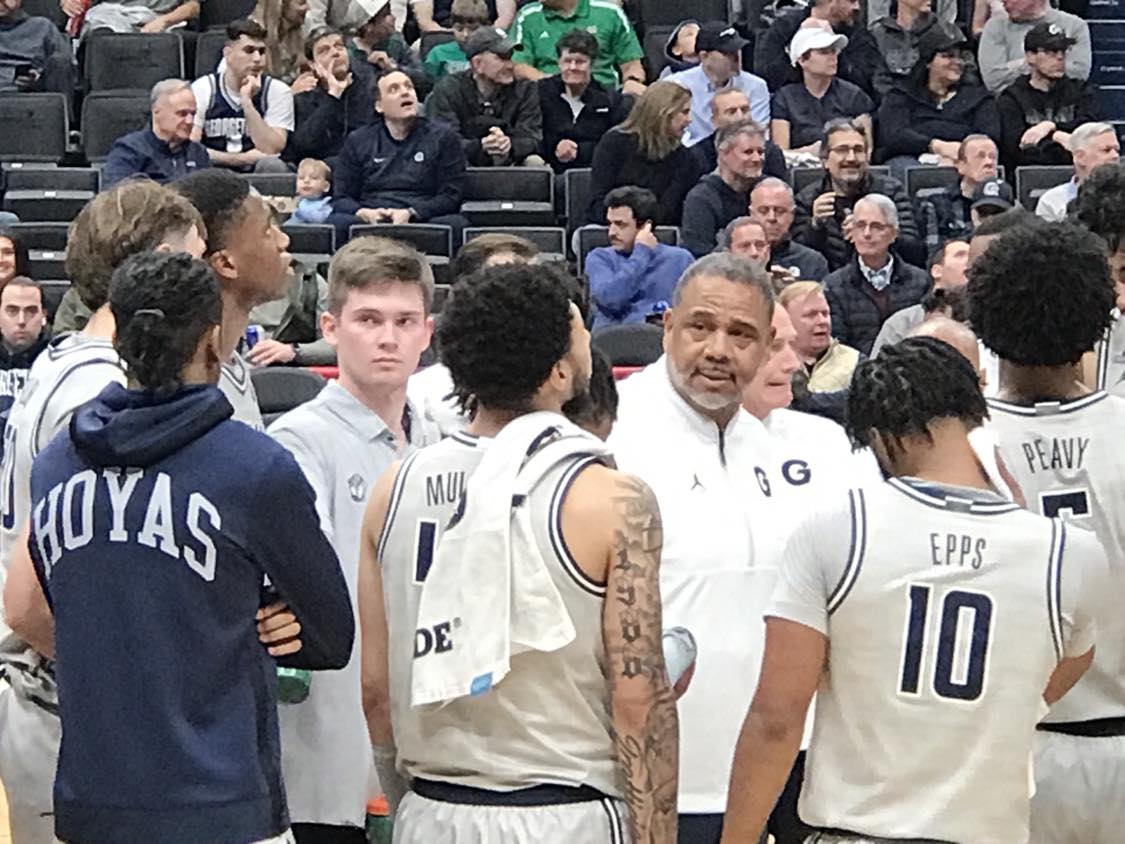
Thomas Sorber, Georgetown’s freshman center/power forward

Now, if you know basketball, you know Cooley. He’s not just a coach; he’s a craftsman, with well-earned reputation for molding raw talent into polished gems. He had his eye fixed on one of his own, Thomas Sorber, a young big man from Archbishop Ryan, part of Philly’s fiercely competitive Catholic League. On the court, Sorber was doing what he does best—owning the paint, swatting shots like flies, and moving the ball with a finesse you don’t expect from a kid his size. Cooley leaned in, his voice steady but electric.

“Del,” he said, with a quiet authority that didn’t leave room for doubt, “I’m gonna develop Thomas into an NBA player. When he leaves Georgetown, he’s going to the NBA.”

Ed Cooley

It wasn’t a brag or a pitch—it was a statement of fact. And I believed him. How could I not? Cooley’s track record was bulletproof. Sorber had the frame, the skill, and the fire. All he needed was Cooley’s steady hand and a couple of years surviving the Big East grind. At least, that’s what we thought.

But life, like basketball, loves an upset. Nobody told Sorber he was supposed to take his time. Fast forward to last night: Seton Hall vs. Georgetown. A Big East slugfest in Newark, New Jersey. Sorber, now a freshman, lit up the scoreboard—19 points, 8 boards, 4 blocks, 2 assists, and 2 steals. The Hoyas edged out a nail-biter, 61-60, and now sit at 10-2. For the first time since the Sasha and Malia were playing tag in the White House, Georgetown’s two games above .500 in the conference.

The young man from Trenton, who honed his craft in the crucible of Philly’s Catholic League, isn’t just making waves—he’s dragging the Hoyas out of the depths and putting the Big East on notice. Ewing. Mourning. Mutombo. Hibbert. Sorber. Damn, that lineup’s got a ring to it.

Big Thomas is the next GREAT GEORGETOWN BIG MAN!

Cooley didn’t just call it—he sped up the clock. Year one, and Sorber’s already building a legacy. And me? I was there at the start, when a coach with a vision and a kid with a dream crossed paths in a steamy gym in Philly. This ain’t the end of the story—it’s the prologue.

Hannah Hidalgo: The Unquestioned Queen of College Basketball

PHILADELPHIA, PA – In many ways, I have lived like a sports fan version of Forrest Gump. An ordinary hoop head from Philadelphia, I’ve somehow managed to stumble into key moments in the modern history of women’s basketball—all without realizing their significance at the time. This story isn’t about my serendipitous journey, but about the tenacious brilliance of one player I’ve unknowingly followed since she was a shy, unassuming kid with a basketball in her hands. Her name is Hannah Hidalgo, and she’s the best player in women’s college basketball today.

It was the summer of 2017, and I was attending a Team Final grassroots basketball event at Life Center in Burlington, New Jersey. My eyes were on future NBA stars like Cam Reddish, Louis King, and Isaiah Stewart, as well as a couple of my youngbuls, Sam Sessoms and Matthue Cotton. The competition was intense, the gym buzzing with the kind of energy that comes with elite talent. But off to the side, barely noticeable amidst the chaos, was a young girl dribbling a basketball like it was an extension of her body.

She couldn’t have been more than 12 or 13 years old, but her handle was mesmerizing. She manipulated the ball with an ease that reminded me of Allen Iverson or Kyrie Irving. One of my close friends, NBA agent Stephen Pina, grabbed my arm and pointed at her. “Del,” he said, “she’s the one. That’s Hannah.”

“Really?” I replied, unsure.

“Yo… remember I told you. She is the one.”

At the time, I didn’t think much of it. Women’s basketball wasn’t on my radar, and while I respected her dad, Orlando Hidalgo, as one of the best basketball minds in the Greater Philadelphia Region, I had absolutely no idea I was witnessing the genesis of greatness.

A couple of years later, Hannah was a high school freshman. Orlando called me one day to share the news that she was attending Paul VI High School and that he’d be coaching her. “Hannah likes South Carolina,” he said. “Could you reach out to Dawn Staley?”

Staley, a Philly legend of the highest magnitude herself, was at the helm of the nation’s top women’s basketball program. I made the call, but in my heart, I wasn’t sure if Hannah could embody the intense physicality and relentless grit of a Gamecock.

Imagine that shit… Father please forgive me, for I knew not what I was thinking…

Moreover, Dawn had her pick of the nation’s best guards, including MiLaysia Fulwiley, a South Carolina high school legend. Fulwiley, was a four-time South Carolina Basketball Coaches Association (SCBCA) Player of the Year, a five-time SCBCA First-Team All-State, and a WCBA All-American. She was also named a McDonald’s All-American and a Naismith (third team) All-American.

Fulwiley grew up a stone’s throw from the Arena where Staley has established the preeminent program in women’s college basketball. Fulwiley would eventually commit to Staley and the Gamecocks.

It was not meant to be… While Dawn, Hannah and Orlando kept in touch, it wasn’t meant to be. Hannah would have to find another home.

In the meantime, she turned high school basketball into her personal showcase. As a senior, against Camden High, she scored 40 points, along with 6 rebounds, 6 assists, and 12 steals. Facing powerhouse Morris Catholic, she dropped 41 points and added 7 rebounds and 7 steals. Against nationally ranked Westtown, she went nuclear with 48 points, 11 rebounds, and 8 steals. Watching her play was like witnessing prime Oscar Robertson—except she did it with a defensive tenacity that bordered on ferocious.

Eventually, she announced her commitment to Notre Dame. I was there, like Forrest Gump, camera in hand, recording the moment but still failing to grasp its significance. I knew she’d be very good. I didn’t know she’d become the very best.

As a freshman at Notre Dame, Hannah took the college game by storm. She averaged 22.6 points, 6.2 rebounds, 5.5 assists, and an astonishing 4.6 steals per game, earning first-team All-American honors. Still, entering this season, some debated whether JuJu Watkins or Paige Bueckers was the best player in the country. Those debates have been laid to rest.

Plainly, stated… Hannah BUSSED DEY ASS! Real Rap…

Hannah has consistently risen to the occasion against the best competition. She outplayed Watkins in Notre Dame’s victory over USC and followed that up by leading the Irish to a win over the undefeated, second-ranked UConn Huskies, outdueling Bueckers in the process. Her performances have been nothing short of legendary, and her relentless drive is what sets her apart.

Hannah Hidalgo doesn’t just play basketball; she imposes her will on the game. She bullies the best players in the nation. She is the embodiment of tenacity, a player who thrives on the biggest stages and against the toughest opponents. Every steal, every basket, every defensive stand feels like a declaration: “I belong here. I’m the best.”

Stephen Pina, for once in his life, was absolutely right. She is the one. And now, the rest of the basketball world knows it too.

The Best and Worst of Times: Imhotep’s RJ Smith and Philly’s Basketball Crossroads

PHILADELPHIA, PA – In sports, the 2023–2025 era will long be remembered as a time of extremes for Philadelphia. On one hand, the Phillies and the Eagles have been among the most dominant teams in Major League Baseball and the National Football League, respectively.  They have provided their diehard fans with winning seasons, playoff runs and championship aspirations. On the other hand, the Sixers’ disturbingly rapid descent into irrelevance has been as baffling as it has been swift, and collegiate basketball in the City of Brotherly Love has entered an unthinkable drought: no NCAA Tournament appearances from its six Division I programs for two consecutive seasons.

Da fuck is going on? I don’t trust the process… AT ALL!

Philadelphia is paying Joel Embid and Paul George, combined, over $116,000,000.00 per year to appear on podcasts and play basketball once in a while… Quintessential Nut Shit!!

This is a city where basketball isn’t just a game—it’s a way of life. From the hallowed grounds of the Palestra to playgrounds in Cobbs Creek, Da Bottom, Da “P” and up Norf, Philly has long been a hoops haven. Yet, our professional and college teams haven’t been shit since we were all wearing masks, getting injected with various vaccines and sitting through 6 or 7 zooms per day.

College Hoops: A Forgotten Tradition

Real shit… We have one guy trying mightily to hold it down for Philly. Villanova’s Eric Dixon shines as the lone star in a Big 5 constellation dimmed beyond recognition, the city’s college basketball faithful are left to reminisce about March Madness as though it were a relic of a bygone era. Where’s this era’s Gola, Rodgers, Macon, Rose, Nelson, West and Garland?

The decline of collegiate basketball in Philadelphia is astonishing. Once-proud programs that defined the city’s identity—Villanova, Temple, La Salle, Saint Joseph’s, Penn, and Drexel—now play in the shadow of their storied pasts. Villanova, the jewel of the Big 5, has been unable to maintain the dominance it enjoyed under Hall of Fame Coach Jay Wright. As I have noted elsewhere, “that bitch ain’t bad no mo’…” Although she did put on some yoga pants for a couple hours last night and looked “ahhhhiiiight” against Cincinnati. We have to wait and see if she can keep it together.

The other programs have simply failed to rise to the occasion. Today, Dixon carries Villanova as a headliner like Gladys Knight while the rest of the Big 5 plays supporting roles—background singers, like the “Pips”, to his solo act. 

The energy of March, once electric in Philly, now dissipates as local teams fail to punch their ticket to the NCAA Tournament. I guess we should all appreciate the fact that the local programs are still in the running for “at-large” bids in the College Insider Tournament (CIT) and the College Basketball Invitational (CBI). Be on the lookout for the “fish fry” in March at Lionel Simmons’ Bar to pay for the team charter buses. The absence of postseason relevance has left a void for Philly hoopheads  longing for competitive, high-quality basketball.

The Scholastic Silver Lining

Yet, amid the gloom, the vibrancy of Philadelphia’s scholastic basketball scene offers a glimmer of hope. Tonight, I ventured to St. Joseph’s Prep to watch the Hawks host Imhotep Charter, a perennial powerhouse. The game was a revelation, a reminder that while professional and collegiate hoops in Philly languishes, the high school circuit remains as competitive and thrilling as ever.

St. Joe’s Prep fielded an impressive roster featuring Dayton commit Jaron McKie and Florida Gulf Coast-bound Jordan Ellerbee. Sophomore Mekhi Robertson, a top-50 national recruit, and senior point guard Olin Chamberlain, an Ivy/Patriot League prospect. Imhotep, as usual, was fuckin’ loaded: Zion Green, a 6’8” sophomore wing ranked 17th nationally; juniors Zaahir Muhammad-Gray and Latief Lorenzano-White; and senior wing Carnell Henderson, are all Division I-caliber players.

But the night belonged to the newly crowned “Big Dawg” among Philly Guards, Imhotep’s RJ Smith.

RJ Smith: Seated in the Philly Guard Throne

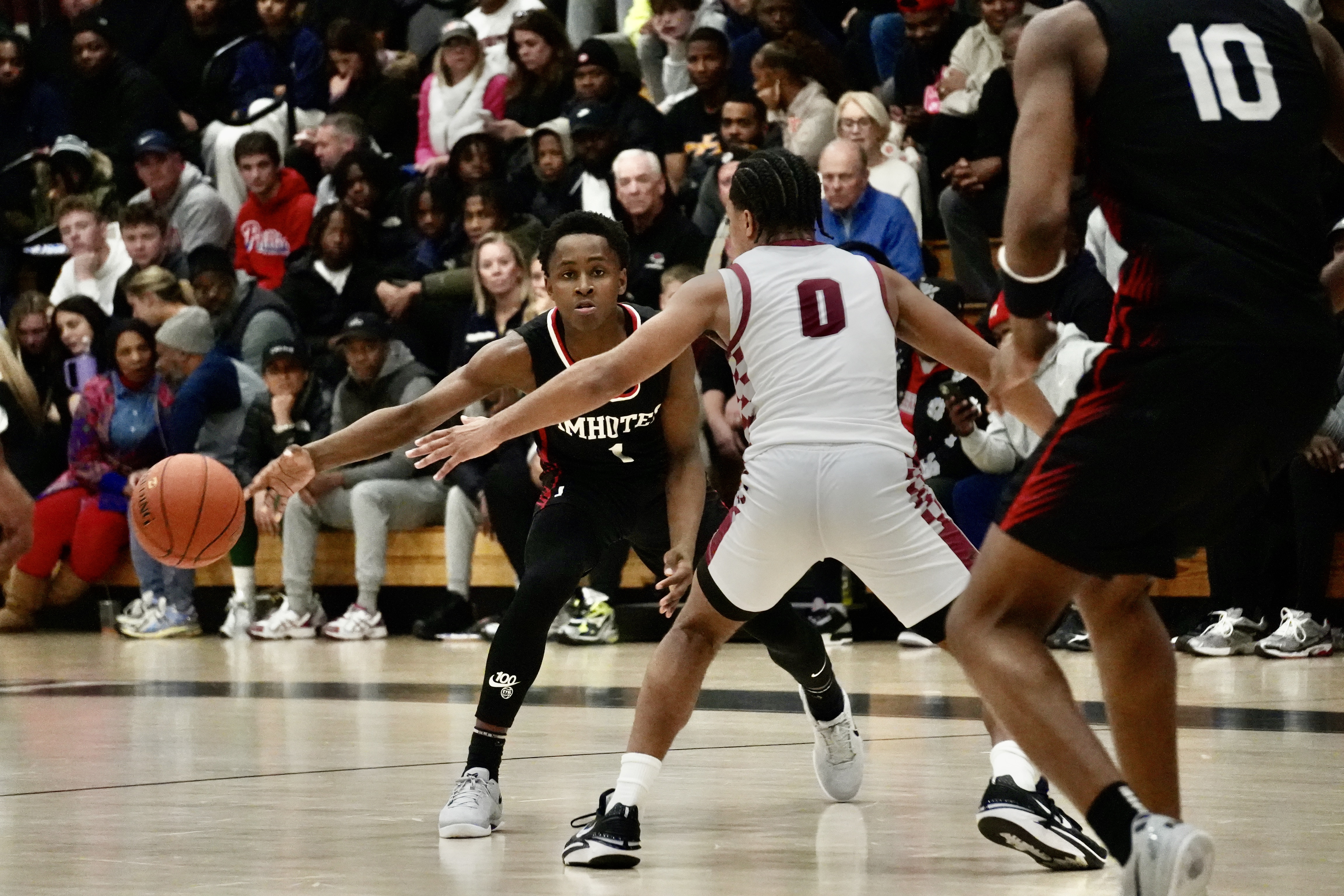
Smith, a 5’9” junior guard, embodies everything a “Philly guard” represents. Undeterred by his slight frame, Smith dominates games with his toughness, sharp basketball IQ, and unyielding determination. Time and again, he bullies bigger, stronger, and more athletic opponents, asserting control on both ends of the floor.

Defensively, Smith is a force in Imhotep’s relentless full-court press, where his tenacity and instincts for creating turnovers are nothing short of spectacular. Offensively, his ability to break down defenses is equally impressive. Whether pushing the pace in transition or orchestrating in a half-court set, Smith’s versatility shines.

Last season, Smith played Robin to UConn freshman Ahmad Nowell’s Batman. Nowell was the undisputed leader of Imhotep’s powerhouse program and clearly occupied the throne as the top Philly high school guard. But with Nowell’s departure, Smith has stepped seamlessly into the role of team leader. There is no doubt: this is now Smith’s team… and his throne…

Smith is not a traditional pass-first point guard of yesteryear. Instead, he mirrors the style of players like Isiah Thomas—capable of scoring at will while also being an adept distributor. His strengths are multifaceted: quickness, fearlessness, and a deep understanding of the game. As a defender, he excels at pressuring ball handlers and racking up steals, often setting the tone for Imhotep’s aggressive style of play. On offense, he thrives in transition, penetrates the lane with ease, and is a lethal shooter from well beyond the three-point arc.

While Smith’s skill set already places him among the elite at the high school level, his potential for growth is clear. In college, he could evolve into a more traditional point guard, balancing his knack for scoring with the demands of a floor general. For now, his dominance in high school basketball and his ability to overcome physical disadvantages with sheer grit and intelligence make him a quintessential Philly guard—and a joy to watch.

The “Philly Guard” Mystique

A “Philly guard” is more than just a basketball player. The term carries with it decades of tradition and a style that is unmistakably Philadelphia: gritty, crafty, and unapologetically confident. Philly guards are two-way players, as skilled on defense as they are on offense, and they play with an edge that reflects the city’s tough, blue-collar ethos.

Legends like John Chaney, Guy Rodgers, Andre McCarter, Pooh Richardson, Dawn Staley, Collin Gillespie and Kyle Lowry have defined the archetype. RJ Smith now stands in their shadow, a young player stepping into a rich lineage of excellence. His game is a nod to the past but also a bridge to the future of Philly basketball.

A Tale of Two Basketball Cities

The juxtaposition of Philadelphia’s scholastic and professional basketball worlds could not be starker. As the Sixers spiral into chaos, weighed down by an exorbitant payroll and a seemingly rudderless front office, and as college basketball flounders, the high school scene pulses with life. It’s a cruel irony that while the city’s professional and collegiate teams struggle, its high schools continue to produce some of the most exciting basketball talent in the nation.

RJ Smith’s emergence as the next great Philly guard underscores this dynamic. He represents hope for the future—a reminder of what Philly basketball can be when it is at its best.

Ten years from now, we’ll look back on this era with mixed emotions. The Phillies and Eagles gave us joy and pride. The Sixers and the city’s college programs brought frustration and bewilderment. And on high school courts across the city, the next generation of stars reminded us that, even in the worst of times, Philly basketball is never truly down for the count.

College coaches constantly call in search of a “Philly Guard.” Well, we have one that is pretty special. Ideally, Smith will land with a program that has familiarity and experience with smaller guards. He can compete in the MEAC, NEC, AmEast, MAAC and CAA for sure. Some A10 and American Conference programs will likely become intrigued when they actually lay eyes on him.

For now, though, Smith’s performances remind fans why the “Philly guard” is such a revered archetype in basketball—a gritty, intelligent, and unrelenting player who never shies away from the moment. He is, simply put, a joy to watch and a testament to Philadelphia’s rich basketball heritage. Looks like Smith will be sitting on the Philly Guard throne for next two years… Enjoying his reign… Unless, young Mr. Sutton from Broad and Vine has some other ideas.

Drexel Star Kobe Magee’s Old-School Rise in a New-Age Era

PHILADELPHIA, PA – In the ever-evolving ecosystem of college basketball, where the transfer portal and NIL opportunities have reshaped the traditional landscape, players like Drexel University’s Kobe Magee are a rarity. Magee’s emergence as an elite college basketball player this season is a testament to a journey almost unrecognizable in today’s game: one marked by patience, commitment, and steady growth.

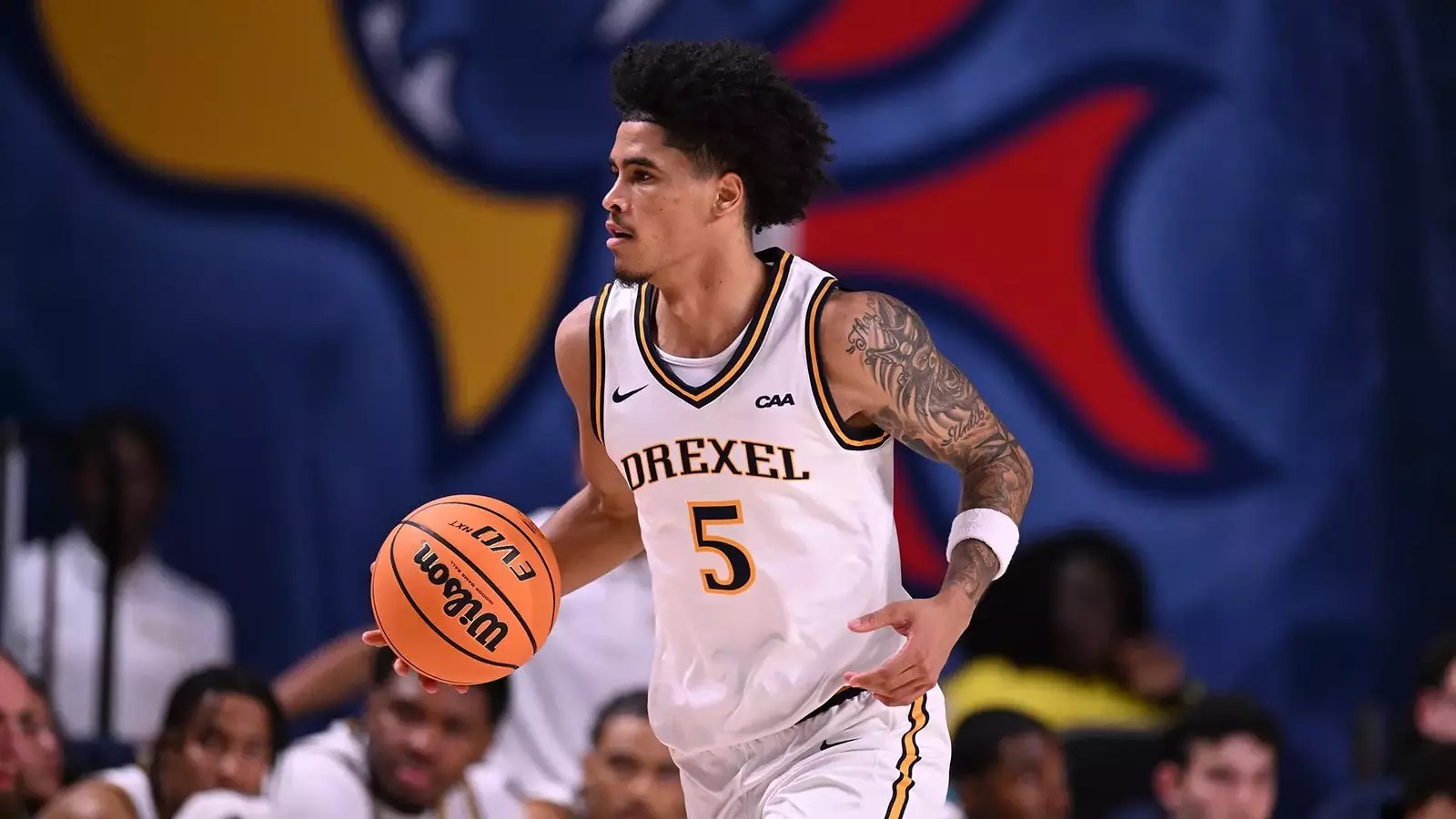
Kobe Magee, Drexel University

Magee, a junior guard, is averaging 16.5 points per game on an impressive 54.7% shooting from the field and 48.1% from beyond the arc. His production, coupled with 31.4 minutes of relentless effort per game, has propelled Drexel to an unexpectedly competitive season. The Dragons record stands at 5-3 after the first 8 games. This is no small feat for a team that lost its entire starting lineup from last year, including its top five scorers, to either the transfer portal or exhausted eligibility.

Head Coach Zach Spiker was left with a daunting task: rebuild a program gutted by the loss of Amari Williams (now at Kentucky), Justin Moore (Loyola Chicago), and other key contributors. But Magee, who came to Drexel as a true freshman and spent his first two years playing limited minutes (7.8 as a freshman, 18.2 as a sophomore), has answered the call to lead in spectacular fashion.

His path stands in stark contrast to those of his peers, including former high school teammates at Allentown’s Executive Education Charter School. Jevin Muniz, Jeremiah Bembry, and Moustapha Sanoh—all Division 1 talents—have navigated the revolving doors of the transfer portal, seeking better opportunities and larger stages. Magee, meanwhile, stayed put.

When asked why he resisted the siren call of the portal, Magee’s answer was as refreshing as it was rare: “Honestly, it’s the love that they are giving me. The coaching staff, the preparation, and the time they consistently take out of their day to help me and my teammates get better. I really appreciate the level of competitiveness that we’ve achieved in this program. I also believe Drexel is a place where I can grind and make it from the bottom. I see all the people transferring for more money. But I don’t play for money; I truly play for the love of the game.”

Magee’s commitment is about more than basketball. A business entrepreneurship major with excellent grades, he embodies the ideals of the student-athlete in an era where those ideals are often overshadowed by financial incentives and career pragmatism.

For Spiker, Magee’s development is a point of pride. “Kobe came to Drexel as a very young true freshman,” Spiker reflects. “He had to compete against older, stronger, and more mature players from day one. He worked on his body, worked on his craft, and has always been ready when called upon.”

This season, Magee has done far more than simply step up. With Drexel facing the grueling competition of a Coastal Athletic Association (CAA) and Big 5 schedule, Magee has shouldered the scoring load while serving as the team’s emotional anchor.

Magee’s path is increasingly rare in a sport where the transfer portal and NIL have become dominant forces. College basketball today often rewards immediate impact over gradual improvement, and programs are built on an annual shuffle of talent. In this context, Magee’s steady climb at Drexel—a mid-major program often overshadowed in the Philadelphia basketball hierarchy—is both a throwback and a revelation.

In many ways, Magee represents the antithesis of what college basketball has become. He is not chasing greener pastures or larger paydays. He is chasing excellence on his terms, embracing the grind, and trusting the process.

His former high school teammates’ journeys highlight the contrast. Jevin Muniz has moved from Delaware State to Florida Gulf Coast. Jeremiah Bembry has traveled from Florida State to West Virginia to Oakland University. Moustapha Sanoh, initially at Rider, now plays for Jefferson University. Each has sought to navigate the sport’s new realities, but none have stayed the course like Magee.

Kobe Magee is the kind of player coaches dream of building programs around. He represents something endangered: a college athlete who sees value in growth, loyalty, and team culture. In an era defined by the quick fix, Magee’s journey is proof that the long road can still lead to greatness.

For Spiker and Drexel, Magee is not just a player. He is the heart of a team and a beacon of hope for a program finding its way in a turbulent landscape. And for college basketball as a whole, Magee is a reminder that while the game may change, the virtues of hard work and perseverance will always have a place in it.

Magee’s rise is a story worth celebrating—not because it is flashy or immediate, but because it is rare and enduring. For Drexel and for college basketball, players like Magee might just be the bridge between what the game was and what it could still aspire to be.

The Rise of Corey McKeithan: La Salle’s Star Guard

PHILADELPHIA, PA – The transfer portal has redefined college basketball, bringing both challenges and opportunities for programs across the nation. For La Salle, the offseason loss of All-League guards Jhamir Brickus and Khalil Brantley to Villanova and Oklahoma State respectively seemed to leave a gaping hole in the backcourt. Yet, in a twist of fate, the portal also delivered a savior — Corey McKeithan.

Corey McKeithan, La Salle Explorers

After three seasons as a role player at Rider University, McKeithan has burst onto the scene with the La Salle Explorers, quickly establishing himself as one of the top players in the Atlantic 10 and Philadelphia Big 5. His latest performance on Saturday night against Temple underscored his meteoric rise.

McKeithan is a combo guard whose game is marked by a lethal capacity for scoring. He is averaging a team high 19 points per game this season. His off the dribble variety is elite—hesitation, rocker and crossover—excellent shiftiness and ability to burst through an open seam. He has demonstrated an ability to score from all three levels. As a result, he is a truly unpredictable defensive assignment in the half court. He is highly efficient in both isolation offense and the pick & roll for the Explorers. 

Facing the Owls in a pivotal Big 5 matchup on Saturday afternoon, McKeithan delivered a career-best performance, scoring 28 points on 10-for-19 shooting. Beyond his scoring outburst, the junior guard added four assists without a single turnover, collected three rebounds, swatted a block, and picked up two steals. McKeithan’s all-around brilliance powered the Explorers to their sixth win in eight games this season and secured a spot in next Saturday’s Big 5 Classic championship game against St. Joseph’s.

Fran Dunphy, La Salle Head Coach

For La Salle head coach Fran Dunphy, McKeithan’s emergence couldn’t have come at a better time. “Corey has a confidence and swagger about him that’s infectious,” Dunphy said. “He’s elevated not just his game but the entire team’s energy. That’s what great players do.”

McKeithan’s transformation has been remarkable. At Rider, he spent much of his time playing off the ball, recording just 15 double-digit scoring games across three seasons. Now, as the primary playmaker for La Salle, McKeithan has embraced the responsibility, showcasing an assertiveness and flair that has turned him into a leader on and off the court.

McKeithan has a deep bag and he’s been digging deep into it…

Saturday’s win was another sign that Dunphy and his staff unearthed a gem in the transfer portal. McKeithan’s ability to step up in critical moments has given La Salle an edge, offsetting the departures of Brickus and Brantley while providing the Explorers with a centerpiece around whom the team can rally.

However, the road ahead is challenging. In the Big 5 Classic championship game, McKeithan will face one of the most formidable guard trios in college basketball: Erik Reynolds, Xzayvier Brown, and Derek Simpson of St. Joseph’s. The Hawks’ elite backcourt will undoubtedly test McKeithan’s mettle, providing a marquee showdown between rising stars and seasoned talent.

As La Salle continues its resurgence, McKeithan’s performance has not only revived the Explorers’ prospects but also solidified his place as one of the premier guards in the region. For La Salle fans, his emergence is a testament to the transformative power of belief, hard work, and the right opportunity.

Next Saturday, all eyes will be on Corey McKeithan, who has proven that sometimes, all it takes to shine is the right stage. The best Philly Guard, just might be the kid from Connecticut.

Battle of the Ol’ Head and the Youngbul: Eric Dixon vs. Derik Queen

NEWARK, NJ – At the Prudential Center, in the “Brick City” of Newark, New Jersey, two basketball players at opposite ends of their collegiate journeys clashed in a contest that felt less like an ordinary November game and more like a referendum on talent, experience, and promise. Villanova’s Eric Dixon, a high skilled seasoned veteran in his sixth year, delivered a performance for the ages, scoring a career-high 38 points. Maryland’s Derik Queen, a freshman sensation, countered with an all-around masterpiece—22 points, 11 rebounds, and 5 assists. In the end, Queen’s Terrapins outlasted Dixon’s Wildcats, securing a hard-fought victory that underscored the growing importance of versatility and team cohesion in modern basketball.

Derik Queen

This game was not just a matchup of two supremely skilled big men but a clash of basketball philosophies. Dixon, a classic Villanova player, is the epitome of what college basketball excellence looks like: disciplined, fundamentally sound, and relentless. His offensive exhibition was a showcase of everything a great college player can be. Whether it was sinking deep NBA-range threes, executing textbook post moves, or blowing by defenders with cunning hesitation dribbles, Dixon seemed unstoppable. He played like a man on a mission, determined to will his team to victory by sheer force of will and skill.

But basketball is rarely a solo endeavor. As Dixon poured in points, Maryland, guided by the precocious Derik Queen, slowly dismantled Villanova’s lead through the synergy of youth, athleticism, and strategic adaptability. Queen’s game was the antithesis of Dixon’s solo heroics. It was symphonic, blending scoring, rebounding, and playmaking into a performance that elevated his entire team. Every time Villanova tried to stretch their advantage, Queen would respond—whether with a slick assist to a cutting teammate, a put-back on the offensive glass, or a soft floater in the lane.

Queen represents the modern big man, a player as comfortable orchestrating an offense from the high post as he is battling in the trenches. His court vision and basketball IQ belied his youth, as he repeatedly found open teammates and exposed Villanova’s defensive lapses. Unlike Dixon, whose scoring was electric but often solitary, Queen’s contributions were woven into Maryland’s collective effort.

Eric Dixon

What makes this matchup fascinating is how it juxtaposes the present and the future of basketball. Dixon is a testament to the value of experience. His five years at Villanova have honed his game to a fine edge, and he plays with a poise and maturity that can only come from time. His mastery of three-level scoring is a reminder that college basketball still has a place for specialists, players who excel in specific roles and who, on their day, can single-handedly carry a team.

Queen, on the other hand, embodies the promise of what basketball can be. At just 18 years old, he is already a complete player. His versatility, unselfishness, and ability to impact the game in multiple ways make him a tantalizing prospect. Queen doesn’t just play basketball; he orchestrates it. He sees the game in layers, understanding not just his role but the roles of everyone around him.

And yet, for all their differences, there is a common thread between Dixon and Queen—a commitment to excellence and an understanding of what it means to lead. Dixon led by example, with his jaw-dropping scoring display reminding everyone why he is one of the best players in college basketball. Queen led through inclusion, making his teammates better and showing why he will one day be one of the best players in the game, period.

Maryland’s victory was a statement win, but it was also a reminder that basketball is a game of moments. On this night, Queen’s all-around brilliance and Maryland’s balanced attack prevailed. But Dixon’s performance will linger in memory, a dazzling exhibition of what a great college basketball player looks like at the peak of their powers.

The season is young, and both players have much to prove. For Dixon, the challenge will be carrying Villanova through the rigors of the Big East and beyond, where his experience and scoring will be indispensable. For Queen, the journey is just beginning, and his growth will be as much about navigating the spotlight as it is about refining his game.

In Newark, the veteran and the rookie gave us a glimpse of basketball’s past, present, and future. Dixon was magnificent, Queen was transformative, and the game was unforgettable. This was more than a matchup—it was a passing of the torch. And while Dixon may be the better player today, Queen’s time is coming. The beauty of basketball is that it allows us to marvel at both.

The Perils of Transition: From Philly High School Stardom to High Major College Basketball

PHILADELPHIA, PA: The journey from high school basketball to high major college hoops is a steep climb fraught with challenges that fans, particularly those entrenched in the local Philadelphia and Camden basketball communities, often fail to understand. The expectations placed on young players—mere teenagers stepping onto the brightest of stages—are not only unreasonable but often cruelly uninformed.

Quade Green

Plainly stated, niggas have no fuckin idea what they are talkin’ bout…

Freshmen entering high major programs are thrust into hypercompetitive environments where success is measured against near-impossible standards. They compete with older, stronger, and more experienced upperclassmen who have little incentive to step aside for an 18-year-old prodigy. The results, while often admirable in context, are ruthlessly critiqued.

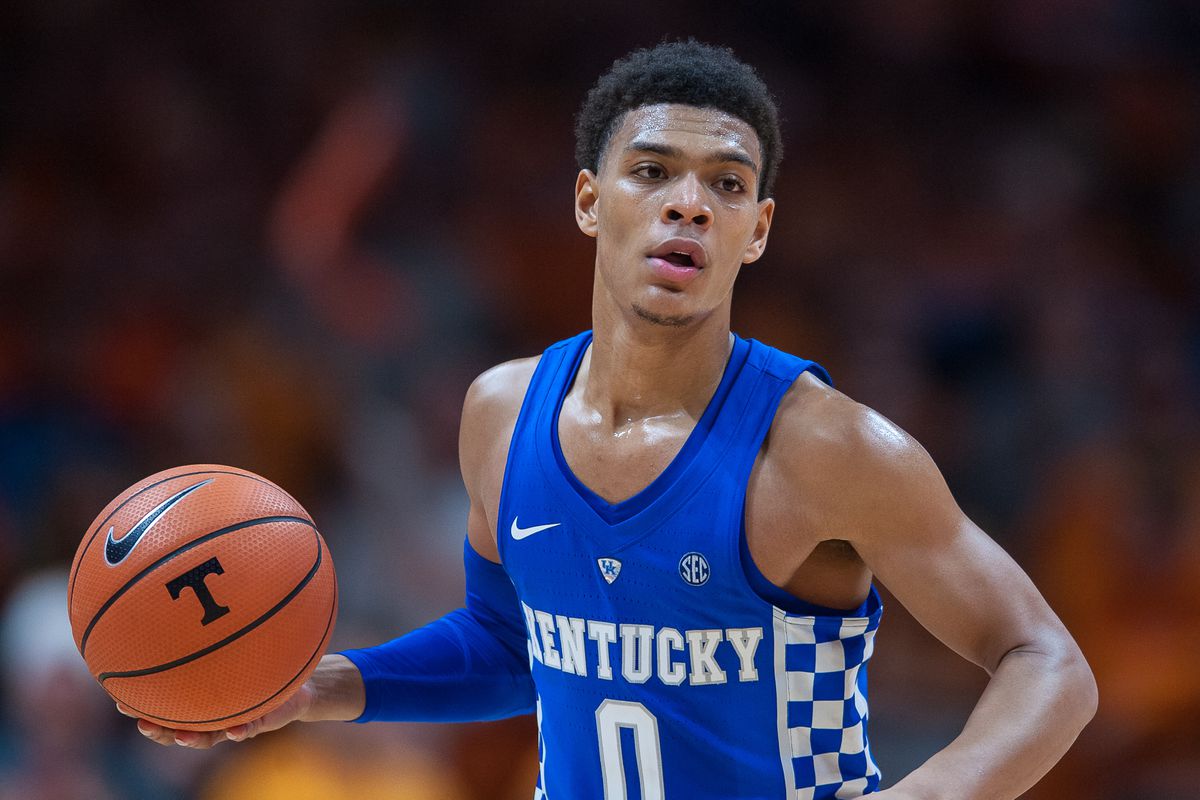
Quade Green’s freshman season at Kentucky in 2017-2018 is a case study in this phenomenon. A five-star recruit and McDonald’s All-American, Green arrived in Lexington with immense fanfare. Kentucky, coached by the legendary John Calipari, was a perennial powerhouse, and Green joined a roster featuring seven future NBA players. As a freshman, Green averaged 9.3 points, 2.7 assists, and shot a respectable 37.6% from beyond the arc—all while competing in the cutthroat SEC conference. By any reasonable measure, this was highly successful freshman campaign in the mighty SEC conference. Kentucky went 26-11 that year and finished the year ranked 18th in the nation in the final Associated Press poll. Yet, in his hometown of Philadelphia, his performance was derided by armchair critics who declared his choice to attend Kentucky a mistake.

These critiques, fueled by local pride and a lack of understanding about the difficulty of transitioning to college basketball, are misguided. A player like Green, who carved out a significant role on one of the nation’s top teams as a freshman, was achieving success against the odds. But those odds are rarely considered by fans who see only carefully curated highlight reels and box scores.

Plainly stated, niggas have no fuckin idea what they are talkin’ bout…

The story is repeating itself with Jalil Bethea, a heralded Philadelphia recruit now at Miami. Through four games, Bethea has shown flashes of brilliance, averaging 7.8 points in just 12.3 minutes per game. Yet the grumblings have already started. Some question why a player of his talent isn’t starting or dominating. What they fail to grasp is the reality of high major basketball: Bethea is competing with veterans like Nijel Pack (14.7 points, 6.7 assists), a fifth-year senior, and Jalen Blackmon (14.0 points, 1.7 steals), another seasoned guard. These are players with years of college experience who know the system and the physical and mental demands of the game.

Jalil Bethea

In this context, the transition from high school to college basketball is more than a step up—it is a leap. Freshmen, even the most talented, are adjusting to faster-paced games, more complex schemes, and physically mature opponents. High school dominance against inferior competition like “Collingdale Catholic” or “Roast Pork Charter,” simply does not translate directly to the high major college level.

Additionally, high major basketball rosters are stocked with talent. Freshmen are not handed minutes; they earn them. Coaches at programs like Kentucky, Miami, and Duke are tasked not with developing individual players in isolation but with building cohesive units that can contend for national championships. This often means limiting the roles of freshmen while leaning on upperclassmen who can deliver consistent results.

The problem lies partly in how young players are marketed. Highlight tapes, social media buzz, and grassroots hype build unrealistic expectations. A player dropping 40 points in a high school game might dazzle fans, but the competition level is rarely considered. This leads to a false narrative that high school stars can seamlessly dominate at the collegiate level. When they don’t, fans often blame the player, the coach, or even the program, without acknowledging the broader context.

The consequences of these unreasonable expectations can be damaging. The pressure to live up to hype can erode a player’s confidence. The constant scrutiny can impact mental health, and the pervasive narrative that a player “chose the wrong school” can sow doubt and create tension within a team.

Muthafuckas need to shut the fuck up and let it play out…

High major basketball is not a fairytale; it’s a crucible. Upperclassmen who have spent years developing their skills and bodies do not defer to 18-year-olds, no matter how talented. Coaches prioritize winning over everything else, which often means favoring experience over potential.

For players like Green and Bethea, the freshman year is rarely about stardom—it’s about survival and growth. By the time these players become sophomores or juniors, they often evolve into key contributors, but that progression is ignored by fans who judge them prematurely.

If we are to fairly evaluate young players, we must adjust our expectations. Freshmen should not be seen as saviors but as students of the game, learning and adapting to an environment more challenging than most fans can imagine. Instead of demanding instant results, we should celebrate their resilience, their flashes of potential, and their determination to succeed in the face of daunting odds.

Quade Green’s journey shows that even a “successful” freshman season is not immune to misplaced criticism. Jalil Bethea’s story is still unfolding, but one hopes that he, like Green, has the fortitude to rise above the noise. Fans and critics alike must recognize the difficulty of the transition and the strength it takes to endure. Only then can we truly appreciate the young athletes who dare to take on the challenge of high major college basketball.

Thomas Sorber: Georgetown’s Beacon of Hope for a New Era

PHILADELPHIA, PA – In the hallowed halls of Georgetown basketball lore, a tradition of transcendent big men looms large: Patrick Ewing, Alonzo Mourning, Dikembe Mutombo, Greg Monroe, Othella Harrington, and Roy Hibbert. To that lineage, the Hoyas now add a new name—Thomas Sorber. The freshman center from Philadelphia, already making waves with averages of 19 points, 8.7 rebounds, and 1.3 blocks through his first three collegiate games, is more than just a promising player; he represents the program’s clearest path back to national prominence.

Thomas Sorber, Georgtown Center

At 6-foot-9 and 250 pounds, Sorber blends physicality and finesse in a way that recalls the greats of Georgetown’s storied past. His high school accolades are substantial: as a senior at Archbishop Ryan, he averaged an imposing double-double with 18.9 points, 11.2 rebounds, and 4.8 blocks per game. On the Nike EYBL circuit, he showcased his versatility for Team Final, displaying the kind of court awareness and soft touch that have made him a nightmare matchup for opposing bigs. But Sorber’s potential extends far beyond his statistics.

Under the tutelage of new head coach Ed Cooley, Georgetown basketball is undergoing a seismic shift. Cooley, known for his success at Providence, has a proven track record of rebuilding programs and instilling a winning culture. Sorber, a cornerstone recruit ranked No. 50 nationally in the Class of 2024, is the perfect player to anchor Cooley’s ambitious vision. Together, they aim to revive a program that has been mired in mediocrity since its last NCAA Tournament victory in 2015.

The Heir Apparent

Georgetown’s identity has always been synonymous with dominant post players. From Ewing’s national championship in 1984 to Hibbert’s leadership during the Hoyas’ 2007 Final Four run, the big man has been a symbol of both power and pride. Sorber’s presence rekindles that legacy. His polished footwork, ability to control the paint, and burgeoning outside shot make him a modern adaptation of Georgetown’s traditional mold.

But Sorber’s value extends beyond his individual skill set. As Nate Hodge, his AAU coach, astutely observed, Sorber’s combination of size, skill, and feel for the game could make him “something really special” as he continues to refine his conditioning and shooting range. Those are precisely the attributes Georgetown needs to reestablish itself as a force in the Big East and beyond.

Ed Cooley, Georgetown Head Coach

A New Era of Leadership

The importance of Cooley’s leadership cannot be overstated. Georgetown’s previous era, led by Patrick Ewing, was defined by nostalgic optimism that quickly soured into disarray. Now, with Cooley at the helm, the Hoyas have a tactician who excels at player development and cultivating team chemistry. Sorber, described by his high school coach Joe Zeglinski as “unselfish” and “a coachable kid,” embodies the type of player who will thrive under Cooley’s system.

Off the court, Sorber has already earned admiration for his humility and respectfulness—a foundation that will serve him well as he becomes the face of a rebuilding program. His teammates love playing with him, a testament to his leadership and character.

The Road Ahead

For Georgetown, Sorber represents more than just hope; he is a reminder of what the program can be at its best. The Hoyas’ return to relevance won’t happen overnight, but the early signs are promising. Sorber’s ability to impact both ends of the floor, combined with Cooley’s strategic vision, offers Georgetown fans something they haven’t had in years: belief.

The path forward will be challenging. The Big East remains one of the toughest conferences in college basketball, and the Hoyas must contend with powerhouses like UConn and Marquette. But with Sorber anchoring the post and Cooley steering the ship, Georgetown has a chance to reclaim its place among the nation’s elite.

For now, the echoes of the past reverberate in the present, as Thomas Sorber steps onto the court at Capital One Arena. His presence is a declaration: Georgetown basketball is back, and its future starts now.

The Holy War: A Big Game for All the Wrong Reasons

PHILADELPHIA, PA – If ever there were a game of consequence for two struggling programs, Tuesday’s Holy War Pillowfight between St. Joseph’s and Villanova is it. Not for the lore, the drama, or the fierce rivalry—this time, it’s about the potential future of two head coaches who’ve found themselves under intensifying scrutiny. St. Joseph’s Billy Lange and Villanova’s Kyle Neptune are on alarmingly shaky ground, with the outcome of this clash potentially determining their fates. And yes, to the fans, it’s a big game—albeit for all the wrong reasons.

The alums, boosters and fans have had enough of this shit…

Kyle Neptune, Villanova Head Coach

Imagine a WWE-style steel cage match between Lange and Neptune with the defeated coach forced to turn in his company car, office keys and bid farewell to his team after the final buzzer. It’s the kind of spectacle that perhaps only wrestling fans could appreciate, yet one that feels uncomfortably close to the current reality for both Lange and Neptune. For the respective fan bases, frustration has given way to calls for change, and patience has long run out. Both fan bases have endured too much for too long.

Lange’s record at St. Joseph’s, a tepid 60-92 (.395) since his hiring in 2019, has turned a proud program into a perennial disappointment. The Hawk faithful yearn for a return to the NCAA tournament. Many express deep skepticism regarding the current coaching staff. The St. Joseph’s message board is rife with calls for Lange’s termination. Things are even worse at Villanova. Neptune, though in his third year, has marginally fared better than Lange with a 37-34 (.521) record. However, he was handed the keys to a Ferrari and it feels like it’s been in the shop since he took over. When introduced at home games, his name is met with full throated Philly boos usually reserved for visiting opponents. For two programs that once routinely inspired confidence, their leaders appear to be hanging by the thinnest of threads, and this season’s start—punctuated by jarring losses in “buy games”—hasn’t helped.

Billy Lange, St. Joseph’s Head Coach

The buy game, a time-honored tradition, serves as a revenue stream for small programs and a quick win for larger ones. Schools like St. Joseph’s and Villanova bring in lesser-known “low major” teams, offering a hefty check, sometimes upwards of $100,000, with the tacit understanding that the visiting team will go home defeated. It’s a system that usually allows for the high-major program to pad its win column while the small school collects its payday.

But that unspoken agreement has been unceremoniously disrupted in Philly. St. Joseph’s invited Central Connecticut State for what was expected to be a routine win at 54th and City Avenue. Instead, the visitor walked away with a victory—and a paycheck. Earlier in the week, Columbia arrived at Finneran Pavillion on the Main Line, handed the Wildcats a stinging defeat, took their check, and headed back up I-95 to Manhattan. What should have been easy victories have turned into humiliating losses, pushing the fan bases to the brink.

And they are fed up. Alumni, supporters, and local fans aren’t willing to watch their schools play the role of gracious hosts handing out both checks and victories to supposedly inferior opponents. This shift from reverence to restlessness is palpable across both programs’ communities. For Lange and Neptune, these losses are not just isolated setbacks but the latest entries in a long list of grievances.

For both coaches, Tuesday’s game is likely to carry more weight than most mid-November matchups. It’s a crossroads: Lose, and they will find themselves with a diminishing number of believers. Crawl out of the steel cage with a win, and perhaps they’ll buy some time. But make no mistake, the scales have tipped. Fans are no longer willing to accept mediocrity from programs that once consistently delivered excellence.

Tuesday’s Holy War Pillowfight will be a spectacle—a big game, indeed, but not for the thrill of victory. For the fans of St. Joseph’s and Villanova, it’s about accountability, about honor, and, perhaps, about the possibility of starting anew.