The VCU Blueprint: How the Martelli Hire Is an Antidote to College Basketball’s Chaos

by Delgreco Wilson

RICHMOND, VA – The tectonic plates of college athletics have shifted irrevocably, creating a landscape that is both exhilarating and unnerving. The confluence of name, image and likeness (NIL) compensation and the transfer portal has ushered in a form of rampant, year-round free agency, where roster-building is a high-stakes puzzle and the very concept of player loyalty is being tested. In this volatile new world, a program’s success is no longer just about the X’s and O’s on the whiteboard; it’s about constructing a culture so compelling, a vision so clear, and relationships so authentic that players choose to stay and build within it, rather than simply pass through. Many, like Philadelphia’s six Division 1 college basketball programs, have struggled to adapt. 

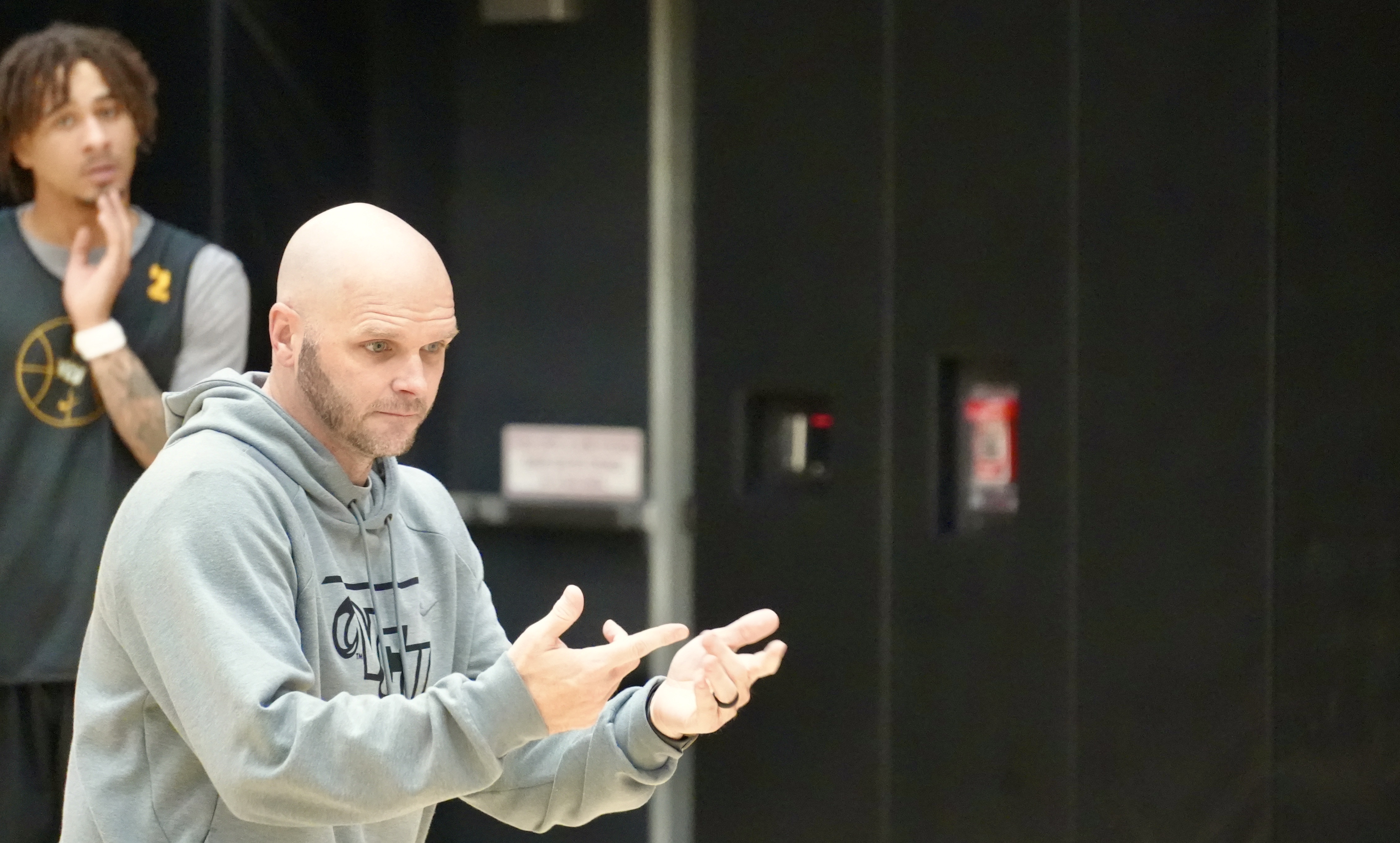
Phil Martelli, Jr., VCU Head Coach

The proud tradition of Philadelphia’s Big 5, once a vibrant tapestry of city-wide basketball passion, is being systematically unraveled by the harsh realities of the modern NCAA. In this new era, defined by the transfer portal’s relentless churn and the financial allure of Name, Image and Likeness deals, the foundational pillars of local recruiting and program continuity have crumbled. The result is a stark and unprecedented decline: for the first time in the consortium’s storied history, no Big 5 program has danced in the NCAA tournament for three consecutive years. These schools, from Saint Joseph’s to Temple, are now caught in a debilitating cycle, struggling to retain burgeoning talent while finding themselves outgunned in the bidding wars for the transfers who could save them. The very model that built these giants of the mid-major world has become a relic, leaving them to fight a existential battle on a playing field tilted decisively against them.

It is against this backdrop of existential change that Virginia Commonwealth University’s hiring of Philly born and bred, Phil Martelli Jr., as its head men’s basketball coach must be viewed. This was not merely a search for a tactician; it was a search for an architect for a new era. In Martelli, and in his strategic assembly of a staff featuring his brother Jimmy and rising star Ryan Daly, VCU has not just found a leader. Drawing from the pool of young Philadelphia coaching talent, it has established a coherent, persuasive, and uniquely qualified command structure designed to thrive amid the chaos. These young men were literally born and raised in the A10. This hire represents a potent blueprint for sustainable success in modern college basketball: a fusion of deep-rooted cultural understanding, proven program-building, and unbreakable personal trust.

Navigating the New Frontier: Culture as the Ultimate Competitive Edge

The transfer portal giveth, and the transfer portal taketh away. In an age where a star player can be lured away by a more lucrative NIL collective at a moment’s notice, the intrinsic value of a program—its identity, its sense of family, its proven path to development—has never been more critical. This is the very heart of VCU’s bet on Phil Martelli Jr.

He is not a mercenary coach; he is a native son of the Atlantic 10. He understands that at a program like VCU, you cannot simply outspend the power conferences. You must out-care, out-develop, and out-connect. His life’s work, from his playing days on the storied courts of St. Joseph’s to engineering a historic turnaround at Bryant, has been about fostering deep, authentic relationships. In the “NIL and free agency” era, this is not a soft skill; it is a strategic imperative. Players today are not just athletes; they are partners and stakeholders in the program’s journey. Martelli’s genuine, grounded approach is precisely the antidote to the transactional nature that threatens to consume the sport.

As VCU Vice President and Director of Athletics Ed McLaughlin stated, Martelli has “clearly lived his entire life amid college basketball legends but has made his own path and paid his dues through hard work, good character and a devotion to developing young men into the best versions of themselves through sport.” This focus on holistic development, on building men rather than just players, is the cornerstone of a culture that can withstand the siren calls of the open market.

The Visionary: Phil Martelli Jr., A10 Native and Modern Program-Builder

Phil Martelli Jr. is the perfect synthesis of old-school values and new-school methodology. His upbringing as the son of a St. Joseph’s coaching legend provided him with an innate, cradle-to-present understanding of the A-10’s competitive soul. He didn’t just study the conference; he was raised on its sidelines, absorbing its rhythms and rivalries. As a player, he was a co-captain on the 2002-03 St. Joseph’s team alongside Jameer Nelson and Delonte West, experiencing the pinnacle of A-10 success and NCAA Tournament glory. He knows the recruiting battles in Philadelphia and the DMV, the grind of the conference schedule, and the specific breed of tough, intelligent player who thrives in this environment.

But his record at Bryant proves he is no traditionalist clinging to the past. He is a self-made architect of success. Arriving as an assistant in 2018, he was a key engineer in the Bulldogs’ first Division I NCAA Tournament berth in 2022. When handed the reins as head coach, he didn’t just maintain success; he elevated it, leading Bryant to both the America East regular season and tournament championships in 2025, earning an NCAA Tournament bid and securing a second straight 20-win campaign. For this, he was deservedly named the 2025 America East Conference and NABC Mid-Atlantic Coach of the Year.

His teams won with a dynamic, modern, up-tempo offensive system that ranked third and sixth, respectively, in the country in adjusted tempo. His 2024-25 squad averaged a blistering 81.8 points per game. This style is a powerful recruiting and retention tool in itself, offering the kind of exciting, pro-friendly basketball that attracts and motivates today’s players. Furthermore, his well-rounded apprenticeship—from being the youngest full-time assistant in Division I at 22, to an NCAA Tournament appearance at Niagara, to a crucial stint in the NBA G-League—provides him with unique credibility when advising players on their professional pathways. In an era where players are focused on their next step, a coach who can speak the language of the pros is invaluable.

The Cornerstone: Jimmy Martelli, The Keeper of the Flame and Bridge to the Future

In his brother, Jimmy, Coach Martelli has an associate head coach who is the ultimate force multiplier, a cornerstone ensuring the entire structure remains stable. Any coaching transition risks the erosion of a program’s intangible identity. At VCU, that identity—a specific brand of relentless defense, communal toughness, and city-wide pride known as “Havoc”—is its most valuable asset. Jimmy Martelli is its living archivist.

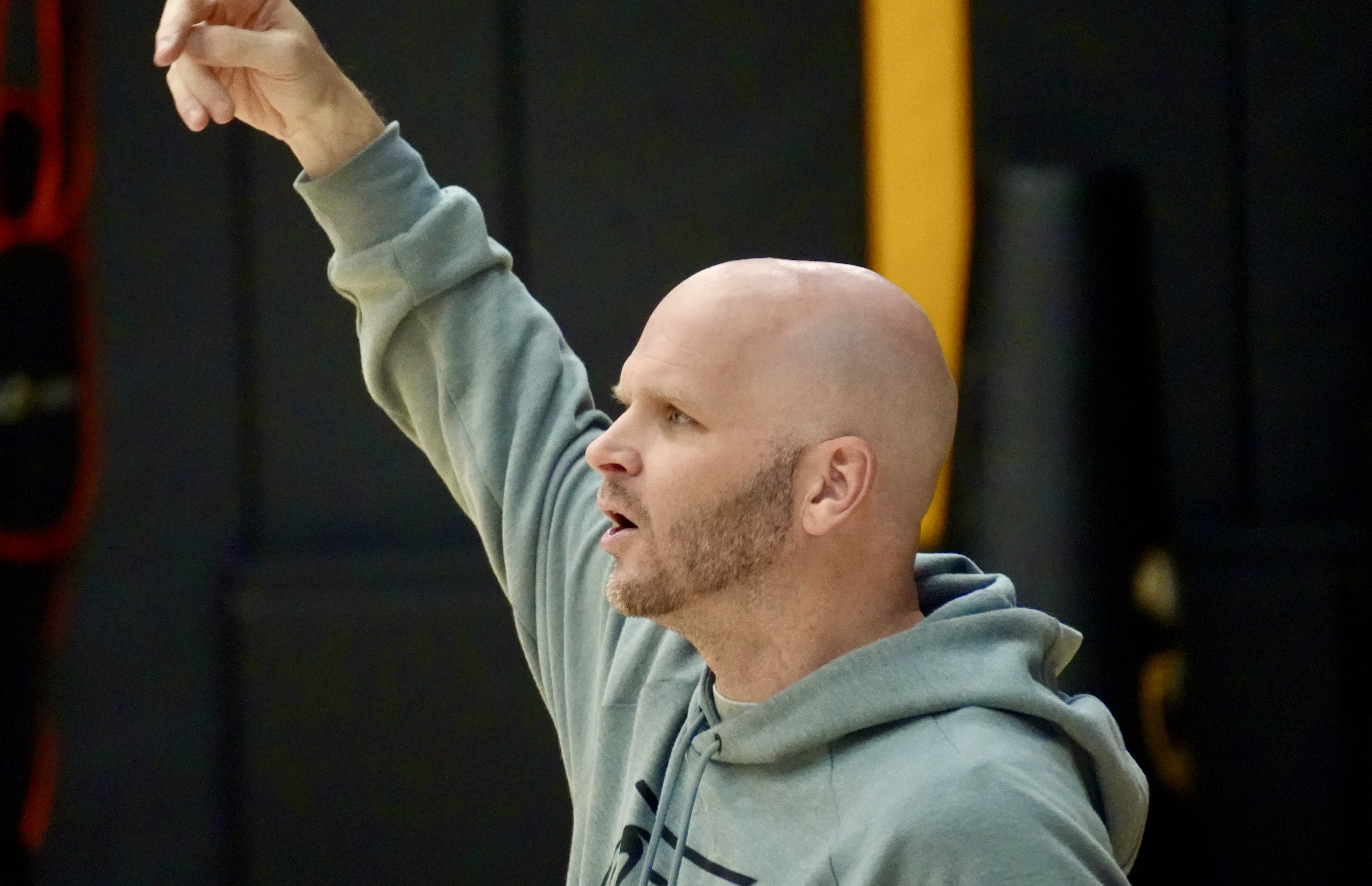
Jimmy Martelli, VCU Associate Head Coach

For six formative years, from 2017 to 2023, he served as the director of operations under Mike Rhoades. In that role, he was not a bystander but an integral part of the machinery that produced two Atlantic 10 regular-season titles, a tournament championship, and three NCAA Tournament appearances. He understands the daily rhythms, the operational expectations, and the very soul of Ram Nation. He knows what makes a VCU player tick. This is not knowledge that can be learned in a manual; it is absorbed through years of immersion. His presence guarantees that the foundational principles of VCU basketball remain intact, even as the leadership and tactics evolve.

Crucially, Jimmy is not just a link to the past. His recent two-year stint at Penn State showcased his evolution into a dynamic, forward-thinking coach capable of thriving in one of the nation’s toughest conferences. He helped the Nittany Lions set a program record for scoring (79.1 points per game) and fostered a defensive identity that ranked near the top of the Big Ten in steals and forced turnovers. More impressively, he proved himself as an elite recruiter, serving as the lead recruiter for the highest-ranked recruiting class—and the highest-ranked individual recruit, Kayden Mingo—in Penn State history. This demonstrates a critical capacity: the ability to sell a program not named “VCU” to blue-chip talent, a skill that will translate powerfully back in the A-10.

The head coach-assistant coach dynamic is inherently one of professional trust. The Martelli dynamic elevates this to something far more potent: unshakeable personal and philosophical trust. Having literally grown up in the same household, under the tutelage of a legendary A-10 coach, Jimmy and Phil Jr. share a basketball language and a core set of values forged over a lifetime. This eliminates the typical feeling-out period and inherent friction of a new staff. Jimmy can speak with a candidness to his brother that no other assistant could, facilitating smoother, more honest decision-making. In the high-pressure crucible of a first-time head coaching job in a passionate market, this built-in, trusted confidant is an invaluable asset.

The Firebrand: Ryan Daly, The Embodiment of the Underdog Spirit

Completing this strategic trifecta is Ryan Daly, a coach whose personal narrative is a recruiting pitch in itself. If a culture needs an engine of intensity, Daly is that engine. His story is one of perpetual overcoming. As a Philadelphia Catholic League Player of the Year, he was inexplicably overlooked by the city’s prestigious Big 5 programs. This snub became his fuel. He accepted a scholarship at Delaware and exploded onto the scene, becoming the fastest player in the program’s history to score 1,000 points. When he transferred to his family’s ancestral home at Saint Joseph’s, he didn’t just play; he dominated, leading the Big 5 in scoring for two seasons and cementing himself as one of the most prolific scorers in modern Hawks history. Daly doesn’t just preach perseverance; he is a living monument to it.

Ryan Daly, VCU Assistant Coach and Jadrian Tracey, Senior Guard

His brief but impactful track record proves he can translate his personal grit into team success. In his single season alongside Martelli at Bryant, he was instrumental in the Bulldogs’ America East championship run, directly helping to develop Earl Timberlake into the conference’s Player of the Year and Barry Evans into the Newcomer of the Year. At UAlbany, he helped engineer a top offense and was credited with recruiting and developing All-Conference players. His nomination as one of Silver Waves Media’s Top 100 Rising Stars was a recognition of this burgeoning reputation as a developer and recruiter.

Daly’s deep, almost poetic ties to the Martelli legacy add another layer of cohesion. His grandfather, Jim Boyle, played for the legendary Jack Ramsay on Hawk Hill and was the head coach at Saint Joseph’s who hired a young Phil Martelli Sr. as an assistant. Daly’s own father, Brian, played for Martelli Sr. Now, he joins the staff of Martelli’s son, closing a multi-generational circle. This shared history creates an environment of profound understanding and shared purpose. Daly’s energy, authenticity, and undeniable credibility make him a formidable recruiter who can connect with players on a visceral level, selling the VCU dream because he has lived a version of it himself.

Ryan Daly and Philly Sophomore point guard, Ahmad Nowell

In a sport destabilized by constant change, VCU has chosen not to fight the chaos, but to master it through stability, identity, and trust. VCU joined the A10 in 2012, yet their relative newcomer status, the program has a deep and profound understanding of the A10 culture. By hiring Phil Martelli Jr. and empowering him to bring his brother and Ryan Daly, the Rams have built more than a coaching staff; they have built a familial command structure designed for the modern game. They have invested in a cohesive unit that provides the cultural stability, tactical modernity, and authentic relationships today’s players seek. In the turbulent new world of college athletics, that is not just a smart hire; it is a profound and powerful statement of identity. The Martelli era in Richmond isn’t just beginning; it’s coming home.

Jerome Brewer’s La Salle University Homecoming: A Lesson in Maturity and Purpose

CAMDEN, NJ – In an era when college basketball players often chase the brightest spotlight or the most lucrative NIL deals, Jerome Brewer’s decision to return home stands as a rare act of introspection and social responsibility. The 6’8” forward, who has navigated a winding collegiate journey from Texas A&M Commerce to McNeese State, could have followed his former coach to North Carolina State or sought a bigger stage elsewhere. Instead, he chose La Salle University—not just for basketball, but to fulfill a deeper mission.

Brewer’s choice reflects a maturity beyond his years. At a time when young athletes are frequently pressured to prioritize immediate success, he considered something more enduring: his ability to influence the next generation. His insistence that La Salle facilitate access for Camden City Public School students to games and practices isn’t a mere publicity gesture; it’s an intentional effort to reinforce the values that shaped him.

“Sports act as an agent of socialization,” Brewer said, articulating a perspective more common among seasoned coaches than 22-year-old players. “They teach values, behaviors, and skills—teamwork, communication, resilience.” His words underscore an awareness of basketball’s broader role, one that extends far beyond the box score.

This understanding didn’t emerge in a vacuum. Brewer’s formative years were spent in Camden’s gyms, where the game was both an escape and an education. After a brief stint in the Philadelphia Catholic League, he returned to Camden High, helping restore its basketball prominence alongside future Division I standouts. When college offers didn’t meet his expectations, he bet on himself—first at prep school, then in the Southland Conference, where he blossomed into an All-League performer before injury intervened.

His resilience was tested again last year when he redshirted at McNeese State, biding his time for the right opportunity. When it arrived, he weighed his options with the discernment of someone who recognizes that a career is more than stats or conference prestige. He thought of his younger brother, Domani, a budding seventh-grade phenom who now has a front-row seat to his brother’s final collegiate chapters. He thought of Camden’s kids, who will see in him a path forward.

Camden Mayor Vic Carstarphen, a former Temple standout under John Chaney, praised Brewer’s character, calling him “one of the finest student-athletes to come through Camden in recent years.” City Councilman Arthur Barclay, who played for John Calipari at Memphis, highlighted Brewer’s potential as a role model: “He was one of them not long ago. Now, he’s showing them what’s possible.”

La Salle, under new coach Darris Nichols, gains not just a versatile forward who can stretch defenses and guard multiple positions, but a leader who grasps the weight of his platform. In return, Brewer gets a chance to cement his legacy where it matters most—at home.

In an age of fleeting allegiances and transactional relationships, Brewer’s decision is a reminder that some choices are about more than basketball. They’re about purpose. And in that regard, his homecoming is already a victory.

The Holy War: A Big Game for All the Wrong Reasons

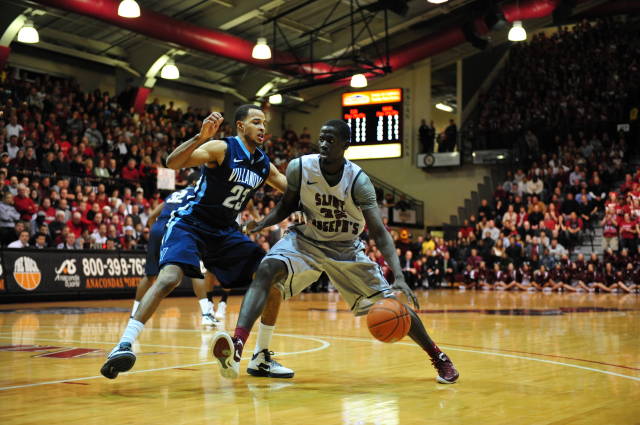
PHILADELPHIA, PA – If ever there were a game of consequence for two struggling programs, Tuesday’s Holy War Pillowfight between St. Joseph’s and Villanova is it. Not for the lore, the drama, or the fierce rivalry—this time, it’s about the potential future of two head coaches who’ve found themselves under intensifying scrutiny. St. Joseph’s Billy Lange and Villanova’s Kyle Neptune are on alarmingly shaky ground, with the outcome of this clash potentially determining their fates. And yes, to the fans, it’s a big game—albeit for all the wrong reasons.

The alums, boosters and fans have had enough of this shit…

Kyle Neptune, Villanova Head Coach

Imagine a WWE-style steel cage match between Lange and Neptune with the defeated coach forced to turn in his company car, office keys and bid farewell to his team after the final buzzer. It’s the kind of spectacle that perhaps only wrestling fans could appreciate, yet one that feels uncomfortably close to the current reality for both Lange and Neptune. For the respective fan bases, frustration has given way to calls for change, and patience has long run out. Both fan bases have endured too much for too long.

Lange’s record at St. Joseph’s, a tepid 60-92 (.395) since his hiring in 2019, has turned a proud program into a perennial disappointment. The Hawk faithful yearn for a return to the NCAA tournament. Many express deep skepticism regarding the current coaching staff. The St. Joseph’s message board is rife with calls for Lange’s termination. Things are even worse at Villanova. Neptune, though in his third year, has marginally fared better than Lange with a 37-34 (.521) record. However, he was handed the keys to a Ferrari and it feels like it’s been in the shop since he took over. When introduced at home games, his name is met with full throated Philly boos usually reserved for visiting opponents. For two programs that once routinely inspired confidence, their leaders appear to be hanging by the thinnest of threads, and this season’s start—punctuated by jarring losses in “buy games”—hasn’t helped.

Billy Lange, St. Joseph’s Head Coach

The buy game, a time-honored tradition, serves as a revenue stream for small programs and a quick win for larger ones. Schools like St. Joseph’s and Villanova bring in lesser-known “low major” teams, offering a hefty check, sometimes upwards of $100,000, with the tacit understanding that the visiting team will go home defeated. It’s a system that usually allows for the high-major program to pad its win column while the small school collects its payday.

But that unspoken agreement has been unceremoniously disrupted in Philly. St. Joseph’s invited Central Connecticut State for what was expected to be a routine win at 54th and City Avenue. Instead, the visitor walked away with a victory—and a paycheck. Earlier in the week, Columbia arrived at Finneran Pavillion on the Main Line, handed the Wildcats a stinging defeat, took their check, and headed back up I-95 to Manhattan. What should have been easy victories have turned into humiliating losses, pushing the fan bases to the brink.

And they are fed up. Alumni, supporters, and local fans aren’t willing to watch their schools play the role of gracious hosts handing out both checks and victories to supposedly inferior opponents. This shift from reverence to restlessness is palpable across both programs’ communities. For Lange and Neptune, these losses are not just isolated setbacks but the latest entries in a long list of grievances.

For both coaches, Tuesday’s game is likely to carry more weight than most mid-November matchups. It’s a crossroads: Lose, and they will find themselves with a diminishing number of believers. Crawl out of the steel cage with a win, and perhaps they’ll buy some time. But make no mistake, the scales have tipped. Fans are no longer willing to accept mediocrity from programs that once consistently delivered excellence.

Tuesday’s Holy War Pillowfight will be a spectacle—a big game, indeed, but not for the thrill of victory. For the fans of St. Joseph’s and Villanova, it’s about accountability, about honor, and, perhaps, about the possibility of starting anew.

University of Michigan Associate Head Coach Phil Martelli Joins Forces with Temple Point Guard Hysier Miller to Combat Gun Violence and Empower Youth in Philadelphia

A powerful collaboration is underway between University of Michigan Associate Head Coach Phil Martelli and Temple point guard Hysier Miller. Despite living in Ann Arbor since 2019, Martelli’s heart and soul remain deeply connected to his hometown of Philadelphia. Recently, he learned about Miller’s book “No Place Like Home: We Have Unfinished Business” and was moved to take action. Phil Martelli has committed to support Miller’s efforts in engaging middle and high school students and sharing his book, with a focus on reducing gun violence in Philadelphia. The collaboration aims to inspire young Black males to become catalysts for change in their communities.

Phil Martelli, Michigan Associate Head Coach

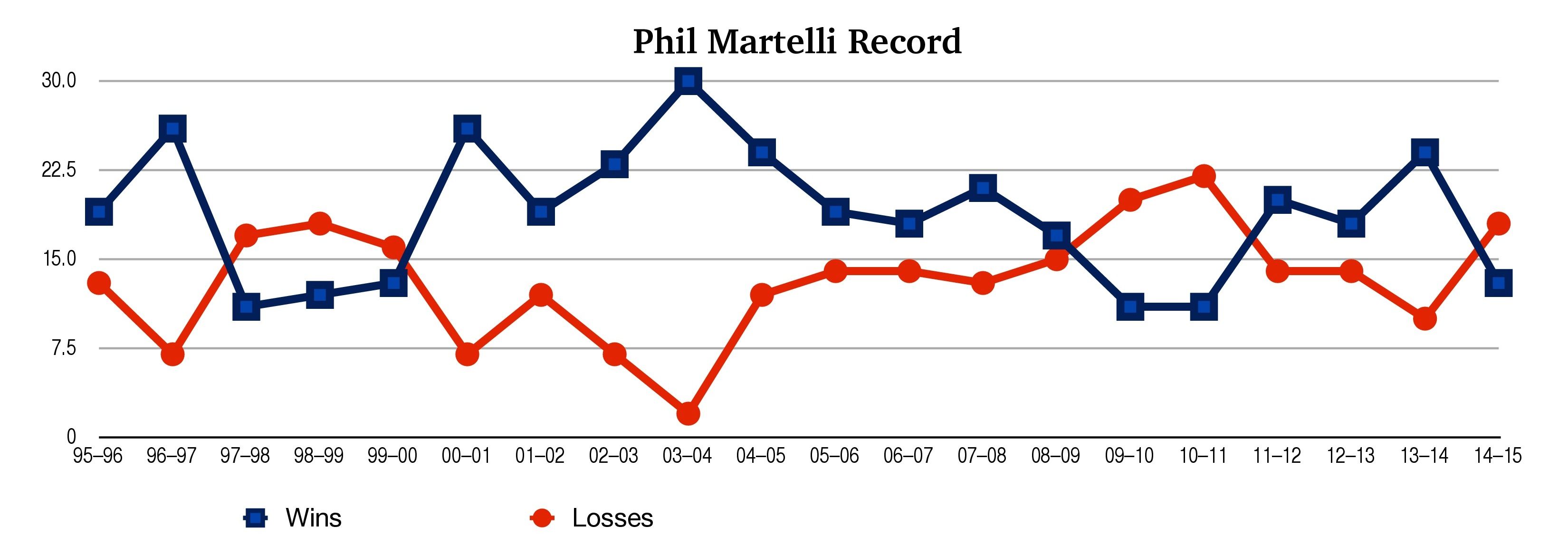
Phil Martelli’s coaching journey began with the 1985-86 St. Joseph’s Hawks, where he spent ten years as an assistant under Jim Boyle and John Griffin before being named the 14th head coach in school history in 1995. Under his leadership, the Hawks achieved notable success, including reaching the final game of the NIT Tournament in his first season. However, it was during the 2003-04 season that Martelli and the Hawks experienced their greatest triumph. With the help of future Naismith College Player of the Year Jameer Nelson and other talented players, the team achieved an impressive 27-0 regular season record, reaching the Elite Eight in the NCAA tournament.

In June 2019, Martelli accepted a position as the associate head coach at the University of Michigan under head coach Juwan Howard. Despite living and working in Ann Arbor, Martelli has maintained a strong connection to his hometown of Philadelphia. Troubled by the sigificant increase in violent crime and gun violence in the city, he remains actively engaged in the community, keeping up with local news and staying in touch with numerous friends in the City of Brotherly Love.


When Phil Martelli learned about Hysier Miller’s book, “No Place Like Home: We Have Unfinished Business,” he was immediately drawn to its powerful message. The book not only tells Miller’s personal story but also sheds light on the pressing issue of gun violence in Philadelphia. Moved by Miller’s initiative to address this critical issue, Martelli expressed his interest in supporting the cause.Though Martelli and Miller had only crossed paths briefly at basketball games in the past, Martelli’s admiration for the young point guard’s game and character has led him to take a proactive role in promoting Miller’s message. Coach Martelli has committed to purchasing a significant number of Miller’s books and distributing them to students at the GESU School and a Philadelphia Public School. This collaboration aims to spark a crucial conversation among young Black males, empowering them to be agents of change in their communities.

Hysier Miller, who was just two years old when Martelli and Jameer Nelson achieved the number one ranking in the nation, has always held great respect for Coach Martelli’s coaching style and program. He acknowledges the impact Martelli had on players like Langston Galloway, DeAndre Bembry, Fresh Kimble, and Charlie Brown. Miller is humbled and grateful that Coach Martelli wants to support his efforts to spread the message of hope and change through his book.

As the collaboration between Phil Martelli and Hysier Miller gains momentum, the two are scheduled to have a zoom teleconference later this month to discuss strategies for working together. Their shared goal is to engage middle and high school students and encourage them to play an active role in combatting gun violence in Philadelphia.

The collaboration between University of Michigan Associate Head Coach Phil Martelli and Temple point guard Hysier Miller exemplifies the power of sports figures in using their platform to bring about positive change. By combining their influence and experiences, they aim to inspire young Black males to stand up against gun violence and become leaders in their communities. This partnership not only showcases the impact of mentorship but also highlights the importance of addressing pressing social issues through collective effort and collaboration.

Link to purchase a copy of “No Place Like Home: We Have Unfinished Business”:
https://black-cager-publications.sellfy.store/p/no-place-like-home-we-have-unfinished-business/

The Declining Significance of Sonny Hill and the Resulting Loss of Social Capital

sonny-hill

Sonny Hill at the Naismith Basketball Hall of Fame

Founded in 1968, the Sonny Hill Community Involvement Basketball League uses basketball as a foundation for teaching life skills. For thirty years or so, the Sonny Hill league reigned as the undisputed best summer high school basketball league in America. The Holcombe Rucker League in Harlem is also highly regarded. But, the talent in Hill League was unsurpassed. Gene Banks (Duke), Lewis Lloyd (Drake), Clarence Tillman (Kentucky/Rutgers), Mo Howard (Maryland), Pooh Richardson (UCLA), Nate Blackwell (Temple), Dallas Comegys (DePaul), Lionel Simmons (LaSalle), Kobe Bryant (NBA), Rasheed Wallace (North Carolina), Rip Hamilton (Connecticut) and Alvin Williams (Villanova) are just a few of the great scholastic players that laced ‘em up in the Hill League.

gene-banks-duke500w

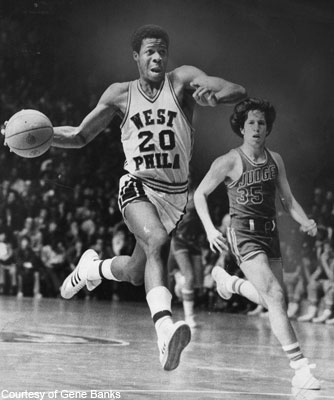
Gene Banks

The concentration of talent was incredible. You could walk in McGonigle Hall on Temple University’s campus and catch the incredibly strong Rico Washington (Weber State) battling the powerful low-post force, Brian Shorter (Pitt) on the blocks. If you were more attracted to guard play, the wizardry of Michael Anderson (Drexel) was on full display as he went against consummate Philly point guard Howie Evans (Temple), the blindingly quick Bruiser Flint (Drexel) or the explosive Steve Black (LaSalle). Summer basketball in Philadelphia was truly something to behold.

The Sonny Hill League was an outgrowth of the Charles Baker League. In 1960, Mr. Hill founded the Baker League as place for professional basketball players to work on their craft during the off-season. The four-team league that began playing outdoors on the concrete court of of North Philadelphia eventually grew to attract some of the biggest names in basketball. Over the years, Wilt Chamberlain, Guy Rodgers, Hal Greer, Billy Cunningham, Bill Bradley, Earl Monroe, Darryl Dawkins, Joe Bryant and World B. Free were regulars in the Baker League.

Wilt

Wilt Chamberlain

It’s all gone!

The Baker League no longer exists and the Sonny Hill League is a just shell of what once existed.

Recently, I received a phone call early one morning from St. Joseph’s coach Phil Martelli. He asked, “Del what happened to the Hill League… I’m reading the box score from a college league playoff game and I only recognize one name – Biggie Minnis.” The Hill league no longer attracts the best high school and college players in the area. There can be no denying the fact… The Hill League has fallen off… That conversation with Martelli stuck with me for a few days. I brought the topic up with Bruiser Flint, Ashley Howard and Geoffrey Arnold. They coach at Drexel, Villanova and St. Joseph’s respectively. I asked each the same thing Martelli asked me: What happened to the Hill League?

The focus of the conversations was on  two distinct questions: 1) Why did the Hill League become insignificant? And, 2) What have we lost as a result?

There is a consensus that the rise of AAU and shoe company teams contributed mightily to the demise of the Hill League. However, the more interesting question becomes: Could the outcome have been any different?

Brian Shorter

Brian Shorter

Mr. Hill’s tenacity and drive enabled him to form and maintain a youth sports league that is nearing it’s 50th year of existence. Perhaps, these same traits rendered him a unable to adapt and become more flexible when the AAU movement crept into Philadelphia. Rather than accommodate the schedules of the biggest AAU tournaments, Mr. Hill forced players to choose. Over time, the lure of jet travel across the country, stays in fine hotels and playing in front of 200-300 college coaches was too much for Philly’s best ballers to resist. Gradually, more and more began to play exclusively for prominent local AAU programs like Team Philly (Adidas), Team Final (Nike), WeRone (Under Armour) and Philly Pride (Under Armour).

The kids, however, being from Philadelphia needed an outlet to settle their neighbor “Ball-Beefs.” Rahim Thompson’s popular Chosen League has emerged to satisfy that thirst for local school yard competition in the summer. Thompson, ingeniously, decided to work around the schedules of the biggest AAU tournaments which take place during NCAA live periods. In this way, he has been able to have the very best scholastic players in Philadelphia participate in his league. The Chosen League has surpassed the Hill League as the place to see the best local players during the summer months.

chosen league

Philly Schoolboy Legend Rysheed Jordan in the Chosen League

What have we lost? The best answer I could come with is: We have lost a great deal of “Social Captial”.

For Mr. Hill and his colleagues Claude Gross, Tee Shields, Fred Douglas, Vince Miller and James Flint the Sonny Hill League was about far more than just basketball. The Sonny Hill League Community Involvement League is an organization that not only includes roughly four dozen youth basketball teams, but also features career-counseling and tutoring programs.

It’s been that way since the beginning… “During that summer of ’68, gang warfare was a big problem all over the country,” Hill said. “Kids were dying. Neighborhoods were being torn up. So I decided to put my name on a league that would get some of kids who would be in gangs to focus their efforts on basketball… I talked to people all over the city. We got truces established. If a kid was found crossing a rival gang’s turf and he said he was going to play in the Sonny Hill League that got him a pass. At first it was a diversion for those kids. Now over the years we’ve grown into a program that gets kids off the streets, gets them learning and gets them a chance to lead productive lives.”

That’s Social Capital!!

lionel-simmons

Lionel Simmons

The basic premise of social capital is that social networks have value. Social capital refers to the collective value of all “social networks” [who people know] and the inclinations that arise from these networks to do things for each other [“norms of reciprocity”]. Through the Sonny Hill League, Philadelphia’s Basketball community was awash in social capital. Shit… were were wealthy in that regard.

Social capital emphasizes a wide variety of quite specific benefits that flow from the trust, reciprocity, information, and cooperation associated with social networks. Social capital creates value for the people who are connected and, at least sometimes, for bystanders as well. Think of all the trust people had in John Hardnett, Claude Gross and Tee Shields. Think of all the information the administrators of the Sonny Hill League possessed and shared with participants and bystanders.

The Sonny Hill League fostered and facilitated information flows (e.g. learning about scholarships, learning about coaches looking for players, exchanging information about players with college coaches, etc.). This was social capital.

The Sonny Hill League established norms of reciprocity (mutual aid). Alums to this very day do for one another. For example, I have called on Lionel Simmons to help kids pay for SAT prep materials and tutoring. The Sonny Hill League network connected folks who were in similar in-groups. The League facilitated connection among individuals.

Rasheed

Rasheed Wallace

The Sonny Hill League facilitated a broader “Philadelphia” identity and solidarity among Philly ballers. The Sonny Hill League helped translate an “I” mentality into a “we” mentality.

When the group of men keep an eye on one another’s players in the streets, that’s social capital in action. When a tightly knit community of youth coaches recommend players from other teams for scholarships, that’s social capital in action. Passing the hat to get up money to get a kid down south for school was social capital in action. Social capital can be found in friendship networks, neighborhoods, churches, schools, bridge clubs, civic associations, and even bars.

The Sonny Hill league has declined in significance. Philly’s basketball community is poorer as a result. We have lost a great deal of social capital.

The elite shoe company sponsored AAU programs will take care of the best 50-60 players… The Sonny Hill League would take care of 800.

The MYTH of the “Bad” AAU guys

I HATE AAU basketball!
I hate it!!
I hate it!!
I hate it!!
Because it’s just a lot of coaches exploiting kids to try to get a payoff one day.
Robert Horry

Robert Horry is wrong…

On far too many occasions prominent basketball athletes and coaches have come out and bashed AAU basketball.  The criticisms are knee-jerk and reveal a lack of intimate knowledge about what good AAU programs actually do for young people. They have a bad experience or see some bad things occur within one program and condemn the AAU/grassroots circuit based on very limited interaction. It’s just not a fair assessment.

Over the past six months, I have had the pleasure of working with several young men and women as they sought to meet the increasingly stringent NCAA eligibility guidelines. In each case, these young people were referred to the Assist Project by their AAU coaches or program director.

deja imhotep

Deja Reynolds holding the Championship trophy with her Imhotep teammates

Here a brief list of just a few of the young people that came through this year:

Deja Reynolds (Girls), Philly Triple Threat/Imhotep High School – Temple
Kimar Williams, Team Philly/Constitution High School – Florida International
Samir Doughty, Team Philly/Math, Civics & Sciences High School – VCU
Derrick Jones, WeRone Hoops/Archbishop Carroll High School – UNLV
Mike Watkins, Team Philly/Math, Civics & Sciences High School – Penn State
Horace Spencer, NJ Gym Rats/Findlay Prep High School (NV) – Auburn
Eric Cobb, Heart & Hustle/ St. Francis HS (MD) – South Carolina
Malik Ellison, WeRone/Life Center Academy (NJ) – St; John’s
Traci Carter, WeRone/Life Center Academy (NJ) – Marquette
Charles Brown Philly Pride/George Washington High School – St. Joseph’s

CarterCarr

Traci Carter and LaSalle Basketball legend Donnie Carr

In each case, a representative of the AAU program identified an issue that could cause eligibility issues and sought out assistance in addressing the problem. Some kids needed to take additional core course. Some needed to replace poor grades in previous core courses. Some needed tutoring for the SAT/ACT exam. Some just needed encouragement. What they all received was a very clear explanation of their academic situation.

Once they understood what they needed to accomplish to meet NCAA eligibility standards, a plan was put in place. The AAU guys made sure the kids had the SAT/ACT study books. The AAU guys transported the kids to tutoring sessions. The AAU guys stayed in contact with the parents to make sure the kids stayed on track.

Watkins and Newbill

Mike Watkins and Penn State great D Jay Newbill

Rick Barrett and Horace Spencer made sure little Horace knew what he needed to do when he was in the 11th grade. They brought the young man in and we reviewed his academic record together. Eric Worley asked me to reach out to Deja Reynolds. Once Philly Triple Threat made the referral, Kamillah Durham made sure her daughter made it to at least 10 tutoring sessions. Eric always checked in and checked up in her progress. Lonnie Lowry and Kamal Yard cast aside their competitive energies and both grabbed Samir Doughty by his collar and made sure he did what he needed to do. Terrell Myers literally harassed Derrick Jones about his course work and SAT scores. Donnie Carr did the same for Traci Carr.

Yesterday, Philly Pride/Triple Threat arranged an academic “team meeting” attended by a highly regarded school psychologist, two Triple Threat coaches, a player, his parents and myself. The aim was to review the rising 9th grade player’s academic record and explain the NCAA requirements to the player and his family. As we approach the first year with new NCAA standards in place, this is exactly what AAU programs need to be doing.

Let me repeat that… this is exactly what AAU programs need to be doing!

Derrick

UNLV freshman and WeRone/Archbishop Carrol product Derrick Jones

I was touched… When I received the call to arrange the meeting, I realized that my message has been getting through. Despite the negative chatter circulating about the role played by AAU programs, I am here to tell you… I have seen these guys save kids… I have seen these guys inform and empower parents… I’ve seen these guys support parents intimidated by the recruiting process… I’m telling you… these guys do a good job and you can catch their players on TV this fall as they suit up in the Big East, C-USA, AAC, A10, Big10 and SEC conferences.

Rick Barrett – NJ Gym Rats

Kamal Yard – Philly Pride

Eric Worley – Philly Triple Threat

Lonnie Lowry – Team Philly

Terrell Myers – WeRone Hoops

Rob Brown – Team Final

Rod Harrison – Baltimore’s Finest

Bay Frazier – Team Melo

Omhar Carter – Mississippi Basketball Association

Even at the middle school level, guys like Marvin Stinson (Bottom Ballers), Howard Hudson (Philly Triple Threat) and Paul Gripper (Team Phenom) have established rigorous academic standards for participation in the respective programs.

Are there problems in some AAU programs? Of course… just like there are problems in some businesses, congressional offices, college athletic departments and every other type of organization.

Bottom Line… If your AAU coach or program director hasn’t asked you for report cards or transcripts… You need to find another program. The end game is to prepare student-athletes for life after high school. You can’t do that if you don’t even know how he’s performing in school. If you need a referral to a quality AAU program just reach out an ask… I’ll give you at least 3 recommendations.

Youngfellas.. If you are the best player in the gym? Leave….

… and go find a gym where guys will push you and make you a better player. Charles Brown, Jr., A Saint Joseph’s University 2016 commit took this advice to heart and tracked down Jameer Nelson and Emmanuel Mudiay of the Denver Nuggets. He spent some time working out with the NBA players. Most importantly, he listened as they talked about different aspects of conditioning and mental preparation necessary to play at the highest level.

CHarles Brown Jameer Nelson

Charles Brown (Philly Pride/St. Joseph’s University) and Big 5 Hall of Famer, Jameer Nelson (Denver Nuggets)

Over this past Spring/Summer Brown exploded on the national scene with a series of phenomenal shooting performances for Philly Pride AAU on the Under Armour Circuit. As a result, he was heavily recruited by Big 10, SEC, Big East and Big 12 programs. A true Philadelphia and a man of his word, Brown never wavered from his verbal commitment to St. Joseph’s. “It was nice to see people recognizing that i could play at the highest level, but I made the decision to become a Hawk a while back. There’s nothing that could change my mind. My mother, my father and the rest of my family already feel like we are part of St. Joseph’s University. Coach Arnold and Coach Martelli have made us feel welcome. I can’t wait to play on Hawk Hill.”

Brown got a chance to gauge himself against the very best today.  Emmanuel Mudiay was a lottery pick of the Denver Nuggets in the recent 2015 draft. He is expected to immediately contribute as Denver makes a push for the playoffs in the super competitive Western Conference. “Emmanuel is super athletic and highly skilled”, said Brown. “It’s really a pleasure to just watch him go about his business.”

CHarles Brown Mudiay

Charles Brown and Emmanuel Mudiay (Denver Nuggets)

Brown reports to St. Thomas More Preparatory School next week. He will be playing in the New England Prep School League for the 2015-2016 season.

DeAndre Hunter, Charles Brown & Sean Colson: It’s that Philly Pride!

Philly is a hoops mecca… For some, Philly is THE hoops mecca… The case for the top spot is strong. A brief perusal of the record books reveals the impact Philly ballers have had on the game. Wilt Chamberlain and Tom Gola led the charge for Philly in the 50’s. Earl “The Pearl” Monroe scorched college basketball in the 60’s. Gene Banks, Lewis Lloyd and Mike Brooks carried the city in the 70’s. Rico Washington, Pooh Richardson and Lionel Simmons held it down in in the 80’s. Rasheed Wallace, Marvin O’Connor and Eddie Griffin represented in the 90’s. After the turn of the century, Maureece Rice, Wayne Ellington, Maalik Wayns and Kyle Lowry emerged.

Wilt-Chamberlain

Wilt Chamberlain

In the contemporary era, grassroots/AAU hoops has superseded high school basketball in importance. Hoop heads interested in understanding the development of elite scholastic players have to pay attention to “Summer Ball.” In the not too distant past, the Sonny Hill League was a the focal point of summer hoops in the city… No more… No more…

earl monroe

Earl “The Pearl” Monroe

If you want to know what’s going on with elite scholastic hoops, you have to follow AAU/grassroots hoops. Perhaps, the biggest story of this summer has been the rapid ascent of two Philly Pride (Under Armour Association) players, Charles Brown, Jr. and DeAndre Hunter.

At the conclusion of his high school career at George Washington HS, Brown had zero (0) Division 1 scholarship offers. In fact, he had verbally committed to Division 2 West Chester University. After the first two Under Armour sessions, he had over 15 D1 scholarship offers from schools such as VCU, Rhode Island Quinnipiac, George Mason, Drexel and James Madison. He was drawing interest from high major programs like Oklahoma State, Arizona State, Wisconsin, Maryland and Alabama.

gene_banks

Gene Banks

Brown committed to St. Joseph’s University. He cites his relationship with Assistant Coach Geoff Arnold as the primary factor determining his choice. According to Brown, “Coach Arnold told me when he first saw me that I was a division 1 basketball player and that meant a lot to me at the time.” His father Charles, Sr. played on the great Overbrook teams of the late 70’s with Tony Costner, Ricky Tucker and Steve Black. So, the family has always been familiar with the St. Joseph’s program and the campus.

But… How does a kid go from zero (0) offers to over fifteen (15) in just a 4-6 week span? AAU/grassroots basketball… that’s how…

The Black Cager talked to Charles’ Philly Pride teammate and his Coach Sean Colson to gain some insight into this particular program….

Marvin O'Connor

Marvin O’Connor

Black Cager: DeAndre… So far this summer you guys have had a really good run. About a month ago you knocked off highly regarded WE R 1 and about two weeks ago you defeated Team Final. I want get your thoughts about the AAU season thus far and see how you feel about those two wins in particular.

DeAndre Hunter: I feel like we’ve been playing really good. Beating those two teams, that are supposedly better than us, shows that we are just as good or even better than most of the teams in the country.

Black Cager: I agree… I agree with that and I would also add that when you take a look at what the local Under Armour teams have been able to accomplish it’s very impressive. Trevon Duval, Quade Green, Sedee Keita and Nysier Brooks who recently committed to Cincinnati (Big East) play for WE R 1. Then you also have you and Charles Brown who recently committed to St. Joseph’s (A10) playing for Philly Pride. One could argue that the Under Armour circuit, at least in our region, is equal to or ahead of the Nike and Adidas circuits. How do you feel about playing on the Under Armour circuit?

DeAndre Hunter: I feel like the Under Armour circuit is just as competitive as any other circuit. I understand the Nike people feel like their circuit is better because they have most talented or most ranked players. But, I really feel like the Under Armour circuit is just as competitive as any other brand.

Black Cager: About your college recruiting… How are your grades? I know you attend a highly competitive academic high school, Friends Central. How are making out academically? Are you on track?

DeAndre Hunter: Yeah… I’m good. On my last report card, I had one C. The rest of my grades were Bs and up so I’m in good shape.

Black Cager: That’s really good… Have you formulated any idea where you would like to play college basketball? Do you want to stay in Philly? Do you want to go far away? Does the geographic region matter at all? Are your trying avoid the cold? Do you want go where it’s warm year-round? Do you have a strategy or are you just taking things as they come?

DeAndre Hunter: I’m just taking it as it comes. It doesn’t matter if I stay local or go somewhere far away. I just want find a program where I’m comfortable and I can play right away.

Black Cager: Where do you see yourself playing at the college level, 2, 3 or even the 4?

DeAndre Hunter: Probably the 3 position… I gotta get bigger and strong though.

Black Cager: Now… I’m gonna really put you on the spot.. Who do you think are the best non-college or pro basketball players in the Greater Philadelphia region? I’ve had an on-going discussion with some of my friends in the local basketball community and the same names always come up are Tony Carr (Team Final/Roman Catholic HS), Quade Green (WE R 1/Neumann Goretti HS), Lamar Stevens (Team Final/Roman Catholic HS) and you. Although, recently a lot of people have started to include Charles Brown in that upper echelon of local talent. Who would say are the best 2 or 3 players in the area right now?

DeAndre Hunter: The three best players… Myself, Charlie Brown, Tony Carr…

Black Cager: That’s it?

DeAndre Hunter: Best players? In my class, yes… Me, Charlie and Tone Carr..

deandre and charles

DeAndre Hunter & Charles Brown

Black Cager: I like that… I really appreciate the honest response… One last question, as you sort through this college selection process, are you dealing with this yourself? Are you bouncing things off Kamal, your HS coach, your Mom? If a college coach was reading this interview and he wanted to get your attention, what would be best way for him to go about it?

DeAndre Hunter: He should call me, my brother, Kamal or my AAU coach (Sean Colson).

Black Cager: DeAndre… I really appreciate this and I look forward to following you guys in Atlanta as you pursue the UUA National Championship.

Sean Colson is a Philly baller. He played at the University of Rhode Island and Charlotte University. He also played in the NBA with the Atlanta Hawks and the Houston Rockets. A basketball lifer, Colson also played in the USBL, CBA and overseas in Italy, France, Turkey, Poland, Ukraine, Latvia, Lebanon, Kuwait and Venezuela. In short… he has been there, done that…

For the past three years he has shared his considerable basketball knowledge and expertise with Philly kids as a coach with the Philly Pride AAU/grassroots program and Martin L. King HS in Philadelphia’s Public League. He also conducts the highly regarded “Sean Colson Workouts.”

The Black Cager spoke with Colson about Brown, Hunter and Philly Pride…

sean colson

Sean Colson

Black Cager: What’s up Sean? I just talked to DeAndre… I talked to Charles Brown a few days ago… I’m gonna put you on the spot… I know about a month ago, you guys knocked off WE R 1 and couple of weeks ago you beat Team Final. In the Philly grassroots basketball, those are some big games and they were some big wins. What does that say about Philly Pride as an AAU/grassroots program right now?

Sean Colson: Well… for the last three years, not just this year I’ve been with this team… I coached them as 15u, 16u and now 17u and we’ve gotten better every year. So, we are just trying to build our program and make competitive on the national level. We are not really comparing ourselves to nobody else, we’re just trying to beat everybody we play… Everybody… WE R 1 and Team Final are really good programs… But we not trying be the best program in this area, we want to be the best in the country. We are trying to put our guys in position to get a lot of scholarships. We want to help them get to the right schools. We want people to know that when you play for Philly Pride you get better. In other programs, some guys get scholarships, but they don’t necessarily get better. We want to be known as a program where when you come here… Your game gets better and you get better as a young person.

Black Cager: I can appreciate that… Speaking of getting better, I would say that over the past 2 months people knew about DeAndre but lately he’s been getting a lot of national recognition. And, then you have Charles Brown… About 3 months ago people viewed him as a Division 2 player. Then there was a period where he was one of the hottest kids in the country. His recruitment went from 0 offers to over 15 scholarships in a matter of weeks. What does that say about his development and why was he able to demonstrate so much more skill playing for you guys than he did playing for his high school team?

Sean Colson: Sometimes I feel like people try to make that comparison… But, I feel like the George Washington coaches did right by Charles. I just feel like Charles has gotten better… I don’t feel like it’s fair to say the George Washington guys didn’t know how to use him or use his talents. I just think they got eliminated early. In fact, in February we (Martin L. King HS) took them out of the playoffs. Right after the season, Charles and his Dad came to work with me. That was in February. He’s been in here every day, just working. His father was very direct, he said look I think my son can get better and I think you are the guy to do it. I know you work with DeAndre, I know you work with a lot of people… But, can you just please take my son and do what you can with him. Charles has the right mindset… I mean he just came in here and worked… His skills have really developed because he’s been working. Looking back, some of the blame has to be placed on Charles. Maybe he wasn’t working as hard while he was in high school. Now, he’s really working hard. Yes, I demand it, but he’s really working hard. Getting to play everyday against DeAndre and some of the college guys has helped him. A lot of times it’s just me him, his Dad and DeAndre just working, working, working… I mean I was a pretty good player… I played in the NBA and I was a good player and I feel like my skills and just the knowledge of the game has rubbed off on Charlie. All of that has really helped his game take flight right now.

Black Cager: He’s gonna take a year and try to get his body together at St. Thomas More Prep School (Connecticut). What do you foresee for Charles playing in the Big 5 for St. Joseph’s?

Sean Colson: I think he’s gonna have an excellent career. Charlie… is.. honestly, he kinda like a steal to be honest with you. Because, he’s really developing. He has the frame of a pro 2 guard. Everyone doesn’t have the skills, but he definitely has the frame. He’s 6’6”, athletic, long arms, really can shoot the ball and plays defense. Even that part of his game, I don;t think he did a great job at Washington on defense. They played zone a lot the time. When he played man-to-man I don’t think he really cared. But, when he came here, I’m on him every single day about defense in the workouts, practices and games. Charlie has really taken pride in being a stopper. He wants to be a stopper. I don;t think he thought like that in high school. That’s an area where I will take some credit because we’ve really worked on that part of his game. But, I don;t want to discredit George Washington and their coaches because I don’t think it the case that they didn’t do enough. It’s just that me Charlie click… Just like me and DeAndre, we click… A lot of guys, they will listen to me where they might not listen to other people or take their advice. They know the things I’ve accomplished as a player and coach. They respect the players I’ve trained like Amile Jefferson and Khalif Wyatt. They see that if you train with me you get better. That’s an important part of it, we have good chemistry.

Black Cager: I think trust is an important part of the equation and that’s what you are conveying. Speaking of DeAndre, I’ve gotten to see him play quite few times this summer. It’s really hard for me to look at his game and say that another kid in this area is better. But he doesn’t get that recognition. A big part of it is that is probably because he plays in the Friends League. Where do you see him in comparison to the other top players in South Jersey, Philly, Delaware? And. what do you see for him at the next level?

Sean Colson: People play different positions and thing like that… But, I’ll say this… People say someone is the best… It’s a few really good players out there… There’s Tony Carr, Quade Green and some other good players here in our area like Lamar Stevens. But, I wouldn’t take nobody over DeAndre… me, personally… All those guys have come to my workouts, except Lamar. I know everyone… I love everybody… I want every one of them to do well. But, me personally I wouldn’t take anyone in this city over DeAndre Hunter. That’s just how I feel. And, I feel like he’s only getting better. I’ve had him with me for the last 3 1/2 years and he’s getting better every day. He picks everything up and wants to get better. That has actually rubbed off on Charles as well. He sees that every day. You know Charlie asked himself: What’s the reason DeAndre has gotten that much better over these past 3-4 years? He comes here and he says if that’s the guy that has helped DeAndre get that much better, I wanna get like that and even better. That has helped Charlie as well. The trust factor…

Black Cager: I followed your career… Me and you we communicate on social media a lil’ bit… I pay attention… I saw you finishing up you own academic course load. I know you are doing an outstanding job at the high school level. I know you are of the few guys that excel on both the HS level and on the AAU/grassroot circuit. What’s the future look like for Sean Colson? Would like like to get on an NBA coaching staff? Would you like to coach in college? What are you trying to do with this thing going forward?

Sean Colson: For me… I wanna build Martin L. King up. We’re good right now. In my three years, we’ve won Public League Championships, we’ve been to the State Championship game. These are things that have never been done at King, especially on a AAAA level at this school. So, we’re just trying to get guys to get to college. We want guys to get D1 or D2 scholarships. For me, that’s the joy that I have. I love to see everybody getting better. Through the Sean Colson workouts, I get to work with kids that go to all the different schools. Even though they are in different HS programs they still come to me to get better. I’ll take whatever is in store for me. I would like to be a college coach. Maybe I’ll be an NBA assistant or scout. I really like working kids out. I was just at the John Lucas camp working guys out and training some really good players there. Next week I’ll be at the Under Armour All-American camp. I love working people out, developing talent and getting guys better. That’s kinda what I am known for. But… I feel like I’m a strong X and O guy as well. I really like coaching. For me, I’ll take whatever falls in my lap. I’m just working. If it’s an NBA assistant job that would be great. If it’s joining a college staff that would be great. If it’s taking Sean Colson workouts to the next level where it’s national like John Lucas, that would be great. Luckily, I feel like I’m doing well and I have a few options. I’m not just a one trick pony. Whatever I think is best for Sean Colson and my family that’s what I’m gonna pursue. But right now, I feel like I’m getting a lot of blessings and I’m just happy everything is working out.
Black Cager: I just want say that Philadelphia’s basketball community is much better off having you as involved as you have been over the last three years. I have a lot of respect for what you have been able to accomplish. It’s tough at a school like King. The other schools have a lot of things they can use to attract the kids like outstanding academic reputations, locations like Roman Catholic is in Center City and Haverford is up on the Main Line. You are grinding it out right here… around the way in a public school facility. For that I give you a lot of credit. As well as all the work you Kamal Yard, Rodney Veney and Amauro Austin put in with this grassroots thing. Big respect man… we’re looking forward to seeing how Philly Pride does in the nationals. You ready to go on record? Y’all gonna take this thing from WE R 1 or what?

Sean Colson: Well… It’s not just about WE R 1… I know they are in 1st place and we are in 2nd place but they are a lot of good teams in the Under Armour Association. We’re trying to go down there and do well. But first, we have couple other things going on… Like I said we have the Under Armour camp. DeAndre’s in it… Charlie might be in it… Then we have Elevate Hoops at Philly U which is gonna be a big event. Then we go to Atlanta and then to Las Vegas… We’re just taking one step at a time… We gonna try to represent Philly like we always do and try to win it for sure.

Black Cager: Appreciate the time and we look forward to following Philly Pride.

What’s Up with Temple and St. Joseph’s hoops?

Right now, Philadelphia is a pro football and college basketball town. The Phillies stink, the Flyers are not a playoff team and the Sixers organization has purposely lost games for two straight seasons. Despite the insane levels of irrational exuberance displayed for the Philadelphia Eagles (NFL), college football hasn’t gained significant traction in the region. In fact, I’m pretty sure there are more Dallas Cowboy fans than college football fans in the Greater Philadelphia Region. College football is largely ignored by all but diehard Owls fans and Philadelphia-based Penn State alums.

Villanova and Delaware are not BCS programs. They do not play big-time college football. On those rare occasions, when Penn State and Notre Dame are competing for national championships larger numbers of Philadelphians pay attention to NCAA football.

For the most part, collegiate athletics in this area, consists primarily of six Philadelphia-based Division 1 basketball programs (Villanova, Temple, St. Joseph’s, Drexel, LaSalle, Penn) competing with Rider, Delaware, Delaware State and Princeton for student-athletes and attention in the Greater Philadelphia region. While interest in college football lags, Philly college hoops matter… But there is a clear pecking order.

Truth be told, Villanova basketball is on another level… They regularly play in a sold out NBA arena. They are consistently ranked among the Top 10-20 programs in the nation. Wright graduates all of his players. He is able to land virtually every local recruit he targets. None of the other area programs are comparable to Villanova. Over the past decade, the Wildcats have exhibited an incredible level of success. Wright has led Nova to NCAA appearances in 10 of the last 11 years. Villanova’s big “problem” – if one identifies it as such – is “advancing” in the NCAA tournament. Big East Championships and spots in the Big Dance are expected every year. Villanova basketball gets the most print and television media attention by a significant margin.

But the consistent winning… The high graduation rates… The firmly entrenched and highly regarded coaching staff… are all kinda boring. You know Nova’s gonna win a lot of games every year. You know they will make the NCAA tournament. In recent years, they have struggled to make out of the first weekend. That’s a good problem to have.

Villanova Champs

Less discussed and, undoubtedly, more interesting developments are unfolding within the Temple and St. Joseph’s basketball programs.  Over the past 25-30 years, these programs have each had only two head coaches. Coaching changes in City 6 basketball programs occur less frequently than Papal Inaugurations. However, dissenting voices emerged within each program’s fan base over the past couple of years. They did not receive a lot of coverage in local print and internet media.  In both cases, the self styled ‘loyal opposition’, was a consistent presence on message boards and other websites. Before he won the A10 Championship in 2014, a “Phil Must Go” website emerged and a few hundred extremely loud hawk fans were calling for Martelli’s ouster. In fact, there were very strong and sustained chants of “Fire Phil” during the home loss to Villanova. It was bad on Hawk Hill… Fast forward three months, that Hawk team won the A10 Championship.

After posting a 9-22 record in 13-14, many Temple fans questioned Dunphy’s ability to right the ship. His ability to recruit Philly and other urban areas was frequently called into question. The next year, with a strong contingent of Philly players, Temple won 26 games and reached the NIT Final Four.

So… Where do things stand now? Both programs are headed by Philly hoops lifers and future Big 5 Hall of Famers.  They clearly connect their program with Philadelphia’s strong basketball tradition. As evidenced by the incoming classes, they remain relevant in Philadelphia’s bare-knuckle college basketball recruiting scene. For one of the programs, the future direction seems clear…

Dunphy

Temple Athletic Director, Kevin Clark and President Neil D. Theobald have, apparently, committed to Dunphy (pictured above) and, his heir apparent, Aaron McKie. This makes a lot of sense.

Despite it’s national gridiron aspirations, athletically, Temple is a Philly school first and a basketball school second. Clark and Theobald can pursue BCS football aspirations and leave Temple basketball in capable Philly hands. Dunphy and his staff are proven winners and continue to demonstrate an ability to develop and maintain strong relationships with Philadelphia and Baltimore/Washington, DC based AAU/grassroots programs. These AAU/Grassroots programs are the lifeblood of college hoops.

After one losing season (13-14), Dunphy quickly regrouped and led the Owls to an appearance in the NIT Final Four.  As you can see in the chart below, Dunphy has been a very consistent winner over the course of a career spanning a quarter century. On the few occasions his teams posted losing records, Dunphy was able to quickly rebuild and compete for Conference Championships and NCAA appearances within a season or two.

Fran Dunph Record

Dunphy is a very good and highly respected basketball coach, without a doubt… In recent seasons, we’ve seen him defeat Jim Boeheim (Syracuse) and Coach K (Duke). Last December, Temple knocked off Bill Self and nationally ranked Kansas in a 77-52 blowout. That win snapped the Jayhawks’ eight-game winning streak. The last time we saw Dunphy’s team, they were ending an impressive postseason run in the National invitational Tournament. Temple fell 60-57 to the University of Miami (25-12) at Madison Square Garden in the NIT Final Four.

Dunphy has a lot of talented players. At 6’8”, freshman Obi Enechionyia displays a high ceiling and a considerable offensive skill set. Obi plays within himself, he shows great poise. His game is highly fundamental. He can go left and right and does a good job of using his athleticism on offense. Obi is a rapidly developing big forward capable of providing the Owls with consistent scoring, rebounding and shot-blocking over the next three seasons. Offensively, he’s shown flashes where he overpowers opponents and bangs on people around the rim. He also has a nice little mid-range jump shot.

Joining Obi and the upper classmen next season will be three highly regarded high school recruits. Levan “Shawn” Alston Jr. (Team Final/Haverford School), Trey Lowe (Team Final/Trenton Catholic) and Ernest Aflakpui (We R 1/Archbishop Carroll) are ranked among the best HS prospects in the nation. Dunphy says, “It’s a great grouping of guys to come in [during] one year. I think they’ll have terrific careers here. They all bring a little something different to the table.” Alston is 6’4” 175 pounds a four-star SG/PG. Lowe comes in at stands 6’5” 165 pounds. He’s a three-star WF/SG and Aflakpui is a 6’9” 230 lb three-star PF recruit. Next year, Dunph will have a core of solid veterans – Jaylen Bond, Josh Brown, Daniel Dingle, Quenton Decosey and Devin Coleman – to mix with the highly acclaimed young players. With Aaron McKie (pictured below) serving an apprenticeship under Dunphy, the Temple program is positioned well for a period of sustained success.

Aaron McKie

Over on City Avenue, things are little more complex and uncertain… Compared to the relatively steady ride enjoyed by Temple fans, Martelli has taken his program to higher highs experienced lower lows. Just 15 months ago, Martelli’s program sat at the top the tough Atlantic 10 Conference (pictured below). Last season, however, his squad finished 10th with an overall record of 13-18.

SJU A10 Champs

But as Martelli enters the final year of his contract, there’s reason for optimism on Hawk Hill. Phil’s got some good players again. Over the course of his career, Martelli has been able to recruit highly talented players and build winning teams around them. His most vocal critics focus on the rebuilding years between the winning seasons. Martelli won with Yah Davis and Rasheed Bey in 1997. Marvin O’Connor, Jameer Nelson and Delonte West led the Hawks from 00-01 to 03-04. Calathes and Nivens led the Hawks to the NCAA tournament in 2008.

Phil Martelli record

That year Saint Joseph’s President Timothy R. Lannon, S.J. gave “clear indication of the University’s support of men’s basketball and of Phil Martelli…. [and] extended Martelli’s tenure at Saint Joseph’s through the 2015-16 season.” After two consecutive NIT’s, in 2014, Martelli led St. Joseph’s to the Atlantic 10 Championship and an automatic bid in the NCAA tournament. That Hawk squad was led by Langston Galloway, currently starting as rookie for the New York Knicks, Ron Roberts and Halil Kanecevic.

In what some observers considered a bit of a surprise, St. Joseph’s chose not to extend Martelli’s contract after he took eventual National Champion UConn to overtime in the 2014 NCAA tournament. For those more familiar recent developments at St. Joseph’s, it would have been a surprise if St. Joseph’s did extend Phil. Saint Joseph’s like many private and Catholic Universities across the country experienced difficulty with consecutive unexpected multimillion-dollar shortfalls.  The administration responded by cutting budgets and working to increase enrollment and class sizes. The acceptance rate hovered around 80% and there was low morale among faculty and staff.

Last year, Saint Joseph’s professors censured the whole administration in September. In March, it took a no confidence vote in two senior administrators. In April, senators passed a resolution urging university to cut its ties with its current board chairman once his term expired. The business school faculty voted no confidence in the president, the Rev. C. Kevin Gillespie, and the Senate Executive Committee warned the incoming board chairman the whole Senate was prepared to do the same. There was a need for a change.

Change has been implemented…

mark reed

A couple of weeks ago, Saint Joseph’s chose Mark Reed (pictured above) as the first lay leader in the 164-year history of the school. A Philly native, Reed graduated from St. Joseph’s Preparatory School in 1992. In his most recent position, he was senior vice president and chief of staff at Fairfield University in Connecticut. Reed is replacing the embattled Rev. C. Kevin Gillespie, who is stepping down after a three-year term.

So what does this mean for St. Joseph’s basketball?

Change is likely on North Broad Street and City Avenue over the next 3 to 5 years. What will it look like? At Temple, it appears that a succession plan is in place. Aaron McKie seems poised to assume the reigns at Temple University whenever Dunphy turns in his clipboard.

How will things play out at St. Joseph’s?

To a large extent, it depends… When blessed with talented players, Phil has been known to make runs… He could have a much improved team in the final year of his contract.

Bembery Dunk

He has the most talented player, DeAndre Bembry (pictured above), in the Atlantic 10 and the Big 5. Can Phil build a winner around the uber-talented Bembry? Who, if anyone, will rise up and become a credible “Robin” to Bembry’s magnificent “Batman”? Will it be one of the new comers? Like Dunph, Phil can still land good players in the Philadelphia region. Recruits Chris Clover (Philly Pride/St. Joseph’s Prep) and LaMar Kimble (Team Final/Neumann-Goretti) are highly regarded Philly Catholic League players. Will one of the youngbucks help Bembry lift the Hawks into contention? Perhaps… But a far more likely source of the boost is the current roster.

After missing all of last season, Markell Lodge and Papa Ndao could be big contributors for Martelli next year. Lodge will bring an exceptional level of athleticism to the SJU front court. Lodge is immediately the best athlete on the team and one of the best in the Atlantic 10. His explosiveness and athleticism is comparable to that of former Hawk Ronald Roberts. Although the video below is over two years old, it allows one to see the raw athleticism Lodge brings to the table.

Additionally, Papa Ndao (pictured below) brings a sweet shooting stroke and significant experience. He has been part of the SJU program for more than four years. Ndao has demonstrated an ability to hit perimeter jumpers, even 3 pointers, when open. He is a solid rebounder and capable of defending the PF and WF positions. Papa will add a some new dimensions to Martelli’s attack next year.

papandao

Will the addition of Lodge, Ndao and the freshman be enough? Will St. Joseph’s play in a post season tournament next season? If so, would that warrant a long-term extension for Martelli? How should President Reed and his Athletic Director evaluate Phil? Those are  important questions that will be hotly debated on Hawk Hill.

Over the long and proud history of Saint Joseph’s Basketball, the Hawks have participated in 19 NCAA tournaments. Martelli (pictured below) has led six of those teams. The Hawks have made 16 NIT appearances. Martelli coached six of those teams. He’s reached the NCAA Tournament Sweet 16 twice (1997, 2004) and the Elite Eight once. He was Naismith National Coach of the Year in 2004. He became Saint Joseph’s all-time winningest coach four years ago.

martelli pic

Phil’s had a pretty good run at St. Joseph’s. He shows no sign of wanting to place his whistle in the drawer. He’s recruiting aggressively giving every indication he plans to coach St Joseph’s beyond next season. As noted earlier, Saint Joseph’s  is experiencing difficulty with budget shortfalls by cutting budgets and working to increase enrollment and class sizes.

The context of legitimate fiscal constraints creates an interesting set of “political” circumstances for President Reed to consider. As noted on the Scout message board, according to most recent IRS form 990 for fiscal year 2012, Martelli’s “reportable compensation” from St. Joseph’s exceeded $2.1 million. In light of budget shortfalls issues and subsequent faculty unrest, does Dr. Reed extend Martelli at his current terms? Does SJU ask Phil to take less compensation? Suppose the Hawks make a run and reach the postseason this season this year, does Martelli merit an extension and a bump in compensation? There are a lot of unanswered questions on Hawk Hill…

Does Dr. Reed continue the longstanding tradition of identifying the most qualified Hawk to succeed Phil? Geoff Arnold and Mark Bass are former Hawk captains and members of the Saint Joseph’s University Basketball Hall of Fame. Dave Duda has been a hard working and loyal Hawk assistant for a decade.

Among followers of Temple basketball, it is widely assumed that Aaron McKie will assume leadership once Dunphy retires. McKie is alum of both Simon Gratz and Temple University. A former 1st round draft pick McKie played in the NBA from 1994 to 2007. He joined the Philadelphia Sixers coaching staff in September 2008. He joined the Temple staff in August 2014. McKie solidifies Temple’s stature in Philly’s AAU/Grassroots community. While Temple continues to recruit at a national level, they have also placed increased importance on the Philadelphia region. The strategy has paid dividends. Temple’s incoming class has two Team Final (Rob Brown, Director) alums and one from We Are 1 (Terrell Myers, Director). These AAU programs have consistently produced Division 1 prospects over the past 5 years. This year, Temple is once again heavily recruiting current players in both AAU programs. Led by Dunphy and McKie, Temple will continue to be force in the recruitment of elite local prospects.

Saint Joseph’s, led by Martelli and Geoff Arnold (pictured below), has also made significant inroads within the local AAU community. SJU has a Team Final (Lamar Kimble) product and a Philly Pride (Chris Clover) alum in it’s incoming class. They will join public league product Jai Williams. A current Philly Pride player, Charles Brown, has exhibited a strong desire to play on Hawk Hill. By all accounts, the Hawks are a force on the local recruiting scene.

Geoff  & galloway

Will Arnold, Bass or Duda emerge as the heir apparent to Martelli? Does President Reed make a run at Jameer Nelson? Will Phil coach St. Joseph’s beyond next season? A lot of questions at SJU?

How much juice does Phil have?

Temple fans and area AAU programs know Aaron McKie will be with Temple going forward.

President Reed… What’s up with Saint Joseph’s hoops?

Welcome back to Philly!!

April 26, 2015

10:34 pm

Delgreco K. Wilson

Charles Brown & Ryan Daly: Two Elite Philly Shooters

Philadelphia is known for producing tough, highly skilled basketball players. Every year, college coaches trek to the City of Brotherly Love from all parts of the country in search of Philly ballplayers.  In recent years, Jaquan Newton made his way south to Miami, Rakeem Christmas just finished a brilliant career at Syracuse and Savon Goodman is toiling away out west at Arizona State. These players, as well as others like Jabril Trawick (Georgetown) and Maurice Watson (Creighton), embody what coaches have come to expect from Philly ballers.

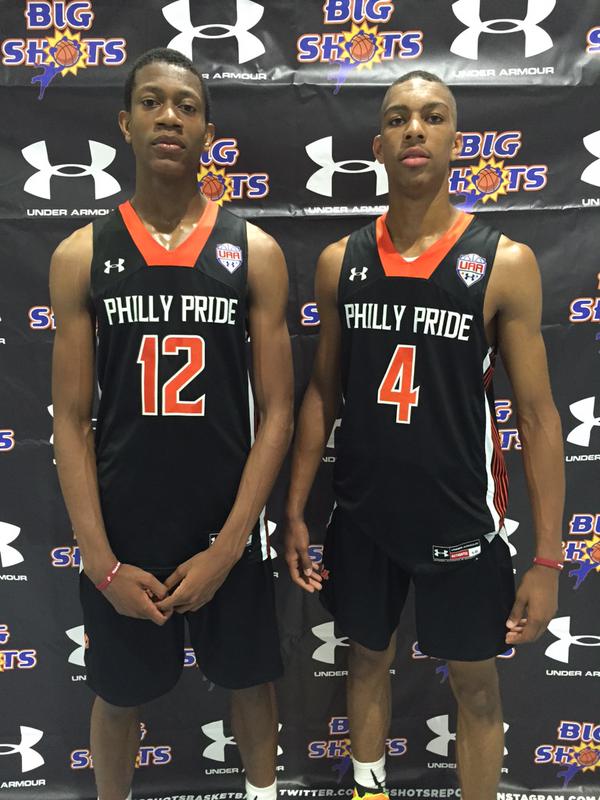
Entering the collegiate ranks in the Fall of 2016, Charles Brown (Philly Pride/George Washington HS) and Ryan Daly (Jersey Shore Warriors/Archbishop Carroll HS) possess a skill that sets them apart on the Philly landscape. These guys can flat out shoot the ball.  They are both very confident shooters, especially when the game is on the line. Brown recently hit a game winning 3 in the first leg of the Under Armour Circuit in New Orleans. (congratulated by his teammates, far right).

Charles Brown pic 1-page-0

Brown can put the ball on the floor and create his own mid-range shot from anywhere on the floor and he doesn’t need much space to get his shot off. Over the past year, he has become adept at getting defenders off balance using pump fakes and he is very difficult to guard because he possesses a quick and consistent release on his shot.

At 6’6″ 180 lbs Brown (below) possesses very good size and terrific length. A young player, that never re-classified, he isn’t very physically strong. He displays good overall athleticism. Brown has decided to spend the 2015-16 school year at St. Thomas More Prep School in Connecticut. His aim is increase his strength and quickness while playing in the super competitive New England Preparatory School Athletic Council.

Charles Brown pic 2Brown has offers from Drexel, Hofstra and Robert Morris. He has also been receiving interest from high major programs like Alabama and Maryland. When asked about his recruitment, Brown expressed a desire to stay close to home. His parents have consistently attended his high school and AAU games. The Brown’s are a close knit family. He made it clear that he really likes St. Joseph’s. “Coach [Geoff] Arnold has been very honest with me from the beginning, he has provided me with information that has helped me understand my options. He has developed a relationship with my family. My parents and I are very comfortable with St. Joseph’s.”

Ryan Daly Pic1For the past two seasons, Ryan Daly has been used as a shooting specialist that wasn’t asked to do much else in the high powered Archbishop Carroll program. Paul Romanczuk has produced six Division 1 level players while Ryan has been in the program. Austin Tilghman (Monmouth), Derrick Jones (UNLV commit), Ernest Aflakpui (Temple commit), David Beatty (multiple offers), Josh Sharkey (multiple offers) and Daly will all play Division 1 basketball.

Surrounded by this vast array of talent, Daly gets the vast majority of his shots spotting up, coming off of screens, and spreading the floor in transition. He has a tremendous outside shot, making 60 3-point shots this past season. Employing textbook form with great touch, he loves to shoot the three ball. He has shown that he is able to knock it down with a hand in his face, but is simply lights out when he’s unguarded. One of the area’s best catch and shoot players. In high school competition, he has been running off of screens and floating to the open spot on the perimeter for two years.

While running for the Jersey Shore Warriors on the AAU circuit, Ryan instinctively gets open as the play develops. He is very good at coming off screens, and is becoming more effective against quicker guards who can close him out quickly and get a hand in his face. Daly is an excellent  midrange shooter and will  knock down jump shots from all over the place with consistency. He is also an outstanding rebounder from the backcourt, making effective use of his strength and determination.

Standing 6’4″ and weighing in at a solid 195, Daly is an outstanding student. He has offers from 2 Ivy League schools (Penn and Brown) as well as Hartford (America East). He has also received interest from several other schools with strong academic reputations (Lafayette, Davidson and Quinnipiac). Daly says academics and geographic location are very important to him. He wants to attend a “good college” that lies somewhere between Connecticut and Virginia/North Carolina. His mother, Tracie is the daughter of the late Jim Boyle, a legendary player and successful coach at St. Joseph’s. His father, Brian, is a former Philadelphia Catholic League Player of the Year and also a former St. Joseph’s Hawk. While he doesn’t necessarily want to be in the Philadelphia vicinity, Daly does want his family to be able to attend as many of his collegiate games as possible.
For college coaches in need of elite shooters… Brown and Daly will be ready and willing to suit up in the Fall of 2016.