BROOKLYN, NY — As a Philadelphian raised on the holy trinity of Angelo’s cheesesteaks, Tony Luke’s roast pork, and the comforting embrace of melted Cooper Sharp, I rarely venture beyond the familiar. But when a trusted friend insisted on a trip to Sofreh, the celebrated Persian restaurant in Prospect Heights, I surrendered to curiosity—and left utterly enchanted.
Helmed by James Beard-nominated chef Nasim Alikhani, Sofreh is a revelation, a place where the soul of Iranian cooking is rendered with both reverence and artistry. The space itself is understated yet warm—high ceilings, black wood beams, a marble bar glowing under soft light. Reservations are fiercely sought after (book weeks ahead), yet the staff makes every guest feel like family. Before I could introduce myself, the host greeted me by name: “Delgreco, we look forward to serving you.” Such grace sets the tone for the evening.
We began with the Eggplant and Whey Dip, a lush, smoky spread crowned with crispy onions and drizzled with mint oil. But the true showstopper was the Barbari bread, a Persian flatbread so pillowy, so perfectly blistered, that it could single-handedly justify the trip. Tearing into its warm, sesame-studded crust, I understood why bread is sacred here.
For the main act, my friend chose the Dried Lime & Herb Beef Stew, a deep, tangy marvel of braised beef, kidney beans, and citrusy Persian limes. But my heart—and appetite—belonged to the Lamb Shank, a dish so sublime it bordered on spiritual. The meat, braised until it surrendered to the slightest nudge of a fork, swam in a fragrant broth of dill and dried lime, each spoonful a symphony of warmth and spice. Paired with saffron-kissed rice, the lamb was butter-soft, its richness cut by the bright, herbal notes of the broth. This wasn’t just dinner; it was an epiphany.
Sofreh doesn’t just serve food—it offers an education in Persian hospitality, where every detail, from the minimalist decor (a canvas for the vibrant dishes) to the impeccable service, feels intentional. As I left, already plotting my next visit (perhaps before a Nets game at Barclays?), I realized Sofreh had done the impossible: made a Philly guy forget about cheesesteaks, if only for one glorious night.
Rating: ★★★★☆ (Exceptional) Sofreh — 75 St. Marks Ave, Brooklyn, NY | http://www.sofrehnyc.com | Reservations Essential
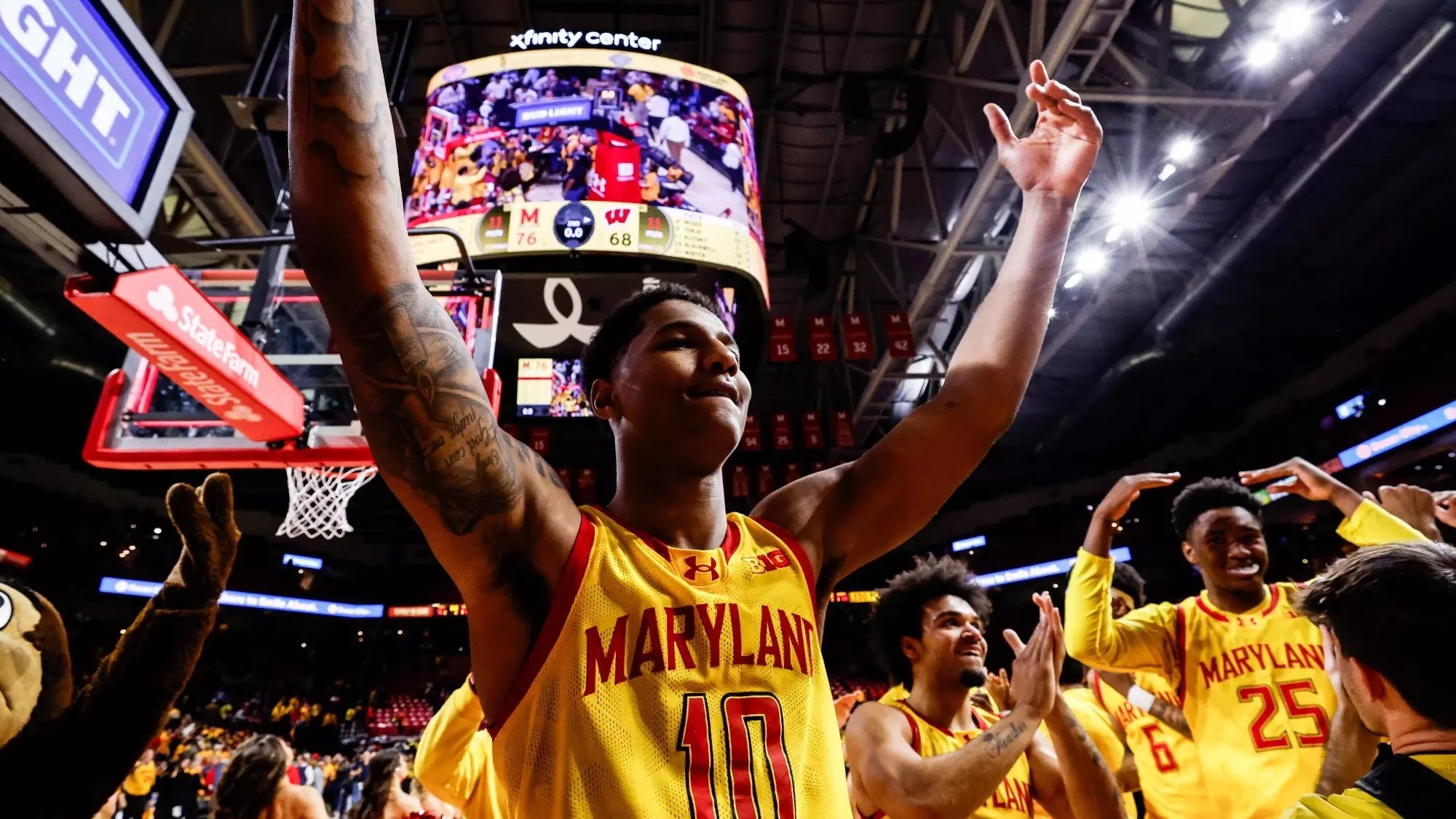
COLLEGE PARK, Md. — On a crisp Saturday afternoon in March, senior forward Julian “JuJu” Reese stepped onto the court at the Xfinity Center for the final time in his collegiate career. With 19 points, 11 rebounds, and a commanding presence in the paint, Reese led the No. 11 Maryland Terrapins to a 74-61 victory over Northwestern. It was a fitting farewell for the Baltimore native who has quietly become one of the most dependable and impactful figures in college basketball, even as his older sister, Angel Reese, has become a national icon and a lightning rod for conversation in the sports world.
The Reese family is basketball royalty. Julian’s mother, Angel Reese Sr. (née Webb), was a standout at UMBC in the late 1980s and early 1990s, amassing 1,390 points and 932 rebounds—numbers that Julian has nearly mirrored in his own career. His aunts also played Division I basketball, and the family’s love for the game runs deep. But while Julian’s older sister, Angel, has become a household name for her brash confidence, outspoken personality, and trailblazing impact on women’s basketball, Julian has carved out his own path—one defined by steady growth, quiet determination, and an unwavering commitment to his team.
A Legacy in the Making Julian Reese arrived at the University of Maryland in the fall of 2021 as a highly touted recruit from St. Frances Academy, a Baltimore-based basketball powerhouse. Standing at 6-foot-9 with a wingspan that seemed to stretch from baseline to baseline, Reese was a physical specimen with raw potential. He chose Maryland over offers from Seton Hall, LSU, and Temple, among others, and immediately made an impact as a freshman. Despite playing just 17.7 minutes per game, he averaged 5.7 points and 4.4 rebounds, showing flashes of the dominant force he would become.
His freshman year, however, was marred by turmoil. Eight games into the season, head coach Mark Turgeon resigned, and interim coach Danny Manning took over. The Terps finished a disappointing 15-17, but Reese’s potential was undeniable. When Kevin Willard was hired as head coach in the off-season, Reese made the decision to stay at Maryland rather than enter the transfer portal—a choice that would prove pivotal for both him and the program.
Under Willard’s guidance, Reese blossomed. As a sophomore, he became a full-time starter, nearly doubling his production to 11.4 points and 7.2 rebounds per game. Maryland improved to 22-13 and made a second-round appearance in the NCAA tournament. By his junior year, Reese had established himself as one of the top frontcourt players in the Big Ten, averaging 13.7 points, 9.5 rebounds, and 1.9 blocks per game.
This season, Reese has been the anchor of a resurgent Maryland team. Alongside his former S. Frances Academy teammate, Derik Queen, Reese has helped the Terps return to national prominence. Heading into the Big Ten tournament, Maryland is ranked 13th in the nation, with Reese leading the charge. He ranks second in the Big Ten in offensive rebound percentage and first in defensive rating, a testament to his relentless work ethic and basketball IQ.
The Reese Family Dynamic The Reese siblings are a study in contrasts. Angel, the older sister, is a force of nature—charismatic, outspoken, and unapologetically herself. She has become a cultural icon, using her platform to advocate for women’s sports and empower young girls. Her larger-than-life personality has made her one of the most recognizable athletes in the world, and her success at LSU, including a national championship in 2023, has cemented her legacy as one of the greatest players in women’s college basketball history.
Julian, by contrast, is the quiet sibling. Reserved and introspective, he prefers to let his game do the talking. While Angel thrives in the spotlight, Julian is more comfortable in the shadows, focusing on the nuances of his craft. Yet, despite their differences, the bond between the two is unshakable. Angel has been one of Julian’s biggest supporters, often cheering him on from the stands alongside their mother, grandparents, and extended family.
Their contrasting personalities reflect the duality of the Reese family’s basketball legacy. Angel is the trailblazer, the one who pushes boundaries and challenges norms. Julian is the steady hand, the one who embodies the fundamentals and traditions of the game. Together, they represent the past, present, and future of basketball—a sport that has been the lifeblood of their family for generations.
A Future in the NBA As Julian’s collegiate career winds down, the question on everyone’s mind is whether he has what it takes to succeed at the next level. The answer, according to scouts and analysts, is a resounding yes. Reese’s combination of size, athleticism, and defensive prowess makes him a legitimate NBA prospect. His ability to finish around the rim, coupled with his elite rebounding and shot-blocking skills, has drawn comparisons to players like Clint Capela and Jarrett Allen.
While Reese’s game is not without its limitations—he has attempted just one three-pointer in the past three seasons—his strengths far outweigh his weaknesses. His mobility and versatility on defense, in particular, make him an attractive option for NBA teams in need of a rim protector and rebounder.
A Legacy Secured Julian Reese’s journey at Maryland has been one of perseverance and growth. From a raw freshman navigating a coaching change to a senior leader poised to make a deep tournament run, Reese has left an indelible mark on the program. He will finish his career with over 1,400 points and 1,000 rebounds, joining an elite group of players who have achieved such milestones.
But more than the numbers, Reese’s legacy lies in his quiet determination and unwavering commitment to his team. In a sports landscape often dominated by flashy personalities and viral moments, Reese has been a reminder that greatness can come in many forms.
As the JuJu Reese era comes to a close, one thing is certain: the Reese family’s basketball legacy is in good hands. Whether on the court or off it, Julian Reese has proven that he is more than just Angel’s little brother. He is a star in his own right—a testament to the power of hard work, humility, and an unyielding love for the game.
PHILADELPHIA, PA – In the heart of Philadelphia, where the echoes of basketball history reverberate through the halls of The Palestra, a new chapter was written on Sunday afternoon. Father Judge High School, a proud institution from Northeast Philly, defeated defending champion Roman Catholic, 41-34, to claim the Philadelphia Catholic League Boys’ Basketball Championship. The victory, their first in 27 years, was not just a triumph for the Crusaders but a celebration of the enduring legacy of one of the most storied venues in sports.
The Palestra, the cathedral of college basketball, turned 98 this year. Since its opening in 1927, it has hosted more games, more visiting teams, and more NCAA tournaments than any other arena in the country. Its hallowed floor has been graced by legends, from Wilt Chamberlain to Kobe Bryant, and its intimate, raucous atmosphere has made it a shrine for basketball purists. Yet, in recent years, The Palestra’s relevance as a contemporary venue for college basketball has waned. The Philadelphia Big 5, once the lifeblood of the arena, no longer calls it home. Temple, Villanova, La Salle, and St. Joseph’s have opted to play their city series games on their own campuses, leaving Penn, the Palestra’s home team, as a fading force in the Ivy League.
But if the Big 5 has moved on, the Catholic League has stepped in to fill the void. The Catholic League Final Four has become the premier basketball event at The Palestra, a showcase of the city’s rich high school basketball tradition. On Saturday, approximately 10,000 fans—exceeding the arena’s official capacity of 8,700—packed into the venerable building to witness Father Judge and Roman Catholic battle for the most coveted high school championship in Pennsylvania. The atmosphere was electric, a reminder of what makes The Palestra special: the passion of the fans, the intensity of the competition, and the sense that, for a few hours, time stands still.
The game itself was a gritty, hard-fought affair, emblematic of Philadelphia basketball. Father Judge, led by head coach Chris Roantree, overcame a sluggish start to outlast Roman Catholic in a defensive slugfest. The Crusaders went the entire first quarter without a field goal, managing only two free throws, as Roman Catholic’s suffocating defense disrupted their rhythm. Sophomore point guard Tyler Sutton was a revelation for Roman, scoring 20 of his team’s 34 points and showcasing a blend of poise and skill that belied his age. But Father Judge’s senior point guard, Kevair Kennedy, weathered the storm, delivering clutch free throws down the stretch to seal the victory. His 10 points, four rebounds, and three assists may not have been eye-popping, but his leadership and resilience were instrumental in securing the title.
The game also featured a standout performance from Father Judge’s Everett Barnes, whose defensive dominance evoked memories of Bill Russell. Barnes, a towering presence in the paint, blocked shot after shot, keeping his team within striking distance during their offensive struggles. Alongside Roman Catholic’s Shareef Jackson, another formidable big man, Barnes is headed to the Patriot League next year, leaving one to wonder why Penn’s Steve Donahue didn’t make a stronger push to keep these local talents in the city. Their absence will be felt, but their performances on Saturday were a testament to the depth of talent in Philadelphia high school basketball.
For Father Judge, the victory was the culmination of a remarkable turnaround. Four years ago, Roantree took over a program that had gone 2-12 in the Catholic League. Under his guidance, the Crusaders have risen to the top, their journey a testament to the power of perseverance and belief. The postgame celebration was a scene of unbridled joy, as players, coaches, and fans reveled in a moment that had been decades in the making. For the Judge community, this championship was more than just a trophy; it was a reaffirmation of their identity and a source of immense pride.
As the final buzzer sounded and the Crusaders celebrated on the court, it was impossible not to feel the weight of history. The Palestra, with its wooden bleachers and arched rafters, has witnessed countless moments of triumph and heartbreak. On Sunday, it added another to its collection. Father Judge’s victory was a reminder of what makes this arena so special: its ability to bring people together, to create memories that last a lifetime, and to serve as a bridge between the past and the present. In a city that loves its basketball, The Palestra remains a sacred space. While the Big 5 may have moved on, the Catholic League has ensured that the arena’s legacy endures. For one night, at least, The Palestra was once again the center of the basketball universe, and Father Judge’s Crusaders were its brightest stars.
PHILADELPHIA, PA – These Philly hoop streets? They dry as a bone, baby. You can cruise every corner of this city, from the gritty blocks to the shiny high-rises, looking for that fire—Purple Haze, Kush, Modified Bananas, whatever your vice—but don’t you dare step foot in South Philly’s Wells Fargo Center. Nah, Daryl Morey and Nick Nurse out here peddling straight-up trash. That shit they pushing? TRASH! Full of seeds, won’t stay lit, burns your throat like cheap rotgut. Shit’ll leave you with a headache and no buzz, just mad as hell. You’ll wanna slap the taste outta Morey and Nurse’s mouths for putting Maxey out there on the corner hustling that garbage. Straight disrespectful.
Now, if you roll through University City, you’ll catch Steve Donahue slinging what I swear is oregano. Man, it’s a damn shame. Back in the day, the Quakers had that premium smoke at 33rd and Walnut. I ain’t lying, I used to puff on that Ugonna Onyekwe and Koko Archibong back in the day—25 years ago, that was the real deal. Before them, Jerome Allen and Matt Maloney were holding it down with that top-shelf product. You could hit that two, three times a week and never feel cheated. These days? Don’t even bother with 33rd and Walnut unless you wanna waste your time and cash.
Over at 34th and Market, Zack Spiker and Wil Chavis are pushing that reggie. Ain’t nothing special about it. Yeah, it’s better than nothing, but it ain’t gonna get you where you need to be. Smoke two, three blunts of that weak sauce, and all you’ll get is the munchies and a whole lotta disappointment.
Now, if you head up to Wynnefield, it’s a crapshoot. Some nights, you might luck up and catch that fire. I’m talking East Coast elite, smooth flavor, strong but not overwhelming. But other nights? Billy Lange’s out there slinging that same ol’ reggie. Coach Lange and Justin Scott need to find themselves a better connect, ‘cause this ain’t cutting it.
Same story at 20th and Olney. Hit it on the right night, and you’ll find that killer “Deuce Jones” strain Fran Dunphy and Donnie Carr been pushing. That’s the good stuff, baby. But too often, they dry, and you’re stuck with that same weak reggie. Heartbreaking.
Now, if you swing down North to Broad and Cecil B. Moore, prepare to be let down. Earlier this year, they had some decent “mid”—not great, but better than reggie. Lately though? Adam Fisher, Chris Clark, and Bob Jordan been serving up straight disappointment. It’s a damn shame, ‘cause John Chaney held it down for 25 years with that killer product. These new cats? They ain’t got the touch.
And don’t even get me started on the Main Line. A few years back, you couldn’t miss. Yeah, it was overpriced, but it was worth every penny. Jay Wright had that hydroponic lab on lock, harvesting that premium smoke. Every batch was fire, and the demand was sky-high. When he opened shop, it was standing room only. But since he handed the keys to Kyle Neptune and Ashley Howard? They serving “mid” now. And for hoopheads used to that top-tier Pavilion smoke, “mid” just don’t cut it.
But here’s the real deal, the not-so-secret secret. If you’re a true Philly hoophead, you know where to go: 3301 Solly Avenue in the Northeast and downtown at Broad and Vine. That’s where the real fire is. I copped some tonight, and let me tell you, it’s the truth.
While the Sixers and these D1 programs keep letting us down, the Philadelphia Catholic League? They holding it down. Night in, night out, these young boys are serving the best smoke in the city. Roman, Catholic, Devon Prep, Father Judge and St. Joseph’s Prep—they all got that high-end, Grade-A Kush. No laced-up, fake-ass product here. The gyms are packed, the lights are bright, and the smoke is pure. The PCL is keeping Philly hoops alive while the big boys keep dropping the ball.
So, if you’re a real hoophead looking for that fix, skip Wells Fargo and these college programs. Head to the Palestra on Sunday for Catholic League Championship. That’s where you’ll find the finest smoke this city has to offer. Trust me, you won’t be disappointed.
PHILADELPHIA, PA – The rumblings are beginning to emerge. The fans and alums of St. Joseph’s University are publicly evaluating the future of its storied men’s basketball program. There is an intensifying discussion about whether or not SJU should fire head coach Billy Lange. This discussion deserves a nuanced examination. While Lange may not be the archetype of a transformative coach, he has demonstrated an ability to manage the unique challenges of a Philadelphia-based mid-major program in the modern era of college athletics. The more interesting question, then, from my perspective is not whether St. Joe’s could find a better coach but whether the university is prepared to risk finding a worse one.
The wins and losses under Lange’s tenure paint a picture of incremental progress over a six year span. Each season has brought modest improvement in the Hawks’ performance. However, as any Hawk fan will tell you, the improvements haven’t been dramatic enough to inspire unanimous confidence. St. Joe’s continues to face defeats against opponents it is expected to beat, such as this season’s home loss to Central Connecticut State and other home losses to Princeton and Charleston. Lange has delivered expected victories in so-called “buy games” against teams like Coppin State and Delaware State—games that keep the program’s record somewhat respectable.
It seems fair to say that Coach Lange’s value to SJU extends well beyond the traditional win-loss column. In the age of NIL (Name, Image, and Likeness) deals and the transfer portal, the ability to recruit and retain talent is paramount. Lange has proven adept at navigating this landscape. Senior Eric Reynolds, junior Rasheer Fleming, and sophomore Xzayvier Brown—all players with significant market value—remain at St. Joe’s despite the lure of potentially lucrative opportunities elsewhere. It’s reasonable to assume that each of these players could command between $300,000 and $600,000 in NIL compensation if they entered the transfer portal. That they’ve chosen to stay suggests that Lange has fostered a program that values their development and loyalty.
That has value… It seems the Saint Joseph’s Athletic Department recognizes and appreciates that value. They definitely appreciate it more than SJU fans and alums focused intently on wins and losses.
Beyond individual player retention, Lange’s connections with key talent pipelines have been a boon for the program. Relationships with organizations like Team Takeover in Washington, D.C./DMV (Cam Brown, Erik Reynolds) , K-Low Elite (Xzayvier Brown, Derk Simpson) in Philadelphia, and Camden High School (Rasheer Fleming, Dasear Haskins) in New Jersey enhance St. Joe’s ability to recruit top-tier talent. These connections, cultivated over the past six years, provide an edge in a highly competitive market and would take significant time for a new coach to replicate.
The competitive landscape of the Atlantic 10 Conference further complicates the picture. Programs like Virginia Commonwealth University are beginning to implement revenue-sharing initiatives, with VCU reportedly committing $5 million to student-athletes starting in 2025. This raises the stakes for programs like St. Joe’s, which operate with significantly smaller budgets and a more limited pool of donors supporting their NIL efforts. In this context, Lange’s ability to retain talent and compete regionally with schools like Villanova, Temple, La Salle and Drexel is all the more impressive.
For a mid-major program like St. Joe’s, these external factors weigh heavily in evaluating a coach’s performance. While it’s tempting for fans to focus solely on A10 wins and losses, St. Joseph’s administrators seems to place significant value on external factors. By any reasonable measure, Billy Lange has held his own recruiting within constraints that make it challenging to compete with larger programs. The Hawks’ budget is dwarfed by those of regional and conference competitors, and the program relies on a smaller, more intimate base of donors and fans. In this shifting environment, stability and strategic leadership will likely outweigh the allure of a fresh start with another coach churned out by a national search.
Critics of Lange’s tenure are quick to point to the team’s offensive struggles, particularly when their three-point shooting falters. These concerns are valid, and the program’s inability to consistently generate offense has been a recurring issue. Yet, firing Lange in hopes of finding a quick fix through a “national search” led by an outside firm is far from a guaranteed solution.
SJU could whiff… Easily could whiff… You know they could whiff…
The unique challenges of recruiting and competing in Philadelphia and the A10 require a coach with a deep understanding of the program’s identity and limitations. By keeping it in the family, St. Joseph’s has always had that knowledge within the program. Since assuming the helm, Billy Lange has effectively demonstrated that understanding.
He has obvious shortcomings… Lange has not demonstrated an ability to consistently coach his team to more college basketball victories than losses.
That’s a problem.
For that, some want SJU to fire Billy and move on. I’m just saying it’s more complex than just wins and losses for Jill Bodensteiner and President Cheryl A. McConnell.
St. Joseph’s is at a critical juncture. Lange’s tenure has been far from perfect, but he has demonstrated an ability to navigate the complexities of modern college basketball.
No small feat…
The Hawks’ progress in the won/loss columns may be slow, but it is progress nonetheless. Replacing Lange risks disrupting the stability and relationships he has built, with no guarantee of improvement. For a program like St. Joe’s, where every decision must be calculated and deliberate, continuity may be the best path forward.
It should be noted that Saint Joseph’s could easily FUCK AROUND AND FIND OUT shit could get a lot worse.
In the end, the calculus isn’t just about finding a better coach. It’s about ensuring that the program can thrive in an environment where resources are limited and the stakes are higher than ever. The St. Joe’s brass seem to recognize the value Lange brings.
They know… I know… You know… We all know… Lange has to win more games.
To the dismay of those calling for his dismissal, SJU will likely determine that the risks of change outweigh the potential rewards.
PHILADELPHIA, PA – Let’s unpack this shameful shift that’s crept over the past decade or so in Philadelphia like a slow-moving fog, dampening the streets and smothering what little light we had left. Once upon a time, there was a sacred rule in Philly’s urban Black culture, a code etched into the concrete jungle’s foundations. The hustlers, pimps, and players respected the sanctity of youth with promise. Athletes, bookworms, and dreamers were a different breed—off-limits. These young men and women were seen as the ticket out, the hopes of the block incarnate, and even the coldest fuckin’ killer wouldn’t dare derail their trajectory.
Noah Scurry
Back then, you’d hear it in passing: “This ain’t for you.” It wasn’t a suggestion—it was a command, a line in the sand. It meant: You’re the light in this darkness, and I’m not about to drag you down into my abyss. Whether it was a drug deal going down, a burglary or a dice game heating up, the young athletes and scholars were shooed away. Their presence alone demanded respect, a reverence that was reciprocated with every step they took toward their dreams. That respect was love, even if it was a love born out of guilt and unspoken regret.
But that love? It’s gone now—evaporated like dew under a blazing, merciless sun. Today, the line between the court and the curb is blurred, and no one’s keeping the wolves at bay. It’s like no one cares anymore—not about the promise, not about the potential. The streets have grown colder, their inhabitants harder. And the result? Blood-soaked dreams and bullet-ridden futures.
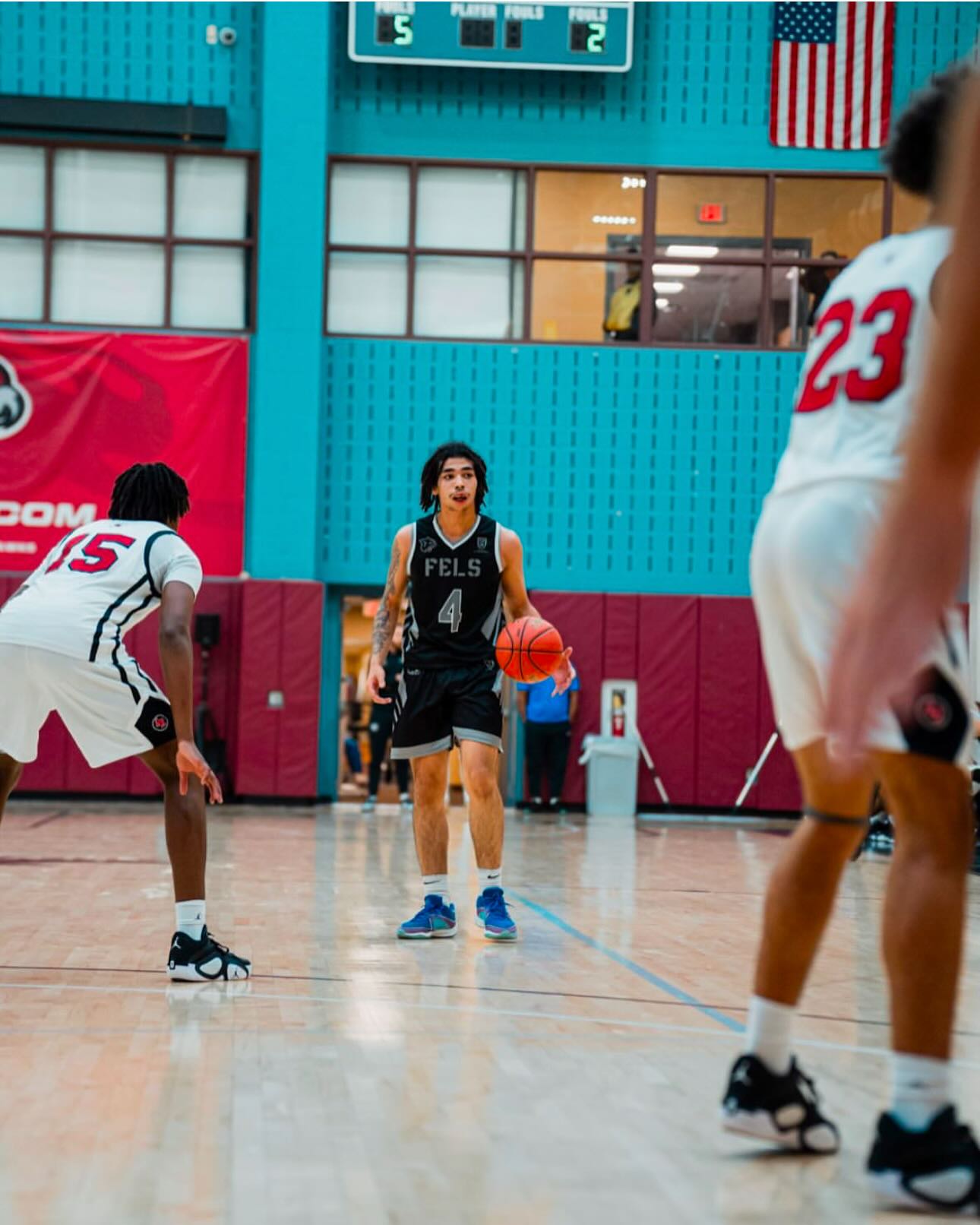
Take Noah Scurry, a rising star at Fels High School. He had the kind of talent that made folks lean forward when he stepped on the court—a kid who could’ve had the world at his feet. But on his way to school, the streets claimed him, cut him down in a hail of senseless gunfire. A life that once brimmed with potential was reduced to a statistic, another name in the endless roll call of young Black boys and men killing each other. And this ain’t an isolated tragedy. This is Philadelphia, where the headlines scream of athletes shot on school grounds, their cleats and helmets no armor against the madness. Homes invaded, families shattered, the echoes of gunshots ricocheting through neighborhoods like a mournful refrain.
The question—where does it all end?—hangs in the air, heavy and unanswered. The love is gone. The sense of duty to protect our own has been replaced by a numb indifference, a lethal apathy. The gangsters and hustlers, once guardians in their own twisted way, have abdicated their roles. Instead of shielding the promising, they pull them down, dragging them into a vortex of violence and despair. There’s no “this ain’t for you” anymore, no safe passage for those who dare to dream beyond the confines of the block.
We don’t like us—that’s the brutal truth.
And until we confront this self-loathing, this internalized hatred that fuels the cycle of violence, the blood will continue to flow, and the light will continue to dim. Somewhere in the ruins of what once was, we need to find that love again—that fierce, protective love that says, “You’re worth saving.” Because without it, we’re lost.
The story of St. Joseph’s Prep’s stunning victory over nationally ranked and defending Philadelphia Catholic League champion Roman Catholic feels almost biblical in its scope. Over the decade I’ve known St. Joseph’s Prep Head Coach Jason Harrigan, his coaching exploits have often reminded me of the tale of David and Goliath. Last night, Harrigan’s Hawks summoned the courage and tenacity to topple a seemingly insurmountable giant, leaving me contemplating the famous passage from 1 Samuel 17.
Jordan Ellerbie, St. Joseph’s Prep
The game, initially scheduled for the Horowitz “Sixth Man” Center, was moved to Bensalem High School due to lingering HVAC issues. Despite the change in venue, the anticipation remained high as Harrigan’s Hawks faced off against Chris McNesby’s mighty Cahillites. Roman Catholic, with their powerhouse roster and Broad Street swagger, seemed poised to extend their reign. But Harrigan, and Jordan Ellerbie, like the young shepherd David, were ready to defy expectations.
The Battle on the Hardwood
The game itself was a physical slugfest, akin to a battle between two heavyweight boxers exchanging body blows. Neither team could find an offensive rhythm, which only underscored the meticulous preparation and defensive schemes orchestrated by Harrigan and McNesby. The intensity on the court was palpable, as every possession felt like a struggle for survival.
Chris McNesby, Roman Catholic Head Coach
Roman’s Shareef Jackson, a sturdy 6’8” Lafayette commit, has long been the league’s dominant force. His imposing presence and exceptional low-post technique make him nearly unguardable at the high school level. Yet, Harrigan devised a strategy to neutralize Jackson, deploying constant double-teams and relentless physical play to disrupt his rhythm. Jackson was held to a mere six points—a testament to Harrigan’s tactical brilliance.
Shareef’s younger brother, Sammy, also struggled offensively, going 0-for-7 from the field. With Marquette Head Coach, Shaka Smart, in the stands, less than 24 hours after vanquishing Thomas Sorber and the Georgetown Hoyas, Sammy could not make a shot while playing a solid and unselfish floor game. Roman’s mercurial sophomore point guard, Tyler Sutton, managed only eight points on 3-for-12 shooting. Senior guard Sebastian Edwards emerged as Roman’s most effective scorer with 13 points, including three crucial three-pointers, but even his efforts weren’t enough to overcome the relentless Hawks.
Ellerbie and Jason Harrigan
Ellerbie’s Heroics and Harrigan’s Vision
The game’s defining moment came from Florida Gulf Coast commit Ellerbie. With the game on the line, he delivered a masterclass in clutch play, scoring a game-high 16 points and sealing the victory with a left-handed baseline finger roll as time expired. It was a play that echoed David’s decisive sling stone, felling the mighty Goliath.
Just as David chose his simple shepherd’s tools over Saul’s heavy armor, Harrigan relied on grit, discipline, strategic ingenuity and some big fuckin’ balls. His ability to inspire his players to rise above their limitations has been a hallmark of his coaching career. Nine years ago, Harrigan led an unheralded Del Val Charter squad to a stunning victory over nationally ranked Imhotep Charter in the District 12 3A final. Last night, he did it again, proving that no opponent is invincible when preparation meets belief.
Shifting Power Dynamics in the Catholic League
Roman Catholic’s dominance over the past quarter-century has bred a sense of entitlement among its fans. The Cahillites have often dismissed their Catholic League rivals, with only Neumann-Goretti and occasionally Archbishop Wood posing serious threats. However, the winds of change seem to be blowing through the league.
As of now, St. Joseph’s Prep, Cardinal O’Hara, and Father Judge boast perfect 3-0 records, while Bonner-Prendie sits at 2-0. Conversely, traditional powerhouses like Archbishop Wood (0-3), Archbishop Carroll (0-3), and Neumann-Goretti (0-2) are struggling. Even Archbishop Ryan narrowly avoided a disastrous 0-3 start with a historic comeback. Meanwhile, Father Judge defeated Imhotep on a neutral court, and Devon Prep appears ready to challenge for a seat at the Catholic League’s top table.
St. Joseph’s Prep’s victory over Roman Catholic may portend a potential paradigm shift in the Catholic League. Under Jason Harrigan’s leadership, the undersized Hawks are emerging a symbol of resilience and strategic excellence. His ability to slay giants has not only reinvigorated the program but has also disrupted the established power dynamics of the league.
For one night, at least, David triumphed over Goliath. The question now is whether Harrigan’s Hawks or the other rising contenders can sustain this momentum and usher in a new era of Catholic League basketball. Regardless, one thing is certain: Jason Harrigan can slay a national power, and the story of St. Joseph’s Prep’s victory will be told for years to come.
Next Thursday, American history’s getting made, plain and simple. Two Black coaches—Notre Dame’s Marcus Freeman and Penn State’s James Franklin—about to go head-to-head for a shot at the big prize: the National Championship. For Black folks, this ain’t just about football; it’s about kicking down doors that’ve been bolted shut for far too long. But, like clockwork, social media’s lit with white fans scratching their heads, asking why we’re even talking about race. To them, it’s just a game. To us? It’s a revolution.
Black folks know that for most of the 20th century, NCAA D1 colleges and universities wasn’t fuckin’ with us… At all…
The Long Shadow of Jim Crow
See, college ball didn’t always have space for Black excellence. For far too long, American Apartheid shaped collegiate sports. Back in the Jim Crow days, Black athletes were locked out of big-name programs, forced to shine in HBCUs while white players soaked up all the national mainstream media attention and glory. When integration finally hit in the 1970’s, Black players broke through, but the coaching ranks? That’s where the gate stayed locked.
And don’t get it twisted—the system wasn’t just about who could run the fastest or throw the farthest. In ‘87, Al Campanis, a Dodgers exec, told the world Black folks didn’t have the “necessities” to lead. Translation? “We don’t trust y’all to steer the ship.” Those words stuck, seeping into locker rooms, boardrooms, and beyond. Today, that bias may not wear the same ugly face, but it’s still lurking.
Breaking Through the Ceiling
Now here come Freeman and Franklin, rewriting the script. Many of the same cameras and microphones that have been prominently positioned in front of Coach Prime since August, will be pointed at these brothers. With everything on the line, Freeman and Franklin ain’t just holding clipboards; they’re running powerhouse programs, proving that leadership ain’t tied to skin color. For Black fans, it’s more than bragging rights; it’s decades of sweat, tears, and unshakable determination finally paying off.
But the pushback always comes. Some folks argue that sports should be colorblind, that the game’s about skill, not skin. Sounds nice on paper, but let’s be real: race has always been a lead actor in the American story. Black folks have felt the sting of fewer opportunities, lower pay, and higher scrutiny. That’s the backdrop to Thursday’s game, whether well-meaning white folks want to admit it or not.
A Call for Grace
To the white fans who don’t get the hype: this ain’t about excluding you; it’s about uplifting us. When we cheer for Freeman and Franklin, we’re cheering for progress—for the young Black kid watching the game, dreaming of calling plays someday.
Grace ain’t hard to give. It’s about understanding a joy that might not be yours to feel but is yours to witness. It’s about letting us celebrate without questioning the why. Because in moments like this, the why is woven into our history… American history.
Eyes on the Prize
This game’s bigger than football. It’s a chance to honor how far we’ve come and to fuel the journey ahead. For Black America, it’s a rare and beautiful milestone. For everyone else, it’s a reminder that progress, no matter how slow, is always worth the cheer.
So let’s savor this moment, not as a wedge but as a bridge. Let’s lift our voices for what’s right and what’s righteous. Because when the dust settles, it’s not just about who won the game—it’s about who changed the game.
The Light Skin Brother Bowl is ’bout to be lit like a Muthafucka…
PHILADELPHIA, PA – On a brisk Saturday afternoon, December 28, 2024, the Delaware State Hornets swagger into Hagan Arena, on City Avenue, ready to measure themselves against the Saint Joseph’s Hawks. For the Hornets, this isn’t just another game—it’s a homecoming of sorts. The roster hums with Philly flavor, a testament to the keen eye and relentless hustle of Assistant Coach Horace Owens. Owens, a name that carries tremendous weight in Philly hoops, has orchestrated a symphony of second chances and unpolished gems, bringing together a crew that embodies the grit of their hometown.
Stan Waterman, now in his fourth year as head coach, has steadily turned Delaware State into a competitive program, raising eyebrows with each passing season. But the secret sauce of his success recruiting the City of Brotherly Love is the man beside him: Horace Owens. Known simply as “Pappy” to those who run the city’s courts, Owens’ reputation precedes him. A McDonald’s All-American in 1979, Owens has been both a player and a sage, with his finger on the pulse of Philly basketball for decades.
Robert Smith, Delaware State
Owens’ recruiting prowess lies in spotting what others miss—diamonds in the rough. Take Robert “Man-Man” Smith and Muneer Newton, for example. Both were All-Catholic League stars whose talents were initially deemed too raw or unorthodox for Division 1 programs. Smith began his collegiate journey at a Division 2 school, while Newton found himself in the NAIA. But under Owens’ guidance, they’ve blossomed. Smith has emerged as one of the MEAC’s premier guards, averaging 16.1 points per game while shooting 42% from the field and 35.2% from deep. His scoring binges against Alabama State, NJIT, and Delaware—where he poured in 26, 27, and 22 points respectively—serve as warnings to Saint Joseph’s.
Stan Waterman, Delaware State Head Coach
Newton, meanwhile, has become the Hornets’ quintessential glue guy, chipping in 6.8 points and 5 rebounds per game while taking on the unenviable task of guarding the opposition’s top forward. And then there are the Watson twins,Kareem and Kaseem, who started their college careers at Cal State Bakersfield before Owens lured them back east. Kaseem, with his 12.8 points and 6.2 rebounds per game, has become a cornerstone of Delaware State’s success, while Kareem’s contributions add depth to a squad that’s hungry for respect.
The Hornets arrive in Philadelphia with a 7-6 record and a spot atop the MEAC standings. For them, this game isn’t just about basketball; it’s about proving that Philly talent doesn’t just belong on big-name rosters but can thrive in overlooked places like Dover, Delaware. Their opponent, Saint Joseph’s, represents the establishment: a well-heeled A10 program with a storied history and a home-court advantage that can turn Hagan Arena into a cauldron. The Hawks are heavy betting favorites, but the Hornets’ gritty Philly core has never been one to back down from a fight.
Muneer Newton, Delaware State
Ray Somerville and Muneer Newton’s inside presence will need to counter the Hawks’ big men, while Smith and Kaseem Watson will have to carry the scoring load. But more than Xs and Os, this game will come down to heart—and no one embodies that more than Horace Owens. His fingerprints are all over this squad, from the way they defend to their relentless approach to the game.
Saturday’s game will be a clash of styles: the relentless offensive barrage of Saint Joseph’s versus the raw, unyielding grit of Delaware State. For Owens, it’s another chance to show that his eye for talent is unmatched, and for the Hornets, it’s an opportunity to put their program on the map. Win or lose, one thing is certain: the Hornets will leave it all on the court, embodying the scrappy, resilient spirit of the city that shaped them.
PHILADELPHIA, PA – Temple University’s recent hiring of K.C. Keeler as head football coach has raised eyebrows, especially when juxtaposed with the bold moves by Norfolk State University and Delaware State University. Both HBCUs have decided to roll the dice, following the Jackson State blueprint and hiring high-profile former NFL stars to lead their programs. The contrast is striking, and it raises questions about the strategic decisions underpinning each hire. Is Temple’s choice a calculated move grounded in a traditional approach to developing college football programs, or is it an exercise in playing it safe in the NIL/transfer portal era when bold action is sorely needed? Let’s talk about this shit.
Delaware State Head Coach Candidate, Desean Jackson
Temple Football: A Program in the Abyss
Let’s not mince words: Temple football is ASS! Over the past five seasons, the Owls have compiled a dismal 13-42 record. In an era dominated by NIL deals and the transfer portal, the Owls are woefully unequipped to compete. So much so, that on November 18, 2024, Inquirer Columnist Marcus Hayes argued that the Temple football “program probably needs to go away.” Quarterbacks at other programs are pocketing millions, while Temple’s head coaching position doesn’t even come close to matching that level of compensation. Add to this the widespread perception of an unsafe campus in North Philadelphia—a reality punctuated by frequent reports of murders, armed robberies, and home invasions involving students—and you’ve got a program fighting a gunfight with a butterknife.
The Owls’ attendance woes at Lincoln Financial Field underscore their plight. While the Eagles sell out every game with an average attendance of nearly 70,000, Temple struggles to draw even 14,000 fans on Saturdays. To put it bluntly, they can’t give away tickets. Nobody is paying hard earned money to watch Temple struggle against Coastal Carolina and North Texas.
Recognizing these challenges, on November 26, 2024, Black Cager Sports publicly called for Temple to consider hiring a high-profile former Eagle, like Brian Dawkins or Jason Kelce, to rejuvenate the program. The logic was simple: inject star power, attract media attention, and leverage NFL prestige to appeal to recruits and reignite fan interest. Philadelphia is, after all, a football town, albeit one where the Eagles monopolize the energy. A beloved former Eagle at the helm could have been the spark Temple football desperately needed.
Norfolk State and Delaware State: The Prime Effect
While Temple opted for tradition with Keeler, Norfolk State and Delaware State have embraced the Coach Prime model. On December 2, 2024, Norfolk State introduced Mike Vick as its new head coach in a press conference that felt more like a star-studded gala. With Allen Iverson and Bruce Smith in attendance, the hire radiated cultural significance and media magnetism.
Similarly, Delaware State is finalizing a deal with DeSean Jackson. Like Vick, Jackson brings NFL pedigree, charisma, and name recognition to the table. Both hires reflect a growing trend among HBCUs: leveraging the cultural capital of NFL stardom to transform their football programs. It’s a strategy pioneered by Deion Sanders at Jackson State and now being tested at Norfolk State and Delaware State.
These moves are not without risk. Neither Vick nor Jackson has extensive coaching experience. But as Sanders demonstrated at Jackson State and now at Colorado, NFL stardom is a currency that resonates deeply with recruits. It’s not just about X’s and O’s; it’s about access, visibility, and credibility. Recruits see an opportunity to learn from and be mentored by someone who has reached the pinnacle of football success.
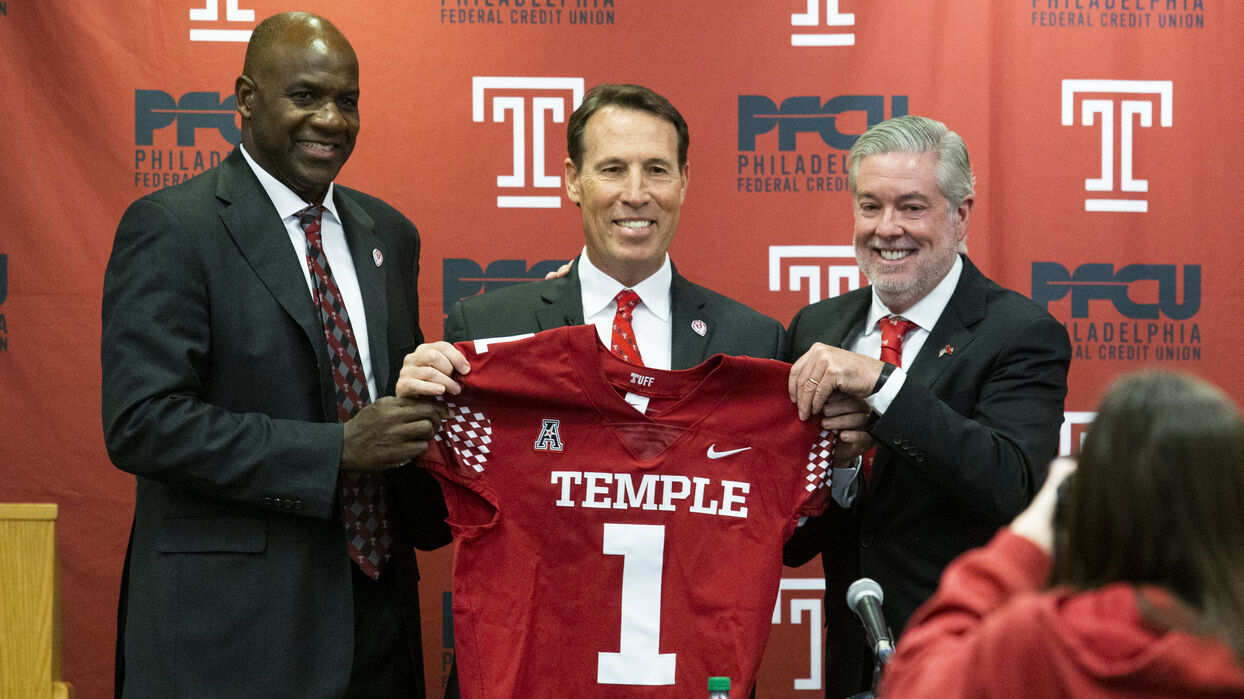
Arthur Johnson, Athletic Director, K.C. Keeler, Head Coach and President John A. Fry
Temple’s Safe Play: K.C. Keeler
On December 1, 2024, Temple announced the hiring of K.C. Keeler, a seasoned coach with a proven track record. Keeler boasts national championships at Delaware and Sam Houston State, along with a history of consistent postseason appearances. His credentials are impeccable, and on paper, he’s an excellent hire.
But here’s the rub: credentials alone won’t solve Temple’s myriad challenges. The Owls don’t just need a competent coach; they need a savior. Someone who can galvanize a fractured fanbase, attract top-tier recruits, and restore relevance to a program that has become an afterthought in its own city.
Can Keeler convince top prospects to live, learn and practice on North Broad Street? Will he be able to lure impact transfers from the portal to Norf Philly? What’s his pitch?
Keeler is a traditional choice, a steady hand on the tiller. But steady doesn’t sell tickets, and it doesn’t land four-star recruits. In the NIL era, Temple needs more than competence; it needs charisma and cachet.
Kelce, Dawkins, Vick and Jackson ooze that shit… Each and every one of them is DAT DUDE…
The Quasi-Experiment
With Temple taking the traditional route and Norfolk State and Delaware State betting on NFL stardom, we have a real-time quasi-experiment unfolding. Which approach will prove more effective in revitalizing struggling football programs? While it’s too early to draw conclusions, the early indicators are telling.
Temple’s choice reflects a belief in stability and experience. Norfolk State and Delaware State, on the other hand, are banking on the transformative power of star power. The latter approach may be riskier, but it’s also far more aligned with the realities of modern college football.
The Case for Bold Action
Temple’s decision to go with Keeler feels like a missed opportunity. In a city that bleeds green for the Eagles, hiring a beloved former player like Brian Dawkins or Jason Kelce could have electrified the program. The media buzz alone would have been invaluable for a university grappling with declining enrollment and waning athletic fortunes.
Dawkins and Kelce are not just football legends; they are cultural icons in Philadelphia. Their presence on the sidelines would have lent instant credibility to the program and created a recruiting pitch unlike any other. Imagine a high school player being recruited by a Hall of Famer or a Super Bowl champion. That’s the kind of edge Temple needs.
Conclusion
As Norfolk State and Delaware State forge ahead with their high-profile hires, Temple’s choice of K.C. Keeler stands as a stark contrast. Time will tell which approach yields better results, but one thing is clear: Temple’s football program is in dire need of a spark. Whether Keeler can provide it remains to be seen. For now, the Owls remain in the abyss, and the question lingers: What could have been if Temple had dared to dream bigger?














 The Black Cager