RADNOR, PA – In Philadelphia, the head coaching job for Villanova men’s basketball isn’t just another position—it’s a crown. As a lifelong Philadelphian, I’d argue that only the Eagles’ and Phillies’ top jobs command more universal respect than leading the Wildcats. The Sixers, Flyers, and Union coaches have their admirers, but none occupy the same pedestal as the man steering Villanova.
That reverence is largely the legacy of Jay Wright, who transformed the program into a national powerhouse. Wright didn’t just surpass Big 5 legends like John Chaney and Jack Ramsay—he redefined what success looked like in Philadelphia basketball. Six Big East titles, four Final Fours, and two national championships in 21 seasons set a standard that seemed almost impossible to maintain.
When Wright stepped down in 2022, Villanova turned to his protégé, Kyle Neptune. But after three underwhelming seasons—no NCAA Tournament appearances, no deep Big East runs—the school moved on. Now, the Wildcats have handed the keys to Kevin Willard, a seasoned Big East hand with a track record of player development and program-building.
Kevin Willard, Villanova
Willard, 50, arrives after a three-year stint at Maryland, but his roots run deep in the Big East. He spent six years as Rick Pitino’s assistant at Louisville and 12 as Seton Hall’s head coach, where he turned the Pirates into consistent contenders. At his introductory press conference, flanked by a strong staff—David Cox, Kevin Norris, Ashley Howard, Greg Manning Jr.—Willard sounded like a man ready to plant his flag.
Delgreco Wilson, Black Cager Sports (l) and Greg Manning, Villanova Assistant Coach (r)
“I’m in the prime of my coaching career,” he said. “This is where I want to be.”
But beyond the résumé, what makes Willard the right hire? Because he’s a player’s coach—a term often overused but perfectly fitting here. He doesn’t just develop talent; he invests in his players as people.
Take Donta Scott, the former Imhotep Charter star. Willard recruited him to Seton Hall, then coached him at Maryland, pushing him to embrace a more aggressive offensive role. Scott, now in the G League, credits Willard’s guidance for his growth. Or Julian Reese, who became just the second Terp ever to reach 1,000 rebounds under Willard’s watch. And then there’s freshman phenom Derek Queen, whose buzzer-beater in this year’s NCAA Tournament announced him as a future star.
Perhaps the most telling story is that of Michael Nzei, a Seton Hall role player under Willard. When asked if Nzei could play professionally overseas, Willard didn’t hesitate: “He’ll make more money on Wall Street.” Two weeks after his final game, Nzei landed a job at Goldman Sachs.
Eric Watkins, VU Sports (l) and Ashley Howard, Villanova Assistant Coach (r)
That’s the kind of coach Villanova is getting—one who sees the bigger picture. In a Big East loaded with heavyweights like Rick Pitino, Shaka Smart, and Dan Hurley, Willard has the presence, the pedigree, and the player-first approach to restore Villanova to its rightful place among college basketball’s elite.
The Main Line is ready. The Big East should be too.
CAMDEN, NJ – In an era when college basketball players often chase the brightest spotlight or the most lucrative NIL deals, Jerome Brewer’s decision to return home stands as a rare act of introspection and social responsibility. The 6’8” forward, who has navigated a winding collegiate journey from Texas A&M Commerce to McNeese State, could have followed his former coach to North Carolina State or sought a bigger stage elsewhere. Instead, he chose La Salle University—not just for basketball, but to fulfill a deeper mission.
Brewer’s choice reflects a maturity beyond his years. At a time when young athletes are frequently pressured to prioritize immediate success, he considered something more enduring: his ability to influence the next generation. His insistence that La Salle facilitate access for Camden City Public School students to games and practices isn’t a mere publicity gesture; it’s an intentional effort to reinforce the values that shaped him.
“Sports act as an agent of socialization,” Brewer said, articulating a perspective more common among seasoned coaches than 22-year-old players. “They teach values, behaviors, and skills—teamwork, communication, resilience.” His words underscore an awareness of basketball’s broader role, one that extends far beyond the box score.
This understanding didn’t emerge in a vacuum. Brewer’s formative years were spent in Camden’s gyms, where the game was both an escape and an education. After a brief stint in the Philadelphia Catholic League, he returned to Camden High, helping restore its basketball prominence alongside future Division I standouts. When college offers didn’t meet his expectations, he bet on himself—first at prep school, then in the Southland Conference, where he blossomed into an All-League performer before injury intervened.
His resilience was tested again last year when he redshirted at McNeese State, biding his time for the right opportunity. When it arrived, he weighed his options with the discernment of someone who recognizes that a career is more than stats or conference prestige. He thought of his younger brother, Domani, a budding seventh-grade phenom who now has a front-row seat to his brother’s final collegiate chapters. He thought of Camden’s kids, who will see in him a path forward.
Camden Mayor Vic Carstarphen, a former Temple standout under John Chaney, praised Brewer’s character, calling him “one of the finest student-athletes to come through Camden in recent years.” City Councilman Arthur Barclay, who played for John Calipari at Memphis, highlighted Brewer’s potential as a role model: “He was one of them not long ago. Now, he’s showing them what’s possible.”
La Salle, under new coach Darris Nichols, gains not just a versatile forward who can stretch defenses and guard multiple positions, but a leader who grasps the weight of his platform. In return, Brewer gets a chance to cement his legacy where it matters most—at home.
In an age of fleeting allegiances and transactional relationships, Brewer’s decision is a reminder that some choices are about more than basketball. They’re about purpose. And in that regard, his homecoming is already a victory.
PHILADELPHIA, PA – For the past 40 years, I’ve had a front-row seat to Phil Martelli’s brilliant college basketball mind—from the days when his “office” at Saint Joseph’s was little more than a converted broom closet in Alumni Memorial Fieldhouse to his 24-year reign as head coach. Phil was, and remains, my guy. And because he’s my guy, I’ve also been privy to the quiet confidence, the generational rivalries, and the Philadelphia-bred connections that have shaped the modern era of women’s college basketball.
Dawn Staley, resplendent in the Gucci drip
This Sunday’s national championship game between Geno Auriemma’s UConn Huskies and Dawn Staley’s South Carolina Gamecocks isn’t just a battle of the sport’s two best programs—it’s a collision of legacies, Philadelphia ties, and a coach’s unshakable belief in his homie.
At the peak of Geno’s dominance, when his UConn teams seemed invincible, I’d pop into Martelli’s office and tell him, “She’s coming.”Dawn Staley—the North Philly legend, the Raymond Rosen Projects product, the point guard who played with the ferocity of someone who knew the game owed her nothing—was closing the gap. Martelli, ever loyal to his longtime friend Geno, would shrug. “Nah, Del. Geno’s got this thing wired.”
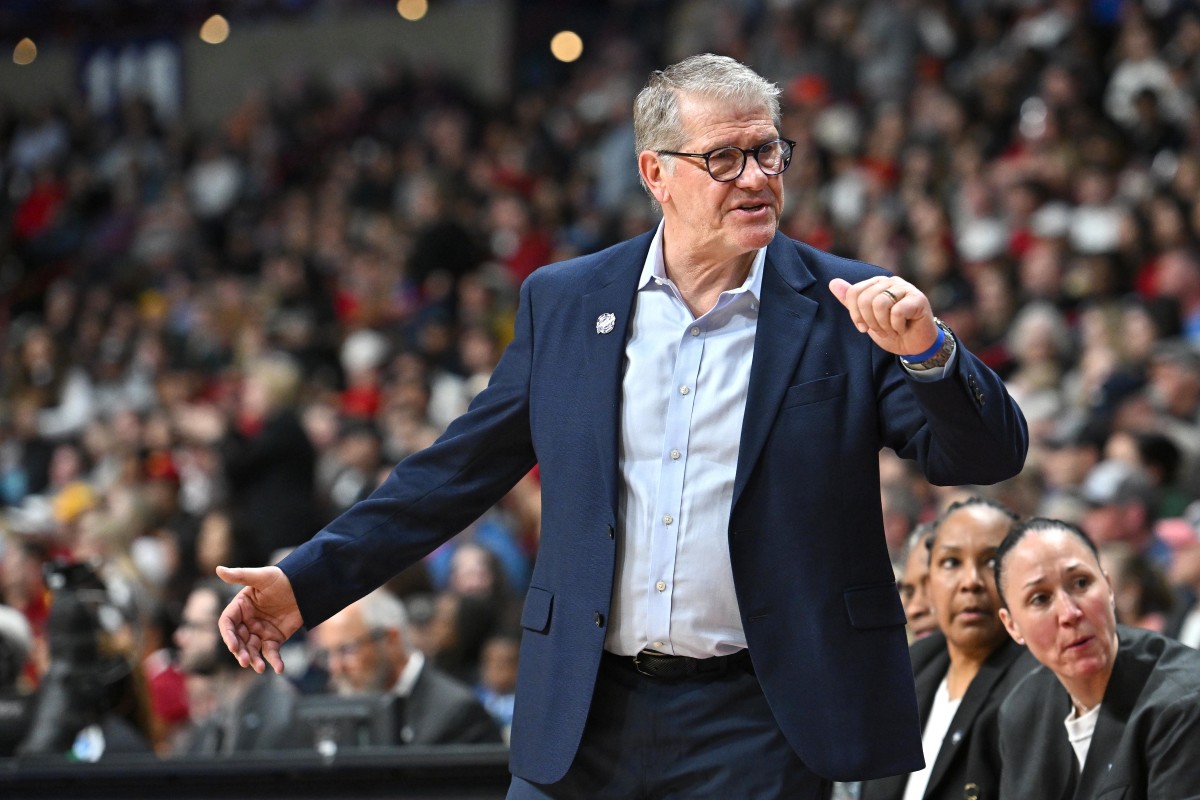
Geno Auriemma, UCONN coaching legend
But then A’ja Wilson arrived in Columbia. Then came the national titles, the undefeated seasons, the undeniable truth: Dawn Staley had ascended to the throne once occupied by Pat Summitt and Geno himself. Now, she stands alongside Kim Mulkey as the new standard-bearers of the sport. And yet, Geno—ever the competitor—wants his crown back.
This morning, at 6 a.m., my phone buzzed with texts from Martelli. Of course, he’s riding with Geno. That’s what Phil does. But me? I’m riding with Dawn, the kid from NORF Philly who turned into a queen.
May the best team win. But know this: No matter the outcome, Philadelphia’s fingerprints are all over this game. And that, more than anything, is worth celebrating.
PHILADELPHIA, PA — On a bright afternoon this week, my family gathered at the Blanche A. Nixon/Cobbs Creek Branch of the Free Library of Philadelphia for a rededication ceremony honoring my great-aunt’s legacy. Blanche Nixon was a petite but formidable woman, a relentless advocate for the children of Southwest Philadelphia, who believed fiercely in their potential. “There’s no such thing as a bad child,” she often said, and her life’s work reflected that conviction. She understood that civil society—the network of libraries, schools, churches, and community organizations operating outside direct government control—was the lever by which marginalized youth could be uplifted, their talents nurtured, and their futures secured.
The Free Library of Philadelphia, Blanche A. Nixon Branch, Cobbs Creek
The timing of this celebration could not be more significant. As America’s 250th anniversary approaches, the nation finds itself at a precarious juncture, one in which the very foundations of an inclusive, truthful historical narrative are under siege. Public institutions—particularly libraries—will be called upon as never before to sustain democracy by preserving access to knowledge, fostering civic engagement, and resisting the erosion of fact in favor of political expediency.
The Assault on Truth and the Role of Civil Society
Recent years have seen a deliberate campaign to narrow the scope of American history, stripping it of its complexities and contradictions. President Donald Trump’s executive order targeting so-called “critical race theory” in schools was just one salvo in a broader effort to enforce a sanitized version of the past—one that ignores the competing traditions of liberalism, civic republicanism, and the ascriptive hierarchies of racism, nativism, and sexism that have shaped the nation.
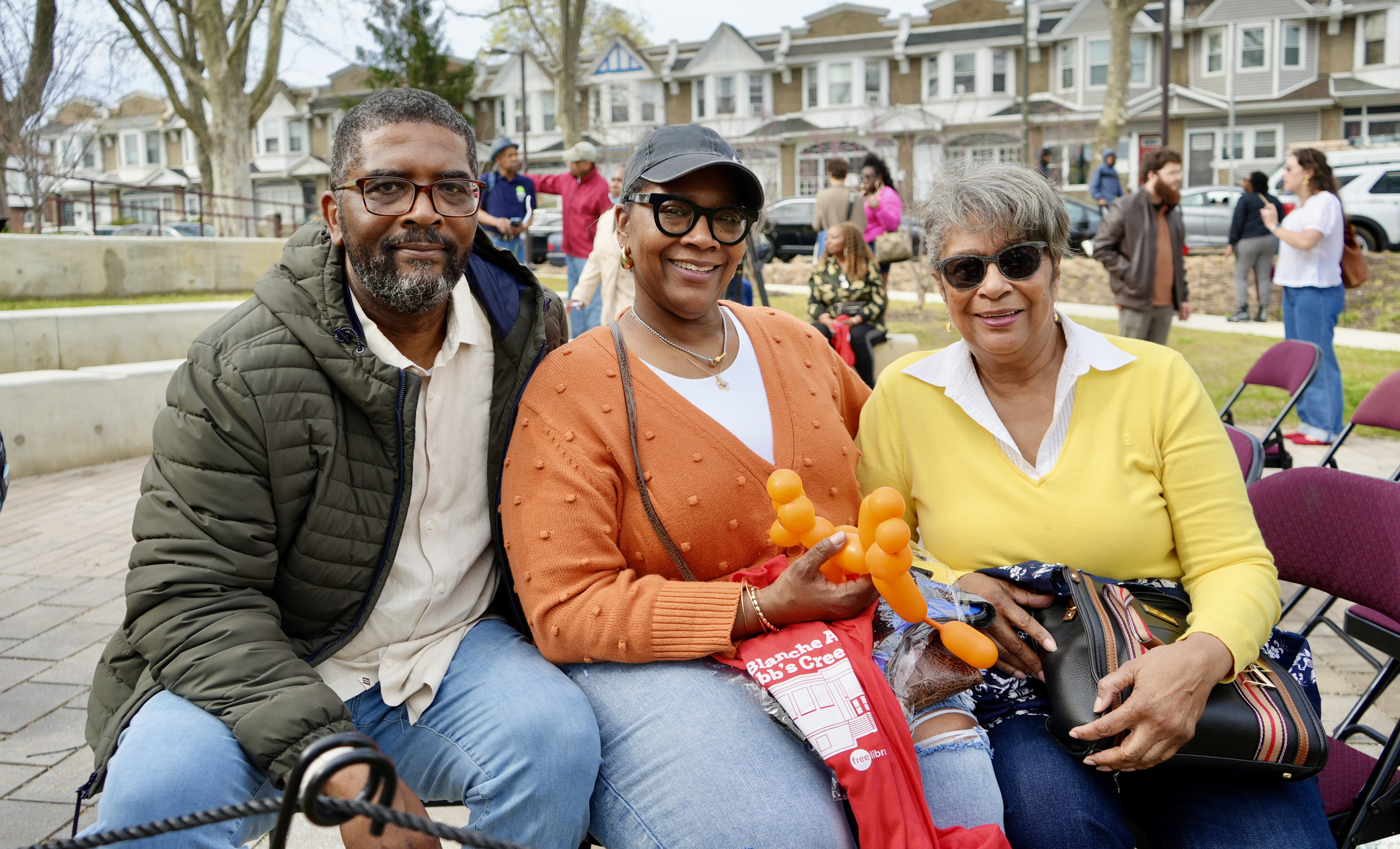
Delgreco K. Wilson (author), Kim Wilson (sister) and Lea Wilson (mother)
Republican-led states have accelerated this trend, passing laws that restrict how race, gender, and systemic inequality are taught. The result is a distorted narrative, one that suggests America’s political culture has been defined solely by individualism and egalitarianism, rather than a continuous struggle between these ideals and the forces of exclusion.
In this environment, civil society must become the keeper of inconvenient truths. Libraries, universities, advocacy groups, and cultural institutions—organizations that operate independently of government and corporate control—are now essential counterweights to state-sponsored historical revisionism. They provide the spaces where marginalized stories can be told, where banned books remain accessible, and where citizens can engage in the kind of informed discourse that democracy requires.
Kelly Richards, President and Director, Free Library of Philadelphia
Why Libraries Are Democracy’s Lifeline
Public libraries, in particular, stand as one of the last truly democratic institutions in America. They are not just repositories of books but civic hubs—what sociologists call “third spaces”—where people of all backgrounds can gather, learn, and debate without the pressures of commerce or partisan influence.
Guardians of Truth in an Age of Misinformation In an era of algorithmic echo chambers and politicized media, libraries provide free access to vetted information. They are among the few remaining places where individuals can engage with diverse perspectives, fact-check dubious claims, and develop the media literacy necessary to navigate a fractured information landscape.
Sanctuaries for Banned Knowledge As school boards and state legislatures remove books on race, gender, and sexuality from curricula, public libraries often become the only places where such works remain available. In doing so, they fulfill their historic role as defenders of intellectual freedom.
Community Anchors in Neglected Neighborhoods Blanche Nixon understood that libraries are more than just buildings—they are lifelines for underserved communities. They offer job training, after-school programs, and safe spaces for children who might otherwise lack them. In neighborhoods like Cobbs Creek, they are often the only institutions providing free internet access, literacy programs, and legal resources to residents shut out of traditional power structures.
Archives of Local History Beyond their role in education, libraries serve as living archives, preserving the stories of ordinary people whose struggles and triumphs are too often excluded from official narratives. In doing so, they ensure that history is not merely the domain of the powerful but a collective inheritance.
Daneen Nixon (Blanche Nixon’s Granddaughter), Delgreco K. Wilson (Blanche Nixon’s nephew)
The Fight Ahead
The challenges facing American democracy are not abstract. They manifest in the closure of rural libraries due to funding cuts, in the intimidation of educators who teach about systemic racism, and in the growing partisan divide over what constitutes “acceptable” knowledge.
But the rededication of the Blanche A. Nixon Library is a reminder that resistance is possible. It is a testament to the power of civil society—of individuals and institutions that refuse to let communities be defined by neglect or historical amnesia.
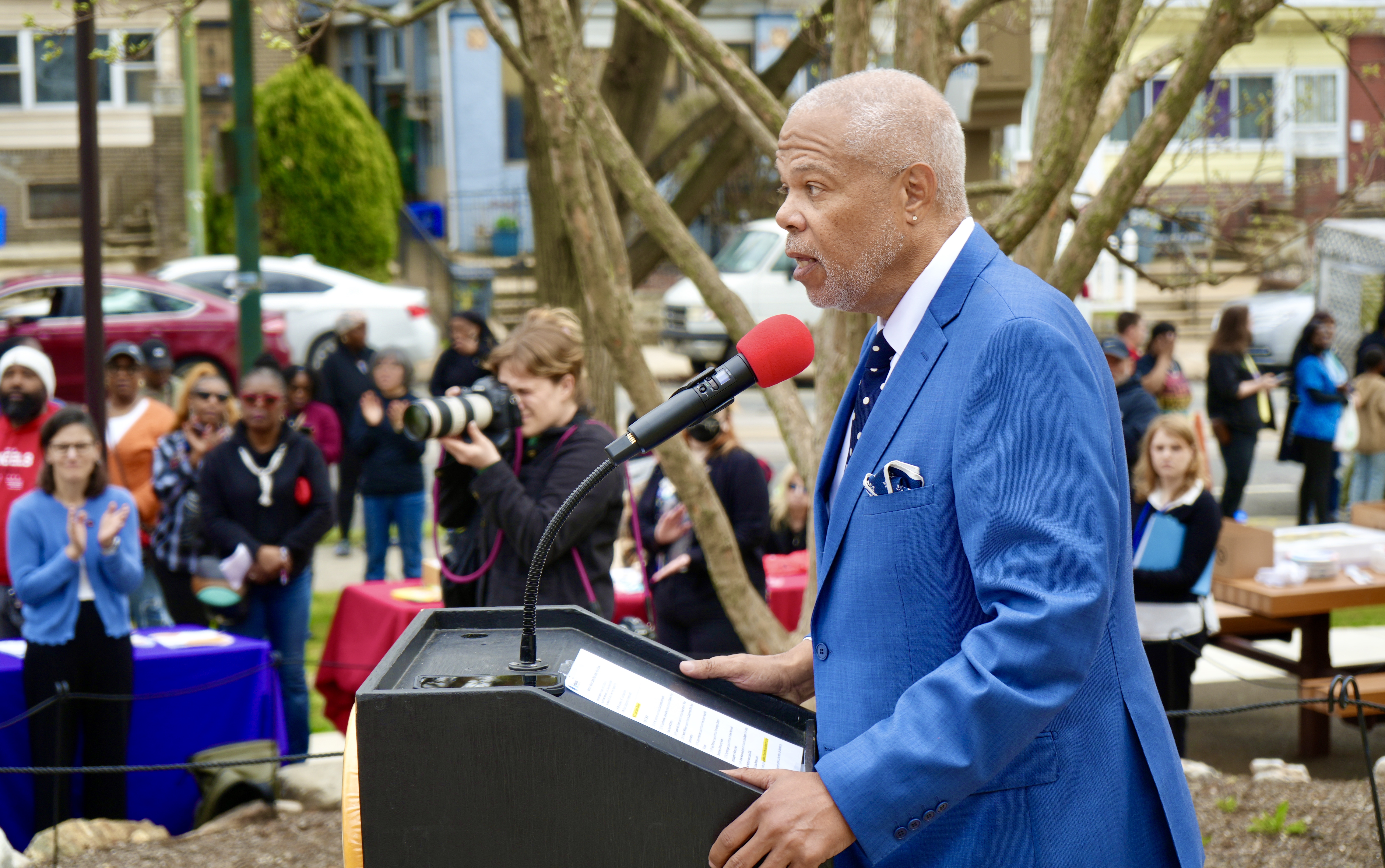
State Senator, Anthony Hardy Williams
Blanche Nixon’s legacy teaches us that the work of democracy is not just about elections or laws but about the daily, unglamorous labor of sustaining spaces where people can learn, question, and grow. As the nation moves toward its semiquincentennial, the survival of its democratic experiment may well depend on whether institutions like public libraries can continue to fulfill that role.
The alternative—a nation stripped of its full history, where access to knowledge is dictated by ideology—is one that figures like Blanche Nixon spent their lives fighting against. The best way to honor her memory is to ensure that fight continues.





 The Black Cager