The Rise of Julian Reese: A Quiet Force in a Basketball Dynasty

COLLEGE PARK, Md. — On a crisp Saturday afternoon in March, senior forward Julian “JuJu” Reese stepped onto the court at the Xfinity Center for the final time in his collegiate career. With 19 points, 11 rebounds, and a commanding presence in the paint, Reese led the No. 11 Maryland Terrapins to a 74-61 victory over Northwestern. It was a fitting farewell for the Baltimore native who has quietly become one of the most dependable and impactful figures in college basketball, even as his older sister, Angel Reese, has become a national icon and a lightning rod for conversation in the sports world.

The Reese family is basketball royalty. Julian’s mother, Angel Reese Sr. (née Webb), was a standout at UMBC in the late 1980s and early 1990s, amassing 1,390 points and 932 rebounds—numbers that Julian has nearly mirrored in his own career. His aunts also played Division I basketball, and the family’s love for the game runs deep. But while Julian’s older sister, Angel, has become a household name for her brash confidence, outspoken personality, and trailblazing impact on women’s basketball, Julian has carved out his own path—one defined by steady growth, quiet determination, and an unwavering commitment to his team.
A Legacy in the Making
Julian Reese arrived at the University of Maryland in the fall of 2021 as a highly touted recruit from St. Frances Academy, a Baltimore-based basketball powerhouse. Standing at 6-foot-9 with a wingspan that seemed to stretch from baseline to baseline, Reese was a physical specimen with raw potential. He chose Maryland over offers from Seton Hall, LSU, and Temple, among others, and immediately made an impact as a freshman. Despite playing just 17.7 minutes per game, he averaged 5.7 points and 4.4 rebounds, showing flashes of the dominant force he would become.

His freshman year, however, was marred by turmoil. Eight games into the season, head coach Mark Turgeon resigned, and interim coach Danny Manning took over. The Terps finished a disappointing 15-17, but Reese’s potential was undeniable. When Kevin Willard was hired as head coach in the off-season, Reese made the decision to stay at Maryland rather than enter the transfer portal—a choice that would prove pivotal for both him and the program.
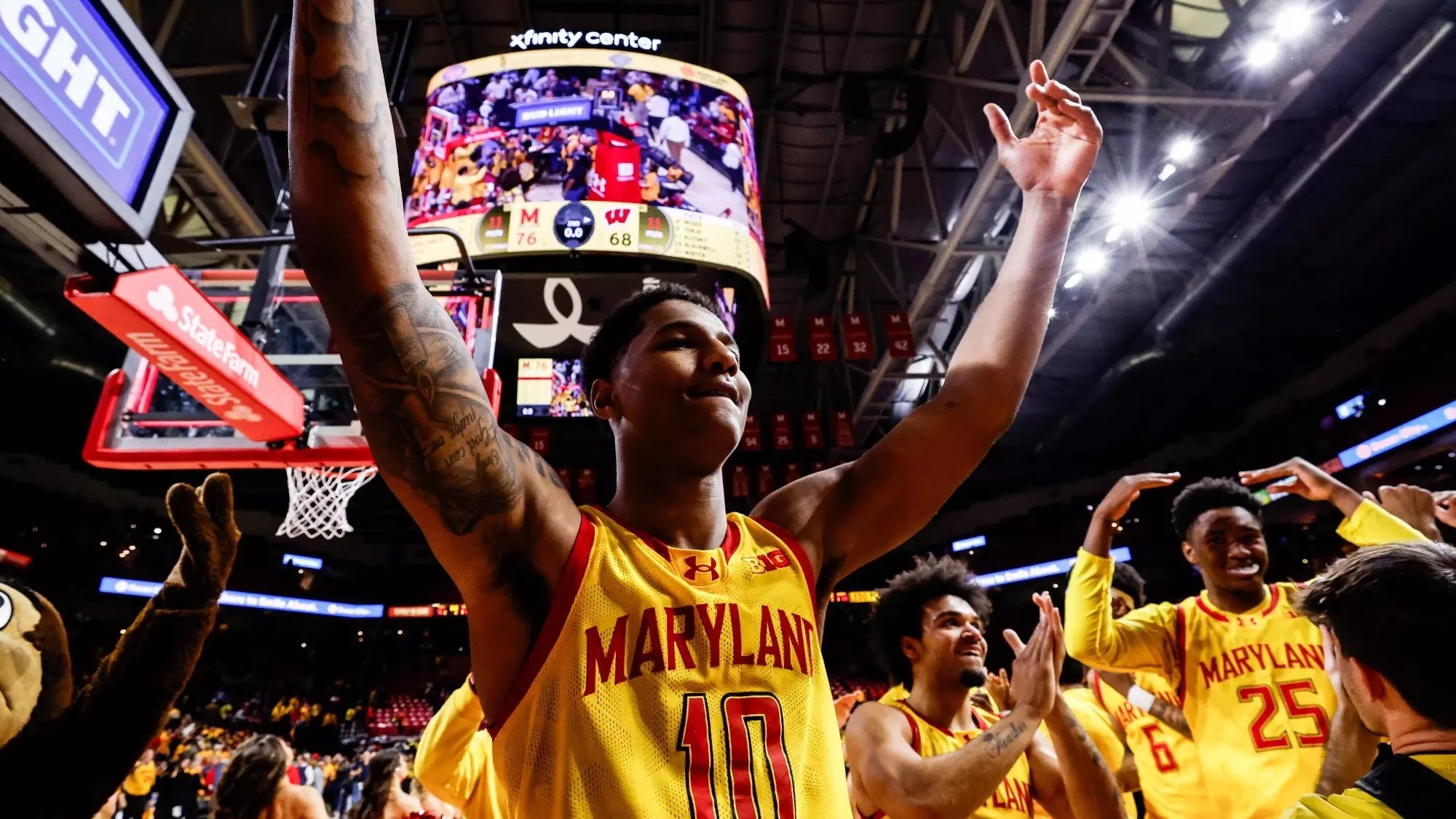
Under Willard’s guidance, Reese blossomed. As a sophomore, he became a full-time starter, nearly doubling his production to 11.4 points and 7.2 rebounds per game. Maryland improved to 22-13 and made a second-round appearance in the NCAA tournament. By his junior year, Reese had established himself as one of the top frontcourt players in the Big Ten, averaging 13.7 points, 9.5 rebounds, and 1.9 blocks per game.

This season, Reese has been the anchor of a resurgent Maryland team. Alongside his former S. Frances Academy teammate, Derik Queen, Reese has helped the Terps return to national prominence. Heading into the Big Ten tournament, Maryland is ranked 13th in the nation, with Reese leading the charge. He ranks second in the Big Ten in offensive rebound percentage and first in defensive rating, a testament to his relentless work ethic and basketball IQ.

The Reese Family Dynamic
The Reese siblings are a study in contrasts. Angel, the older sister, is a force of nature—charismatic, outspoken, and unapologetically herself. She has become a cultural icon, using her platform to advocate for women’s sports and empower young girls. Her larger-than-life personality has made her one of the most recognizable athletes in the world, and her success at LSU, including a national championship in 2023, has cemented her legacy as one of the greatest players in women’s college basketball history.

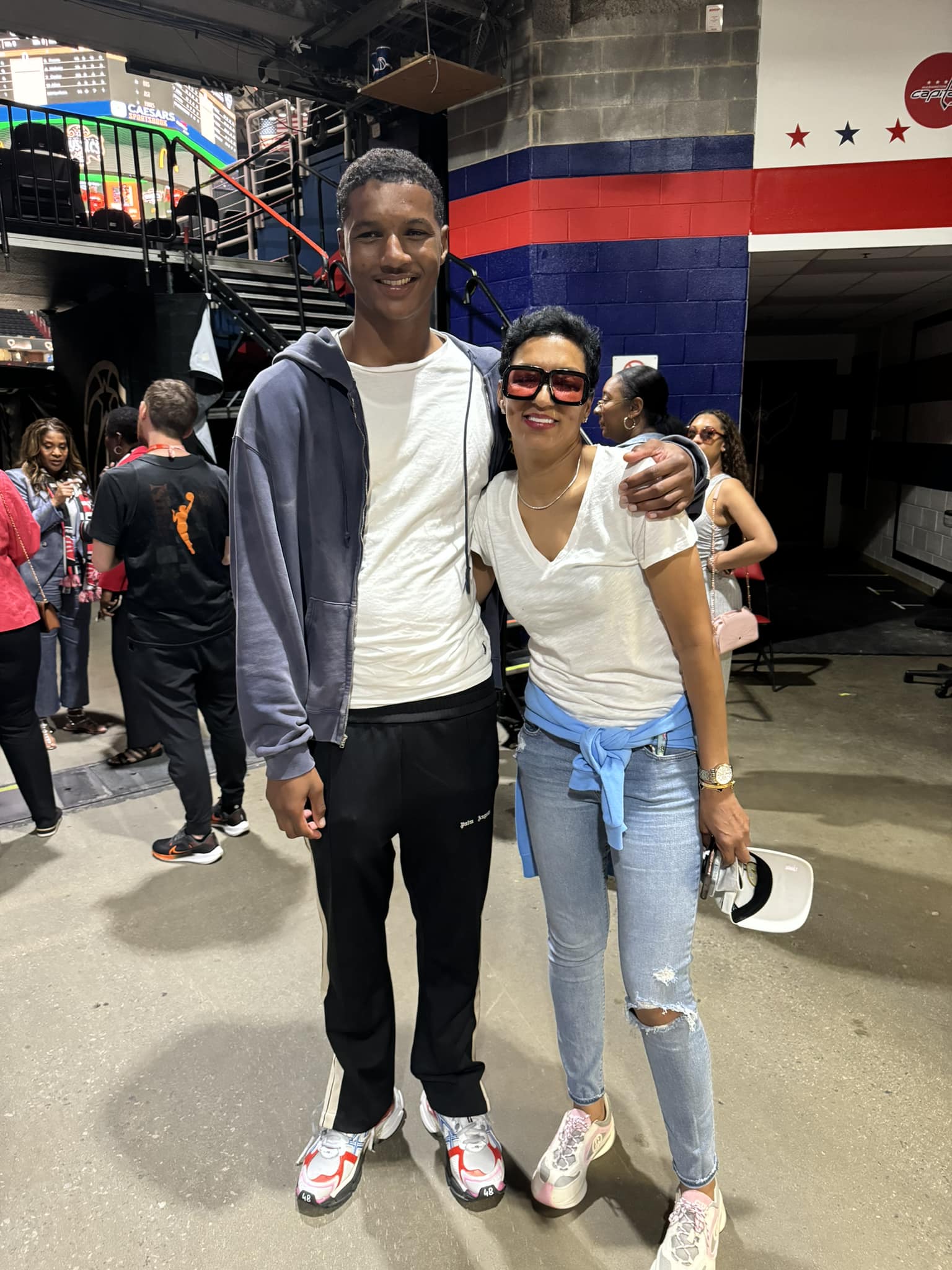
Julian, by contrast, is the quiet sibling. Reserved and introspective, he prefers to let his game do the talking. While Angel thrives in the spotlight, Julian is more comfortable in the shadows, focusing on the nuances of his craft. Yet, despite their differences, the bond between the two is unshakable. Angel has been one of Julian’s biggest supporters, often cheering him on from the stands alongside their mother, grandparents, and extended family.

Their contrasting personalities reflect the duality of the Reese family’s basketball legacy. Angel is the trailblazer, the one who pushes boundaries and challenges norms. Julian is the steady hand, the one who embodies the fundamentals and traditions of the game. Together, they represent the past, present, and future of basketball—a sport that has been the lifeblood of their family for generations.

A Future in the NBA
As Julian’s collegiate career winds down, the question on everyone’s mind is whether he has what it takes to succeed at the next level. The answer, according to scouts and analysts, is a resounding yes. Reese’s combination of size, athleticism, and defensive prowess makes him a legitimate NBA prospect. His ability to finish around the rim, coupled with his elite rebounding and shot-blocking skills, has drawn comparisons to players like Clint Capela and Jarrett Allen.

While Reese’s game is not without its limitations—he has attempted just one three-pointer in the past three seasons—his strengths far outweigh his weaknesses. His mobility and versatility on defense, in particular, make him an attractive option for NBA teams in need of a rim protector and rebounder.

A Legacy Secured
Julian Reese’s journey at Maryland has been one of perseverance and growth. From a raw freshman navigating a coaching change to a senior leader poised to make a deep tournament run, Reese has left an indelible mark on the program. He will finish his career with over 1,400 points and 1,000 rebounds, joining an elite group of players who have achieved such milestones.

But more than the numbers, Reese’s legacy lies in his quiet determination and unwavering commitment to his team. In a sports landscape often dominated by flashy personalities and viral moments, Reese has been a reminder that greatness can come in many forms.

As the JuJu Reese era comes to a close, one thing is certain: the Reese family’s basketball legacy is in good hands. Whether on the court or off it, Julian Reese has proven that he is more than just Angel’s little brother. He is a star in his own right—a testament to the power of hard work, humility, and an unyielding love for the game.

The Case for Maryland’s Derik Queen: College Basketball’s Unsung Freshman King

PHILADELPHIA, PA – There’s a peculiar artistry in the way college basketball operates, and no one embodies this nuanced game better than Maryland’s magnificent freshman forward, Derik Queen. At first glance, Queen’s physique might not inspire the awe reserved for his contemporaries, Duke’s Cooper Flagg and Rutgers’ Ace Bailey. Both Flagg and Bailey are prototypical NBA superstars — 6-foot-9 athletic marvels with explosiveness and grace that defy physics. Watching them sprint down the court, leap skyward, and finish with electrifying dunks is a spectacle. They embody the kind of raw athleticism that defines highlight reels. But basketball isn’t determined by high jumps, long jumps, or sprints; it’s a nuanced game, requiring precision, strategy, and a mastery of subtle skills. Herein lies the genius of Baltimore’s Derik Queen.

Queen, alongside Georgetown’s Thomas Sorber, thrives in the overlooked aspects of basketball. Their games are steeped in nuance—a masterclass in reading the court, positioning, and elevating teammates through skill and intelligence. Casual fans might marvel at Flagg’s and Bailey’s dazzling athleticism, but for those who understand basketball’s intricacies, Queen’s brilliance shines through. He may not soar the highest or run the fastest, but Queen’s mastery of the mental and technical elements of the game sets him apart as the best freshman big in the nation.

Yup… I said it! The youngbul from Baltimore is the BEST freshman big in the nation…

Basketball IQ and Skill: The Queen Advantage

Queen is a basketball savant, blending size, intelligence, and skill in a way that redefines the modern forward’s role. His scoring efficiency (59.5 fg%) is extraordinary, but it’s how he scores that makes him special. Unlike many big men relegated to traditional post play, Queen is a versatile scorer. His face-up game is a dance of grace and power, an intersection of finesse and ferocity. Possessing the feet of a ballerina and the build of a defensive lineman, Queen’s combination of agility and strength is unparalleled.

His ability to create off the dribble is uncanny for his size. Queen’s fancy footwork, counters, pivots, and pump fakes leave defenders guessing. Whether he’s shaking a defender with a dribble move or drawing them off their feet with a well-timed fake, Queen generates clean looks with surgical precision. These aspects of Queen’s game have been on full display throughout the early part of this season.

This scoring prowess forces defenses to collapse on him, creating opportunities for his teammates. This leads us to Queen’s most exceptional skill: his passing.

Passing as a Superpower

Queen’s passing is not just impressive—it’s transformative. His vision and ability to deliver pinpoint passes make him the fulcrum of Kevin Willard’s offense at Maryland. Consider the evolution of the NBA’s expectations for big men: today’s centers and forwards are expected to orchestrate offenses and facilitate play. Queen is ahead of this curve. At Montverde Academy, he played alongside future NBA talents like Cooper Flagg and Liam McNeeley, yet the offense often frequently ran through him. Despite the talent-rich environment, Queen’s 58 assists in 27 games showcased his ability to create for others. He currently averaging 2.3 apg for the Terps.

His passing isn’t merely functional; it’s dynamic. Queen reads the floor with the precision of a chess grandmaster. He anticipates defensive rotations, exploits mismatches, and threads the needle to open teammates. His halfcourt passing is a revelation, featuring precise interior feeds, kick-outs to shooters, and sharp dishes to cutters.

Unlike many young players, Queen doesn’t merely react to the game—he dictates it.

Comparing the Contenders

To fully appreciate Queen’s game, we must acknowledge the brilliance of Cooper Flagg and Ace Bailey. Flagg, the projected number-one pick, is a two-way phenom with defensive versatility and an offensive arsenal that screams NBA superstar. Bailey’s explosiveness and scoring touch make him equally enticing. These players are the future of the NBA, and their raw potential is unmatched. However, basketball games are not won solely by physical attributes. While Flagg and Bailey soar in transition, Queen dominates in the halfcourt, where games are often decided. His superior court vision, basketball IQ, and ability to control tempo make him invaluable.

Georgetown’s Thomas Sorber deserves recognition as well. Like Queen, Sorber thrives in the nuanced aspects of basketball, using his physicality and intelligence to impact the game. Together, Sorber and Queen represent a shift toward valuing the cerebral side of basketball. They are masters of positioning, timing, and teamwork—skills that often go unnoticed but are critical to success.

Why Queen is the Best

Queen’s ability to combine scoring, passing, and leadership is what separates him. His game embodies the evolving role of big men in basketball. He’s not just a scorer or a passer; he’s a complete player who makes everyone around him better. His skill set is tailor-made for the modern game, where versatility and intelligence reign supreme. While Flagg and Bailey may headline the highlight reels, Queen is the player you build a team around.

Derik Queen is basketball distilled to its essence: a nuanced, strategic, and beautiful game. He may not win a track meet against Flagg or Bailey, but when the ball is tipped, and the game begins, there’s no freshman you’d rather have on your side. Basketball is more than athleticism; it’s artistry, and Derik Queen is the master artist of this freshman class.

I like my #BMoreYoungin over all of ’em…

A Tale of Two Catholic High Schools: Basketball and Brotherhood Across Baltimore and Philadelphia

Head Coaches Jason Fisher, Devon Prep (l) and Nick Myles, St. Frances (r)

BALTIMORE, MD – Baltimore has become my second home. Whenever I take the familiar drive down I-95, my excitement builds as I anticipate the sights, sounds, and unique flavors of Charm City. Today was no different. My pilgrimage started, as it often does, at Chap’s Pit Beef. Remember back in season 2 of The Wire when Wee-Bey, Stink, and Savino take Dee to the Chaps and Bey ordered his sandwich with extra horseradish.  They all asked him how he can eat it with all that heat. Wee-Bey said the trick is to “not to give a fuck boy!”

Channeling my inner Wee-Bey, I said `FUCK IT` and went all-in on the pit beef sandwich with extra horseradish. It was the kind of meal that leaves your sinuses clear and your soul satisfied. As I finished, I couldn’t help but think think of Wee-Bey’s infamous interrogation room quip: “Fuck it… For another pit beef sandwich and tater salad, I’ll go a few more (admit to more murders).”

Can’t say I can relate to those circumstances, but I’ll take a couple parking tickets for sure.

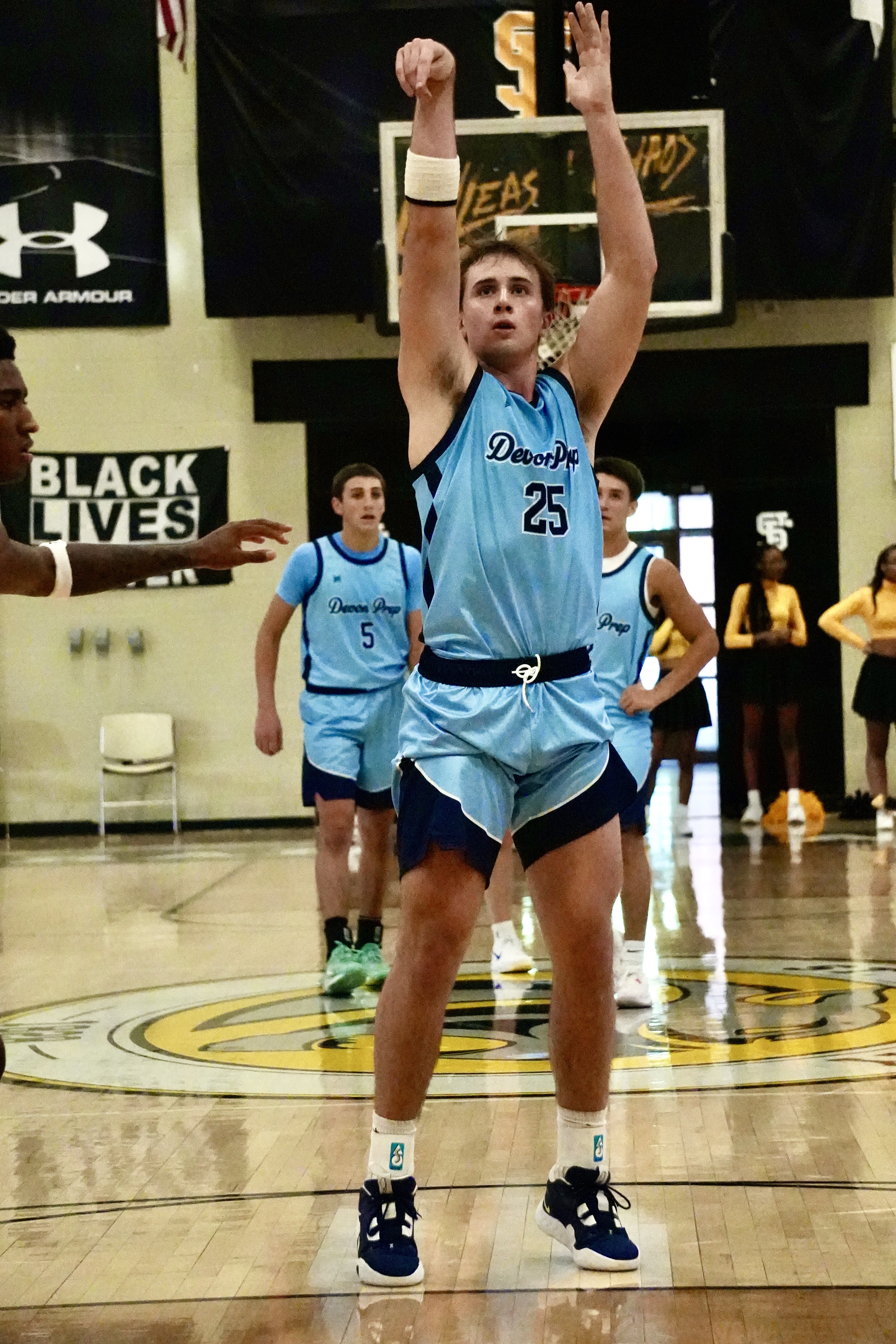
My destination was St. Frances Academy, a hallowed institution in Baltimore and a National basketball powerhouse that has come to feel like family. Today, they were hosting Devon Prep from the Philadelphia Catholic League, the defending Pennsylvania PIAA AAA state champions. The matchup was a collision of worlds—Baltimore’s grittiest versus one of Philly’s toniest.

St. Frances guard Kamauri Lawson scored 11 points

A Study in Contrasts

St. Frances Academy sits in the heart of Baltimore, a stone’s throw from the Baltimore City Detention Center, its iron gates standing sentinel in a neighborhood where resilience is a way of life. Founded in 1828 by Mother Mary Lange and the Oblate Sisters of Providence, St. Frances has always been a sanctuary for the underserved. Nearly 80% of its students live at or below the poverty line. Tuition, though modest at $9,000 annually, is waived or reduced for most families.

By contrast, Devon Prep’s picturesque campus sprawls over 20 pristine acres on the Main Line in Chester County. The facilities are immaculate: a mansion-turned-classroom building, STEAM labs, and a recently completed $5.7 million renovation that would make any university envious. Their multi-sport field house gleams under the lights, a testament to a $31,000-a-year education and a steady stream of donor generosity.

As I pulled into the St. Frances parking lot, I was struck by the presence of the Main Line supporters of the Devon Prep squad. Devon Prep had the parking lot resembling a UGK video set. Range Rovers, S-Class Mercedes Benzes, 7-series BMWs, Telsas, etc. Maybe… Just maybe… Pimp C and Bun B were gonna spit a few bars at halftime.

Devon Prep’s Zane Conlon finished with 8 points

This dichotomy extends to the basketball court. St. Frances, under Coach Nick Myles, thrives on grit, aggression, and relentless defense. “The gym is the workplace,” Myles often says, and his players take it to heart. The Panthers are greedy… They want the ball… They relentlessly pursue it on the defensive end. Myles teaches his guys to always want the ball and the only way to always have the ball is to constantly take it back through defense.  

For more than a decade, I’ve watched as Myles has ingrained this into his players. Relentless effort comes from relentless work in practice, this tenacious approach to the game can be jarring for those new to the St. Frances Academy approach.

Devon Prep, led by Coach Jason Fisher, employs a measured and cerebral style. Fisher implements a version of the offense pioneered by Pete Carrill at Princeton some years ago. Many contend that this offense benefits a team whose players are less athletic than their opponents. But I tend to disagree, the offense requires all players to be good passers, ball-handlers, and good outside shooters, as well as possess a high basketball IQ. If you have players like that, you can probably win with any offense, As deployed by Fisher and Devon Prep, the Princeton offense is a more deliberate offense, oftentimes with many passes each possession. This tends to slow the game down, controlling the tempo, usually resulting in lower game scores. When effective, with its calculated passes and deliberate pace, the Princeton offense reflects the academic rigor of Devon Prep—a thinking man’s game designed to neutralize athletic disparity.

Nick Myles “shoe game” was on point

The Game

When these two programs first met, a couple years ago, at the Black Cager Fall Classic, Devon Prep emerged victorious, their methodical precision frustrating the Panthers under Pennsylvania’s no-shot-clock rules. But today was different. Playing under Maryland rules with a 35-second shot clock, St. Frances was in its element.

The Panthers gave the Tide 32 minute of Hell!

From the opening tip, the Panthers imposed their will. Myles’s squad pressed relentlessly, disrupting Devon Prep’s rhythm and forcing turnovers. The gym buzzed with energy as St. Frances raced out to an early 20-7 1st quarter lead, fueled by their signature defensive intensity. Fisher’s carefully orchestrated offense never found its footing. The shot clock eliminated any chance of slowing the game to Devon Prep’s preferred pace, and the Panthers seized the moment.

It was an ol’ fashioned ass whuppin…

Despite the lopsided score, the game was a masterclass in mutual respect. Both teams played with honor, and the sportsmanship on display was a testament to the shared values of these two fine Catholic institutions.

Brotherhood Through Basketball

For all their differences, St. Frances and Devon Prep share a commitment to excellence—on the court, in the classroom, and in their communities. St. Frances’s legacy of service and perseverance echoes in the hearts of its students, while Devon Prep’s commitment to innovation and opportunity prepares its graduates to lead.

On my way home, I kept getting a hankering for one of those authentic Baltimore crab cakes Omar was eating in the car. So, I stopped at a spot Angel Reese introduced me to… Mo’s Seafood. Two crab cakes, one broiled and one fried, to go. As I drove back to Philadelphia with a bag of crab cakes riding shotgun, I reflected on the beauty of this emerging rivalry. Basketball is more than a game—it’s a bridge between worlds. St. Frances and Devon Prep showed us that the game’s true power lies in its ability to unite, to teach, and to inspire.

Back in Philly, it’ll be cheesesteaks, roast pork sandwiches and familiar faces, but Baltimore will call again soon. And when it does, I’ll be ready—with pit beef and crab cakes sandwiches in hand and my heart set on the hardwood.

St. Frances Academy (MD) Adds 7 ft. Nigerian Osato Iduwe

Baltimore, Maryland – May 25, 2017 – Black Cager Scouting, Africa has announced that 7’0″, 205 lbs Osato Iduwe (Class of 2019) has enrolled at Saint Frances Academy, Baltimore, Maryland. A mobile and very active rim protector, Iduwe also considered Mater Dei Prep (NJ) and Saint Joseph’s Prep (PA). An excellent student, Iduwe will anchor the middle for Saint Frances during the 2017-18 season.

Black Cager Africa Logo-page-0

Established in 1828, St Frances Academy (SFA) is an independent Catholic high school with African American and Hispanic roots. St. Frances Academy serves as an agent of positive change within its inner-city neighborhood.

St. Frances Head Coach Nick Myles says “Iduwe is just a fantastic kid. He’s very humble and hardworking. But, most importantly, he listens. We are pleased to have him join the St. Frances learning community.”

Iduwe is playing with the Maryland-based Crusader Nation AAU program this spring-summer.

Black Cager Scouting Service is committed to helping talented student-athletes leverage their athletic abilities for access to higher educational opportunities.