The Unbearable Witness: “Good White Folk” Can No Longer Look Away

CAMDEN, NJ – I was born in the hold of a slave ship soaked in urine and feces whose name history did not bother to record. I am a Foundational Black American. For more than three hundred years, I have walked this land, a reluctant witness to a relentless paradox: the nation of lofty ideals built upon a foundation of profound, sustained cruelty. The question that haunts my long memory is not for the brutal racist/white supremacist monsters, but for the others—the “good white people” in every era.

How the fuck did you stand by and watch?
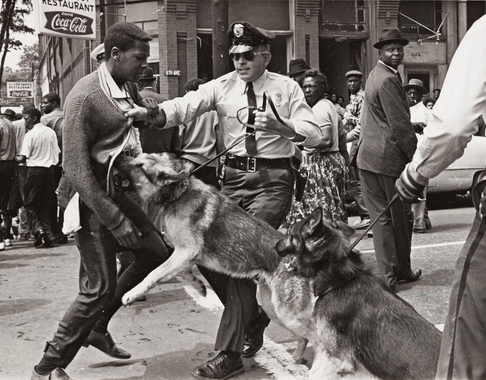
This is the essential inquiry of our present. For in understanding the mechanics of that historical complicity, we find a stark blueprint for today’s crisis. Yet something fundamental has shifted. The distance that enabled your ancestors’ silence has been obliterated. Today, the plea is not just for action, but for sight—to finally, fully see our humanity.

The Machinery of Acquiescence, Then and Now

The “good White folk” of any era rarely believes themselves complicit. They operated within a system of convenient distances.

How did you watch us be enslaved? You told yourselves it was an economic necessity. You saw the auction block from afar, heard the wails as a faint echo, and were comforted by sermons claiming we were not fully human. That distance was your insulation.

How did you witness the systematic rape on plantations? You chose not to see the high yellow children running through the fields. The violence was rendered invisible by a conspiracy of silence, the resulting children used as proof of our “depravity” rather than your community’s crime.

Today, the distance is gone. You cannot claim you did not see George Floyd’s life pressed from him for nine minutes and twenty-nine seconds. You cannot say you did not hear the fear in a child’s voice separated from her parents at a border you politicize. The camera phone is the unblinking eye my people never had. It has made the abstract, concrete. The historical buffer is broken.
The Fear Beneath the Silence

I have lived long enough to sense the tremor beneath the surface of this nation’s psyche. I must acknowledge what I believe fuels much of the backlash, the frantic rewriting of history, the cries of “replacement”: a deep-seated, often unspoken fear that Black and brown people, given the levers of power, will treat you as you have treated us.

For three centuries, you have shown us the blueprint of vengeance. The whip, the law, the noose, the gerrymander—all tools of subjugation. It is a terrifying legacy to contemplate. So you must hear this, clearly: We do not seek your destruction. We seek a transformation of the system built for it. We seek a democracy where no group holds permanent dominion, because such dominion inevitably corrupts and always, always visits violence upon the powerless. The multiracial democracy we strive for is not your nightmare of reversed oppression; it is the only possible escape from the nightmare you yourselves created.

The New Witness and the End of Gaslighting

When the Supreme Court ruled we had “no rights,” your ancestors could dismiss it as distant legal theory. When Rosewood and Tulsa burned, they could be framed as “riots.” When Emmett Till’s murderers were acquitted, the lie could be upheld as the law.

Today, the gaslighting fails against the evidence in our hands. We witness, we record, we share, we archive—instantaneously. We can juxtapose the “law and order” rhetoric with the violent repression of a peaceful protest. We can contrast the paeans to “heritage” with the footage of a neo-Nazi march. The dissonance is laid bare. To be a passive spectator now is not a failure of information, but a conscious choice of morality.

A Way Forward: From Spectators to Co-Creators

The path forward is not found in a return to a civility that never included us. It is forged in the active, courageous construction of a true multiracial democracy. This requires more than your guilt; it demands your partnership.

First, you must believe your own eyes and ears. Trust the testimony streaming from our phones, our communities, our lived experience over the sanitized myths of comfort.

Second, you must relinquish the fear that equity is your loss. A democracy where a Latina’s vote counts the same as a white farmer’s, where a Black child’s history is taught as thoroughly as a president’s, where a Native nation’s sovereignty is respected, is a stronger, more just, and ultimately safer country for everyone.

Finally, you must move from sentiment to structure. It is not enough to decry racism; you must defend voting rights, support truthful education, and challenge inequity in your neighborhoods, councils, and boardrooms. The MAGA movement gambles on your eventual acquiescence, your retreat into comfort.

My three centuries whisper that this is the decisive hour. The tools of witness we now possess have shattered the old alibis. You can no longer claim you did not see, did not know. You can only choose what you will do now that you have seen.

See our humanity, not as an abstract concept, but in the terrified face of a man under a knee, in the determined eyes of a child walking into a newly integrated school, in the grief of a mother at a grave. Then, act from that sight. Build with us a democracy worthy of its name, not as spectators, but as co-creators. The silence of your ancestors was permission. Your voice, your vote, your unwavering alliance must now become the foundation of something new.
The American Strain: Trump and the Enduring Creed of White Supremacy

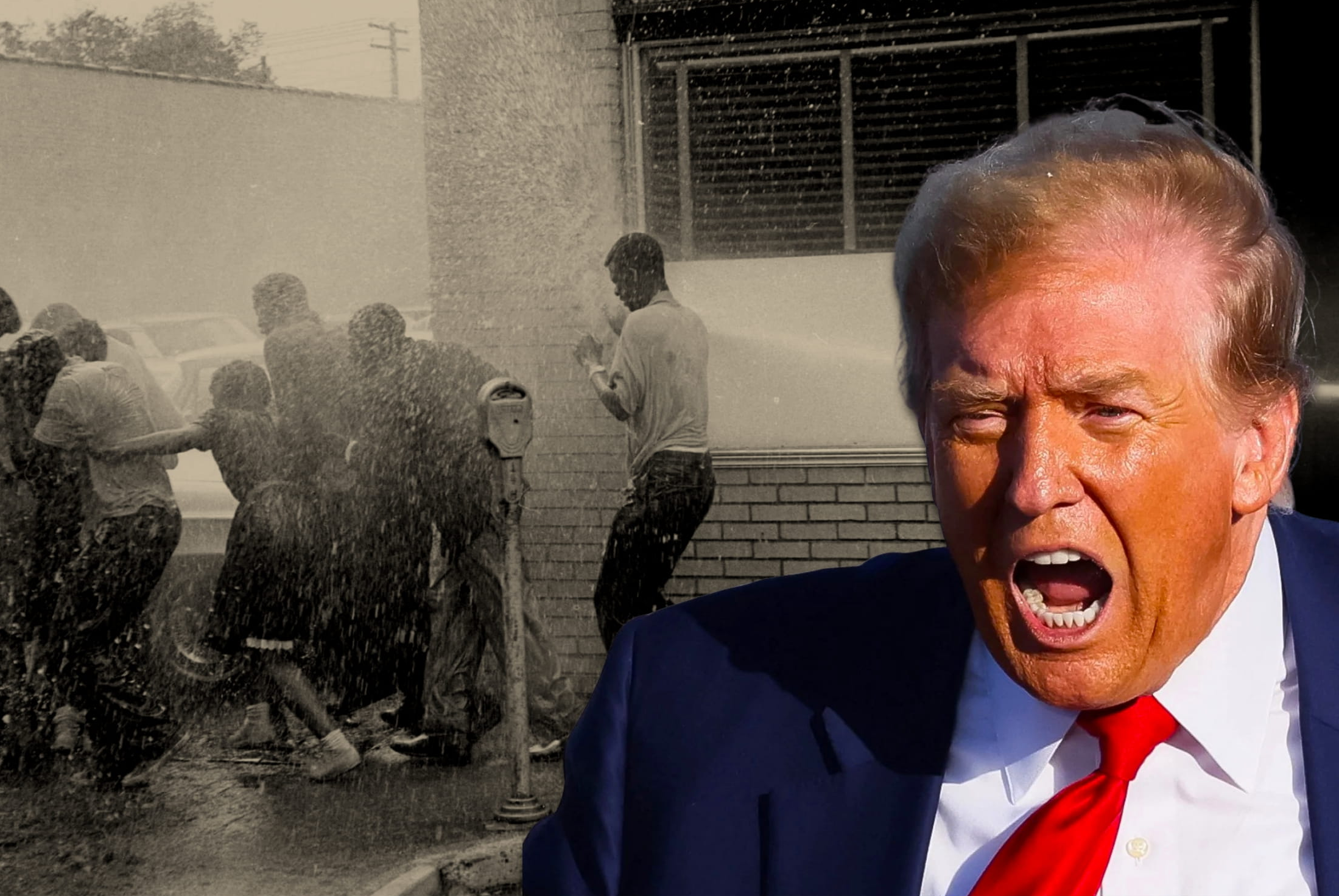
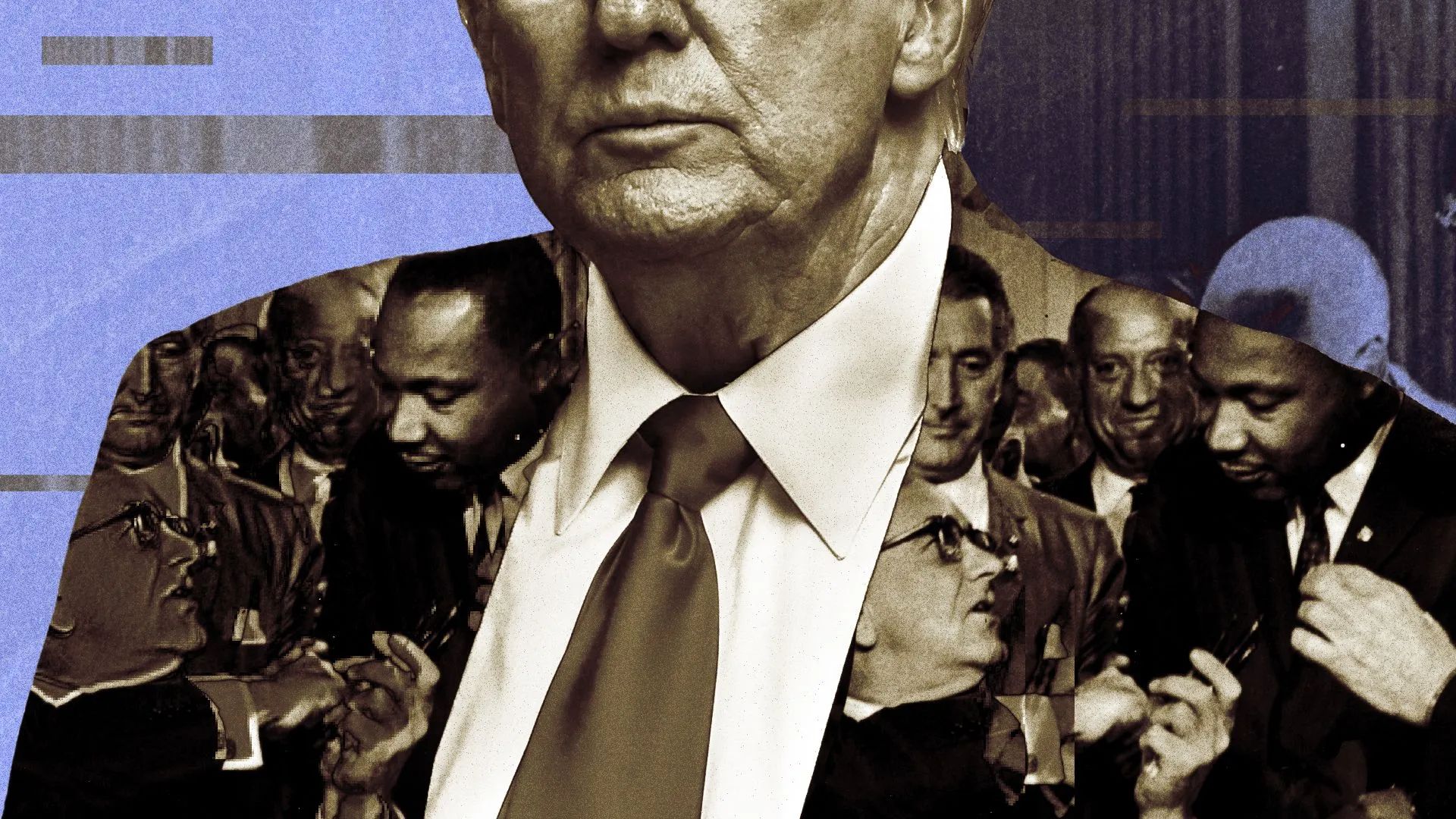
CAMDEN, NJ – To understand Donald Trump, to truly grasp the fervor of the “Make America Great Again” movement, requires a confrontation with a deeply unsettling but irrefutable historical truth: Trump is not an aberration, but an archetype. He is the contemporary embodiment of a classic American figure, whose political power flows directly from the nation’s oldest and most potent strain—a white supremacist ideology that has been intertwined with concepts of democracy and liberty since the nation’s founding. On one hand, the anguish felt by many white Americans today as they witness the MAGA movement’s explicit racism is the anguish of a myth being shattered, the painful awakening from a national narrative that has systematically obscured this foundational reality. Black people, on the other hand, have lived through this movie since 1619.

The Indelible Thread: From Frontier to Empire

The doctrines that birthed the American nation-state were, from their inception, racial in character. Manifest Destiny, the Monroe Doctrine, and the White Man’s Burden are not separate chapters but sequential verses in the same epic poem of Anglo-Saxon supremacy.

Manifest Destiny, framed as a divine mandate to “overspread the continent,” was a theological and racial justification for genocide and land theft, casting Native Americans as “merciless Indian Savages” and Mexicans as obstacles to a providentially-ordained white nation. This was not mere expansion; it was ethnic cleansing codified as national mission. Historical records reveal a staggering decline from an estimated 5-15 million Native Americans prior to 1492 to fewer than 238,000 by the close of the 19th century. This represents a population collapse exceeding 96% over four centuries, driven by a combination of warfare, displacement, and disease, all facilitated by racist/white supremacist government policies.

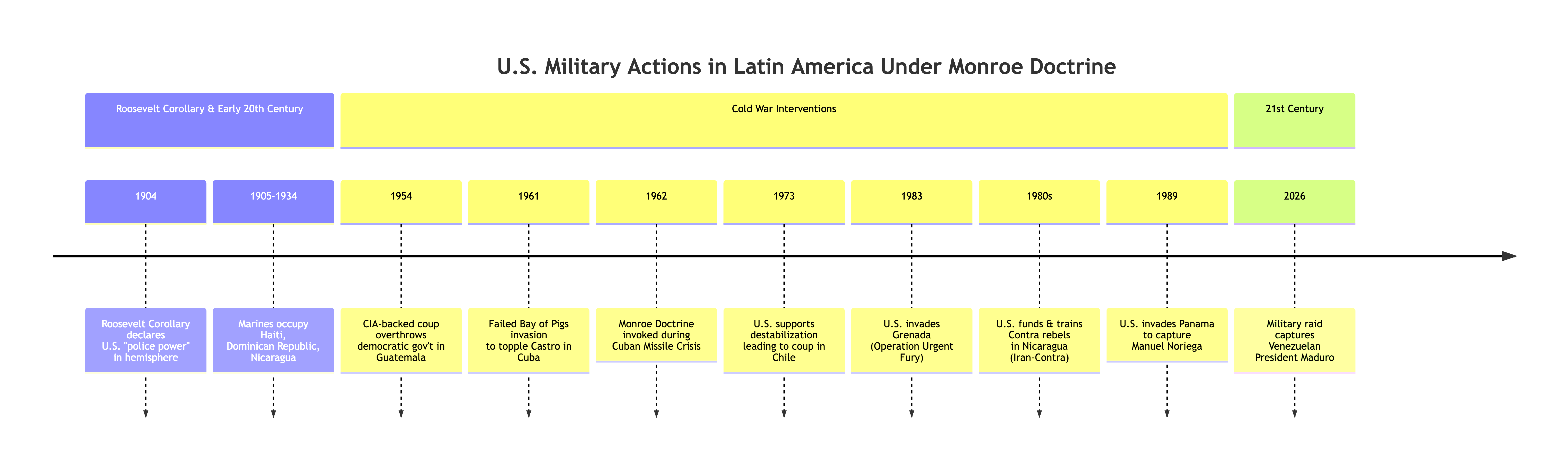
The Monroe Doctrine established the Western Hemisphere as a U.S. sphere of influence, a policy enforced not through diplomatic parity but through a paternalistic belief in the racial and political superiority of the United States over its non-white neighbors. It transformed Latin America into a backyard where military and economic intervention was naturalized, a logical extension of continental conquest onto a hemispheric stage.

The White Man’s Burden provided the humanitarian gloss for overseas empire, framing the brutal colonization of the Philippines and Puerto Rico as a noble, sacrificial duty to civilize “sullen peoples, half-devil and half-child.” It was the export of a domestic ideology, declaring entire populations unfit for self-rule—the same belief that undergirded slavery at home.

These were not fringe ideas but the central engines of national policy, creating a powerful national identity where whiteness was synonymous with sovereignty, virtue, and the right to dominate.

The Great Mis-Education: A Mythology of Innocence

How, then, does a nation built on such explicit racial hierarchy produce citizens who recoil at the explicit racism of a Trump rally? The answer lies in a profound and intentional mis-education.

The American creed presented in textbooks and national myth is a carefully curated edit. It is a story of democracy and liberty, of Pilgrims and pioneers, that systematically decouples these ideals from the racial tyranny that financed and facilitated them. The genocide of Indigenous peoples is minimized to “conflict” or “westward expansion.” The enslavement of millions is segregated into a single tragic chapter, rather than understood as the engine of early American capital. Imperial conquests are framed as benevolent “foreign policy.”

This creates a duplicitous national consciousness. Americans are taught to venerate the Declaration of Independence’s promise of equality while being insulated from the fact that its principal author and most early beneficiaries envisioned that equality exclusively for white men. We celebrate a “melting pot” culture—shaped by Indigenous, African, Latin American, and Asian influences—while the political power to define the nation has been fiercely guarded as a white prerogative. This selective history is a powerful anesthetic. It allows generations to inherit the privileges of a racial caste system while believing fervently in their own nation’s inherent innocence and moral exceptionalism. It makes racism seem like a deviation, a “sin” we are overcoming, rather than the core organizing principle we have continuously refined.

Trump: The Unvarnished Tradition

Donald Trump’s political genius—and his profound traditionalism—lies in his rejection of the anesthetic. He does not traffic in the coded “dog whistles” of late-20th-century politics; he uses a bullhorn, reactivating the unfiltered language and logic of America’s racial id.

His rhetoric is a direct echo of past doctrines. Labeling Mexican immigrants “rapists” and “animals” and African nations “shithole countries” is the dehumanizing language of Manifest Destiny and the White Man’s Burden, applied to modern migration 

. His central promise of a “big, beautiful wall” is a 21st-century racial frontier, a physical monument to the belief that the national body must be purified of non-white “infestation.”

Table: The Ideological Lineage from Doctrine to Trump

Historical DoctrineCore Racial LogicModern Trump-Era Manifestation
Manifest DestinyDivine right to displace “savage” non-white peoples from desired land.The border wall as a new frontier; rhetoric of immigrant “invasion” and “infestation.”
Monroe DoctrineHemispheric dominance and paternalistic intervention over non-white nations.“America First” isolationism that rejects multilateralism while asserting unilateral military/economic power.
White Man’s BurdenThe “civilizing” mission justifies domination over supposedly inferior peoples.Framing immigration bans and harsh policies as protecting American civilization from “shithole countries.”

His policies operationalize this ideology. The Muslim Ban, the crushing of asylum protocols, and the threat to end birthright citizenship are not simply strict immigration measures; they are efforts to legally redefine who belongs to the American nation along racial and religious lines. His administration’s systematic rollback of civil rights protections, from voting rights to LGBTQ+ safeguards, and its dismantling of diversity, equity, and inclusion programs are a direct assault on the fragile infrastructure of multiracial democracy built since the 1960s.

Most tellingly, his adventurous and aggressive militarism—from threatening “fire and fury” against North Korea to deploying federal troops against predominantly Black cities like Washington D.C. and Chicago under the pretext of crime emergencies—reveals the intrinsic link between white supremacy at home and imperial aggression abroad. As academic research confirms, support for militarized foreign policy among white Americans is strongly correlated with racial resentment, viewing non-white nations and peoples as inherent threats or legitimate targets for domination. Trump’s “America First” bellicosity is not an isolationist retreat but a reassertion of a racialized nationalism that sees the world as a hostile arena of competition against lesser peoples.

The Second Backlash and the Crisis of White Identity

Trumpism is the vehicle for a second great white backlash, a historical bookend to the first backlash that destroyed the multiracial democracy of Reconstruction after the Civil War. That first backlash, powered by the Klan, “Lost Cause” mythology, and Northern complicity, re-established white rule through terror and Jim Crow.

The current backlash, ignited by the Civil Rights Movement and supercharged by the election of Barack Obama, seeks to roll back the democratic gains of the past sixty years. Its fuel is white grievance—a pervasive fear among some white Americans that demographic change and racial equity represent a loss of status, a zero-sum dispossession . Slogans like “Take Our Country Back” and the defensive cry of “All Lives Matter” are the modern lexicon of this backlash, inverting reality to frame the pursuit of equality as an unfair attack on a threatened majority

.This is the source of the anguish for well-intentioned white Americans. They were raised on the edited, duplicitous creed. They believed in a forward-moving arc of progress. To see the naked brutality of racism not only re-emerge but be cheered from the highest podium shatters that narrative. The difficulty is in reconciling their own identity with the realization that the “greatness” many are nostalgic for was, for others, a regime of explicit subjugation. It is the pain of realizing that the comforting national myth is a lie, and that a more honest, more brutal history is demanding reconciliation.

Conclusion: Facing the Unbroken Line

Donald Trump is a classic American figure because he channels the nation’s most enduring political tradition: the mobilization of white racial anxiety to consolidate power and resist the expansion of a truly pluralistic democracy. He has ripped away the veneer of the mis-educating myth, revealing the unbroken line from the Puritan city on a hill to the MAGA rally.

To argue that this is not “real” America is to indulge in the very fantasy that enabled it. Racism and white supremacy are not un-American; they are as American as apple pie, woven into the fabric of our institutions, our geography, and our national story. The democratic ideals we rightly cherish have always coexisted in tension—and often in outright conflict—with this hierarchy. The struggle of the 21st century is not to defeat a foreign intrusion, but to finally sever this entrenched lineage. It begins by abandoning the comforting lie of national innocence and confronting, at last, the difficult truth of who we have been, and therefore, who we risk remaining.

F*ck Him! Why Black Athletes Should Shun Auburn’s Bruce Pearl

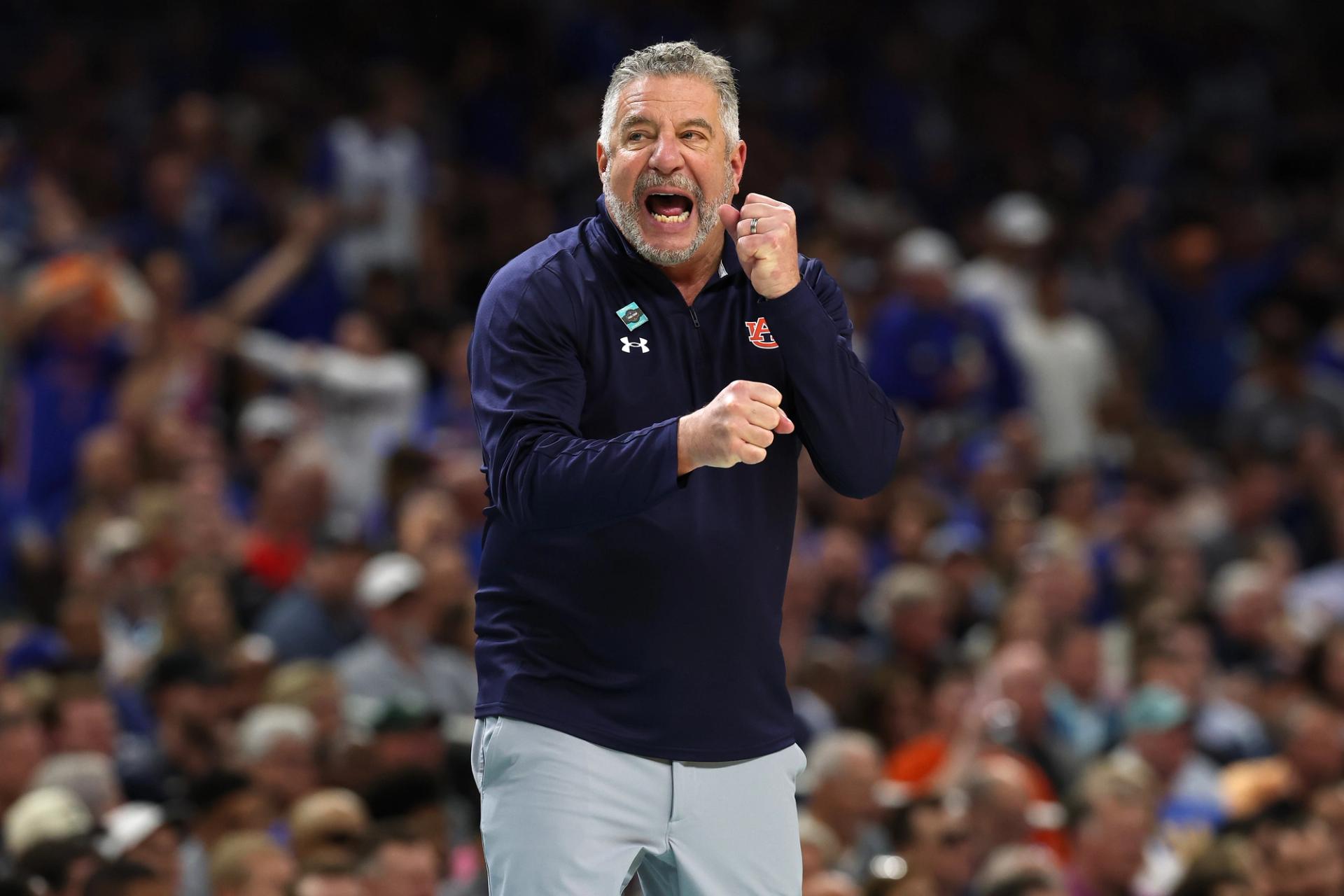
PHILADELPHIA, PA – In the aftermath of the assassination of far-right commentator Charlie Kirk, a predictable and distressing pattern has emerged. His death has been met with solemn tributes from powerful allies who have chosen to whitewash a legacy defined by racial animus. Among them is Bruce Pearl, the high-profile head coach of Auburn University’s men’s basketball team. In voicing his “unequivocal support” for Kirk and stating that Kirk “was right about everything he said,” Pearl has offered a profound insight into his own worldview.

For the elite Black basketball prospects being relentlessly recruited by Pearl, and for the parents who entrust their sons to him, this endorsement is not a minor political aside. It is a glaring red flag. It reveals an alignment with a ideology that fundamentally devalues their humanity. In the high-stakes world of college athletics, where coaches wield immense power over the young men in their program, aligning with a coach who champions a racist provocateur is not just a risk—it is an unacceptable compromise.

The Unvarnished Racism of Charlie Kirk

To understand the gravity of Pearl’s endorsement, one must first confront the uncontested record of Charlie Kirk’s rhetoric. This was not a man engaged in good-faith political debate; he was a propagandist who built a career on dehumanization and racial stereotyping. His comments, meticulously documented over years on his show, reveal a deeply ingrained pattern of racism and white supremacy.

Kirk’s philosophy was rooted in the “great replacement” conspiracy theory, a white supremacist trope that claims a deliberate plot is underway to diminish the influence of white people. He stated, “The great replacement strategy, which is well under way every single day in our southern border, is a strategy to replace white rural America with something different”. This theory, which has inspired mass shooters in Pittsburgh, El Paso, and Buffalo, was not a fringe element of his commentary but a central pillar.

His views on Black Americans were particularly venomous and relied on the oldest and most harmful stereotypes. He trafficked in the racist notion of Black criminality, asserting without evidence that “prowling Blacks go around for fun to go target white people, that’s a fact”. He repeatedly questioned the intelligence and competence of Black people, especially in positions of authority. Upon seeing a Black pilot, his first thought was, “boy, I hope he’s qualified” . He reduced accomplished Black women to affirmative action tokens, crudely speculating that a Black customer service worker might be a “moronic Black woman” who got her job not through excellence but through quota systems. He went further, claiming that prominent Black women like Michelle Obama and Supreme Court Justice Ketanji Brown Jackson lacked the “brain processing power” to be taken seriously and had to “steal a white person’s slot”.

His revisionist history on race was equally alarming. In a debate, he callously argued that “Black America is worse than it has been in the last 80 years,” downplaying the horrific era of Jim Crow lynching that saw thousands of Black Americans murdered by racist mobs. When confronted with this history, he dismissed it. He even labeled the landmark Civil Rights Act of 1964 a “mistake” that was turned into an “anti-white weapon.”

This body of work—a relentless campaign to question, demean, and belittle Black achievement and Black pain—is what Bruce Pearl has deemed “right about everything.”

The Power of a Coach and the Failure of Leadership

The role of a major collegiate basketball coach extends far beyond drawing up plays. For the young athletes who leave their homes to play for them, coaches become surrogate parents, mentors, and the most significant authority figures in their lives. They shape not only athletes but young men. Their influence touches on everything from discipline and work ethic to mental health, social awareness, and personal identity.

A coach’s worldview matters. It permeates the culture of the team. A coach who believes, as Kirk did, that systemic racism is a myth, will be ill-equipped to understand or support a player grappling with the realities of being a Black man on a predominantly white campus or dealing with racial abuse from fans. A coach who tacitly endorses the idea that Black people are prone to criminality will bring that bias to his interactions with his players. A coach who champions a movement that frames their very presence as a “replacement” of white America cannot be a true guardian of their well-being.

Bruce Pearl has voluntarily disqualified himself from this sacred trust. By fully embracing Kirk’s ideology, he has signaled that he operates in a reality where the legitimate fears, struggles, and historical oppression of Black people are either invisible or irrelevant to him. How can a young Black man expect empathy from a coach who applauds a man that called George Floyd a “scumbag”? How can a player trust a mentor who aligns with someone who believes the Civil Rights Act was an “anti-white” mistake?

This is not a partisan issue; it is a human one. It is about basic dignity. As an article in First and Pen argued, Pearl’s support for Kirk is part of a pattern of “racial politics” infused with “niceties” to aid recruitment, a strategy that allows him to benefit from the labor of the very people whose humanity his chosen ideology denigrates.

Auburn’s Troubling Environment and the Viable Alternatives

This is not an abstract concern. Auburn University has recently been grappling with its own serious allegations of racial inequity. A lawsuit filed by Travis Thomas, a former Black athletic academic advisor, alleges a hostile work environment and wrongful termination after he reported being berated by white supervisors and raised concerns about a grade being changed for a football player. While a court dismissed the hostile work environment claim due to the high legal bar for such cases, it allowed his claims of race discrimination and retaliation to proceed, noting a pattern of antagonism that followed his complaints. This case paints a picture of an athletic department where Black employees can feel marginalized and where speaking up carries risk.

Furthermore, the broader environment for Black college athletes is often psychologically taxing. They frequently compete at Predominantly White Institutions (PWIs) where they are a minority, face racial microaggressions, and often feel unsupported by their institutions. They are pushed to their physical and mental limits by a system that has been criticized for profiting from their labor. In this high-pressure context, the need for a coach who is not just a tactical genius but a compassionate leader who understands their experience is paramount.

Prospects have a choice. They are not obligated to subject themselves to a coach who has endorsed a racist worldview. There are countless programs across the country with coaches who not not only excel at winning games but also actively strive to create an inclusive, supportive, and empowering environment for their Black players. These coaches understand that nurturing a player’s mental health and personal growth is just as important as developing his jump shot. They see the whole person, not just the athlete.

A Choice About More Than Basketball

For a top recruit, the decision often seems to be about television exposure, tournament appearances, and pathway to the pros. These are important factors. But the choice of a coach is also a choice about what values will be reinforced during some of the most formative years of a young man’s life.

Playing for Bruce Pearl means playing for a man who has stated that the provocateur who trafficked in the “great replacement” theory and called Black pilots unqualified was “right about everything.” It means accepting that your coach is on record supporting a movement that sees your success as a threat and your presence as a problem.

Black athletic talent is not a commodity to be harvested by those who would deny its full humanity. It is a gift that should be nurtured by leaders who respect it, who understand the context from which it comes, and who are committed to defending the player as fiercely as they coach him. Bruce Pearl, by his own admission, is not that leader. Elite Black prospects and their families would be wise to believe him, and to take their talents to a program where they are valued not for what they can do on the court, but for who they are.