Andre Noble, Imhotep and the Restoration of the City Title

PHILADELPHIA, PA – For eighty-seven years, the phrase “Philadelphia City Champion” has carried a weight that transcends the ordinary boundaries of high school athletics. It is a designation steeped in the soot and sweat of a blue-collar town, a title that once represented the ultimate validation of hardwood supremacy. In the era before the PIAA enfranchised the city’s two great leagues, the City Title game was not merely a postseason affair; it was a civic referendum. When Simon Gratz High School edged South Catholic 23-13 in that inaugural 1939 clash at Convention Hall, they established more than a trophy line. They established a proving ground.

In the decades that followed, Convention Hall, the Palestra, and the Spectrum became coliseums where legends were certified. The roll call of those who competed for the crown reads like a syllabus of Philadelphia basketball history: from Tom Gola’s machine-like precision to Wilt Chamberlain’s unfathomable dominance, from the imposing power and skill of Gene Banks to the iron will of the Lynn Greer I and Lynn Greer II. These were not just players; they were demigods whose local mythology was forged in the crucible of the Public vs. Catholic clash.
A Dormant Tradition, A Resurrection

For 27 years following Overbrook’s overtime masterpiece against Roman Catholic in 1980, the tradition lay dormant, a victim of the changing landscape of statewide competition. When the games resumed in 2009, the format had splintered into classification-specific contests, a necessary concession to the parity of the PIAA but a dilution of the singular, unifying spectacle. This year, however, the basketball gods realigned the stars. The Public League champion, Imhotep Charter, and the Catholic League champion, Father Judge, both stood as Class 6A titans. The District 12 championship was no longer just a procedural step toward Hershey; it was a resurrection. It was, at long last, a true City Title.

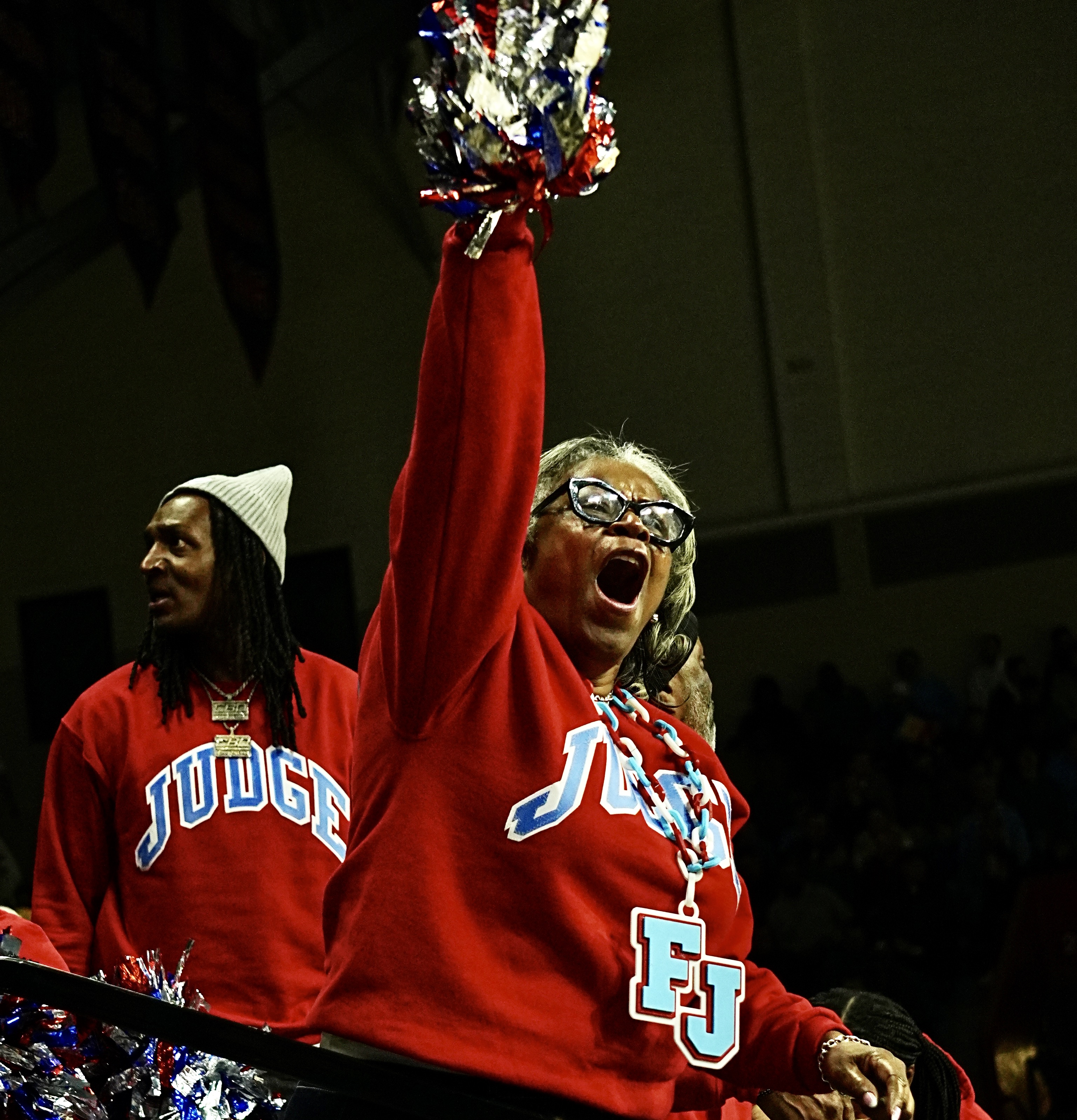
That the game was played in the gloriously cramped confines of Archbishop Ryan’s gymnasium—a building bulging at the seams with 1,600 souls where only 1,300 were meant to fit—was poetically appropriate. The intimacy of the setting forced the intensity. The roaring, 80-20 pro-Judge crowd created an atmosphere that felt less like a district final and more like a block party on the verge of a brawl. It was precisely the kind of environment where Philadelphia basketball character is revealed.
The Panther’s Response: Muhammad-Gray and the Wire-to-Wire Statement

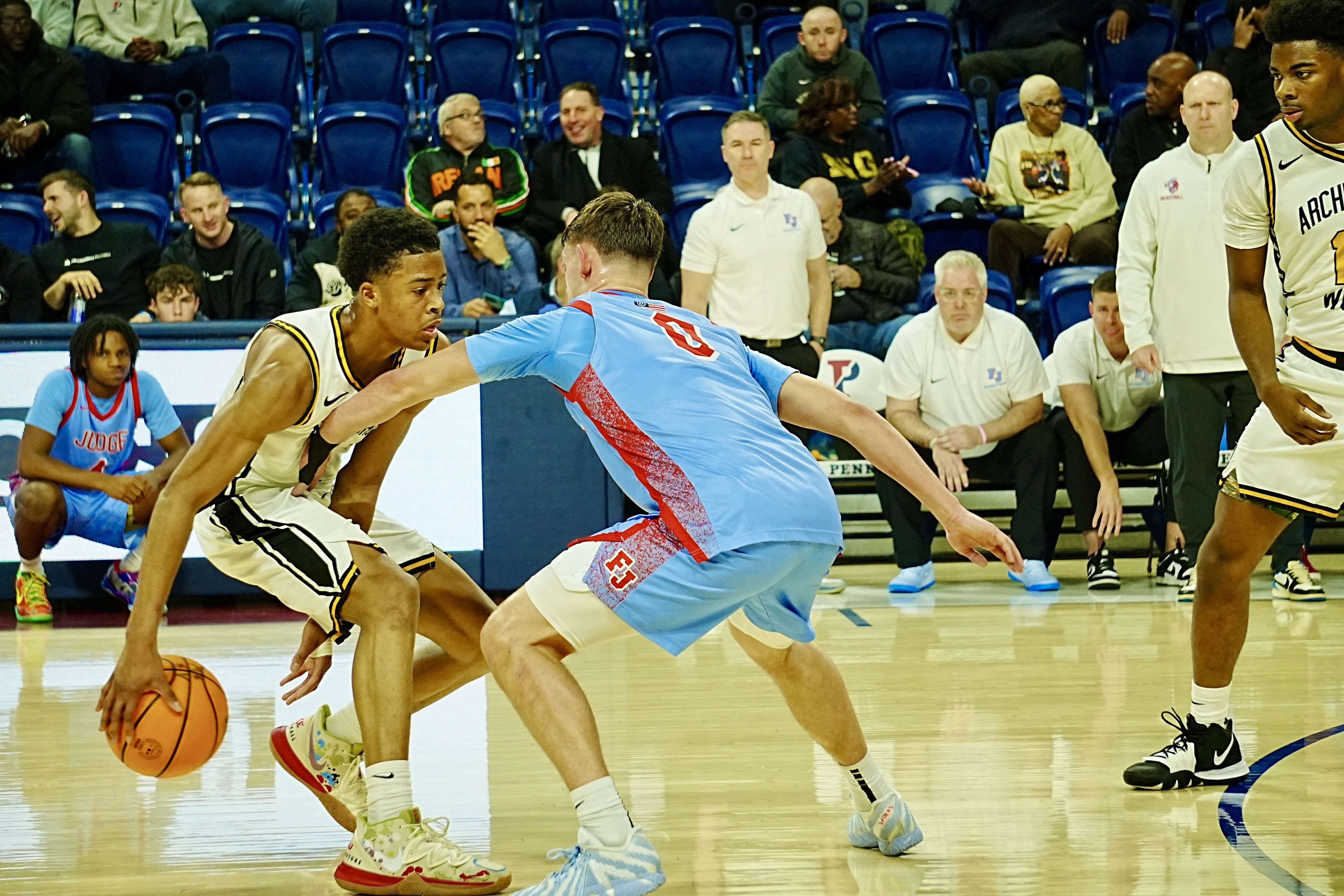
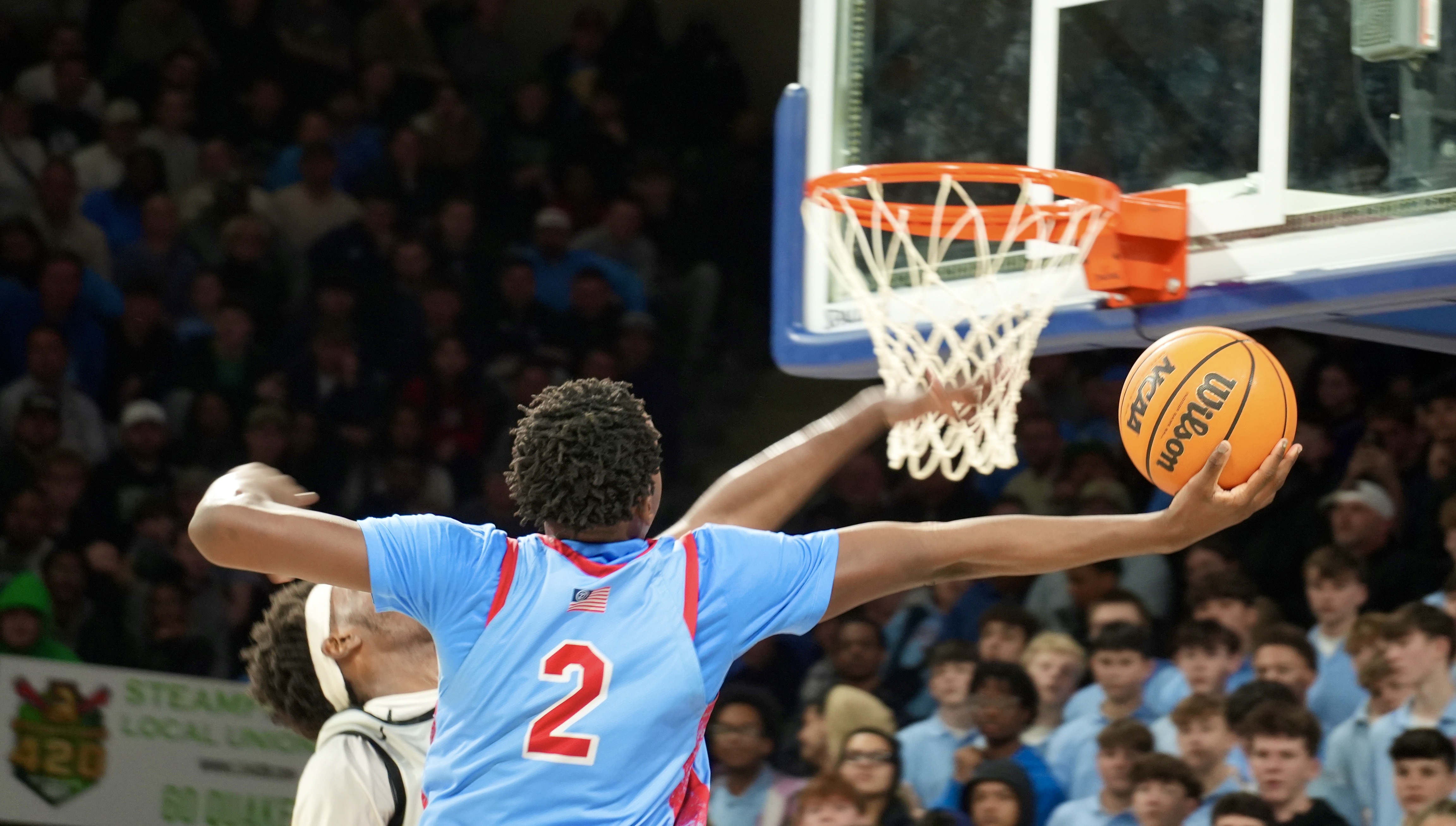
And in that environment, the character of the Imhotep Panthers, and their architect, Coach Andre Noble, was undeniable. Zaahir Muhammad-Gray, playing with the vintage power and rebounding ferocity of a young Buck Williams, imposed his will, scoring 21 points and answering every Judge surge with a stoic, two-handed reply. The Panthers controlled the game wire-to-wire, silencing a building that had arrived expecting to will the Crusaders to victory.
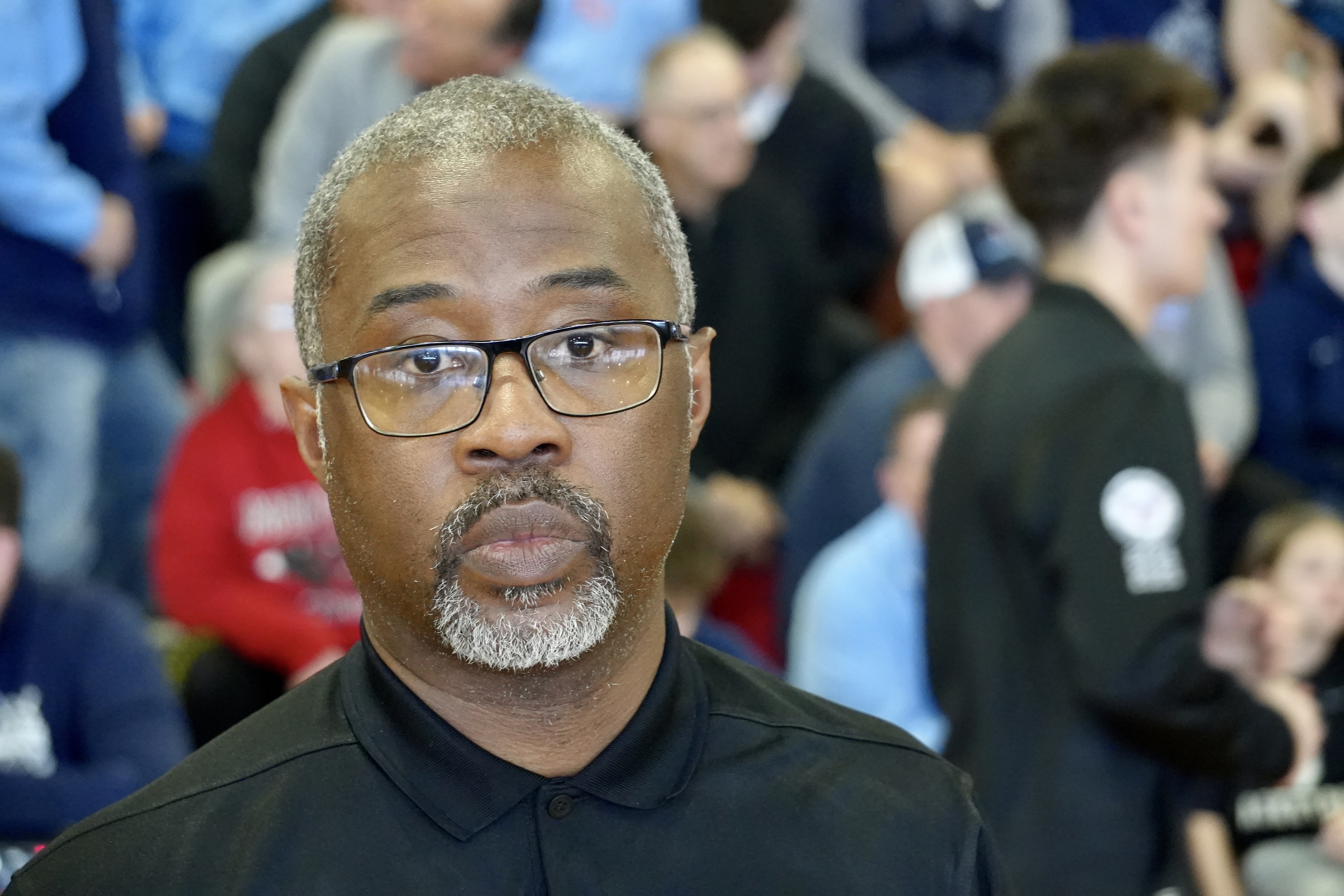
Andre Noble: Carving a Place in the Pantheon

Yet, to focus solely on the box score of this 57-54 victory is to miss the larger historical narrative taking shape on the sideline. Coach Andre Noble is not merely winning games; he is redefining the paradigm of Philadelphia basketball. To mention the pantheon of great coaches in this city—Joe Goldenberg, Bill Ellerbee, Ken Hamilton, the venerable Speedy Morris, and the gold standard of the modern Catholic League, Carl Arrigale—is to invite a necessary addition. Andre Noble now belongs on that mount.

His Imhotep program has become an anomaly, a Public League school that operates with the discipline of a prep school powerhouse and the swagger of a neighborhood legend. While the Philadelphia Catholic League rightfully boasts of its depth, its coaching acumen, and its production of Division I talent, it is no longer the sole proprietor of the city’s basketball soul. The argument must be made, emphatically and with evidence, that Imhotep Charter is not just among the best in the city, but among the very best programs in the entire country.

Dismantling the Old Trope: Public League Grit Meets Strategic Sophistication

Consider the landscape. The Catholic League’s dominance in the modern era—particularly runs by Neumann-Goretti and Roman Catholic—is undisputed. They play a brutal schedule, they prepare players for the rigors of college basketball, and they win state titles. But Imhotep, under Noble, has built a fortress on the idea that Public League kids can not only compete with that pedigree but surpass it. Year after year, the Panthers face a national schedule, travel to premier tournaments, and return to Philadelphia to bulldoze local competition. They have become a destination program, not despite being a charter school, but because of the culture Noble has cultivated.
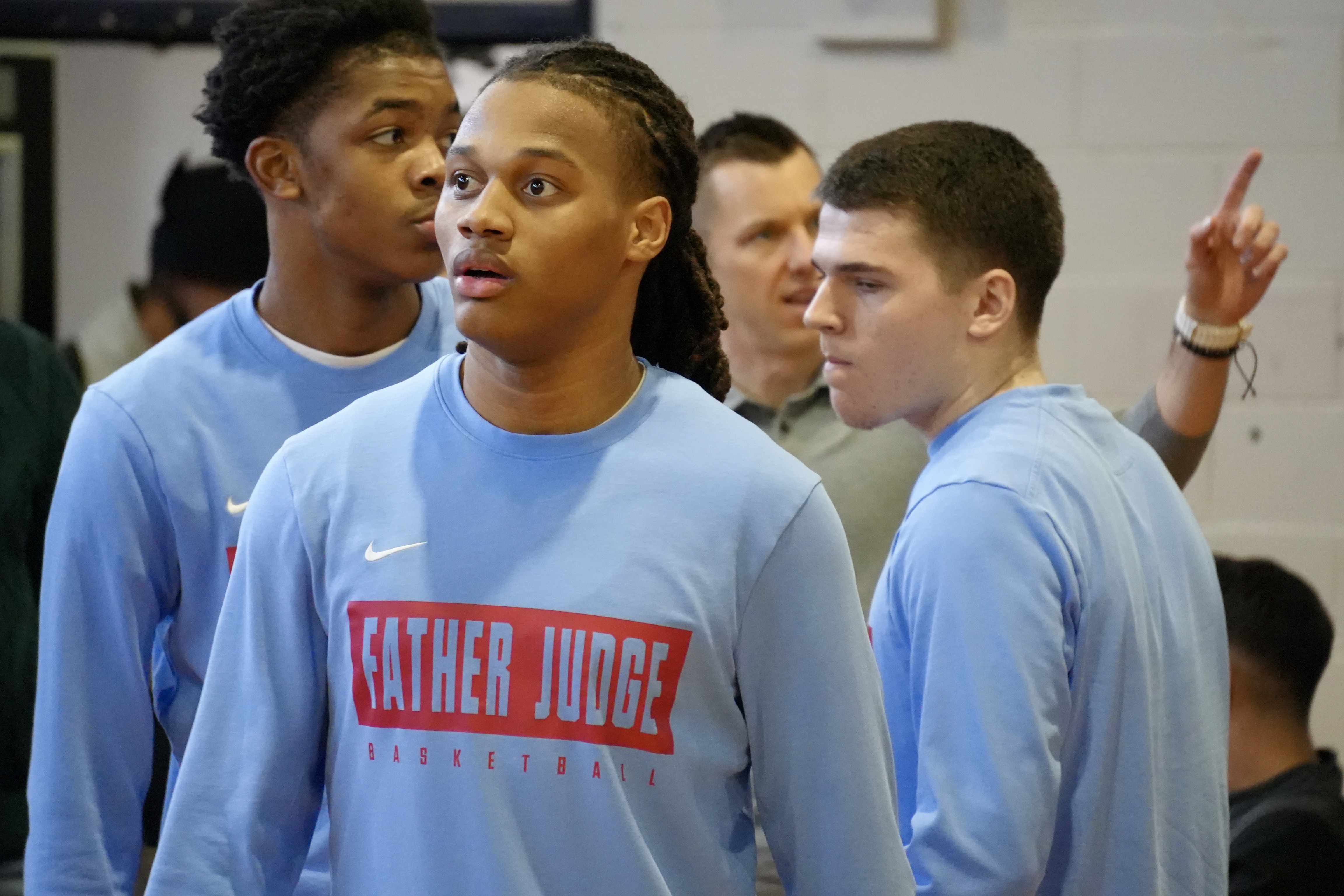
A Microcosm of Excellence: The Victory Over Father Judge

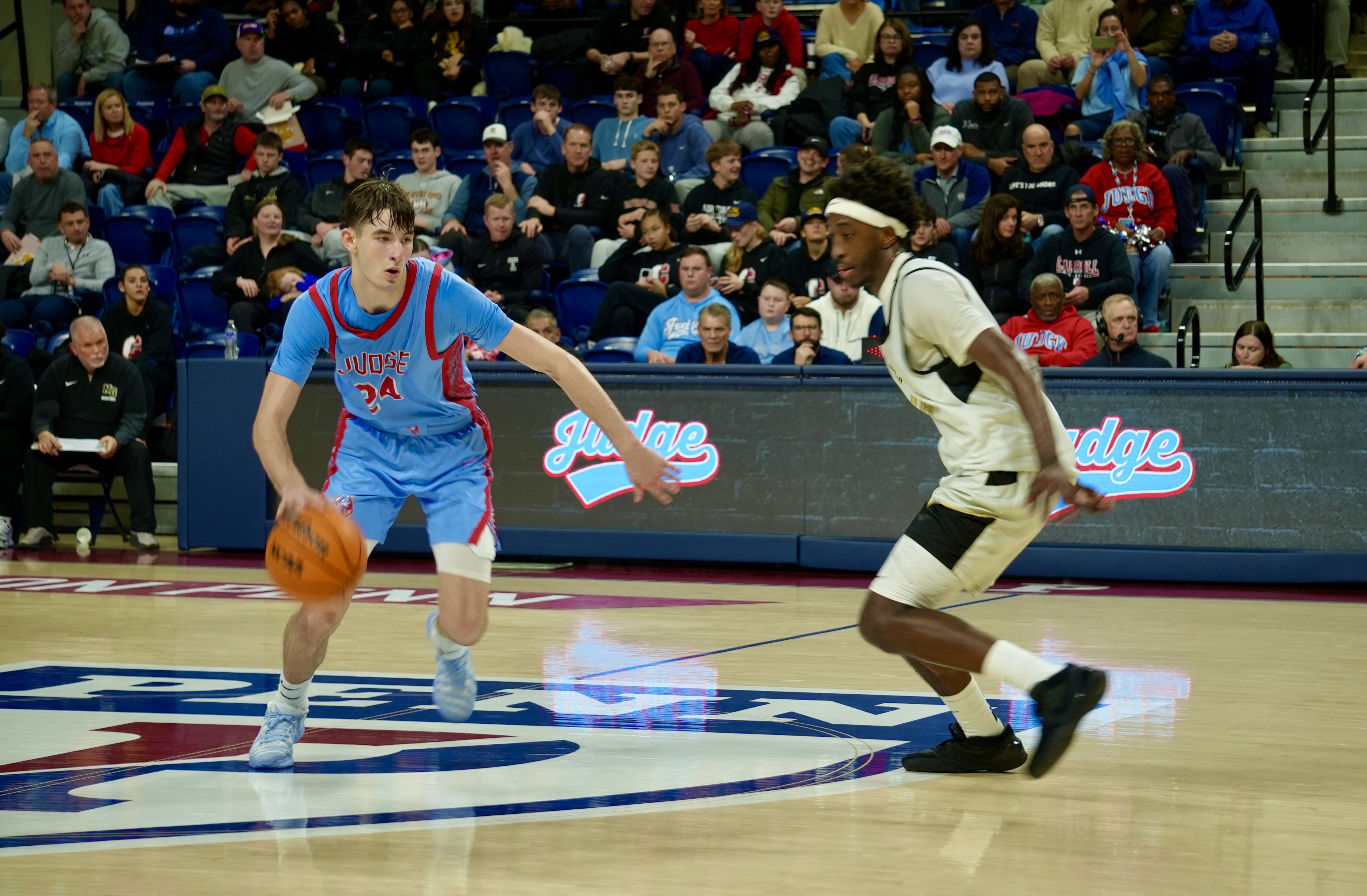
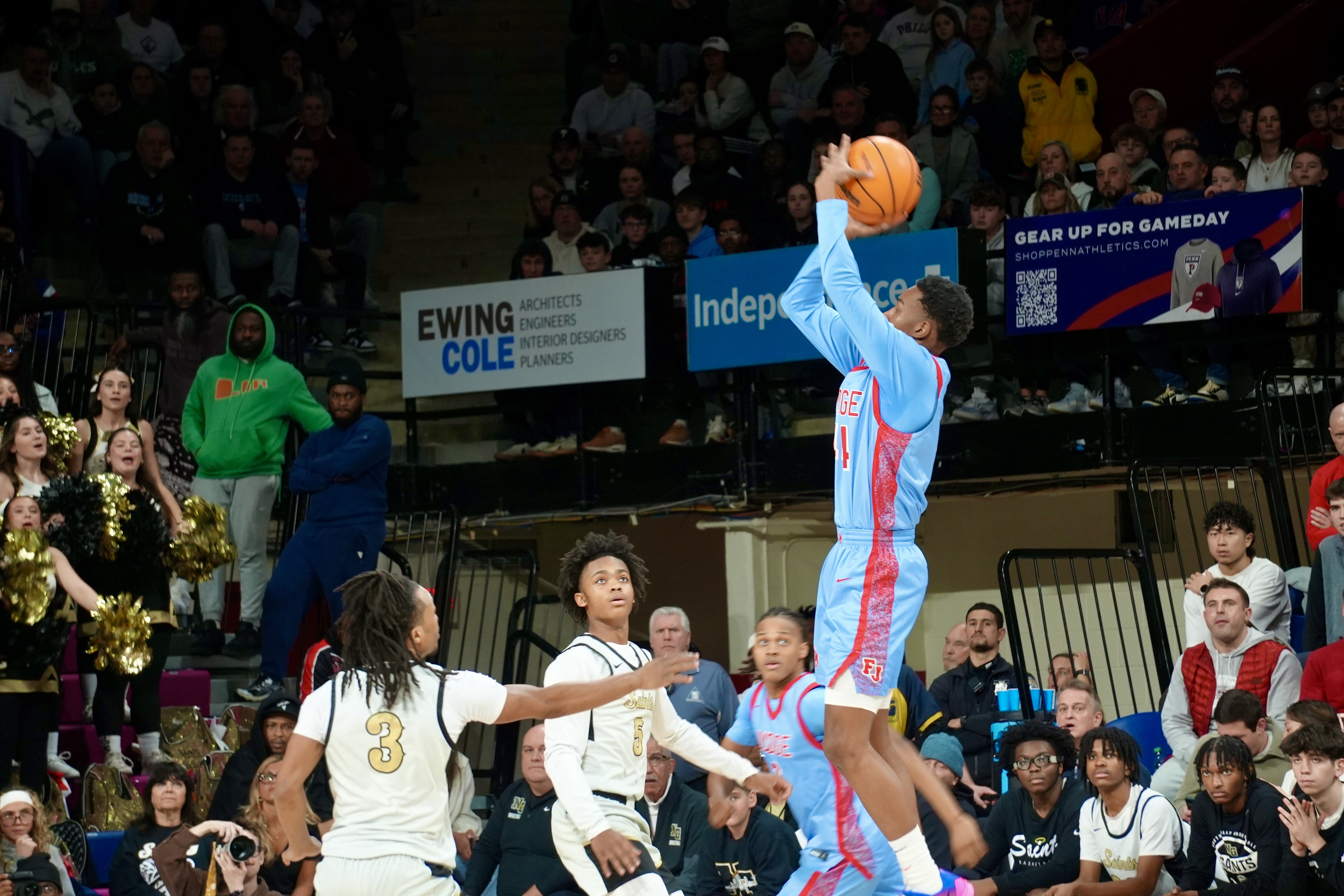
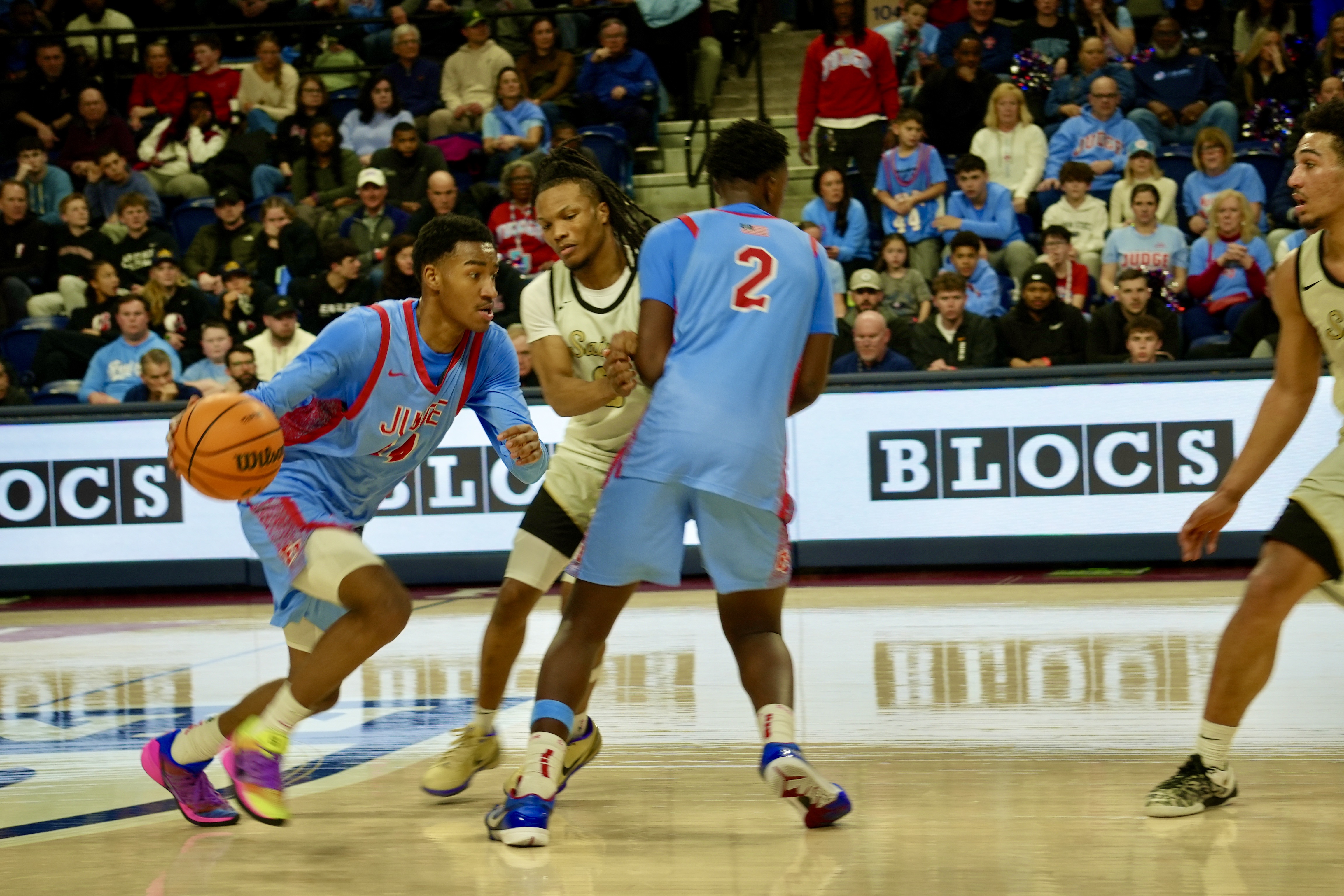
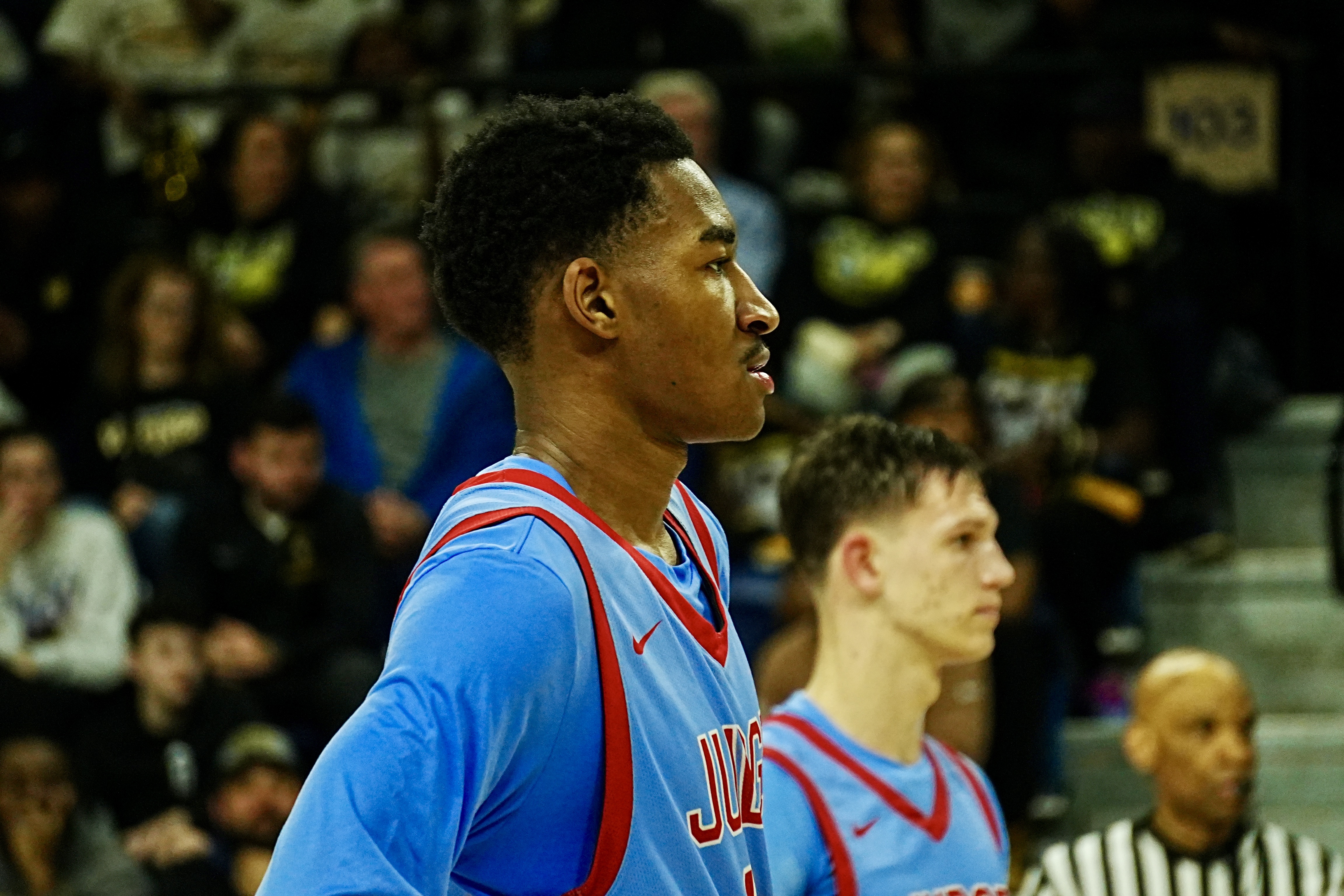
This year’s victory over Father Judge was a microcosm of that programmatic excellence. Facing a hostile crowd and a resilient Judge team led by the ice-veined Temple-bound guard Derrick Morton-Rivera and the explosive Nazir Tyler, Imhotep never flinched. When Tyler singlehandedly tried to drag the Crusaders back into the game, scoring nine straight points in the third quarter, it was the Panthers’ collective defensive resolve—honed in countless high-leverage moments over the years—that held the line. When Muhammad-Gray sank those clinching free throws with 38 seconds left, it was the culmination of a trust built between a coach and his player in the thousands of unseen reps.

The Verdict: A Crown Worthy of the City

The narrative that the Catholic League represents a higher brand of basketball is a comfortable, decades-old trope. But Andre Noble and Imhotep have systematically dismantled that notion. They have proven that the grit of the Public League, when combined with strategic sophistication and a commitment to player development, yields a product that is not just competitive, but superior. The Panthers are now 6A District 12 champions. They will embark on a quest for the PIAA “big boy” state championship, the one title that has eluded them.
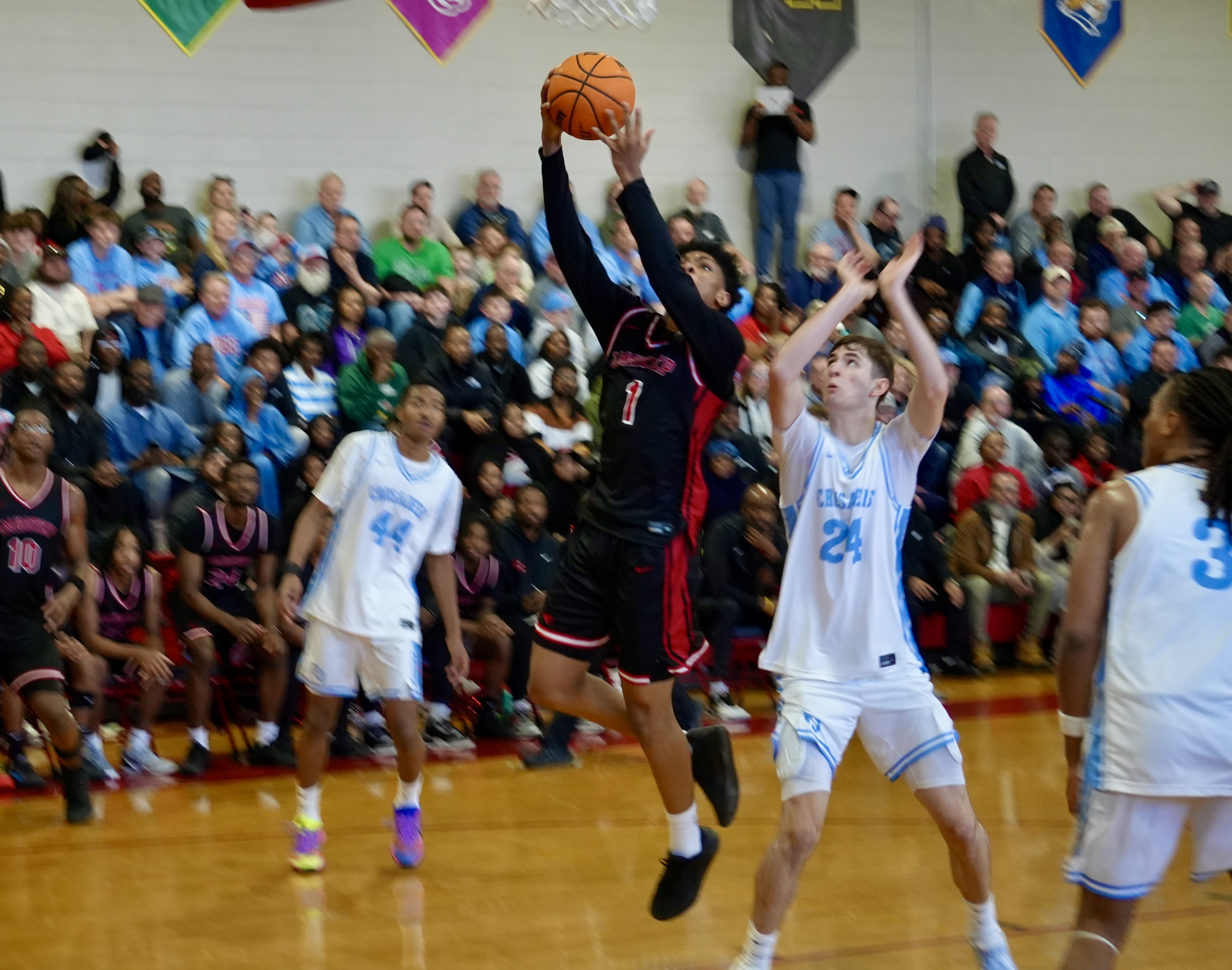
Win or lose in Hershey, however, this season has already served its purpose for the historical record. It has reminded a fractured city of the magic of a unified title game. It has showcased the heart of a Father Judge program that refused to quit. And it has cemented Andre Noble’s legacy as a coach who took the raw materials of the Public League and built a dynasty that stands toe-to-toe with any in the nation. For the first time in years, Philadelphia has a true, undisputed City Champion. And in Imhotep Charter, the city has a program worthy of that singular, historic crown.
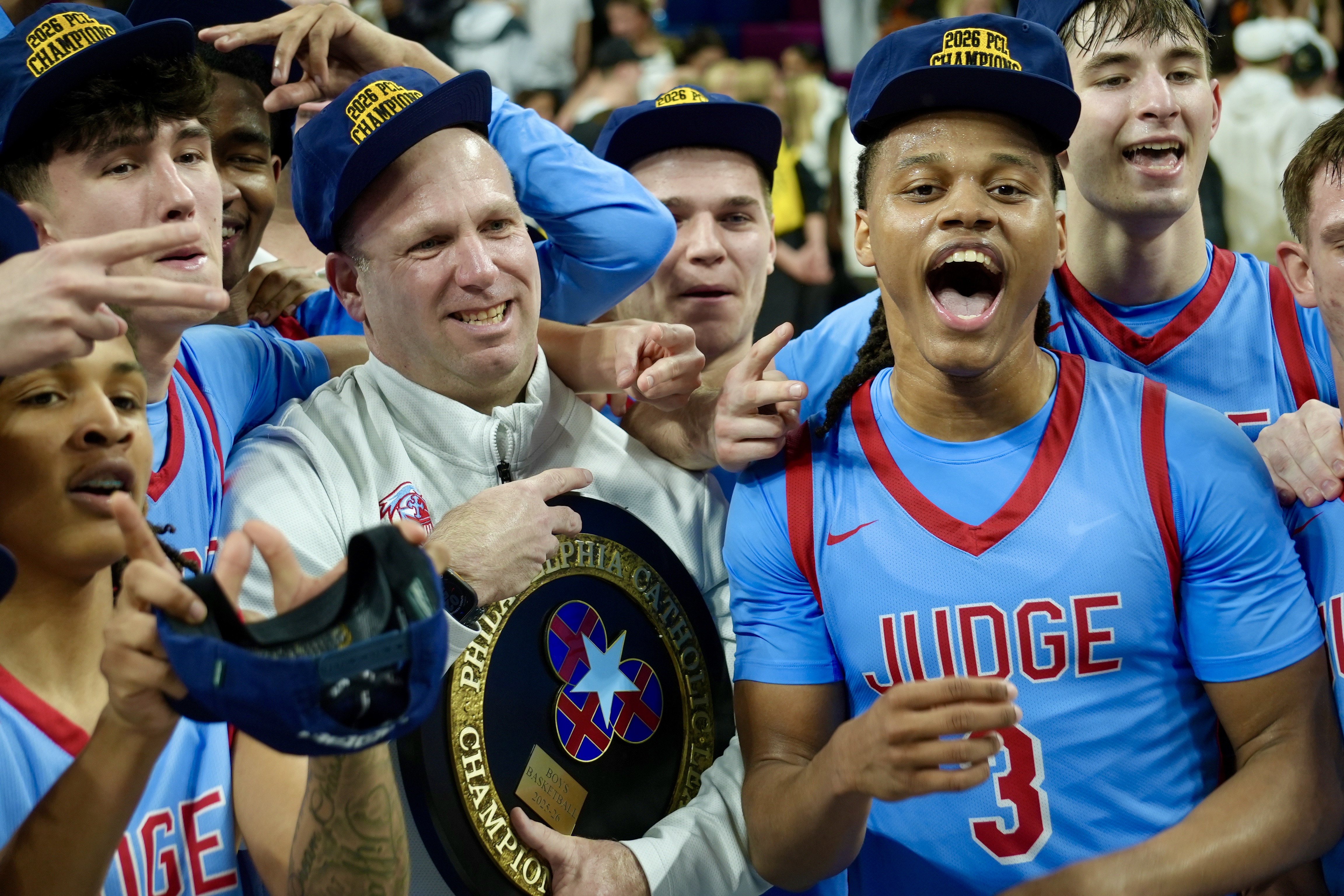
The Last Pure Night: Inside Philadelphia’s Catholic League, Where High School Basketball Still Matters

PHILADELPHIA, PA — The times, they are a-changin’. Bob Dylan’s weary lament has become the unofficial anthem of American amateur athletics, a mournful soundtrack to an era in which innocence has been traded for N.I.L. valuations and recruitment has devolved into a bidding war. In the ecosystem of high school basketball, this transformation has been particularly stark. The sport that once thrived on parochial pride and local legend has been disrupted by well-funded national basketball academies that operate like minor-league franchises, poaching top talent with promises of exposure, training facilities and, increasingly, financial compensation that would have been unthinkable a generation ago.

The New Economics of Youth Basketball

Consider the trajectories of a few local products. Munir Greig, who was picking up opponents 94 feet from the basket for Archbishop Carroll in the Philadelphia Catholic League just last year, was just named Nevada State Player of the Year after transplanting himself across the country. Another former Carroll standout, the Gonzaga commit Luka Foster, spent this season in Branson, Mo., for Link Academy — a program with no alumni, no history and no hometown, just a roster. In recent years, star Catholic League prospects like A.J. Hoggard, Jalen Duren and Robert Wright III have bolted the City of Brotherly Love for the greener pastures of these national programs, lured by the siren song of shoe-company circuits and the promise of N.I.L. compensation down the line.

The commercialization that has colonized college sports has now metastasized into the scholastic ranks. Programs with the pedigree of Roselle Catholic in New Jersey, or the Beltway giants St. Frances and DeMatha in Maryland, now fight to keep their freshmen and sophomores from being poached. In Philadelphia, it is not uncommon to hear whispers of top prospects receiving $20,000, $30,000 or even $40,000 to play a handful of grassroots events on the shoe-company-sponsored circuits. NBA stars earning a third of a billion dollars in guaranteed money wage bidding wars over high school players, treating their AAU programs as a feudal extension of their own brands. The purity of the game, if it ever truly existed, feels like a sepia-toned myth.

A Sanctuary at the Palestra

But for one week every year, 10,000 members of the Philadelphia basketball community engage in a collective act of beautiful, willful suspension of disbelief. They file into the Cathedral of basketball — the historic Palestra on the campus of the University of Pennsylvania — and they watch the Catholic League championship. For a few hours, the noise of the national recruiting industrial complex fades to a distant hum. The only sounds that matter are the squeak of sneakers on the sacred floor, the roar of the student sections and the finality of the buzzer.

This year’s edition of the championship was not merely a game; it was a reaffirmation. For the past quarter-century, the PCL title game has largely been a coronation, a tug-of-war between two titans: the Neumann-Goretti Saints and the Roman Catholic Cahillites. These are the blue bloods, the programs whose names are etched into the city’s basketball D.N.A. Occasionally, a Hall of Fame coach like the legendary Speedy Morris could sneak a championship or two for St. Joe’s Prep, but the hierarchy felt immutable. Then, the coaching tree began to branch. John Mosco, a longtime Carl Arrigale and Neumann-Goretti assistant, took the reins at Archbishop Wood and led the Vikings to two championships. And from that branch, a new dynasty has flowered.

The New Dynasty on Solly Avenue

Chris Roantree, Mosco’s protégé, has battened down the hatches at Father Judge High School and refuses to surrender the throne. If the biblical cadence of the city’s coaching lineage reads “Arrigale begat Mosco and Mosco begat Roantree,” then Sunday’s 55-52 victory over Neumann-Goretti was the gospel confirmation that the student has not only become the teacher but has built his own cathedral.

The game itself was an instant classic, the kind that justifies the pilgrimage to 33rd and Walnut Streets. When the Crusaders’ seniors, Rocco Westfield and Derrick Morton-Rivera, took a seat on the bench early in the second quarter, each burdened with two personal fouls, the stage was set for a collapse. Neumann-Goretti, the very definition of a blue blood, smelled blood. But Coach Roantree looked to his anchor: the senior Max Moshinski.

What followed was a master class in composure. Moshinski, who did not sit for a second, became the calming eye in the storm of a sold-out Palestra. He finished with a double-double — 10 points and 10 rebounds — but his impact was measured in intangibles: three assists, two steals and three blocks, the last of which deflected a potential game-tying 3-pointer with 43 seconds left. Yet his most significant contribution came in that precarious second quarter. Flanked by a rotation of underclassmen — freshmen Ahmir Brown and Khory Copeland, the sophomore Rezon Harris, and the juniors Naz Tyler and Jeremiah Adedeji — Moshinski didn’t just keep Judge afloat; he kept them calm.

It was a scene that encapsulates everything the P.C.L. purists cherish. Here was a senior, who waited his turn as an underclassman and battled through injury, shepherding a group of wide-eyed freshmen through their first Palestra experience on the sport’s biggest local stage. It was mentorship, not marketing. It was development, not deployment.

This is the world Roantree sold to Moshinski when the player was in eighth grade — a vision that didn’t promise immediate gratification but a legacy. Moshinski, who will play at Iona next year, embodied that promise on Sunday. And Roantree, who in 2021 sat at a dining room table and promised Father Judge’s president a title within five years, has now delivered two in a row. The Crusaders, who won just one league game the season before his arrival, who last won a championship in 1998 — a fact memorialized by a faded T-shirt hanging behind the register at a local deli — are now the kings of the mountain.

Building a Family, Not a Roster

To understand why this matters, one must understand the geography of that mountain. Father Judge is a school on Solly Avenue in the Far Northeast, long known for its soccer players. Roantree didn’t just win games; he changed the postal code of Philadelphia basketball. He convinced Derrick Morton-Rivera, a Mayfair native whose father played at Neumann-Goretti, to stay home and build something new. He spotted Moshinski at a C.Y.O. game and sold him on a dream. He persuaded Rocco Westfield, who can walk to Archbishop Ryan from his home in Morrell Park, to cross the invisible lines of parochial allegiance.

The result was not just a team but a family. It is an image of small-town innocence in a big-city setting, a stark contrast to the transactional nature of the national academies where players are boarders, not sons. The Catholic League has managed to preserve this feeling of purity precisely because it refuses to cede its soul to the forces that seek to commodify its players. It understands that the value of a championship is not determined by the number of Division I signees but by the weight of the moment.

The Radical Act of Tradition

As Roantree climbed the ladder to cut down the nets for the second straight year, and the student section — a few hundred crazies dressed in Columbia blue — began chanting “Three-peat,” it was impossible not to feel that, here, the game remains in its proper perspective. The commercialized circus will return. The poachers will be back on the phone with next year’s freshmen. The six-figure shoe-contract whispers will resume. The national academies will continue to poach.

But for one week every year, in the hallowed halls of the Palestra, none of that matters. The Philadelphia Catholic League championship remains a testament to the radical idea that high school basketball should be about the school, the coach, the community and the kids who dream of cutting down a net in front of 10,000 people who call them their own. It is a tradition that, against all odds, remains unspoiled. And in this era of rampant commercialization, that feels like the most radical rebellion of all.

The Big Piece of Chicken: At the Palestra, Family, Rivalry, and Tradition Still Define the Game

PHILADELPHIA — In an era when the economics of college basketball have rendered the once-vibrant arenas of local Division I programs into cavernous echoes of their former selves, when a crowd of 1,500 faithful can feel like a minor miracle, the Philadelphia Catholic League does something that defies logic, gravity, and the prevailing winds of modern sports.

They shoehorn 10,000 of the most passionate, knowledgeable, and opinionated hoop heads in the country into the historic Palestra on the campus of the University of Pennsylvania.

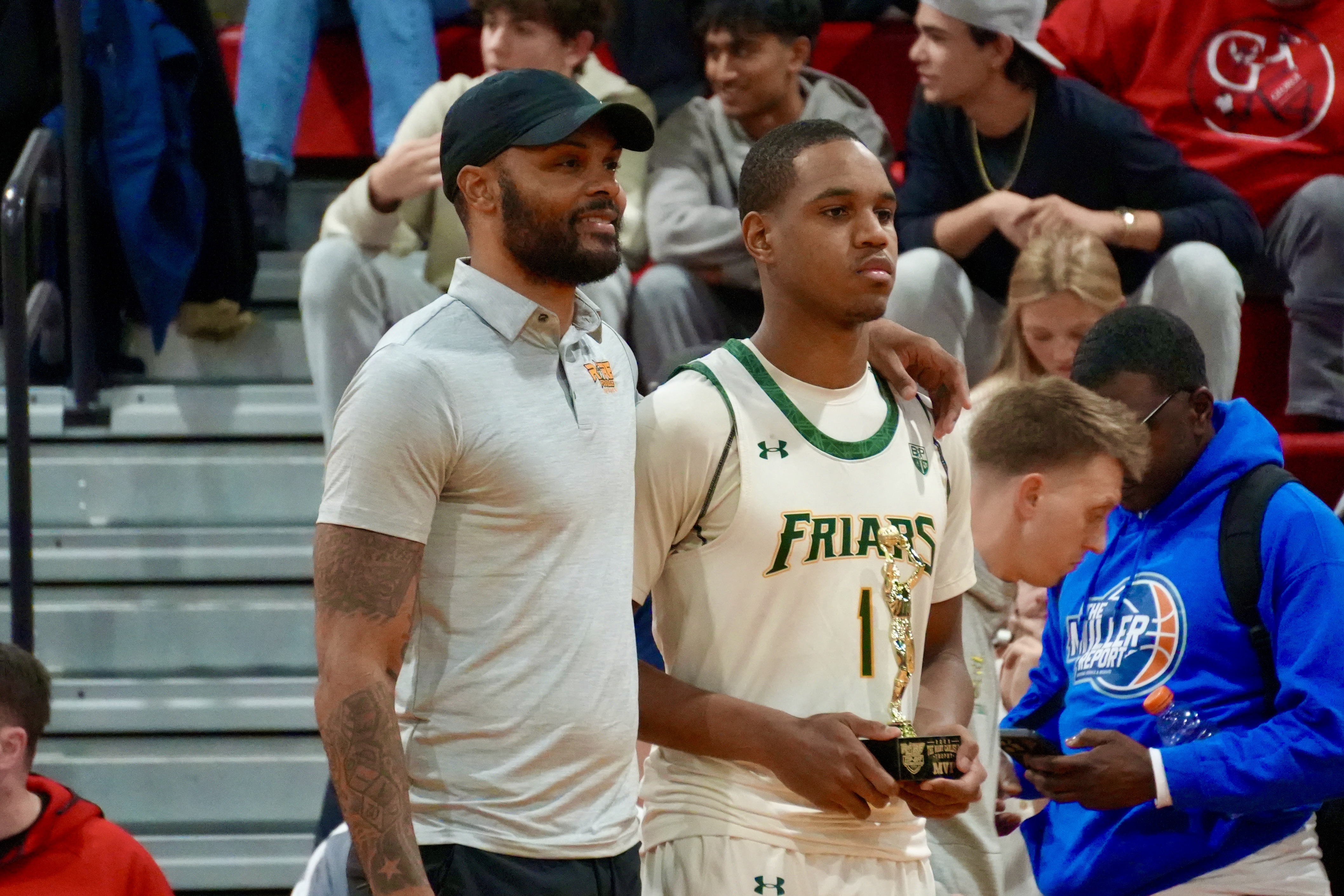
Father Judge senior star Derrick Morton-Rivera

For one week every February, the “Cathedral of Basketball” is not just a metaphor. It becomes a pilgrimage site. The PCL Final Four is a cultural touchstone that transcends the high school game, a stubborn, glorious artifact that refuses to be swept away by the tides of Name, Image, and Likeness (NIL) deals, the transfer portal, and the academy-ization of youth sports.

Let us not be naive about the state of the game. The landscape has been transformed, and not necessarily for the worse, but certainly for the different. The very essence of scholastic athletics—the idea of a kid playing for his neighborhood, for the fabric of his community—has been stretched thin. Top players are increasingly transient mercenaries, hired guns whose families are drawn by the prospect of a larger stage, national exposure, or the whispered promises that accompany the modern basketball economy.

Elite programs like Roman Catholic, Neumann-Goretti, and Imhotep Charter are not immune to this churn. Players leave after their freshman or sophomore years. They transfer from storied programs like DeMatha (Md.) or St. Frances (Md.) to well-heeled basketball academies with national schedules. The motivations are complex—a desire for increased visibility, the pursuit of a more rigorous competitive environment, or frankly, the financial considerations that the “amateur” model can no longer pretend to ignore.

It is different. It is all different.

But for one week, inside those hallowed walls on 33rd Street, the basketball community of Philadelphia collectively places its head in the sand, forgets the cynicism, and pretends it’s still pure. And it is a magnificent, beautiful pretense.

Once you find a sliver of bench space among 10,000 of your closest friends—a feat that requires the negotiation skills of a seasoned diplomat—the noise, the smell of popcorn, the squeak of sneakers on the gold-medalist floor, it all washes over you. The mercenary narrative fades. The hired gun narrative recedes. What is left is the raw, visceral, desperate pursuit of a Catholic League championship. You remember that for four years, for better or worse, these kids are the identity of their school. They are the stewards of legacies built by generations who came before them.

The Archdiocese of Philadelphia and the Catholic League deserve immense credit for preserving this atmosphere. In particular, Stephen Haug, the Executive Director of Athletics, understands that they are not just organizing a basketball game; they are curating a civic ritual. They are handing the players, coaches, and families a key to a magical kingdom, allowing them to experience a majesty that most college players—and even some professionals—will never know.

This year’s iteration of the Final Four provided a narrative so rich, so deeply Philly, that it could only happen here.

On Wednesday night, the Archbishop Wood Vikings, coached by John Mosco, did what seemed impossible. They built a 19-3 lead over the Father Judge Crusaders. The game felt over. The Palestra, which can turn on a dime from a library to a madhouse, was buzzing with the energy of a coronation.

But then, a legacy unfolded.

D.J. Rivera and Michelle Rivera, Derrick Morton-Rivera’s father and grandmother

Led by Temple commit Derrick Morton-Rivera, Judge mounted a comeback for the ages. Morton-Rivera, the program’s all-time leading scorer, poured in 27 points, willing his team back from the abyss to snatch a 52-46 victory from the jaws of defeat.

This sets up a championship game on Sunday against Neumann-Goretti—a program Morton-Rivera knows intimately. Not as a rival, but as family. He is the son of D.J. Rivera, a former Neumann-Goretti star who carved his own legend in this very league.

This brings us to the question of legacy, of birthright, and of the family table. For Derrick Morton-Rivera, Sunday’s final represents a passing of the torch so dramatic it should be scripted for Hollywood.

His father bled for the colors of Neumann-Goretti. That is his alma mater. That is his blood. But on Sunday, his son will take the floor for Father Judge, seeking to deny his father’s school a championship and secure back-to-back titles for the Crusaders for the first time in program history.

If Derrick Morton-Rivera can lead Judge past his father’s alma mater—if he can beat Dad’s team and secure the Catholic League Championship, after losing to the Saints in January—the debate will be settled. He will have earned the right to sit at the head of the family table. He gets the big piece of chicken. Forever. It is the kind of story that bonds a city to its players. It is personal, it is tribal, and it is real.

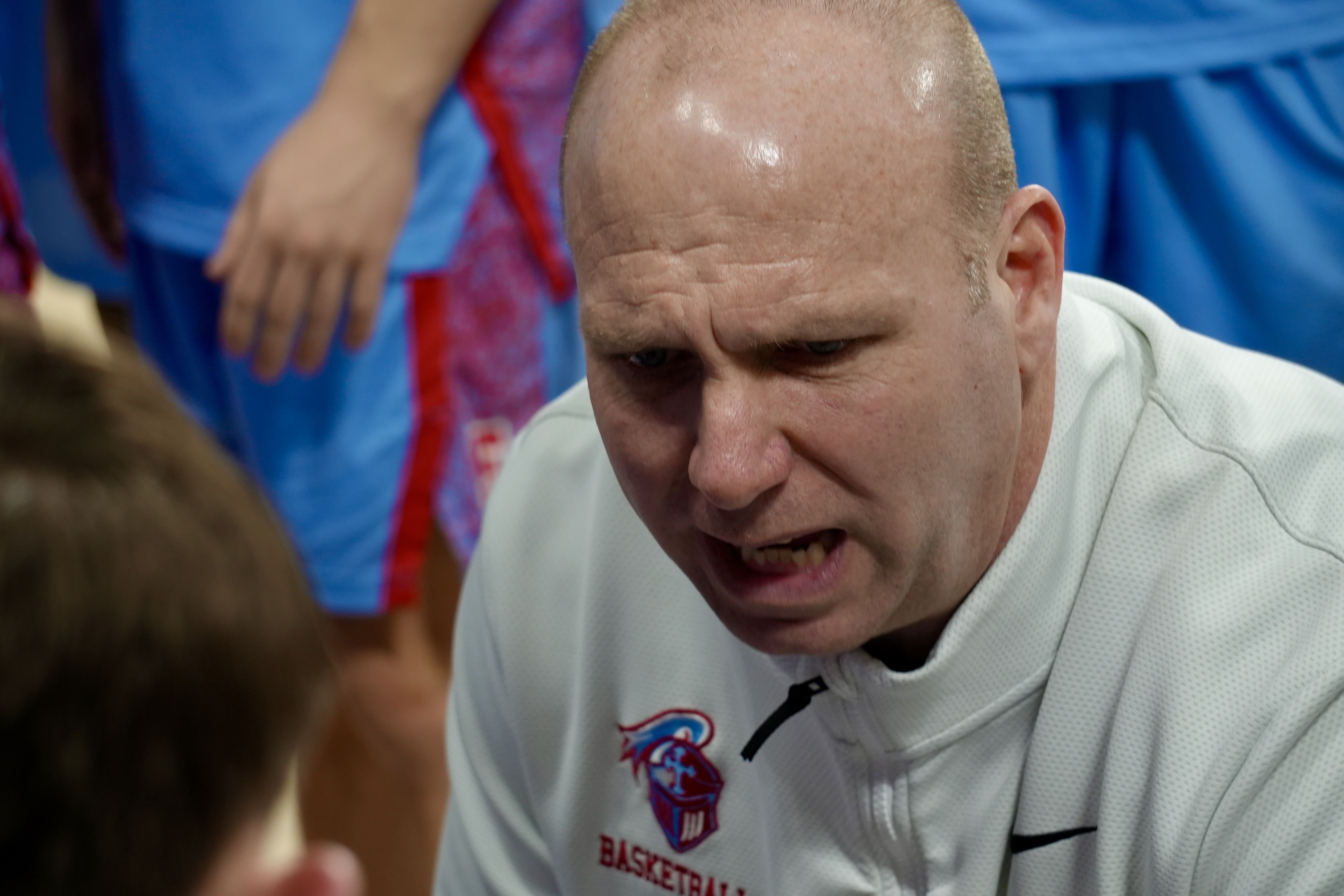
Chris Roantree, Father Judge Head Coach

The win was also a testament to the web of relationships that make the PCL so compelling. Judge coach Chris Roantree spent eight years as an assistant at Wood under John Mosco. They are best friends. They have been through the grind together.

“First for me and John,” Roantree said after the semifinal, his voice heavy with the conflict of competition and friendship. “We have a great relationship, my best friend, coaching with them for nine years, but more importantly, he’s a friend. We went through a lot together, and somebody’s got to lose. That’s the hardest thing about it.”

Last year, Roantree led Judge to its first PCL title in 27 years. Now, standing in his way is the Goliath of the league, Neumann-Goretti, and the ghost of his star player’s father. The game will feature elite talent. It will feature future Division I athletes.

But it will feel like something else. It will feel like old-school high school basketball at its finest.

The transfer culture will return on Monday. The whispers about NIL and the next move will resume. The AAU circuits will beckon. But on Sunday, inside the Palestra, time will stand still. We will have 32 minutes of purity. And that, in this day and age, is the most significant cultural statement Philadelphia basketball can make.

Neumann-Goretti Launches ‘Patron Saints’ to Preserve the Soul of Scholastic Basketball

PHILADELPHIA — In an era where the soul of traditional high school basketball is increasingly traded for national spotlight and transactional deals, one Philadelphia powerhouse is drawing a line on the hardwood of its home court. The Neumann-Goretti Saints boys’ basketball program today announced the launch of the “Patron Saint Donor Campaign,” a clarion call to preserve the last vestiges of Philly’s traditional scholastic basketball.

The campaign is not merely a fundraiser; it is an innovative and ncessary mobilization. It is a bid for reinforcements in a quiet but intensifying war for the very identity of the sport. For decades, elite basketball was forged in the crucible of local rivalry—in the packed, echoing gyms of neighborhood Catholic and public schools where the dreams were city titles, district crowns, and state championships. The heroes wore the names of their communities on their chests.

That era is fading. Today, the gravitational pull of national basketball academies, with their focus on individual rankings and nascent NIL empires, is siphoning talent from the historic bastions of the game. Iconic programs like Neumann-Goretti, Roman Catholic, DeMatha, Camden, Imhotep, and Chester—institutions that are pillars of their cities—find themselves battling not just for wins, but for their existential relevance.

Yet, Neumann-Goretti refuses to cede the court. The Saints continue to compete at the highest national level, consistently facing off against well-funded, coast-to-coast academies. Their strategy is not to emulate these new models, but to defeat them through the very traditions that built the program: deep local talent, ferocious team identity, and the unbreakable bond between a team and its community.

“This campaign is an innovative response to a national problem,” said Delgreco Wilson, Black Cager Sports. “Neumann-Goretti is not a franchise. It is a Philadelphia institution. To win this fight, they need the army that has always been their foundation: their community.”

The Patron Saint Donor Campaign offers basketball purists and Philadelphia loyalists a direct stake in this struggle.

For the 2025-26 season, a limited cadre of just 20 supporters will be enlisted as “Patron Saints.” A donation of $100 secures this enlistment, granting:

  • Free entry to all Neumann-Goretti HOME games, guaranteeing a seat at every battle, even sellouts against national opponents.
  • A distinctive Patron Saints t-shirt, a uniform of solidarity.\
  • A $10 coupon for the official team store.

“We are calling on anyone who loves what high school basketball was, and what it still should be,” said Assistant Coach Pat Sorrentino. “When you become a Patron Saint, you are not just buying a ticket. You are enlisting in the cause. You are helping to ensure that the future of this game isn’t shaped solely in impersonal academies, but continues to thrive on the home floors where passion is born and legends are made.”

The offer is intentionally exclusive, mirroring the prized, hard-fought nature of a spot on the Saints’ roster itself.

The mission is clear: to provide the resources for Neumann-Goretti to continue its dual quest—to hunt national titles while fiercely guarding the local, communal soul of the sport.

To learn more and to enlist as a Patron Saint for the 2025-26 season, visit the Neumann-Goretti Athletics website. All 20 spots are expected to be claimed swiftly by those who believe the fight is worth the price of admission.

###

About Neumann-Goretti High School: Neumann-Goretti High School, a Catholic secondary school in the Franciscan tradition located in the heart of South Philadelphia, has long been a national epicenter for basketball excellence. Its program is defined by a profound commitment to community, discipline, and the development of young men as both athletes and citizens, producing countless collegiate standouts and professional players.

The Case for Korey Francis: The Mid-Atlantic Region’s Most Underrated Court General

PHILADELPHIA, PA – In the era of basketball as personal branding, where elite high school prospects migrate to national academies and highlight reels are currency, a counter-narrative is quietly building in the Philadelphia suburbs. His name is Korey Francis, a junior guard at Monsignor Bonner & Archbishop Prendergast Catholic High School. To the casual observer scanning national rankings, he may not yet register. But to watch him play—to truly understand the fabric of his game—is to witness one of the finest, most complete guard prospects in the nation. He is not a product of the assembly line; he is a testament to the enduring value of loyalty, intelligence, and old-school grit.

Korey Francis, Bonner-Prendie junior guard

A Player Without a Position, A Team Without a Ceiling

At Bonner-Prendie, Francis is a basketball paradox listed at guard. Under the shrewd guidance of Coach Billy Cassidy, Francis morphs from game to game, even possession to possession, into whatever his Friars need to win. With a roster featuring smaller, quicker perimeter players, Cassidy deploys Francis as a point guard, shooting guard, small forward, and even a burly power forward. He initiates the offense, posts up smaller defenders, switches onto bigs defensively, and crashes the glass with the tenacity of a forward. This positional fluidity isn’t a gimmick; it’s a master class in basketball utility. Yet, when the clock winds down and the outcome hangs in the balance, the ball inevitably finds its way to Francis’s hands. He is the calm in the chaos, the team’s true north.

The Anatomy of a Floor General

Projecting Francis to the next level clarifies his ultimate destiny: he is a cerebral, classic point guard. His strengths read like a manifesto for purists who believe the game is won between the ears.

His court vision and playmaking are elite. He pushes the ball with purpose, not panic, and sees passing lanes before they materialize. He is a quarterback in high-tops, running the offense with a veteran’s poise, his primary objective being to make his teammates more effective. His physicality is his signature. At a sturdy 6’3″, he leverages his strength like an NFL fullback, using a deft handle and a decisive first step to get a shoulder into defenders, creating space to barrel into the lane. Once there, he is a maestro of the “penetrate-and-pitch” game, finishing through contact or dishing with perfect timing.

Furthermore, he is an exceptional rebounder for a guard, a skill that instantly triggers transition opportunities. Defensively, his strength and intelligence allow him to guard multiple positions, effectively switching onto both bigger and smaller opponents. This is not a flashy scorer hunting shots; this is a conductor orchestrating a victory.

The Measurable Questions and the Intangible Answers

The scouting report will rightly note areas for growth: his three-point shot is inconsistent, and he lacks the blinding, elite athleticism commonly associated with top prospects in leagues like the SEC or Big Ten. He is a worker, not a wow-er.

But to focus solely on these metrics is to miss the forest for the trees. Francis is only a junior, with ample time to refine his jumper—a project far more achievable than instilling the innate feel for the game he already possesses. More importantly, his perceived “lack of elite quickness” is mitigated by a high basketball IQ that allows him to anticipate and dictate, rather than simply react. He wins with positioning, strength, and savvy, assets that translate to any level of competition. He is, in essence, D1-ready in the categories that are hardest to teach: leadership, physicality, and clutch decision-making. His “Iron Man” durability and unflappable demeanor under pressure are the bedrock of his value.

The Loyalty and Leadership of a Throwback

In an age of transactional basketball, Korey Francis’s story is profoundly refreshing. While peers of his stature have left Philadelphia for the national academy circuit, Francis has remained fiercely loyal to Coach Cassidy and Bonner-Prendie. This commitment speaks to a character often absent from the recruiting discourse. He is not just building a team; he is building a community.

Off the court, Francis embodies the ideal of the scholar-athlete. A straight-A student and the elected president of his class, he demonstrates that elite competitiveness and academic excellence are not mutually exclusive but mutually reinforcing. This discipline and intelligence are palpably evident in his play. He processes the game like an honor student, solving defensive schemes in real time.

The Verdict: A Prospect Worth Betting On

The modern basketball landscape is littered with athletic marvels whose games lack soul and structure. Korey Francis is the antithesis. He is a throwback to a time when the point guard was an extension of the coach, tasked with elevating everyone around him.

Yes, he must continue to extend his shooting range. Yes, he will face athletes at the next level who can match his strength. But to bet against Korey Francis is to bet against intelligence, against leadership, against an unwavering will to win. He is not just a mid-to-high major Division I point guard prospect; he is the prototype of a player who wins championships because he makes the complex simple and his teammates better.

In the noisy, hype-driven world of high school basketball, the steady, commanding drumbeat of Korey Francis’s game is a sound more and more college coaches are beginning to hear. They are listening to the future of a program—a leader who doesn’t just play the game, but truly understands it.

Wanamaker takes the Reins at Roman Catholic: The Crown Jewel of Philadelphia Scholastic Basketball

By Delgreco K. Wilson

A Century of Dominance in the City of Brotherly Love

PHILADELPHIA, PA – Philadelphia’s basketball heritage reads like a who’s who of hardwood legends—from Wilt Chamberlain’s earth-shaking dunks at Overbrook to Rasheed Wallace’s dominant reign at Simon Gratz. Yet when the final buzzer sounds on this century-long game of Philadelphia basketball supremacy, one program stands above all others: Roman Catholic High School and its record 34 Philadelphia Catholic League (PCL) championships. No other institution has so consistently combined competitive excellence with transformative life lessons for young men, creating a basketball dynasty that has flourished across generations.

The numbers alone tell a compelling story. Since the Catholic League’s formation, Roman Catholic has captured nearly twice as many titles as its nearest competitor (Neumann-Goretti with 22). This isn’t merely a statistic—it’s a testament to an enduring culture of excellence that has survived economic downturns, demographic shifts, and the ever-changing landscape of scholastic sports. From Billy Markward’s nine championships between 1922-1934 to Chris McNesby’s most recent titles in 2023-2024, Roman Catholic has set the gold standard for Philadelphia basketball.

The Coaches Who Built a Legacy

What separates Roman Catholic from other storied programs isn’t just the quantity of championships, but the quality of leadership that has sustained success across distinct basketball eras. The program’s foundation was laid by Billy Markward, whose teams dominated the 1920s and 1930s with an unprecedented nine PCL titles. His squads set a standard of excellence that would become the program’s hallmark—a blend of disciplined play and relentless competitiveness.

The torch was later carried by Speedy Morris, who ushered in a new golden age during the 1970s with six championships between 1969-1980. Morris’s teams embodied Philadelphia basketball—tough, fundamentally sound, and mentally resilient. His success proved Roman Catholic could adapt to the modern era while maintaining its core values.

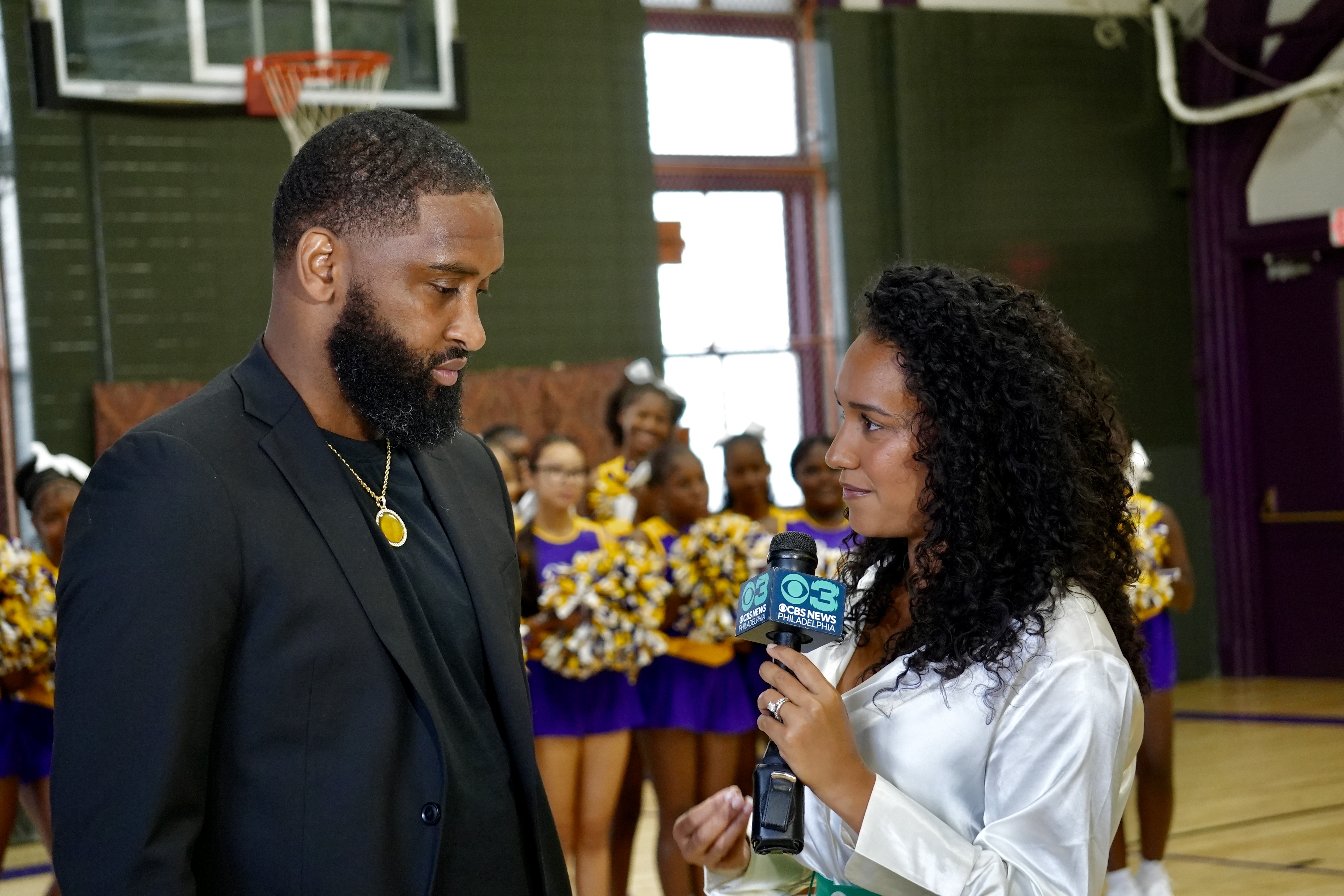
Roman Catholic Coaches – Dennis Seddon, Brad Wanamaker and Chris McNesby

Then came Dennis Seddon, whose tenure from the late 1980s through 2000 represents perhaps the most dominant stretch in PCL history. Nine championships in twelve years (1989-2000) established Roman Catholic as the league’s preeminent power. Seddon’s influence extended beyond wins; he mentored future coaches like Chris McNesby, creating a coaching tree that would extend the program’s success into the 21st century.

McNesby himself—a Roman Catholic alum who played under Seddon—added four PCL titles and three PIAA state championships across two coaching stints (2008-2016 and 2021-2024). His 270-73 career record reflects both consistent excellence and the ability to develop players for life beyond basketball—a hallmark of the Roman Catholic philosophy. As McNesby noted, “It’s after they’re finished playing, seeing them get jobs and seeing them be successful fathers and husbands, and then see them passing it forward”.

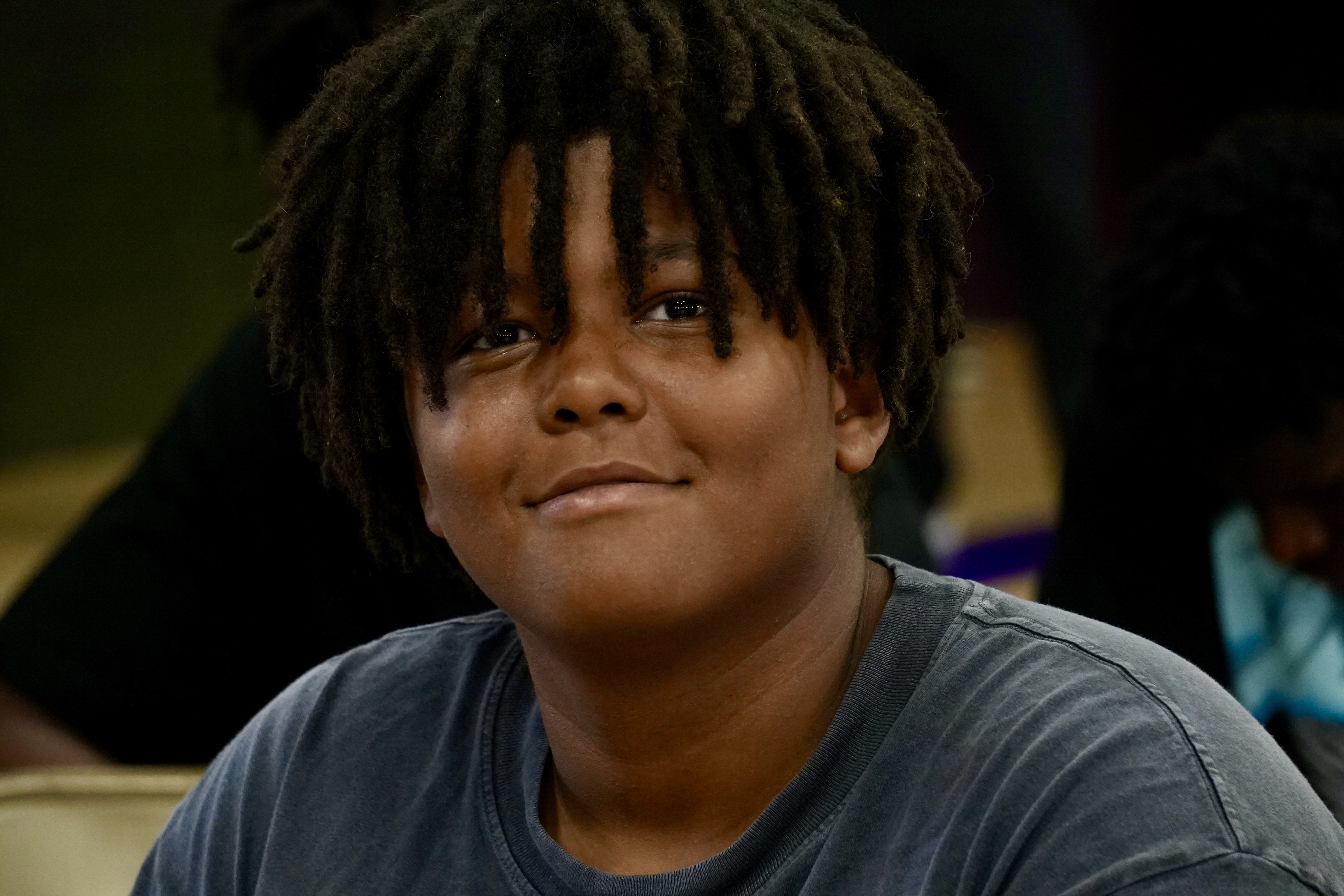
Roman Catholic Freshman Shayne Jackson

More Than Championships: The Roman Catholic Difference

Roman Catholic’s supremacy isn’t measured solely in banners. The school has long served as a transformative institution for Philadelphia’s youth, particularly those from working-class backgrounds. Founded in 1890 as the nation’s first free Catholic high school for boys, Roman Catholic maintained its commitment to accessibility even after transitioning to tuition-based education in the 1960s. This mission—to provide “a comprehensive academic curriculum within a disciplined Catholic environment”—has shaped generations of student-athletes.

The school’s impact extends far beyond the court. As McNesby reflected on his own experience: “You really meet kids from all different areas, backgrounds, demographics, financial status. It helps you grow up pretty quickly, and you really learn how to get along with others”. This environment fosters the type of personal growth that produces not just great players, but great men—a fact borne out by the program’s alumni network of successful professionals across industries.

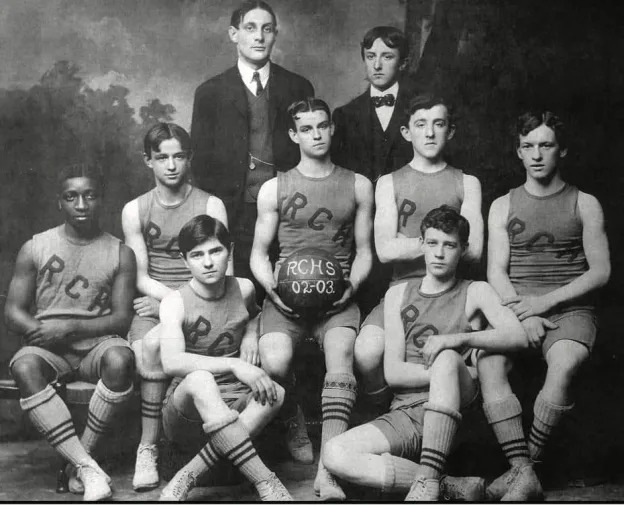
Roman Catholic’s 1902 Basketball Team featuring John Lee (far left)

Roman Catholic has also been a pioneer in racial progress. In 1902—just 12 years after its founding—the school fought for the inclusion of John Lee, the first Black player in the Catholic League. This legacy makes Brad Wanamaker’s recent appointment as head coach particularly significant. As the program’s first Black head coach and a distinguished alum (Class of 2007), Wanamaker represents both continuity and progress. His hiring—praised by alumni like Mike Ringgold as proof that “Roman is the best high school job in the city”—signals the program’s commitment to opportunity and meritocracy.

The Wanamaker Era: Tradition Meets the Future

Brad Wanamaker’s ascent to head coach represents a full-circle moment for Roman Catholic basketball. A 2007 graduate who led the Cahillites to a PCL championship that year, Wanamaker brings unique credentials: honorable mention All-American at Pittsburgh, 11-year professional career (including four NBA seasons), and firsthand experience of Roman Catholic’s transformative culture. As he noted upon his hiring: “Roman changed a lot in my life coming in, so I feel like I’m forever indebted to them, and what better way to give back than leading the team?”

Wanamaker’s coaching philosophy blends old-school toughness with modern player development. “Better men is the biggest key,” he emphasizes. “Going through adversity, perseverance and being from Philly, just that toughness”. This approach resonates with Philadelphia basketball purists while addressing contemporary challenges facing young athletes. His professional experience—including stints with the Boston Celtics and Golden State Warriors—provides invaluable perspective for players aspiring to collegiate and professional careers.

Notably, Wanamaker represents a new generation of Roman Catholic leadership while maintaining ties to the program’s storied past. He played under Dennis Seddon and served as an assistant to Chris McNesby, absorbing lessons from both mentors. As McNesby observed: “We were riding together to a game and Brad said ‘I’m ready’. After that I felt it was time for me to step aside…The program is in great hands”. This seamless transition exemplifies Roman Catholic’s unique ability to renew itself while honoring tradition.

Conclusion: The Standard Bearer

Philadelphia’s basketball landscape features numerous legendary programs—Overbrook’s Wilt Chamberlain, West Catholic’s Ernie Beck, Simon Gratz’s Rasheed Wallace, Neumann-Goretti’s Carl Arrigale dynasty. Each has compelling claims to greatness during specific eras. But when evaluating sustained excellence across generations, Roman Catholic stands alone.

The numbers—34 Catholic League championships, multiple coaching dynasties, countless college and professional players—only begin to tell the story . Roman Catholic’s true greatness lies in its ability to win at the highest level while fulfilling its mission to develop “men of personal integrity”. From Thomas E. Cahill’s original vision in 1890 to Brad Wanamaker’s groundbreaking appointment in 2025, the school has remained true to its values while adapting to basketball’s evolution.

As Philadelphia basketball enters its second century, Roman Catholic remains the gold standard—a program where championships and character development go hand-in-hand. The Cahillites’ purple and gold banners represent more than victories; they symbolize a tradition of excellence that continues to shape Philadelphia’s basketball identity. In a city that treasures its hoops history, Roman Catholic stands as the most accomplished and influential program of them all.

A Triumph for Tradition: Father Judge’s Victory at The Palestra Rekindles the Spirit of Philadelphia Basketball

PHILADELPHIA, PA – In the heart of Philadelphia, where the echoes of basketball history reverberate through the halls of The Palestra, a new chapter was written on Sunday afternoon. Father Judge High School, a proud institution from Northeast Philly, defeated defending champion Roman Catholic, 41-34, to claim the Philadelphia Catholic League Boys’ Basketball Championship. The victory, their first in 27 years, was not just a triumph for the Crusaders but a celebration of the enduring legacy of one of the most storied venues in sports.

The Palestra, the cathedral of college basketball, turned 98 this year. Since its opening in 1927, it has hosted more games, more visiting teams, and more NCAA tournaments than any other arena in the country. Its hallowed floor has been graced by legends, from Wilt Chamberlain to Kobe Bryant, and its intimate, raucous atmosphere has made it a shrine for basketball purists. Yet, in recent years, The Palestra’s relevance as a contemporary venue for college basketball has waned. The Philadelphia Big 5, once the lifeblood of the arena, no longer calls it home. Temple, Villanova, La Salle, and St. Joseph’s have opted to play their city series games on their own campuses, leaving Penn, the Palestra’s home team, as a fading force in the Ivy League.


But if the Big 5 has moved on, the Catholic League has stepped in to fill the void. The Catholic League Final Four has become the premier basketball event at The Palestra, a showcase of the city’s rich high school basketball tradition. On Saturday, approximately 10,000 fans—exceeding the arena’s official capacity of 8,700—packed into the venerable building to witness Father Judge and Roman Catholic battle for the most coveted high school championship in Pennsylvania. The atmosphere was electric, a reminder of what makes The Palestra special: the passion of the fans, the intensity of the competition, and the sense that, for a few hours, time stands still.

The game itself was a gritty, hard-fought affair, emblematic of Philadelphia basketball. Father Judge, led by head coach Chris Roantree, overcame a sluggish start to outlast Roman Catholic in a defensive slugfest. The Crusaders went the entire first quarter without a field goal, managing only two free throws, as Roman Catholic’s suffocating defense disrupted their rhythm. Sophomore point guard Tyler Sutton was a revelation for Roman, scoring 20 of his team’s 34 points and showcasing a blend of poise and skill that belied his age. But Father Judge’s senior point guard, Kevair Kennedy, weathered the storm, delivering clutch free throws down the stretch to seal the victory. His 10 points, four rebounds, and three assists may not have been eye-popping, but his leadership and resilience were instrumental in securing the title.

The game also featured a standout performance from Father Judge’s Everett Barnes, whose defensive dominance evoked memories of Bill Russell. Barnes, a towering presence in the paint, blocked shot after shot, keeping his team within striking distance during their offensive struggles. Alongside Roman Catholic’s Shareef Jackson, another formidable big man, Barnes is headed to the Patriot League next year, leaving one to wonder why Penn’s Steve Donahue didn’t make a stronger push to keep these local talents in the city. Their absence will be felt, but their performances on Saturday were a testament to the depth of talent in Philadelphia high school basketball.

For Father Judge, the victory was the culmination of a remarkable turnaround. Four years ago, Roantree took over a program that had gone 2-12 in the Catholic League. Under his guidance, the Crusaders have risen to the top, their journey a testament to the power of perseverance and belief. The postgame celebration was a scene of unbridled joy, as players, coaches, and fans reveled in a moment that had been decades in the making. For the Judge community, this championship was more than just a trophy; it was a reaffirmation of their identity and a source of immense pride.

As the final buzzer sounded and the Crusaders celebrated on the court, it was impossible not to feel the weight of history. The Palestra, with its wooden bleachers and arched rafters, has witnessed countless moments of triumph and heartbreak. On Sunday, it added another to its collection. Father Judge’s victory was a reminder of what makes this arena so special: its ability to bring people together, to create memories that last a lifetime, and to serve as a bridge between the past and the present.
In a city that loves its basketball, The Palestra remains a sacred space. While the Big 5 may have moved on, the Catholic League has ensured that the arena’s legacy endures. For one night, at least, The Palestra was once again the center of the basketball universe, and Father Judge’s Crusaders were its brightest stars.

Philly Hoopheads’ Guide to Surviving the Dry Season

PHILADELPHIA, PA – These Philly hoop streets? They dry as a bone, baby. You can cruise every corner of this city, from the gritty blocks to the shiny high-rises, looking for that fire—Purple Haze, Kush, Modified Bananas, whatever your vice—but don’t you dare step foot in South Philly’s Wells Fargo Center. Nah, Daryl Morey and Nick Nurse out here peddling straight-up trash. That shit they pushing? TRASH! Full of seeds, won’t stay lit, burns your throat like cheap rotgut. Shit’ll leave you with a headache and no buzz, just mad as hell. You’ll wanna slap the taste outta Morey and Nurse’s mouths for putting Maxey out there on the corner hustling that garbage. Straight disrespectful.

Now, if you roll through University City, you’ll catch Steve Donahue slinging what I swear is oregano. Man, it’s a damn shame. Back in the day, the Quakers had that premium smoke at 33rd and Walnut. I ain’t lying, I used to puff on that Ugonna Onyekwe and Koko Archibong back in the day—25 years ago, that was the real deal. Before them, Jerome Allen and Matt Maloney were holding it down with that top-shelf product. You could hit that two, three times a week and never feel cheated. These days? Don’t even bother with 33rd and Walnut unless you wanna waste your time and cash.

Over at 34th and Market, Zack Spiker and Wil Chavis are pushing that reggie. Ain’t nothing special about it. Yeah, it’s better than nothing, but it ain’t gonna get you where you need to be. Smoke two, three blunts of that weak sauce, and all you’ll get is the munchies and a whole lotta disappointment.

Now, if you head up to Wynnefield, it’s a crapshoot. Some nights, you might luck up and catch that fire. I’m talking East Coast elite, smooth flavor, strong but not overwhelming. But other nights? Billy Lange’s out there slinging that same ol’ reggie. Coach Lange and Justin Scott need to find themselves a better connect, ‘cause this ain’t cutting it.

Same story at 20th and Olney. Hit it on the right night, and you’ll find that killer “Deuce Jones” strain Fran Dunphy and Donnie Carr been pushing. That’s the good stuff, baby. But too often, they dry, and you’re stuck with that same weak reggie. Heartbreaking.

Now, if you swing down North to Broad and Cecil B. Moore, prepare to be let down. Earlier this year, they had some decent “mid”—not great, but better than reggie. Lately though? Adam Fisher, Chris Clark, and Bob Jordan been serving up straight disappointment. It’s a damn shame, ‘cause John Chaney held it down for 25 years with that killer product. These new cats? They ain’t got the touch.

And don’t even get me started on the Main Line. A few years back, you couldn’t miss. Yeah, it was overpriced, but it was worth every penny. Jay Wright had that hydroponic lab on lock, harvesting that premium smoke. Every batch was fire, and the demand was sky-high. When he opened shop, it was standing room only. But since he handed the keys to Kyle Neptune and Ashley Howard? They serving “mid” now. And for hoopheads used to that top-tier Pavilion smoke, “mid” just don’t cut it.

But here’s the real deal, the not-so-secret secret. If you’re a true Philly hoophead, you know where to go: 3301 Solly Avenue in the Northeast and downtown at Broad and Vine. That’s where the real fire is. I copped some tonight, and let me tell you, it’s the truth.

While the Sixers and these D1 programs keep letting us down, the Philadelphia Catholic League? They holding it down. Night in, night out, these young boys are serving the best smoke in the city. Roman, Catholic, Devon Prep, Father Judge and St. Joseph’s Prep—they all got that high-end, Grade-A Kush. No laced-up, fake-ass product here. The gyms are packed, the lights are bright, and the smoke is pure. The PCL is keeping Philly hoops alive while the big boys keep dropping the ball.

So, if you’re a real hoophead looking for that fix, skip Wells Fargo and these college programs. Head to the Palestra on Sunday for Catholic League Championship. That’s where you’ll find the finest smoke this city has to offer. Trust me, you won’t be disappointed.

St. Joe’s Prep Triumphs Over Roman Catholic: A David vs. Goliath Tale in the Catholic League

The story of St. Joseph’s Prep’s stunning victory over nationally ranked and defending Philadelphia Catholic League champion Roman Catholic feels almost biblical in its scope. Over the decade I’ve known St. Joseph’s Prep Head Coach Jason Harrigan, his coaching exploits have often reminded me of the tale of David and Goliath. Last night, Harrigan’s Hawks summoned the courage and tenacity to topple a seemingly insurmountable giant, leaving me contemplating the famous passage from 1 Samuel 17.

Jordan Ellerbie, St. Joseph’s Prep

The game, initially scheduled for the Horowitz “Sixth Man” Center, was moved to Bensalem High School due to lingering HVAC issues. Despite the change in venue, the anticipation remained high as Harrigan’s Hawks faced off against Chris McNesby’s mighty Cahillites. Roman Catholic, with their powerhouse roster and Broad Street swagger, seemed poised to extend their reign. But Harrigan, and Jordan Ellerbie, like the young shepherd David, were ready to defy expectations.

The Battle on the Hardwood

The game itself was a physical slugfest, akin to a battle between two heavyweight boxers exchanging body blows. Neither team could find an offensive rhythm, which only underscored the meticulous preparation and defensive schemes orchestrated by Harrigan and McNesby. The intensity on the court was palpable, as every possession felt like a struggle for survival.

Chris McNesby, Roman Catholic Head Coach

Roman’s Shareef Jackson, a sturdy 6’8” Lafayette commit, has long been the league’s dominant force. His imposing presence and exceptional low-post technique make him nearly unguardable at the high school level. Yet, Harrigan devised a strategy to neutralize Jackson, deploying constant double-teams and relentless physical play to disrupt his rhythm. Jackson was held to a mere six points—a testament to Harrigan’s tactical brilliance.

Shareef’s younger brother, Sammy, also struggled offensively, going 0-for-7 from the field. With Marquette Head Coach, Shaka Smart, in the stands, less than 24 hours after vanquishing Thomas Sorber and the Georgetown Hoyas, Sammy could not make a shot while playing a solid and unselfish floor game. Roman’s mercurial sophomore point guard, Tyler Sutton, managed only eight points on 3-for-12 shooting. Senior guard Sebastian Edwards emerged as Roman’s most effective scorer with 13 points, including three crucial three-pointers, but even his efforts weren’t enough to overcome the relentless Hawks.

Ellerbie and Jason Harrigan

Ellerbie’s Heroics and Harrigan’s Vision

The game’s defining moment came from Florida Gulf Coast commit Ellerbie. With the game on the line, he delivered a masterclass in clutch play, scoring a game-high 16 points and sealing the victory with a left-handed baseline finger roll as time expired. It was a play that echoed David’s decisive sling stone, felling the mighty Goliath.

Just as David chose his simple shepherd’s tools over Saul’s heavy armor, Harrigan relied on grit, discipline, strategic ingenuity and some big fuckin’ balls. His ability to inspire his players to rise above their limitations has been a hallmark of his coaching career. Nine years ago, Harrigan led an unheralded Del Val Charter squad to a stunning victory over nationally ranked Imhotep Charter in the District 12 3A final. Last night, he did it again, proving that no opponent is invincible when preparation meets belief.

Shifting Power Dynamics in the Catholic League

Roman Catholic’s dominance over the past quarter-century has bred a sense of entitlement among its fans. The Cahillites have often dismissed their Catholic League rivals, with only Neumann-Goretti and occasionally Archbishop Wood posing serious threats. However, the winds of change seem to be blowing through the league.

As of now, St. Joseph’s Prep, Cardinal O’Hara, and Father Judge boast perfect 3-0 records, while Bonner-Prendie sits at 2-0. Conversely, traditional powerhouses like Archbishop Wood (0-3), Archbishop Carroll (0-3), and Neumann-Goretti (0-2) are struggling. Even Archbishop Ryan narrowly avoided a disastrous 0-3 start with a historic comeback. Meanwhile, Father Judge defeated Imhotep on a neutral court, and Devon Prep appears ready to challenge for a seat at the Catholic League’s top table.

St. Joseph’s Prep’s victory over Roman Catholic may portend a potential paradigm shift in the Catholic League. Under Jason Harrigan’s leadership, the undersized Hawks are emerging a symbol of resilience and strategic excellence. His ability to slay giants has not only reinvigorated the program but has also disrupted the established power dynamics of the league.

For one night, at least, David triumphed over Goliath. The question now is whether Harrigan’s Hawks or the other rising contenders can sustain this momentum and usher in a new era of Catholic League basketball. Regardless, one thing is certain: Jason Harrigan can slay a national power, and the story of St. Joseph’s Prep’s victory will be told for years to come.

Aasim “Flash” Burton and Shon Minnis: The Road Less Traveled

PHILADELPHIA, PA – Philly youth and high school is dominated by conventional wisdom, high-profile high school transfers and shoe-sponsored travel teams often dictate the trajectory of a young player’s career. However, two guys from South Philly, Aasim “Flash” Burton and his mentor, Shon Minnis, have crafted a path that seems to echo Robert Frost’s timeless reflection in his 1916 poem The Road Not Taken. Every decision made by Burton and guided by Minnis over the past five years could be characterized as a deliberate divergence from the norms of Philly basketball’s unforgiving system. Each choice was calculated, often scrutinized, and yet, in the end, remarkably effective.

The First Fork in the Road

Burton’s journey, one marked by thoughtful strategy rather than flashy optics, began when he was a very talented eighth grader with undeniable talent and a world of options. His decision to attend Math, Civics, and Sciences (MCS) Charter High School—a school with a respectable basketball pedigree but outside the traditional powerhouse orbit of Imhotep Charter or the Catholic League giants Roman Catholic and Neumann-Goretti—was met with skepticism.

Why you sending him there?

Why not join a program guaranteed to compete for championships in the fabled Palestra? Why not be part of one of the machines that churn out Division I prospects year after year? The answer, as Minnis would later explain, was rooted in a long-term vision. At MCS, Burton would play meaningful minutes early in his career, honing his skills against strong competition without being buried on a deep bench. The short-term objective was to actually PLAY meaningful games and develop a nuanced feel for the intricacies of the game and not become another workout warrior. Minnis understands that chairs and cones don’t play defense. For two years, Burton thrived at MCS, developing into a multi-dimensional player who could not just contribute but lead.

Another Road Less Traveled

As he entered his junior year, Burton and Minnis decided to pivot. This time, they sought the rigor of the Philadelphia Catholic League, but once again, their choice raised eyebrows. Instead of transferring to Roman Catholic, Neumann-Goretti, or another storied program like Archbishop Wood, Burton enrolled at Cardinal O’Hara—a program more often seen as an underdog than a contender.

This move seemed, to some, like a misstep. Minnis was told by prominent members of the local basketball aristocracy that he was “fucking up” Burton’s opportunity to land a division 1 scholarship. The naysayers LOUDLY noted that O’Hara lacked the glitz and glamour of Imhotep or the Catholic League’s traditional powers, but Minnis saw opportunity where others saw mediocrity. At O’Hara, Burton would have the chance to shoulder the load, to truly grow into his role as a point guard and leader. It was a choice emblematic of Minnis’s philosophy: prioritize substance over style, development over hype.

A Different Kind of Summer

Then came the summers, where the stakes in grassroots basketball are, arguably, higher than during the high school season. Kids play in front of hundreds of college coaches and scouts at a time instead of the 2 or 3 that might attend a good scholastic game. In Philly and other basketball hotbeds like Baltimore, Washington, D.C. and New York/North Jersey, most elite prospects gravitate toward Nike’s EYBL, Adidas’s 3SSB, or Under Armour’s UAA Circuit. Burton had already scratched his shoe company itch the previous year by dabbling with Team Final, a Nike EYBL powerhouse, enjoying the spoils of elite competition and coveted swag. He had a closet full of flip flops, headbands, shorts and, of course, the shoes. But when faced with the choice of returning to Team Final or joining another shoe-sponsored team, Burton, with Minnis’s counsel, opted for East Coast Power, an independent club based in King of Prussia.

They took the road less traveled…

This decision, like the others, was rooted in pragmatism. Playing for East Coast Power meant guaranteed playing time, a chance to truly command the floor as a point guard, and focused, personalized attention from coaches who prioritized his development for the next level. It also meant stepping away from the spotlight that many young players covet. But as Minnis often reminded Burton, the goal wasn’t to chase fleeting validation but to build an impactful and sustainable college career.

By the end of summer and just before the onset of his senior year, Burton’s unconventional choices were beginning to pay off. He had developed into a polished floor general, capable of running an offense and playing with poise under pressure. The work done by East Coast Power’s staff, coupled with Burton’s own maturity and growth, attracted interest from a host of mid-major programs. And when Rider University came calling, Burton and Minnis knew it was the right fit.

The Commitment

Burton’s decision to commit to Rider before his senior season was yet another departure from the norm. Many players in his position, with multiple mid-major offers, might have held out, hoping for offers from schools in higher-profile conferences like the Atlantic 10, the American Athletic or even the Big East. But Burton trusted his instincts and leaned into a philosophy that Minnis instilled in him and served him well: choose the place that truly wants—and needs—you.

These South Philly Muthafuckas truly blocked out all the noise…

Rider offered Burton not just a scholarship but a clear vision for his role within the program. Head Coach Kevin Baggett made it clear that Burton wasn’t just a recruit; he was a cornerstone for the team’s future. Burton appreciated the brutal honesty of Rider Assistant Coaches Geoff Arnold and Dino Presley. These guys are incapable of sugarcoating anything related to basketball. Minnis, ever the realist, tempered expectations but remained confident. Before the start of Burton’s freshman campaign, Minnis predicted, “He’s not gonna be ready to start the first game,” Minnis said, “but he’ll be starting by the time they begin playing league games.”

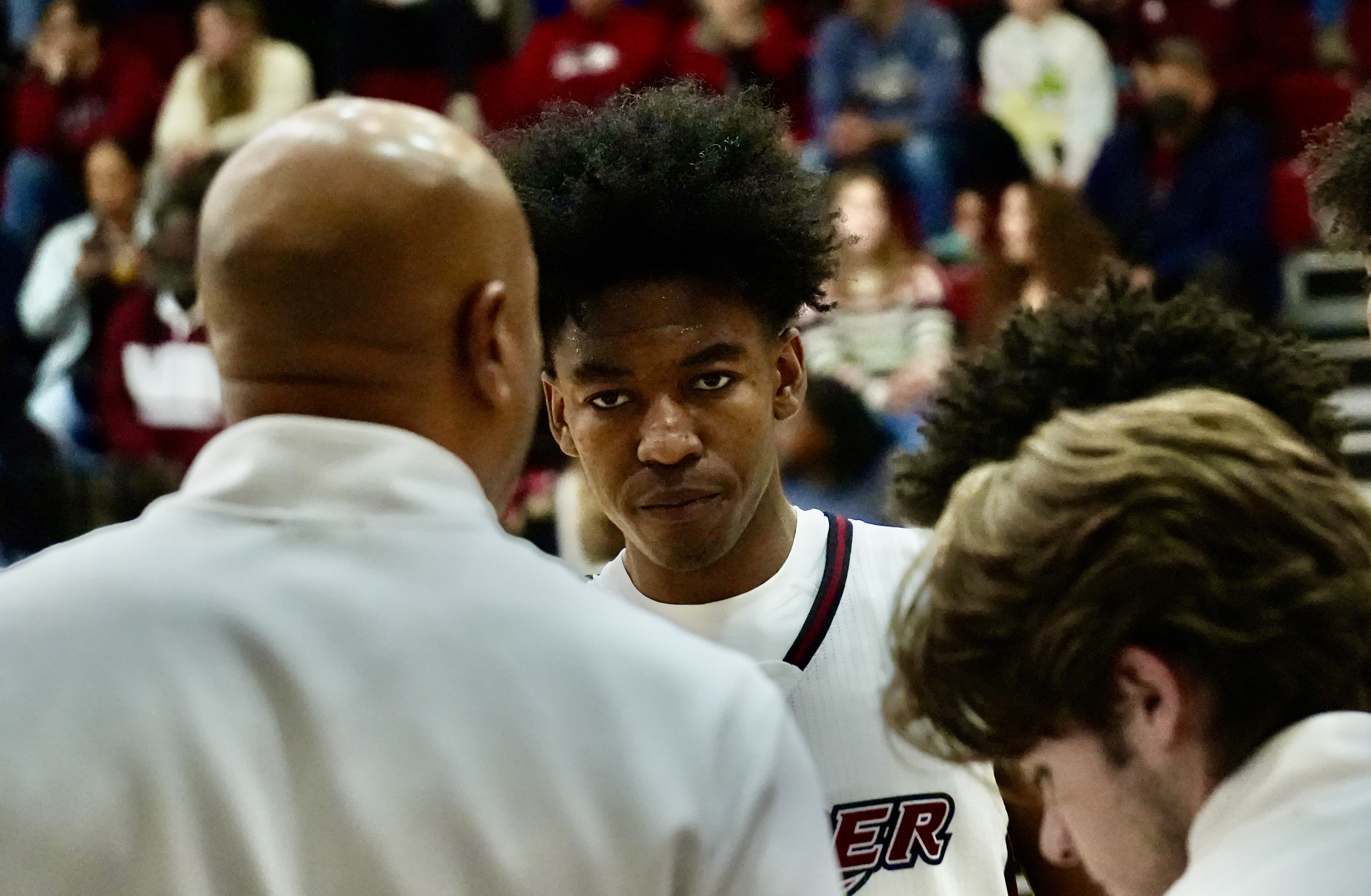
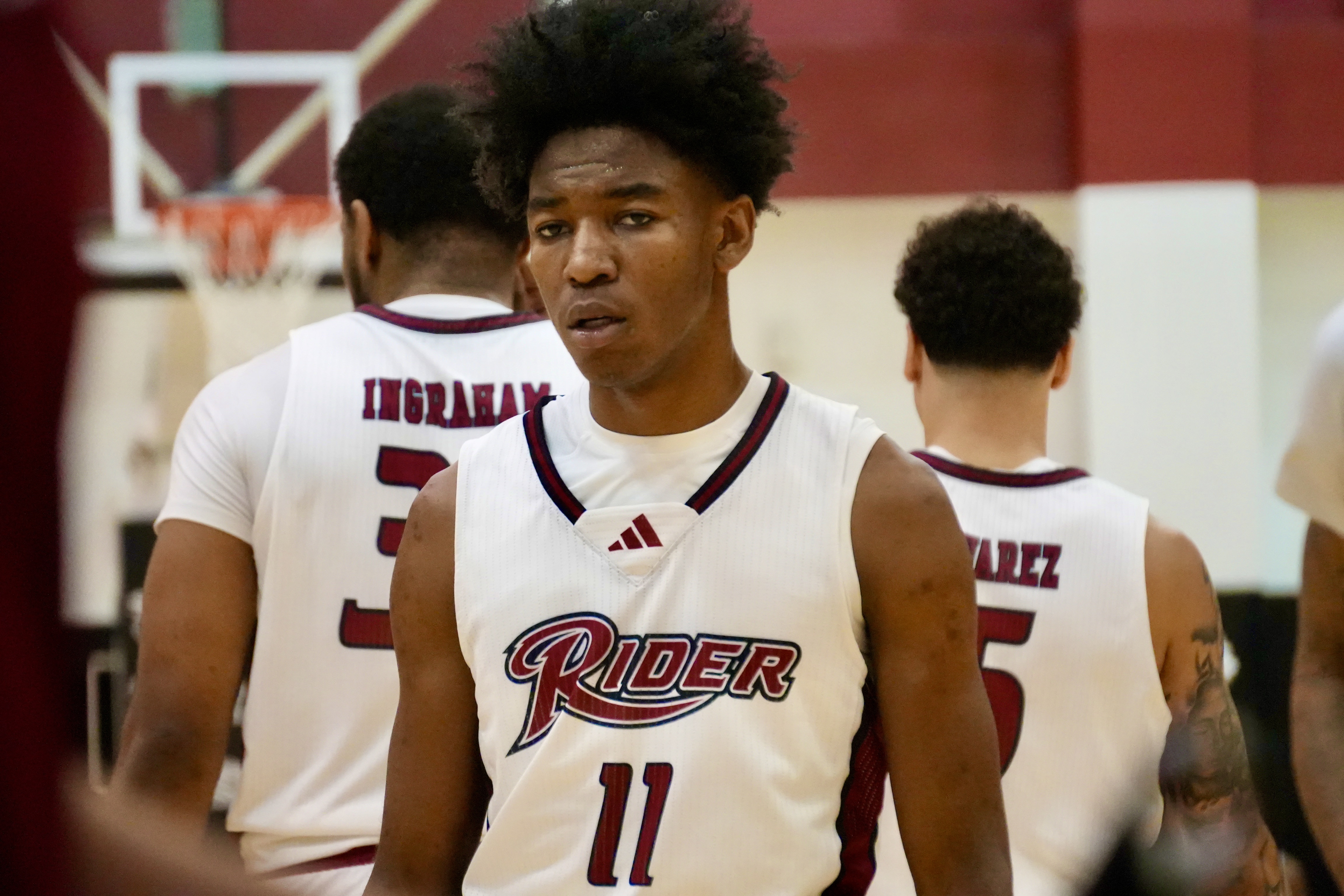
Tonight… True to Minnis’s prediction, Burton made his first collegiate start in just his 10th college, and 2nd MAAC league, game. The man knows his protege… His performance thus far suggests he will be a fixture in Rider’s lineup for years to come—a testament to the power of patient, deliberate choices in a world often obsessed with instant gratification.

The relationship between Burton and Minnis has been central to this journey. Minnis, a self-described “basketball lifer” with a quiet wisdom honed through decades in the game, has been the steady hand guiding Burton through a labyrinth of pressures and expectations. Minnis’s experiences navigating the high school and college recruiting processes for his own son, Biggie Minnis (Texas Tech, Rhode Island and Wright State), and stepson, Jamir Hanner (Marshall and Buffalo), gave him the perspective needed to help Burton avoid common pitfalls.

At every juncture, the two have chosen what Frost might call “the road less traveled.” And as Frost so poignantly concluded, “that has made all the difference.” For Burton, the difference isn’t just about where he is today but the foundation he has built for the future—a foundation rooted in authenticity, hard work, and a refusal to conform for conformity’s sake.

In an era where basketball decisions are often dictated by trends and peer pressure, Flash Burton and Shon Minnis have shown that there is another way. Their story is not just a basketball story; it’s a story of trust, vision, and the courage to forge one’s own path. And in doing so, they remind us that the road less traveled, though fraught with challenges, often leads to the most rewarding destinations.

Some real South Philly Shit… #Respeck