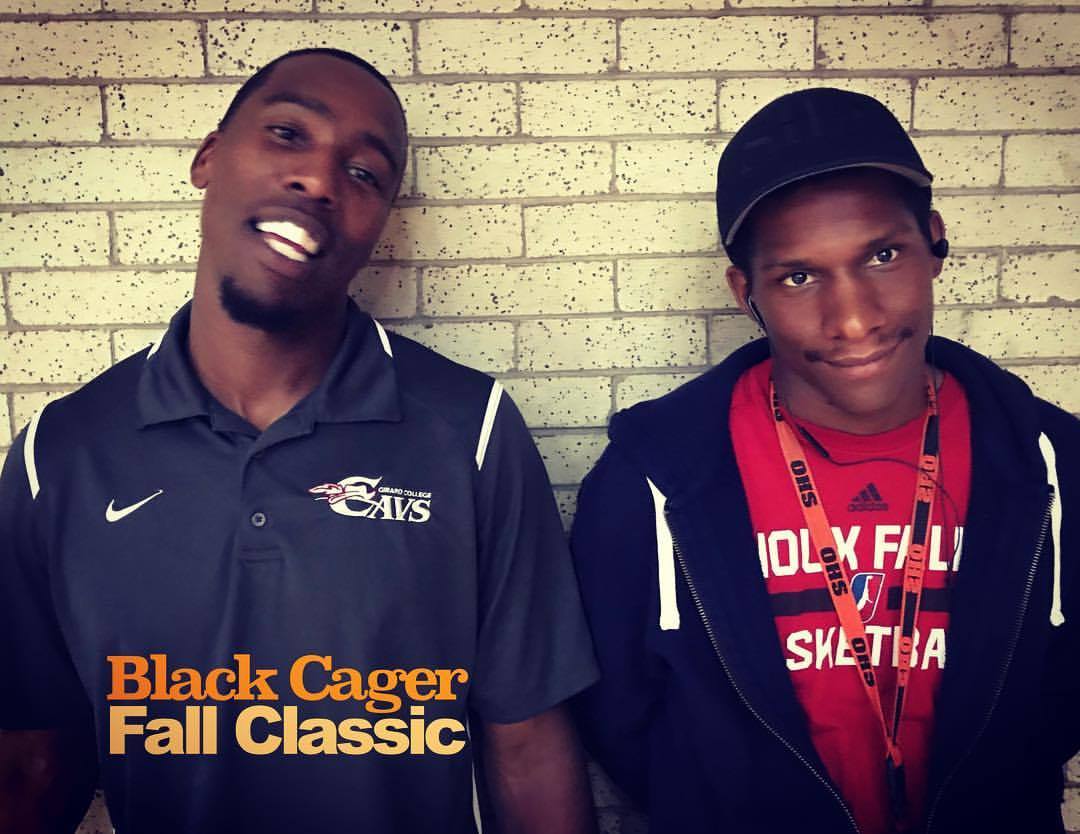
PHILADELPHIA, PA – The death of Antwann Postell, announced this morning in Philadelphia, will not make national headlines. It will not trend on national social media, nor will it prompt statements from elected officials. Yet in the neighborhoods of West Philadelphia, where the constant hum of sirens and the echo of bouncing basketballs create a dissonant soundtrack to daily life, his absence rings with a profound and devastating silence. Postell, a mentor, coach, and a quiet force of redemption, was 35. His sudden passing leaves a void not easily measured in column inches, but in the lives of young men for whom he was a lifeline, a mirror, and a map.
Postell’s story was not one of unblemished virtue, but of hard-won transformation. He emerged over the past decade not as a saint, but as a stalwart—a quintessential “credible messenger” in a city that desperately needs them. He never hid nor minimized his past, including time served in a state penitentiary. In a world where at-risk youth have learned to expertly detect condescension and false promises from outsiders, this history was not a liability; it was the foundation of his authority. He was not a visitor from a safer, more privileged world coming to preach. He was a guide who knew the treacherous terrain because he had walked it, stumbled in it, and found a way out.
The Currency of Credibility
In the ecology of urban mentorship, theoretical advice is cheap. The currency that matters is credibility, earned through shared experience. For the young men on the cracked asphalt courts of West Philly, Postell possessed an enormous amount of this “street credibility.” His warnings about the swift, dead-end finality of violence or the soul-crushing grind of incarceration carried weight because they were not abstract lessons. They were etched in memory, written in the language of personal consequence. When he spoke of lost time and missed opportunities, he spoke from a place of profound, lived loss. This bypassed the reflexive skepticism of a teenager who has heard too many hollow sermons. It built a bridge of trust where other well-intentioned programs often find only a moat of distrust.
Postell understood, at a deep and intellectual level, that he was part of a critical socialization process. He knew the basketball court was more than a place to play a game; it was a powerful classroom. Under the rusting rims and fading lines, he taught the norms and values that sports can instill—teamwork over selfishness, discipline over impulse, resilience over surrender. He used the game to foster communication, leadership, and a sense of identity that wasn’t tied to a corner or a crew, but to a team. For young men often stripped of dignity by systemic neglect, he used the sport to rebuild self-esteem and forge a sense of belonging. It was a two-way process: he taught the game, and through their shared interpretation of its struggles and triumphs, they learned about life.
Heir to a Sacred Legacy
In this sacred work, Postell was one of the most prominent modern heirs to a legendary Philadelphia lineage. He walked in the footsteps of giants like Sonny Hill, Claude Gross, Tee Shields, Sam Rines, Sr., and James Flint—men who understood that coaching in this city was never just about developing players, but about building character and saving lives. They were the architects of an alternative infrastructure of care in neighborhoods where such structures are scarce. Postell took up that mantle, not in a lavish gym, but on the same streets where those legends started, tending to the same deep-seated needs with the same fierce, paternal love. He was a living link in a chain of mentorship that has held entire communities together for generations.
His death, therefore, is not merely the loss of one man. It is a rupture in that vital chain. It leaves a monumental void in the intricate and fragile support network that exists just beneath the official surface of the city. Who now will be there for the 3 a.m. phone call from a kid in crisis? Who will have the earned right to look a young man in the eye and say, “I’ve been where you are, and this path leads nowhere”? The institutional memory of how to navigate from despair to hope—memory held in one man’s heart and stories—is now suddenly, tragically, gone.
The Flicker of Hope He Leaves Behind
There is, perhaps, a fragile hope to be found in the nature of Postell’s work. His teachings were not kept in a manual but embedded in the hearts of those he coached. The real testament to his life will be if the young men he mentored—those who felt the grip of his hand on their shoulder, heard his blunt wisdom in a timeout huddle—can now step forward to keep his teachings alive. The true success of a credible messenger is not in creating dependents, but in creating a new generation of messengers. The legacy of Sonny Hill lives on in every coach who teaches more than a pick-and-roll. So too must Postell’s spirit live on in the next young man who chooses to put down a weapon and pick up a clipboard, who uses his own hard past to forge a safer future for the kid behind him.
Antwann Postell’s life was a testament to the radical power of second chances and the transformative potential of authentic, earned connection. His death is a stark reminder of how precious and precarious such forces are in our cities. We mourn not just a coach, but a cornerstone. And we are left with a pressing question for Philadelphia and every community wrestling with violence and lost youth: How do we identify, support, and protect the next Antwann Postell before his voice, too, is silenced? The game on the West Philly courts will go on. But the guiding voice from the sidelines, the one that spoke with the hard-earned authority of a life redeemed, is now heartbreakingly still.
PHILADELPHIA, PA – In the constellation of American basketball talent, certain places have become fixed stars, producing a rhythm and a archetype of player as reliable as the changing seasons. New York City guards carry a certain swagger, Philadelphia guards a specific mental and physical toughness. And in recent years, a new locus has emerged, a crucible for backcourt talent that demands the attention of college basketball’s power brokers: Harrisburg, Pennsylvania.
Shakur Starling, Central Dauphin junior guard
This is not a fluke, but a tradition being built in real time. It’s a lineage defined by Chance Westry and Malachi Palmer—elite guards who honed their games here before taking the well-trod path to national academies and, subsequently, the bright lights of the Big 10, ACC and Big East. Their departures created a vacuum, a question of who would next assume the throne. The answer is already here, and he is not following the same script. His name is Shakur Starling, a junior guard at Central Dauphin High School, and he is poised to become the most compelling recruitment story in the region, a prospect whose substance may ultimately outshine even his considerable flash.
The Harrisburg Guard: A New Archetype
To be a Harrisburg guard in 2025 means something. It carries a weight and an expectation. It means you are battle-tested in gyms where space is a luxury and physicality a given. It implies a defensive tenacity, a chip-on-the-shoulder grit forged in the crucible of Mid-Penn Conference play. Westry and Palmer established this brand—long, athletic, versatile perimeter players who could dictate the terms of a game on both ends.
Shakur Starling is the latest model, inheriting and evolving this prototype. He has assumed the mantle as “the guy” in Harrisburg, not through self-proclamation, but through a quantum leap in performance over the past year. His game is a testament to the area’s burgeoning reputation, but his story, rooted deeply in family and faith, suggests a different kind of journey—one that will unfold not at a distant basketball factory, but right here at home.
Shyheim Starling (l), freshman guard and Shakur Starling (r)
A Foundation of Character, A Profile of Excellence
Before the first crossover dribble is admired, one must understand the foundation. Starling is, by every account, poised and unfailingly respectful—a young man who looks adults in the eye and understands the weight of “please” and “thank you.” This is not incidental. It is the direct product of an exceptional upbringing by his parents, who are raising Shakur and his three brothers with a clear emphasis on faith, academics, and accountability.
This bedrock character is his first and most persuasive selling point. He is an outstanding student from a family deeply grounded in their faith. In an era of transfer portals and fleeting commitments, a prospect like Starling represents stability. It is why he already holds an offer from John Griffin at Bucknell University, a Patriot League institution that prizes scholars as much as scorers. One can confidently project that nearly every Ivy and Patriot League program will soon enter the fray, seeing in Starling the ideal marriage of academic readiness and athletic promise.
The Game Travels: From Central Dauphin to the EYBL
Do not, however, mistake this strong academic and moral profile for a limited game. Starling’s talent transcends zip codes. He has already proven his mettle on the Nike EYBL circuit, the most competitive grassroots basketball arena in the country, playing for Baltimore-based Team Melo. This is critical. It demonstrates his skills are not merely a product of local competition; they translate against national, elite-level peers.
Starling knocks down a 3 pointer in tough loss to Bonner
On this stage, his athleticism announces itself without subtlety. He possesses a quick-twitch explosiveness and open-floor speed that are innate—you cannot teach a player to get off the ground as he does. In transition, he is a runaway train, capable of finishing through contact and with the acrobatic body control to convert seemingly impossible circus shots at the rim. Defensively, his combination of that athleticism, a strong motor, and high effort makes him a nightmare. He has the tools to be a lockdown, multi-position defender, the kind of “two-way potential” that jumps off the screen to college coaches.
The Blueprint for a High-Major Future
From a purely basketball perspective, Starling is just beginning to scratch the surface. At Central Dauphin, he often operates as an off-guard in half-court sets, using his athleticism to slash and attack. His ability to go through high school bigs is already notable. Yet, the roadmap to becoming a high-major standout is clear.
First, the ceiling of his offensive game will be determined by the consistency and range of his three-point shot. He is solid now, but to transition from an athletic slasher to an elite “3-and-D” wing—the most coveted commodity in modern basketball—requires making that significant leap. Second, to become a primary ball-handling playmaker at the next level, his decision-making must continue to evolve, learning patience and picking his moments within a system.
The raw materials, however, are undeniable. As one evaluator noted, “The athletic prowess is there as far as just speed, explosiveness… When he gets to college, when you have more space, he is going to be a problem for four years.”
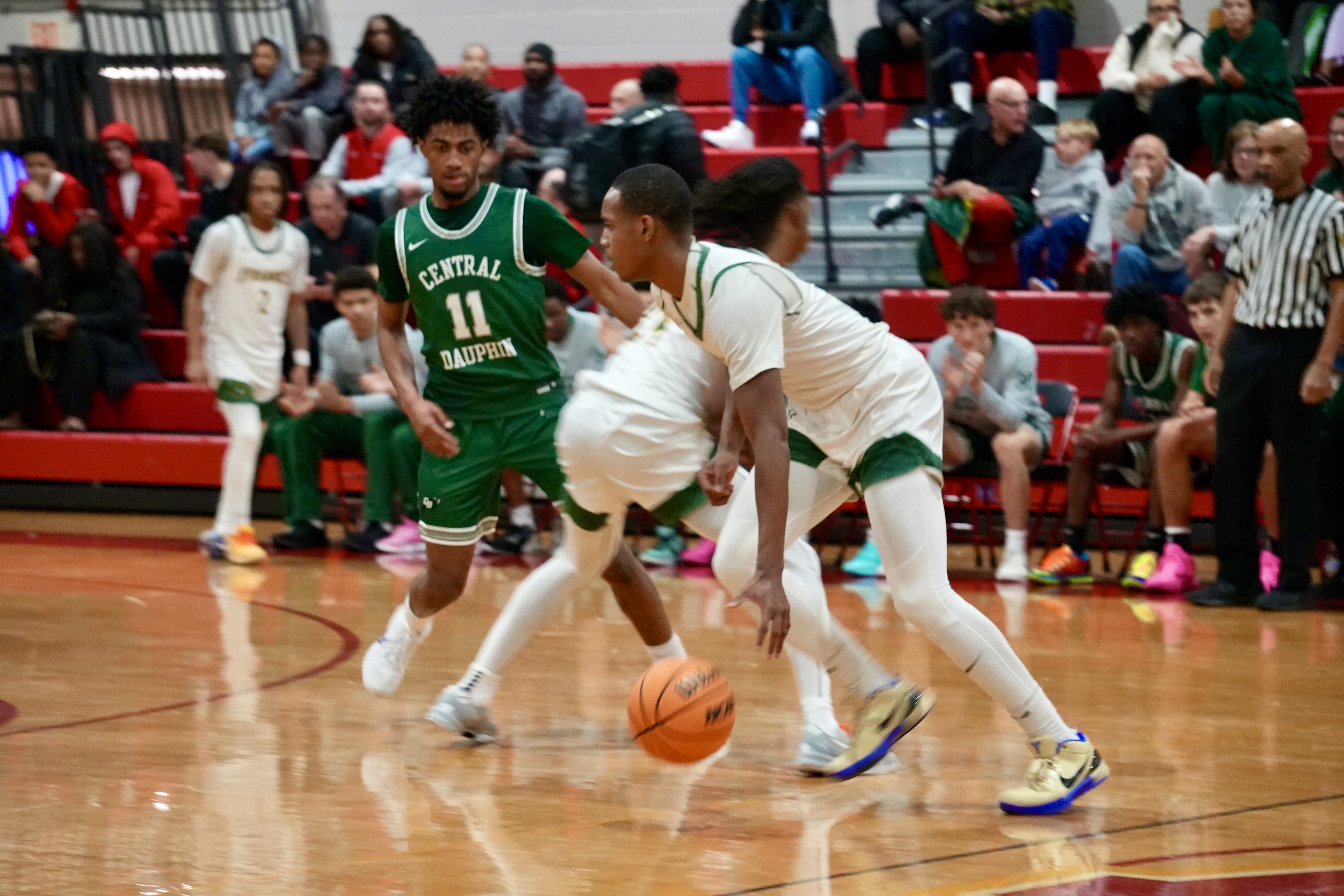
Starling matched up against Bonner-Prendie star guard Korey Francis
A Different Path, A Loyal Legacy
This is where Shakur Starling’s story diverges from his predecessors. His deep commitments to family, church, school, and teammates make a late transfer to a national academy highly unlikely. Unlike Westry and Palmer, we are likely to see this recruitment play out in real time, in the gym at Central Dauphin. This loyalty is rare, and it adds another layer of allure for college coaches seeking a program pillar, not just a transient talent.
The time for passive interest is over. Coaches from the CAA, Atlantic 10, and, yes, the Big East, should be making their pilgrimages to Harrisburg now. They will see a top-tier mid-Atlantic prospect whose best basketball is emphatically ahead of him. They will see a scholar-athlete whose character is as polished as his crossover. And they will see the next chapter in the story of the Harrisburg guard—a chapter defined not by departure, but by legacy; not just by athleticism, but by an unwavering foundation.
Shakur Starling is more than a prospect; he is a statement. He proves that in today’s nomadic basketball landscape, a crown prince can choose to build his kingdom at home, and in doing so, become an even more compelling figure for the programs wise enough to see the complete picture.
PHILADELPHIA, PA – In the era of basketball as personal branding, where elite high school prospects migrate to national academies and highlight reels are currency, a counter-narrative is quietly building in the Philadelphia suburbs. His name is Korey Francis, a junior guard at Monsignor Bonner & Archbishop Prendergast Catholic High School. To the casual observer scanning national rankings, he may not yet register. But to watch him play—to truly understand the fabric of his game—is to witness one of the finest, most complete guard prospects in the nation. He is not a product of the assembly line; he is a testament to the enduring value of loyalty, intelligence, and old-school grit.
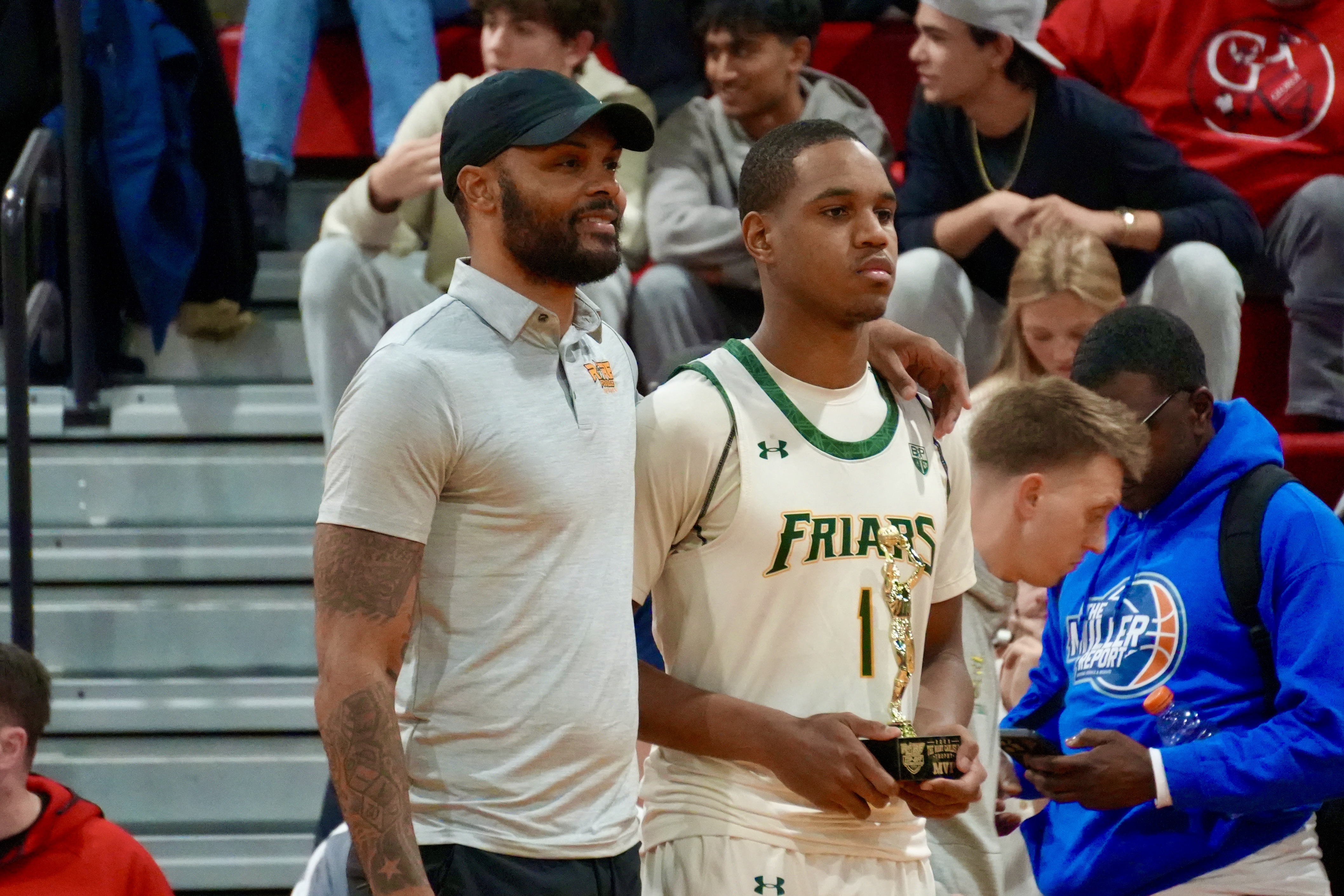
Korey Francis, Bonner-Prendie junior guard
A Player Without a Position, A Team Without a Ceiling
At Bonner-Prendie, Francis is a basketball paradox listed at guard. Under the shrewd guidance of Coach Billy Cassidy, Francis morphs from game to game, even possession to possession, into whatever his Friars need to win. With a roster featuring smaller, quicker perimeter players, Cassidy deploys Francis as a point guard, shooting guard, small forward, and even a burly power forward. He initiates the offense, posts up smaller defenders, switches onto bigs defensively, and crashes the glass with the tenacity of a forward. This positional fluidity isn’t a gimmick; it’s a master class in basketball utility. Yet, when the clock winds down and the outcome hangs in the balance, the ball inevitably finds its way to Francis’s hands. He is the calm in the chaos, the team’s true north.
The Anatomy of a Floor General
Projecting Francis to the next level clarifies his ultimate destiny: he is a cerebral, classic point guard. His strengths read like a manifesto for purists who believe the game is won between the ears.
His court vision and playmaking are elite. He pushes the ball with purpose, not panic, and sees passing lanes before they materialize. He is a quarterback in high-tops, running the offense with a veteran’s poise, his primary objective being to make his teammates more effective. His physicality is his signature. At a sturdy 6’3″, he leverages his strength like an NFL fullback, using a deft handle and a decisive first step to get a shoulder into defenders, creating space to barrel into the lane. Once there, he is a maestro of the “penetrate-and-pitch” game, finishing through contact or dishing with perfect timing.
Furthermore, he is an exceptional rebounder for a guard, a skill that instantly triggers transition opportunities. Defensively, his strength and intelligence allow him to guard multiple positions, effectively switching onto both bigger and smaller opponents. This is not a flashy scorer hunting shots; this is a conductor orchestrating a victory.
The Measurable Questions and the Intangible Answers
The scouting report will rightly note areas for growth: his three-point shot is inconsistent, and he lacks the blinding, elite athleticism commonly associated with top prospects in leagues like the SEC or Big Ten. He is a worker, not a wow-er.
But to focus solely on these metrics is to miss the forest for the trees. Francis is only a junior, with ample time to refine his jumper—a project far more achievable than instilling the innate feel for the game he already possesses. More importantly, his perceived “lack of elite quickness” is mitigated by a high basketball IQ that allows him to anticipate and dictate, rather than simply react. He wins with positioning, strength, and savvy, assets that translate to any level of competition. He is, in essence, D1-ready in the categories that are hardest to teach: leadership, physicality, and clutch decision-making. His “Iron Man” durability and unflappable demeanor under pressure are the bedrock of his value.
The Loyalty and Leadership of a Throwback
In an age of transactional basketball, Korey Francis’s story is profoundly refreshing. While peers of his stature have left Philadelphia for the national academy circuit, Francis has remained fiercely loyal to Coach Cassidy and Bonner-Prendie. This commitment speaks to a character often absent from the recruiting discourse. He is not just building a team; he is building a community.
Off the court, Francis embodies the ideal of the scholar-athlete. A straight-A student and the elected president of his class, he demonstrates that elite competitiveness and academic excellence are not mutually exclusive but mutually reinforcing. This discipline and intelligence are palpably evident in his play. He processes the game like an honor student, solving defensive schemes in real time.
The Verdict: A Prospect Worth Betting On
The modern basketball landscape is littered with athletic marvels whose games lack soul and structure. Korey Francis is the antithesis. He is a throwback to a time when the point guard was an extension of the coach, tasked with elevating everyone around him.
Yes, he must continue to extend his shooting range. Yes, he will face athletes at the next level who can match his strength. But to bet against Korey Francis is to bet against intelligence, against leadership, against an unwavering will to win. He is not just a mid-to-high major Division I point guard prospect; he is the prototype of a player who wins championships because he makes the complex simple and his teammates better.
In the noisy, hype-driven world of high school basketball, the steady, commanding drumbeat of Korey Francis’s game is a sound more and more college coaches are beginning to hear. They are listening to the future of a program—a leader who doesn’t just play the game, but truly understands it.
PHILADELPHIA, PA – In the cramped, sweat-stained gyms of Philadelphia, where the echoes of a hundred years of basketball history still reverberate, a certain archetype has been forged. It is not always the flashiest, nor the one chasing the highest point totals. It is the guard who understands that defense is a language, unselfishness is a creed, and winning is the only statistic that truly endures. From the legendary playgrounds to the hallowed Big 5 floors, this player has been a constant: gritty, intelligent, and indispensable to any winning effort.
Micah Waters, Friends Select senior guard
Today, that mold is perfectly embodied by Friends Select School senior Micah Waters. And in a just basketball world—the one that existed even a decade ago—his phone would be ringing with Division 1 scholarship offers. But we are not in that world. We are in the era of the transfer portal and NIL, a paradigm shift that has left exemplary high school prospects like Waters in a dangerous limbo. In the rush to recruit experienced college veterans or chase viral highlights, college coaches are overlooking the foundational players who build programs. For any low- to mid-major program seeking not just a transient talent, but a culture-defining pillar, a trip to Center City Philadelphia to evaluate Micah Waters is not just advisable—it is urgent.
More Than a Prospect: A Philadelphia Story
To understand Waters’ game is to understand his roots. He is the son of the late Micah Waters, Sr., a long-time Philadelphia Police officer who himself played for the famed West Philadelphia Speedboys before suiting up for Cabrini University. This is not incidental biography; it is the bedrock of his identity on the court. He plays with the discipline, responsibility, and communal pride of a public servant’s son. He plays, as those classic Philly guards do, not for stat sheets, but for the final score. His intelligence and high character are repeatedly noted by coaches and teachers, the marks of a young man who would represent a university with integrity.
Ten years ago, a player with this pedigree, this makeup, and his tangible skills would have been a coveted get for a slew of programs. Today, he waits. He is a casualty of a new calculus that undervalues the steady, winning player in favor of the transfer with immediate, if sometimes fleeting, experience. It is a system that risks discarding diamonds before they are ever polished.
A Tenacious Blueprint: Defense as a Destructive Force
The foremost argument for Waters’ scholarship-worthiness begins on the defensive end. In an offensive-centric age, he is a throwback lockdown artist. Scouts label him an elite, tenacious man-to-man defender, routinely tasked with shadowing an opponent’s top perimeter scorer. With long arms and anticipatory instincts, he is a disruptor in passing lanes. But his defense is more than steals; it’s a form of mental attrition. He is adaptable, capable of guarding multiple positions, and plays with a physical grit that sets a tone for his entire team. In the playoff crucible or on the Under Armour Circuit with Philly Pride, Waters has proven his defense travels and intensifies against high-level competition. This skill alone—the ability to neutralize another team’s best guard—is a standalone, roster-worthy talent.
Purcell Coles, Friends Select Head Coach
The Modern Complementary Offensive Skill Set
Offensively, Waters is not a heliocentric, ball-dominant creator. That is not his role, nor is it the role of the classic Philly guard he emulates. His value lies in high-efficiency, high-IQ play that perfectly complements primary scorers. He is a streaky but potent three-point shooter, particularly deadly as a spot-up weapon in the offensive system of coach Purcell Coles, where his understanding of spacing and timing shines. He is a strong finisher in transition, leveraging his defensive efforts into easy baskets. His high basketball IQ allows him to move within complex offensive schemes—he is noted to have a strong grasp of systems—ensuring he is always a productive, rather than a disruptive, offensive piece.
The Grit and The Growth: A Leader’s Profile
Perhaps the most intangible, yet critical, asset Waters possesses is his demeanor. He is described as a vocal leader, playing with a palpable toughness and a winner’s mentality. This is the glue that holds teams together through conference play and tournament pressure. Yes, that intensity can occasionally boil over, leading to unnecessary fouls—a noted area for growth. But coaches consistently prefer to temper a fiery competitor than to ignite a passive one. His occasional struggle to create his own shot off the dribble is a fair critique, defining his ceiling as a primary option. But that misses the point. His ceiling as a program-changing role player—a defensive stopper, a clutch shooter, a culture-setter—is immensely high.
A Perfect Fit for the Right Program
Micah Waters’ ideal role is clear: a gritty, defensive-minded wing who spaces the floor, excels in transition, and provides veteran-like leadership from day one. He is the ultimate “winner” archetype who makes players around him better through effort, intelligence, and selflessness. He would thrive in fast-paced, perimeter-oriented offenses that value defensive accountability. For a coach looking to build a sustainable program, not just rent a one-year scorer, Waters represents the kind of foundational player around which successful teams are constructed.
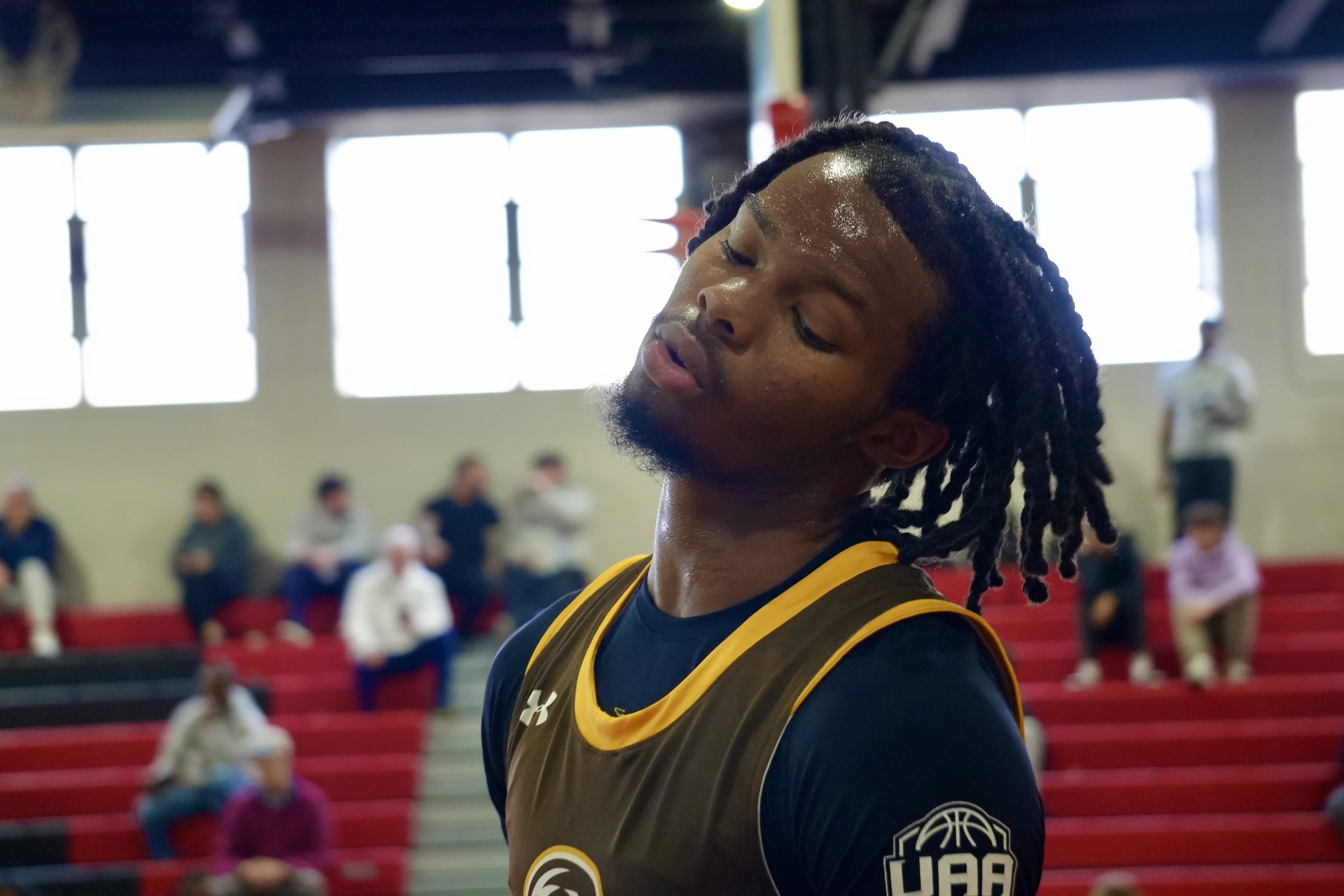
Micah Waters after hearing he has fouled out against Penn Charter
The current model of college athletics, with its frenetic portal churn, is a reality. But it shouldn’t be an excuse for myopia. There is immense value in identifying, recruiting, and developing a young man of character, toughness, and specific, winning skills. Micah Waters isn’t just a collection of strengths and weaknesses on a scout’s sheet. He is the continuation of a Philadelphia basketball legacy, a coach’s son in spirit, and precisely the kind of dependable talent that becomes the heart and soul of a successful college program.
The gym doors at Friends Select are open. The proof of a hundred years of basketball wisdom is on the court, waiting to be seen. It would be a profound shame—and a missed opportunity—if the new era of college basketball meant overlooking a young man who so perfectly embodies the timeless virtues of the old one.
PHILADELPHIA, PA – In the relentless, transactional churn of modern college athletics—where rosters are reshuffled annually via the transfer portal and the pursuit of a “finished product” often overshadows the art of cultivation—a quiet but significant rebellion is being staged not in an arena, but in a high school gym.
On December 6th, the Rare Footage Tip Off Showcase at Archbishop Ryan High School will offer a curated, compelling argument for a different path. In an era where recruiting high school players can seem a fading art, this event, meticulously crafted by the scouts and curators at Rare Footage, reminds us of the enduring value of foundational talent. It is a slate of games designed not just to appeal to fans, but to present college coaches with a rare, concentrated dose of projectable skill, competitive fire, and impeccable character.
The Curator’s Craft: Building a Must-See Schedule
What makes this showcase exceptional is its intentional architecture. Rare Footage has moved beyond simply booking teams. They have constructed narrative arcs and competitive contrasts, understanding that the most revealing evaluations happen under the pressure of a compelling storyline. The schedule is a four-act play designed to test every facet of a prospect’s game.
Carter Smith, Sophomore Guard, Penn Charter
Act I: The Veteran vs. The Prodigy The curtain rises with a Philadelphia private school chess match. Friends Select, led by the poised and savvy senior guard Micah Waters, will try to contain the mercurial brilliance of Penn Charter’s Carter Smith, a sophomore with game-breaking talent. It’s a masterclass in contrasting tempos: experience and defensive discipline versus youthful, explosive ambition.
Act II: The Clash of City Identities Next, the showcase pivots to pure, unadulterated grit. South Shore (NYC) versus West Catholic (PHL) is more than a game; it’s a battle of urban basketball ethos. Rare Footage has pitted two programs renowned for toughness, defensive intensity, and relentless pride. This is where intangibles like heart and resilience are scouted as closely as jump shots.
Korey Francis, Bonner Prendie, junior guard
Act III: The Marquee Argument Here lies the centerpiece, the matchup that validates the entire premise of the event. In the transfer-portal era, why should a mid-to-high-major coach invest a scholarship in a high school guard? The duel between Central Dauphin’s Shakur Starling and Bonner Prendie’s Korey Francis is the answer. Rare Footage has engineered the perfect stylistic contrast: Starling’s explosive, north-south athleticism against Francis’s cerebral, physically imposing control. It is a scout’s dream and a definitive test for two of the Mid-Atlantic’s premier 2027 prospects.
Shakur Starling, Central Dauphin, junior guard
Act IV: The Grudge Match The finale ensures the intensity never wanes. A simmering local rivalry between the host Archbishop Ryan and Academy of the New Church (ANC)—fueled by a disputed preseason result—promises a visceral, emotionally charged contest. It’s a test of poise under the pressure of pure rivalry, another layer of evaluation expertly woven into the fabric of the day.
Beyond the Bracket: A Night of Resonance
Thomas Sorber (r) and NBA Commissioner, Adam Silver (l)
Rare Footage’s effort extends beyond the court. The event will pause to retire the jersey of, Thomas Sorber, a Ryan legend, a poignant reminder of the lasting legacy a dedicated student-athlete can forge. This ceremony connects the past to the present, framing the evening’s competition as part of a continuum—not just a transaction, but a tradition.
The Headliners: A Case Study in Foundational Value
The Starling-Francis matchup is the thesis statement of the showcase.
Shakur Starling represents high-ceiling potential. An explosive athlete with a Division I frame, his ability to attack the rim and create in the open court is undeniable. The blueprint for his ascent is clear: refine his perimeter shot and harness his defensive aggression. Off the court, his strong academic record and interest from Patriot and Ivy League schools paint the picture of a complete scholar-athlete, the kind of player who becomes a pillar of a university community.
Korey Francis offers proven, polished production. A veteran of the prestigious Team Final program, he is a “smart, cerebral point guard and a natural leader.” He dominates with strength, savvy, and exceptional court vision, and his well-rounded stat lines are a testament to his consistent impact. He embodies the term “program pillar” off the court as well, serving as his school’s class president and carrying the academic credentials (Ivy/Patriot League interest) that make him a transformative recruit.
A Call for Visionary Investment
For coaching staffs from the Patriot, Ivy, A-10, CAA, and MEAC conferences, the Rare Footage Tip Off Showcase is not merely a convenient scouting trip; it is an essential one. In a sporting landscape cluttered with mercenary roster moves, this event presents the alternative: identifiable, investable talent.
The players here, particularly Starling and Francis, represent the sustainable model—the cornerstone you build with, not the temporary patch you apply. They are players who will grow in skill, leadership, and institutional knowledge over four years, fostering the kind of program culture and fan loyalty that cannot be portaled in.
The showcase on December 6th is a declaration. It is a testament to the curatorial eye of Rare Footage and a powerful argument that the future of the sport still runs through the passionate, competitive crucible of the high school game. In an age obsessed with the immediate, this is where one can secure a foundation.
CAMDEN, NJ – In the high-stakes theater of modern college basketball, where narratives are written in highlight reels and legacies are judged by draft night, it is easy to miss a story of quiet, consistent triumph. The case of DJ Wagner, the once-heralded prodigy from Camden, New Jersey, is too often framed as a tale of unmet potential. The chorus of critics points to the fact that he did not explode onto the scene as a one-and-done superstar, that other guards have seized the spotlight at Kentucky and now Arkansas. But to view his career through this narrow lens is to misunderstand the very definition of success. DJ Wagner is not a disappointment; he is the model of a modern, successful college athlete, building a formidable and valuable career on his own terms.
The Myth of the “One-and-Done” and the Reality of Role Players
The burden of expectation placed on DJ Wagner’s shoulders was immense. As the third-generation McDonald’s All-American, his destiny seemed preordained. The blueprint, crafted by his fervent supporters, was simple: dominate from day one, lead the nation in scoring, and head to the NBA in a blaze of glory. When that did not happen, the narrative quickly soured.
What this critique ignores is the fundamental nature of elite team sports. At programs like Kentucky and Arkansas, the arrival of other talented players like Reed Sheppard or Boogie Fland is not a failure on Wagner’s part; it is the reality of competing at the highest level. The mark of a truly valuable player is not always his ability to dominate the ball, but his capacity to adapt and contribute to winning. Wagner has done exactly that. He has consistently been the player his Hall of Fame coach, John Calipari, trusts to start and play substantial minutes—71 starts in 72 career games. This is not a consolation prize; it is the ultimate sign of respect. Coaches who are paid millions to win games do not entrust key roles to players who do not help them achieve that goal.
A Competitor, Not a Statistic
To watch DJ Wagner play is to see a young man who has mastered the unglamorous essentials of winning basketball. In an era where offensive fireworks often come at the expense of defensive effort, Wagner takes ferocious pride in his work on both ends of the floor. He is a tenacious on-ball defender, a trait that never shows up in a headline but is priceless in the grind of a Southeastern Conference schedule.
Furthermore, his conservative, turnover-averse style is a strategic asset. While flashier players may generate more buzz, Wagner’s steady hand in the backcourt ensures offensive stability. His improved efficiency this season—shooting a remarkable 52.4% from the field—demonstrates a player who is refining his game, making smarter decisions, and growing into a more complete athlete. This is not stagnation; it is maturation.
Redefining Value in the NIL Era
The financial landscape of college sports has fundamentally changed, and any evaluation of a player’s career must account for this new reality. The old model of “one-and-done or bust” is obsolete. DJ Wagner, through his consistency and marketability, is projected to earn between $3 and $4 million in NIL compensation over his college career. This is not a footnote; it is a central chapter in his story. He is achieving significant financial prosperity while simultaneously earning a degree and developing his game in a world-class environment.
This financial success, coupled with his on-court reliability, positions him perfectly for a long professional career, whether in the NBA, the G League, or overseas. He is building a sustainable athletic livelihood, insulated from the volatility that often shatters the dreams of players who peak too early or are built on a less complete foundation.
The Camden Legacy: More Than Just Points
Finally, the criticism from his hometown of Camden, while born of a deep and admirable pride, misses a crucial point. Representing a city is about more than just box scores and draft position; it is about character, resilience, and integrity. Through the noise and the shifting spotlight, DJ Wagner has carried himself with a quiet dignity. He has been a leader, a teammate, and an exemplary ambassador for his family and his city. He has shown the young people of Camden that success is not a single, fleeting moment of glory, but a sustained journey of hard work, adaptation, and professionalism.
(L-R) D.J. Wagner, Milt Wagner and Dejuan Wagner after the Simon Gratz vs. Camden H.S.boys basketball game at Woodrow Wilson H.S. in Camden, NJ on December 20, 2019. Camden won 72-52.
DJ Wagner’s career is a success story of the highest order. He has navigated the immense pressure of his pedigree, adapted to the fierce competition of top-tier college basketball, and carved out a role that makes his teams better. He is financially secure, fundamentally sound, and on the cusp of a professional career. In the end, the most persuasive argument for DJ Wagner is not found in defying expectations, but in transcending them. He has chosen substance over spectacle, and in doing so, he has built a career that is not only strong but truly admirable.
PHILADELPHIA, PA – In the carefully orchestrated ecosystem of college basketball, the early season schedule presents a curious paradox. While powerhouse programs from the Big 10, Big 12, Atlantic Coast and Southeastern Conferences rack up victories in their gleaming arenas, small schools from conferences like the MEAC, MAAC, and NEC often start their seasons with win-loss records of 0-7 or 1-8. These are not accidents of fate, but the result of a calculated, financial arrangement known as the “buy game”—a practice that is both a lifeline for the struggling and a cornerstone for the elite, revealing the stark economic realities of modern college athletics.
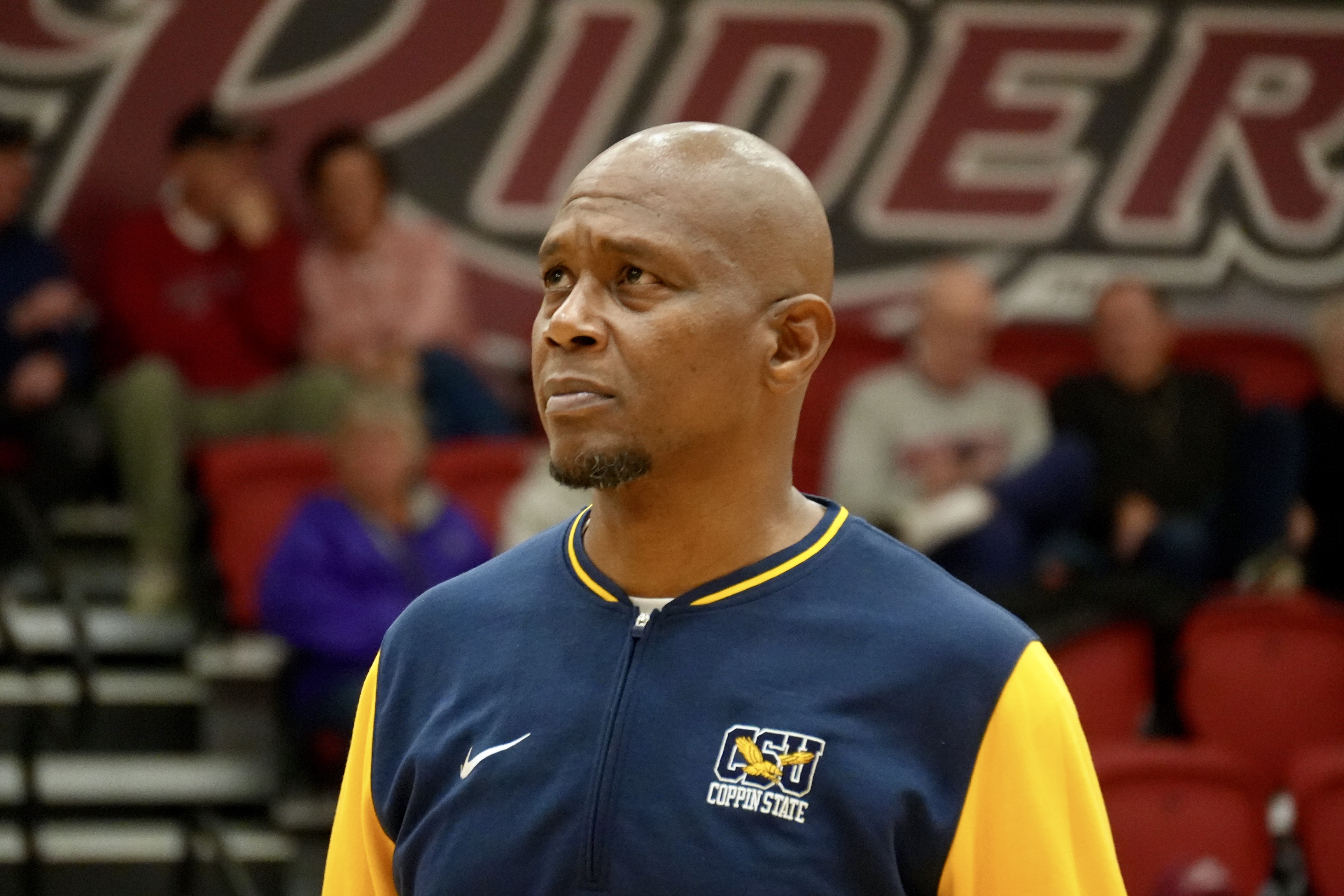
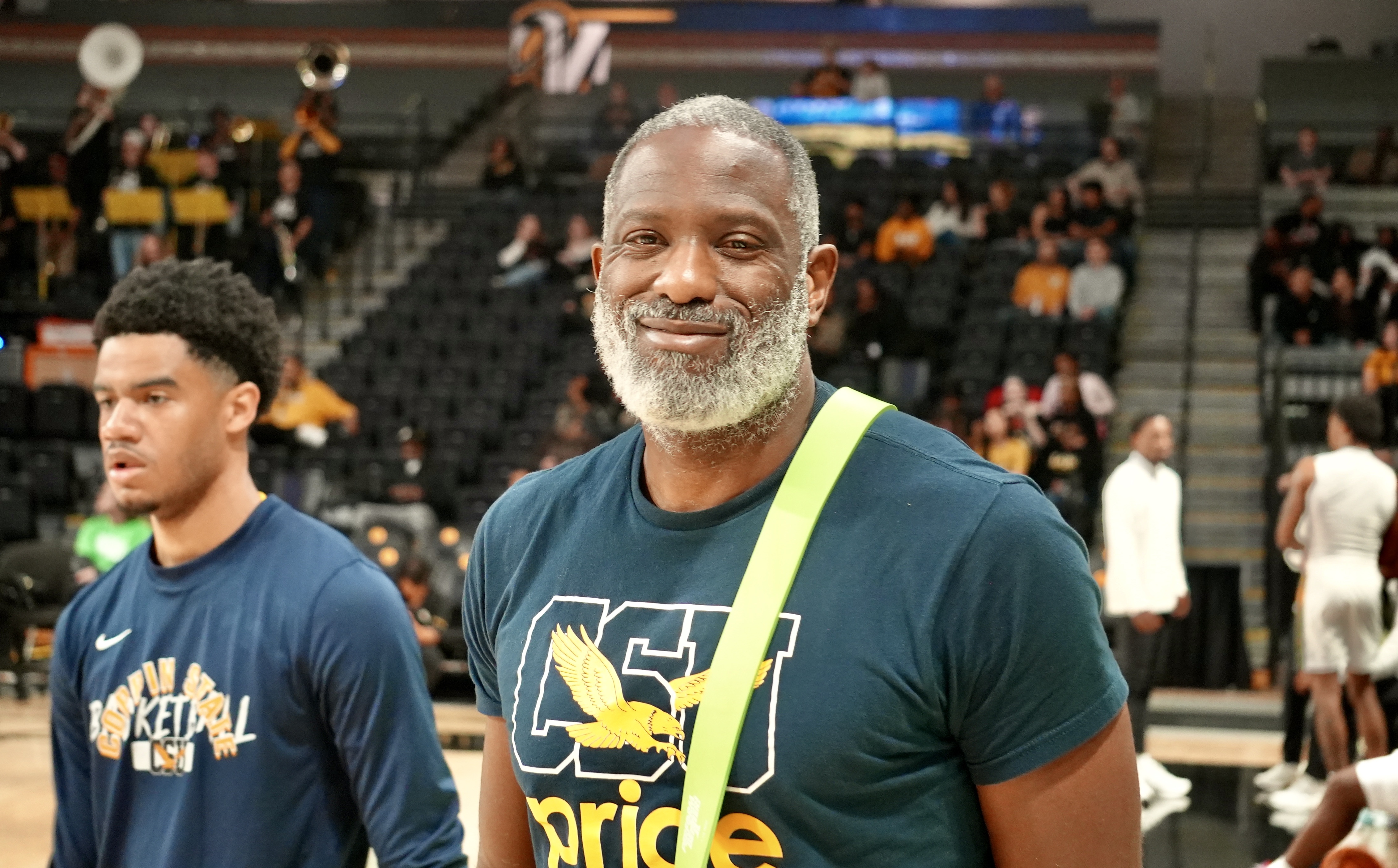
Larry Stewart, Coppin State Head Coach
In this unspoken bargain, high-major programs pay low-major counterparts anywhere from $70,000 to $120,000 to visit their home courts. The terms are clear: the visiting team gets a check; the host gets an almost guaranteed victory. For elite programs, these games are a strategic necessity, allowing them to pile up six, seven, or even eight Division I wins before entering the crucible of league play, padding their records and building momentum. For the low-majors, the calculus is different. As one financial officer at a mid-major program put it, “We run thin. There is not a lot of fat” . The revenue from these games—which can total as much as $600,000 for a school’s athletic department over a season—is not a luxury; it is a essential subsidy that keeps entire sports programs afloat
This financial lifeline, however, comes with a profound competitive toll, warping seasons, stymying coaching careers, and creating a distorted landscape where teams often have no true sense of their own identity.
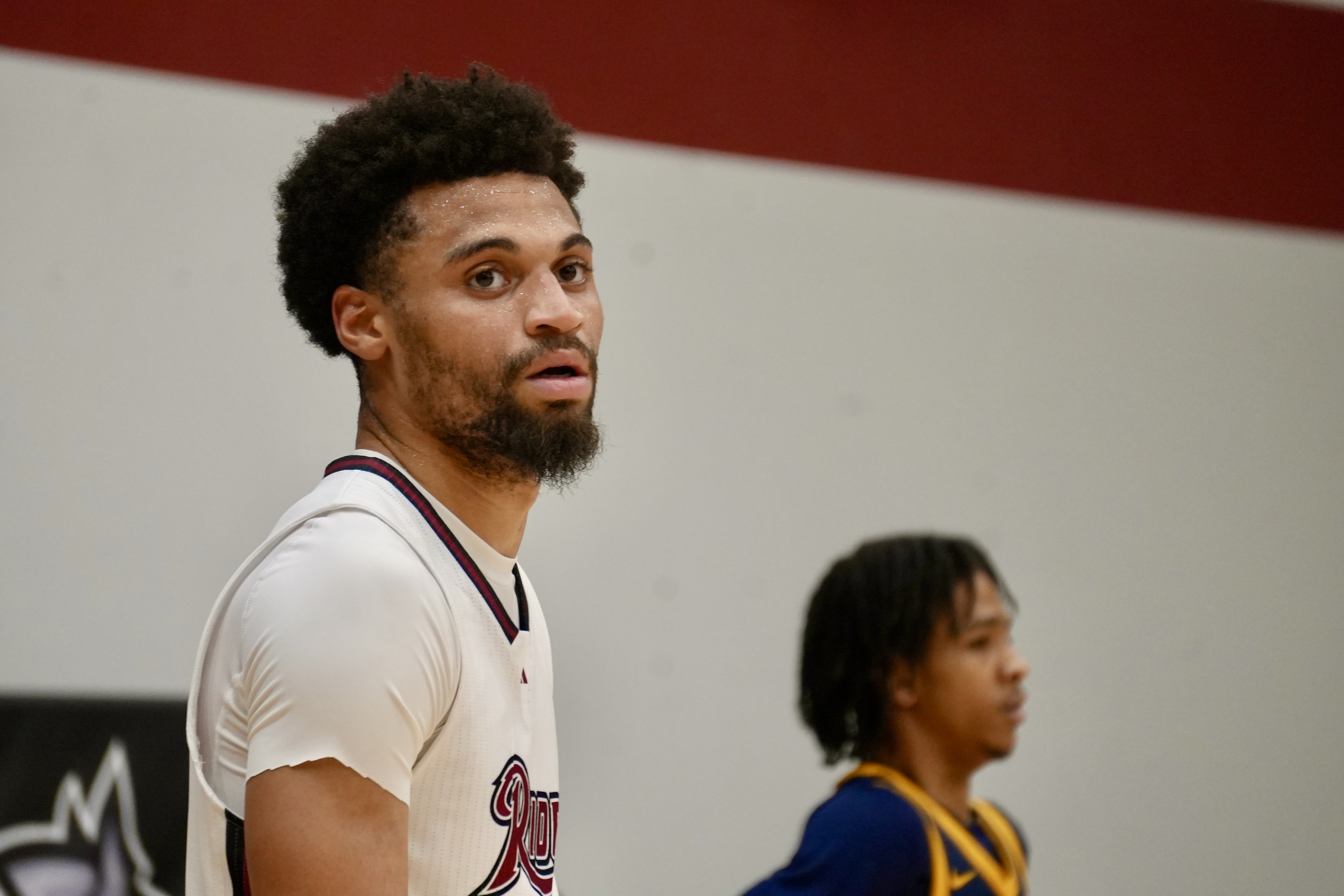
Flash Burton, Rider sophomore guard
The High-Major Calculus: Buying Wins and Building Brands
From the perspective of the nation’s basketball blue bloods, buy games are a rational and efficient investment. They represent a controlled environment to integrate new players, experiment with lineups, and build team chemistry without the immediate threat of a season-damaging loss. In an era where a missed NCAA tournament can mean a significant financial and reputational setback, these guaranteed wins help ensure that a team’s resume is robust enough to catch the eye of the selection committee come March.
Here’s a breakdown of how many teams from each of those conferences (ACC, Big Ten, Big 12, SEC) made the 2025 men’s NCAA basketball tournament.
Conference
Number of teams in 2025 NCAA Tournament
ACC
4
Big Ten
8
Big 12
7
SEC
14
The financial outlay, while substantial, is a manageable line item for Power 4 conference schools, which boast operating revenues averaging $97 million in the ACC, for example. For them, the cost of a buy game is easily offset by the revenue from a single home game, which includes ticket sales, concessions, and sponsorships. Furthermore, in the new world of revenue sharing and Name, Image, and Likeness (NIL), where schools are directing $20.5 million annually directly to athletes, the pressure to maintain a winning program—and the financial windfall that comes with deep tournament runs—has never been greater. A successful season built on a foundation of early wins helps drive the brand engagement that underpins these massive financial operations.
Khali Horton, Coppin State junior forward
The Low-Major Struggle: Survival and Sacrifice
For low- and mid-major programs, the decision to be a “buy team” is a Faustian bargain, balancing financial survival against competitive integrity. The revenue from these games is often the difference between solvency and severe cutbacks. As detailed in a 2020 report, the University of Montana projected a $5 million shortfall in its athletic budget, making the $75,000 to $95,000 earned from a single buy game against a Power 4 school a critical part of its financial planning. This money is used not for luxuries, but for fundamental needs—subsidizing coaching salaries, funding travel for conference play, and paying for equipment
However, this financial lifeline comes at a steep cost.
The Psychological Toll: Teams are conditioned to accept losing as a prelude to their “real” season—conference play. This can be demoralizing for players and coaches who, despite their talent and preparation, are thrust into mismatches night after night.
The Physical Toll: The travel is often grueling. Montana’s team, for instance, sometimes endures trips through two or three airports to reach a game, or marathon 13-hour bus rides to save costs, all while facing the prospect of a lopsided defeat.
A System of Dependence: This model creates a dependency, making it difficult for these programs to escape their subordinate status. The financial incentive to schedule these games can outweigh the competitive incentive to build a balanced schedule that could lead to more wins and long-term growth.
Kevin Baggett, Rider Head Coach
The Sacrifice: A Schedule Built on Blowouts
The brutal reality of this bargain is etched in the season records of teams like Coppin State and Rider University. Consider Coppin State’s schedule heading into its recent game against Rider:
vs Maryland: L 83-61
@ La Salle: L 87-59
@ James Madison: L 84-70
@ South Florida: L 100-50
vs Central Michigan: L 82-59
vs South Alabama: L 72-62
vs Central Penn: W 103-62 (a non-Division I opponent)
@ VCU: L 101-58
Rider’s path was similarly grim before the two teams met:
@ Virginia: L 87-53
@ Rutgers: L 81-53
vs Eastern: W 86-54 (a non-Division I opponent)
@ Texas: L 99-65
@ Houston: L 91-45
These are not just losses; they are systematic dismantlings. The differences in athleticism, strength, and size are so vast that the games become less a contest and more an economic exercise. For the players on the losing end, it is a grueling and demoralizing rite of passage, a season that begins with accepting defeat as a precursor to their “real” season in conference play.
The Coaching Conundrum: A Career Stuck in Quicksand
This system creates a particularly vexing problem for ambitious low-major coaches. Their career advancement depends on winning percentages and postseason success. Yet, they are forced to begin every season with a gauntlet of near-certain losses, cratering their overall record before they ever play a peer opponent.
How can a coach prove their program-building mettle when their team is structurally scheduled to start 0-7? The buy game phenomenon acts as a ceiling, trapping talented coaches in a cycle where achieving a strong winning percentage is a mathematical improbability. Their resumes are hamstrung from the outset, making the leap to a higher-profile job significantly more difficult, regardless of their actual coaching acumen.
An Ecosystem at a Crossroads
The buy game system is a microcosm of the broader inequities in college athletics, a landscape where the financial disparity is staggering. A single Power 5 conference, the SEC, generated $1.89 billion in revenue in 2018, a figure that eclipsed the $1.38 billion generated by the entire Football Championship Subdivision, a group of over 100 schools that includes many low-major basketball programs. This chasm is now being codified in new ways, as the advent of revenue sharing and large-scale NIL deals creates what some have called a “pay for play” tier, potentially relegating mid- and low-majors to a permanently lower competitive status.
The pros and cons from each perspective can be summarized as follows:
Perspective
Pros
Cons
High-Major Program
– Nearly guaranteed victories for record-building – Low-risk environment for team development- Protects lucrative postseason prospects
– Financial cost of guarantee payments – Risk of player injury in a mismatch- Can be criticized for lack of competitive scheduling
Low-Major Program
– Essential revenue for athletic department survival ($600k+/season) – Funds travel, salaries, and operational costs – Opportunity for players to compete in a high-profile environment
– Demoralizing starts to the season (0-7, 1-8 records) – Grueling travel and physical toll on players – Perpetuates a cycle of financial and competitive dependency
Yet, even as this system entrenches inequality, it is also being challenged by the same market forces that sustain it. Low-major programs are being forced to find creative revenue streams, from hosting concerts in their facilities to pursuing novel licensing deals for branded merchandise. Some analysts argue that the coming restructuring of college sports might, ironically, offer these schools a way out—freeing them from an unwinnable financial arms race and allowing them to refocus on their educational mission.
Zion Cruz, Rider senior guard
The Distortion: Who Are We, Really?
Perhaps the most subtle yet damaging effect of the buy game system is the competitive distortion it creates. When Coppin State and Rider finally faced each other, they did so with a combined 2-12 record. Their lone wins came against non-Division I schools.
They had no true idea how good or bad their teams were. How do you gauge your defensive schemes after being overwhelmed by Virginia’s size or Houston’s speed? How do you assess your offense after facing defenses with a level of length and athleticism you will never see in your own conference? The games against high-majors are so different in kind, not just degree, that they offer little actionable data for the games that ultimately matter—the conference matchups that determine a chance at the NCAA tournament.
An Uneasy, Enduring Symbiosis
Despite its clear downsides, this ecosystem is remarkably stable. The high-majors have no incentive to change a system that provides them with wins, revenue, and a soft launch to their season. The low-majors, trapped by financial necessity, cannot afford to walk away from the checks.
The buy game is the purest expression of college basketball’s economic hierarchy. It is a transaction that funds dreams at one school by monetizing the competitive hopes of another. For every check that clears, a season is warped, a coach’s record is tarnished, and a team is left to wonder about its own identity until it finally steps onto a court against an opponent its own size. The games will go on, the standings will tell two different stories, and the unspoken bargain will continue to define the sport, for better and for worse.
RICHMOND, VA – In the echoing concourses of the Stuart Siegel Center in Richmond, Va., a near-capacity crowd roared for the home team, Virginia Commonwealth University. The spectacle was modern college basketball: a hyped-up student section, a relentless pace, and a Rams program that has become a national brand. Yet, for those with a discerning eye for the game’s deeper currents, the most compelling story was not on the court, but on the sidelines. It was, improbably, a story of Philadelphia. As Coppin State battled VCU, six men with the City of Brotherly Love etched into their sporting DNA patrolled the hardwood—a poignant testament to both the enduring export of Philly hoops intellect and a glaring institutional failure back home.
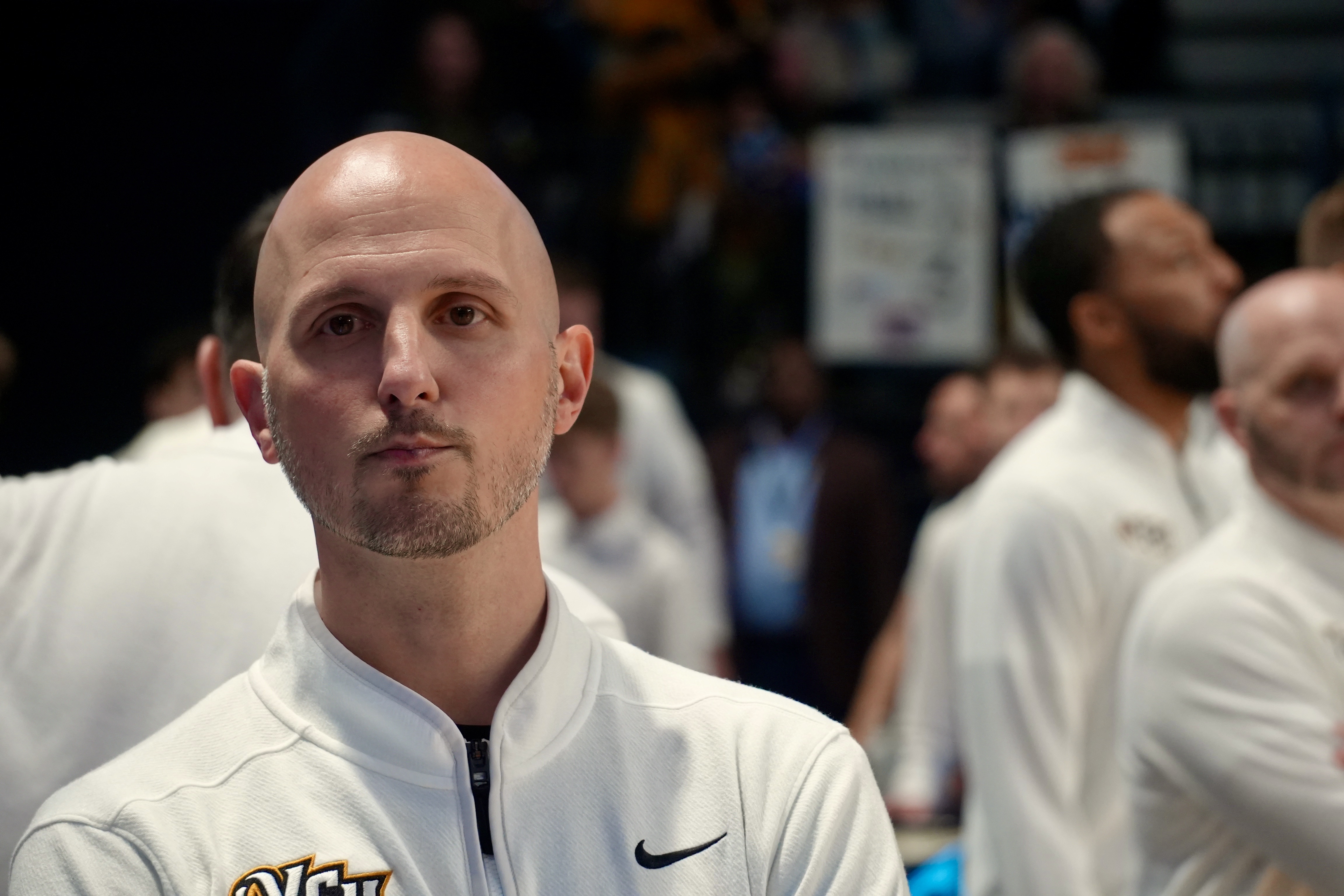
Phil Martelli, Jr., VCU Head Coach
A City’s Storied Legacy, A Modern Exodus
Philadelphia has long considered itself, and rightfully so, a center of the basketball universe. From the pioneering Tarzan Cooper to the sharp shooting Paul Arizin, the monumental Wilt Chamberlain, the poetic Earl “The Pearl” Monroe, the relentless Lionel Simmons, the prolific Kobe Bryant and the current phenom Jalen Duren, the city’s pipeline of talent is the stuff of legend. Yet, this rich history has rarely translated to a southern collegiate migration, with a few notable exceptions like Gene Banks (Duke) and Rasheed Wallace (North Carolina). Philadelphians, it seems, often make their mark elsewhere. Tragically, this now includes their coaches, while the college game in their own city languishes.
Larry Stewart, Coppin State Head Coach
The Palestra’s Fading Echo
The streamers that once rained down after the first basket at the Palestra feel like a relic from a different century. The Big 5, that once-sacred round-robin, is a shadow of its former self, with programs struggling to fill arenas and recapture the city’s imagination. The intense passion that once defined the college game here has largely decamped to the overheated gyms of the Catholic and Public Leagues, where high school basketball now serves as the true keeper of the flame. Yet, despite this local decline, Philadelphia continues to produce a long line of coaches who understand the game’s grit and nuance.
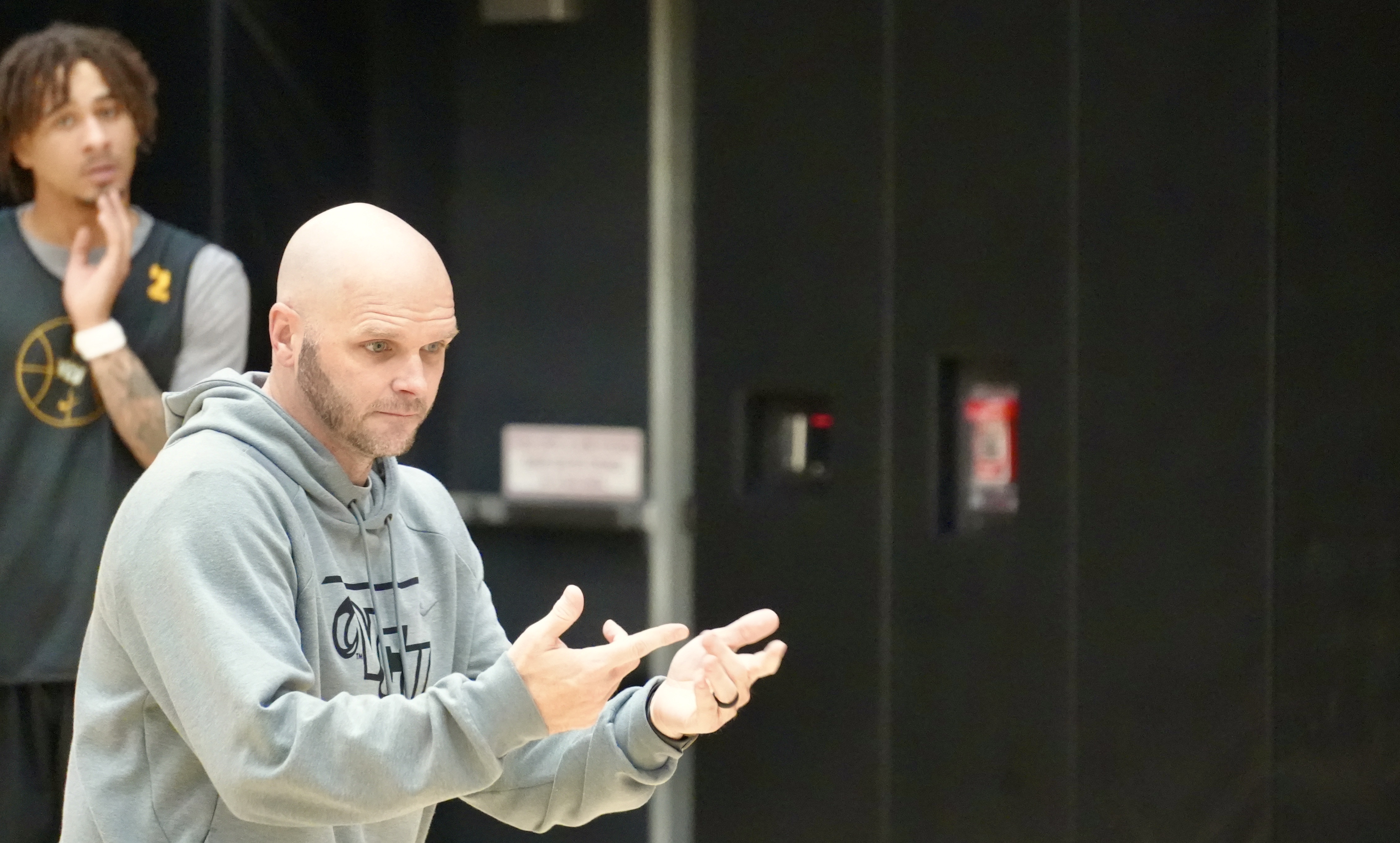
Ryan Daly, VCU Assistant Coach
The Sidelines of Richmond: A Who’s Who of Philly Hoops
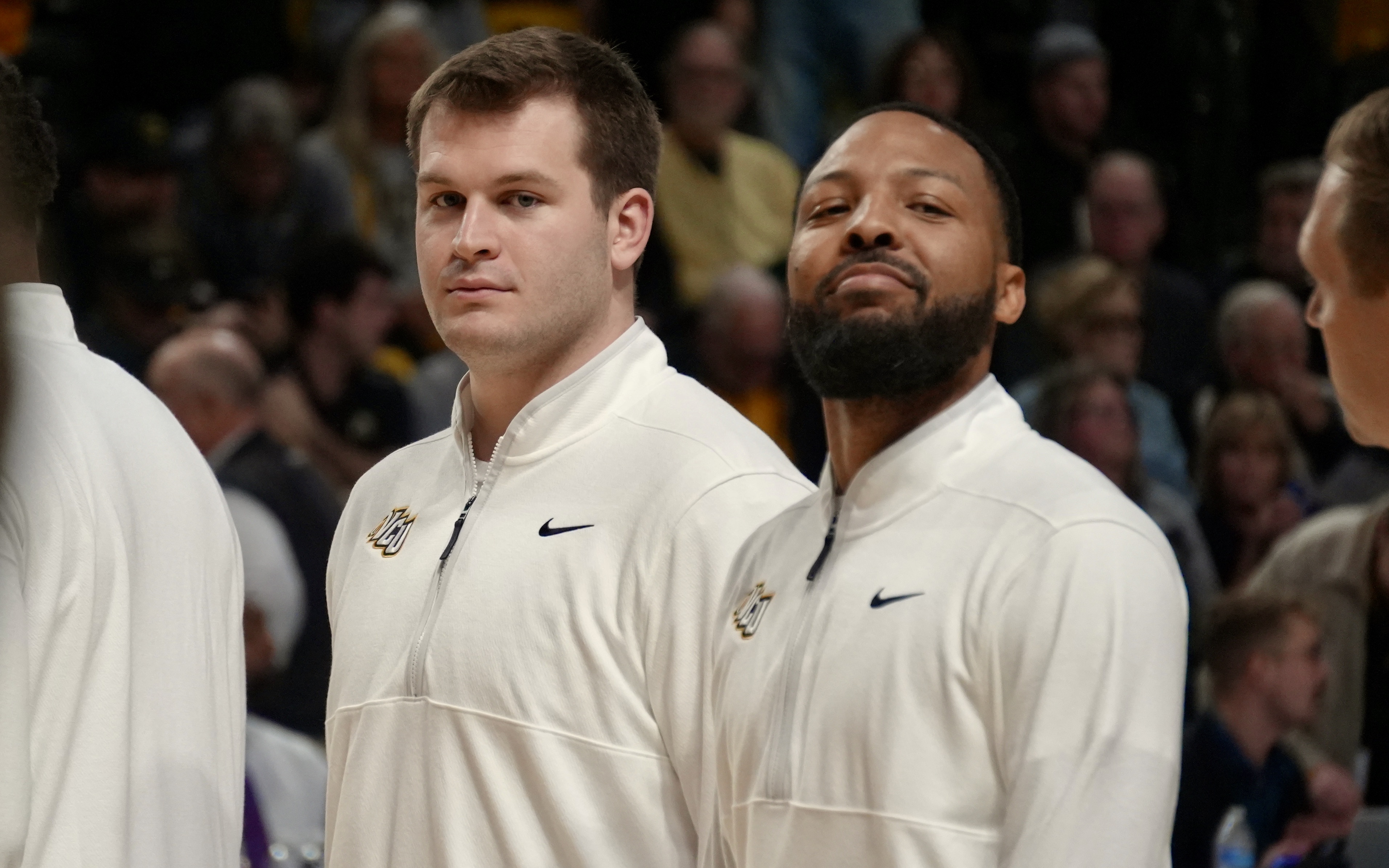
And so, we found them in Richmond. Coppin State was led by Head Coach Larry Stewart, a product of the Philadelphia Public League’s Dobbins High, who carried that Philly swagger to become an NBA player and a Coppin legend. His bench included his brother, Stephen Stewart, another Public League alum, and Terquin Mott, who began his collegiate career in the Big 5 at La Salle. Across the floor, VCU’s staff was equally Philadelphian. Head Coach Phil Martelli, Jr., and his brother, Jimmy, literally grew up in a locker room at St. Joseph’s, weaned on the parochial intensity their father, Phil Sr., embodied for decades. Completing this brotherhood was Ryan Daly, whose grandfather and father built their own legacies within the city’s Catholic League and on Hawk Hill. The connection even extended to the court, where three Philly kids—Coppin’s Baasil Saunders and Nelson Lamizana, and VCU’s Ahmad Nowell—saw action, proving the city-to-Richmond pipeline remains open for players, too.
Stephen Stewart, Coppin State Assistant Coach
A Lopsided Score, A Resonant Symbol
The final score—a 101-58 VCU rout—was not competitive. But the result was almost irrelevant to the night’s deeper narrative. For one night, the Yankees had taken full control of the basketball world in the former capital of the Confederacy. Here was a collective basketball IQ, forged on Philly’s blacktop and in its legendary leagues, being deployed over 250 miles from City Hall. The irony is as thick as a winter coat in February: these men, steeped in the very culture that could revitalize the city’s moribund Division I programs, are plying their trade anywhere but there.
Jimmy Martelli, VCU Assistant
The Case for a Homecoming: Tradition as a Strategic Asset
The case for their return is not one of mere nostalgia; it is a strategic imperative. Philadelphia is a unique town for collegiate athletics. The six programs, with the possible exception of Villanova, are not in a position financially to compete with Power 4 schools in the bidding wars of the NIL and transfer portal era. They cannot simply buy talent. They have to sell something else to prospects and their families: an identity, a legacy, a home. That something else must be the tradition of Philadelphia basketball and the lifelong love and support of its fiercely passionate community—a love that was on full display, of all places, in Richmond, Virginia.
Terquin Mott, VCU Assistant
The six Division I programs in Philadelphia have lost their connection to the lifeblood of the city’s basketball ecosystem. Who better to rebuild the walls than those who know the foundation? Who better to recruit the next Jalen Duren or Lionel Simmons than a Larry Stewart, who walked the same path from the Public League to professional glory? Who better to instill a forgotten identity than a Martelli, whose name is synonymous with Philadelphia basketball resilience? Or a Ryan Daly, whose family tree is rooted in its very soil? These coaches wouldn’t just be drawing up plays; they would be selling a birthright, something no other program can offer a young recruit from Philadelphia.
Baasil Saunders, Coppin State guard
An Indictment and a Path Forward
The exodus of this coaching talent is a quiet indictment of the city’s athletic departments. It reveals a failure to recognize that the solution to reclaiming Philadelphia’s college basketball soul may not be in a flashy, out-of-town hire, but in embracing the proven, passionate individuals it has already produced. The passion was in Richmond last night. The knowledge was on those sidelines. The players who could be the cornerstones of a local revival are already here, playing in those packed high school gyms. It’s time for Philadelphia’s programs to look south, to look within, and finally bring that Philly fight back home where it belongs.
RICHMOND, VA – The tectonic plates of college athletics have shifted irrevocably, creating a landscape that is both exhilarating and unnerving. The confluence of name, image and likeness (NIL) compensation and the transfer portal has ushered in a form of rampant, year-round free agency, where roster-building is a high-stakes puzzle and the very concept of player loyalty is being tested. In this volatile new world, a program’s success is no longer just about the X’s and O’s on the whiteboard; it’s about constructing a culture so compelling, a vision so clear, and relationships so authentic that players choose to stay and build within it, rather than simply pass through. Many, like Philadelphia’s six Division 1 college basketball programs, have struggled to adapt.
Phil Martelli, Jr., VCU Head Coach
The proud tradition of Philadelphia’s Big 5, once a vibrant tapestry of city-wide basketball passion, is being systematically unraveled by the harsh realities of the modern NCAA. In this new era, defined by the transfer portal’s relentless churn and the financial allure of Name, Image and Likeness deals, the foundational pillars of local recruiting and program continuity have crumbled. The result is a stark and unprecedented decline: for the first time in the consortium’s storied history, no Big 5 program has danced in the NCAA tournament for three consecutive years. These schools, from Saint Joseph’s to Temple, are now caught in a debilitating cycle, struggling to retain burgeoning talent while finding themselves outgunned in the bidding wars for the transfers who could save them. The very model that built these giants of the mid-major world has become a relic, leaving them to fight a existential battle on a playing field tilted decisively against them.
It is against this backdrop of existential change that Virginia Commonwealth University’s hiring of Philly born and bred, Phil Martelli Jr., as its head men’s basketball coach must be viewed. This was not merely a search for a tactician; it was a search for an architect for a new era. In Martelli, and in his strategic assembly of a staff featuring his brother Jimmy and rising star Ryan Daly, VCU has not just found a leader. Drawing from the pool of young Philadelphia coaching talent, it has established a coherent, persuasive, and uniquely qualified command structure designed to thrive amid the chaos. These young men were literally born and raised in the A10. This hire represents a potent blueprint for sustainable success in modern college basketball: a fusion of deep-rooted cultural understanding, proven program-building, and unbreakable personal trust.
Navigating the New Frontier: Culture as the Ultimate Competitive Edge
The transfer portal giveth, and the transfer portal taketh away. In an age where a star player can be lured away by a more lucrative NIL collective at a moment’s notice, the intrinsic value of a program—its identity, its sense of family, its proven path to development—has never been more critical. This is the very heart of VCU’s bet on Phil Martelli Jr.
He is not a mercenary coach; he is a native son of the Atlantic 10. He understands that at a program like VCU, you cannot simply outspend the power conferences. You must out-care, out-develop, and out-connect. His life’s work, from his playing days on the storied courts of St. Joseph’s to engineering a historic turnaround at Bryant, has been about fostering deep, authentic relationships. In the “NIL and free agency” era, this is not a soft skill; it is a strategic imperative. Players today are not just athletes; they are partners and stakeholders in the program’s journey. Martelli’s genuine, grounded approach is precisely the antidote to the transactional nature that threatens to consume the sport.
As VCU Vice President and Director of Athletics Ed McLaughlin stated, Martelli has “clearly lived his entire life amid college basketball legends but has made his own path and paid his dues through hard work, good character and a devotion to developing young men into the best versions of themselves through sport.” This focus on holistic development, on building men rather than just players, is the cornerstone of a culture that can withstand the siren calls of the open market.
The Visionary: Phil Martelli Jr., A10 Native and Modern Program-Builder
Phil Martelli Jr. is the perfect synthesis of old-school values and new-school methodology. His upbringing as the son of a St. Joseph’s coaching legend provided him with an innate, cradle-to-present understanding of the A-10’s competitive soul. He didn’t just study the conference; he was raised on its sidelines, absorbing its rhythms and rivalries. As a player, he was a co-captain on the 2002-03 St. Joseph’s team alongside Jameer Nelson and Delonte West, experiencing the pinnacle of A-10 success and NCAA Tournament glory. He knows the recruiting battles in Philadelphia and the DMV, the grind of the conference schedule, and the specific breed of tough, intelligent player who thrives in this environment.
But his record at Bryant proves he is no traditionalist clinging to the past. He is a self-made architect of success. Arriving as an assistant in 2018, he was a key engineer in the Bulldogs’ first Division I NCAA Tournament berth in 2022. When handed the reins as head coach, he didn’t just maintain success; he elevated it, leading Bryant to both the America East regular season and tournament championships in 2025, earning an NCAA Tournament bid and securing a second straight 20-win campaign. For this, he was deservedly named the 2025 America East Conference and NABC Mid-Atlantic Coach of the Year.
His teams won with a dynamic, modern, up-tempo offensive system that ranked third and sixth, respectively, in the country in adjusted tempo. His 2024-25 squad averaged a blistering 81.8 points per game. This style is a powerful recruiting and retention tool in itself, offering the kind of exciting, pro-friendly basketball that attracts and motivates today’s players. Furthermore, his well-rounded apprenticeship—from being the youngest full-time assistant in Division I at 22, to an NCAA Tournament appearance at Niagara, to a crucial stint in the NBA G-League—provides him with unique credibility when advising players on their professional pathways. In an era where players are focused on their next step, a coach who can speak the language of the pros is invaluable.
The Cornerstone: Jimmy Martelli, The Keeper of the Flame and Bridge to the Future
In his brother, Jimmy, Coach Martelli has an associate head coach who is the ultimate force multiplier, a cornerstone ensuring the entire structure remains stable. Any coaching transition risks the erosion of a program’s intangible identity. At VCU, that identity—a specific brand of relentless defense, communal toughness, and city-wide pride known as “Havoc”—is its most valuable asset. Jimmy Martelli is its living archivist.
Jimmy Martelli, VCU Associate Head Coach
For six formative years, from 2017 to 2023, he served as the director of operations under Mike Rhoades. In that role, he was not a bystander but an integral part of the machinery that produced two Atlantic 10 regular-season titles, a tournament championship, and three NCAA Tournament appearances. He understands the daily rhythms, the operational expectations, and the very soul of Ram Nation. He knows what makes a VCU player tick. This is not knowledge that can be learned in a manual; it is absorbed through years of immersion. His presence guarantees that the foundational principles of VCU basketball remain intact, even as the leadership and tactics evolve.
Crucially, Jimmy is not just a link to the past. His recent two-year stint at Penn State showcased his evolution into a dynamic, forward-thinking coach capable of thriving in one of the nation’s toughest conferences. He helped the Nittany Lions set a program record for scoring (79.1 points per game) and fostered a defensive identity that ranked near the top of the Big Ten in steals and forced turnovers. More impressively, he proved himself as an elite recruiter, serving as the lead recruiter for the highest-ranked recruiting class—and the highest-ranked individual recruit, Kayden Mingo—in Penn State history. This demonstrates a critical capacity: the ability to sell a program not named “VCU” to blue-chip talent, a skill that will translate powerfully back in the A-10.
The head coach-assistant coach dynamic is inherently one of professional trust. The Martelli dynamic elevates this to something far more potent: unshakeable personal and philosophical trust. Having literally grown up in the same household, under the tutelage of a legendary A-10 coach, Jimmy and Phil Jr. share a basketball language and a core set of values forged over a lifetime. This eliminates the typical feeling-out period and inherent friction of a new staff. Jimmy can speak with a candidness to his brother that no other assistant could, facilitating smoother, more honest decision-making. In the high-pressure crucible of a first-time head coaching job in a passionate market, this built-in, trusted confidant is an invaluable asset.
The Firebrand: Ryan Daly, The Embodiment of the Underdog Spirit
Completing this strategic trifecta is Ryan Daly, a coach whose personal narrative is a recruiting pitch in itself. If a culture needs an engine of intensity, Daly is that engine. His story is one of perpetual overcoming. As a Philadelphia Catholic League Player of the Year, he was inexplicably overlooked by the city’s prestigious Big 5 programs. This snub became his fuel. He accepted a scholarship at Delaware and exploded onto the scene, becoming the fastest player in the program’s history to score 1,000 points. When he transferred to his family’s ancestral home at Saint Joseph’s, he didn’t just play; he dominated, leading the Big 5 in scoring for two seasons and cementing himself as one of the most prolific scorers in modern Hawks history. Daly doesn’t just preach perseverance; he is a living monument to it.
Ryan Daly, VCU Assistant Coach and Jadrian Tracey, Senior Guard
His brief but impactful track record proves he can translate his personal grit into team success. In his single season alongside Martelli at Bryant, he was instrumental in the Bulldogs’ America East championship run, directly helping to develop Earl Timberlake into the conference’s Player of the Year and Barry Evans into the Newcomer of the Year. At UAlbany, he helped engineer a top offense and was credited with recruiting and developing All-Conference players. His nomination as one of Silver Waves Media’s Top 100 Rising Stars was a recognition of this burgeoning reputation as a developer and recruiter.
Daly’s deep, almost poetic ties to the Martelli legacy add another layer of cohesion. His grandfather, Jim Boyle, played for the legendary Jack Ramsay on Hawk Hill and was the head coach at Saint Joseph’s who hired a young Phil Martelli Sr. as an assistant. Daly’s own father, Brian, played for Martelli Sr. Now, he joins the staff of Martelli’s son, closing a multi-generational circle. This shared history creates an environment of profound understanding and shared purpose. Daly’s energy, authenticity, and undeniable credibility make him a formidable recruiter who can connect with players on a visceral level, selling the VCU dream because he has lived a version of it himself.
Ryan Daly and Philly Sophomore point guard, Ahmad Nowell
In a sport destabilized by constant change, VCU has chosen not to fight the chaos, but to master it through stability, identity, and trust. VCU joined the A10 in 2012, yet their relative newcomer status, the program has a deep and profound understanding of the A10 culture. By hiring Phil Martelli Jr. and empowering him to bring his brother and Ryan Daly, the Rams have built more than a coaching staff; they have built a familial command structure designed for the modern game. They have invested in a cohesive unit that provides the cultural stability, tactical modernity, and authentic relationships today’s players seek. In the turbulent new world of college athletics, that is not just a smart hire; it is a profound and powerful statement of identity. The Martelli era in Richmond isn’t just beginning; it’s coming home.
PHILADELPHIA, PA – For the legendary Big 5, success is no longer measured in championships, but in survival.
Deuce Jones, La Salle guard
The stained-glass windows of the Palestra, college basketball’s most venerable cathedral, have looked down on decades of Philadelphia basketball lore. They’ve witnessed the intensity of John Chaney stalking the sidelines, the perfection of Saint Joseph’s 2003-04 regular season, and the raw passion of one of sport’s most unique rivalries. For generations, the Philadelphia Big 5 operated within a coherent, predictable universe where tradition mattered, coaches built programs over years, and players became four-year legends on Hawk Hill and North Broad Street.
That world is gone.
The past five years have witnessed what philosopher Thomas Kuhn termed a “paradigm shift”—a revolutionary, non-cumulative break from the old order. The emergence of Name, Image, and Likeness (NIL) compensation and unlimited transfers with immediate eligibility has not merely reformed college basketball; it has created an entirely new ecosystem. The NCAA’s old model of amateurism lies in ruins, dismantled by Justice Brett Kavanaugh’s blistering concurrence in NCAA v. Alston, which declared, “The NCAA is not above the law”.
The question now haunting Philadelphia’s basketball temples is no longer which team will win the city championship, but what constitutes success when the rules of competition have been fundamentally rewritten.
The Shattered Paradigm: Free Agency and Finances
The old paradigm of college athletics was built on stability—the “amateur ideal” where athletes were “student-athletes,” transfers were heavily restricted, and the NCAA maintained absolute control. This framework provided a predictable environment where programs could build through patient development of high school recruits and coaches could construct cultures that lasted decades.
Dasear Haskins, St. Joseph’s wing
The new paradigm operates with entirely different principles:
Year-Round Free Agency: The transfer portal has created a marketplace of immediate eligibility, where rosters turn over annually
Financial Competition: NIL collectives now determine recruiting outcomes as much as coaching reputations or facilities
Transactional Relationships: Concepts like “loyalty” and “program building” have been redefined in a world where players must be re-recruited each offseason
This violent rupture has created what Kuhn would call “incommensurable” worlds—the old and new systems are so fundamentally different that stakeholders literally “see different things when they look at the same object” . An “offer” from a school once meant an athletic scholarship; today, it represents a complex package of scholarship, NIL money, and branding opportunities.
Philadelphia’s Pain: Three Years in the Wilderness
The human cost of this revolution is nowhere more evident than in the Big 5’s unprecedented three-year NCAA tournament drought. For the first time in the rivalry’s storied history, no Philadelphia team has danced in March for three consecutive seasons—a stark indication of how dramatically the competitive landscape has shifted.
Joe Mihalich, La Salle Special Assistant to Head Coach
The following table illustrates the challenging preseason outlook for the Big 5 programs according to recent analyses:
The bleak projections reflect the harsh new reality: in a landscape dominated by programs that can leverage financial resources and transfer portal appeal, most of Philadelphia’s teams are fighting with one hand tied behind their backs.
Villanova’s Blueprint: Competing in the Power 6
Villanova stands alone as the only Big 5 program with reasonable aspirations of national relevance. The Wildcats benefit from competing in what analysts now call the “Power 6”—the six basketball conferences that consistently outperform others in NCAA tournament seeding and wins. The Big East has earned at least five NCAA tournament bids in three of the past five seasons, providing Villanova with multiple pathways to the Dance.
Bryce Lindsay, Villanova guard
Under first-year coach Kevin Willard, the Wildcats are attempting to leverage their substantial resources—including a robust NIL collective and national brand recognition—to compete in the new paradigm. The program has become a destination for transfers like Bryce Lindsay (James Madison) and Tyler Perkins (Penn), players who can provide immediate production.
Yet even Villanova faces headwinds. The team was picked 7th in the 11-team Big East preseason poll. As one analysis noted, the Wildcats are “relying on players who are stepping up in class, such as Lindsay… or first-year players who have talent but not experience”. In the new paradigm, success requires not just recruiting talent, but constantly rebuilding rosters in an increasingly transactional environment.
Temple’s Storied History Meets Hard New Reality
For Temple, the paradigm shift has been particularly brutal. This is a program with 33 NCAA tournament appearances, 5 Elite Eights, and 2 Final Fours—a legacy built over decades by coaching legends like Chaney, who took the Owls to 17 tournaments in 18 seasons.
Aiden Tobiason, Temple guard
That historical success now means little in the new ecosystem. Temple has made just two NCAA appearances in the past 12 seasons, and this year was picked 9th in the 13-team American Athletic Conference. The AAC typically receives only 1-2 NCAA tournament bids per season, creating a brutal competitive environment where even strong conference records may not be enough for at-large consideration.
Coach Adam Fisher acknowledges the rebuilding challenge, noting that last season “things could go wrong… they did” with injuries, suspensions, and departures. In the new paradigm, “rebuilding” no longer means developing freshmen over four years, but aggressively working the transfer portal to replace departing talent—a challenge for programs without the NIL war chests of Power 6 competitors.
Saint Joseph’s: The Middle-Class Squeeze
Saint Joseph’s exemplifies the “middle-class” programs caught between historical success and current realities. The Hawks have 21 NCAA tournament appearances, an Elite Eight, and a Final Four in their history, with legends like Jack Ramsay and Phil Martelli accounting for two-thirds of those tournament trips.
Steve Donahue, St. Joseph’s Head Coach
Yet the program has zero NCAA appearances in the past decade, and despite winning 22 games and a second straight Big 5 title last season, home losses to teams like Central Connecticut and Princeton crushed at-large hopes. This season, the Hawks were picked 7th in the 14-team Atlantic 10, another conference that typically receives only 1-2 NCAA bids annually.
The September resignation of Billy Lange created additional instability, though successor Steve Donahue has talent to work with, including La Salle transfer and reigning A-10 Rookie of the Year Deuce Jones. Donahue believes this is “the most athletic team he’s ever coached”, but in the new paradigm, athleticism alone cannot overcome the structural disadvantages facing mid-major programs.
Penn’s Ivy League Transformation
The Quakers represent one of the most fascinating case studies in adaptation. Despite being picked 7th in the 8-team Ivy League, some analysts believe Penn has the best chance among the city’s programs (outside of Villanova) to make noise this season.
Fran McCaffery, Penn Head Coach
The reason? First-year coach Fran McCaffery—the winningest coach in Iowa history—and his ability to leverage the transfer portal, landing former five-star recruit T.J. Power from Virginia. The Quakers also return standout Ethan Roberts (16.8 points per game).
McCaffery’s hiring signals that even Ivy League programs, with their strict academic requirements and no athletic scholarships, must compete aggressively in the new marketplace. As one analysis noted, “If Roberts plays well and Power is healthy and Penn quickly adapts to McCaffery’s style, the Quakers could sneak into the No. 4 spot in the league” and then “anything is possible” in the Ivy League tournament.
La Salle and Drexel: The New Reality’s Hard Edge
For La Salle and Drexel, the new paradigm has created near-insurmountable barriers to national relevance.
Darris Nichols, La Salle Head Coach
La Salle, with its 12 NCAA tournaments, 2 Final Fours, and a National Championship, has played in just one NCAA tournament over the past 34 years. First-year coach Darris Nichols has brought “youthful enthusiasm and renewed energy” to the program, but the Explorers were picked 13th in the 14-team A-10. As one analysis bluntly stated: “It is a really long way to go from being picked one spot from the bottom of the A-10 to winning the conference title”.
Drexel faces similar challenges in the CAA, a one-bid league where the Dragons were projected 10th of 13 teams. The transfer portal has been particularly unkind to Drexel, with standouts like Yame Butler (Butler), Kobe Magee (Florida State), and Cole Hargrove (Providence) all departing for bigger programs—and presumably, bigger paydays. This talent drain from mid-majors to power conferences represents one of the most significant consequences of the new paradigm.
Redefining Success in the Athlete Empowerment Era
In this new world, the criteria for a “good season” must be recalibrated for all but the elite programs:
For Villanova: Success means NCAA tournament appearances and Sweet 16 runs—maintaining status as a national program capable of competing with college basketball’s financial elite
For Temple: Given conference constraints, an NCAA tournament appearance represents a major achievement, requiring either a conference tournament championship or a spectacular regular season
For Saint Joseph’s: Realistic success means NIT victories and consistent competitiveness in the A-10, with NCAA appearances representing extraordinary rather than expected outcomes
For Penn: An NIT appearance would signal remarkable progress, particularly given their preseason projection, and would validate their aggressive adaptation to the new landscape
For La Salle and Drexel: Simply reaching the NIT would represent significant achievement, indicating program momentum in an era where mid-majors struggle to retain talent
The tectonic plates of college sports have shifted, and Philadelphia basketball sits directly on the fault line. The Palestra still stands, but the games played within its hallowed halls are governed by new rules— both written and unwritten. The paradigm has shifted, and in this new world, survival itself constitutes a form of victory.





















 The Black Cager