CAMDEN, NJ – The transfer portal is filled with cautionary tales—players who moved up too fast, who chased money over fit, who disappeared into depth charts and never recovered. But for every cautionary tale, there is a player like Budd Clark, who has used the portal precisely as it was intended: as a ladder.
Clark’s journey from Merrimack to Seton Hall to Ole Miss is not a story of impatience or disloyalty. It is a story of a player who has improved every single year, who has consistently bet on himself, and who has made strategic decisions to maximize his competition level, his development, and his professional future.
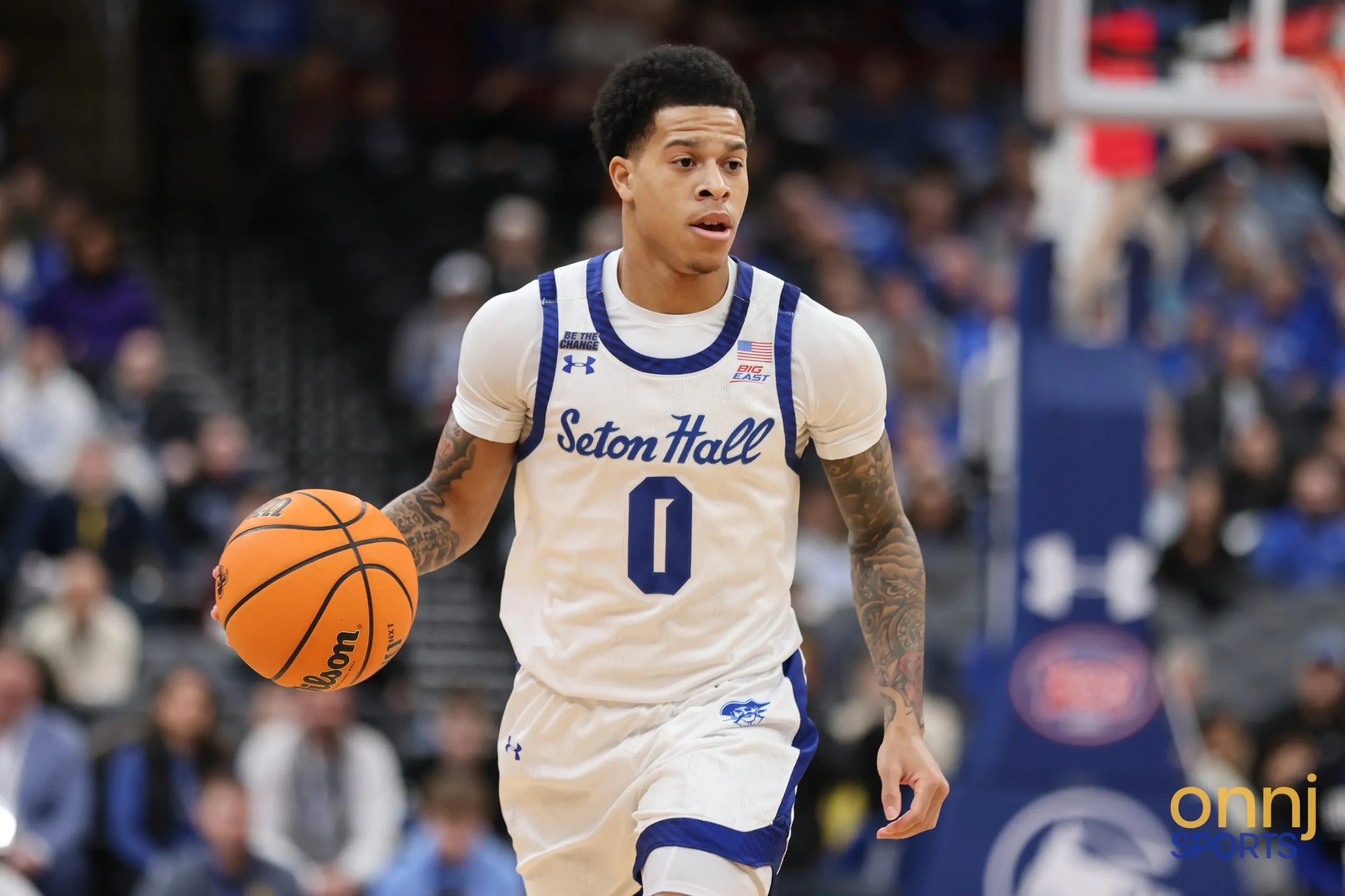
After beginning his collegiate career in the MAAC, Clark will start for Mississippi in the SEC this season. That sentence would have seemed impossible three years ago. But Clark has proven that the portal, used wisely, can be a tool for ascending—not just transferring.
Young players should study Clark’s path. He is a prototypical “Philly Guard”—extreme toughness on both ends of the floor, a pure point guard in the Kyle Lowry mode, a player who has consistently improved every aspect of his game each year. And he has done it by making calculated decisions under conditions of incomplete information, asymmetric power, and time pressure.

The Portfolio Problem: Two Decisions, One Trajectory
To understand Clark’s journey, you have to understand his decision-making as a series of portfolio allocations—each one balancing immediate returns against long-term growth.
Decision #1: Merrimack to Seton Hall (2024-25)
As a sophomore at Merrimack, Clark dominated the MAAC. He averaged 19.8 points per game (23rd nationally), 6.0 assists (top-20), and 2.7 steals (5th nationally). He was named All-MAAC First Team and NABC North Atlantic First Team. He scored in double figures in all but one game and eclipsed 20 points 16 times.
But he had proven everything he could prove at the low-major level. He needed a higher platform.
Seton Hall offered that platform. The Big East is one of the premier conferences in college basketball. The competition is tougher. The exposure is greater. The NBA scouts are in attendance.
The Calculus: Clark traded MAAC dominance for Big East opportunity. He traded a guaranteed starring role for the uncertainty of a higher level. But he also traded low-major obscurity for high-major visibility. The speculative assets—development, exposure, professional pathway—outweighed the risk.
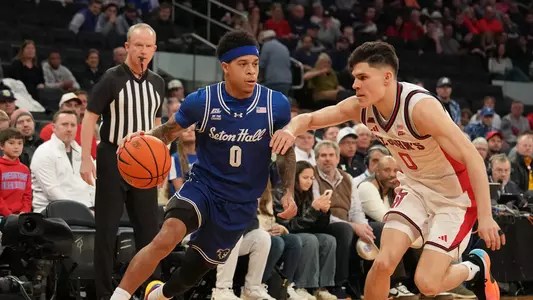
Decision #2: Seton Hall to Ole Miss (2025-26)
Clark’s single season at Seton Hall was a resounding success. He adjusted to the upgrade in competition and thrived in Shaheen Holloway’s system, earning second-team All-Big East honors and Big East All-Defensive team honors. He averaged 12.7 points, 4.9 assists, 3.0 rebounds, and 2.0 steals per game. He ranked third in the Big East in both assists and steals.
But the Big East, while elite, is not the SEC. And Clark had one season of eligibility remaining.
Ole Miss offered the next rung on the ladder: a starting job in the SEC, a platform with NBA scouts in attendance every night, and a chance to prove he could produce against the highest level of college competition.
The Calculus: Clark traded Big East production for SEC exposure. He traded a high-major platform for an elite conference stage. And he gained something invaluable: a head coach with a national championship pedigree.
The Chris Beard Factor: A Coach Who Wins at the Highest Level
If Clark’s decision to transfer to Ole Miss was strategic, playing for Chris Beard made it inspired.
Beard has led four different programs to the NCAA Tournament since 2016, including an appearance in the 2019 National Championship game and an Elite Eight run the year before at Texas Tech. As an NCAA head coach, he owns a 296-142 record—a 67.6 winning percentage that ranks among the best in the nation. He is 13-6 in the NCAA Tournament, including a perfect 6-0 in the opening round.
Across 16 seasons as a collegiate head coach, he has a 340-159 overall record.What Beard Brings:
A four-time conference coach of the year
A two-time national coach of the year
A proven track record of developing guards for the next level
A system that emphasizes defensive intensity—perfect for a Philly guard like Clark
Despite a challenging season, Beard helped guide Ole Miss to a historic run at the 2026 SEC Tournament, where they became the first team seeded 15 or higher in an NCAA Division-I conference tournament to reach the semifinals. They knocked off 10-seeded Texas, seven-seeded Georgia, and two-seeded and nationally-ranked Alabama before taking three-seeded and nationally-ranked Arkansas to overtime in the semifinals.
For Clark, a player who has improved every year, playing for a coach who has won at the highest level is the final piece of the puzzle. Beard will prepare him for the professional gam.
The Philly Guard Mentality: Kyle Lowry Mode
Clark is a prototypical “Philly Guard.” He is tough. He is competitive. He defends. He makes winning plays. He is not afraid of the moment.
His numbers tell the story:

Clark has improved every single season. He has adapted to higher competition levels each year. He has not maxed out his potential—he has expanded it.
What Young Players Should Learn from Clark
- Dominate Before You Move Up. Clark did not leave Merrimack after one season. He stayed, dominated, and proved he had nothing left to prove at that level. Then he moved up.
- Choose Fit Over Flash. Seton Hall was not the biggest brand in the Big East. But Shaheen Holloway’s system—defense-first, point guard-centric—was a perfect fit for Clark’s skill set.
- Keep Climbing. Clark did not stop at Seton Hall. He assessed his portfolio, recognized that the Big East had served its purpose, and moved up again to the SEC.
- Prioritize Development Over NIL. Clark could have chased larger NIL packages elsewhere. Instead, he prioritized playing for coaches who could develop him and prepare him for the professional level.
The Final Verdict: A Blueprint for the Strategic Transfer
Budd Clark’s journey is a blueprint for how the transfer portal should work. He did not transfer out of desperation. He transferred out of strategy. He did not chase the highest NIL offer. He chased the right level, the right fit, the right coach.
He began his career as a NEC Rookie of the Year at Merrimack. He will end it as a starting point guard in the SEC, playing for a national coach of the year. That is not luck. That is a player who understood his own portfolio, who made calculated decisions under conditions of incomplete information, and who consistently bet on himself.
The portal is full of cautionary tales. Budd Clark is a success story—one that should be studied by every young player considering a transfer.
 The Black Cager