PHILADELPHIA, PA – It is one of the quiet peculiarities of civic life that a city’s most consequential traditions rarely announce themselves with fanfare at their founding. They emerge, instead, from some private grief or improbable hope, gather adherents year by year, and eventually harden into something indispensable—a fixed point on the calendar around which a community’s identity constellates. Philadelphia, a city unusually rich in such rituals, has a new one to acknowledge. The Danny Rumph Classic, a basketball tournament born of heartbreak in a Germantown recreation center, has over 21 summers become not merely a cause or a competition, but a full-fledged cultural tradition. Its claim on that status deserves formal recognition.
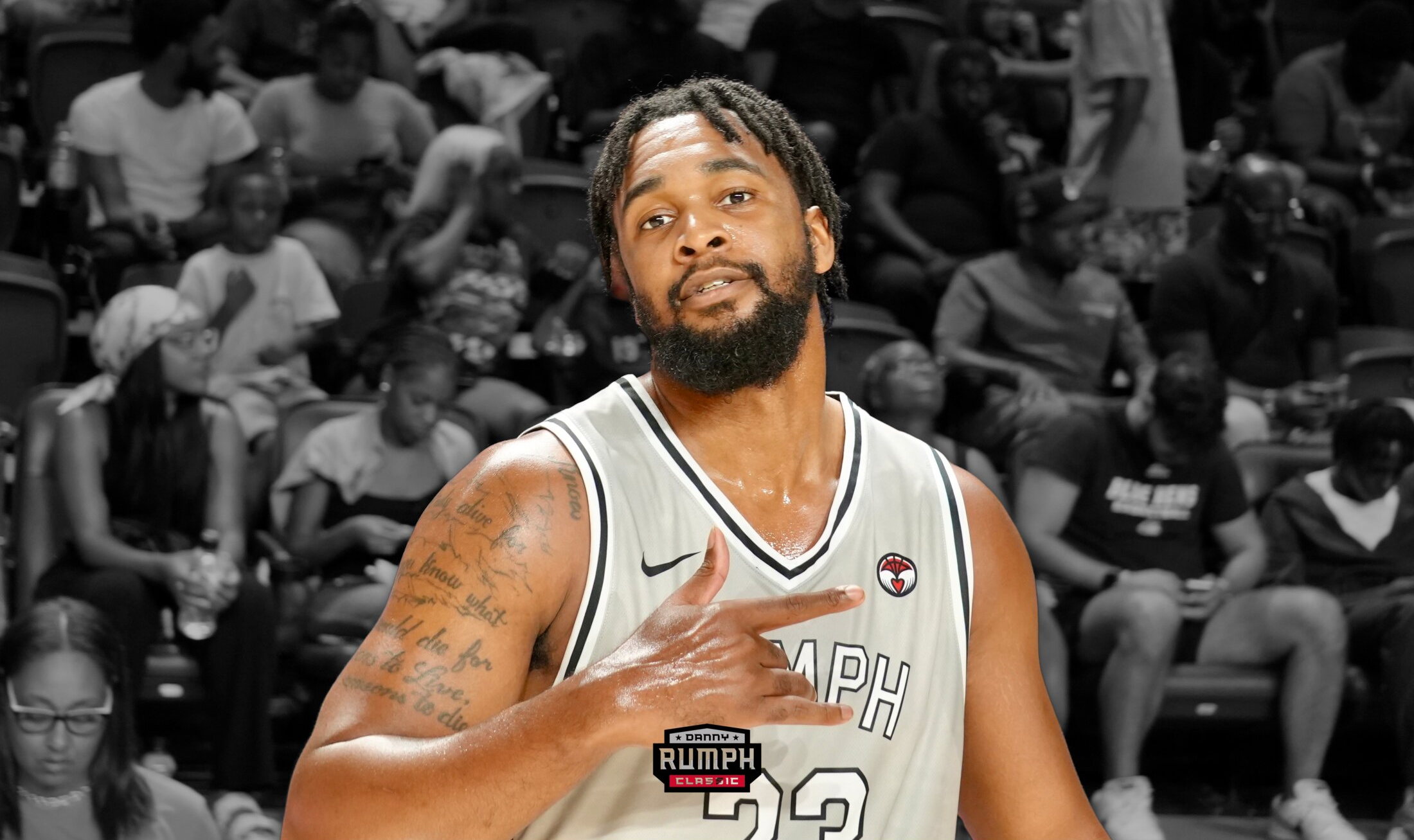
For the uninitiated, the Rumph Classic is the signature event of the Daniel E. Rumph II Foundation, a charity established after its namesake—a gifted scholar-athlete—died of Hypertrophic Cardiomyopathy in 2005 while playing the game he loved. The foundation’s initial mission was urgently concrete: to educate coaches and gym administrators about sudden cardiac arrest and to seed Philadelphia’s recreation centers with automated external defibrillators. That mission has been admirably fulfilled. But the tournament that grew up alongside it has long since exceeded its instrumental purpose, evolving into something richer and more difficult to name. It has become, in a sense, a civic liturgy—an annual gathering where the extended family of Philadelphia basketball renews its covenants, transmits its values to the next generation, and demonstrates, through the ferocious eloquence of elite competition, what it means to belong to this place.
The Social Architecture of a Basketball Tournament
The temptation when describing the Rumph Classic is to reach first for the roster, which this year reads like a who’s-who of the city’s modern hardwood diaspora: Deandre Hunter and Tyrese Martin, fresh from NBA playoff rotations; Eric Dixon, the Villanova stalwart now testing the professional waters; Hysier Miller, Donta Scott, Mike Watkins, and a dozen other players whose careers span the globe’s top leagues. The basketball, as we shall come to, is extraordinary. But to start there is to miss the point. The Rumph Classic’s deepest significance is not aesthetic but anthropological. It is an institution that performs, year after year, the essential work of cultural transmission—the quiet labor by which a community’s accumulated wisdom, its norms of conduct and hierarchies of respect, pass from one generation to the next.

This is not a new role for basketball in Philadelphia. For decades, the Baker League and its successor, the Sonny Hill League, functioned as a kind of shadow civic institution, a place where Wilt Chamberlain and Earl Monroe shared the court with local legends and where young men absorbed lessons about comportment, discipline, and mutual obligation that no formal curriculum could deliver. The Baker League understood something that too many social programs forget: that young people are not argued into virtue but apprenticed into it, drawn forward by the magnetism of admired elders who model a way of being. The Rumph Classic has taken up that mantle with a quiet intentionality that its organizers might not even fully articulate. Watch the tournament for an evening, and you will see it everywhere—the reverence accorded to the “Philly basketball ol’ heads” who hold court in the stands, the easy camaraderie between current stars and the neighborhood fixtures who coached them as children, the young fans who absorb, almost through osmosis, the knowledge that success in this world comes with an obligation to remain present, to return, to give the gift of one’s example.
This is the social function that elevates the Rumph Classic above mere entertainment. In a liberal society that properly valorizes individual freedom and self-invention, there is always a countervailing risk of atomization—the unmoored self, cut loose from the stabilizing currents of tradition and mutual accountability. The institutions that thrive in such a society are those that manage to reconcile freedom with belonging, that create spaces where individual excellence flourishes within a framework of shared obligation. The Rumph Classic is precisely such an institution. It does not preach. It does not issue directives. It simply creates a setting in which the values that sustain Philadelphia basketball—hard work rewarded with respect, talent leavened by humility, success measured partly by what one gives back—are made visible and attractive. The young men and women who pass through its orbit do not need to be told how to behave. They can see it.
A Tournament of Consequence
None of this would work, of course, if the basketball were not serious. A purely ceremonial event, however worthy, cannot command the attention of the young or earn the respect of the accomplished. The Rumph Classic, by contrast, has become one of the premier summer basketball gatherings on the Eastern Seaboard precisely because the competition is unforgiving. The talent level at this year’s edition, held at Drexel University’s Daskalakis Athletic Center, would not have been out of place in a high-level professional preseason camp. The play is unstructured—no coaches diagramming sets, no systems imposing order—and yet it is anything but anarchic. There is a fierce, improvisational intelligence to the action, a particular Philadelphia idiom of the game that prizes defensive intensity, physical toughness, and a kind of creative bravado on the offensive end. No one wants to be embarrassed. Everyone understands that pride is on the line, and in this city, pride counts.
The crowd at the DAC on Thursday night—the arena was filled to roughly 95 percent of capacity—understood exactly what they were watching. The stands held a cross-section of Philadelphia basketball life: current college stars from the Big 5 programs, high school prospects studying the men they hope to become, and families who have attended for years, for whom the tournament has become as much a fixture of August as the shore or the first hint of preseason football. The energy was not that of a casual summer league but of a community convened around something it holds dear.
The Case for Canonization
Philadelphia is justly proud of its calendar of cultural mainstays. The Mummers Parade, the Flower Show, the Penn Relays, the Odunde Festival, the Dad Vail Regatta, the Roots Picnic—these are not merely events. They are the vessels in which the city’s identity is carried forward, the rituals that bind neighbor to neighbor and generation to generation. They provide, as all genuine traditions do, a sense of continuity in a world of accelerating change, a reassurance that certain things endure, that the past has not been severed from the present. They are, in the deepest sense, conservative institutions—not in any partisan sense, but in their commitment to conserving what is precious and passing it on intact.
The Danny Rumph Classic now belongs in this company. It meets every criterion that makes a cultural tradition worthy of the name. It has persisted for more than two decades, long enough to become part of the rhythm of the year for thousands of Philadelphians. It connects the city to its history, both the specific tragedy of Daniel Rumph’s death and the longer lineage of Philadelphia basketball as a force for community cohesion. It transmits values—respect for elders, loyalty to place, the dignity of hard work—through the most effective pedagogical method available: immersion in a living practice. And it does all of this while putting on a basketball tournament of genuinely elite quality, one that draws professionals from the NBA and the world’s top leagues back to the city that shaped them.
A tradition does not need a proclamation to exist. It needs only the steady, voluntary allegiance of the people who sustain it. By that measure, the Rumph Classic has already arrived. But there is value in saying so aloud, in recognizing that what began as a grief-stricken response to an unthinkable loss has flowered into something durable and beautiful. Daniel Rumph’s name now names not only a recreation center and a foundation, but a ritual of renewal—a summer temple where Philadelphia, year after year, remembers who it is and shows the young who they might become. The city’s cultural canon is stronger for its inclusion.

