RADNOR, PA – In Philadelphia, the head coaching job for Villanova men’s basketball isn’t just another position—it’s a crown. As a lifelong Philadelphian, I’d argue that only the Eagles’ and Phillies’ top jobs command more universal respect than leading the Wildcats. The Sixers, Flyers, and Union coaches have their admirers, but none occupy the same pedestal as the man steering Villanova.
That reverence is largely the legacy of Jay Wright, who transformed the program into a national powerhouse. Wright didn’t just surpass Big 5 legends like John Chaney and Jack Ramsay—he redefined what success looked like in Philadelphia basketball. Six Big East titles, four Final Fours, and two national championships in 21 seasons set a standard that seemed almost impossible to maintain.
When Wright stepped down in 2022, Villanova turned to his protégé, Kyle Neptune. But after three underwhelming seasons—no NCAA Tournament appearances, no deep Big East runs—the school moved on. Now, the Wildcats have handed the keys to Kevin Willard, a seasoned Big East hand with a track record of player development and program-building.
Kevin Willard, Villanova
Willard, 50, arrives after a three-year stint at Maryland, but his roots run deep in the Big East. He spent six years as Rick Pitino’s assistant at Louisville and 12 as Seton Hall’s head coach, where he turned the Pirates into consistent contenders. At his introductory press conference, flanked by a strong staff—David Cox, Kevin Norris, Ashley Howard, Greg Manning Jr.—Willard sounded like a man ready to plant his flag.
Delgreco Wilson, Black Cager Sports (l) and Greg Manning, Villanova Assistant Coach (r)
“I’m in the prime of my coaching career,” he said. “This is where I want to be.”
But beyond the résumé, what makes Willard the right hire? Because he’s a player’s coach—a term often overused but perfectly fitting here. He doesn’t just develop talent; he invests in his players as people.
Take Donta Scott, the former Imhotep Charter star. Willard recruited him to Seton Hall, then coached him at Maryland, pushing him to embrace a more aggressive offensive role. Scott, now in the G League, credits Willard’s guidance for his growth. Or Julian Reese, who became just the second Terp ever to reach 1,000 rebounds under Willard’s watch. And then there’s freshman phenom Derek Queen, whose buzzer-beater in this year’s NCAA Tournament announced him as a future star.
Perhaps the most telling story is that of Michael Nzei, a Seton Hall role player under Willard. When asked if Nzei could play professionally overseas, Willard didn’t hesitate: “He’ll make more money on Wall Street.” Two weeks after his final game, Nzei landed a job at Goldman Sachs.
Eric Watkins, VU Sports (l) and Ashley Howard, Villanova Assistant Coach (r)
That’s the kind of coach Villanova is getting—one who sees the bigger picture. In a Big East loaded with heavyweights like Rick Pitino, Shaka Smart, and Dan Hurley, Willard has the presence, the pedigree, and the player-first approach to restore Villanova to its rightful place among college basketball’s elite.
The Main Line is ready. The Big East should be too.
CAMDEN, NJ – In an era when college basketball players often chase the brightest spotlight or the most lucrative NIL deals, Jerome Brewer’s decision to return home stands as a rare act of introspection and social responsibility. The 6’8” forward, who has navigated a winding collegiate journey from Texas A&M Commerce to McNeese State, could have followed his former coach to North Carolina State or sought a bigger stage elsewhere. Instead, he chose La Salle University—not just for basketball, but to fulfill a deeper mission.
Brewer’s choice reflects a maturity beyond his years. At a time when young athletes are frequently pressured to prioritize immediate success, he considered something more enduring: his ability to influence the next generation. His insistence that La Salle facilitate access for Camden City Public School students to games and practices isn’t a mere publicity gesture; it’s an intentional effort to reinforce the values that shaped him.
“Sports act as an agent of socialization,” Brewer said, articulating a perspective more common among seasoned coaches than 22-year-old players. “They teach values, behaviors, and skills—teamwork, communication, resilience.” His words underscore an awareness of basketball’s broader role, one that extends far beyond the box score.
This understanding didn’t emerge in a vacuum. Brewer’s formative years were spent in Camden’s gyms, where the game was both an escape and an education. After a brief stint in the Philadelphia Catholic League, he returned to Camden High, helping restore its basketball prominence alongside future Division I standouts. When college offers didn’t meet his expectations, he bet on himself—first at prep school, then in the Southland Conference, where he blossomed into an All-League performer before injury intervened.
His resilience was tested again last year when he redshirted at McNeese State, biding his time for the right opportunity. When it arrived, he weighed his options with the discernment of someone who recognizes that a career is more than stats or conference prestige. He thought of his younger brother, Domani, a budding seventh-grade phenom who now has a front-row seat to his brother’s final collegiate chapters. He thought of Camden’s kids, who will see in him a path forward.
Camden Mayor Vic Carstarphen, a former Temple standout under John Chaney, praised Brewer’s character, calling him “one of the finest student-athletes to come through Camden in recent years.” City Councilman Arthur Barclay, who played for John Calipari at Memphis, highlighted Brewer’s potential as a role model: “He was one of them not long ago. Now, he’s showing them what’s possible.”
La Salle, under new coach Darris Nichols, gains not just a versatile forward who can stretch defenses and guard multiple positions, but a leader who grasps the weight of his platform. In return, Brewer gets a chance to cement his legacy where it matters most—at home.
In an age of fleeting allegiances and transactional relationships, Brewer’s decision is a reminder that some choices are about more than basketball. They’re about purpose. And in that regard, his homecoming is already a victory.
PHILADELPHIA, PA – For the past 40 years, I’ve had a front-row seat to Phil Martelli’s brilliant college basketball mind—from the days when his “office” at Saint Joseph’s was little more than a converted broom closet in Alumni Memorial Fieldhouse to his 24-year reign as head coach. Phil was, and remains, my guy. And because he’s my guy, I’ve also been privy to the quiet confidence, the generational rivalries, and the Philadelphia-bred connections that have shaped the modern era of women’s college basketball.
Dawn Staley, resplendent in the Gucci drip
This Sunday’s national championship game between Geno Auriemma’s UConn Huskies and Dawn Staley’s South Carolina Gamecocks isn’t just a battle of the sport’s two best programs—it’s a collision of legacies, Philadelphia ties, and a coach’s unshakable belief in his homie.
At the peak of Geno’s dominance, when his UConn teams seemed invincible, I’d pop into Martelli’s office and tell him, “She’s coming.”Dawn Staley—the North Philly legend, the Raymond Rosen Projects product, the point guard who played with the ferocity of someone who knew the game owed her nothing—was closing the gap. Martelli, ever loyal to his longtime friend Geno, would shrug. “Nah, Del. Geno’s got this thing wired.”
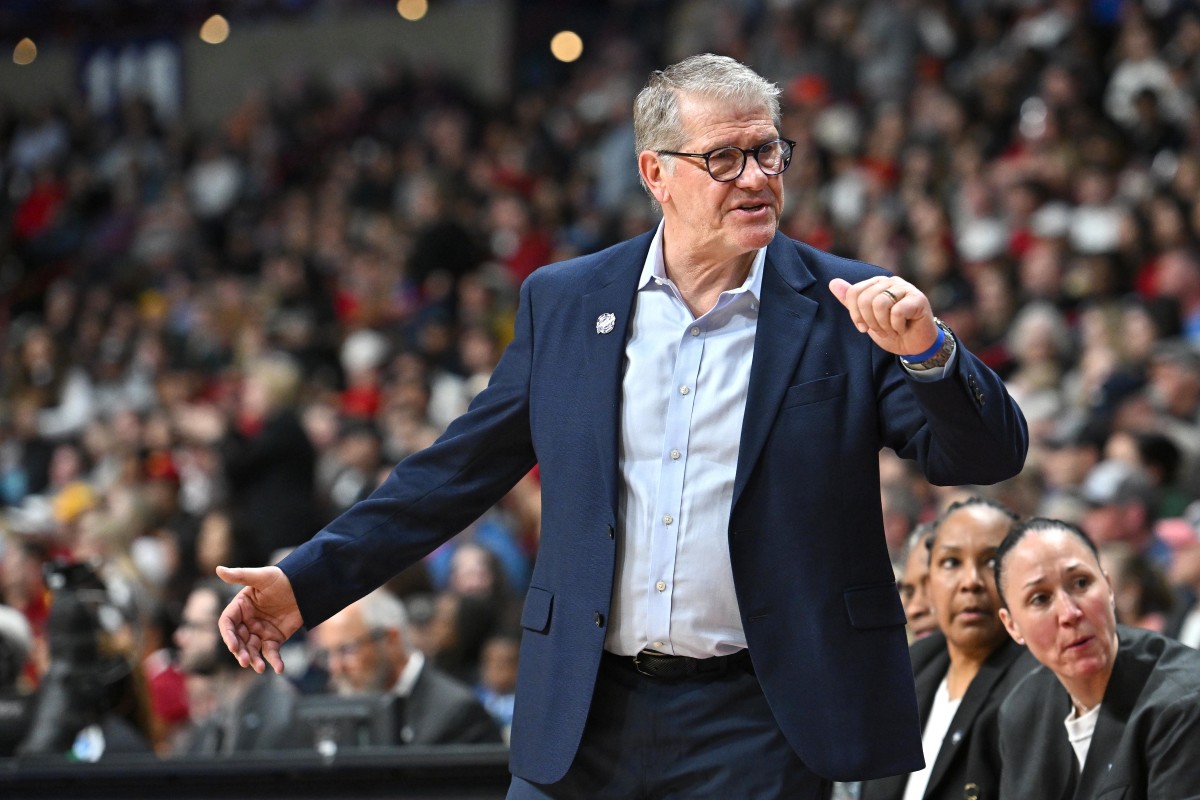
Geno Auriemma, UCONN coaching legend
But then A’ja Wilson arrived in Columbia. Then came the national titles, the undefeated seasons, the undeniable truth: Dawn Staley had ascended to the throne once occupied by Pat Summitt and Geno himself. Now, she stands alongside Kim Mulkey as the new standard-bearers of the sport. And yet, Geno—ever the competitor—wants his crown back.
This morning, at 6 a.m., my phone buzzed with texts from Martelli. Of course, he’s riding with Geno. That’s what Phil does. But me? I’m riding with Dawn, the kid from NORF Philly who turned into a queen.
May the best team win. But know this: No matter the outcome, Philadelphia’s fingerprints are all over this game. And that, more than anything, is worth celebrating.
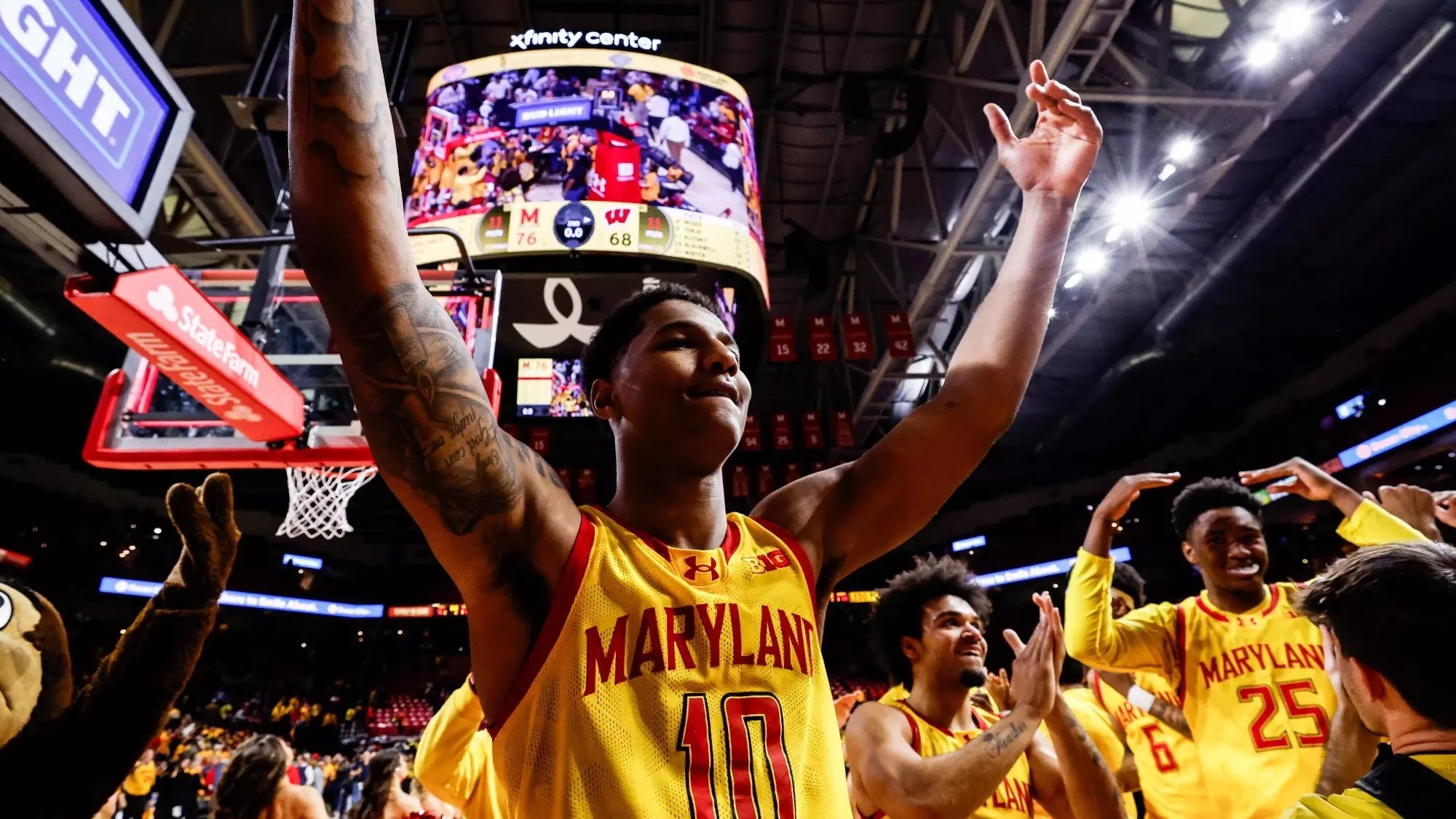
COLLEGE PARK, Md. — On a crisp Saturday afternoon in March, senior forward Julian “JuJu” Reese stepped onto the court at the Xfinity Center for the final time in his collegiate career. With 19 points, 11 rebounds, and a commanding presence in the paint, Reese led the No. 11 Maryland Terrapins to a 74-61 victory over Northwestern. It was a fitting farewell for the Baltimore native who has quietly become one of the most dependable and impactful figures in college basketball, even as his older sister, Angel Reese, has become a national icon and a lightning rod for conversation in the sports world.
The Reese family is basketball royalty. Julian’s mother, Angel Reese Sr. (née Webb), was a standout at UMBC in the late 1980s and early 1990s, amassing 1,390 points and 932 rebounds—numbers that Julian has nearly mirrored in his own career. His aunts also played Division I basketball, and the family’s love for the game runs deep. But while Julian’s older sister, Angel, has become a household name for her brash confidence, outspoken personality, and trailblazing impact on women’s basketball, Julian has carved out his own path—one defined by steady growth, quiet determination, and an unwavering commitment to his team.
A Legacy in the Making Julian Reese arrived at the University of Maryland in the fall of 2021 as a highly touted recruit from St. Frances Academy, a Baltimore-based basketball powerhouse. Standing at 6-foot-9 with a wingspan that seemed to stretch from baseline to baseline, Reese was a physical specimen with raw potential. He chose Maryland over offers from Seton Hall, LSU, and Temple, among others, and immediately made an impact as a freshman. Despite playing just 17.7 minutes per game, he averaged 5.7 points and 4.4 rebounds, showing flashes of the dominant force he would become.
His freshman year, however, was marred by turmoil. Eight games into the season, head coach Mark Turgeon resigned, and interim coach Danny Manning took over. The Terps finished a disappointing 15-17, but Reese’s potential was undeniable. When Kevin Willard was hired as head coach in the off-season, Reese made the decision to stay at Maryland rather than enter the transfer portal—a choice that would prove pivotal for both him and the program.
Under Willard’s guidance, Reese blossomed. As a sophomore, he became a full-time starter, nearly doubling his production to 11.4 points and 7.2 rebounds per game. Maryland improved to 22-13 and made a second-round appearance in the NCAA tournament. By his junior year, Reese had established himself as one of the top frontcourt players in the Big Ten, averaging 13.7 points, 9.5 rebounds, and 1.9 blocks per game.
This season, Reese has been the anchor of a resurgent Maryland team. Alongside his former S. Frances Academy teammate, Derik Queen, Reese has helped the Terps return to national prominence. Heading into the Big Ten tournament, Maryland is ranked 13th in the nation, with Reese leading the charge. He ranks second in the Big Ten in offensive rebound percentage and first in defensive rating, a testament to his relentless work ethic and basketball IQ.
The Reese Family Dynamic The Reese siblings are a study in contrasts. Angel, the older sister, is a force of nature—charismatic, outspoken, and unapologetically herself. She has become a cultural icon, using her platform to advocate for women’s sports and empower young girls. Her larger-than-life personality has made her one of the most recognizable athletes in the world, and her success at LSU, including a national championship in 2023, has cemented her legacy as one of the greatest players in women’s college basketball history.
Julian, by contrast, is the quiet sibling. Reserved and introspective, he prefers to let his game do the talking. While Angel thrives in the spotlight, Julian is more comfortable in the shadows, focusing on the nuances of his craft. Yet, despite their differences, the bond between the two is unshakable. Angel has been one of Julian’s biggest supporters, often cheering him on from the stands alongside their mother, grandparents, and extended family.
Their contrasting personalities reflect the duality of the Reese family’s basketball legacy. Angel is the trailblazer, the one who pushes boundaries and challenges norms. Julian is the steady hand, the one who embodies the fundamentals and traditions of the game. Together, they represent the past, present, and future of basketball—a sport that has been the lifeblood of their family for generations.
A Future in the NBA As Julian’s collegiate career winds down, the question on everyone’s mind is whether he has what it takes to succeed at the next level. The answer, according to scouts and analysts, is a resounding yes. Reese’s combination of size, athleticism, and defensive prowess makes him a legitimate NBA prospect. His ability to finish around the rim, coupled with his elite rebounding and shot-blocking skills, has drawn comparisons to players like Clint Capela and Jarrett Allen.
While Reese’s game is not without its limitations—he has attempted just one three-pointer in the past three seasons—his strengths far outweigh his weaknesses. His mobility and versatility on defense, in particular, make him an attractive option for NBA teams in need of a rim protector and rebounder.
A Legacy Secured Julian Reese’s journey at Maryland has been one of perseverance and growth. From a raw freshman navigating a coaching change to a senior leader poised to make a deep tournament run, Reese has left an indelible mark on the program. He will finish his career with over 1,400 points and 1,000 rebounds, joining an elite group of players who have achieved such milestones.
But more than the numbers, Reese’s legacy lies in his quiet determination and unwavering commitment to his team. In a sports landscape often dominated by flashy personalities and viral moments, Reese has been a reminder that greatness can come in many forms.
As the JuJu Reese era comes to a close, one thing is certain: the Reese family’s basketball legacy is in good hands. Whether on the court or off it, Julian Reese has proven that he is more than just Angel’s little brother. He is a star in his own right—a testament to the power of hard work, humility, and an unyielding love for the game.
PHILADELPHIA, PA – In the heart of Philadelphia, where the echoes of basketball history reverberate through the halls of The Palestra, a new chapter was written on Sunday afternoon. Father Judge High School, a proud institution from Northeast Philly, defeated defending champion Roman Catholic, 41-34, to claim the Philadelphia Catholic League Boys’ Basketball Championship. The victory, their first in 27 years, was not just a triumph for the Crusaders but a celebration of the enduring legacy of one of the most storied venues in sports.
The Palestra, the cathedral of college basketball, turned 98 this year. Since its opening in 1927, it has hosted more games, more visiting teams, and more NCAA tournaments than any other arena in the country. Its hallowed floor has been graced by legends, from Wilt Chamberlain to Kobe Bryant, and its intimate, raucous atmosphere has made it a shrine for basketball purists. Yet, in recent years, The Palestra’s relevance as a contemporary venue for college basketball has waned. The Philadelphia Big 5, once the lifeblood of the arena, no longer calls it home. Temple, Villanova, La Salle, and St. Joseph’s have opted to play their city series games on their own campuses, leaving Penn, the Palestra’s home team, as a fading force in the Ivy League.
But if the Big 5 has moved on, the Catholic League has stepped in to fill the void. The Catholic League Final Four has become the premier basketball event at The Palestra, a showcase of the city’s rich high school basketball tradition. On Saturday, approximately 10,000 fans—exceeding the arena’s official capacity of 8,700—packed into the venerable building to witness Father Judge and Roman Catholic battle for the most coveted high school championship in Pennsylvania. The atmosphere was electric, a reminder of what makes The Palestra special: the passion of the fans, the intensity of the competition, and the sense that, for a few hours, time stands still.
The game itself was a gritty, hard-fought affair, emblematic of Philadelphia basketball. Father Judge, led by head coach Chris Roantree, overcame a sluggish start to outlast Roman Catholic in a defensive slugfest. The Crusaders went the entire first quarter without a field goal, managing only two free throws, as Roman Catholic’s suffocating defense disrupted their rhythm. Sophomore point guard Tyler Sutton was a revelation for Roman, scoring 20 of his team’s 34 points and showcasing a blend of poise and skill that belied his age. But Father Judge’s senior point guard, Kevair Kennedy, weathered the storm, delivering clutch free throws down the stretch to seal the victory. His 10 points, four rebounds, and three assists may not have been eye-popping, but his leadership and resilience were instrumental in securing the title.
The game also featured a standout performance from Father Judge’s Everett Barnes, whose defensive dominance evoked memories of Bill Russell. Barnes, a towering presence in the paint, blocked shot after shot, keeping his team within striking distance during their offensive struggles. Alongside Roman Catholic’s Shareef Jackson, another formidable big man, Barnes is headed to the Patriot League next year, leaving one to wonder why Penn’s Steve Donahue didn’t make a stronger push to keep these local talents in the city. Their absence will be felt, but their performances on Saturday were a testament to the depth of talent in Philadelphia high school basketball.
For Father Judge, the victory was the culmination of a remarkable turnaround. Four years ago, Roantree took over a program that had gone 2-12 in the Catholic League. Under his guidance, the Crusaders have risen to the top, their journey a testament to the power of perseverance and belief. The postgame celebration was a scene of unbridled joy, as players, coaches, and fans reveled in a moment that had been decades in the making. For the Judge community, this championship was more than just a trophy; it was a reaffirmation of their identity and a source of immense pride.
As the final buzzer sounded and the Crusaders celebrated on the court, it was impossible not to feel the weight of history. The Palestra, with its wooden bleachers and arched rafters, has witnessed countless moments of triumph and heartbreak. On Sunday, it added another to its collection. Father Judge’s victory was a reminder of what makes this arena so special: its ability to bring people together, to create memories that last a lifetime, and to serve as a bridge between the past and the present. In a city that loves its basketball, The Palestra remains a sacred space. While the Big 5 may have moved on, the Catholic League has ensured that the arena’s legacy endures. For one night, at least, The Palestra was once again the center of the basketball universe, and Father Judge’s Crusaders were its brightest stars.
PHILADELPHIA, PA – The rumblings are beginning to emerge. The fans and alums of St. Joseph’s University are publicly evaluating the future of its storied men’s basketball program. There is an intensifying discussion about whether or not SJU should fire head coach Billy Lange. This discussion deserves a nuanced examination. While Lange may not be the archetype of a transformative coach, he has demonstrated an ability to manage the unique challenges of a Philadelphia-based mid-major program in the modern era of college athletics. The more interesting question, then, from my perspective is not whether St. Joe’s could find a better coach but whether the university is prepared to risk finding a worse one.
The wins and losses under Lange’s tenure paint a picture of incremental progress over a six year span. Each season has brought modest improvement in the Hawks’ performance. However, as any Hawk fan will tell you, the improvements haven’t been dramatic enough to inspire unanimous confidence. St. Joe’s continues to face defeats against opponents it is expected to beat, such as this season’s home loss to Central Connecticut State and other home losses to Princeton and Charleston. Lange has delivered expected victories in so-called “buy games” against teams like Coppin State and Delaware State—games that keep the program’s record somewhat respectable.
It seems fair to say that Coach Lange’s value to SJU extends well beyond the traditional win-loss column. In the age of NIL (Name, Image, and Likeness) deals and the transfer portal, the ability to recruit and retain talent is paramount. Lange has proven adept at navigating this landscape. Senior Eric Reynolds, junior Rasheer Fleming, and sophomore Xzayvier Brown—all players with significant market value—remain at St. Joe’s despite the lure of potentially lucrative opportunities elsewhere. It’s reasonable to assume that each of these players could command between $300,000 and $600,000 in NIL compensation if they entered the transfer portal. That they’ve chosen to stay suggests that Lange has fostered a program that values their development and loyalty.
That has value… It seems the Saint Joseph’s Athletic Department recognizes and appreciates that value. They definitely appreciate it more than SJU fans and alums focused intently on wins and losses.
Beyond individual player retention, Lange’s connections with key talent pipelines have been a boon for the program. Relationships with organizations like Team Takeover in Washington, D.C./DMV (Cam Brown, Erik Reynolds) , K-Low Elite (Xzayvier Brown, Derk Simpson) in Philadelphia, and Camden High School (Rasheer Fleming, Dasear Haskins) in New Jersey enhance St. Joe’s ability to recruit top-tier talent. These connections, cultivated over the past six years, provide an edge in a highly competitive market and would take significant time for a new coach to replicate.
The competitive landscape of the Atlantic 10 Conference further complicates the picture. Programs like Virginia Commonwealth University are beginning to implement revenue-sharing initiatives, with VCU reportedly committing $5 million to student-athletes starting in 2025. This raises the stakes for programs like St. Joe’s, which operate with significantly smaller budgets and a more limited pool of donors supporting their NIL efforts. In this context, Lange’s ability to retain talent and compete regionally with schools like Villanova, Temple, La Salle and Drexel is all the more impressive.
For a mid-major program like St. Joe’s, these external factors weigh heavily in evaluating a coach’s performance. While it’s tempting for fans to focus solely on A10 wins and losses, St. Joseph’s administrators seems to place significant value on external factors. By any reasonable measure, Billy Lange has held his own recruiting within constraints that make it challenging to compete with larger programs. The Hawks’ budget is dwarfed by those of regional and conference competitors, and the program relies on a smaller, more intimate base of donors and fans. In this shifting environment, stability and strategic leadership will likely outweigh the allure of a fresh start with another coach churned out by a national search.
Critics of Lange’s tenure are quick to point to the team’s offensive struggles, particularly when their three-point shooting falters. These concerns are valid, and the program’s inability to consistently generate offense has been a recurring issue. Yet, firing Lange in hopes of finding a quick fix through a “national search” led by an outside firm is far from a guaranteed solution.
SJU could whiff… Easily could whiff… You know they could whiff…
The unique challenges of recruiting and competing in Philadelphia and the A10 require a coach with a deep understanding of the program’s identity and limitations. By keeping it in the family, St. Joseph’s has always had that knowledge within the program. Since assuming the helm, Billy Lange has effectively demonstrated that understanding.
He has obvious shortcomings… Lange has not demonstrated an ability to consistently coach his team to more college basketball victories than losses.
That’s a problem.
For that, some want SJU to fire Billy and move on. I’m just saying it’s more complex than just wins and losses for Jill Bodensteiner and President Cheryl A. McConnell.
St. Joseph’s is at a critical juncture. Lange’s tenure has been far from perfect, but he has demonstrated an ability to navigate the complexities of modern college basketball.
No small feat…
The Hawks’ progress in the won/loss columns may be slow, but it is progress nonetheless. Replacing Lange risks disrupting the stability and relationships he has built, with no guarantee of improvement. For a program like St. Joe’s, where every decision must be calculated and deliberate, continuity may be the best path forward.
It should be noted that Saint Joseph’s could easily FUCK AROUND AND FIND OUT shit could get a lot worse.
In the end, the calculus isn’t just about finding a better coach. It’s about ensuring that the program can thrive in an environment where resources are limited and the stakes are higher than ever. The St. Joe’s brass seem to recognize the value Lange brings.
They know… I know… You know… We all know… Lange has to win more games.
To the dismay of those calling for his dismissal, SJU will likely determine that the risks of change outweigh the potential rewards.
PHILADELPHIA, PA – On a brisk Saturday afternoon, December 28, 2024, the Delaware State Hornets swagger into Hagan Arena, on City Avenue, ready to measure themselves against the Saint Joseph’s Hawks. For the Hornets, this isn’t just another game—it’s a homecoming of sorts. The roster hums with Philly flavor, a testament to the keen eye and relentless hustle of Assistant Coach Horace Owens. Owens, a name that carries tremendous weight in Philly hoops, has orchestrated a symphony of second chances and unpolished gems, bringing together a crew that embodies the grit of their hometown.
Stan Waterman, now in his fourth year as head coach, has steadily turned Delaware State into a competitive program, raising eyebrows with each passing season. But the secret sauce of his success recruiting the City of Brotherly Love is the man beside him: Horace Owens. Known simply as “Pappy” to those who run the city’s courts, Owens’ reputation precedes him. A McDonald’s All-American in 1979, Owens has been both a player and a sage, with his finger on the pulse of Philly basketball for decades.
Robert Smith, Delaware State
Owens’ recruiting prowess lies in spotting what others miss—diamonds in the rough. Take Robert “Man-Man” Smith and Muneer Newton, for example. Both were All-Catholic League stars whose talents were initially deemed too raw or unorthodox for Division 1 programs. Smith began his collegiate journey at a Division 2 school, while Newton found himself in the NAIA. But under Owens’ guidance, they’ve blossomed. Smith has emerged as one of the MEAC’s premier guards, averaging 16.1 points per game while shooting 42% from the field and 35.2% from deep. His scoring binges against Alabama State, NJIT, and Delaware—where he poured in 26, 27, and 22 points respectively—serve as warnings to Saint Joseph’s.
Stan Waterman, Delaware State Head Coach
Newton, meanwhile, has become the Hornets’ quintessential glue guy, chipping in 6.8 points and 5 rebounds per game while taking on the unenviable task of guarding the opposition’s top forward. And then there are the Watson twins,Kareem and Kaseem, who started their college careers at Cal State Bakersfield before Owens lured them back east. Kaseem, with his 12.8 points and 6.2 rebounds per game, has become a cornerstone of Delaware State’s success, while Kareem’s contributions add depth to a squad that’s hungry for respect.
The Hornets arrive in Philadelphia with a 7-6 record and a spot atop the MEAC standings. For them, this game isn’t just about basketball; it’s about proving that Philly talent doesn’t just belong on big-name rosters but can thrive in overlooked places like Dover, Delaware. Their opponent, Saint Joseph’s, represents the establishment: a well-heeled A10 program with a storied history and a home-court advantage that can turn Hagan Arena into a cauldron. The Hawks are heavy betting favorites, but the Hornets’ gritty Philly core has never been one to back down from a fight.
Muneer Newton, Delaware State
Ray Somerville and Muneer Newton’s inside presence will need to counter the Hawks’ big men, while Smith and Kaseem Watson will have to carry the scoring load. But more than Xs and Os, this game will come down to heart—and no one embodies that more than Horace Owens. His fingerprints are all over this squad, from the way they defend to their relentless approach to the game.
Saturday’s game will be a clash of styles: the relentless offensive barrage of Saint Joseph’s versus the raw, unyielding grit of Delaware State. For Owens, it’s another chance to show that his eye for talent is unmatched, and for the Hornets, it’s an opportunity to put their program on the map. Win or lose, one thing is certain: the Hornets will leave it all on the court, embodying the scrappy, resilient spirit of the city that shaped them.
PHILADELPHIA, PA – There’s a peculiar artistry in the way college basketball operates, and no one embodies this nuanced game better than Maryland’s magnificent freshman forward, Derik Queen. At first glance, Queen’s physique might not inspire the awe reserved for his contemporaries, Duke’s Cooper Flagg and Rutgers’ Ace Bailey. Both Flagg and Bailey are prototypical NBA superstars — 6-foot-9 athletic marvels with explosiveness and grace that defy physics. Watching them sprint down the court, leap skyward, and finish with electrifying dunks is a spectacle. They embody the kind of raw athleticism that defines highlight reels. But basketball isn’t determined by high jumps, long jumps, or sprints; it’s a nuanced game, requiring precision, strategy, and a mastery of subtle skills. Herein lies the genius of Baltimore’s Derik Queen.
Queen, alongside Georgetown’s Thomas Sorber, thrives in the overlooked aspects of basketball. Their games are steeped in nuance—a masterclass in reading the court, positioning, and elevating teammates through skill and intelligence. Casual fans might marvel at Flagg’s and Bailey’s dazzling athleticism, but for those who understand basketball’s intricacies, Queen’s brilliance shines through. He may not soar the highest or run the fastest, but Queen’s mastery of the mental and technical elements of the game sets him apart as the best freshman big in the nation.
Yup… I said it! The youngbul from Baltimore is the BEST freshman big in the nation…
Basketball IQ and Skill: The Queen Advantage
Queen is a basketball savant, blending size, intelligence, and skill in a way that redefines the modern forward’s role. His scoring efficiency (59.5 fg%) is extraordinary, but it’s how he scores that makes him special. Unlike many big men relegated to traditional post play, Queen is a versatile scorer. His face-up game is a dance of grace and power, an intersection of finesse and ferocity. Possessing the feet of a ballerina and the build of a defensive lineman, Queen’s combination of agility and strength is unparalleled.
His ability to create off the dribble is uncanny for his size. Queen’s fancy footwork, counters, pivots, and pump fakes leave defenders guessing. Whether he’s shaking a defender with a dribble move or drawing them off their feet with a well-timed fake, Queen generates clean looks with surgical precision. These aspects of Queen’s game have been on full display throughout the early part of this season.
This scoring prowess forces defenses to collapse on him, creating opportunities for his teammates. This leads us to Queen’s most exceptional skill: his passing.
Passing as a Superpower
Queen’s passing is not just impressive—it’s transformative. His vision and ability to deliver pinpoint passes make him the fulcrum of Kevin Willard’s offense at Maryland. Consider the evolution of the NBA’s expectations for big men: today’s centers and forwards are expected to orchestrate offenses and facilitate play. Queen is ahead of this curve. At Montverde Academy, he played alongside future NBA talents like Cooper Flagg and Liam McNeeley, yet the offense often frequently ran through him. Despite the talent-rich environment, Queen’s 58 assists in 27 games showcased his ability to create for others. He currently averaging 2.3 apg for the Terps.
His passing isn’t merely functional; it’s dynamic. Queen reads the floor with the precision of a chess grandmaster. He anticipates defensive rotations, exploits mismatches, and threads the needle to open teammates. His halfcourt passing is a revelation, featuring precise interior feeds, kick-outs to shooters, and sharp dishes to cutters.
Unlike many young players, Queen doesn’t merely react to the game—he dictates it.
Comparing the Contenders
To fully appreciate Queen’s game, we must acknowledge the brilliance of Cooper Flagg and Ace Bailey. Flagg, the projected number-one pick, is a two-way phenom with defensive versatility and an offensive arsenal that screams NBA superstar. Bailey’s explosiveness and scoring touch make him equally enticing. These players are the future of the NBA, and their raw potential is unmatched. However, basketball games are not won solely by physical attributes. While Flagg and Bailey soar in transition, Queen dominates in the halfcourt, where games are often decided. His superior court vision, basketball IQ, and ability to control tempo make him invaluable.
Georgetown’s Thomas Sorber deserves recognition as well. Like Queen, Sorber thrives in the nuanced aspects of basketball, using his physicality and intelligence to impact the game. Together, Sorber and Queen represent a shift toward valuing the cerebral side of basketball. They are masters of positioning, timing, and teamwork—skills that often go unnoticed but are critical to success.
Why Queen is the Best
Queen’s ability to combine scoring, passing, and leadership is what separates him. His game embodies the evolving role of big men in basketball. He’s not just a scorer or a passer; he’s a complete player who makes everyone around him better. His skill set is tailor-made for the modern game, where versatility and intelligence reign supreme. While Flagg and Bailey may headline the highlight reels, Queen is the player you build a team around.
Derik Queen is basketball distilled to its essence: a nuanced, strategic, and beautiful game. He may not win a track meet against Flagg or Bailey, but when the ball is tipped, and the game begins, there’s no freshman you’d rather have on your side. Basketball is more than athleticism; it’s artistry, and Derik Queen is the master artist of this freshman class.
PHILADELPHIA, PA – The sun was playing peek-a-boo behind the Philly skyline, June 2023, as I strolled into “Philly Live,” the kind of basketball jungle where reputations are forged and dreams find traction. Every year, John Mosco and Andre Noble gather over 150 hungry squads, each one packed with kids chasing a hoop dream. It wasn’t my first rodeo, I’ve attended each and every year since it’s inception. The gym was crowded, loud, and buzzing with scouts and whispers, but one game drew my attention—not because of the action on the hardwood, but because of who was standing beside me. Georgetown Head Coach, Ed Cooley.
Thomas Sorber, Georgetown’s freshman center/power forward
Now, if you know basketball, you know Cooley. He’s not just a coach; he’s a craftsman, with well-earned reputation for molding raw talent into polished gems. He had his eye fixed on one of his own, Thomas Sorber, a young big man from Archbishop Ryan, part of Philly’s fiercely competitive Catholic League. On the court, Sorber was doing what he does best—owning the paint, swatting shots like flies, and moving the ball with a finesse you don’t expect from a kid his size. Cooley leaned in, his voice steady but electric.
“Del,” he said, with a quiet authority that didn’t leave room for doubt, “I’m gonna develop Thomas into an NBA player. When he leaves Georgetown, he’s going to the NBA.”
Ed Cooley
It wasn’t a brag or a pitch—it was a statement of fact. And I believed him. How could I not? Cooley’s track record was bulletproof. Sorber had the frame, the skill, and the fire. All he needed was Cooley’s steady hand and a couple of years surviving the Big East grind. At least, that’s what we thought.
But life, like basketball, loves an upset. Nobody told Sorber he was supposed to take his time. Fast forward to last night: Seton Hall vs. Georgetown. A Big East slugfest in Newark, New Jersey. Sorber, now a freshman, lit up the scoreboard—19 points, 8 boards, 4 blocks, 2 assists, and 2 steals. The Hoyas edged out a nail-biter, 61-60, and now sit at 10-2. For the first time since the Sasha and Malia were playing tag in the White House, Georgetown’s two games above .500 in the conference.
The young man from Trenton, who honed his craft in the crucible of Philly’s Catholic League, isn’t just making waves—he’s dragging the Hoyas out of the depths and putting the Big East on notice. Ewing. Mourning. Mutombo. Hibbert. Sorber. Damn, that lineup’s got a ring to it.
Big Thomas is the next GREAT GEORGETOWN BIG MAN!
Cooley didn’t just call it—he sped up the clock. Year one, and Sorber’s already building a legacy. And me? I was there at the start, when a coach with a vision and a kid with a dream crossed paths in a steamy gym in Philly. This ain’t the end of the story—it’s the prologue.
PHILADELPHIA, PA – In many ways, I have lived like a sports fan version of Forrest Gump. An ordinary hoop head from Philadelphia, I’ve somehow managed to stumble into key moments in the modern history of women’s basketball—all without realizing their significance at the time. This story isn’t about my serendipitous journey, but about the tenacious brilliance of one player I’ve unknowingly followed since she was a shy, unassuming kid with a basketball in her hands. Her name is Hannah Hidalgo, and she’s the best player in women’s college basketball today.
It was the summer of 2017, and I was attending a Team Final grassroots basketball event at Life Center in Burlington, New Jersey. My eyes were on future NBA stars like Cam Reddish, Louis King, and Isaiah Stewart, as well as a couple of my youngbuls, Sam Sessoms and Matthue Cotton. The competition was intense, the gym buzzing with the kind of energy that comes with elite talent. But off to the side, barely noticeable amidst the chaos, was a young girl dribbling a basketball like it was an extension of her body.
She couldn’t have been more than 12 or 13 years old, but her handle was mesmerizing. She manipulated the ball with an ease that reminded me of Allen Iverson or Kyrie Irving. One of my close friends, NBA agent Stephen Pina, grabbed my arm and pointed at her. “Del,” he said, “she’s the one. That’s Hannah.”
“Really?” I replied, unsure.
“Yo… remember I told you. She is the one.”
At the time, I didn’t think much of it. Women’s basketball wasn’t on my radar, and while I respected her dad, Orlando Hidalgo, as one of the best basketball minds in the Greater Philadelphia Region, I had absolutely no idea I was witnessing the genesis of greatness.
A couple of years later, Hannah was a high school freshman. Orlando called me one day to share the news that she was attending Paul VI High School and that he’d be coaching her. “Hannah likes South Carolina,” he said. “Could you reach out to Dawn Staley?”
Staley, a Philly legend of the highest magnitude herself, was at the helm of the nation’s top women’s basketball program. I made the call, but in my heart, I wasn’t sure if Hannah could embody the intense physicality and relentless grit of a Gamecock.
Imagine that shit… Father please forgive me, for I knew not what I was thinking…
Moreover, Dawn had her pick of the nation’s best guards, including MiLaysia Fulwiley, a South Carolina high school legend. Fulwiley, was a four-time South Carolina Basketball Coaches Association (SCBCA) Player of the Year, a five-time SCBCA First-Team All-State, and a WCBA All-American. She was also named a McDonald’s All-American and a Naismith (third team) All-American.
Fulwiley grew up a stone’s throw from the Arena where Staley has established the preeminent program in women’s college basketball. Fulwiley would eventually commit to Staley and the Gamecocks.
It was not meant to be… While Dawn, Hannah and Orlando kept in touch, it wasn’t meant to be. Hannah would have to find another home.
In the meantime, she turned high school basketball into her personal showcase. As a senior, against Camden High, she scored 40 points, along with 6 rebounds, 6 assists, and 12 steals. Facing powerhouse Morris Catholic, she dropped 41 points and added 7 rebounds and 7 steals. Against nationally ranked Westtown, she went nuclear with 48 points, 11 rebounds, and 8 steals. Watching her play was like witnessing prime Oscar Robertson—except she did it with a defensive tenacity that bordered on ferocious.
Eventually, she announced her commitment to Notre Dame. I was there, like Forrest Gump, camera in hand, recording the moment but still failing to grasp its significance. I knew she’d be very good. I didn’t know she’d become the very best.
As a freshman at Notre Dame, Hannah took the college game by storm. She averaged 22.6 points, 6.2 rebounds, 5.5 assists, and an astonishing 4.6 steals per game, earning first-team All-American honors. Still, entering this season, some debated whether JuJu Watkins or Paige Bueckers was the best player in the country. Those debates have been laid to rest.
Plainly, stated… Hannah BUSSED DEY ASS! Real Rap…
Hannah has consistently risen to the occasion against the best competition. She outplayed Watkins in Notre Dame’s victory over USC and followed that up by leading the Irish to a win over the undefeated, second-ranked UConn Huskies, outdueling Bueckers in the process. Her performances have been nothing short of legendary, and her relentless drive is what sets her apart.
Hannah Hidalgo doesn’t just play basketball; she imposes her will on the game. She bullies the best players in the nation. She is the embodiment of tenacity, a player who thrives on the biggest stages and against the toughest opponents. Every steal, every basket, every defensive stand feels like a declaration: “I belong here. I’m the best.”
Stephen Pina, for once in his life, was absolutely right. She is the one. And now, the rest of the basketball world knows it too.







 The Black Cager