Baller or Thug? Can’t Be Both!

Image

It was the best of times, it was the worst of times, it was the age of wisdom, it was the age of foolishness…

Charles Dickens, A Tale of Two Cities (1859)

Very recently, we lost the greatest living Philadelphia ball player with the passing of Tom Gola (pictured below).  Wilt Chamberlain and Tom Gola are the ultimate representatives of Philadelphia ball players.  Earl Monroe, Gene Banks, Ernie Beck, John Chaney, Claude Gross, Tee Parham, Lewis Lloyd, Joe Bryant, Mike Bantom, Howie Evans, Anthony “Hubba Bubba” King, Rashid Bey, Lynn Greer are all outstanding Philly ball players.  Philly ball players have always used basketball as a means to access educational opportunities.  There are hundreds, if not thousands, of Philly ball players raising families and contributing to society well after the ball stopped bouncing.

However, in recent years I’ve noticed a troubling pattern of behaviors.  Being a Philly Ball player these days means having a double consciousness.  The identity is now divided into several parts, making it difficult or impossible to have one unified identity.  This is a significant and unfortunate change.  All of the players listed above are known for playing hard, tough winning basketball.

Tom Gola

Within the context of contemporary scholastic and collegiate basketball, the Philly ball player is developing a dual identity.  Unlike their singularly focused predecessors, many of today’s Philly ball players have two distinct and relatively enduring states that alternately control their behavior.  Like their predecessors, they play hard, tough winning basketball.  But, there’s this other “Philly Hard” identity permeating the recent crop of Philly ballers.  Double consciousness forces young Philly ball players to view themselves not only as student-athletes competing at the highest levels, but to also view themselves as they might be perceived by the folks in the “hood.” They cannot be perceived as “square”, “corny” or docile. Philly Hard players have to “keep it gully.”

What types of behaviors do “Philly Hard” players exhibit?  They range  from persistent refusal to comply with school, dorm, or team rules and expectations to selling a half-kilo of crack cocaine to an undercover DEA agent.  It’s important to understand that this not a new phenomena.  There have always been Philly Hard players.  In 1987, a North Philly kid from the Raymond Rosen projects led Millersville to a 27-4 record and a No.1 national ranking.  After that season, he robbed a home in Concord Township, Delaware County, threatened the 20-year-old resident with a toy pistol and beat her.  Around the same time he was charged with, and later pleaded no contest to, the attempted rape of a 20-year-old woman at gunpoint. He was charged with al least eight other burglaries over a two-week period in one month.

In 2002, a former Simon Gratz High School star who won a Public League basketball championship alongside NBA stars Rasheed Wallace and Aaron McKie, was sentenced to three to six years in prison for three holdups at a Rosemont ATM. This Philly ball player had averaged 20 ppg and 10 rpg in the Atlantic 10 conference before playing professionally in Europe.  In 2009, a freshman at a Big 5 school threw two baggies containing marijuana onto the ground during a police sting and had $1,030 cash on him.  He was arrested Monday night in Chester on charges of felony drug dealing and related offenses, including resisting arrest.

While the most of the negative behaviors of contemporary Philly Hard players are not felonious, they are far more frequent.  There is relentless drumbeat of Philly kids being disciplined, suspended and expelled from schools.  One player was suspended for knowing that a stolen student identification card was being used to order more than $100 worth of food.  Another was suspended for the 2013-14 season after being charged with first degree burglary and grand larceny.  Still another was suspended prior to the start of the season, and subsequently suspended for the remainder of the season due to a violation of the school’s Code of Conduct. Eventually, he chose to transfer to another program.  Yet another was suspended after trying to shoplift at Wal-Mart.

Earl Monroe

I ventured down to the Wells Fargo Arena on Monday evening and watched three young Philly ball players perform for the Phoenix Suns against the hometown Sixers.  It was an especially proud moment because, a few years ago, I watched all three work extremely hard to meet NCAA freshman eligibility requirements.  Diligence and determination paid off.  Their parents, James Christmas and Angel Morris, were focused on providing the structure and support necessary for these guys to make it to college.  One of the players was arrested as a freshman for bringing an Airsoft gun on campus that can shoot plastic BBs.  Fortunately, among this particular group of Philly ball players, that was an isolated incident.  Given the opportunity, they have made the most of it and now play in the NBA.

While riding home from the game, I received a text indicating that two more Philly players have been indefinitely suspended by their university.  In one night, I experienced the highest of highs, as I watched three Philly ball players live their NBA dreams, and the lowest of lows as I learned of two other young men placing their scholarships at risk.  This makes no sense.  Philadelphia’s amateur (Youth, AAU, Summer League, Church, HS and College) basketball community, has to do more.

Clearly, many of our young players have internalized a Philly Hard self-image that shapes their inappropriate responses to adverse and stressful situations faced while transitioning to college.  For now, there’s still a considerable market for good Philly ball players.  The coaches from respectable programs still pursue young Philly ball players.  However, there has to be a tipping point.  Those exhibiting the Philly Hard tendencies are going to inevitably make it much harder for the next generation of kids.

Too many young Philly ball players are struggling to reconcile their identity as a Philly ball player and a Philly Hard man.  Conflicted between behaving in a manner that reflects a Philly Hard perspective and exhibiting behaviors that are marketable and acceptable to college and professional coaches.

By exhibiting compliant and respectful behaviors he will be deemed a sellout and his Philly Hard stature is questioned.  By having repeated confrontations with authority figures and receiving multiple suspensions for misbehaviors he successfully establishes himself as Philly Hard and in some very important ways limits his ability maximize the true value of his athletic gifts.  This is the contemporary Philly ball player’s struggle to unite the different components of their identity.

As a basketball community, we have to find a way to diminish the impact of the Philly Hard image. Some how, some way.

To Parents of Middle-School Student-Athletes: An Open Letter

Image

Many of you are facing an important decision.  Where do you enroll your son/daughter for High School?   You have spent countless hours in sweaty humid gyms, on blazing hot fields and  transporting your child to AAU or church league practices and games.  Your child wants to to play.  He/she is a good student and wants to pursue athletics at the scholastic level.  Athletics is an important part of your family’s life and, therefore, a factor in the high school decision-making process.  As a parent, there are some important questions you must ask.  The most obvious one is: Are there opportunities for your child to play?  Most Public League schools do not sponsor freshman and/or junior varsity teams.  Sports budgets in the School District of Philadelphia have been drastically cut in recent years.

Say, for example, your daughter plays soccer.  She has played in a youth league for several years.  She’s serious about soccer.  Over the past decade, Philadelphia’s Public League soccer programs have been cut to the point where there is little opportunity for participation and skill development.  Only six teams are listed on the JV schedule for the upcoming season. No Public League school has a freshmen girl’s soccer team. Most schools have subpar fields or share Department of Recreation fields. Some play games on the Super Sites, the turf all-sport fields that are located near Simon Gratz, Germantown, Southern, and Northeast high schools.  As a parent, do you take a chance with a Public League soccer program?  The same logic applies across all sports.  Baseball, tennis, crew, track & field, lacrosse, football and basketball players should carefully examine the athletic programs and leagues of their prospective schools.

The dynamics have changed since most parents were in school.  In many instances, the neighborhood public school alternative is simply unacceptable.  This is especially the case in basketball.  Historically speaking, parents of scholastic hoopsters in the greater Philadelphia region have been blessed for years.  Philadelphia’s Catholic and Public Leagues have consistently developed elite scholastic basketball players for nearly three-quarters of a century.

However, many of the traditional Public League powers (West Philadelphia, Overbrook, Southern, Ben Franklin, Gratz, etc.) have seen their once mighty basketball programs relegated to lower tier status as independent charter schools have become dominant.  Facing a $300 million budget deficit, the School District of Philadelphia has limited opportunities for student-athletes to participate in scholastic competition.  One can reasonably assume that athletic budgets will continue to suffer.  Moreover and more importantly, very few Public League Schools have  average SAT scores that meet NCAA freshman eligibility criteria for a student with a 2.5 gpa.

The plain and simple fact is that too many students attending Public League high schools are finding it difficult to meet NCAA eligibility criteria.  On the other hand, Catholic League alums are currently playing at schools such as Notre Dame (Steve Vasturia, SJ Prep), Wake Forest (Miles Overton, SJ Prep), Rider (Junior Fortunat, Roman), Towson (John Davis, Neumann-Gorretti), Wisconsin, Green-Bay (Lamin Fulton, Neumann-Gorretti) and many other Division 1 and 2 colleges.

Image

Current Catholic League seniors have committed to Miami University (Ja’Quan Newton, Neumann-Gorretti), Penn State (Shep Garner, Roman), Drexel (Rashann London, Roman), Campbell (Tony Toplyn and Troy Harper, Neuman Goretti) and Cornell (Pat Smith, Wood) among others.

Junior Fortunat pic

If participation on strong competitive teams in a very strong league with solid academic programs is the goal, then Philadelphia’s Catholic League should be your destination.  Currently, Archbishop Carroll’s Boy;s Basketball team is ranked 12th in the nation according to MaxPreps.  Roman Catholic, SJ Prep, Neumann-Goretti and Archbishop Wood are among the top teams in Pennsylvania their respective class divisions.

Image

In football, the Philadelphia Catholic League produced the PIAA AAAA Champion SJ Prep Hawks.  SJ Prep was ranked #1 in Pennsylvania and #38 in the United States.

Image

For many families, sports is an important part of the educational process.  Research finds that in addition to improved physical health, sport plays a primarily positive role in youth development, including improved academic achievement, higher self-esteem and fewer behavioral problems.  Many parents have long known that many facets of playing sport—the discipline of training, learning teamwork, following the leadership of coaches and captains, learning to lose—provide lifelong skills for athletes.

For parents of middle school student-athletes in the Philadelphia region, the Catholic League provides the best combination of accessibility, academic accountability and athletic competition.

In terms of the ability to develop academically and athletically prepared student-athletes, Philadelphia’s Catholic League is the preeminent scholastic league in the region.

Wyatt Signs Highest Non-NBA Rookie Deal

Image


Khalif Wyatt, the former Temple Owl and Norristown, PA product, has signed a deal to play with the Guangdong Southern Tigers in China, a league source has confirmed.  This past summer Wyatt impressed during a stint with the Sixers.  He averaged 13.8 points per game over 5 games including a 27 point and a 25 point performances against Brooklyn and Indiana. 

After emerging as the best college player in the Philadelphia region during his senior season at Temple, Wyatt entered the preseason as one of the favorites to make the team, but ultimately the new Sixers coaching staff decided to cut him from the final roster.

Wyatt’s new team is one of the best-performing teams in the Chinese Basketball Association, or CBA. The Tigers have won seven CBA titles (champions of the finals), behind only the Bavi Rockets’ eight titles. The Tigers are the only team to have qualified for the CBA playoffs in all the seasons since the league launched in 1995.

According to league sources familiar with the deal, Wyatt is the highest paid non-NBA rookie in professional basketball for the 2013-2014 season.  His agent, Stephen Pina, ASM Sports, notes that Wyatt left for China this morning.  “Khalif was truly impressed with the level of interest demonstrated by the Sixers and other NBA teams.  However, the offer from the Guangdong Southern Tigers was extremely attractive and he looks forward to helping the Tigers pursue another CBA title.”

After being released by the Sixers on Friday, Wyatt left for China on Tuesday.  His ability to sign such a lucrative contract in a matter of days illustrates ASM SPORTS’ ability to offer worldwide industry expertise that reflects the true global nature of basketball today. From Europe, to Asia, to Africa, and South America, ASM Sports works with teams in all corners of the globe.


Philadelphia’s High School Selection Process: Why Catholic Schools?

Image

Across the Greater Philadelphia region, thousands of parents are facing one of their most important decisions.  Their minds are filled with questions:  Where will he/she attend high school next year?  Will the school be safe?  Are there enough teachers? Are the AP and Honors classes funded? What are the test scores?  This year, finding answers to these questions and making well-informed decisions will be more difficult than ever before.  As we all know, the School District of Philadelphia is in the midst of an unprecedented budget crisis.  As a direct result of recent cuts, students and their parents are, on their own, trying to research alternatives and find a quality high school placement.  Clearly, the time has come for most Philadelphia families to consider non-public school alternatives.  For many, the question has become: How can you NOT afford to send your child to a Catholic High School? 

In most School District of Philadelphia schools, 8th graders will be applying to high schools without the help of full-time guidance counselors, who usually lead the process.  Think about that for a moment.  Middle school students do not have access to full-time counselors while trying to navigate the complicated and complex high school application process. Confused and overwhelmed 8th grade students cannot bounce their thoughts and impressions off the person, historically, charged with that responsibility.  The district has determined that assistance with high school selection is not a priority.  

 Image

How are students supposed to meaningfully compare and contrast the various programs and offerings of the competing public, charter and Catholic high schools?  In the past, the district provided each 8th grade student with a high school directory.  The student could take the directory home and review the offerings with their parents, grandparents and other concerned adults.  Unfortunately, budget cuts have eliminated this crucial part of the high school selection process.   For the first time in recent memory, the District will not print a high school directory; it will be available only online.  

Think about the families in your neighborhood.  Think about the kids whose parents work two jobs.  Think about the kids whose parents have alcohol and/or chemical dependency issues.  Think about the families in public housing.  What percentage has access to the internet in the home?  How many have printers in the home?  The decisions to eliminate guidance counselors and discontinue printing the high school directory, arguably, discriminate against low-income families.  Middle and upper class families will be able to easily access the information.  Poor families will be at a real disadvantage. It gets worse.

The School District of Philadelphia is not holding its annual High School Expo. In the past, the Expo facilitated more informed choices by families and students.  High schools would set up booths so that students and their families can learn about their programs and any requirements for admission. District-run neighborhood high schools, as well as  city-wide special admission schools were represented.  Many charter schools — there are more than 30 high school charter options in the city — were also there.  The District has decided it cannot sponsor the Expo.

However, there will be a High School Fair on November 16, 2013 at Drexel University, underwritten largely by the Philadelphia School Partnership (PSP). Hopefully, this will fill the void to some degree.

It is important to note that the problems are not limited to Philadelphia public schools.  In recent weeks, we have witnessed six (6) students arrested for knocking a staff member unconscious at Upper Darby High School.  Scores of students have experienced health problems as a result of widespread mold in a Cheltenham School District building.  The SAT scores in the Southeast Delco, William Penn and Chester-Upland School Districts are 200-300 points below the national average.  Parents of students in suburban districts face equally difficult choices.

What is a parent to do? How can parents access high-quality, safe educational settings for their children?  

In Philadelphia, if your child is able to gain admission to one of the following “magnet” school programs, he/she will be in a competitive, relatively safe college preparatory program.  

Julia R. Masterman Laboratory and Demonstration School

Central High School

Academy at Palumbo

High School of Creative and Performing Arts

Bodine William W High School

Carver High School Engineering & Science

Girard Academic Music Program

Girls High School

Now, an important and, perhaps, questionable assumption is that the quality of the educational programs at these highly regarded schools will not be further diminished by budget cuts.  Keep in mind the libraries – research and independent learning resources – at Masterman and Central, two of Philadelphia’s most prestigious schools have been closed due to budget cutbacks. Ironically, gaining admission to these “magnet” programs is a very competitive process and families typically rely on guidance counselors to lead them through the process.  Now, parents unfamiliar with the process are left to fend for themselves on the internet.  


Why Catholic High School?

When considering Catholic school, parents often ask the question, “Can I afford to send my child?”  As noted earlier, given the state of public education in the Philadelphia region: “How can you not afford it?” The Faith in the Future Foundation and the Archdiocese will work with parents who want what is best for their children and are willing to sacrifice in order to provide it.  

Earlier this week, it was announced that 125 freshmen from across the area have been selected to receive a $2,000 Maguire scholarship award for the 2013-2014 school year.  The Maguire Foundation has committed $5 Million over the next 7 years to support students attending Archdiocesan High Schools.  This is just the most recent example of financial commitments made by supporters of Catholic education in Philadelphia.  The Faith in the Future Foundation has dedicated itself to ensuring that a high-quality Catholic education is accessible to every family that wants the best for their children. 

Catholic schools provide a school culture and an identity that is spiritually-based.  Given the turmoil, dysfunction and violence prevailing in many traditional public high schools, there is a strong desire among many parents bring God into the schools.. The atmosphere in a Catholic school provides experiences and opportunities for youngsters to know that God is a very real presence in life. 

Image

Over the past few years, 100% of the persistently dangerous schools in Pennsylvania were School District of Philadelphia schools. Conversely, Philadelphia Catholic Schools instill a sense of personal responsibility. Catholic schools look beyond the curricular areas to remind children that they are responsible. Discipline is synonymous with respect and responsibility.  Students are taught to be responsible for their own actions. In a spirit of justice and charity, youngsters are encouraged to respect themselves and their neighbor. In simple terms, the children are taught to be kind. Today’s codes of discipline are codes of expectations. 

Philadelphia’s Catholic schools contribute greatly to the well-being of our city. They provide anchors to neighborhoods by encouraging service to others. They help students assume a sense of civic responsibility; they encourage a thirst for justice and for peace.

Catholic schools respond to the needs of our society by affording a means for families to live and practice the gospel message and to follow the social teachings of the Church. 

More than ever, Philadelphia’s Catholic High Schools are an accessible high-quality alternative to the struggling public school systems in the region.  The vast majority of Catholic school graduates, pursue higher education. Catholic School graduates are often accepted into the most competitive and prestigious colleges. Students are expected to accept responsibility for their actions, to respect others and to make good decisions in the context of their faith experience.

The goal of a Catholic education is to help children mature into Christ-like people. Students are encouraged to recognize the presence of Christ in themselves and others. The religious formation of children begun at home is continued in Catholic school. Reverence for the human dignity of every person comes from recognizing Christ in self and others. More than “Drug-free zones” or “Gun-free zones,” Catholic schools strive to be “Christ-centered zones.”

Catholic school teachers expect every student to achieve. Parents are a child’s first teachers. At Catholic schools, parents take an active role in their children’s education. The school supports families and works with them for the benefit of children.

For more information about Catholic High Schools as well as scholarship and financial aid information, please contact:

Delgreco K. Wilson

Educational Consultant

delgrecowilson@outlook.com

PA, NJ and DE D1 BBall Budgets 2012-2013

Image

School

Basketball Budget

Pittsburg (ACC)

7,344,213

Seton Hall (Big East)

6,401,383

Villanova (Big East)

6,398,678

Penn State (Big 10)

5,056,643

Rutgers (AAC)

4,366,444

Temple (AAC)

4,080,845

Duquesne (A10)

3,891,806

Saint Joseph’s (A10)

3,089,503

Drexel (CAA)

2,633,240

Fairleigh Dickinson (NEC)

2,320,904

LaSalle (A10)

2,046,119

Bucknell (Patriot)

1,860,056

Delaware (CAA)

1,731,722

Delaware St (MEAC)

1,640,546

Monmouth (MAAC)

1,523,983

Lafayette (Patriot)

1,523,418

Rider (MAAC)

1,518,322

NJIT (Indep)

1,417,199

Wagner (NEC)

1,396,966

Lehigh (Patriot)

1,382,178

St. Francis (PA) (NEC)

1,368,916

Robert Morris (NEC)

1,356,722

St. Peter’s (MAAC)

1,170,516

Pennsylvania (Ivy)

1,082,006

Princeton (Ivy)

994,108

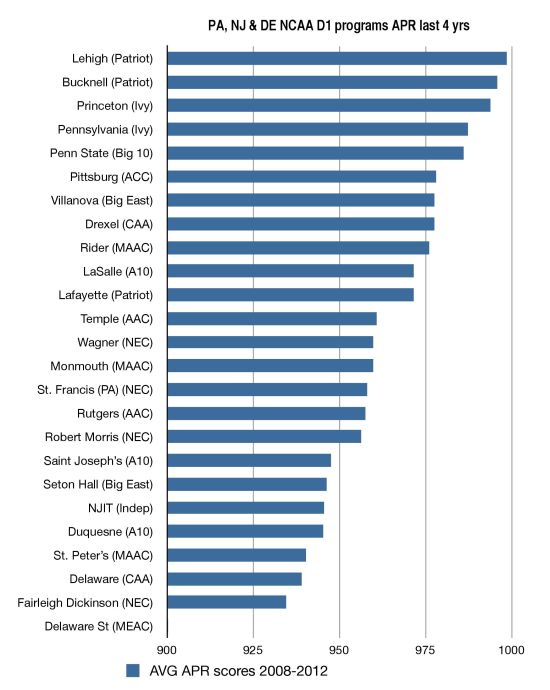
How much do local colleges and universities spend on Men’s basketball?  What is the difference between “big-time” programs and mid-majors?  Utilizing the chart and table listed above one can compare the financial commitments of PA, NJ and DE colleges to their respective Men’s Basketball programs.  There are a few surprises.

A few things immediately jump out when comparing the basketball budgets of PA, NJ and DE Division 1 programs.  Seton Hall has not been getting an adequate bang for their buck. But perhaps most surprisingly, Lehigh with one of the smallest budgets has the highest academic record, the 5th highest number of average wins and a lottery pick in last years draft. Drexel’s basketball budget is larger than two of the Big 5 programs (LaSalle and Penn).  Fairleigh Dickinson’s budget is very high given their very low average wins and poor academic performance.  Delaware State, a historically Black (MEAC) school is in the middle of the pack budget wise.    

← Back

Thank you for your response. ✨


PA, NJ and DE Average APR for 2008-2012

PA, NJ and DE Average APR for 2008-2012

Which schools do a better job keeping basketball players eligible? Which programs graduate the student-athletes at very high rates? For all recruits, these are questions that should be asked early in the process.

While eligibility requirements make the individual student-athlete accountable, the Academic Progress Rate creates a level of institutional responsibility. The Academic Progress Rate is a Division I metric developed to track the academic achievement of teams each academic term.

Each student-athlete receiving athletically related financial aid earns one retention point for staying in school and one eligibility point for being academically eligible. A team’s total points are divided by points possible and then multiplied by one thousand to equal the team’s Academic Progress Rate score.

← Back

Thank you for your response. ✨

PA, NJ and DE D1 BBall programs

PA, NJ and DE D1 BBall programs

Average number of wins 2009-2013

Over the past four years, Temple has won more games per season than any other Division 1 Men’s Basketball program in PA, NJ and DE. Led by Coach Fran Dunphy, the Owls will be challenged to maintain this level of success against UConn, Memphis, Louisville and Cincinnati in the newly formed AAC.


← Back

Thank you for your response. ✨

Ranking Philly College “Bigs”

This week Division 1 College Basketball programs across the country begin formal practices.  More than any other area in the country, Philadelphia has produced some of the best “Bigs” since Dr. Naismith hung up that first peach basket while teaching at the YMCA in Springfield, Massachusetts.  Wilt Chamberlain, Ray “Chink” Scott, Mike Brooks, Gene Banks, Eddie Griffin, Rasheed Wallace and many others have represented Philly on college hardwoods and beyond.  However, casual fans, college basketball coaches and independent scouts frequently rave about “Philly guards.”  Often overlooked and under appreciated, Philly guards usually find a way to infiltrate the nation’s conscience.  Tyrone Garland’s “Southwest Philly Floater” captivated the nation’s attention during March Madness earlier this year.  South Philly’s Dion Waiters shocked the so-called experts when he was the 4th player taken in the NBA draft after NEVER starting a game in college.

Here, I want to shine some light on the “Philly Bigs” currently plying their trade at the collegiate level.  My earlier ranking of Philly College Guards sparked a lot of heated debate.  I fully anticipate a similar level of disagreement over these rankings.  Please note that guys in JUCOs and current redshirts are NOT included because they will NOT be playing NCAA basketball this season.  So guys like Savon Goodman, UNLV and Jamir Hanner, Buffalo are not listed even though their talent level clearly warrants inclusion.

Image

1.  Ronald Roberts, Senior, Saint Joseph’s, 11.3 ppg, 8.3 rpg, 0.9 bpg last season.

At 6’ 8” 220 lbs., Roberts is the most explosive player in the city and, perhaps, on the eastern seaboard.  A determined rebounder with a relentless motor, he competes every single play of every game.  One of the most prolific dunkers in recent memory, Roberts has gradually added subtlety and nuance to his game each off-season.  While he relies primarily on sheer athleticism, he has developed a nice short range jump shot and added it to his offensive repertoire.  If he can become a consistent mid-range jump shooter, he will be almost impossible to guard at the collegiate level.

Image

2.  Jerrell Wright, Junior, LaSalle, 10.8 ppg, 6.7 rpg, 1.0 bpg last season.

Jerrell is a very strong low-post presence.  Standing 6’ 8” and coming in at a solid 240 lbs, he provides great balance to a LaSalle team that relies heavily on excellent guard play.  Jerell is very good at establishing himself on the block.  He is solid rebounder and shot-blocker as well.  He has a variety of moves that enable him to be an effective scorer.  If he can add an ability integrate countermoves finishing with his right hand, he will be a real problem for A10 defenses over the next 2 seasons.

Image

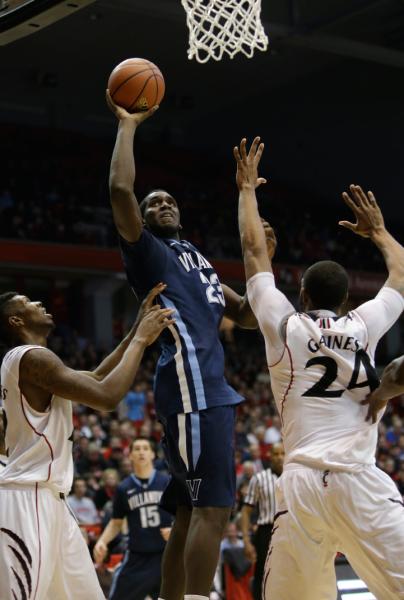
Tie 3.  JayVaughn Pinkston, Junior, Villanova, 13.3 ppg, 5.0 rpg, 0.5 bpg last season.

At 6’ 7” and 240 lbs., Pinkston is powerful athlete with solid ball-handling skills that allow him operate on the interior or the perimeter.  He is good jump shooter who can hit an occasional 3-pointer.  His forte, however, is using his strength and agility near the basket.

Image

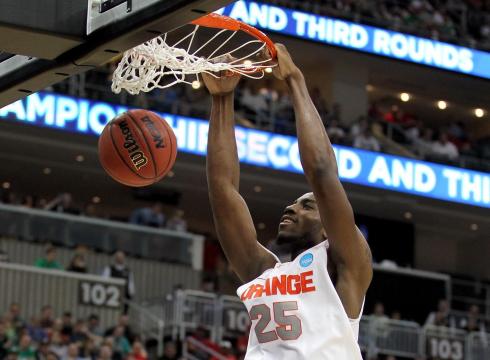
Tie 3.  Rakeem Christmas, Junior, Syracuse, 5.1 ppg, 4.6 rpg, 1.8 bpg last season.

By far, the most difficult player to assess.  Undoubtedly, the most physically gifted player on the list.  He only played 20 mins per game.  His production has been well-below what was expected coming out of High School as a McDonald’s All-American.  Blessed with great size and very good athleticism, I look for Christmas to establish himself as a dominant force in the ACC over the next two years.

Image

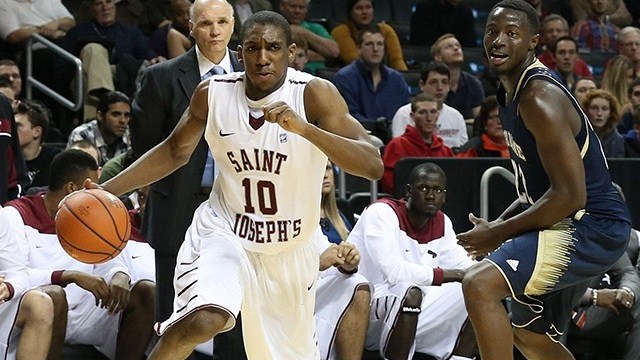
4.  Halil Kanasevic, Senior, Saint Joseph’s, 8.5 ppg, 7.2 rpg, 1.7 bpg last season.

A high skilled basketball player at 6‘ 7” and 258 lbs, Kanasevic brings a variety of assets to the Saint Joseph’s attack.  A very capable ball-handler, Kanasevic brings the ball up the floor when needed.  He is the best passer among all the “Bigs” on the list, as evidenced by his 3.5 assists per game.  A capable scorer, Halil has outstanding footwork in the low post.  His jump shot is respectable and he shoots 27% from the three point line.  An very effective position defender, Halil averaged 1.7 blocked shot per game last season.  If he can control his emotions and maintain focus this season he should be one of the better Bigs in the A10.

Image

5.  Gene Teague, Senior, Seton Hall, 11.2 ppg, 7.2, 0.5 bpg last season.

An imposing physical presence at 6’ 9” and 270 lbs, Teague is traditional low-post, back to the basket “Big.”  Blessed with soft hands, Teague is able to establish himself in the low post and finish with a variety of moves.  A good athlete, Teague is able to run very well for a player of his size.  A very good outlet passer, he is depended upon to ignite the Seton Hall fast break.  If he can maintain his physical conditioning, he will be one of the premier “Bigs” in the Big East Conference this season.

Image

6.  Anthony Lee, Junior, Temple, 9.8 ppg, 6.8 rpg, 0.8 bpg last season.

Possessing a very long wingspan and a deft touch around the basket, Lee scores on a variety of hook shots and short jumpers. At 6’ 9” he’s a little on the thin side, but he will continue to add muscle while maintaining his athleticism.  With the departure of one the most prolific scorers, Khalif Wyatt, in Temple’s illustrious history, Lee will be asked to provide more scoring this year for the Owls.  I look for Lee to more than hold his own against Louisville, UConn and Memphis when they make their way to North Broad Street this season.

Image

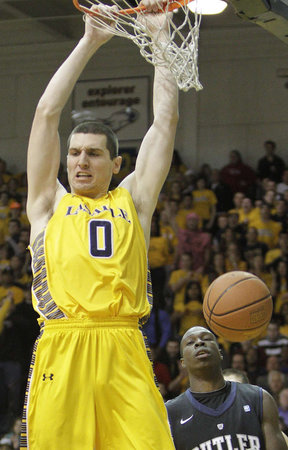
7.  Steven Zack, Junior, LaSalle, 6.4 ppg, 6.4 rpg, 1.3 bpg last season.

A true center, Zack has a tremendous upside.  Still filling out his 6’11’’ 240 lb. frame, Zack provides a great front court compliment to Jerell Wright for the Explorers.  A little raw offensively, Zack does his scoring very close to the basket.  He runs the floor and battles for position every single play.  If he can avoid foul trouble on a more consistent basis, I look for his production to increase substantially.  It would not be a surprise to see his name mentioned as an NBA prospect, if he continues to develop over the next 2 seasons under the tutelage of Dr. G and the rest of the Explorer coaching staff.

Image

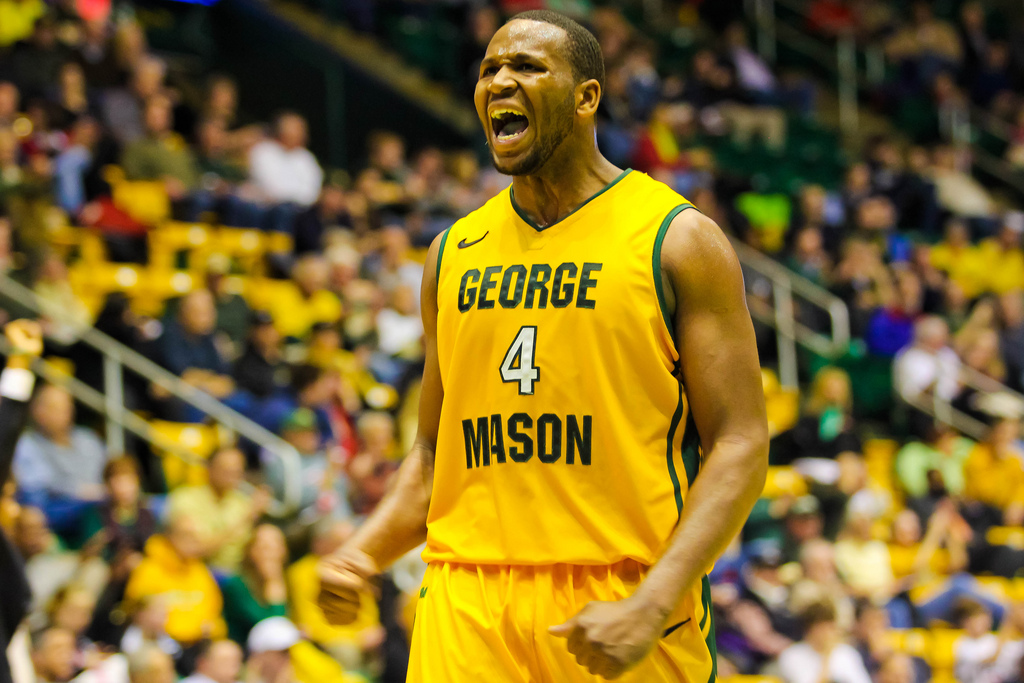
8.  Eric Copes, Junior, George Mason, 5.9 ppg, 6.0 rpg, 1.1 bpg last season.

Another traditional back to the basket big man, Copes provides a strong presence in the paint for George Mason.  He started all 34 games last season and led the team in rebounding and blocks.  While his offensive game is still unrefined, he very capable of finishing close to the basket.  Copes has exceptional timing and consistently forces defenders to alter their shots at the rim.  A very young (20 years old) college junior, Copes could evolve into a high level player in the A10 over the next 2 seasons.

Image

Tie 9.  Daniel Ochefu, Sophomore, Villanova, 3.5 ppg, 4.1 rpg, 0.7 bpg last season.

While backing up Mouphtaou Yarou last season, Ochefu was limited to 17.5 minute per game.  Look for his production to increase substantially with Yarou’s departure.  At 6’11” and 240 lbs, he possesses all of the physical tools to be a dominant big man in the Big East.  Still learning the game, he will play an important role for the Wildcats this season.

Amile Jefferson

Tie 9. Amile Jefferson, Sophomore, Duke 4.0 ppg, 2.9 rpg last season

Where will Amile play? How much will Amile play?  No one can argue against the fact that he is one of the MOST talented Philly kids in college basketball.  But a player has to actually play.  At Duke, Jefferson played less than 13 minutes per game.  Will he play on the wing? Will he play in the post?  “I think Amile can play any number of positions. He’s a guy that can play both frontcourt positions, he can play on the wing, he’s a basketball player,” associate head coach Steve Wojciechowki said.  I’m including Amile here because he has made an effort to gain weight over the summer.    Duke has landed the highly recruited Jabari Parker and he expected to play heavy minutes in the front court.  Amile supporters recall his days as a McDonald All-American.  College basketball fans are anxiously waiting for the potential to manifest itself in the ACC.

Image

10.  Daniel Stewart, Senior, Rider, 10.6 ppg, 7.2 rpg, 0.7 bpg last season.

Coming in at 6’6” and 215 lbs, Stewart is an undersized Big who relies on quickness and exceptional athleticism to compete against much larger opponents.  An outstanding leaper, he is known for finishing with power and force at the rim.  Stewart does an exceptional job rebounding and defending the basket for Kevin Baggett’s Rider Broncs.  If Junior Fortunat can continue to develop as a low post presence, look for Stewart to expand his game and flourish as an offensive force during his senior season.

11.  Marcus Kennedy, Sophomore, SMU, redshirt last season.

12.  Dartaye Ruffin, Senior, Drexel, 6.9 ppg, 6.8 rpg, 0.7 rpg last season.

13.  Fran Dougherty, Senior, Penn, 12.8 ppg, 7.5 rpg, 1.1 bpg last season.

14.  Will Barrett, Senior, Princeton, 9.3 ppg, 4.7 rpg, 0.7 bpg last season.

15.  Shaquille Duncan, Junior, Morgan State, 7.3 ppg, 4.1 rpg, 2.2 bpg last season.

16.  Malcolm Gilbert, Junior, Fairfield, redshirt last season.

17.  John Davis, Freshman, Towson, high school last season.

18.  Jeremiah Worthem, Freshman, Robert Morris, high school last season.

19.  Carl Baptiste, Senior, Delaware, 4.0 ppg, 4.2 rpg, 0.4 bpg last season.

20.  Junior Fortunat, Junior, Rider, 4.1 ppg, 3.5 rpg, 0.6 bpg last season.

21.  Xavier Harris, Junior, Fairleigh Dickinson, 4.1 ppg, 3.3 rpg, o.4 bpg last season.

Others to watch:

Julian Moore, Penn State

Quadir Welton, Saint Peter’s

Jai Williams, Saint Joseph’s

Darian Nelson-Henry, Penn

Darryl Reynolds, Villanova

Zac Tillman, Monmouth

Yohanny Dalembert, James Madison

Dominique Reid, Niagra

Xavier Lundy, Rider

Steve Smith, Fairfield

Contact Delgreco K. Wilson at delgrecowilson@aol.com

Stepping Up to the Plate: Helping Philly Area Students and Student-Athletes Prepare for College

Image

We are in the midst of a distressing and depressing era of public education. The City of Philadelphia does not have the resources necessary to adequately educate it’s public school students.  Public officials, in a desperate attempt to raise money for things like paper, pencils, glue, crayons and rulers, are trying everything short of a “fish fry” and a black light “rent party.”  Mayor Michael Nutter has announced the formation of the Philadelphia Education Supplies Fund to raise cash for the Philadelphia School District.  Also, Interstate General Media, publisher of philly.com, The Inquirer and The Daily News, is teaming up with Global Citizen, the city-based civic engagement organization, to gather the aforementioned school supplies from public donations through Oct. 25.

Consequently, those of us interested in motivating young people to remain focused on academic pursuits are being challenged to think outside the “box.”  The box, after all, is empty.  For the past fifteen years, I have helped some of the finest Philadelphia high school students and student-athletes prepare for, and transition to, college.  Over time, the process has become much more difficult and challenging.  While college admission requirements and NCAA eligibility standards have become more restrictive, resources available to Philadelphia’s students have been drastically cut.  The outcomes of these trends are easy to predict.

Looking toward the future, Pennsylvania has allocated $400 million for the construction of a new prison complex, while the School District of Philadelphia faces a $300 million budget deficit.  As a society, we have decided to prepare for the days when we “catch” the current crop of underserved schoolchildren engaging in delinquent and criminal behaviors.  Sadly, in Philadelphia the path to incarceration is much easier than the path to higher education.

Image

But, what about the kids that want to learn?  What about the students that want comply with rules and exceed expectations?  The mission of the Bright Baller program has always been to “catch” and reward those kids for doing the right thing.  For many of our youth, athletics is a primary motivating factor behind the pursuit of academic goals.  The Bright Baller Program has helped many area kids leverage their athletic prowess and gain access to some of the finest colleges in the country.  I am pleased to announce that Bright Baller has formally partnered with myGZPoints.com and together they will provide:

1) Free full-length practice SAT/ACT exams to participating HS, AAU, Pop Warner, Little League, PAL and other youth serving organizations;

2) Discounts at local and national businesses for students and student-athletes with strong attendance records and good grades;

3) Tickets to local college and professional sporting events for participating organizations;

4) Free NCAA Clearinghouse analysis for student-athletes with potential to play at the NCAA Division 1, Division 2 or NAIA scholarship levels;

Image

The primary objectives of this joint venture are to expose hundreds of Philadelphia area students and student-athletes to the college application and admission processes, educate them about NCAA and NAIA eligibility requirements and help them accurately assess their own individual predicaments.

If students and parents understand the requirements in 6th, 7th and 8th grade, they will be far more likely to meet them in 12th grade.  Indeed, the Bright Baller myGZpoints.com partnership will provide tangible rewards to students who pass all of their classes and attend school on a consistent basis.  The aim is to “catch” and reward young students and student-athletes for doing the right thing.  Positive behaviors will be rewarded early and often.  On far too many occasions, students and parents become aware of the requirements after it’s too late to improve grades and test scores.

Image

This problem will only become worse under current conditions.  Many School District of Philadelphia high schools no longer have guidance counselors, assistant principals, or other critical staff positions.  Pennsylvania’s public officials are preparing for the logical outcome of these deficiencies.  This past summer, the District terminated 3,783 employees or just about 1 out of every 5 people who work daily with our kids.  Meanwhile, the Pennsylvania Department of Corrections is currently recruiting Air Conditioning & Refrigeration Vocational Teachers, Corrections Barber Instructors and, of course, Corrections Officer Trainees. Clearly, the state is ready to intervene and “catch” young people when they go astray.

But, what about the majority that are trying to achieve academically and make a positive contribution to society?  Who is going to advise college bound students? Who is going to ensure they are taking courses that will lead to NCAA eligibility?

The Bright Baller myGZpoints.com partnership will not be able to help everyone.  However, if HS, AAU and youth organization coaches are willing to participate in the program we will help a lot of students and parents understand what they need to accomplish.

If you have a team, student or student-athlete interested in participating, please contact me via:

Facebook – Delgreco Wilson

Twitter – Delgreco Wilson

LinkedIn – Delgreco Wilson

Email – delgrecowilson@outlook.com

Ranking Philly College Guards

With the college hoops season right around the corner, there are many local story lines worth following.  The Philadelphia region is, arguably, the finest place in America to watch amateur basketball.  Every year, Philadelphia produces a plethora of high school players that go on to make an impact at the collegiate level.  Also, there are always a few that come from other areas to make some serious noise at one of the area Division 1 programs.

More than any other position, the focus is always on “Philly Guards.”  They are known for toughness, tenacity and playing with a chip on their shoulder.  What follows is a ranking of college guards, either from Philly or playing at one of the Philadelphia area college programs.  I am sure there will be MAJOR disagreement over the place of some players.  Please feel free to let me know where you think I went wrong.

Image

1.  Tyreek Duren, Senior, LaSalle, 14.2 ppg, 3.3 apg, 2.9 rpg last season.

At 6 ft, 180 lbs., Duren is the consumate floor general.  He plays within himself at all times.  Duren is never flustered and runs John Gianni’s offense with precision.  An exceptional ball-handler, he consistently finds his teammates good looks.  When needed, Duren delivers big shots.

Image

2.  DJ Newbill, Junior, Penn State, 16.3 ppg, 4.0 apg, 5.0 rpg last season

The prototypical Philly guard, Newbill does everything well.  Standing 6’4” and weighing a solid 205 lbs., he strong and athletic.  Forced to play point guard after a season ending injury to Tim Frazier, Newbill excelled.  One of the top returning scorers in the Big Ten, having finished fourth (16.3) in 2012-13, DJ enters his junior season with nearly 800 career points, 11 20-point games and 41 career double-digit scoring outings and a chance to join the list of Penn State’s 1,000-point scorers.

Image

3.  Devon Saddler, Senior, Delaware, 19.9 ppg, 2.8 apg, 4.5 rpg last season

An explosive scorer, Saddler has been the focal point of the Delaware offense for the past three season.  A sturdy 210 lbs, he is simply too strong for most opposing guards.  Saddler has solid ball handling skills.  While he is a decent shooter, he can be streaky at times.  His strongest asset is his ability to get off a shot, seemingly, at will.  He is fearless and competes every second of every game.  Saddler will surely past the 2,000 point plateau early in his senior season.

Image

4.  Langston Galloway, Senior, Saint Joseph’s, 13.8 ppg, 2.3 apg, 3.6 rpg last season

An excellent all-around player, Galloway doesn’t have a real weakness in his game.  While he is known primarily as a long-range shooter, he has very solid ball-handling and passing skills.  For the past three years, he has been assigned the task of defending the best wing player on the opposing team.  A fierce competitor, Galloway gives a full effort every time he sets foot on the court.  A sneaky athlete, Galloway possesses an under-appreciated level of athleticism.  He is capable of finishing with authority around the rim with relative ease.

Image

5.  Franz Massenat, Senior, Drexel, 14.7 ppg, 4.2 apg, 2.4 rpg last season

A big point guard at 6’4” 180 lbs, Massenat is an excellent floor general.  Thrust into a leadership role immediately upon his arrival three years ago, he has evolved into one of the premier guards in the CAA.  A solid shooter, Franz excels at penetrating opposing defenses and finding his teammates on the wing or finishing at the rim.

Image

6.  Tyrone Garland, Senior, LaSalle, 13.1 ppg, 2.1 apg, 2.0 rpg last season

Thrust into the national limelight when his “Southwest Philly Floater” sent La Salle to the Sweet 16 with a thrilling 76-74 win over Mississippi, Garland is a well known commodity among Philly hoops aficionados.  An aggressive offensive player, he has excellent lift on his jump shot enabling him to get it off against taller defenders and in traffic.  Garland brings a high level of toughness to the LaSalle backcourt.  Look for his offensive production to increase significantly with the graduation of Ramon Galloway.

Image

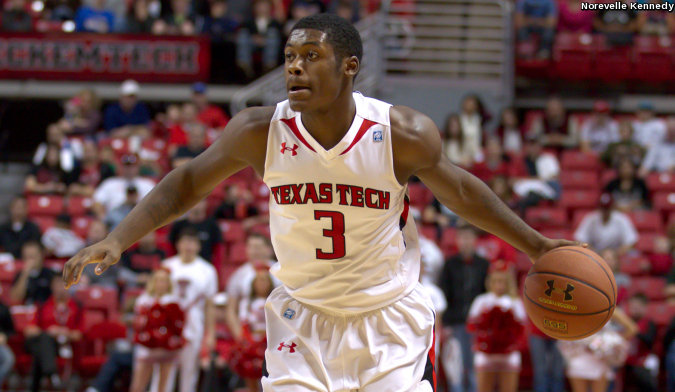
7. Deshon “Biggie” Minnis, Sophomore, Rhode Island, Redshirt last season

A big, strong, pass-first point guard at 6’3” 205 lbs., Minnis is set to have a impact on the Atlantic 10 Conference after sitting out last year following a transfer from Texas Tech.  He spent last season being tutored by Bobby Hurley, arguably, the greatest college point guard over the last 25 years.  Blessed with exceptional court vision and a tight handle, Minnis will look to push the ball for Danny Hurley’s Rams this season.

Image

8.  Jordan Reed, Sophomore, Binghamton, 16.6 ppg, 9.5 rpg, 1.4 apg last season

Exploding on the college basketball scene as freshman, Reed nearly averaged a double-double.  A next-level athlete, Reed finishes around the rim with authority.  Known for dunking over much taller opponents, Reed is already one of the top players in the America East Conference.  As he develops his outside shooting and refines his ball-handling skills, Reed has chance to become one of the players in the country.

Image

9.  Pendarvis Williams, Senior, Norfolk State, 14.3 ppg, 4.5 rpg, 1.7 apg

The MEAC Player of the Year, Williams has exceptional size for a guard at 6’6.”  Capable of playing on and off the ball, he is a good shooter and solid ball-handler.  A very good athlete, He has been mentioned as potential NBA draft pick.

Image

10.  Ryan Arcidiacono, Sophomore, Villanova, 11.9 ppg, 2.1 rpg, 3.5 apg

Thrust into a leadership role following the early departure of Maalik Wayns to the NBA, Arcidiacono led Villanova in minutes played (34.0 mpg) and assists (3.5 apg).  He was a unanimous choice to the BIG EAST All-Rookie team and was named Rookie of the Week four times.  An exceptional ball-handler, he benefitted immensely from playing heavy minutes as a freshman.

11.  Damion Lee, Junior, Drexel, 17.1 ppg, 5.1 rpg, 1.8 apg

12.  Chris Fouch, Graduate Student, Drexel, Redshirt last season

13.  Rysheed Jordan, Freshman, Saint John’s, High School last season

14.  Brandon Austin, Freshman, Providence, High School last season

15.  Rondae Jefferson, Freshman, Arizona, High School last season

16.  Steve Vasturia, Freshman, Notre Dame, High School last season

17.  Sam Mills, Senior, LaSalle,  8.0 ppg, 2.6 rpg, 2.2 apg

18.  DJ Irving, Senior, Boston University, 14.2 ppg, 3.3 rpg, 3.6 apg

19.  Maurice Watson, Boston University, 11.2 ppg, 3.3 rpg, 5.4 apg

20.  Miles Cartwright, Penn, 13.5 ppg, 3.4 rpg, 3.8 apg

Others to watch:

Jabril Trawick, Georgetown

DaQuan Walker, UCF

Will Cummings, Temple

Josh Brown, Temple

Quenton Decosey, Temple

Ky Howard, NJIT

Chris Wilson, Saint Joseph’s

Kyle Molock, Saint Joseph’s

Lamin Fulton, Wisconsin-Green Bay

Hakim Baxter, UMES

Devin Coleman, Clemson

Jarrod Denard, Claflin (Division II)

Mike Terry, UDC (Division II)

delgrecowilson@outlook.com