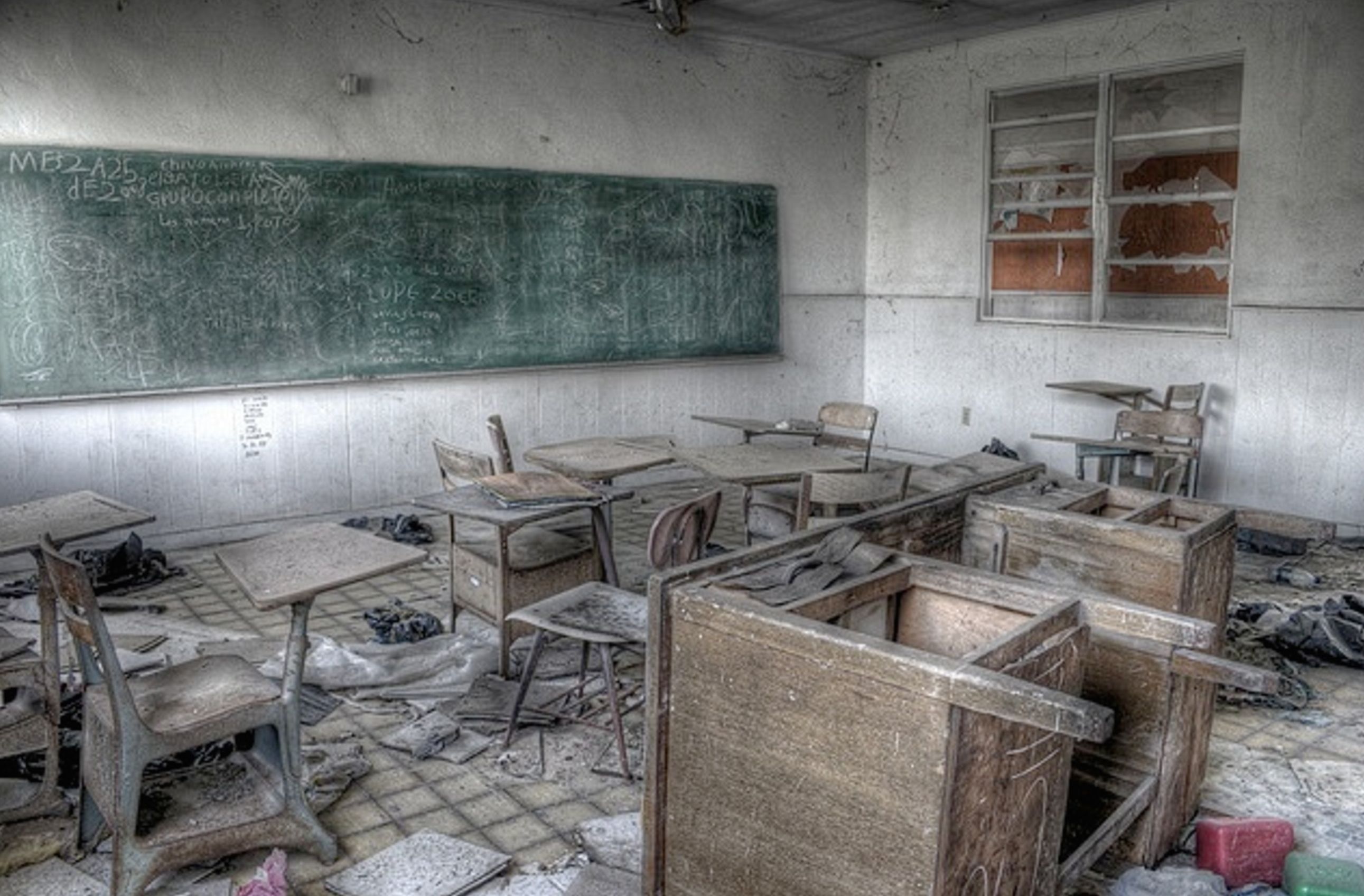
One Family at a Time: Increasing Minority Catholic/Private Enrollment In Philly

We are witnessing a profound paradigm shift in the manner in which urban K-12 educational services are delivered.  Urban public schools have seemingly abandoned hope.  Right before our eyes, the traditional urban public school systems of our youth die a tortuous, slow and excruciatingly painful death. Constant pressure is being applied with great force to the “throat” of urban public school systems. This asphyxiation of public education in places like Philadelphia, presents a tremendous opportunity for Catholic, Private and other tuition-based schools to dramatically increase their enrollment figures.

FIFF - Negative Poster 2-page-0

We are in the midst of a period of “public education austerity,” which has been gaining traction for several years. Deep and sustained administrator, teacher and guidance counselor layoffs accompanied by widespread school closings and service cuts are clear symptoms of this particular disease. These massive human resource reductions and school shutterings have been instituted with alarming consistency in low-income urban areas across the nation. They are part and parcel of the trend toward a “Portfolio” management model in urban education.

Chicago, New Orleans, New York City, Camden and Philadelphia are among the large urban districts that are shifting from a centralized bureaucracy that directly manages traditional neighborhood based schools toward the Portfolio model in which District Administrators enter into contracts with a few public schools, privately managed schools, and charter schools. Last year alone, Philadelphia closed 29 schools. Chicago closed 49, New York 26 and Washington, DC 15. Other urban areas transitioning to this Portfolio Management approach are Baltimore, Cleveland, Los Angeles, Oakland, and Washington.

FIFF - Negative Poster 3-page-0

A key feature of this strategy appears to be economic strangulation of the remnants of traditional neighborhood schools. Given the fiscal constraints facing administrators of traditional urban schools, continued abysmal academic performance is inevitable. Of course, this will lead to more and more school closings. National education management organizations (EMOs) and large corporate charter operators will continue to gain a larger share of the urban public education market. Or, so they think.

Portfolio models have emerged in wide range of strategic environments, but they have an important limitation. In each of the aforementioned cities, the “shot callers” – politicians, board members, superintendents, etc. – have made their move.  For example, the School District of Philadelphia has shown its’ hand.  Now other “players” have an opportunity to react and respond accordingly.  In “real life” all of the players in the “urban education market” players don’t choose their strategies simultaneously.  Instead, the game transpires over time, with players making “moves” to which other players react with their own “moves.” Here I explore the likely “moves” of the tuition-based schools, represented by the Archdiocese of Philadelphia and urban low to moderate income parents of school age children.

It is important to note that the School District of Philadelphia’s educational “shot-callers” may not have fully considered the extent to which the timing of strategic decisions is important.  Despite years of sad stability, the urban educational service delivery “market” is potentially a dynamic and constantly changing strategic environment.  The shot-caller pay lip service to this fact.  Proponents of the Portfolio model argue that it allows districts a degree of flexibility unavailable under traditional service delivery models. What they fail to appreciate is the extent to which their actions could lead to a mass exodus of students from the public school system altogether.

For years, urban public school board members, superintendents and administrators operated as a de facto monopoly. The actual consumer of public schools — parents and children — exercise very influence as the schools have become more and more centralized and bureaucratic. Over the past 60 years or so, the number of school districts declined from 130,000 to 16,000. The system is top-heavy.  Classroom teachers once represented 96 percent of the total instructional staff. Today they are about 86 percent.  Federal and state resources have superseded local government as the leading source of school funds. The local percentage dropped from 83 percent to 43 percent. While population has almost doubled, the cost per student multiplied more than five-fold, even after allowing for inflation.  By any reasonable measure, the quality of urban education has declined precipitously. Urban public school systems are now run by professional bureaucrats. Monopoly and uniformity have replaced competition and diversity. Over the past five or six years, these bureaucrats began shifting to a ‘Portfolio’ management model in cities across America. In doing so, they are opening the door for high-quality alternatives like Catholic, Christian and Independent tuition-based schools to siphon off students in large numbers.

FIFF - Negative Poster 1-page-0

Their misguided premise seems to be that urban public students won’t pursue tuition-based alternatives. From the perspective of the shot-callers, urban public students are captives.  They will accept whatever experiment or reform package comes down the pike.  I fundamentally disagree! Here, I explore a more dynamic representation of the urban educational setting in Philadelphia. Unlike, political leaders and school board members operating from a monopolistic perspective, assuming a stagnant and captive urban student body, I acknowledge the presence and importance of other players in the urban educational “game.”

A more extensive and informative analysis necessarily includes a more complete set of players.  Urban school districts aren’t acting in a vacuum. For present purposes, I consider three (3) sets of players: 1) The School District of Philadelphia, 2) The Archdiocese of Philadelphia and, 3) urban parents of Philadelphia’s public school students. Perhaps, most importantly, there is no assumption that urban districts can close schools, cut services, lay off teachers and other staff members with impunity. Rather, I look at their recent moves when and spell out what their choices entail. I explore what the other know when they move. Finally, I examine each set of players‘ payoffs as a function of the choices that are made.

In the Philadelphia Urban Education Entry Model illustrated below, the School District of Philadelphia (SDP) is an incumbent monopolist. As of December 2013, the SDP consisted of 214 schools. This figure includes Promise Academies and excludes Early Childhood, Alternative Education Programs, and Charter Schools. The SDP enrolls over 131,000 students in these 214 schools. Another 6,982 are enrolled in Pre-K programs, 3,558 are in Alternative Education programs and 229 are in Virtual Academies.

Philadelphia Urban Education Market Model-page-0

The School District of Philadelphia is also responsible for establishing and maintaining high standards for its charter schools, including ongoing monitoring of charter performance against clear standards and implementing consequences for not meeting standards. As such, the SDP currently “oversees” 86 charter schools with a total enrollment exceeding 60,000.  While charter schools have a degree of administrative autonomy, they are ultimately accountable to the School District of Philadelphia.  Indeed, six (6) charter schools are currently in the midst the Nonrenewal/Revocation Process in which the District’s School Reform Commission is attempting to permanently close the schools. For strategic purposes, I consider them part of the District.

With regard to urban education, especially of low to moderate income minority students, in Philadelphia, the SDP is a virtual monopoly. The Archdiocese of Philadelphia, has smaller but relatively stable presence in Philadelphia’s urban education market.  With the abysmal academic performance of SDP schools, the Archdiocese has an opportunity to aggressively enter the urban educational market. Plainly stated, they can make a push for Black and Latino students that are currently underserved by dysfunctional public schools. The strategic situation is represented the above diagram.

If the Archdiocese decides to “stay out” of the urban student enrollment market, the district would not lose students and the payoff for the SDP is 2. Under that scenario, the Archdiocese would not gain any additional students and their payoff would be 0. But, we can immediately eliminate this payoff option.

The Archdiocese has decided to “jump in” the the urban enrollment market. Indeed, their commitment to attracting minority students is very real. Toward that end, the nonprofit foundation that manages Catholic high schools in the Archdiocese of Philadelphia is offering $1,000 grants to encourage students to transfer to the schools.

FIFF - $1000 Transfer Advantage Poster-page-0

Christopher Mominey, chief operating officer of the Faith in the Future Foundation and the archdiocese’s secretary for Catholic education, said the new “transfer advantage” grants were part of the effort to boost enrollment at the 17 high schools.  He said the foundation wanted to attract students who were not enrolled at Catholic high schools but were interested in learning more about them. Within Philadelphia’s city limits, these students are predominantly Black, Latino and Asian. The Archdiocese is currently planning mount an aggressive targeted marketing campaign to engage minority families. This effort will be spearheaded by Nick Regina, Deputy Secretary for Enrollment Management.

With the Archdiocese aggressively competing for urban students, the SDP, theoretically, will have to choose how to compete: either aggressively (fight to keep their students), or by ceding enrollment share (accommodate). The strategic situation faced by the SDP is represented by in the diagram by the choices “fight” or “accommodate.” Again, we can immediately eliminate one of the scenarios. The district, quite frankly, is not in any position to fight.
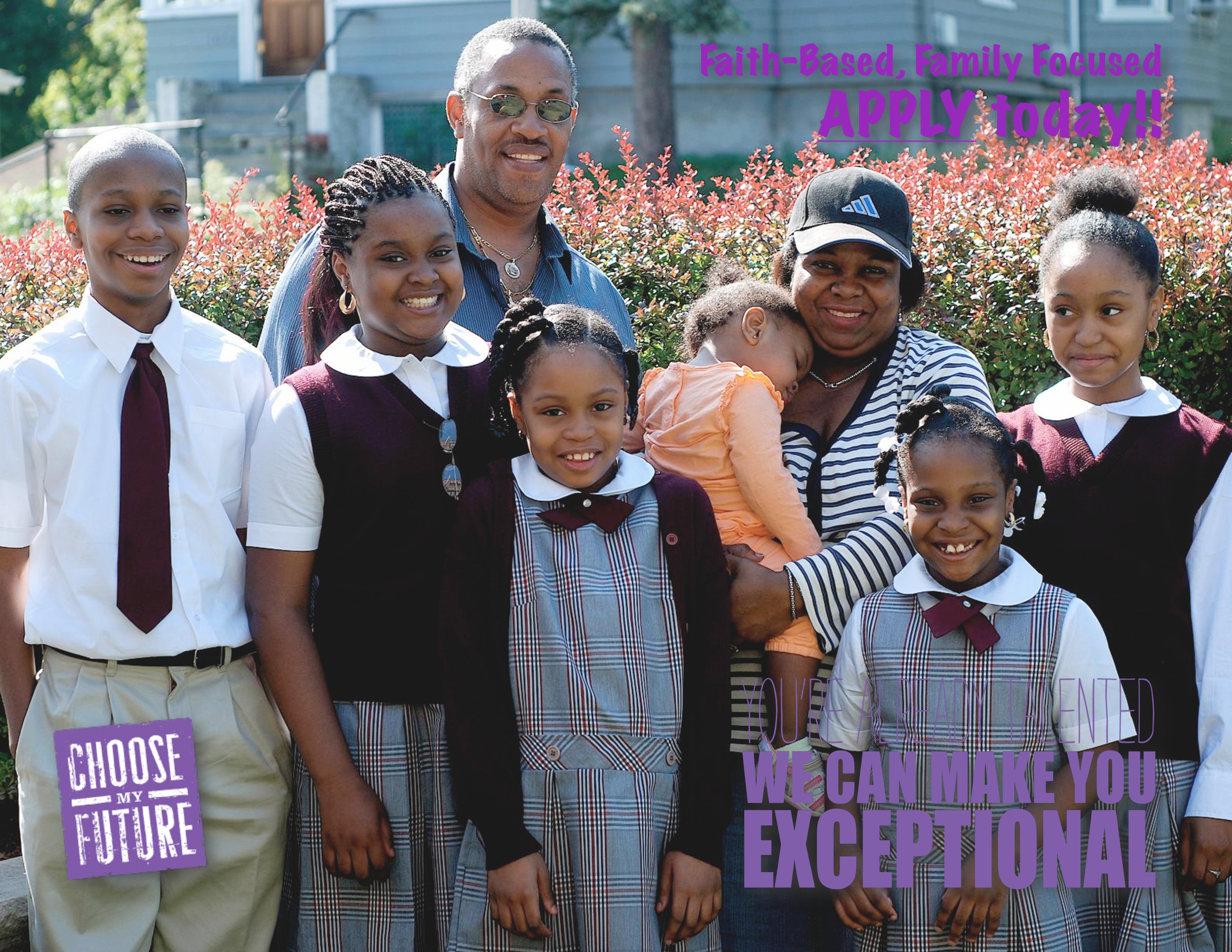
FIFF - Black Family Poster-page-0(1)

Even if they wanted to market themselves, it would be a very, very tough sell.  Of the 214 schools in the School District of Philadelphia, 182 (85%) are listed as “low-achieving” for the 2014-2015 school year. Put another way, nearly 9 out of every 10 Philadelphia public school ranks in the bottom 15% of Pennsylvania schools. Moreover, it’s virtually impossible to find a traditional neighborhood school that is not low-achieving. The performance levels are so poor that the Pennsylvania Department of Education has determined that students residing within the boundaries of a low-achieving school are eligible to apply for scholarships to attend another public or nonpublic school. In effect, the state of Pennsylvania is telling parents to seek better educational settings.

Hence, if they expended any of their scarce resources on a marketing/recruitment effort, they would necessarily take away from their ability to deliver educational programming. As such, the student experience within the district could only become worse. Thus, the decision to “fight” result is payoff of -1 for the SDP. At the same time, the Archdiocese will gain an increased enrollment share. The ADP payoff is 1.

Thus, the far more likely scenario is one of accommodation. One could almost see this coming. Three years ago, the SRC joined the city, state, District, and two of Pennsylvania’s largest charter umbrella organizations in joining the Philadelphia Great Schools Compact.  The group was given a $100,000 planning grant by the Bill & Melinda Gates Foundation. The stated aim of the compact is replacing or transforming 50,000 seats in low-performing schools with better options, without regard to whether the schools involved are operated by the District or a charter organization. The Great Schools Compact is the engine driving the push toward a “Portfolio Management” model in Philadelphia. Why would they oppose an increased number of students enrolling in tuition-based schools?

FIFF - Little Girl Poster-page-0

Clearly, Catholic schools are a “better option.” By any reasonable measure Catholic schools outperform public and charter schools in Philadelphia. Over 98% of the elementary schools in the Archdiocese have been accredited by the Middle States Association, and the remaining 2% have completed the process and are awaiting their status. More than 4,000 students participate in Elementary Honors Math Programs in 78 Archdiocesan schools. These students are prepared to participate in advanced-placement mathematics courses at the secondary level. World Language instruction is offered in 102 elementary schools. Fine Arts programs are in existence in every Archdiocesan school. Students from Archdiocesan schools have taken top honors in the Future Cities competition as well as in county and regional science competitions.

The question becomes: How does the Archdiocese identify and connect with urban parents desiring access to high-quality, safe educational settings on a regular and consistent basis?  How do they overcome the seemingly “irrational” tendency of parents to enroll their children in low-achieving and highly dysfunctional public schools? The fact is far too urban many parents exhibit educational decision-making that can, perhaps, be best described as irrational or behavior without clear educational goals in mind.

First and foremost, Catholic School enrollment management and admissions professionals must understand that marketing/recruitment approaches that have worked with their traditional populations are limited by time and culture. The Archdiocese has begun to make significant inroads in that area.  Schools like West Catholic HS, Roman Catholic HS and Bishop McDevitt have significant minority student populations.  The staff at these schools have developed recruitment strategies that have been well-received by minority parents.  However, many low to moderate income parents continue to exhibit educational decision-making that is very distinct and subculture-bound.

FIFF Catholic Education Poster 2-page-0

To be effective, Archdiocese representatives must better understand that enrollment decisions which “on their face” appear irrational may indeed be sensible.  This is an important and difficult task to accomplish.  It’s difficult because in many instances educational decision-making takes forms that typical private school parents would consider irrational.  Nonetheless, these behaviors are sensible because they are well adapted to the “real world” situations faced by low to moderate income urban families every day. By “well adapted” I mean enrolling kids in neighborhood public schools satisfies the legal requirement that children attend school without the occurrence of destructive personal stress.

In all American urban centers, to a greater or lesser extent there exists a subculture of the poor. People on the lower end of the economic spectrum view things differently than those on the middle and upper ends. It’s exceedingly hard out here for many, if not most, urban families. In real terms, the nation’s 2012 household median income of $51,017 stood at the lowest level since 1995. Median income peaked in 1999, at $56,000. In 2007, the national median household income stood at $55,627. But it has fallen every year since. When inflation is removed from the equation, median income fell 5.5% from 2005 to 2012. Most Philadelphians are much worse off than the average American. Philadelphia’s median household income was $34,207 in 2011, according to a census study. With half of Philly’s households below that figure, it’s not difficult to identify people struggling to make ends meet and keep a roof over their head.

Enrollment decisions for these folk conform to the notion that actions are taken to avoid pain, not to maximize educational benefits: to cope with pain, or minimize it, or to minimize its very perception. This behavior is not likely immediately recognizable to Catholic School administrators as “sensible” action. I suspect that much, if not most, urban parental behavior broadly considered is designed to minimize pain.

Dealing with daily inexorable pressure and overwhelming frustrations, many low to moderate income parents desire a predictable life. They don’t need to enroll their children in a private or parochial school only to discover that they will be unable to meet tuition payments. They want to reduce the precariousness of life. They want to know that their children will be able to attend a school and they will therefore comply with truancy laws. Many have a hard time understanding apparently irrational resistance to well-meaning attempts to improve access to quality schools. For those unfamiliar with life in the “hood” the educational choices of many urban parents is not immediately recognizable as sensible.

How can we help parents better understand the range of available options? It needs to be understood that educational decision-making intended to minimize pain is widespread in urban centers because it has deep roots in the basic, inescapable need to avoid tension and stress in a world quite correctly perceived to be hostile and unpredictable. Urban minority parents literally have to worry the thug element and the police harming their children. Will their boys be safe from police or harassment or worse traveling everyday through predominantly white neighborhoods.  Unless Catholic educators/recruiters take this fact into account they will continue trying to engage urban families with strategies that are totally irrelevant to their day-to-day existence. There is a need for a new debate, a new discussion with vastly different parameters.

In recent years, debate surrounding urban educational issues has tended to be narrowly circumscribed.  Print and TV media outlets and pundits have focused on a very narrow range of issues. They tend to frame the argument in the following manner: Should public school districts and their supporters focus attention on how to provide quality schooling with, admittedly, dwindling and insufficient resources? Or, alternatively, should school districts and their supporters continue waging (losing) a struggle to gain additional public funding?

The Archdiocese of Philadelphia is adopting a very different approach to the problem of urban education. They can begin from a point which assumes that parents, guardians, grandparents and other educational placement “decision-makers” are potential consumers. That is to say, their behaviors could be influenced, subject to information and opportunity costs. The Archdiocese is assuming that, once fully informed, individual urban parents will want safe high-quality educational settings for their children. Like everyone else, Black, Latino and Asian parents will want to access the “best” schools, once they understand that it is truly achievable.

FIFF - Catholic Education Poster-page-0

They know that many urban parents, however, possess a very limited understanding of the Parochial school application and financial aid process. As a result, their ability to determine their “best interests” and make informed educational decisions is constrained both by perceived limited financial situations and limited understanding of the processes. This is not accidental. Urban school districts, charter school operators and the media have managed to successfully frame the discussion in such a manner that Catholic, Private and Independent school options are, generally speaking, excluded from consideration as viable options for low to middle-income urban families.

The Archdiocese recognizes that most urban parents don’t know much about how Catholic schools work. These parents don’t understand that with available financial aid, they could access quality elementary schools $250, $300 or $350 per month depending on their respective financial situation. They recognize that within urban minority communities, there is significant variation in the extent to which attention is focused on educational issues,  People have different spans of attention and parents have different levels of education. In short, they know parents need help determining what is the “best” educational setting for their children. Many, in not most, parents and students have no idea how bad their current situation actually is.

The best way to accomplish this task is to meet with these families one at a time. If the Archdiocese sticks to this approach, I’m convinced Catholic schools in Philly will “blow up.”
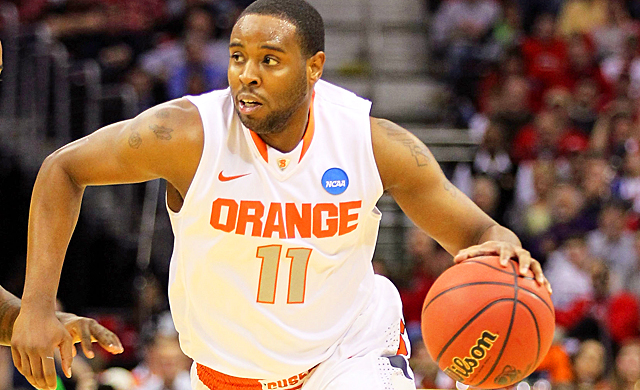
Psssssst… Let me Holla at ya for a minute: An Open Letter to HS Ballers

Young fella, I’ve been watching…. I’ve seen you fly all over the country playing in Adidas, Under Armour and Nike events. I’ve seen you attending “workouts.” I’ve seen the Chosen League highlights on youtube. The videos of you dribbling two balls through the cones, I’ve seen that. You running on the track with the parachute attached to your hip, I’ve seen that too. The killer crossover set to Meek Mills and the dunk backed up by Rick Ross, I’ve seen that too. Like I said, I’ve been watching. I watch because I LOVE you!

Because I LOVE you, I have to tell you the truth. You ain’t supposed to make it!

Let me say it again, I don’t want there to be any confusion. You ain’t supposed to make it.

Scoop

Scoop Jardine, Syracuse University

You see, these are confusing times.  A lot of Philly ballers have made it.  Please understand that I have had this same conversation with the overwhelming majority of area Division I players over the past 15 years or so.  I know exactly how they managed to meet NCAA eligibility requirements.  Scoop Jardine and Rick Jackson are graduates of Syracuse University.  I sat them down as 11th graders and we had this conversation.  Samme Givens and Chaz Crawford graduated from Drexel, but first we had to develop a plan to meet eligibility criteria.  Before Marcus and Markeiff Morris were able to accept scholarships from Kansas, they had to get through the Clearinghouse.  This is the same conversation I had with Dion Waiters, below (Syracuse), Rysheed Jordan (St. John’s), John Davis (Towson), “Biggie” Minnis (Rhode Island), Ja’Quan Newton (Miami), Anthony Durham (Rider), Carrington Ward (North Texas) and many others.

waiters

Dion Waiters, Syracuse University/Cleveland Cavs

Society at large and the American sports media are sending you mixed messages. On the one hand, corporate America (Nike, Under Armour and Adidas) makes it possible for you to fly to Atlanta, Vegas, Los Angeles, Indiana, Ohio, Miami and many other cities to play basketball in front of hundreds of college coaches. You play game after game all summer against some of the best players in the land.

At these events, you have been able to fully display your considerable athletic skills. The jumper is wet! The handle is tight! The vision is outstanding! All the skill development and strength training has finally come together.  You know it, your AAU coaches know it, your “handler” knows it and the college coaches know it, you are a BALLER!

On the other hand there’s what you don’t know and what they won’t tell you is: You ain’t supposed to make it!

I know that you are focused and working relentlessly toward earning an NCAA Division 1 scholarship. Now, what you need to know is that the odds are stacked heavily against you even graduating from high school.  In 2010, a major study found that Philadelphia, along with New York was the worst performing district in the nation with regard to Black male graduation rates. The five worst performing districts with large Black male student enrollment (exceeding 40,000) were New York City, N.Y. (28%); Philadelphia, Pa. (28%); Detroit, Mich. (27%); Broward County, Fla. (39%); Dade County, Fla. (27%).

2013 NBA Players Association Top 100 CampJaQuan Newton, Miami University

Think about that for a minute. Out of every 100 NYC, Philly and Detroit kids you that played with and against in those “Invitational”, “Elite” and “Exposure” camps only 28 will graduate high school in 4 years. That means 72 out of every 100 won’t earn a high school diploma on schedule.

I have to be honest with you young fella, I see Philadelphia’s 28% graduation rate declining significantly over the next few years. Let’s keep it real. Philadelphia is the midst of an unprecedented series of budget cuts. In 2013, the Philadelphia school system laid off 3,783 employees, including 676 teachers and 283 counselors. Along with teachers and counselors, those losing their jobs included 127 assistant principals and 1,202 aides who monitor the cafeteria and playgrounds.

CarringtonCarrington Ward, North Texas

In 2014, it was announced that high school students who live within two miles of school will not receive transportation support (an increase from 1.5 miles), impacting approximately 7,500 students at district, charter, and non-public schools. There will also be reduced services in alternative education programs, which will result in fewer higher-quality options for approximately 300 students. There will be less frequent cleaning of schools, fewer cleaning supplies, and delayed repairs at schools. The district will not fill 34 school police officer vacancies, reducing the number of officers available to support school climate and safety.

In the past year, the state of Pennsylvania (which controls Philadelphia’s public schools) and the city of Philadelphia have closed 23 schools, laid off teachers, guidance counselors, principals and school aides. They have decided to eliminate transportation support and 300 alternative education slots for your peers trying to earn credits toward graduation. They have openly declared they will provide you with dirtier and less safer educational settings this year.

Young fella, you ain’t supposed to make it!

It is important that you understand, they do have plans for your future. I don’t want you to think that they are not preparing to “serve” you. While your schools will be dirty and unsafe because of budgetary concerns, there’s a gleaming new state of the art $400 million prison under construction just outside of the city.

graterfordSCI Graterford

While only 28% of Black males graduate from Philadelphia’s high school on time, Pennsylvania Correctional (Prison) system is operating at approximately 105% percent capacity. This new prison will sit proximate to SCI Graterford. A few years ago, Mayor Michael Nutter noted, “Of the 2010 homicides, 86.9 percent were African-American males. African-American males were 65.5 percent of the admissions into the Philadelphia Prison System in 2010. About one-third of all PA DOC prisoners committed their crimes in Philadelphia County. Graterford is the nearest prison to Philadelphia. A lot of Philly offenders serve time there.

Young fella, they know you ain’t supposed to make it….

Nonetheless, you can do it. You can go to college. You can earn a scholarship. But there are some things you need to know. Who’s gonna give you this information? They are cutting assistant principals and guidance counselors to hire more prison guards. So, I’m gonna try to give you some useful information on this website.

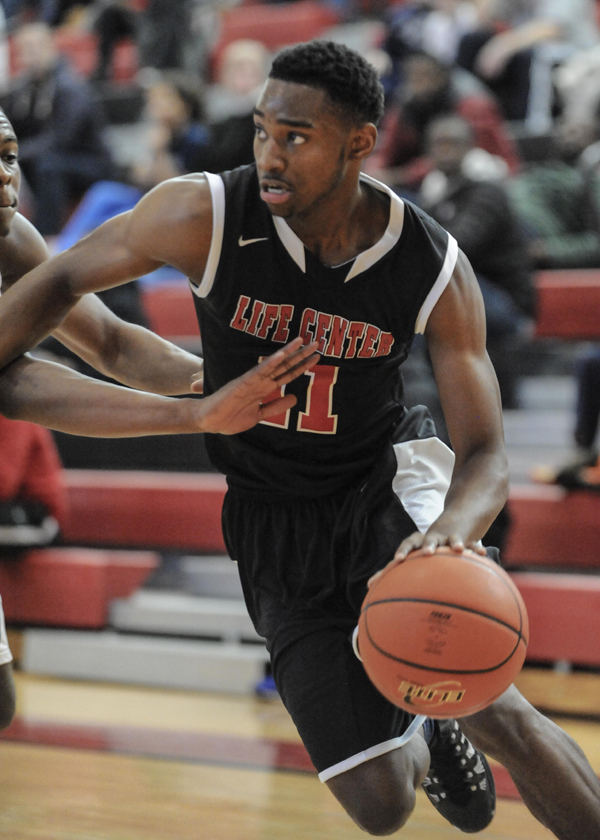
TraciTraci Carter, Life Center Academy, 2015

Class of 2015 (Seniors)
You are the last class that has a wide range of options available to meet NCAA eligibility guidelines. Even without full-time guidance counselors in many schools, there are some moves you can make to increase your chances of being NCAA eligible. For example, if you have a few Ds on your transcript from 9th, 10th or 11th grade you should retake those classes. Take them online or in the evening, but retake them! If your school won’t allow you to retake the classes because you already “passed” and earned the credit, pay to take the classes at another school.  It is important to make sure the other school’s courses are listed and accepted by the NCAA Eligibility Center. By increasing your GPA, you place much less pressure on your SAT/ACT score.

If you are a high major recruit, NCAA DI coaches began calling July 1st after your Junior year. Coaches can make unlimited phone calls/texts during the contact period. This means a coach can call/text you if he wants you. The rules still allow a coach to speak with a recruit anytime you make the phone call.

Young fella, if you are not talking to DI coaches on the phone by this point in your senior year it is time to consider DII, DIII or NAIA schools.

If DI schools wanted you, you would know.  They would have reached out to your AAU coach, your HS coach, your “guy” or your parents by now.  They are not under any restrictions.  Off-Campus contact is allowed.  Coaches are allowed to begin visiting off of their campus. Have they come to your school? Have they come to your home?

Coaches can bring you in on Official Visits starting the first day of classes. On Official Visits coaches pay to bring you in on a visit, host you on campus and pay for meals and game tickets.  Remember, you only get 5 official visits.  Be prudent in how you use them.  You should have already been making Unofficial Visits to D1 campuses if you plan to play at that level.

Class of 2016 (Juniors)
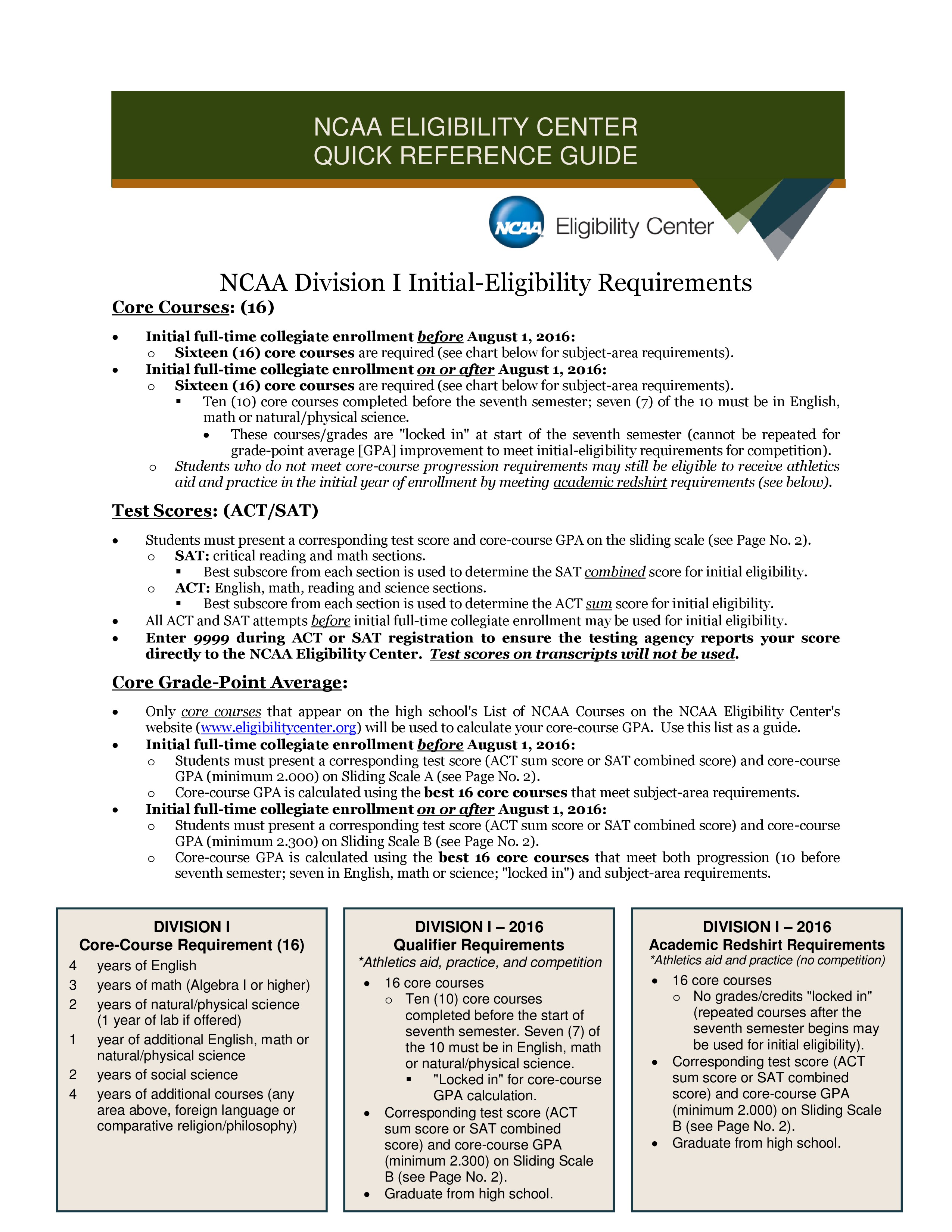
Everything is different for you. You have have meet far more stringent requirements. College bound student athletes first entering an NCAA Division I college or university on or after August 1, 2016 will need to meet new academic rules in order to receive athletics aid (scholarship), practice or compete during their first year.

You will still have to complete 16 Core Courses. However, ten (10) of the 16 core courses must be complete before the seventh semester (senior year) of high school. That is a new rule. You need to look at your transcript right now. Make sure you will have 10 cores before your senior year. Also, you must make sure seven (7) of the 10 core courses are in English, Math, or Science. These are requirements and if they are not met you will not qualify under new NCAA rules.

Also, the new minimum Core-Course GPA is 2.300. It is no longer 2.000. This is a significant increase. Many, if not most, student-athletes I have encountered over the past 15 years would not have met a 2.300 GPA requirement.

Moreover, and most importantly after this (your Junior) year, your grades are “locked in.” Unlike current seniors, you will not be able to retake classes in which you received Ds during your senior year. Every year, thousands of high school seniors retake classes to improve their core course GPAs. The NCAA is eliminating this option beginning with your class.

If you are an NCAA DI level recruit, You will begin receiving recruiting materials starting September 1st. Coaches will begin sending you letters or emailing you. The rules do not prevent you from emailing coaches, something you should have been doing since your sophomore year at least.

Basketball coaches can have off-campus contact at the start of classes your Junior year. Official Visits are allowed at the start of the school year. For women, they can begin making visits the Thursday after the NCAA Women’s Final Four.

Class of 2017 and 2018 (Freshmen and Sophomores)
If you plan on playing at the NCAA DI level, watch your grades! Do NOT earn Ds. They are unacceptable. Those Ds will make you NCAA ineligible.  Men’s Basketball coaches can begin calling, sending letters to and emailing recruits June 15th after your sophomore year.

Quick_Reference_Sheet-page-0 Above please find the new 2016 NCAA guidelines. Below please find the new 2016 NCAA Sliding Scale.  Young fella, it won’t be easy.  It will take a LOT of planning and dedication to hitting the books.  But, you can make it.

Quick_Reference_Sheet-page-1You certainly cannot say “ain’t nobody give you a heads up”!

← Back

Thank you for your response. ✨


College Coaches Reinforcing Positive School Behaviors

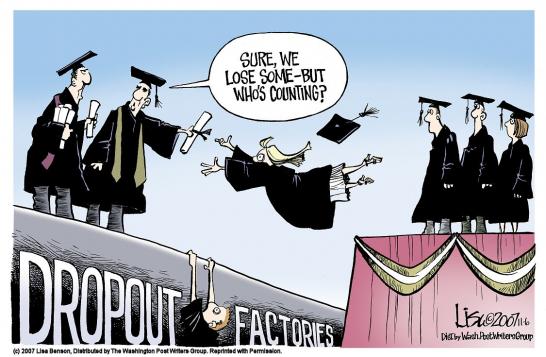
The high school dropout problem is a national crisis. Approximately one-third of all high school students leave the public school system before graduating. The problem is especially pronounced among students of color in America’s major cities. For example, in Philadelphia, twenty-two (22) District high schools lost 50 or more of their students from the Class of 2012 cohort, 2,200 dropouts in all. This represents a significant shrinkage of one graduating class. Unfortunately, it’s even worse across the Delaware River. According to the recent data only 42% of Camden High students and and 46% of Woodrow Wilson students graduate from high school. Low-income, urban, predominantly Black and Latino public and charter school students are struggling mightily in the classroom. Black males, in particular are drowning in Philadelphia’s public schools.

boystackbooksIn 2010, a major study found that Philadelphia, along with New York was the worst performing district in the nation with regard to Black male graduation rates. The five worst performing districts with large Black male student enrollment (exceeding 40,000) were New York City, N.Y. (28%); Philadelphia, Pa. (28%); Detroit, Mich. (27%); Broward County, Fla. (39%); Dade County, Fla. (27%).

Educators, researchers, and policymakers continue to work to identify effective dropout prevention approaches. One important element of such prevention efforts is the identification of students at highest risk for dropping out and then the targeting of resources to keep them in school. Locally, we seem determined to do the exact opposite of what works.  In Philadelphia, there is massive contraction of resources. The city is the midst of an unprecedented series of budget cuts. In 2013, the Philadelphia school system laid off 3,783 employees, including 676 teachers and 283 counselors. Along with teachers and counselors, those losing their jobs included 127 assistant principals and 1,202 aides who monitor the cafeteria and playgrounds.

In 2014, it was announced that high school students who live within two miles of school will not receive transportation support (an increase from 1.5 miles), impacting approximately 7,500 students at district, charter, and non-public schools. There will also be reduced services in alternative education programs, which will result in fewer higher-quality options for approximately 300 students. There will be less frequent cleaning of schools, fewer cleaning supplies, and delayed repairs at schools. The district will not fill 34 school police officer vacancies, reducing the number of officers available to support school climate and safety.

drop outThere is very little, if any, good news coming from the state, the city or the district regarding public education. Clearly, innovative interventions will have to emerge from Philadelphia’s civil society.  Government, at all levels appears to be fresh out of new ideas.  Civil society is the sum total of non-governmental organizations and institutions that manifest interests and will of citizens.  Civil society includes the family and the private sphere, often referred to as the “third sector” of society, it is distinct from government and business.

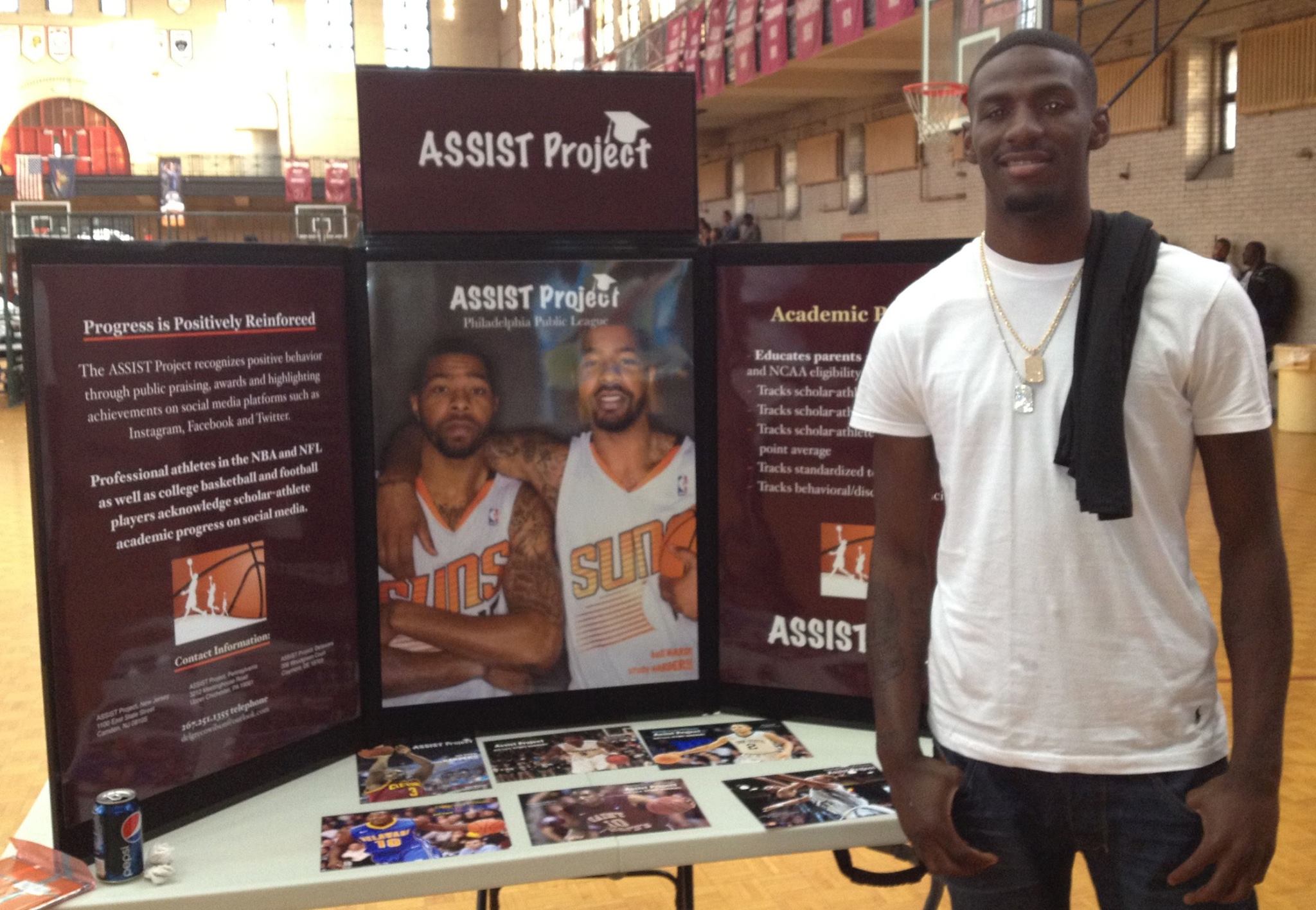
With an abundance of major college basketball programs, the Greater Philadelphia region is unique.  College coaches are potentially a very important part of Philadelphia’s civil society.  The ASSIST Project is partnering with college coaches and athletic departments to provide middle school administrators with tools and incentives they can use to help manage student behaviors within their respective schools.  Public and charter 8th grade students with excellent academic records or significantly improved behaviors will receive tickets collegiate sporting events for them and their parents.

St. Joseph’s Head Coach Phil Martelli (below, far right) notes, “One of the most gratifying aspect of my job is watching my players graduate after four years.  It never gets old. I am eager to help in any way I can.”  Martelli has a player from Philadelphia’s public league on his current roster and two commitments from Catholic League players.  “Philadelphia is my primary area of focus, I played HS ball in Philly, I coached HS ball in Philly.  I’ll help Philly kids in any way I can.”

photo-29We know which kids need reinforcement.  Research has shown that an early warning system using indicators based on readily accessible data (grades, attendance, standardized test scores, suspensions, etc) can predict whether the students are on the right path toward eventual graduation. The ASSIST Project will provide school administrators with incentives they can offer to those on the right path. We will also reward students that show marked improvement in behavior and attendance.

Research is also clear that ninth grade is a “make or break” year. More students fail ninth grade than any other grade in high school, and a disproportionate number of students who are held back in ninth grade subsequently drop out. Recent research in large urban school districts, including Chicago and Philadelphia, provides information about powerful indicators that can predict, by the end of the first year of high school, or even during the first semester, whether students will complete high school. For this reason, we are focusing on getting eighth graders ready for high school.

Delaware Head Coach Monté Ross (below) notes, “My wife is an educator. I am a product of Philadelphia’s public school system. We will do anything we can to help kids understand the importance of education.  I look forward to hosting middle school kids that are working hard and doing the right things in school.”

MonteThe ASSIST Project is partnering with basketball coaches at Temple, Drexel, Villanova, St. Joseph’s, Pennsylvania, LaSalle, Penn State, Rutgers, Delaware and Lincoln Universities. We want middle school Principals, Assistant Principals and Guidance Counselors to know that they are not alone. Top academic performers and students exhibiting most improved behaviors, as identified by the school leadership teams will be eligible for tickets to college athletic events. The kids will be allowed to bring their parents and they will meet the players and coaches.  At a time when the resources available to educators dealing with the most needy students are dwindling, the ASSIST Project and area coaches are trying to step up and be a positive influence on school performance and behavior.

We know which kids need reinforcement.  The ASSIST Project is placing emphasis on the creation of early warning systems. We are partnering with college athletic programs to follow through with strategic allocation of rewards and positive reinforcement based on empirical data to help school leadership teams meet their academic and behavioral goals.  By helping school leadership teams develop a school-level early warning and reward system, we hope to contribute to a consistency in vision, goals, and resources that are targeted toward monitoring students through to high school graduation.

Fran Dunphy (below) says, “I’ve spent most my professional life in Philadelphia.  As a coach, I’ve been to most of the local high schools.  Every day I drive through North Philadelphia to get to Temple.  I want to expose positive young people to our campus.  Temple is a special place and we look forward to hosting young students and their families.”

Dunphy

LaSalle Head Coach John Giannini (below) says he will treat the middle school kids no differently than he treats top recruits.  “We will give the kids and their parents seats right behind our bench.  They will have an opportunity to interact with our coaches and players.  This is an important initiative.  I have tremendous respect for public educators and I look forward to giving positive kids, the LaSalle experience.  We are an urban university and I want to have my program engaged in our community as much as possible.”  Giannini’s program has graduated students from Strawberry Mansion and John Bartram high schools.

John GianniniJames “Bruiser” Flint (below) grew up in Southwest Philadelphia.  He spent his formative basketball years immersed in the culture of the Sonny Hill Community Involvement League where his father coached for years.  According to Flint, “Sometimes I worry about the educational situation faced by many of the young people in Philadelphia.  I was fortunate enough to go to Episcopal Academy and St. Joe’s.  One thing I know for sure is that my education prepared me for life as a professional.  If there’s anything I can do to help school teachers and administrators in any small way I can, I’m going to do it.  My office is a few blocks away from the Mantua section of the city and about a mile from my childhood home.  I want good kids to come and see how we do things at Drexel.”

bruiser-flint“I recruit Philly kids.  I love Philly kids,” says Kevin Baggett (below).  Over the past few years, Baggett has graduated public league players from Bartram and Paul Robeson.  He has also coached Catholic League players from Bonner, Roman Catholic, Neumann and LaSalle College high schools.  His roster has featured players from Abington and Cheltenham in the Philly suburbs.  According to Baggett, “Philly kids have a level of toughness that helps a program reach its’ goals.  In college basketball, things don’t always go as planned.  It has been my experience that Philly kids fight rather than give up.  I really respect the job that teachers and principals are doing with limited resources.  We look forward to exposing more Philly kids to the Rider way of doing things.”

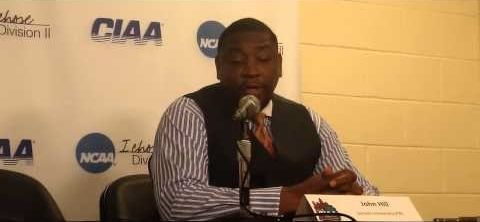
BaggettThe first institution of higher learning for African-Americans, Lincoln University has been educating Philadelphians since 1854.  At any given time in its history about half of Lincoln’s student body hailed from Philadelphia and its’ surrounding suburbs.  Lincoln’s Basketball coach John Hill says, “We would be honored to have the top middle school kids come see us play.  Lincoln is unique in a lot of ways.  The players, the fans, the people working will all look like the public school kids.  Lincoln is the oldest historically Black college in America.  We play a very high level of basketball in the CIAA Conference.  I welcome an opportunity to share the Lincoln story with any kid from Philadelphia.”

John HillPhiladelphia public and charter school administrators can nominate 8th grade students via an email to delgrecowilson@outlook.com.  Representatives of the ASSIST Project will visit guidance counselors and principals at every public and charter middle school in September.  The goal is to “catch” our kids doing the right thing and reinforce positive behaviors.  We want public school employees to know that they are not in this thing alone.  For additional information about the ASSIST Project, visit ASSIST Project website.

RysheedRysheed Jordan, VAUX HS/St. John University, PG

Young, Gifted and Black: Tony Chennault “Filmmaker”

The situation for young Black males in Philadelphia is bleak. The data is beyond alarming. There are, literally, thousands of “lost” Black Philly boys and young men in Pennsylvania’s prisons. Every day local print and television media outlets provide us with “boxscores” and highlights of the carnage that young Black men inflict upon one another in the City of Brotherly Love. For many, it must seem like there’s no way out.

Killadelphia

Philadelphia’s homicide rate is consistently among the worst in the nation. Unfortunately, “lost” young Black males between the ages of 17 to 25 are the overwhelming majority of the victims and perpetrators. A few years ago, Mayor Michael Nutter noted, “Of the 2010 homicides, 86.9 percent were African-American males. African-American males were 65.5 percent of the admissions into the Philadelphia Prison System in 2010. These statistics demonstrate there is a real crisis among Black males. If you don’t have an education, if you drop out, you’re already a step behind everyone else. If you drop out from high school your options are already limited and if you’re a Black male and turn to a life of crime, life is already against you.”

One particular Black male homicide occurred on May 31, 2012. On this day, Michael Jay was shot in the back and head. He was immediately rushed to Albert Einstein Medical Center in North Philadelphia, where he was pronounced dead at 2:47 p.m. the next day. For most Philadelphians, this represented just another senseless killing in a city that has become all too familiar with the lives of Black males ending in a hail of bullets. But for one young man, this killing inspired him to find a way to make a difference.

Tony Chennault Neumann

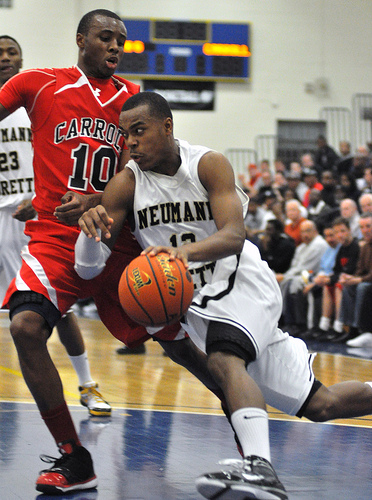
Tony Chennault, a tough hard-nosed Philly guard, was in the midst of transitioning back to Philadelphia to help care for his ailing mother when his brother Michael was gunned down. After two successful seasons in the Atlantic Coast Conference (ACC) at Wake Forest University, Chennault had decided to transfer home and play his final two years of college hoops for Jay Wright at Villanova. Basketball-wise, this was not an easy decision.  As a sophomore at Wake Forest, Chennault started in all 31 games at point guard and played 30.2 minutes a game, averaging 9 points with 3.0 assists. Despite his early success in what many consider the finest conference in college basketball, Chennault felt a profound need to be close to his mother.  Somethings are more important than sports.

A little more than year after his brother’s murder, Chennault’s mother passed away.  Through all of this adversity, with the support of his Villanova coaches and teammates, Chennault managed to maintain focus on his obligations on and off the court. Despite transferring from Wake Forest to Villanova, despite the loss of a sibling and his mother, Chennault played an important role on a Big East regular season Championship team and, more importantly, graduated in May with a Bachelor’s degree in Communications.

Chennault credits his ability to persevere to lessons he learned at Neumann-Goretti High School under the tutelage of Coach Carl Arrigale. He says, “At Neumann, I learned the importance of faith and loyalty… People just don’t understand the relationship I have with Coach Carl. He calls and texts me every day. He really has an open door policy with current and former Neumann players. Our relationship helped me be strong when times were tough.”

While many of his peers are traveling the globe in pursuit of elusive hoop dreams, Chennault is putting his communications degree to good use. He co-founded 267 Productions with friends, and fellow Villanova alums, Alex Ruane, Rob Jennings and Tom Smith. On Friday, August 22, Chennault will debut the latest release from 267 Productions, OLDHEAD, at his alma mater Nenmann-Goretti High School at 7:00 pm.

The term “Oldhead” refers to older male members of urban Black communities who provide guidance to younger generations, especially Black males. The film is set in Philadelphia, the protagonist Sean must decide between staying loyal to his friend Kareem, or following the insightful words of oldhead Bumpy.

Oldhead

Chennault draws upon his life experiences to tell stories that center on the struggle to succeed against seemingly overwhelming odds. A wise and mature young man, he emphasizes the fact that “people from all backgrounds and races struggle, not just Black people.” While Chennault and his partners aim to make films that are financially successful, that is not the sole means by which they measure their impact.

Chennault says he wants young people to understand that “they have to make the best of the hand you were dealt in life.” He understands that there are barriers and obstacles that young people, especially poor urban kids, have to overcome. However, his message is very simple. Keep pushing, keep studying and make the most out of your situation.

As for the future, Chennault says eventually he would like to venture to New York and Los Angeles. But for now, he is focused on establishing and solidifying Philadelphia as a place where high quality films are made.  It is vitally important that we “catch” young Black males doing the right thing!  As a society, we are bombarded with images of young Black males engaging in destructive and criminal behaviors.  The proliferation of negative imagery is so pervasive that many have developed a numbness to the plight of young Black males.

Here we have a graduate of a Philadelphia Catholic High School.  He is a celebrated athlete, a Catholic League, PIAA State and Big East Champion.  He is an outstanding scholar and a recent Villanova graduate.  He is the co-founder of film company. He is storyteller and a filmmaker.  He is a role model.  He is young, gifted and Black. He is Tony Chennault.

NPXTONY22C620

School Choice: A Personal Story

There’s a false dichotomy permeating the Black community in Philadelphia. All across the city parents are succumbing to the notion that they have to either leave their children in rapidly deteriorating and highly dysfunctional neighborhood public schools or they are “selling out.”  Black and Latino parents, in particular, do not want to be viewed as abandoning support for a “societal good” represented by public education. As a result, many fall victim to the fallacy of this false dichotomy when in fact there are other possibilities. Supporters of public education, especially teachers and teacher’s unions go to great lengths to make the case that “school choice” is clearly outrageous, and so allegiance to traditional public schools must be embraced.  Nonetheless, one can opt to place their own child in a Catholic, private or magnet school setting AND still work to improve the situation for those those languishing in traditional public schools.

I was confronted with the false dichotomy fifteen years ago. My daughter, from the age of 3 to 5, attended Head Start/Day Care at a neighborhood public school. I really liked the school for that purpose. It was clean, safe, the staff was pleasant and they really engaged the kids. They did a very good job at the pre-school level. However, when the time came to choose a kindergarten placement, I chose an integrated high performing elementary school in Center City.

Ciera1

When I requested the form to enroll her in another school, the secretary at the neighborhood school loudly said, “It’s parents like you that are the problem.” She then went on to elaborate, “You are involved with you child, you come here everyday to pick her up, she’s a good girl… We need parents like you to keep your kids in our school.” Needless to say, I felt she was way out of bounds.

“Excuse me,” I interjected, “But my responsibility is to ensure the educational and social development of one child. While I want the best for all the children,  I can only make decisions for my daughter. I choose to place her in a diverse, highly competitive educational setting. This school is 99% Black and the test scores are abysmal. I want better for my daughter.” At that point, the Principal, a white male, overheard our discussion and asked me to come into his office. He immediately gave me the required paperwork and told me to bring it back to him directly. He told me he understood, respected and supported my choice.

Ciera2

In the scenario prescribed by the secretary, either you keep your child in ghettoized under-performing neighborhood public schools or you are a sellout abandoning all poor Black kids. Her argument, albeit highly flawed, was very simple powerful.  I know you don’t want to be a sellout and leave Black kids to fend for themselves. So, therefore you should leave your kids in the neighborhood public school.  Too many fall victim to this type of logic.

My daughter has never attended a neighborhood public school. I enrolled her in very diverse and highly competitive magnet programs throughout her K-12 career. I also worked extensively with thousands of students in neighborhood public schools. You can do both. You should do both.

Harrisburg pic

Under NO circumstance should a parent enroll their children in Philadelphia’s neighborhood public high schools. This is especially true for parents of Black male students.  The simple fact is that you are fighting against staggering odds.

In 2010, a major study found that Philadelphia, along with New York was the worst performing district in the nation with regard to Black male graduation rates. The five worst performing districts with large Black male student enrollment (exceeding 40,000) were New York City, N.Y. (28%); Philadelphia, Pa. (28%); Detroit, Mich. (27%); Broward County, Fla. (39%); Dade County, Fla. (27%).

Three years later, in 2013 the Philadelphia school system laid off 3,783 employees, including 676 teachers and 283 counselors. Along with teachers and counselors, those losing their jobs included 127 assistant principals and 1,202 aides who monitor the cafeteria and playgrounds. Among the targeted teachers are those that teach reading, math, English, special education and music.

There were widely publicized episodes of school violence, including one where a faculty member suffered a fractured skull in a confrontation with a student at John Bartram High School. There were also two incidents where young elementary school students died in schools where no nurses where on duty.

This past week the School District of Philadelphia announced it was discontinuing TransPasses for 7,500 high school students who live less than two miles from school, eliminating 300 slots in alternative programs for students at risk of dropping out, making 27 more elementary schools share police officers, reducing school cleaning and repairs, cutting extra professional development time at the District’s Promise Academies, and eliminating some administrative positions.

Clearly, the State of Pennsylvania and the City of Philadelphia are making it harder for Blacks to graduate. It seems, the 28% graduation rate for Black males has been deemed too high by those funding Pennsylvania schools and the local politicians. Please take some time to consider your options.  You have choices.  There are schools that want to provide your child with a rigorous, high-quality education.  There are schools that welcome students of color.

Currently, the nonprofit foundation that manages Catholic high schools in the Archdiocese of Philadelphia is offering $1,000 grants to encourage students to transfer to the schools.  Christopher Mominey, chief operating officer of the Faith in the Future Foundation and the archdiocese’s secretary for Catholic education, said the new “transfer advantage” grants were part of the effort to boost enrollment at the 17 high schools.

I have met extensively with the leaders of the Faith in the Future Foundation and the presidents of Catholic High Schools across Philadelphia.  Mominey understands the dilemma faced by parents of school-age children in Philadelphia.  Where are parents to turn as the public school system crumbles around them?  The foundation wants to attract students who were not enrolled at Catholic high schools but were interested in learning more about them.

The $1,000 grants are available for all transferring 10th-, 11th-, and 12th-grade students who qualify for admission and enroll at one of the schools in the fall. The grants will help defray the cost of Catholic high schools, where annual tuition and fees range from $6,500 to $7,000.

Mominey said other dioceses had found that “sometimes, that $1,000 makes the difference for families.”

Students may also be eligible for scholarships based on financial need.   The only way to find out if you qualify is to apply.  Mominey said there was no limit on the number of grants available, “We’ve made a commitment to accept as many students as are qualified.”

Explore your options.  Exercise school choice.

Ciera3

My daughter’s first day in her dormitory freshman year of college.

Can We Have a “Grown Up” Conversation About Scholastic Sports?

The money is gone. As a local, “community” those of us living in, working in or near and thinking about Philadelphia have made good schools a luxury. Like a Bentley or a Mercedes, everyone simply cannot access one. We have given up and we are now watching the urban public school systems of our youth die a tortuous, slow and excruciatingly painful death. As with all deaths, assets are left behind. In recent weeks, we “the public” have sold University City High School to Drexel and William Penn to Temple.

Image

Let’s think about this for a moment: Twenty-two (22) District high schools lost 50 or more of their students from the Class of 2012 cohort, 2,200 dropouts in all. This represents a significant shrinkage of one graduating class. Unfortunately, it’s even worse across the Delaware River. According to the recent data only 42% of Camden High students and and 46% of Woodrow Wilson students graduate from high school. Low-income, urban, predominantly Black and Latino public and charter school students are struggling mightily in the classroom. But, we know this. The educational plight of low-income Blacks and Latinos is well known. Everybody knows things are really bad.

Here, I want to initiate an honest, open dialogue about the state of scholastic/AAU/grassroots basketball which takes full consideration the current conditions of urban public education.

Shit is bad and getting much worse.

Last June prior to the 2013-14 school year the School District of Philadelphia adopted a budget that had no funding for things like paper and new books. The District laid off 3,783 employees, including 676 teachers and 283 counselors, effective July 1, 2013. The School District of Philadelphia has a group of 16 itinerant counselors roving around 115 schools. Each counselor is serving seven or eight schools. That’s 16 counselors for 48,000 students. A ratio of 1 to 3,000. In May 2014, Camden Public Schools laid off 206 teachers. Many of those in core subject categories are also some of the district’s younger teachers with the least seniority. Forty elementary school teachers were laid off along with 18 guidance counselors.

Fast forward to this past Monday, the School Reform Commission approved a $2.5 billion “placeholder” budget hoping for $93 million that it doesn’t yet have.

“Hopefully, within the next week or so, we’ll have revenue,” said SRC Chairman Bill Green. “We’re really punting on difficult decisions by passing this placeholder budget.”

That’s an important and honest assessment of the position taken by the SRC. In short, the budget for the 2014-15 school year is based on hopes, aspirations, desires….. no cash though. Like Popeye’s sidekick J. Wellington Wimpy, Chairman Green says, “I’ll gladly pay you Tuesday for a hamburger today”.

So, what happens if Pennsylvania does not provide the $93 million? Chairman Green and Superintendent William Hite said they may not open schools in September. To do so, according to Hite would be providing educational services under unsafe conditions.

“The harm for children now is, in my opinion, irreversible, irresponsible, and it’s not something we can continue to do year after year,” Hite said. “I have no intention of putting children in those options.”

Image

As bad as the current situation is, it is gonna get worse, much worse.

We are clearly in the midst of a period of “public education austerity,” which had been gaining traction for several years. Deep and sustained teacher and guidance counselor layoffs accompanied by widespread school closings are clear symptom of this particular disease. These massive human resource reductions and school shutterings have been instituted with alarming consistency in low-income urban areas across the nation. Last year alone, Philadelphia closed 29 schools. Chicago closed 49, New York 26 and Washington, DC 15.

In this fiscal context, it is fair to assume that school-based interscholastic athletic competition amongst middle school, junior high and junior varsity level student-athletes is a thing of the past. It more likely that urban school districts will cease administering traditional schools than reinstate funding for sports. Chicago, New Orleans, New York City, Camden and Philadelphia are among the large urban districts that are shifting from a centralized bureaucracy that directly manages traditional neighborhood based schools toward a “Portfolio” model in which District Administrators enter into contracts with a few public schools, privately managed schools, and charter schools. Other urban areas transitioning to this “Portfolio Management” approach are Baltimore, Cleveland, Los Angeles, Oakland, and Washington.

A key feature of this strategy appears to be economic strangulation of the remnants of traditional neighborhood schools. Given the fiscal constraints facing administrators of traditional urban schools, continued abysmal academic performance is inevitable. This will lead to more and more school closings. National education management organizations (EMOs) and large corporate charter operators will continue to gain a larger share of the urban public education market. There has been no indication that funding for centrally managed interscholastic sports will be forthcoming.

Image

Let’s be very clear. We have entered into a new era in public education and as a result a new era in scholastic sports. The new era stands in stark contrast to the school-based programs of the past.

Robust public school investment has been a key to the development of low-income urban student-athletes for much of the past half century. Scholastic sports were considered a basic part of the public school experience. As the baby boomers can attest, citizens paid taxes to fund middle, junior high and junior varsity level athletic competition. As a society, we deemed these contests worthy initiatives that the private sector wouldn’t adequately or efficiently supply. The resulting scholastic infrastructure, dedicated teacher/coaches, and community-based organizations like CYO, PAL and the Sonny Hill League fed a robust demand for Philadelphia basketball players through the 80s and into the 90s.

As direct result of the economic strangulation strategies underway in low-income urban public school systems across the country, many urban school districts have been forced to abandon athletics.

Image
The vacuum has been filled by Amateur Athletic Union (AAU)/grassroots hoops organizations. The Directors of these organizations are not teachers, counselors, and school administrators. AAU/grassroots basketball is a big business and has been for more than two decades. In terms of increasing the likelihood of landing a college scholarship, AAU/grassroots basketball has become far more important than scholastic basketball.

If you are a student-athlete and you want to earn a college basketball scholarship, you almost have to play AAU/grassroots basketball. College coaches evaluate talent through AAU. Players scroll through scouting magazines and websites anxiously hoping to see their names appear in national rankings after performing in the the premier events.

The business of generating prospects for NCAA and the NBA has continued unabated. The very best players in the area join one of the elite programs like Team Final, WE R1, Team Philly, Philly Triple Threat, Team Phenom and Philly Pride. All of these programs have produced players that have done well in college basketball.

Nonetheless, we have lost a great deal with the drastic reduction of scholastic sports in middle and junior high schools in low-income urban communities. Interscholastic sports has been proven effective over time. Over 95% of Fortune 500 executives participated in high school athletics. Only 47% of Fortune 500 executives were National Honor Society members. (Fortune Magazine).

Female high school athletes are 92% less likely to get involved with drugs, 80% less likely to get pregnant and are 3 times more likely to graduate than non-athletes. (Women’s Sports Foundation)

There is considerable evidence supporting sports participation for young people. Studies have shown that sports has the power to positively impact issues like racial relations, low self-image, and the high-school truancy/drop-out crisis.

Why would we as a community create structures that can yield the beneficial aspects of interscholastic competition in an era when school budgets are being cut through the bone? We really have no choice. In Philadelphia over the past decade or so, the graduation rate has fluctuated between 50 and 60 percent, in Camden between 40 and 50 percent.

Half or more of the students that enter as freshman do not graduate within four years. Philadelphia and Camden are severely under-performing. In Pennsylvania state average is 80 percent and the national average is 68 percent. Nearly twice as many Black students out of high school as White students. Nearly 8 out of every 10 students within the Philadelphia School District are minorities, 62 percent of whom are Black.  How do we fill the void?

I have learned of one promising proposal. This proposal calls for the establishment of community-based two-tier winter (December to February) league drawing teams from various parts of the Greater Philadelphia region. The Junior Division would feature players currently in the 6th and 7th grades. The Senior Division would feature players currently in the 8th and 9th grades. Teams would be based on neighborhood affiliation.  Weekly attendance, grade checks and study halls would be required for participation.

Beyond that… How would you structure the league? What features would be most beneficial in our efforts to develop well-rounded successful High School graduates?  How could such an endeavor be funded?

Middle and junior high school years are periods of significant transition in the lives of low-income urban adolescents.  The influence of peers, family and sports centered experiences have tremendous impact on adolescent behavior during this transitional period.  It is during this period that patterns of motivation, self-concept and social relations emerge.  Far too many young Black and Latino males are motivated by illicit street-based activities.  Too few view themselves at students.

It’s time for a real “grown up” conversation.  How do we do this without the schools?

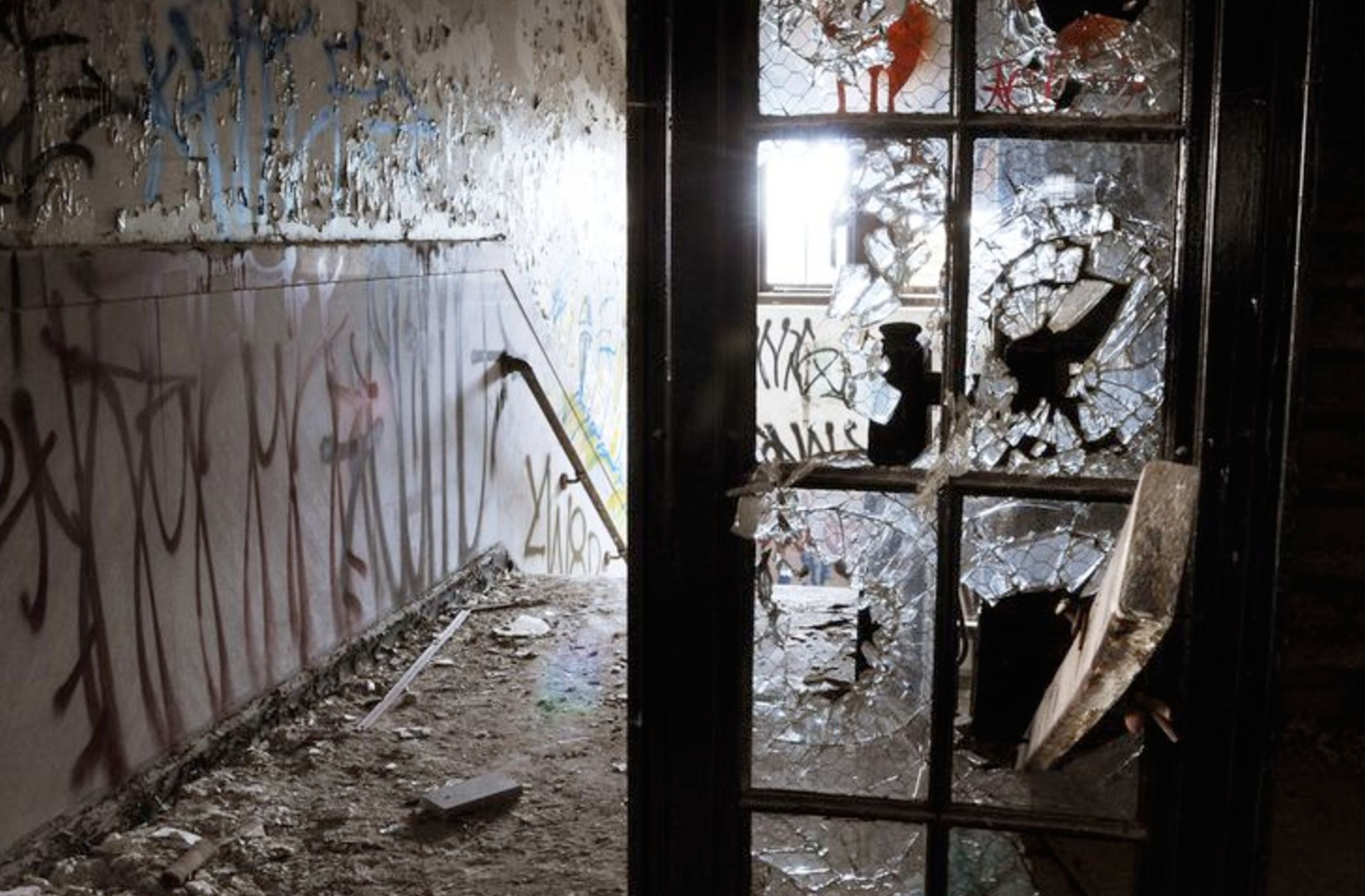
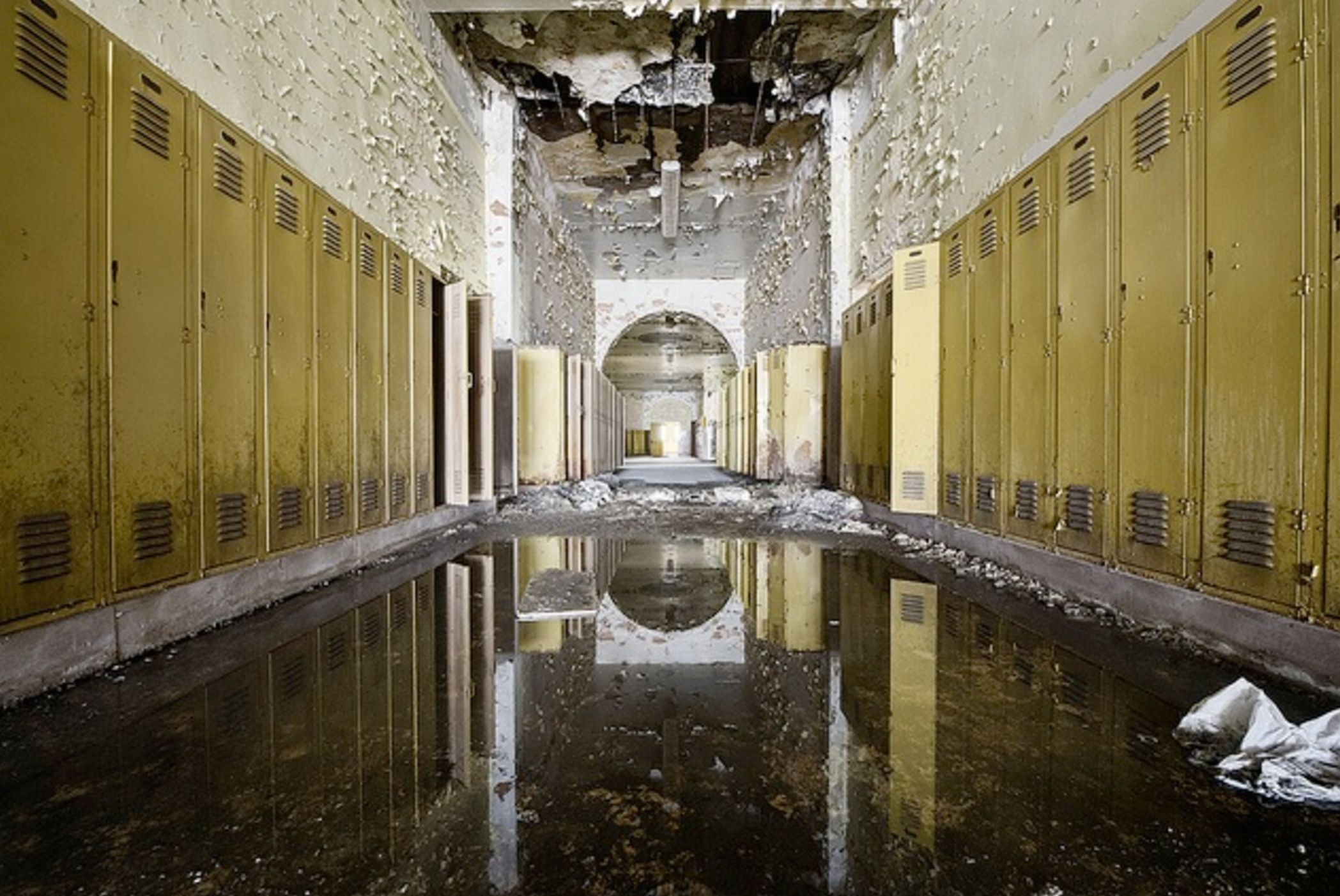
All photographs of closed Philadelphia schools are by Katrina Ohstrom.  Her work can be viewed here: http://www.huffingtonpost.com/2013/06/24/katrina-ohstrom-photography-philadelphia-schools_n_3492511.html


North Philly’s Devonte “D Jay” Newbill: Nittany Lion for Life

North Philly’s Devonte “D Jay” Newbill is one of the most talented college basketball players in the country.  His trek to the top of the college basketball world has been filled with potholes and detours.  Through it all, D Jay remained composed and focused on his long term objectives.

Image

On on March 15, 2010 Newbill led Strawberry Mansion High School to a 68-46 win over the Trinity Shamrocks coached by Larry Kostelac Jr. Following the loss, Coach Kostelac described Newbill as a “Terrific player.”

In the Mansion win, Newbill scored 18 points (8-12 fgs) and grabbed eight rebounds. Kostelac said, “Some of the shots he made with Jack Osborne and Mike Diminick [on him] were big time, and that’s what big-time players do.”

Make no mistake, D Jay was “big time.”  The 6-4 senior guard was committed to the Big East Conference’s Marquette Golden Eagles. “We’ve seen kids at the highest level before…. This kid’s going to be a hell of a player,” Kostelac continued. “The way he plays fits into that Marquette system.

Newbill nailed a 3-ball from deep on the right wing with 0.1 showing on the first-half clock.  That shot also gave Mansion a 32-20 lead at the break. “Tough shot, what are you going to do?” Kostelac wondered. “That’s the level he’s at.”

Image

Looking back, we have to give Coach Kostelac his due. He was dead on in his assessment. D Jay Newbill is a “hell of a player.” He plays at the the high major level. But, he never made it to Marquette University and the Big East Conference. After committing to his “dream school,” he signed a National Letter of Intent in April 2010. He was supposed to begin at Marquette on July 7th. D Jay never set foot on campus.

Marquette Head Coach Buzz Williams fucked the kid over.

Publicly, Williams said, “Through a culmination of several things, we have decided to give DJ Newbill his release. DJ’s a great kid. He comes from a great family whom we have established relationships with, and we’re going to do everything we can to help him in his future, in whatever capacity that would be.” Within days of dropping Newbill, Marquette announced they signed Jamil Wilson, a local Wisconsin player who transferred home from Oregon. Plainly stated, Buzz cut D Jay to make room for a former Top 100 Wisconsin player coming home.

Even though he never made it to Marquette, signing D Jay was a smart move by Buzz Williams. Once D Jay signed, he could never land at another Big East school. Strategically, Buzz cut off the possibility of D Jay attending West Virginia, Georgetown, St. John’s or any school in his league. Interestingly, then Georgetown Assistant, and current American Head, Coach Mike Brennan and West Virginia Head Coach Bobby Huggins had just watched Newbill in person before he committed to Marquette. By accepting the National Letter of Intent from Newbill, Buzz effectively eliminated the possibility of facing D Jay in the Big East Conference. After the shrewd, but heartless, move by Buzz Williams, Newbill was permanently banned from playing for another Big East team.

Indeed, Newbill was left scrambling. His dream of wearing the Marquette uniform and playing in the Big East tournament was shattered in an instant. Through no fault of his own, he was once again looking for a scholarship.  The only difference was the Big East Conference was no longer an option.  Referring to the decision to release him, Newbill said. “I was mad and hurt when this first happened. Now I’ll just go forth with my career somewhere else. Back to the drawing board. I’ll have to be careful about what school I pick.” In what would become a recurring theme, Newbill learned from facing difficult and adverse circumstances.

There was still considerable demand for Newbill as college prospect, but it was very late in the recruiting season.  As a senior he led Strawberry Mansion, coached by Stan Laws, to the 2010 PIAA state championship game at Penn State’s Bryce Jordan Center.  D Jay was named the Pennsylvania Class AA Player-of-the-Year after posting 24.2 points, 9.0 rebounds, 5.0 assists and 4.0 steals per game as a senior.  He was a first-team all-state selection by the Philadelphia Daily News. He was also named the Public League Player-of-the-Year and first-team all-city and All-Public League. Mansion posted a 28-2 record during his senior year which was highlighted by a school-record 64-point performance in a victory over Saul, the sixth-highest point total in Philadelphia Public League history. As a junior D Jay averaged 19.0 points, 7.0 rebounds, 4.0 assists and 3.0 steals as a junior and was named second-team all-state and second-team All-Public League. There was no doubt that Newbill could play, the question was: Where would he play?

Newbill considered hometown programs such as Drexel, La Salle, Saint Joseph’s and Temple but he eventually settled at Southern Mississippi. After being without a scholarship as late as July, Newbill had a wonderful freshman season, He averaged nearly 10 ppg and 6.2 rpg for the Golden Eagles as a 6’4″, 205 lb guard. Despite joining the program very late in the recruiting season, D Jay started all 32 games and played over 30 mpg.

Near the end of his rookie season, Newbill looked back on his college recruitment and the way Buzz Williams treated him, “All this made me a stronger person and a better player… Adversity builds character. It made me want to work harder to prove that I could have been there and played at that level.” After an unexpected detour, the young man from 33rd and Cumberland in North Philly had arrived on the college basketball season. Once there, he assumed center stage.  He was named to the Conference USA all-rookie team selection. Southern Miss Head Coach Larry Eustachy declared, “I don’t know if I’ve ever had a freshman that has all the qualities he has. Not just as a player – and he’s the best freshman I’ve ever had – but more so as a person and a leader.”

Image
Despite his early success, attending college in Hattiesburg, Mississippi, was not exactly appealing to D Jay. Newbill truly never felt at home in Mississippi. After being deceived and mistreated by Buzz Williams and spending a year in the deep South, Newbill was longing for a place he could truly call “home.” His longing for Pennsylvania became especially intense after his first college basketball season ended.

Fortunately, he was given an opportunity to come North and to return to his home state of Pennsylvania. Pat Chambers offered D Jay an opportunity to attend Penn State University and play in the super competitive Big Ten Conference. Newbill would be Chambers’ first major recruit in Happy Valley.

As a high school student, Newbill chose Marquette because that was his dream school and he chose Southern Mississippi because they had spot for him in late July. As a young man, he chose Penn State because it was the best possible academic and athletic situation for him. After committing, he said, “I chose Penn State because of family atmosphere, academics and the Big Ten Conference… [I’ll get] a lot of exposure… Penn State is not too far. I can come home and then get away when I want to focus on me.” It was a great decision, a true win-win situation.

Image

D Jay Newbill is, in many ways, a throwback. His demeanor and his game reflect the influence of Philadelphia’s great basketball tradition. He is part of a distinct Philadelphia lineage. D Jay is a “Hardnett” kid. In Philadelphia, that immediately identifies a basketball player as patient, smart, skilled and well schooled in the fundamental aspects of basketball. Hardnett kids also exhibit positive social skills.  Hardnett kids went to class and put forth an honest effort with the books.  But it was the way they played the game of basketball that drew most to Hardnett kids.  The late John Hardnett, one of Coach Chaney’s disciples ran basketball workouts and fielded teams in the historic Sonny Hill Summer League program. John Hardnett kids play a distinctly cerebral brand of basketball.  Hardnett died suddenly in May 2010. Newbill was one of the last of many great high school and college players developed by Hardnett. Doug Overton, Aaron McKie, Alvin Williams, Marc Jackson, Jamal Nichols, Mark Tyndale, Mardy Collins, Scott Rodgers, Dionte Christmas, Samme Givens, Ellis Gindraw and many other Philly ballers were schooled by Hardnett.

ImageJohn Hardnett

Penn State hired a Philly guy to coach the Men’s Basketball team and the first thing he did was sign a Hardnett kid. That was a sound decision, by all accounts a very good move.  Since Chambers and Newbill have joined forces, the Penn State basketball program has improved and PSU has a bona fide star in the best basketball conference in the nation. But, most importantly, D Jay Newbill has finally found a “home.”  He has embraced Penn State and feels a special connection with the student body and the Penn State community.

Newbill would lean heavily on his Penn State family before he ever played a game in the Nittany Lion uniform. On September 15, 2012, his mother, Tawanda Roach, died suddenly. She had been diagnosed with cancer just three weeks earlier. For the second time in two years, Newbill experienced the excruciating pain of losing a loved one. He was particularly distraught after his mother’s death. He explained, “I just snapped out after that. I was throwing stuff around my room and I just broke down…I don’t think it can get any worse than that.” At 20, D Jay had endured a tremendous amount of adversity. The coach of his dream school “dropped him,” his mentor died suddenly and then he lost his mother.  These were very tough times.  D Jay credits Penn State for supporting him through this time in his life.

With the full support of Penn State and the athletic department, D Jay was able to summon the inner strength and fortitude to continue pursuit of his academic and athletic goals. He said at the time, “I think these obstacles help shape me into the man that I going to become.” On the court, his play was inspired from the start. After sitting out the 2011-12 season in compliance with the transfer rule, Newbill exploded onto the Big 10 scene. This despite being forced to play point-guard after an early season injury to Tim Frazier.  D Jay led Penn State in scoring (16.3) and assists (4.0) and was second in rebounding (5.0) and steals (1.2). He ranked ranked fourth in the Big Ten in scoring (16.4) and assists (4.1) in conference games. D Jay became the 17th Lion to score 500 points (504) in a season. He finished second in the Big Ten in minutes played (36.5) and third in free throw attempts (196) and 20-point games (10) in the regular season, including six 20-point games in Big Ten games.

Image

All he did the following season was get better in every category. D Jay finished second in the Big Ten scoring race to Nebraska’s Terran Petteway (18.0) at 17.8 points per game. He scored 20 or more in 10 of Penn State’s 31 contests. He led PSU in scoring on 15 occasions. Newbill led the team in field goal percentage at .466, averaged 4.9 rebounds and 1.7 assists per contest. Last season, Newbill led the Big Ten in total points (552) and field goals made (192). How much better was he? From year one in the Blue and White to year two, Newbill’s shooting percentage increased by five percentage points (41 to 46 percent). His three-point shooting percentage increased by eight percentage points (27 to 35 percent). Newbill also made a seven-percentage point increase at the foul line from last season to this year (68 to 75 percent).

Academically, D Jay has been a strong student at PSU. He was only 6 credits shy of a Bachelor’s degree after the Spring semester ended. Coming off a strong season, he could have graduated and turned professional. How would he have fared? He would have been considered a potential second round NBA draft selection. Perhaps, he could have made a team as an undrafted free agent. He could also secured a fairly decent position in one of the more highly regarded European Leagues. Or, he could have ended up in the NBDL for a year. Who knows? The important point is that because of his focus on academic as well as athletic goals, D Jay Newbill,  after four years of college could have graduated from Penn State and began a professional basketball career.

But turning pro wasn’t his only option.  D Jay had several others avenues . The 5th year transfer rule would have allowed D Jay to graduate and ‘transfer’ to another program and retain immediate eligibility to play at the new school. This is an increasingly widespread strategy. As an All Big Ten performer D Jay would have been an attractive 5th year addition to many of the Top 20 programs in the nation. This fact wasn’t lost on D Jay’s friends and supporters. There were many suggestions offered.  D Jay, however, took a different view.  He found that he viewed the situation from the perspective of a Nittany Lion.

“When I arrived at Penn State there was a lot going on with the sex scandal. Outsiders talked about that stuff, that wasn’t the Penn State I knew,” said Newbill. “I experienced the biggest personal loss of my life and Penn State became like my family. What matters more than going pro early or making money is my legacy as a Nittany Lion. As a team, we have been getting better every year. Two years ago we won only 10 games and 2 Big 10 games. Last year we won 16 games and 6 Big 10 games. This year we will make another jump and make the NCAA tournament.”

D Jay is cognizant of his ongoing journey from North Philly to Penn State graduate and NBA prospect. His high school was featured on ABC’s flagship news program, “World News with Diane Sawyer,” in a special report on the state of education inside one of Philadelphia’s toughest schools to learn. At Strawberry Mansion, the average SAT Critical Reading score is 348 the average SAT Math score is 326. The average M/V combined score is 674. D Jay went through an adjustment period upon arriving at Penn State University where the average SAT scores fall between: Verbal: 530 and 630 and Math: 560 and 670. The average combined score is between 1090 and 1300. D Jay realized that he had to dedicate himself to his studies and work closely with the academic support staff for student-athletes.

Newbill has experienced first hand the leap from one of the poorest performing schools in Pennsylvania to success at Penn State University.  He never loses sight of the fact that he is from 33rd and Cumberland and will soon be a Penn State Alum.  “I really appreciate everything made available to me at Penn State. Everyday I work out, train and learn at one of the greatest universities in the country. I constantly wonder how I can help bring Penn State to 33rd and Cumberland and the rest of North Philly. Penn State has changed my life. I want to expose other young Black kids to college at Penn State. I don’t know how I’m going to set it up, but I’m going to get it done. When I play professionally, I will definitely work to help North Philly kids go the Penn State.”

What can we expect this season?

Looking at his career trend, Newbill increases his point total significantly every year. He scored 293 year 1, 504 in year 2 and 604 in year 3. Let’s conservatively assume he scores another 604. Newbill will have over 2,000 points and be likely be named All Big Ten for the second year in a row. But, more than any personal goal, Newbill wants to lead Penn State to the NCAA tournament.

“The whole thing is about getting to the NCAA tournament. That’s my immediate goal. I have been focused on my academics and I am in a position where I will easily graduate. As a young boy, I didn’t always think I would be a college graduate. I was fortunate enough to meet John Hardnett and he helped me understand how to leverage basketball.”

“The decision to attend Penn State was the best decision I have ever made. I’m a Nittany Lion for life! More than anything else I want help other people from around my way gain access to Penn State.” Newbill understands that the best way he can achieve that goal is by excelling as a professional basketball player.

Toward that end, D Jay will be heading to NBA MVP Kevin Durant’s skills camp. If he performs well there he’ll get invited the LeBron James camp. One thing for sure Strawberry Mansion and Penn State will be well represented. “This is my last year at Penn State. As a kid in North Philadelphia, I never thought a place like Bryce Jordan Arena would be my home court for four seasons. My time here has been very special.”


Evan Maschmeyer: Winning!!

Image

We’ve all seen the commercial numerous times. The message is very clear and easy to remember: “There are over 400,000 NCAA student-athletes, and most of them will go pro in something other than sports.” Clearly, the odds of making it to the NBA are stacked heavily against High School basketball players. Every year there are about 545,844 High School Basketball Players in the United States. Of those approximately 17,500 will become NCAA student basketball players. Each year about 48 NCAA basketball student-athletes are drafted into the NBA. Making it to the “league” is a real long-shot.

% High School to NCAA: 3.2%

% NCAA to Professional: 1.2%

% High School to NBA: 0.03%

Some young men focus so intently on achieving their NBA hoop dreams, they lose sight of all the benefits of a free education. Others are keenly aware of the opportunities afforded to them as student-athletes and take steps to ensure their vocational and financial future while still wearing the college uniform.

Evan Maschmeyer grew up a Hoosier. He was reared and educated in Jeffersonville, Indiana. Jeff, as the locals call it sits directly across the Ohio River to the north of basketball mad Louisville, Kentucky. A small town with a population of 45,000, Jefferson is about 60 miles southeast of French Lick, the hometown of American basketball icon Larry Bird. Entering Saint Joseph’s in the Fall of 2011, Evan brought some serious basketball credentials. He was part of the 2009-10 Red Devils team that was a win away from a Class 4A state championship. Among numerous other accolades, Maschmeyer was an Indiana Junior All-Star and News and Tribune All-Area team member. He was a highly regarded player in the basketball mad Hoosier state.

Upon arriving on Hawkhill he immediately found himself competing with Carl “Tay” Jones and Langston Galloway for playing time. These two are 4th and 2nd, respectively, on the all-time scoring list at Saint Joseph’s.  Although he has appeared in a majority of games over his 3-year career season, Evan has found it difficult to earn sustained minutes in such a talented backcourt.

However, unlike 400-500 other basketball student-athletes that transfer every year, Evan decided to focus his energies on helping his team when the opportunity presented itself and leveraging his free education to ensure a viable career as a financial “professional” once his playing days are over. After his sophomore year, he completed an internship with Haverford Trust, Co. in Radnor, PA. This summer, after his junior year, he will serve an internship with J.P. Morgan in Chicago.

Evan’s experience with Haverford Trust combined with an exceptional academic record while maintaining a double Finance/Economics major made him a competitive candidate for the prestigious internship. The fact that he achieved this success while fulfilling his obligations a member of the Atlantic 10 Championship St. Joe’s team is even more impressive.

Image

J.P. Morgan’s summer internships are in highly competitive for many compelling reasons. First, Evan will work with smart and energetic professionals on real, challenging projects at one of the world’s top financial services firm. Second, he will have the chance to discover first-hand what areas of their business best suit his talents and interests. Third, and this is the big one, J. P. Morgan hires a majority of their full-time Analysts from the Summer Intern Analyst class.  

This is the best “move” I have seen a college basketball player make this year. J.P. Morgan employs more than 70,000 people globally, and the firm has assets of $2.3 trillion. They have offices in more than 50 countries and clients in more than 100 countries around the world — and as a testament to their global platform and leadership, lead the industry in most markets in which we operate. Founded in 1799 in the United States, J.P. Morgan is truly a global organization. Their roots in Europe date back to 1838, and They’ve been in Asia since 1872.

Phil Martelli, Geoff Arnold, Mark Bass and Dave Duda unanimously agree that Evan is destined for success.  I am an Evan Maschmeyer fan. I look forward to having Evan interact with other young ballers. He is the epitome of what a collegiate student-athlete should be. Use the game, don’t let the game use you! As they say… the Hawk will NEVER die!

Rashann London, Larenz Thurmon and the “Daddy” Advantage

Image

Rashann London

Rashann London and Larenz Thurmon are very good high school scholar-athletes.  Indeed, they are currently leading their respective teams, Roman Catholic HS and Philadelphia Electrical & Technical HS on quests for Pennsylvania state championships.  While these young men are both gifted athletes with highly refined basketball skills that will serve them well at the collegiate level, it should be acknowledged that they both have an advantage over many other local hoopsters.

Rashann and Larenz have the “Daddy” advantage.  Both of these young men have loving, caring, concerned and committed fathers in their lives.  Their fathers serve as their confidants and their biggest supporters.  Throughout the Fall, Nate London and Wil Thurmon made sure their sons would appear at my door every Saturday morning to prepare for the SAT and ACT exams.  Each week, we would go over countless sample tests and review each problem individually.

Image

Larenz Thurmon

The aim was to increase the options available to Rashann and Larenz.  Both of these young men had excellent grades and solid SAT scores.  Rashann was already committed to Drexel University.  However, he realized that Drexel offers over 70 undergraduate majors and more than a dozen accelerated degree programs across 13 different colleges and schools.  Rashann wanted to make sure he was qualified for admission to any of the programs.  The aim wasn’t to just meet NCAA eligibility standards. That was a foregone conclusion.  Rather, it was to get a score that was commensurate with his abilities.

Larenz had already proven he was more than a capable student.  He spent three years attending the prestigious and highly competitive Wilmington Friends School in Delaware.  After moving in with his grandmother, he transferred into Philadelphia Public League basketball powerhouse, PET HS.  His main concern was increasing his options.  Like Rashann, meeting NCAA eligibility requirements was not a concern.  The goals was obtaining an SAT/ACT score that would increase the range of colleges that could accept him.

After weeks of diligent and intensely focused study, both of the young men met their goals.  Looking back, I came to the realization that a huge part of the reason they were successful was the “Daddy” advantage that each possessed.  I spent many hours with Nate and Wil discussing their son’s study habits, tendencies, options and strategies they could use to improve their academic profile for college admissions officers.  These gentlemen would take the information, apply it and routinely report back their assessment of their son’s progress.

It was truly a pleasure working with these young men and the fathers.  As I implement the Assist Project, I look forward to working with guys like Mo Howard (Ashley and Ky Howard), Shep Garner, Sr. (Shep Garner, Jr.), Larry Galloway (Langston Galloway), Shon Minnis (Biggie Minnis), Anthony Durham, Sr. (Anthony Durham, Jr.), Pervis Ellison (Malik Ellison), Stephen Ward (Carrington Ward), Kevin Givens (Samme and Shannon Givens) and Curt Reed (Jordan Reed), Ronald Robert, Sr. (Ronald Roberts, Jr.) and Carl Baptiste, Sr. (Carl Baptise, Jr.).  All of their sons are excelling on and off the court.  There can be little doubt that much of that success is attributable to the “Daddy” advantage.

The ASSIST PROJECT is a non-profit program sponsored by the Alpha Scholarship Fund a 503 (c)3 organization based in Camden, NJ and Philadelphia, PA. Participation is FREE to all student-athletes. There is NO COST to students and their families.

← Back

Thank you for your response. ✨

“Frustrated” Black Parents and the Rise of “Handlers”

“We got along with his ‘guy’ from the beginning, he liked us and that was that.”

NCAA D1 Coach (2014)

Never, ever should a parent relinquish control over their child’s athletic and educational development.  I realize that many are faced with seemingly insurmountable challenges trying to raise a family in very tough economic times.  Nonetheless, I must insist that parents somehow maintain regular (weekly or monthly) contact with teachers to help their son remain organized and focused on meeting academic goals.  No matter what, parents must remain committed to and engaged in their son’s educational development.  It is highly unlikely that others will care about their child’s education as much as they do.  As a parent you must, at all times, remember that academics are more important than athletics.

With the high cost of attending college, many parents have chosen pursuit of athletic scholarships as a means of financing education.  Although inherently risky, this strategy is widely utilized and will likely continue to grow as colleges becomes more expensive every year.  For example, Drexel University estimates the “Cost of Attendance” for a full-time 5 year undergrad at $64,475 per year.  Total cost at St. Joseph’s University is $53,130.  Temple, a public university, comes in at $24,872 per year.  Within this context of spiraling costs, athletic scholarships are very attractive and valuable to parents looking at these price tags.

Ideally, parents of college-bound student-athletes would research and hold accountable a diverse supply of AAU programs, skill trainers, “workout guys,” strength and agility coaches, subject tutors and Test Prep services.  Parents would utilize and review these services while sharing their findings.  This information would then be disseminated among successive waves of parents.  Over time, fully informed parents would invest in services that have demonstrable results.  Eventually, those with poor outcomes would go away.  In this ideal scenario, fully informed parents pursing their self-interest have a profound and positive impact on youth basketball culture. Unfortunately, most low-income African-American parents are neither fully informed nor acting in their self-interest.

Image

Motivated Parents

Only a relatively small segment of working class and poor Black parents have a keen and thorough understanding of the college preparation and application processes.  For the most part, these parents are college graduates themselves.  Many have served in the military.  Quite a few are in school themselves.  They are the Moms and Dads that come to every game.  These are the parents selecting private and Catholic schools.  They understand the significant differences in test scores and achievement levels at traditional neighborhood public schools on one hand and tuition based options on the other.

These Parents, when involved in youth sports, are likely to exhibit “motivated” behaviors.  Motivated parents use their hard earned resources to obtain valued educational outcomes.  Motivated parents spend tens of thousands on tuition, test preparation and summer programs.  Motivated parents have made a conscious choice to pursue college as a goal and athletics as potential means of funding the cost of attendance.  Given this choice, their behaviors make perfect sense.

In pursuit of athletic scholarships, motivated parents find sports clubs for their children.  They expose their children to travel competitions. Many kids have personal trainers, workout guys, speed coaches, nutritionists, etc.   Motivated parents have not and will not forfeit the parental responsibilities associated with their children’s education.  These parents are a valuable asset in youth sports.  These are reliable highly desired parents.

Unfortunately, many parents of very highly desired players do not to exhibit motivated behaviors.  Revenue producing college basketball and college football are dominated by Black athletes.  “Ninety percent of the NCAA revenue is produced by 1 percent of the athletes. Go to the skill positions—the stars. Ninety percent (of the 1 percent) are Black,” says Sonny Vaccaro.  These stars, by and large, emerge from poor Black homes.  The model has to be adjusted to explain and help poor Black families make better educational decisions.  The fact is, parental behaviors are significantly different among low-income parents in these poor homes.

Image

Frustrated Parents

Many low-income Black parents, especially single mothers, are frustrated parents.  Their behaviors vary considerably from motivated parents.  They really don’t have time to research and compare AAU programs and skill trainers.  Many are unemployed and underemployed.  Many are receiving public assistance.  Some are working two or more jobs.

The current minimum wage is $7.25 per hour.  A full-time minimum wage employee earns $15,080 annually.  The poverty threshold for a family of four with two children is $22,283.  In Philadelphia, there are approximately 433,ooo people living below the poverty level.  Over 789,000 Philadelphians live in households earning less than $35,000 a year.  For current purposes there is no need to establish a threshold where poverty ends and affluence begins.  The discussion refers to low-income Black residents of Philadelphia.  It is not too difficult to identify Black Philadelphia families that are struggling to make ends meet.

Year after year countless elite basketball and football players emerge from low-income Black homes in places like Philadelphia.  The beast that is collegiate and professional athletics demands that decisions be made on behalf of these young men.  Someone has to deal with the college recruitment process.

Unlike fully informed and confident motivated parents, frustrated parents tend to “hope”  their children will graduate from school.  Failure, truancy and dropping out are normal behaviors in many low-income homes.  The plain fact is that most of Philadelphia’s poor Black and Latino boys don’t graduate high school.

According to 2009 data, the graduation rate in Philly is 45 percent for African American males and 43 percent for Latino males.  At Camden High the overall graduation rate is 42% and at Woodrow Wilson it’s 46%.  Across the country, there are 12 states where the Black male graduation rate is below 50%.

The streets are teeming with school age black boys and young black men who are disengaged from the educational system.  Of course, frustrated parents express a desire to see their child earn an athletic scholarship.  However, they are concerned first and foremost with the elementary imperatives of life.  Poor Black parents are concerned primarily about survival on a day to day basis.  The have to pay the rent or mortgage and keep the heat on.

Toward that end a consistent objective is “getting through” social ordeals without injurious stress.  They prefer predictability, not a life governed by random and arbitrary “drama.”  When their child begins to display athletic talent many low-income parents let someone else “handle” that basketball stuff in an effort to avoid what they perceive as unnecessary drama.

While unfamiliar to motivated parents, this behavior by frustrated parents may also be regarded as “sensible.”   It is sensible because the the handler helps the parent get through the daily grind of living in one of America’s low-income urban communities, without the occurrence of personal stress related to educational and basketball decisions.  There are multitudes of handlers occupying this space in low income communities across America.  Indeed, it is impossible to understand the dynamics of grassroots basketball and college recruiting without fully exploring the role of the “handler.”

The Rise of the Handler

We all know or have heard about parents that want an athletic scholarship and their child changes high schools 3,4,5 even as many a 6 times for basketball related reasons.  As motivated parents, we know that there is no justification for transferring a student that many times.  These actions just make no sense from a “parental” perspective. In some cases, astonishing decreases in the level of academic rigor and prestige were associated with the moves.

A few young men have left elite private institutions where the average M/V SAT score is above 1300 to transfer to Philadelphia public and charter schools with average SAT scores in the 600s.  The private schools wanted the young men to stay.  Clearly, in these cases, high SAT scores and gaining admission to competitive schools are not significant causal factors.  For those trying to gain insight into the world of grassroots basketball and college recruiting, the motivated parental concept is of little use in these cases.

These are not “parental” decisions.  Parents, in most cases, did not make the choices outlined.  Something else is at work here.  More than likely, this is the work of a “handler.”

Within Philadelphia’s youth sports culture,  every year hundreds of poor Black boys and girls long to go “D1.” These kids play on the streets and playgrounds of Philadelphia.  They don’t have any money.  They can’t afford AAU and travel ball.  They have never heard of a skill trainer or a strength coach.

Maybe a church or a recreation center sponsors a league.  Talented, determined and hungry kids stand out when they compete.  Eventually, someone will notice the poor, talented, determined and hungry boy that just wants to play ball.

They will approach his mother and offer to “handle” her son’s basketball development.  Over the years, handlers have developed very persuasive versions of what is fundamentally a very strong pitch: if she allows him the work with her son he will earn an athletic scholarship to pay for college.

Days turn into weeks, weeks become months and the handler begins to suggest the boy play for this summer league team and/or that AAU program.  Joining the new team will likely mean another pair of sneakers or two, most likely Nike or Under Armor.  The boy will likely travel to places like Las Vegas and Orlando.

Inevitably, the handler requests that the boy reclassify (intentionally repeat a grade) and/or change high schools.  He will sell the parent on the idea that such a move is in the the child’s best interest.  Meanwhile, Mom is extremely appreciative of the sneakers and other basketball related gear the handler has provided her son.  Those shoes cost anywhere from $100-180 a pair.  She is also pleased that her son is able to travel to distant cites and play basketball.

With that, the deal is done.  For a few pairs of sneakers, a few meals and other nominally valued trinkets, Mom has essentially given control over the direction of her child’s education and athletic development to his handler.  Because they have become so widespread and influential handlers warrants careful consideration.

Frustrated behavior is deeply ingrained among low-income African-American parents and students.  We must take this fact into account in any attempt to improve educational outcomes among poor Blacks.  Discussions with college coaches reveal very few elite basketball athletes do not have handlers.  Local Division 1 assistant coaches estimate that 80-90% of the kids they recruit have handlers.  Many coaches report that it is entirely possible to recruit some of the best players in the country without ever communicating with parents and high school coaches.

Are there positive contributions made by handlers? In cases where parents have chemical dependence or alcohol abuse issues, a handler can help a young man develop his skill and understand the role athletics can play in shaping his educational future.  In cases where fathers are incarcerated, handlers can set limits and enforce consequences for boys trying to transition to manhood.

How are we to understand the decision making processes of the handler? Of course, handlers are motivated by self-interest. The real question is: Does the self-interest of the handler line up with the interests of your family and your child?