It’s a Set up!! The Public Educational “Game” is Officially Rigged in Pennsylvania!!

Image

Young fella,  the educational crisis in Philadelphia’s public schools has received a great deal of attention in the national and local media.  The $300 million dollar budget deficit, the school closings and the massive teacher layoffs have been extensively debated.  Ms. Jones, your favorite NTA, Mrs. Williams, the music teacher, Mr. Jenkins, the guidance counselor that exposed you to the world of HBCUs, they’re all gone.  Along with over 3,000 of their peers, they have been terminated.  It’s bad, real bad young fella.  Much worse than when I graduated about 30 years ago.

A general consensus has been reached: Public Education in cities like Philadelphia is in critical condition.  Some contend it’s on it’s deathbed.  The media tends to frame the debate in the following manner: Should financially strapped public school districts and and their supporters focus attention on how to provide quality schooling with, admittedly, dwindling and insufficient resources? Or, alternatively, should school districts and their supporters continue waging [losing?] a struggle to gain additional public funding?

However, very few analysts and commentators view the situation from the most important perspective.  What you, your Mom and your Dad do?  What should you and your parents be considering?  What factors should you weigh as you make educational placement decisions?

Please consider this open letter a warning!  Please be careful, be very careful.  The educational landscape is changing.  While the focus of the public debate has been on yet another budget crisis, there has been a HUGE political shift as well.  While this political shift has not received the same level attention as the recurring budget crisis, the long-term consequences will be much more impactful.

Plainly stated, if you do not make informed and careful decisions regarding school selection, you will be excluding yourself from the possibility of higher education and relegating yourself to life time of low-wage employment or worse.
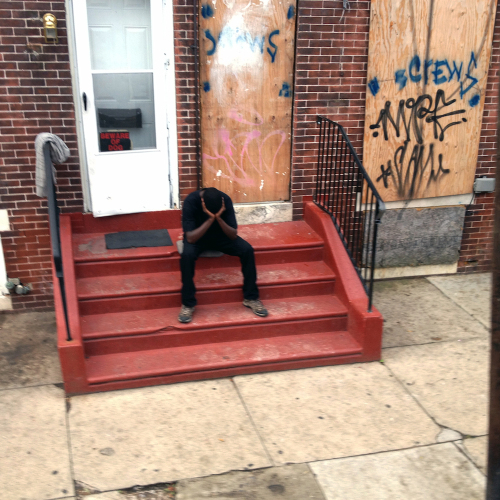
Urban BlightIn many ways, it’s a classic set-up.  Young fella… pay close attention! Beginning in 2017, most low-income minority students attending traditional neighborhood public schools in places like Philadelphia, Chester, Reading, Coatesville, Harrisburg and Lancaster will NOT graduate from high school.  I am not suggesting they will drop out of school.  Although that is a huge problem in and of itself, I am referring to students that stay in school and complete the 12th grade.  Most Black and Latino students in large urban districts will not graduate with a diploma beginning in 2017.  Now, why would I make such a sad and pessimistic prediction?

A year ago, the Pennsylvania State Board of Education approved a controversial plan to require all Pennsylvania students to pass proficiency tests in science, math, and language arts before graduating.  If approved, the standards would take effect with high school graduates in 2017 (current 10th graders), and require them to demonstrate proficiency in Algebra I, Biology I, and language arts on the Keystone Exams or a state-approved assessment alternative.

By adopting this requirement, Pennsylvania has become part of a larger nationwide trend.  The Common Core standards have been adopted by 45 states and the District of Columbia.  These standards are ardently backed by the Obama administration which contends that outdated and inconsistent guidelines leave students ill prepared for college and the work force.  In effect, the argument is that by implementing tougher standards, the schools will rise to the occasion we will see an increased level of academic performance.  What is too often left unsaid is that requiring low-income urban students who have spent their formative years in highly dysfunctional underperforming schools to demonstrate proficiency in these subject areas is a set-up for failure.

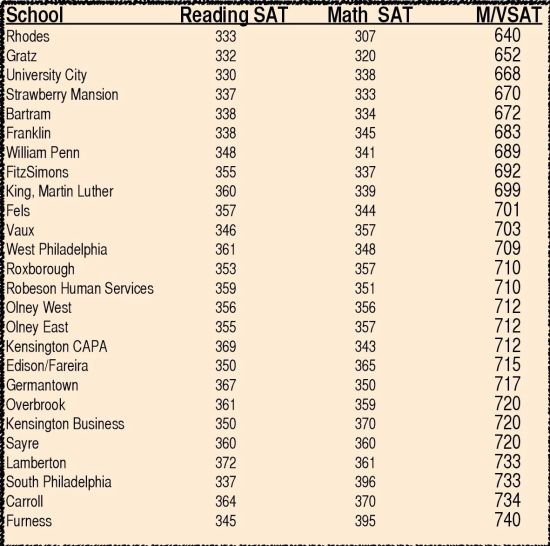
Over 85% of Philadelphia 214 public schools are currently listed as “low achieving” based on student performance on Keystone Exams or state-approved assessment alternatives.


FIFF - Negative Poster 1-page-0

Young fella, this is not speculation.  This a prediction based firmly on an analysis of student performance trends.  Think about it for a minute here.  Students in nearly 9 out of 10 Philadelphia public schools have been “low achieving” for years.  Since then the district has cut over 3,000 teachers.  Last spring, Superintendent Hite facing yet another budget crisis declared “our schools will go from insufficient to empty shells that do not represent what I consider a functioning school.”

We know that a vast majority of these ill-prepared low-income minority students will not be able to meet these standards.  It is equivalent to strapping a 50 pound weight on their backs and demanding that they beat Usain Bolt in a 100 meter dash.  The outcome can be predicted with absolute certainty, they won’t win.  The early results in other major cities forecast the coming Philadelphia storm.

New York was one of the first states to develop tests based on the Common Core standards. The results, predictably, were abysmal.  In math, 15 percent of black students and 19 percent of Hispanic students passed the exam, compared with 50 percent of white students and 61 percent of Asian students.  It is widely accepted that children reared in low-income Black and Latino neighborhoods are at a disadvantage in standardized testing, not because of inborn capacity but because of cultural differences and economic deprivation.  Now, under the new plan, these students will be labeled “not proficient” and barred from “graduating” high school.  Young fella… most of your homies and many of the young ladies in Philadelphia’s neighborhood high schools are going to earn “certificates of attendance” not high school diplomas!

Diploma

Within the School District of Philadelphia only special-admit magnet schools have been able to consistently make Adequate Yearly Progress (AYP).  Adequate Yearly Progress, or AYP, is a measurement that allows the US. Department of Education to determine how every public school and school district in the country is performing academically according to results on standardized tests. In recent years, 10 out of 58 (17.2%) Philadelphia public high schools made AYP.  They were all special-admit magnet schools.  In recent years, zero (0%) traditional neighborhood public schools have made AYP.  Most have failed to make AYP for 9, 10 or 11 years.  In many instance, students are attending schools that have not made AYP since the measure was implemented in in the 2001-2002 school year.

So, young fella, let’s get this straight…  The state of Pennsylvania will be requiring students that have spent every day of their educational careers in under-performing and failing schools to demonstrate proficiency on standardized tests in order to graduate.  Over the past 12-13 years, zero (0) neighborhood high schools in Philadelphia have made AYP.  Adequate Yearly Progress is based primarily on standardized test performance.  On top of that, they have laid off over 3,000 teachers in the last 12 months.  Young fella, it’s a set up!

As noted earlier, those unable to demonstrate proficiency will likely receive a “certificate of attendance” in lieu of a diploma.  What will be the value of the certificate of attendance?  Will colleges accept this as evidence of completing high schools?  How will employers interpret this as opposed to a diploma?

It is safe to assume that the results in Philadelphia, Yeadon, Darby, Darby Township and Chester will mirror the result in New York City.  The overwhelming majority of low-income minority students in public high schools will not meet the standards.  Unfortunately, the fact is they have not been able to meet the standards for the past 12-13 years.  What can you and your parents do?

If you are not enrolled in a special-admit magnet public school like Masterman, Central, Science Leadership Academy, Palumbo, Carver or Bodine you need to find an high-quality alternative placement.  Indeed, even parents of students in magnet schools may need to consider their options.  A year ago, it was announced that the libraries at Masterman and Central, the two highest achieving high schools in Philadelphia, have been closed due to budget cuts.  The State of Pennsylvania and the City of Philadelphia are financially strangling the students in Philadelphia’s public schools.  Young fella, how are these ‘high-achieving” college bound students going to do research and independently pursue areas that interest them without access to libraries?

Can you see it?  It has all the marking of a set-up.  With this plan in place, most of Philadelphia’s low-income Black and Latino public school students will be labeled as non-graduates.  That is not taking into account the more than 50% percent that drop-out of the system altogether.  Again, let’s use the NYC results as a guide.  If 15% of the students meet the requirements for graduation and 50% or so dropped out before even taking the test, then only about 7.5% of Philadelphia’s low-income  minority public school students will be actual high school graduates.  The other 92-93% will be relegated, at the age of 18 or 19 to a lifetime of low-wage, low-skilled labor, excluded from institutions of higher learning, prone to participate in the underground economy and as a result far more likely to encounter the criminal justice system.

Image

Unfortunately, there will be students with A and B averages that cannot meet the standards because they have attended failing schools throughout their entire educational careers.  My strong recommendation is that you and your parents immediately research their options.  Take some time to learn about the Independent Private Schools, high achieving Charter Schools and Catholic Schools.  We have reached a point where leaving your child in a traditional neighborhood public school is tantamount to child abuse.  Yes, many of these options will require financial sacrifice.  But, the alternative is simply unacceptable.

Remaining enrolled in a traditional neighborhood high school could very well lead to a lifetime of financial sacrifice.

Many critics charge that the state doesn’t care about the children and they don’t plan for their future.  I vehemently disagree.  The state is clearly planning for the their future.  Pennsylvania has extensive plans for low-income minority children.  Please keep in mind, Pennsylvania is spending $400 million to construct two new prisons at the SCI-Graterford site in Montgomery County.  The funds are in addition to the $1.8 billion corrections budget signed by Governor Tom Corbett, an increase of $208,000 from last year.

For information information on alternatives to Philadelphia Public Schools, contact me at delgrecowilson@outlook.com.

← Back

Thank you for your response. ✨

NBA Star Dion Waiters “Motivates” Philly’s School Children

Image


Unfortunately, Philadelphia’s public school students have very little to look forward to this year.  As they return to school this week, they will encounter a radically reconfigured school district.  Over the past few months, 24 schools have been shuttered and 3,000 employees have been laid off.  The consequences of this reconfiguration are significant.  Over 9,000 students will attend a different school than they attended last year.  An astonishing 60% of public schools will not have a guidance counselor on staff.  There have been numerous reports of class sizes reaching into the 40s.  The well-publicized $304 million dollar budget deficit has led to shortages of teachers, support staff and basic necessities like paper.  These are truly dark educational times in Philadelphia’s public schools.

Yet, there are beacons of hope shining through the clouds of despair hanging over Philadelphia.  South Philadelphia’s Dion Waiters, entering his second season as a member of the NBA’s Cleveland Cavaliers has tried to lessen the burden on some families and teachers by providing school supplies and book bags for several hundred Philadelphia families.  “Education is the single most important issue in our community, I want to help provide kids with the supplies they need from day one”, said Waiters.  “This year, especially, I want the kids to know that someone is there for them.”

Born and raised in South Philadelphia, Waiters has concentrated his early philanthropic efforts on serving children in his childhood neighborhood.  This summer he supported the Point Breeze Youth Development League and co-sponsored the Dream Chasers Sports & Entertainment Summit.

Waiters, who would be entering his senior year at Syracuse University, has developed a keen sense of responsibility at a young age.  “I love South Philly, it has shaped me into the man I am.  But, I realize there are many things that kids see and hear about that should not be a part of their lives.  Over the years, I’ve lost a lot of friends and people I knew to violence and the criminal justice system.  My God given basketball abilities have allowed me to attend some of the finest schools in the country.  But I never stop thinking about the young people attending public schools in Philadelphia.”

 Image

Watching Waiters interact with the children during the Book Bag Giveaway, one senses that he understands the impact his presence has in South Philly.  Upon arriving, he took the time to acknowledge and greet every parent and child individually.  He posed for pictures and patiently autographed the book bags for the adoring children.  Waiters explains, “I understand the predicament these kids find themselves in.  The district has a big deficit.  But, the kids didn’t do anything wrong.  I want to motivate kids to stay in school and study.  There were moments when I didn’t perform at my best as a student.  I was fortunate, there were always adults around me that helped me keep my eyes on the big picture.  I want to help these kids do the same thing.  This is just a start, we plan on impacting education in a big way over the coming years.”

The “Back2School Book Bag Give-a-Way was organized in conjunction with the office of Councilman Kenyatta Johnson and the Point Breeze Youth Development League.  As Waiters prepares for his 2nd NBA season, he looks to improve on his All-rookie performance last year.  Off the court, the young man is already an All-Star.

A Comparison of A10 Academic Progress Rates, 2004-12


The coaches have been contacting you for months.  The tweet, texts, direct messages, facebook hits seem endless.  One thing is clear, they want you to come play basketball for them.  They have explained how you fit into their plans and their system.  Now, they are coming to visit you at home and you are taking official visits to their campus.

The coaches have been contacting you for months.  The tweet, texts, direct messages, facebook hits seem endless.  One thing is clear, they want you to come play basketball for them.  They have explained how you fit into their plans and their system.  Now, they are coming to visit you at home and you are taking official visits to their campus.  

They are going to show you the campus, the arena, the locker room, the media room, the weight room, the practice gym, the dormitory, the cafeteria and the pretty girls.  It all feels right.  You are ready to commit.  At this point, you should ask one VERY important question:  Coach, do you graduate your players?

When he gives you a response don’t just take his word for it.  Together with your parents and advisors check the record.  The Academic Progress Rate is a Division I metric developed to track the academic achievement of teams each academic term.  Each student-athlete receiving athletically related financial aid earns one retention point for staying in school and one eligibility point for being academically eligible. A team’s total points are divided by points possible and then multiplied by one thousand to equal the team’s Academic Progress Rate score.

The above chart lists the A10 programs in order, highest average APR to lowest average APR over an 8 year period spanning 2004-2012.  Using this chart, parents and potential recruits can compare the level of academic achievement across A10 programs.  Also, the average APR data for all Division 1 Men’s Basketball Programs is included for comparative purposes.

Within the A10 Conference, only 4 programs, Fordham, Duquesne, Massachusetts and St. Bonaventure have APR averages below the APR average for all Division 1 basketball programs.

This information is very useful to parents and students weighing scholarship offers from multiple universities.  It provides a way of quickly gauging a program’s ability, over time, to retain players and keep them on track to graduate.  The Black Cager will provide this information for all Division 1 Conferences over the next few weeks.

A10 Average APR Rankings  

2004-05 2005-06 2006-07 2007-08 2008-09 2009-10 2010-11 2011-12  2004-08 Avg.
Dayton 980 979 974 979 979 985 990 985 981.375
George Mason 918 945 969 995 995 990 975 980 970.875
Saint Louis 1000 986 979 947 935 925 923 950 955.6
VCU 920 947 949 985 975 949 956 960 955.1
Richmond  910 931 925 936 967 974 995 1000 954.8
LaSalle 917 928 935 956 973 970 969 974 952.8
George Washington 941 948 946 917 936 950 966 975 947.4
Rhode Island 961 946 938 941 950 957 952 926 946.4
Saint Joseph’s 929 920 921 944 939 949 949 953 938.0
All D1 BBall Programs 927 927 928 933 940 945 950 952 937.8
Fordham 930 924 929 947 943 933 933 933 934.0
Duquesne 961 909 914 906 912 960 956 953 933.9
Massachusetts 894 920 903 931 930 928 949 944 924.9
St. Bonaventure 906 921 897 904 906 894 929 972 916.1

“Choosing” Catholic School in Philadelphia: The Case of Tracey Stanton-Wilson

Image


A graduate of Philadelphia High School for Girl’s, Tracey Stanton-Wilson has maintained a life-long commitment to public education.  Her husband, Darrell Wilson graduated from Lamberton High School in Philadelphia’s Overbrook section.  Her oldest son Kyle, attended Universal Charter for middle school and graduated from Preparatory Charter HS before heading off to college.  Last fall, as she was assessing the options for her then 8th grade son Darrell, Jr. she focused exclusively on public and charter schools.  That is, until she received a phone call.

In February, a family friend called and invited Tracey to attend a “focus group” being conducted at West Catholic HS.  At first, Tracey was hesitant because she assumed that the cost of Catholic HS would be prohibitive.  With her oldest in college and her daughter in a full-day private preschool, educational expenses were already presenting a challenge.  There was no way, she felt, that she could afford the tuition to Catholic HS.  Nonetheless, her friend encouraged her to attend the focus group and let them know that financial considerations were the primary barrier for her family.  After all, the aim of the focus group was to identify issues and concerns Philadelphia’s parents have about Catholic High Schools.  The Faith in the Future Foundation was trying to gain a better understanding of issues faced by parents of school-age children.

During the focus group, Tracey and 14 other parents were provided with information regarding West Catholic High School academic programs and Catholic education in Philadelphia.  They were also asked a series of open-ended questions about their school selection processes.  What were the factors influencing their selection?  Was Catholic education a viable option?  If not, why not?  Tracey was very impressed with responsiveness of moderator, Patti Boyle from the Faith in the Future Foundation as well as the West Catholic HS Director of Admissions, John Jenkins.  So much so that, along with several other parents, Tracey completed an application for admission and financial aid.

However, she remained concerned about the cost.  Could the Faith in the Future Foundation provide enough aid to make attending West Catholic feasible?  Over the next few months, she maintained constant contact with Mr. Jenkins.  When the initial financial aid offer was not sufficient to meet her family’s needs, Tracey was disappointed and she let him know.  Mr. Jenkins was committed to identifying additional sources of financial aid for Tracey.  Through their ongoing dialogue, he came to realize that she was exactly the kind of parent, and that they were the type of family, he wanted to attract to West Catholic.  She was committed and passionate about education.  She was willing to sacrifice financially to ensure her child access to a high quality safe learning environment.

Tracey had a history of “choosing” strong educational placements.  As a student, she “chose” to attend highly competitive Girl’s High.  As a parent, she enrolled her oldest son in Prep Charter, one of the better performing Philadelphia Charter High Schools.  With Darrell, Jr. she was ready to choose Catholic education.  While she remained committed to public education, Tracey was very concerned about some of recent developments within the School District of Philadelphia.

Facing a $300 million structural deficit and still uncertain whether it will get the increased revenue and labor concessions it was seeking, the School District was asking schools to prepare to operate next year with a principal and a bare-bones allotment of teachers – and just about nothing else.  The District sent ended up sending 3,783 layoff notices to assistant principals, teachers, counselors, noontime aides and others. Tracey considered the consequences.  That meant the contractual maximum class size in every classroom, 33 or more students in every classroom.  It meant no dedicated money for guidance counselors, interscholastic sports, extracurricular activities, librarians, art or music.  No money, even, for secretaries.  

After much discussion Tracey and Darrell, Sr. decided they had to make a decision that was in Darrell, Jr. best interest.  As concerned residents of the Grays Ferry community, they remain supporters of efforts of Universal Companies at Vare Middle School and Audenreid High School.  However, if they could negotiate a workable financial arrangement, they would send Darrell, Jr. to West Catholic Preparatory High School.

Tracey and Mr. Jenkins continued to work together and finally they were able to reach a point where monthly tuition payments were manageable.  The Faith in the Future Foundation has pledged to make high-quality Catholic education accessible to all Philadelphia families that want to attend Archdiocese schools.  According to Tracey Wilson, “Mr. Jenkins really worked with me to make this happen for my son.  I couldn’t be happier.” 


Average SAT Scores in Philly Charter Schools

Average SAT Scores in Philly Charter Schools

As you can see, Philadelphia’s charter schools are struggling to produce adequate SAT scores. The average scores for incoming freshmen at some local colleges are listed for comparison. Some charter school averages are 300-500 points below the average freshman score at local colleges. Only 5 charter schools have average scores that meet or exceed the NCAA minimum of 820 for D2 athletic scholarships. Some charter schools with nationally recognized athletic programs have scores well-below the NCAA minimum score.

Introducing TheBlackCager

TheBlackCager is a site dedicated to in-depth discussion of topics related to scholastic and collegiate athletics.  We will cover eligibility issues, recruiting, coaching, selecting an agent and life after the playing days are over.  All issues will be examined from a perspective that places African-American student-athletes at the center of the discussion.