The FINAL Conversation: A Talk With Rob Brown

Philadelphia is a basketball town… Yeah… We watch the Eagles, but we PLAY basketball!

Depending upon your age, your childhood was filled with visions of one of the following performing majestic feats on the court… Wilt, Dr. J, Barkely, Iverson or Embid/Simmons… At the collegiate level, Ernie Beck, Tom Gola, Guy Rogers, Cliff Anderson, Kenny Durett, Howard Porter, Mike Brooks, Tony Price, John Pinone, Steve Black, Mo Martin, Howard Evans, Ed Pinkney, Lionel Simmons, Mark Macon, Marvin O’Connor, Lynn Greer II and Jameer Nelson are just few of the names that continue to ring long after their playing days were over. But, perhaps, more than anything…

Philadelphia is a Scholastic Basketball town…

We still revere the Overbrook teams of the 1950’s featuring Wilt, Ray Scott’s West Philadelphia squad and the Northeast’s teams led by Rogers, Tee Parham and Sonny Hill. Overbrook’s teams of the 1960’s and early 1970’s featuring guys like Walt Hazzard and Andre McCarter continue to be mentioned whenever “greatness” is the topic. For many, the apex was reached with the Gene Banks led Speedboys of the mid-1970s. Their epic battles with the late great Lewis Loyd are still talked about like the games were played last week. Ricky Tucker, Steve Black and Tony Coster picked up the torch and carried the city into the 1980’s. Rico Washington and Pooh Richardson led Ben Franklin squads picked it up in the early 1980’s. Later that decade Bo Kimble, Hank Gathers, Doug Overton and Heat took Dobbins to the pinnacle. As we entered the 1990’s we entered the Gratz era as Coach Bill Ellerbee put together a string of Nationally dominant teams featuring Harry Moore, Aaron McKie, Rasheed Wallace and a host of other Division I players.

74634717_2831010790251412_7305829255571570688_o

The advent of the charter school movement led directly to a shift in the basketball power structure. Traditional neighborhood high school programs were decimated in just a few short years. The Catholics and and couple Charters filled the void. Carl Arrigale was hired at Neumann and proceeded to put together one of the all-time greatest runs in Philadelphia HS basketball history. Over at Borad and Vine, Roman Catholic has always been one of the better programs in the nation. It is indisputable, the proliferation of charter schools led directly to the demise of traditional neighborhood public high school programs. Catholic schools and eventually a few charter programs became more attractive to the most talented players.

By the mid 2000’s Dan Brinkley had built a powerhouse program at Prep Charter featuring eventual eventual pros like Rodney Green, Marcus Morris and Markeiff Morris. Public supremacy was eventually assumed by Andre Noble and the Imhotep Panther program. Imhotep has been on run that compares favorably to any in the history of Philadelphia scholastic basketball history. The class of 2019, led by 4 year starter Donta Scott, never lost a regular season public league game. They were ranked in the top 25 for their last 3 seasons and 4 of the starters, Scott, Dahmir Bishop, Jamil Riggins and Chereef Knox received Division 1 scholarships.

So.. here we are on the cusp of yet another wonderful high hoops season.

It’s worth noting that things will NEVER be as they have been in the past. As much as the rich history of high school hoops is important one could argue that high school basketball has never been less significant for players seeking to play at the collegiate level.

Shit is just different…

77185877_2829254310427060_7739688173000720384_o

One could easily envision situations where kids could play AAU/grassroots ball, NOT play high school basketball and be recruited at a very high level. The plain and simple fact is High School scholarships are earned in the summer with AAU/grassroots clubs. High School basketball is where college coaches go to follow up on decisions they made between April and July.

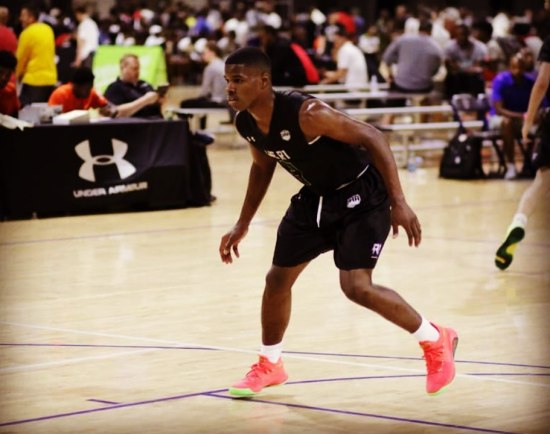
If AAU/grassroots basketball is where the action is then the EYBL is center stage. The overwhelming majority of Division 1 basketball prospects play on one of the three shoe company sponsored circuits. Nike (EYBL), Under Armour (UAA) and Adidas (Gauntlet) sponsor self-contained leagues with teams from across the country competing for “National” championships. While Under Armour and Adidas have plenty of talent and regularly produce high major D1 and NBA players, the EYBL is widely considered to be the ‘best” circuit.

There are very few summer basketball events that can generate the excitement associated with Nike’s Peach Jam. The culmination of the EYBL circuit features a level of stagecraft and showmanship unmatched by Under Armour and Adidas. While all three produce top players, many of the biggest names and brightest young basketball stars gravitate to the EYBL Moreover and most importantly, because it takes place during a live recruiting period, the Peach Jam has emerged the most highly anticipated and important event with regards to scouting talent and learning more about potential targets for top college programs. It is also a tremendous opportunity for underrated talents to make a name for themselves in front of college coaches and scouts.

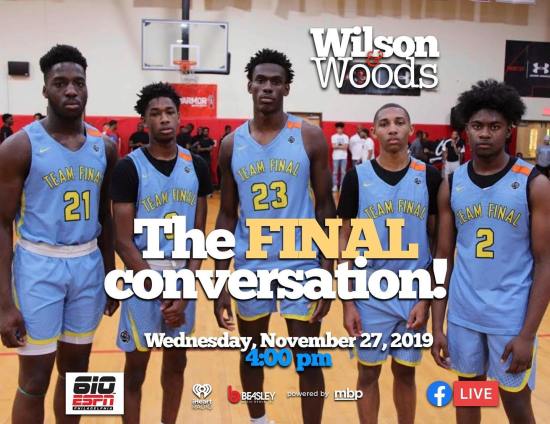
Philadelphia’s representative on the EYBL circuit is Team Final. Chester’s Tyreke Evans NEVER played for the vaunted Chester High program. South Philly’s Dion Waiters NEVER played in Philadelphia’s Public or Catholic Leagues. Both played for Team Final. The list of NBA talent that has come through the Team Final program is extensive. Mike Kidd-Gilchrist, Malachi Richardson, Mikal Bridges, Donte DiVincenzo, Rakeem Christmas, Rondae Hollis-Jefferson and Cam Reddish all donned the sky blue and yellow on the EYBL.

That’s a whole LOTTA of NBA players from FUCKIN one program…

The Team Final success in this area begs a lot of questions and invites a criticism from many quarters. What follows are just a few of the questions/criticisms one frequently directed at the program:

1. If they produce so many NBA players, why haven’t they been more successful in the
Peach Jam? Some feel that the Team Final program is geared toward and exclusively
focused on developing 1 or 2 NBA players each year and fails to pay adequate attention
to the other 6-7 players on the team. How does Team Final balance the goals of
highlighting superstars prospects with winning and developing the other players on the roster?

2. Lynn Greer, III, Quade Green, AJ Hoggard and Ahmad Fair are all very talented Philly
guards that clearly wanted to play on the EYBL. These young men left the area to play in
Washington, DC and New York. Chance Westry and Jordan Longino are nationally
ranked prospect from the region that have recently announced that they will be playing on the EYBL out of New York. Why aren’t these kids playing with Team Final? Does Team Final have an obligation to accommodate the top area talent and keep them in the region during the summer months?

3. Given the widespread perception that the EYBL is the “best” circuit and the fact that Washington, DC and New York City have multiple EYBL clubs, should the greater Philadelphia region have multiple EYBL clubs? What is the Team Final position regarding the establishment of a second EYBL club in the region?

75653229_2828909850461506_5961432770264694784_o

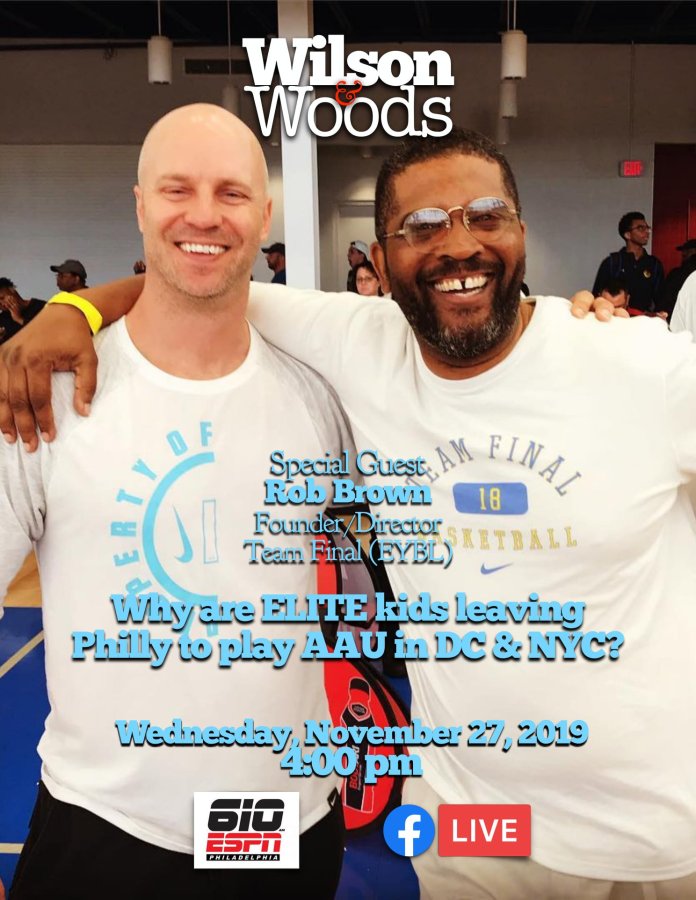
These are just a few of the questions that will be posed to Team Final Founder and Director Rob Brown on the Wilson & Woods Show on Wednesday, November 27, 2019 at 4:00 pm on 610 ESPN Philadelphia AM. The show is also simulcast LIVE on the Wilson & Woods Facebook page.

Tune in! Do NOT miss this explosive interview!


Loch Haven Pulls Away From Chestnut Hill in 2nd Half

By Eric Dixon, Black Cager Sports Writer

Philadelphia, PA – November 17, 2019 – The Chestnut Hill Griffins hosted their home opener and put on an entertaining contest with the Bald Eagles of Loch Haven University Saturday afternoon that ended in a 78-61 win for the visitors. The final score did not indicate the competiveness of the game as the talent of both teams was on display in a game of runs where LHU happened to be the last team to get hot.

Loch Haven Head Coach Mike Nestor knew if he would have to get solid games from his “leadership group” of Christian Kelly, Matt Cerruti and Jesse McPherson if his team was going to leave the stately campus in Northwest Philadelphia with a win. He got that he needed as the three combined for 50 points with the 6-5 Kelly leading the triumvirate with 20.

75271450_490196671586968_5588052245108228096_n

Matt Cerruti, Loch Haven (l) and Julius Phillips, Chestnut Hill (r)

The Griffins also placed three players in double figures led by Amir Warrick’s 13 markers. The 6-6 guard, who is adjusting to being a primary ball handler, was a perfect 5-5 from the charity stripe to help buoy his team through a rough patch from the field as they searched for consistent shot making for the bulk of the afternoon. They never really found it, finishing with a poultry 30% on made field goals.  Scottie Spann, Jr., the former Sankofa Academy standout, chipped in 11 while James Rider, a normally reliable shooter from Baltimore, added 10 points.

The game was played at a good pace and despite scoring droughts that spanned 7 minutes for Chestnut Hill and 4 minutes for Loch Haven, it was very engaging. In addition, both programs have reason to be optimistic going forward as both will welcome key additions next month that will bolster their talented teams. Loch Haven will bring back team leader Jihad Barnes, a 6-1 lead guard from Philadelphia. Chestnut Hill is looking forward to adding former Cheltenham Panthers Ahmad Bickley and Trevonn Pitts, their most productive player last year.

Both head coaches were prescient in pre-game interviews as they spelled out the challenges and positives they expected to see in this early season matchup. Coach  Jesse Balcer expressed concern regarding his teams ability to hold on to the ball. The Griffins proved him prophetic committing 24 turnovers on the day. Coach Nestor expected to lean on his team’s abundance of experience, having several key players in their 2nd and third years in the program.  The cohesion his upperclassmen laden team showed throughout the game was a key in their victory. The Bald Eagles also used that experience to calm themselves and work through early offensive struggles. LHU committed 9 first half turnovers, but only 3 in the second. The Griffins also made significant improvements in their ball handling as the afternoon wore on, committing an alarming 18 first half giveaways, but just 6 in the second.

“We struggled in the first half , but our defense carried us,” said Coach Nestor, adding “I knew we would start hitting shots,” expressing confidence in his team’ offensive abilities. A big reason for this confidence is Christian Kelly, who averaged 20 ppg and 7 rpg last season. Kelly didn’t just play on one side of the ball either, turning in an impressive defensive effort with 4 steals and 4 blocks to help stymie the Chestnut Hill at key junctures of the game.  Kelly, who boasts a 6-8 wingspan and 9-inch mitts, used his “active hands” to disrupt the Griffins most of the game.

Junior Jesse McPherson, formerly of Archbishop Carroll and Simon Gratz product Nasir Campbell, also a junior, provided Loch Haven with strong performances in the paint as well. The quiet McPherson, who prefers to lead by example, provided a inside scoring presence to complement the shooting of Cerruti and slashing of Kelly.  Coach Nestor is excited about the energy and physicality Campbell brings to his team, which struggled to rebound the ball last season.  Campbell threw down a thunderous slam while drawing a foul in the second half  that brought the lively, supportive crowd to their feet.

Chestnut Hill looks to the 6-2 Scottie Spann, Jr. to bring energy when he comes of the bench. “It’s my job to bring energy” said Spann, who is one of the “tough Philly kids” Balcer will rely on going forward. Another is Julius Phillips, an Archbishop Wood product who provided a solid floor game for the Griffins in this contest, finishing with 7 rebounds, 6 points and 4 assists.

74476295_368683937244118_7486621510145146880_n

Julius Phillps, Chestnut Hill

“Trust the process, trust the coaches and trust each other,” said Phillips when asked what the team needs to grow and improve as the season continues. Another boost will be the addition of Bickley. “The lack of a true point guard really hurt us,” said Coach Balcer. “We weren’t able to get rolling.”

In the immediate future Loch Haven (2-0) will host the Wolves of Cheyney University and Chestnut Hill (0-4) will look to upend the Bloomsburg University Huskies in a road game.


The Historical Significance of Aaron McKie vs Ashley Howard

The rise of black Division 1 college basketball coaches has been very slow and fraught with peril, this is especially the case in Philadelphia. Almost 50 years ago, William J. Robinson was hired as the head coach at Illinois State University. With his appointment, Robinson became the the first black head coach in NCAA Division 1 basketball. Robinson’s breakthrough hiring came 64 years after the NCAA was founded at a meeting in New York City in 1906.

hqdefault

Will Robinson and Doug Collins at Illinois State

For sixty-four years, a 100% white male quota was firmly entrenched…

Situated in the United States, with much of it’s athletic competition taking place in the Apartheid-like Jim Crow American South, the NCAA has been explicitly white supremacist and structurally racist throughout the overwhelming majority of its existence. Let’s be very clear with this terminology. Here, structural racism refers the normalization and legitimization of an array of dynamics – historical, cultural, institutional and interpersonal – that routinely advantage whites while producing cumulative and chronic adverse outcomes for people of color.

For well over half a century, Blacks were formally prevented from playing and coaching. White males benefited immensely from these practices. NCAA member institutions developed and implemented player recruitment and hiring dynamics that advantaged white males and produced adverse outcomes for Black players and coaches.

These facts are not disputed by any serious observer of the history of collegiate athletics and the NCAA.

The NCAA and the majority of its member institutions, for decades, just didn’t FUCK with Black people… Like most of white America…

duke-team-1966-67

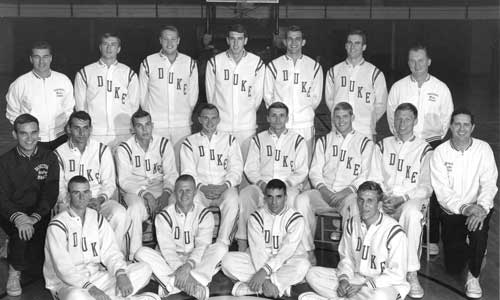
Duke Men’s Basketball Team 1966-67

The NCAA implemented a system of hierarchy and inequity, primarily characterized by white supremacy. The NCAA, college presidents and athletic directors gave preferential treatment, privilege and power to white people at the expense of Black, Latino, Asian, Pacific Islander, Native American, Arab and other racially oppressed people. The system was structurally racist.

Of course, one should keep in mind that this structural racism, from the moment of inception, diffused and infused in all aspects of American society, including our history, culture, politics, economics and our entire social fabric. Of course, collegiate sports would be no different. It would futile to argue otherwise.

Screen Shot 2019-11-16 at 11.10.51 PM

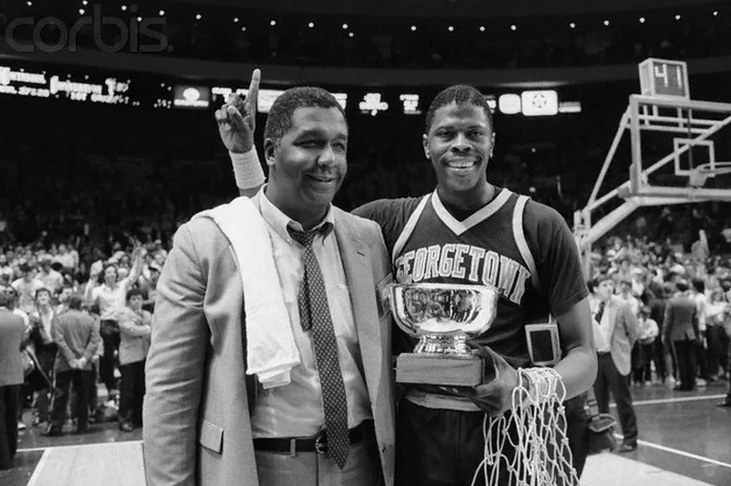
John Thompson and Patrick Ewing, Georgetown University

Once dismissed as a group by the college president’s and athletic director’s wrongheaded thinking based on skin color, Black college coaches have proven they possess the tenacity, smarts and talent needed to thrive at the Division 1 level. They have been National Champions (John Thompson, Georgetown 1984, Nolan Richardson, Arkansas 1994 and Tubby Smith, Kentucky 1998). They have won National Coach of the Year awards and several have been enshrined in the Naismith Basketball Hall of Fame.

In some important ways, the gap has been closed. Philadelphia’s vaunted Big 5, however, continues to lag well behind.

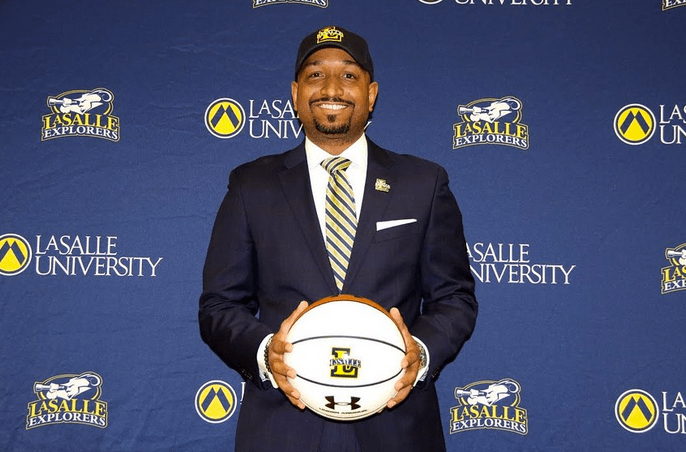
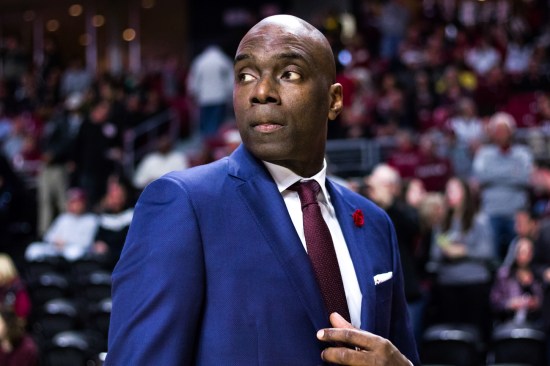
Earlier today, Ashley Howard and Aaron McKie led La Salle and Temple into battle at Gola Arena. These young men are Philadelphia products through and through. Howard is the son of Philly schoolboy legend Maurice “Mo” Howard. He was introduced to the college coaching profession by James “Bruiser” Flint after medical issues ended his playing career following his sophomore season at Drexel University. McKie was raised by the late Philadelphia grassroots coaching/training legend John Hardnett. He went on to become a Big 5 legend while playing for the Hall of Fame Coach, John Chaney.

Given their impeccable credentials, its not surprising to find these two roaming Big 5 sidelines. They are Philly basketball lifers like Harry Litwack, Jimmy Lynam, Don Casey, Lefty Ervin, John Griffin, Phil Martelli and Fran Dunphy.

Screen Shot 2019-11-16 at 11.14.25 PM

Ashley Howard, La Salle Head Coach

What is surprising is the fact that on November 16, 2019 we witnessed just the fourth game featuring two Black coaches in the illustrious history of the Big 5. John Chaney and Temple defeated Penn and Quakers coached by Craig Littlepage on February 9, 1983 (61-53), February 8, 1984 (81-57) and December 8, 1984 (70-57). Until today, those three games represented the entire universe of Big 5 games featuring two Black coaches.

3.09.19_MBB-vs-UCF_Justin-Oakes-1

Aaron McKie, Temple Head Coach

The Big 5 was founded in 1955, right after LaSalle won the NCAA Championship. Thus, it has been in existence for 63 full seasons. This represents the 64th year. Each team plays 4 Big 5 games a year, except for the few years following Rollie Massimino’s misguided dissolution of the round robin format. This means that each team has played roughly 252 Big 5 games. With five Big 5 programs, the total number of games played comes in around 1,260. One can subtract a few for the years immediately following the Massimino debacle. But for illustrative purposes, we’ll use the aforementioned numbers.
Before today, out of approximately 1,260 Big 5 games, exactly three (3) featured two Black head coaches. Significantly less than 1% of Big 5 Basketball games ever played had two teams led by Black coaches. The exact number is 0.24% of the games.

That made today’s game historically significant in many ways. One should not be surprised that Temple and La Salle are moving the ball down field in this area. These institutions have a strong track record of inclusion and diversity at the leadership level. Temple has had a Black Athletic Director, a Black football coach and three Black women’s basketball coaches. The current COO is Black. La Salle has a Black Athletic Director, a Black University Chief of Staff and they have had a Black women’s basketball coach.

It should be noted that Penn has also had a Black Athletic Director and two Black basketball head coaches. All you can ask for is an opportunity. Penn, La Salle and Temple get it!

It is truly refreshing to see high-major kids like Clifton Moore (La Salle) and Jake Forester (Temple) transferring to La Salle and Temple from Indiana after Howard and McKie were in place. The local high school recruiting has also picked up since these guys have been on the trail. Black parents have repeatedly indicated that seeing Black men in leadership positions on campus has impacted their decision-making. This makes perfect sense!

Why would you send your precious Black boy to an institution that has NEVER had a Black man in a leadership position throughout it’s existence? Why? So many institutions have demonstrated a commitment to fairness in the hiring process.

For example, Princeton has had 2 Black basketball coaches. Delaware has also had two. Georgetown has had three. Rutgers has had two. Pitt and St. John’s currently have Black coaches. Rider, Wagner and Monmouth also have Black coaches in place.

It matters… Go where Black men are respected and given an opportunity to lead! He may become the Head Coach or Athletic Director once his playing days are over.

The complete absence of Blacks in leadership positions throughout the history of an institution and in the current athletic department can ONLY be explained one way. The same way one would explain their complete absence in the NCAA from 1906 to 1970.

There’s some racist bullshit going on…

Bishop McDevitt HS Refuses to Provide Parents Copies of Transcipts

Black Cager Sports spoke with Maria McDermott, MCIU, Guidance Counselor and Carole Anne Dominello, Guidance Department on October 18, 2019 regarding Bishop McDevitt High School’s transcript policy. Both Ms. McDermott and Ms. Dominello stated that McDevitt does NOT provide unofficial or official copies of transcripts to parents and/or students.

Below, please find a copy of the Family Educational Rights and Privacy Act (FERPA). This is a federal law.

Ferpa-1

As you can see, “Parents or eligible students have the right to inspect and review the student’s education records maintained by the school.”

Apparently, McDevitt administrators are relying upon the language in the next sentence to deny parents/students copies of their transcripts. The law states “Schools are not required to provide copies of records unless, for reasons such as great distance, it is impossible for parents or eligible students to review the records.”

For more than 20 years, Black Cager Sports has advocated for students and student-athletes. We have always encouraged parents and students to obtain and carefully review unofficial copies of their transcripts prior to forwarding them to the NCAA Clearinghouse, college admissions offices or college coaches. This is the first instance, where we have seen parents and students denied an unofficial copy of a student’s transcript.

McDevitt’s policy, while within the rule of law, places an undue burden on parents that have paid tuition to matriculate at the school. It makes no sense to deny a family planning for college a copy of a transcript.

bishop

Parents high achieving students and student-athletes should be fully aware of this policy prior to enrolling at McDevitt. Black Cager Sports hopes that McDevitt will modify this policy and assist their parents efforts to plan and meet stringent college admission and NCAA requirements.

Until the policy is amended, Black Cager Sports encourages ALL parents of McDevitt students and student-athletes to make an appointment to inspect and review their child’s transcripts. Once the records are in front of you please take clear photographs of the transcripts and maintain the photos for your records.

If you are the parent of an 7th or 8th grade student or student-athlete and you would like the names of Catholic and Independent High Schools that are cooperative with parents planning for college, contact Black Cager Sports at blackcager@gmail.com.

If Bishop McDevitt amends this policy and starts sharing transcripts with parents and students Black Cager Sports will provide an update.


From the Mind of Rashime Middleton: HS Transfers

TALENTED TRANSFERS:

65412956_2441940262524115_775223494954116967_n

Hysier Miller, Neumann-Goretti

HYSIER “Fabe” MILLER– 6’0 CG:
From  MLK to Neumann Goretti

The “gritty” South Philly guard has come back home to play for “Legendary” Catholic League Head Coach Carl Arrigale. “Fabe” has all the tools to get the job done….”Fabe” excels  in transition getting to the basket and drawing fouls. Very underrated passer, capable of hitting the long ball….sneaky hops too…. crafty ball handler “ankle breaker badge”…..mastered the stop ‘n’ go game that confuses defenders….Big time heart and a big time shot maker. I’m excited to see “Fabe” this season with Neumann Goretti.

C_BvooVWAAAzT7Y

Ahmad Fair, School of the Future

AHMAD FAIR– 6’1 (SR) PG:
From Fels to School of The Future

“Mr. Excitement” is back like he never left, playing for 2nd year Head Coach Stan Jones at School of The Future.

Ahmad has stepped back on to the BBall scene with something to prove. The lightning quick guard keeps defenders on their toes with his unique ability to push the tempo. Ahmad has matured on the basketball court a great deal since I last seen him play. His hesitation off the bounce is extremely deceptive, creating space between him and his defenders  for his pull up. Ahmad is a dynamic passer, with the natural ability to find his teamates for open buckets which makes him exciting to watch. He may finish the season as one of the Top 5 PG’ s in the area JUST WAIT!!!!

53260615_10216803179724446_2019120286841962496_n

Mike Anderson, Girard College

MIKE ANDERSON– 5’10 (SOPH) PG:
From Roman to Girard College

MINUTES, MINUTES, MINUTES did not come easy for “Mighty Mouse” during his time at Roman Catholic. Now, at Girard College he will be the captain of the ship. Anderson’s game speaks volumes. Underrated as an athlete, Anderson is always in attack mode. Anderson can score from all 3 levels with a natural instinct for playmaking. Dynamic ball handling skills with good footwork when attacking off bounce. Hard to keep out of the lane, uses his body very well when drawing contact. Anderson score in bunches a plethora of ways which makes him a unique prospect. Now in the class of 2022, he’s arguable the best PG in the class.

SE3NPNJW4FHPDN4M732WLRCL4Y

Che Evans, Neumann-Goretti

CHE EVANS– 6’7 (SR) WG:
From Dulaney(Md) to Neumann Goretti

The 6’7 San Diego State commit has brought his talents up I95 in hopes of winning a PCL Title. Che is a versatile athletic wing, who plays above the rim. Che is a high volume scorer who can get a bucket from all 3 levels. Solid ball handler who can make plays off the bounce. Che suffered a leg injury earlier this year that’s kept him off the court. Looking forward to seeing Che with the Saints this season.

MORE TALENTED TRANSFERS:

JEREMIAH BEMBRY- 6’5 (SOPH) CG:
From Pillow Academy(MS) to West Catholic

NAJI REID- 5’11 (SOPH) 2G
From Lincoln to Imhotep

DWAYNE SATCHELL- 6’8 (SR) C
From Valley Forge Military Academy to Gratz

CHRIS KIRKLAND- 6’7 (SOPH) WF
From Friends Select to Roman Catholic

MARCUS RANDOLPH- 6’3 (JR) 2G
From Willingboro(NJ) to Archbishop  Wood

THERMERE SIMMONS- 5’10 (JR) PG
From Imhotep to School of The Future

ISAIAH ENNIS- 6’5 (JR) PF
From Girard College to School of The Future

ALEEM LEE- 6’5 (SOPH) PF
From Monsignor Bonner to School of The Future

NADIR WOOD- 6’8 (SR) PF
From School of The Future to Math Civics and Science

Jay Z and the Nascent Neo-Accomodationist Movement

From the moment the first captive Africans arrived in the American colonies in 1619 to, at least, the mid-1960s, Black people in America have been forced to grapple with the fact that they lived their lives within a society characterized by an authoritarian social order and political culture based on white supremacy. Some would argue that the rule of white supremacy continues to this very day.  What is beyond dispute is the fact that for the overwhelming majority of the past four centuries, racism/white supremacy has been the American scourge. The American social order persistently encouraged state repression and exploitation of Black Americans for the benefit of the nation’s white population. It is also evident that the economic legacy and social effects of America’s chattel slavery-based and Apartheid/Jim Crow-based social structures continue to the present day.

‘The question,’ long debated among Blacks vying for leadership, continues to be as follows: “What the FUCK should we do about it?

For nearly 200 years, Black thinkers and activists have offered varying strategies for addressing their plight. History has documented these disparate responses. Here, we quickly provide a cursory review of some of the earliest efforts to address ‘the question.’ We briefly highlight the precursors to the ‘accomodationist’ approach propagated by Booker T. Washington. We review ‘accomodationism’ as practiced by Washington and finally, highlight the nascent ‘neo-accomodationist’ movement taking form among Black male millennials.

Walkers_appeal_in_four_articles_1830

David Walker: We Need Self-Help
In September 1829, David Walker, a free Black man living in Boston issued a call for black unity and self-help in the struggle against the horrifically explorative white supremacist social order prevailing at the time. Conservative in his approach, Walker believed that the “key to the uplift of the race was a zealous commitment to the tenets of individual moral improvement: education, temperance, protestant religious practice, regular work habits, and self-regulation.” At the core of Walker’s strategy was a belief that members of racist/white supremacist ruling class would eventually acknowledge “improved” Blacks and grant the human and civil rights espoused by Jefferson and the other Founding Fathers in the U.S. Constitution. While he was fundamentally conservative in his self-help approach, Walker’s ideas were considered somewhat radical because he called for Blacks to take action and do more than just pray for a better life in the hereafter.

69604660_445740629355352_8492891347840139264_n

Nat Turner

Nat Turner: Let Kill Our White Oppressors!  

Two years later, in August 1831, a far different approach to dealing with the abysmal plight of Blacks emerged in Southampton County, Virginia. Nat Turner, a Black man enslaved and held captive by Benjamin Turner decided to rebel and kill the white people directly responsible for condition. Turner started his rebellion with a few trusted compatriots. All of the initial rebels were other enslaved Black men from his neighborhood. Beginning on the night of August 21, the rebels traveled from house to house, freeing slaves and killing all of the white people they encountered. The rebels ultimately included more than 70 enslaved and free Black men.

Trying to maintain an element of surprise as they slaughtered white families, they initially used knives, hatchets, axes, and blunt instruments instead of firearms. Nat and his boys did not discriminate by age or sex, and members killed white men, women, and children. Turner did not focus his efforts and energy on his fellow Blacks. Turner wanted to shake the conscience of the white people who lived comfortably in a rigidly racist/white supremacist slave-based social order. He thought that revolutionary violence would wake up whites and force them to confront the reality of the inherently brutal chattel slavery-based order. Turner later acknowledged that he intended to spread “terror and alarm” among whites. He accomplished that goal in dramatic fashion.

Before whites could gather and organize a militia to respond, the Turner and the rebels killed 60 white men, women, and children. The rebellion lasted only 48 hours, but Turner remained on the run for more than 2 months in the woods. Finally on October 30, Turner was discovered hiding in a hole covered with fence rails. Two weeks later, on November 5, 1831, Turner was tried for “conspiring to rebel and making insurrection”, convicted, and sentenced to death. A week after that, Turner was hanged on November 11 in Jerusalem, Virginia. The whites stripped the skin off his body and beheaded him as an example for other potential rebels.

So… What the FUCK we gonna do about it?

In a 24 month period spanning 1829 to 1831, we see the emergence of 2 distinct responses to this core question. Walker calling for conservative self-improvement, wanted Blacks to improve themselves and prove themselves worthy of improved social standing. Turner, committed to rebellion, decided to kill the racist/white supremacists that enslaved him, his family and the Blacks in his immediate surroundings. These are very distinct political strategies indeed. Others would emerge over time.

Martin-Delany

Martin Delany

Martin Delany: Let’s Roll Outta Here
Twenty-three years after Nat Turner’s rebellion another distinct strategy emerged. In August 1854, Martin Delany, a Black abolitionist, journalist, physician, soldier and writer led the National Emigration Convention in Cleveland, Ohio. Delany, devising an emigrationist position, argued that Black people need to leave the United States, immediately.

Delany advanced his emigrationist argument in his second manifesto, “Political Destiny of the Colored Race on the American Continent”. The 1854 convention approved a resolution stating, “[A]s men and equals, we demand every political right, privilege and position to which the whites are eligible in the United States, and we will either attain to these, or accept nothing.” In May 1859, Delany sailed from New York for Liberia Liberia, to investigate the possibility of a new black nation in the region. The journey consumed nine months and Delany signed an agreement with eight indigenous chiefs in the Abeokuta region that would permit settlers to live on “unused land” in return for applying their skills for the community’s good.

As 1860 ended, Delany returned to the United States. The next year, he began planning settlement of Abeokuta, and gathered a group of potential settlers and funding. However, when Delany decided to remain in the United States to work for emancipation of slaves, the pioneer plans fell apart.
78363

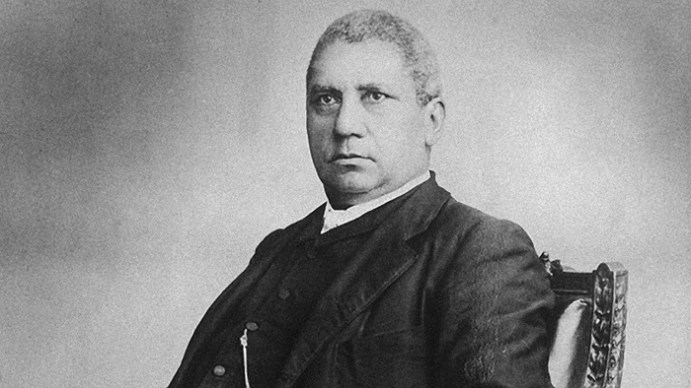
Henry McNeal Turner

Henry McNeal Turner: Let’s Work Within the System

After slaveholding Confederacy lost the Civil War, many Black leaders sought to improve the plight of Black Americans through participation in electoral politics. Henry McNeal Turner was one of the more prominent Black politicians of the era. Turner helped found the Republican Party of Georgia. Turner ran for political office from the city of Macon and was elected to the Georgia Legislature in 1868. His strategy based on electoral politics was immediately challenged. Racism/white supremacy remained a core American value despite the outcome of the war. The Democrats remained in control of state legislature and refused to seat Turner and 26 other newly elected black legislators.
The United States Congress eventually removed civilian governments in the South, and placed the former Confederacy under the rule of the U.S. Army. The army conducted new elections in which the freed slaves could vote, while whites who had held leading positions under the Confederacy were temporarily denied the vote and were not permitted to run for office.

Turner was dismayed after the Democrats regained power in the state and throughout the South by the late 1870s. Racism and white supremacy was ascendant once again in America. Jim Crow was running wild. There was a rapid rise in violence at the polls, which repressed black voting. In 1883, the Supreme Court ruled that the Civil Rights Act of 1875, forbidding racial discrimination in hotels, trains, and other public places, was unconstitutional.

Jim Crow was on its’ way toward establishment of full control of American life.

Turner, an active participant in electoral politics in the late 1860s, by the late nineteenth century had witnessed state legislatures in Georgia and across the South passing Jim Crow laws to disfranchise blacks. It was too much for McNeal to bear. He gave up on America and like Delany 40 years earlier became an emigrationist. Turner founded the International Migration Society and organized two ships with a total of 500 or more emigrants, that traveled to Liberia in 1895 and 1896.

In 1895, Turner looked around and said fuck it… I’m out!

bookertwashington

Booker T. Washington

Booker T. Washington: Let’s Accommodate Our Oppressors

Also, in 1895 Booker T Washington’s delivered his 1895 Atlanta Exposition address. Viewing the exact same social phenomena that Turner encountered Washington devised a very different strategy. In the face of Jim Crows expansion and an explosion of lynchings, Washington put for the a strategy of “accomodationism.” He stressed that Blacks should drop all demands for inclusion, civil rights and educational opportunities to avoid a harsh white backlash. In his formulation, Blacks somehow caused the maltreatment they received at the hands of American racist/white supremacists.

Washington explicitly encouraged Black in the South to accept sacrifices of potential political power, civil rights, and higher education. Washington believed that African Americans should “concentrate all their energies on industrial education, and accumulation of wealth, and the conciliation of the South.” He pushed Blacks to work in the fields. He thought these skills would lay the foundation for the creation of stability that the African-American community required in order to move forward. He believed that in the long term, “blacks would eventually gain full participation in society by showing themselves to be responsible, reliable American citizens”. His approach advocated for an initial step toward equal rights, rather than full equality under the law, gaining economic power to back up black demands for political equality in the future. He believed that such achievements would prove to the deeply prejudiced white America that African Americans were not “‘naturally’ stupid and incompetent”.

The Responses to American Apartheid in the 20th Century

Washington severely underestimated the intensity and depravity of racist/white supremacists controlling the reigns of power in America. The seven decades following his Atlanta speech witnessed the ascendance and dominance of American Apartheid. His accomodationist perspective fell out of favor as the political activism of W.E.B DuBois, the Black Nationalism of Garvey were the dominant ideologies of early 20th century. Toward the middle of the century, the non-violent protest of Dr. Martin L. King, the acerbic race-based critique of Malcolm X and the ‘self-defense’ posture of the Black Panther Party attracted Blacks still intent on addressing ‘the question.”

Shirley Chisholm, Maynard Jackson, Jesse Jackson and Barack Obama were among the more prominent proponents of a resurgent push to affect change through participation in electoral politics. The range of Black Political Thought has been wide ranging and varied to say the least. But, it seemed that “accomodationism” was dead. It faded into the dustbin of history with the death of it’s major proponent in 1915.
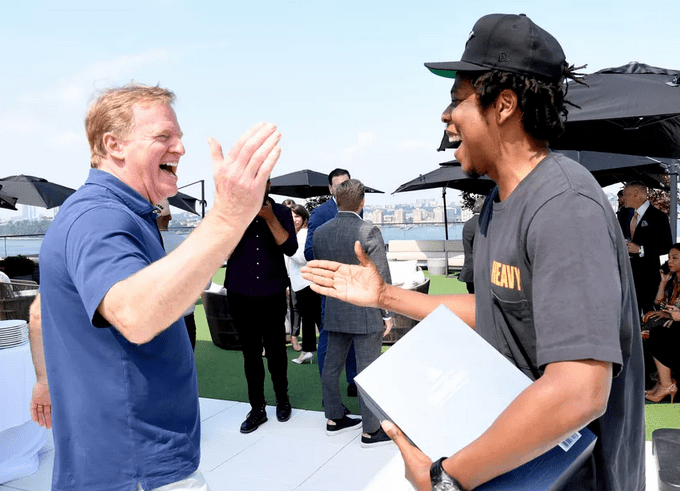
69525268_745406289232520_8788067201505558528_n

NFL Commissioner Roger Goodell and Shawn Carter

Jay Z and the Rise of Neo-Accomodationism

That is until it was resurrected by an unlikely spokesman. Shawn Carter known professionally as Jay-Z is an American rapper, songwriter, producer, entrepreneur, and record executive. He recently teamed up with the National Football League (NFL) to provide entertainment during games and implement ‘social change initiatives.’ The NFL has been in the midst of controversies stemming from the refusal of several prominent athletes, most notably former San Francisco 49ers Quarterback, Colin Kaepernick to stand during the playing of the national anthem.

Kaepernick’s activism was in direct response to what he perceived as racial injustice. ”I am not going to stand up to show pride in a flag for a country that oppresses Black people and people of color. To me, this is bigger than football and it would be selfish on my part to look the other way. There are bodies in the street and people getting paid leave and getting away with murder.” Kaepernick was calling out African-American deaths caused by law enforcement that led to the Black Lives Matters movement.

Knowingly or unknowingly Carter has established a nascent ‘neo-accomodationist’ movement among many of his ardent fans and supporters. Whereas, Kaep focused his protest activities on oppression of Blacks and people of color and police “murder,” Carter has deftly created the intellectual space within the Black community for arguments that identify the “family structure” of unarmed Black young men that end up in caskets as the “CAUSE” of them losing their precious lives. Over century later, Blacks are somehow once again causing the maltreatment they receive at the hands of American racist/white supremacists.

Neo-accommodationism is a thing… SMH!

According to Carter, the cause is NOT police misconduct. The cause in NOT poor police training. The cause is NOT scared cops fearing for their lives. Instead, Black boys end up dead after encountering police because they grow up in a single parent (fatherless) homes. This causes these Black boys to have an “adverse feeling toward authority” which causes them to tell police “fuck you” resulting in interactions that “causes people to lose lives.”

In this neo-accomodationist framing of causality, agency is NOT present in the trained, paid, experienced adult government representative. Because fatherless Black boys commit what are usually considered misdemeanor or summary ‘disorderly conduct’ or ‘disturbing the peace’ violations, the police are instantly placed in the positions of prosecutors, judge, jury and executioner in a split second.

After saying people are killed during police interactions, Carter continues to express his concern for the safety of the police, “we don’t want those in charge of the police areas to be in danger either. We want to be very clear. If someone commits a crime they should go to jail.”

Very similiar to Washington 125 years ago, Carter argues that Blacks need to cease protesting, agitating and calling attention of what Kaepernick identifies as police “murder.” Blacks need to work on themselves. By improving themselves, Blacks will somehow demonstrate to the racist/white supremacist police shooting unarmed Black boys that they deserve to live.

At the dawn of the 20th century, Booker T. Washington associated with the richest and most powerful white businessmen and politicians of the era. His contacts included such diverse and well-known entrepreneurs and philanthropists as Andrew Carnegie, William Howard Taft, John D. Rockefeller, George Eastman and Julius Rosenwald. Carter has likewise entered into a formal arrangement with 32 white billionaire owners of NFL teams. He counts Robert Kraft, Daniel Snyder, Jerry Jones and the rest of the NFL Billionaire Boys Club among his colleagues. Washington was seen as a spokesperson for Blacks and became a conduit for funding educational programs. Carter has emerged as a counter for Kaepernick and the Black Live Matters movement and a conduit for funding for neo-accommodationist programs.

When directly asked if he would kneel or stand, Jay-Z said: “I think we’ve moved past kneeling and I think it’s time to go into actionable items.”

Among the very first ‘actionable items’ on the agenda was the donation of hundreds of thousands of dollars to The Crushers Club which has cut the hair of black children “for a better life” and tweeted “All Lives Matter.”

More than a century ago, Booker T. Washington expressed a deeply held belief that “blacks would eventually gain full participation in society by showing themselves to be responsible, reliable American citizens.” Washington, the ‘accomodationist,’ believed that such achievements would prove to the deeply prejudiced white America that African Americans were not “‘naturally’ stupid and incompetent”.

The ‘neo-accomodationist’ position staked out by Carter and his acolytes holds that cleanly shaved Black boys, with closely cropped coifs and fathers in the home will prove to deeply racist white police officers that Black men are not worthy of apprehension, arrest, trial, guilty verdict and execution in the blinking of an eye.

It’s not clear that the throngs of Black male millennials co-signing Carter’s recent pronouncements and actionable items understand just how much his behavior eerily harkens back to the days of Washington’s discredited ‘accomodationism.’

Someone needs to sneak DuBois’ critiques of Washington into rap lyrics or an updated version of the fortnite video game. As long as it remains solely in books I fear it’s inaccessible to many Black male millennials.

“It’s Da Roc!”
 

NCAA Basketball Academy Camps – Instructors and Rosters

cba_w_fc

Regional Sites

EAST REGIONAL
University of Connecticut
Storrs, Connecticut
Instructors:
Pete Gillen, former head coach at Virginia, Providence and Xavier
Mitch Buonaguro, former head coach at Siena and Fairfield
SOUTH REGIONAL
University of Houston
Houston, Texas
Instructors:
Ben Braun, former head coach at Rice, Cal, and Eastern Michigan
Matt Howard, player development instructor
MIDWEST REGIONAL
University of Illinois at Urbana-Champaign
Champaign, Illinois
Instructors:
Melvin Watkins, former head coach at Missouri, Texas A&M and UNC-Charlotte
Jerry Dunn, former head coach at Tuskegee and Penn State; former assistant coach at Michigan and West Virginia
WEST REGIONAL
Grand Canyon University
Phoenix, Arizona
Instructors:
John Moore, current head coach at Westmont College
Steve Spencer, current head coach at Orange Coast College; former assistant coach at UCLA

PYB Awards Zane Major Scholarships

By Eric Dixon
July 12, 2019
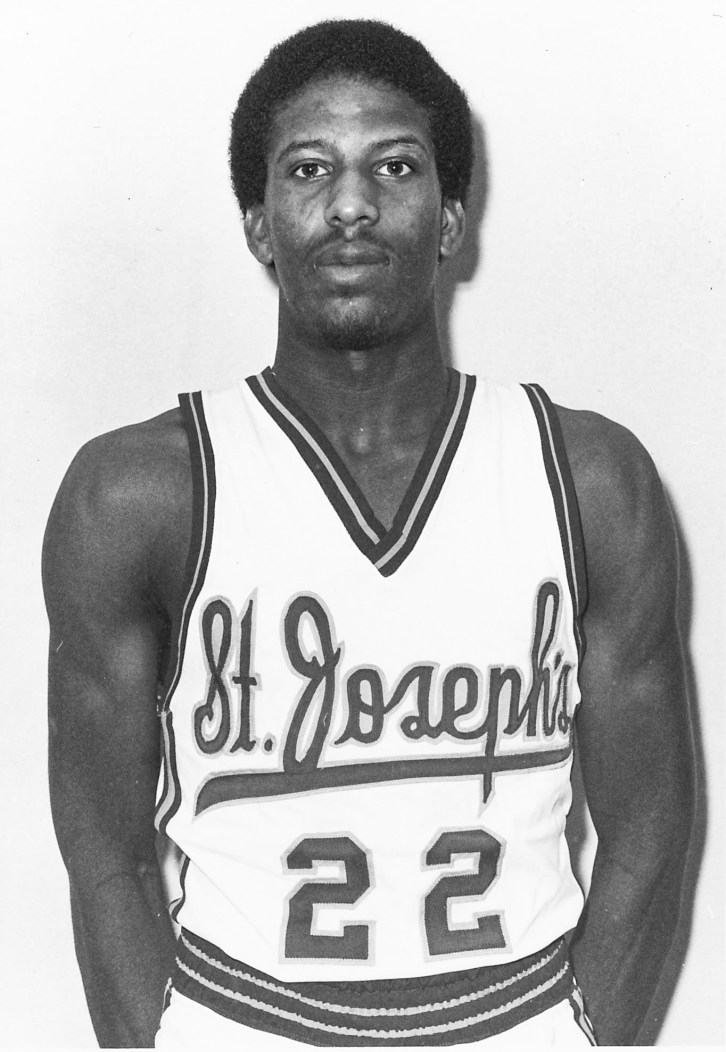
Zane C. Major, Sr., a former St. Joe’s great and pillar of the
community, showed many what could be done when passion meets purpose.
His love of basketball and photography along with a profound
understanding of the importance of  “paying it forward” and leading
the youth came together to help Major have a positive impact on the
youth in two needy communities, in Philadelphia and Reading.
Zane_Major_Portrait

Zane Major, Saint Joseph’s University

His legacy of nurturing and guiding young people will be honored for
years to come through the Zane C. Major, Sr. Memorial Scholarship Fund
presented by the Philadelphia Youth Basketball organization. The
scholarships, four college scholarships and 2 paid high school
internships, were introduced to an audience of about 3 dozen
youngsters and staff attending the PYB basketball camp at St. Joseph’s
University’s Hagan Arena.
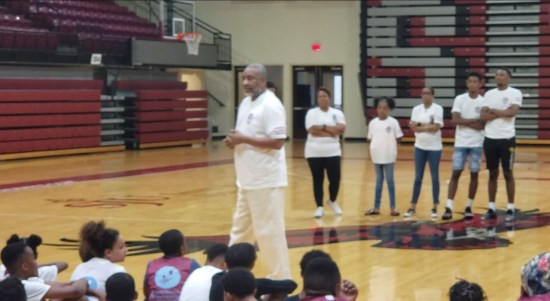
Cindy Major, sister of the honoree and his “first model”, shared her
perspective on Major’s early years behind a camera and on the court.
“He always had his camera ready to take a photo of family and
flowers.” His basketball games at Roman Catholic High School and St.
Joe’s were family events that were rarely missed.
Resized_20190708_131005

Cindy Major

She said his involvement with mentoring youngsters began with his days
running the Sonny Hill basketball clinic. This involvement would span
decades and impact many children and young adults. He wanted to help
them find their passion whether it was on the court or behind the
lens. Those in attendance appreciated the effect of his contribution
on Monday.
One such attendee was Laila, a bright 11 year old from Reading, and
her grandmother, Christine Tenney of Delaware. “I love the sport,”
gushed Tenney, a “dominant player” during her time at Reading High
School in the late 1970’s, as she explained why she was excited about
transporting her grand-daughter the hour or so drive from her former
hometown to the Hagan this week. “(Players) learn how to collaborate,
and the value of teamwork and respect” while playing basketball, added
the former coach.
These are ideals Major sought to instill in his teammates as a player
at St. Joes from 1975-79. Although he as a double figure scorer and
would end his illustrious career as a Hawk as a member of the
program’s 1000 point club, it was a his leadership, character and
passion that are the cornerstones of his legacy.
Resized_Screenshot_20190715-060704_Video_Player

Mo Howard

Mo Howard, a long time friend of Major also spoke encouraging the kids
to appreciate the memories they make as they play and grow in the
game. “Those memories will come together and become experiences and it
is those experiences that will help shape who you become,” he told the
young players seated on the Hagan Arena main floor.
66294480_10220637104065327_1436166183937114112_n

Crystal Golmore-Harris and PYB’s Zane Major Scholars

Crystal Gilmore-Harris, Major’s long time girlfriend and “soul mate”
also addressed the campers. She explained that he was “passionate
about everything he did.” According to Gilmore-Harris, he was only
able to help the youth in Reading for 3 years before his untimely
passing this past January, but in that short time he was able to help
many of the young people in the community.

Beyond Basketball: The Social Context of Lewis Lloyd’s Career

Sports are much more than just games and matches… This especially true of the relationship between basketball and the city of Philadelphia. Youth, high school, collegiate and professional basketball are social phenomena in the City of Brotherly Love. For thousands of people, they are an important part of the individual, external, social constructions that influence our lives and development. Moreover, this relationship is constantly evolving as we age. In short, basketball in Philly has a meaning that goes far beyond box scores, standings and championships.

Basketball is intricately related to the social and political contexts in which many Philadelphians, especially Black males, live. Basketball provides stories and images that many use to explain and evaluate these contexts, the events in our lives, and our connections to the world around us.

23847532_1735190953166740_5385621134101086758_o

Mr. and Mrs. Tee Parham

For example, the playing careers of John Chaney, Tee Parham and the late Claude Gross inform those willing to probe rigidly enforced Aparteheid-like racism/white supremacy and segregation in Philadelphia throughout the late 1940’s, 1950’s and early 1960’s. One reads/hears about their magnificent exploits in cramped gyms across the city and wonders how they would have actually fared if given an opportunity to compete in what we now refer to as the Big 5. Alas, it was not to be… For one reason and one reason alone they were denied access to the Palestra playing floor. They had melanin in their skin and, thus, it was of a darker hue. That fact forbade their participation. In this way, basketball can help explain and evaluate the proliferation of racism/white supremacy in Philadelphia and across the entire United States of America during that period.

By the mid-late 1970s and the 1980’s two issues were vying for center stage in most policy debates surrounding urban centers in America. One, adequately educating Black American public school students and two, the decimation of millions of Black families through the scourge of drug addiction.

Just as an analysis of the playing careers of Chaney, Parham and Gross informs and explains the racism/white supremacy of their era… An analysis of the illustrious playing career of the recently deceased Lewis Lloyd forces us to confront the monumental shortcomings of urban public education and address the ongoing problem of chemical dependence within the Black community.

15676543_1384109471608225_2507538893734900280_o

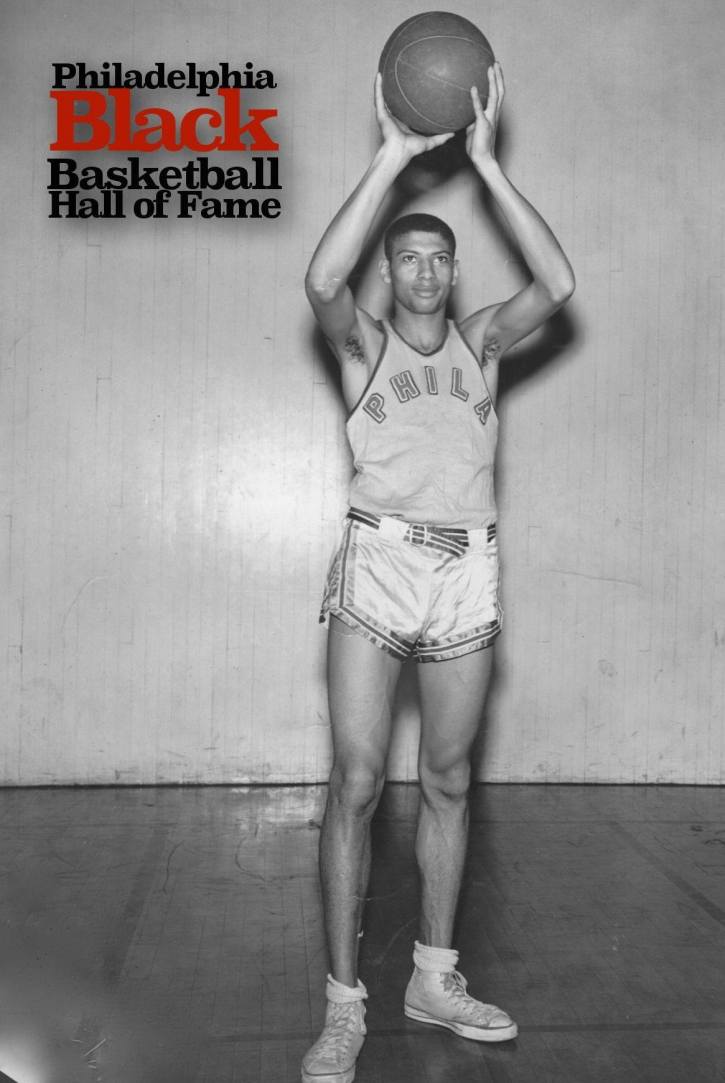
Claude Gross, Philadelphia!

Lloyd came to the fore during one of the most competitive eras in the history of scholastic basketball in Philadelphia. His career overlapped that of one of the greatest schoolboy basketball players of the past half century, West Philadelphia’s Gene Banks. Banks was the Golden Boy… He was the great player that also did everything the right way. Banks crosses all of his t’s and dotted all of his i’s. He named HS All-American three times. He was named to the very first McDonald’s All-American game and was the MVP of the contest. Banks also played in the prestigious Dapper Dan Classic and won MVP honors in that game. He was the consensus number one High School player in America and, fittingly, accepted a scholarship to Duke University where he was named ACC Rookie of the Year and ultimately became an All-ACC and All-American collegiate player.

Everybody knew exactly who Gene Banks was in 1977… Even a skinny 7th grade student at Thomas Studevan Middle School in Darby Township. Basketball was a religion in Darby Township and Banks was a prodigy. In 1977, Darby Township put together an undefeated regular season only to lose to eventual state champion Elk Lake in the Final Four of the PIAA playoffs. Alton McCollough (6’8 Center) was a junior and he teamed with Billy Johnson (6’7” PF) and Mike Gale (6’5” SF) to provide DTHS with a frontline that trounced every opponent Delaware County had to offer. These were my basketball heroes. I saw them everyday, I lived down the street or around the corner from them. They were accessible to me. Banks was on a totally different level. Even at 12, I was voracious consumer of sports journalism. I read the Delaware County Daily Times and the Philadelphia Daily News sports sections every single day.

As a result, I was intimately aware of the exploits of Gene Banks and the legendary Speedboys…

Lewis Lloyd’s exploits, however, escaped me as child. I pretty sure I heard the name, but it most certainly wasn’t revered like that of Gene Banks.

Unlike Banks, who easily acclimated himself to the rigorous academic environment at highly selective Duke University in the Fall of 1977, Lloyd traveled a far more treacherous academic path. His career almost ended before it even began because of academics.

Late in the public league playoffs of 1977, following yet another majestic performance where Lloyd dropped 37 points (14-19 fgs) and grabbed 17 rebounds in a win over Southern, Daily News sportswriter Ted Silary wrote:

“Despite all his talent, Lloyd’s climb up the basketball ladder of success will be tough at best. Though a senior eligibility-wise he still carries a 10th grade course load.”

Wait… What?

The great “Black Magic” was playing basketball in the Public League as a senior, he was in his 4th year of high school and he was a sophomore academically. Yup… This is problem that has persisted for far too long and impacted the life chances of far too many talented young Black men. Fast forward 31 years, Jared Denard was the Associated Press, Class A Pennsylvania Player of the year in 2008. He was first team All-State, All-City and All-Public. Like Lloyd, three decades earlier he also a sophomore academically at the conclusion of his scholastic playing career.

The ability of guys like Lewis Lloyd and Jared Denard persevere and flourish despite the odds stacked against them serves as a guidepost for younger player experiencing academic struggles. Their struggle and subsequent academic success must be celebrated. Too often we seek to hide the academic pain and suffering while only celebrating the athletic accomplishment.

Fuck that! Lewis Lloyd had to do it from the muscle… He had to dig himself out of the dirt and I truly admire him for that.

While Gene Banks played in the Final Four as a freshman, Lloyd toiled away at New Mexico Military Academy. While Gene Banks captured bright lights in the finest basketball conference in America, Lloyd was playing in little, cramped and suffocating JUCO gyms for 2 years.

But, to his credit, he never lost focus and worked diligently on both his game and his academics. By 1979, Lloyd was in a position to accept a scholarship to play for Drake University in the Missouri Valley Conference.

They had no idea what was about to come…

Clearly, Lloyd had some unresolved issues on the court. He had a BOULDER on his shoulder! As a result, he punished opponents. He was relentless on both ends of the court as he led the nation in scoring and rebounding. He quickly assumed the throne vacated by Larry Bird as unquestioned best player in the MVC. Lloyd was the man… He was a two-time All-American and two-time MVC Player of the Year. His number 30 will never be worn by another Drake University player.

Back in Darby Township… As a high school sophomore in 1981, I read about Lloyd. But this was before ESPN, before social media, before youtube. I knew he was from Philly. I knew he was from Overbrook. I knew he was “Black Magic” but I had never really watched him play. I just knew he was in “the league.”

Lloyd would spend two nondescript seasons in Golden State. During his rookie year, he appeared in just 16 games and averaged a mere 5.9 mins in those appearances. He managed to squeeze out 3.6 ppg in these limited minutes. His second season saw Lloyd emerge as key member of the rotation. He played in a total of 73 games, with 24 starts, and his minutes tripled to 18.5. His production also jumped as he averaged 9.4 ppg.

Then came the breakthrough… At the age of 24, Black Magic was traded to the Houston Rockets…

Awwwww Shit!

For the first time he was entrenched as an NBA starter. Lloyd appeared in all 82 games for the Rockets that year with 82 starts. He logged 31.4 mpg and put up 17.8 ppg while shooting 52% from the field.

LLOYD

L-R Kevin McHale, Larry Bird and Lewis Lloyd

Ohhhhh… So that’s Lew Lloyd… It all began to make sense to the kid from Darby Township. By 1986, Lloyd was one of the leaders of a strong Rockets squad that knocked off the mighty Lakers to reach the NBA finals where the faced the Boston Celtics.

The playoffs that year were a total immersion into the game of Black Magic. He would dunk on Kareem, guard Magic, post up Byron Scott all while looking like he was going about 3/4 speed! How did he do it? It looked so effortless…

Once they knocked off the Lakers, you had to root HARD for Lloyd and the Rockets. But Kevin McHale and Larry Bird were some Bad Muthafuckin white boys… McHale averaged 25.8 ppg and 8.5 rpg while Bird (Finals MVP) damn near averaged a triple double 24 ppg, 9.7 rpg and 9.5 apg. They were just too much for the Rockets.

Fuck the Celtics!

But at 21, I was able to fully appreciate the subtle, smooth greatness of Lewis Lloyd on the court. I found myself trying to will in his floaters over the outstretched arms of Robert Parish. I wanted him to BUST Danny Ainge’s ass! I tried to mentally close the rim when Bird and Ainge launched those picture perfect jumpers… To no avail… Swiiiiiish! Damn near every time… FUCK!

Pass the blunt… Lew will be back! So I thought…

Later that year, Lloyd and teammate Mitchell Wiggins tested positive for cocaine and were suspended from the NBA for 2 1/2 seasons. Like with his academic difficulties, many Lloyd fans feel a need to try to obscure this aspect of Lloyd’s career. It’s an understandable urge. But doing so prevents us from placing his career in it’s proper historical context. Lloyd, Wiggins and others like Michael Ray Richardson were caught up a wave of cocaine that flooded the Black community.

By 1986, crack cocaine and all the mayhem that came with it were ravaging Black communities all across America. Cities like Philadelphia and Houston were hit especially hard. In Philly, the Junior Black Mafia (JBM) was aggressively seizing control of cocaine distribution throughout the city utilizing a classic American strategy of brute force. “Get down or lay down” was the last thing any ”independent” drug dealer wanted to hear in the mid 1980s. You either had new business partners or you made reservations for a dirt nap.

As a college sophomore, trying to explore city nightlife for the first time, I saw grown men just hand over the keys to their EXPENSIVE cars out of fear. It was not unusual to see a guy one evening and hear about his death the next day. Guns, crack, violence, prostitution and dysfunction came together to form stew of misery that flooded Black communities, destroyed families and ended the playing careers of some fantastic NBA players.

Cocaine abuse, like opioid abuse today, represented a health crisis.

But Lloyd, Wiggins and tens of thousands of other Blacks with cocaine addictions were not treated like opioid “patients” are today. The focus was not on treatment as it is the predominantly white opioid addict population of today. They were not considered ill men in need of medical attention, they were “addicts,” if not “criminals” that needed to be isolated and ostracized.

While suspended, Black Magic played for the Cedar Rapid Silver Bullets in the CBA where he averaged 18.9 ppg and 6.6 rpg during the 1988-89 season.

Lloyd was finally reinstated in September 1989. He would never regain the form he had shown as a starter for the Rockets. Houston released him and he played two games with his hometown 76ers before retiring from professional basketball.

Every once in a while I would venture into the city to catch a summer league game and there he was… Still going strong… Giving the youngins hell… Same floaters… Same eurosteps… A little slower but still extremely effective…

Over the last couple of years, I actually got to know Lloyd a little bit… About five years ago, while watching an AAU tournament at Philly U, I was seated right next to Lloyd. We chatted and he told me his son was playing. He was always extremely gracious. If you didn’t know he was a college All-American and high profile NBA player, there was nothing about the way he carried himself that would tip you off. He was just Lew Lloyd from Philly.

Indeed, that day a good friend of mine who happened to be an NBA agent at the time asked, “who is that”? I became irate, “you don’t know who that is and you’re an NBA agent from Philly… Shame on you!” But he didn’t know…

Indeed, far too many didn’t know.

In attempt to pay proper homage to his illustrious playing career, the Philadelphia Black Basketball Hall of Fame inducted Lloyd in his first year of eligibility. The committee was excited and eager to embrace Lloyd… But he was away seeking treatment when the induction ceremony was held. I got to speak to him over the phone and he was proud and anxious to receive his award recognizing his enshrinement.

Since he returned to Philly, every once in a while we would cross paths and he would remind me that I still had HIS award in my possession.

On June 8, 2019, I took a picture of Lloyd’s Hall of Fame Award and posted it on his facebook page. I wrote “I have something that belongs to you in the caption.”

On July 5, 2019, Lloyd passed away.

26172175_945871068912609_7560894378438823119_o

L-R Lloyd, Makhai Hartley, Mo Howard and Gene Banks

I look forward to presenting the award to his family. Like Lew, his brother Daryl (Drake University) and his nephew Sean Lloyd (Southern Illinois) had much success competing in the Missouri Valley Conference. Like Lew, they are both gentlemen of the highest order.

To those that want to hide the obstacles Lloyd had to overcome and ignore the demons he battled to the end, I say you just can’t skim through the music. You have to listen to the whole album.

Despite the challenges he faced… Black Magic played some sweet, sweet music. One of the GREATEST to ever lace ’em up in the history of Philadelphia… Rest in Peace.