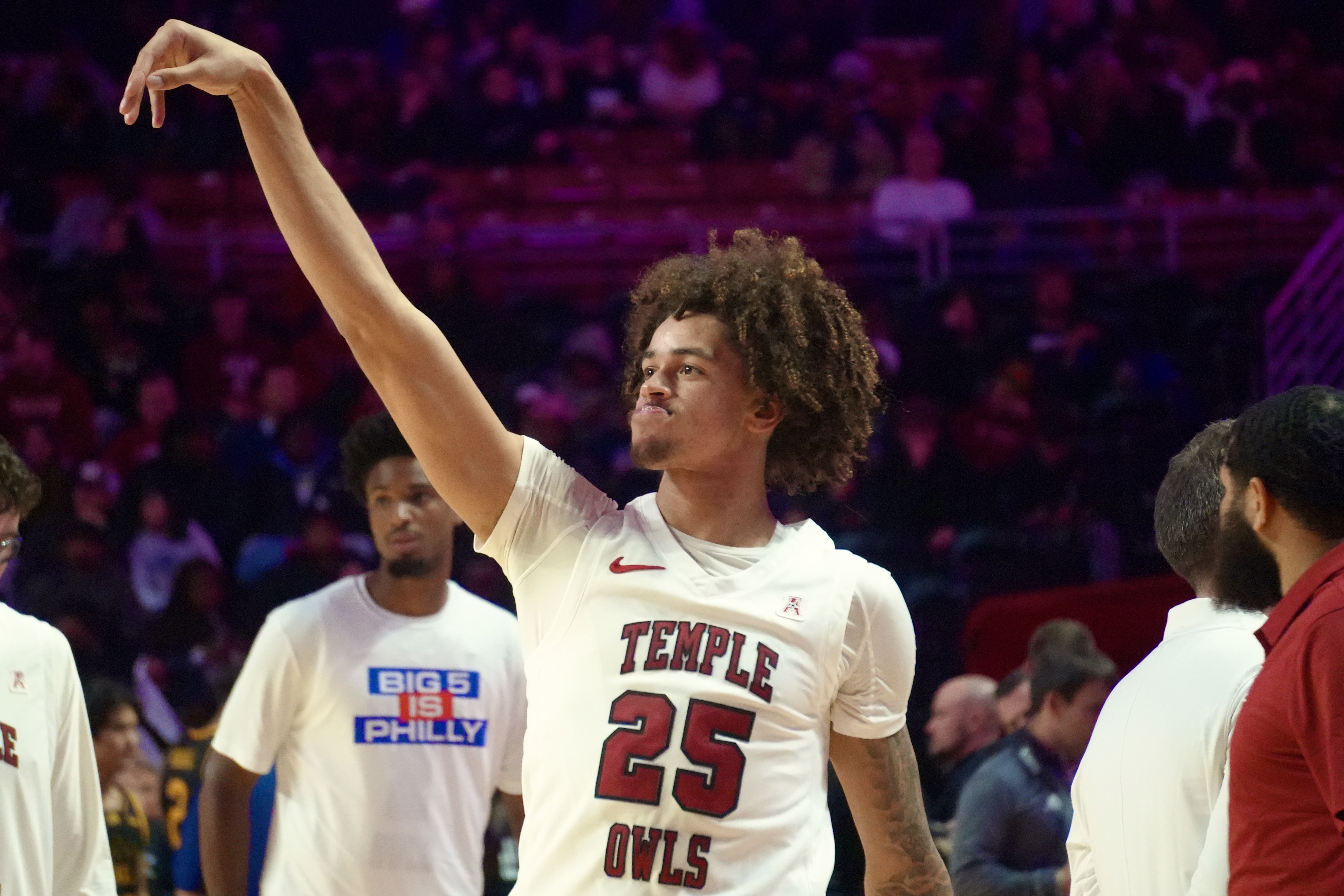
Player: Aiden Tobiason | Position: Shooting Guard | Height/Weight: 6’5″
Current Program: Temple Owls (American Athletic Conference) | Class: Sophomore
High School: St. Elizabeth High School, Delaware
Recruiting Profile: 2-star prospect, Class of 2024 (247Sports)
Current Season (2025-26): 15.0 PPG, 3.2 RPG, 2.3 APG, 1.3 SPG, 50% FG, 34% 3PT, 81% FT
Draft Projection: Undrafted. Path to a professional career is via the G-League or international leagues; a successful Power 5 transfer season could make him a potential late second-round flier in 2027.
I. Executive Summary & Portfolio Assessment
Aiden Tobiason’s current situation at Temple represents one of the most compelling and high-risk portfolio opportunities in the modern transfer market. As a former 2-star recruit, he has dramatically over-delivered on his initial valuation, transforming from a potential redshirt into an All-Freshman Team honoree and now the leading scorer for a Power 6 program. His portfolio is currently weighted almost entirely in the “Speculative Appreciation” category: his value is tied not to NIL guarantees but to the immense potential growth that another year of development and exposure could yield. The central question is whether to cash in on that appreciation now via a high-major transfer or invest further at Temple to refine his product. Based on his rapid trajectory and the structural realities of roster construction, a strategic transfer to a Power 5 program following this season is not only justified but represents the optimal path to maximizing his professional career value, earning this strategy a Strategic Grade of A-.
II. Portfolio Analysis: The Temple Investment & The Power 5 Decision
Tobiason’s initial choice to attend Temple over low/mid-major offers was a classic risk-reward play, betting on development over immediate opportunity. That bet has paid off spectacularly, creating a new, more complex decision matrix.
The Appreciated “Temple Assets”:
- Developmental Proof of Concept: Tobiason sought a challenge at Temple, knowing he might not play immediately. He has validated the program’s development infrastructure, improving from a deep reserve to a conference standout. This proven capacity for growth is his single most valuable asset.
- High-Major Production: He is no longer a theoretical prospect. Averaging 19.0 points on 50% shooting over a recent multi-game sample in the American Athletic Conference provides tangible, high-level evidence of his scoring ability.
- Winning Mentality & Intangibles: Coaches consistently praise his work ethic, team-first attitude, and defensive commitment—traits that began in his freshman year. This “gym rat” mentality is a currency valued by every program.
The Power 5 Transfer Calculus:
A move must be evaluated as a rebalancing of his portfolio from pure speculation toward securing guaranteed, high-return assets.
| Portfolio Asset Class | Current Status at Temple | Potential Upside at Target Power 5 Program |
| Immediate Returns | Established Star Role. Undisputed go-to option, averaging 15.0 PPG with high usage. | Promised Contributing Role. Likely a 6th man or spot starter on a tournament team, with less volume but higher efficiency opportunities. |
| Speculative: Skill Development | Good, but Plateau Risk. Coach Fisher’s system has unlocked him, but Temple’s roster is built for the present. | Elite Infrastructure. Access to top-tier facilities, sports science, and competition in practice could refine his handle, defense, and consistency. |
| Speculative: Exposure & Pathway | Limited. The AAC provides a stage, but not the nightly NBA scout attendance of the Big Ten, SEC, or Big 12. | Maximized. Every game is a showcase. Deep NCAA Tournament runs are a more probable goal, directly impacting draft stock. |
| Speculative: Brand & NIL | Regional. Strong in Philadelphia but limited by conference and program reach. | National. A successful season at a blue blood can create lasting marketability and significant, though not guaranteed, NIL opportunities. |
Structural Constraints & Risk Mitigation:
The primary risk is transferring into another logjam. This requires extreme due diligence on the target program’s roster timeline, coaching philosophy, and incumbent wing depth. The goal is not just to join a Power 5 team, but to identify one where his specific skill set (shooting, defensive versatility, high IQ) fills an immediate need for the 2026-27 season. His experience navigating a crowded Temple roster as a freshman has uniquely prepared him to ask the right questions and assess fit under the “incomplete information” pressure of the portal window.
III. On-Court Performance & Skill Assessment
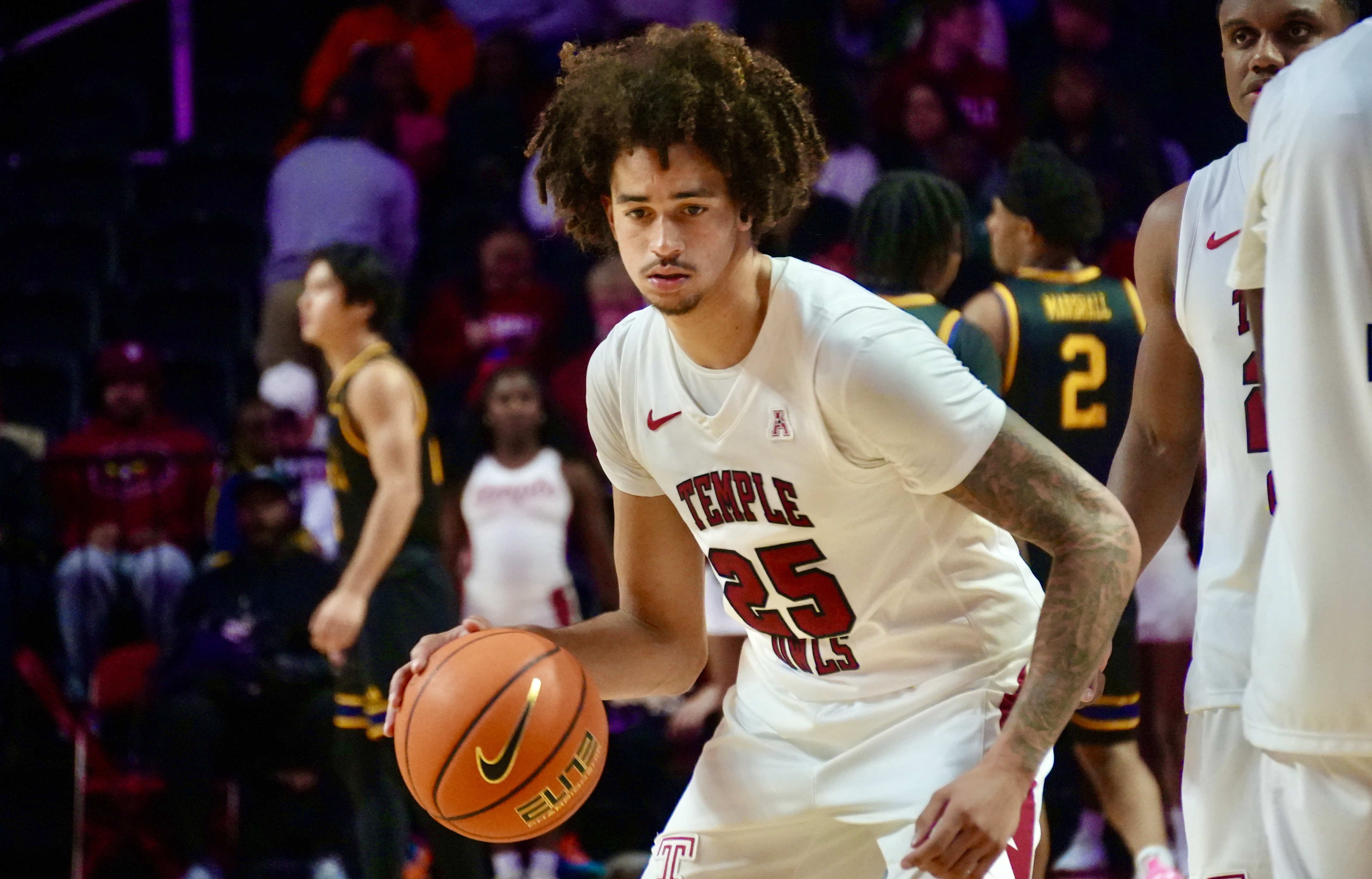
Tobiason’s sophomore leap is a case study in efficient, multi-level scoring and increased responsibility.
Quantitative Leap & Efficiency Profile:
| Metric | Freshman Season (2024-25) | Sophomore Season (2025-26) | Analysis |
| Role | Redshirt candidate, later starter | Team leader & primary scorer | Embodies the “earned, not given” ethos. Trust is absolute. |
| Minutes Per Game | 20.5 | 34.8 (as of Jan 31) | Handles a feature player’s workload with stamina. |
| Points Per Game | 4.8 | 15.0 | Scoring output has tripled, confirming alpha scoring instincts. |
| Field Goal % | 45.9 | 50.0% | Elite efficiency for a high-volume guard. |
| 3-Point % | 41.2 | 34.0% (on 4.7 attempts/game) | Respectable volume shooter; room for consistency growth. |
| Free Throw % | 76.9 | 81.2% | Excellent; indicates pure shooting stroke and composure. |
| Assists/Turnovers | 1.0 | 2.3 APG / 1.6 TOV | Solid, low-mistake playmaker; not a primary initiator. |
Qualitative Skill Breakdown:
| Trait | Grade | Analysis & Evidence |
| Shooting & Scoring | A- | The cornerstone of his value. A smooth, quick release. Excels in catch-and-shoot (41%) and shows capable pull-up game (40% off dribble). Efficient from all three levels, with a knack for timely scoring (e.g., 23 pts vs FAU, 22 pts vs USF). |
| Athleticism & Finishing | B+ | A “strong athlete” who finishes through contact. Not just a shooter; can attack closeouts and finish above the rim, as seen in highlight plays. |
| On-Ball Defense | B | Takes pride on this end. Uses length and IQ to be disruptive (1.3 SPG). Can guard multiple positions but can be challenged by elite, shifty ball-handlers. |
| Ball-Handling & Playmaking | B- | Capable but not elite. Can create for himself in space and makes simple, smart passes. Tightening his handle against intense pressure will be the next step. |
| Competitiveness & IQ | A | His defining intangible. A proven worker who embraces challenge. High communicator, understands team defense, and makes “energy-shifting plays”. |

IV. Professional Projection & Recommended Pathway
Tobiason’s professional archetype is a 3-and-D wing with secondary creation ability. His current trajectory mirrors a less-heralded version of players like Max Strus or Dorian Finney-Smith—players who leveraged college success into critical NBA roles.
Actionable Recommendations:
- Complete the 2025-26 Season: Continue building his case as the AAC’s most improved player. Focus on leading Temple (currently 12-10) to a strong finish and deep conference tournament run.
- Enter the Transfer Portal (Post-Season): This is the strategic imperative. His value will never be higher as a proven, multi-year college scorer with three years of eligibility remaining.
- Target Specific Power 5 Fits: Prioritize programs that:
- Are losing senior wing scorers.
- Run pro-style, spacing-oriented offenses.
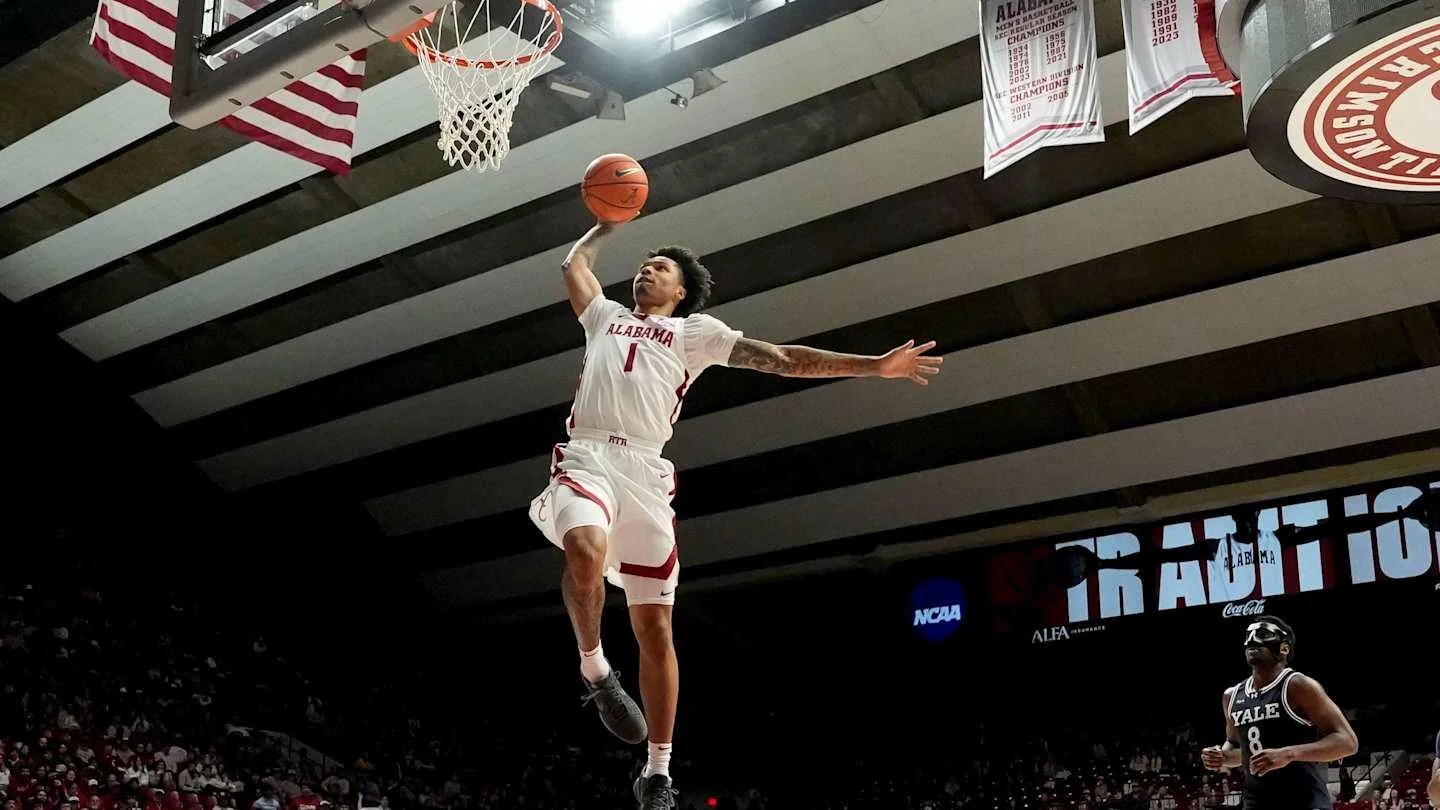
- Have a coach with a proven history of developing transfers (e.g., Nate Oats at Alabama, Tommy Lloyd at Arizona).
- Offer a clear, competitive role as a connector and shooter within a more talented ecosystem.
- Post-Transfer Development Focus: At his new program, dedicate the offseason to adding 5-10 lbs of functional strength, increasing his three-point volume and consistency, and refining pick-and-roll decision-making.
Scout’s Bottom Line: Aiden Tobiason is a classic “diamond in the rough” whose polish now demands a brighter light. Staying at Temple for a junior season offers comfort and continued stardom, but it also risks capping his exposure and development ceiling. The modern era rewards bold, calculated moves. By transferring to a tailored Power 5 fit, Tobiason would convert his hard-earned “speculative appreciation” at Temple into the tangible assets of elite competition, unparalleled exposure, and a direct pathway to the professional drafts. His story—from redshirt candidate to Power 5 transfer target—is the new blueprint for player empowerment, and the next chapter should be written on the biggest stage possible.




















 The Black Cager