Bloodlines Matter: At Saint Joseph’s, the Next Athletic Director Must Be One of Their Own

PHILADELPHIA, PA — The red brick walls of Hagan Arena have borne witness to a century of basketball, but they have never seen a moment quite like this. The Saint Joseph’s University athletic department sits at a crossroads that feels less like a fork in the road and more like a continental divide. The college basketball landscape has been fundamentally rearranged by the twin tectonic shifts of Name, Image, and Likeness (NIL) compensation and the transfer portal. As the university, in conjunction with a search firm, conducts a “national search” for a new athletic director to steer the Hawks through these turbulent times, the administration faces a decision that will define the program for a generation. The temptation to cast a wide net, to seek a savior from a powerhouse athletic department in the Big Ten, Big 12, ACC or the SEC, is understandable. But to do so would be a catastrophic misreading of the institution’s soul and the unique ecosystem in which it thrives.
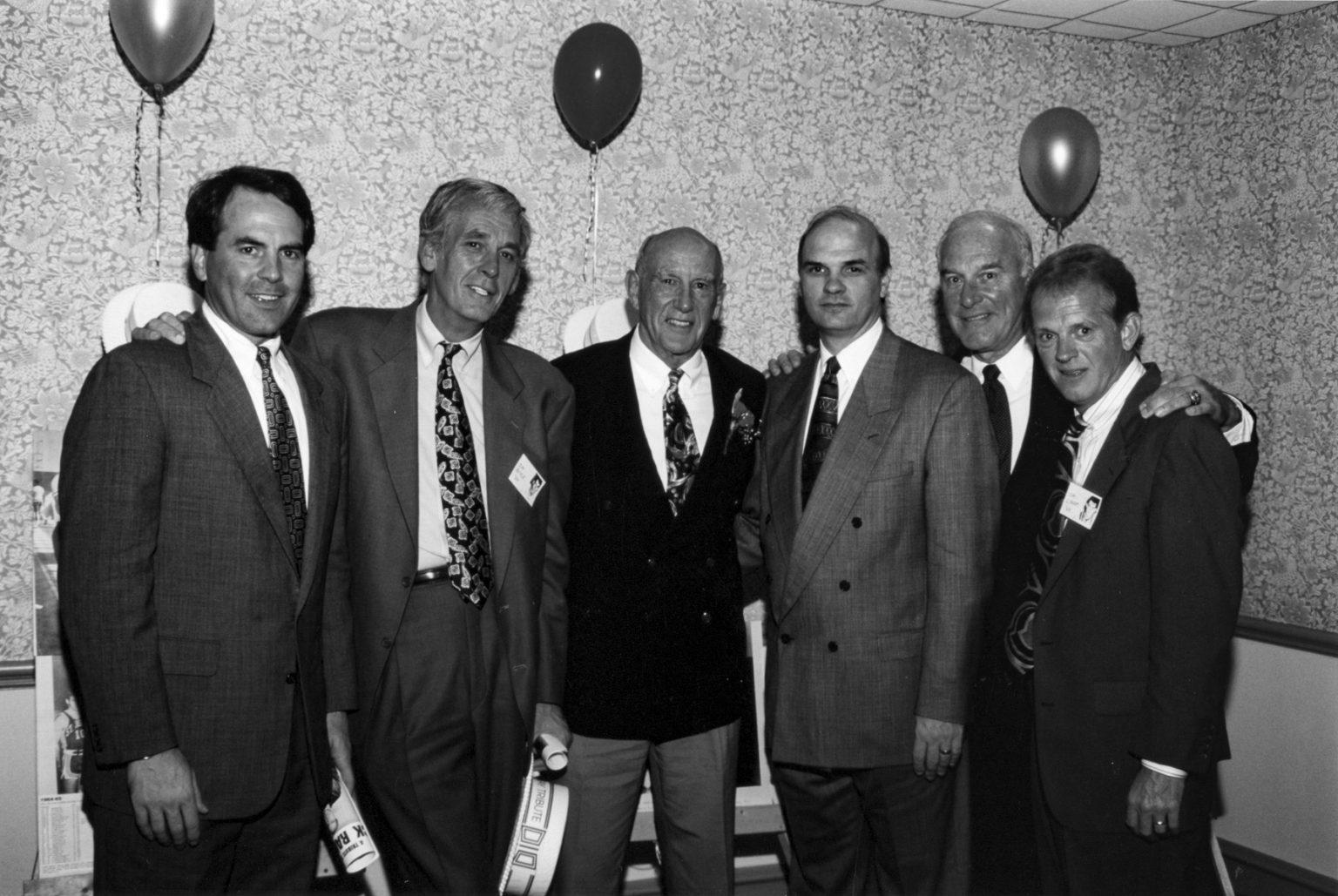
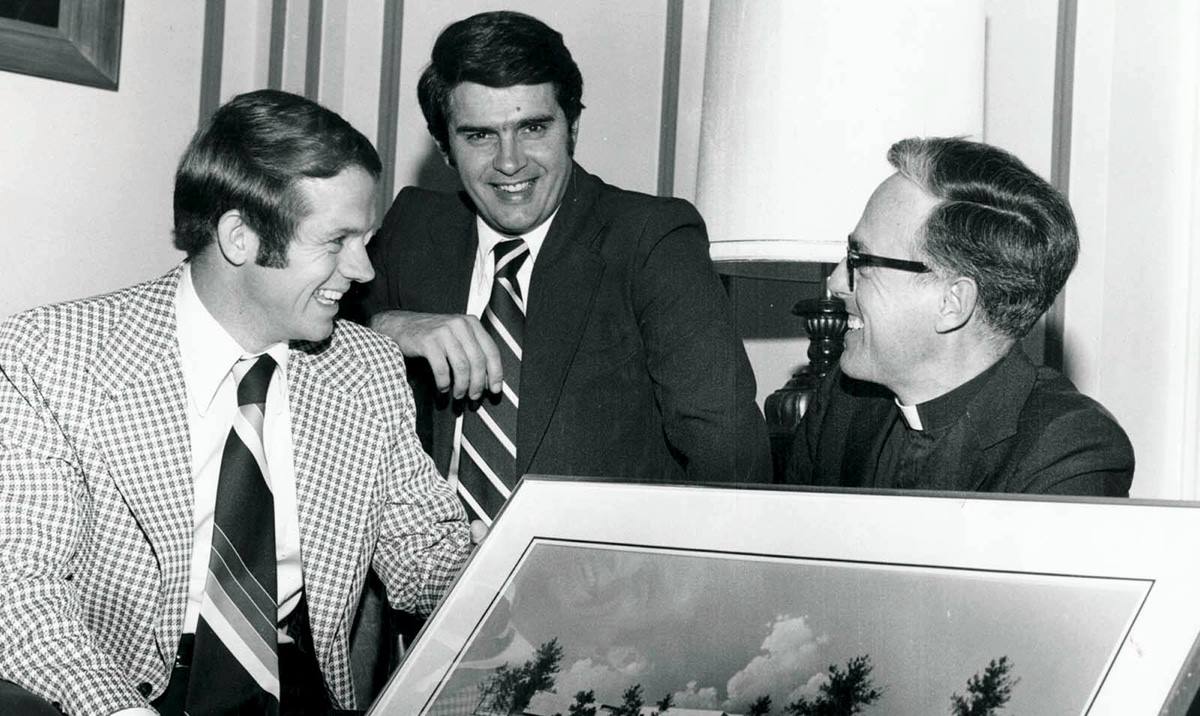
John Griffin, Jim Boyle, Jack Ramsay, Phil Martelli, Jack McKinney and Jim Lynam

The only viable path forward is not to abandon the past but to embrace it with a full-throated, modernized fervor. Saint Joseph’s must identify an alum, a Hawk, who has spent their career navigating the new NCAA terrain. The primary prerequisite for the next athletic director must be an intimate familiarity with the Hawk program—a visceral, cellular understanding of the culture and tradition that, just two decades ago, placed this small Jesuit school at 54th and City Avenue among the pantheon of college basketball royalty.

The Legacy Forged in Crimson and Gray

To understand what is at stake, one must first appreciate the magnitude of what has been built. When Street & Smith’s magazine ranked the greatest college basketball programs of all time in 2005, Saint Joseph’s University was slotted at No. 43. Let that sink in. Out of more than 330 Division I programs at the time, a university with an undergraduate enrollment smaller than many high schools in the Philadelphia suburbs was ranked among the top 13% in the nation. This was no fluke. It was the result of a half-century of sustained excellence, a legacy etched by players who wore the uniform and then dedicated their lives to the program.

The résumé is undeniable: 21 NCAA Tournament appearances, 16 NIT berths, 77 appearances in the national rankings—51 of them in the top 10. The Hawks have sent 29 players to the NBA draft. This is the bedrock upon which the program’s reputation is built.
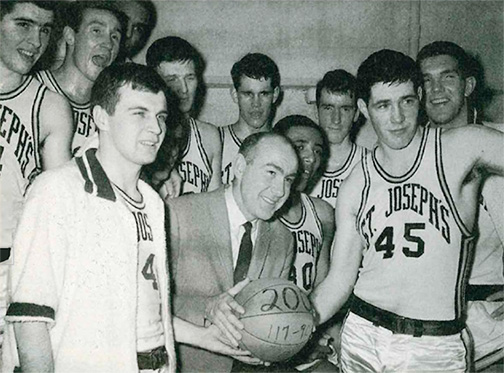
Jack Ramsay and the Hawks

The Coaching Tree with Hawk Roots

Crucially, the overwhelming majority of this success was orchestrated not by hired guns from afar, but by Hawk alums. These were men who had gone to battle on the court wearing crimson and gray, for whom the sting of a Big 5 loss and the euphoria of a hard fought Palestra victory were imprinted on their DNA.

The lineage begins with the legendary Hall of Famer, Dr. Jack Ramsay. From 1955 to 1966, “Dr. Jack” compiled a staggering 234–72 record, leading the Hawks to 11 NCAA Tournaments and the 1961 Final Four. When he departed for the NBA, the torch was passed not to an outsider, but to another Hawk, Jack McKinney. McKinney sustained the program’s altitude, guiding the Hawks to four more NCAA Tournaments between 1969 and 1974. The tradition continued through Harry Booth, Jim Lynam, Jim Boyle and John Griffin. Lynam, in particular, authored one of the most indelible chapters in program history during the 1980-81 season, leading the Hawks as a No. 9 seed on a magical run that saw them upset No. 1-ranked DePaul to reach the Elite Eight.

Hawk coaches and senior administrators carried the same pedigree. This is a program that has historically been self-sustaining, a closed loop of passion and knowledge passed from one generation of Hawks to the next.

And then there is Phil Martelli. While Martelli did not play at St. Joe’s, he served a decade-long apprenticeship on Hawk Hill as an assistant coach, immersing himself so deeply into the culture that he became its avatar. When he took the helm, he didn’t need to learn the words to “The Hawk Will Never Die”; he had been singing it for years. He understood that the program’s success was built on identifying overlooked, tough, intelligent players who fit a system and a culture, and then developing them over four years. That philosophy culminated in the program’s crowning achievement of the modern era: the 2003-04 team that went 27-0 in the regular season and ascended to No. 1 in the national polls.
The Uniqueness of the Philadelphia Basketball Ecosystem

This history is not just a point of pride; it is a practical map of the territory. Saint Joseph’s is situated in a geographic cauldron with eight other Division I programs within an hour of campus. Philadelphia is a quirky, guarded, and fiercely opinionated basketball town. It is a city of neighborhood legends, playground hieroglyphics, and a deep-seated skepticism of outsiders. The Big 5 rivalries with Villanova, Temple, La Salle, and Penn are not just games; they are civic institutions, fought on the historic floor of the Palestra, a cathedral of the sport.

This is not a place where you want to do a lot of on-the-job learning. An administrator coming from a massive state university in the South, Midwest, or West Coast would look at a map and see a crowded market. They would see the bright lights of the Big 5 and the proximity to powerhouses like Villanova and see only obstacles. They would not see the opportunity. They would not understand that a gritty win at Temple’s Liacouras Center resonates more deeply with the Hawk alumni base than a neutral-site victory in a tournament in Florida. They would not grasp the delicate diplomacy required to navigate the politics of the Big 5 while fiercely competing in the Atlantic 10. To parachute someone into this environment without a deep well of local knowledge would be to send them into a game without a playbook.
Navigating the New Reality While Preserving the Soul

This is not an argument for nostalgia or a retreat from the realities of modern college athletics. The emergence of NIL and the transfer portal has had an unprecedented impact, particularly on programs like St. Joe’s that lack the television revenue of a Power 4 football conference. The Hawks cannot and should not try to match the raw financial compensation packages of the Alabamas and Kansases of the world. That is a fool’s errand.

Therefore, the identity forged over 75 years is no longer just a nice story; it is the program’s only sustainable competitive advantage. In an era of mercenary free agency, the promise of a genuine family, a proven developmental system, and a connection to a tangible tradition is a powerful recruiting tool. It is the counter-programming to the NIL bidding war. It is the message that resonates with the right kind of player—the one who wants to be the next great Hawk, not just another jersey in a crowd.

The Case for a Hawk at the Helm

This is why the search for a new athletic director is the most critical moment for the program since the construction of the Hagan Arena. The pool of candidates with SJU degrees who are currently immersed in the new NIL and transfer portal world may not be deep, but it contains highly qualified swimmers. There are alumni working in athletic departments across the country who have spent the last three years on the front lines of this revolution. They understand the mechanics of assembling a compliant NIL collective. They understand how to evaluate talent in the portal. But crucially, they also understand the culture that makes those pieces fit together.

They understand that the Hawk is not just a mascot but a symbol of tenacity. They know that the most beloved players in program history weren’t always the most talented, but they were always the toughest. They understand that the community at 54th and City is not a customer base; it is an extended family that has been showing up for a century.

To ignore this internal resource in favor of a shiny object from a football school would be an act of institutional malpractice. Plucking an administrator from a Big State University and planting them on City Avenue, hoping they can absorb the nuances of Hawk basketball through osmosis, is a recipe for cultural erosion. They might balance a budget, but would they understand the budget of emotion and pride that fuels a Big 5 upset?

The road forward for Saint Joseph’s must be a synthesis of old and new. It requires a full-throated embrace of the Hawk tradition—the Ramsay way, the Lynam way, the Martelli way—with the modifications necessary to compete in the NIL/transfer portal era. It requires a leader fluent in both languages: the language of the collectives and the language of the Catholic, Jesuit mission. It requires a Hawk. The tradition they must be hired to protect is not a relic to be displayed in a trophy case. It is the compass that has guided this program through 75 years of change. To throw it overboard now, in the stormiest seas the sport has ever seen, would be to sail blindly toward the rocks.

Previewing the 2024-25 St. Joseph’s University Hawks: Beasts of the East?

Philadelphia, PA – On Hawk Hill, where the legacy of Saint Joseph’s University basketball has endured for 116 years, hope springs eternal. Embracing the team’s motto, “The Hawk Will Never Die,” the Hawks enter the 2024-25 season with a roster that boasts both depth and talent, putting them in position to compete at the top of the Atlantic 10 Conference. With head coach Billy Lange improving his team’s winning percentage in each of his five seasons, optimism among fans and alumni is high.

Head Coach, Billy Lange

Under Lange’s guidance, St. Joseph’s has navigated a transformed collegiate landscape, one where NIL and the transfer portal have reshaped the stakes and players are freer than ever to shape their paths. Lange’s ability to build a cohesive, talented squad in this modern climate has kept the Hawks competitive, highlighted by their 21-14 record last season. This year’s lineup continues that trajectory, with a guard trio among the finest in the nation and an athletic, promising frontcourt.

The Backcourt: An Elite Trio

Leading the charge is senior guard Erik Reynolds, who sits just 478 points shy of Jameer Nelson’s all-time scoring record. Known for his fluid shot creation, Reynolds can score from all three levels, whether it’s scoops and floaters inside or deft pull-ups in the midrange. His balance of patience and quickness out of ball screens makes him a persistent offensive threat. With sophomore guard Xzayvier Brown handling point duties, Reynolds has grown more versatile, showing strong instincts as an off-ball scorer and becoming one of the most consistent offensive forces in the Atlantic 10.

Erik Reynolds, Senior Guard

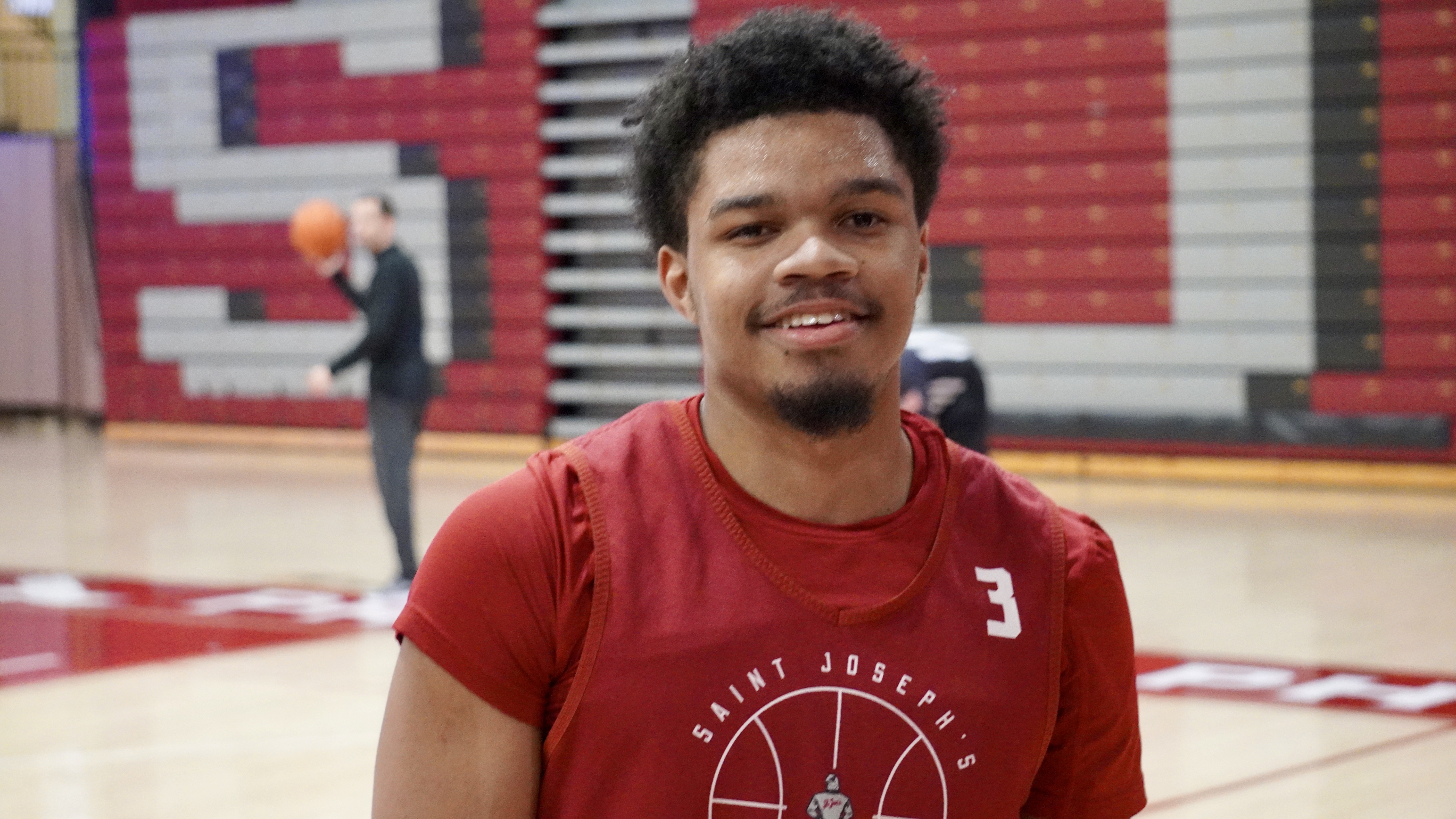
Brown, a Philadelphia native and son of Associate Head Coach Justin Scott, has quickly established himself as one of the top point guards in the conference. He brings a steady hand, exceptional footwork, and a knack for breaking down defenses with smooth crossovers and hesitation moves. Tough and fearless, Brown’s body control enables him to score in traffic or kick the ball to open teammates on the perimeter.  Perhaps, his most impressive attribute is the fact that he has big balls… Brown is not afraid of the big moment and will put the team on his shoulders when the offense stagnates. This season, he’ll look to cement his role as a leader capable of taking over when the game is on the line.

Xzayvier Brown, Sophomore Guard

Rounding out this talented backcourt is junior transfer Derek Simpson from Rutgers. A a prototypical mid-high major combo guard in that he does a bit of everything despite having the size of a point guard. He is a supremely confident bucket-getter with three-level scoring capabilities. Although he is most effective getting all the way to the basket and pulling up for mid-range jumpers. He can make an occasional three, but is much more efficient attacking he basket and in transition.  Simpson is agile and crafty with the ball in his hands and brings two years of experience playing in the highly physical Big 10 Conference. Simpson thrives in both isolation and pick-and-roll situations. He is highly intelligent, and selfless high-energy player on offense and defense. He makes winning plays. This was a tremendous free agent acquisition for Lange and his staff.

Derek Simpson, Junior Guard

The Frontcourt: Emerging Talent and Physicality

While the guards may steal the spotlight, the front court play will largely determine how deep this version of Hawks can go in March. The time has come for Rasheer Fleming to become a household name. The junior power forward from Camden High, is solidly built and strong. He just has to put it all together in game situations. Fleming is long and has excellent instincts on the offensive end.  He is very young (just turned 20) for a college junior playing D1 college basketball. Fleming has natural strength and the type of body that could withstand the physicality of NBA level play. He has already attracted the attention NBA scouts.  He has broad shoulders and a wide base yet still has good agility and is fluid on his feet.  On the offensive end, Fleming can do a bit of everything.  He can score in the post, using his strength to bully opponents. He is particularly adept at getting to his jump hook over his left shoulder, which he makes at a very high rate. He is also an excellent leaper, allowing him to make plays above the rim. He has steadily improved his mid-range game.  He shot a decent 32.4% from 3-point range in his sophomore season.

Justice Ajogbor, Graduate Student Center and Rasheer Fleming, Junior Forward

Sophomore Anthony Finkley, another key forward, is set to play the ultimate “glue guy” role this season. Finkley’s versatility and strong basketball IQ make him a valuable presence on the court, especially in passing and rebounding. Known for his unselfish play, Finkley is a key piece in making those around him better, and his intensity adds a gritty edge to the frontcourt.

Sophomore Shawn Simmons brings outstanding athleticism and size to the wing. Known for his quickness and explosiveness, Simmons’ speed makes him a reliable transition player and a potential defensive stalwart. With time and experience, Simmons could become a premier perimeter defender, contesting shots and creating havoc in passing lanes.

Justin Scott, Associate Head Coach and Steven Solano, Freshman Center

Redshirt freshman Dasear Haskins is a promising shot-maker with prototypical size and a smooth three-point shot. At 6’8”, Haskins has the physical tools to stretch defenses and create mismatches. The addition of Harvard graduate Justice Ajogbor in the center role adds experience and defense to the lineup, complemented by seven-footer Steve Solano, a former four-star recruit known for his low-post game and international experience.

Dasear Haskins, Redshirt Freshman Wing

Newcomers and Outlook

New faces like guard Khaafiq Myers and forwards Kevin Kearney and Mekai Johnson round out the roster. Myers is, yet another, quintessential Philly guard, to arrive on Hawk Hill. Prior to a leg injury that cut his senior season short, Myers was dominating the Philadelphia Catholic League and appeared to be a strong contender for MVP. An exceedingly quick player, he regularly forces opposing guards to pick up their dribble in the middle of the court. Myers takes tremendous pride in guarding the best opposing guard.

Khaafiq Myers, Freshman Guard

This roster is built to compete with any team in the A10 and the mid-Atlantic region. On paper, the Hawks may be better than regional high majors like Villanova (Big East), Seton Hall (Big East), Georgetown (Big East), Rutgers (Big 10), Penn State (Big 10) and Temple (American).

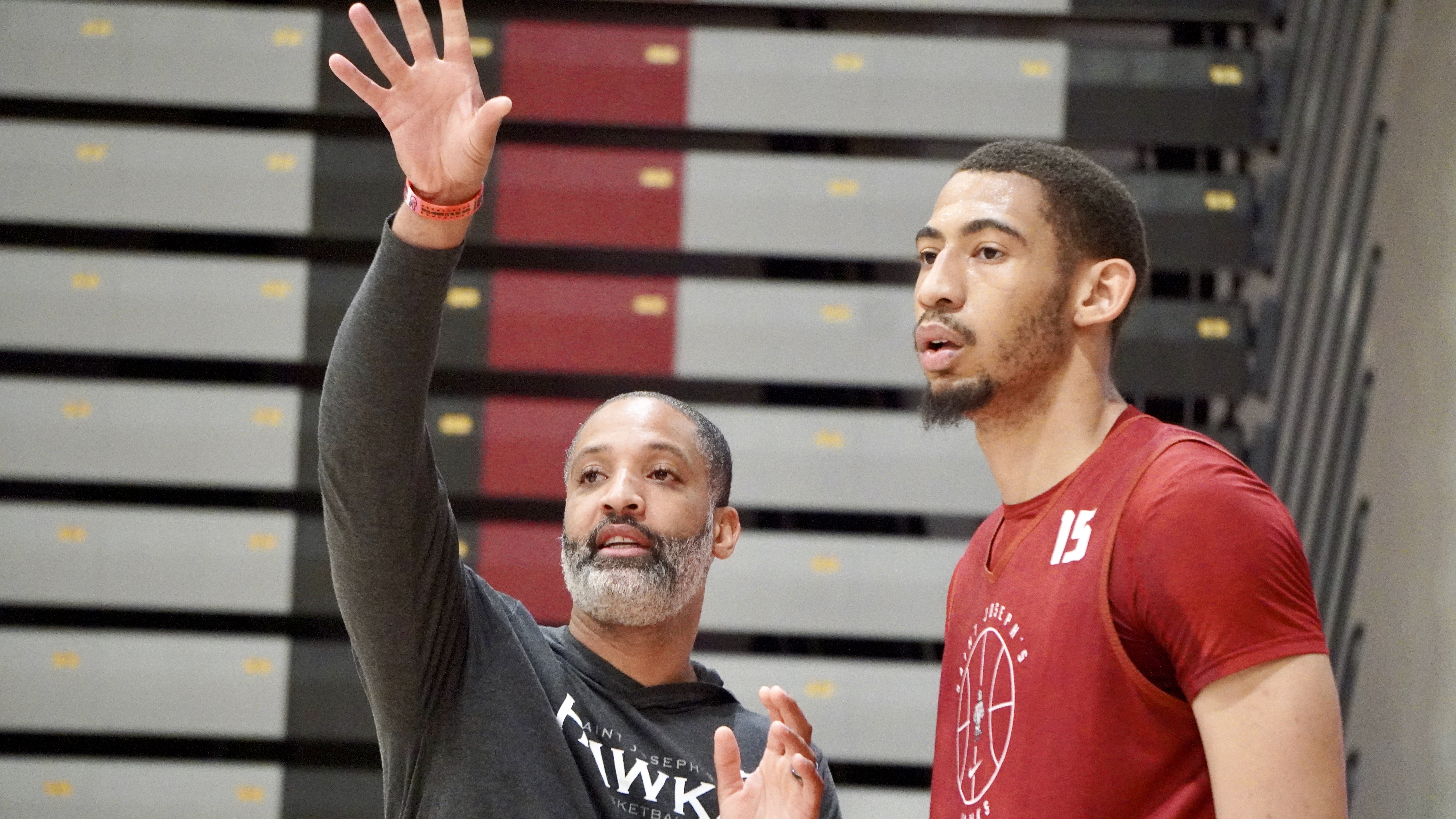
Coach Lange and his assistants Justin Scott, Dwayne Jones, Thomas Boyle and the rest of the staff have proven they can build a highly competitive roster.

The question becomes: Can the staff coach these guys to wins on the road in the A10, in the A10 tournament and in the NCAA tournament?

We still do not know the answer… But we ’bout to find out!

Evan Maschmeyer: Winning!!

Image

We’ve all seen the commercial numerous times. The message is very clear and easy to remember: “There are over 400,000 NCAA student-athletes, and most of them will go pro in something other than sports.” Clearly, the odds of making it to the NBA are stacked heavily against High School basketball players. Every year there are about 545,844 High School Basketball Players in the United States. Of those approximately 17,500 will become NCAA student basketball players. Each year about 48 NCAA basketball student-athletes are drafted into the NBA. Making it to the “league” is a real long-shot.

% High School to NCAA: 3.2%

% NCAA to Professional: 1.2%

% High School to NBA: 0.03%

Some young men focus so intently on achieving their NBA hoop dreams, they lose sight of all the benefits of a free education. Others are keenly aware of the opportunities afforded to them as student-athletes and take steps to ensure their vocational and financial future while still wearing the college uniform.

Evan Maschmeyer grew up a Hoosier. He was reared and educated in Jeffersonville, Indiana. Jeff, as the locals call it sits directly across the Ohio River to the north of basketball mad Louisville, Kentucky. A small town with a population of 45,000, Jefferson is about 60 miles southeast of French Lick, the hometown of American basketball icon Larry Bird. Entering Saint Joseph’s in the Fall of 2011, Evan brought some serious basketball credentials. He was part of the 2009-10 Red Devils team that was a win away from a Class 4A state championship. Among numerous other accolades, Maschmeyer was an Indiana Junior All-Star and News and Tribune All-Area team member. He was a highly regarded player in the basketball mad Hoosier state.

Upon arriving on Hawkhill he immediately found himself competing with Carl “Tay” Jones and Langston Galloway for playing time. These two are 4th and 2nd, respectively, on the all-time scoring list at Saint Joseph’s.  Although he has appeared in a majority of games over his 3-year career season, Evan has found it difficult to earn sustained minutes in such a talented backcourt.

However, unlike 400-500 other basketball student-athletes that transfer every year, Evan decided to focus his energies on helping his team when the opportunity presented itself and leveraging his free education to ensure a viable career as a financial “professional” once his playing days are over. After his sophomore year, he completed an internship with Haverford Trust, Co. in Radnor, PA. This summer, after his junior year, he will serve an internship with J.P. Morgan in Chicago.

Evan’s experience with Haverford Trust combined with an exceptional academic record while maintaining a double Finance/Economics major made him a competitive candidate for the prestigious internship. The fact that he achieved this success while fulfilling his obligations a member of the Atlantic 10 Championship St. Joe’s team is even more impressive.

Image

J.P. Morgan’s summer internships are in highly competitive for many compelling reasons. First, Evan will work with smart and energetic professionals on real, challenging projects at one of the world’s top financial services firm. Second, he will have the chance to discover first-hand what areas of their business best suit his talents and interests. Third, and this is the big one, J. P. Morgan hires a majority of their full-time Analysts from the Summer Intern Analyst class.  

This is the best “move” I have seen a college basketball player make this year. J.P. Morgan employs more than 70,000 people globally, and the firm has assets of $2.3 trillion. They have offices in more than 50 countries and clients in more than 100 countries around the world — and as a testament to their global platform and leadership, lead the industry in most markets in which we operate. Founded in 1799 in the United States, J.P. Morgan is truly a global organization. Their roots in Europe date back to 1838, and They’ve been in Asia since 1872.

Phil Martelli, Geoff Arnold, Mark Bass and Dave Duda unanimously agree that Evan is destined for success.  I am an Evan Maschmeyer fan. I look forward to having Evan interact with other young ballers. He is the epitome of what a collegiate student-athlete should be. Use the game, don’t let the game use you! As they say… the Hawk will NEVER die!