Andre Noble, Imhotep and the Restoration of the City Title

PHILADELPHIA, PA – For eighty-seven years, the phrase “Philadelphia City Champion” has carried a weight that transcends the ordinary boundaries of high school athletics. It is a designation steeped in the soot and sweat of a blue-collar town, a title that once represented the ultimate validation of hardwood supremacy. In the era before the PIAA enfranchised the city’s two great leagues, the City Title game was not merely a postseason affair; it was a civic referendum. When Simon Gratz High School edged South Catholic 23-13 in that inaugural 1939 clash at Convention Hall, they established more than a trophy line. They established a proving ground.

In the decades that followed, Convention Hall, the Palestra, and the Spectrum became coliseums where legends were certified. The roll call of those who competed for the crown reads like a syllabus of Philadelphia basketball history: from Tom Gola’s machine-like precision to Wilt Chamberlain’s unfathomable dominance, from the imposing power and skill of Gene Banks to the iron will of the Lynn Greer I and Lynn Greer II. These were not just players; they were demigods whose local mythology was forged in the crucible of the Public vs. Catholic clash.
A Dormant Tradition, A Resurrection

For 27 years following Overbrook’s overtime masterpiece against Roman Catholic in 1980, the tradition lay dormant, a victim of the changing landscape of statewide competition. When the games resumed in 2009, the format had splintered into classification-specific contests, a necessary concession to the parity of the PIAA but a dilution of the singular, unifying spectacle. This year, however, the basketball gods realigned the stars. The Public League champion, Imhotep Charter, and the Catholic League champion, Father Judge, both stood as Class 6A titans. The District 12 championship was no longer just a procedural step toward Hershey; it was a resurrection. It was, at long last, a true City Title.

That the game was played in the gloriously cramped confines of Archbishop Ryan’s gymnasium—a building bulging at the seams with 1,600 souls where only 1,300 were meant to fit—was poetically appropriate. The intimacy of the setting forced the intensity. The roaring, 80-20 pro-Judge crowd created an atmosphere that felt less like a district final and more like a block party on the verge of a brawl. It was precisely the kind of environment where Philadelphia basketball character is revealed.
The Panther’s Response: Muhammad-Gray and the Wire-to-Wire Statement

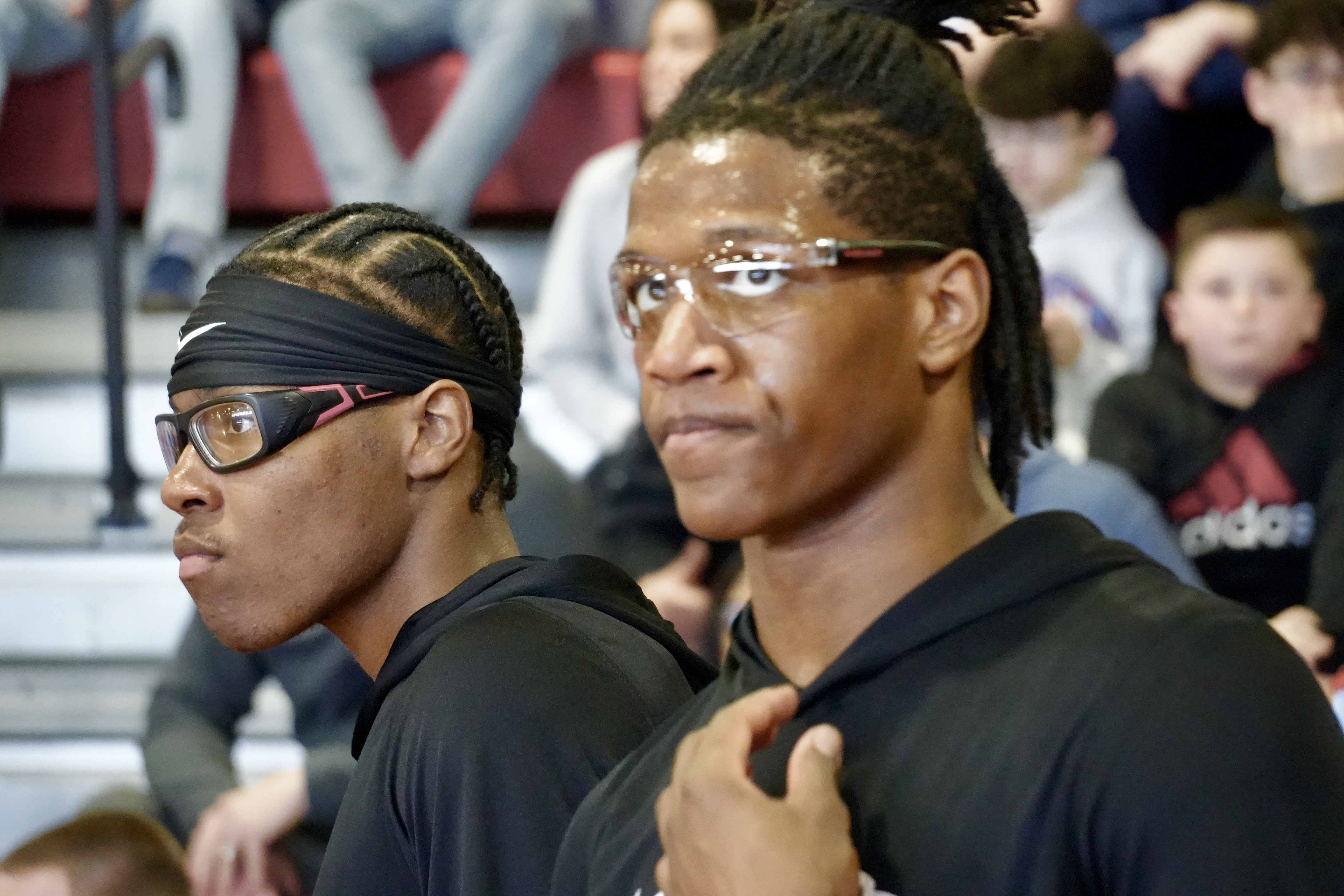
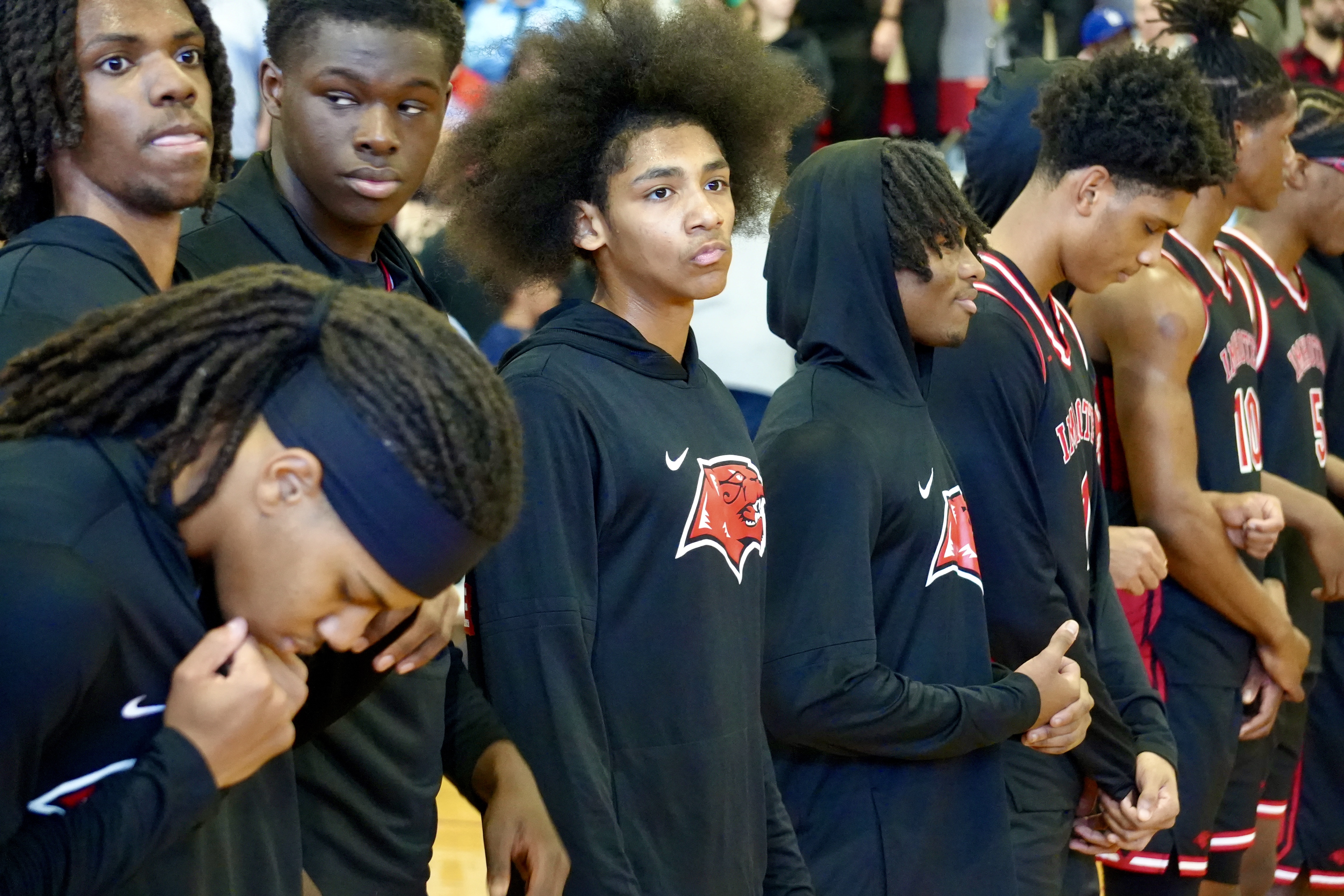
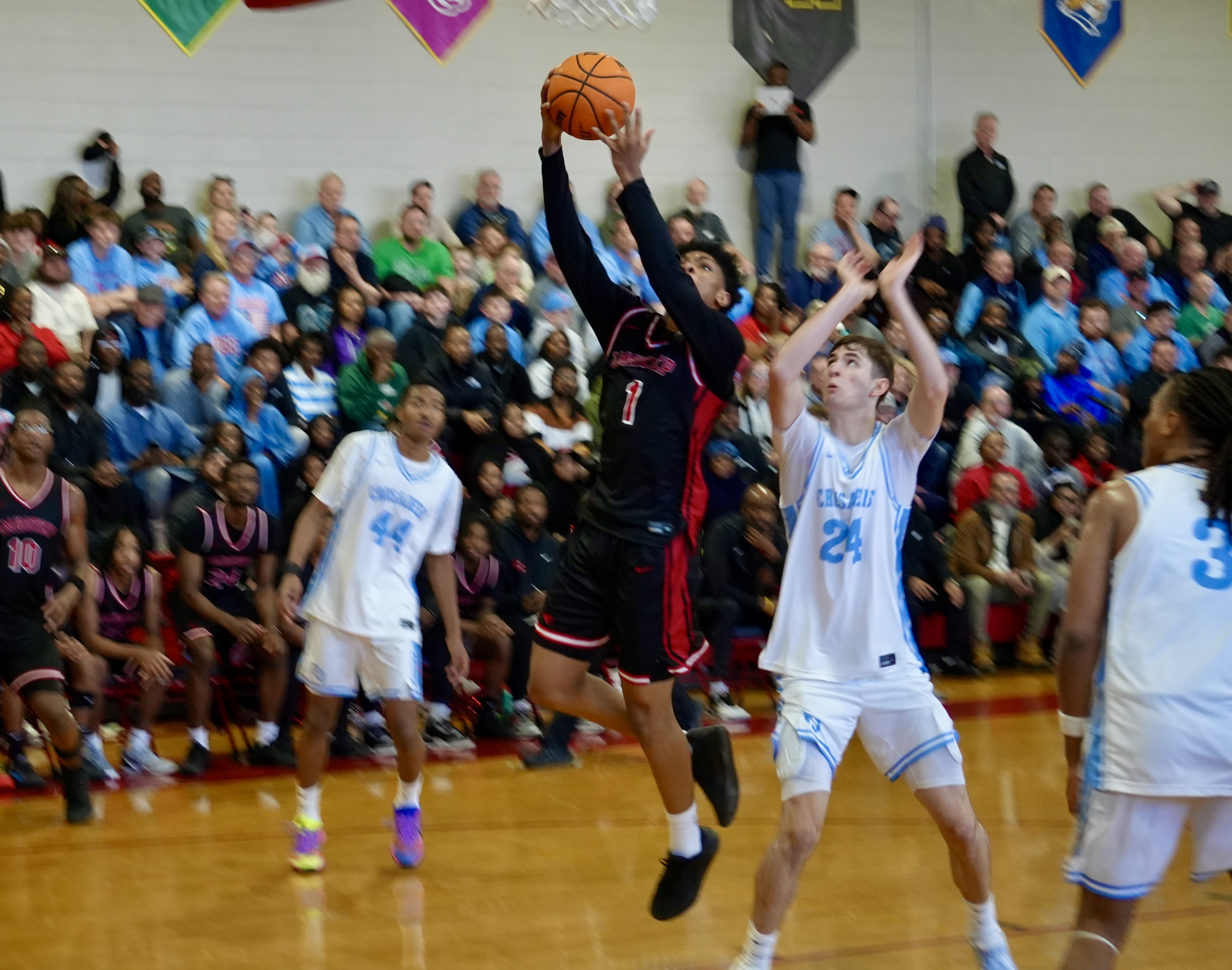
And in that environment, the character of the Imhotep Panthers, and their architect, Coach Andre Noble, was undeniable. Zaahir Muhammad-Gray, playing with the vintage power and rebounding ferocity of a young Buck Williams, imposed his will, scoring 21 points and answering every Judge surge with a stoic, two-handed reply. The Panthers controlled the game wire-to-wire, silencing a building that had arrived expecting to will the Crusaders to victory.
Andre Noble: Carving a Place in the Pantheon

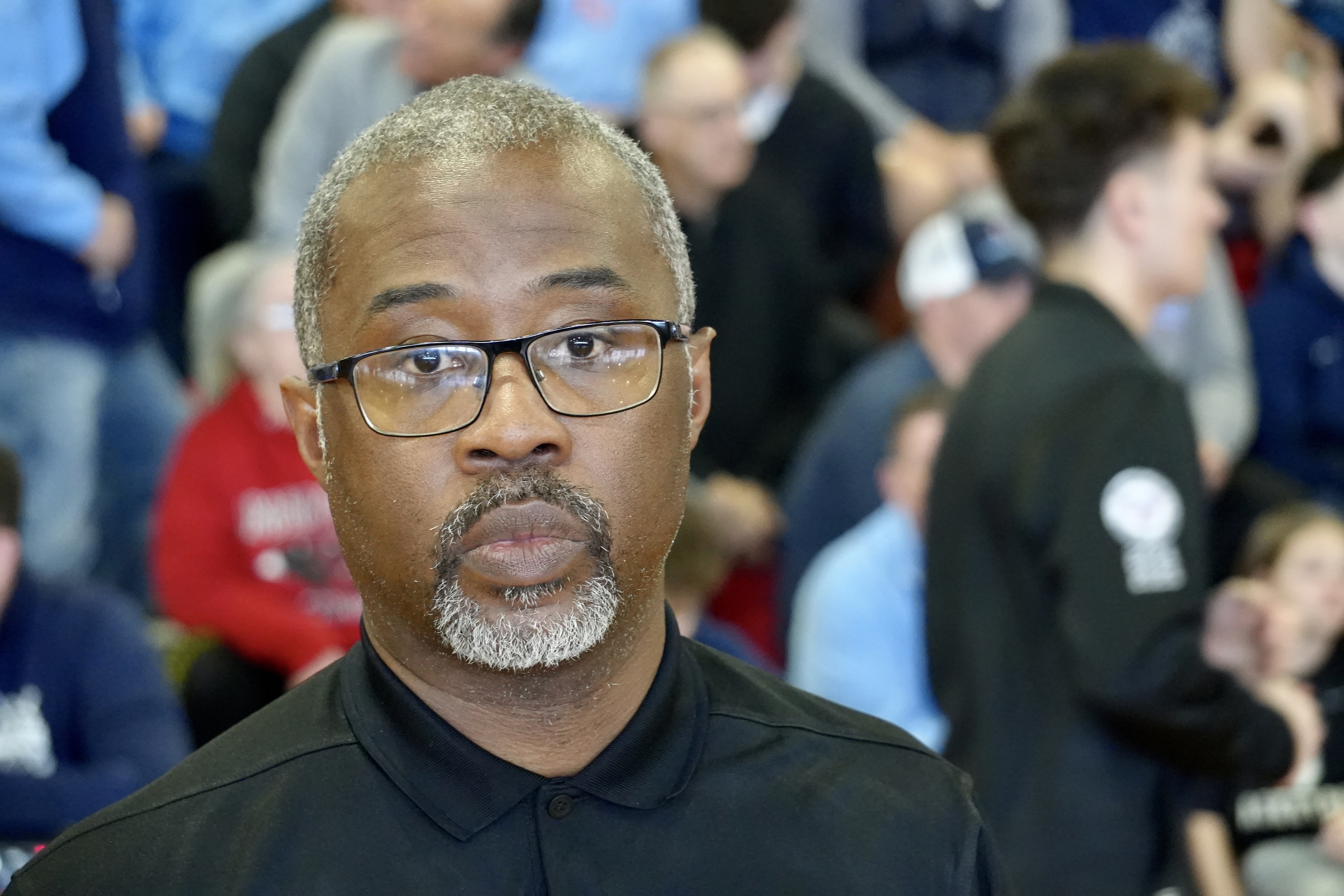
Yet, to focus solely on the box score of this 57-54 victory is to miss the larger historical narrative taking shape on the sideline. Coach Andre Noble is not merely winning games; he is redefining the paradigm of Philadelphia basketball. To mention the pantheon of great coaches in this city—Joe Goldenberg, Bill Ellerbee, Ken Hamilton, the venerable Speedy Morris, and the gold standard of the modern Catholic League, Carl Arrigale—is to invite a necessary addition. Andre Noble now belongs on that mount.

His Imhotep program has become an anomaly, a Public League school that operates with the discipline of a prep school powerhouse and the swagger of a neighborhood legend. While the Philadelphia Catholic League rightfully boasts of its depth, its coaching acumen, and its production of Division I talent, it is no longer the sole proprietor of the city’s basketball soul. The argument must be made, emphatically and with evidence, that Imhotep Charter is not just among the best in the city, but among the very best programs in the entire country.

Dismantling the Old Trope: Public League Grit Meets Strategic Sophistication

Consider the landscape. The Catholic League’s dominance in the modern era—particularly runs by Neumann-Goretti and Roman Catholic—is undisputed. They play a brutal schedule, they prepare players for the rigors of college basketball, and they win state titles. But Imhotep, under Noble, has built a fortress on the idea that Public League kids can not only compete with that pedigree but surpass it. Year after year, the Panthers face a national schedule, travel to premier tournaments, and return to Philadelphia to bulldoze local competition. They have become a destination program, not despite being a charter school, but because of the culture Noble has cultivated.
A Microcosm of Excellence: The Victory Over Father Judge

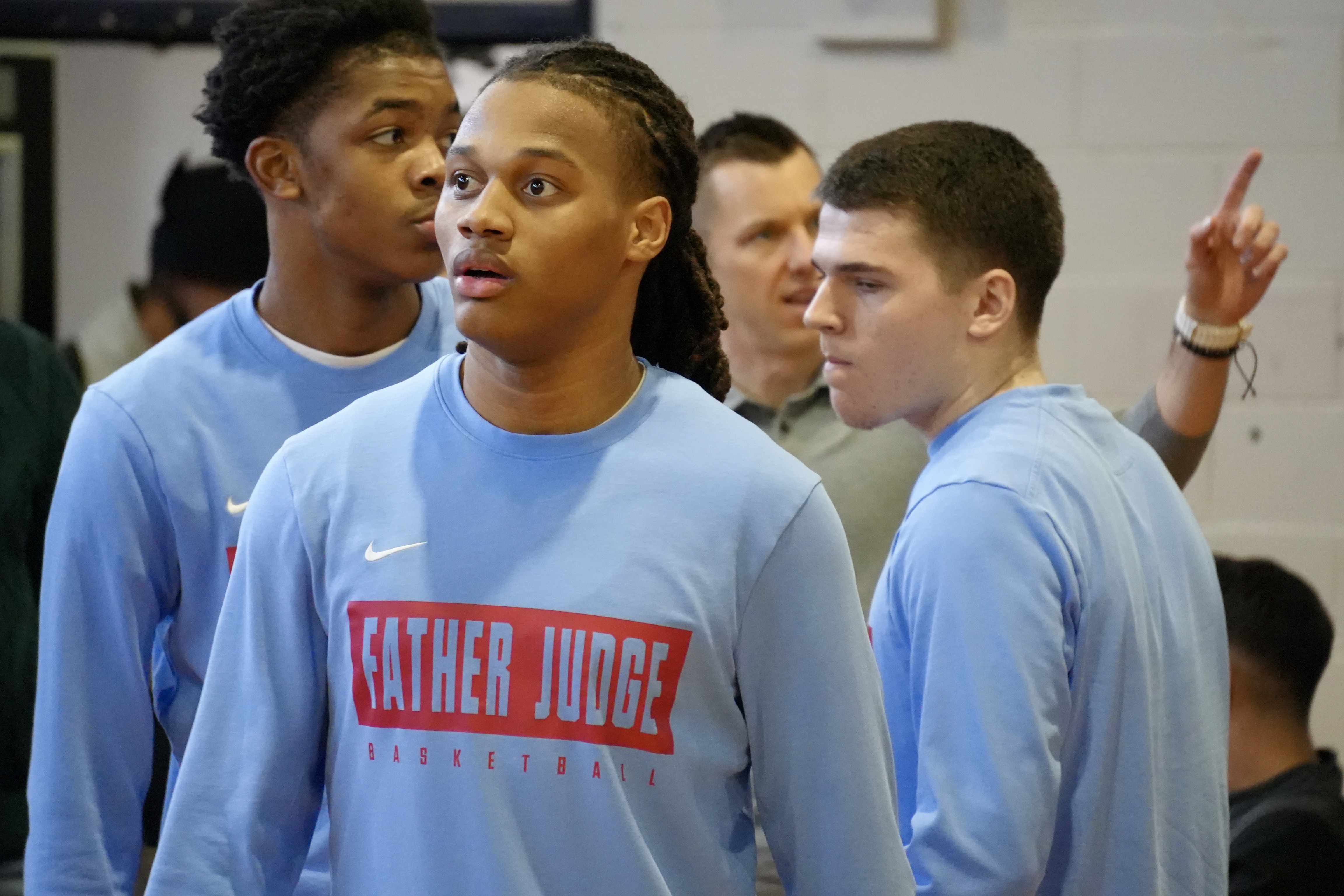
This year’s victory over Father Judge was a microcosm of that programmatic excellence. Facing a hostile crowd and a resilient Judge team led by the ice-veined Temple-bound guard Derrick Morton-Rivera and the explosive Nazir Tyler, Imhotep never flinched. When Tyler singlehandedly tried to drag the Crusaders back into the game, scoring nine straight points in the third quarter, it was the Panthers’ collective defensive resolve—honed in countless high-leverage moments over the years—that held the line. When Muhammad-Gray sank those clinching free throws with 38 seconds left, it was the culmination of a trust built between a coach and his player in the thousands of unseen reps.

The Verdict: A Crown Worthy of the City

The narrative that the Catholic League represents a higher brand of basketball is a comfortable, decades-old trope. But Andre Noble and Imhotep have systematically dismantled that notion. They have proven that the grit of the Public League, when combined with strategic sophistication and a commitment to player development, yields a product that is not just competitive, but superior. The Panthers are now 6A District 12 champions. They will embark on a quest for the PIAA “big boy” state championship, the one title that has eluded them.
Win or lose in Hershey, however, this season has already served its purpose for the historical record. It has reminded a fractured city of the magic of a unified title game. It has showcased the heart of a Father Judge program that refused to quit. And it has cemented Andre Noble’s legacy as a coach who took the raw materials of the Public League and built a dynasty that stands toe-to-toe with any in the nation. For the first time in years, Philadelphia has a true, undisputed City Champion. And in Imhotep Charter, the city has a program worthy of that singular, historic crown.

The Best and Worst of Times: Imhotep’s RJ Smith and Philly’s Basketball Crossroads

PHILADELPHIA, PA – In sports, the 2023–2025 era will long be remembered as a time of extremes for Philadelphia. On one hand, the Phillies and the Eagles have been among the most dominant teams in Major League Baseball and the National Football League, respectively.  They have provided their diehard fans with winning seasons, playoff runs and championship aspirations. On the other hand, the Sixers’ disturbingly rapid descent into irrelevance has been as baffling as it has been swift, and collegiate basketball in the City of Brotherly Love has entered an unthinkable drought: no NCAA Tournament appearances from its six Division I programs for two consecutive seasons.

Da fuck is going on? I don’t trust the process… AT ALL!

Philadelphia is paying Joel Embid and Paul George, combined, over $116,000,000.00 per year to appear on podcasts and play basketball once in a while… Quintessential Nut Shit!!

This is a city where basketball isn’t just a game—it’s a way of life. From the hallowed grounds of the Palestra to playgrounds in Cobbs Creek, Da Bottom, Da “P” and up Norf, Philly has long been a hoops haven. Yet, our professional and college teams haven’t been shit since we were all wearing masks, getting injected with various vaccines and sitting through 6 or 7 zooms per day.

College Hoops: A Forgotten Tradition

Real shit… We have one guy trying mightily to hold it down for Philly. Villanova’s Eric Dixon shines as the lone star in a Big 5 constellation dimmed beyond recognition, the city’s college basketball faithful are left to reminisce about March Madness as though it were a relic of a bygone era. Where’s this era’s Gola, Rodgers, Macon, Rose, Nelson, West and Garland?

The decline of collegiate basketball in Philadelphia is astonishing. Once-proud programs that defined the city’s identity—Villanova, Temple, La Salle, Saint Joseph’s, Penn, and Drexel—now play in the shadow of their storied pasts. Villanova, the jewel of the Big 5, has been unable to maintain the dominance it enjoyed under Hall of Fame Coach Jay Wright. As I have noted elsewhere, “that bitch ain’t bad no mo’…” Although she did put on some yoga pants for a couple hours last night and looked “ahhhhiiiight” against Cincinnati. We have to wait and see if she can keep it together.

The other programs have simply failed to rise to the occasion. Today, Dixon carries Villanova as a headliner like Gladys Knight while the rest of the Big 5 plays supporting roles—background singers, like the “Pips”, to his solo act. 

The energy of March, once electric in Philly, now dissipates as local teams fail to punch their ticket to the NCAA Tournament. I guess we should all appreciate the fact that the local programs are still in the running for “at-large” bids in the College Insider Tournament (CIT) and the College Basketball Invitational (CBI). Be on the lookout for the “fish fry” in March at Lionel Simmons’ Bar to pay for the team charter buses. The absence of postseason relevance has left a void for Philly hoopheads  longing for competitive, high-quality basketball.

The Scholastic Silver Lining

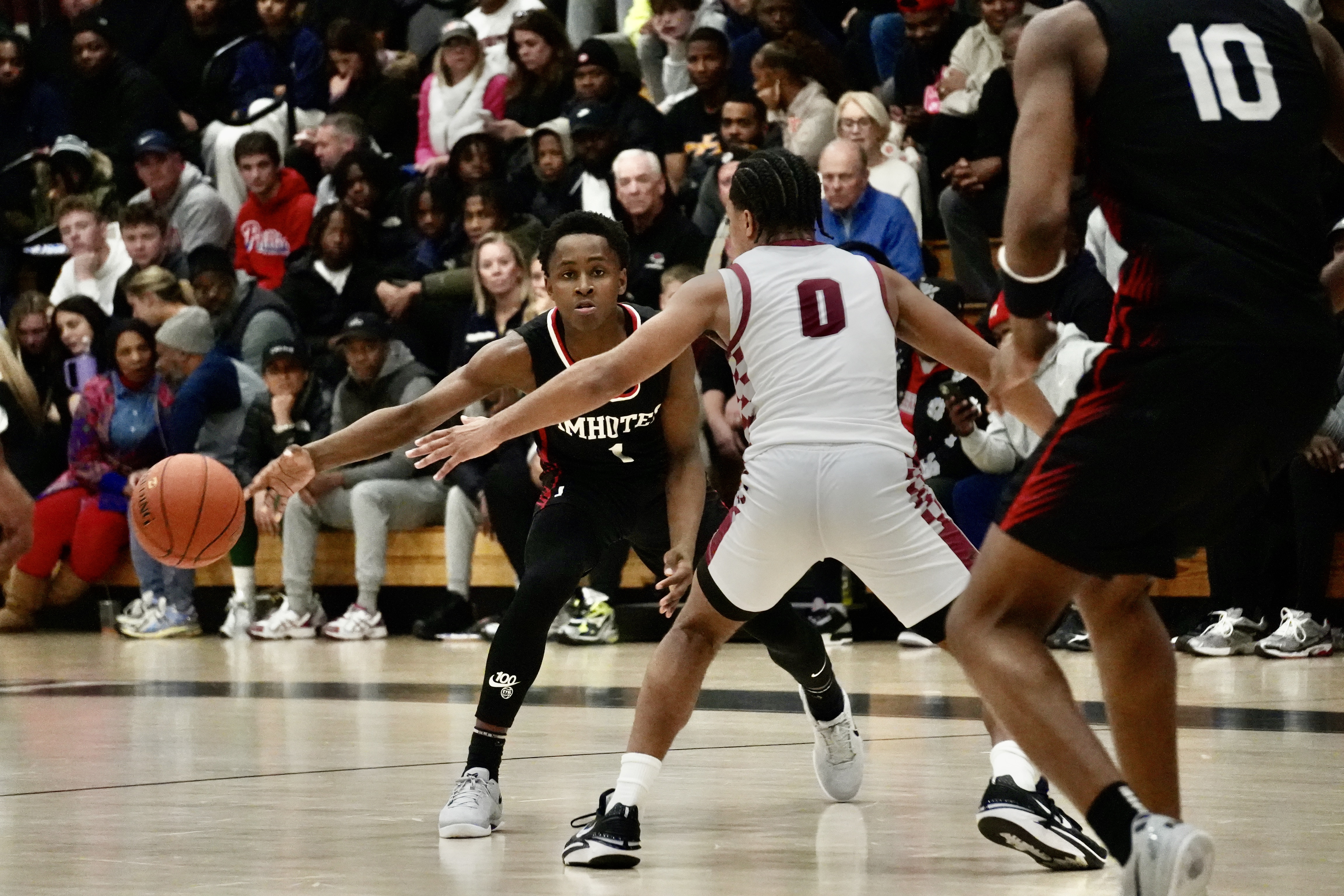
Yet, amid the gloom, the vibrancy of Philadelphia’s scholastic basketball scene offers a glimmer of hope. Tonight, I ventured to St. Joseph’s Prep to watch the Hawks host Imhotep Charter, a perennial powerhouse. The game was a revelation, a reminder that while professional and collegiate hoops in Philly languishes, the high school circuit remains as competitive and thrilling as ever.

St. Joe’s Prep fielded an impressive roster featuring Dayton commit Jaron McKie and Florida Gulf Coast-bound Jordan Ellerbee. Sophomore Mekhi Robertson, a top-50 national recruit, and senior point guard Olin Chamberlain, an Ivy/Patriot League prospect. Imhotep, as usual, was fuckin’ loaded: Zion Green, a 6’8” sophomore wing ranked 17th nationally; juniors Zaahir Muhammad-Gray and Latief Lorenzano-White; and senior wing Carnell Henderson, are all Division I-caliber players.

But the night belonged to the newly crowned “Big Dawg” among Philly Guards, Imhotep’s RJ Smith.

RJ Smith: Seated in the Philly Guard Throne

Smith, a 5’9” junior guard, embodies everything a “Philly guard” represents. Undeterred by his slight frame, Smith dominates games with his toughness, sharp basketball IQ, and unyielding determination. Time and again, he bullies bigger, stronger, and more athletic opponents, asserting control on both ends of the floor.

Defensively, Smith is a force in Imhotep’s relentless full-court press, where his tenacity and instincts for creating turnovers are nothing short of spectacular. Offensively, his ability to break down defenses is equally impressive. Whether pushing the pace in transition or orchestrating in a half-court set, Smith’s versatility shines.

Last season, Smith played Robin to UConn freshman Ahmad Nowell’s Batman. Nowell was the undisputed leader of Imhotep’s powerhouse program and clearly occupied the throne as the top Philly high school guard. But with Nowell’s departure, Smith has stepped seamlessly into the role of team leader. There is no doubt: this is now Smith’s team… and his throne…

Smith is not a traditional pass-first point guard of yesteryear. Instead, he mirrors the style of players like Isiah Thomas—capable of scoring at will while also being an adept distributor. His strengths are multifaceted: quickness, fearlessness, and a deep understanding of the game. As a defender, he excels at pressuring ball handlers and racking up steals, often setting the tone for Imhotep’s aggressive style of play. On offense, he thrives in transition, penetrates the lane with ease, and is a lethal shooter from well beyond the three-point arc.

While Smith’s skill set already places him among the elite at the high school level, his potential for growth is clear. In college, he could evolve into a more traditional point guard, balancing his knack for scoring with the demands of a floor general. For now, his dominance in high school basketball and his ability to overcome physical disadvantages with sheer grit and intelligence make him a quintessential Philly guard—and a joy to watch.

The “Philly Guard” Mystique

A “Philly guard” is more than just a basketball player. The term carries with it decades of tradition and a style that is unmistakably Philadelphia: gritty, crafty, and unapologetically confident. Philly guards are two-way players, as skilled on defense as they are on offense, and they play with an edge that reflects the city’s tough, blue-collar ethos.

Legends like John Chaney, Guy Rodgers, Andre McCarter, Pooh Richardson, Dawn Staley, Collin Gillespie and Kyle Lowry have defined the archetype. RJ Smith now stands in their shadow, a young player stepping into a rich lineage of excellence. His game is a nod to the past but also a bridge to the future of Philly basketball.

A Tale of Two Basketball Cities

The juxtaposition of Philadelphia’s scholastic and professional basketball worlds could not be starker. As the Sixers spiral into chaos, weighed down by an exorbitant payroll and a seemingly rudderless front office, and as college basketball flounders, the high school scene pulses with life. It’s a cruel irony that while the city’s professional and collegiate teams struggle, its high schools continue to produce some of the most exciting basketball talent in the nation.

RJ Smith’s emergence as the next great Philly guard underscores this dynamic. He represents hope for the future—a reminder of what Philly basketball can be when it is at its best.

Ten years from now, we’ll look back on this era with mixed emotions. The Phillies and Eagles gave us joy and pride. The Sixers and the city’s college programs brought frustration and bewilderment. And on high school courts across the city, the next generation of stars reminded us that, even in the worst of times, Philly basketball is never truly down for the count.

College coaches constantly call in search of a “Philly Guard.” Well, we have one that is pretty special. Ideally, Smith will land with a program that has familiarity and experience with smaller guards. He can compete in the MEAC, NEC, AmEast, MAAC and CAA for sure. Some A10 and American Conference programs will likely become intrigued when they actually lay eyes on him.

For now, though, Smith’s performances remind fans why the “Philly guard” is such a revered archetype in basketball—a gritty, intelligent, and unrelenting player who never shies away from the moment. He is, simply put, a joy to watch and a testament to Philadelphia’s rich basketball heritage. Looks like Smith will be sitting on the Philly Guard throne for next two years… Enjoying his reign… Unless, young Mr. Sutton from Broad and Vine has some other ideas.