Carrying the Weight of History: Why Black America Sees Itself in Shedeur Sanders

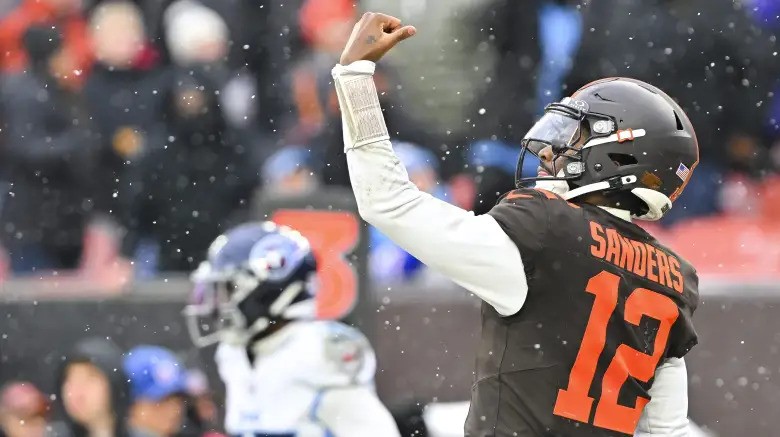
PHILADELPHIA, PA – To watch Shedeur Sanders play quarterback—with his pre-snap poise, his audacious no-look passes, his celebrated, unflappable “Shedeur Face”—is to witness more than a talented athlete. It is to observe a cultural reclamation project. His overwhelming support within the Black community, often chalked up simplistically to his confidence and swagger, is rooted in something far deeper than style. It is a profound, collective recognition. It is the applause of a community that sees in his assured success not just one man’s triumph, but a symbolic redress of a brutal, systemic history—a history whose scars are woven into the very DNA of Black American experience.

The Foundation: American Apartheid on the Playing Field
That history is an American Apartheid, a regime of exclusion not confined to the Deep South but sanctioned at the highest levels of national life, including the playing fields. From its inception in 1906 through the early 1970s, the NCAA operated as a gentlemen’s agreement for segregation, formally barring Black athletes from member institutions, particularly in the powerhouse conferences of the South. For seven decades, the Paul Robesons, Jackie Robinsons, and Jesse Owenses were brilliant, solitary exceptions proving a cruel rule. The Civil Rights Movement forced the gates open, leading to the rapid “tanning” of revenue sports by the 1980s. But the institutional response was not embrace, but a strategic recalibration of exclusion.

The Bureaucratic Barrier: When “Eligibility” Became the New Gate
When blatant segregation became illegal and immoral, the mechanisms of denial became bureaucratic. The NCAA’s evolving “initial eligibility” rules—Proposition 48, the Core Course requirements, sliding GPA scales tied to standardized tests—were weaponized as a more nuanced gate.
Legends like Georgetown’s John Thompson II and Temple’s John Chaney, towering figures who used their platforms without apology, called this what it was: racism. “The NCAA is a racist organization of the highest order,” Chaney declared in 1989, framing the rules as a new punishment for Black kids already punished by poverty. Thompson saw the cynical cycle: athletes were used as integration’s pawns under the guise of benevolence, then discarded with the same paternalistic logic when their numbers grew too great.

The Instinctual Knowledge: A Community Remembers What Was Lost
This is the buried trauma in the collective memory of Black sports fandom. It is the instinctual knowledge that for every Shedeur Sanders lighting up a Power 5 stadium today, there were countless Willie “Satchel” Pages, “Bullet” Bob Hayeses, and Doug Williamses of yesteryear who were denied the stage, their stats relegated to the glory of HBCU lore, their professional careers delayed or diminished. It is the understanding that the path was not cleared, but grudgingly conceded, inch by contested inch.

This brings us back to Shedeur. His journey is a direct rebuke to that entire historical project of exclusion.

Shedeur as Historical Agency, Not Just Athletic Talent
He began not at a traditional blue-blood program, but at Jackson State University, an HBCU, under his father’s tutelage. There, he didn’t just play; he dominated, showcasing a talent so undeniable it forced the mainstream to look to the HBCU, reversing the decades-long drain of talent from them. His subsequent transfer to Colorado and his record-shattering performance—37 touchdowns, 4,134 yards, Big 12 Offensive Player of the Year—wasn’t an assimilation. It was an annexation. He carried the HBCU-developed swagger into Boulder and made it the epicenter of college football.

His confidence, therefore, is read by the Black community as more than personal bravado. It is historical agency. It is the embodiment of a truth: “You could not keep us out forever, and now that we are in, we will not perform with grateful humility. We will excel with the unmistakable flair of those who know the cost of the seat we now occupy.” His much-discussed “swagger” is the posture of liberation from the historical narrative of being the excluded, the regulated, the “problem” to be managed by NCAA legislation.

The Echo in the Draft: A Familiar Story Reinforces the Bond
The fact that his prolific college career culminated in a fifth-round NFL draft pick—seen by many as a slight given his production—only reinforces the narrative. The community, schooled by history, sees the echoes: the subtle devaluation, the search for flaws in the Black quarterback, the institutional reluctance to anoint him the franchise cornerstone his college play warranted. Yet, even in that perceived slight, the support does not waver; it intensifies. Because the story is no longer about what the gatekeepers decide. It’s about what Shedeur, and by extension the community that sees itself in him, has already proven.

An Unfinished Battle, and a Symbol of Its Progress
The contemporary NCAA debate continues, now often couched in the softer language of “unintended consequences” for minority students, as noted by groups like the National Association for Coaching Equity and Development. But the shift from Chaney’s and Thompson’s explicit charges of racism to today’s milder objections itself tells a story of a battle partly won, yet ongoing.

Shedeur Sanders walks onto the field bearing the weight and the defiance of that unfinished battle. The Black community’s embrace is a celebration of his individual talent, yes, but it is also a collective, cathartic affirmation. It is the joy of witnessing a grandson of American Apartheid not just cross the forbidden line, but do so with a dismissive wave, a nod to the crowd, and a perfect spiral into the end zone. His confidence is their vindication. His swagger is their memory, weaponized, and set free.

“Coonish” Behavior: Stephen A. Smith, Jason Whitlock, and the Price of Modern Manumission

By Delgreco K. Wilson, Contributing Opinion Writer

For centuries in America, a grim and paradoxical transaction has shadowed the Black quest for advancement: the exchange of communal fidelity for individual freedom. It is a bargain as old as the nation itself, rooted not in the brutality of the whip, but in the insidious mechanics of psychological and economic leverage. Today, we witness a modern, media-saturated iteration of this dynamic. In the sprawling arena of sports commentary, figures like Stephen A. Smith and Jason Whitlock have built lucrative empires. Their success, however, is shadowed by a persistent and bitter accusation from within the Black community: that they are “coons,” a devastating label of racial betrayal. Their critics are identifying a pattern that feels like a 21st-century performance of meritorious manumission—a striving for personal elevation and favor by servicing narratives that comfort a powerful, predominantly white conservative audience, often at the expense of Black solidarity.

The Historical Bargain: Labor for a Glimmer of Freedom

The foundation of this American transaction is centuries deep. The economic architecture of the early republic was built on Black labor without Black liberty. From the cotton fields that fueled the national economy to the domestic servitude that sustained its households, Black work was the indispensable engine. Yet, the profit from that labor was perpetually alienated. The promise, always dangling, was that exceptional service, superhuman diligence, or unwavering loyalty might be rewarded with a sliver of relief—a less cruel master, a chance to buy one’s family, a mythical pathway to acceptance. This established a corrosive template: advancement could be contingent on reinforcing the system’s logic and calming its conscience. The doctrine of “racial uplift” that followed Emancipation demanded impeccable, respectable conduct to assuage white America’s fears and guilt, proving worthiness for basic citizenship. Diligence became a currency, not just for wages, but for attempting to purchase dignity from a system that withheld it by design.

The Modern Marketplace: From Plantations to Podcasts

The post-Civil Rights era did not erase this template; it digitized and broadcast it. The terrain shifted from physical plantations to cultural and ideological ones. As structural and institutional racism persisted, a new marketplace emerged for Black voices willing to translate Black struggle for white audiences, particularly those eager to believe the work of racial justice is complete. This is where the spectacle of figures like Smith and Whitlock becomes a case study. Their playbook is not one of outright bigotry, but of strategic division and absolution, performed for mass consumption. They operate within a media ecosystem that generously rewards controversy that confirms existing biases, creating a powerful incentive to mine intra-community conflict for content that resonates with a broader, whiter audience.

The Playbook of Modern Manumission

Their performance manifests in several consistent, damaging patterns:

The Dilution of Collective Grievance. When vandals scrawled a racial slur on LeBron James’s home, Jason Whitlock dismissed it as a “disrespectful inconvenience,” arguing racism is “primarily an issue for the poor” and that wealthy Black people should not “embrace victimhood.” This is a classic maneuver. By creating a class hierarchy of pain, he fractures communal empathy and offers a narrative of exception. It tells white audiences that systemic racism is either overstated or a crutch for the unsuccessful, while offering successful Black individuals a ticket out of collective identity—if they renounce it.

The Policing of Black Expression. Stephen A. Smith faced backlash for instructing Black Congresswoman Jasmine Crockett on how she “should talk to the President,” a moment critics saw as enforcing respectability politics. This echoes the historical demand that Black anger be polished into palatable, non-threatening discourse. The transaction here is clear: temper your tone, conform to my comfort, and your voice will be amplified on my platform. It is a modern-day echo of being rewarded for “knowing one’s place” in the conversation.

The Strategic Alliance. Perhaps most revealing is the alignment with architects of racial backlash. Smith’s frequent appearances on Sean Hannity’s show are not incidental. Hannity, who trafficked in the racist “birther” conspiracy against President Barack Obama, represents a media ecosystem invested in denying the very structural racism that defines so much of Black American life. To be a welcomed guest in that house is to perform a powerful act of reassurance. It signals that the analysis will not be too sharp, the history not too inconvenient, the demands not too disruptive. This alliance is the clearest evidence of the transaction: access and platform in exchange for a veneer of ideological diversity that demands little substantive change.

A Spectacle Within the Spectacle: The Smith-Whitlock Feud

The bitter, very public feud between Smith and Whitlock themselves underscores the performative nature of this space. They trade nuclear insults, with Smith calling Whitlock “the devil in the flesh” and “worse than a white supremacist,” while Whitlock labels Smith a “fraud” and a “pathological liar” installed by corporate powers. This is more than personal animus; it is a brutal competition within a narrow lane. They are jousting for the crown of the most compelling Black voice in the conservative-coded spectacle, each accusing the other of the very inauthenticity and opportunism their critics see in them both. It is a meta-commentary on the transaction itself, exposing the ruthless jockeying for position and favor that underlies it. Their conflict dramatizes the ultimate isolation of this path: a solitary pursuit of status that necessitates tearing down the nearest competitor, leaving solidarity in ruins.

The Justification for Disavowal: Preserving Collective Struggle

And so, the community’s fierce condemnation—the label of “coon,” the disavowal—is not a denial of their right to individual opinion. It is a historical and political judgment. It is the recognition that their chosen path to “merit” mirrors the old, soul-crushing bargain. They are seen as seeking manumission from the burdens of racial solidarity by performing a service: managing Black anger, explaining away Black pain, and validating the view that the primary remaining barriers are personal, not systemic.

The justified fury they provoke is born of a deep understanding that true liberation has never been won through these solitary transactions. The March on Washington, the Civil Rights Act, the political power of the Black electorate—these were won through collective struggle, un-bought and un-bossed. To see Black media elites today build personal wealth and brand power by seemingly undermining that collective project feels like a profound betrayal. It is the spectacle of the historically shackled selling a blueprint for lighter chains, and calling it freedom.

Conclusion: The Unfinished Story and the Refusal

In the end, the saga of Smith and Whitlock is a painful reflection of an unfinished American story. It reveals that the marketplace for racial commentary still rewards those who make the complex simple, the systemic personal, and the uncomfortable soothing. Their success is a testament not to their individual genius, but to the enduring demand for a certain kind of Black voice—one that, for a price, helps assuage a nation’s guilt without demanding the fundamental change that true absolution requires. The Black community’s disowning of this model is not an act of censorship, but an act of preservation. It is a refusal to let the transaction of the past define the value of their future. It is a declaration that some forms of meritorious manumission are, in fact, a more sophisticated bondage.

###

Delgreco Wilson 

Wilson formerly taught Comparative Politics and International Relations at Lincoln University. He is a leading political analyst, educator, and advocate whose work centers on empowering Black Americans through a deeper understanding of political strategy and its historical roots in the fight against systemic racism and white supremacy. A prominent voice in the Greater Philadelphia Region, Wilson brings a wealth of academic rigor and real-world insight to his analysis of Black political thought and action.

Wilson’s expertise extends beyond the classroom. His incisive columns and articles have been featured in prominent publications such as the Philadelphia Inquirer,  Philadelphia Tribune, Baltimore Afro-American  and Delaware County Daily Times. A sought-after commentator, he regularly contributes to radio programs and podcasts across the Mid-Atlantic region, offering sharp analysis and actionable strategies for advancing racial justice and equity.

In a Shifting Basketball Landscape, Phil Martelli’s “Philadelphia Coaching Academy” Partners with Black Cager Fall Classic to Reclaim the Art of Coaching

PHILADELPHIA — In an era defined by the seismic influence of Name, Image and Likeness (NIL) advisors, sports agents, and the directors of national basketball academies, a new initiative is aiming to return the focus of youth basketball to its foundational element: teaching the game.

The Philly Coaching Academy, a venture from P and J Enterprises founded by former Saint Joseph’s University and former Michigan associate head coach Phil Martelli, has been named an official sponsor of the upcoming Black Cager Fall Classic. The partnership signals a concerted effort to address a growing void in the development of basketball coaches at the grassroots level.

Phil Martelli

The announcement comes amid what many insiders describe as a paradigm shift in youth and scholastic basketball. The insertion of substantial student-athlete compensation has fundamentally altered the player development process, creating an ecosystem where financially motivated “handlers” and the allure of national programs often overshadow the core mission of instruction and mentorship. Consequently, less time, energy, and resources are being devoted to cultivating the next generation of skilled coaches.

“In today’s environment, the term ‘coach’ can be diluted. A true coach is a person who trains, instructs, and guides a team to improve their skills and performance, with winning as a byproduct of that process,” said Martelli, a Hall of Fame inductee of the Philadelphia Big 5 and one of the most respected figures in the sport. “We are determined to identify and develop good, ethical, and effective youth and scholastic coaches who embody that definition.”

To that end, the Philadelphia  Coaching Academy has been created specifically for coaches operating at the CYO, middle school, recreational, and travel team levels. The academy’s goal is to equip these coaches with the tools to plan and execute efficient, effective practices. The curriculum will be delivered through four standalone sessions, each featuring on-court demonstrations of drills presented by Martelli and other prominent high school coaches.

Delgreco Wilson, founder of Black Cager Sports, expressed strong support for the partnership, drawing from his long-standing observation of Martelli’s career.

“I’ve been fortunate to witness Martelli’s entire coaching journey. More than any other coach I’ve encountered, Martelli has been an open book. His practices were always accessible,” Wilson said. “He is the right guy to teach young Philly men and women how to be professional youth and scholastic basketball coaches.”

As part of the sponsorship, a coach from every high school participating in the Black Cager Fall Classic will be invited to a exclusive Zoom webinar with Martelli. Furthermore, the head coach of two participating Fall Classic teams will receive full certificates to attend a session of the Philadelphia Coaching Academy.

Wilson emphasized the critical timing of this initiative, stating, “Martelli is absolutely the right guy, and this is definitely the right time to focus on actually teaching and coaching the game of basketball. We’ve seen the business side expand rapidly; now it’s time to reinvest in the craft of coaching itself.”

The collaboration between the Philadelphia Coaching Academy and the Black Cager Fall Classic represents a significant step toward reinforcing the instructional backbone of the sport, ensuring that the coaches guiding young athletes are as developed and dedicated as the players they mentor.

About the Philadelphia Coaching Academy:
Founded by Phil Martelli through P and J Enterprises, the Philadelphia Coaching Academy is dedicated to the education and development of basketball coaches at the youth and scholastic levels. Through a series of intensive, practical sessions, the academy provides coaches with the fundamental principles of practice planning, skill development, and team instruction.

About the Black Cager Fall Classic:
The Black Cager Fall Classic is a premier showcase event presented by Black Cager Sports, featuring top high school basketball talent from the Philadelphia region and beyond. It serves as a critical platform for player exposure and development at the onset of the school year.

###

Media Contact:
Delgreco Wilson
Managing Editor, Black Cager Sports
blackcager@gmail.com

Phil Martelli’s Quiet Legacy of Educational Advocacy

CAMDEN, NJ – In the world of college basketball, Phil Martelli is a known name, revered for his coaching prowess and respected for his decades of experience guiding young athletes on and off the court. But what often goes unnoticed amid the bright lights and roaring crowds is Martelli’s quiet, unwavering commitment to educating and mentoring Philadelphia’s youth. For over 30 years, he has made himself available—without exception—to instill the value of education in countless young lives. And it is this side of Martelli that deserves as much attention as his coaching record.

Noah Hanson, Clementon, NJ

Martelli, the former St. Joseph’s University head coach, recently transitioned to a role as a TV analyst for Fox Sports, debuting during Fordham’s nail-biting 57-56 victory over Seton Hall. It was a new chapter for the celebrated coach, who also spent five years as Associate Head Coach under Juwan Howard at Michigan. But his legacy extends well beyond his televised insights or sideline success. Throughout his career, Martelli has remained deeply committed to a cause that speaks to the heart of any community: the power of education to shape futures. It’s a mission he has lived by, often away from the public eye.

Michigan assistant coach Phil Martelli looks on in the second half of their Big Ten basketball game against Ohio State at Crisler Center in Ann Arbor, on Tuesday, February 4, 2020. (Mike Mulholland | MLive.com)

Whether he’s mentoring athletes or meeting with students in Philadelphia schools, Martelli has steadfastly promoted the importance of academics. He has spoken with students on their campuses, met them in local community centers, and even made personal phone calls to young people struggling in school. His outreach knows no boundaries—age, talent, or academic standing are irrelevant. When students are facing difficulties, Martelli is there to reinforce the importance of school, echoing the encouragement of their parents and teachers. His approach is deeply personal; he knows the power of a single conversation in inspiring a young mind.

John “JD” DiFalco, Runnemede, NJ

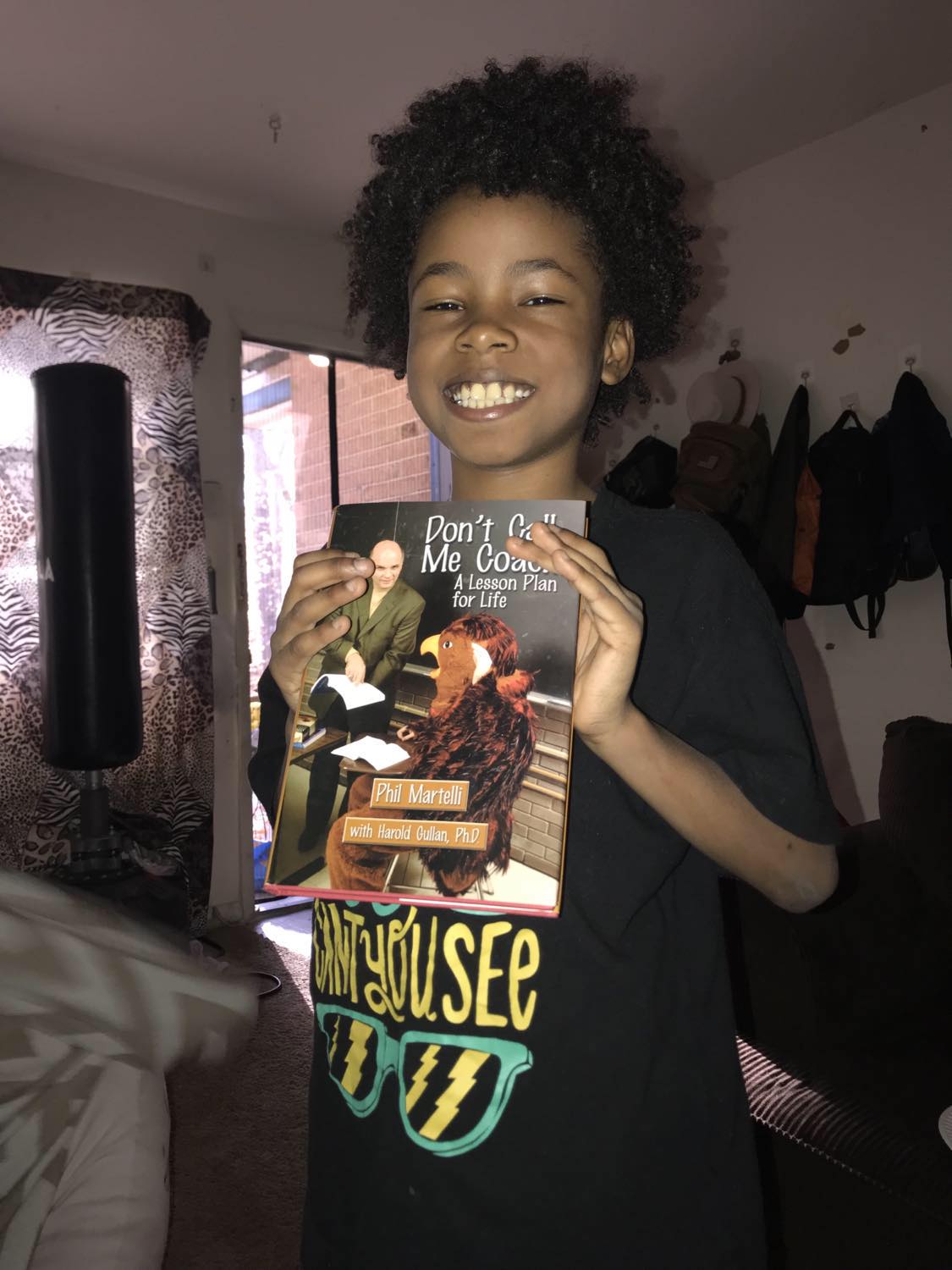
Martelli’s support extends to more structured acts as well. Recently, he provided two young men with copies of his book, Don’t Call Me Coach, as a motivational reward for their academic improvement. These students had struggled, but with encouragement from mentors like Martelli, they are finding their way forward. In one of the most genuine gestures, Martelli talked to these students personally, reinforcing messages of perseverance and focus.

Martelli’s devotion to education, often overshadowed by his coaching accolades, speaks volumes about the values he holds dear. He understands that success in sports is ephemeral, while the foundation of education offers lifelong benefits. In a world where athletic achievement is often elevated above all else, Martelli insists on grounding students in the importance of intellectual development, responsible citizenship, and resilience. His actions are a testament to his belief that education is the surest path to opportunity.

Phil Martelli has coached under the bright lights, from leading St. Joe’s Hawks to NCAA tournaments to helping guide Michigan to new heights. But perhaps his most meaningful victories are the ones that unfold in the quiet moments: a visit to a school, a call to a struggling student, or an unpublicized conversation after a game. Martelli’s legacy as an educator and mentor is a reminder of the role coaches can—and should—play in shaping not only athletes but well-rounded, educated citizens.

As he transitions into a new chapter as a television analyst, his influence extends beyond what audiences see on screen. Martelli’s presence remains felt across Philadelphia’s schools and neighborhoods, where his message resonates: education is the ultimate playbook for success. It is a legacy that transcends his wins and losses, and one that will endure long after the final whistle.

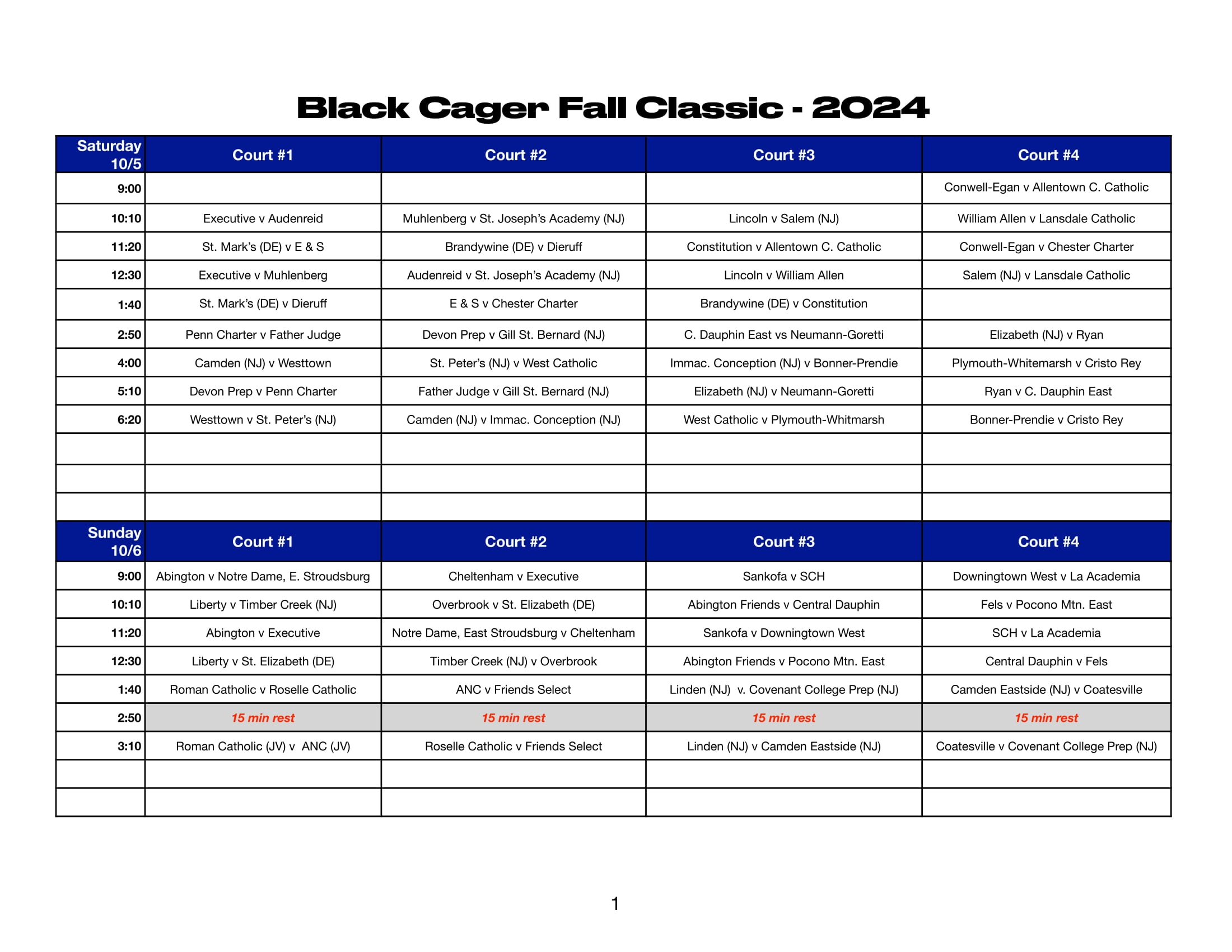
Black Cager Fall Classic Schedule Set!

It’s that time of year again—high school basketball season is just around the corner, and players are transitioning from summer grassroots/AAU hoops to the scholastic stage.

Join us on October 5th and 6th for the highly anticipated 2024 Black Cager Fall Classic, an event featuring many of the top high school basketball programs on the East Coast. Over the years, the Fall Classic has become one of the nation’s premier pre-season scholastic basketball tournaments.

This year’s competition will take place at the state-of-the-art Executive Education Fieldhouse, located at 555 Union Boulevard in Allentown, PA. With over 60 teams from four states set to compete, this year’s Classic promises to deliver top-tier talent and intense matchups.

Several powerhouse teams will be featured, including Roman Catholic (PA), Westtown (PA), Camden (NJ), Roselle Catholic (NJ), Penn Charter (PA), Neumann-Goretti (PA), and Academy of the New Church (PA)—all programs that consistently rank among the top 50 teams in the nation. The prestigious Philadelphia Catholic League will also be well-represented with teams like Archbishop Ryan, Devon Prep, Father Judge, West Catholic, Conwell-Egan, and Lansdale Catholic, in addition to the already-mentioned Roman Catholic and Neumann-Goretti.

Suburban Philadelphia basketball powerhouses like Plymouth-Whitemarsh, Coatesville, Downingtown West, Abington, Chester Charter, and Cheltenham are also set to compete, while elite independent school programs such as Friends Select, Abington Friends, and Springside Chestnut Hill will add to the competitive field.

Representing the Philadelphia Public League are teams like Audenried, Lincoln, Carver E&S, Constitution, and Overbrook. Additionally, Berks and Lehigh Counties will send their top teams, including Executive Education (the host school), Allentown Central Catholic, Liberty, William Allen, Pocono Mountain East, La Academia, Notre Dame, East Stroudsburg, and Muhlenberg.

New Jersey will be well represented, too, with top programs like Camden, Roselle Catholic, Camden Eastside, St. Joseph’s Academy, St. Peter’s, Immaculate Conception, Elizabeth, Gill St. Bernard, Linden, Timber Creek, and Salem ready to battle it out. St. Mark’s, St. Elizabeth’s and Brandywine will hold it down for the first state, Delaware.

Black Cager Sports Founder, Delgreco Wilson, highlights the highly competitive nature of the event: “We strive to give these programs an opportunity to see how they stack up against the best. Fans come to see elite players and teams, and I think that’s what the Black Cager Fall Classic is all about,” Wilson said. “Watching college basketball teams like Kentucky, Villanova, Temple, Florida State, UCONN, and Maryland, and knowing that many of our players will be competing at that level next year, is really special. Jalen Duren (Detroit Pistons), Seth Lundy (Atlanta Hawks), Donta Scott (Golden State Warriors), Collin Gillespie (Phoenix Suns), and Carlton Carrington (Washington Wizards) are just a few of our alumni now playing in the NBA. So, we’ve brought in elite players and teams for years … I think we offer something truly unique. The idea of having future high-major college and NBA players running up and down Executive Education’s courts—it’s really exciting stuff.”

Black Cager Sports Partners with Executive Education Academy Charter School to Host Premier Basketball Events

Allentown, PA – During the first annual Pre-Live Period Summer Classic, Delgreco Wilson, Executive Director of Black Cager Sports was thrilled to announce a significant partnership with Education Academy Charter School, bringing a series of high-profile basketball events to the newly unveiled Executive Fieldhouse. This state-of-the-art facility, built in collaboration with Lehigh Valley Health Network (LVHN), spans an impressive 28,000 square feet and is designed to host four basketball games simultaneously.

“We are very excited to host Black Cager Sport Events in our fieldhouse. They have demonstrated an ability to attract highly competitive high school programs to Allentown,” said Executive Education Academy Charter School CEO Robert Lysek. “Not only do Executive student-athletes benefit, but our facility is also used by many local and regional programs. We look forward to hosting several Black Cager events every year.”

Bob Lysek, Executive Education Charter School, CEO (l) and Executive supporter Pamela Tillett (r)

The Executive Fieldhouse is a premier multi-court facility featuring four brand-new regulation-size courts, each equipped with large, dedicated electronic scoreboards. The venue boasts a cutting-edge sound system, full wheelchair accessibility, and ample space for concessions. Additionally, the facility offers over 2,000 adjacent parking spaces, ensuring ease of access for spectators and participants alike.

Delgreco Wilson expressed his enthusiasm for the partnership. “We’ve hosted basketball events for more than a decade, and the Executive Fieldhouse is the finest multi-court facility in the mid-Atlantic region. The presence of two highly qualified athletic trainers provided by LVHN is a huge plus, as players and coaches can rest assured that sports-related injuries are appropriately treated right away.”

Jason Boggs, Director of Basketball Events, Black Cager Sports

The commitment from Black Cager Sports to host multiple events annually at the Executive Fieldhouse is set to elevate the local sports scene. “Bob Lysek and Ray Barbosa are very easy to work with. They want to provide young people with a clean, modern, and safe place to compete and gain exposure. Black Cager Sports shares the same goals. My partner, Jason Boggs, and I have decided to make this a long-term partnership,” Wilson added.

Gabe Hornberger ’25, Executive Academy wing receiving D1 interest from Patriot and Ivy Programs

This collaboration underscores Executive Education Academy Charter School’s dedication to enhancing athletic opportunities for its students and the broader community. The Executive Fieldhouse, with its cutting-edge amenities and strategic partnerships, is poised to become a central hub for competitive basketball in the region.