The Unbearable Witness: “Good White Folk” Can No Longer Look Away

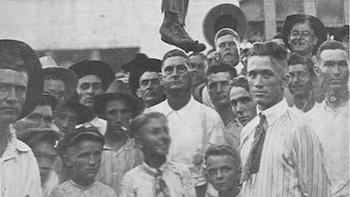
CAMDEN, NJ – I was born in the hold of a slave ship soaked in urine and feces whose name history did not bother to record. I am a Foundational Black American. For more than three hundred years, I have walked this land, a reluctant witness to a relentless paradox: the nation of lofty ideals built upon a foundation of profound, sustained cruelty. The question that haunts my long memory is not for the brutal racist/white supremacist monsters, but for the others—the “good white people” in every era.

How the fuck did you stand by and watch?
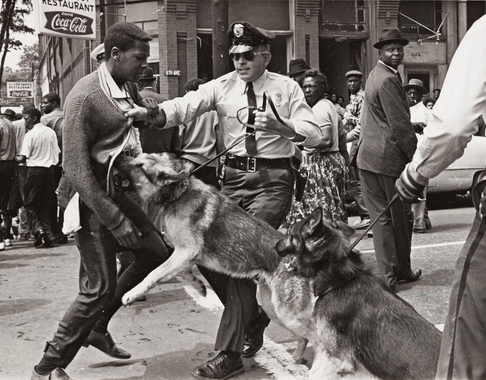
This is the essential inquiry of our present. For in understanding the mechanics of that historical complicity, we find a stark blueprint for today’s crisis. Yet something fundamental has shifted. The distance that enabled your ancestors’ silence has been obliterated. Today, the plea is not just for action, but for sight—to finally, fully see our humanity.

The Machinery of Acquiescence, Then and Now

The “good White folk” of any era rarely believes themselves complicit. They operated within a system of convenient distances.

How did you watch us be enslaved? You told yourselves it was an economic necessity. You saw the auction block from afar, heard the wails as a faint echo, and were comforted by sermons claiming we were not fully human. That distance was your insulation.

How did you witness the systematic rape on plantations? You chose not to see the high yellow children running through the fields. The violence was rendered invisible by a conspiracy of silence, the resulting children used as proof of our “depravity” rather than your community’s crime.

Today, the distance is gone. You cannot claim you did not see George Floyd’s life pressed from him for nine minutes and twenty-nine seconds. You cannot say you did not hear the fear in a child’s voice separated from her parents at a border you politicize. The camera phone is the unblinking eye my people never had. It has made the abstract, concrete. The historical buffer is broken.
The Fear Beneath the Silence

I have lived long enough to sense the tremor beneath the surface of this nation’s psyche. I must acknowledge what I believe fuels much of the backlash, the frantic rewriting of history, the cries of “replacement”: a deep-seated, often unspoken fear that Black and brown people, given the levers of power, will treat you as you have treated us.

For three centuries, you have shown us the blueprint of vengeance. The whip, the law, the noose, the gerrymander—all tools of subjugation. It is a terrifying legacy to contemplate. So you must hear this, clearly: We do not seek your destruction. We seek a transformation of the system built for it. We seek a democracy where no group holds permanent dominion, because such dominion inevitably corrupts and always, always visits violence upon the powerless. The multiracial democracy we strive for is not your nightmare of reversed oppression; it is the only possible escape from the nightmare you yourselves created.

The New Witness and the End of Gaslighting

When the Supreme Court ruled we had “no rights,” your ancestors could dismiss it as distant legal theory. When Rosewood and Tulsa burned, they could be framed as “riots.” When Emmett Till’s murderers were acquitted, the lie could be upheld as the law.

Today, the gaslighting fails against the evidence in our hands. We witness, we record, we share, we archive—instantaneously. We can juxtapose the “law and order” rhetoric with the violent repression of a peaceful protest. We can contrast the paeans to “heritage” with the footage of a neo-Nazi march. The dissonance is laid bare. To be a passive spectator now is not a failure of information, but a conscious choice of morality.

A Way Forward: From Spectators to Co-Creators

The path forward is not found in a return to a civility that never included us. It is forged in the active, courageous construction of a true multiracial democracy. This requires more than your guilt; it demands your partnership.

First, you must believe your own eyes and ears. Trust the testimony streaming from our phones, our communities, our lived experience over the sanitized myths of comfort.

Second, you must relinquish the fear that equity is your loss. A democracy where a Latina’s vote counts the same as a white farmer’s, where a Black child’s history is taught as thoroughly as a president’s, where a Native nation’s sovereignty is respected, is a stronger, more just, and ultimately safer country for everyone.

Finally, you must move from sentiment to structure. It is not enough to decry racism; you must defend voting rights, support truthful education, and challenge inequity in your neighborhoods, councils, and boardrooms. The MAGA movement gambles on your eventual acquiescence, your retreat into comfort.

My three centuries whisper that this is the decisive hour. The tools of witness we now possess have shattered the old alibis. You can no longer claim you did not see, did not know. You can only choose what you will do now that you have seen.

See our humanity, not as an abstract concept, but in the terrified face of a man under a knee, in the determined eyes of a child walking into a newly integrated school, in the grief of a mother at a grave. Then, act from that sight. Build with us a democracy worthy of its name, not as spectators, but as co-creators. The silence of your ancestors was permission. Your voice, your vote, your unwavering alliance must now become the foundation of something new.
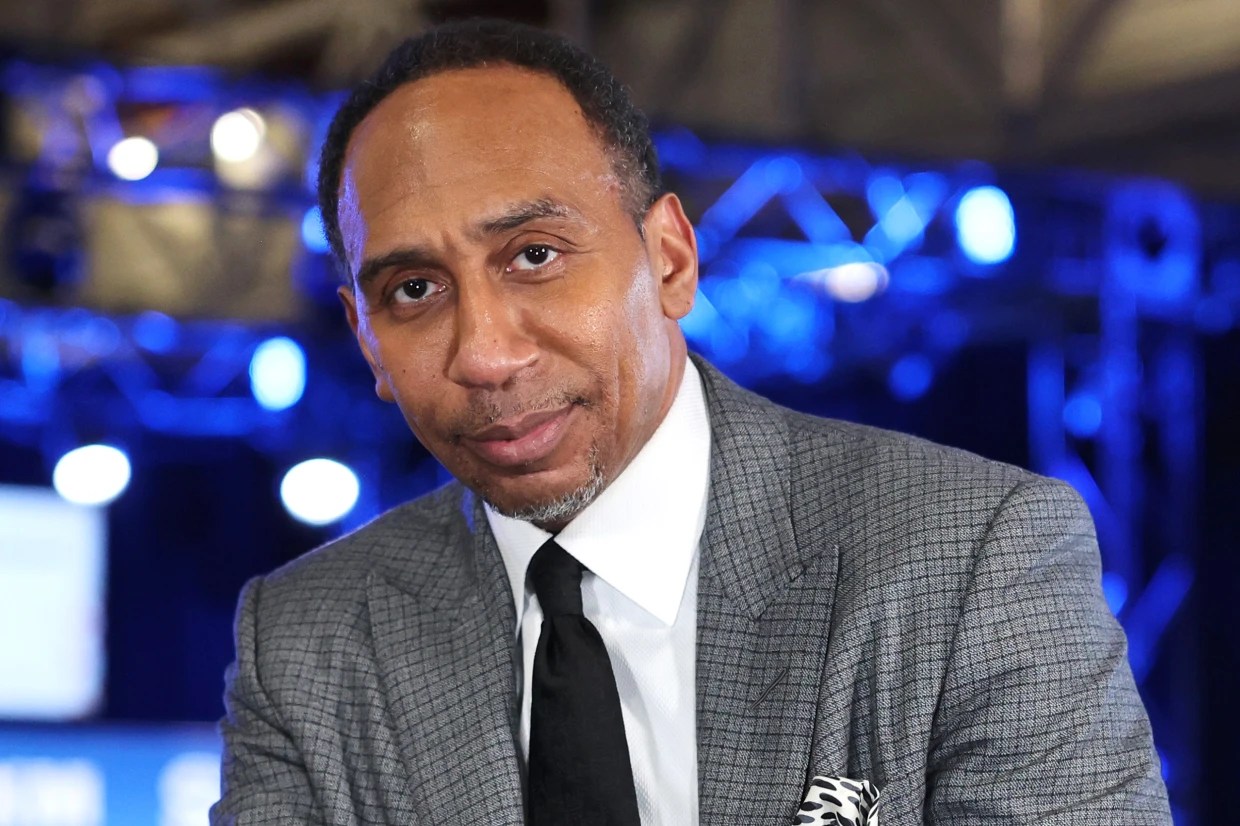
The Dangerous Conflation of Profit and Principle: Stephen A. Smith and the Crisis of Black Political Commentary

by Delgreco K. Wilson, M.A.

CAMDEN, NJ – When the logic of the market replaces the ethics of democracy in political discourse, we all lose.

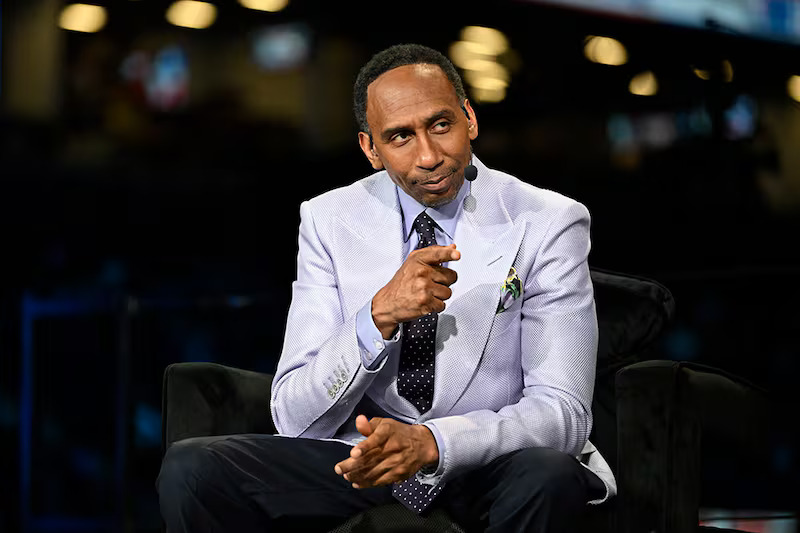
In the annals of American sports commentary, few declarations have been as revealing as Stephen A. Smith’s famous professional mantra: “I wake up every day asking, ‘how can I make my bosses more money?’ and then ‘how can I get some of it?'” This philosophy has propelled him to the pinnacle of sports entertainment, culminating in a recent ESPN contract worth over $100 million for five years. But when this same transactional worldview—where value is measured exclusively in revenue and influence is calibrated for profit—extends into the realm of political analysis, it threatens to degrade our democratic discourse and undermines the particular responsibilities of Black public figures in an era of political crisis.

Smith’s foray into political commentary and his openness to a 2028 presidential run have made him a lightning rod in Black intellectual circles, where his commentary is increasingly viewed as vacuous at best and dangerously aligned with MAGA interests at worst. The controversy surrounding him represents more than just another celebrity dabbling in politics; it exemplifies the dangerous convergence of entertainment and governance in modern America and resurrects painful historical questions about the pressure on Black figures to seek validation from white-dominated institutions.

The Profit Motive in Political Commentary: When Everything Becomes a Business

Stephen A. Smith’s business philosophy, however successful in sports entertainment, becomes profoundly problematic when applied to political analysis. The fundamental incompatibility lies in their core values: democratic discourse requires truth-seeking, principled argument, and concern for the common good, while market logic prioritizes profit, audience growth, and personal brand expansion. Smith has explicitly acknowledged his lack of political expertise, telling The Washington Post, “I’m certainly not an aficionado by any stretch of the imagination… Most Americans are not aficionados. They don’t know all the intimacies and intricacies of every single issue”. Yet rather than humbly acknowledging these limitations, he presents them as a credential of authenticity.

This approach has tangible consequences. Political analysis driven by entertainment values gravitates toward sensationalism over substance, conflict over consensus, and viral moments over nuanced truth. Smith’s commentary follows this pattern—loud, confident, and often lacking in policy depth. As journalist Carron J. Phillips noted in The Contrarian, “Politics, like elections, have real-world consequences. Thick skin is mandatory in the political landscape. And, given recent examples, Smith hasn’t proved he can take a punch in this arena”. The same performance that works for sports debate becomes irresponsible when discussing issues like tariffs, foreign policy, or civil rights.

Smith’s political rise reflects what happens when celebrity status masquerades as expertise. His appearance in presidential polls and his serious consideration of a 2028 run—despite having never held office or demonstrated deep policy knowledge—speaks to our degraded political landscape. As Bill Whalen, a former media consultant for Arnold Schwarzenegger, observed, “The question is, what does Stephen A Smith believe in at the end of the day?… Where is Stephen A Smith on abortion? Where is he on DEI? Where is he on quotas and affirmative action? Where is he on crime? Where is he on spending? The list goes on. You just don’t know”.

Historical Context: The Burden of Seeking White Validation

To understand the strong reaction to Smith’s political commentary within Black communities, one must appreciate the historical burden of what it has meant for Black Americans to navigate white-dominated institutions and seek acceptance within them. This dynamic is not rooted in any inherent trait of Black people but in powerful structures created by centuries of oppression:

  • The Legacy of Slavery and Jim Crow: For centuries, Black people were systematically dehumanized, with the slave master’s approval often meaning the difference between better treatment and brutal punishment. Under Jim Crow, access to resources, justice, and safety frequently depended on being deemed “respectable” by the white power structure.
  • Respectability Politics: This strategy emerged whereby marginalized groups attempted to police their own members to align with dominant culture’s values, hoping this would grant them social mobility and rights. The unspoken promise was that if Black people acted “properly,” they would be seen as more human and deserving by white society.
  • Gatekeepers of Opportunity: Throughout American history, the primary gatekeepers of economic, political, and cultural power—CEOs, university admissions officers, publishers, Hollywood executives—have been overwhelmingly white. Gaining validation from these gatekeepers often appeared the most direct path to economic mobility, educational access, and cultural representation.

Against this historical backdrop, Stephen A. Smith’s approach reads to many critics as a modern manifestation of these dynamics—a Black public figure gaining platform and reward through amplifying viewpoints that align with white conservative interests rather than community needs.

Stephen A. Smith’s Political Evolution and Black Opposition

Smith’s political positioning has evolved into what he describes as a “fiscal conservative and a social liberal” who is “utterly disgusted” with the Democratic Party. While he claims the mantle of an independent thinker, his commentary consistently aligns with MAGA talking points that have drawn criticism from Black intellectuals and community members.

Table: Stephen A. Smith’s Political Positioning and Community Response

Smith’s commentary on Black voting patterns has been particularly contentious. He has lamented what he calls Black voters’ “unconditional loyalty” to Democrats, arguing that this “disenfranchises” the community by reducing its political leverage. While this argument contains a strategic logic, many critics note that it ignores the historical reasons for Black alignment with Democrats—including the party’s support for civil rights legislation and the Republican Party’s embrace of voter suppression tactics and politicians with white nationalist ties.

The backlash against Smith reflects a broader rejection of what many see as his transactional approach to racial justice. His commentary often frames political choices in terms of market-style negotiation rather than principles of justice or historical solidarity. This approach strikes many Black critics as not just politically naive but historically ignorant of how racial hierarchy actually functions in America.

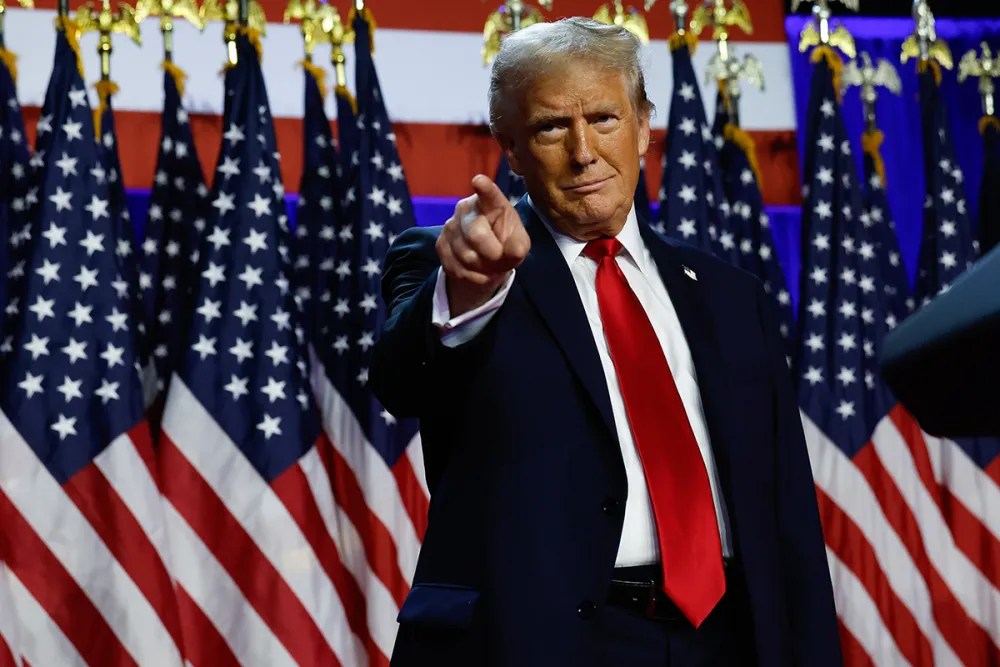
The perception of Smith as aligned with MAGA interests intensified when Donald Trump himself endorsed a potential Smith presidential run, saying he’d “love to see him run” and praising his “great entertainment skills”. For many Black observers, Trump’s endorsement confirmed Smith’s alignment with political forces that have shown consistent hostility to Black civil rights and democratic participation.

Conclusion: Beyond Transactional Politics

Stephen A. Smith’s extension of his profit-first philosophy into political commentary represents a dangerous narrowing of democratic possibility. It reduces citizenship to a transaction and political discourse to entertainment. The strong negative response from Black intellectual circles reflects not just disagreement with his specific positions but a profound understanding of what happens when community interests are subordinated to personal brand-building and revenue generation.

The challenge for Black communities—and for American democracy broadly—is to resist the siren song of transactional politics that measures value primarily in ratings and revenue. What makes Stephen A. Smith’s political commentary so concerning is not that he holds conservative views, but that his entire approach to politics appears to mirror his approach to business: everything is a negotiation, every principle has a price, and the highest value is expanding one’s own platform and profit.

As we navigate the complex political landscape of 2025 and look toward future elections, the need for authentic representation grounded in community accountability has never been more urgent. The alternative—a political discourse dominated by entertainment values and personal profit motives—threatens to complete the corrosion of our democratic institutions. Black communities’ rejection of Stephen A. Smith’s political brand represents not closed-mindedness but a hard-won understanding that some things—justice, representation, human dignity—should never be put on the auction block.

The Vital Role of Civil Society in Preserving Democracy: Lessons from Blanche Nixon’s Legacy

By Delgreco K. Wilson

PHILADELPHIA, PA — On a bright afternoon this week, my family gathered at the Blanche A. Nixon/Cobbs Creek Branch of the Free Library of Philadelphia for a rededication ceremony honoring my great-aunt’s legacy. Blanche Nixon was a petite but formidable woman, a relentless advocate for the children of Southwest Philadelphia, who believed fiercely in their potential. “There’s no such thing as a bad child,” she often said, and her life’s work reflected that conviction. She understood that civil society—the network of libraries, schools, churches, and community organizations operating outside direct government control—was the lever by which marginalized youth could be uplifted, their talents nurtured, and their futures secured.

The Free Library of Philadelphia, Blanche A. Nixon Branch, Cobbs Creek

The timing of this celebration could not be more significant. As America’s 250th anniversary approaches, the nation finds itself at a precarious juncture, one in which the very foundations of an inclusive, truthful historical narrative are under siege. Public institutions—particularly libraries—will be called upon as never before to sustain democracy by preserving access to knowledge, fostering civic engagement, and resisting the erosion of fact in favor of political expediency.

The Assault on Truth and the Role of Civil Society

Recent years have seen a deliberate campaign to narrow the scope of American history, stripping it of its complexities and contradictions. President Donald Trump’s executive order targeting so-called “critical race theory” in schools was just one salvo in a broader effort to enforce a sanitized version of the past—one that ignores the competing traditions of liberalism, civic republicanism, and the ascriptive hierarchies of racism, nativism, and sexism that have shaped the nation.

Delgreco K. Wilson (author), Kim Wilson (sister) and Lea Wilson (mother)

Republican-led states have accelerated this trend, passing laws that restrict how race, gender, and systemic inequality are taught. The result is a distorted narrative, one that suggests America’s political culture has been defined solely by individualism and egalitarianism, rather than a continuous struggle between these ideals and the forces of exclusion.

In this environment, civil society must become the keeper of inconvenient truths. Libraries, universities, advocacy groups, and cultural institutions—organizations that operate independently of government and corporate control—are now essential counterweights to state-sponsored historical revisionism. They provide the spaces where marginalized stories can be told, where banned books remain accessible, and where citizens can engage in the kind of informed discourse that democracy requires.

Kelly Richards, President and Director, Free Library of Philadelphia

Why Libraries Are Democracy’s Lifeline

Public libraries, in particular, stand as one of the last truly democratic institutions in America. They are not just repositories of books but civic hubs—what sociologists call “third spaces”—where people of all backgrounds can gather, learn, and debate without the pressures of commerce or partisan influence.

  1. Guardians of Truth in an Age of Misinformation
    In an era of algorithmic echo chambers and politicized media, libraries provide free access to vetted information. They are among the few remaining places where individuals can engage with diverse perspectives, fact-check dubious claims, and develop the media literacy necessary to navigate a fractured information landscape.
  2. Sanctuaries for Banned Knowledge
    As school boards and state legislatures remove books on race, gender, and sexuality from curricula, public libraries often become the only places where such works remain available. In doing so, they fulfill their historic role as defenders of intellectual freedom.
  3. Community Anchors in Neglected Neighborhoods
    Blanche Nixon understood that libraries are more than just buildings—they are lifelines for underserved communities. They offer job training, after-school programs, and safe spaces for children who might otherwise lack them. In neighborhoods like Cobbs Creek, they are often the only institutions providing free internet access, literacy programs, and legal resources to residents shut out of traditional power structures.
  4. Archives of Local History
    Beyond their role in education, libraries serve as living archives, preserving the stories of ordinary people whose struggles and triumphs are too often excluded from official narratives. In doing so, they ensure that history is not merely the domain of the powerful but a collective inheritance.
Daneen Nixon (Blanche Nixon’s Granddaughter), Delgreco K. Wilson (Blanche Nixon’s nephew)

The Fight Ahead

The challenges facing American democracy are not abstract. They manifest in the closure of rural libraries due to funding cuts, in the intimidation of educators who teach about systemic racism, and in the growing partisan divide over what constitutes “acceptable” knowledge.

But the rededication of the Blanche A. Nixon Library is a reminder that resistance is possible. It is a testament to the power of civil society—of individuals and institutions that refuse to let communities be defined by neglect or historical amnesia.

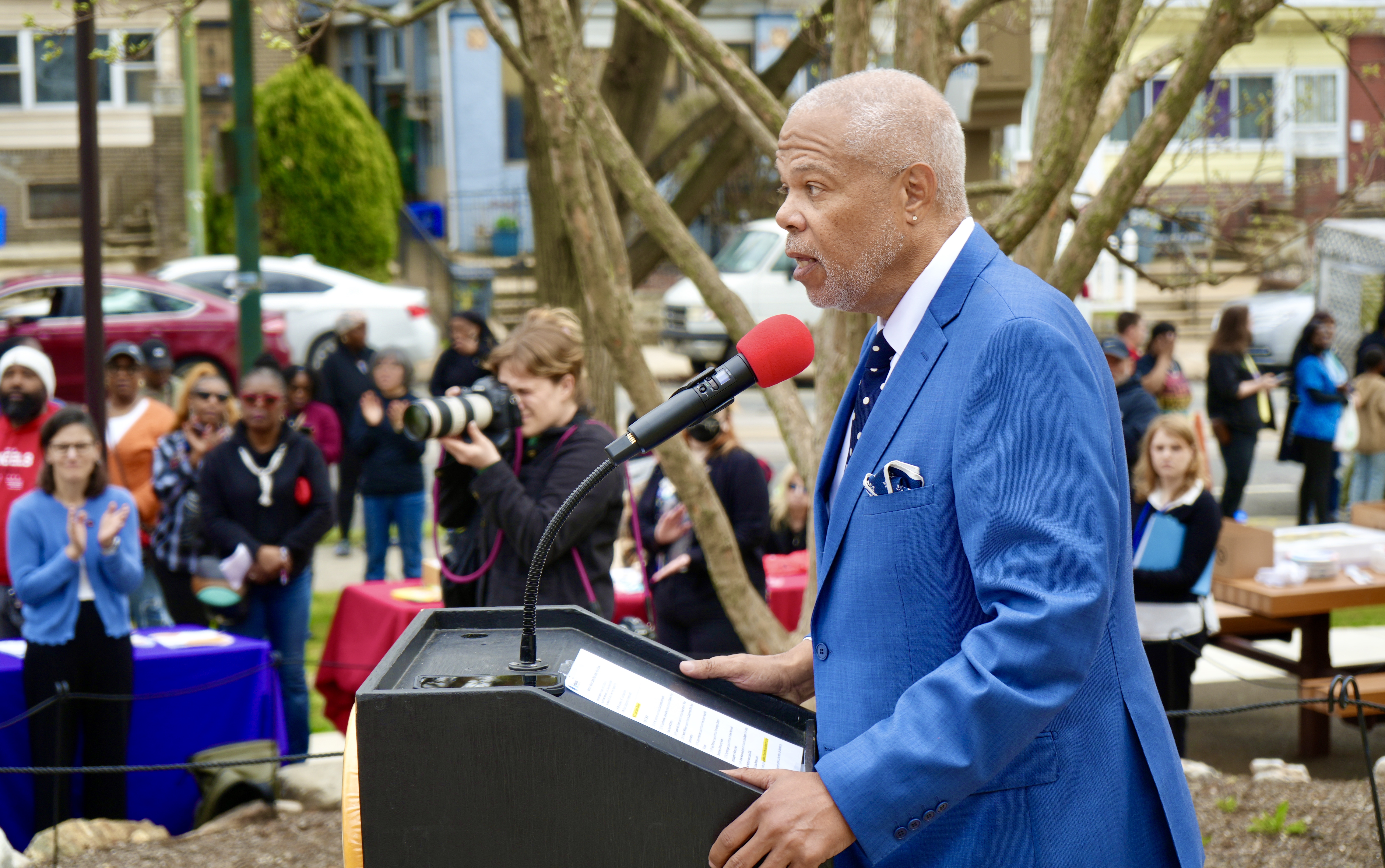
State Senator, Anthony Hardy Williams

Blanche Nixon’s legacy teaches us that the work of democracy is not just about elections or laws but about the daily, unglamorous labor of sustaining spaces where people can learn, question, and grow. As the nation moves toward its semiquincentennial, the survival of its democratic experiment may well depend on whether institutions like public libraries can continue to fulfill that role.

The alternative—a nation stripped of its full history, where access to knowledge is dictated by ideology—is one that figures like Blanche Nixon spent their lives fighting against. The best way to honor her memory is to ensure that fight continues.

American Democracy: Trump’s Victory and the Complex Legacy of Equality and Exclusion

CAMDEN, NJ – In the early hours of Wednesday morning, Americans awoke to news that Donald Trump had been re-elected as president in a hard-fought campaign. Once again, the peaceful transfer of power through a free and fair election reinforced a hallmark of the American experiment: a democracy, as James Madison wrote, that preserves the “spirit and form” of governance by the people. To many, particularly Black Americans and communities historically marginalized, Trump’s victory reads as an existential threat to American democracy as they know it. But the prevailing narrative that American political culture has been a pristine example of democracy in world history—one that safeguards freedom for all—is, and always has been, incomplete.

America’s democracy has endured in form, but the substance of that democracy has always been as much shaped by exclusionary ideologies—racism, sexism, xenophobia—as by the ideal of equality. These dual forces have existed side by side since the nation’s founding, influencing not only who participates in politics but the very values that American governance upholds. With that reality in mind, perhaps it’s worth reframing what some see as the potential “end” of American democracy. While the Civil Rights Era may have come to a symbolic close last night, democracy in its original, sometimes mercilessly exclusive form, will likely persist, even flourish.

American democracy, founded in ideals of freedom and representative government, was also founded as a racial and gendered hierarchy. For nearly two centuries, the racist/white supremacist system with procedurally democratic features held firm, enshrining the values of White male property owners while excluding millions based on race, nationality, and gender. Women, enslaved Black Americans, Indigenous peoples, and other minorities were systematically denied full participation in what was nonetheless celebrated as a bastion of democratic governance. From its birth, America’s so-called democracy was a profoundly unequal system, designed for the enfranchisement and empowerment of a narrow group of wealthy, White men.

When the Founders issued their declaration of freedom to the British crown, declaring “all men are created equal,” they carved out that declaration to serve a select few. This sentiment laid the groundwork for a nation that would go on to build institutions catering to the privilege of a specific demographic. A revolution against monarchy and aristocracy—yes. But a democracy for all? Hardly. While revolutionary in comparison to European monarchies, America’s democratic spirit came bound with the chains of slavery, the forced dispossession of Native lands and rigid exclusion of women.

This enduring myth—that America has always stood as a beacon of equality—feeds a dangerous misperception. Many Black Americans fearing democracy’s end in light of Trump’s return are responding to a version of history that never fully included them. The American education system has long centered its lessons on the actions of wealthy, White Protestant men, pushing the contributions and sacrifices of Black Americans, Indigenous peoples, women, and other marginalized groups to the periphery. This has cultivated an understanding of democracy as a singular narrative of freedom and progress when, in reality, it is a deeply divided one.

To critique America’s selective version of democracy is not to minimize the contributions of Founders like Jefferson, Adams, Washington, and Franklin. Nor is it an appeal to disparage the “MAGA” movement’s resurgence. Rather, it is a call to recognize that America’s political culture is far more complex than the sanitized version we’ve long been taught. The stark reality is that racism, sexism, and xenophobia are as American as baseball, apple pie and hip-hop. These inegalitarian ideologies are as deeply ingrained in our political fabric as any notion of liberty. For nearly two centuries, America was considered a democracy while enslaving millions on armed labor camps, slaughtering and forcibly removing surviving Native Americans, and rigidly upholding an Apartheid/Jim Crow segregation system. Rest assured that American democracy, at least in “spirit and form,” will endure through the next four years and beyond.

True, the election of Donald Trump may well signal the end of the Civil Rights Era’s vision of democracy, but that vision is only a recent addition to American life. The structures that enabled the original version of democracy to exist—and indeed, thrive—in the face of brutality and exclusion still stand. To reclassify our current system as anything but democracy would require rethinking the foundational structures laid by the Founding Fathers themselves. We would have to classify Washington, Jefferson, Adams and Madison as antidemocratic.  That is a project that, for now, remains highly unlikely. 

Instead, it is up to Black educators, leaders, and all Americans who see through the myth to challenge the dominant historical narratives. An education system grounded in truth, not legend, will better serve our future generations. It will equip them to recognize the contradictions and complexities that define American political culture—a democracy that has always held equality and exclusion in uneasy balance.