CAMDEN, NJ – The transfer portal is often framed as a story of players chasing money or fame. But sometimes, it is a story of fit—of a player finding the right system, the right coach, the right role at the right time.
Anthony Finkley’s decision to transfer from St. Joseph’s to La Salle is not a story of a player moving up to a power conference. It is not a story of a player cashing in on a massive NIL deal. It is a story of a Philadelphia kid who wanted to stay home, who needed a fresh start, and who made a strategic choice to prioritize development and fit over short-term gain.
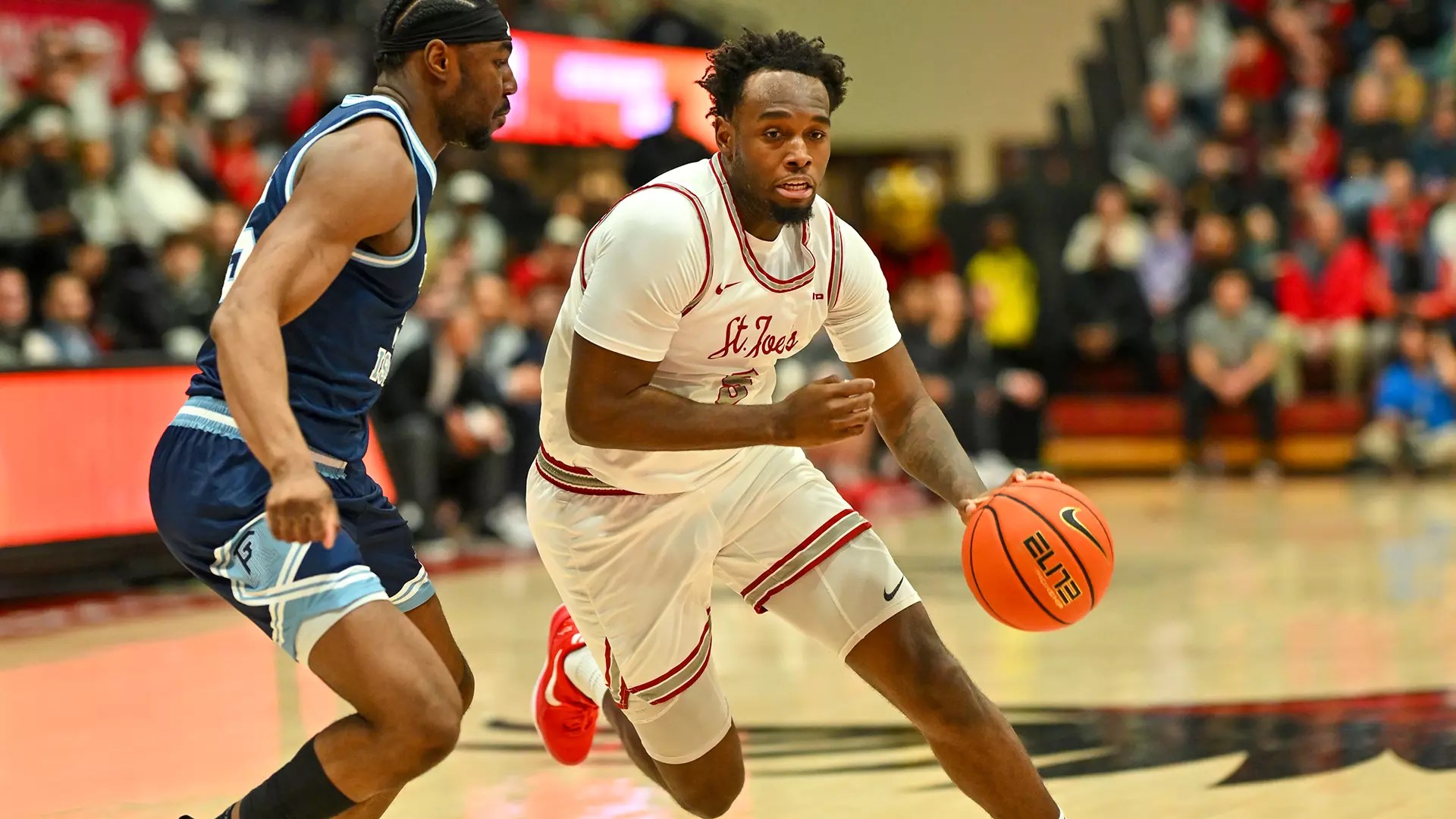
Finkley’s career at St. Joseph’s was a tale of two coaches. Under Billy Lange, he thrived. As a sophomore, he appeared in all 35 games with 13 starts, averaged 24.6 minutes per game, and put up 7.1 points and 3.8 rebounds. His three-point percentage was an impressive 39.6%, fifth in the Atlantic 10. In his 13 starts, those numbers jumped to 9.8 points, 5.2 rebounds, and 1.6 steals per game. He scored in double figures in nine games, including six of the last seven contests of the season. He dropped a career-high 18 against Rhode Island. He drilled four threes against Villanova.
Finkley had found his role. He had found his rhythm. And then Billy Lange left to join the New York Knicks.
The Donahue Mismatch
Steve Donahue is a respected coach. But his system did not fit Finkley’s game.
The numbers tell the story. Under Donahue, Finkley’s minutes plummeted from 24.6 to 19.0 per game. His scoring dropped from 7.1 to 5.4 points per game. His rebounding fell from 3.8 to 3.3. His three-point percentage cratered from 39.6% to 28.8%.
And the trend line was worsening. In his final 15 games with the Hawks, Finkley reached double figures just once. In his last two games, he averaged 1.0 point and 2.5 rebounds.
This is not a player who forgot how to play. This is a player who was miscast—a wing whose strengths were not utilized, whose role was unclear, whose confidence was eroding with every passing game.

The Portfolio Problem: What Finkley Was Weighing
When Finkley entered the portal with one season of eligibility remaining, he faced a classic portfolio dilemma.
Immediate Returns (Other Mid-Major Offers): NIL compensation, the promise of a defined role, and a fresh start. Several programs, including Delaware (CUSA) led by Philadelphia native Martin Inglesby, pursued him. But they were outside Philadelphia—away from his family, his network, his home.
Speculative Growth Assets (St. Joseph’s): He could have stayed. He could have hoped that another year in Donahue’s system would yield different results. But the data suggested otherwise. Over the past week, seven Hawks have entered the transfer portal. There is uncertainty regarding next year’s roster. His role was diminishing. His confidence was shaken. Staying would have been a gamble with no upside.
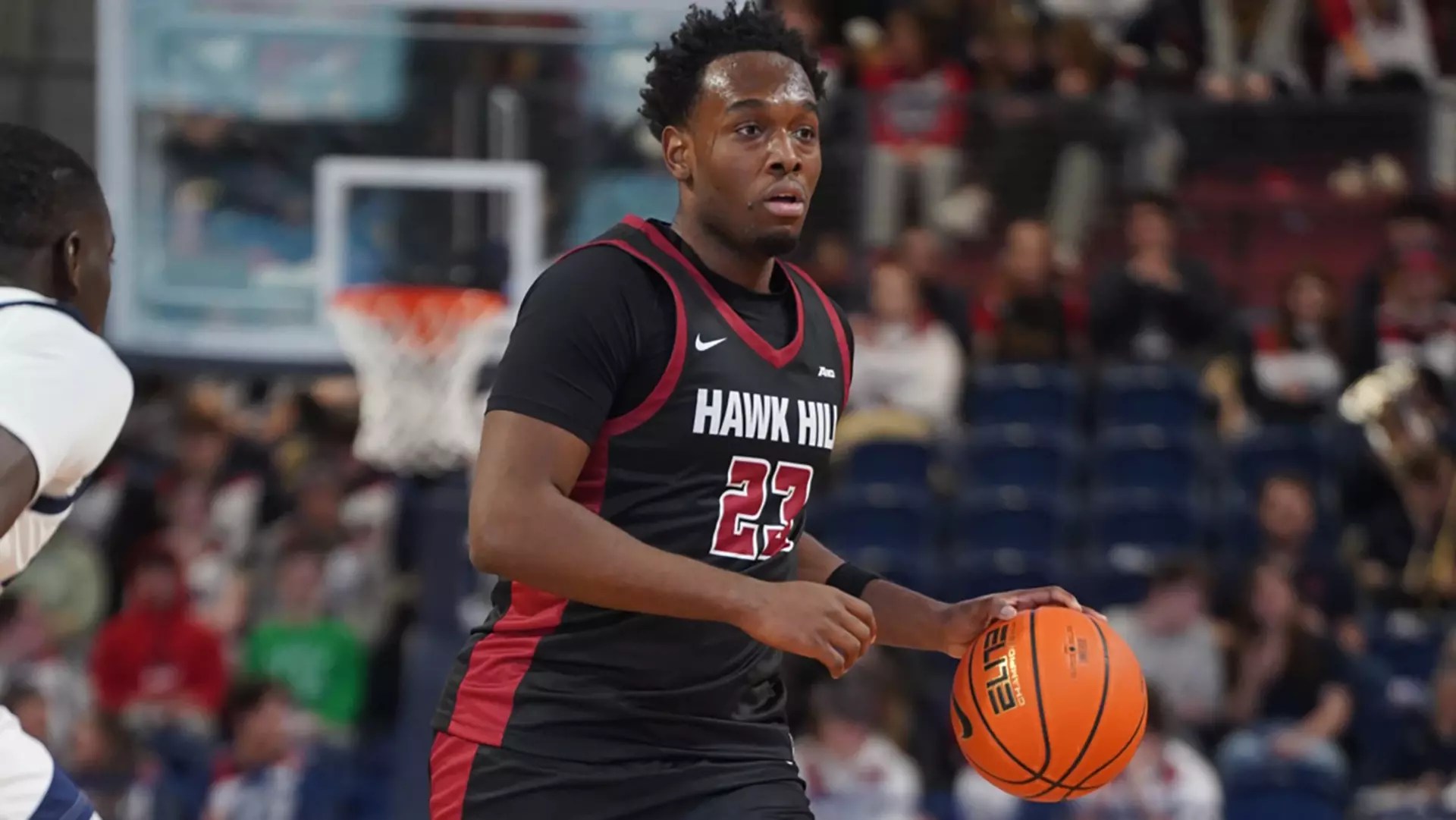
The La Salle Solution: A cross-town move. A familiar city. A coaching staff led by Darris Nichols that values his skill set. A program where he will play the 4, stretch the floor, and be a featured veteran presence.
For Finkley, the decision came down to one variable: fit.
Why La Salle? The Darris Nichols Factor
Darris Nichols is building something at La Salle. A former West Virginia point guard who learned under Bob Huggins, Nichols has brought a defensive identity and a player-development focus to the Explorers. He has also shown a willingness to feature transfers and build his system around their strengths.
For Finkley, that was the critical variable. He needed a coach who would trust him, who would design a role for him, who would let him play through mistakes.
Nichols offered that. Donahue did not.
The Information Asymmetry Problem
One of the most underappreciated dynamics of the transfer portal is the information asymmetry between players and programs. Programs have complete information about their own rosters, their own systems, and their own depth charts. Players do not.
When Finkley entered the portal, every program could promise him a role. But promises are not playing time. Depth charts shift. Coaches get fired. The player who is promised 30 minutes in April may find himself playing 15 in November.
La Salle offered something different: proximity. Finkley could visit the campus. He could talk to players who had played for Nichols. He could see the system up close. He could make a decision based on evidence, not promises.
That proximity—geographic and relational—was worth more than any NIL guarantee.

What Finkley Leaves Behind (And What He Gains)
Let us be clear: Finkley is leaving a situation where he was a rotation player at an Atlantic 10 program. St. Joseph’s is a respected program. The A-10 is a solid mid-major conference.
But he was not thriving. His role was shrinking. His confidence was wavering. After years of roster stability, seven Hawks are in the transfer portal. And with only one season of eligibility remaining, he could not afford to wait for things to change.
At La Salle, he gets a fresh start. He gets a coach who believes in him. He gets a system that fits his game. He gets to play in front of family and friends in the city where he grew up.
That is not a step down. That is a strategic recalibration.
The Final Verdict: A Smart Move for a Player with One Shot Left
Finkley’s decision to transfer across town to La Salle is not a sexy portal headline. He is not a five-star recruit. He is not chasing a seven-figure NIL deal.
But it may be one of the smartest transfers of the offseason.
Finkley recognized that his portfolio had depreciated significantly under Donahue. He recognized that he needed a new environment—a new coach, a new system, a new role—to maximize his final season of eligibility. And he recognized that staying in Philadelphia, close to home, close to family, was not a consolation prize but a competitive advantage.
At La Salle, under Darris Nichols, Anthony Finkley has one last chance to be the player he was under Billy Lange—the efficient shooter, the versatile wing, the reliable veteran.
And sometimes, the smartest move is not the one that takes you farthest away. Sometimes, it is the one that keeps you home.

