The Next Crown Prince of Harrisburg Hardwood: Why Shakur Starling is Central Pennsylvania’s Must-See Prospect

PHILADELPHIA, PA – In the constellation of American basketball talent, certain places have become fixed stars, producing a rhythm and a archetype of player as reliable as the changing seasons. New York City guards carry a certain swagger, Philadelphia guards a specific mental and physical toughness. And in recent years, a new locus has emerged, a crucible for backcourt talent that demands the attention of college basketball’s power brokers: Harrisburg, Pennsylvania.

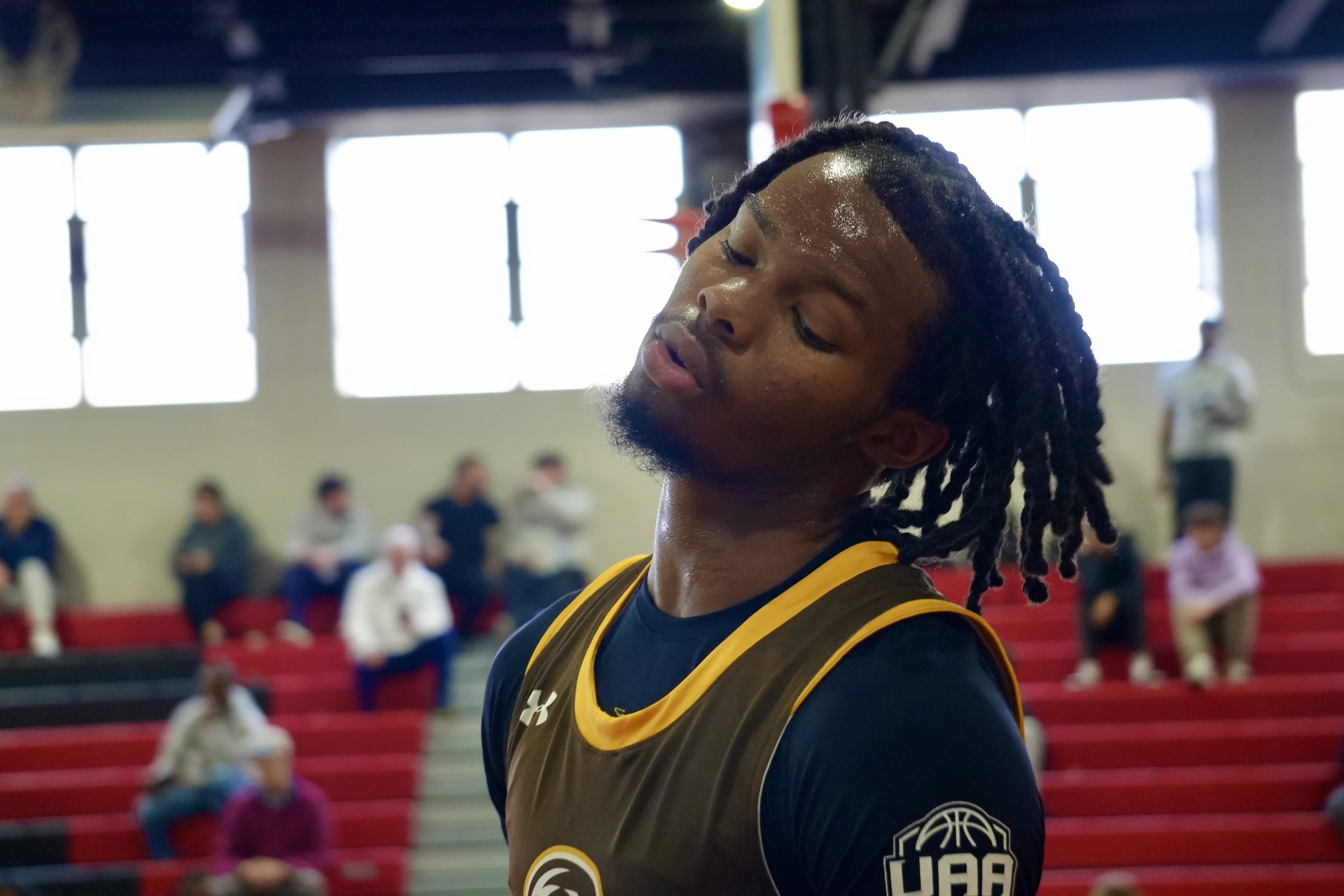
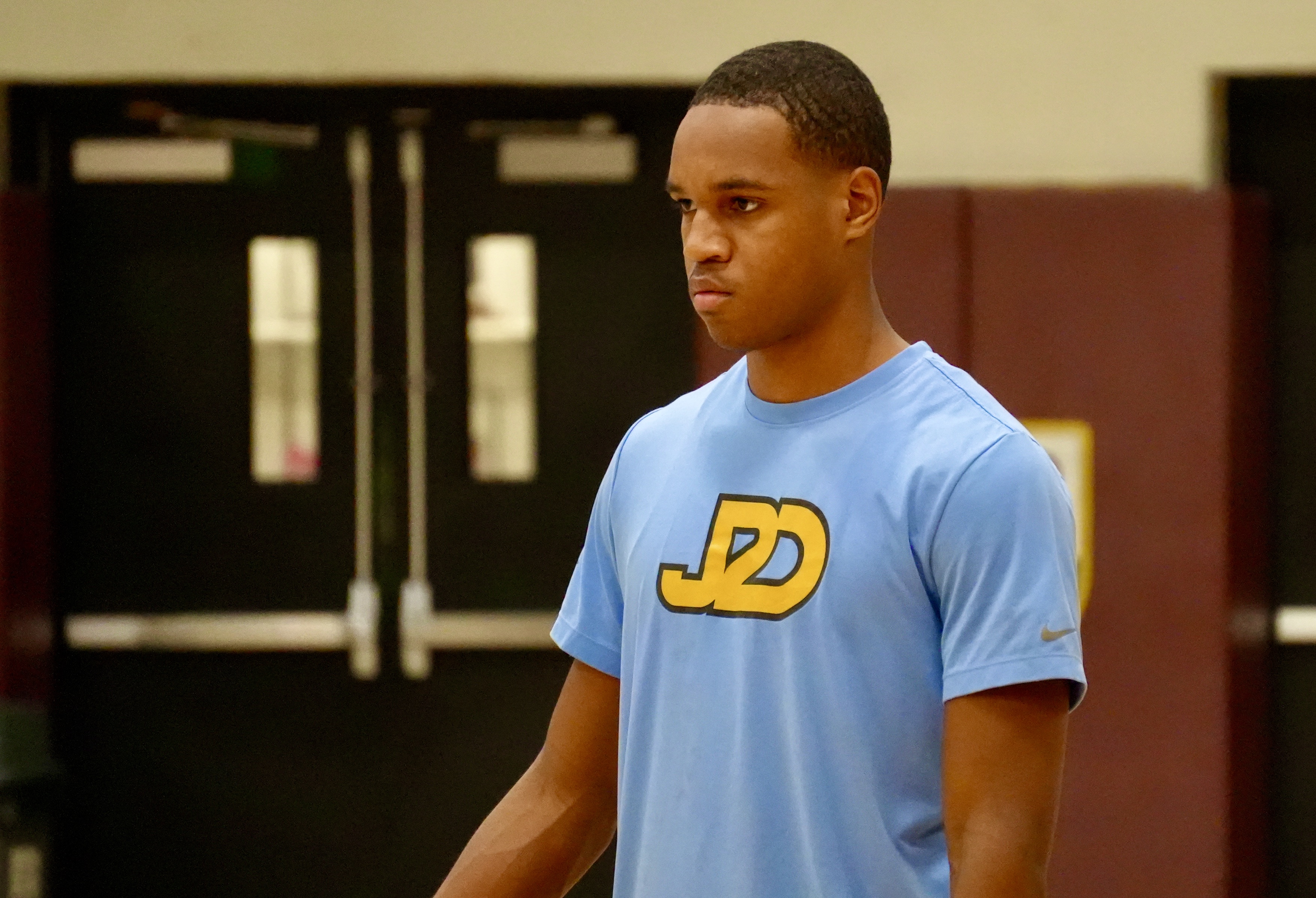
Shakur Starling, Central Dauphin junior guard

This is not a fluke, but a tradition being built in real time. It’s a lineage defined by Chance Westry and Malachi Palmer—elite guards who honed their games here before taking the well-trod path to national academies and, subsequently, the bright lights of the Big 10, ACC and Big East. Their departures created a vacuum, a question of who would next assume the throne. The answer is already here, and he is not following the same script. His name is Shakur Starling, a junior guard at Central Dauphin High School, and he is poised to become the most compelling recruitment story in the region, a prospect whose substance may ultimately outshine even his considerable flash.

The Harrisburg Guard: A New Archetype

To be a Harrisburg guard in 2025 means something. It carries a weight and an expectation. It means you are battle-tested in gyms where space is a luxury and physicality a given. It implies a defensive tenacity, a chip-on-the-shoulder grit forged in the crucible of Mid-Penn Conference play. Westry and Palmer established this brand—long, athletic, versatile perimeter players who could dictate the terms of a game on both ends.

Shakur Starling is the latest model, inheriting and evolving this prototype. He has assumed the mantle as “the guy” in Harrisburg, not through self-proclamation, but through a quantum leap in performance over the past year. His game is a testament to the area’s burgeoning reputation, but his story, rooted deeply in family and faith, suggests a different kind of journey—one that will unfold not at a distant basketball factory, but right here at home.

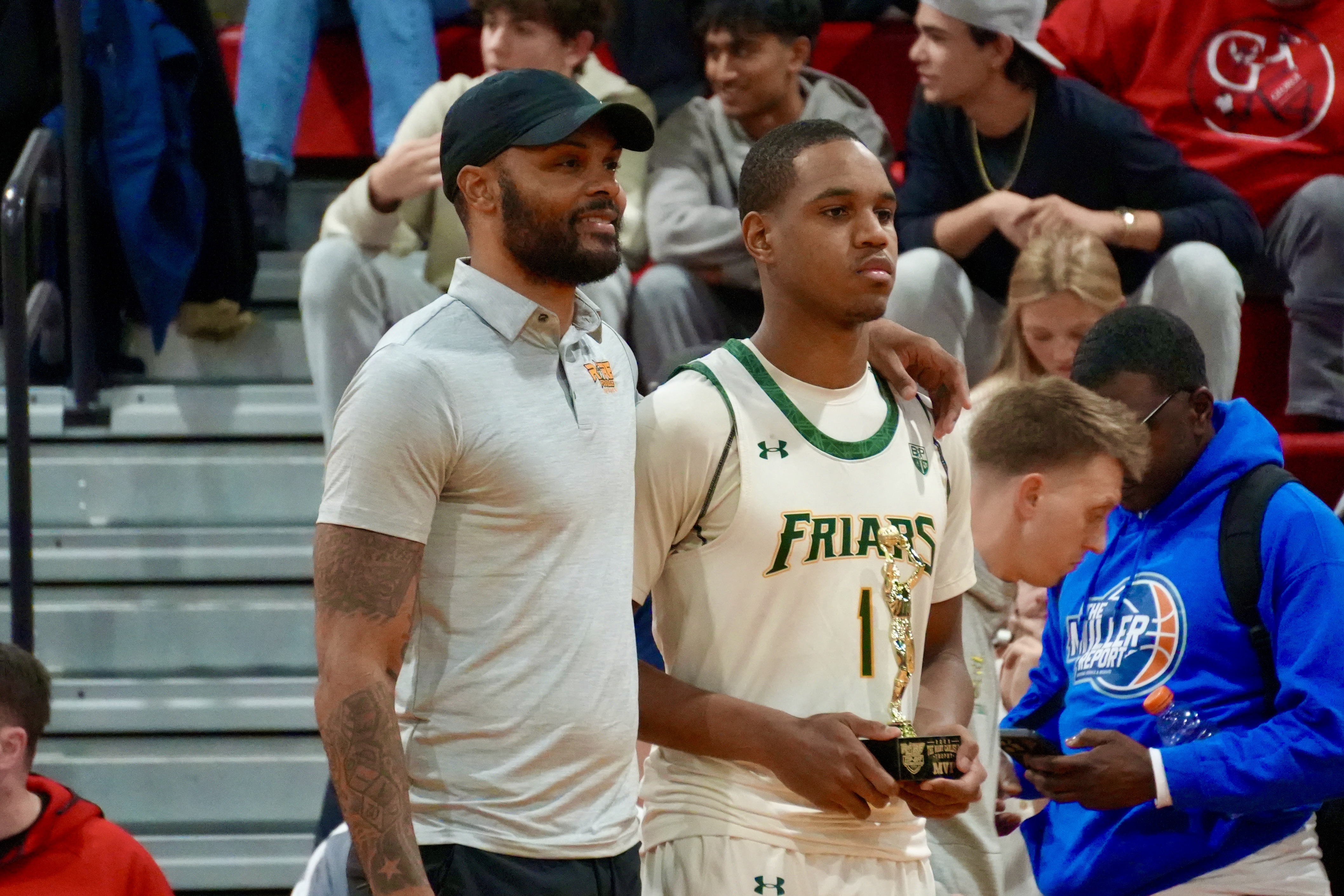
Shyheim Starling (l), freshman guard and Shakur Starling (r)

A Foundation of Character, A Profile of Excellence

Before the first crossover dribble is admired, one must understand the foundation. Starling is, by every account, poised and unfailingly respectful—a young man who looks adults in the eye and understands the weight of “please” and “thank you.” This is not incidental. It is the direct product of an exceptional upbringing by his parents, who are raising Shakur and his three brothers with a clear emphasis on faith, academics, and accountability.

This bedrock character is his first and most persuasive selling point. He is an outstanding student from a family deeply grounded in their faith. In an era of transfer portals and fleeting commitments, a prospect like Starling represents stability. It is why he already holds an offer from John Griffin at Bucknell University, a Patriot League institution that prizes scholars as much as scorers. One can confidently project that nearly every Ivy and Patriot League program will soon enter the fray, seeing in Starling the ideal marriage of academic readiness and athletic promise.

The Game Travels: From Central Dauphin to the EYBL

Do not, however, mistake this strong academic and moral profile for a limited game. Starling’s talent transcends zip codes. He has already proven his mettle on the Nike EYBL circuit, the most competitive grassroots basketball arena in the country, playing for Baltimore-based Team Melo. This is critical. It demonstrates his skills are not merely a product of local competition; they translate against national, elite-level peers.

Starling knocks down a 3 pointer in tough loss to Bonner

On this stage, his athleticism announces itself without subtlety. He possesses a quick-twitch explosiveness and open-floor speed that are innate—you cannot teach a player to get off the ground as he does. In transition, he is a runaway train, capable of finishing through contact and with the acrobatic body control to convert seemingly impossible circus shots at the rim. Defensively, his combination of that athleticism, a strong motor, and high effort makes him a nightmare. He has the tools to be a lockdown, multi-position defender, the kind of “two-way potential” that jumps off the screen to college coaches.

The Blueprint for a High-Major Future

From a purely basketball perspective, Starling is just beginning to scratch the surface. At Central Dauphin, he often operates as an off-guard in half-court sets, using his athleticism to slash and attack. His ability to go through high school bigs is already notable. Yet, the roadmap to becoming a high-major standout is clear.

First, the ceiling of his offensive game will be determined by the consistency and range of his three-point shot. He is solid now, but to transition from an athletic slasher to an elite “3-and-D” wing—the most coveted commodity in modern basketball—requires making that significant leap. Second, to become a primary ball-handling playmaker at the next level, his decision-making must continue to evolve, learning patience and picking his moments within a system.

The raw materials, however, are undeniable. As one evaluator noted, “The athletic prowess is there as far as just speed, explosiveness… When he gets to college, when you have more space, he is going to be a problem for four years.”

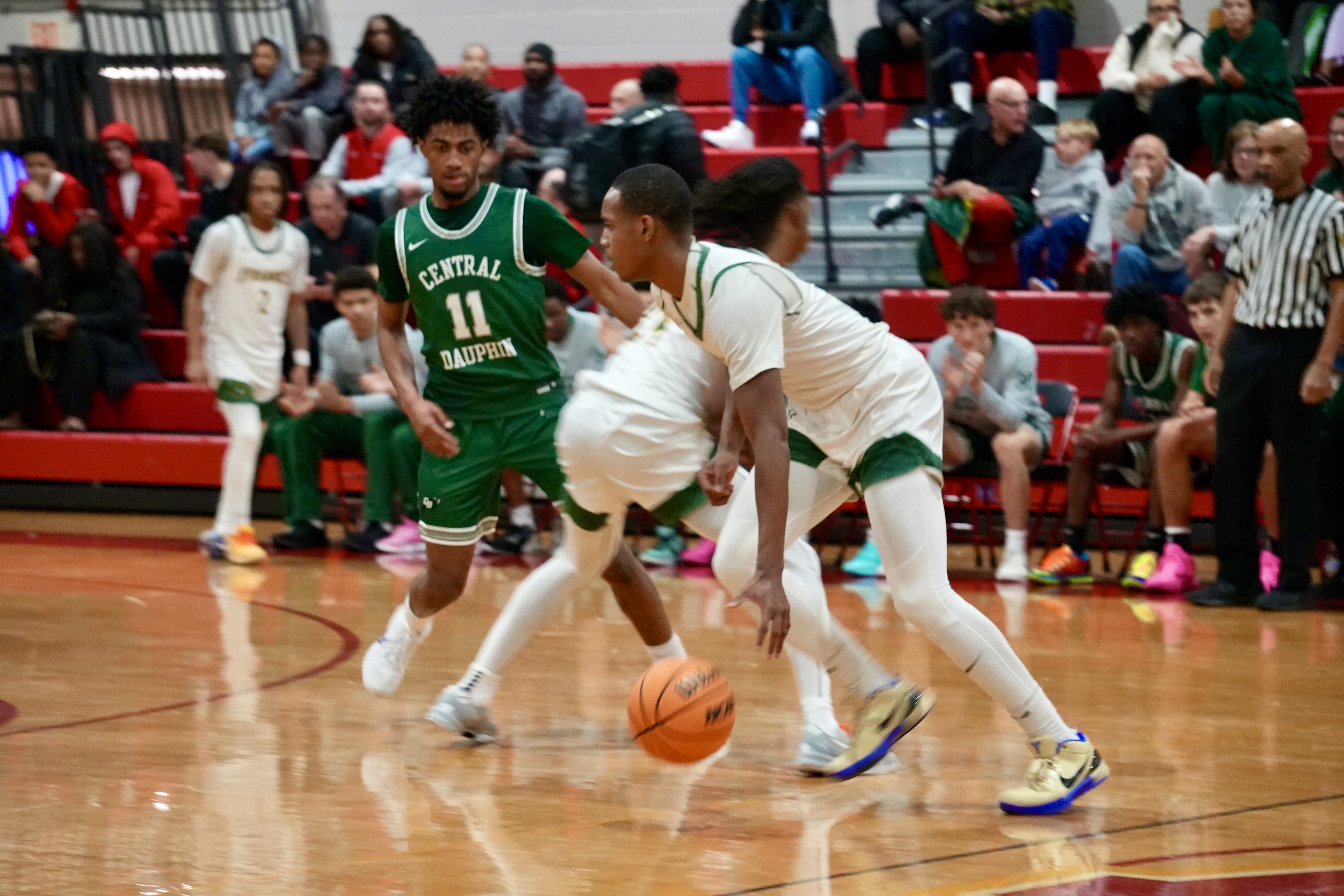
Starling matched up against Bonner-Prendie star guard Korey Francis

A Different Path, A Loyal Legacy

This is where Shakur Starling’s story diverges from his predecessors. His deep commitments to family, church, school, and teammates make a late transfer to a national academy highly unlikely. Unlike Westry and Palmer, we are likely to see this recruitment play out in real time, in the gym at Central Dauphin. This loyalty is rare, and it adds another layer of allure for college coaches seeking a program pillar, not just a transient talent.

The time for passive interest is over. Coaches from the CAA, Atlantic 10, and, yes, the Big East, should be making their pilgrimages to Harrisburg now. They will see a top-tier mid-Atlantic prospect whose best basketball is emphatically ahead of him. They will see a scholar-athlete whose character is as polished as his crossover. And they will see the next chapter in the story of the Harrisburg guard—a chapter defined not by departure, but by legacy; not just by athleticism, but by an unwavering foundation.

Shakur Starling is more than a prospect; he is a statement. He proves that in today’s nomadic basketball landscape, a crown prince can choose to build his kingdom at home, and in doing so, become an even more compelling figure for the programs wise enough to see the complete picture.

The Case for Korey Francis: The Mid-Atlantic Region’s Most Underrated Court General

PHILADELPHIA, PA – In the era of basketball as personal branding, where elite high school prospects migrate to national academies and highlight reels are currency, a counter-narrative is quietly building in the Philadelphia suburbs. His name is Korey Francis, a junior guard at Monsignor Bonner & Archbishop Prendergast Catholic High School. To the casual observer scanning national rankings, he may not yet register. But to watch him play—to truly understand the fabric of his game—is to witness one of the finest, most complete guard prospects in the nation. He is not a product of the assembly line; he is a testament to the enduring value of loyalty, intelligence, and old-school grit.

Korey Francis, Bonner-Prendie junior guard

A Player Without a Position, A Team Without a Ceiling

At Bonner-Prendie, Francis is a basketball paradox listed at guard. Under the shrewd guidance of Coach Billy Cassidy, Francis morphs from game to game, even possession to possession, into whatever his Friars need to win. With a roster featuring smaller, quicker perimeter players, Cassidy deploys Francis as a point guard, shooting guard, small forward, and even a burly power forward. He initiates the offense, posts up smaller defenders, switches onto bigs defensively, and crashes the glass with the tenacity of a forward. This positional fluidity isn’t a gimmick; it’s a master class in basketball utility. Yet, when the clock winds down and the outcome hangs in the balance, the ball inevitably finds its way to Francis’s hands. He is the calm in the chaos, the team’s true north.

The Anatomy of a Floor General

Projecting Francis to the next level clarifies his ultimate destiny: he is a cerebral, classic point guard. His strengths read like a manifesto for purists who believe the game is won between the ears.

His court vision and playmaking are elite. He pushes the ball with purpose, not panic, and sees passing lanes before they materialize. He is a quarterback in high-tops, running the offense with a veteran’s poise, his primary objective being to make his teammates more effective. His physicality is his signature. At a sturdy 6’3″, he leverages his strength like an NFL fullback, using a deft handle and a decisive first step to get a shoulder into defenders, creating space to barrel into the lane. Once there, he is a maestro of the “penetrate-and-pitch” game, finishing through contact or dishing with perfect timing.

Furthermore, he is an exceptional rebounder for a guard, a skill that instantly triggers transition opportunities. Defensively, his strength and intelligence allow him to guard multiple positions, effectively switching onto both bigger and smaller opponents. This is not a flashy scorer hunting shots; this is a conductor orchestrating a victory.

The Measurable Questions and the Intangible Answers

The scouting report will rightly note areas for growth: his three-point shot is inconsistent, and he lacks the blinding, elite athleticism commonly associated with top prospects in leagues like the SEC or Big Ten. He is a worker, not a wow-er.

But to focus solely on these metrics is to miss the forest for the trees. Francis is only a junior, with ample time to refine his jumper—a project far more achievable than instilling the innate feel for the game he already possesses. More importantly, his perceived “lack of elite quickness” is mitigated by a high basketball IQ that allows him to anticipate and dictate, rather than simply react. He wins with positioning, strength, and savvy, assets that translate to any level of competition. He is, in essence, D1-ready in the categories that are hardest to teach: leadership, physicality, and clutch decision-making. His “Iron Man” durability and unflappable demeanor under pressure are the bedrock of his value.

The Loyalty and Leadership of a Throwback

In an age of transactional basketball, Korey Francis’s story is profoundly refreshing. While peers of his stature have left Philadelphia for the national academy circuit, Francis has remained fiercely loyal to Coach Cassidy and Bonner-Prendie. This commitment speaks to a character often absent from the recruiting discourse. He is not just building a team; he is building a community.

Off the court, Francis embodies the ideal of the scholar-athlete. A straight-A student and the elected president of his class, he demonstrates that elite competitiveness and academic excellence are not mutually exclusive but mutually reinforcing. This discipline and intelligence are palpably evident in his play. He processes the game like an honor student, solving defensive schemes in real time.

The Verdict: A Prospect Worth Betting On

The modern basketball landscape is littered with athletic marvels whose games lack soul and structure. Korey Francis is the antithesis. He is a throwback to a time when the point guard was an extension of the coach, tasked with elevating everyone around him.

Yes, he must continue to extend his shooting range. Yes, he will face athletes at the next level who can match his strength. But to bet against Korey Francis is to bet against intelligence, against leadership, against an unwavering will to win. He is not just a mid-to-high major Division I point guard prospect; he is the prototype of a player who wins championships because he makes the complex simple and his teammates better.

In the noisy, hype-driven world of high school basketball, the steady, commanding drumbeat of Korey Francis’s game is a sound more and more college coaches are beginning to hear. They are listening to the future of a program—a leader who doesn’t just play the game, but truly understands it.

The Lost Art of the Philly Guard: Why Micah Waters Embodies What College Basketball is Forgetting

PHILADELPHIA, PA – In the cramped, sweat-stained gyms of Philadelphia, where the echoes of a hundred years of basketball history still reverberate, a certain archetype has been forged. It is not always the flashiest, nor the one chasing the highest point totals. It is the guard who understands that defense is a language, unselfishness is a creed, and winning is the only statistic that truly endures. From the legendary playgrounds to the hallowed Big 5 floors, this player has been a constant: gritty, intelligent, and indispensable to any winning effort.

Micah Waters, Friends Select senior guard

Today, that mold is perfectly embodied by Friends Select School senior Micah Waters. And in a just basketball world—the one that existed even a decade ago—his phone would be ringing with Division 1 scholarship offers. But we are not in that world. We are in the era of the transfer portal and NIL, a paradigm shift that has left exemplary high school prospects like Waters in a dangerous limbo. In the rush to recruit experienced college veterans or chase viral highlights, college coaches are overlooking the foundational players who build programs. For any low- to mid-major program seeking not just a transient talent, but a culture-defining pillar, a trip to Center City Philadelphia to evaluate Micah Waters is not just advisable—it is urgent.

More Than a Prospect: A Philadelphia Story

To understand Waters’ game is to understand his roots. He is the son of the late Micah Waters, Sr., a long-time Philadelphia Police officer who himself played for the famed West Philadelphia Speedboys before suiting up for Cabrini University. This is not incidental biography; it is the bedrock of his identity on the court. He plays with the discipline, responsibility, and communal pride of a public servant’s son. He plays, as those classic Philly guards do, not for stat sheets, but for the final score. His intelligence and high character are repeatedly noted by coaches and teachers, the marks of a young man who would represent a university with integrity.

Ten years ago, a player with this pedigree, this makeup, and his tangible skills would have been a coveted get for a slew of programs. Today, he waits. He is a casualty of a new calculus that undervalues the steady, winning player in favor of the transfer with immediate, if sometimes fleeting, experience. It is a system that risks discarding diamonds before they are ever polished.

A Tenacious Blueprint: Defense as a Destructive Force

The foremost argument for Waters’ scholarship-worthiness begins on the defensive end. In an offensive-centric age, he is a throwback lockdown artist. Scouts label him an elite, tenacious man-to-man defender, routinely tasked with shadowing an opponent’s top perimeter scorer. With long arms and anticipatory instincts, he is a disruptor in passing lanes. But his defense is more than steals; it’s a form of mental attrition. He is adaptable, capable of guarding multiple positions, and plays with a physical grit that sets a tone for his entire team. In the playoff crucible or on the Under Armour Circuit with Philly Pride, Waters has proven his defense travels and intensifies against high-level competition. This skill alone—the ability to neutralize another team’s best guard—is a standalone, roster-worthy talent.

Purcell Coles, Friends Select Head Coach

The Modern Complementary Offensive Skill Set

Offensively, Waters is not a heliocentric, ball-dominant creator. That is not his role, nor is it the role of the classic Philly guard he emulates. His value lies in high-efficiency, high-IQ play that perfectly complements primary scorers. He is a streaky but potent three-point shooter, particularly deadly as a spot-up weapon in the offensive system of coach Purcell Coles, where his understanding of spacing and timing shines. He is a strong finisher in transition, leveraging his defensive efforts into easy baskets. His high basketball IQ allows him to move within complex offensive schemes—he is noted to have a strong grasp of systems—ensuring he is always a productive, rather than a disruptive, offensive piece.

The Grit and The Growth: A Leader’s Profile

Perhaps the most intangible, yet critical, asset Waters possesses is his demeanor. He is described as a vocal leader, playing with a palpable toughness and a winner’s mentality. This is the glue that holds teams together through conference play and tournament pressure. Yes, that intensity can occasionally boil over, leading to unnecessary fouls—a noted area for growth. But coaches consistently prefer to temper a fiery competitor than to ignite a passive one. His occasional struggle to create his own shot off the dribble is a fair critique, defining his ceiling as a primary option. But that misses the point. His ceiling as a program-changing role player—a defensive stopper, a clutch shooter, a culture-setter—is immensely high.

A Perfect Fit for the Right Program

Micah Waters’ ideal role is clear: a gritty, defensive-minded wing who spaces the floor, excels in transition, and provides veteran-like leadership from day one. He is the ultimate “winner” archetype who makes players around him better through effort, intelligence, and selflessness. He would thrive in fast-paced, perimeter-oriented offenses that value defensive accountability. For a coach looking to build a sustainable program, not just rent a one-year scorer, Waters represents the kind of foundational player around which successful teams are constructed.

Micah Waters after hearing he has fouled out against Penn Charter

The current model of college athletics, with its frenetic portal churn, is a reality. But it shouldn’t be an excuse for myopia. There is immense value in identifying, recruiting, and developing a young man of character, toughness, and specific, winning skills. Micah Waters isn’t just a collection of strengths and weaknesses on a scout’s sheet. He is the continuation of a Philadelphia basketball legacy, a coach’s son in spirit, and precisely the kind of dependable talent that becomes the heart and soul of a successful college program.

The gym doors at Friends Select are open. The proof of a hundred years of basketball wisdom is on the court, waiting to be seen. It would be a profound shame—and a missed opportunity—if the new era of college basketball meant overlooking a young man who so perfectly embodies the timeless virtues of the old one.

Rare Footage, Rarer Vision: A Basketball Showcase for a New Recruiting Age

by Delgreco Wilson

PHILADELPHIA, PA – In the relentless, transactional churn of modern college athletics—where rosters are reshuffled annually via the transfer portal and the pursuit of a “finished product” often overshadows the art of cultivation—a quiet but significant rebellion is being staged not in an arena, but in a high school gym.

On December 6th, the Rare Footage Tip Off Showcase at Archbishop Ryan High School will offer a curated, compelling argument for a different path. In an era where recruiting high school players can seem a fading art, this event, meticulously crafted by the scouts and curators at Rare Footage, reminds us of the enduring value of foundational talent. It is a slate of games designed not just to appeal to fans, but to present college coaches with a rare, concentrated dose of projectable skill, competitive fire, and impeccable character.

The Curator’s Craft: Building a Must-See Schedule

What makes this showcase exceptional is its intentional architecture. Rare Footage has moved beyond simply booking teams. They have constructed narrative arcs and competitive contrasts, understanding that the most revealing evaluations happen under the pressure of a compelling storyline. The schedule is a four-act play designed to test every facet of a prospect’s game.

Carter Smith, Sophomore Guard, Penn Charter

Act I: The Veteran vs. The Prodigy
The curtain rises with a Philadelphia private school chess match. Friends Select, led by the poised and savvy senior guard Micah Waters, will try to contain the mercurial brilliance of Penn Charter’s Carter Smith, a sophomore with game-breaking talent. It’s a masterclass in contrasting tempos: experience and defensive discipline versus youthful, explosive ambition.

Act II: The Clash of City Identities
Next, the showcase pivots to pure, unadulterated grit. South Shore (NYC) versus West Catholic (PHL) is more than a game; it’s a battle of urban basketball ethos. Rare Footage has pitted two programs renowned for toughness, defensive intensity, and relentless pride. This is where intangibles like heart and resilience are scouted as closely as jump shots.

Korey Francis, Bonner Prendie, junior guard

Act III: The Marquee Argument
Here lies the centerpiece, the matchup that validates the entire premise of the event. In the transfer-portal era, why should a mid-to-high-major coach invest a scholarship in a high school guard? The duel between Central Dauphin’s Shakur Starling and Bonner Prendie’s Korey Francis is the answer. Rare Footage has engineered the perfect stylistic contrast: Starling’s explosive, north-south athleticism against Francis’s cerebral, physically imposing control. It is a scout’s dream and a definitive test for two of the Mid-Atlantic’s premier 2027 prospects.

Shakur Starling, Central Dauphin, junior guard

Act IV: The Grudge Match
The finale ensures the intensity never wanes. A simmering local rivalry between the host Archbishop Ryan and Academy of the New Church (ANC)—fueled by a disputed preseason result—promises a visceral, emotionally charged contest. It’s a test of poise under the pressure of pure rivalry, another layer of evaluation expertly woven into the fabric of the day.

Beyond the Bracket: A Night of Resonance

Thomas Sorber (r) and NBA Commissioner, Adam Silver (l)

Rare Footage’s effort extends beyond the court. The event will pause to retire the jersey of, Thomas Sorber, a Ryan legend, a poignant reminder of the lasting legacy a dedicated student-athlete can forge. This ceremony connects the past to the present, framing the evening’s competition as part of a continuum—not just a transaction, but a tradition.

The Headliners: A Case Study in Foundational Value

The Starling-Francis matchup is the thesis statement of the showcase.

Shakur Starling represents high-ceiling potential. An explosive athlete with a Division I frame, his ability to attack the rim and create in the open court is undeniable. The blueprint for his ascent is clear: refine his perimeter shot and harness his defensive aggression. Off the court, his strong academic record and interest from Patriot and Ivy League schools paint the picture of a complete scholar-athlete, the kind of player who becomes a pillar of a university community.

Korey Francis offers proven, polished production. A veteran of the prestigious Team Final program, he is a “smart, cerebral point guard and a natural leader.” He dominates with strength, savvy, and exceptional court vision, and his well-rounded stat lines are a testament to his consistent impact. He embodies the term “program pillar” off the court as well, serving as his school’s class president and carrying the academic credentials (Ivy/Patriot League interest) that make him a transformative recruit.

A Call for Visionary Investment

For coaching staffs from the Patriot, Ivy, A-10, CAA, and MEAC conferences, the Rare Footage Tip Off Showcase is not merely a convenient scouting trip; it is an essential one. In a sporting landscape cluttered with mercenary roster moves, this event presents the alternative: identifiable, investable talent.

The players here, particularly Starling and Francis, represent the sustainable model—the cornerstone you build with, not the temporary patch you apply. They are players who will grow in skill, leadership, and institutional knowledge over four years, fostering the kind of program culture and fan loyalty that cannot be portaled in.

The showcase on December 6th is a declaration. It is a testament to the curatorial eye of Rare Footage and a powerful argument that the future of the sport still runs through the passionate, competitive crucible of the high school game. In an age obsessed with the immediate, this is where one can secure a foundation.