The Case for Stability at Hawk Hill

PHILADELPHIA, PA – The rumblings are beginning to emerge. The fans and alums of St. Joseph’s University are publicly evaluating the future of its storied men’s basketball program. There is an intensifying discussion about whether or not SJU should fire head coach Billy Lange. This discussion deserves a nuanced examination. While Lange may not be the archetype of a transformative coach, he has demonstrated an ability to manage the unique challenges of a Philadelphia-based mid-major program in the modern era of college athletics. The more interesting question, then, from my perspective is not whether St. Joe’s could find a better coach but whether the university is prepared to risk finding a worse one.

The wins and losses under Lange’s tenure paint a picture of incremental progress over a six year span. Each season has brought modest improvement in the Hawks’ performance. However, as any Hawk fan will tell you, the improvements haven’t been dramatic enough to inspire unanimous confidence. St. Joe’s continues to face defeats against opponents it is expected to beat, such as this season’s home loss to Central Connecticut State and other home losses to Princeton and Charleston. Lange has delivered expected victories in so-called “buy games” against teams like Coppin State and Delaware State—games that keep the program’s record somewhat respectable.

It seems fair to say that Coach Lange’s value to SJU extends well beyond the traditional win-loss column. In the age of NIL (Name, Image, and Likeness) deals and the transfer portal, the ability to recruit and retain talent is paramount. Lange has proven adept at navigating this landscape. Senior Eric Reynolds, junior Rasheer Fleming, and sophomore Xzayvier Brown—all players with significant market value—remain at St. Joe’s despite the lure of potentially lucrative opportunities elsewhere. It’s reasonable to assume that each of these players could command between $300,000 and $600,000 in NIL compensation if they entered the transfer portal. That they’ve chosen to stay suggests that Lange has fostered a program that values their development and loyalty.

That has value… It seems the Saint Joseph’s Athletic Department recognizes and appreciates that value. They definitely appreciate it more than SJU fans and alums focused intently on wins and losses.

Beyond individual player retention, Lange’s connections with key talent pipelines have been a boon for the program. Relationships with organizations like Team Takeover in Washington, D.C./DMV (Cam Brown, Erik Reynolds) , K-Low Elite (Xzayvier Brown, Derk Simpson) in Philadelphia, and Camden High School (Rasheer Fleming, Dasear Haskins) in New Jersey enhance St. Joe’s ability to recruit top-tier talent. These connections, cultivated over the past six years, provide an edge in a highly competitive market and would take significant time for a new coach to replicate.

The competitive landscape of the Atlantic 10 Conference further complicates the picture. Programs like Virginia Commonwealth University are beginning to implement revenue-sharing initiatives, with VCU reportedly committing $5 million to student-athletes starting in 2025. This raises the stakes for programs like St. Joe’s, which operate with significantly smaller budgets and a more limited pool of donors supporting their NIL efforts. In this context, Lange’s ability to retain talent and compete regionally with schools like Villanova, Temple, La Salle and Drexel is all the more impressive.

For a mid-major program like St. Joe’s, these external factors weigh heavily in evaluating a coach’s performance. While it’s tempting for fans to focus solely on A10 wins and losses, St. Joseph’s administrators seems to place significant value on external factors. By any reasonable measure, Billy Lange has held his own recruiting within constraints that make it challenging to compete with larger programs. The Hawks’ budget is dwarfed by those of regional and conference competitors, and the program relies on a smaller, more intimate base of donors and fans. In this shifting environment, stability and strategic leadership will likely outweigh the allure of a fresh start with another coach churned out by a national search.

Critics of Lange’s tenure are quick to point to the team’s offensive struggles, particularly when their three-point shooting falters. These concerns are valid, and the program’s inability to consistently generate offense has been a recurring issue. Yet, firing Lange in hopes of finding a quick fix through a “national search” led by an outside firm is far from a guaranteed solution. 

SJU could whiff… Easily could whiff… You know they could whiff…

The unique challenges of recruiting and competing in Philadelphia and the A10 require a coach with a deep understanding of the program’s identity and limitations. By keeping it in the family, St. Joseph’s has always had that knowledge within the program. Since assuming the helm, Billy Lange has effectively demonstrated that understanding.

He has obvious shortcomings… Lange has not demonstrated an ability to consistently coach his team to more college basketball victories than losses.

That’s a problem.

For that, some want SJU to fire Billy and move on. I’m just saying it’s more complex than just wins and losses for Jill Bodensteiner and President Cheryl A. McConnell.

St. Joseph’s is at a critical juncture. Lange’s tenure has been far from perfect, but he has demonstrated an ability to navigate the complexities of modern college basketball. 

No small feat…

The Hawks’ progress in the won/loss columns may be slow, but it is progress nonetheless. Replacing Lange risks disrupting the stability and relationships he has built, with no guarantee of improvement. For a program like St. Joe’s, where every decision must be calculated and deliberate, continuity may be the best path forward.

It should be noted that Saint Joseph’s could easily FUCK AROUND AND FIND OUT shit could get a lot worse. 

In the end, the calculus isn’t just about finding a better coach. It’s about ensuring that the program can thrive in an environment where resources are limited and the stakes are higher than ever. The St. Joe’s brass seem to recognize the value Lange brings.

They know… I know… You know… We all know… Lange has to win more games.

To the dismay of those calling for his dismissal, SJU will likely determine that the risks of change outweigh the potential rewards.
This Ain’t For You: A Promise Betrayed

PHILADELPHIA, PA – Let’s unpack this shameful shift that’s crept over the past decade or so in Philadelphia like a slow-moving fog, dampening the streets and smothering what little light we had left. Once upon a time, there was a sacred rule in Philly’s urban Black culture, a code etched into the concrete jungle’s foundations. The hustlers, pimps, and players respected the sanctity of youth with promise. Athletes, bookworms, and dreamers were a different breed—off-limits. These young men and women were seen as the ticket out, the hopes of the block incarnate, and even the coldest fuckin’ killer wouldn’t dare derail their trajectory.

Noah Scurry

Back then, you’d hear it in passing: “This ain’t for you.” It wasn’t a suggestion—it was a command, a line in the sand. It meant: You’re the light in this darkness, and I’m not about to drag you down into my abyss. Whether it was a drug deal going down, a burglary or a dice game heating up, the young athletes and scholars were shooed away. Their presence alone demanded respect, a reverence that was reciprocated with every step they took toward their dreams. That respect was love, even if it was a love born out of guilt and unspoken regret.

But that love? It’s gone now—evaporated like dew under a blazing, merciless sun. Today, the line between the court and the curb is blurred, and no one’s keeping the wolves at bay. It’s like no one cares anymore—not about the promise, not about the potential. The streets have grown colder, their inhabitants harder. And the result? Blood-soaked dreams and bullet-ridden futures.

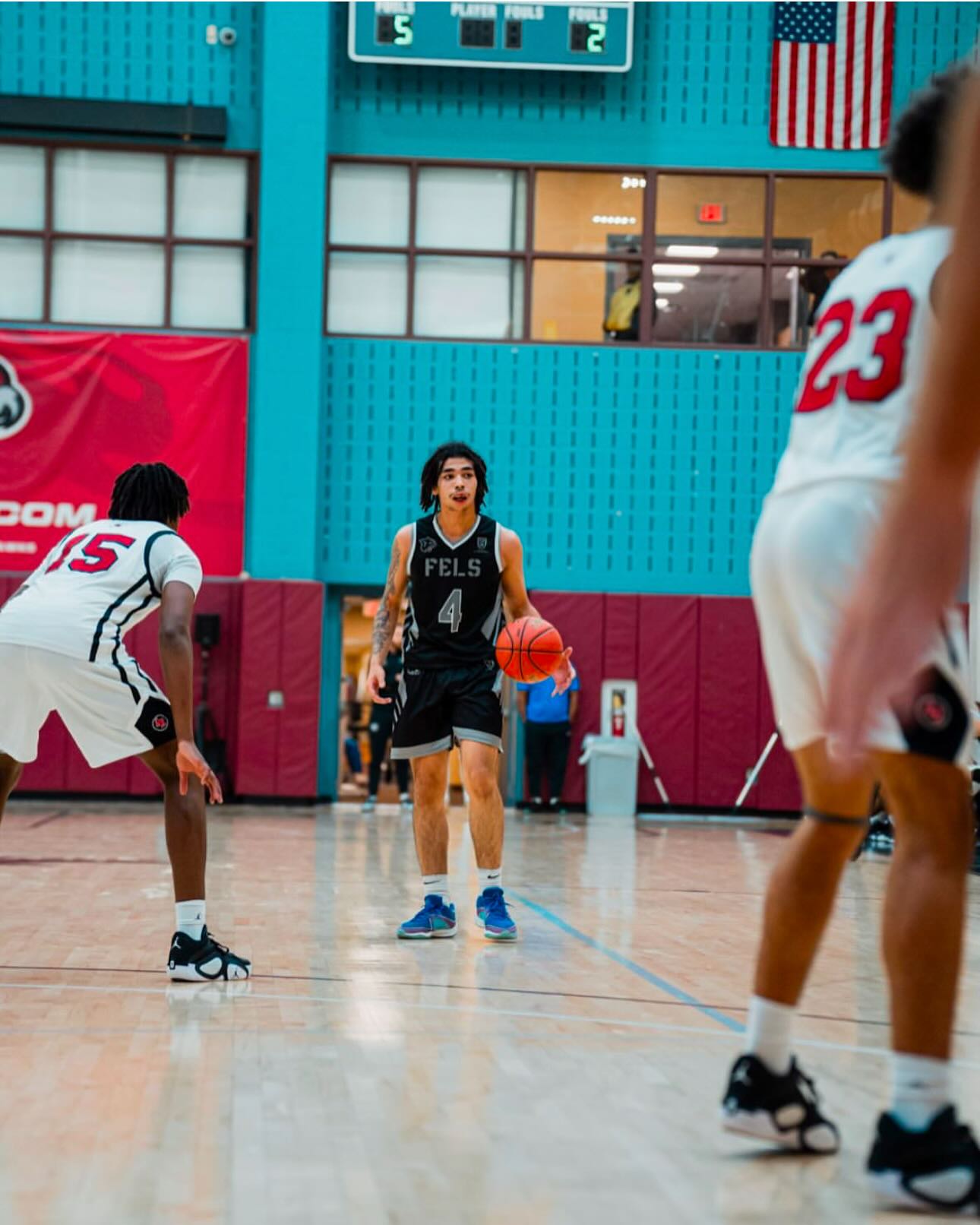
Take Noah Scurry, a rising star at Fels High School. He had the kind of talent that made folks lean forward when he stepped on the court—a kid who could’ve had the world at his feet. But on his way to school, the streets claimed him, cut him down in a hail of senseless gunfire. A life that once brimmed with potential was reduced to a statistic, another name in the endless roll call of young Black boys and men killing each other. And this ain’t an isolated tragedy. This is Philadelphia, where the headlines scream of athletes shot on school grounds, their cleats and helmets no armor against the madness. Homes invaded, families shattered, the echoes of gunshots ricocheting through neighborhoods like a mournful refrain.

The question—where does it all end?—hangs in the air, heavy and unanswered. The love is gone. The sense of duty to protect our own has been replaced by a numb indifference, a lethal apathy. The gangsters and hustlers, once guardians in their own twisted way, have abdicated their roles. Instead of shielding the promising, they pull them down, dragging them into a vortex of violence and despair. There’s no “this ain’t for you” anymore, no safe passage for those who dare to dream beyond the confines of the block.

We don’t like us—that’s the brutal truth.

And until we confront this self-loathing, this internalized hatred that fuels the cycle of violence, the blood will continue to flow, and the light will continue to dim. Somewhere in the ruins of what once was, we need to find that love again—that fierce, protective love that says, “You’re worth saving.” Because without it, we’re lost.

St. Joe’s Prep Triumphs Over Roman Catholic: A David vs. Goliath Tale in the Catholic League

The story of St. Joseph’s Prep’s stunning victory over nationally ranked and defending Philadelphia Catholic League champion Roman Catholic feels almost biblical in its scope. Over the decade I’ve known St. Joseph’s Prep Head Coach Jason Harrigan, his coaching exploits have often reminded me of the tale of David and Goliath. Last night, Harrigan’s Hawks summoned the courage and tenacity to topple a seemingly insurmountable giant, leaving me contemplating the famous passage from 1 Samuel 17.

Jordan Ellerbie, St. Joseph’s Prep

The game, initially scheduled for the Horowitz “Sixth Man” Center, was moved to Bensalem High School due to lingering HVAC issues. Despite the change in venue, the anticipation remained high as Harrigan’s Hawks faced off against Chris McNesby’s mighty Cahillites. Roman Catholic, with their powerhouse roster and Broad Street swagger, seemed poised to extend their reign. But Harrigan, and Jordan Ellerbie, like the young shepherd David, were ready to defy expectations.

The Battle on the Hardwood

The game itself was a physical slugfest, akin to a battle between two heavyweight boxers exchanging body blows. Neither team could find an offensive rhythm, which only underscored the meticulous preparation and defensive schemes orchestrated by Harrigan and McNesby. The intensity on the court was palpable, as every possession felt like a struggle for survival.

Chris McNesby, Roman Catholic Head Coach

Roman’s Shareef Jackson, a sturdy 6’8” Lafayette commit, has long been the league’s dominant force. His imposing presence and exceptional low-post technique make him nearly unguardable at the high school level. Yet, Harrigan devised a strategy to neutralize Jackson, deploying constant double-teams and relentless physical play to disrupt his rhythm. Jackson was held to a mere six points—a testament to Harrigan’s tactical brilliance.

Shareef’s younger brother, Sammy, also struggled offensively, going 0-for-7 from the field. With Marquette Head Coach, Shaka Smart, in the stands, less than 24 hours after vanquishing Thomas Sorber and the Georgetown Hoyas, Sammy could not make a shot while playing a solid and unselfish floor game. Roman’s mercurial sophomore point guard, Tyler Sutton, managed only eight points on 3-for-12 shooting. Senior guard Sebastian Edwards emerged as Roman’s most effective scorer with 13 points, including three crucial three-pointers, but even his efforts weren’t enough to overcome the relentless Hawks.

Ellerbie and Jason Harrigan

Ellerbie’s Heroics and Harrigan’s Vision

The game’s defining moment came from Florida Gulf Coast commit Ellerbie. With the game on the line, he delivered a masterclass in clutch play, scoring a game-high 16 points and sealing the victory with a left-handed baseline finger roll as time expired. It was a play that echoed David’s decisive sling stone, felling the mighty Goliath.

Just as David chose his simple shepherd’s tools over Saul’s heavy armor, Harrigan relied on grit, discipline, strategic ingenuity and some big fuckin’ balls. His ability to inspire his players to rise above their limitations has been a hallmark of his coaching career. Nine years ago, Harrigan led an unheralded Del Val Charter squad to a stunning victory over nationally ranked Imhotep Charter in the District 12 3A final. Last night, he did it again, proving that no opponent is invincible when preparation meets belief.

Shifting Power Dynamics in the Catholic League

Roman Catholic’s dominance over the past quarter-century has bred a sense of entitlement among its fans. The Cahillites have often dismissed their Catholic League rivals, with only Neumann-Goretti and occasionally Archbishop Wood posing serious threats. However, the winds of change seem to be blowing through the league.

As of now, St. Joseph’s Prep, Cardinal O’Hara, and Father Judge boast perfect 3-0 records, while Bonner-Prendie sits at 2-0. Conversely, traditional powerhouses like Archbishop Wood (0-3), Archbishop Carroll (0-3), and Neumann-Goretti (0-2) are struggling. Even Archbishop Ryan narrowly avoided a disastrous 0-3 start with a historic comeback. Meanwhile, Father Judge defeated Imhotep on a neutral court, and Devon Prep appears ready to challenge for a seat at the Catholic League’s top table.

St. Joseph’s Prep’s victory over Roman Catholic may portend a potential paradigm shift in the Catholic League. Under Jason Harrigan’s leadership, the undersized Hawks are emerging a symbol of resilience and strategic excellence. His ability to slay giants has not only reinvigorated the program but has also disrupted the established power dynamics of the league.

For one night, at least, David triumphed over Goliath. The question now is whether Harrigan’s Hawks or the other rising contenders can sustain this momentum and usher in a new era of Catholic League basketball. Regardless, one thing is certain: Jason Harrigan can slay a national power, and the story of St. Joseph’s Prep’s victory will be told for years to come.

The Afro-Sheen Light Skin Brother Bowl: A Game Worth Watching, A Moment Worth Celebrating

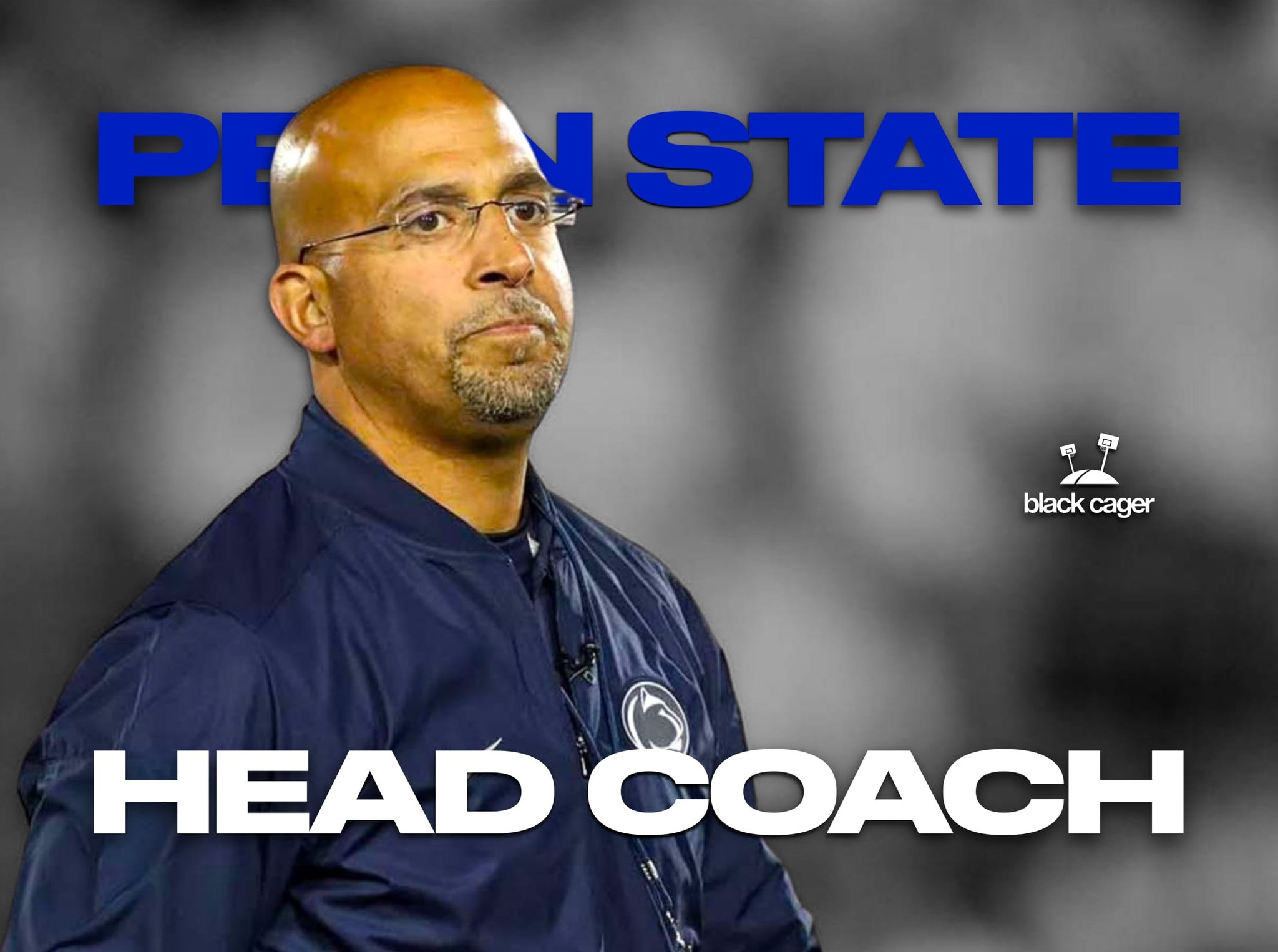
Next Thursday, American history’s getting made, plain and simple. Two Black coaches—Notre Dame’s Marcus Freeman and Penn State’s James Franklin—about to go head-to-head for a shot at the big prize: the National Championship. For Black folks, this ain’t just about football; it’s about kicking down doors that’ve been bolted shut for far too long. But, like clockwork, social media’s lit with white fans scratching their heads, asking why we’re even talking about race. To them, it’s just a game. To us? It’s a revolution.

Black folks know that for most of the 20th century, NCAA D1 colleges and universities wasn’t fuckin’ with us… At all…

The Long Shadow of Jim Crow

See, college ball didn’t always have space for Black excellence. For far too long, American Apartheid shaped collegiate sports. Back in the Jim Crow days, Black athletes were locked out of big-name programs, forced to shine in HBCUs while white players soaked up all the national mainstream media attention and glory. When integration finally hit in the 1970’s, Black players broke through, but the coaching ranks? That’s where the gate stayed locked.

And don’t get it twisted—the system wasn’t just about who could run the fastest or throw the farthest. In ‘87, Al Campanis, a Dodgers exec, told the world Black folks didn’t have the “necessities” to lead. Translation? “We don’t trust y’all to steer the ship.” Those words stuck, seeping into locker rooms, boardrooms, and beyond. Today, that bias may not wear the same ugly face, but it’s still lurking.

Breaking Through the Ceiling

Now here come Freeman and Franklin, rewriting the script. Many of the same cameras and microphones that have been prominently positioned in front of Coach Prime since August, will be pointed at these brothers. With everything on the line, Freeman and Franklin ain’t just holding clipboards; they’re running powerhouse programs, proving that leadership ain’t tied to skin color. For Black fans, it’s more than bragging rights; it’s decades of sweat, tears, and unshakable determination finally paying off.

But the pushback always comes. Some folks argue that sports should be colorblind, that the game’s about skill, not skin. Sounds nice on paper, but let’s be real: race has always been a lead actor in the American story. Black folks have felt the sting of fewer opportunities, lower pay, and higher scrutiny. That’s the backdrop to Thursday’s game, whether well-meaning white folks want to admit it or not.

A Call for Grace

To the white fans who don’t get the hype: this ain’t about excluding you; it’s about uplifting us. When we cheer for Freeman and Franklin, we’re cheering for progress—for the young Black kid watching the game, dreaming of calling plays someday.

Grace ain’t hard to give. It’s about understanding a joy that might not be yours to feel but is yours to witness. It’s about letting us celebrate without questioning the why. Because in moments like this, the why is woven into our history… American history.

Eyes on the Prize

This game’s bigger than football. It’s a chance to honor how far we’ve come and to fuel the journey ahead. For Black America, it’s a rare and beautiful milestone. For everyone else, it’s a reminder that progress, no matter how slow, is always worth the cheer.

So let’s savor this moment, not as a wedge but as a bridge. Let’s lift our voices for what’s right and what’s righteous. Because when the dust settles, it’s not just about who won the game—it’s about who changed the game.

The Light Skin Brother Bowl is ’bout to be lit like a Muthafucka…