As the Founder and Content Manager for Black Cager Sports, I am fortunate—blessed, really—to have access to some of the most interesting, thoughtful, and impactful minds in sports and public service. Among those who continually shape my understanding of the interplay between high school and collegiate athletics, education, and the unique challenges of urban centers like Philadelphia, Baltimore, and Camden is Phil Martelli.
Phil Martelli, Host of “Make a Difference”
For over three decades, Martelli has been more than a basketball coach; he’s been a moral compass for many of us trying to navigate the tricky terrain of sports and society. His podcast, Make A Difference, is a fitting extension of his life’s work: shedding light on the bigger picture, the human connections, and the societal change that can come from sports.
This week’s episode, which aired on Wednesday, November 27, features a guest as equally invested in the soul of Philadelphia as Martelli: City Councilman Isaiah Thomas. A rising star in the Democratic Party, Councilman Thomas is not just a policymaker but also a devoted coach who has guided the Sankofa basketball program in the Philadelphia Public League for 15 years. His dual roles as a civic leader and “hoophead” make him the perfect complement to Martelli’s deeply rooted perspective on youth, community, and the power of sport.
Councilman Isaiah Thomas
It’s almost hard to believe that these two hadn’t sat down for a conversation until now. But when they finally connected, the result was something special. Their discussion weaves through basketball—the love of the game that binds so many of us in this city—but it doesn’t stop there. They tackle the urgent issues impacting young people in Philadelphia, from the hurdles in education to the systemic barriers that hold back progress for underserved communities.
This isn’t just a sports podcast; it’s a deep dive into the heart of what makes Philadelphia tick. Martelli’s seasoned insight and Thomas’s fresh, passionate advocacy make for a conversation that will resonate far beyond the court.
If you care about this city, its youth, or the way sports can transform lives, this is a can’t-miss episode. Tune in to Make A Difference—because that’s exactly what Phil Martelli and Isaiah Thomas are doing.
NEWARK, NJ – At the Prudential Center, in the “Brick City” of Newark, New Jersey, two basketball players at opposite ends of their collegiate journeys clashed in a contest that felt less like an ordinary November game and more like a referendum on talent, experience, and promise. Villanova’s Eric Dixon, a high skilled seasoned veteran in his sixth year, delivered a performance for the ages, scoring a career-high 38 points. Maryland’s Derik Queen, a freshman sensation, countered with an all-around masterpiece—22 points, 11 rebounds, and 5 assists. In the end, Queen’s Terrapins outlasted Dixon’s Wildcats, securing a hard-fought victory that underscored the growing importance of versatility and team cohesion in modern basketball.
Derik Queen
This game was not just a matchup of two supremely skilled big men but a clash of basketball philosophies. Dixon, a classic Villanova player, is the epitome of what college basketball excellence looks like: disciplined, fundamentally sound, and relentless. His offensive exhibition was a showcase of everything a great college player can be. Whether it was sinking deep NBA-range threes, executing textbook post moves, or blowing by defenders with cunning hesitation dribbles, Dixon seemed unstoppable. He played like a man on a mission, determined to will his team to victory by sheer force of will and skill.
But basketball is rarely a solo endeavor. As Dixon poured in points, Maryland, guided by the precocious Derik Queen, slowly dismantled Villanova’s lead through the synergy of youth, athleticism, and strategic adaptability. Queen’s game was the antithesis of Dixon’s solo heroics. It was symphonic, blending scoring, rebounding, and playmaking into a performance that elevated his entire team. Every time Villanova tried to stretch their advantage, Queen would respond—whether with a slick assist to a cutting teammate, a put-back on the offensive glass, or a soft floater in the lane.
Queen represents the modern big man, a player as comfortable orchestrating an offense from the high post as he is battling in the trenches. His court vision and basketball IQ belied his youth, as he repeatedly found open teammates and exposed Villanova’s defensive lapses. Unlike Dixon, whose scoring was electric but often solitary, Queen’s contributions were woven into Maryland’s collective effort.
Eric Dixon
What makes this matchup fascinating is how it juxtaposes the present and the future of basketball. Dixon is a testament to the value of experience. His five years at Villanova have honed his game to a fine edge, and he plays with a poise and maturity that can only come from time. His mastery of three-level scoring is a reminder that college basketball still has a place for specialists, players who excel in specific roles and who, on their day, can single-handedly carry a team.
Queen, on the other hand, embodies the promise of what basketball can be. At just 18 years old, he is already a complete player. His versatility, unselfishness, and ability to impact the game in multiple ways make him a tantalizing prospect. Queen doesn’t just play basketball; he orchestrates it. He sees the game in layers, understanding not just his role but the roles of everyone around him.
And yet, for all their differences, there is a common thread between Dixon and Queen—a commitment to excellence and an understanding of what it means to lead. Dixon led by example, with his jaw-dropping scoring display reminding everyone why he is one of the best players in college basketball. Queen led through inclusion, making his teammates better and showing why he will one day be one of the best players in the game, period.
Maryland’s victory was a statement win, but it was also a reminder that basketball is a game of moments. On this night, Queen’s all-around brilliance and Maryland’s balanced attack prevailed. But Dixon’s performance will linger in memory, a dazzling exhibition of what a great college basketball player looks like at the peak of their powers.
The season is young, and both players have much to prove. For Dixon, the challenge will be carrying Villanova through the rigors of the Big East and beyond, where his experience and scoring will be indispensable. For Queen, the journey is just beginning, and his growth will be as much about navigating the spotlight as it is about refining his game.
In Newark, the veteran and the rookie gave us a glimpse of basketball’s past, present, and future. Dixon was magnificent, Queen was transformative, and the game was unforgettable. This was more than a matchup—it was a passing of the torch. And while Dixon may be the better player today, Queen’s time is coming. The beauty of basketball is that it allows us to marvel at both.
CAMDEN, NJ – Basketball royalty has long reigned in the Greater Philadelphia Region. Legends like Tom Gola, Wilt Chamberlain, Kobe Bryant, Earl Monroe, Lionel Simmons, DaJuan Wagner, Jameer Nelson and Dawn Staley have defined the sport across eras, blending artistry, power, and grace on the hardwood. Each generation claims its king or queen—a player so gifted that their dominance transcends debates. Today, Philadelphia basketball hoops has a new, unquestioned ruler: Hannah Hidalgo.
Notre Dame after defeating #3 USC in Los Angeles
A native of Haddonfield, New Jersey, Hidalgo has staked her claim not only as the finest amateur player from the Greater Philadelphia area but as one of the best collegiate basketball players—male or female—in the country. The All-American Notre Dame star has redefined what it means to be an elite two-way player, combining offensive brilliance with defensive ferocity in a way few can match. Her recent 24-point, 8-assist, 6-rebound, 5-steal masterpiece against No. 10 USC is merely the latest testament to her all-around greatness.
Relentless Offensive Brilliance
What separates Hidalgo offensively is her rare combination of skill, intelligence, and relentless competitiveness. Just a sophomore, she commands the floor with a poise that belies her youth, dissecting defenses with surgical precision. Her scoring repertoire is comprehensive: a lethal first step allows her to blow by defenders, a feathery touch finishes plays at the rim, and a reliable jump shot keeps opponents honest. Her stat line against USC—24 points on 9-of-21 shooting—is emblematic of her relentless drive to lead her team, finding ways to score against one of the nation’s best defenses.
Hidalgo’s passing is equally transcendent. Against USC, she orchestrated Notre Dame’s offense with eight assists, threading passes through tight windows and consistently setting up teammates like Olivia Miles for high-percentage looks. It is no wonder Notre Dame led wire to wire and silenced a hostile crowd of nearly 8,000 at Galen Center. USC’s JuJu Watkins is one of the transcendent stars in college basketball. Hidalgo went into Watkin’s crib and dominated the contest. Hidalgo’s ability to elevate her teammates makes her not just a scorer but a truly elite offensive engine.
She’s a DAWG! Defensive Dominance
Hidalgo’s impact on the defensive end is, perhaps, even more remarkable than her offensive prowess. At 5’6″, she defies expectations, leveraging her quickness, instincts, and sheer willpower to straight up terrorize opponents. One the game begins, the angelic Hidalgo becomes a gangsta! Her five steals against USC underscored her knack for disrupting passing lanes and applying relentless ball pressure. She routinely forces the very best ball handlers in the nation to “pick that shit up” before she takes it.
Defense is often an afterthought for star players, but for Hidalgo, it is a source of pride. She does not merely guard; she disrupts, dismantles, and demoralizes. She’s a beautiful basketball bully of the highest order. Her ability to turn defense into offense—whether by igniting fast breaks or snatching rebounds against taller opponents—makes her one of the most complete players in college basketball.
The Relentless Competitor
Beyond the numbers, Hidalgo’s competitive fire sets her apart. She does not merely play the game; she attacks it with an intensity that inspires teammates and overwhelms opponents. When Notre Dame needed a spark in the fourth quarter against USC, it was Hidalgo who delivered, leading a decisive 16-2 run that sealed the game. Watkins and the Trojans, undefeated until that moment, had no answer for Hidalgo’s relentless energy and leadership.
A Legacy in the Making
Philadelphia basketball has long celebrated its legends, but few players have fused offense and defense with the level of mastery displayed by Hannah Hidalgo. Her achievements at Notre Dame are a continuation of her brilliance at Paul VI High School, where she was a McDonald’s All-American and one of the nation’s top recruits. Now, she is taking her place on college basketball’s biggest stage and dominating with the same flair and tenacity that made her a household name in high school.
Hidalgo’s ascent represents more than individual greatness; it is a reminder of the region’s proud basketball tradition. She follows in the footsteps of icons like Dawn Staley and Kobe Bryant while carving her own unique legacy. With every steal, every assist, every clutch basket, she affirms her place as not just Philadelphia’s finest but one of the best players in the history of collegiate basketball.
Hannah Hidalgo is not just a star; she is a phenomenon, a player whose brilliance reminds us why basketball matters so deeply in Philadelphia. She has earned her crown, and her reign has only just begun.
PHILADELPHIA, PA: The journey from high school basketball to high major college hoops is a steep climb fraught with challenges that fans, particularly those entrenched in the local Philadelphia and Camden basketball communities, often fail to understand. The expectations placed on young players—mere teenagers stepping onto the brightest of stages—are not only unreasonable but often cruelly uninformed.
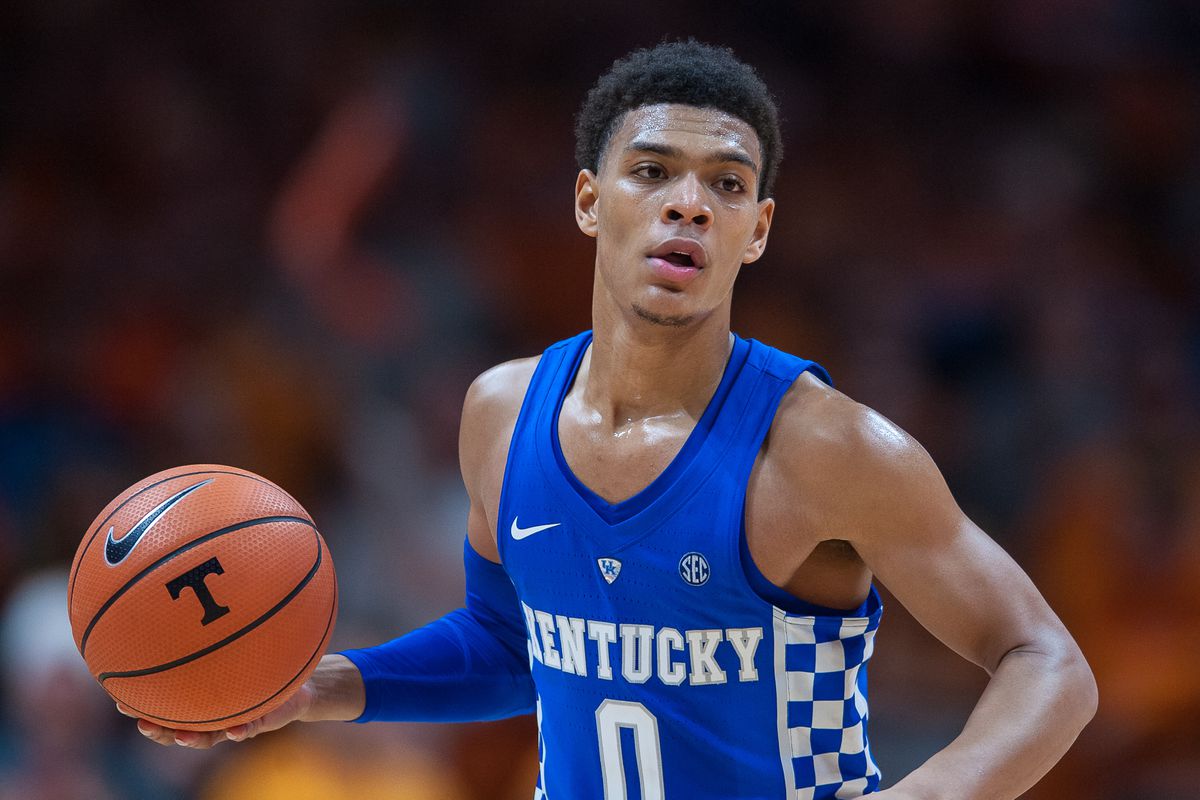
Quade Green
Plainly stated, niggas have no fuckin idea what they are talkin’ bout…
Freshmen entering high major programs are thrust into hypercompetitive environments where success is measured against near-impossible standards. They compete with older, stronger, and more experienced upperclassmen who have little incentive to step aside for an 18-year-old prodigy. The results, while often admirable in context, are ruthlessly critiqued.
Quade Green’s freshman season at Kentucky in 2017-2018 is a case study in this phenomenon. A five-star recruit and McDonald’s All-American, Green arrived in Lexington with immense fanfare. Kentucky, coached by the legendary John Calipari, was a perennial powerhouse, and Green joined a roster featuring seven future NBA players. As a freshman, Green averaged 9.3 points, 2.7 assists, and shot a respectable 37.6% from beyond the arc—all while competing in the cutthroat SEC conference. By any reasonable measure, this was highly successful freshman campaign in the mighty SEC conference. Kentucky went 26-11 that year and finished the year ranked 18th in the nation in the final Associated Press poll. Yet, in his hometown of Philadelphia, his performance was derided by armchair critics who declared his choice to attend Kentucky a mistake.
These critiques, fueled by local pride and a lack of understanding about the difficulty of transitioning to college basketball, are misguided. A player like Green, who carved out a significant role on one of the nation’s top teams as a freshman, was achieving success against the odds. But those odds are rarely considered by fans who see only carefully curated highlight reels and box scores.
Plainly stated, niggas have no fuckin idea what they are talkin’ bout…
The story is repeating itself with Jalil Bethea, a heralded Philadelphia recruit now at Miami. Through four games, Bethea has shown flashes of brilliance, averaging 7.8 points in just 12.3 minutes per game. Yet the grumblings have already started. Some question why a player of his talent isn’t starting or dominating. What they fail to grasp is the reality of high major basketball: Bethea is competing with veterans like Nijel Pack (14.7 points, 6.7 assists), a fifth-year senior, and Jalen Blackmon (14.0 points, 1.7 steals), another seasoned guard. These are players with years of college experience who know the system and the physical and mental demands of the game.
Jalil Bethea
In this context, the transition from high school to college basketball is more than a step up—it is a leap. Freshmen, even the most talented, are adjusting to faster-paced games, more complex schemes, and physically mature opponents. High school dominance against inferior competition like “Collingdale Catholic” or “Roast Pork Charter,” simply does not translate directly to the high major college level.
Additionally, high major basketball rosters are stocked with talent. Freshmen are not handed minutes; they earn them. Coaches at programs like Kentucky, Miami, and Duke are tasked not with developing individual players in isolation but with building cohesive units that can contend for national championships. This often means limiting the roles of freshmen while leaning on upperclassmen who can deliver consistent results.
The problem lies partly in how young players are marketed. Highlight tapes, social media buzz, and grassroots hype build unrealistic expectations. A player dropping 40 points in a high school game might dazzle fans, but the competition level is rarely considered. This leads to a false narrative that high school stars can seamlessly dominate at the collegiate level. When they don’t, fans often blame the player, the coach, or even the program, without acknowledging the broader context.
The consequences of these unreasonable expectations can be damaging. The pressure to live up to hype can erode a player’s confidence. The constant scrutiny can impact mental health, and the pervasive narrative that a player “chose the wrong school” can sow doubt and create tension within a team.
Muthafuckas need to shut the fuck up and let it play out…
High major basketball is not a fairytale; it’s a crucible. Upperclassmen who have spent years developing their skills and bodies do not defer to 18-year-olds, no matter how talented. Coaches prioritize winning over everything else, which often means favoring experience over potential.
For players like Green and Bethea, the freshman year is rarely about stardom—it’s about survival and growth. By the time these players become sophomores or juniors, they often evolve into key contributors, but that progression is ignored by fans who judge them prematurely.
If we are to fairly evaluate young players, we must adjust our expectations. Freshmen should not be seen as saviors but as students of the game, learning and adapting to an environment more challenging than most fans can imagine. Instead of demanding instant results, we should celebrate their resilience, their flashes of potential, and their determination to succeed in the face of daunting odds.
Quade Green’s journey shows that even a “successful” freshman season is not immune to misplaced criticism. Jalil Bethea’s story is still unfolding, but one hopes that he, like Green, has the fortitude to rise above the noise. Fans and critics alike must recognize the difficulty of the transition and the strength it takes to endure. Only then can we truly appreciate the young athletes who dare to take on the challenge of high major college basketball.
CAMDEN, NJ: Watching the Bryant Bulldogs edge out the home court Delaware Blue Hens, 85-84, in a fiercely competitive basketball game last night, I couldn’t help but reflect on the ever-widening chasm in college athletics, particularly in the era of NIL (Name, Image, and Likeness) deals, transfer portals, and immediate eligibility. As I admired the work of coaches like Phil Martelli Jr. and Martin Ingelsby, their relentless hustle, and their ability to construct cohesive rosters from unlikely sources, my mind drifted to Colorado’s Football Coach Deion Sanders and his now-infamous declaration when he met his inherited football team: “I’m bringing my luggage with me, and it’s Louis.”
Coach Prime
That statement, dripping with urban swagger and intent, encapsulated the reality of the high-major recruiting ecosystem in today’s college sports. Coach Prime wasn’t merely warning his players that change was coming—he was announcing that he, with his cultural cachet, financial resources, and unmatched name recognition, could shop at the most exclusive recruiting boutiques. For Sanders, recruiting isn’t about finding diamonds in the rough; it’s about walking into Louis Vuitton or Gucci and selecting the finest clothing and accessories crafted from the most exclusive materials with zero regard for the price. Plainly stated, Coach Prime was “talking’ dat shit”…
Coach Prime’s Cultural and Financial Advantage
Deion Sanders embodies a unique blend of celebrity, charisma, and cultural influence. As a Hall of Fame athlete who transcends football, Sanders commands attention in a way few coaches can. His name alone draws recruits, and his bold personality ensures that Colorado is always in the conversation. Add to that the deep NIL coffers available at high-major programs like Colorado—backed by boosters, local businesses, and national sponsorships—and you have a recruiting juggernaut.
At Colorado, Sanders can promise recruits not just the opportunity to play but to profit. The NIL deals available to his players mean that they don’t just join a team—they join a brand. This access to financial opportunity is a game-changer in recruiting, especially for families who see NIL as a way to escape economic hardship. Combined with Sanders’ ability to curate a team narrative that feels larger than life, it’s little wonder he attracts top talent.
When Coach Prime references “Louis,” he’s not just talking about talent—he’s talking about perception. High-major recruits are not only better athletes but often come with the polish of elite training programs, social media followings, and marketable personas. At Colorado, these players become the centerpiece of a well-funded, highly visible machine. Sanders doesn’t just coach players—he amplifies their brands.
Martin Ingelsby
The Mid-Major Reality: The Hunt for Prospects at Marshalls and TJ Maxx
Contrast this with the world of mid-major coaches like Martelli and Ingelsby, whose programs don’t have the luxury of shopping for recruits at Louis Vuitton. Instead, they scour the aisles of Marshalls, TJ Maxx, and even scratch-and-dent outlets, searching for overlooked talent and undervalued gems.
The players on mid-major rosters are often transfers, walk-ons, or athletes who have endured significant challenges—whether injuries, academic struggles, or simply being overlooked by high-majors. These coaches spend countless hours scouring the “racks” identifying potential in players who, for various reasons, slipped through the cracks. They’re not offering $300,000 NIL deals; they’re selling opportunity, development, and the chance to shine on a smaller stage.
This makes mid-major recruiting a different kind of art. Coaches at programs like Delaware and Bryant must be relentless scouts, combing through tape, traveling to obscure high school gyms, and building relationships with junior college programs. They have to spot talent that others miss and then cultivate it, often transforming “scratch-and-dent” players into stars.
The Transfer Portal: A Shared Marketplace
The transfer portal has complicated this dynamic further. For high-majors, it’s another Louis Vuitton boutique—a place to restock quickly and efficiently. For mid-majors, it’s a double-edged sword. While they can snag players who didn’t thrive in high-major environments, they also risk losing their own developed talent to the bigger programs.
This constant churn forces mid-major coaches to be even more resourceful. They must balance the need to recruit high-potential transfers with the understanding that a breakout season might mean losing their best player to a higher bidder. This reality is perhaps the most glaring difference between the two levels: high-majors can afford to poach, while mid-majors must perpetually rebuild.
Phil Martelli, Jr.
The Luxury of Louis vs. the Grind of Marshalls
In this era of NIL and transfer portal frenzy, programs like Colorado operate in an entirely different ecosystem than Delaware or Bryant. For Coach Prime, the combination of recognition, cultural influence, and financial resources means he can approach recruiting like a luxury shopping spree. For mid-major coaches, it’s a relentless grind, searching for hidden gems and hoping to polish them before they’re poached.
And yet, there’s beauty in the hunt. Watching Martelli and Ingelsby’s teams battle last night, I saw a different kind of success—one born of resourcefulness, resilience, and the ability to make the most of what’s available. Their players, whether transfers or “scratch-and-dent” pickups, play with a chip on their shoulder and a drive to prove their worth.
Coach Prime’s Louis Vuitton luggage may draw the headlines, but there’s something to be said for the mid-major hustle. In the world of college sports, not every success story starts in luxury boutiques. Some begin in the clearance aisles, and those stories, too, are worth celebrating.
Scouting Report: Caiden Kennedy Team: Gloucester City Mustangs (Gloucester City, NJ) Age: 9 Positions: Linebacker, Running Back
Caiden Kennedy is a tough, physical competitor whose love for contact and relentless effort make him a standout player. Known for his hard-nosed approach to the game, Caiden is the type of athlete who sets the tone on both sides of the ball.
Caiden Kennedy
Defensive Analysis
As a linebacker, Caiden is a punishing presence in the middle of the field. His ability to read plays quickly and attack downhill leads to consistent big stops for his team. Caiden thrives on delivering hard hits, often stopping ball carriers in their tracks and halting any forward progress. His toughness and instinct for the game make him a leader on defense and a critical piece of the Mustangs’ game plan.
Offensive Analysis
On offense, Caiden brings the same physicality to the running back position. He relishes contact, often initiating it rather than avoiding it. His refusal to go down on first contact and determination to fight for extra yards make him a difficult player to tackle. Caiden has a powerful running style complemented by surprising agility, allowing him to break through defenses and create big plays.
Strengths
Physicality: Thrives in physical situations, delivering hard hits on defense and running through contact on offense.
Toughness: Plays with a relentless attitude, showing grit and determination in every snap.
Instincts: Reads plays well, especially on defense, where his ability to anticipate the action leads to timely tackles.
Work Ethic: Puts in the effort to improve his skills and elevate his game.
Areas for Growth
Speed and Agility: Continued focus on speed and lateral quickness will enhance his ability to make plays in space.
Pass Coverage: Developing his skills in coverage will make him a more complete linebacker.
Vision as a Runner: Refining his ability to read blocks and find running lanes will add to his offensive effectiveness.
Caiden Kennedy and his Mother, Maureen O’Kane
Outlook
As a proud Gloucester City legacy athlete, Caiden Kennedy has all the tools to continue his family tradition of excellence at Gloucester City High School. His physical style of play, combined with his natural leadership on the field, positions him as a future star at the middle school and high school levels. With his unmatched determination and love for the game, Caiden is on track to become a highly recruited middle school prospect and a key contributor to any team he plays for.
Projection: High-impact middle school player with the potential to be a cornerstone for Gloucester City High School’s football program. A true competitor whose best years of football are still ahead.
Scouting Report: Kashon Page Team: Whitman Park Tigers (Camden, NJ) Age: 9 Positions: Defensive End, Tight End, Running Back
Kashon Page, Whitman Park
Kashon Page is a dynamic, versatile athlete who excels on both sides of the ball. His ability to impact the game from multiple positions sets him apart as a standout performer on the youth football circuit.
Defensive Analysis
At defensive end, Kashon consistently wreaks havoc in the backfield. His explosive first step, coupled with excellent lateral agility, allows him to beat offensive linemen off the edge with ease. He has a natural instinct for tracking down ball carriers and frequently records tackles for loss. Kashon’s high motor and relentless pursuit make him a nightmare for opposing quarterbacks, as evidenced by his impressive sack totals.
Kashon Page with BIG hit!
Offensive Analysis
On offense, Kashon’s versatility shines through. As a tight end, he demonstrates strong hands and an ability to create mismatches against smaller defenders. He excels in both blocking and route running, making him a reliable target for his quarterback. When lined up at running back, Kashon’s sprinter-level speed becomes a major asset. He has a rare blend of power and elusiveness, capable of breaking long runs and turning broken plays into game-changing moments.
Strengths
Athleticism: Combines speed, strength, and agility to dominate in multiple roles.
Football IQ: Shows an advanced understanding of the game for his age.
Versatility: Can play and excel in multiple positions on both sides of the ball.
Work Ethic: Demonstrates a relentless drive to improve, both during games and in practice.
Areas for Growth
Technical Development: As he matures, refining his technique, particularly in hand usage on defense and route running on offense, will elevate his game.
Physical Development: Continued growth and strength training will help him reach his full potential.
Outlook
As a proud Camden native, Kashon Page has his sights set on suiting up for Camden High in the future, a goal that seems well within reach given his current trajectory. With his natural talent, relentless work ethic, and love for the game, Kashon is poised to become one of the most highly recruited middle school prospects in the region. His playmaking ability and leadership on the field already make him a cornerstone of the Whitman Park Tigers, and his best football is still ahead of him.
Projection: High-impact middle school player and future star at Camden High. Keep an eye on Kashon as he continues to develop his game and establish himself as a premier talent in New Jersey youth football.
PHILADELPHIA, PA – In the hallowed halls of Georgetown basketball lore, a tradition of transcendent big men looms large: Patrick Ewing, Alonzo Mourning, Dikembe Mutombo, Greg Monroe, Othella Harrington, and Roy Hibbert. To that lineage, the Hoyas now add a new name—Thomas Sorber. The freshman center from Philadelphia, already making waves with averages of 19 points, 8.7 rebounds, and 1.3 blocks through his first three collegiate games, is more than just a promising player; he represents the program’s clearest path back to national prominence.
Thomas Sorber, Georgtown Center
At 6-foot-9 and 250 pounds, Sorber blends physicality and finesse in a way that recalls the greats of Georgetown’s storied past. His high school accolades are substantial: as a senior at Archbishop Ryan, he averaged an imposing double-double with 18.9 points, 11.2 rebounds, and 4.8 blocks per game. On the Nike EYBL circuit, he showcased his versatility for Team Final, displaying the kind of court awareness and soft touch that have made him a nightmare matchup for opposing bigs. But Sorber’s potential extends far beyond his statistics.
Under the tutelage of new head coach Ed Cooley, Georgetown basketball is undergoing a seismic shift. Cooley, known for his success at Providence, has a proven track record of rebuilding programs and instilling a winning culture. Sorber, a cornerstone recruit ranked No. 50 nationally in the Class of 2024, is the perfect player to anchor Cooley’s ambitious vision. Together, they aim to revive a program that has been mired in mediocrity since its last NCAA Tournament victory in 2015.
The Heir Apparent
Georgetown’s identity has always been synonymous with dominant post players. From Ewing’s national championship in 1984 to Hibbert’s leadership during the Hoyas’ 2007 Final Four run, the big man has been a symbol of both power and pride. Sorber’s presence rekindles that legacy. His polished footwork, ability to control the paint, and burgeoning outside shot make him a modern adaptation of Georgetown’s traditional mold.
But Sorber’s value extends beyond his individual skill set. As Nate Hodge, his AAU coach, astutely observed, Sorber’s combination of size, skill, and feel for the game could make him “something really special” as he continues to refine his conditioning and shooting range. Those are precisely the attributes Georgetown needs to reestablish itself as a force in the Big East and beyond.
Ed Cooley, Georgetown Head Coach
A New Era of Leadership
The importance of Cooley’s leadership cannot be overstated. Georgetown’s previous era, led by Patrick Ewing, was defined by nostalgic optimism that quickly soured into disarray. Now, with Cooley at the helm, the Hoyas have a tactician who excels at player development and cultivating team chemistry. Sorber, described by his high school coach Joe Zeglinski as “unselfish” and “a coachable kid,” embodies the type of player who will thrive under Cooley’s system.
Off the court, Sorber has already earned admiration for his humility and respectfulness—a foundation that will serve him well as he becomes the face of a rebuilding program. His teammates love playing with him, a testament to his leadership and character.
The Road Ahead
For Georgetown, Sorber represents more than just hope; he is a reminder of what the program can be at its best. The Hoyas’ return to relevance won’t happen overnight, but the early signs are promising. Sorber’s ability to impact both ends of the floor, combined with Cooley’s strategic vision, offers Georgetown fans something they haven’t had in years: belief.
The path forward will be challenging. The Big East remains one of the toughest conferences in college basketball, and the Hoyas must contend with powerhouses like UConn and Marquette. But with Sorber anchoring the post and Cooley steering the ship, Georgetown has a chance to reclaim its place among the nation’s elite.
For now, the echoes of the past reverberate in the present, as Thomas Sorber steps onto the court at Capital One Arena. His presence is a declaration: Georgetown basketball is back, and its future starts now.
CAMDEN, NJ – In the world of college basketball, Phil Martelli is a known name, revered for his coaching prowess and respected for his decades of experience guiding young athletes on and off the court. But what often goes unnoticed amid the bright lights and roaring crowds is Martelli’s quiet, unwavering commitment to educating and mentoring Philadelphia’s youth. For over 30 years, he has made himself available—without exception—to instill the value of education in countless young lives. And it is this side of Martelli that deserves as much attention as his coaching record.
Noah Hanson, Clementon, NJ
Martelli, the former St. Joseph’s University head coach, recently transitioned to a role as a TV analyst for Fox Sports, debuting during Fordham’s nail-biting 57-56 victory over Seton Hall. It was a new chapter for the celebrated coach, who also spent five years as Associate Head Coach under Juwan Howard at Michigan. But his legacy extends well beyond his televised insights or sideline success. Throughout his career, Martelli has remained deeply committed to a cause that speaks to the heart of any community: the power of education to shape futures. It’s a mission he has lived by, often away from the public eye.
Michigan assistant coach Phil Martelli looks on in the second half of their Big Ten basketball game against Ohio State at Crisler Center in Ann Arbor, on Tuesday, February 4, 2020. (Mike Mulholland | MLive.com)
Whether he’s mentoring athletes or meeting with students in Philadelphia schools, Martelli has steadfastly promoted the importance of academics. He has spoken with students on their campuses, met them in local community centers, and even made personal phone calls to young people struggling in school. His outreach knows no boundaries—age, talent, or academic standing are irrelevant. When students are facing difficulties, Martelli is there to reinforce the importance of school, echoing the encouragement of their parents and teachers. His approach is deeply personal; he knows the power of a single conversation in inspiring a young mind.
John “JD” DiFalco, Runnemede, NJ
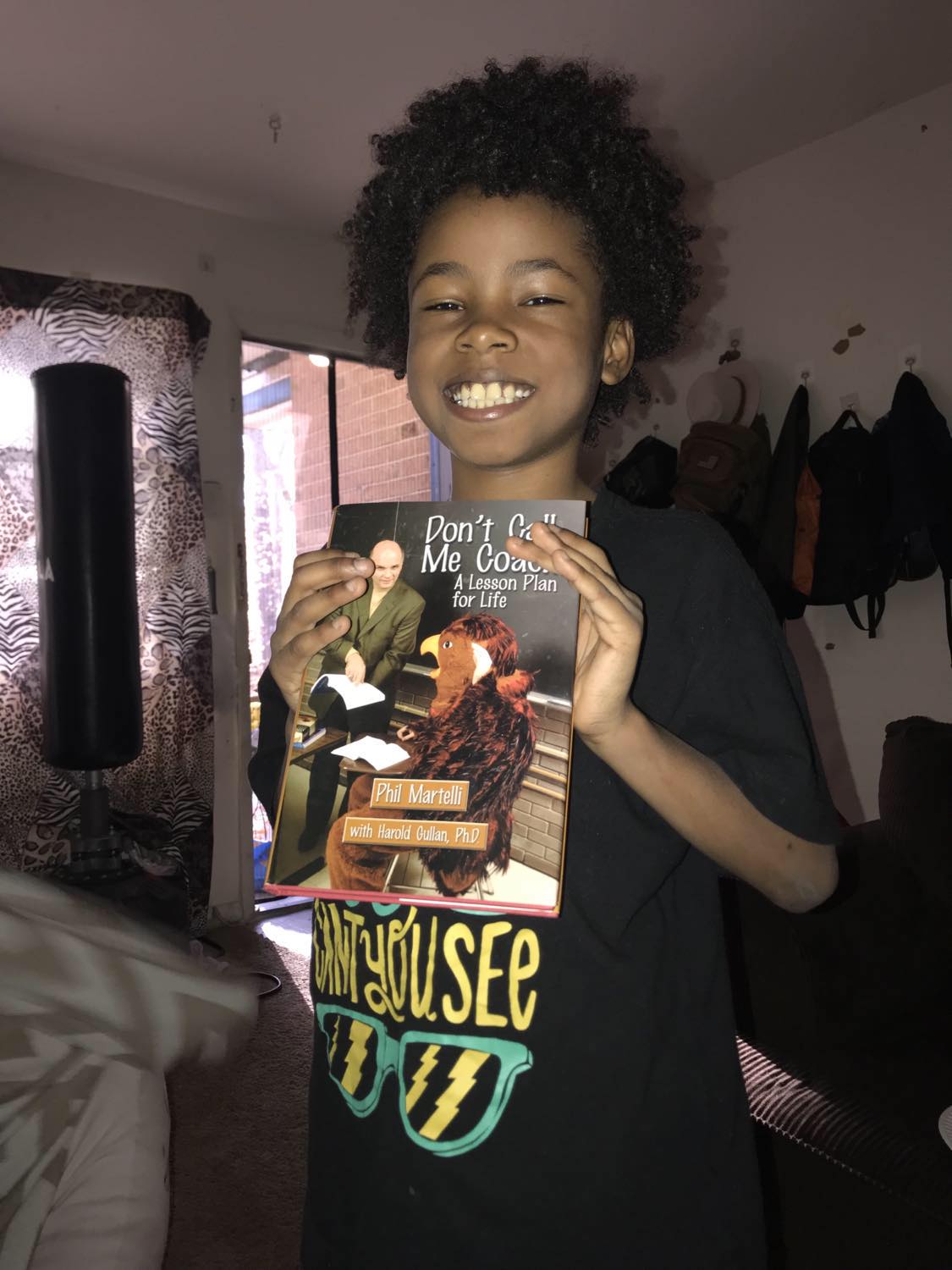
Martelli’s support extends to more structured acts as well. Recently, he provided two young men with copies of his book, Don’t Call Me Coach, as a motivational reward for their academic improvement. These students had struggled, but with encouragement from mentors like Martelli, they are finding their way forward. In one of the most genuine gestures, Martelli talked to these students personally, reinforcing messages of perseverance and focus.
Martelli’s devotion to education, often overshadowed by his coaching accolades, speaks volumes about the values he holds dear. He understands that success in sports is ephemeral, while the foundation of education offers lifelong benefits. In a world where athletic achievement is often elevated above all else, Martelli insists on grounding students in the importance of intellectual development, responsible citizenship, and resilience. His actions are a testament to his belief that education is the surest path to opportunity.
Phil Martelli has coached under the bright lights, from leading St. Joe’s Hawks to NCAA tournaments to helping guide Michigan to new heights. But perhaps his most meaningful victories are the ones that unfold in the quiet moments: a visit to a school, a call to a struggling student, or an unpublicized conversation after a game. Martelli’s legacy as an educator and mentor is a reminder of the role coaches can—and should—play in shaping not only athletes but well-rounded, educated citizens.
As he transitions into a new chapter as a television analyst, his influence extends beyond what audiences see on screen. Martelli’s presence remains felt across Philadelphia’s schools and neighborhoods, where his message resonates: education is the ultimate playbook for success. It is a legacy that transcends his wins and losses, and one that will endure long after the final whistle.
PHILADELPHIA, PA – If ever there were a game of consequence for two struggling programs, Tuesday’s Holy War Pillowfight between St. Joseph’s and Villanova is it. Not for the lore, the drama, or the fierce rivalry—this time, it’s about the potential future of two head coaches who’ve found themselves under intensifying scrutiny. St. Joseph’s Billy Lange and Villanova’s Kyle Neptune are on alarmingly shaky ground, with the outcome of this clash potentially determining their fates. And yes, to the fans, it’s a big game—albeit for all the wrong reasons.
The alums, boosters and fans have had enough of this shit…
Kyle Neptune, Villanova Head Coach
Imagine a WWE-style steel cage match between Lange and Neptune with the defeated coach forced to turn in his company car, office keys and bid farewell to his team after the final buzzer. It’s the kind of spectacle that perhaps only wrestling fans could appreciate, yet one that feels uncomfortably close to the current reality for both Lange and Neptune. For the respective fan bases, frustration has given way to calls for change, and patience has long run out. Both fan bases have endured too much for too long.
Lange’s record at St. Joseph’s, a tepid 60-92 (.395) since his hiring in 2019, has turned a proud program into a perennial disappointment. The Hawk faithful yearn for a return to the NCAA tournament. Many express deep skepticism regarding the current coaching staff. The St. Joseph’s message board is rife with calls for Lange’s termination. Things are even worse at Villanova. Neptune, though in his third year, has marginally fared better than Lange with a 37-34 (.521) record. However, he was handed the keys to a Ferrari and it feels like it’s been in the shop since he took over. When introduced at home games, his name is met with full throated Philly boos usually reserved for visiting opponents. For two programs that once routinely inspired confidence, their leaders appear to be hanging by the thinnest of threads, and this season’s start—punctuated by jarring losses in “buy games”—hasn’t helped.
Billy Lange, St. Joseph’s Head Coach
The buy game, a time-honored tradition, serves as a revenue stream for small programs and a quick win for larger ones. Schools like St. Joseph’s and Villanova bring in lesser-known “low major” teams, offering a hefty check, sometimes upwards of $100,000, with the tacit understanding that the visiting team will go home defeated. It’s a system that usually allows for the high-major program to pad its win column while the small school collects its payday.
But that unspoken agreement has been unceremoniously disrupted in Philly. St. Joseph’s invited Central Connecticut State for what was expected to be a routine win at 54th and City Avenue. Instead, the visitor walked away with a victory—and a paycheck. Earlier in the week, Columbia arrived at Finneran Pavillion on the Main Line, handed the Wildcats a stinging defeat, took their check, and headed back up I-95 to Manhattan. What should have been easy victories have turned into humiliating losses, pushing the fan bases to the brink.
And they are fed up. Alumni, supporters, and local fans aren’t willing to watch their schools play the role of gracious hosts handing out both checks and victories to supposedly inferior opponents. This shift from reverence to restlessness is palpable across both programs’ communities. For Lange and Neptune, these losses are not just isolated setbacks but the latest entries in a long list of grievances.
For both coaches, Tuesday’s game is likely to carry more weight than most mid-November matchups. It’s a crossroads: Lose, and they will find themselves with a diminishing number of believers. Crawl out of the steel cage with a win, and perhaps they’ll buy some time. But make no mistake, the scales have tipped. Fans are no longer willing to accept mediocrity from programs that once consistently delivered excellence.
Tuesday’s Holy War Pillowfight will be a spectacle—a big game, indeed, but not for the thrill of victory. For the fans of St. Joseph’s and Villanova, it’s about accountability, about honor, and, perhaps, about the possibility of starting anew.










 The Black Cager