“Buy” Games: The Unspoken Bargain That Shapes College Basketball

PHILADELPHIA, PA – In the carefully orchestrated ecosystem of college basketball, the early season schedule presents a curious paradox. While powerhouse programs from the Big 10, Big 12, Atlantic Coast and Southeastern Conferences rack up victories in their gleaming arenas, small schools from conferences like the MEAC, MAAC, and NEC often start their seasons with win-loss records of 0-7 or 1-8. These are not accidents of fate, but the result of a calculated, financial arrangement known as the “buy game”—a practice that is both a lifeline for the struggling and a cornerstone for the elite, revealing the stark economic realities of modern college athletics.
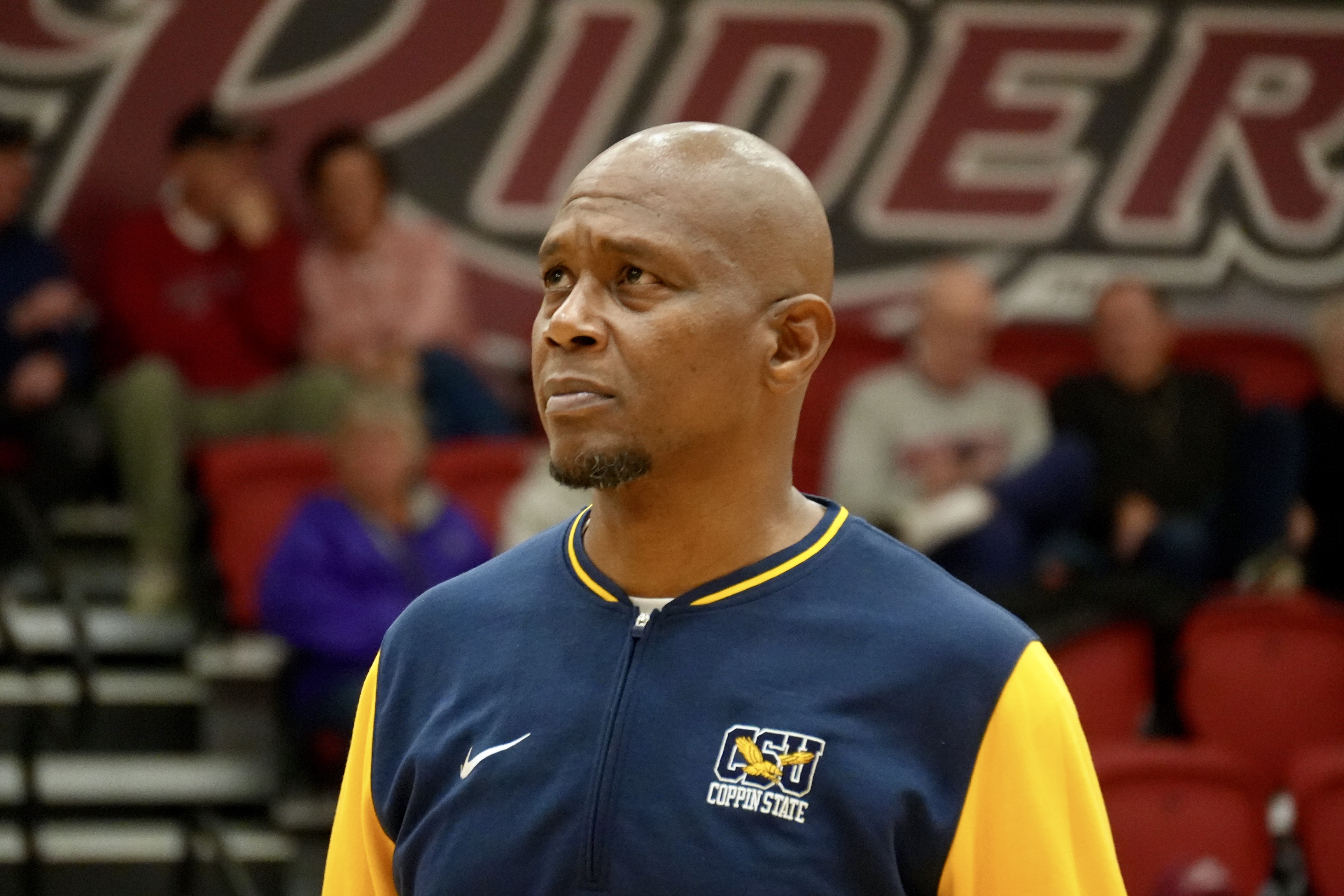
Larry Stewart, Coppin State Head Coach

In this unspoken bargain, high-major programs pay low-major counterparts anywhere from $70,000 to $120,000 to visit their home courts. The terms are clear: the visiting team gets a check; the host gets an almost guaranteed victory. For elite programs, these games are a strategic necessity, allowing them to pile up six, seven, or even eight Division I wins before entering the crucible of league play, padding their records and building momentum. For the low-majors, the calculus is different. As one financial officer at a mid-major program put it, “We run thin. There is not a lot of fat” . The revenue from these games—which can total as much as $600,000 for a school’s athletic department over a season—is not a luxury; it is a essential subsidy that keeps entire sports programs afloat

This financial lifeline, however, comes with a profound competitive toll, warping seasons, stymying coaching careers, and creating a distorted landscape where teams often have no true sense of their own identity.

Flash Burton, Rider sophomore guard

The High-Major Calculus: Buying Wins and Building Brands

From the perspective of the nation’s basketball blue bloods, buy games are a rational and efficient investment. They represent a controlled environment to integrate new players, experiment with lineups, and build team chemistry without the immediate threat of a season-damaging loss. In an era where a missed NCAA tournament can mean a significant financial and reputational setback, these guaranteed wins help ensure that a team’s resume is robust enough to catch the eye of the selection committee come March. 

Here’s a breakdown of how many teams from each of those conferences (ACC, Big Ten, Big 12, SEC) made the 2025 men’s NCAA basketball tournament. 

ConferenceNumber of teams in 2025 NCAA Tournament
ACC4
Big Ten8 
Big 127 
SEC14 

The financial outlay, while substantial, is a manageable line item for Power 4 conference schools, which boast operating revenues averaging $97 million in the ACC, for example. For them, the cost of a buy game is easily offset by the revenue from a single home game, which includes ticket sales, concessions, and sponsorships. Furthermore, in the new world of revenue sharing and Name, Image, and Likeness (NIL), where schools are directing $20.5 million annually directly to athletes, the pressure to maintain a winning program—and the financial windfall that comes with deep tournament runs—has never been greater. A successful season built on a foundation of early wins helps drive the brand engagement that underpins these massive financial operations.

Khali Horton, Coppin State junior forward

The Low-Major Struggle: Survival and Sacrifice

For low- and mid-major programs, the decision to be a “buy team” is a Faustian bargain, balancing financial survival against competitive integrity. The revenue from these games is often the difference between solvency and severe cutbacks. As detailed in a 2020 report, the University of Montana projected a $5 million shortfall in its athletic budget, making the $75,000 to $95,000 earned from a single buy game against a Power 4 school a critical part of its financial planning. This money is used not for luxuries, but for fundamental needs—subsidizing coaching salaries, funding travel for conference play, and paying for equipment

However, this financial lifeline comes at a steep cost.

  • The Psychological Toll: Teams are conditioned to accept losing as a prelude to their “real” season—conference play. This can be demoralizing for players and coaches who, despite their talent and preparation, are thrust into mismatches night after night.
  • The Physical Toll: The travel is often grueling. Montana’s team, for instance, sometimes endures trips through two or three airports to reach a game, or marathon 13-hour bus rides to save costs, all while facing the prospect of a lopsided defeat.
  • A System of Dependence: This model creates a dependency, making it difficult for these programs to escape their subordinate status. The financial incentive to schedule these games can outweigh the competitive incentive to build a balanced schedule that could lead to more wins and long-term growth.
Kevin Baggett, Rider Head Coach

The Sacrifice: A Schedule Built on Blowouts

The brutal reality of this bargain is etched in the season records of teams like Coppin State and Rider University. Consider Coppin State’s schedule heading into its recent game against Rider:

  • vs Maryland: L 83-61
  • @ La Salle: L 87-59
  • @ James Madison: L 84-70
  • @ South Florida: L 100-50
  • vs Central Michigan: L 82-59
  • vs South Alabama: L 72-62
  • vs Central Penn: W 103-62 (a non-Division I opponent)
  • @ VCU: L 101-58

Rider’s path was similarly grim before the two teams met:

  • @ Virginia: L 87-53
  • @ Rutgers: L 81-53
  • vs Eastern: W 86-54 (a non-Division I opponent)
  • @ Texas: L 99-65
  • @ Houston: L 91-45

These are not just losses; they are systematic dismantlings. The differences in athleticism, strength, and size are so vast that the games become less a contest and more an economic exercise. For the players on the losing end, it is a grueling and demoralizing rite of passage, a season that begins with accepting defeat as a precursor to their “real” season in conference play.

The Coaching Conundrum: A Career Stuck in Quicksand

This system creates a particularly vexing problem for ambitious low-major coaches. Their career advancement depends on winning percentages and postseason success. Yet, they are forced to begin every season with a gauntlet of near-certain losses, cratering their overall record before they ever play a peer opponent.

How can a coach prove their program-building mettle when their team is structurally scheduled to start 0-7? The buy game phenomenon acts as a ceiling, trapping talented coaches in a cycle where achieving a strong winning percentage is a mathematical improbability. Their resumes are hamstrung from the outset, making the leap to a higher-profile job significantly more difficult, regardless of their actual coaching acumen.

An Ecosystem at a Crossroads

The buy game system is a microcosm of the broader inequities in college athletics, a landscape where the financial disparity is staggering. A single Power 5 conference, the SEC, generated $1.89 billion in revenue in 2018, a figure that eclipsed the $1.38 billion generated by the entire Football Championship Subdivision, a group of over 100 schools that includes many low-major basketball programs. This chasm is now being codified in new ways, as the advent of revenue sharing and large-scale NIL deals creates what some have called a “pay for play” tier, potentially relegating mid- and low-majors to a permanently lower competitive status.

The pros and cons from each perspective can be summarized as follows:

PerspectiveProsCons
High-Major Program– Nearly guaranteed victories for record-building – Low-risk environment for team development- Protects lucrative postseason prospects– Financial cost of guarantee payments – Risk of player injury in a mismatch- Can be criticized for lack of competitive scheduling
Low-Major Program– Essential revenue for athletic department survival ($600k+/season) – Funds travel, salaries, and operational costs – Opportunity for players to compete in a high-profile environment– Demoralizing starts to the season (0-7, 1-8 records) – Grueling travel and physical toll on players – Perpetuates a cycle of financial and competitive dependency

Yet, even as this system entrenches inequality, it is also being challenged by the same market forces that sustain it. Low-major programs are being forced to find creative revenue streams, from hosting concerts in their facilities to pursuing novel licensing deals for branded merchandise. Some analysts argue that the coming restructuring of college sports might, ironically, offer these schools a way out—freeing them from an unwinnable financial arms race and allowing them to refocus on their educational mission.
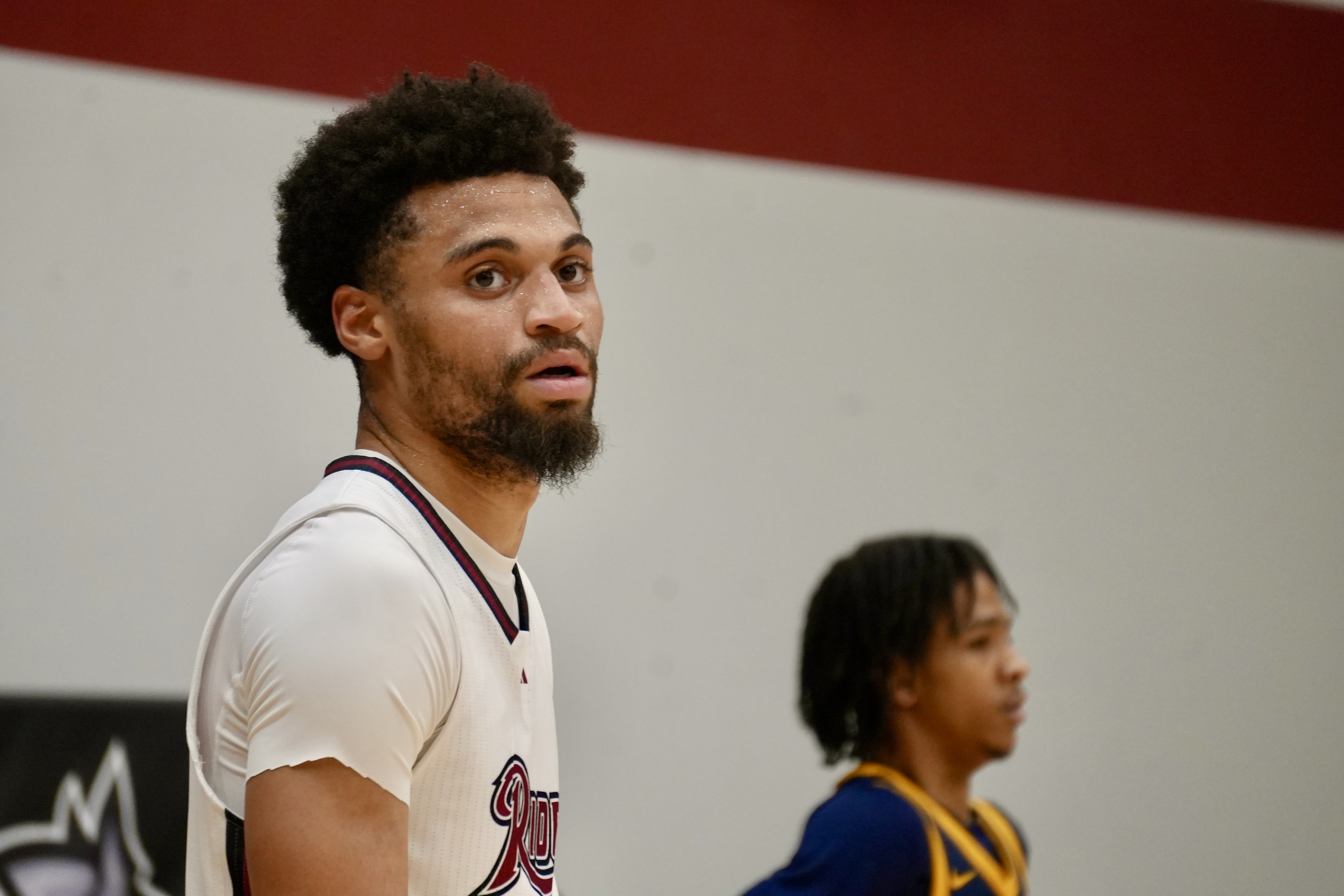
Zion Cruz, Rider senior guard

The Distortion: Who Are We, Really?

Perhaps the most subtle yet damaging effect of the buy game system is the competitive distortion it creates. When Coppin State and Rider finally faced each other, they did so with a combined 2-12 record. Their lone wins came against non-Division I schools.

They had no true idea how good or bad their teams were. How do you gauge your defensive schemes after being overwhelmed by Virginia’s size or Houston’s speed? How do you assess your offense after facing defenses with a level of length and athleticism you will never see in your own conference? The games against high-majors are so different in kind, not just degree, that they offer little actionable data for the games that ultimately matter—the conference matchups that determine a chance at the NCAA tournament.

An Uneasy, Enduring Symbiosis

Despite its clear downsides, this ecosystem is remarkably stable. The high-majors have no incentive to change a system that provides them with wins, revenue, and a soft launch to their season. The low-majors, trapped by financial necessity, cannot afford to walk away from the checks.

The buy game is the purest expression of college basketball’s economic hierarchy. It is a transaction that funds dreams at one school by monetizing the competitive hopes of another. For every check that clears, a season is warped, a coach’s record is tarnished, and a team is left to wonder about its own identity until it finally steps onto a court against an opponent its own size. The games will go on, the standings will tell two different stories, and the unspoken bargain will continue to define the sport, for better and for worse.
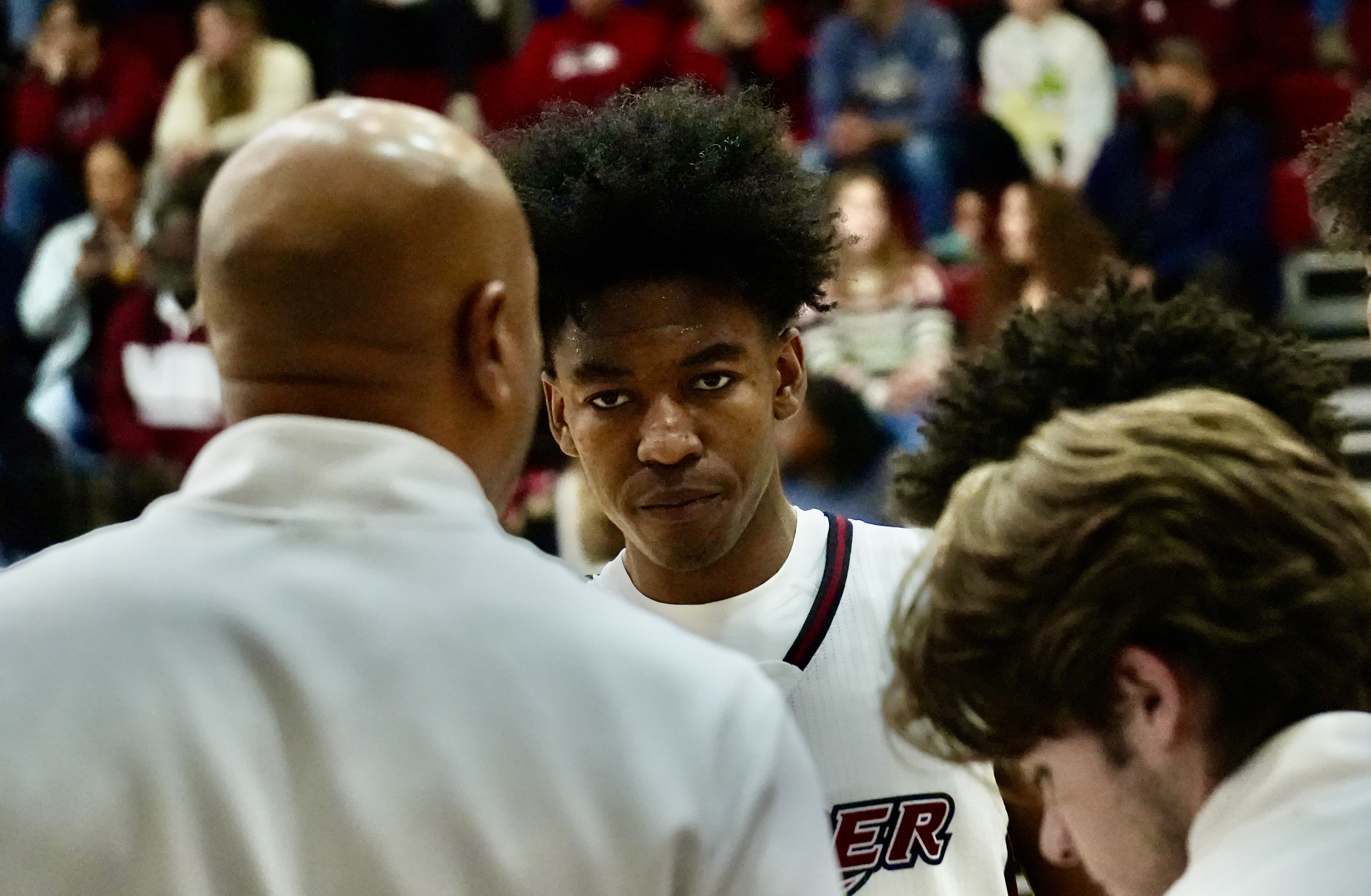
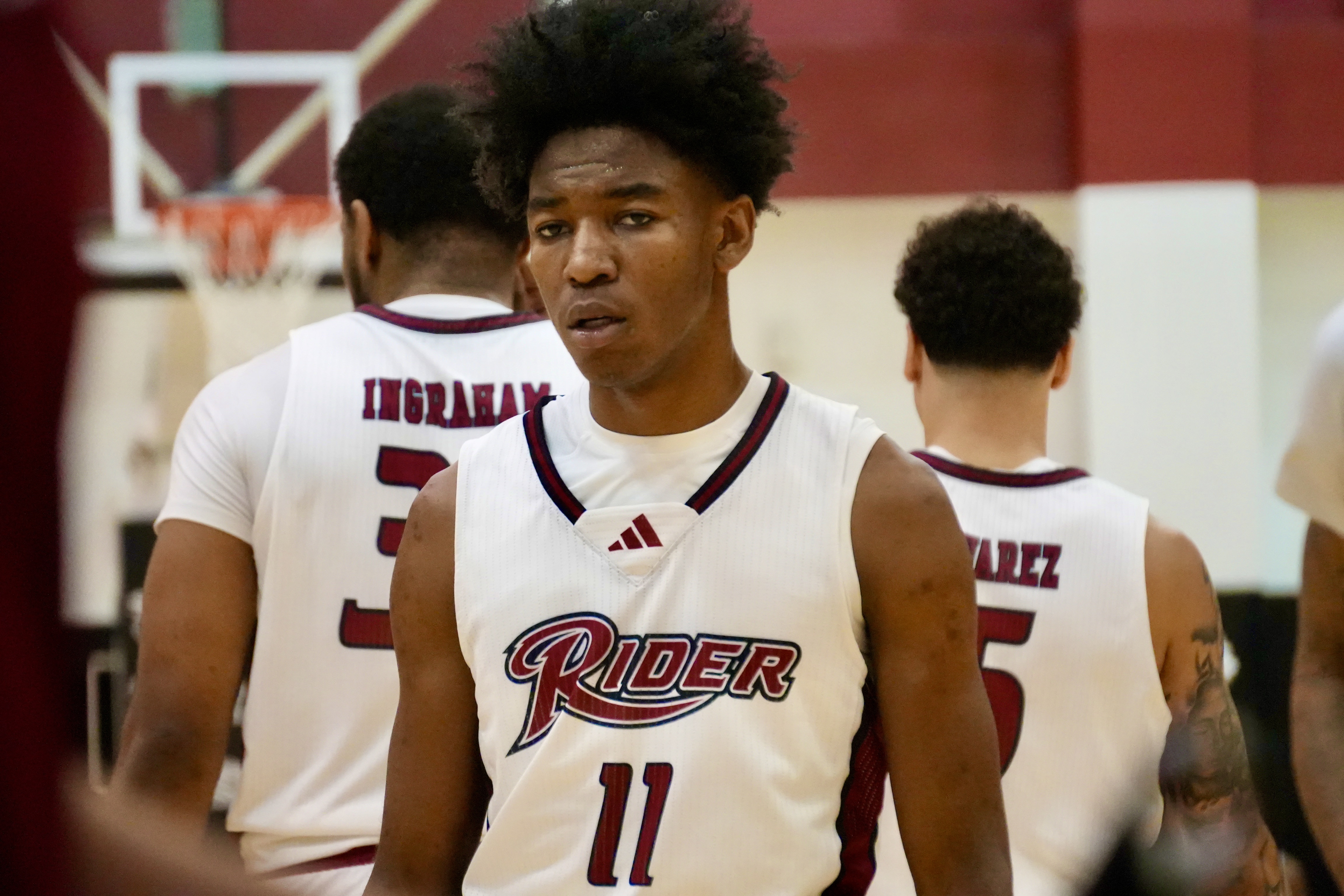
Aasim “Flash” Burton and Shon Minnis: The Road Less Traveled

PHILADELPHIA, PA – Philly youth and high school is dominated by conventional wisdom, high-profile high school transfers and shoe-sponsored travel teams often dictate the trajectory of a young player’s career. However, two guys from South Philly, Aasim “Flash” Burton and his mentor, Shon Minnis, have crafted a path that seems to echo Robert Frost’s timeless reflection in his 1916 poem The Road Not Taken. Every decision made by Burton and guided by Minnis over the past five years could be characterized as a deliberate divergence from the norms of Philly basketball’s unforgiving system. Each choice was calculated, often scrutinized, and yet, in the end, remarkably effective.

The First Fork in the Road

Burton’s journey, one marked by thoughtful strategy rather than flashy optics, began when he was a very talented eighth grader with undeniable talent and a world of options. His decision to attend Math, Civics, and Sciences (MCS) Charter High School—a school with a respectable basketball pedigree but outside the traditional powerhouse orbit of Imhotep Charter or the Catholic League giants Roman Catholic and Neumann-Goretti—was met with skepticism.

Why you sending him there?

Why not join a program guaranteed to compete for championships in the fabled Palestra? Why not be part of one of the machines that churn out Division I prospects year after year? The answer, as Minnis would later explain, was rooted in a long-term vision. At MCS, Burton would play meaningful minutes early in his career, honing his skills against strong competition without being buried on a deep bench. The short-term objective was to actually PLAY meaningful games and develop a nuanced feel for the intricacies of the game and not become another workout warrior. Minnis understands that chairs and cones don’t play defense. For two years, Burton thrived at MCS, developing into a multi-dimensional player who could not just contribute but lead.

Another Road Less Traveled

As he entered his junior year, Burton and Minnis decided to pivot. This time, they sought the rigor of the Philadelphia Catholic League, but once again, their choice raised eyebrows. Instead of transferring to Roman Catholic, Neumann-Goretti, or another storied program like Archbishop Wood, Burton enrolled at Cardinal O’Hara—a program more often seen as an underdog than a contender.

This move seemed, to some, like a misstep. Minnis was told by prominent members of the local basketball aristocracy that he was “fucking up” Burton’s opportunity to land a division 1 scholarship. The naysayers LOUDLY noted that O’Hara lacked the glitz and glamour of Imhotep or the Catholic League’s traditional powers, but Minnis saw opportunity where others saw mediocrity. At O’Hara, Burton would have the chance to shoulder the load, to truly grow into his role as a point guard and leader. It was a choice emblematic of Minnis’s philosophy: prioritize substance over style, development over hype.

A Different Kind of Summer

Then came the summers, where the stakes in grassroots basketball are, arguably, higher than during the high school season. Kids play in front of hundreds of college coaches and scouts at a time instead of the 2 or 3 that might attend a good scholastic game. In Philly and other basketball hotbeds like Baltimore, Washington, D.C. and New York/North Jersey, most elite prospects gravitate toward Nike’s EYBL, Adidas’s 3SSB, or Under Armour’s UAA Circuit. Burton had already scratched his shoe company itch the previous year by dabbling with Team Final, a Nike EYBL powerhouse, enjoying the spoils of elite competition and coveted swag. He had a closet full of flip flops, headbands, shorts and, of course, the shoes. But when faced with the choice of returning to Team Final or joining another shoe-sponsored team, Burton, with Minnis’s counsel, opted for East Coast Power, an independent club based in King of Prussia.

They took the road less traveled…

This decision, like the others, was rooted in pragmatism. Playing for East Coast Power meant guaranteed playing time, a chance to truly command the floor as a point guard, and focused, personalized attention from coaches who prioritized his development for the next level. It also meant stepping away from the spotlight that many young players covet. But as Minnis often reminded Burton, the goal wasn’t to chase fleeting validation but to build an impactful and sustainable college career.

By the end of summer and just before the onset of his senior year, Burton’s unconventional choices were beginning to pay off. He had developed into a polished floor general, capable of running an offense and playing with poise under pressure. The work done by East Coast Power’s staff, coupled with Burton’s own maturity and growth, attracted interest from a host of mid-major programs. And when Rider University came calling, Burton and Minnis knew it was the right fit.

The Commitment

Burton’s decision to commit to Rider before his senior season was yet another departure from the norm. Many players in his position, with multiple mid-major offers, might have held out, hoping for offers from schools in higher-profile conferences like the Atlantic 10, the American Athletic or even the Big East. But Burton trusted his instincts and leaned into a philosophy that Minnis instilled in him and served him well: choose the place that truly wants—and needs—you.

These South Philly Muthafuckas truly blocked out all the noise…

Rider offered Burton not just a scholarship but a clear vision for his role within the program. Head Coach Kevin Baggett made it clear that Burton wasn’t just a recruit; he was a cornerstone for the team’s future. Burton appreciated the brutal honesty of Rider Assistant Coaches Geoff Arnold and Dino Presley. These guys are incapable of sugarcoating anything related to basketball. Minnis, ever the realist, tempered expectations but remained confident. Before the start of Burton’s freshman campaign, Minnis predicted, “He’s not gonna be ready to start the first game,” Minnis said, “but he’ll be starting by the time they begin playing league games.”

Tonight… True to Minnis’s prediction, Burton made his first collegiate start in just his 10th college, and 2nd MAAC league, game. The man knows his protege… His performance thus far suggests he will be a fixture in Rider’s lineup for years to come—a testament to the power of patient, deliberate choices in a world often obsessed with instant gratification.

The relationship between Burton and Minnis has been central to this journey. Minnis, a self-described “basketball lifer” with a quiet wisdom honed through decades in the game, has been the steady hand guiding Burton through a labyrinth of pressures and expectations. Minnis’s experiences navigating the high school and college recruiting processes for his own son, Biggie Minnis (Texas Tech, Rhode Island and Wright State), and stepson, Jamir Hanner (Marshall and Buffalo), gave him the perspective needed to help Burton avoid common pitfalls.

At every juncture, the two have chosen what Frost might call “the road less traveled.” And as Frost so poignantly concluded, “that has made all the difference.” For Burton, the difference isn’t just about where he is today but the foundation he has built for the future—a foundation rooted in authenticity, hard work, and a refusal to conform for conformity’s sake.

In an era where basketball decisions are often dictated by trends and peer pressure, Flash Burton and Shon Minnis have shown that there is another way. Their story is not just a basketball story; it’s a story of trust, vision, and the courage to forge one’s own path. And in doing so, they remind us that the road less traveled, though fraught with challenges, often leads to the most rewarding destinations.

Some real South Philly Shit… #Respeck

Why?? Stevie Jordan’s Decision

We are in the midst of basketball paradigm shift. There has been fundamental changes in the approaches to and underlying assumptions of elite scholastic basketball. Most significantly, grassroots/AAU basketball has superseded high school hoops in importance. Scholarships are earned in the summer. High school merely provides college coaches an opportunity to follow-up with the kids they have seen on the grassroots/AAU circuit in the summer.

Kwalifi Poster - Josh Gibson-page-0

At the very highest level of competition, the prep school or academy model has gained a foothold. Increasingly, the very best players leave home to train and play with other elite players on a daily basis. Going into this season, the top 5 high school teams in the nation are all prep/academy squads. Oak Hill Academy (VA), Montverde Academy (FL), Huntington Prep (WV), Findlay Prep (NV) and Chaminade Prep (MO) are the consensus top programs this year.

Some kids from the Greater Philadelphia region have decided to seek higher levels of competition and go this route. Sedee Keita is at Putnam Science Academy (CT), David Beatty is St. Benedict’s Prep (NJ) and Horace Spencer graduated from Findlay Prep last year. About a month ago, Trevon Duval decided to transfer to Advanced Prep International (TX).

Now, imagine you were an elite scholastic player presented with a similar opportunity. Let’s say you were named the State Class AA Player of the Year as a junior. Let’s say you led a school that had never won a postseason basketball game in 51 seasons, to six playoff wins in a three-week span. Let’s say you pumped in 21 points to lead your team to a state championship. Let’s say you were named 1st team All-State.

Conwell Egan State Champions2

Conwell-Egan Pennsylvania Class AA State Champions, 2015

Suppose your grades and academic standing were beyond reproach? Suppose you already committed to a winning Division 1 college program?

If you were presented with an opportunity to train and practice every day against, arguably, the top player at your position on a daily basis, what would you do? What if two of your other potential teammates were top 10 players in their respective classes?
Would you take advantage of this opportunity to hone your skills and enter college ready to compete right away?

Stevie Jordan

Stevie Jordan, Advanced Prep International

Conwell-Egan’s Stevie Jordan faced this situation…

This is Jordan’s statement regarding his choice:

First of all I want to thank God as well as of those that contributed to my success over the past three years at Conwell-Egan Catholic High School. From family, friends, coaches, teammates, teachers, staff, press and those that I have met along the way, I am thankful for the impact you have made in my life. I am grateful for my teammates and the opportunity to play with each and every one of you. Together, we made history as State Champions. I have been working and training for a chance to play consistently with and versus the best players in the country. 

I have always appreciated the challenges in life, knowing that would make me the best possible.  My family and coaches have trained me to seek and embrace these challenges.  Therefore the only decision consistent with my goals is to attend Advance Prep international (API).  My heart is heavy for leaving, but my mind is strong. The choice to leave CEC was not an easy one. Nonetheless, it is my hope, that you understand my decision and continue to support me in my endeavors. I look forward to the 2016-2017 school year where I have committed to Rider University and seeing you in the stands cheering the team on as we make headway on the collegiate level.

All the best
Stevie Jordan, II

Special thanks to my Coach Frank Sciolla not only a great Coach but awesome mentor-appreciate you Coach SKI thanks for believing in me and “twatching”, the entire coaching staff, Janet Dollard-(CEC President), Bill Burns (Coach), Marion Manns (School Principal) and Alumni.  Cant forget my Bro, Lapri- Thank you for being alongside of me for this bumpy but historical and memorable road. I love you Bro – Keep Grinding!!

kwalifi poster - basketball black & white-page-0

Youngfella… The Black Cager wishes you the very best this year and we look forward to seeing you lace ‘em up at Rider University next year.