Player: Adam “Budd” Clark | Position: Point Guard | Height: 5’10” | Class: Junior (Transfer)
Current Program: Seton Hall Pirates (Big East Conference)
High School: West Catholic, Philadelphia Catholic League (PCL)
Prior Program: Merrimack College (Northeast Conference / MAAC)
Executive Summary & Strategic Grade
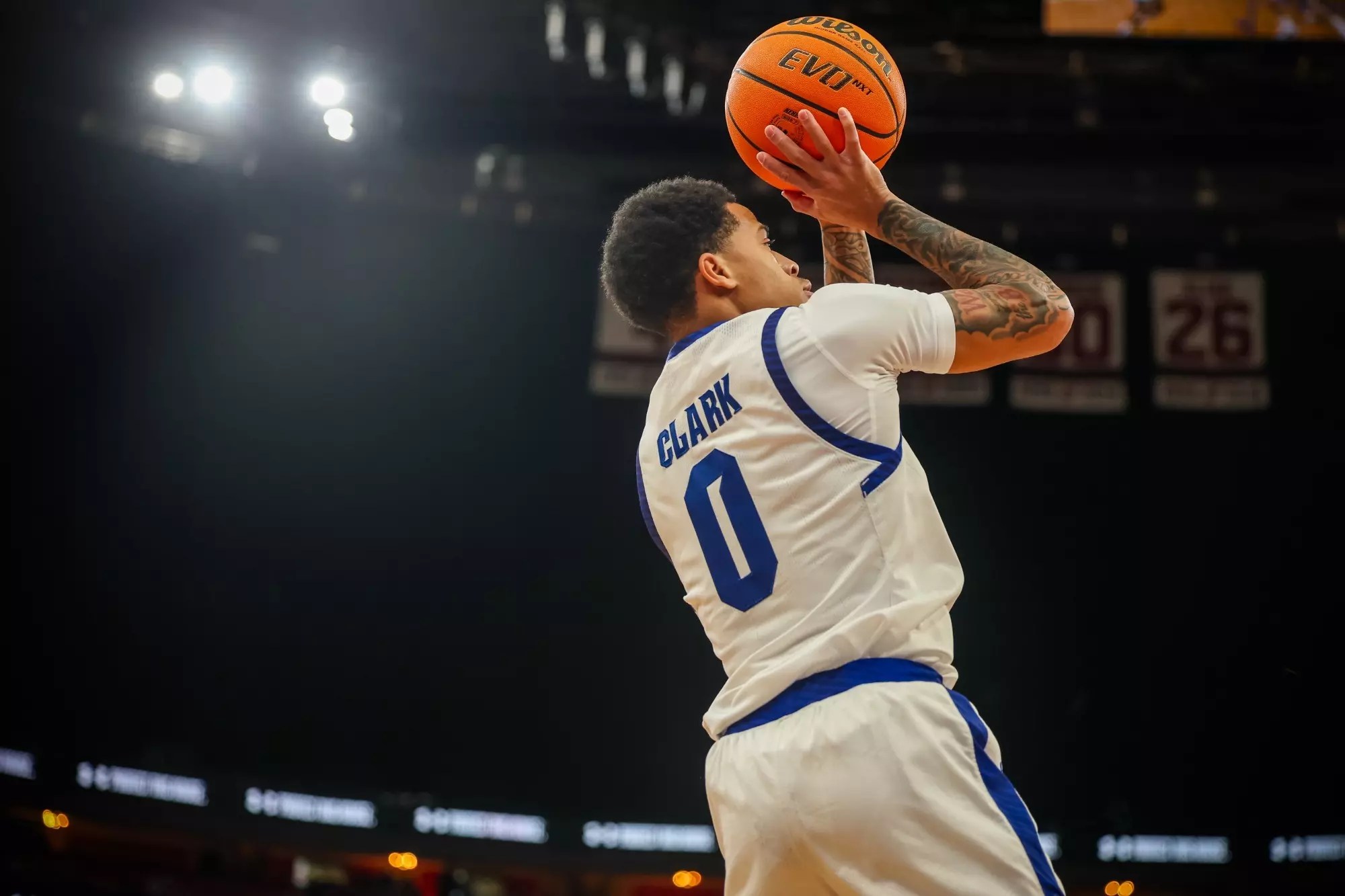
Adam “Budd” Clark’s transfer from Merrimack to Seton Hall represents a high-stakes, calculated portfolio reallocation in the modern collegiate marketplace. Facing significant structural constraints—including Seton Hall’s threadbare roster and well-documented NIL resource disparities within the Big East—Clark wagered his proven mid-major production against the speculative assets of high-major exposure, professional development, and tournament visibility. The early returns are promising: Clark has secured an immediate starting role and demonstrated he can be a primary engine for a power-conference team, validating a key pillar of his decision. However, the portfolio’s riskiest assets—specifically, transformative skill development and team success in a brutally competitive league—remain unrealized and are under severe pressure. His on-court performance shows a high-variance, high-impact profile: an elite disruptor and fearless driver whose glaring shooting limitations cap his efficiency and create exploitable defensive schemes. Based on his strategic positioning and initial adaptation, Clark earns a B- grade with a “Conditional” outlook. His final valuation hinges entirely on his and Seton Hall’s ability to convert current struggles into future competitive success.
I. Portfolio Analysis: The Transfer Decision
Clark’s move must be assessed not as a simple upgrade, but as a risk-balanced investment under conditions of incomplete information and asymmetric power.
- Immediate Returns (Realized Assets):
- Promised Role & Usage: This is the portfolio’s most secured asset. With Seton Hall returning only three players and lacking established guard depth, Clark was guaranteed a primary ball-handler role. This has materialized; he has started all 22 games, averaging over 30 minutes per contest as the team’s clear offensive initiator.
- Competitive Platform: The asset is partially realized. He has gained access to the Big East’s national television schedule and the scouting visibility that comes with it. However, the platform’s value is diminished by the team’s current struggles (6-6 in conference play), limiting high-leverage, showcase opportunities.
- Speculative Assets & Long-Term Risk:
- Skill Development Infrastructure: This high-potential asset carries high risk. Coaching under Shaheen Holloway, a former elite point guard, offers a credible development pathway. The critical question is whether this environment can address Clark’s most significant limitation: perimeter shooting. Early data (22.7% 3PT) shows no improvement, threatening the entire investment’s return.
- Professional Pathway Exposure: Risk is elevated. While the Big East is an NBA pipeline, Clark’s archetype (undersized, non-shooting guard) is increasingly rare at the professional level. His pathway likely requires not just statistical production, but winning proof-of-concept in March, which is currently in jeopardy.
- NIL & Brand Growth: This asset is highly constrained by structural factors. Reports indicate massive NIL spending gaps within the Big East (e.g., St. John’s at ~$10M, UConn at ~$8M), putting Seton Hall and its players at a inherent market disadvantage. Clark’s financial upside may be limited compared to peers at resource-rich programs, regardless of performance.
- Structural Constraints Acknowledged: Clark entered a unique and challenging decision space. Seton Hall was not a stable powerhouse but a program in total rebuild, having lost 10 players to the portal. This presented a rare opportunity for immediate, high-usage control but also came with the severe risk of being onboarded to a non-competitive vessel in a top-tier conference. His choice was a quintessential bet on himself within a constrained ecosystem.
II. On-Court Performance & Impact Analysis
Statistical Profile (2025-26 Season):
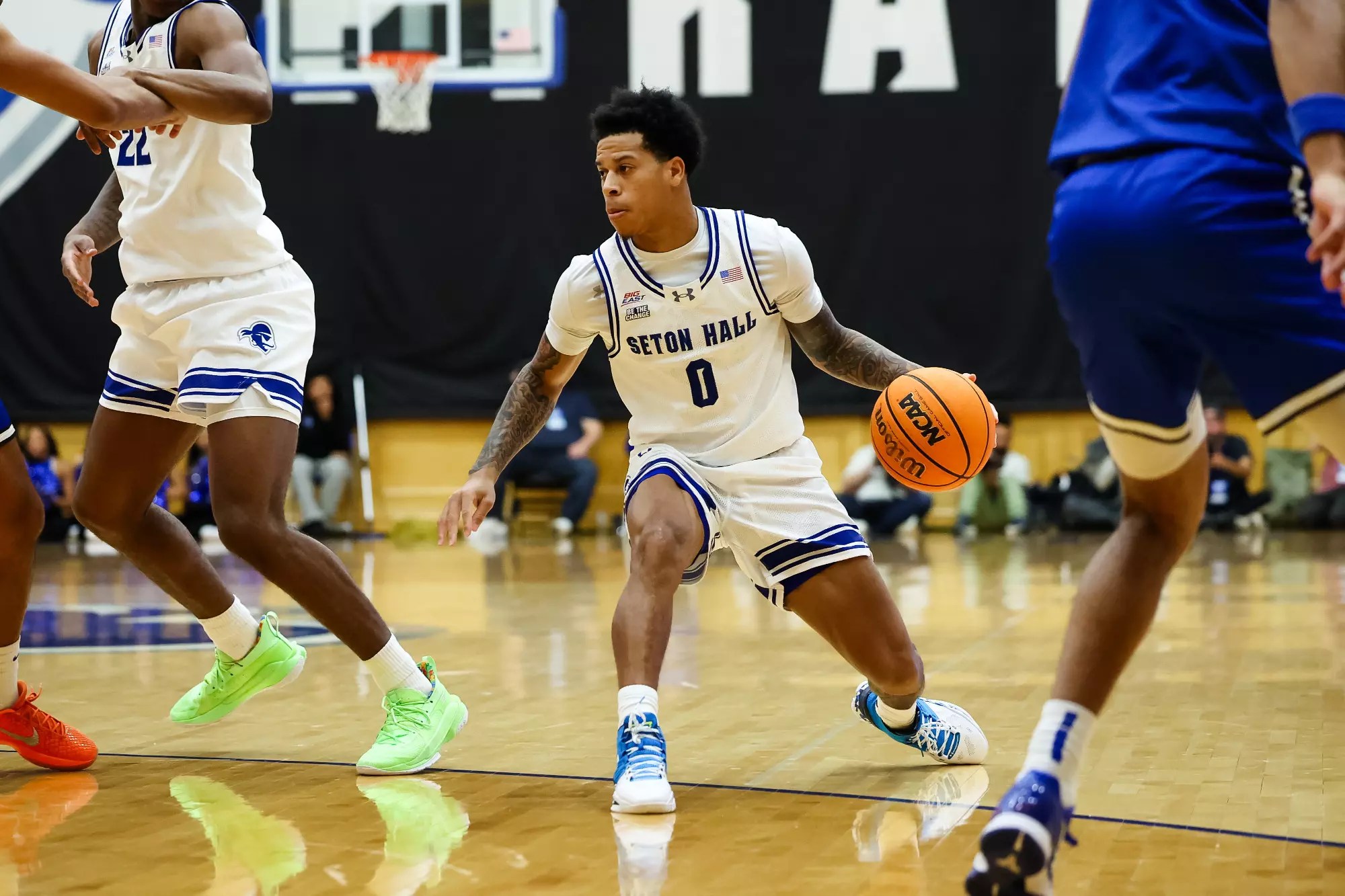
- Scoring: 11.3 PPG, 42.4% FG, 22.7% 3PT, 71.1% FT
- Playmaking: 4.6 APG, 2.9 APG/TOV Ratio
- Defensive Activity: 2.9 RPG, 2.5 SPG (Elite)
- Efficiency: 43.5% eFG%, 15.8 PER
Qualitative Assessment:
| Trait | Grade | Analysis & Evidence |
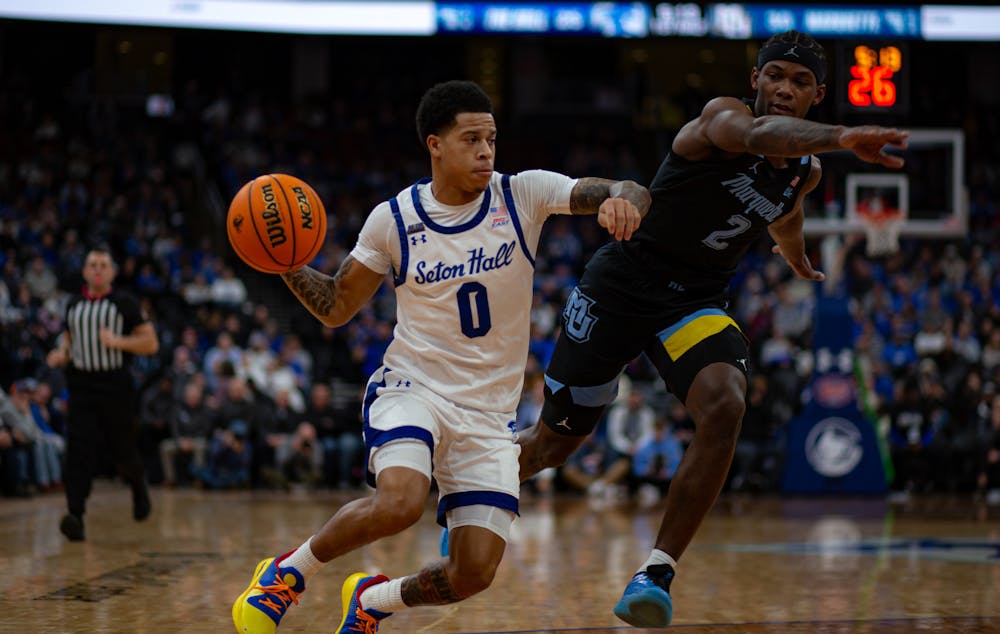
| Ball Pressure & Defense | A- | Clark’s defining elite skill. Averaging 2.5 steals per game, he is a pest with outstanding anticipation and quick hands. His high school scouting report noted he could “take the ball” at will, a trait that has translated to the high-major level. This fuels transition opportunities and disrupts opponent rhythm. |
| Playmaking & Pace | B | Shows clear capability as a primary initiator (4.6 APG, 12-ast game). Operates well in ball-screen actions and can deliver live-dribble passes. Turnovers can spike against elite pressure (5-TO game vs. Washington State), but his assist-to-turnover ratio remains positive. |
| Finishing & Fearlessness | B | Despite his size, is an undeterred driver. Uses change of pace and craft to get into the lane. Capable of high-volume free-throw attempts (10-12 FTAs vs. Georgetown), proving he can pressure the rim. |
| Shooting (Spot-Up/Catch & Shoot) | D | The portfolio’s most damaging liability. A non-threat from three-point range (22.7%), allowing defenders to go under screens and clog driving lanes. This lack of gravity severely limits spacing for himself and the team’s offense. |
| Shooting (Pull-Up/Mid-Range) | C- | Marginally more effective inside the arc but inconsistent. Can hit floaters and runners, yet games like his 0-7, 0-point outing against St. John’s showcase how defenses can completely neutralize him when his driving lanes are cut off. |
| Consistency & Decision-Making | C+ | Embodies a high-variance profile. Can log 24 pts/4 stl vs. Xavier, then 3 pts the next game. His decision-making is sound within his skill set but is often forced into difficult choices because defenses do not respect his jumper. |
III. Fit within Ecosystem & Program Context
Clark’s performance cannot be divorced from Seton Hall’s broader ecosystem, which is currently a mitigating factor in his assessment.
- Roster Construction: The Pirates’ roster is incomplete, lacking depth at forward and center. This places excessive burden on the backcourt to create offense and magnifies spacing issues caused by Clark’s shooting limitations.
- Big East Competition: The conference is a gauntlet. Clark’s stat lines often bifurcate: strong against mid-tier competition (19 pts vs. Marquette, 22 pts vs. Georgetown) but prone to being schemed out by elite defenses (3 pts @ St. John’s, 4 pts vs. Villanova). This volatility is a direct function of the scouting and talent gap he now faces nightly.
- Developmental Pathway: The Holloway connection is tangible. Holloway’s proven affinity for tough, defensive-minded guards provides a cultural fit. The next 12-18 months are critical to determine if this staff can develop Clark’s jump shot, the single skill that would unlock his entire portfolio’s value.

IV. Professional Projection & Long-Term Outlook
Clark’s professional pathway is narrow but exists. He projects as a potential undrafted free agent/two-way contract candidate whose ceiling is a defensive specialist and secondary ball-handler. The archetype is akin to a Jevon Carter, but Carter’s collegiate 3PT% was nearly 10 points higher than Clark’s current mark. Without a radical transformation as a shooter, his margin for error is infinitesimal.
Final Recommendation & Risk Assessment:
Clark’s transfer was a bold, rational decision that maximized his immediate control and visibility. The portfolio, however, is currently underperforming relative to the risk taken. The success of this investment is now contingent on two parallel, challenging developments:
- Individual Skill Appreciation: Clark must demonstrate measurable, sustained improvement as a perimeter shooter to increase his offensive efficiency and scalability.
- Team Asset Appreciation: Seton Hall must successfully complete its rebuild in the 2026 offseason, surrounding Clark with complementary shooters and frontcourt talent to create a competitive team. Individual stats on a losing team will not satisfy the speculative assets of his transfer.
Grade: B- (Conditional)
Outlook: Clark has proven he belongs in the Big East as a competitor. He has not yet proven he can be the engine of a successful Big East team or that he can evolve the flaws in his game. His report card today reflects a promising but precarious position. The next evaluation period—the upcoming offseason and the start of the 2026-27 season—will be definitive, determining whether this strategic portfolio reallocation yields a championship return or depreciates into a missed opportunity.
Game Plan Advisors Recommendation
Based on the on-court data and program trajectory, we strongly recommend that Adam “Budd” Clark continues his career at Seton Hall for the 2026-27 season. The strategic investment of his transfer is showing clear signs of success, and remaining in this system offers the best path to achieving his core portfolio goals: competitive success, professional development, and brand growth.
Current Season Success & Team Trajectory
Your primary goal in transferring was to join a competitive high-major program. The data shows Seton Hall is not just competing but emerging as a force.
- Strong Standings: Seton Hall holds a winning 6-5 record in the Big East, positioning them solidly in 4th place behind only nationally elite programs like UConn, St. John’s, and Villanova.
- Impressive Overall Record: The team’s 16-6 overall record reflects a successful season built on consistent performance.
- Momentum: The team is currently on a two-game win streak, indicating they are hitting their stride at a crucial point in the season.
Fulfilling Your Strategic Portfolio
Your decision to transfer was a calculated portfolio allocation. Staying at Seton Hall allows you to fully realize the value of each asset you invested in.
| Portfolio Goal | Current Status at Seton Hall | Recommendation Rationale |
| Immediate Returns | Realized & Secure | You have an established, 22-game starting role in the Big East, averaging 29.3 minutes. This is the foundational asset. |
| Competitive Success | Appreciating | The team is in 4th place with a strong NCAA Tournament resume. A second year provides a chance to lead a deeper run. |
| Skill Development | In Progress | Adapting to the Big East’s physicality has been a challenge (scoring dropped from 19.8 to 11.3 PPG). A full offseason with Coach Holloway is critical to address shooting efficiency and adjust your game for this level. |
| Professional Pathway | Active Showcase | You are proving you can impact winning against top-25 competition nightly. This is the exact tape professional scouts need to see for an undersized guard. |
Critical Offseason Development Focus
While the team success is evident, your individual statistical transition highlights the single most important reason to stay: dedicated, high-major skill development. Your elite defensive activity (2.2 SPG) and playmaking (4.6 APG) have translated immediately. However, working with Coach Holloway—a former elite point guard himself—for a full offseason is essential to refine your offensive efficiency and consistency against Big East defenses.
Risks of Re-Entering the Portal
Leaving this situation now would introduce significant new risks:
- Loss of Proven Fit: You would abandon a confirmed successful role for the complete unknown of a new system, coach, and roster.
- Timing & Leverage: Entering the portal again could signal instability to programs and potentially reduce your negotiating leverage for both role and NIL.
- Disruption of Growth: You would reset the crucial skill development cycle just as you are adapting to high-major play.
Final Verdict: Your transfer to Seton Hall is a case study in a successful strategic move. The team is winning, your role is central, and the infrastructure for your professional development is in place. The most prudent financial and basketball decision is to see the investment through. Commit to the offseason work at Seton Hall to elevate your efficiency, lead this team in your senior year, and capitalize on the platform you’ve successfully earned.
 The Black Cager