The Vital Role of Civil Society in Preserving Democracy: Lessons from Blanche Nixon’s Legacy

By Delgreco K. Wilson

PHILADELPHIA, PA — On a bright afternoon this week, my family gathered at the Blanche A. Nixon/Cobbs Creek Branch of the Free Library of Philadelphia for a rededication ceremony honoring my great-aunt’s legacy. Blanche Nixon was a petite but formidable woman, a relentless advocate for the children of Southwest Philadelphia, who believed fiercely in their potential. “There’s no such thing as a bad child,” she often said, and her life’s work reflected that conviction. She understood that civil society—the network of libraries, schools, churches, and community organizations operating outside direct government control—was the lever by which marginalized youth could be uplifted, their talents nurtured, and their futures secured.

The Free Library of Philadelphia, Blanche A. Nixon Branch, Cobbs Creek

The timing of this celebration could not be more significant. As America’s 250th anniversary approaches, the nation finds itself at a precarious juncture, one in which the very foundations of an inclusive, truthful historical narrative are under siege. Public institutions—particularly libraries—will be called upon as never before to sustain democracy by preserving access to knowledge, fostering civic engagement, and resisting the erosion of fact in favor of political expediency.

The Assault on Truth and the Role of Civil Society

Recent years have seen a deliberate campaign to narrow the scope of American history, stripping it of its complexities and contradictions. President Donald Trump’s executive order targeting so-called “critical race theory” in schools was just one salvo in a broader effort to enforce a sanitized version of the past—one that ignores the competing traditions of liberalism, civic republicanism, and the ascriptive hierarchies of racism, nativism, and sexism that have shaped the nation.

Delgreco K. Wilson (author), Kim Wilson (sister) and Lea Wilson (mother)

Republican-led states have accelerated this trend, passing laws that restrict how race, gender, and systemic inequality are taught. The result is a distorted narrative, one that suggests America’s political culture has been defined solely by individualism and egalitarianism, rather than a continuous struggle between these ideals and the forces of exclusion.

In this environment, civil society must become the keeper of inconvenient truths. Libraries, universities, advocacy groups, and cultural institutions—organizations that operate independently of government and corporate control—are now essential counterweights to state-sponsored historical revisionism. They provide the spaces where marginalized stories can be told, where banned books remain accessible, and where citizens can engage in the kind of informed discourse that democracy requires.

Kelly Richards, President and Director, Free Library of Philadelphia

Why Libraries Are Democracy’s Lifeline

Public libraries, in particular, stand as one of the last truly democratic institutions in America. They are not just repositories of books but civic hubs—what sociologists call “third spaces”—where people of all backgrounds can gather, learn, and debate without the pressures of commerce or partisan influence.

  1. Guardians of Truth in an Age of Misinformation
    In an era of algorithmic echo chambers and politicized media, libraries provide free access to vetted information. They are among the few remaining places where individuals can engage with diverse perspectives, fact-check dubious claims, and develop the media literacy necessary to navigate a fractured information landscape.
  2. Sanctuaries for Banned Knowledge
    As school boards and state legislatures remove books on race, gender, and sexuality from curricula, public libraries often become the only places where such works remain available. In doing so, they fulfill their historic role as defenders of intellectual freedom.
  3. Community Anchors in Neglected Neighborhoods
    Blanche Nixon understood that libraries are more than just buildings—they are lifelines for underserved communities. They offer job training, after-school programs, and safe spaces for children who might otherwise lack them. In neighborhoods like Cobbs Creek, they are often the only institutions providing free internet access, literacy programs, and legal resources to residents shut out of traditional power structures.
  4. Archives of Local History
    Beyond their role in education, libraries serve as living archives, preserving the stories of ordinary people whose struggles and triumphs are too often excluded from official narratives. In doing so, they ensure that history is not merely the domain of the powerful but a collective inheritance.
Daneen Nixon (Blanche Nixon’s Granddaughter), Delgreco K. Wilson (Blanche Nixon’s nephew)

The Fight Ahead

The challenges facing American democracy are not abstract. They manifest in the closure of rural libraries due to funding cuts, in the intimidation of educators who teach about systemic racism, and in the growing partisan divide over what constitutes “acceptable” knowledge.

But the rededication of the Blanche A. Nixon Library is a reminder that resistance is possible. It is a testament to the power of civil society—of individuals and institutions that refuse to let communities be defined by neglect or historical amnesia.
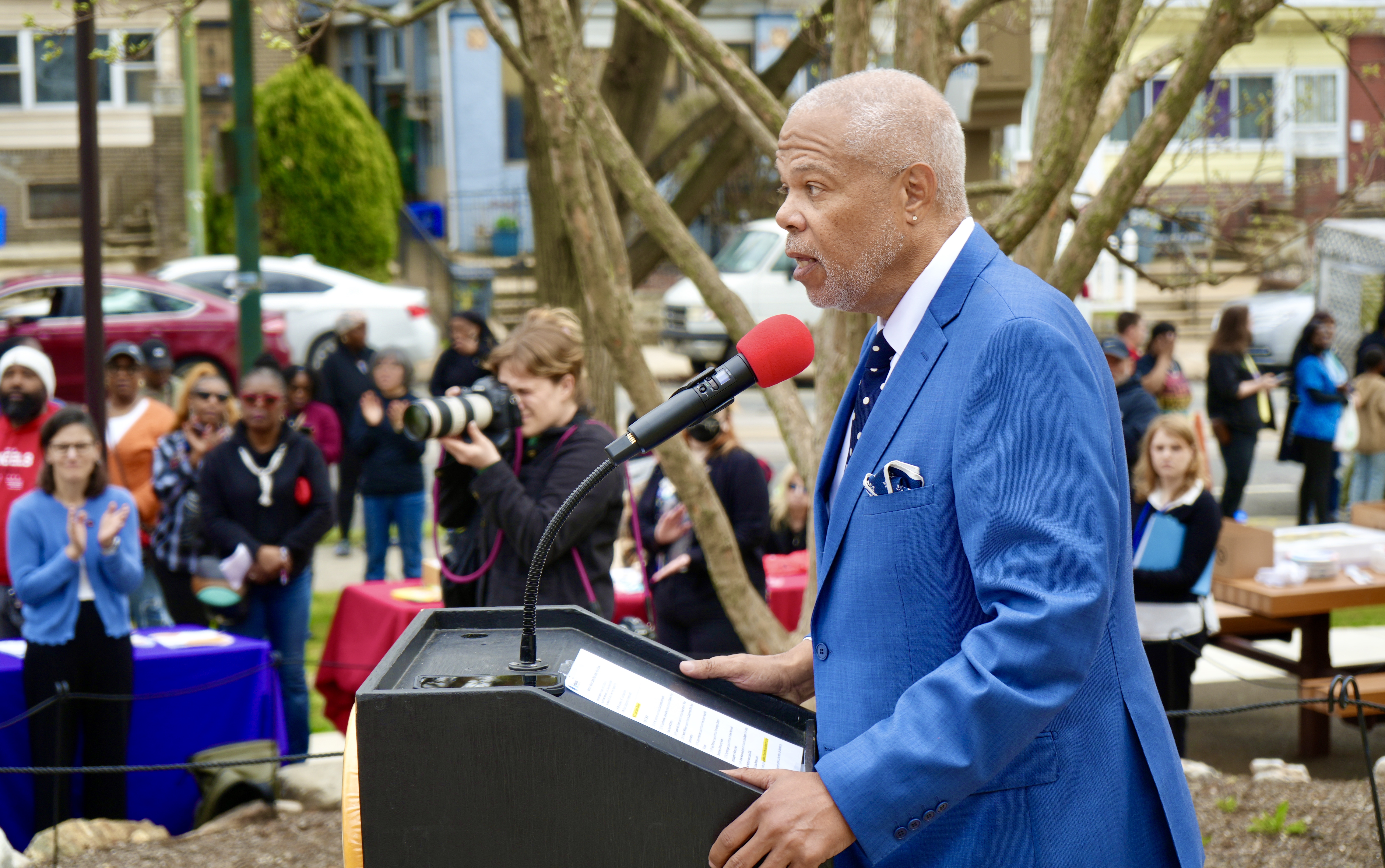
State Senator, Anthony Hardy Williams

Blanche Nixon’s legacy teaches us that the work of democracy is not just about elections or laws but about the daily, unglamorous labor of sustaining spaces where people can learn, question, and grow. As the nation moves toward its semiquincentennial, the survival of its democratic experiment may well depend on whether institutions like public libraries can continue to fulfill that role.

The alternative—a nation stripped of its full history, where access to knowledge is dictated by ideology—is one that figures like Blanche Nixon spent their lives fighting against. The best way to honor her memory is to ensure that fight continues.
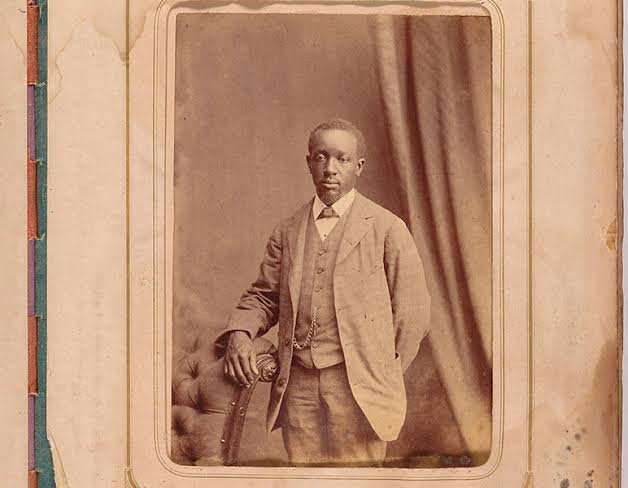
New Age Isaiah Montgomery: Black MAGA Supporters

CAMDEN, NJ – In today’s America, as a divided nation navigates the aftermath of Donald Trump’s presidency, Black support for Trump’s MAGA movement has drawn both curiosity and condemnation. Approximately 22 percent of Black men supported Trump in recent elections, a statistic that shocks and confounds many. The reasons are complex, but this phenomenon carries disturbing echoes of a past dilemma once personified by Isaiah Thornton Montgomery, a Black Mississippi leader who, over a century ago, publicly endorsed Black disenfranchisement. While 99.99 percent of Black Americans may have no awareness of Montgomery’s place in history, the eerie parallel to present-day Black MAGA supporters raises troubling questions about compromise, survival, and political self-identity amidst a resurgent wave of White backlash.

The roots of Black conservatism today are as varied as they were in Montgomery’s time. The question, though, is not simply why some Black men align with the MAGA agenda, but whether today’s political landscape is producing contemporary Isaiahs: figures within the Black community who, consciously or unconsciously, may view alignment with right-wing movements as a pragmatic strategy for survival and advancement in an era of unprecedented polarization. With inadequate education around Black history in America’s schools, many Black citizens lack the knowledge to contextualize our current political landscape within the longer arc of racial struggle. Few are aware that today’s MAGA movement fits into a history of White backlash against perceived gains by Black Americans and other marginalized groups.

The similarity with Isaiah T. Montgomery is stark, yet his motivations were distinctly rooted in the brutal world of post-Reconstruction America. Montgomery, founder of the Black community of Mound Bayou and son of an enslaved man-turned-businessman, held an unshakeable belief in Black self-sufficiency. But at the 1890 Mississippi Constitutional Convention, Montgomery shocked the Black community by endorsing provisions like literacy tests and poll taxes, which would bar Black voters from the polls. His reasoning was couched in pragmatism: he argued that appeasing White lawmakers and ceding political ground might allow Black Americans the breathing room to pursue social and economic self-sufficiency without inciting more violent backlash from the White South.

This strategy of appeasement, however, came at a profound cost. By endorsing Black disenfranchisement, Montgomery struck a bargain that some historians argue ultimately weakened the broader fight for Black rights. In his eyes, he may have been choosing a “lesser evil,” hoping to secure a modicum of safety and stability for Black communities. But his compromise helped cement a cycle of disenfranchisement that would haunt Black communities for decades.

Today, MAGA-supporting Black men may claim a similar kind of pragmatism, citing dissatisfaction with Democrats’ failures to deliver economic and social progress and pointing to Trump’s “America First” policies as offering greater personal and economic security. This approach may seem attractive for Black men seeking relief from the relentless churn of systemic racial inequity. Yet we must question whether endorsing a movement openly allied with far-right, White supremacist sentiments—and which has fueled harmful policies on everything from immigration to voting rights—is a sustainable or honorable path forward.

Unlike Montgomery, who likely felt he had no choice but to make a Faustian bargain in a violent, oppressive environment, Black MAGA supporters today choose to align with a movement that has often diminished the Black struggle for justice and equality. That choice, whether motivated by frustration with establishment politics, belief in economic “bootstraps” rhetoric, or disillusionment with the left, serves to reinforce a coalition that has actively suppressed minority voting rights and eroded protections against racial discrimination.

Montgomery’s legacy, for all its flaws, at least left behind a vision of Black self-sufficiency through the community of Mound Bayou. His compromise, though painful, was aimed at preserving a sanctuary for Black Americans to thrive away from hostile White dominance. Black MAGA supporters, on the other hand, stake their political future on a movement that has often used their voices to validate policies that threaten the very social progress on which Black Americans rely.

The alignment of any segment of Black America with the MAGA agenda suggests a critical need for education around this country’s cyclical racial history. The disconnection from history—the “woeful inadequacy” of Black history as it is taught in American schools—prevents a clear understanding of today’s political dynamics as part of a long, repeated arc of White backlash. Without awareness of figures like Montgomery or the political choices forced on Black Americans throughout history, many fail to see how Black support of MAGA could lead to similar long-term disenfranchisement.

To be clear, the issue is not the political party of one’s allegiance, but the agenda one chooses to endorse. Black support for MAGA is not simply a divergence in political opinion; it is a move that could ultimately lend support to a movement in direct opposition to Black political and social progress. In this moment, we need more awareness, more connection to history, and, most crucially, a unified sense of purpose. Rather than aligning with those who would turn back the clock on civil rights and equality, today’s Black Americans should look toward alliances that strengthen—not weaken—the collective foundation of our community.

Isaiah Montgomery’s choices were not ideal, but they are instructive. Let us hope that modern Black MAGA supporters will learn from his compromises and understand that the consequences of such alignment often echo far beyond individual gain, shaping the freedoms—or restrictions—of future generations.

The Miseducation of Black (Democratic) Political Leadership and America’s Enduring Animosity Toward Immigrants

CAMDEN, NJ – As the United States grapples with immigration reform, Democrats—and Black American political leaders in particular—seem fundamentally ill-equipped to recognize a force driving much of the nation’s debate: a deeply embedded and historical animosity toward immigrants. This sentiment, often neglected in our education system, remains a potent force in American politics, one that Republicans have expertly wielded to achieve significant political victories.

America has never fucked with non-Protestant European immigrants.

The 2024 election serves as a recent and stark example. While many on the left advocated for inclusive immigration policies, Republicans, led by President-elect Trump, tapped into the powerful strain of anti-immigrant sentiment woven into the fabric of American society. By adopting a strict posture against “illegal” immigration, Trump’s campaign skillfully activated an underlying hostility that has persisted for centuries. This approach resonated deeply with many Americans, proving politically advantageous despite, or perhaps because of, its divisive nature.

For generations, various immigrant groups have faced prejudice, discrimination, and violence in America. Irish, Italian, and Polish immigrants were among the earliest to endure this treatment in the 19th and early 20th centuries. Irish Catholics, for example, were often viewed as a religious and political threat, accused of being loyal to the Pope rather than the U.S. government. Many Irish immigrants were relegated to low-wage labor, while signs like “No Irish Need Apply” blatantly excluded them from workplaces. Italian immigrants faced racial discrimination, as Southern Italians were frequently seen as “non-white” and associated with criminality. The lynching of eleven Italian men in New Orleans in 1891 exemplified the violence they encountered. Polish immigrants, similarly, faced harsh economic exploitation and religious discrimination, navigating poor working conditions and pervasive anti-Catholic sentiment.

Asian immigrants experienced even harsher exclusionary policies. The Chinese Exclusion Act of 1882 specifically targeted Chinese laborers, barring them from entering the country and making it nearly impossible for Chinese immigrants to achieve citizenship. Japanese immigrants, in turn, faced racist land laws and forced segregation. Anti-Asian prejudice ultimately culminated in the internment of Japanese Americans during World War II, when tens of thousands of U.S. citizens of Japanese descent were stripped of their rights and forced into internment camps.

Despite these enduring struggles, many Americans are educated under the myth of the “melting pot”—the notion that diverse ethnicities can seamlessly blend into a unified, harmonious American society. This idealistic image is built on the assumption that immigrants will eventually assimilate, adopting mainstream American values while contributing their unique perspectives. This myth is repeated in schools as the ultimate American story, obscuring the realities of exclusion, racial discrimination, and social conflict that have long shaped the immigrant experience.

For Black Americans, the miseducation surrounding immigration is compounded by an educational system that frames American history through a Eurocentric lens, omitting or downplaying the discriminatory treatment of immigrants and the struggles of people of color. Many Black leaders, influenced by this same flawed education, may struggle to recognize that the “melting pot” has always had limits. The melting pot framework encourages leaders to advocate for diversity and inclusivity, often at the cost of acknowledging the longstanding antipathy toward immigrants that has pervaded American history.

By contrast, Republicans have astutely identified this antipathy, leveraging it with precision. President-elect Trump and his advisors astutely recognized that a portion of the American public harbors an underlying hostility toward new immigrants, particularly those perceived as “illegal.” This animosity has nothing to do with any single ethnicity or cultural group; rather, it is directed toward the very idea of immigration itself. Trump’s campaign capitalized on this sentiment by framing immigrants as economic competitors or cultural threats, a narrative that resonated in regions where concerns about jobs and cultural change run high.

If the “melting pot” were truly representative of American society, then one might expect Latino and Asian immigrants to show similar sentiments, internalizing an “American” identity that mirrors long-standing anti-immigration attitudes. But the reality is far more complex, with second- and third-generation immigrants often challenging these divisive narratives. This resistance itself demonstrates that the American melting pot has long been an imperfect metaphor—a convenient story rather than an honest representation of a fractured reality.

The time has come for Black political leaders, and Democrats more broadly, to confront this entrenched hostility toward immigrants. American history reveals a pattern of discrimination and exclusion, one that often reemerges when politically expedient. For too long, Black leaders have been shaped by an educational system that fails to equip them with the tools to recognize this reality. Miseducation has, ironically, become an effective means of controlling narratives around immigration and identity.

Recognizing the deeply rooted bias against immigrants is not an endorsement of anti-immigrant sentiment, but a necessary step in addressing it. Until Democrats and Black political leaders can move past the ideals of the melting pot and address the full spectrum of America’s complex and often troubled relationship with immigration, they will remain vulnerable to the political forces that skillfully exploit these divisions. If Democrats hope to counteract the appeal of anti-immigrant policies, they must confront the miseducation that has hindered their ability to see what Republicans have long understood: that in the United States, immigrant acceptance has always been more aspiration than reality.

American Democracy: Trump’s Victory and the Complex Legacy of Equality and Exclusion

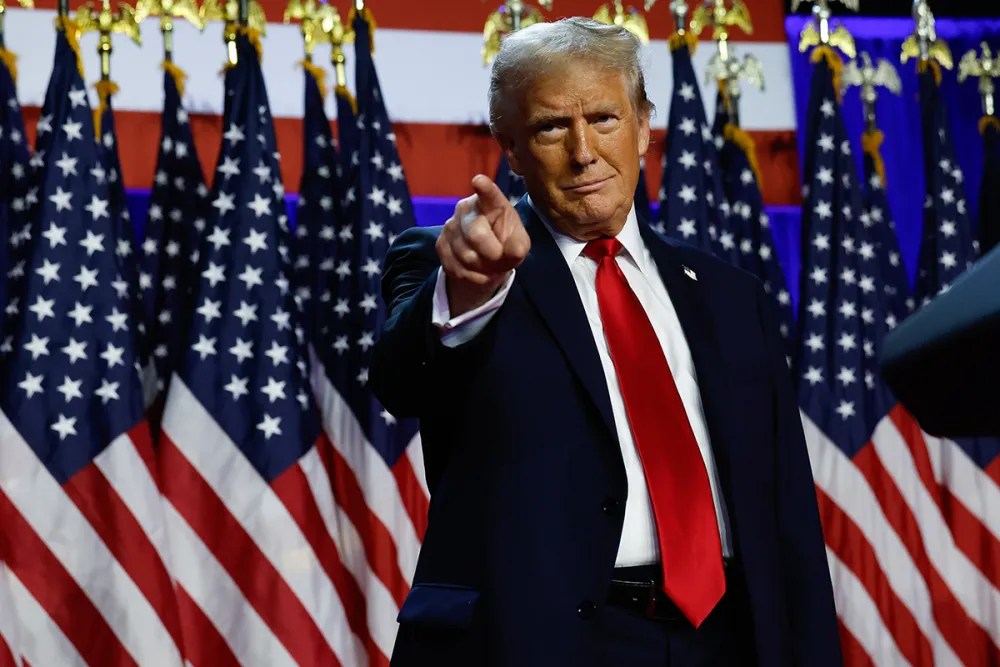
CAMDEN, NJ – In the early hours of Wednesday morning, Americans awoke to news that Donald Trump had been re-elected as president in a hard-fought campaign. Once again, the peaceful transfer of power through a free and fair election reinforced a hallmark of the American experiment: a democracy, as James Madison wrote, that preserves the “spirit and form” of governance by the people. To many, particularly Black Americans and communities historically marginalized, Trump’s victory reads as an existential threat to American democracy as they know it. But the prevailing narrative that American political culture has been a pristine example of democracy in world history—one that safeguards freedom for all—is, and always has been, incomplete.

America’s democracy has endured in form, but the substance of that democracy has always been as much shaped by exclusionary ideologies—racism, sexism, xenophobia—as by the ideal of equality. These dual forces have existed side by side since the nation’s founding, influencing not only who participates in politics but the very values that American governance upholds. With that reality in mind, perhaps it’s worth reframing what some see as the potential “end” of American democracy. While the Civil Rights Era may have come to a symbolic close last night, democracy in its original, sometimes mercilessly exclusive form, will likely persist, even flourish.

American democracy, founded in ideals of freedom and representative government, was also founded as a racial and gendered hierarchy. For nearly two centuries, the racist/white supremacist system with procedurally democratic features held firm, enshrining the values of White male property owners while excluding millions based on race, nationality, and gender. Women, enslaved Black Americans, Indigenous peoples, and other minorities were systematically denied full participation in what was nonetheless celebrated as a bastion of democratic governance. From its birth, America’s so-called democracy was a profoundly unequal system, designed for the enfranchisement and empowerment of a narrow group of wealthy, White men.

When the Founders issued their declaration of freedom to the British crown, declaring “all men are created equal,” they carved out that declaration to serve a select few. This sentiment laid the groundwork for a nation that would go on to build institutions catering to the privilege of a specific demographic. A revolution against monarchy and aristocracy—yes. But a democracy for all? Hardly. While revolutionary in comparison to European monarchies, America’s democratic spirit came bound with the chains of slavery, the forced dispossession of Native lands and rigid exclusion of women.

This enduring myth—that America has always stood as a beacon of equality—feeds a dangerous misperception. Many Black Americans fearing democracy’s end in light of Trump’s return are responding to a version of history that never fully included them. The American education system has long centered its lessons on the actions of wealthy, White Protestant men, pushing the contributions and sacrifices of Black Americans, Indigenous peoples, women, and other marginalized groups to the periphery. This has cultivated an understanding of democracy as a singular narrative of freedom and progress when, in reality, it is a deeply divided one.

To critique America’s selective version of democracy is not to minimize the contributions of Founders like Jefferson, Adams, Washington, and Franklin. Nor is it an appeal to disparage the “MAGA” movement’s resurgence. Rather, it is a call to recognize that America’s political culture is far more complex than the sanitized version we’ve long been taught. The stark reality is that racism, sexism, and xenophobia are as American as baseball, apple pie and hip-hop. These inegalitarian ideologies are as deeply ingrained in our political fabric as any notion of liberty. For nearly two centuries, America was considered a democracy while enslaving millions on armed labor camps, slaughtering and forcibly removing surviving Native Americans, and rigidly upholding an Apartheid/Jim Crow segregation system. Rest assured that American democracy, at least in “spirit and form,” will endure through the next four years and beyond.

True, the election of Donald Trump may well signal the end of the Civil Rights Era’s vision of democracy, but that vision is only a recent addition to American life. The structures that enabled the original version of democracy to exist—and indeed, thrive—in the face of brutality and exclusion still stand. To reclassify our current system as anything but democracy would require rethinking the foundational structures laid by the Founding Fathers themselves. We would have to classify Washington, Jefferson, Adams and Madison as antidemocratic.  That is a project that, for now, remains highly unlikely. 

Instead, it is up to Black educators, leaders, and all Americans who see through the myth to challenge the dominant historical narratives. An education system grounded in truth, not legend, will better serve our future generations. It will equip them to recognize the contradictions and complexities that define American political culture—a democracy that has always held equality and exclusion in uneasy balance.